Updated 10-10-26
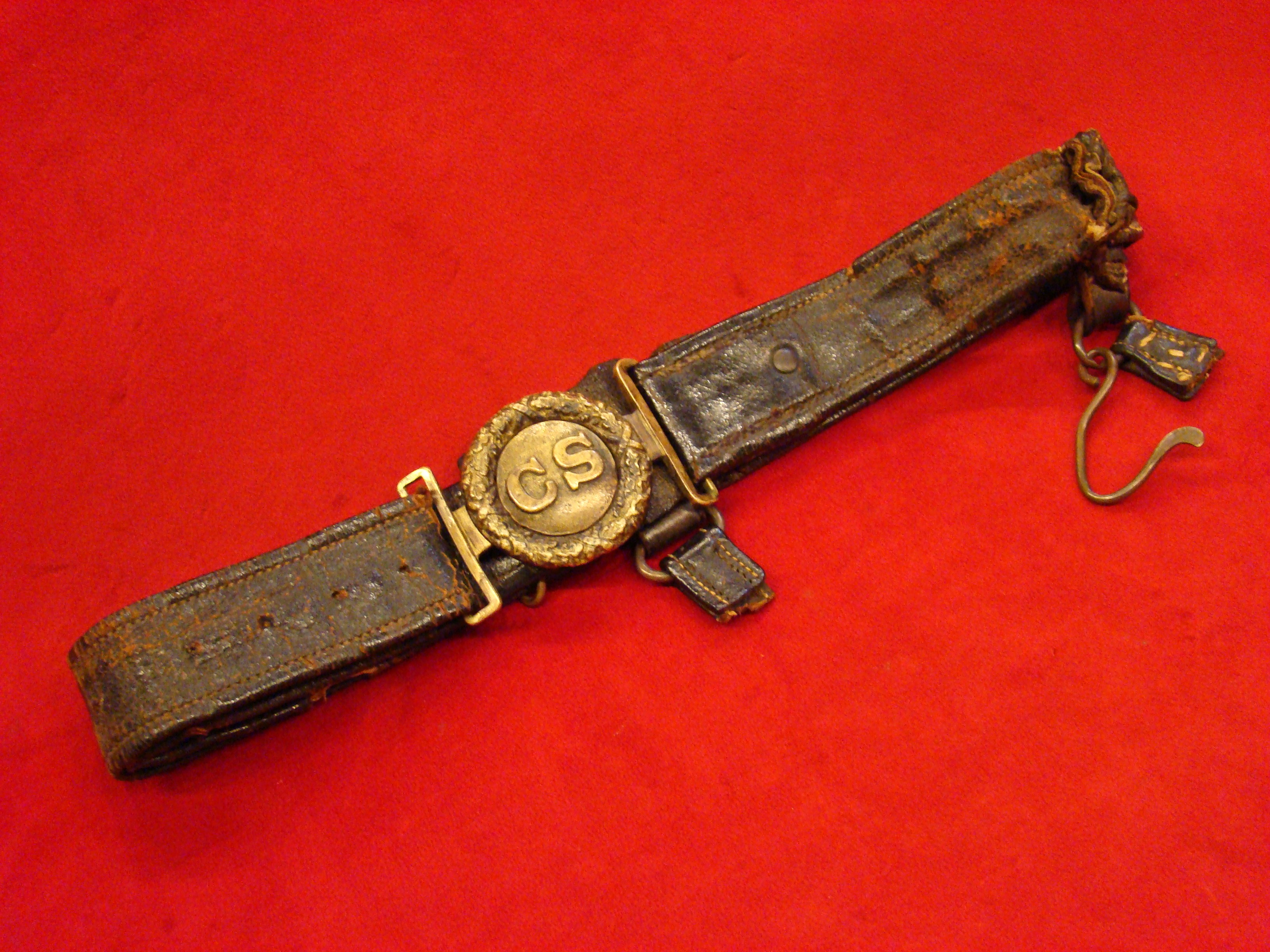
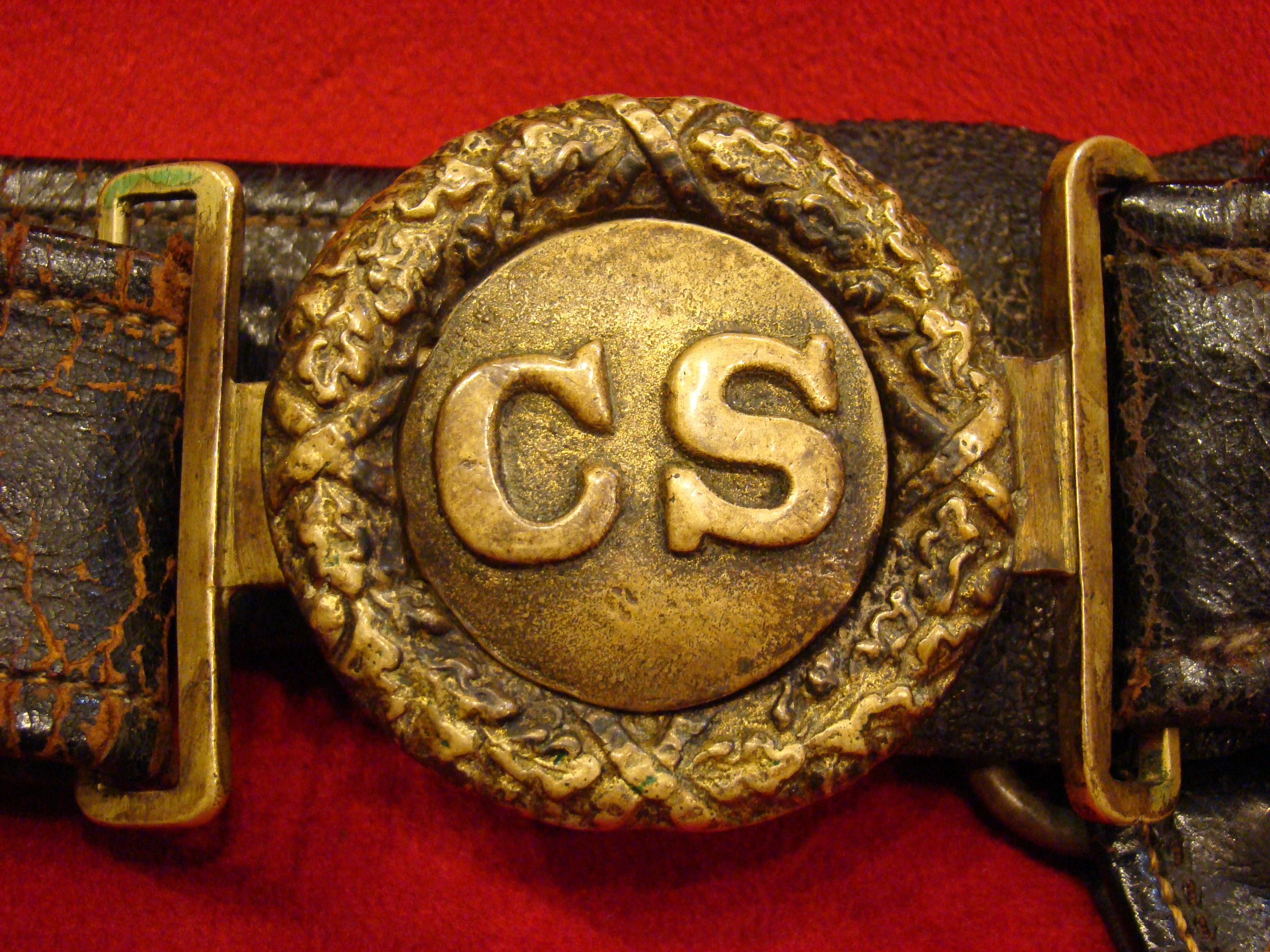
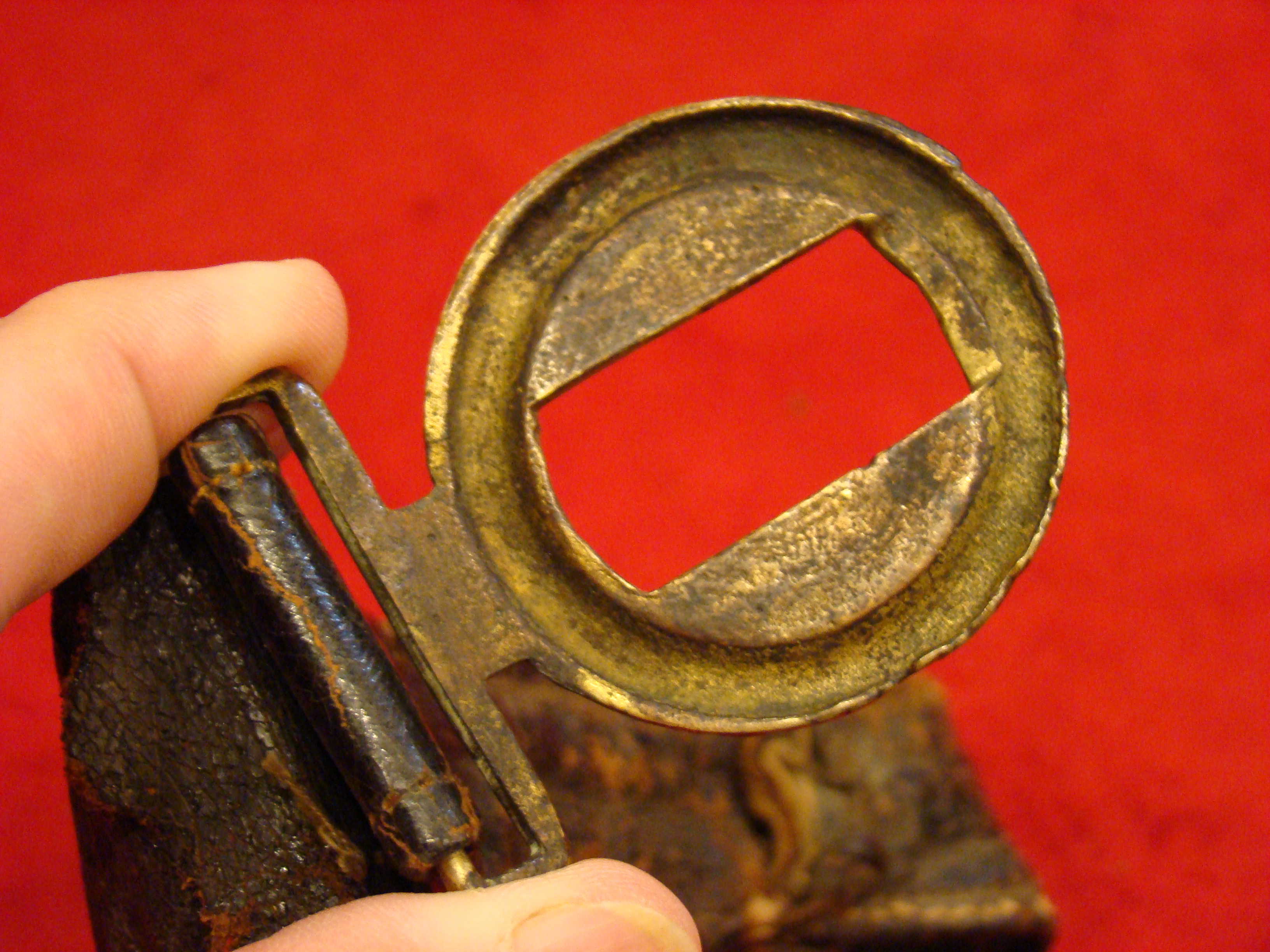
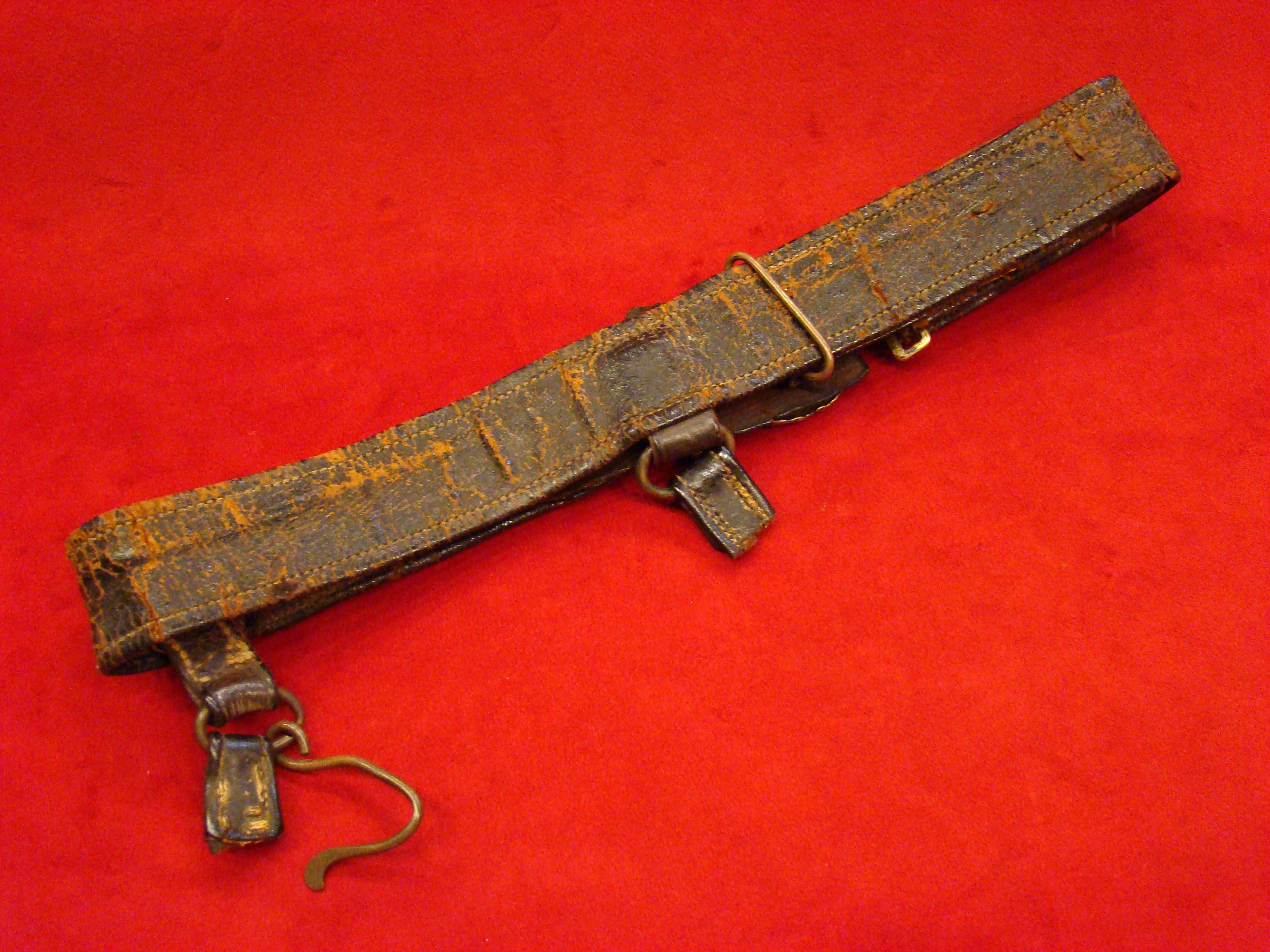
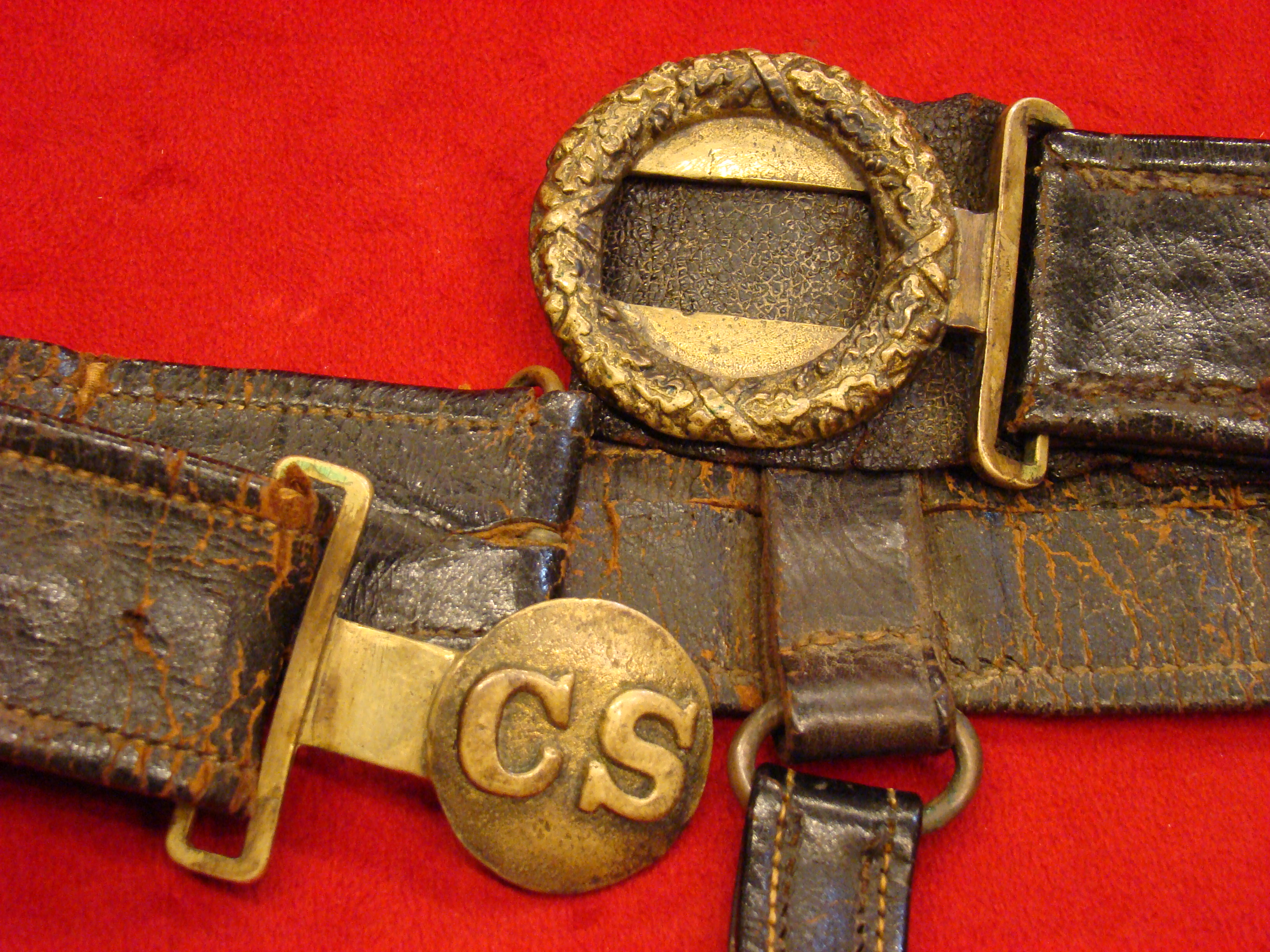
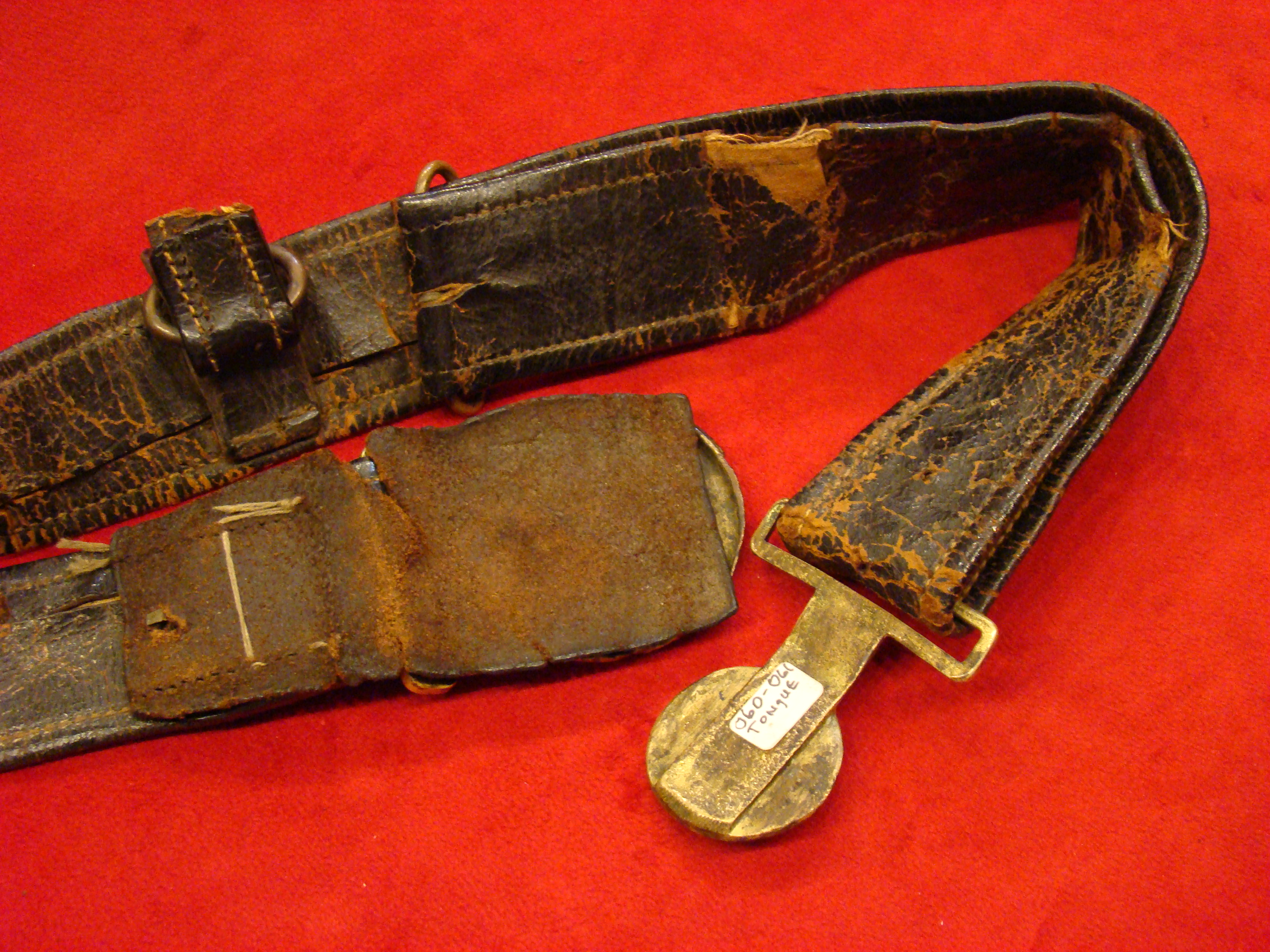
CSBP 1. Confederate Officer’s Sword Belt. The Actual One Pictured in The Mullinax Reference Book.
Scarce large disc “CS” tongue and wreath buckle on its original leather belt. Condition and appearance are excellent. Great patina on the buckle and the brass hardware. Belt has smooth and supple leather. Does show wear and age. Both leather hangers lost long ago. See page 20, Plate # 021 of Steve Mullinax’s reference book “Confederate Belt Buckles & Plates” where you will see this exact belt photographed. Ex. Nick Van Dam, Ex. Bill Blackman collection. $10,500.00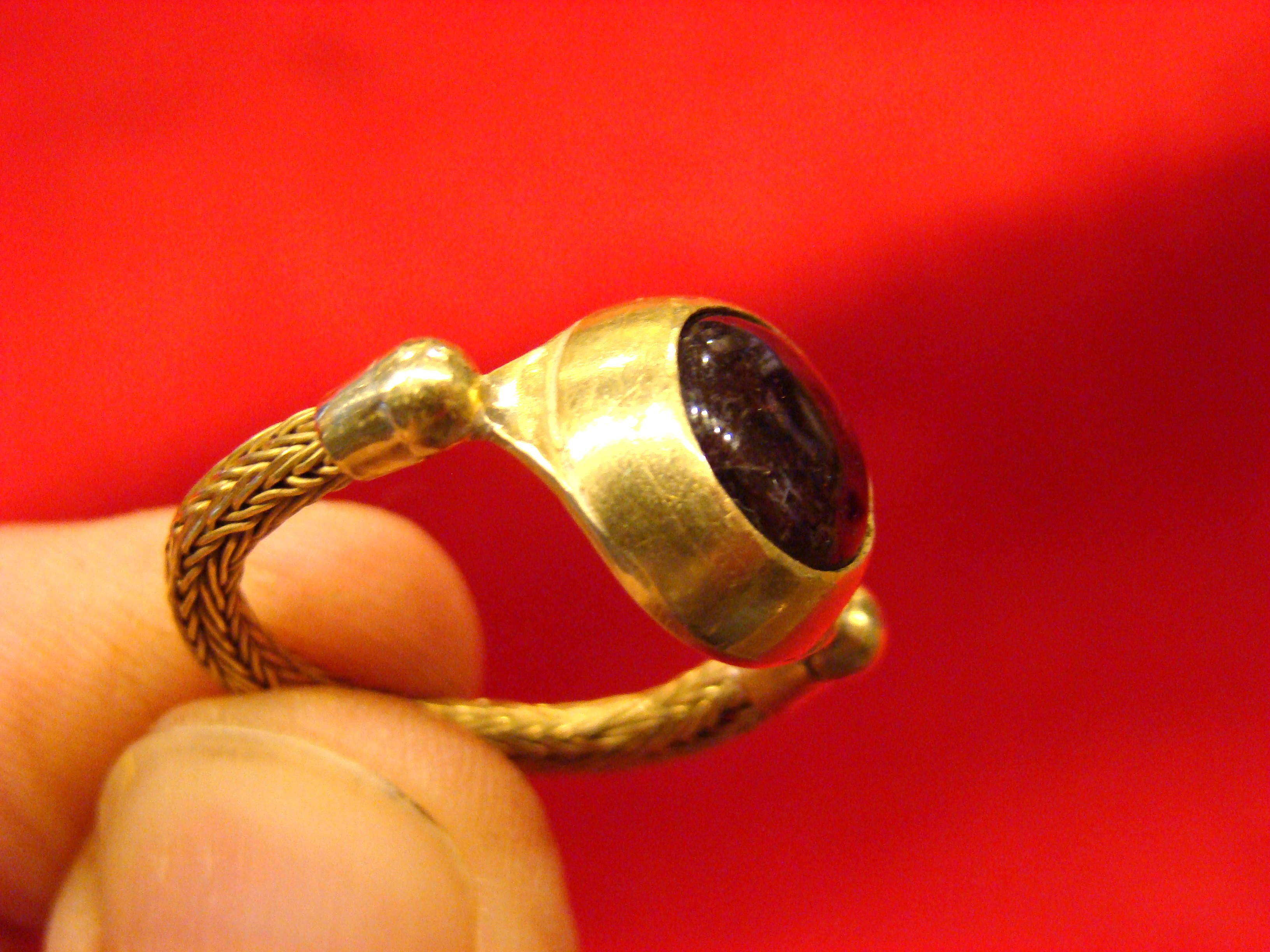
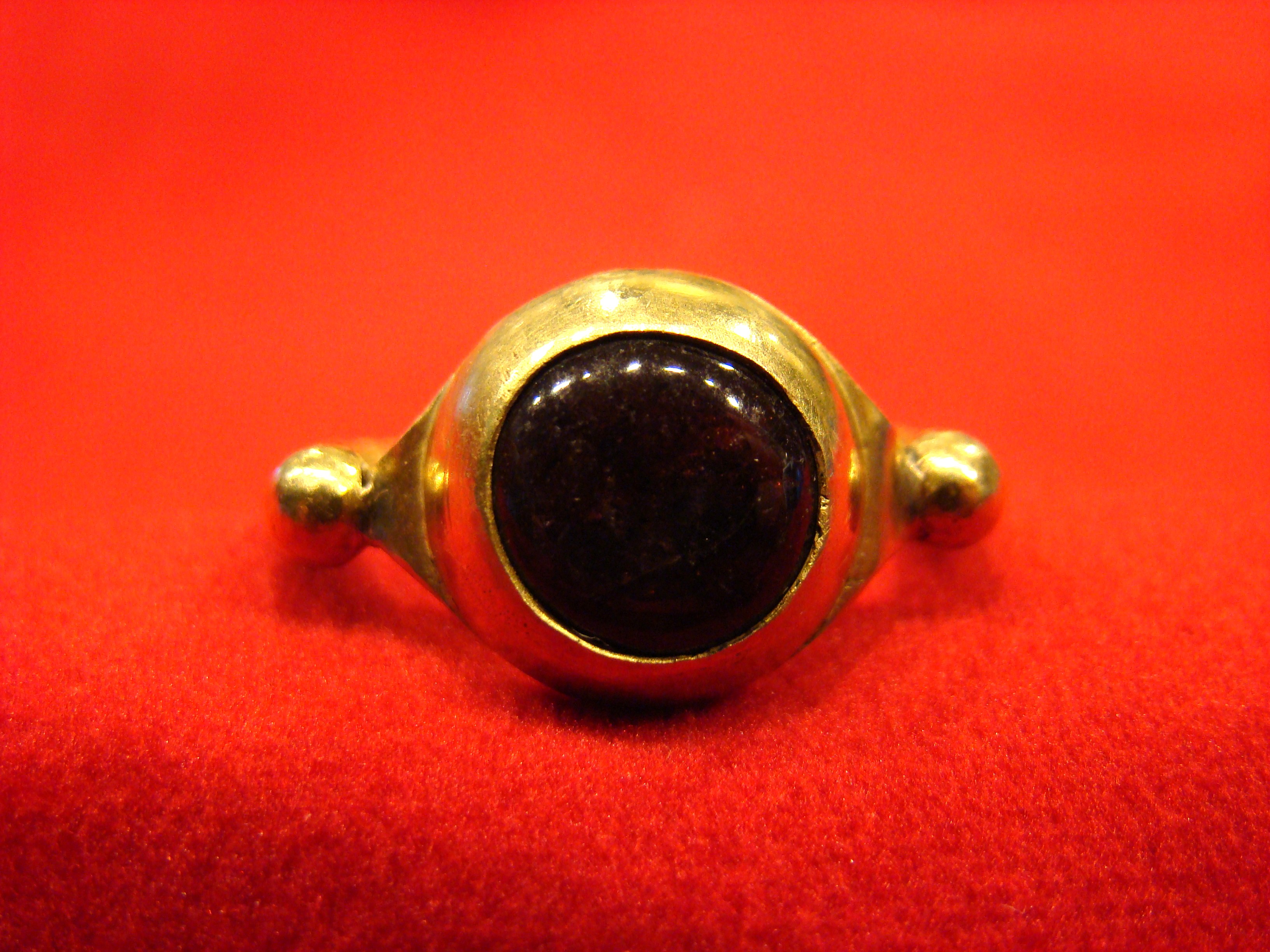
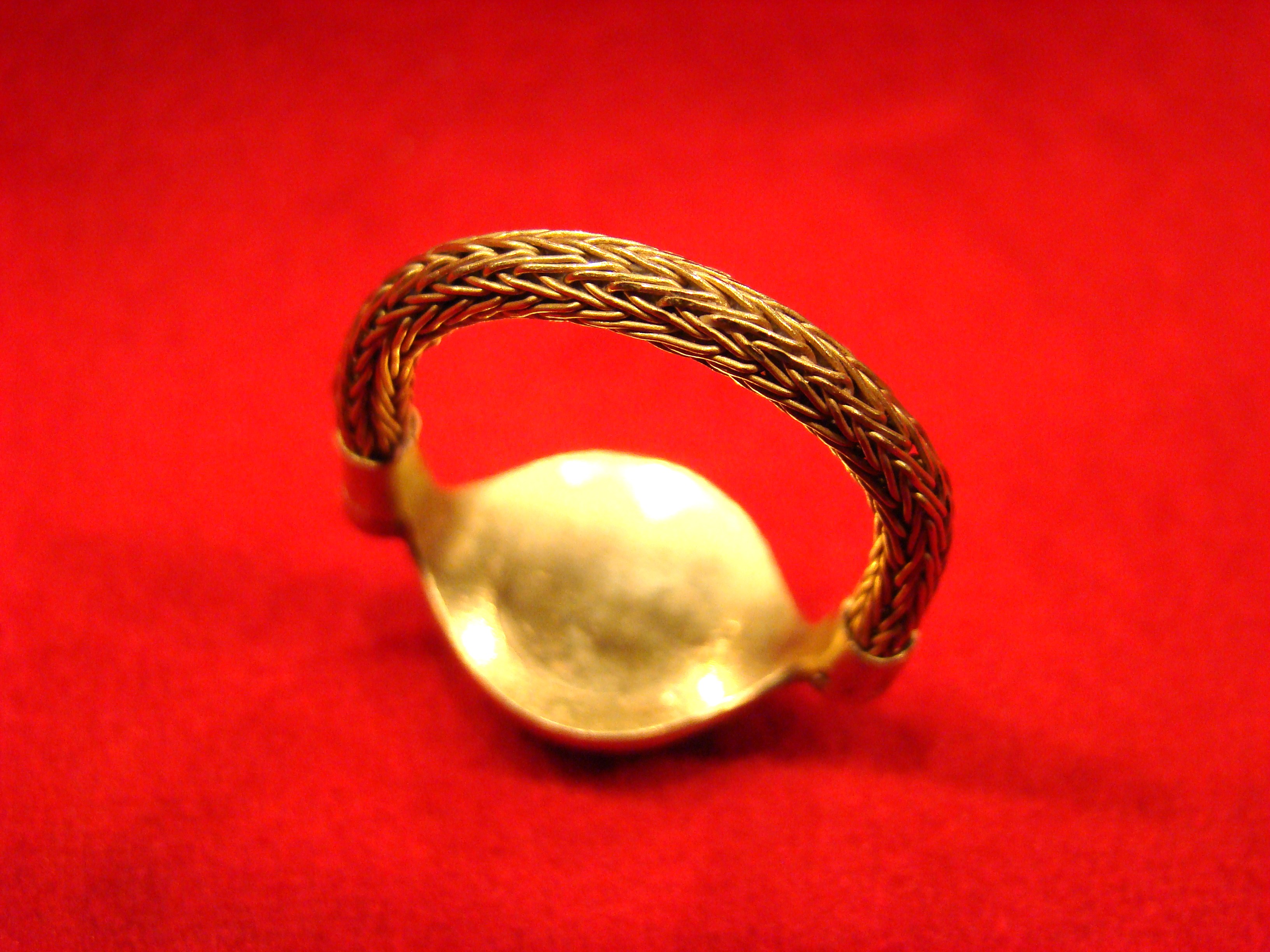
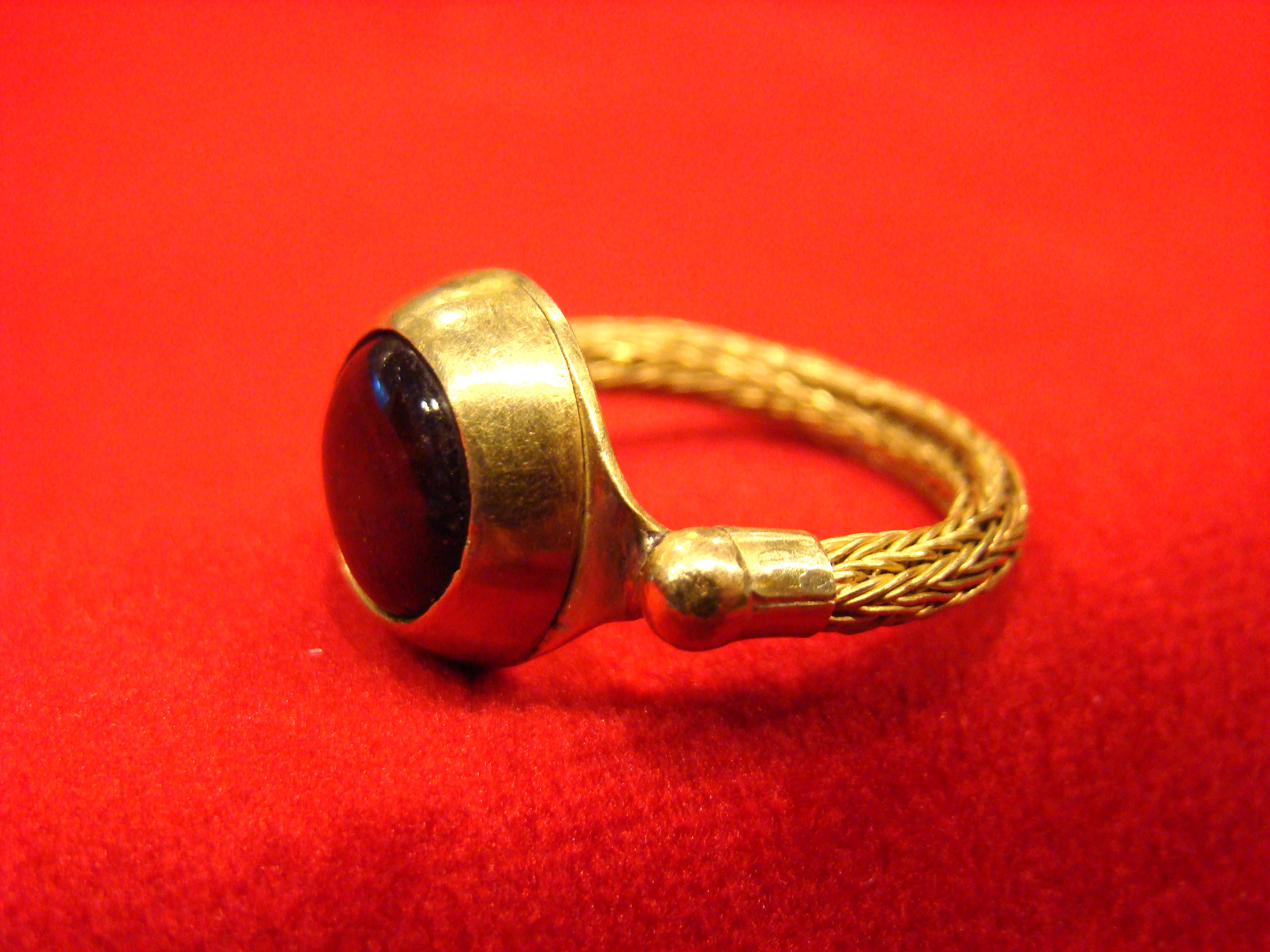
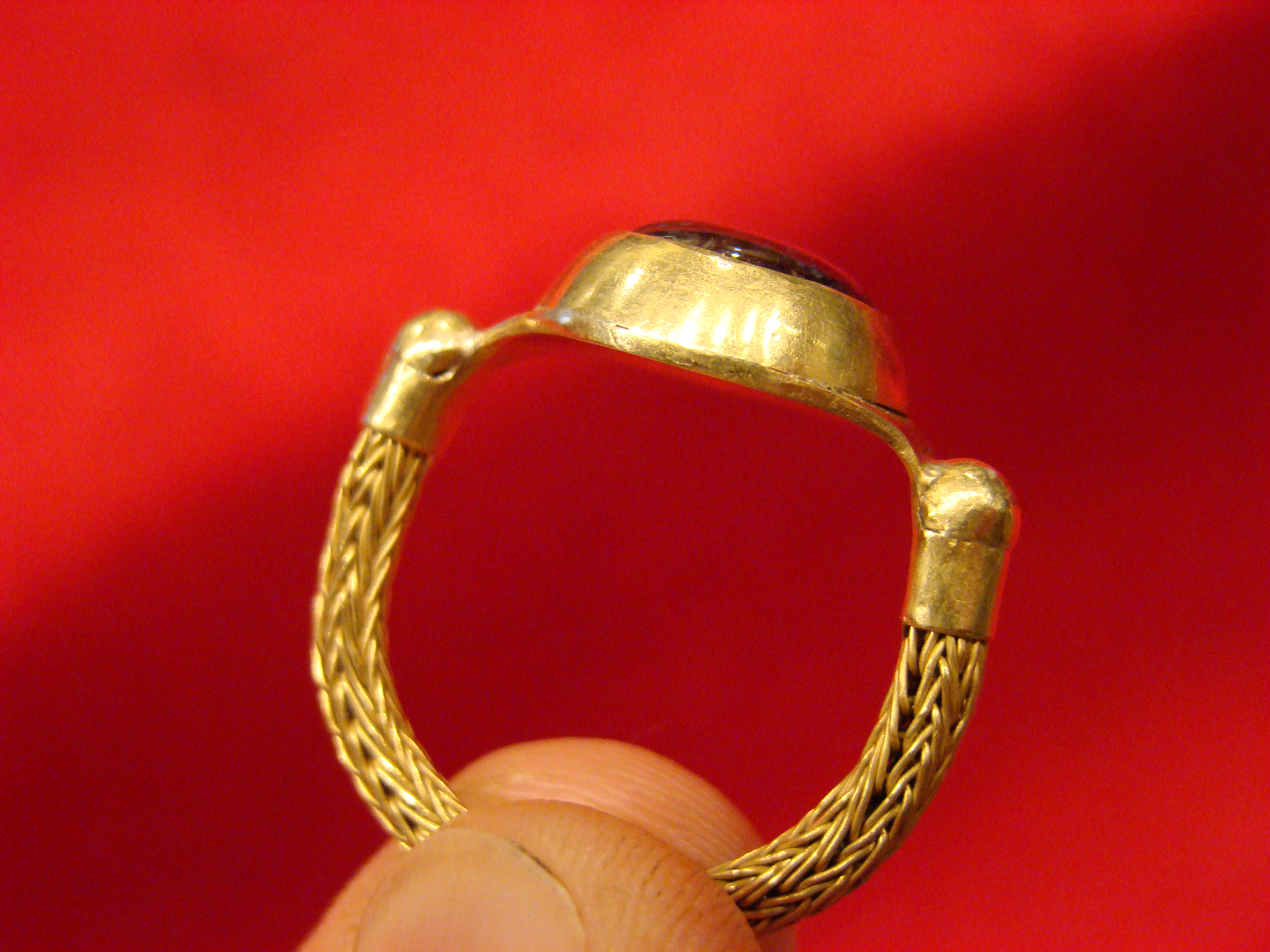
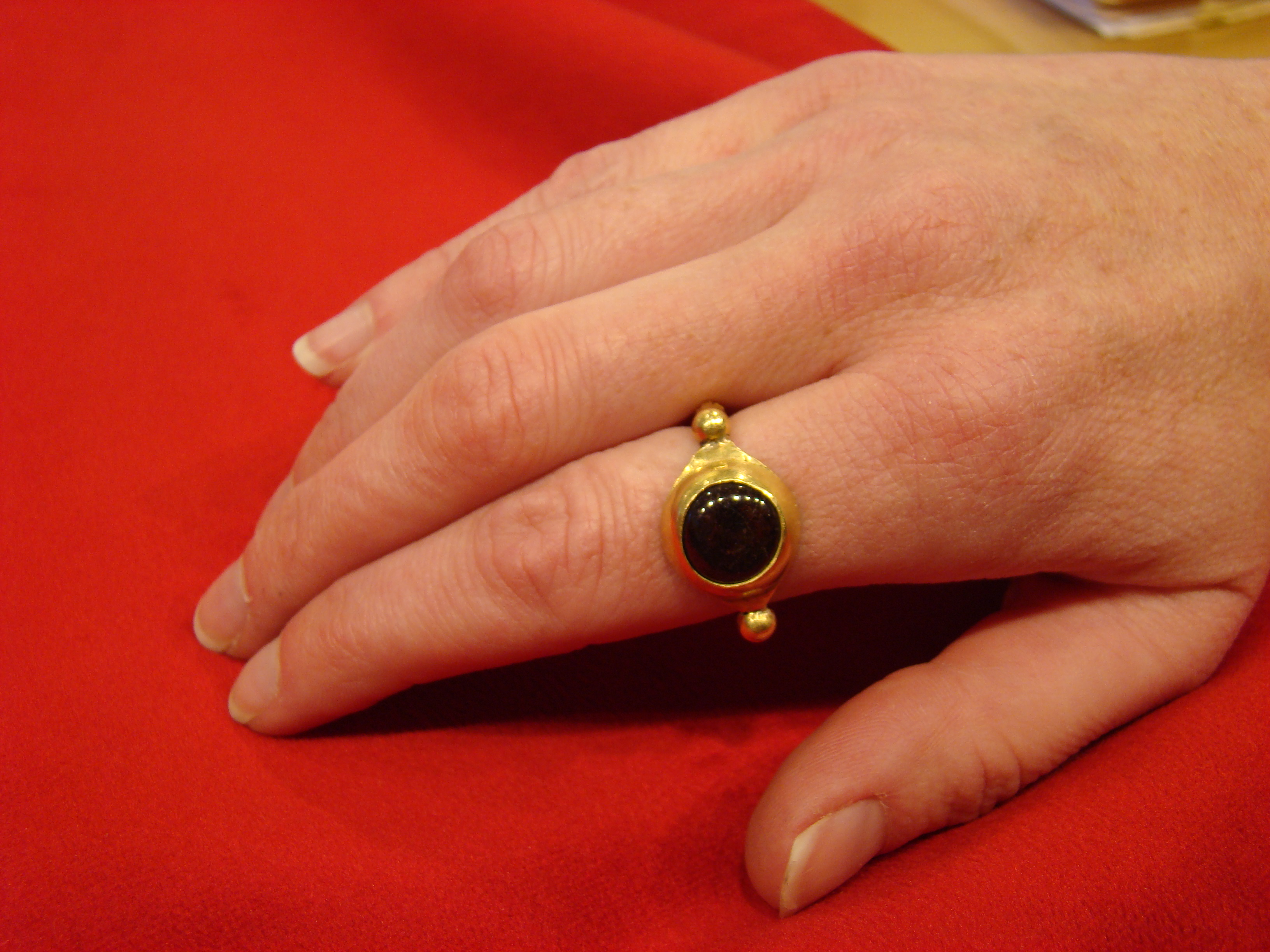
ANT 1. Ancient Roman Gold Ring with Garnet Stone. 3rd Century AD.
Polished garnet set in a solid gold bezel with finely braided gold band. Flawless condition. This ring adorned the hand of a high status Roman woman 1800 years ago, and can be worn today. Provenance of London UK antiquities auction. Most likely a metal detector find. Weighs 7.3 Grams. $6500.00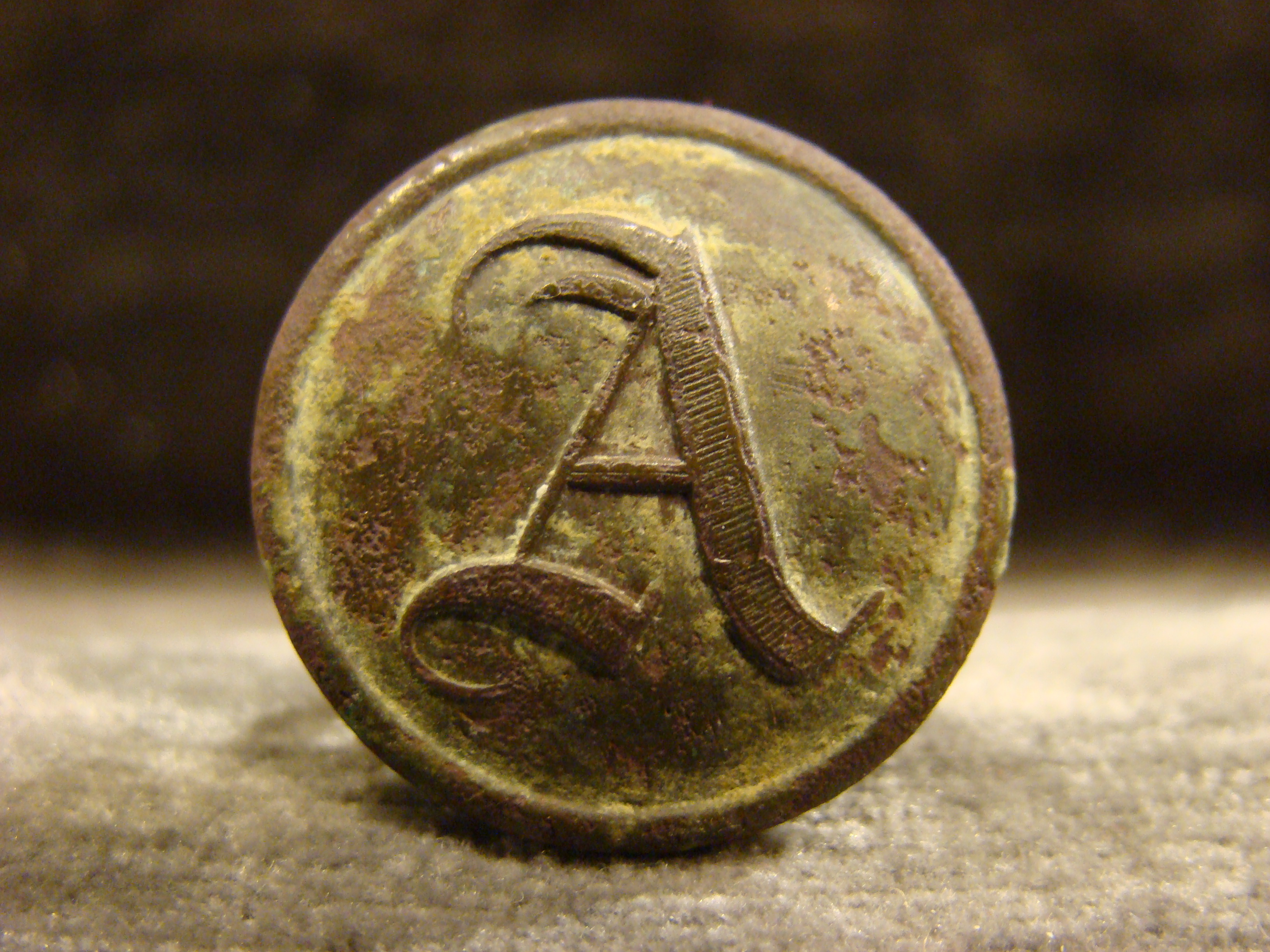
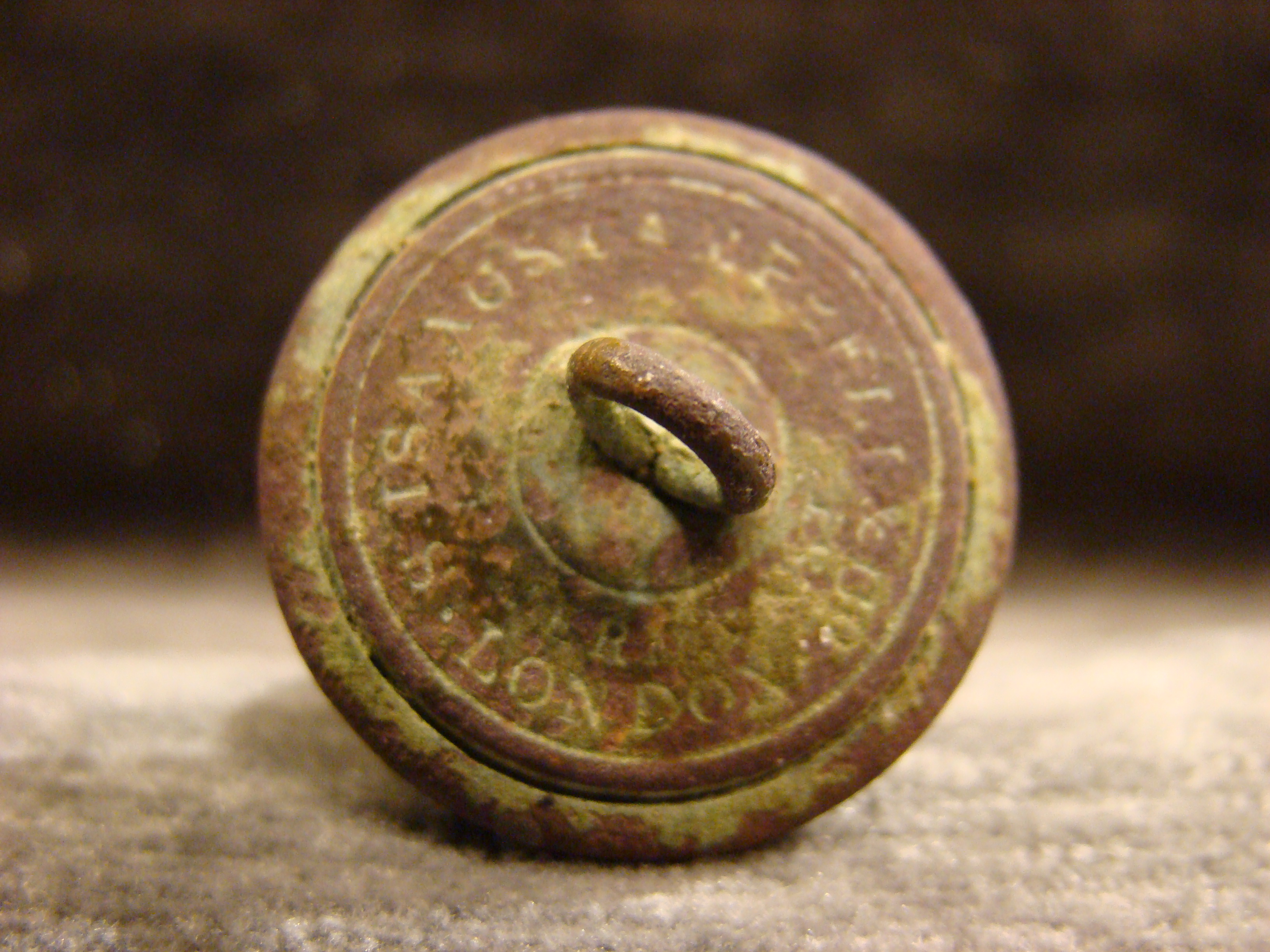
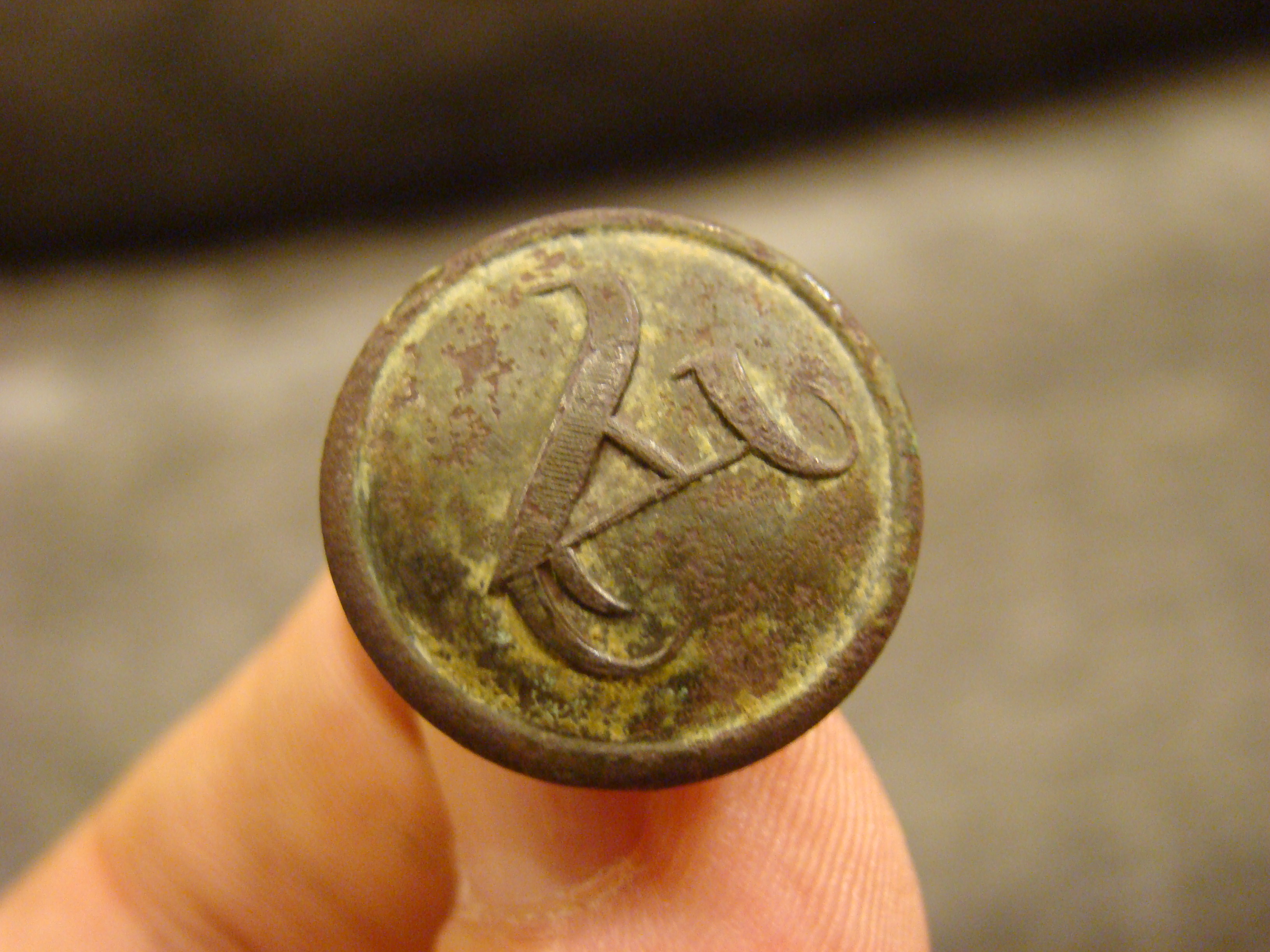
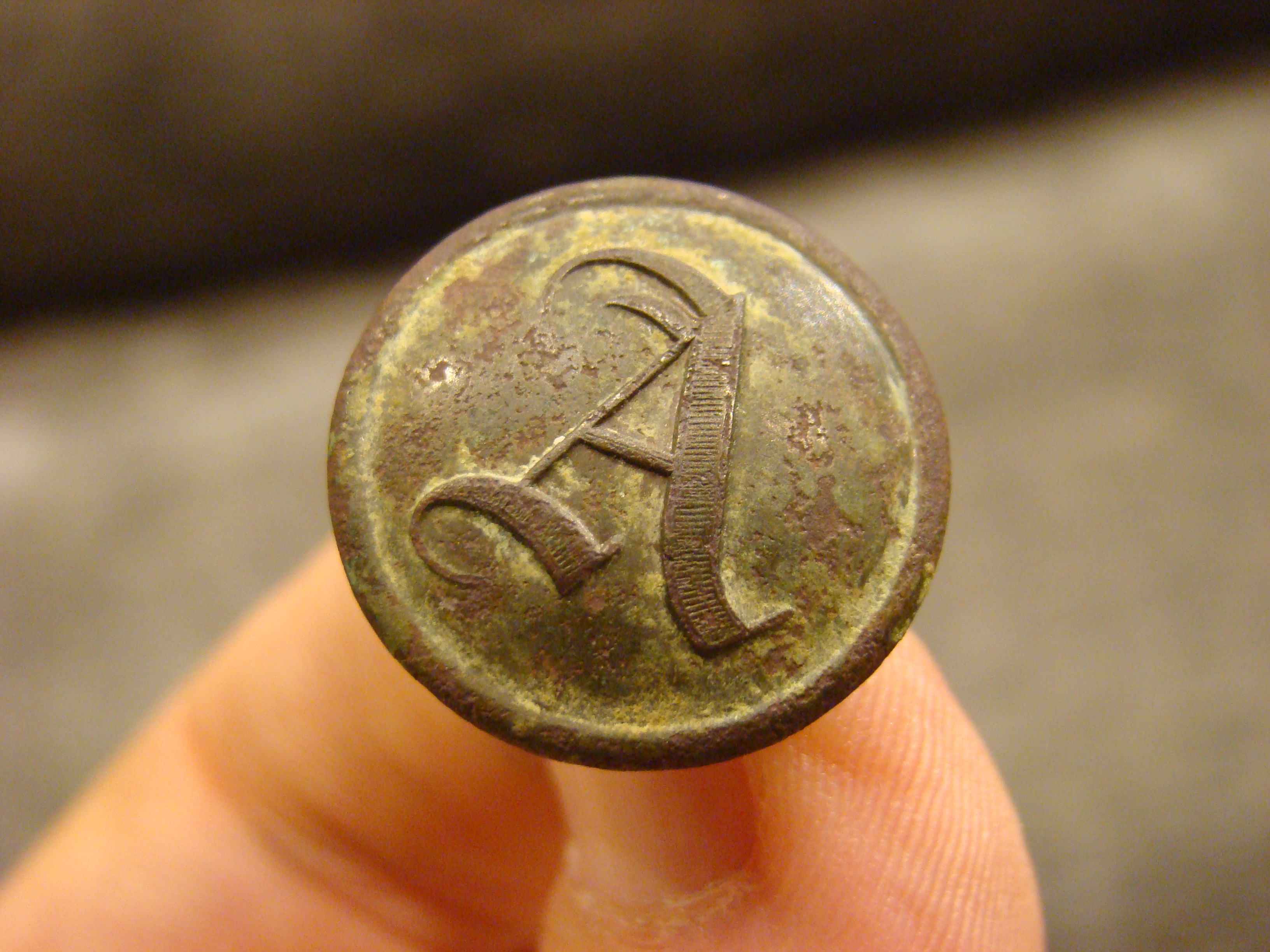
CSBTN A 1. Dug Confederate Artillery Coat Button. Richmond VA.
CS 107 A1, 23 mm. Really nice example of the script “A” Artillery Button. No pushes or issues. Found near Richmond VA. by Charlie Purks. “S. Issacs Campbell & Co/ London/71 Jermyn S.” bm. $395.00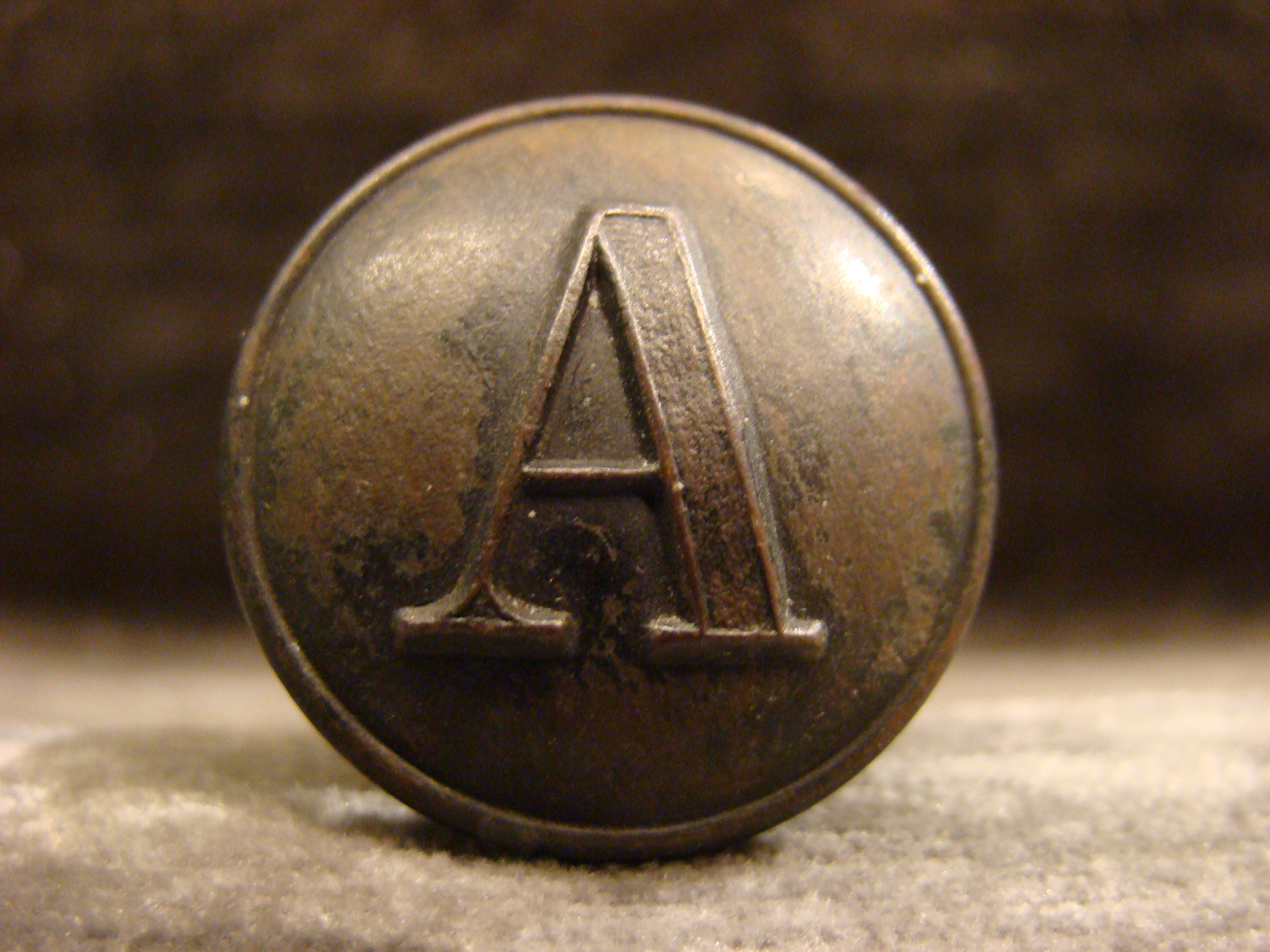
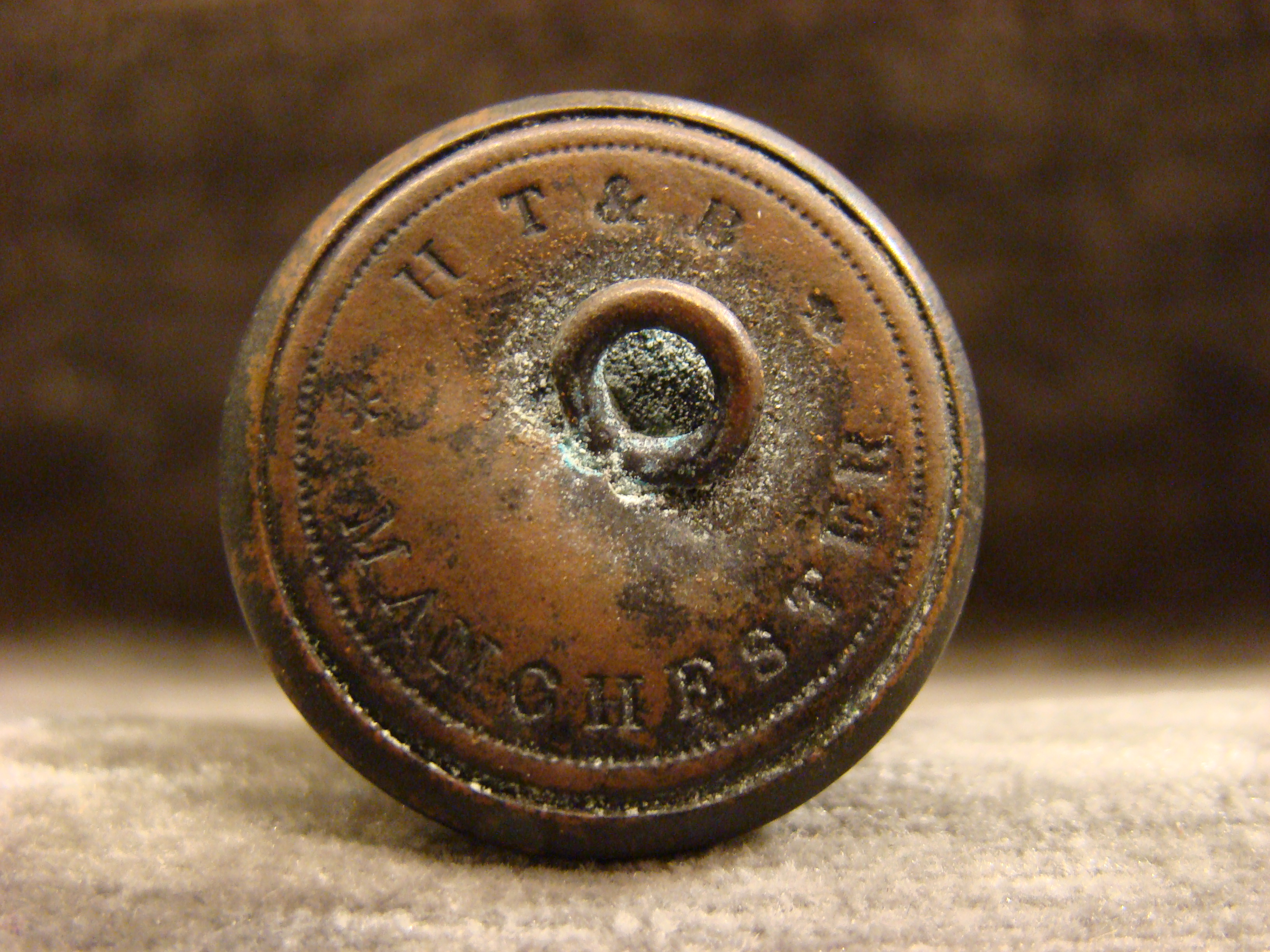
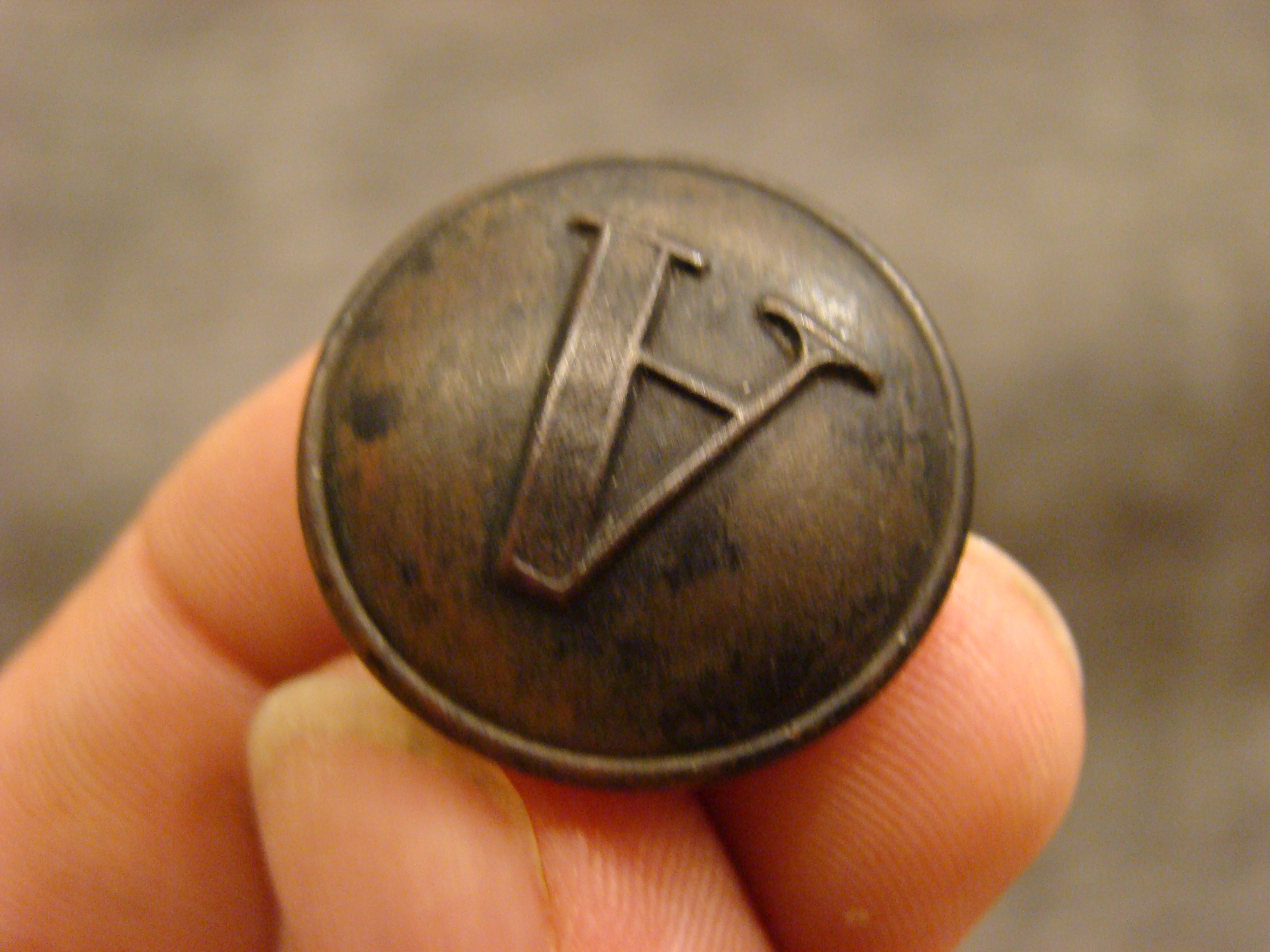
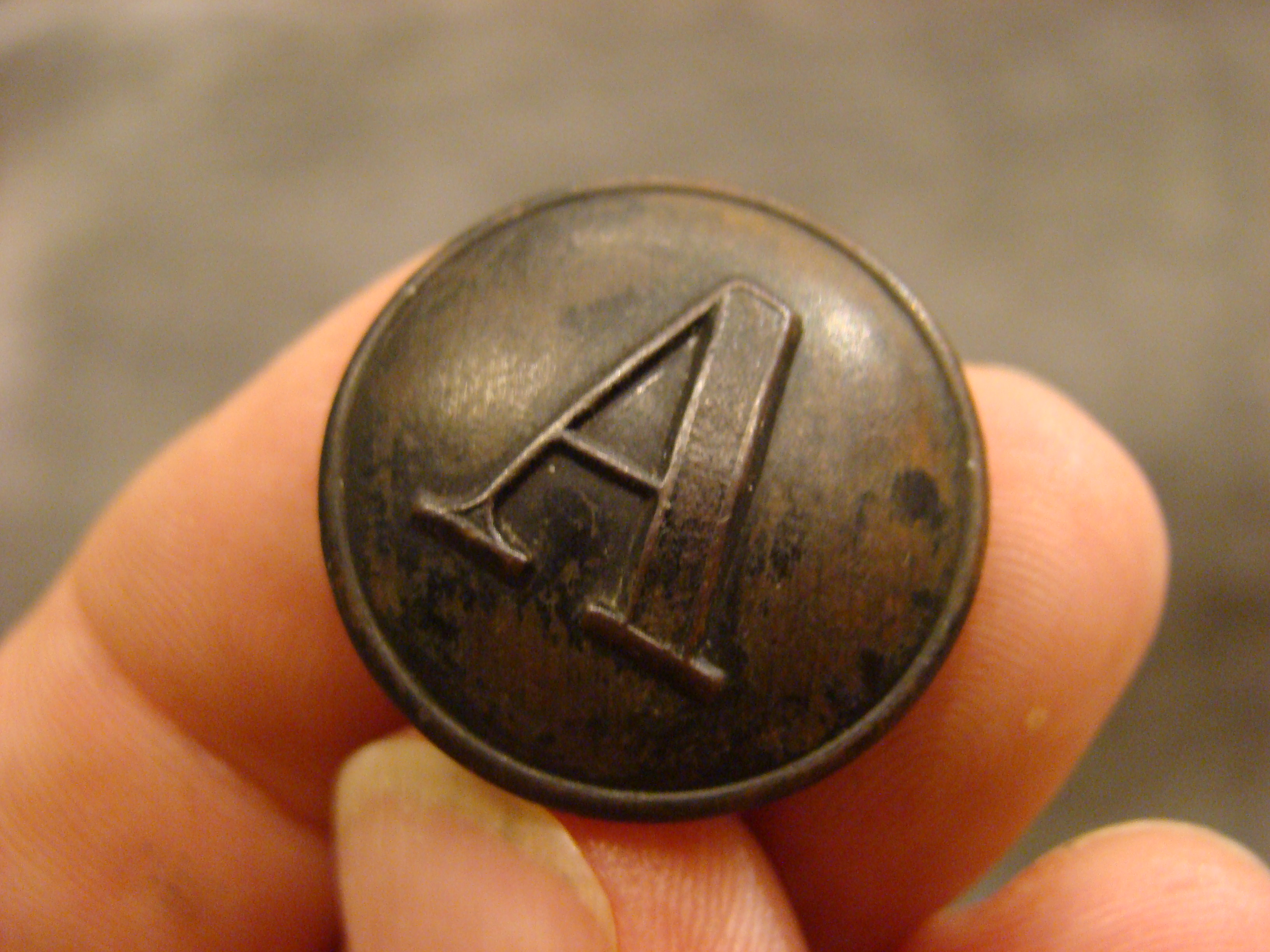
CSBTN A 2. Dug Confederate Artillery Coat Button. Fort Fisher NC.
CS 101, 25 mm. Large Stippled “A” with “HT&B MANCHESTER” bm. This one has “the look”. An absolute beauty. Found in the sugar white sand near Fort Fisher NC. $495.00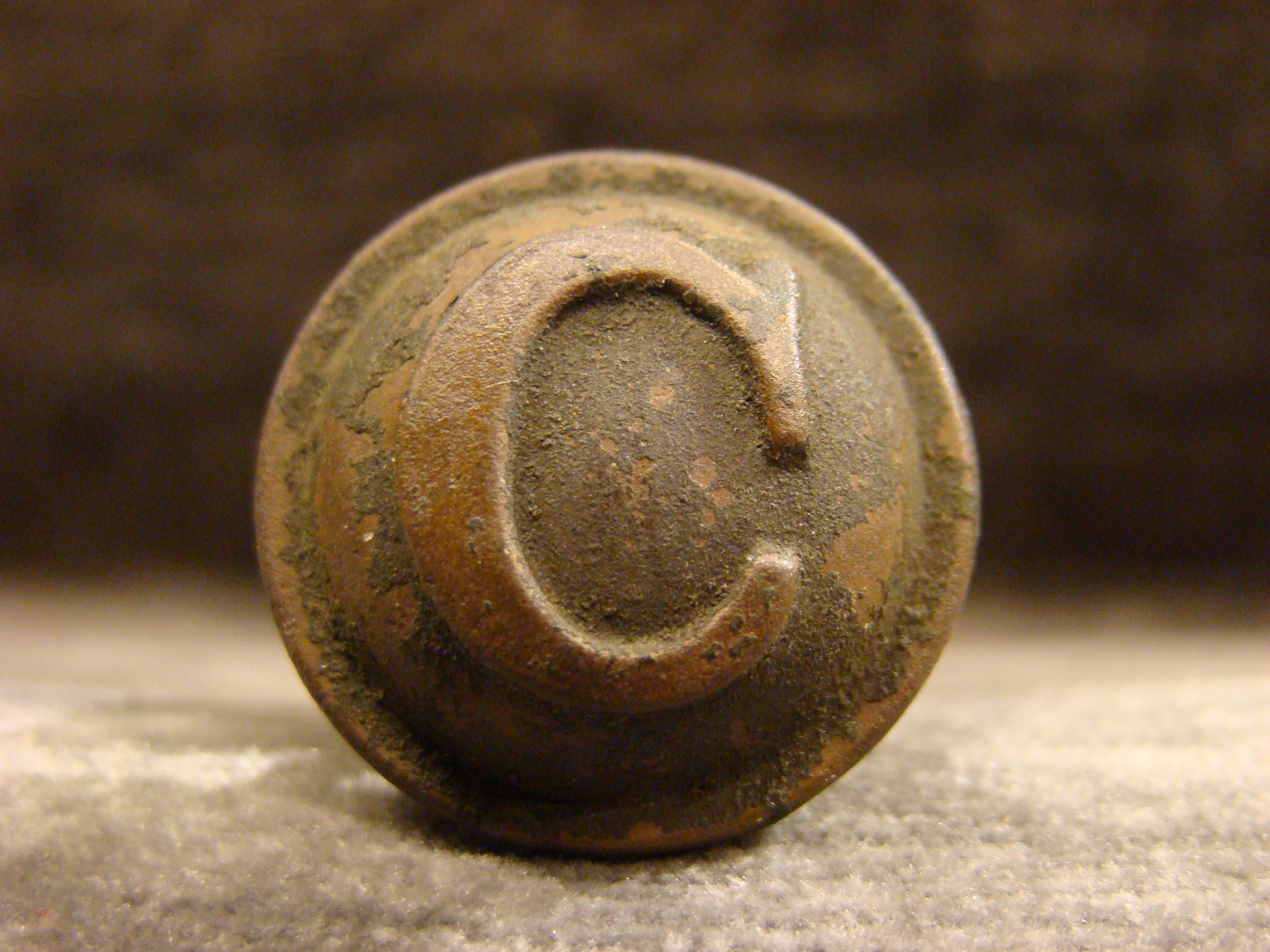
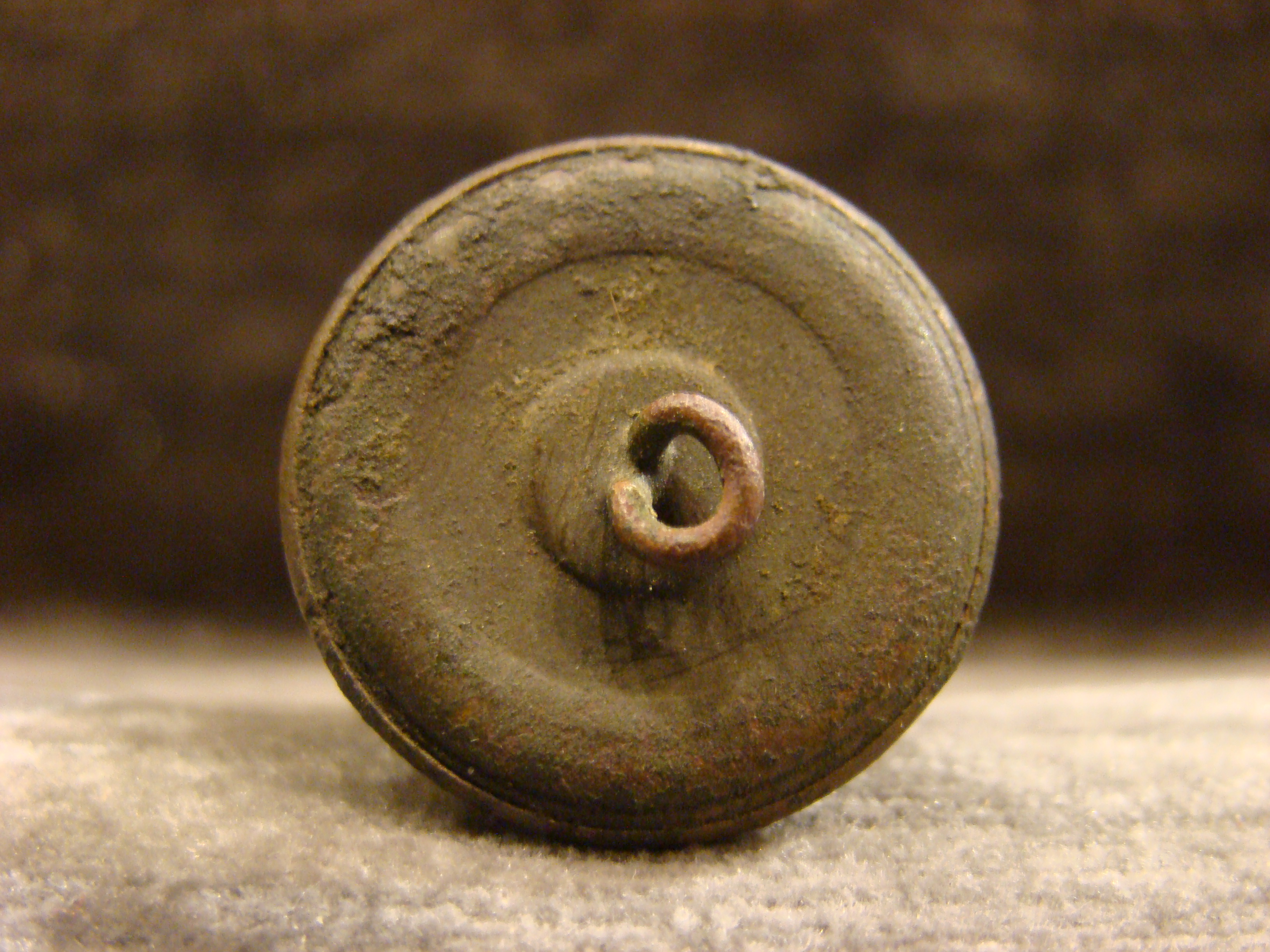
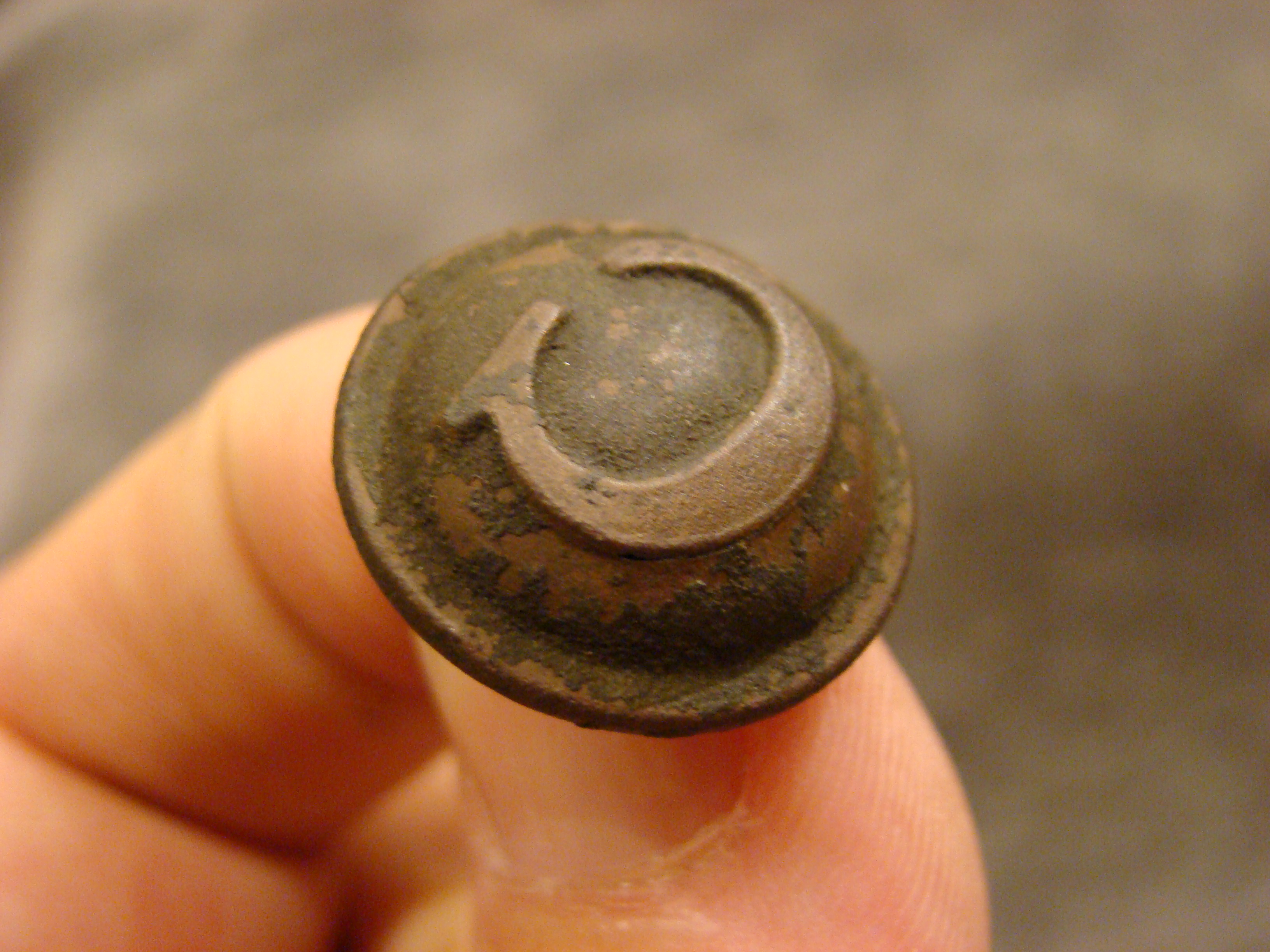
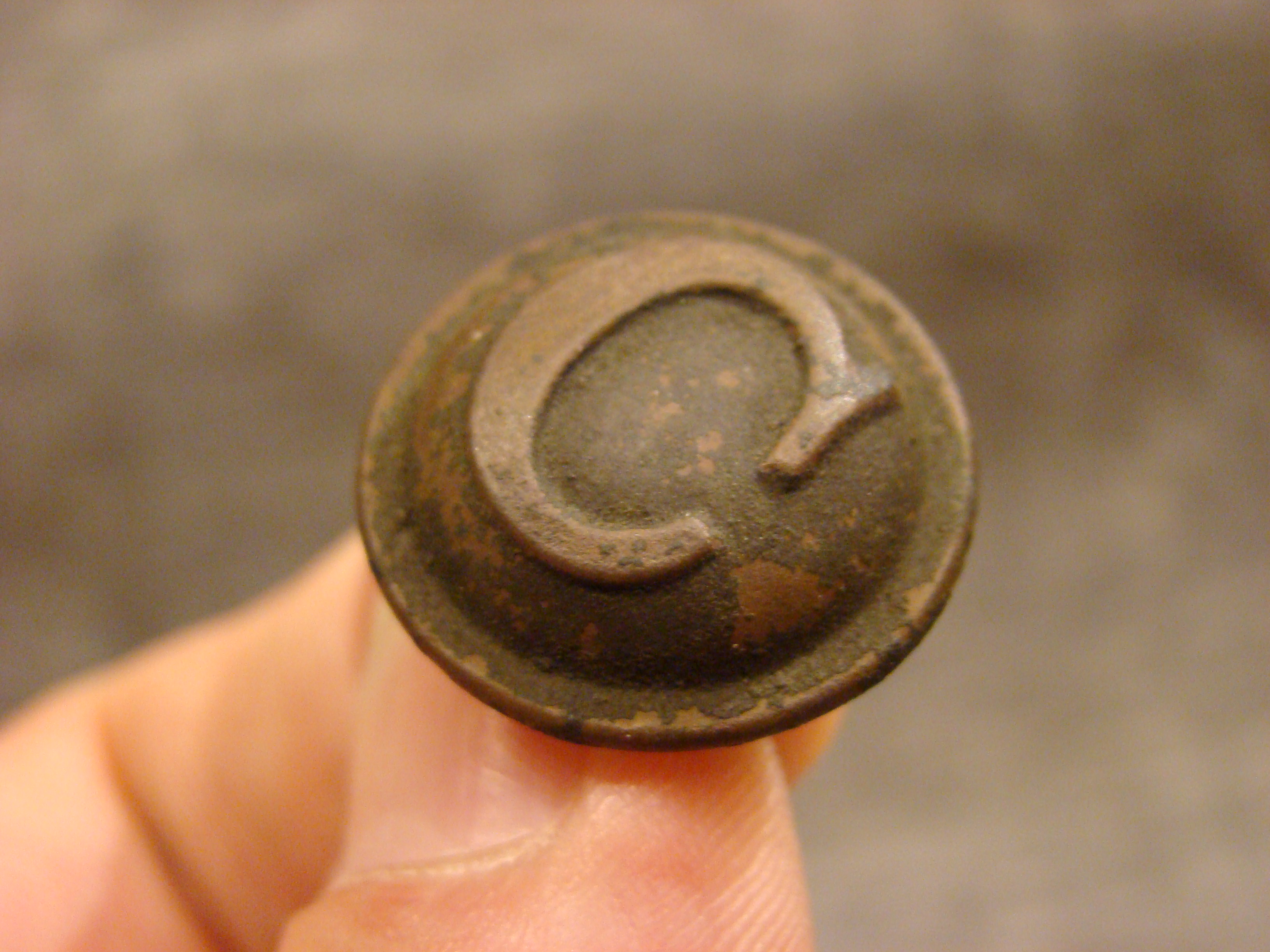
CSBTN C 1. Dug Confederate Cavalry Coat Button. Richmond VA.
CS 22 mm. Really rare High Dome”C” in excellent condition. No pushes or repairs. Chocolate brown patina. Found by Charlie Purks near Richmond. HOLD D.A.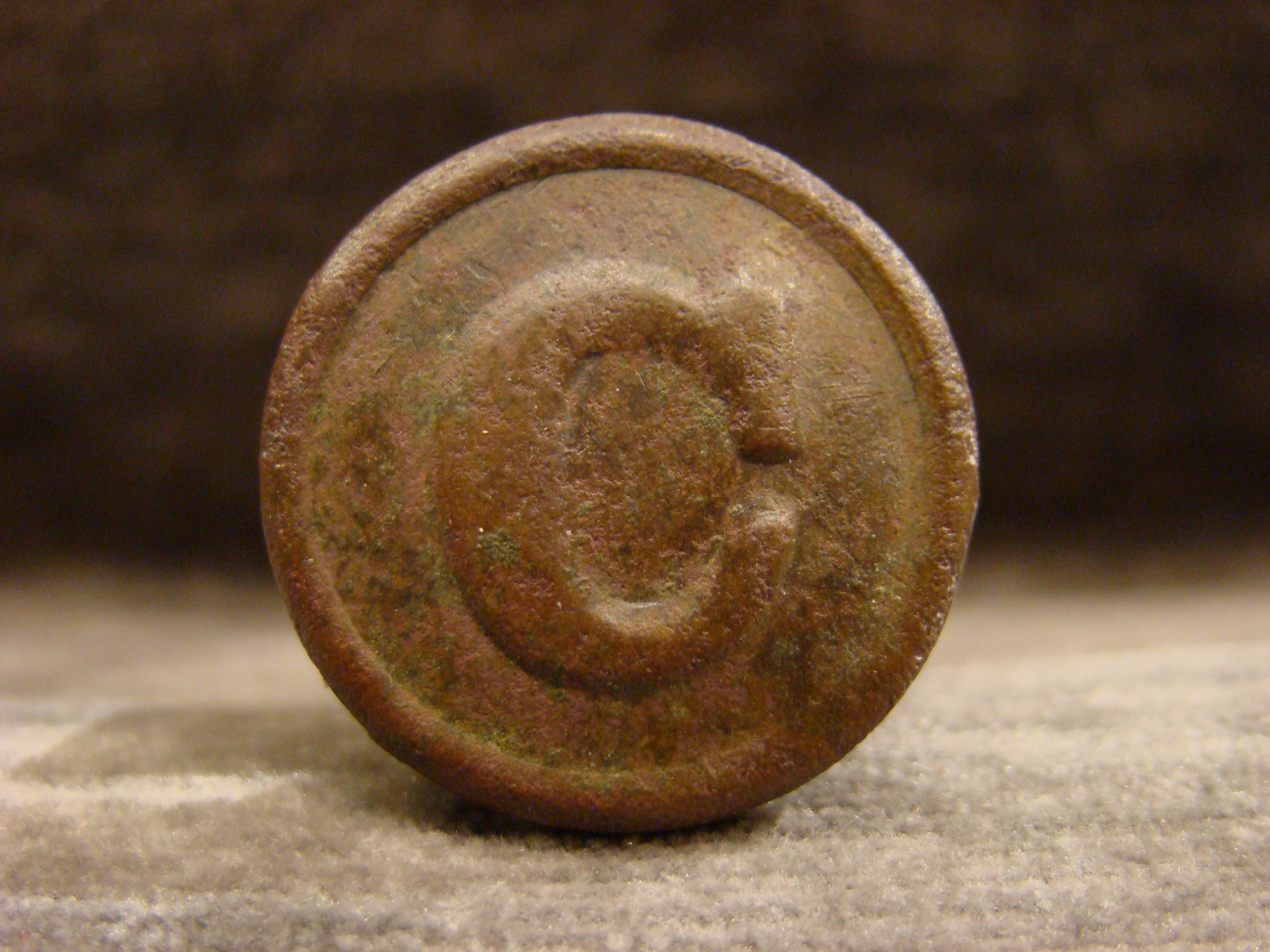
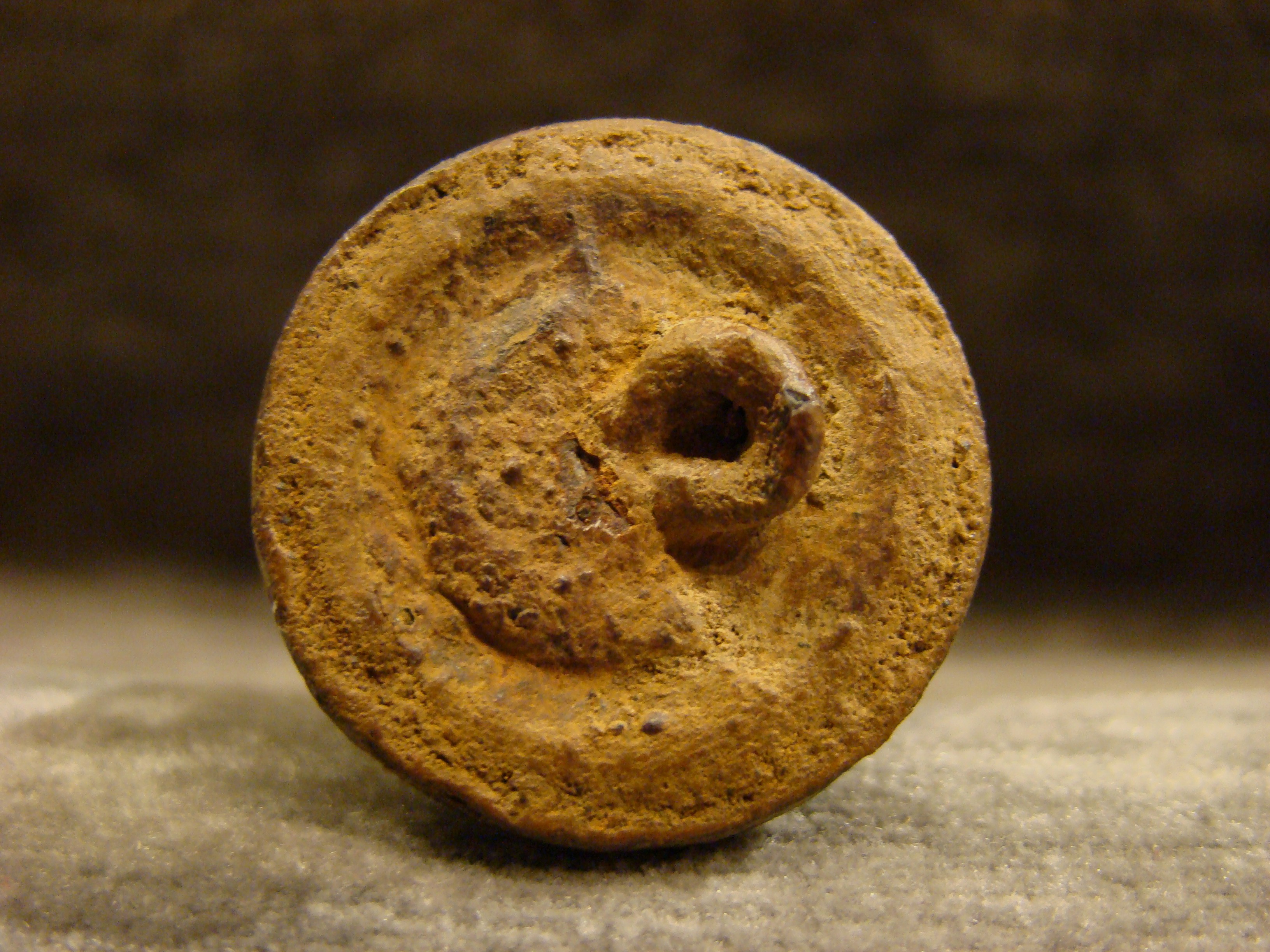
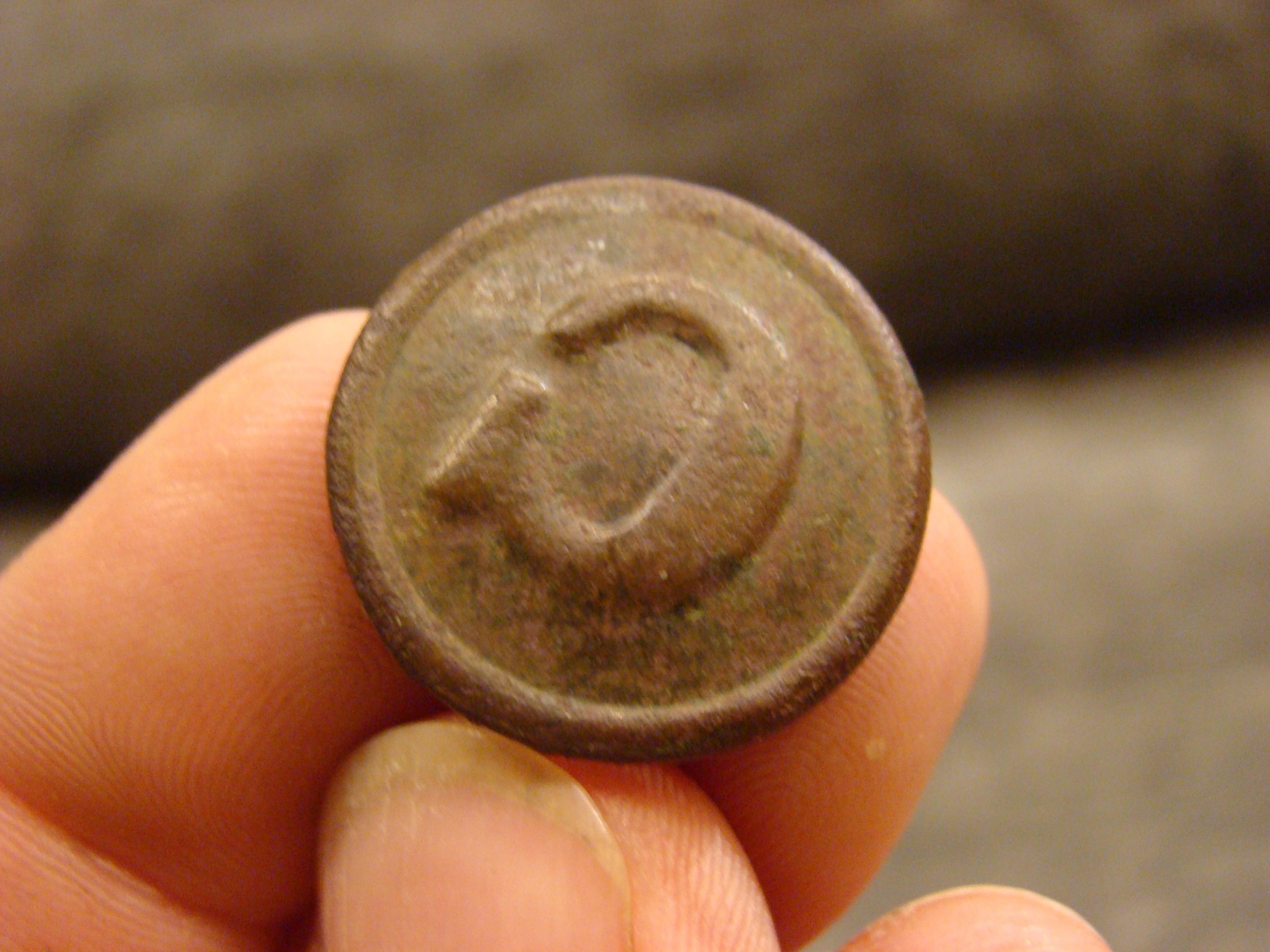
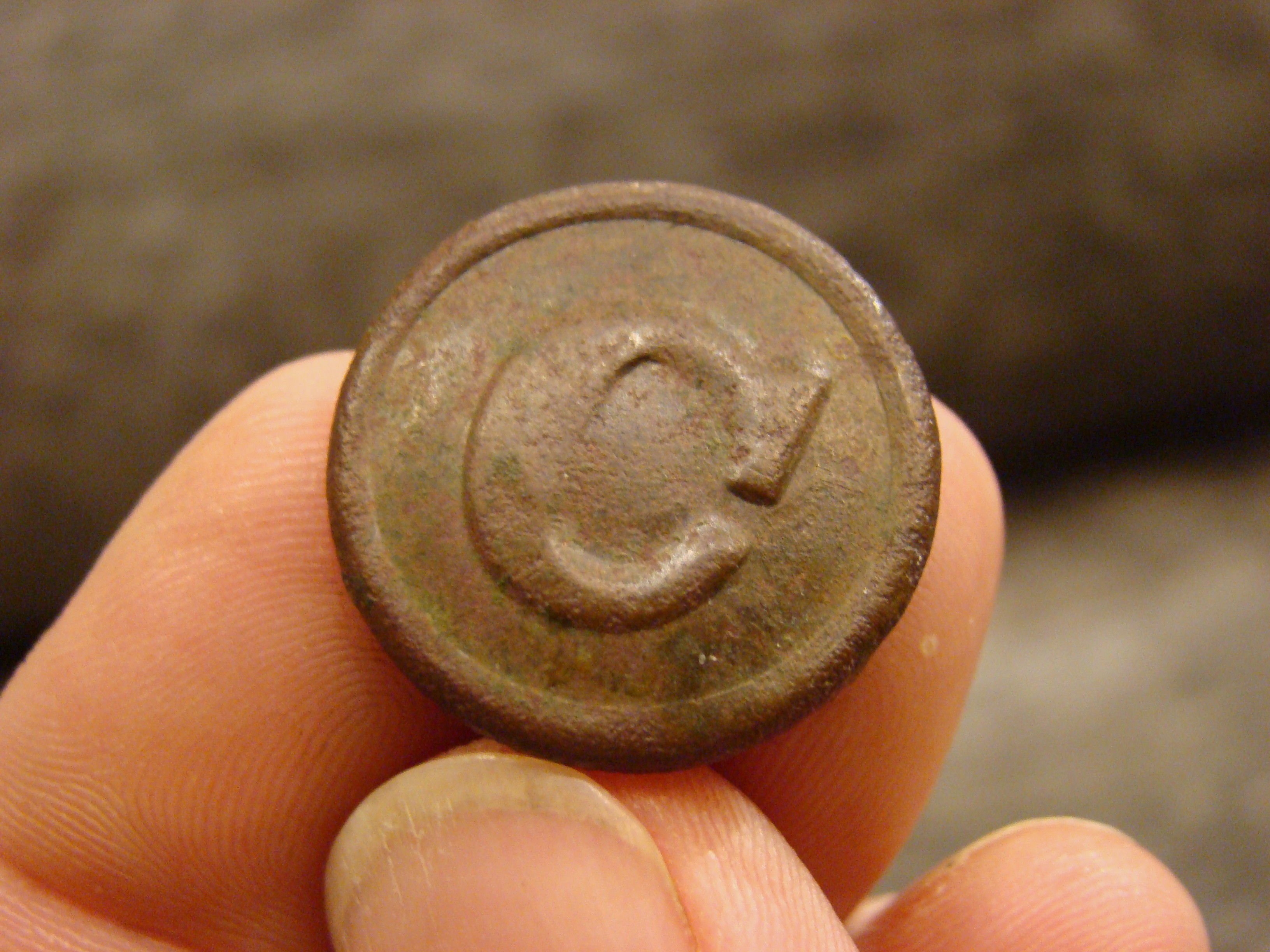
CSBTN C 2. Dug Confederate Cavalry Coat Button. Middle Tennessee.
CS 23 mm. High quality example of this rare Western Theater low convex “C”. Smooth milk chocolate brown patina. Tin back is in good condition with intact shank. $495.00 HOLD B.C.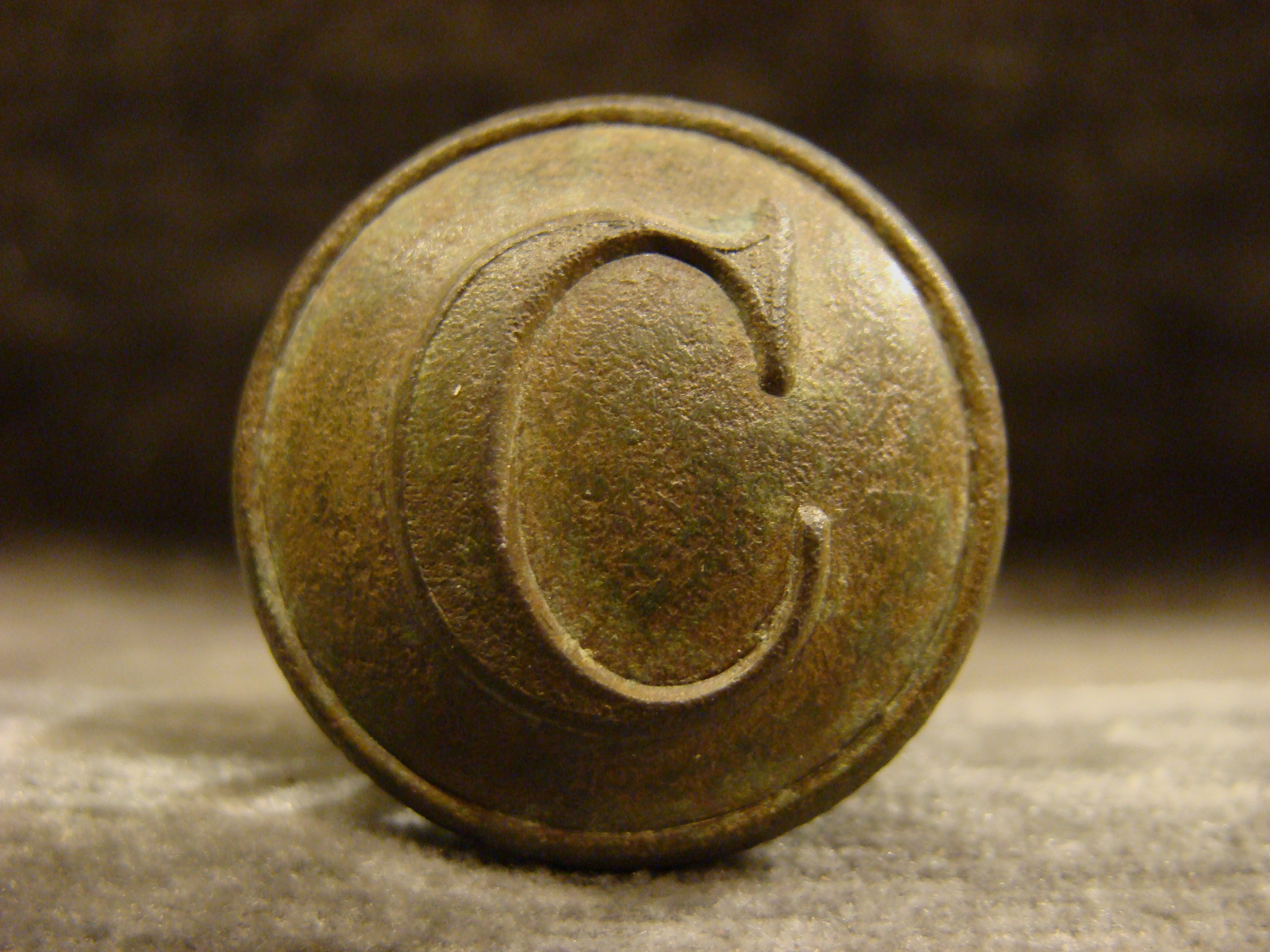
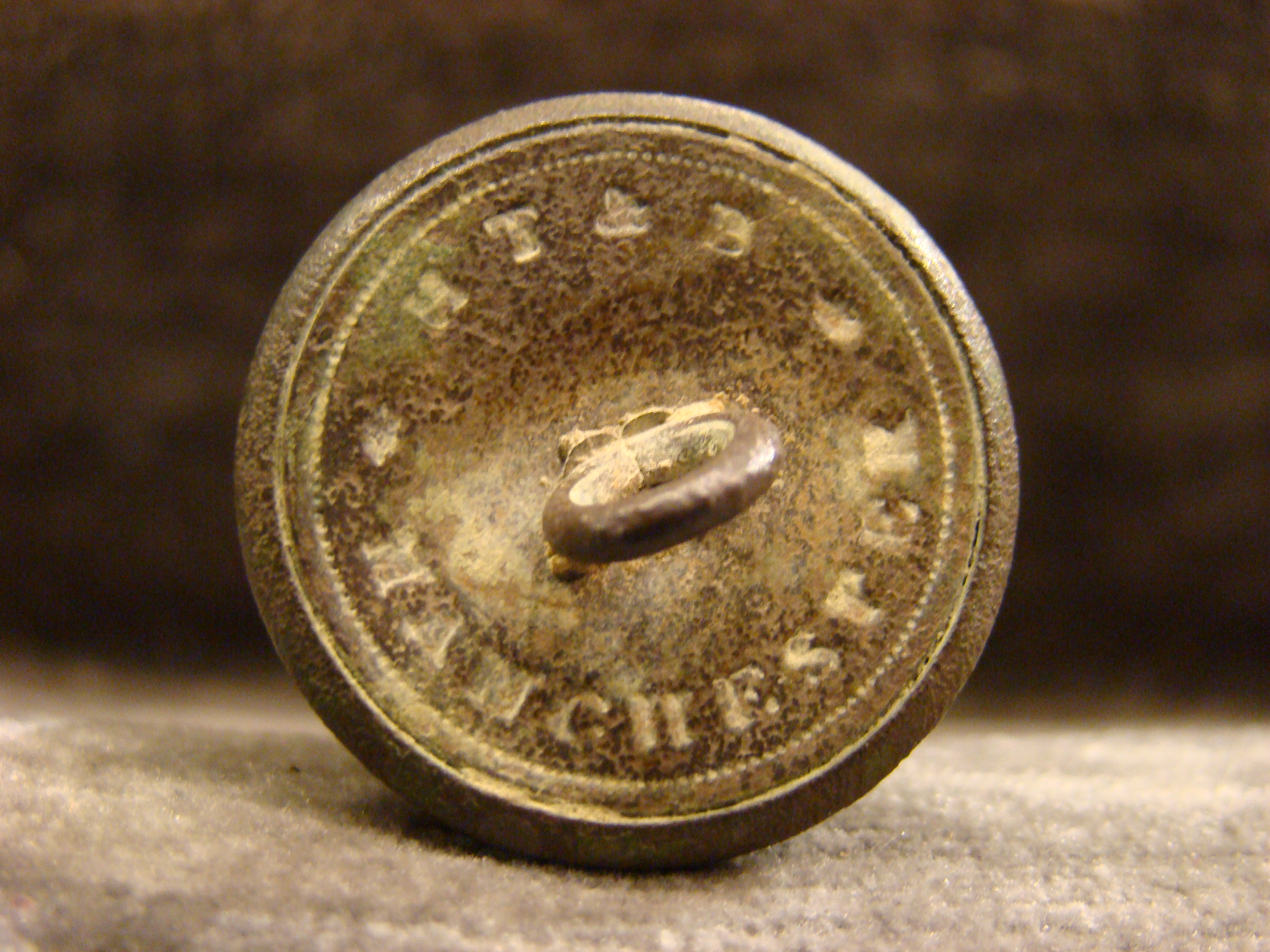
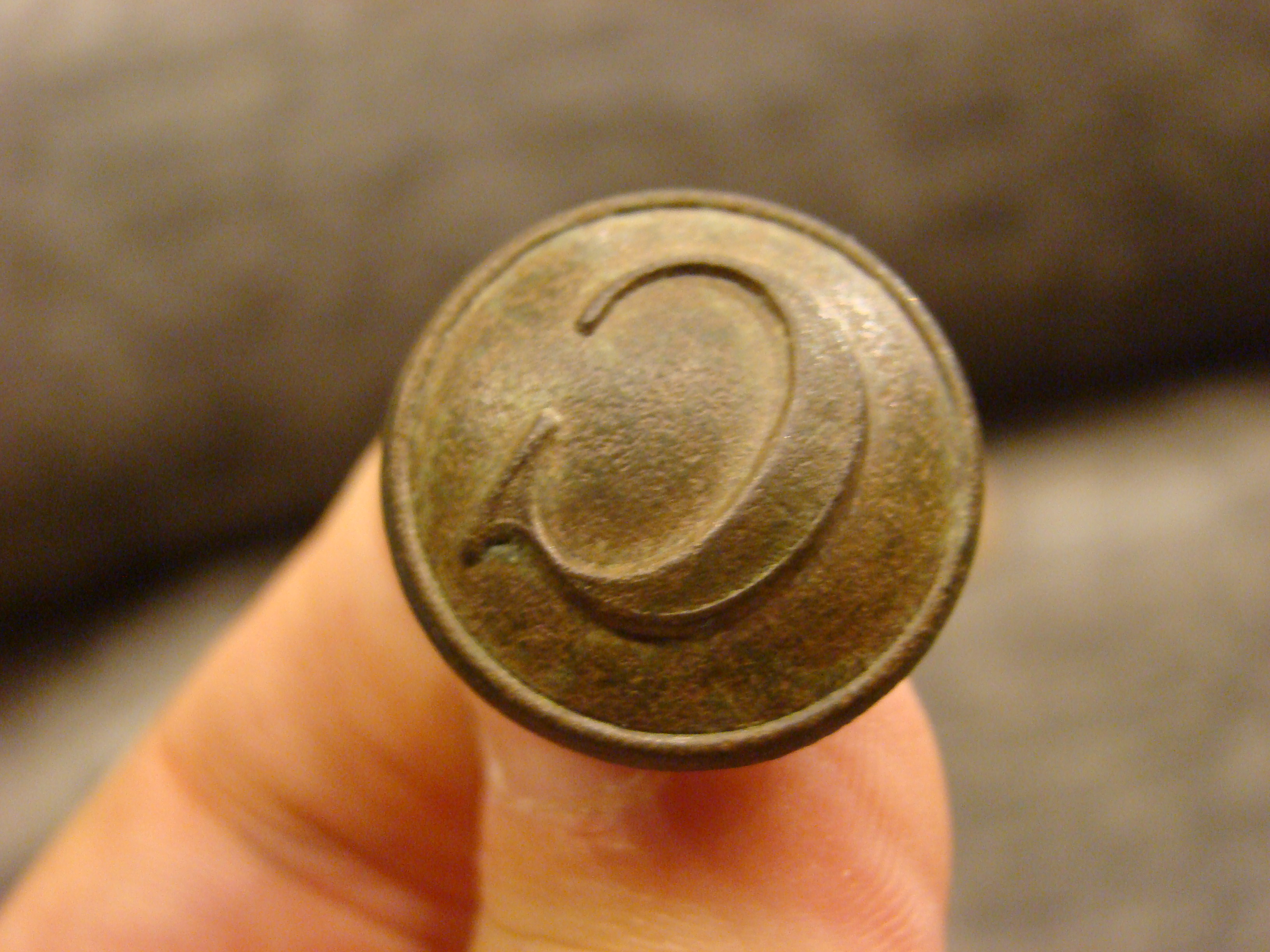
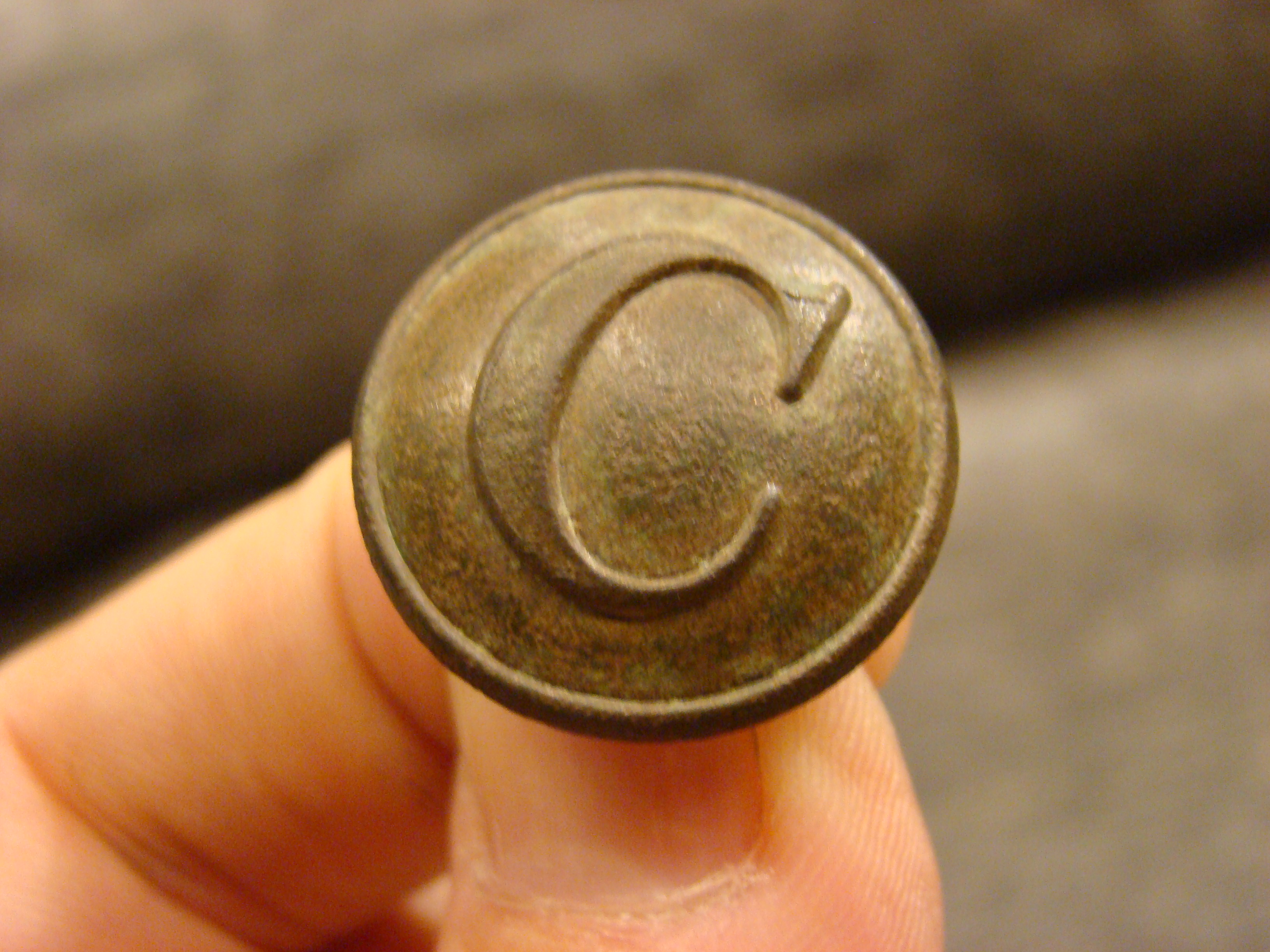
CSBTN C 3. Dug Confederate Cavalry Coat Button. Cold Harbor VA.
CS 126 A, 25 mm. Large “Stippled C” Cavalry Button. Very fine condition. Smooth brown patina with no cracks or repairs. Shank intact. “HT&B MANCHESTER” bm. Found by Jerry Bochek near Cold Harbor VA. $650.00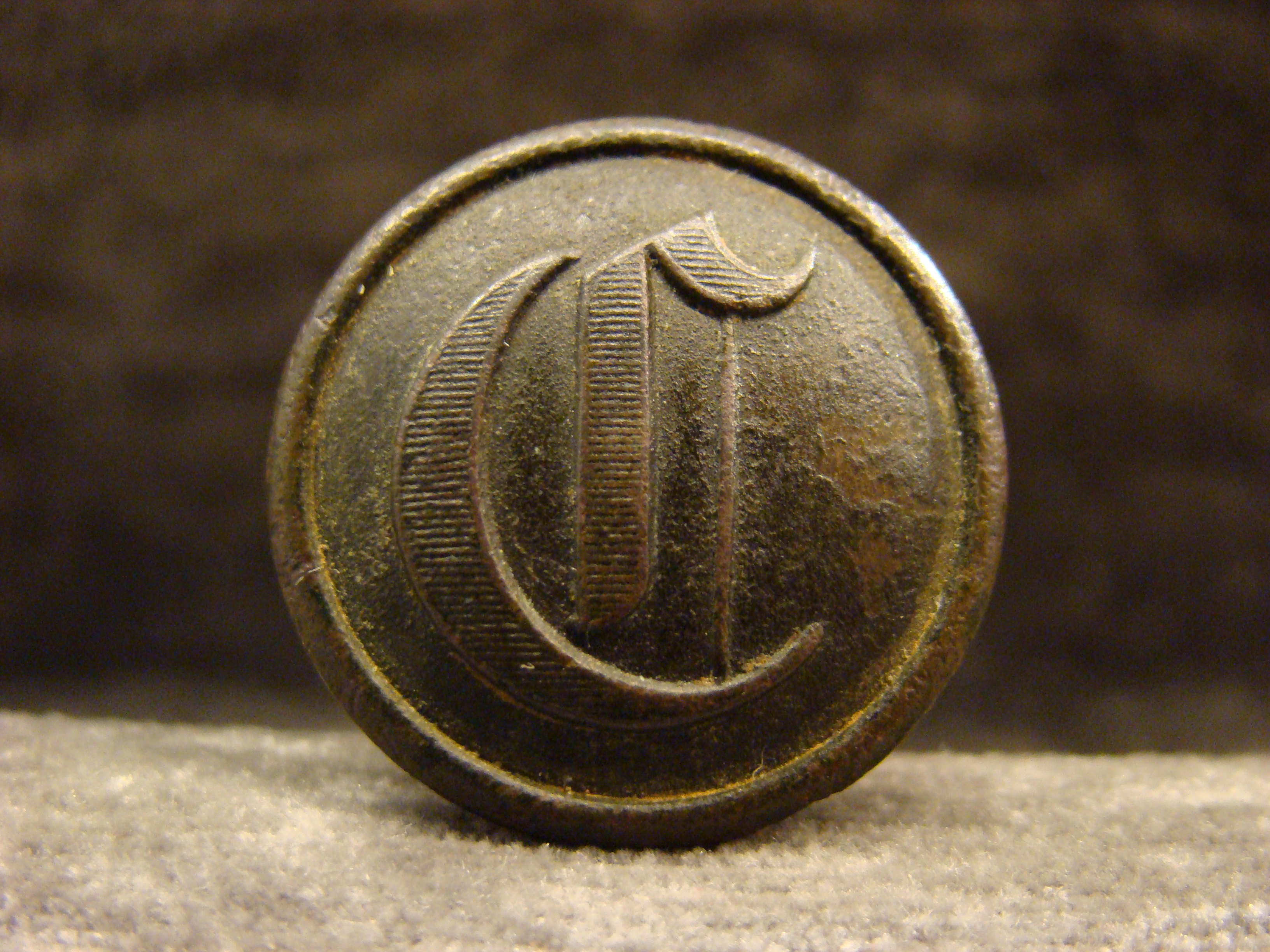
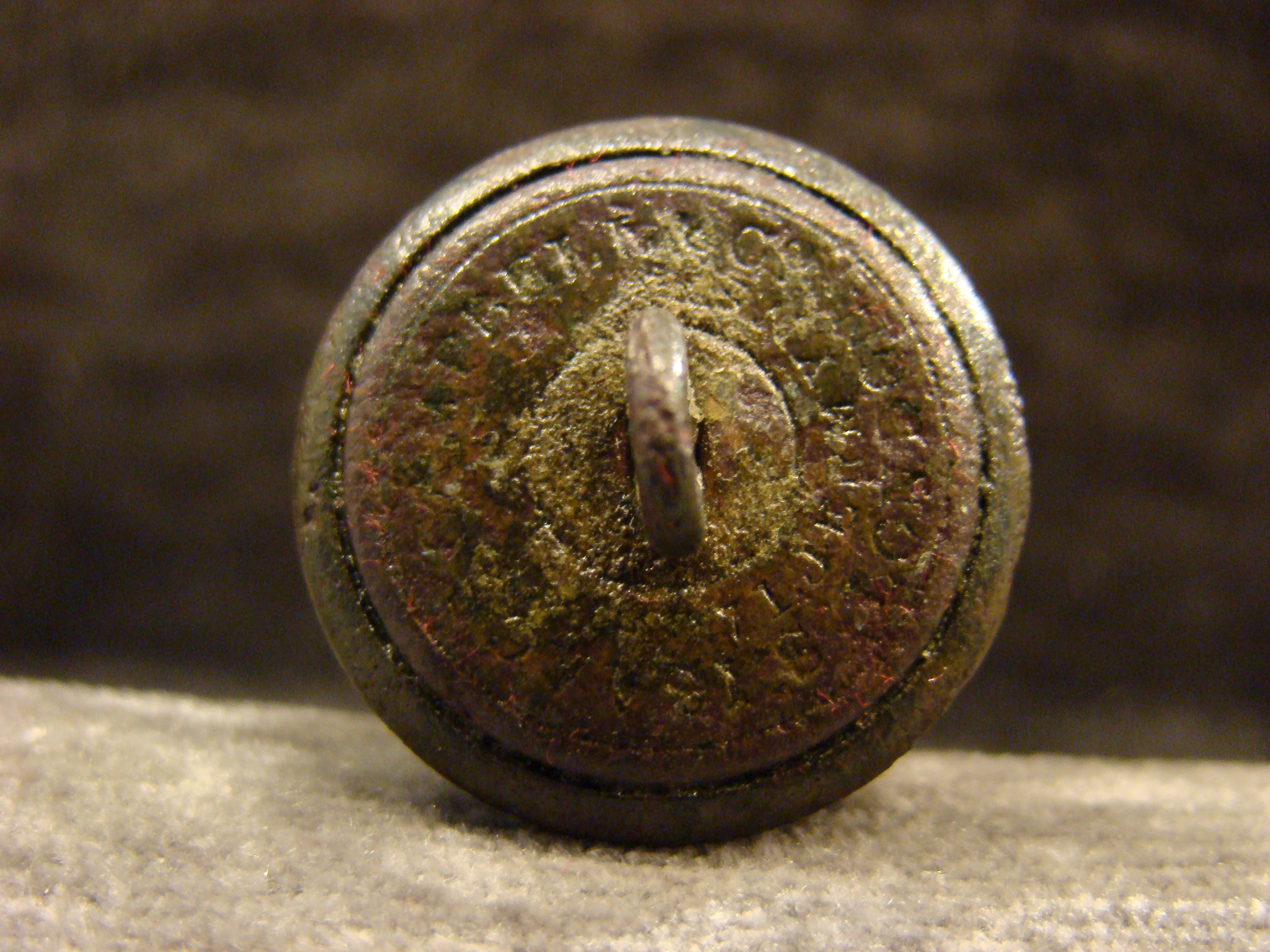
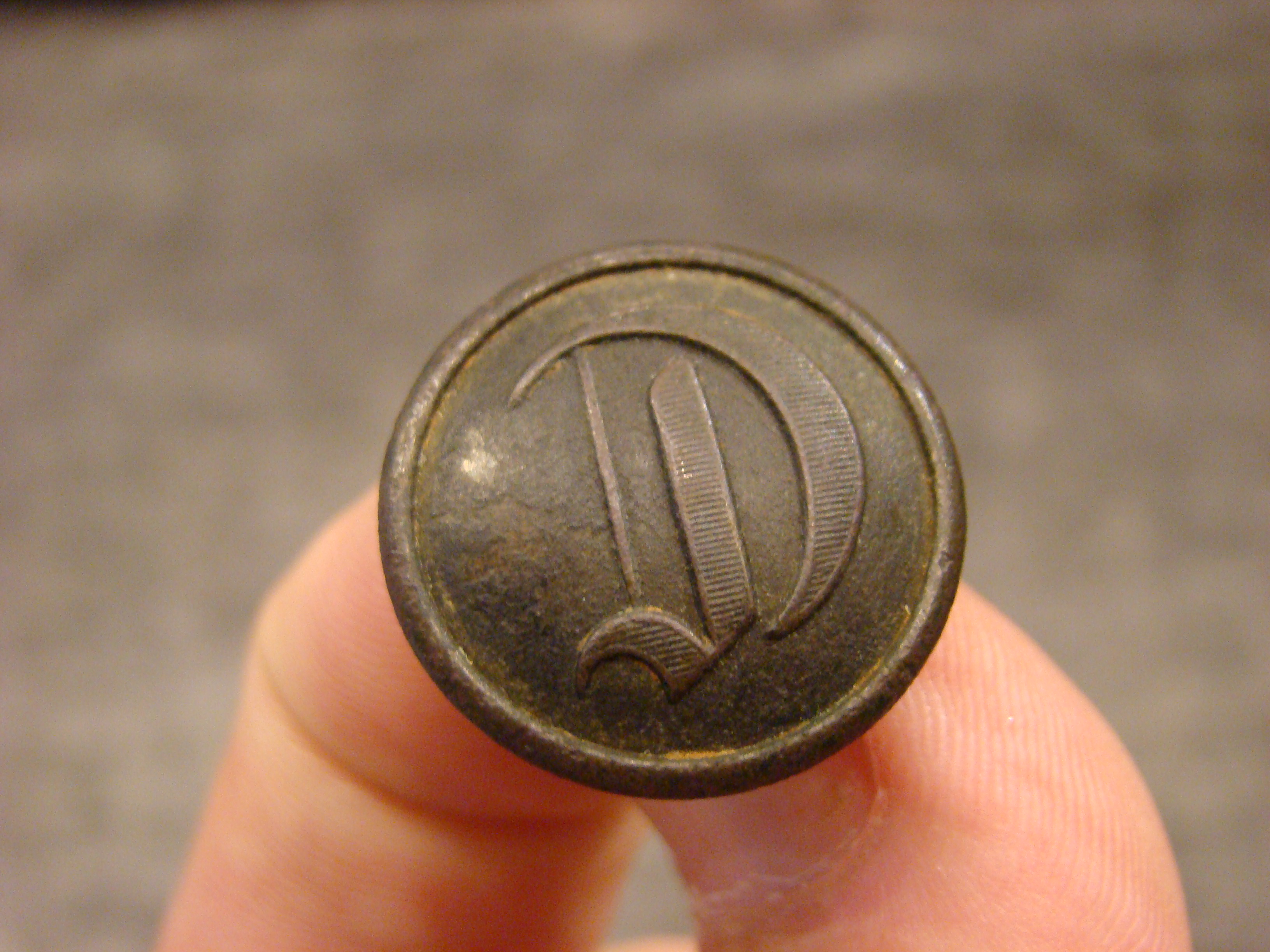
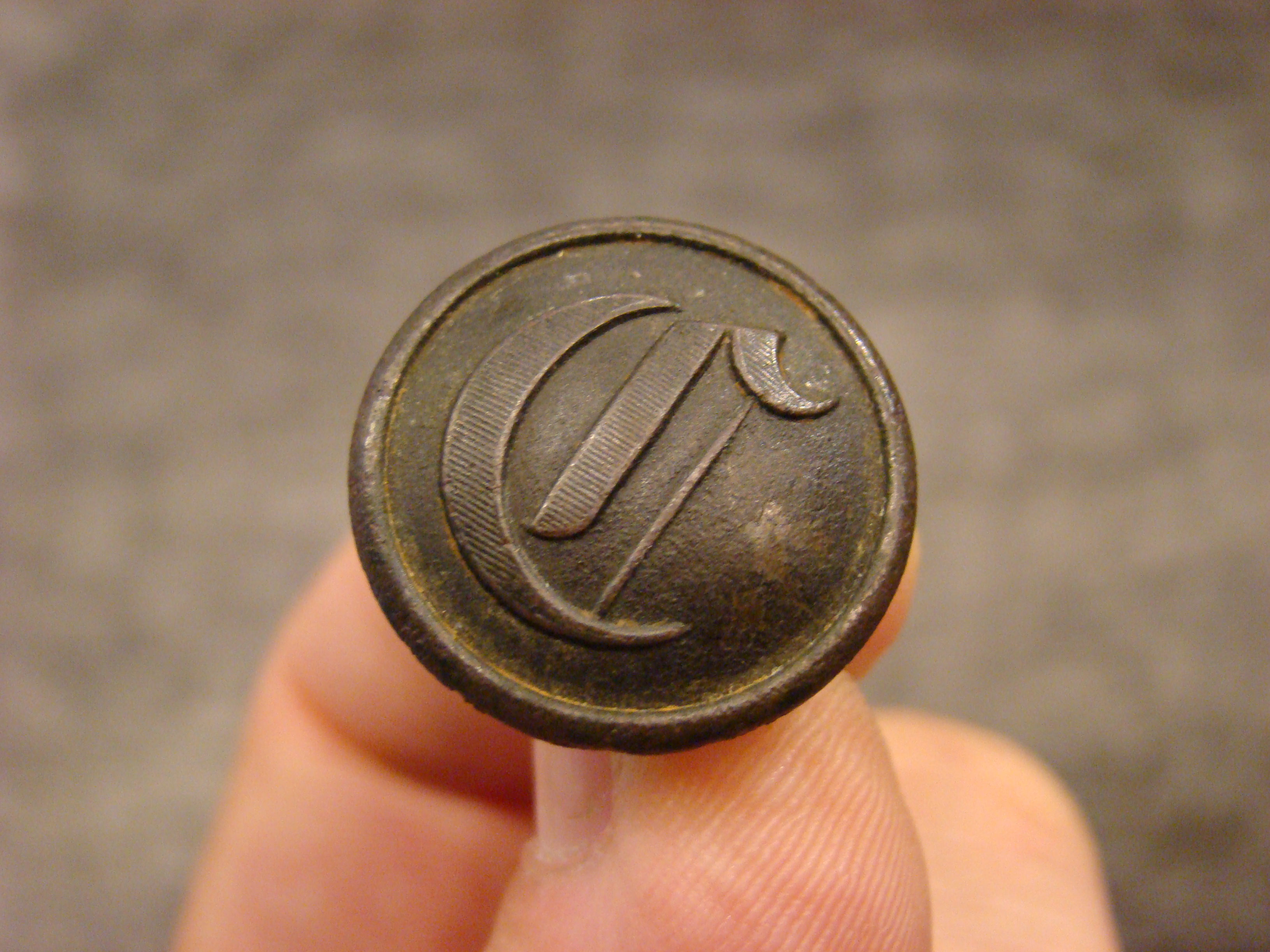
CSBTN C 4. Dug Confederate Cavalry Coat Button.
CS 130, 23 mm. Good excavated example of the script “C” cavalry button with no issues and a nice looking patina. “S. Isaacs & Campbell/London/71 Jermyn St” bm. Provenance of Northern VA. $495.00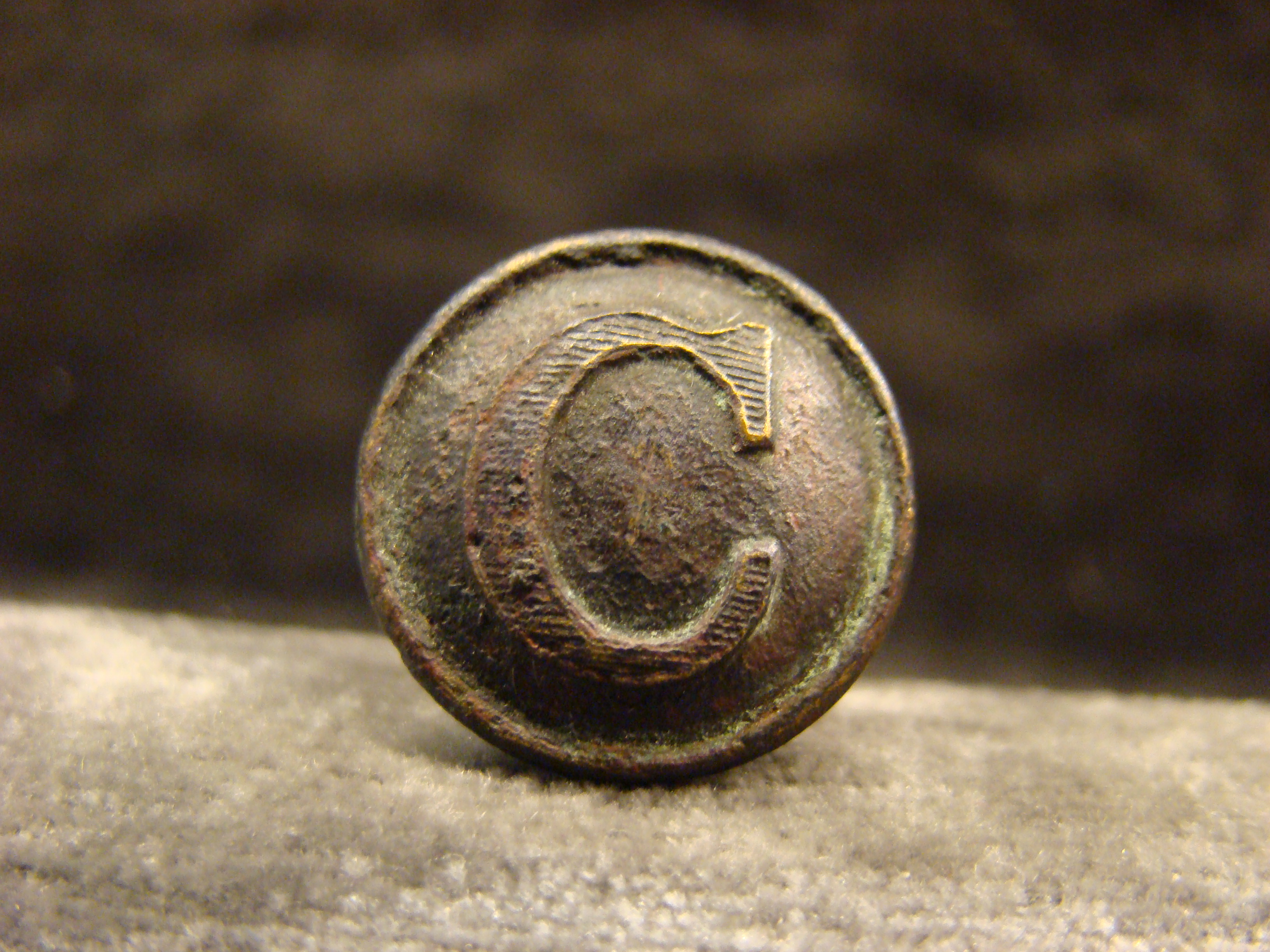
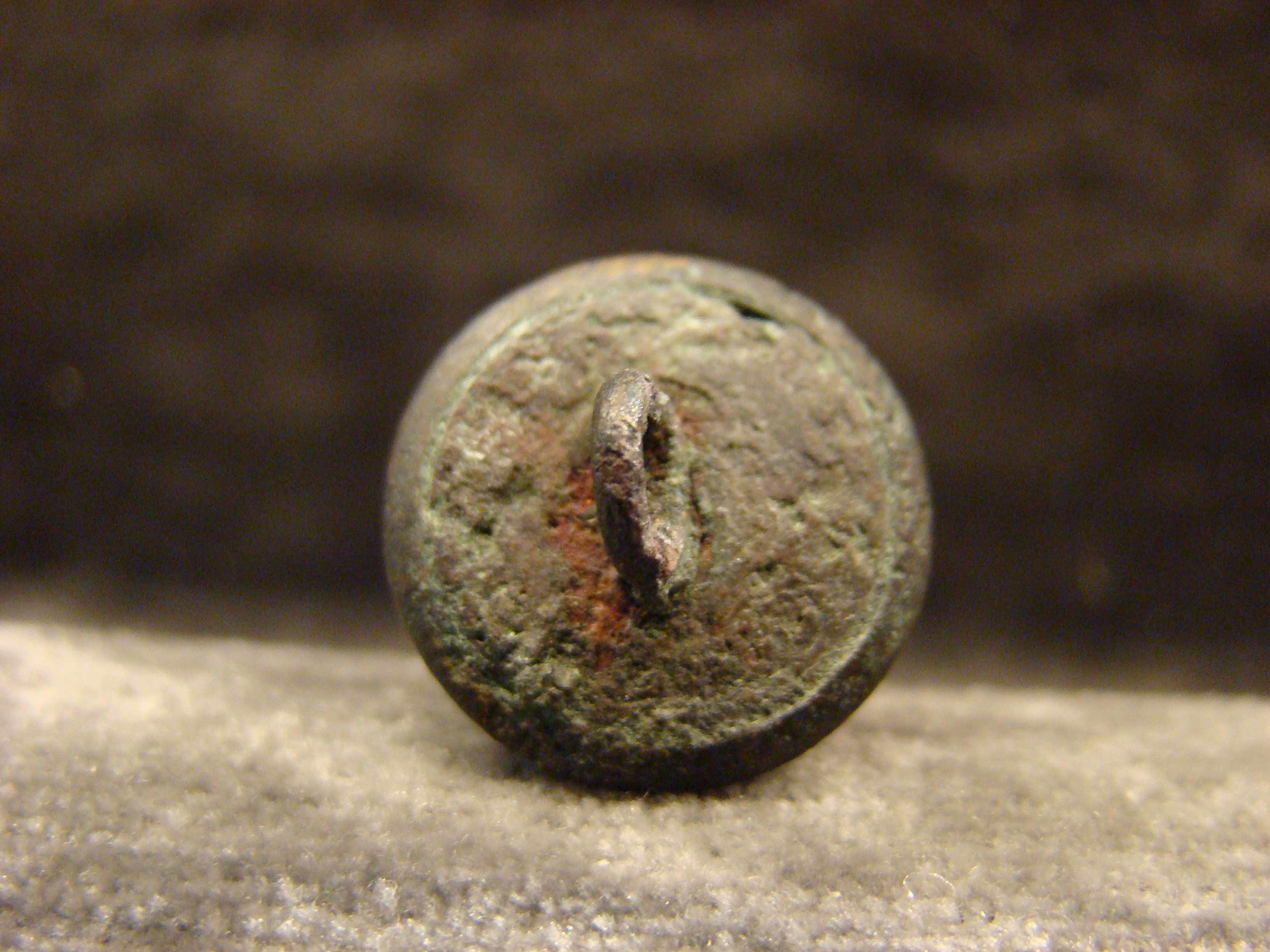
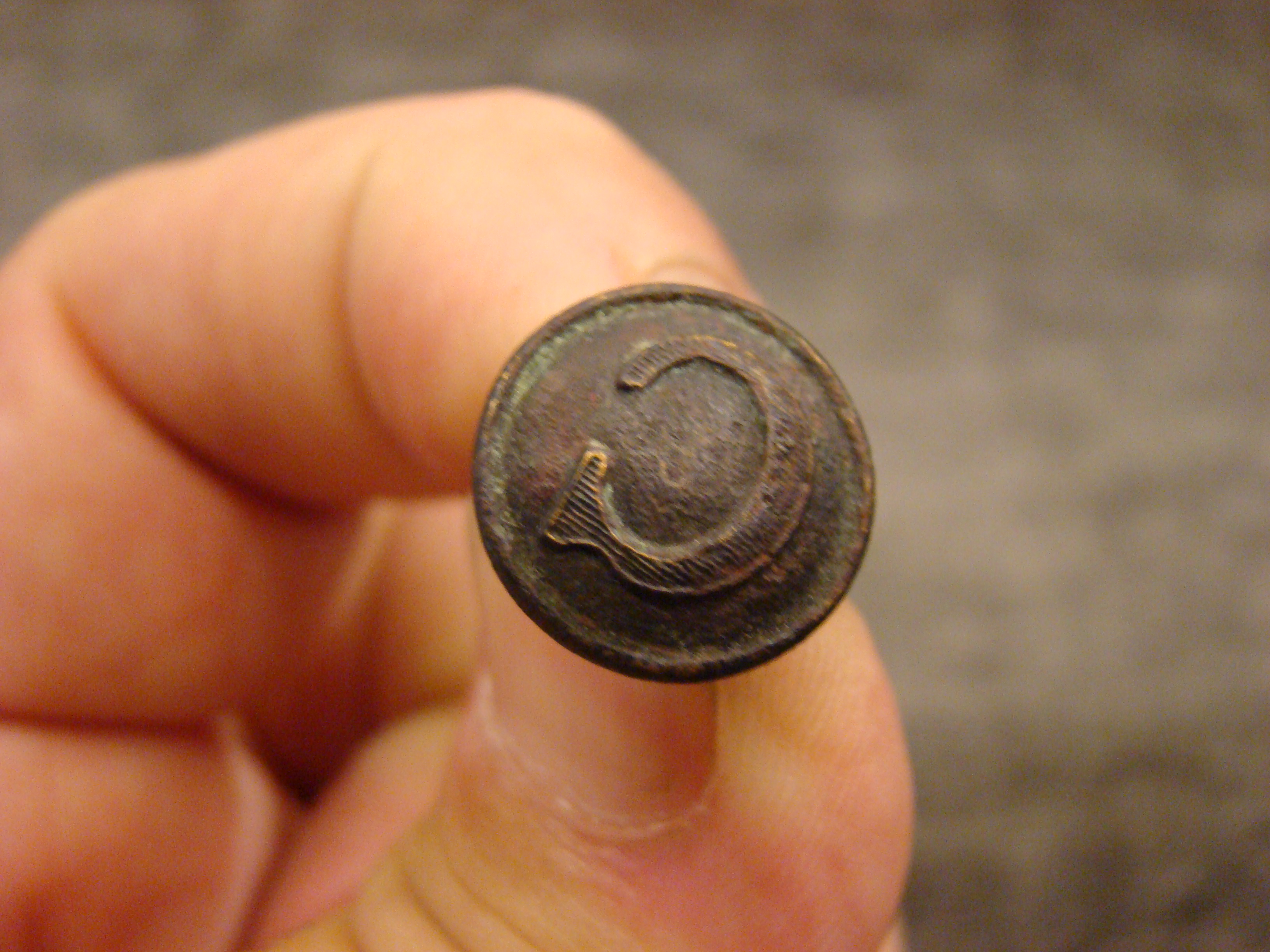
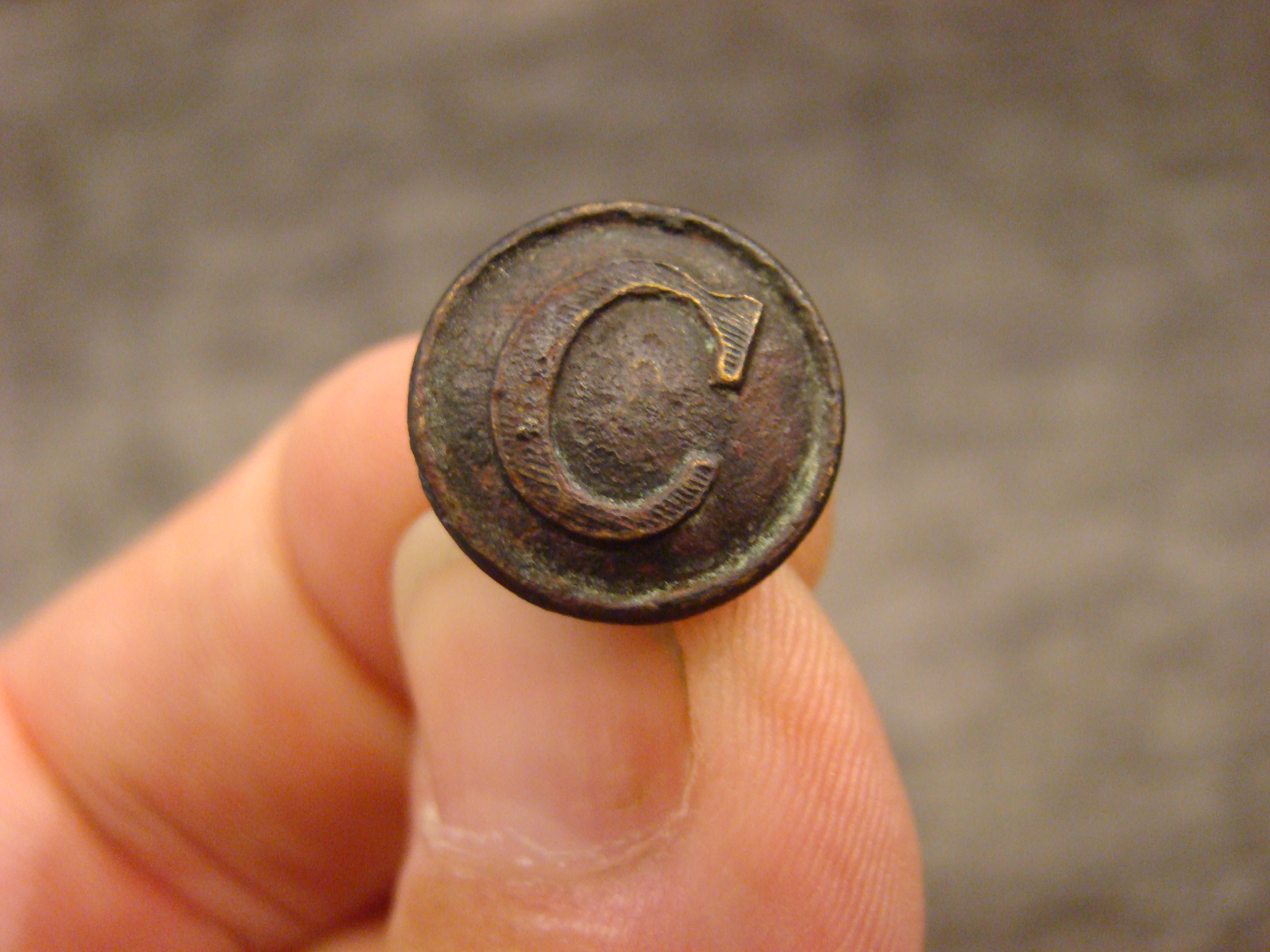
CSBTN C 4. Dug Confederate Cavalry Cuff Button. Winchester VA.
CS 127, 15 mm. Hard to fine lined “C” Cavalry Cuff Button. Good overall condition. No pushes or repairs. Shank intact. Backmark obscured by ground action. $495.00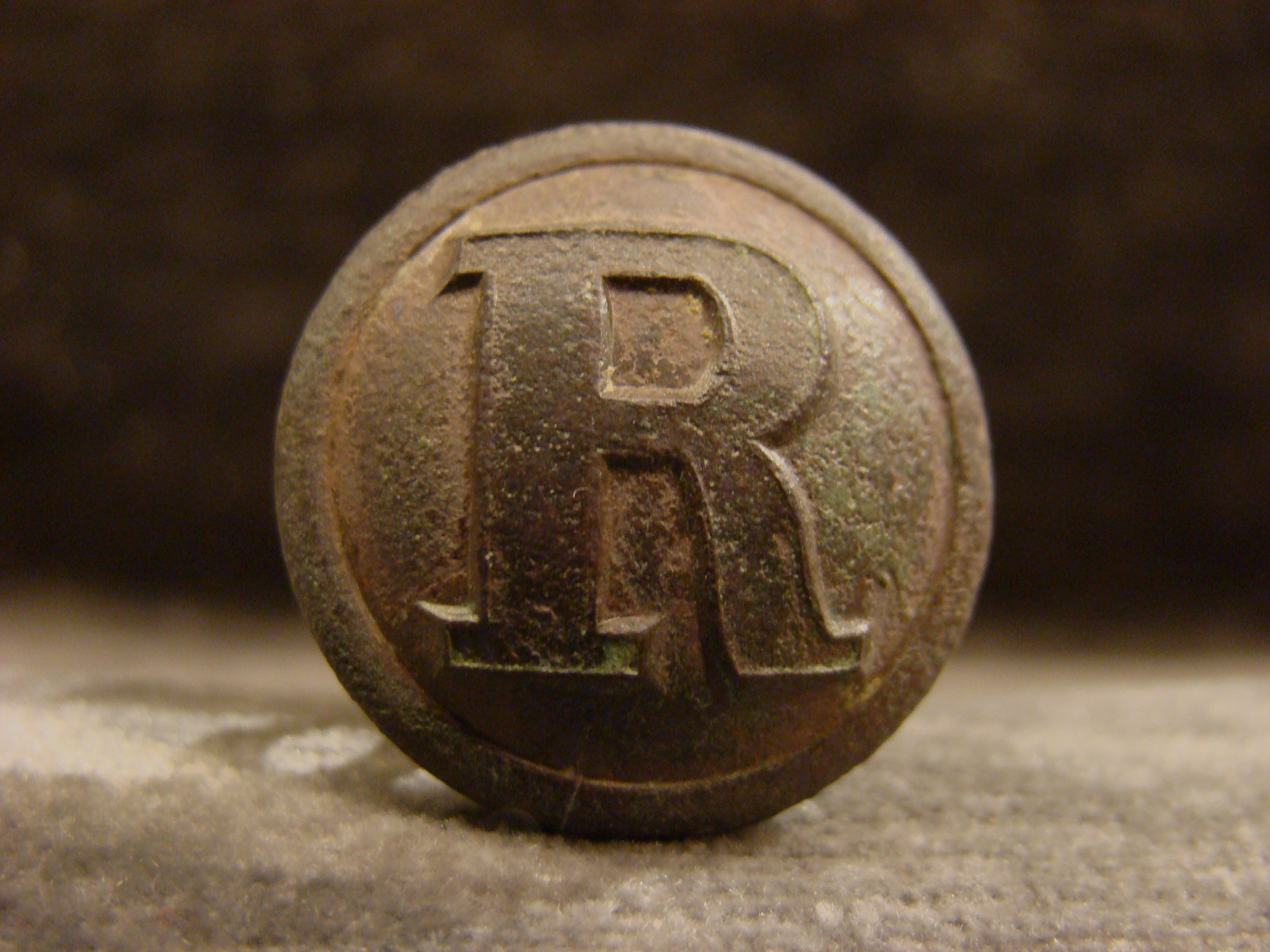
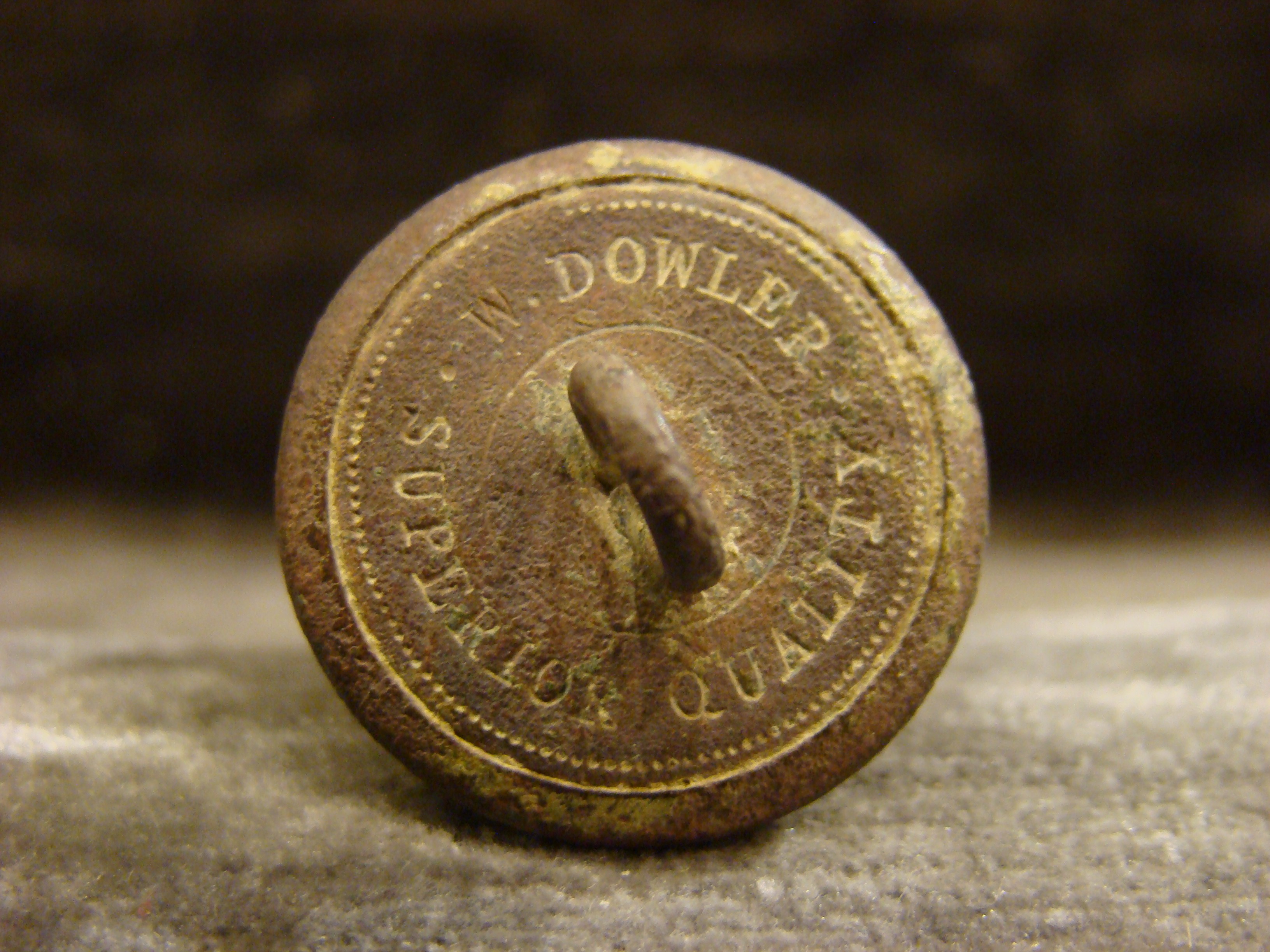
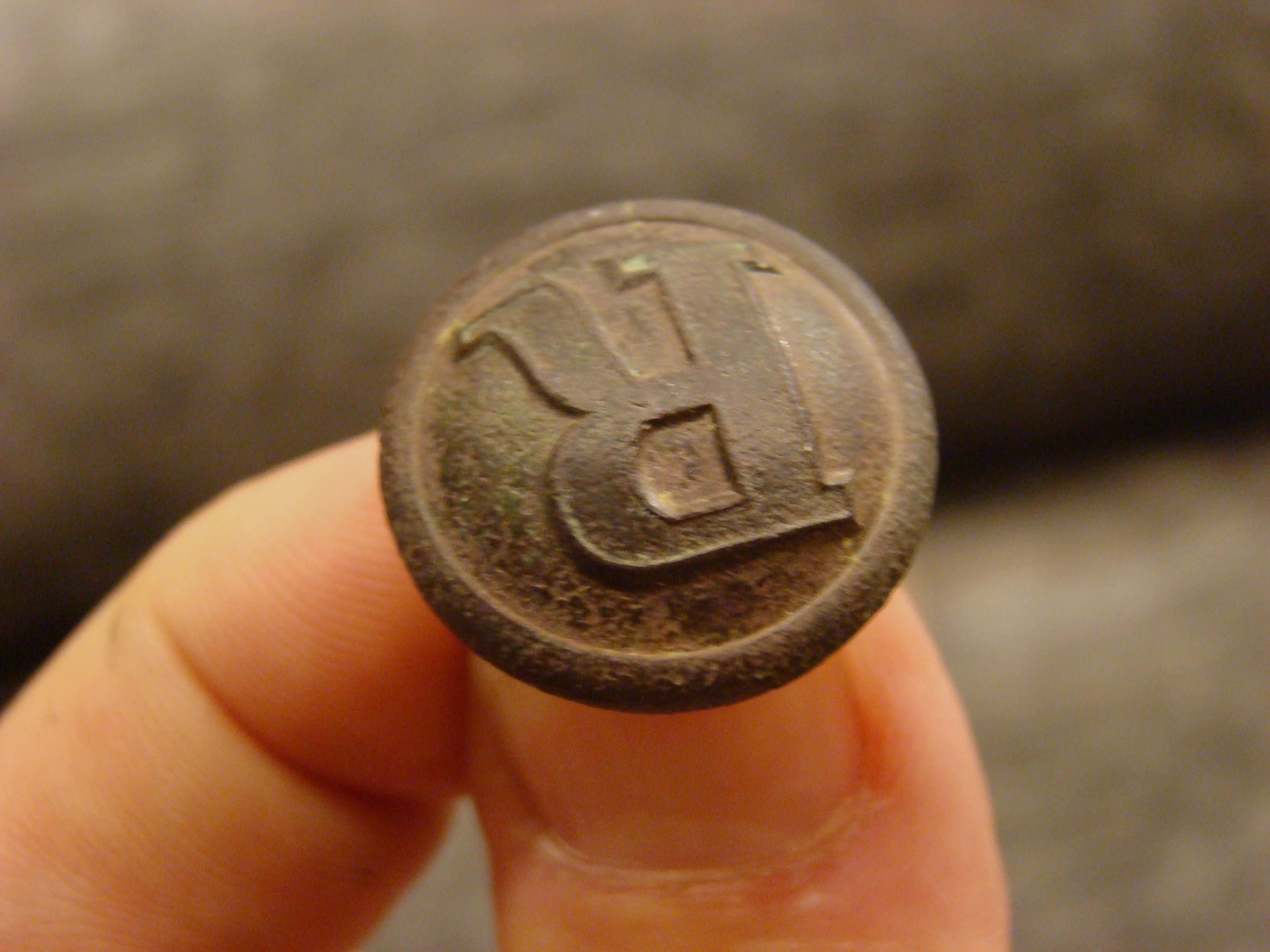
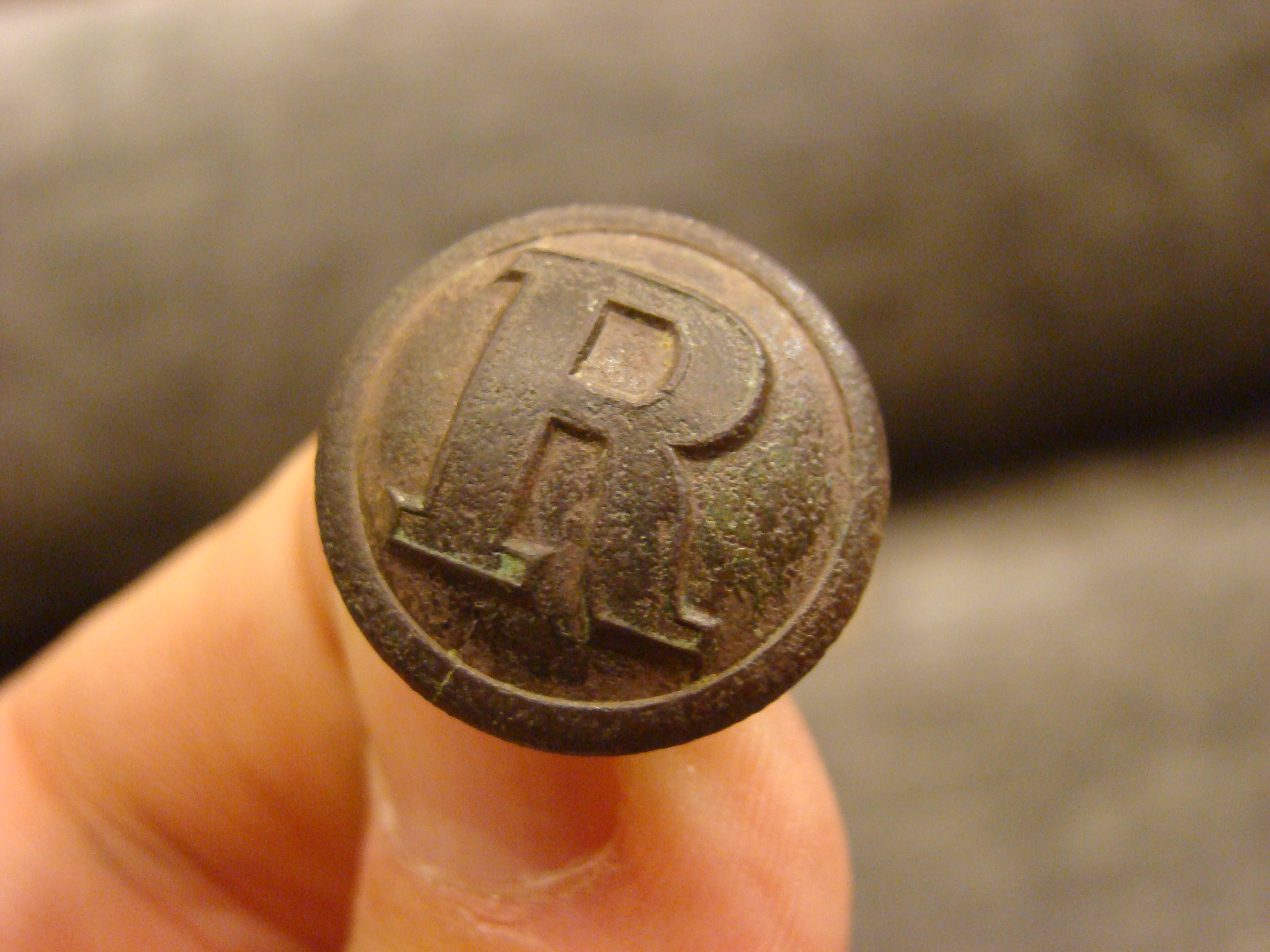
CSBTN R 1. Dug Confederate Rifleman’s Coat Button. Cold Harbor VA.
CS 202, 22 mm. High quality example of this scarce button. Shank intact. “W.DOWLER/SUPERIOR QUALITY” bm. Found by Jerry Bochek near Cold Harbor VA. $895.00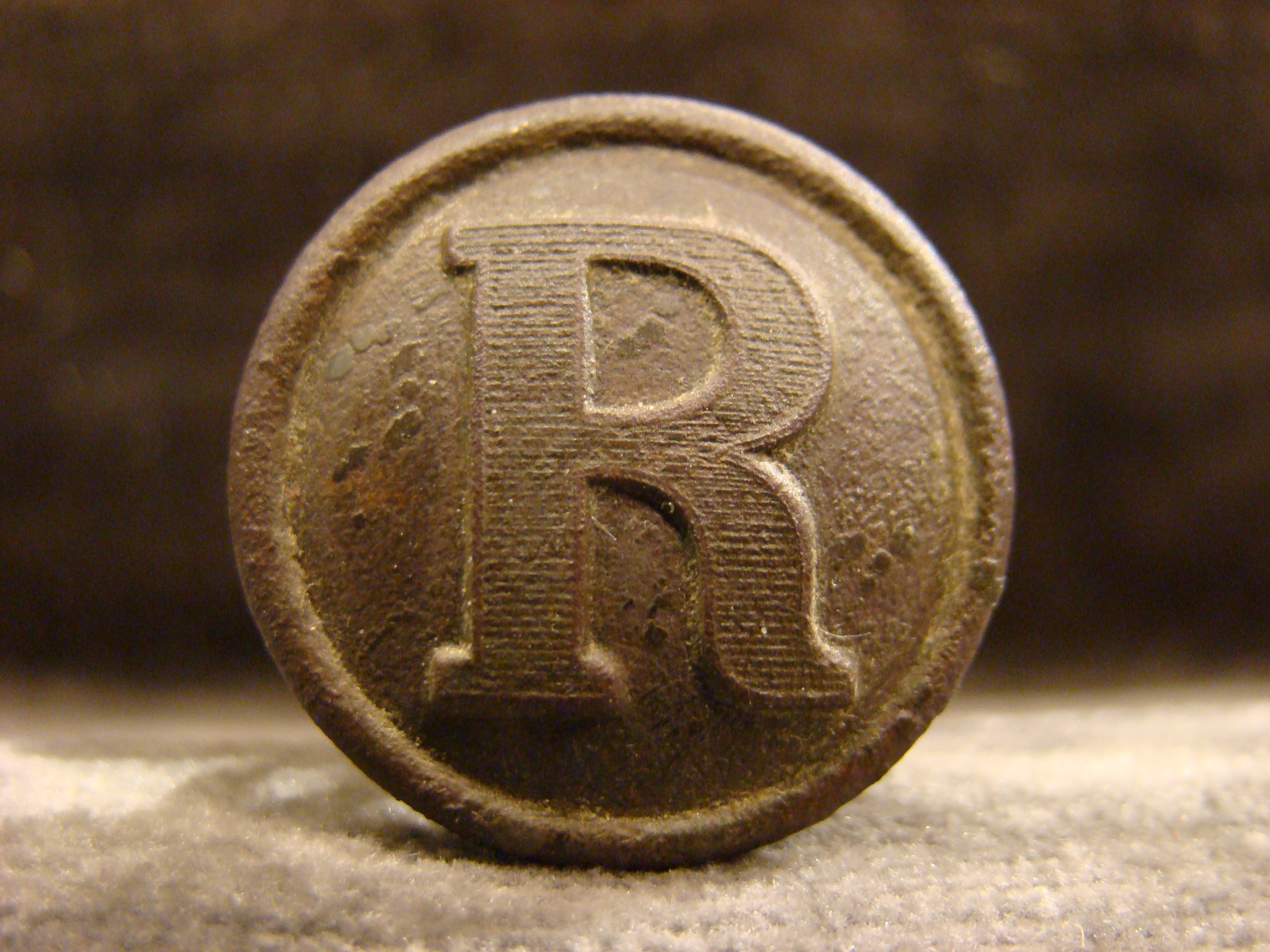
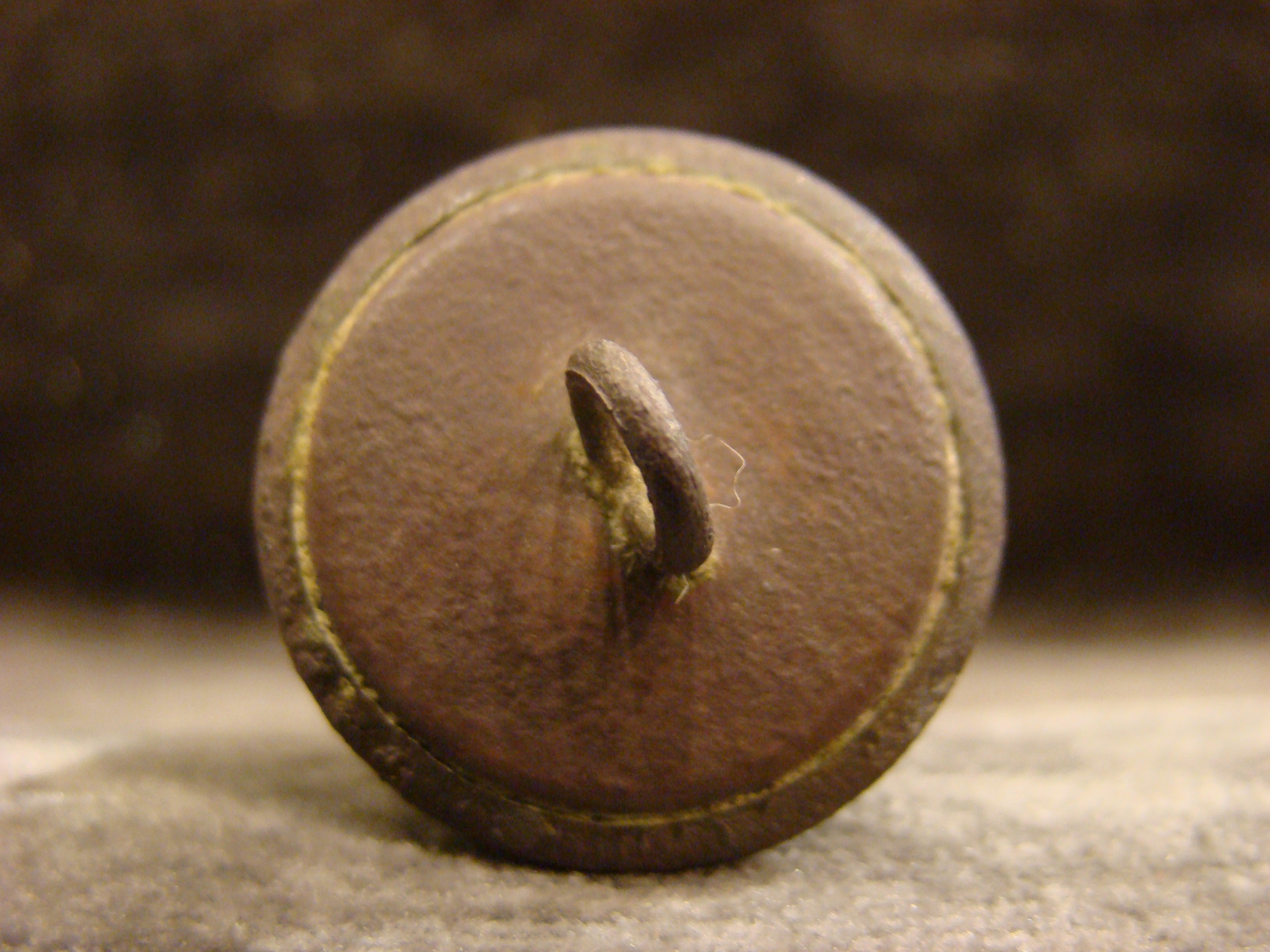
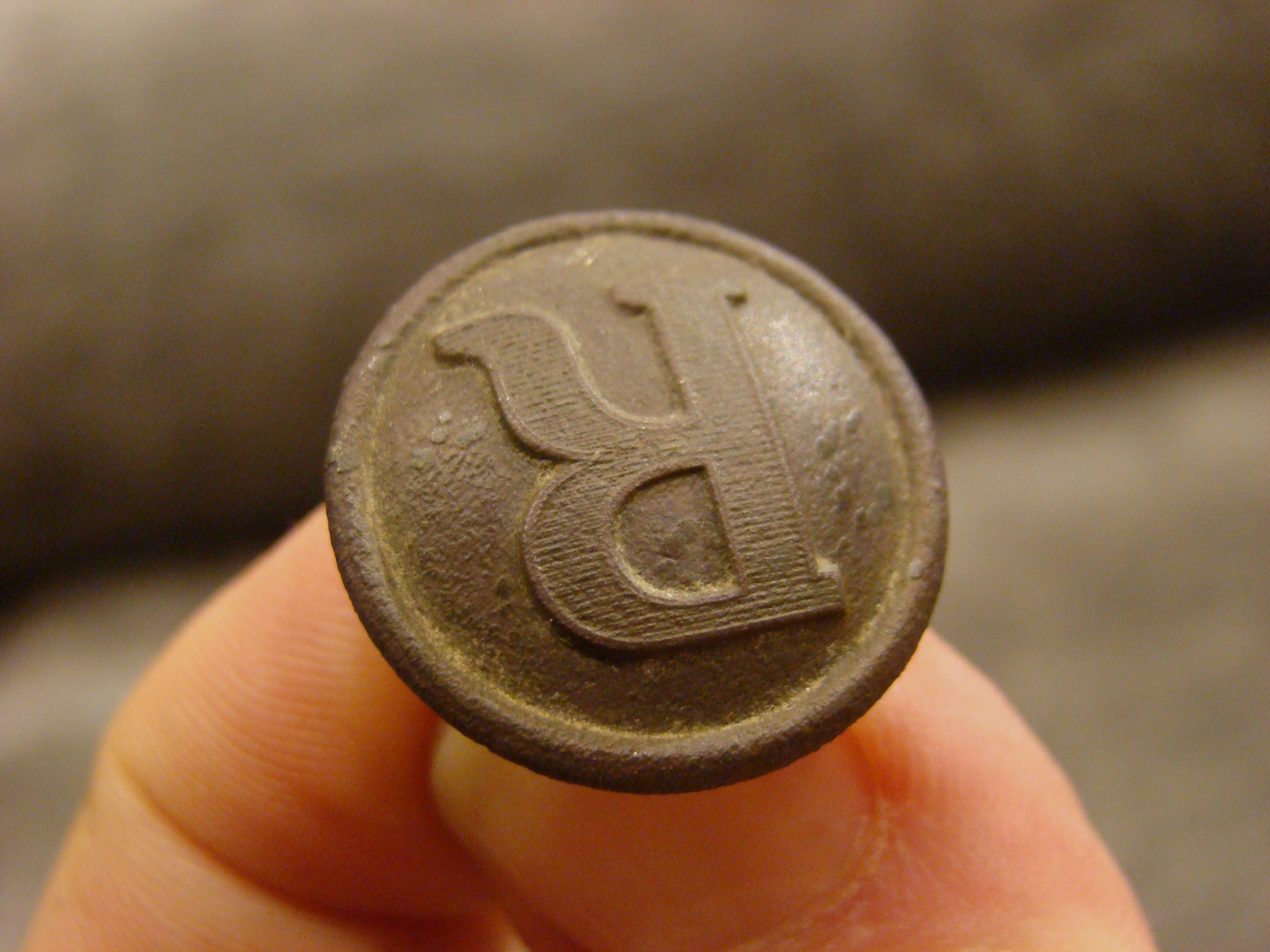
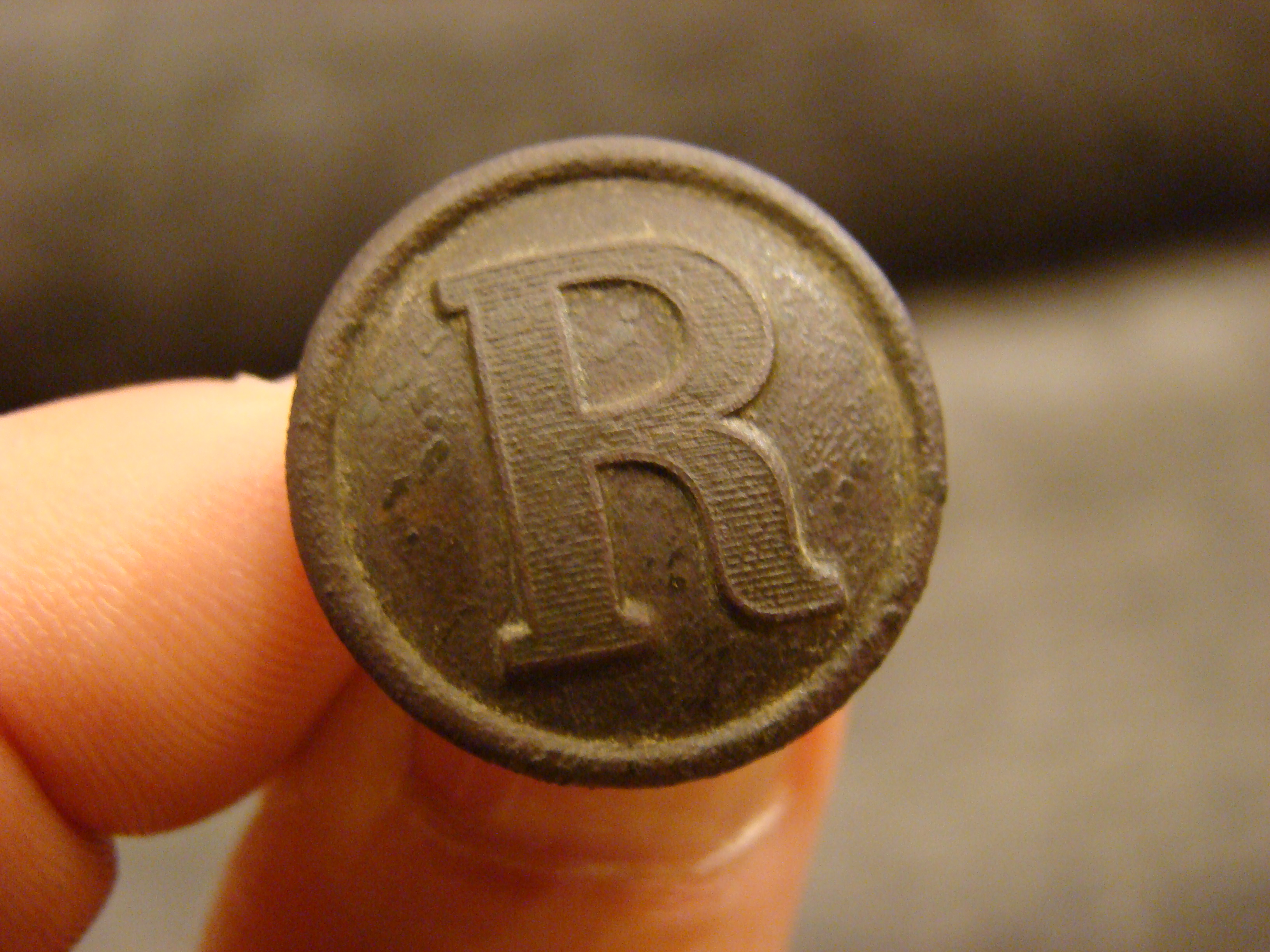
CSBTN R 2. Dug Confederate Rifleman’s Coat Button. Richmond VA.
CS 203 A1 (Alberts), 23 mm. Very rare “Lined R” button on a plain field. Sharp details with no pushes or repairs. Nice patina. Blank back. Intact shank. Found by Jerry Bochek near Richmond VA. This series of buttons was produced by Smith, Kemp, and Wright in England and imported through the Federal Blockade. They feature a variety of back marks and cover every branch of Confederate Service. $2250.00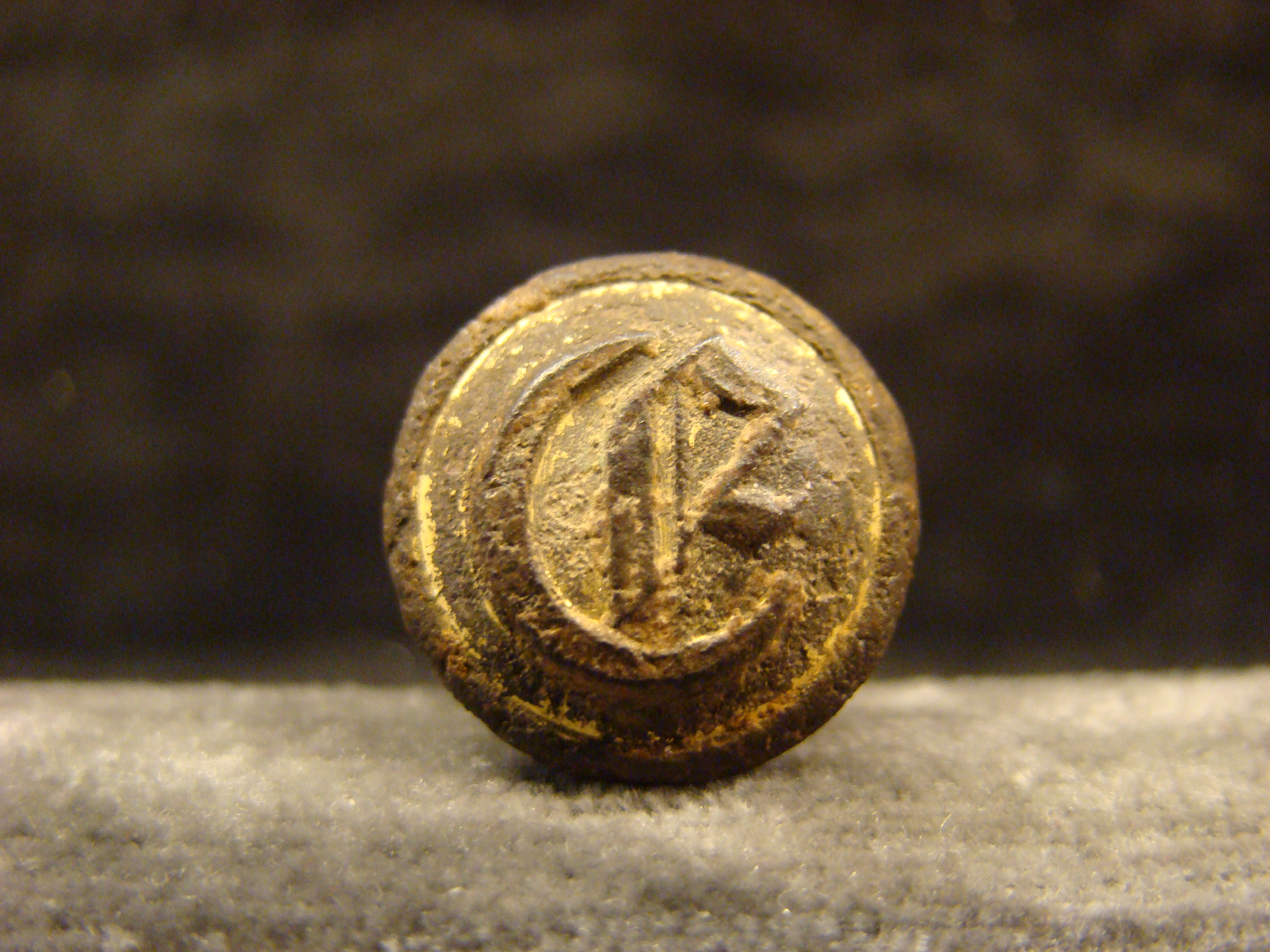
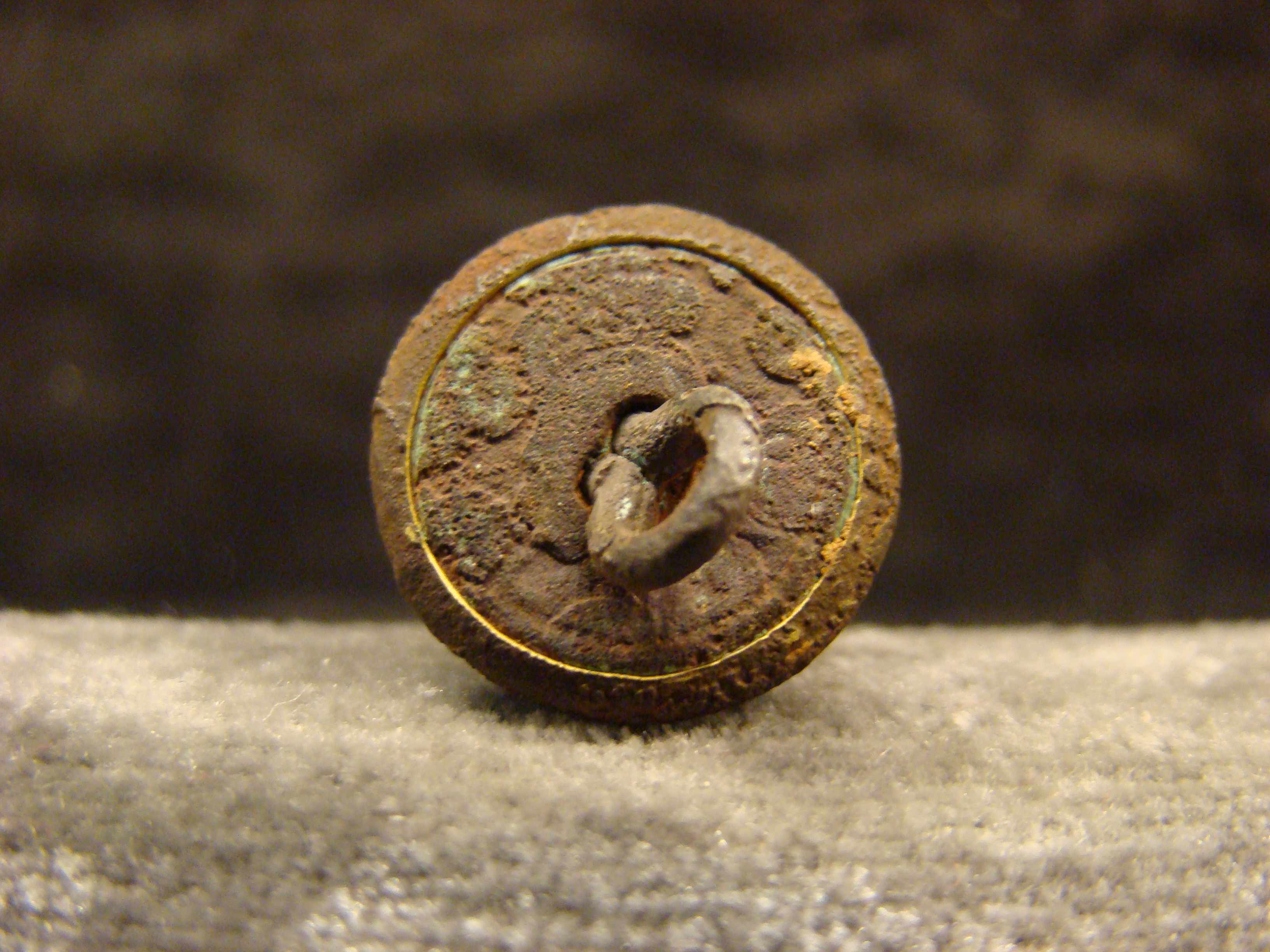
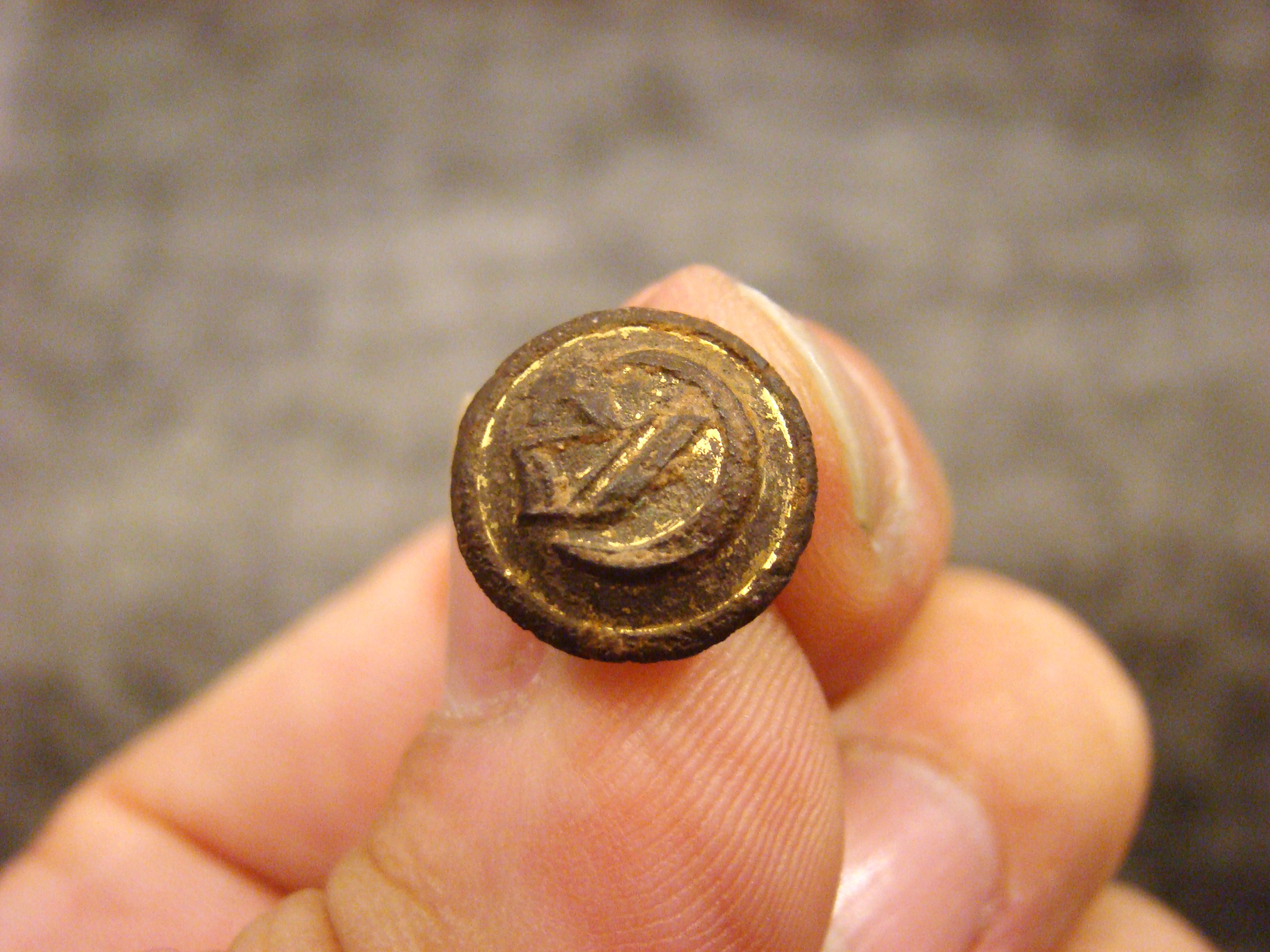
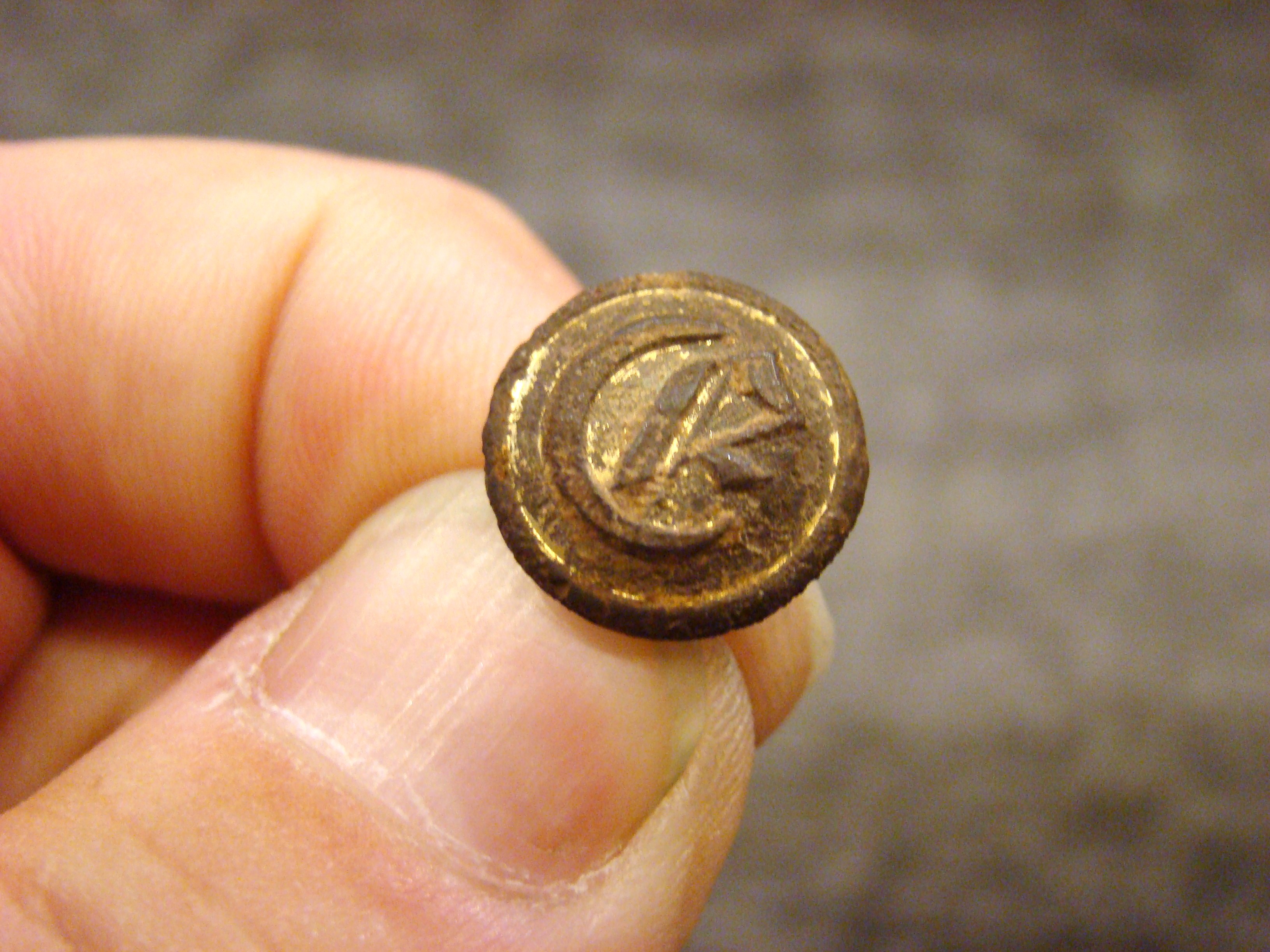
CSBTN E 1. Dug Confederate Engineer’s Cuff/Kepi Button.
CS 154 v (Alberts), 14 mm. Scarce script “E” with mild ground action and traces of gold plating. Intact shank. Backmark illegible but most like “W.DOWLER/SUPERIOR QUALITY”. Provenance forthcoming. $650.00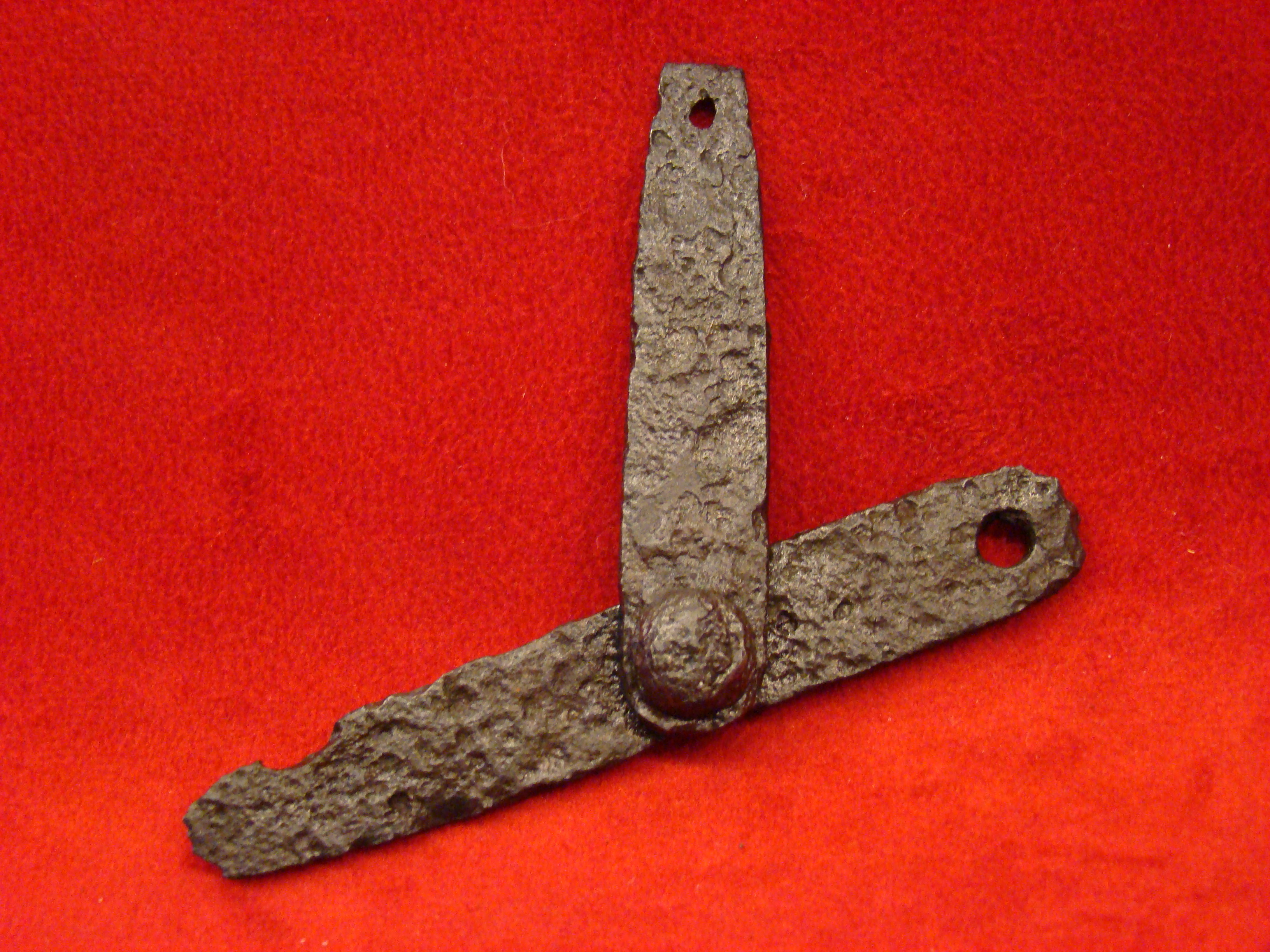
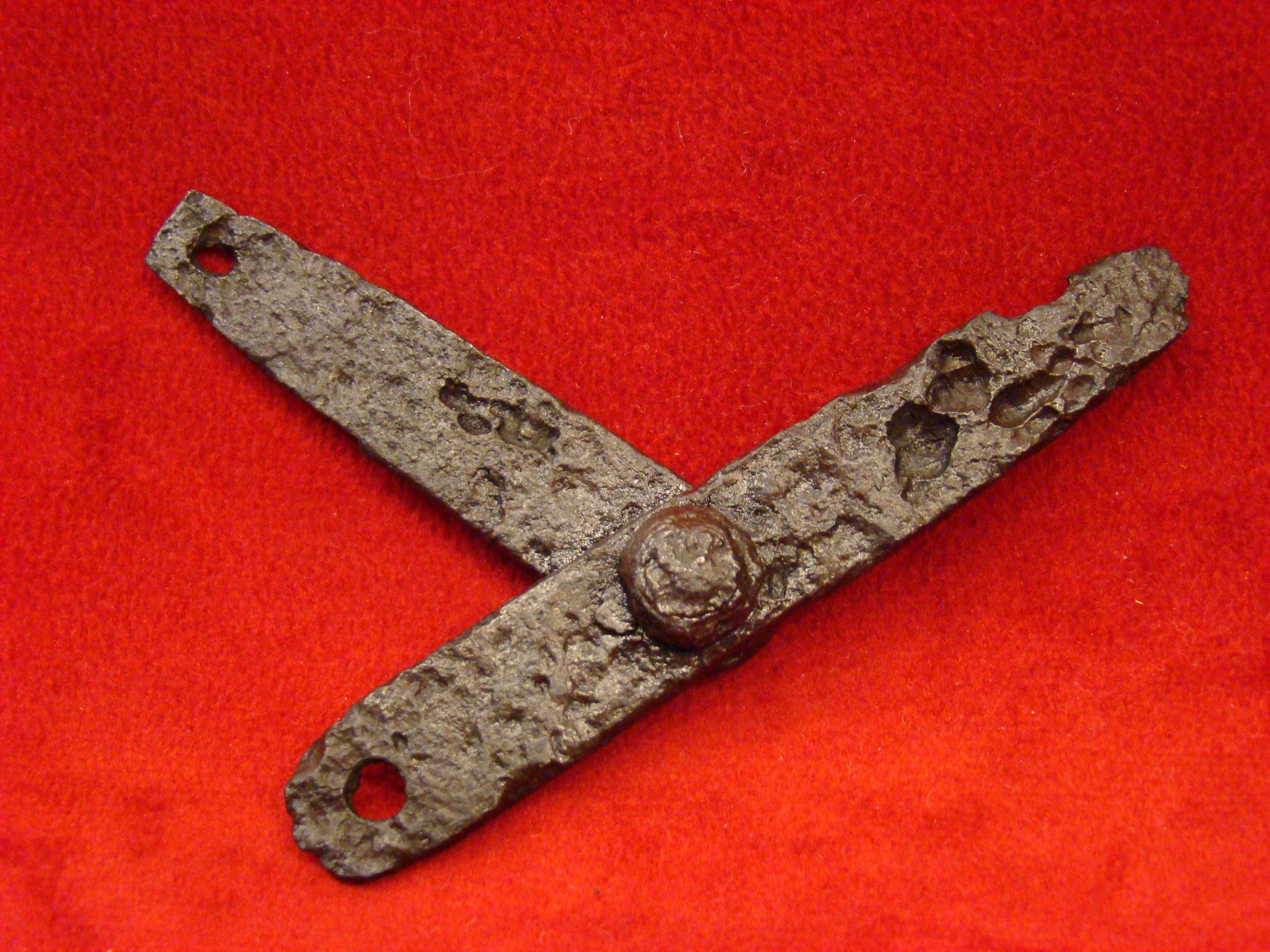
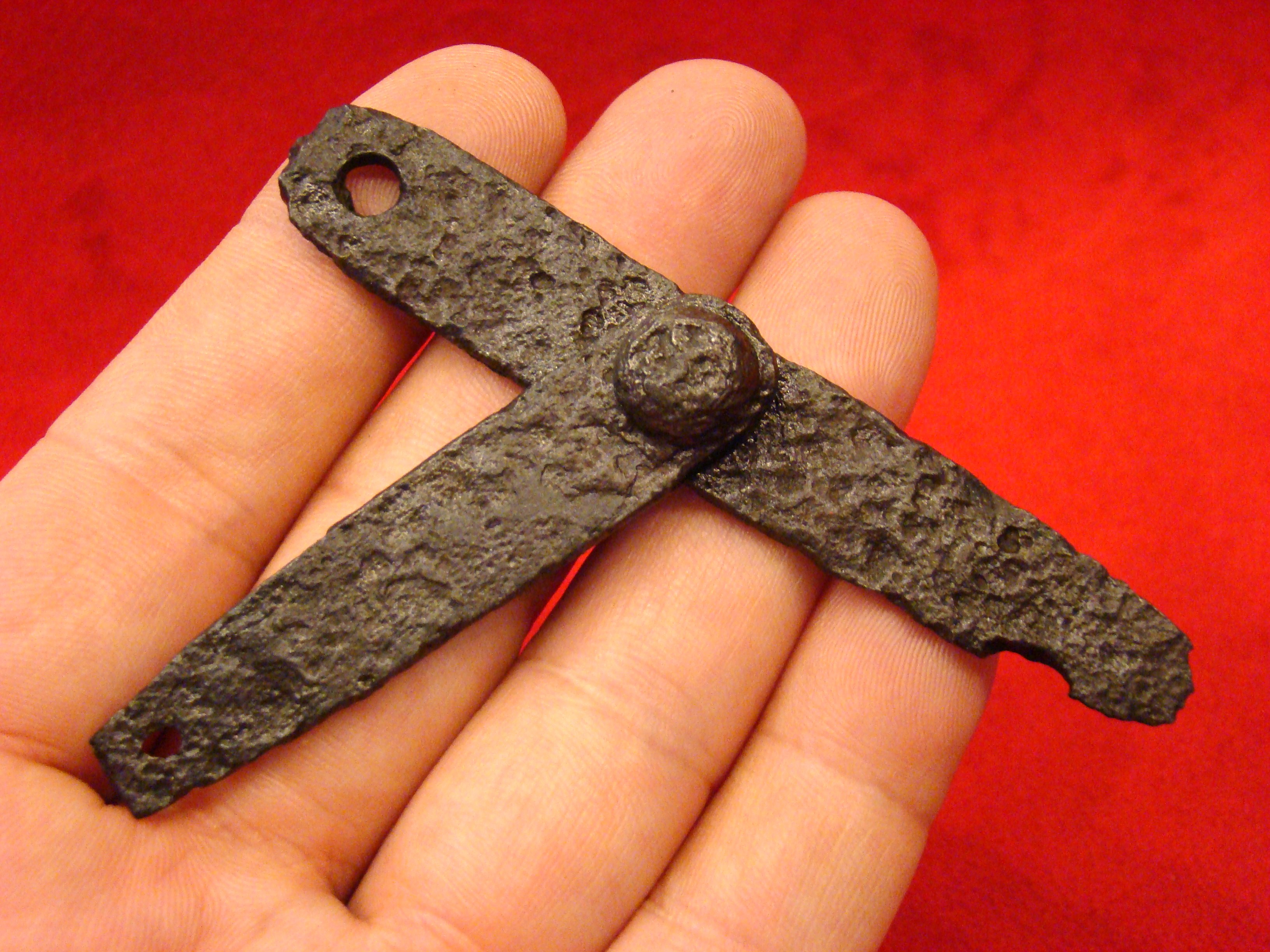
MS 1. Dug US M-1860 Spencer Cavalry Carbine Combination Tool.
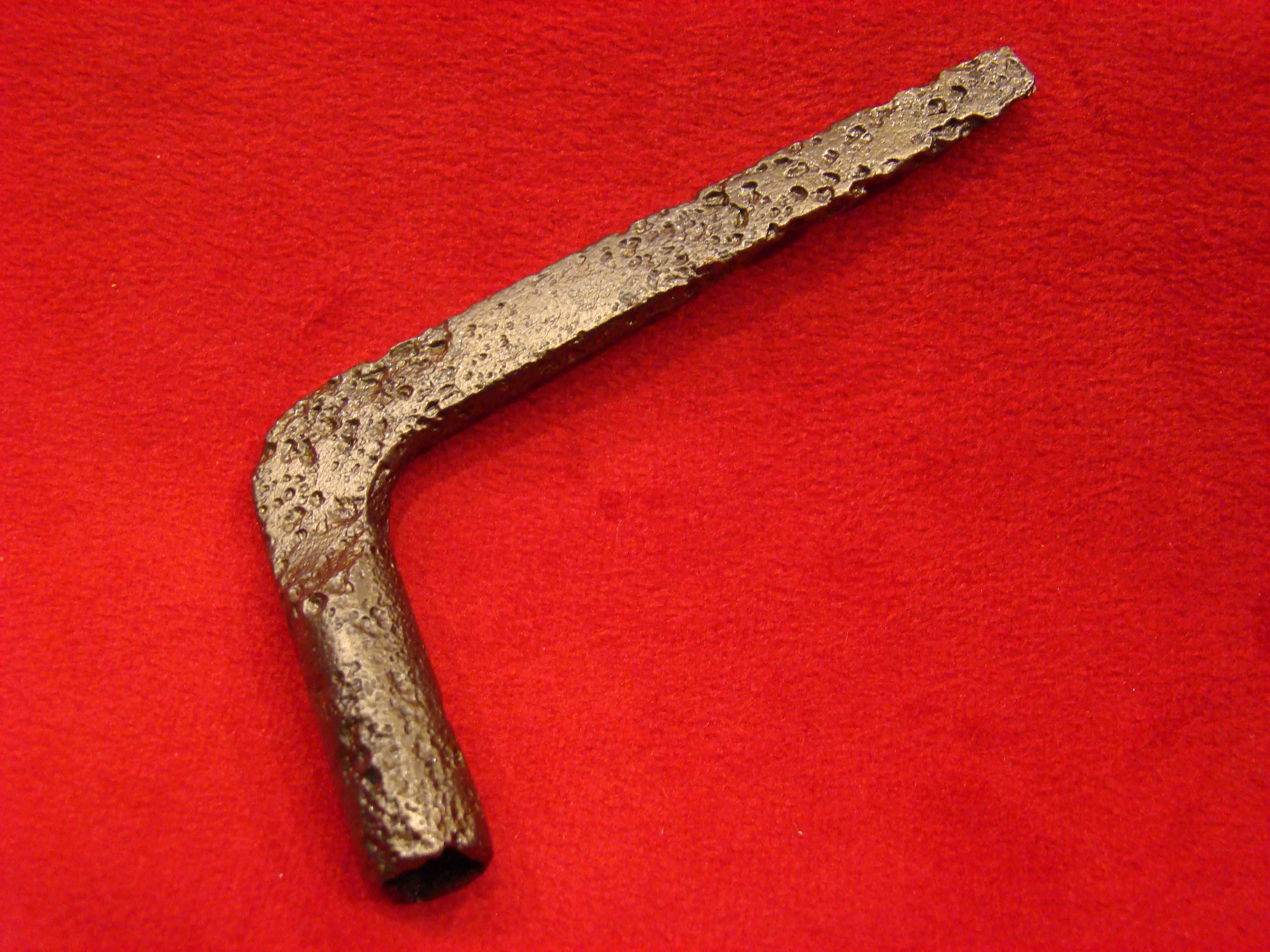
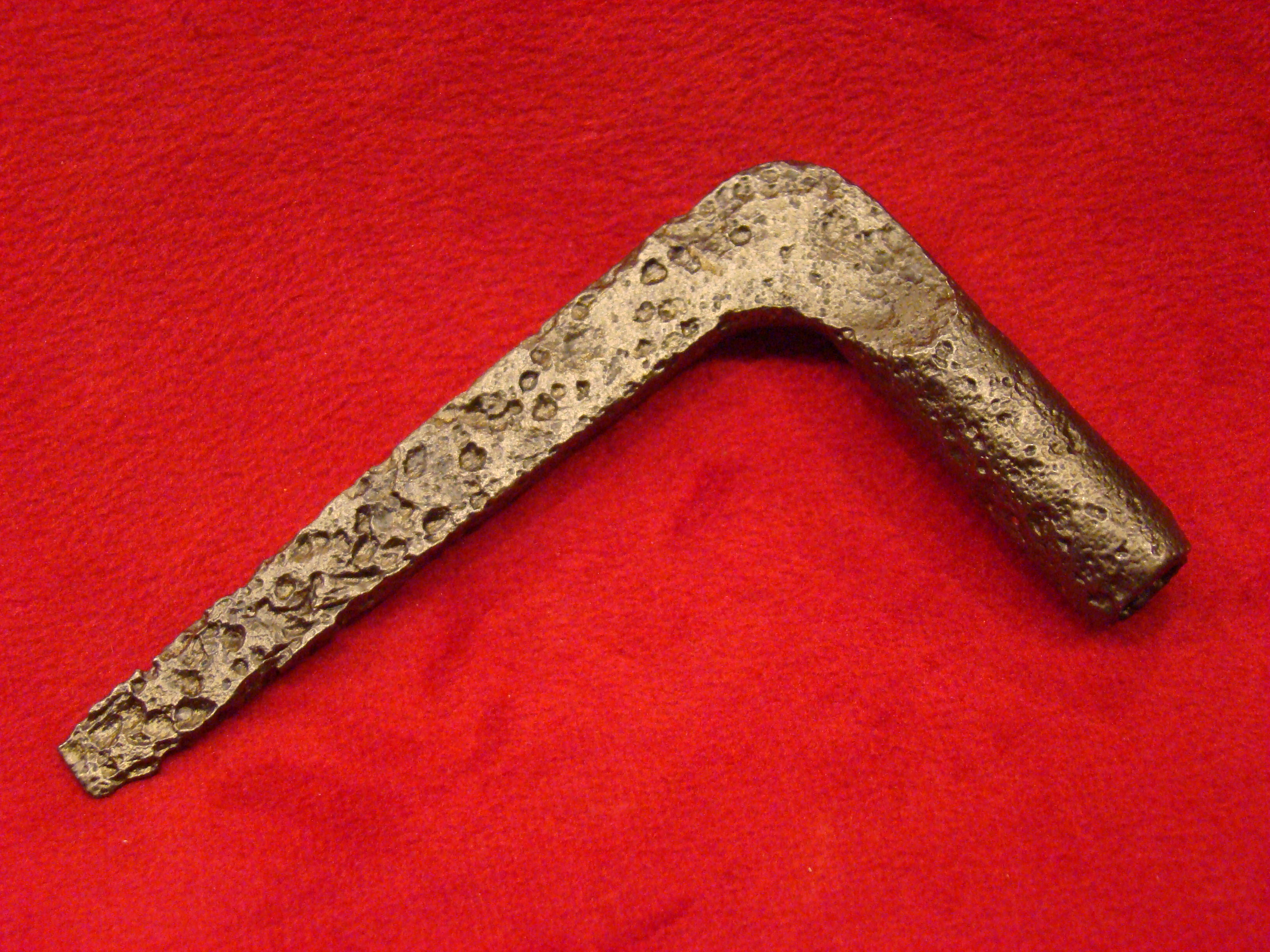
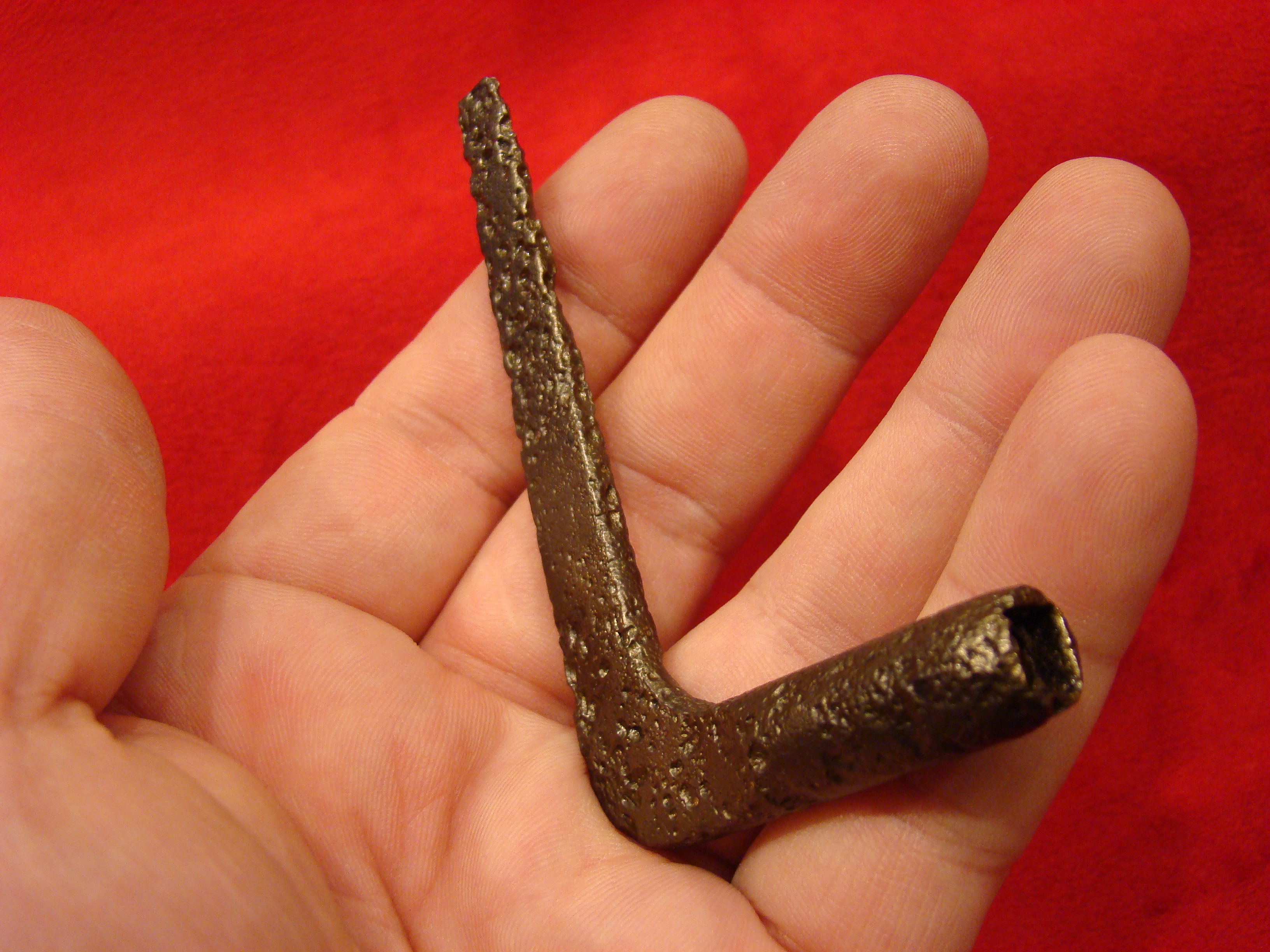
I haven’t seen many of these being found. Good condition and treated for preservation. I forgot where it was dug. $75.00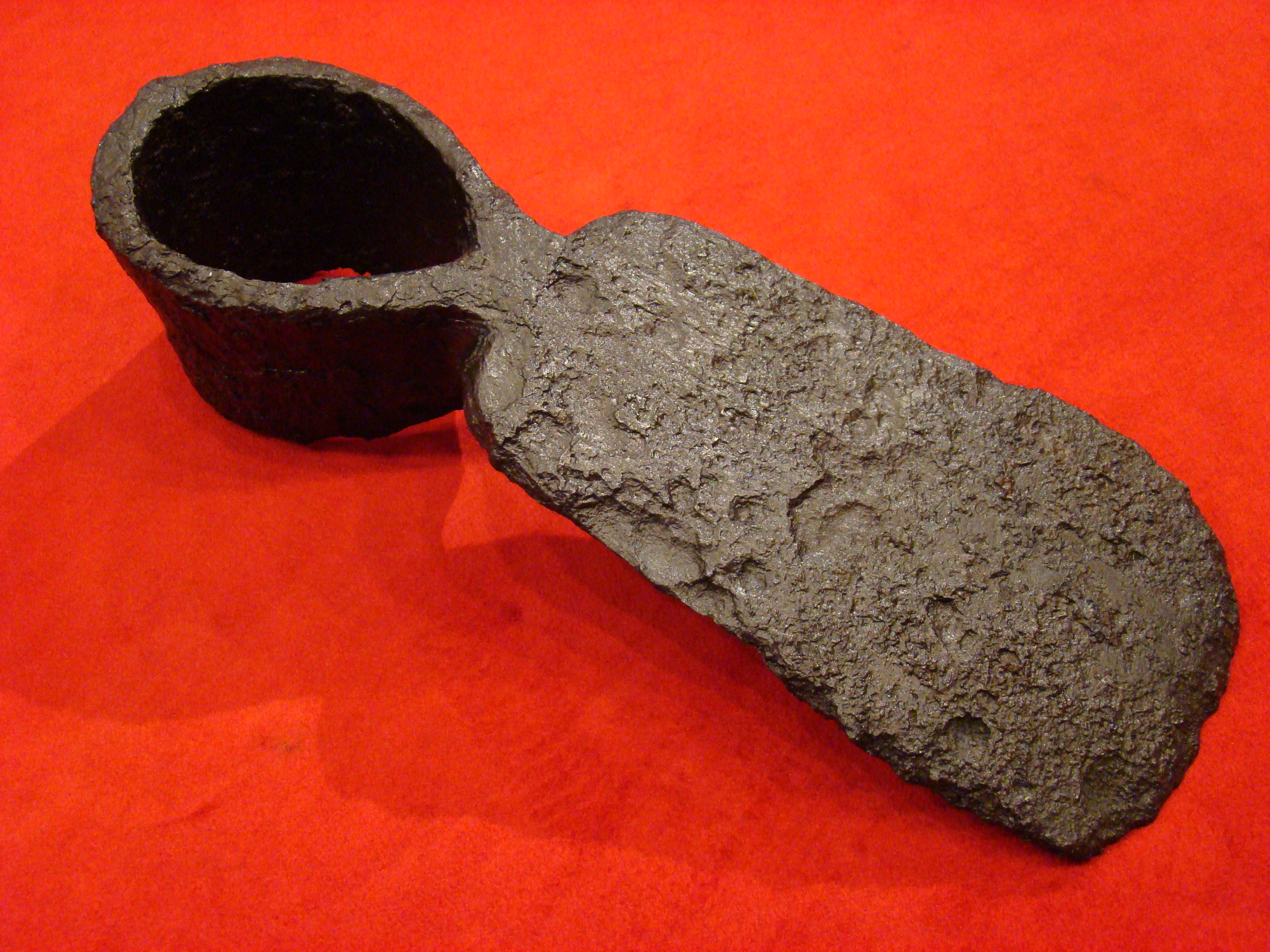
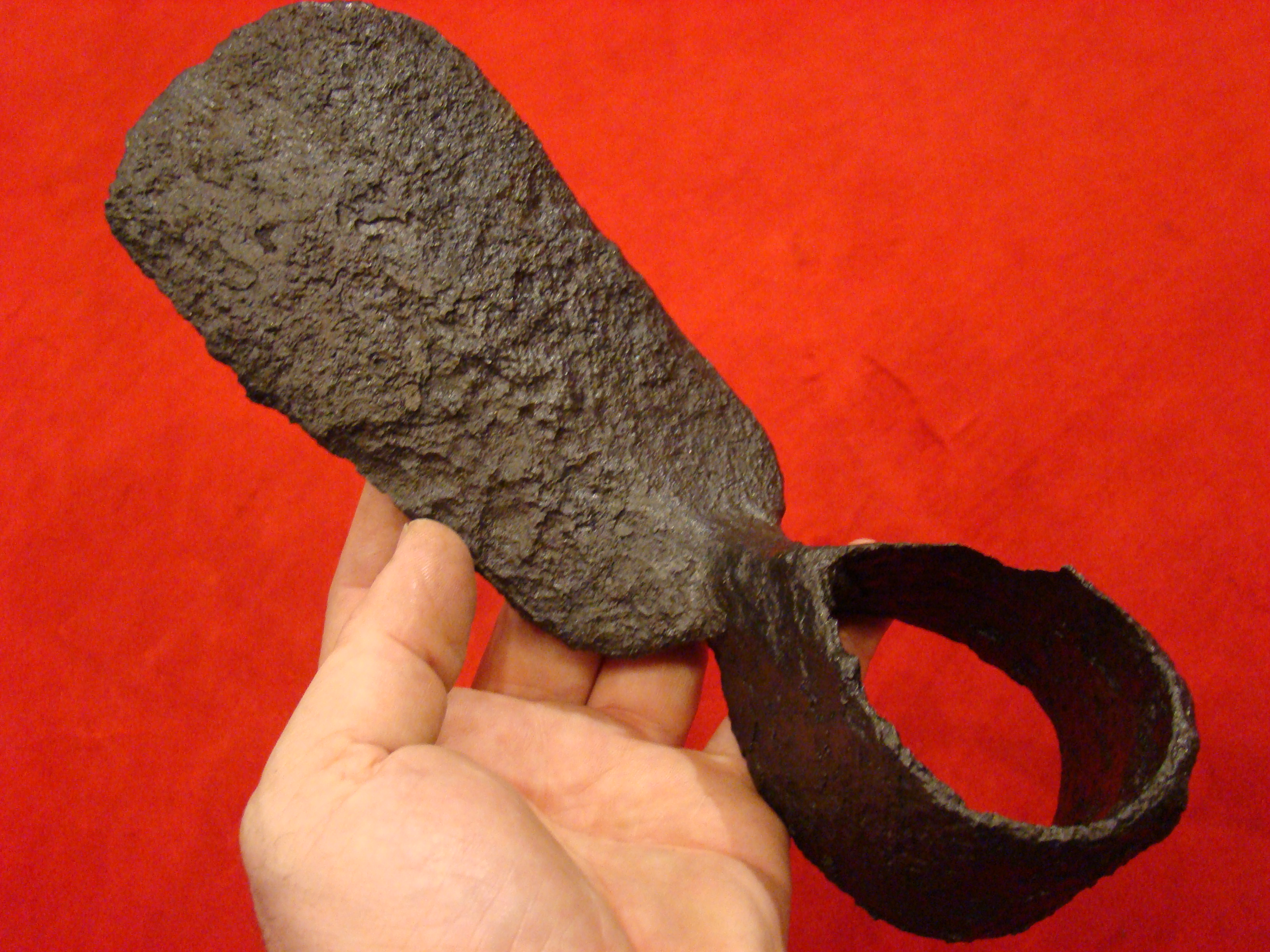
MS 2. Dug Confederate Entrenching Tool found near “The Slaughter Pen”. Fredericksburg VA. Battlefield.
I dug this heavy mattock in the Confederate defense lines on private property with permission. My friend Matt Lockard found a Virginia coat button nearby. Cleaned and treated for preservation. SOLD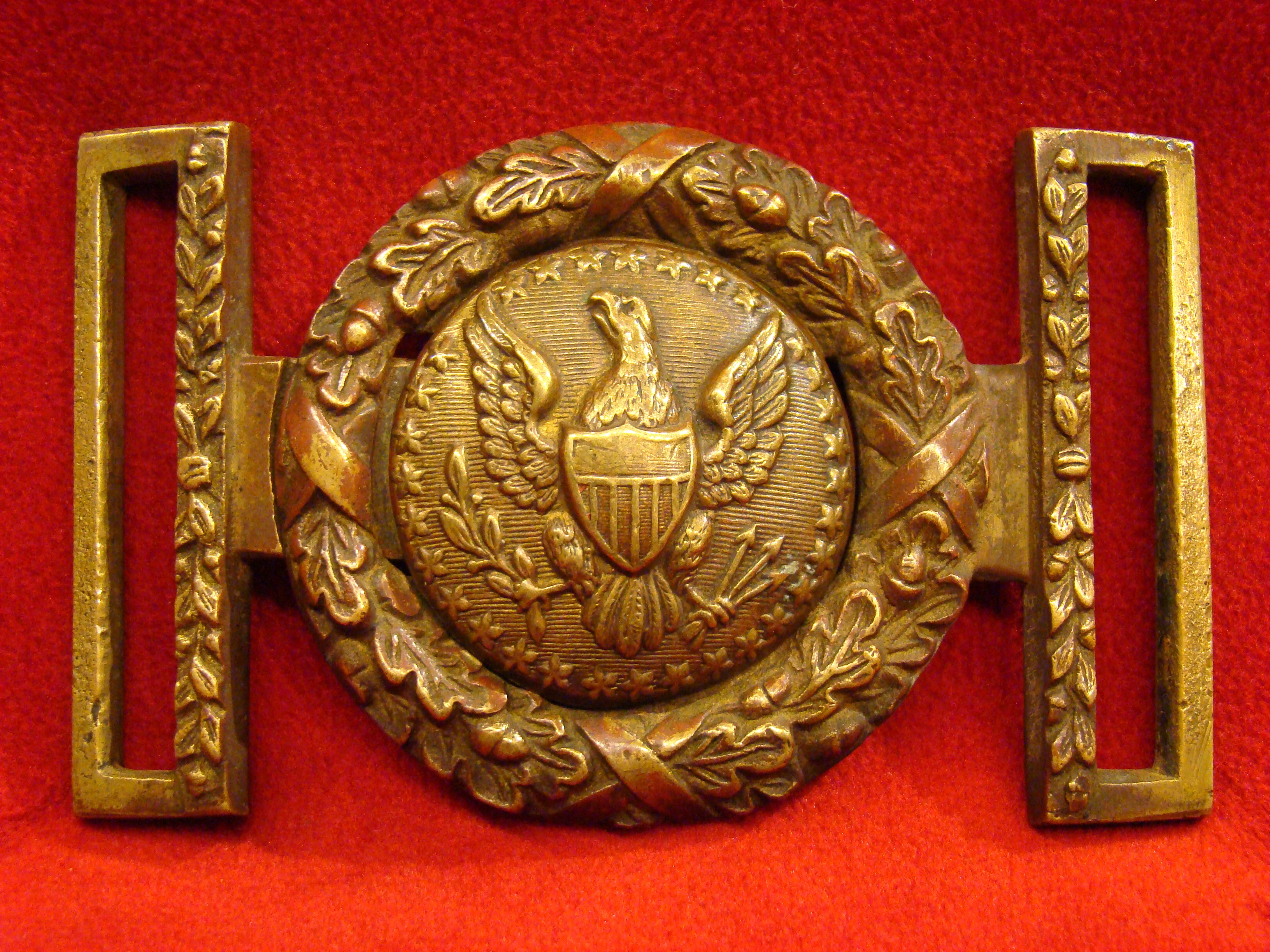
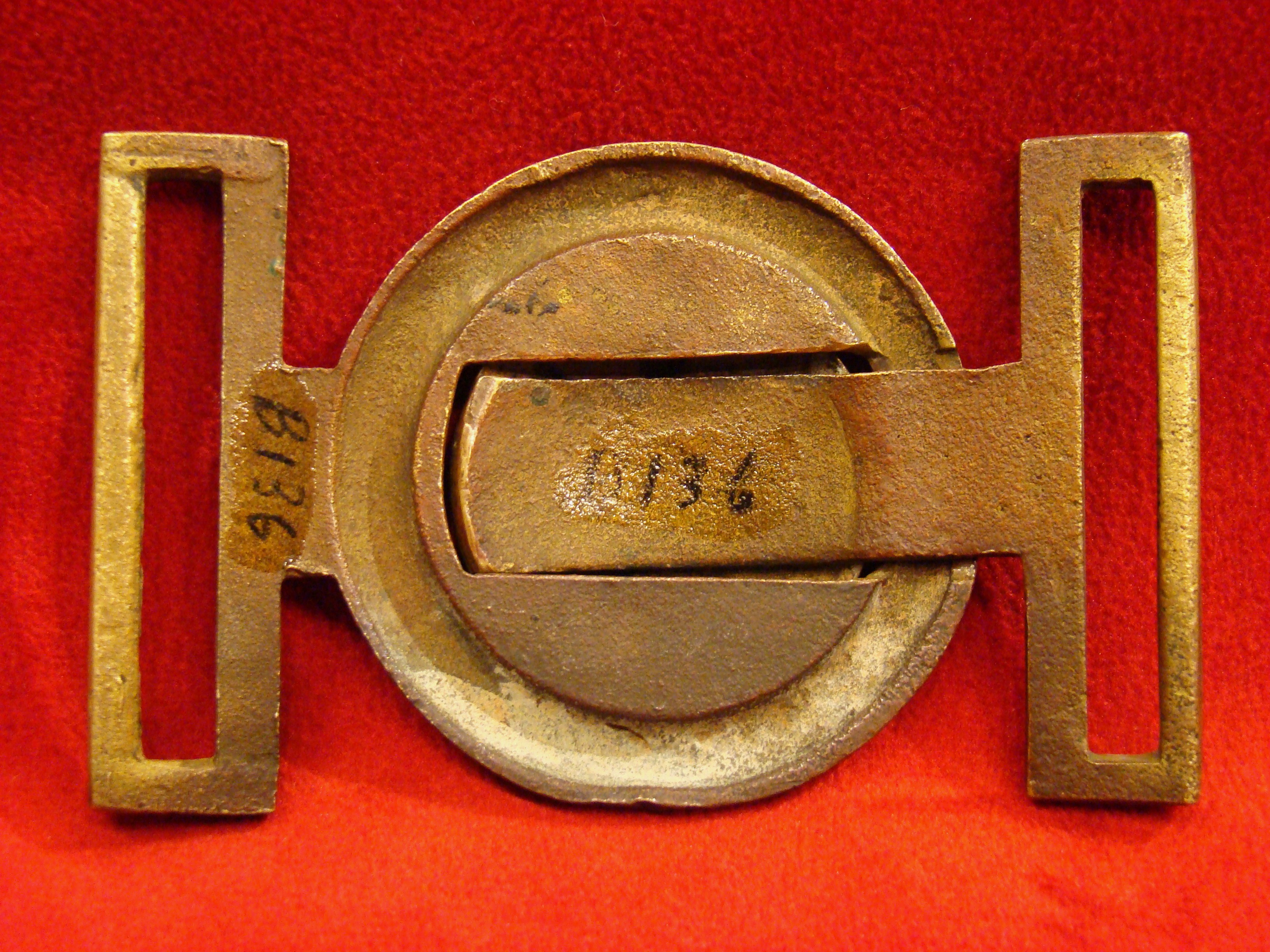
USBP 1. US Militia Officer’s Sword Belt Buckle. Ca. 1840-1850
Fine looking pre-Civil War variant in excellent non-excavated condition. Applied die struck tongue disc has super sharp detail. See page 208, Plate # 312 in O’Donnell & Campbell’s reference book “American Military Belt Plates” for a similar example. $695.00 HOLD T.O.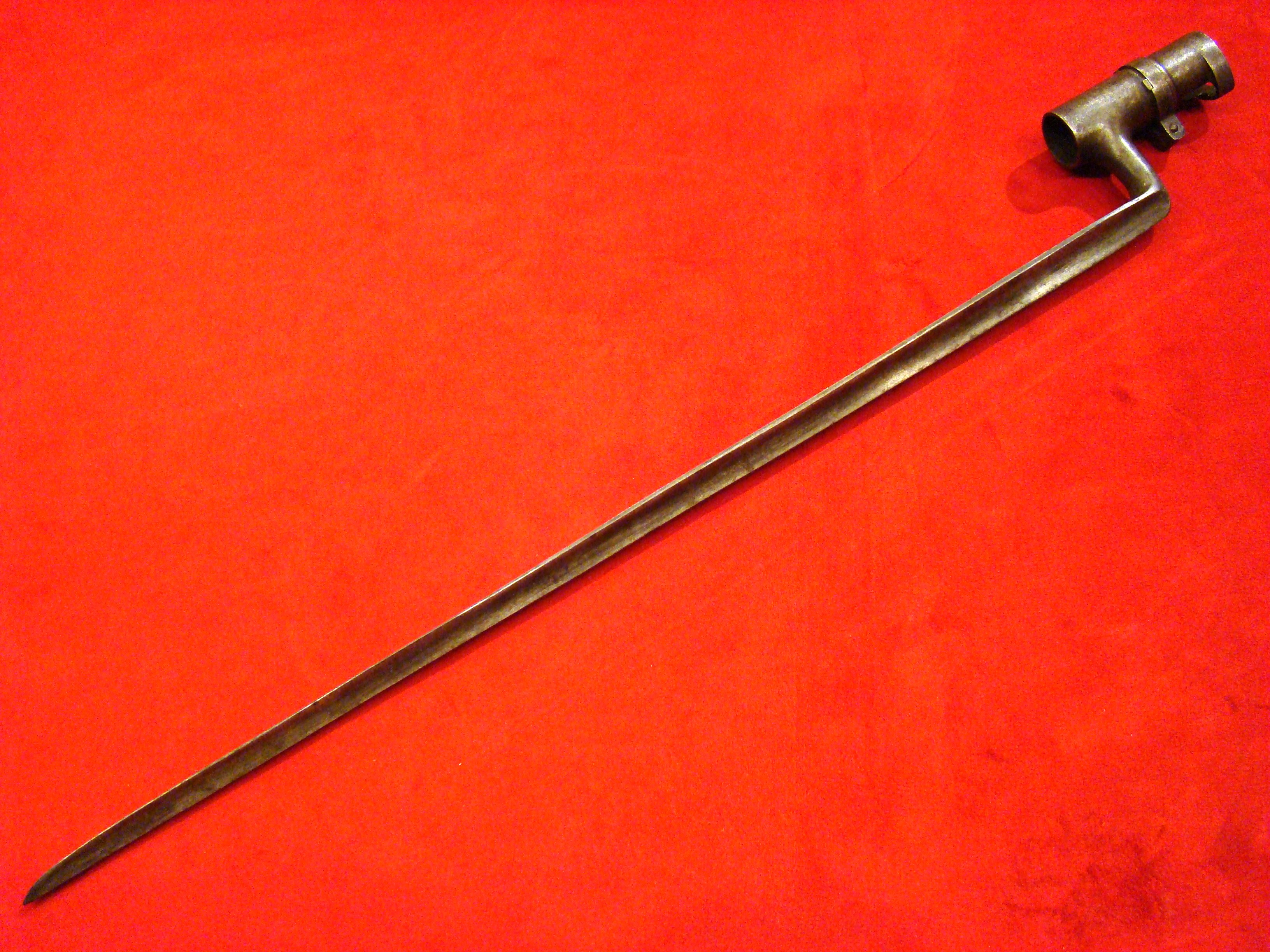
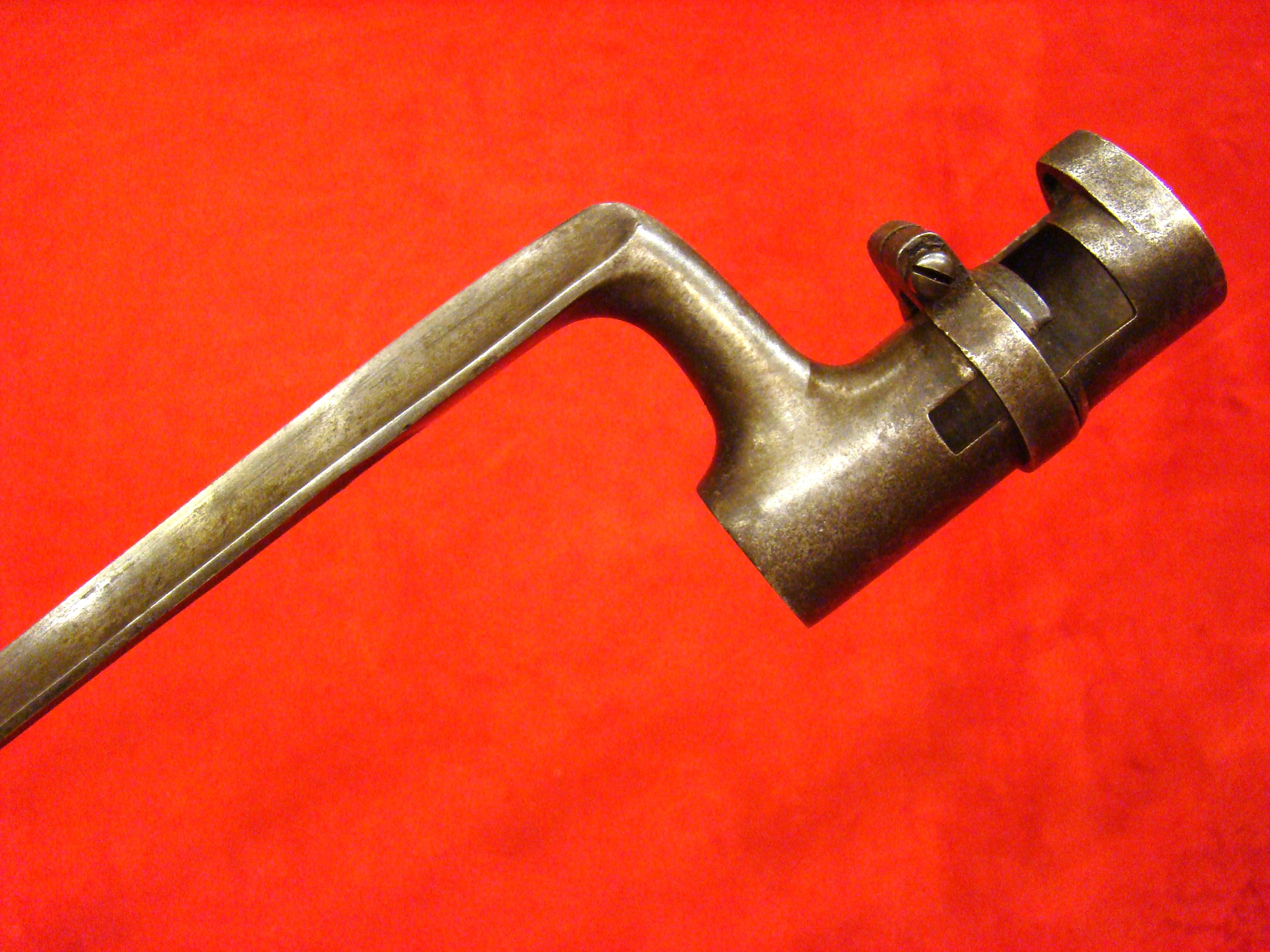
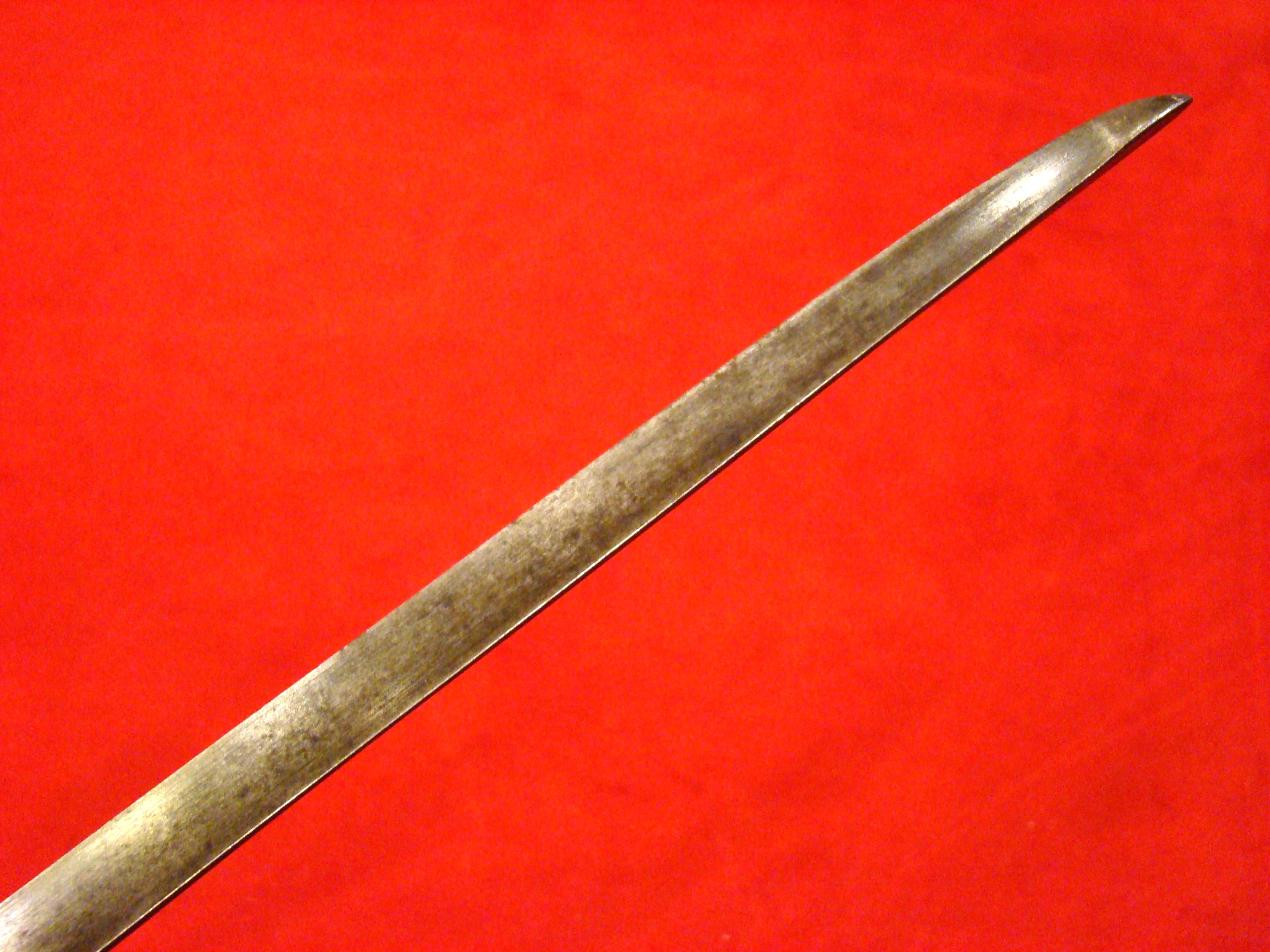
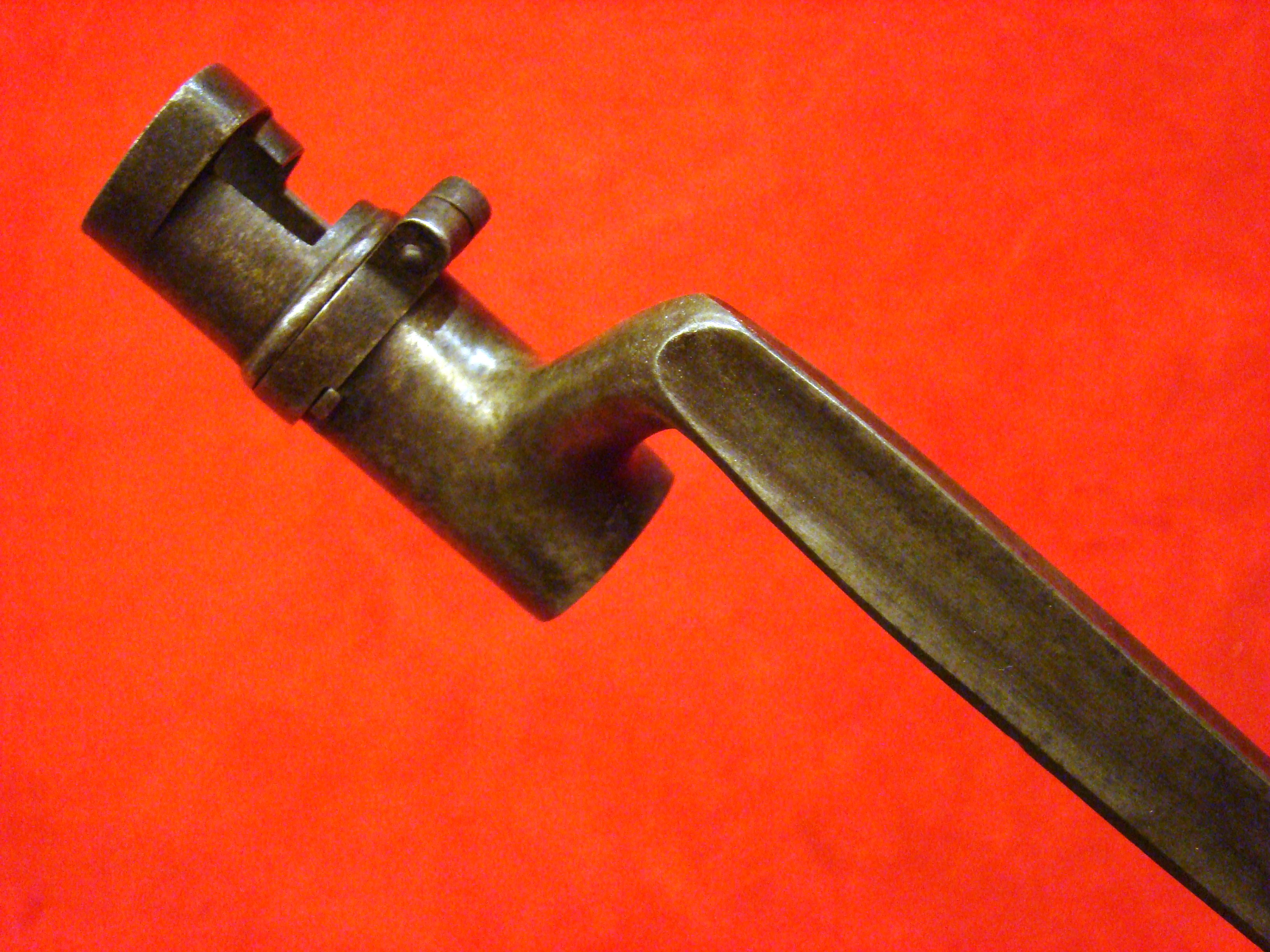
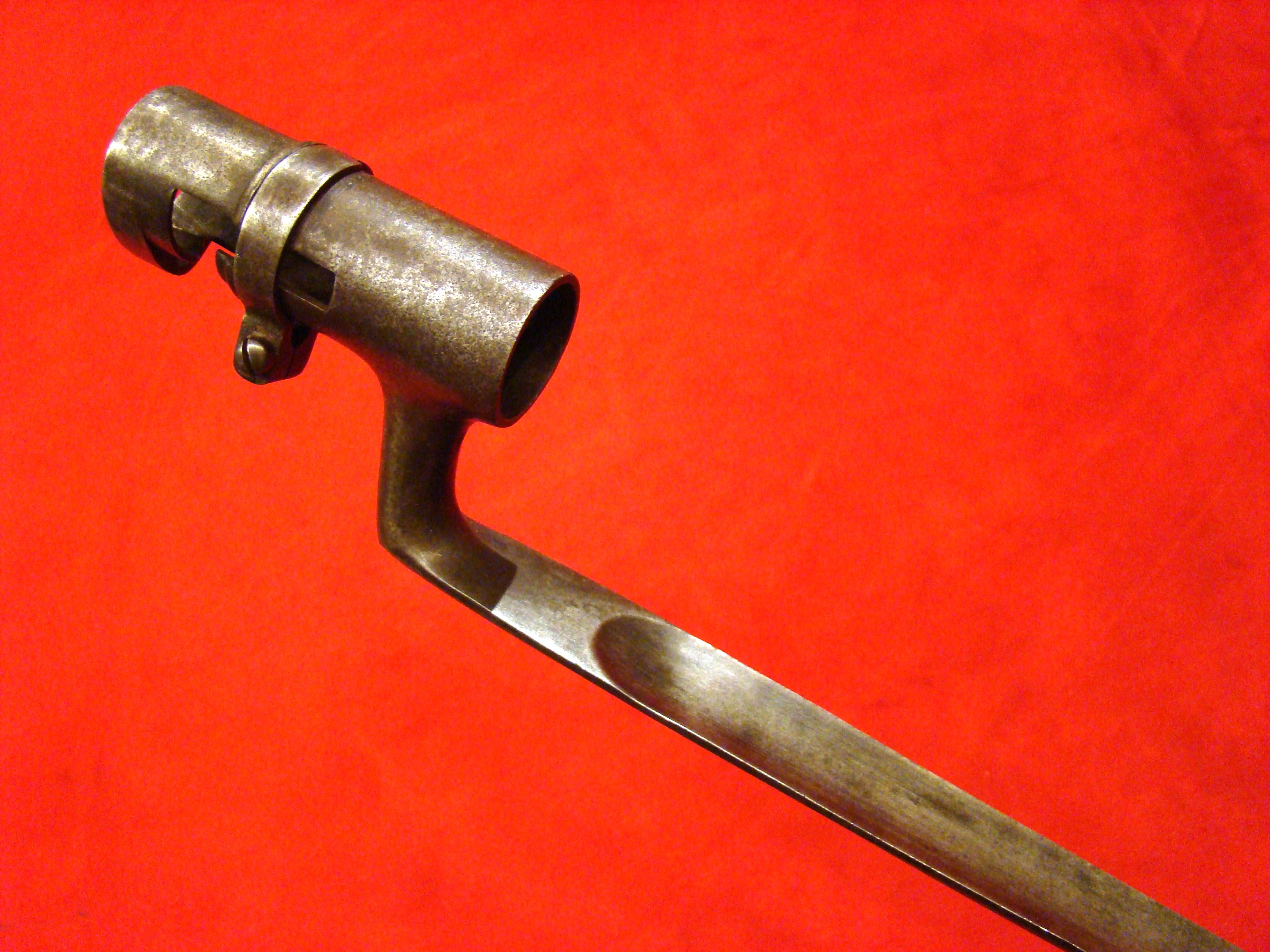
WP 1. Confederate Socket Bayonet Produced at The Fayetteville NC Armory for The Model 1864 Fayetteville Rifle.
Exceptionally nice condition. Should fit your 1864 Fayetteville Rifle. $795.00 HOLD K.W.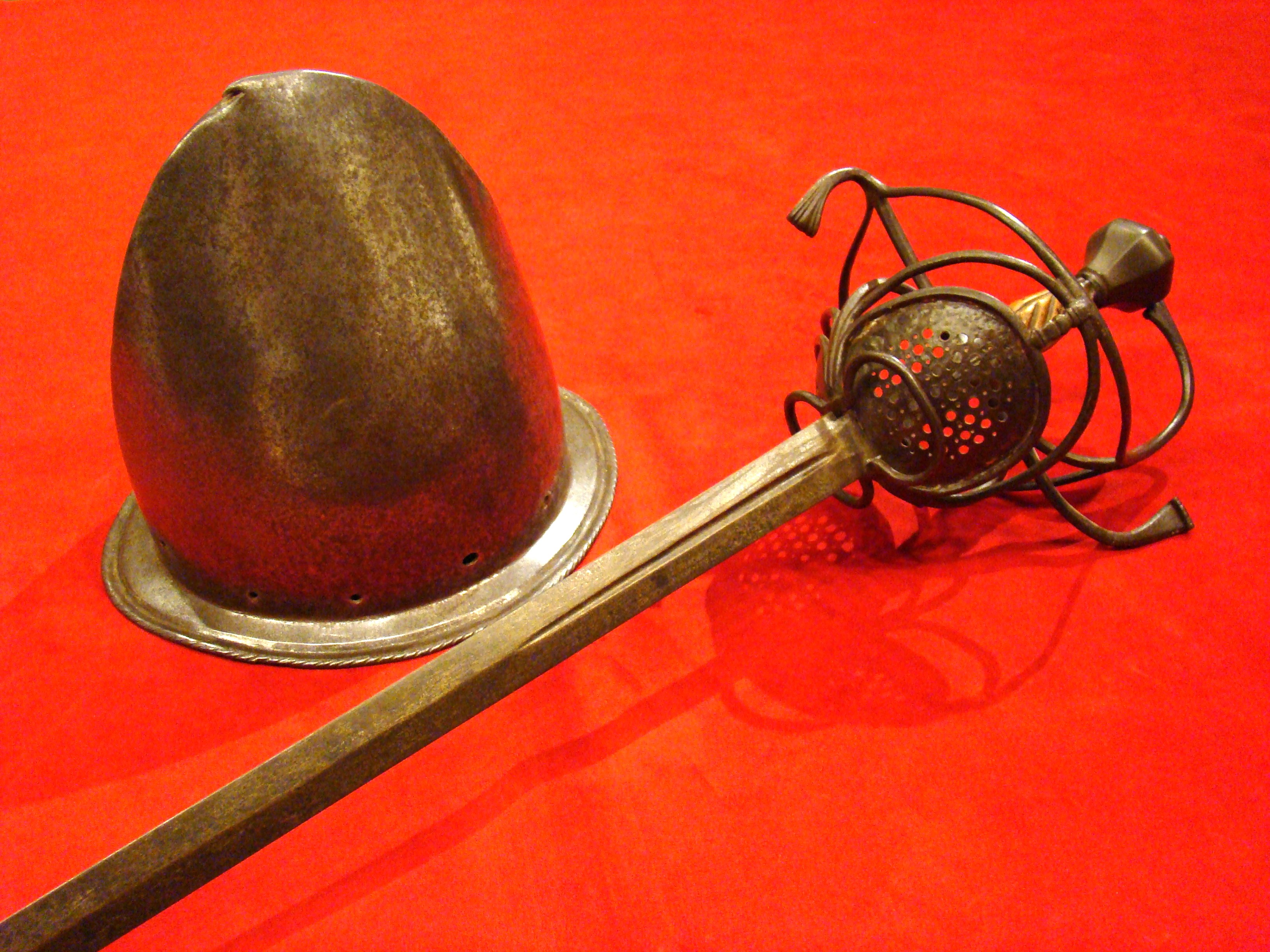
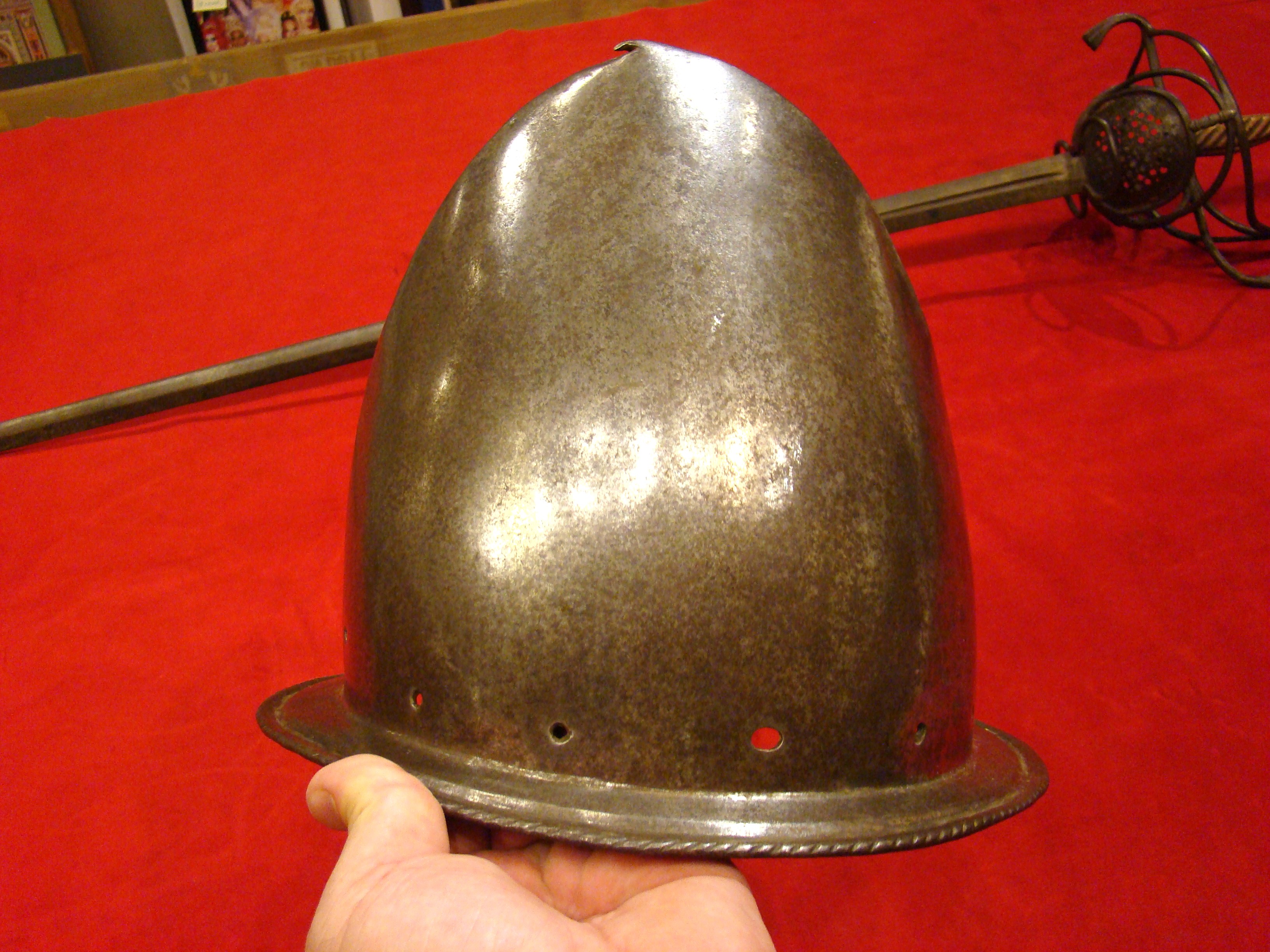
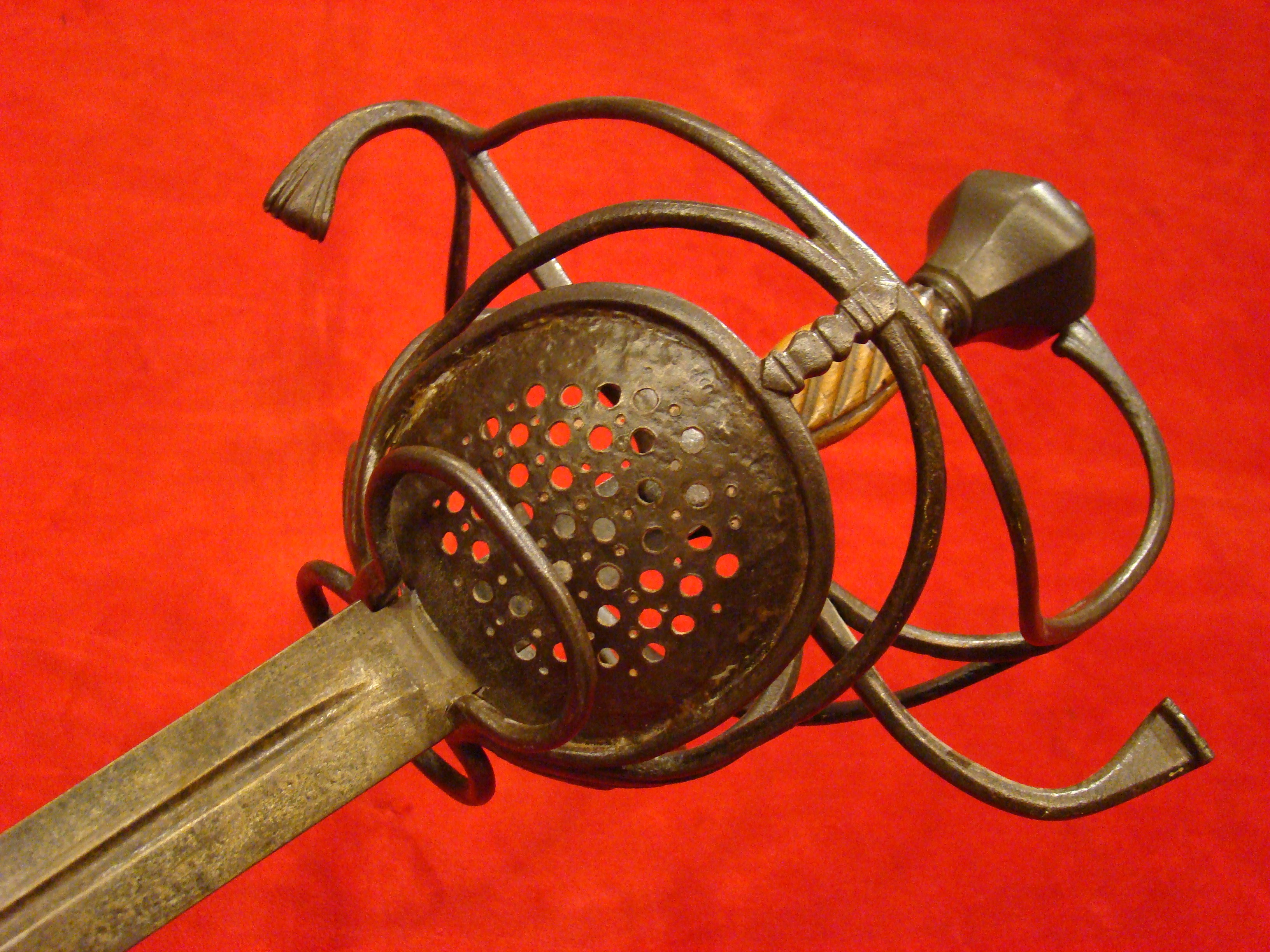
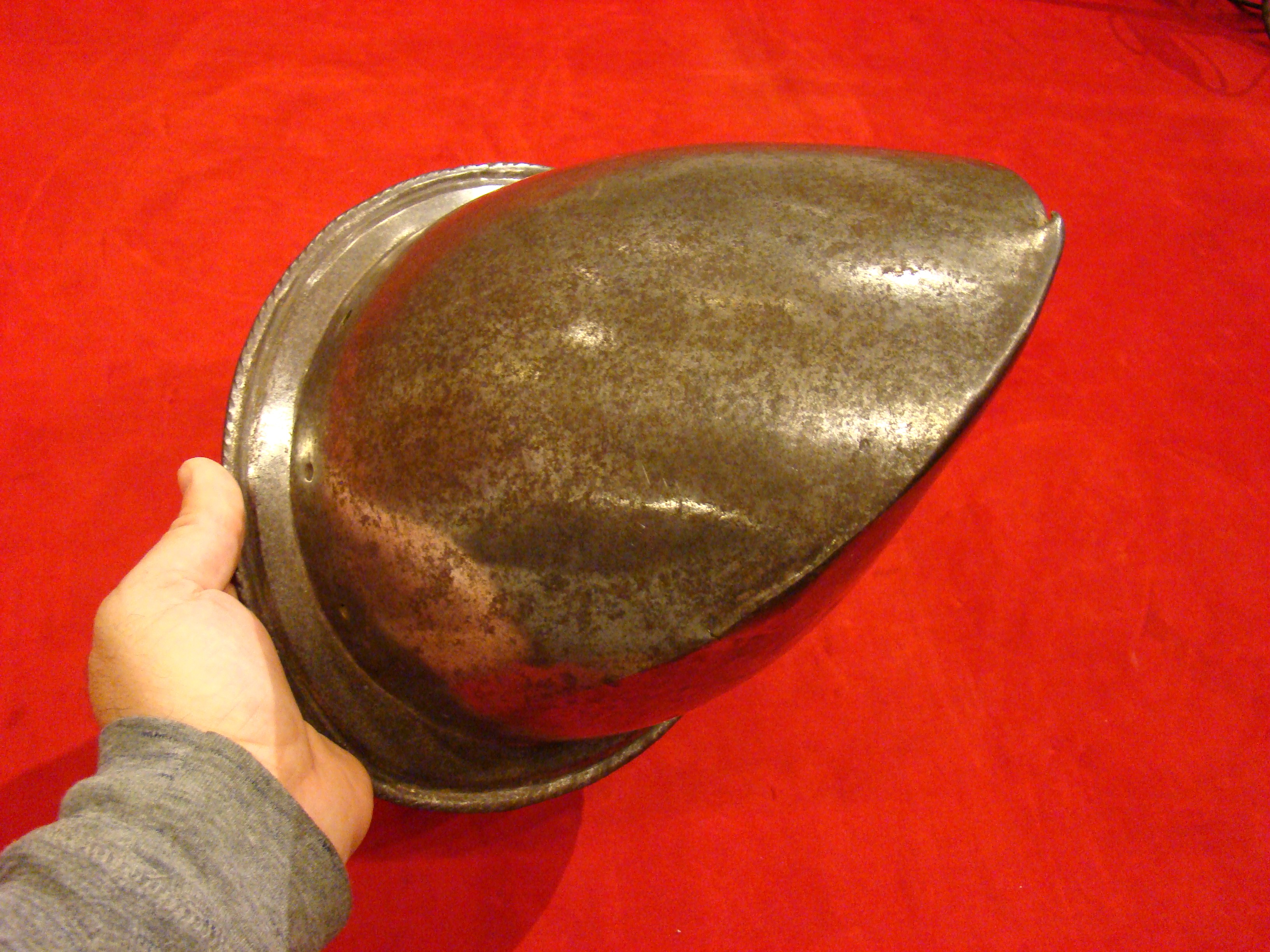
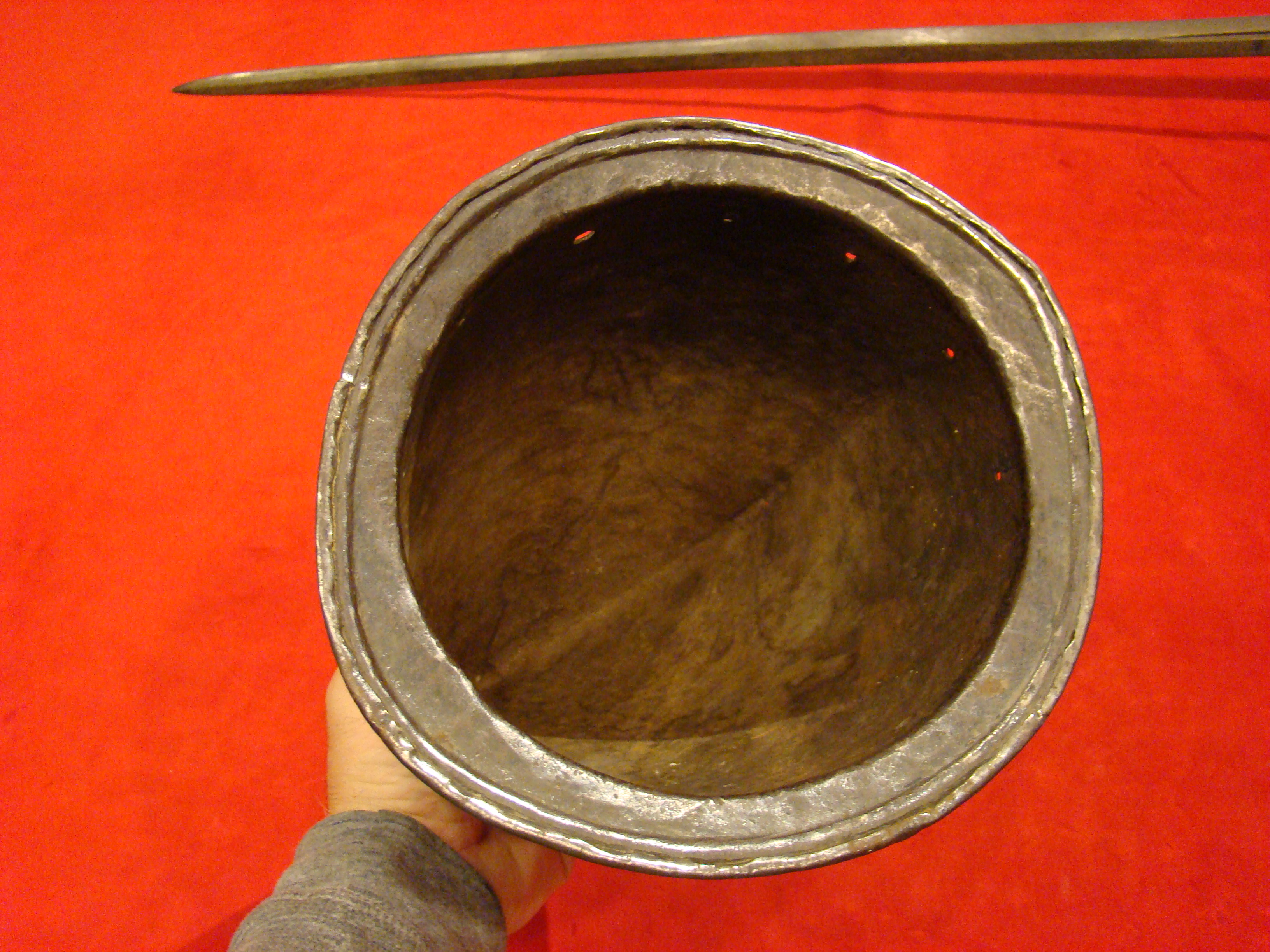
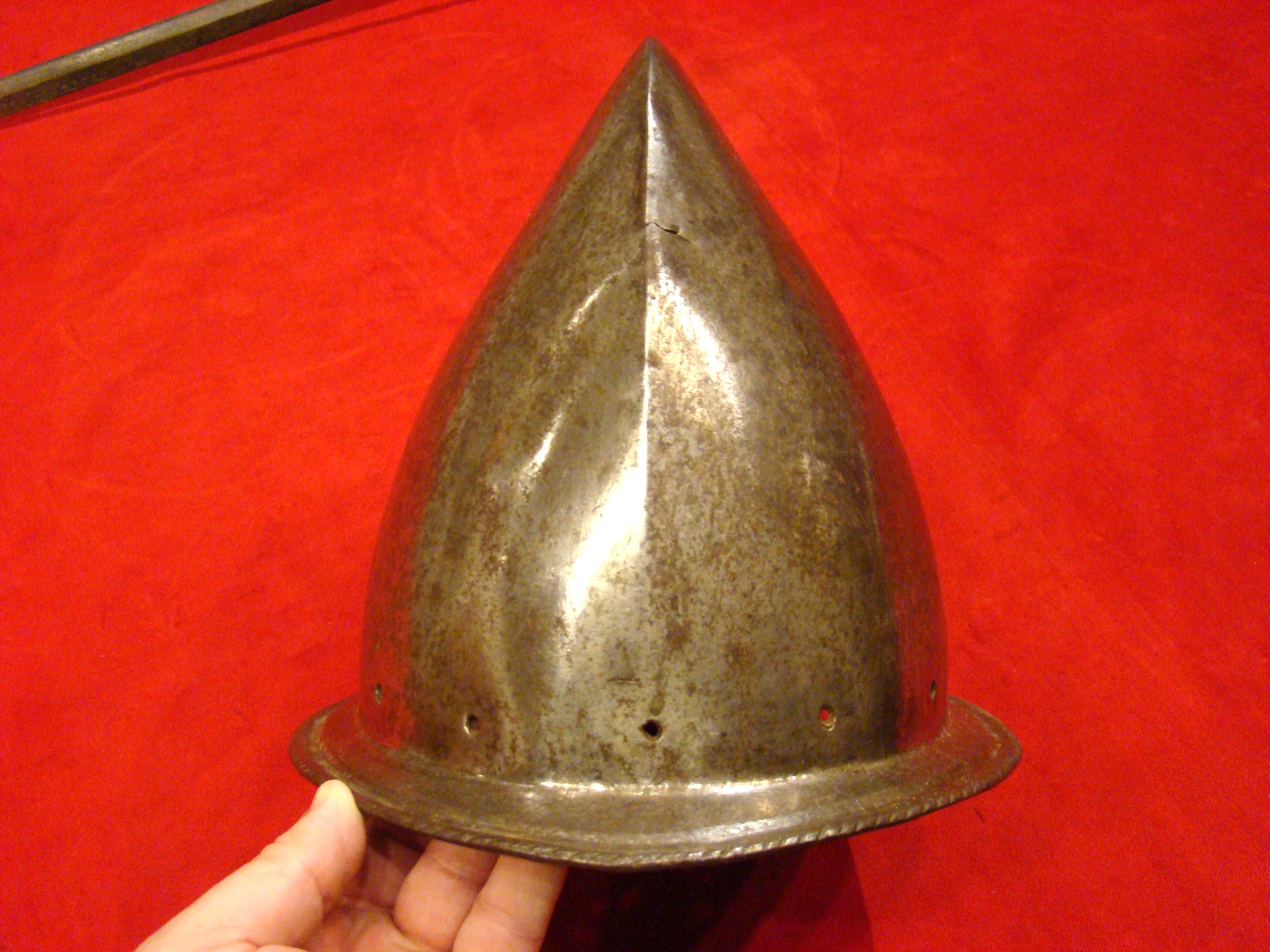
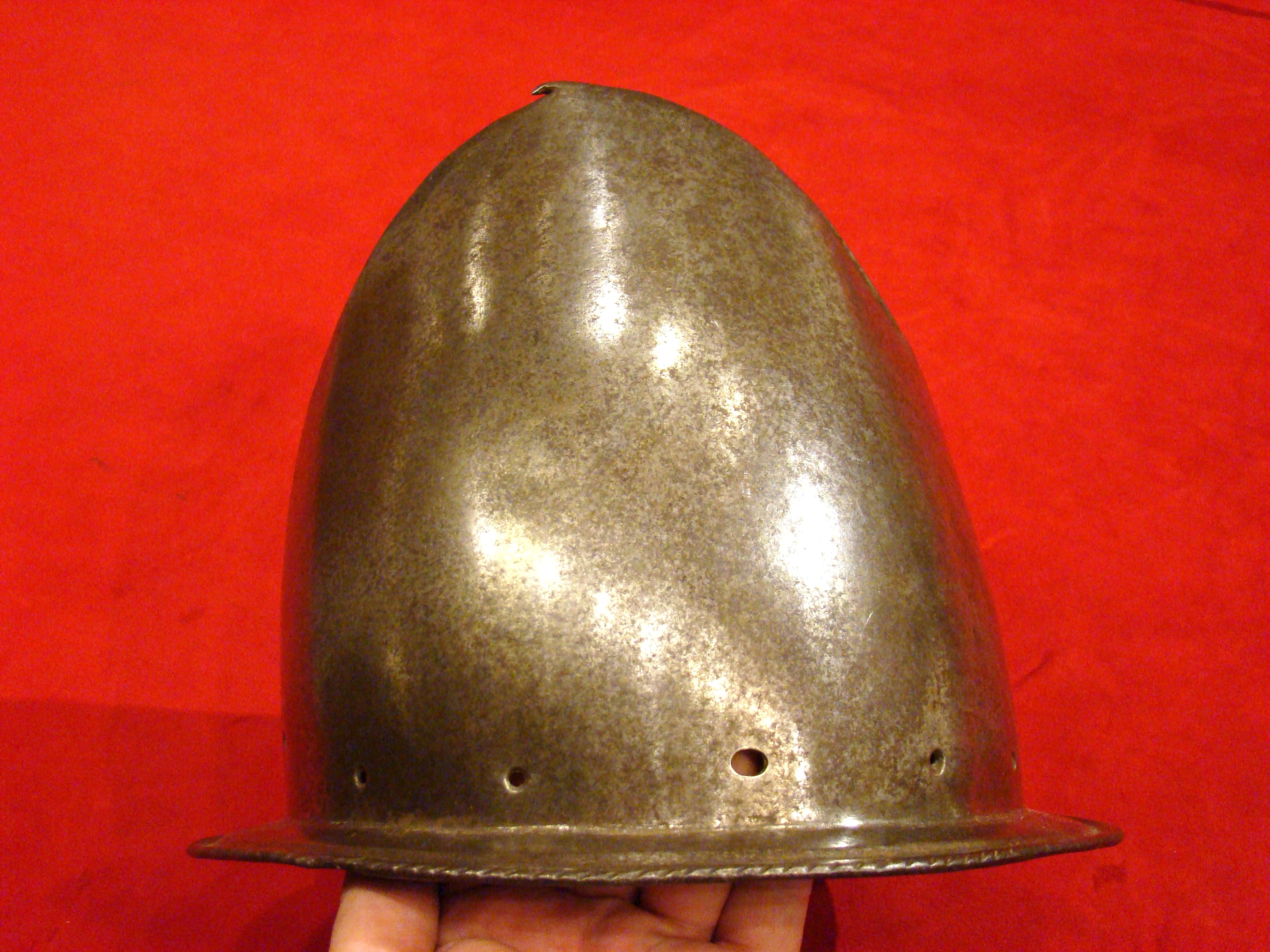
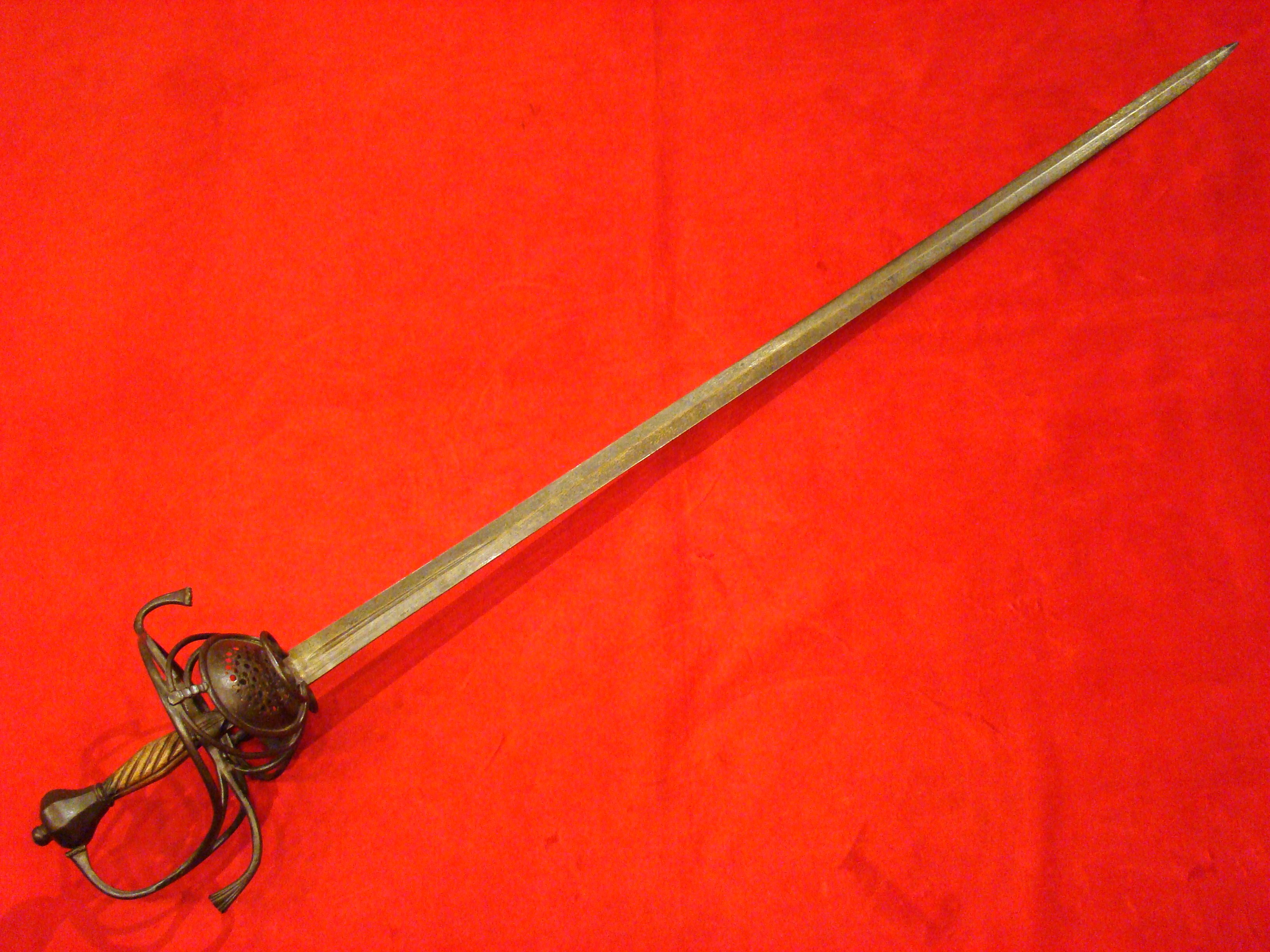
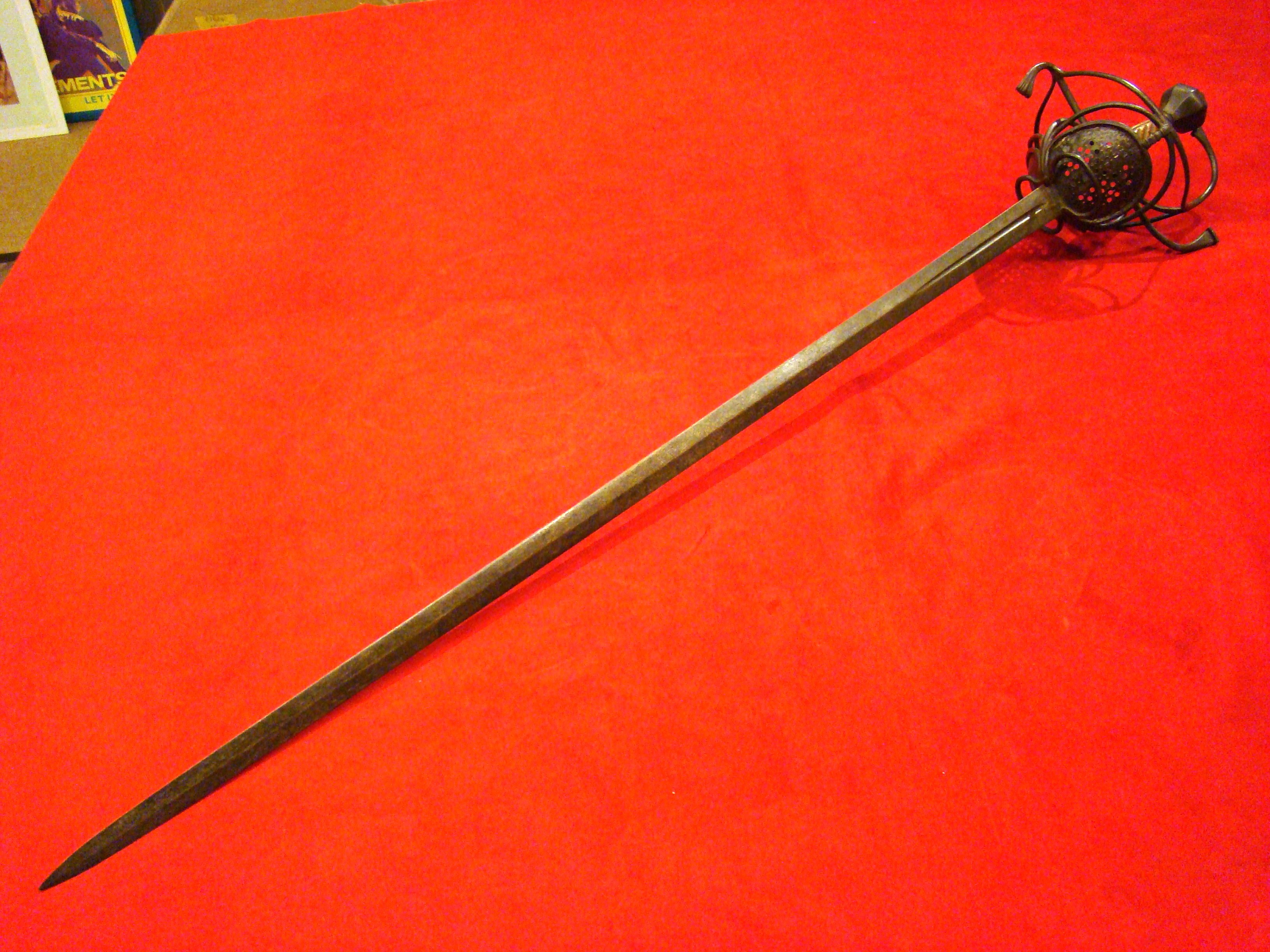
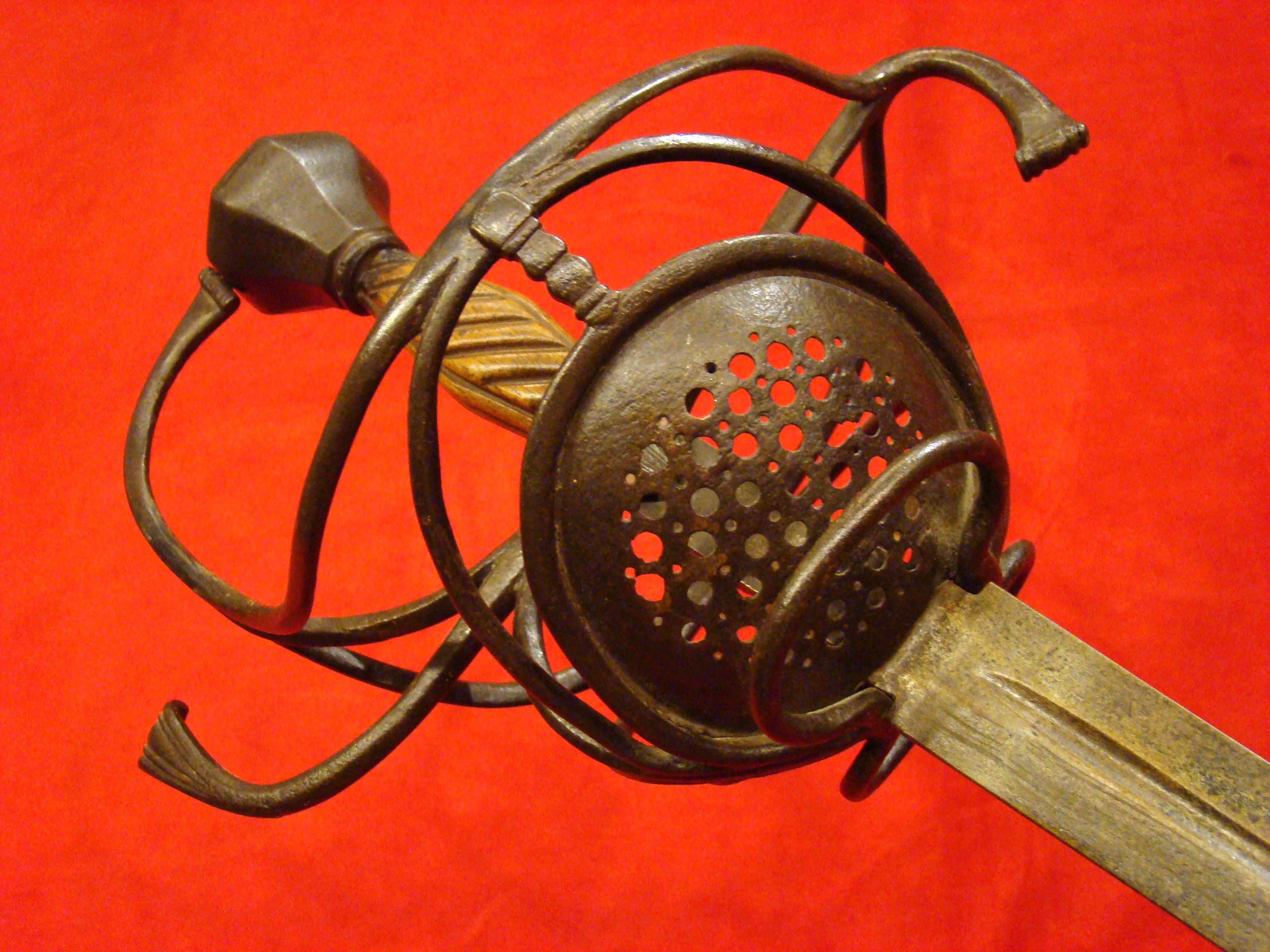
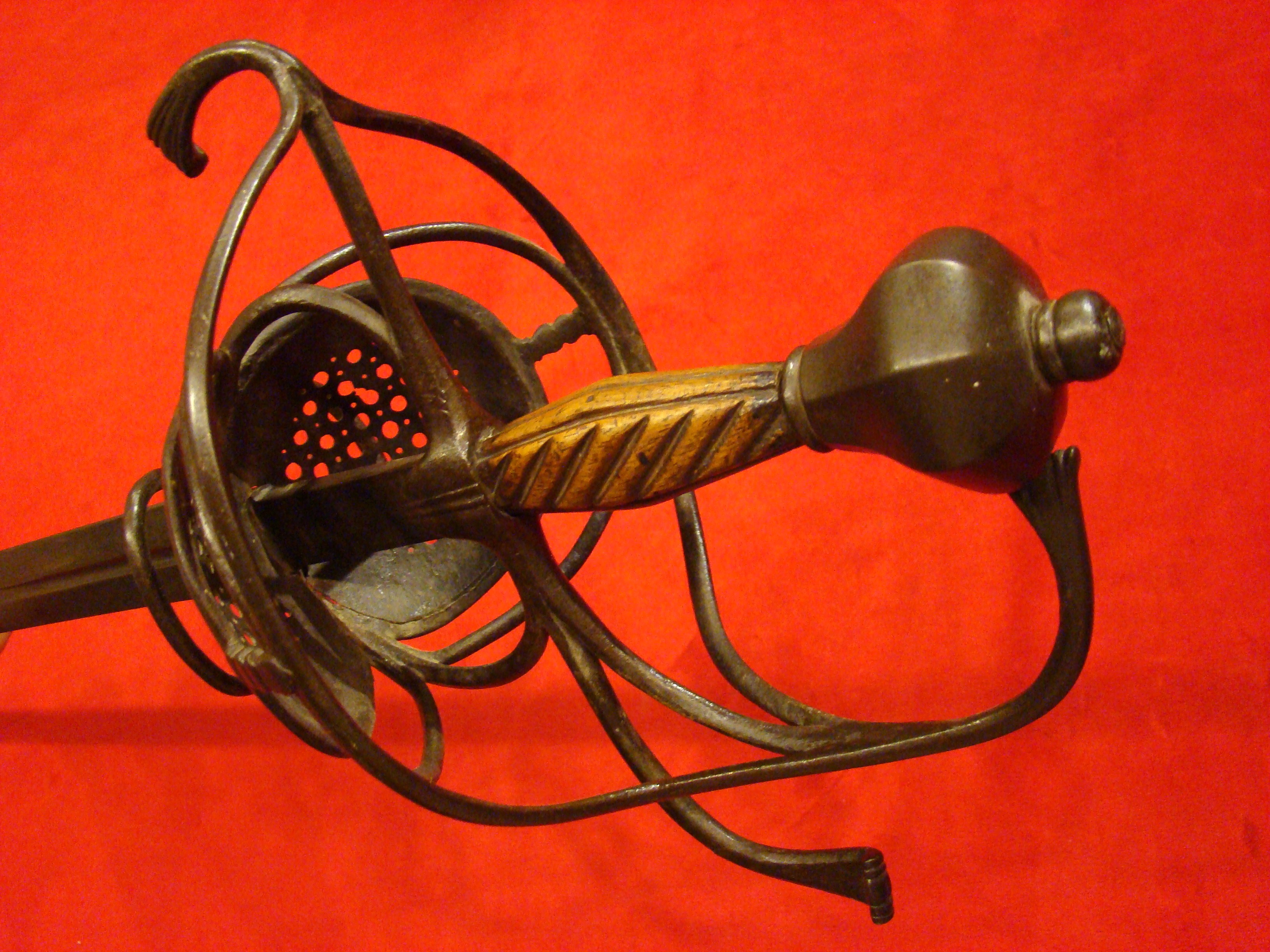
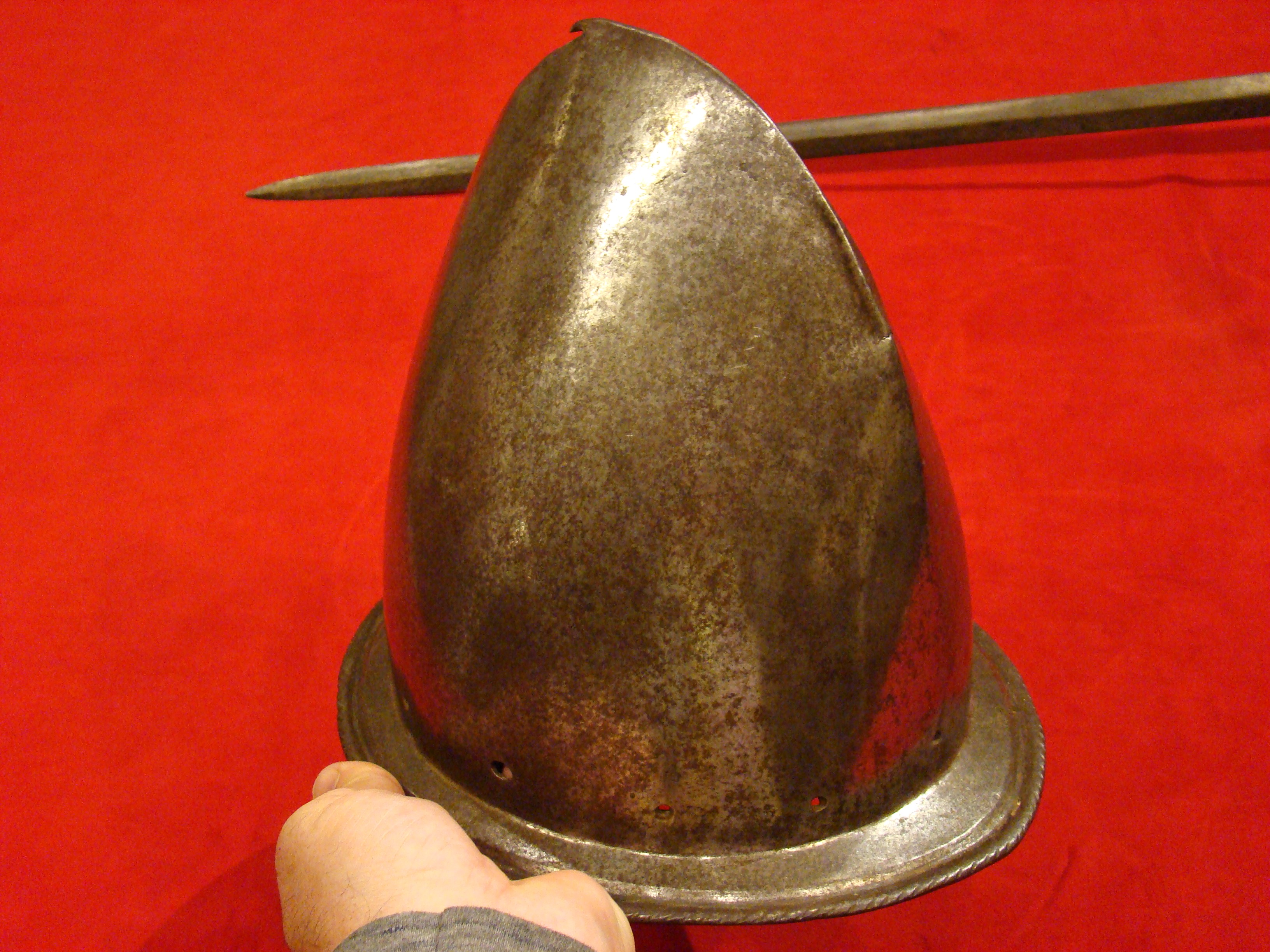
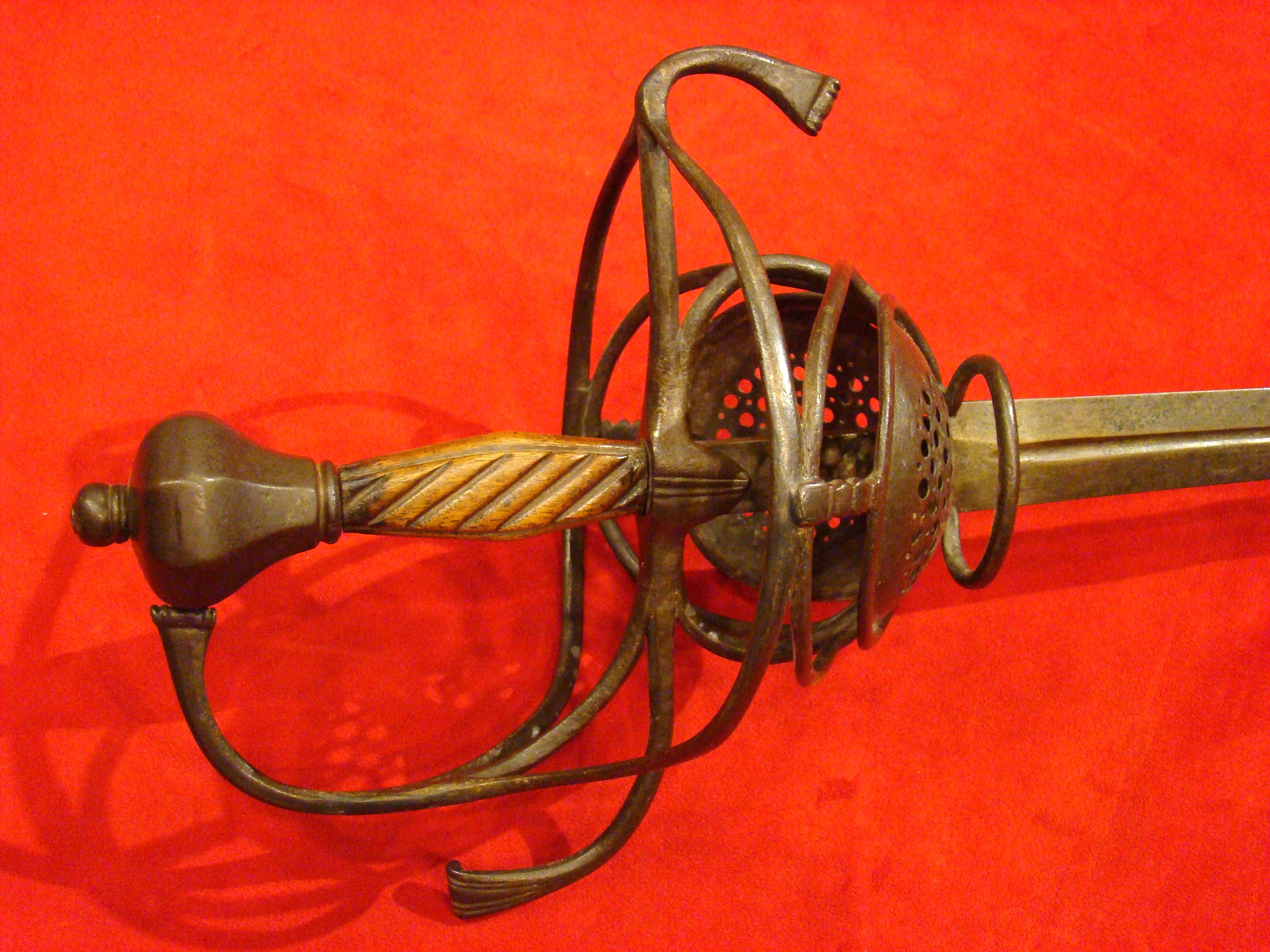
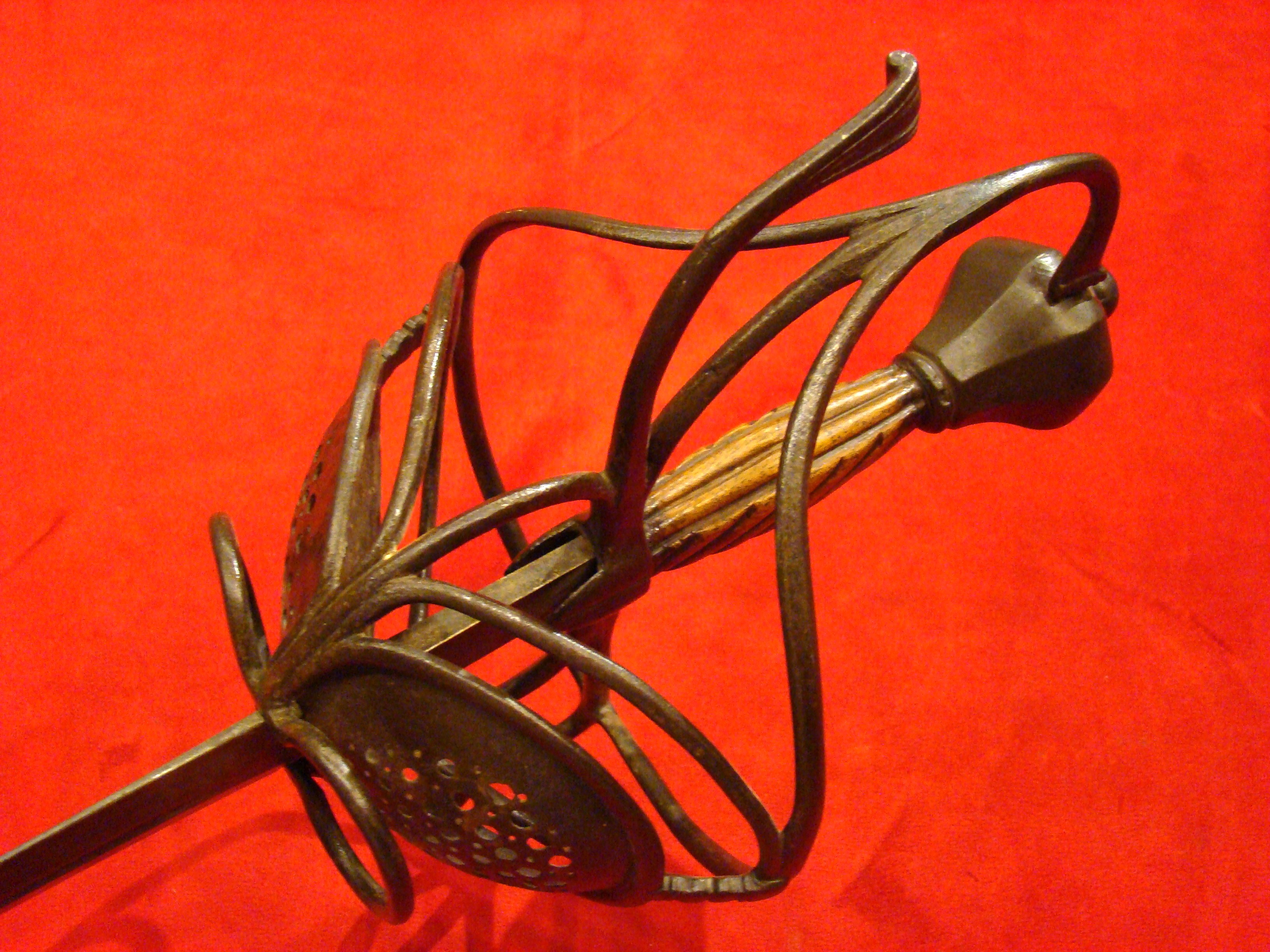
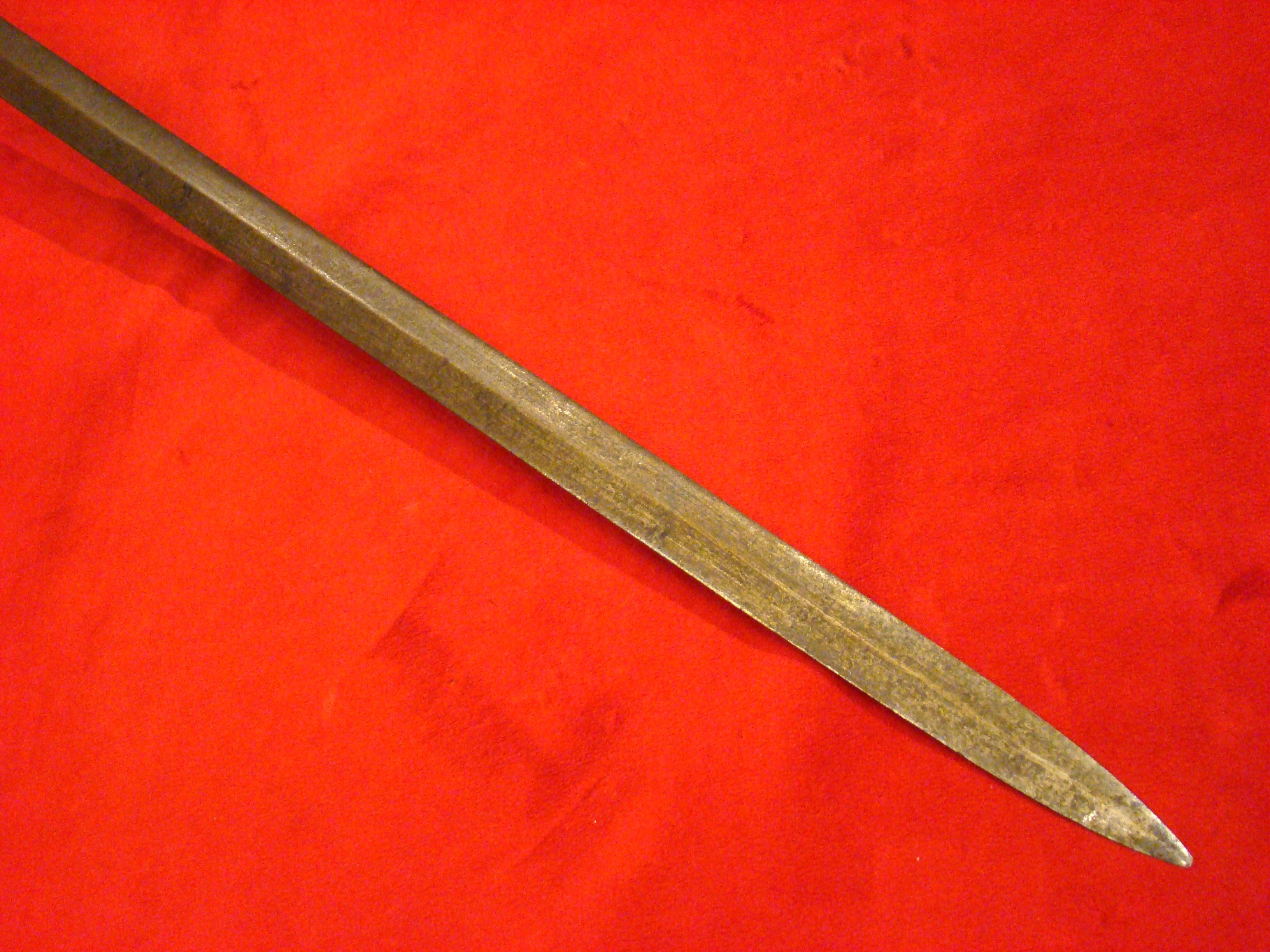
ANT 1. Scarce “High Dome” Cabasset & German “Pappenheim” Swept-Hilt Broadsword. Ca. 1560-1600.
These two pieces are contemporaneous and that is why I listed them together. The Cabasset is identical to the one found at the Jamestowne Settlement. Possibly, Spanish, English, or German origin. Condition is excellent. Missing leather insert and rivets which is typical of helmets over 500 years old. The German swept-hilt rapier/broadsword comes from the first rate collection of the late Nick Apergis. The steel hilt is perfect and tight. The wooden grip appears original and may have once been wrapped in leather. The patina is fantastic. Blade is smooth with a consistent browning patina. No nicks, bends, or repairs. No armory marks visible. Cabasset $2995.00 Swept-Hilt Broadsword $4500.00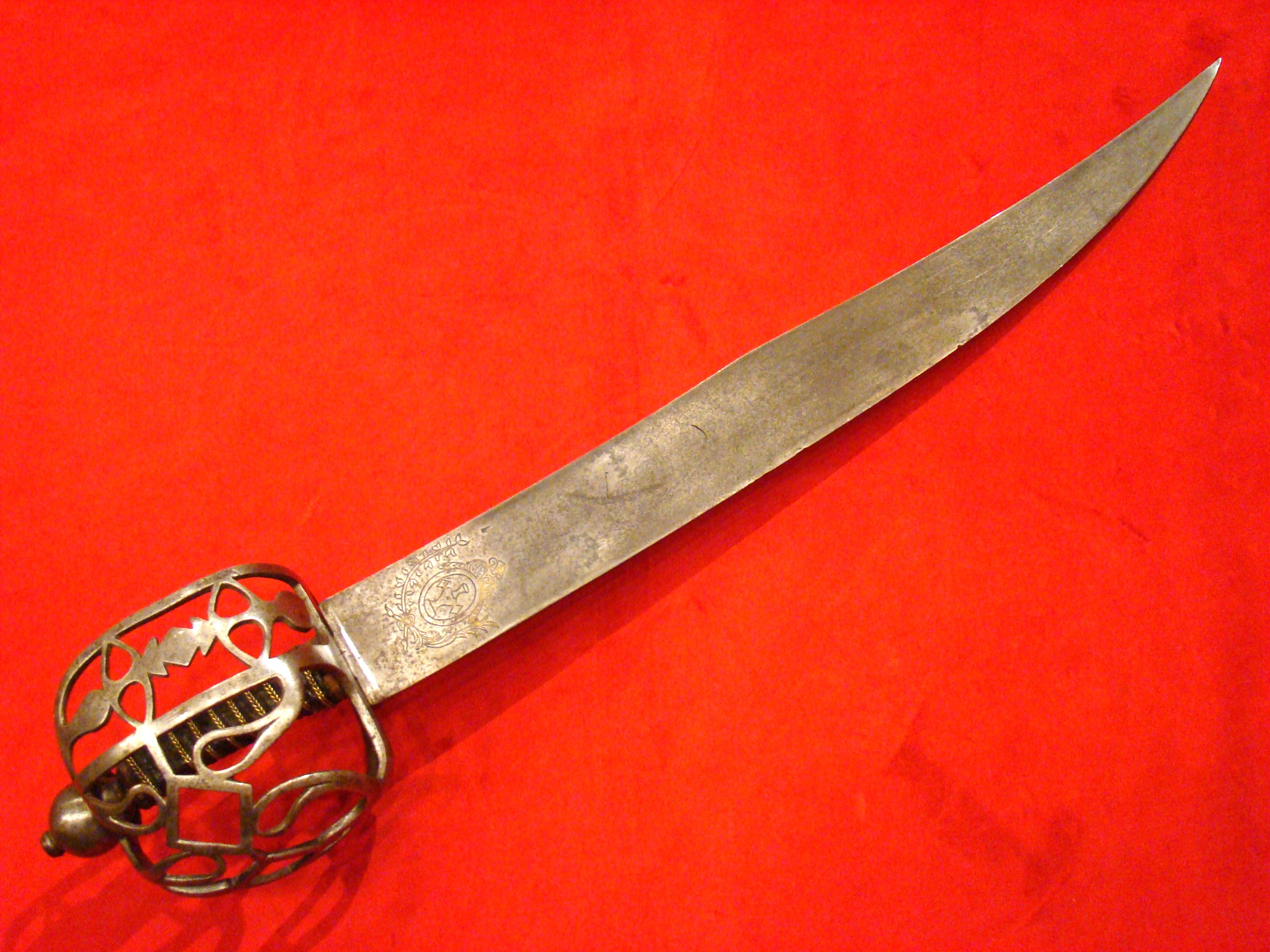
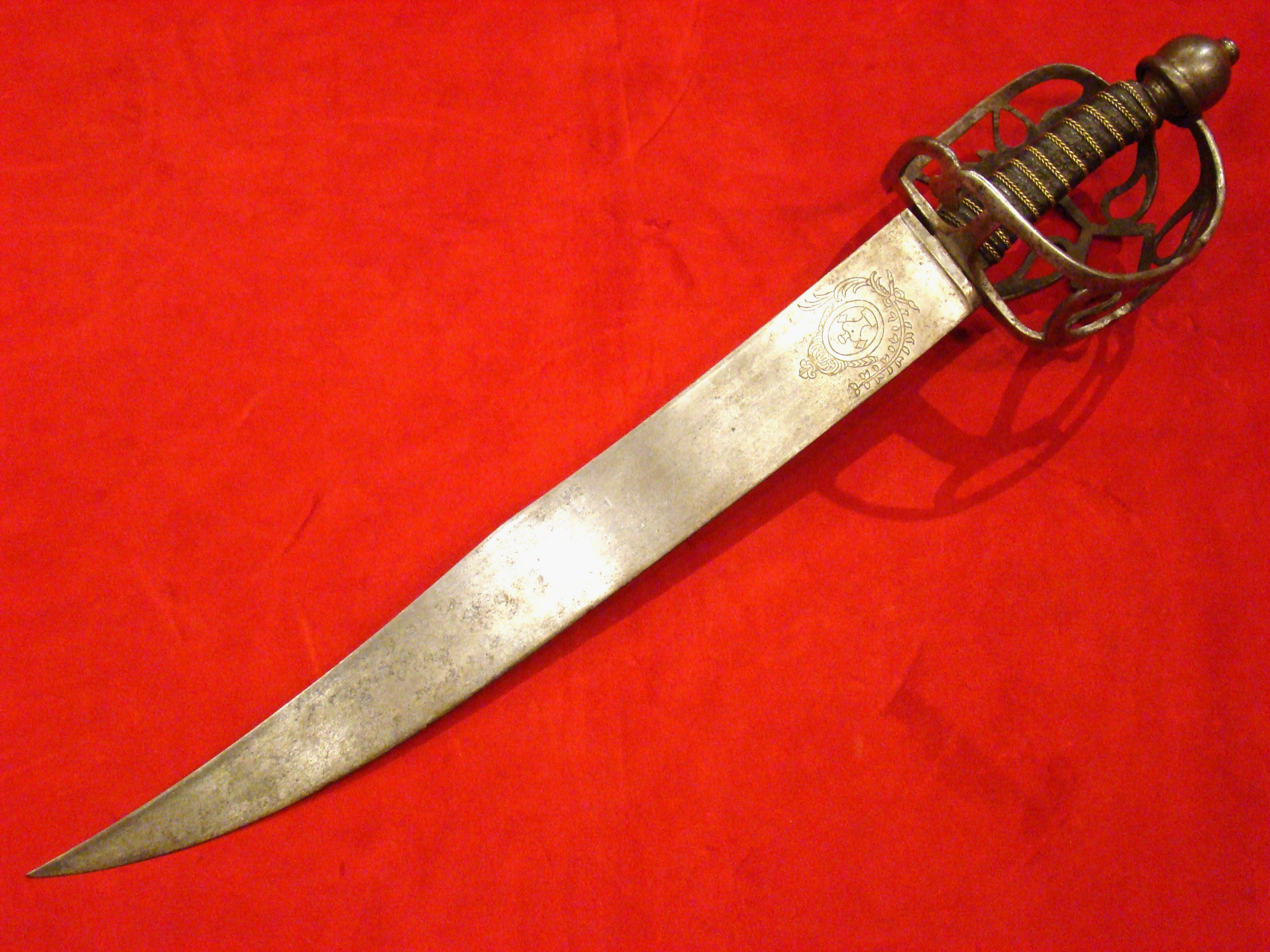
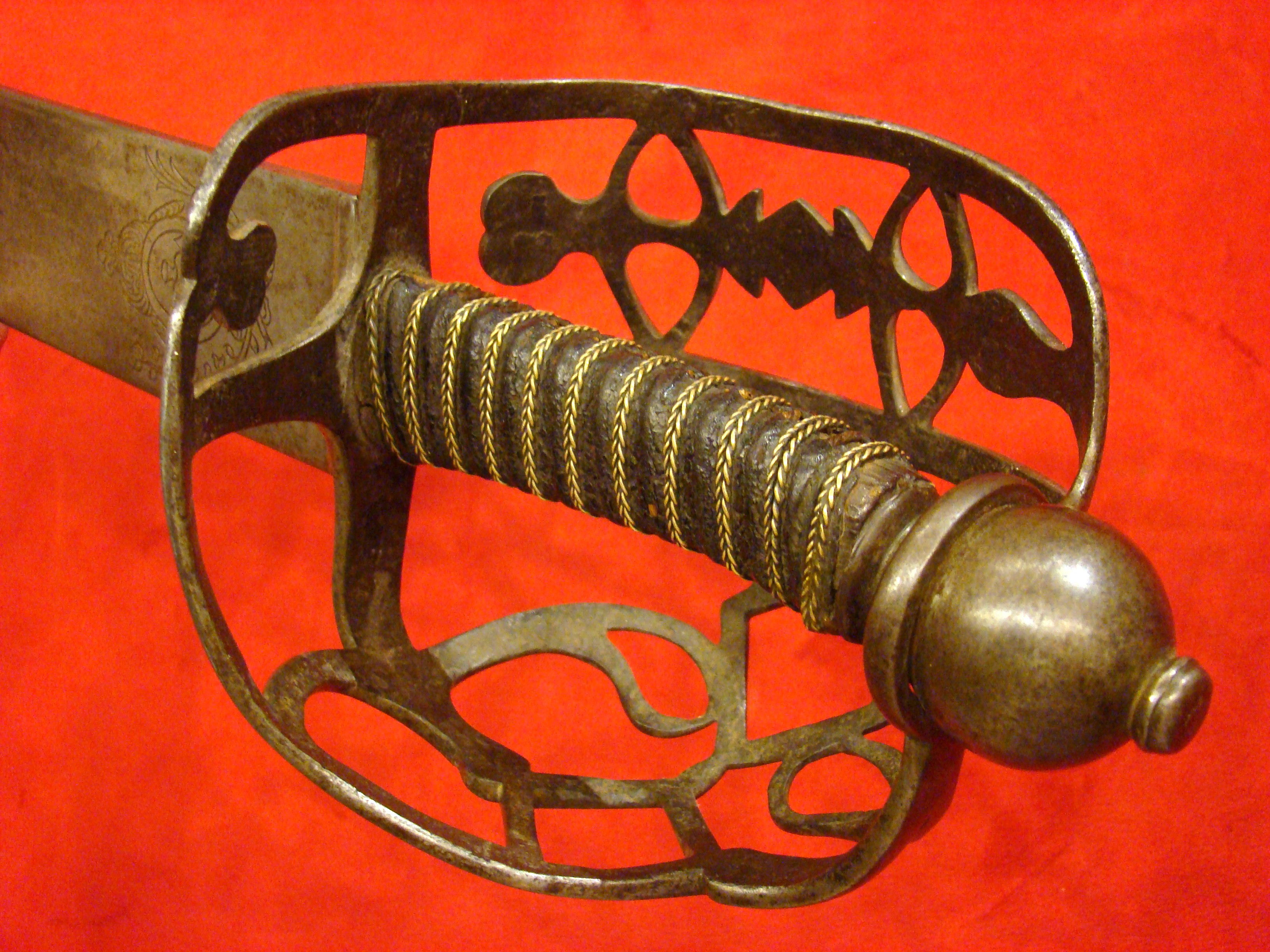
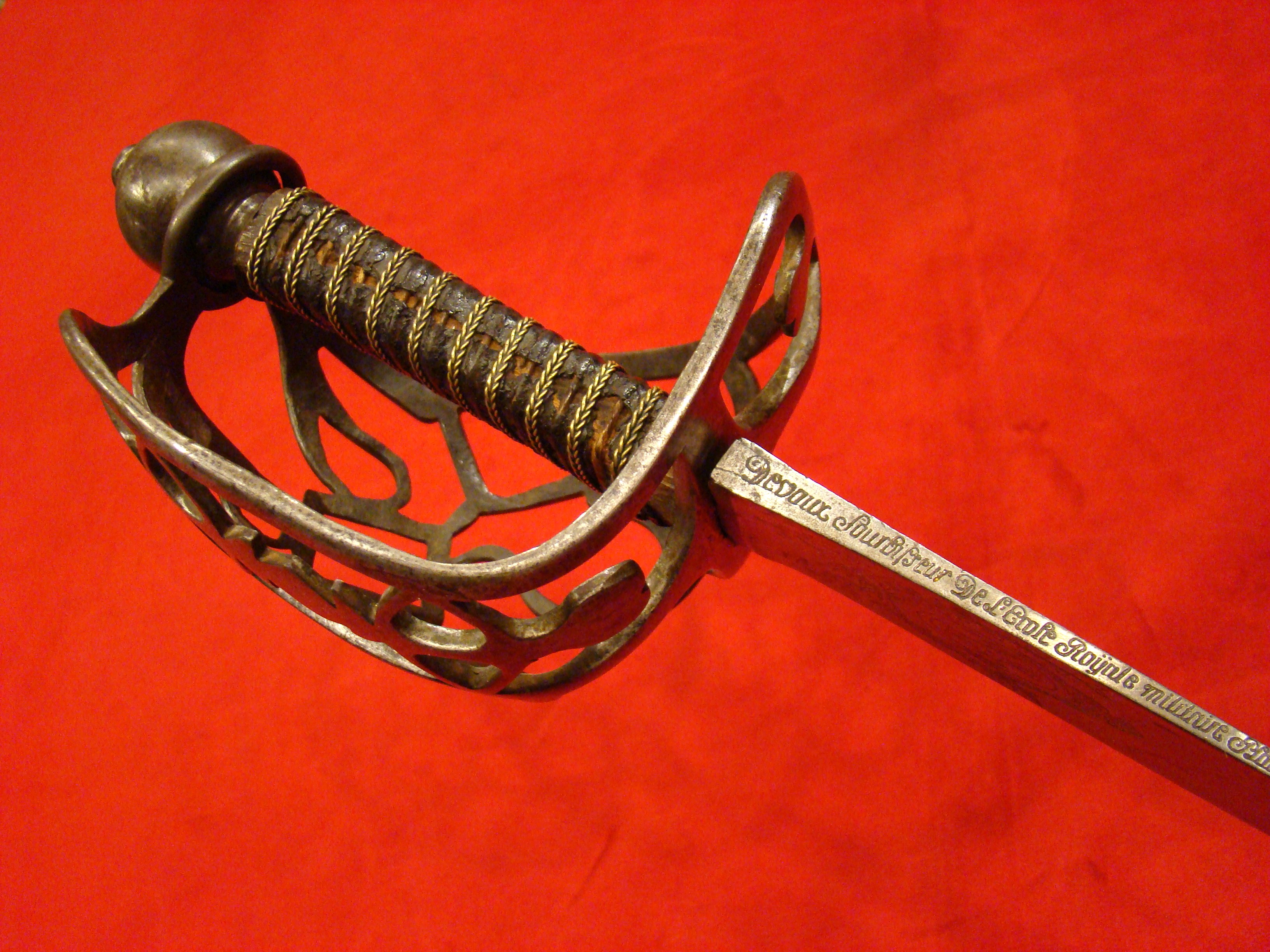
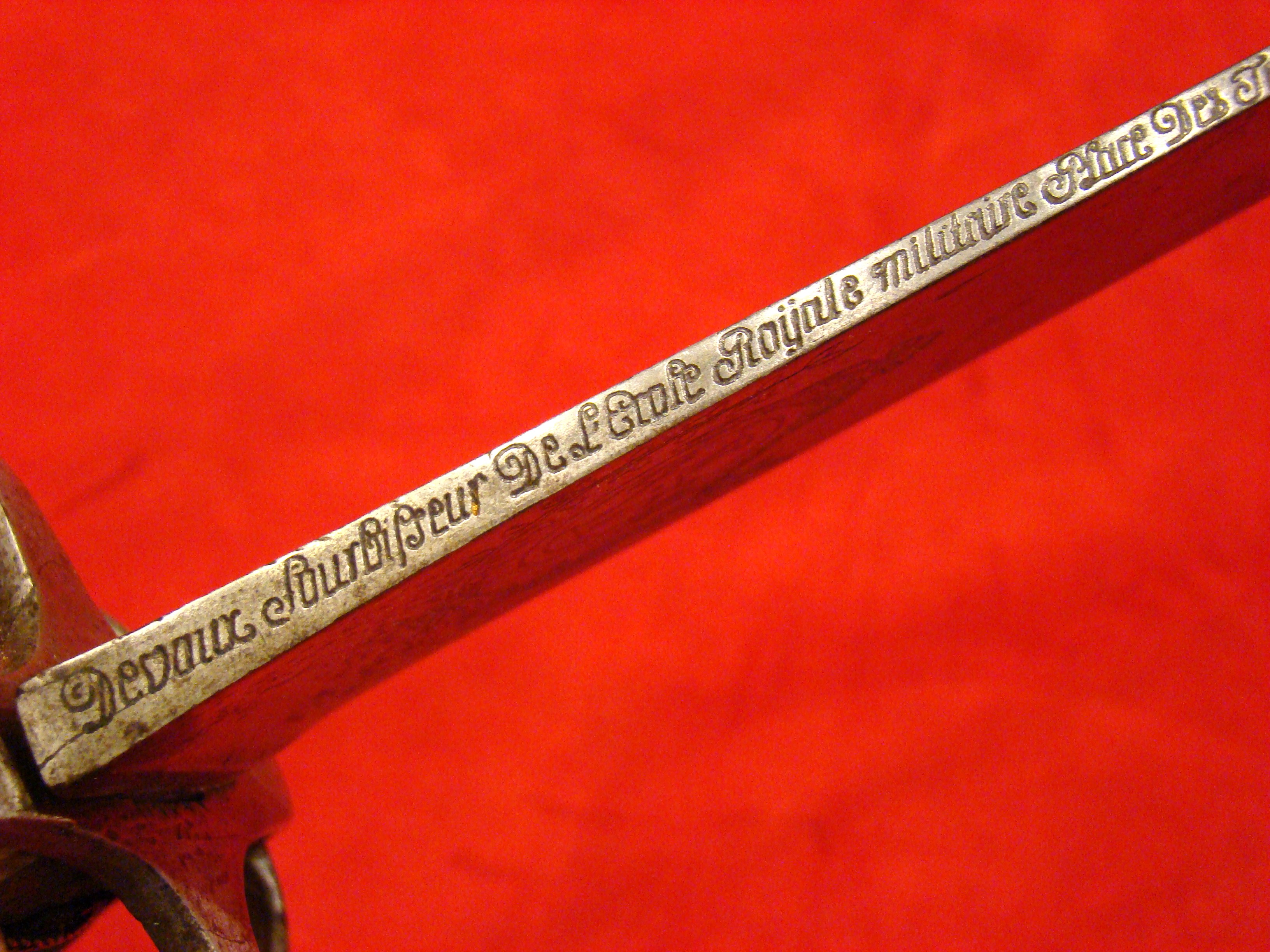
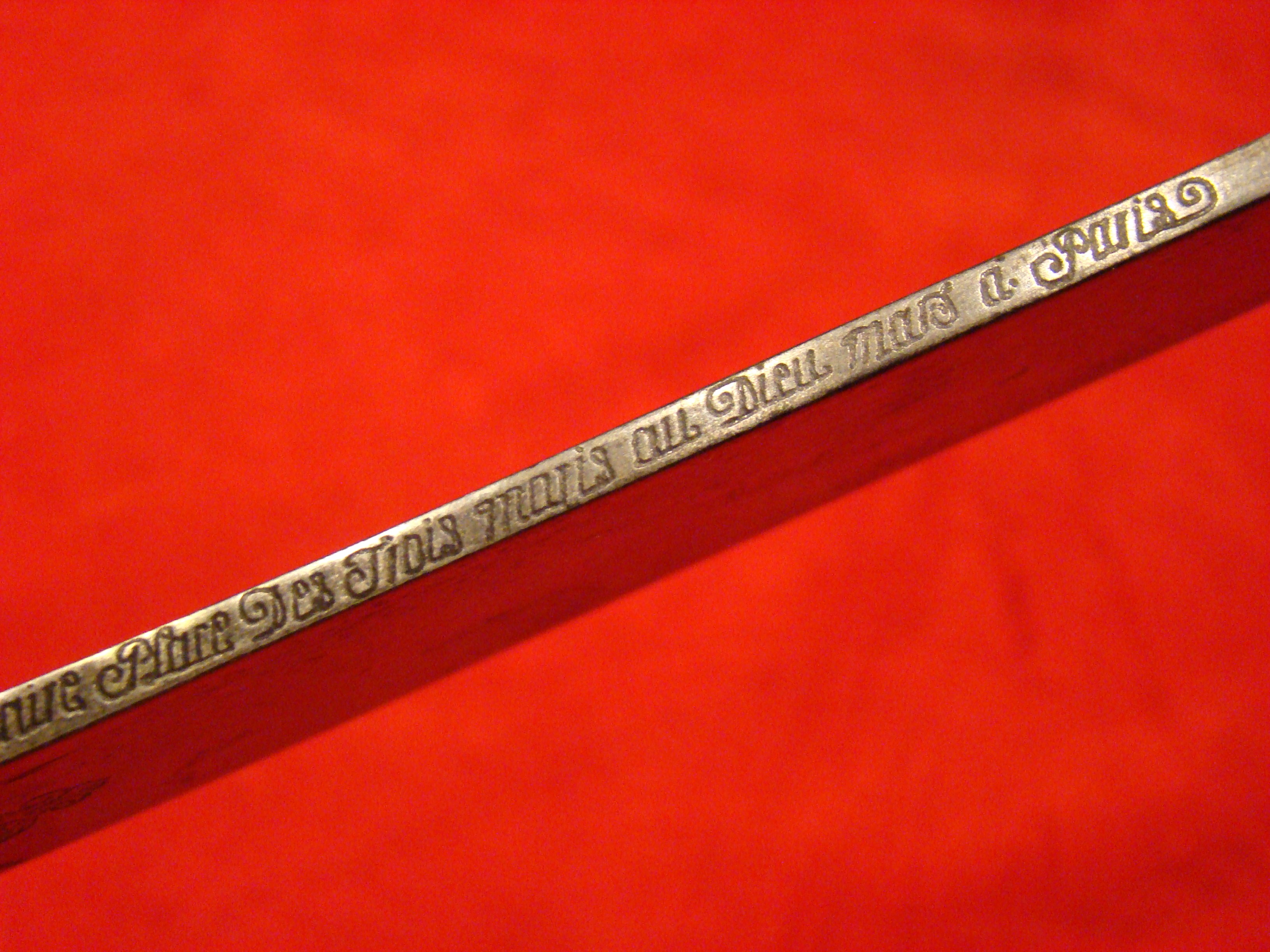
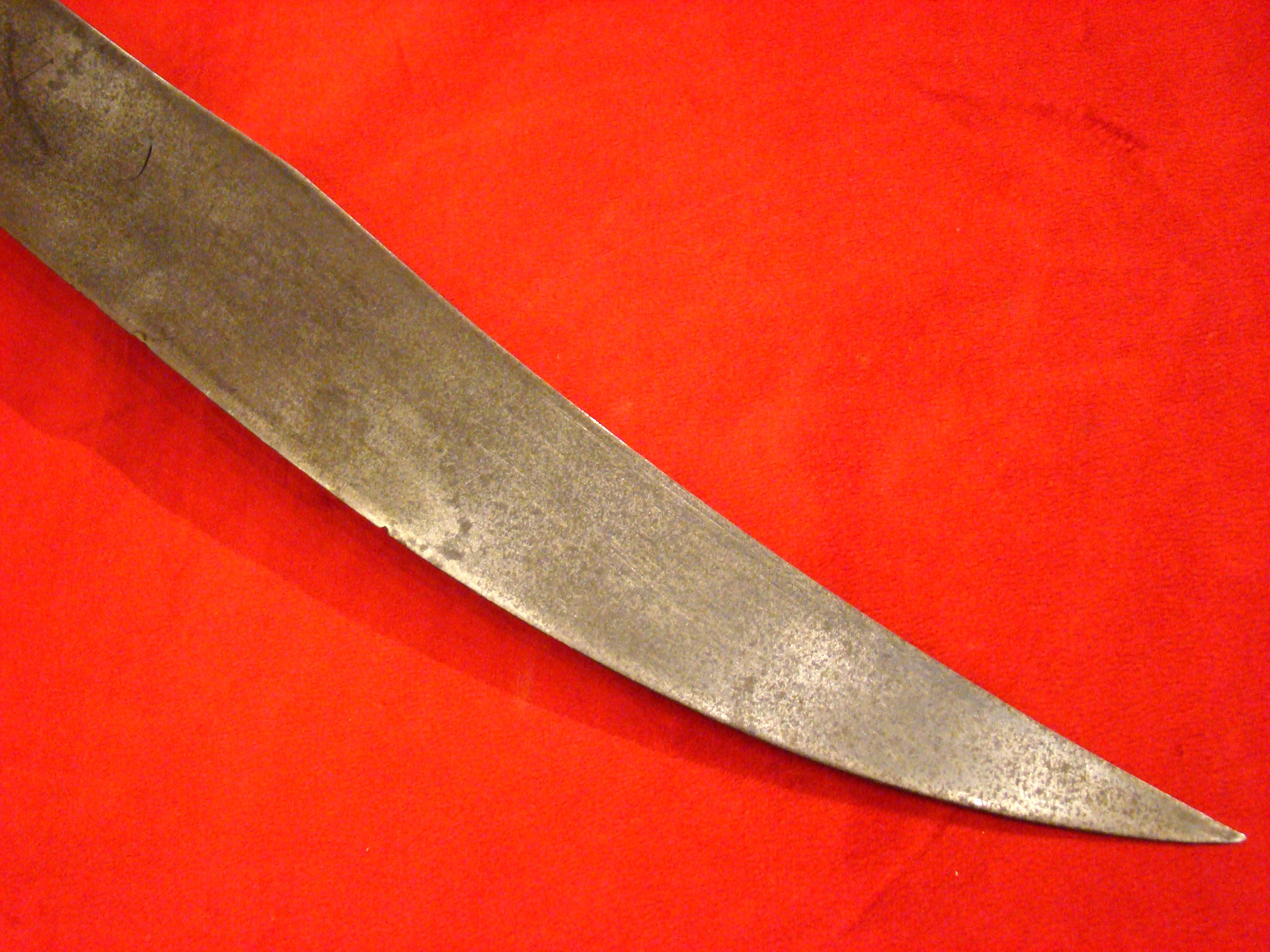
ANT 2. Classic English “Age of Piracy” Naval Cutlass. Ca. 1680-1750
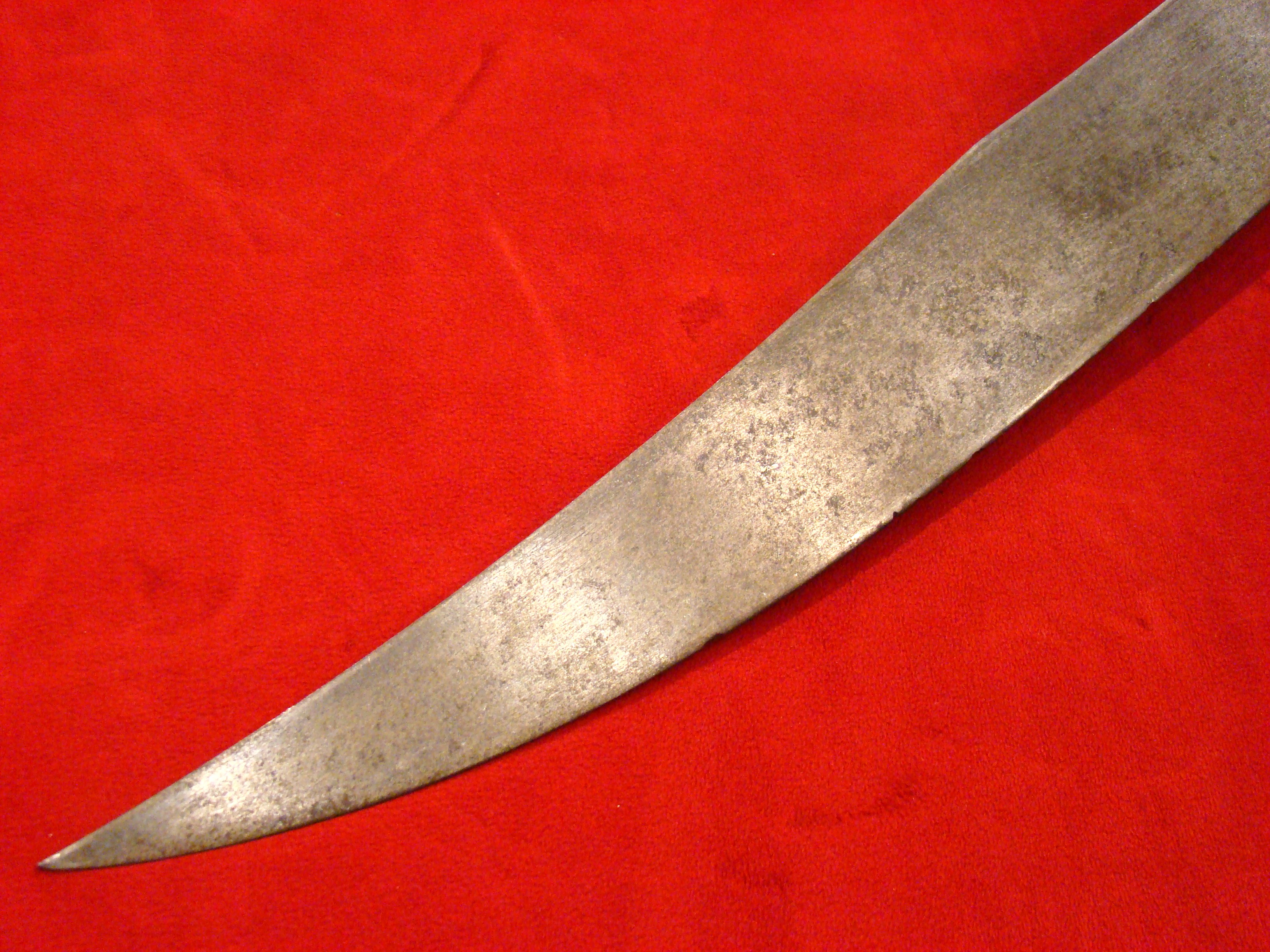
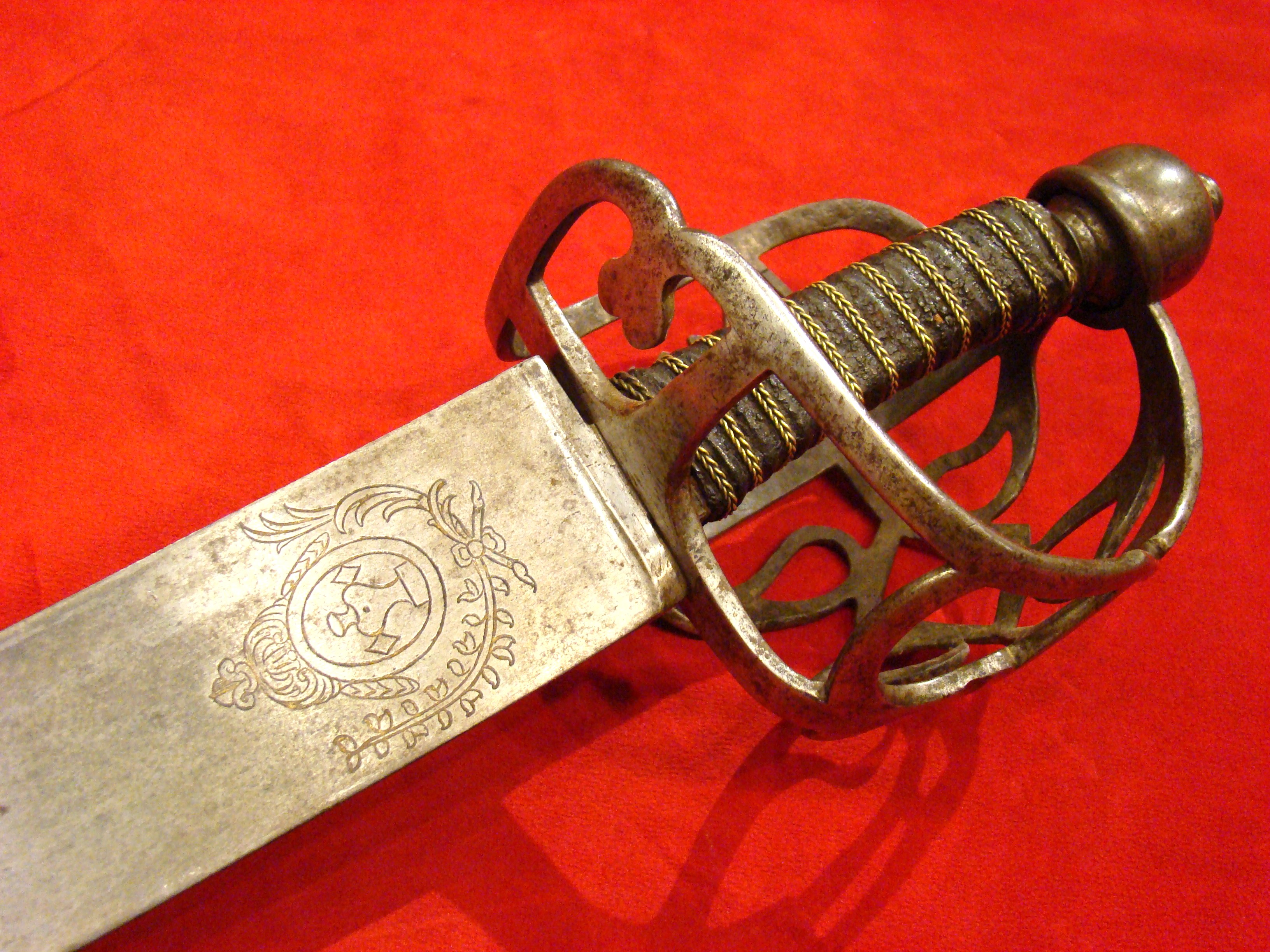
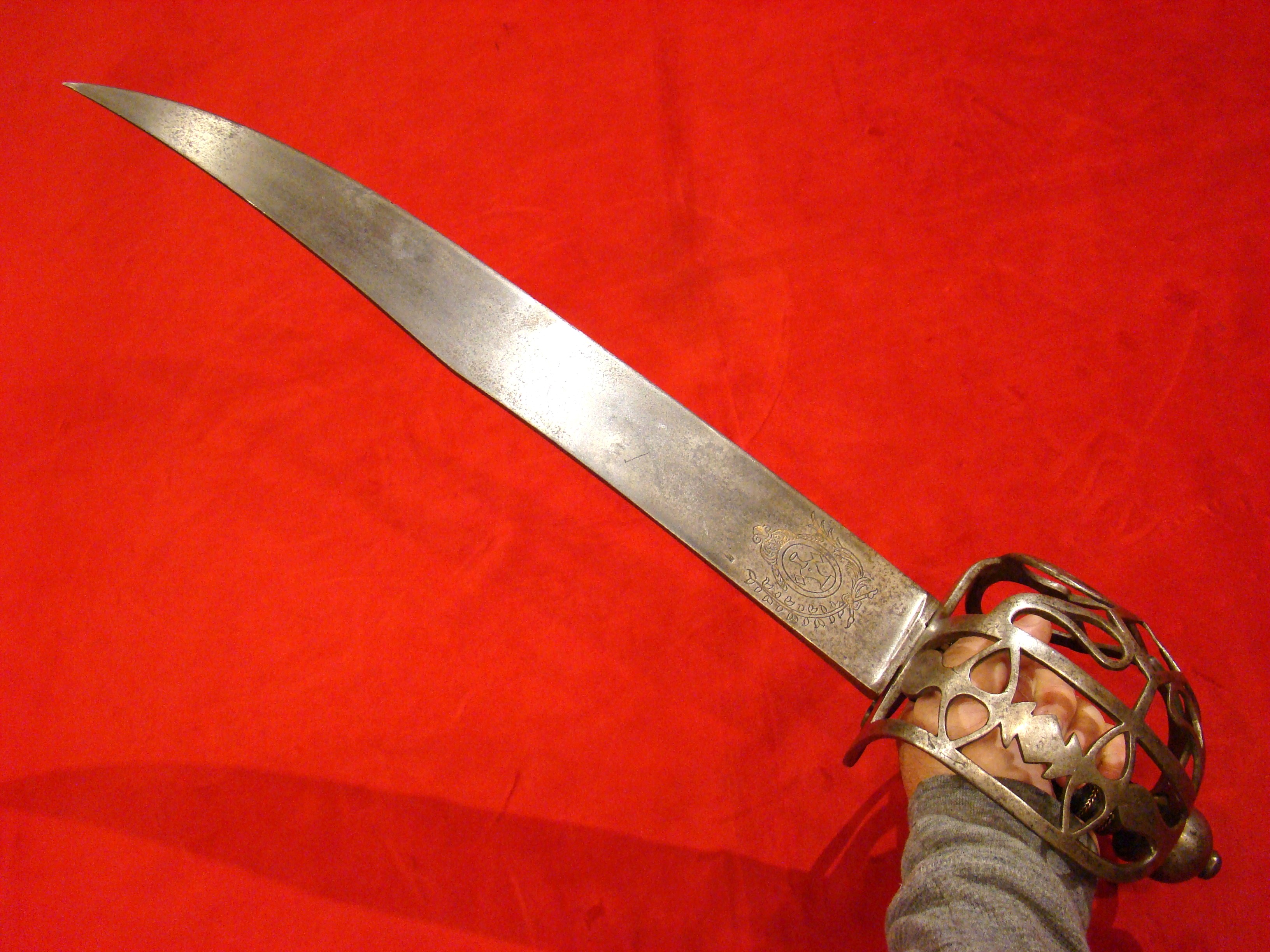
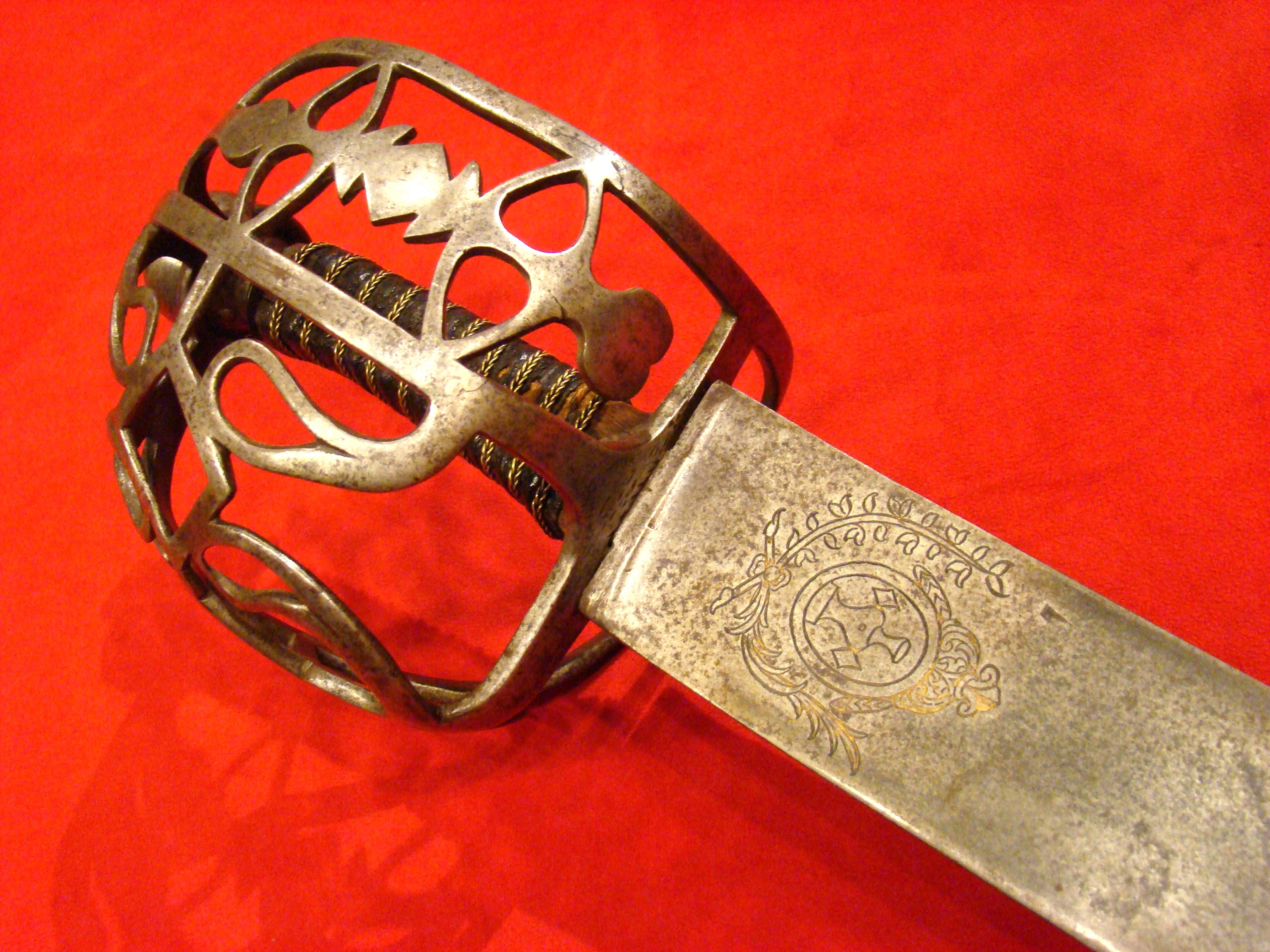
This early European sword blade was produced in France, but the hilt is of English manufacture. The sword measures 26 1/2″ overall with an 18 3/4″ blade that is 2 3/8″ wide. The blade is engraved with a swag around an urn medallion at the base of both sides. Smooth finish with no pitting. The spine of the blade is neatly inscribed “Devaux Sourbiseur De L’Ecole Royale militaire Place Des Trois mairis au Dieu mad a Paris” roughly translated “Devaux, Fencing master of the Royal Military School, Place des Trois-Mairies, … Paris.” Iron basket hilt resembling period English and Scottish broadsword hilts. The globular pommel is also reminiscent of a broadsword pommel. The tapered rectangular grip is first wrapped in leather and then braided brass wire which may have been restored long ago. This type of sword is exactly what would have been used by English Corsairs and Privateer’s preying upon Spanish Treasure Fleets. Imagine how cool this sword would look displayed on a pile of Spanish gold and silver Cobs. $3850.00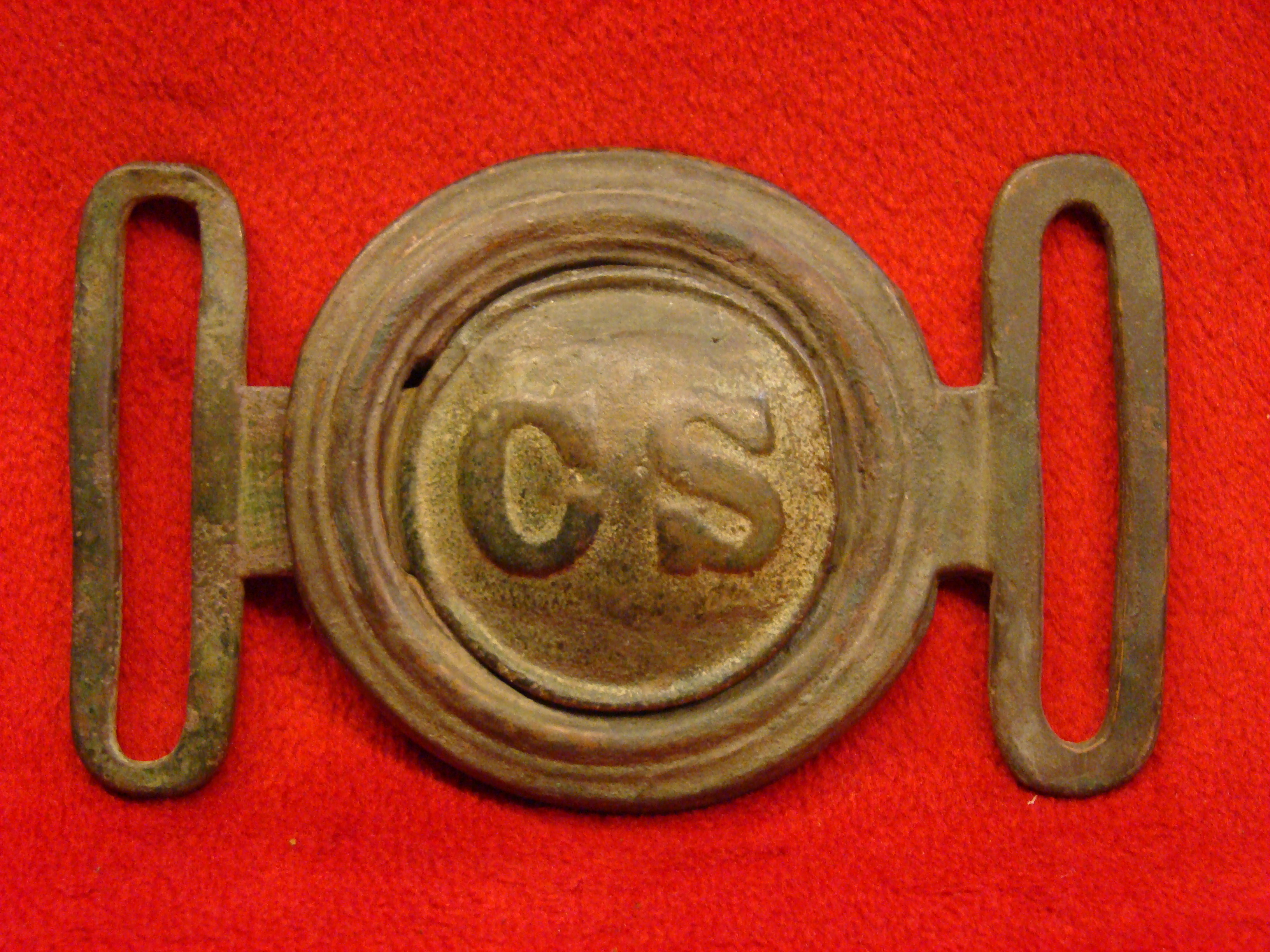
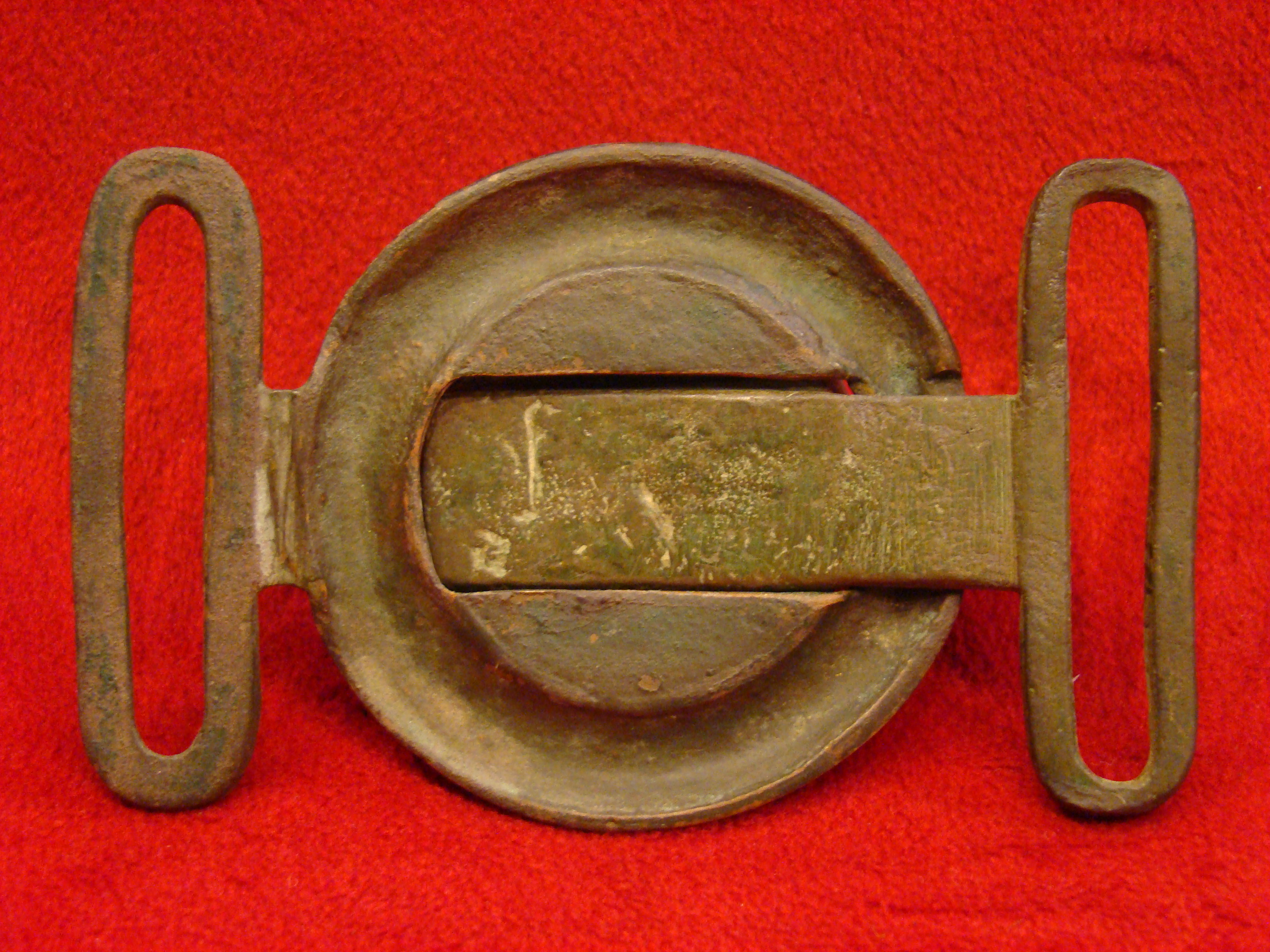
CSBP 1. Dug Confederate Officer’s Sword Belt Buckle. Tullahoma TN.
Rare Concentric Wreath two-piece CS sword belt buckle with rounded loops. This type was almost certainly produced in New Orleans LA. Note cast brass construction and matching olive-green patina. Fit is slightly off. For an identical example see page 40, Plate # 059 in Steve Mullinax’s reference book “Confederate Belt Buckles and Plates”. Found in one of CS Gen. William Hardee’s infantry camps near Tullahoma TN. There is a Steve Mullinax COA letter that comes with it. $8650.00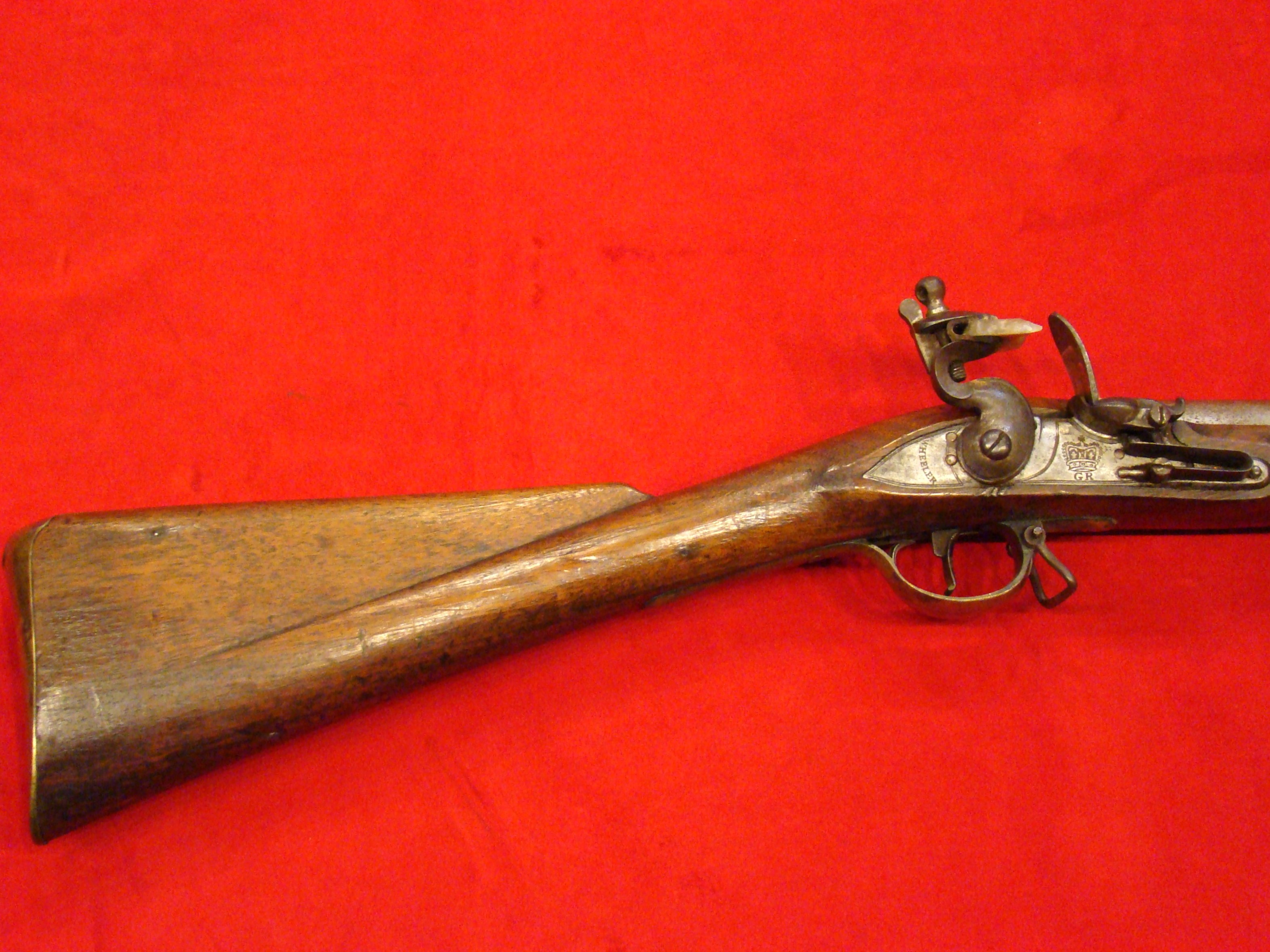
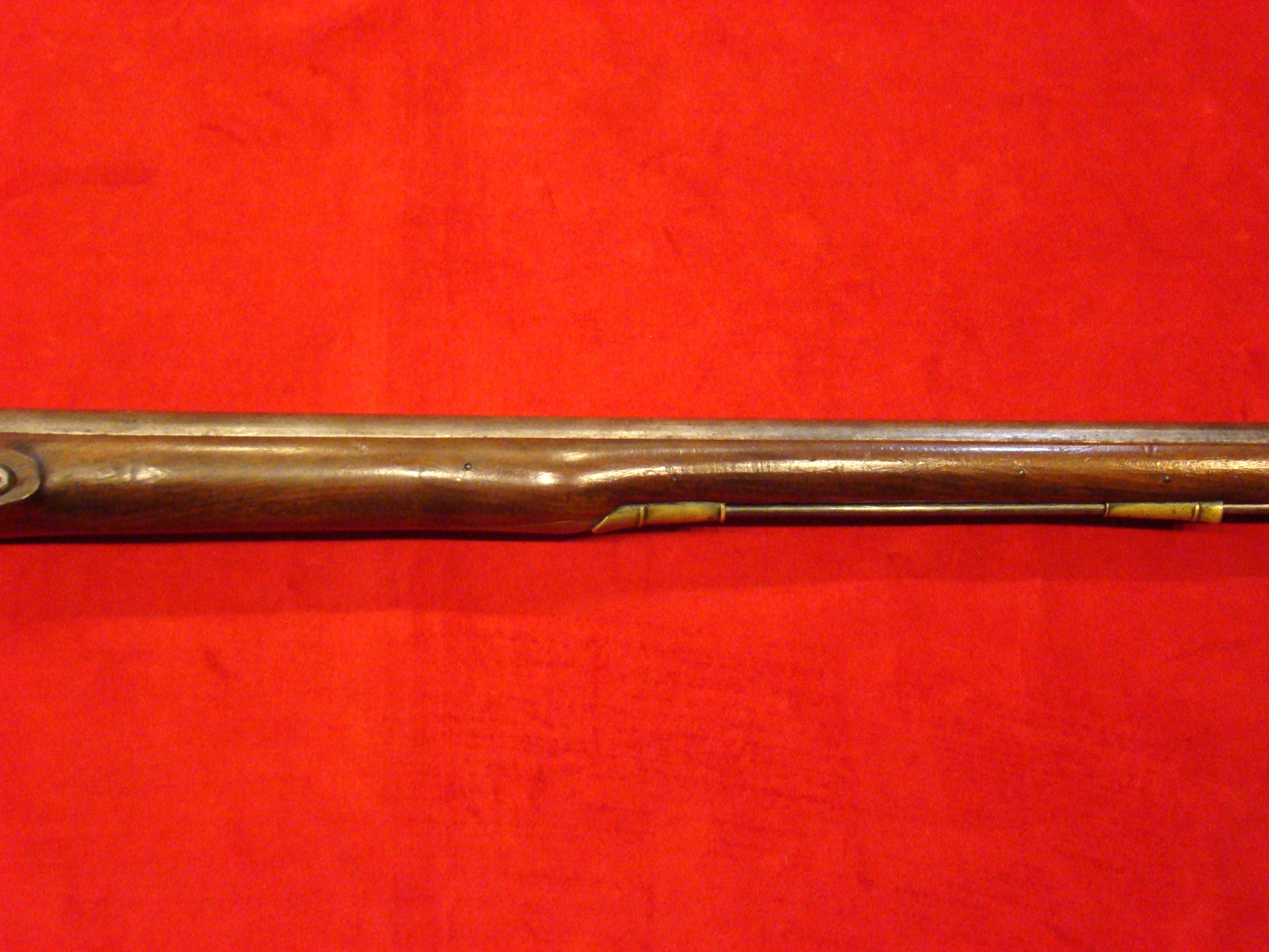
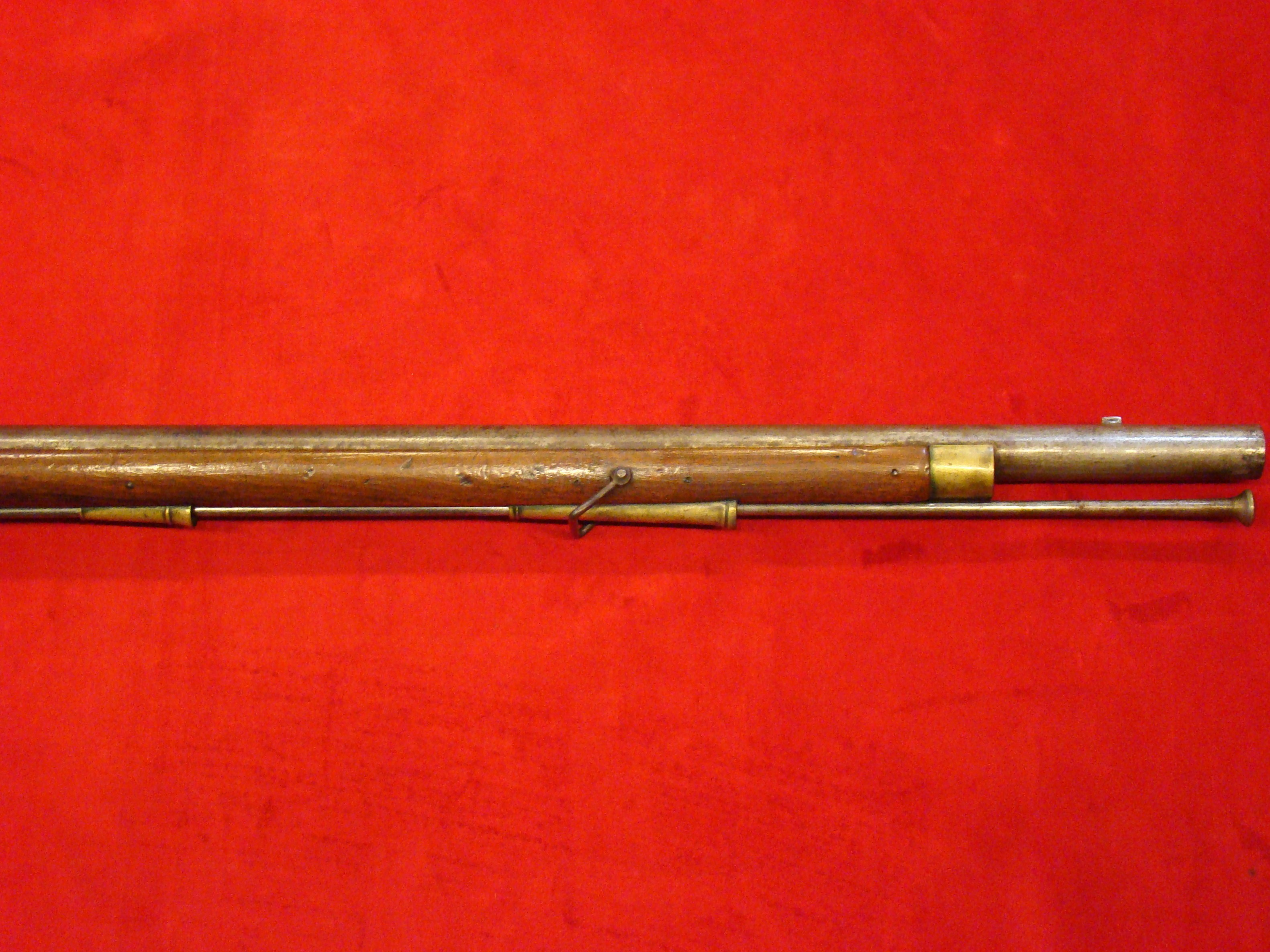
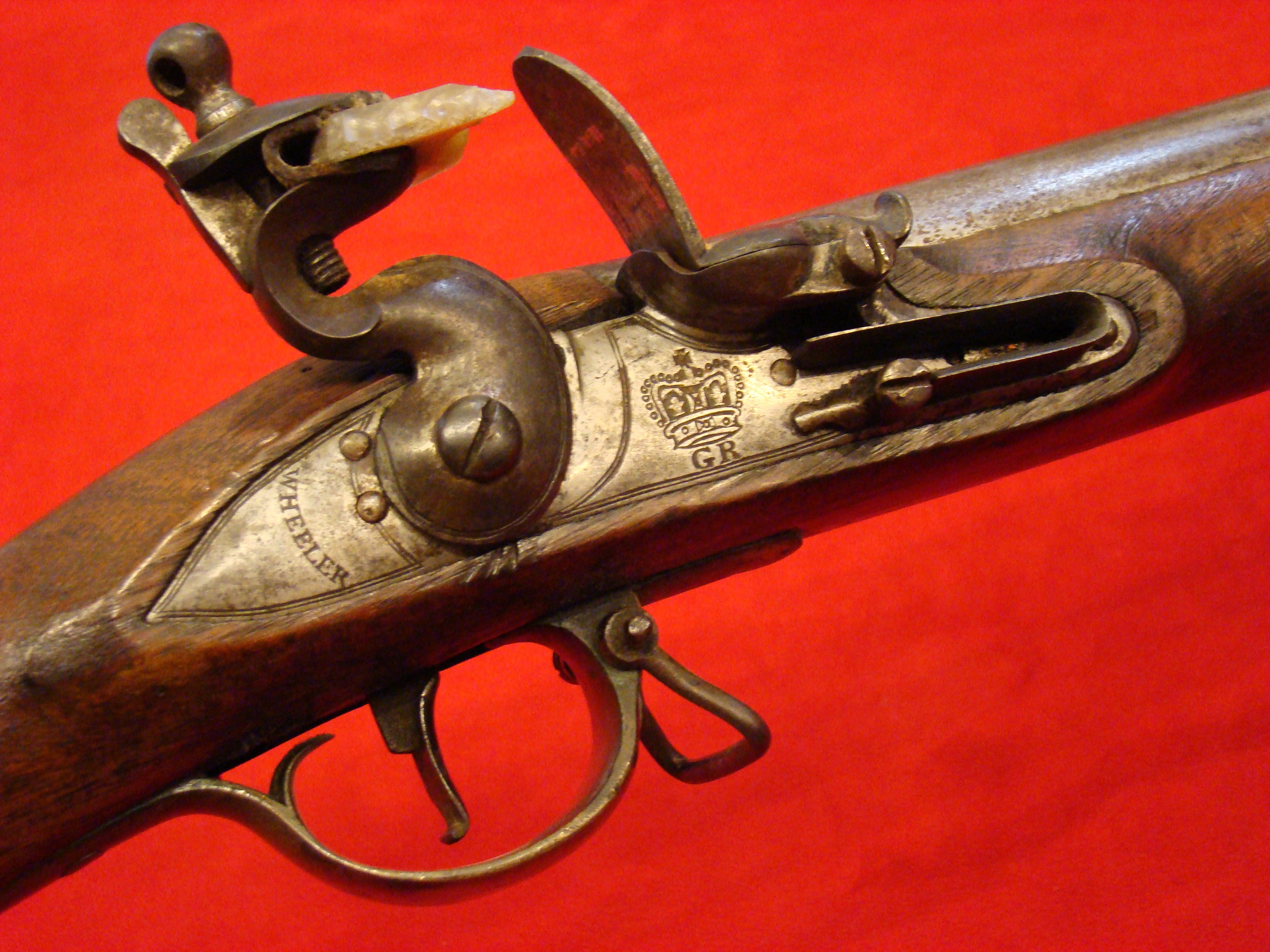
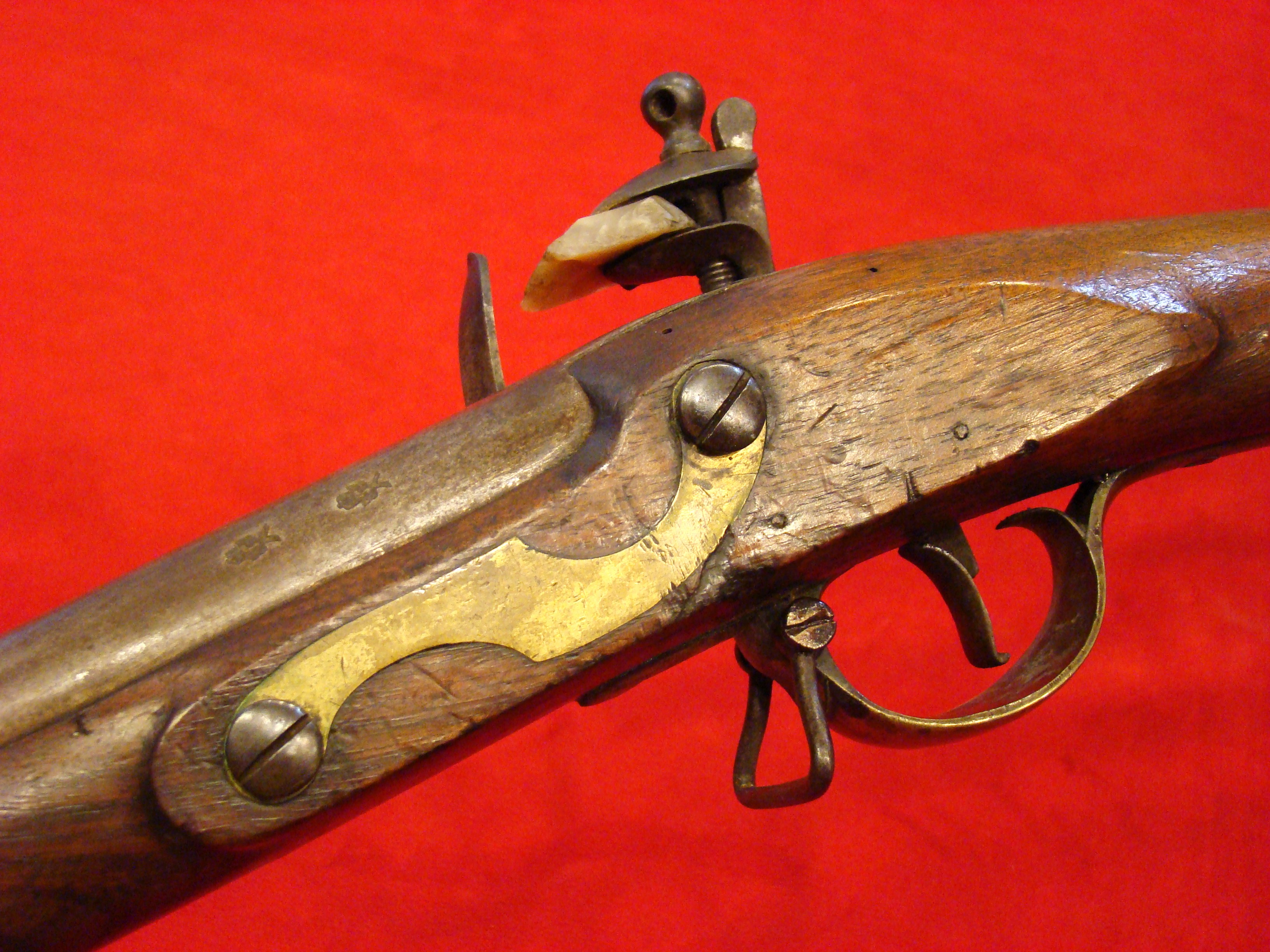
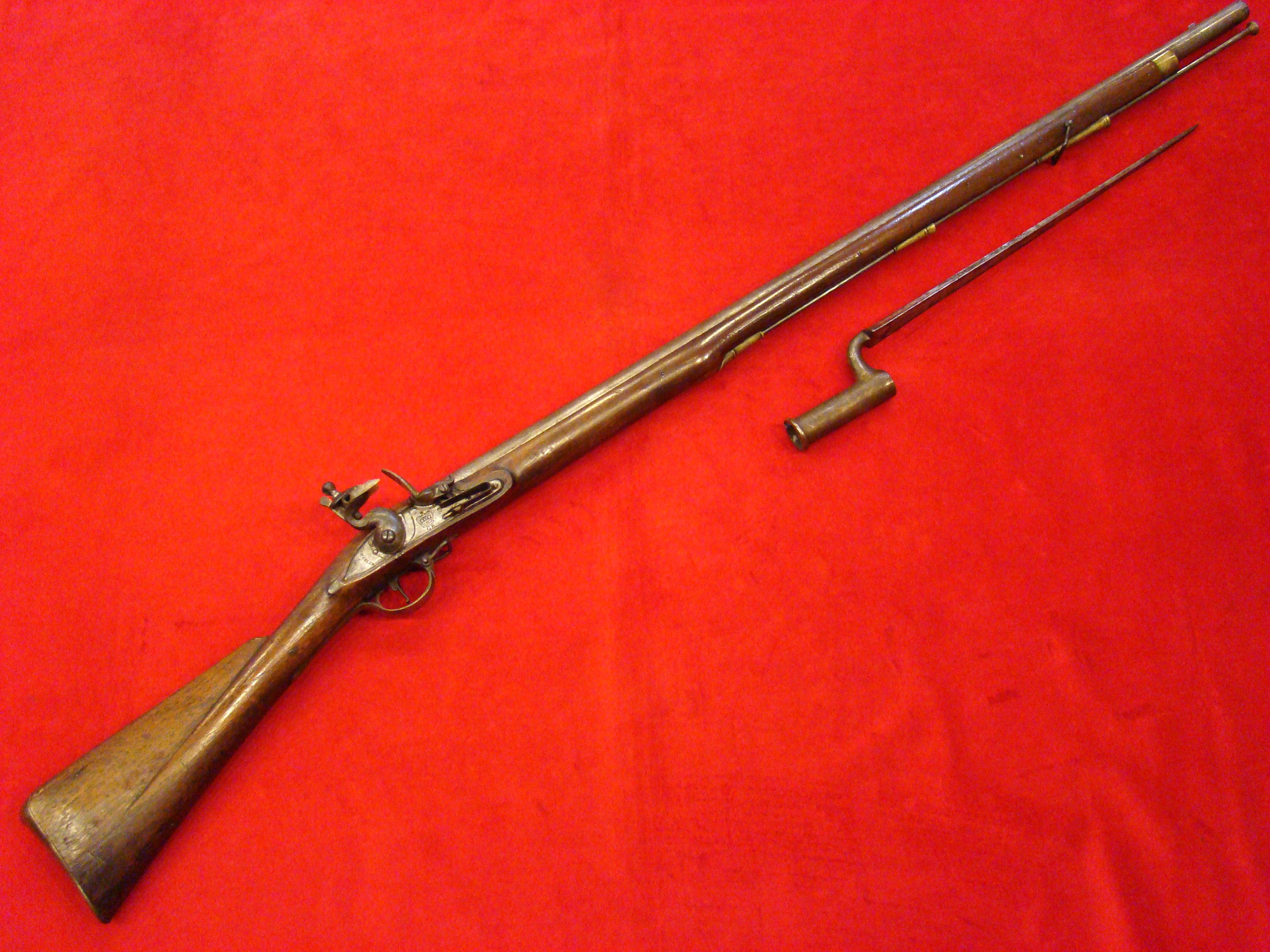
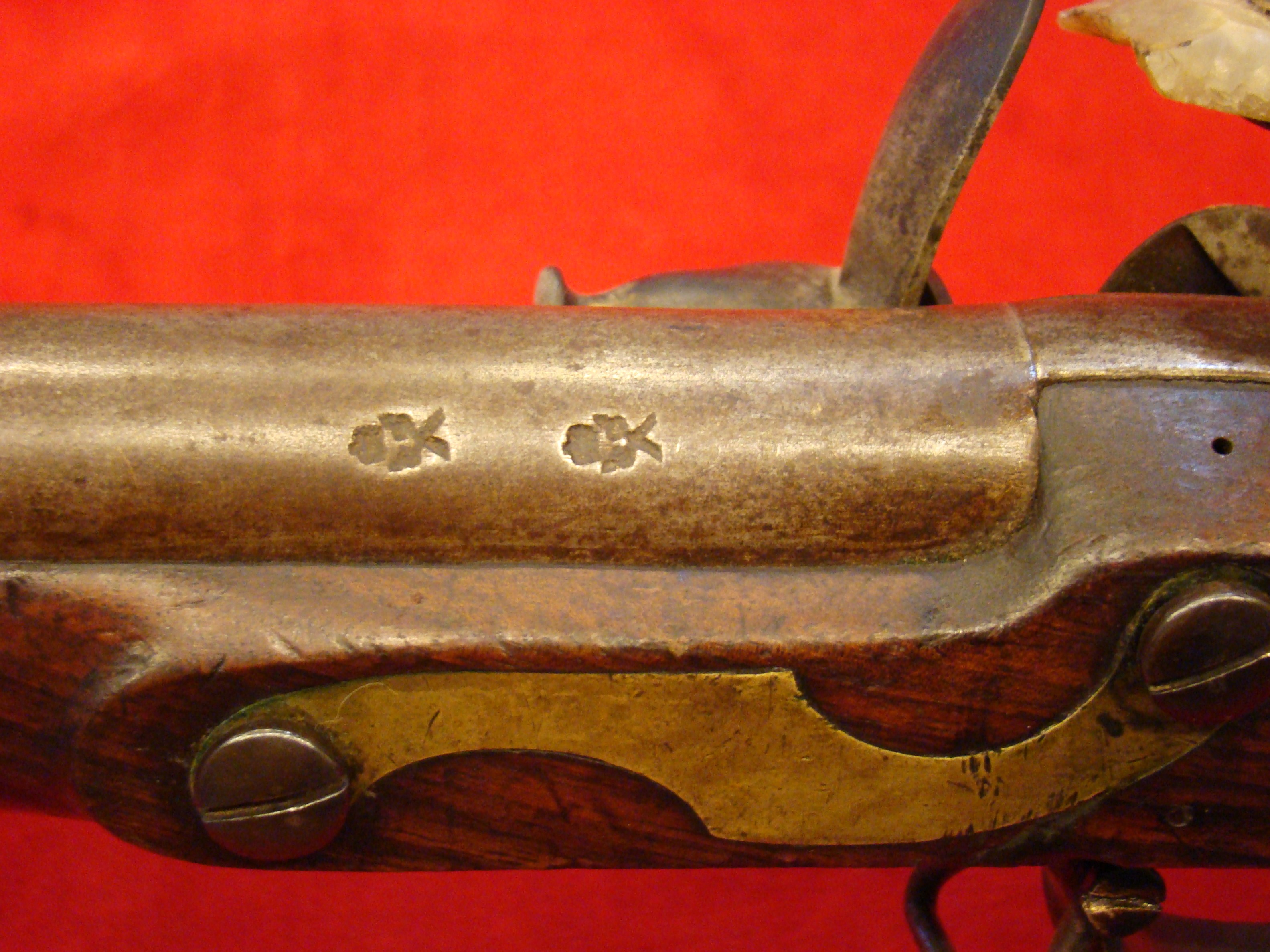
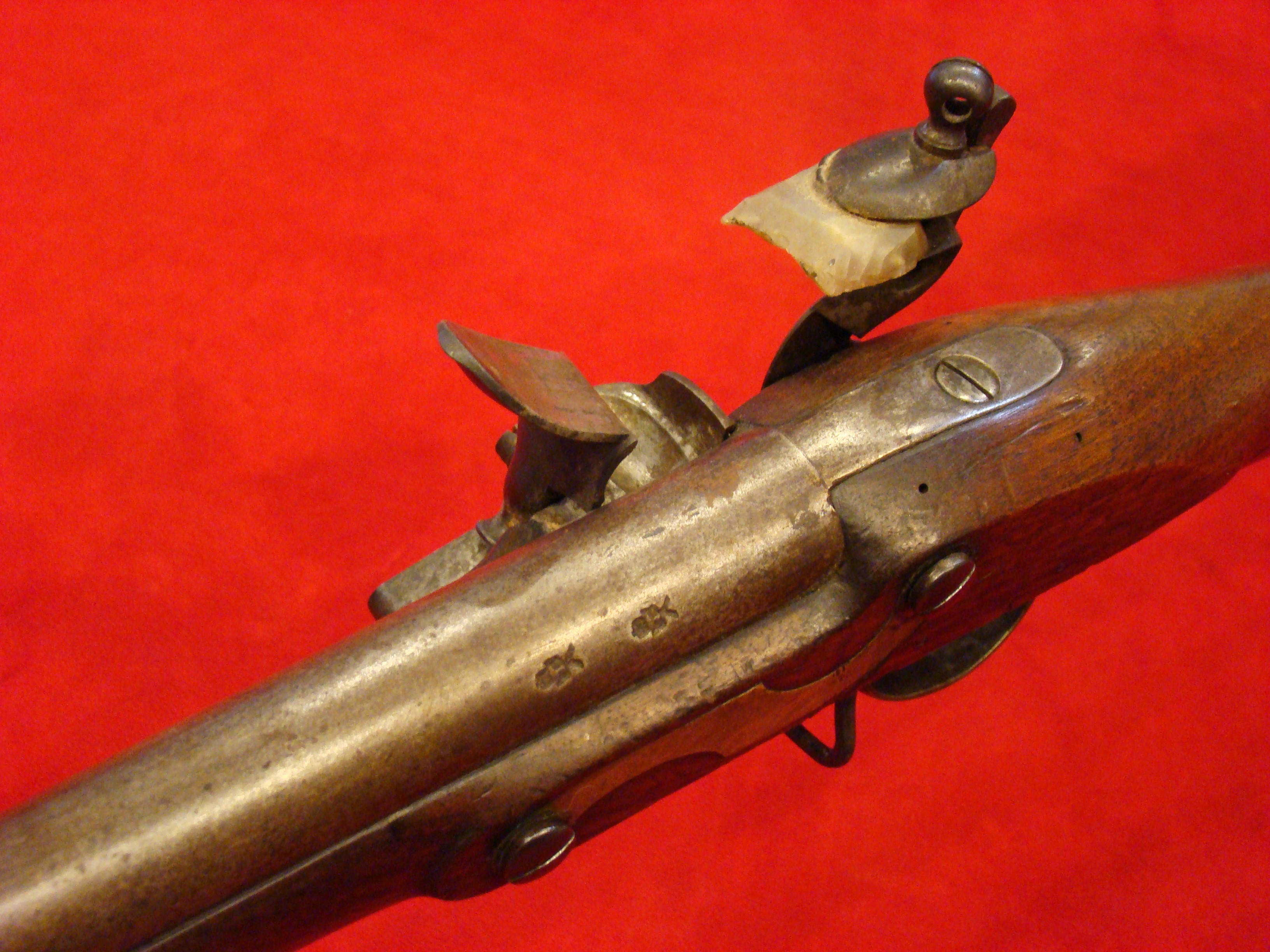
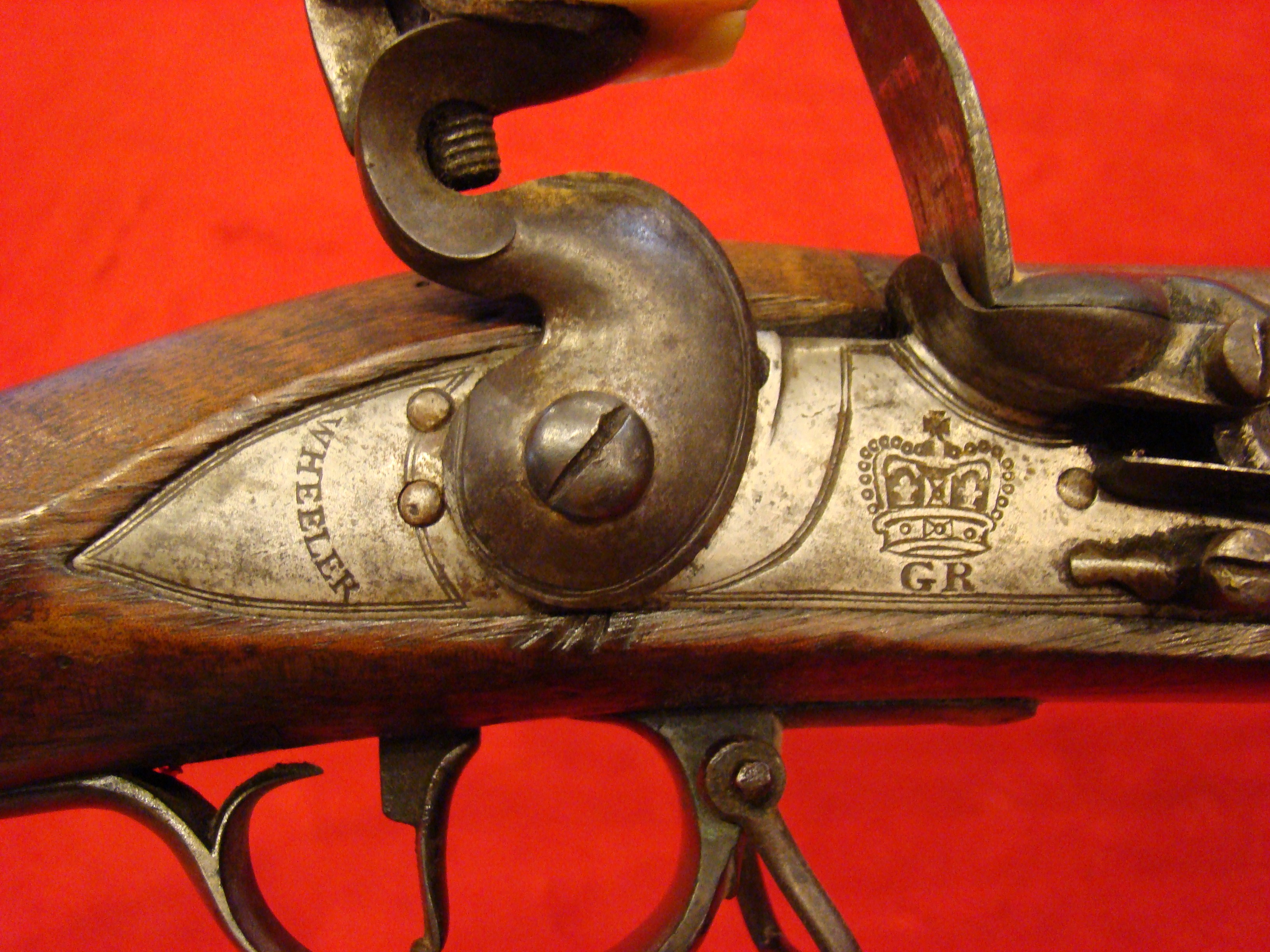
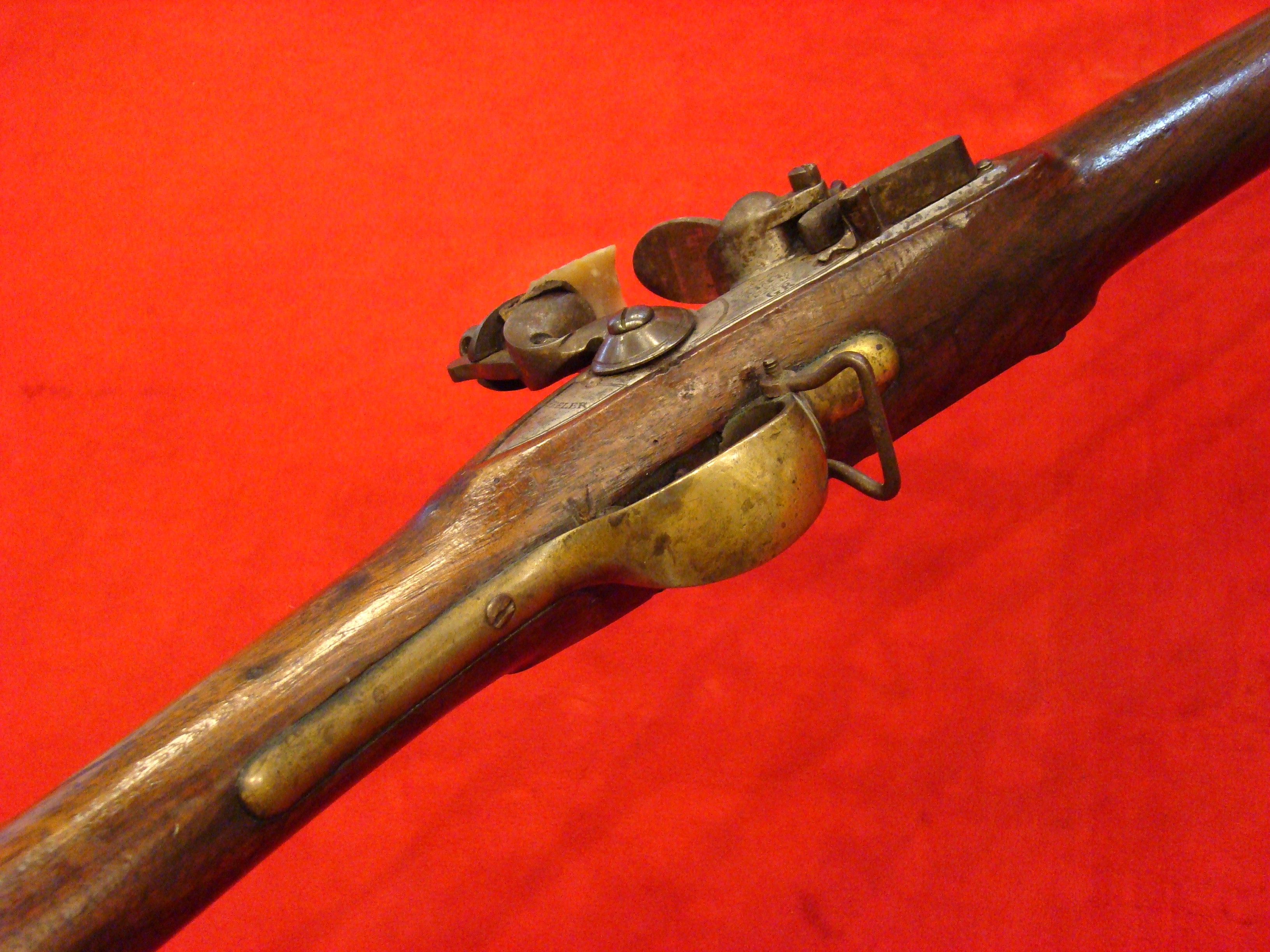
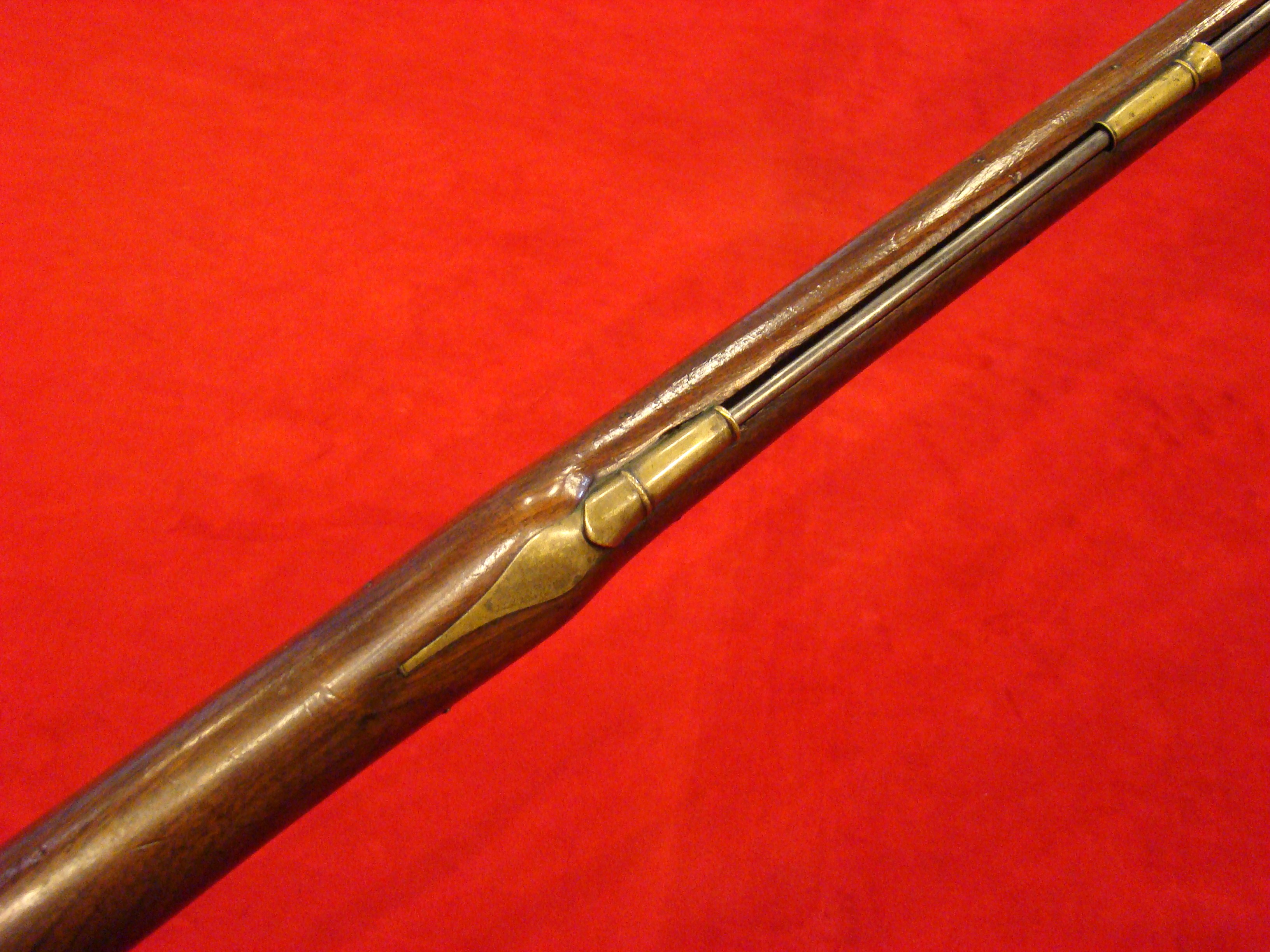
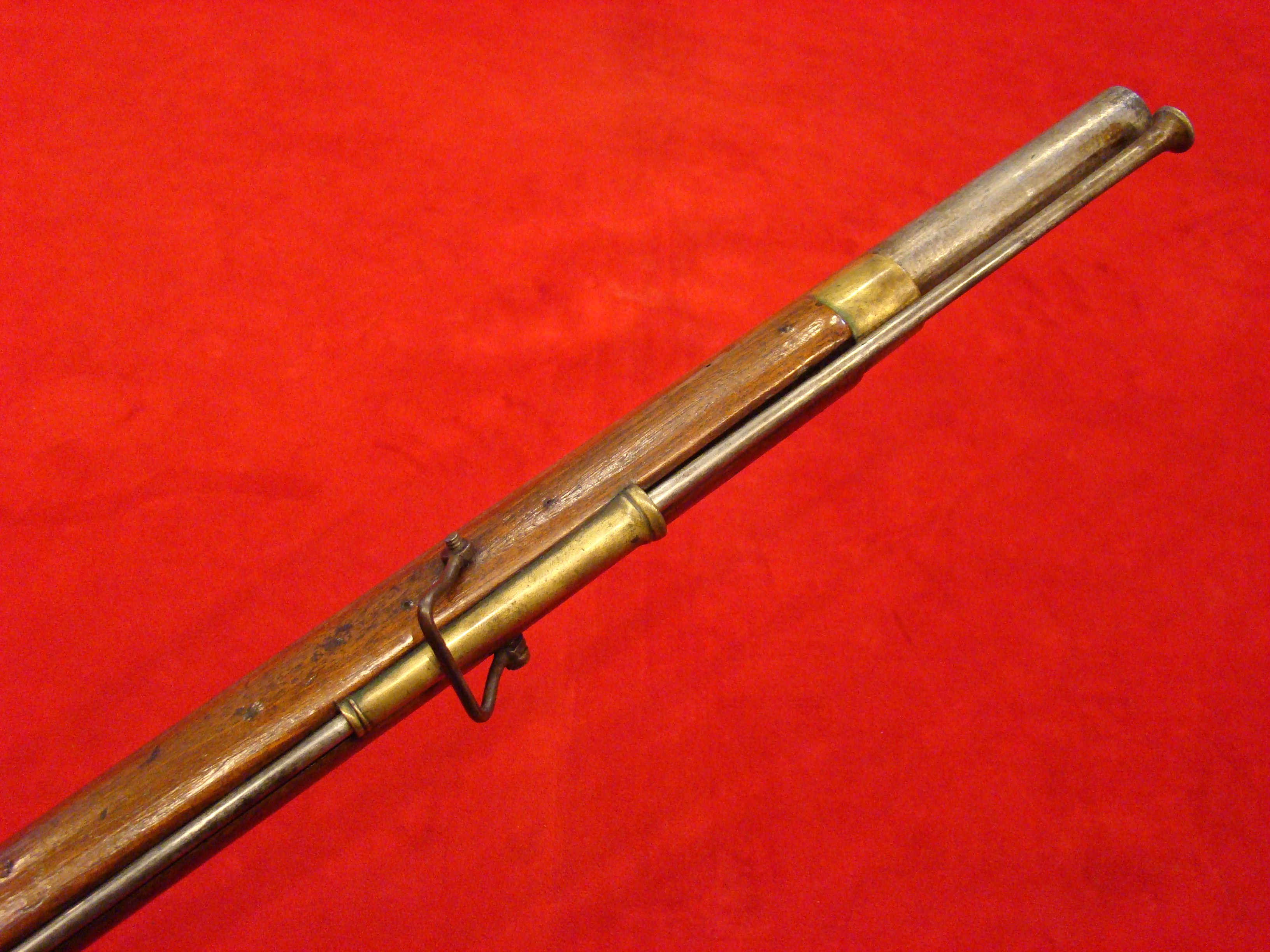
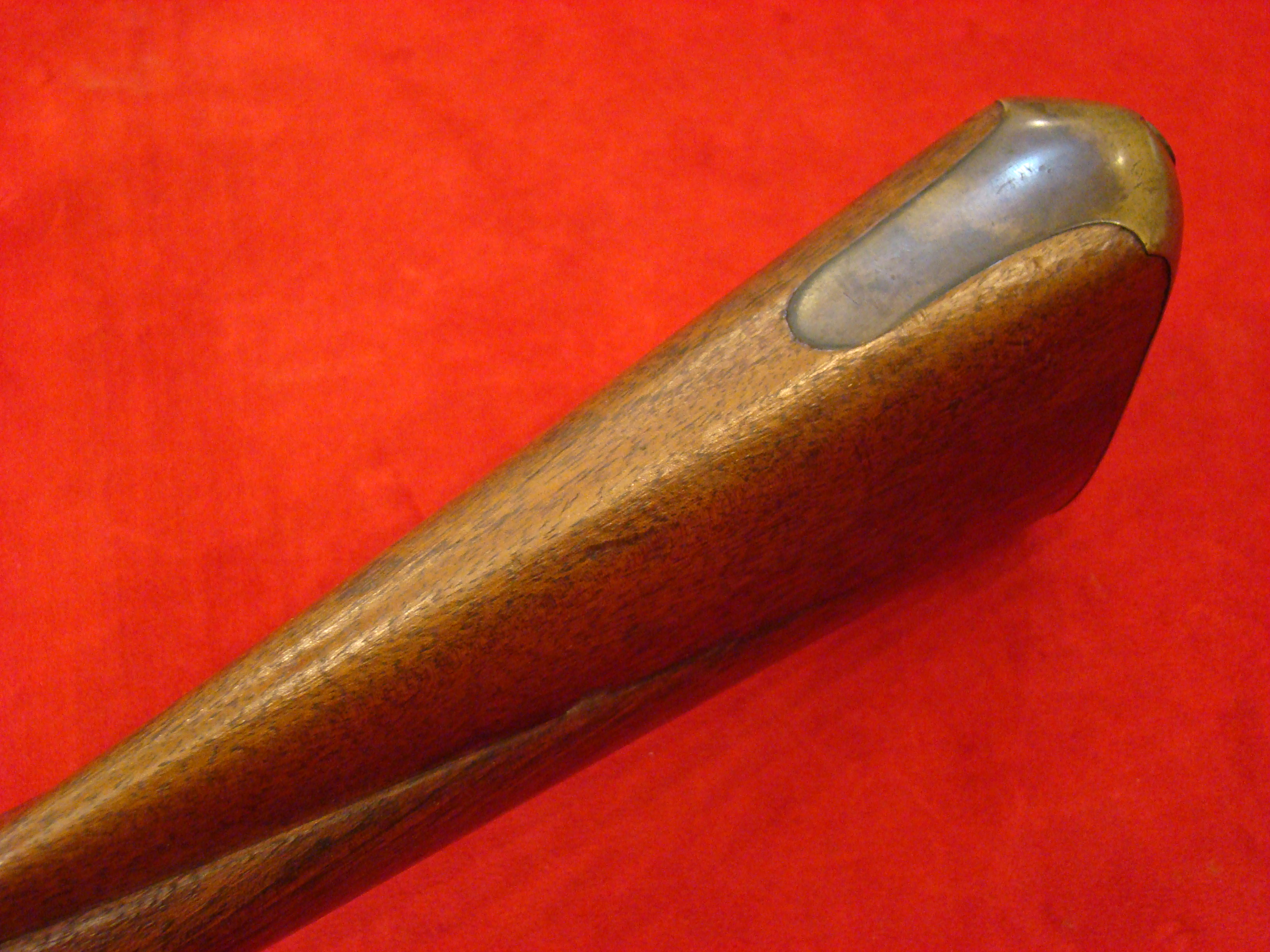
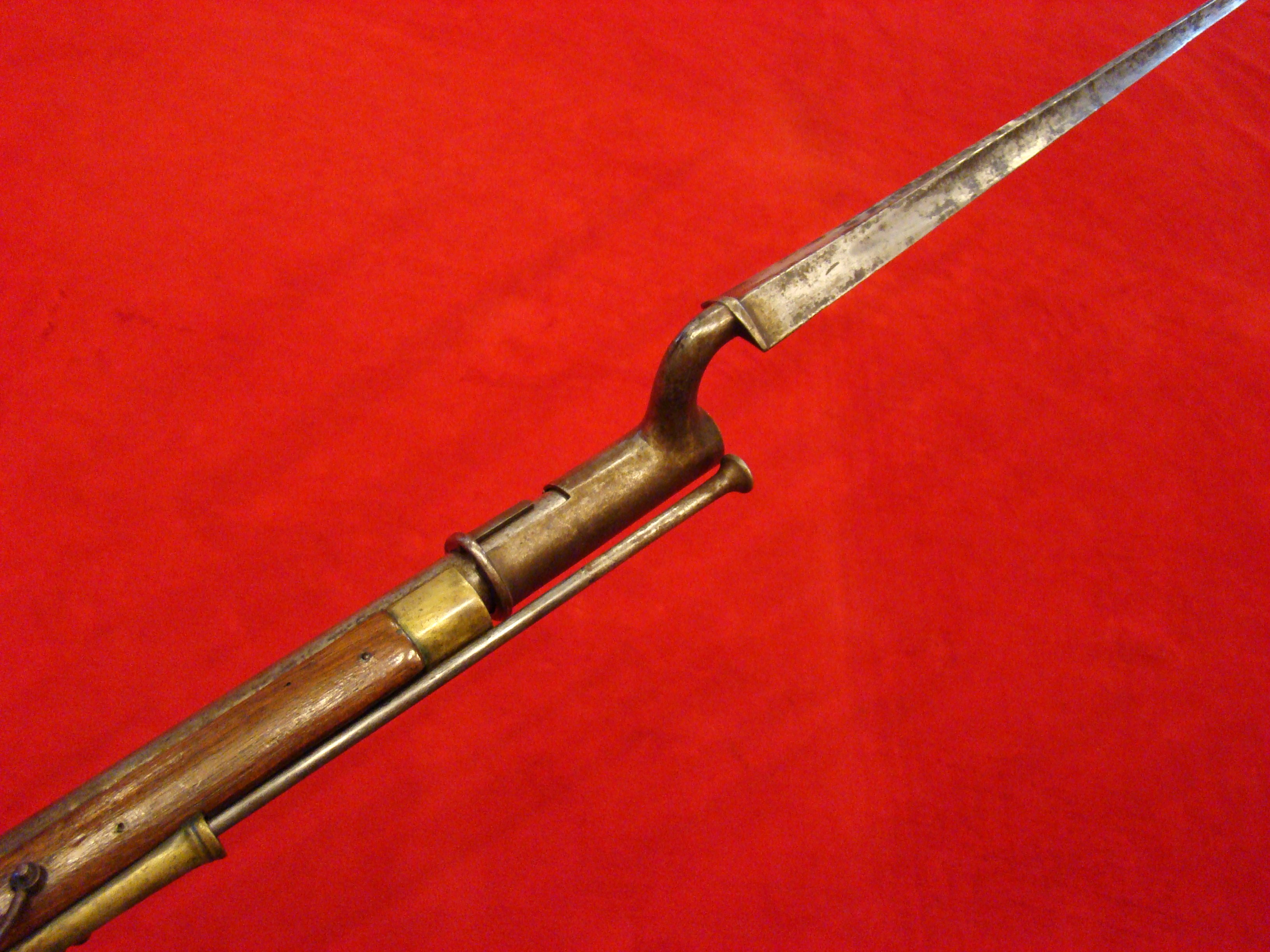
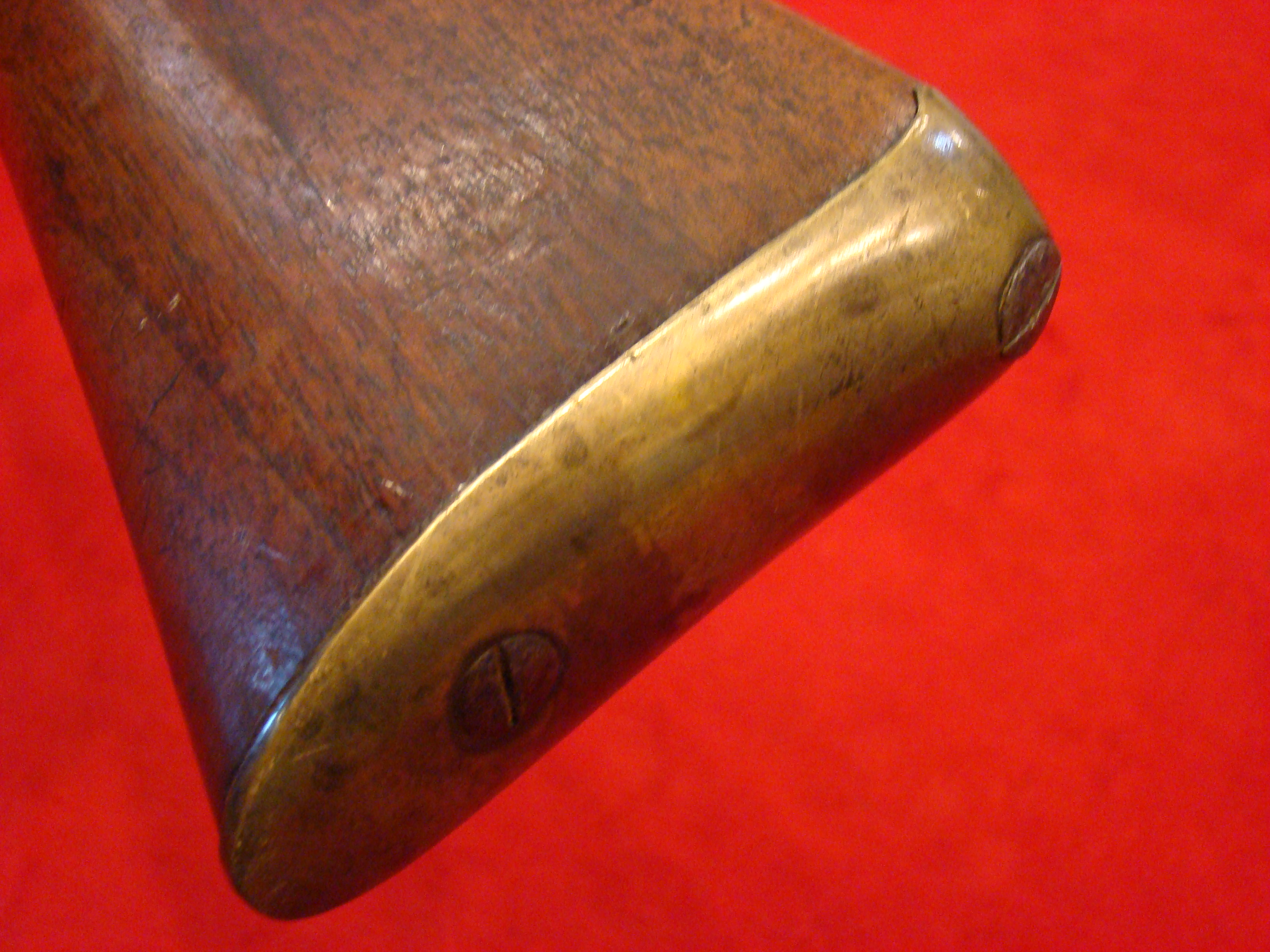
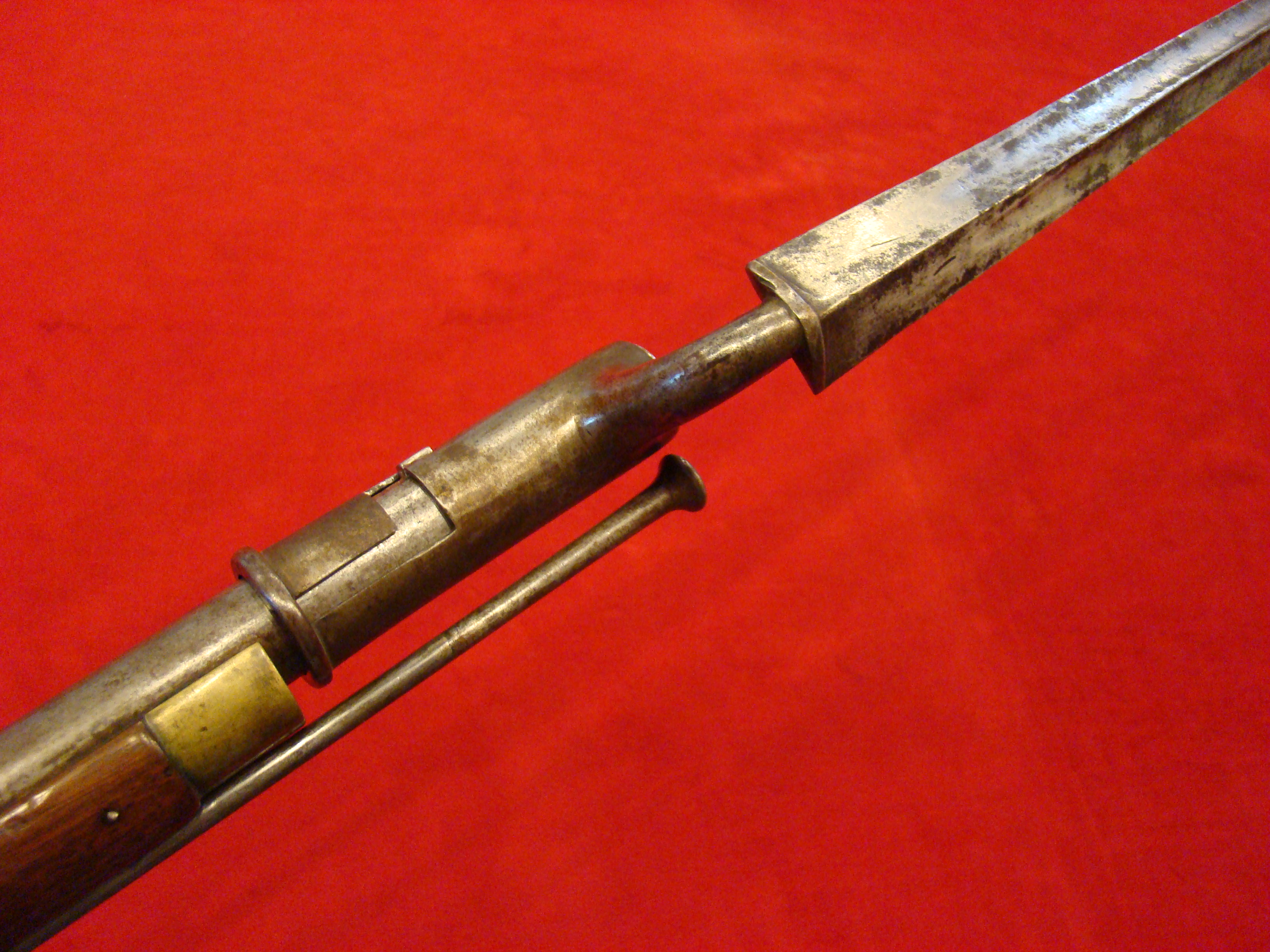
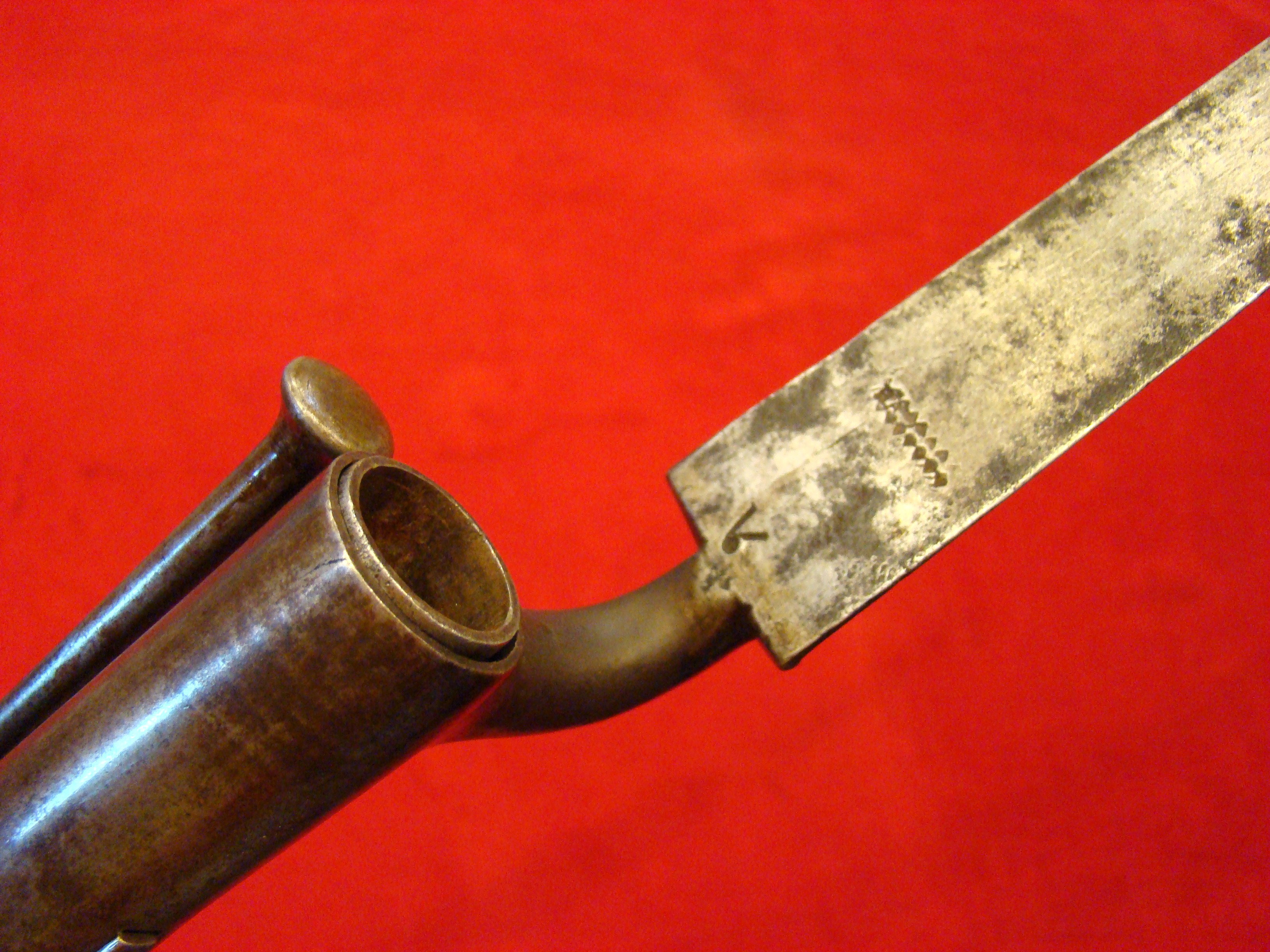
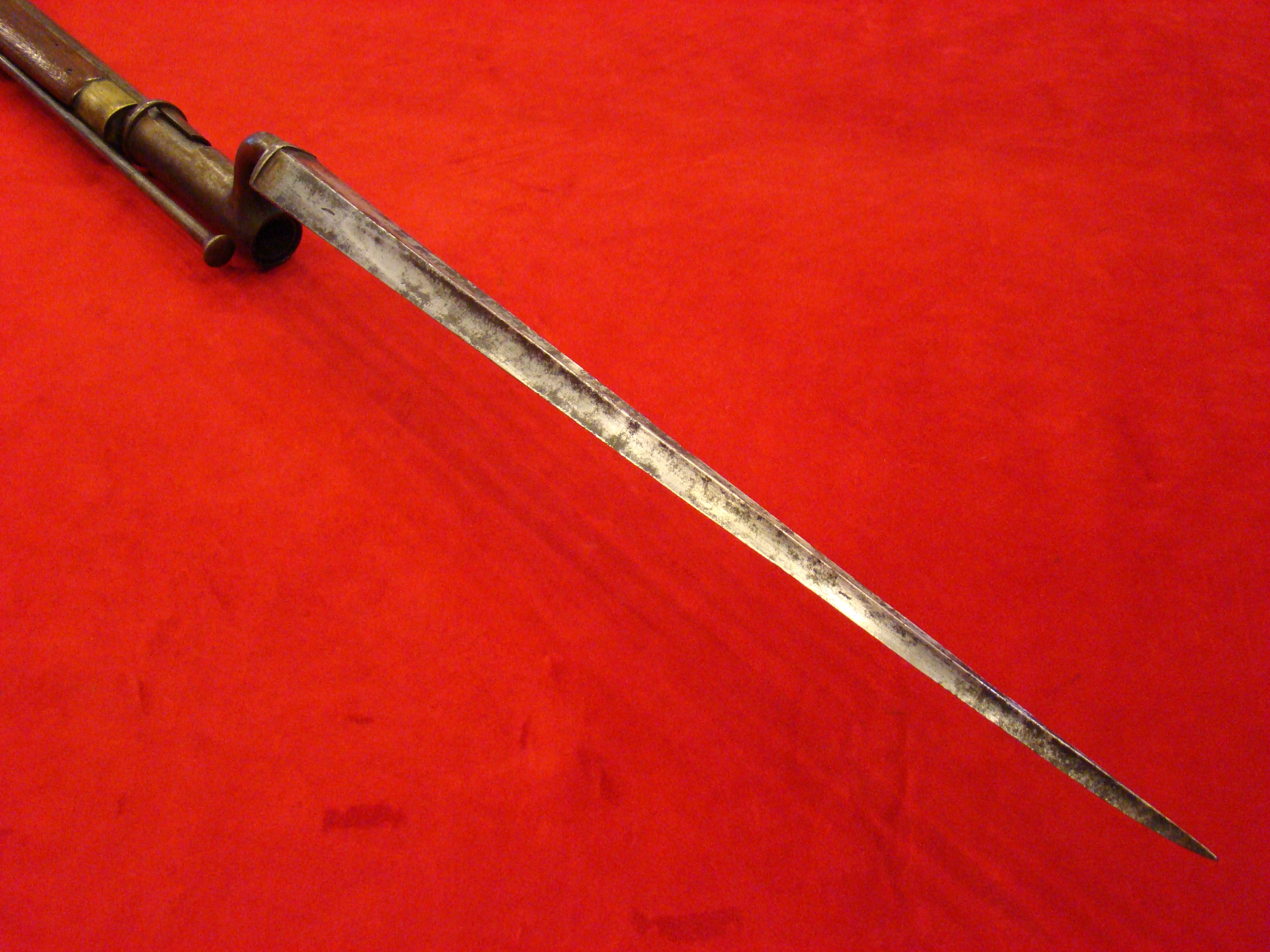
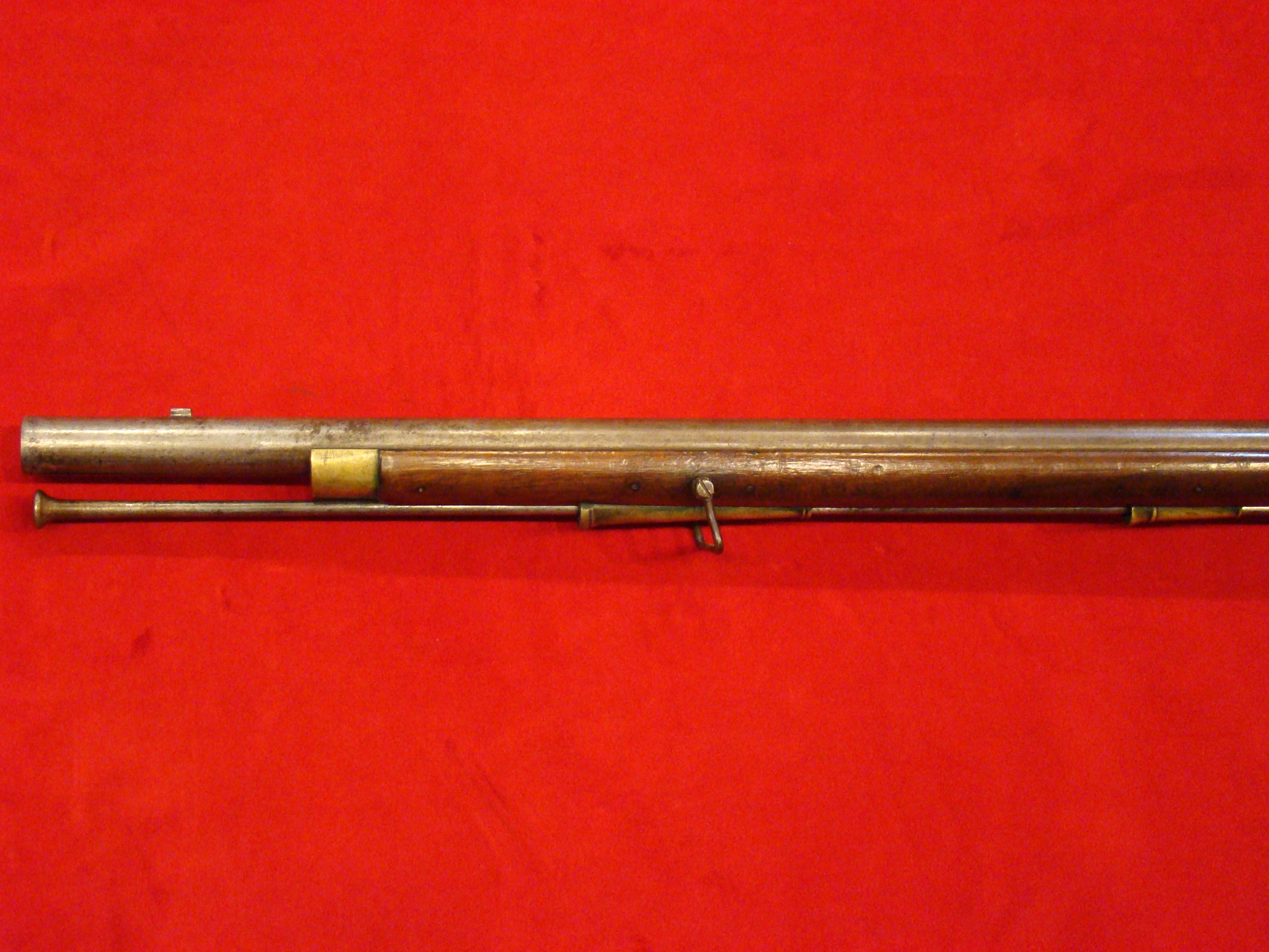
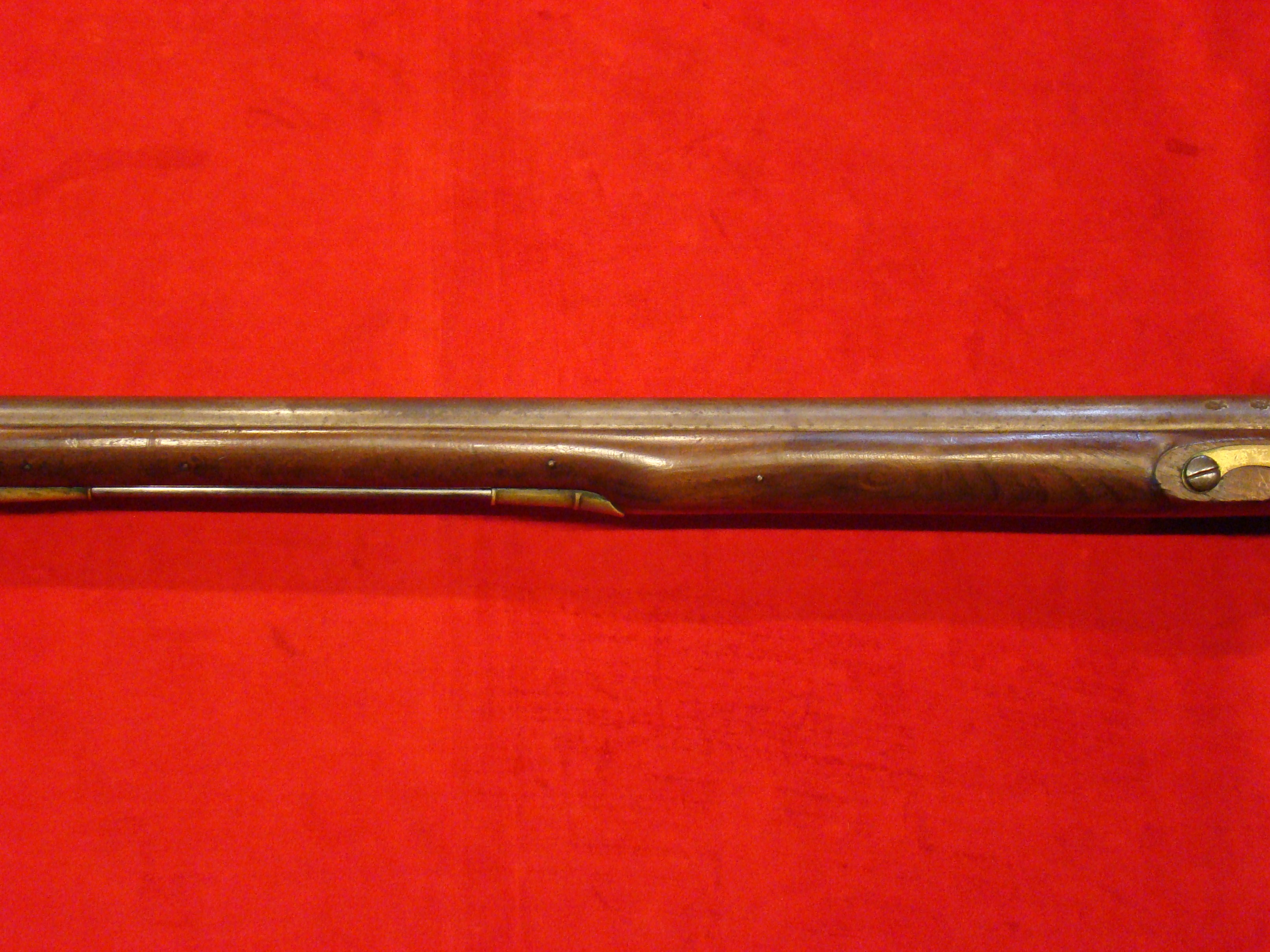
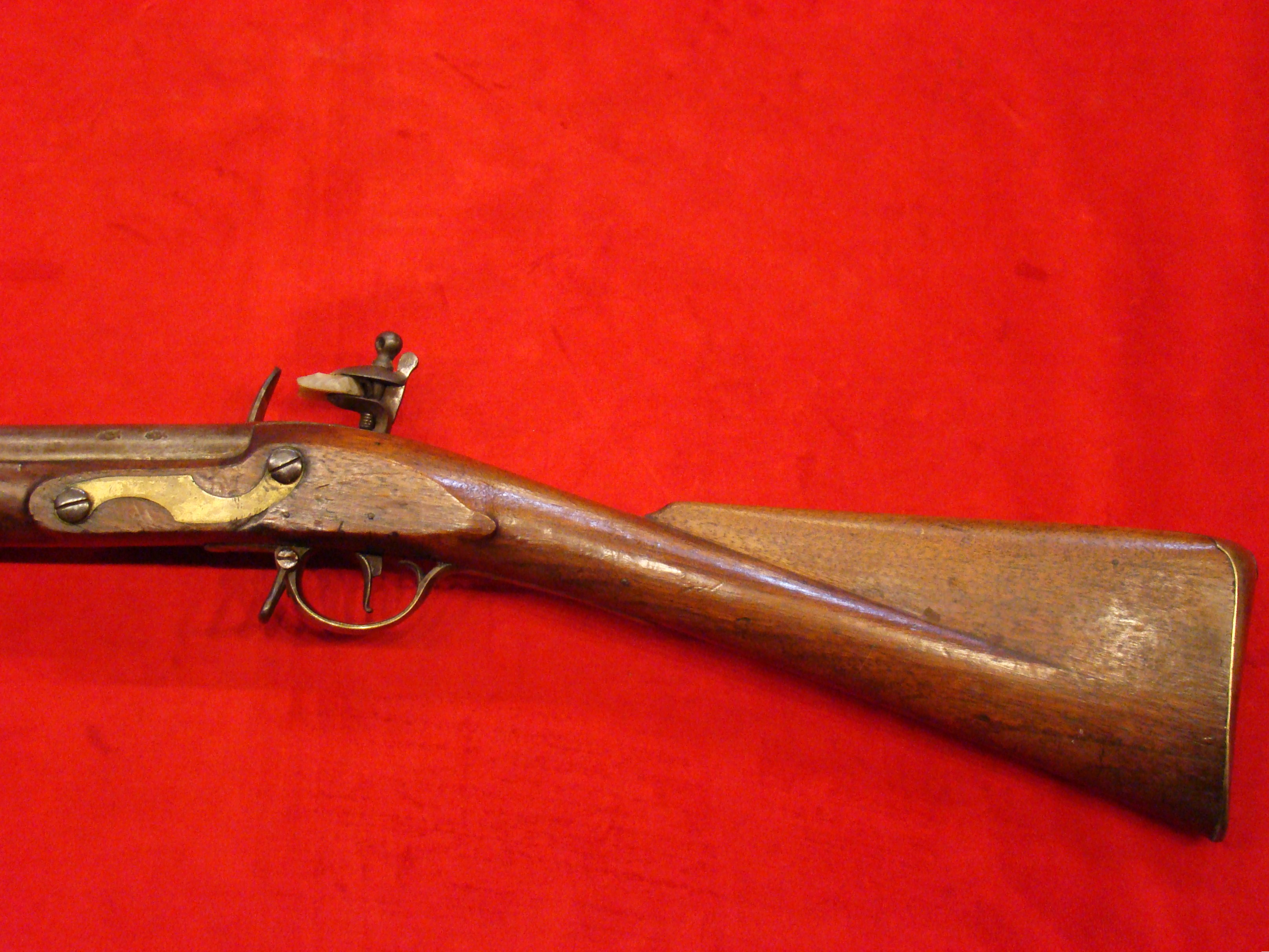
WP 2. Fine British “India Pattern of 1793” Brown Bess Musket .75 Cal. with Matching Socket Bayonet.
High quality example of the “Brown Bess” type produced by Wheeler with commercial proofs. This musket is notable not only for its antiquity and condition, but also completeness. It could have very well been used in North America during The War of 1812, or even in Europe during The Napoleonic Wars. Metal surfaces are smooth with nary any pitting. Original flint lock is marked “WHEELER” with the crown cipher of King George III. Lock is mechanically sound with tight action. Original threaded tip ramrod present and kept in place by by three brass ramrod sleeves. Both shoulder sling loops are present and original. Bore is clean with no pitting. The stock has nice, unsanded edges, with minimal surface dings and blemishes. No repairs, cracks, or missing wood. The classic Brown Bess socket bayonet fits the barrel nicely and matches the patina on the musket. The musket was in the possession of a Fredericksburg VA. family for many years and was well taken care of. $4500.00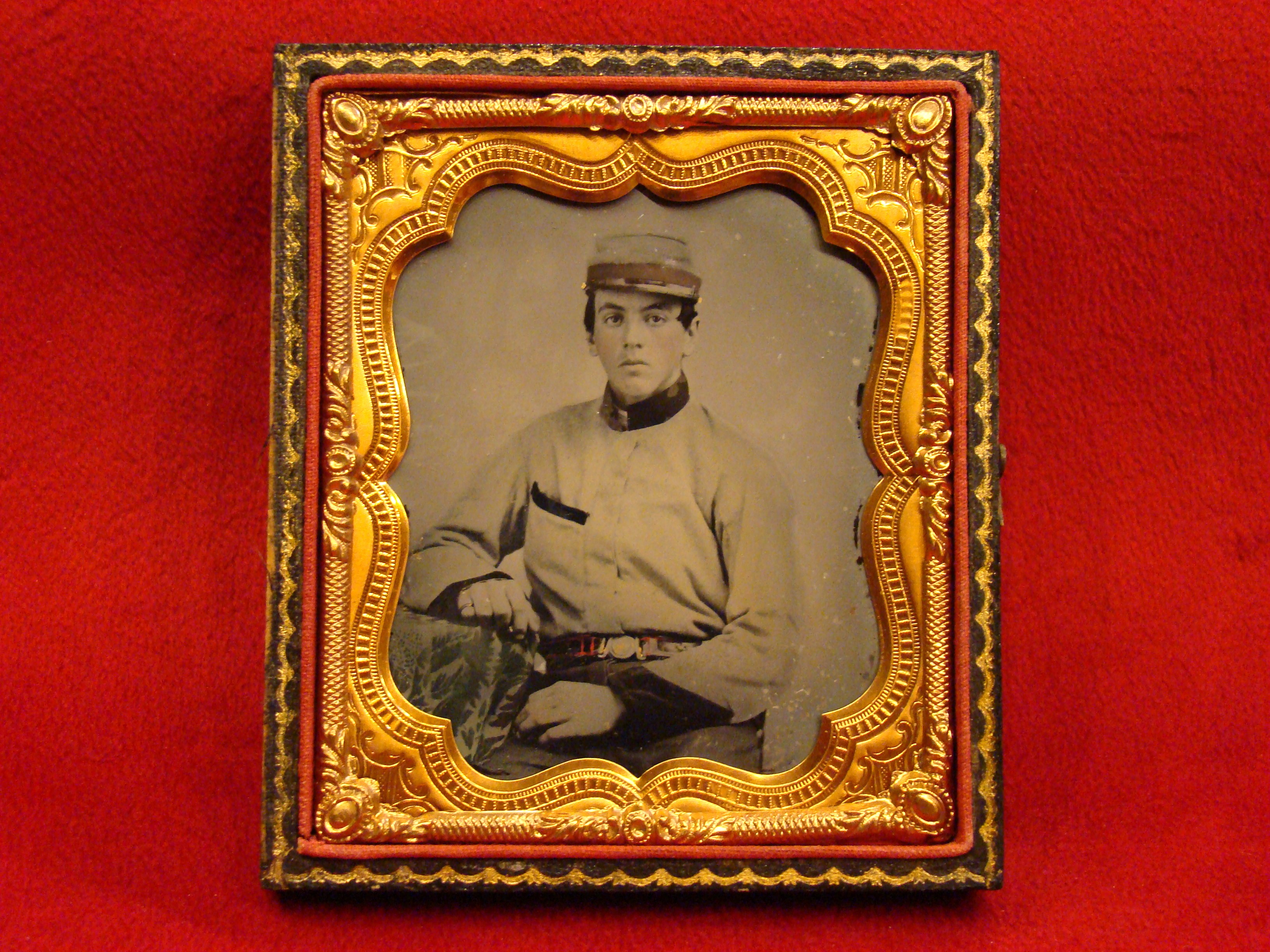
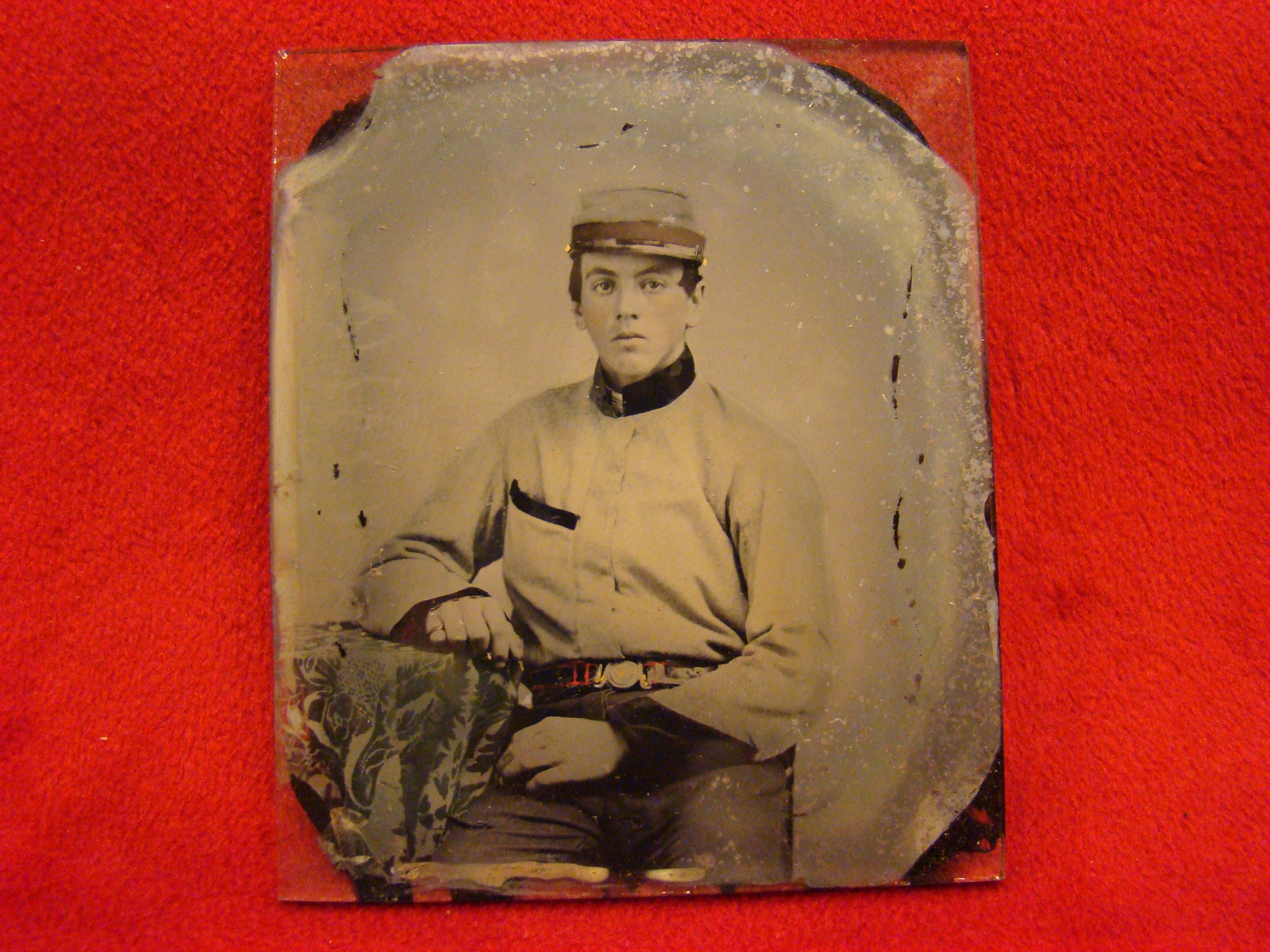
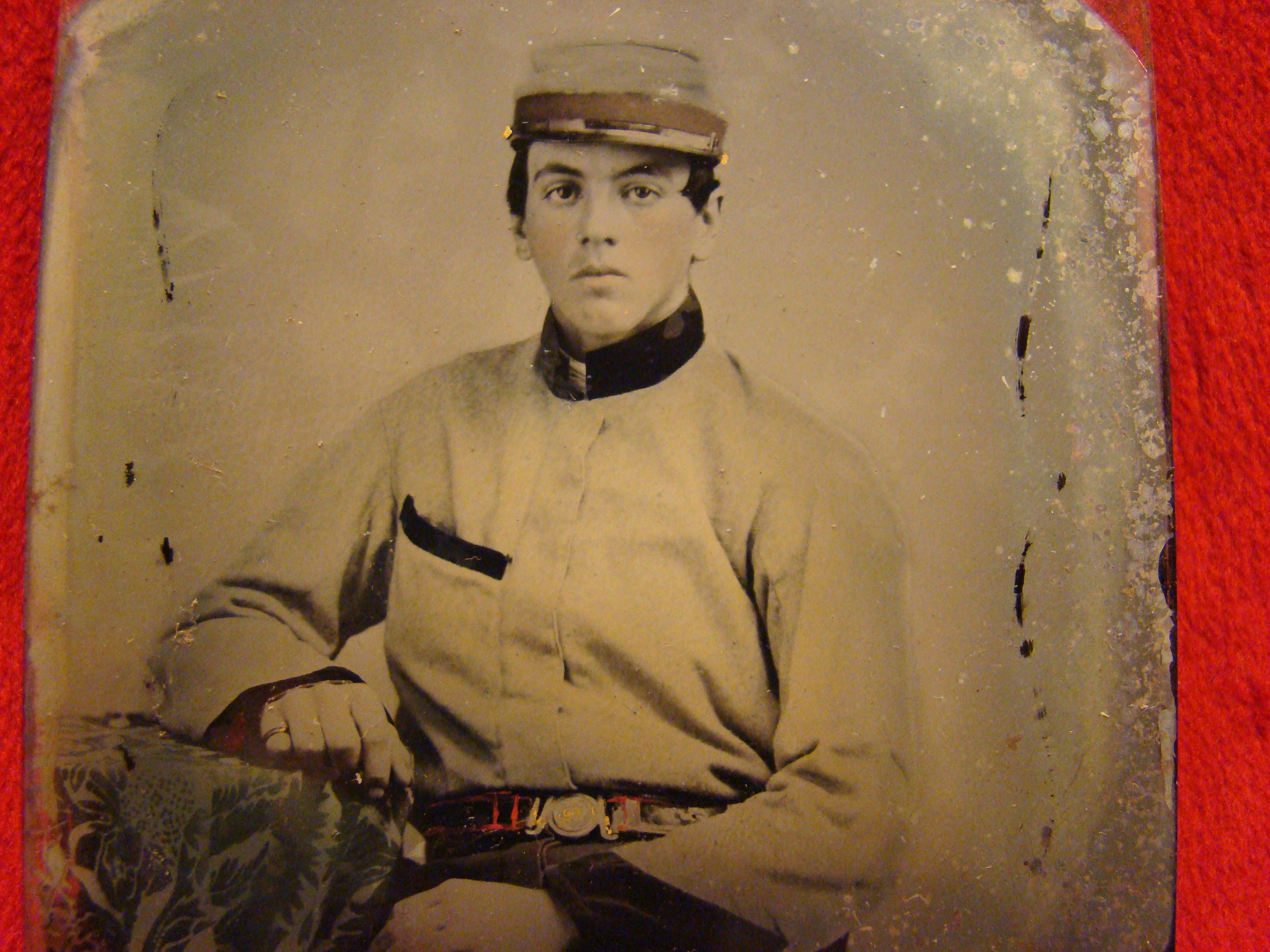
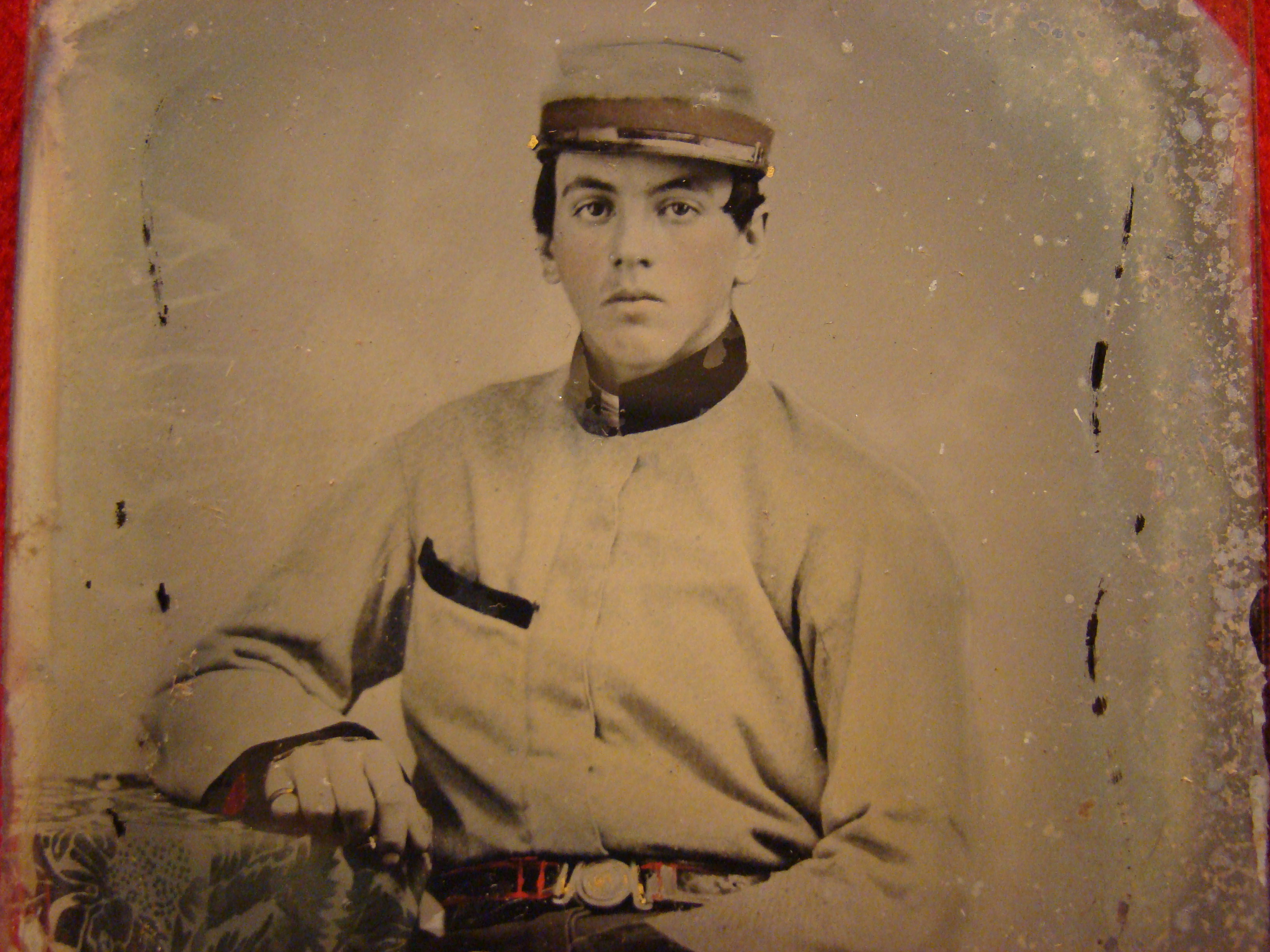
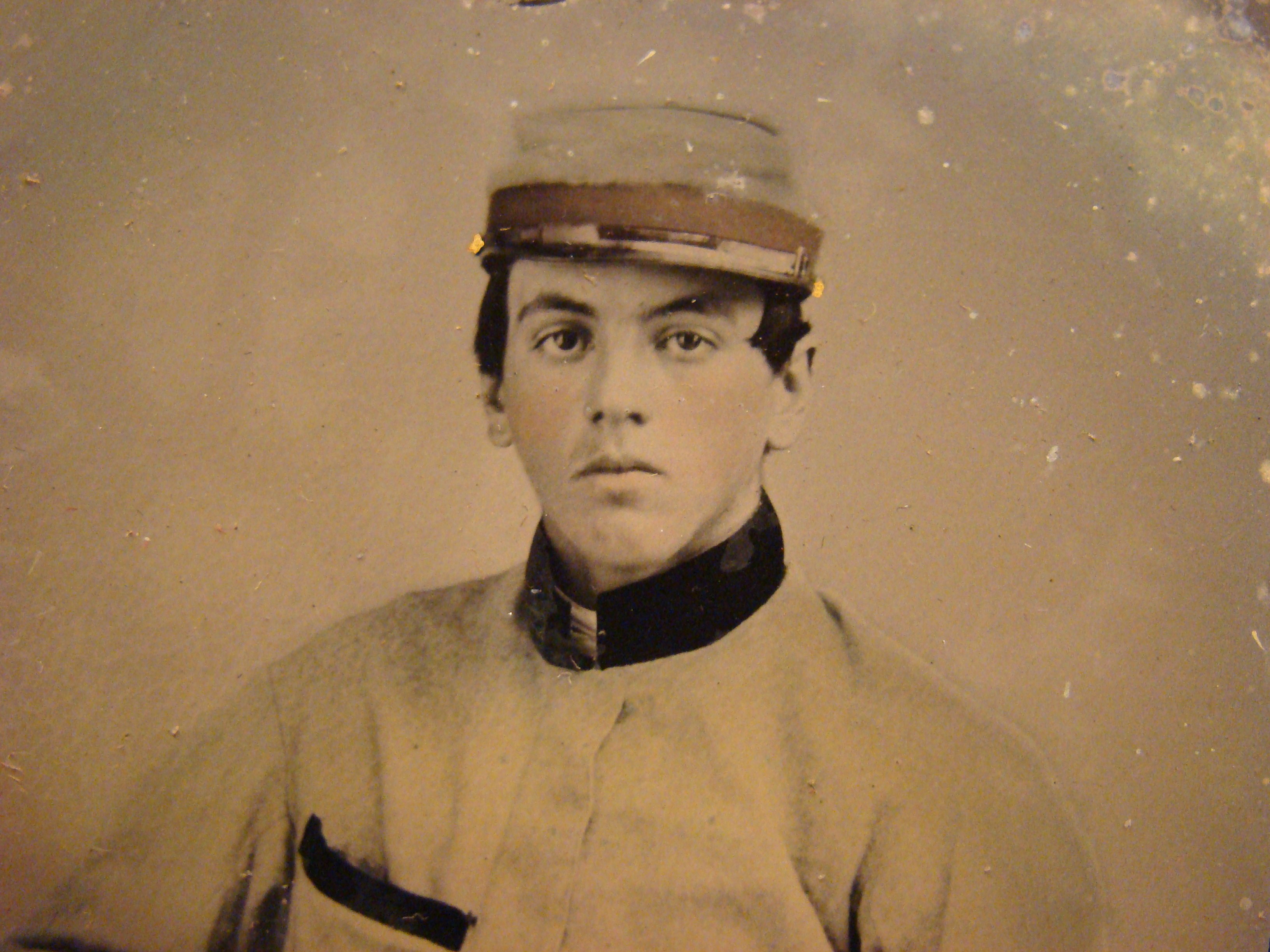
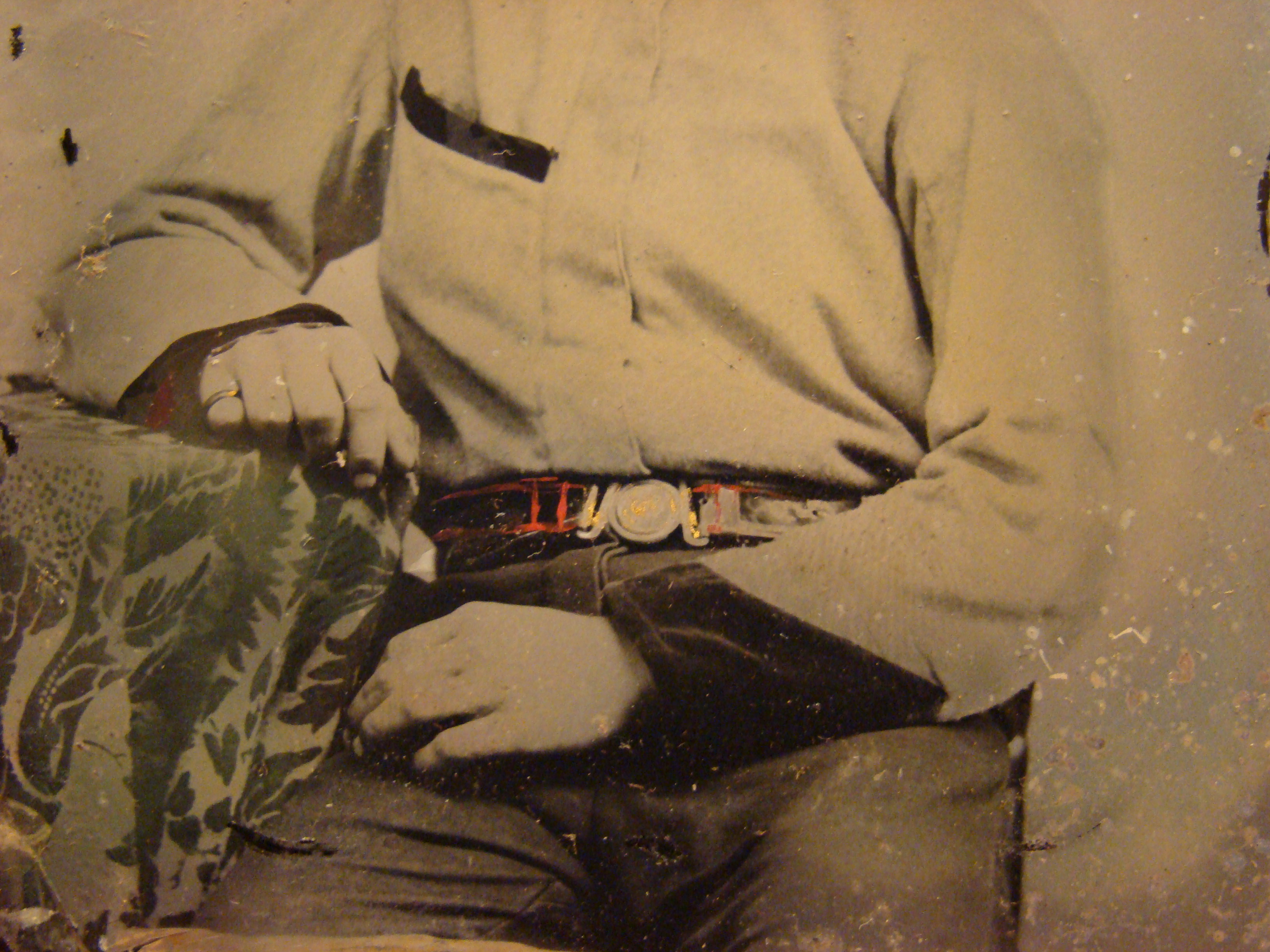
CWI 1. Sixth Plate Ambrotype of a Louisiana Artilleryman (Possibly Washington Artillery).
This handsome young man is shown seated with red trim on his kepi and on his belt. Notice rounded belt loops on his tongue and wreath buckle. It appears to be a Louisiana Pelican on the tongue disc but it is very blurry at high magnification. The rounded loop buckles were produced in New Orleans. There are three variants. One has a Pelican feeding its young (The Great Seal of Louisiana), another has “CS”, and then there is a raised five-pointed star (possibly for Texas or Missisippi). If anyone out there in the image world wants to contribute information on the uniform or possible identification, please chime in. $3850.00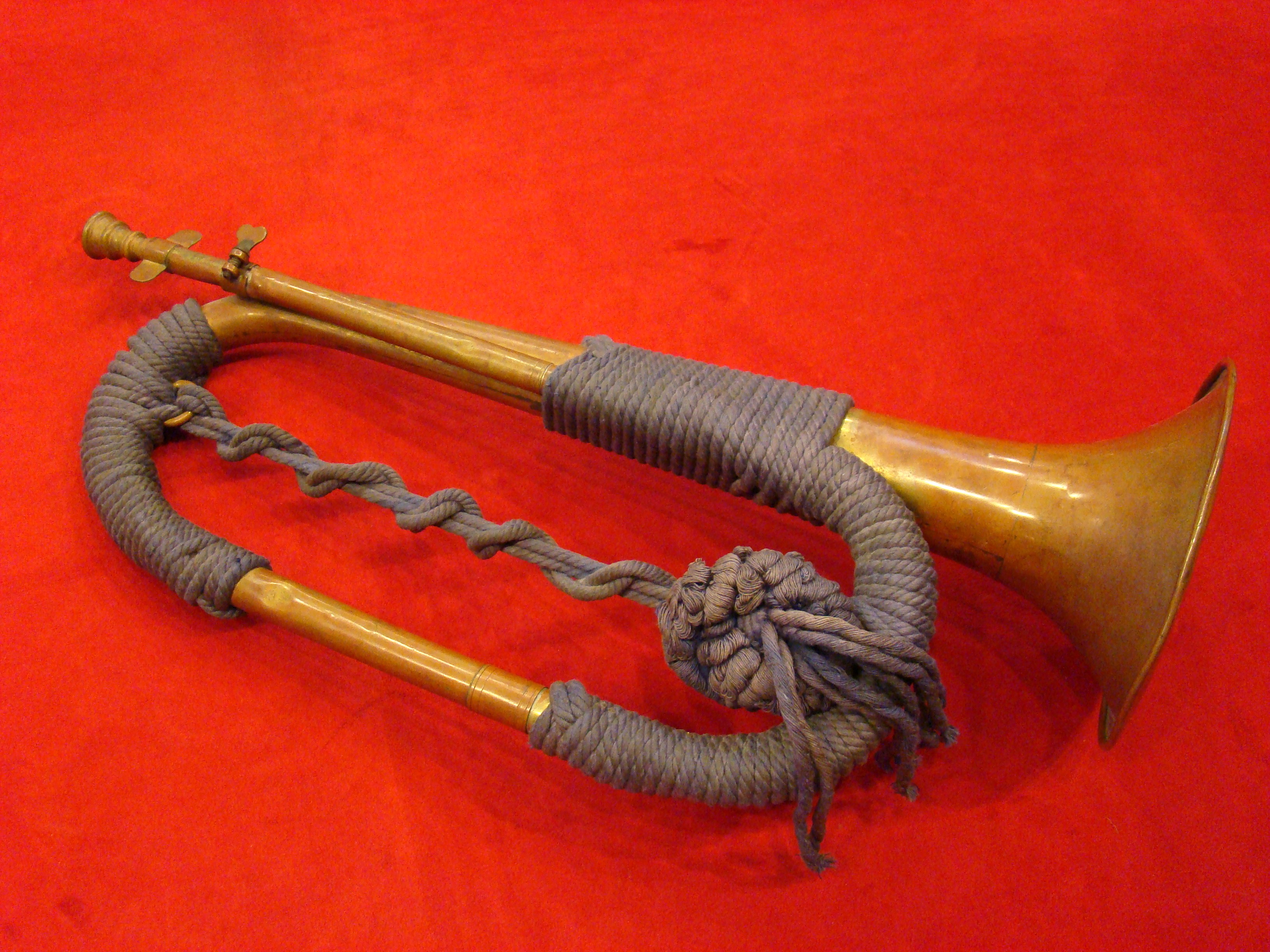
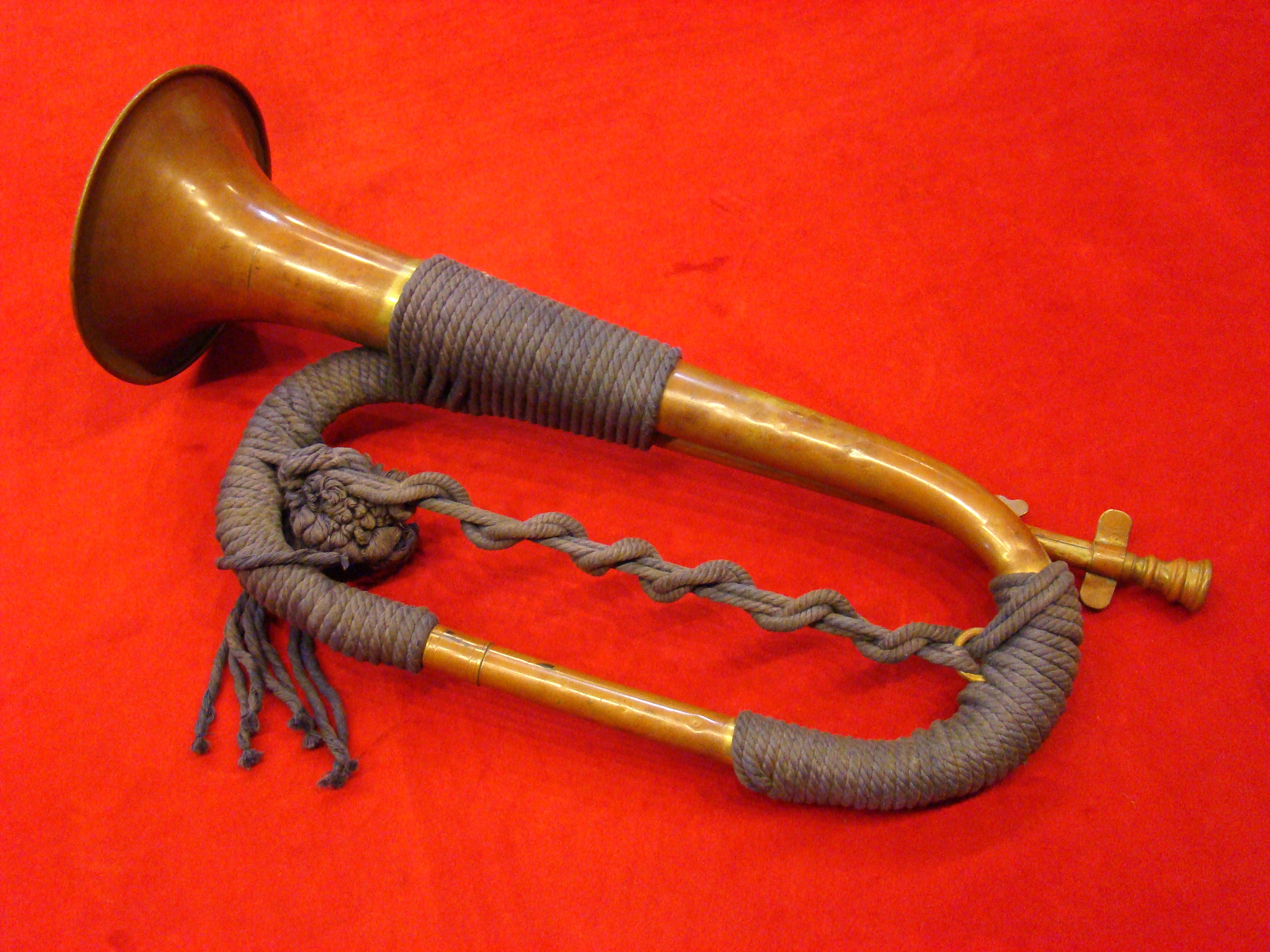
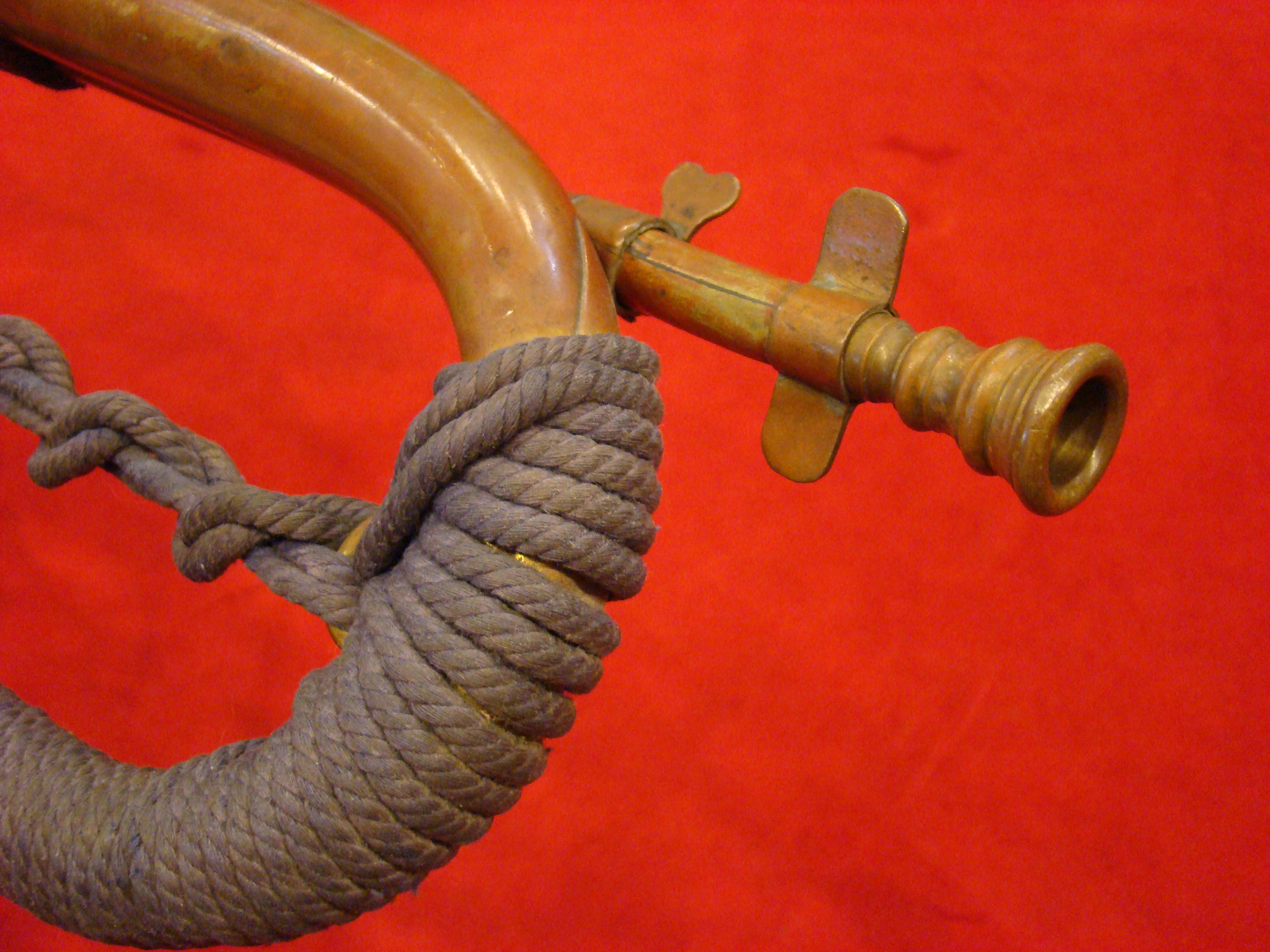
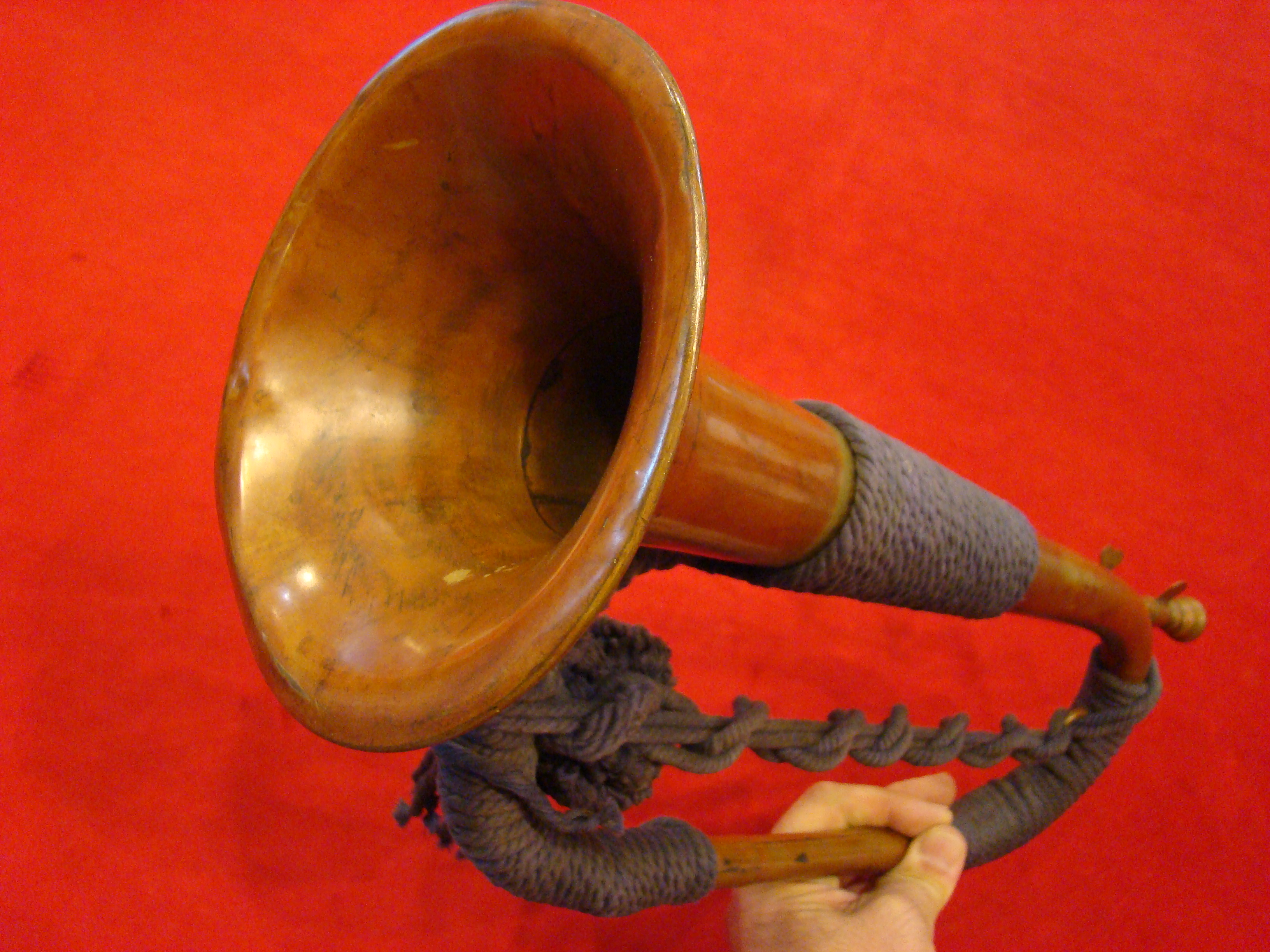
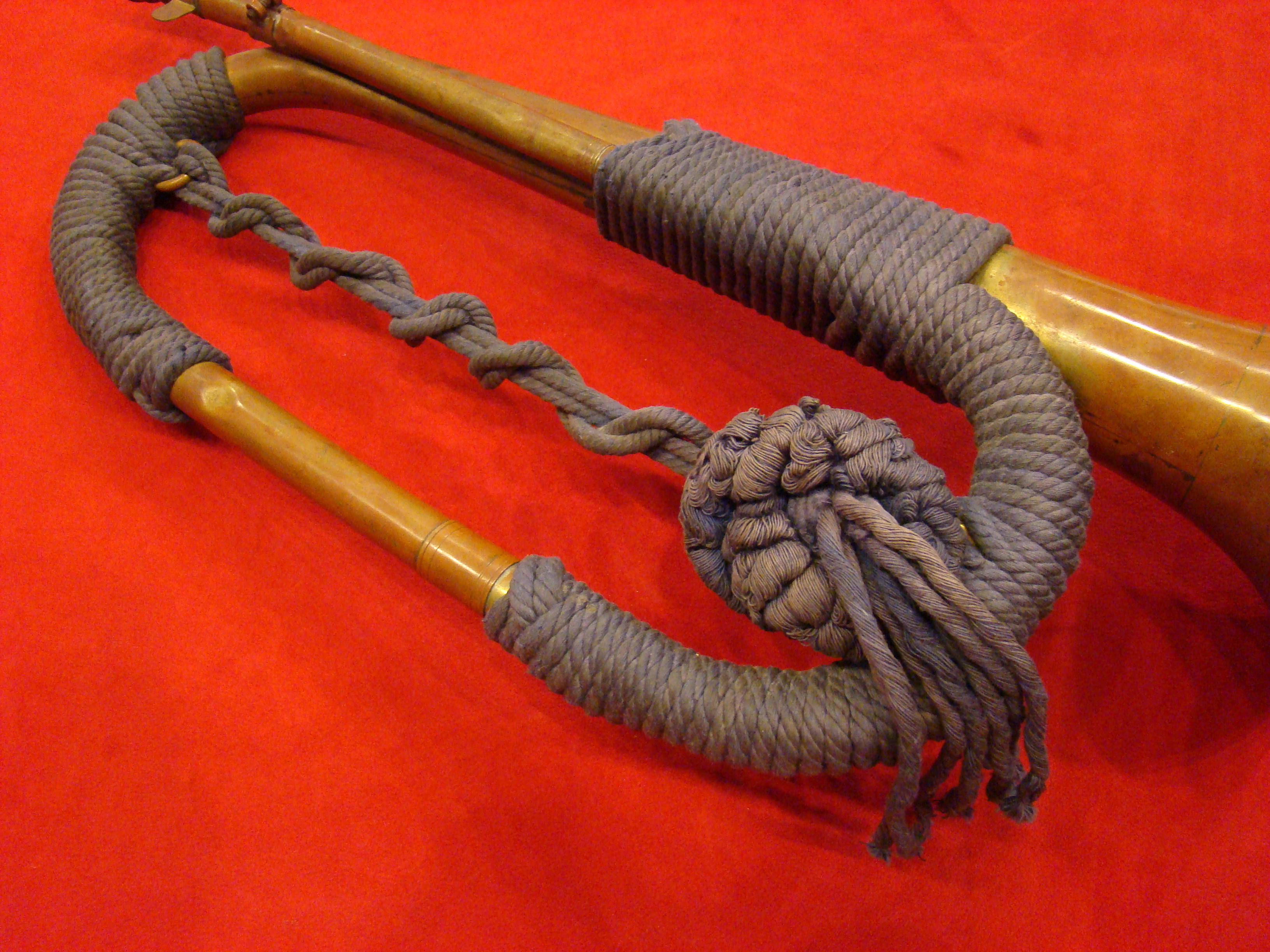
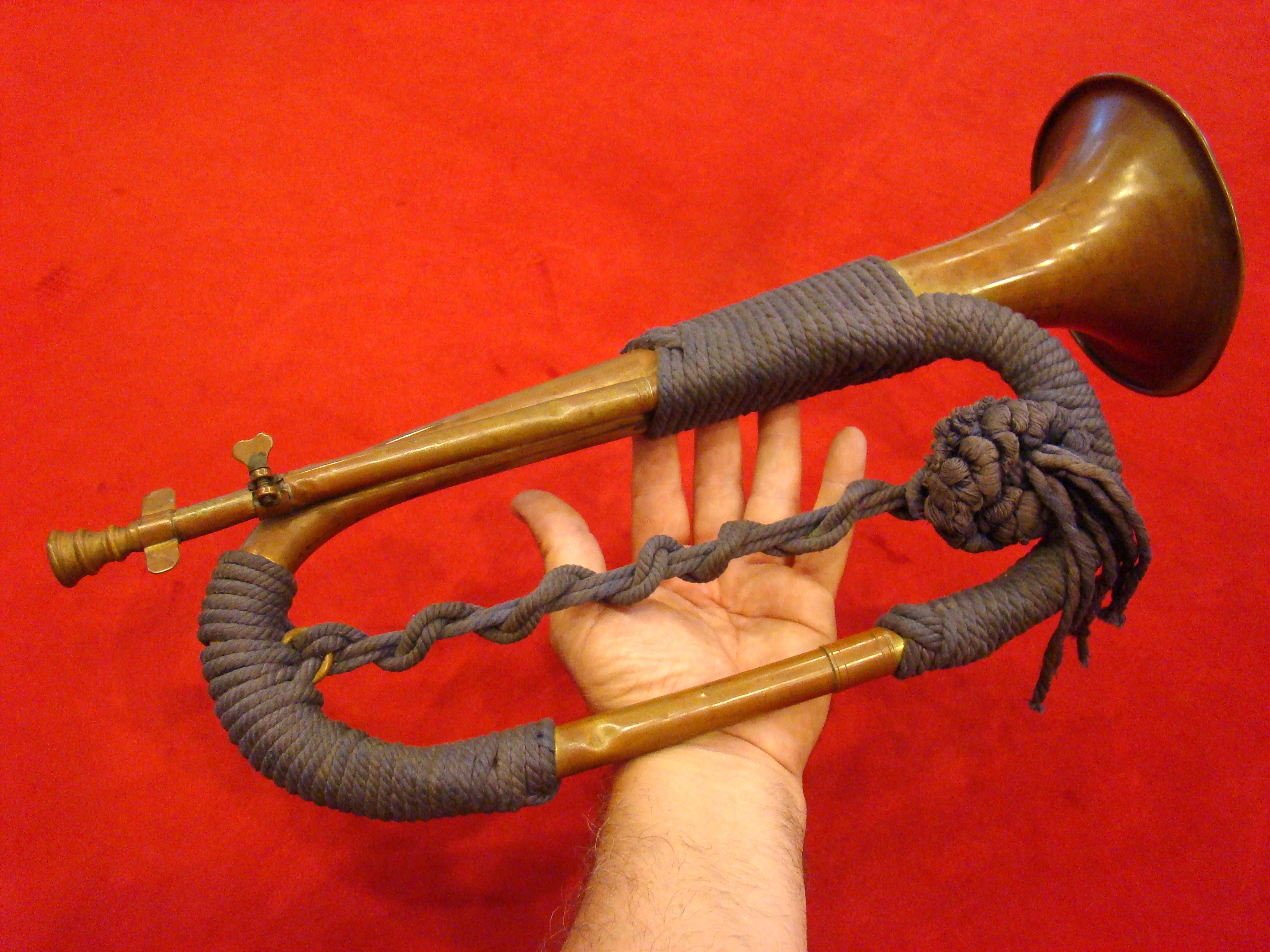
MS 1. US Spanish-American War Infantry Bugle.
We just picked up a collection of American Military Bugles. This one is in excellent condition with intact US Infantry Blue Cord. This type was used from the 1880’s until WW I. $295.00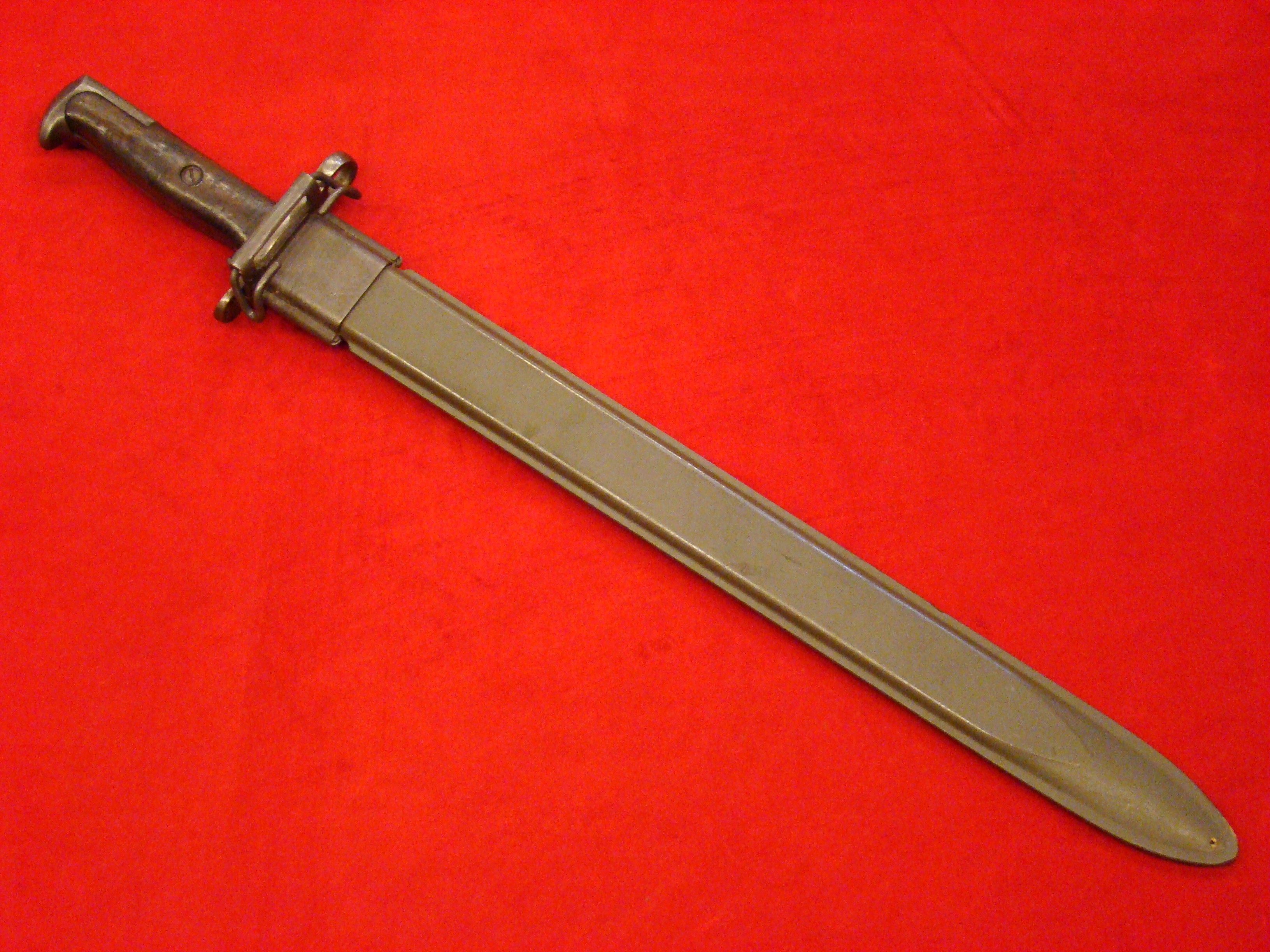
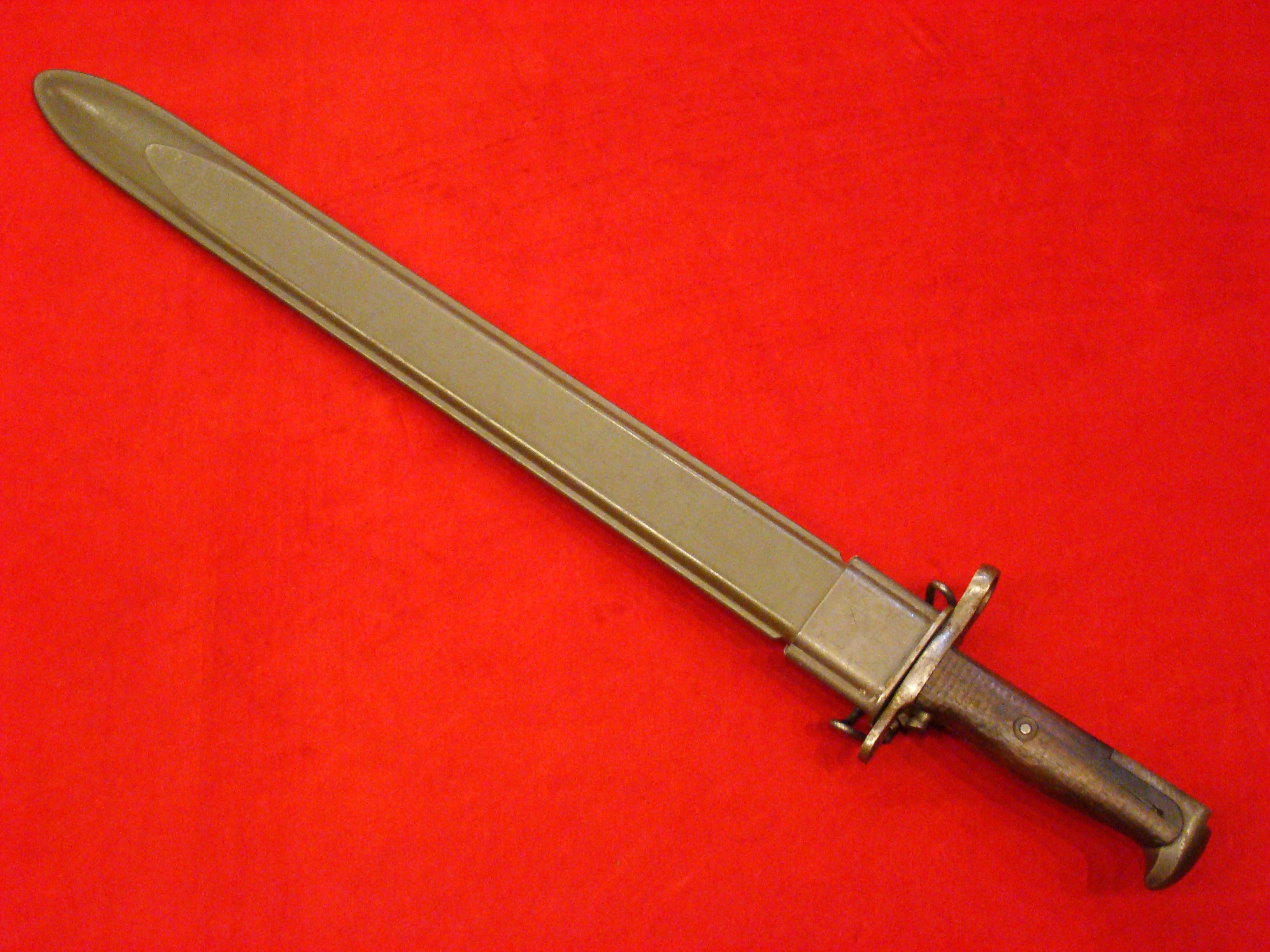
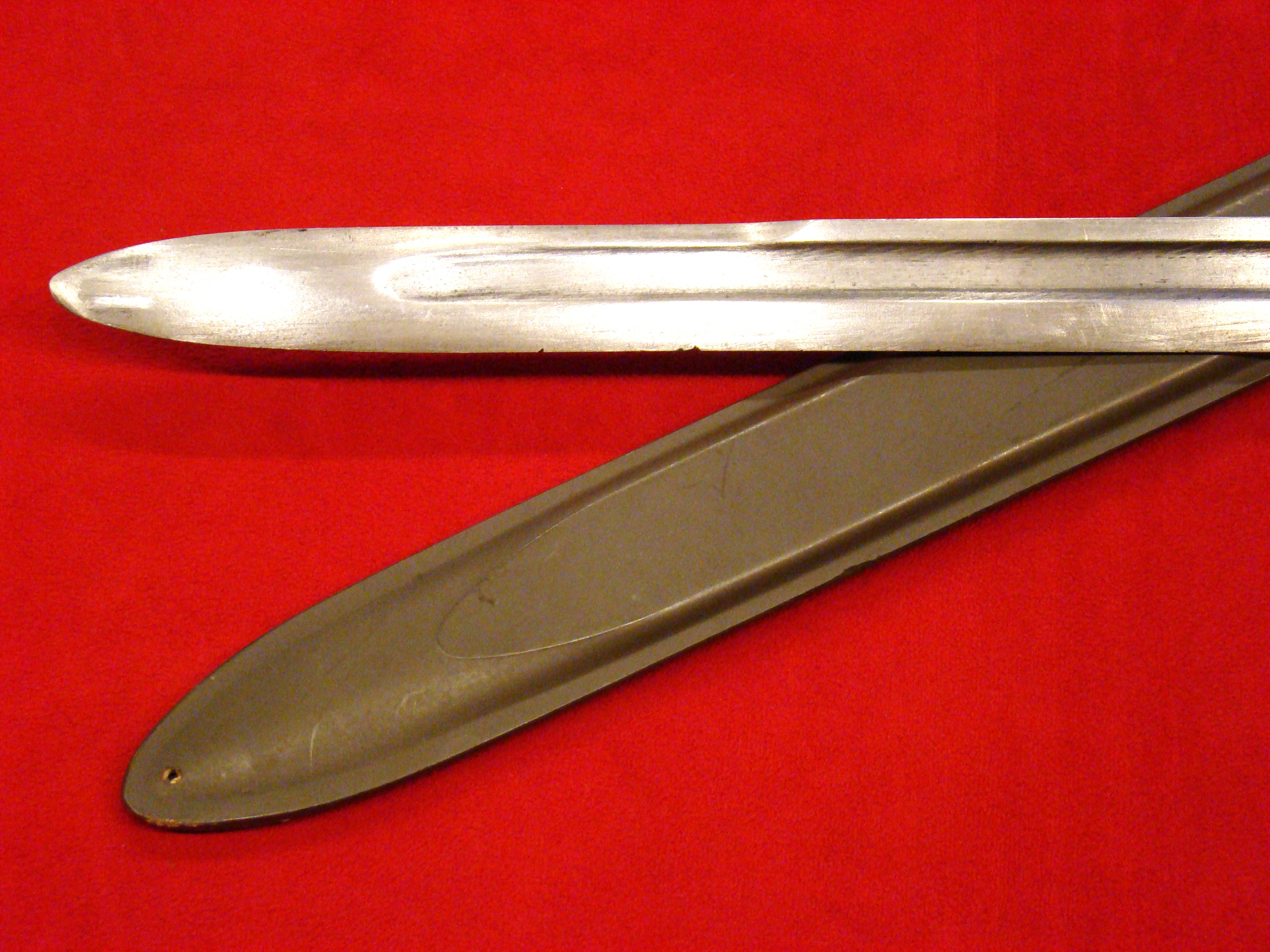
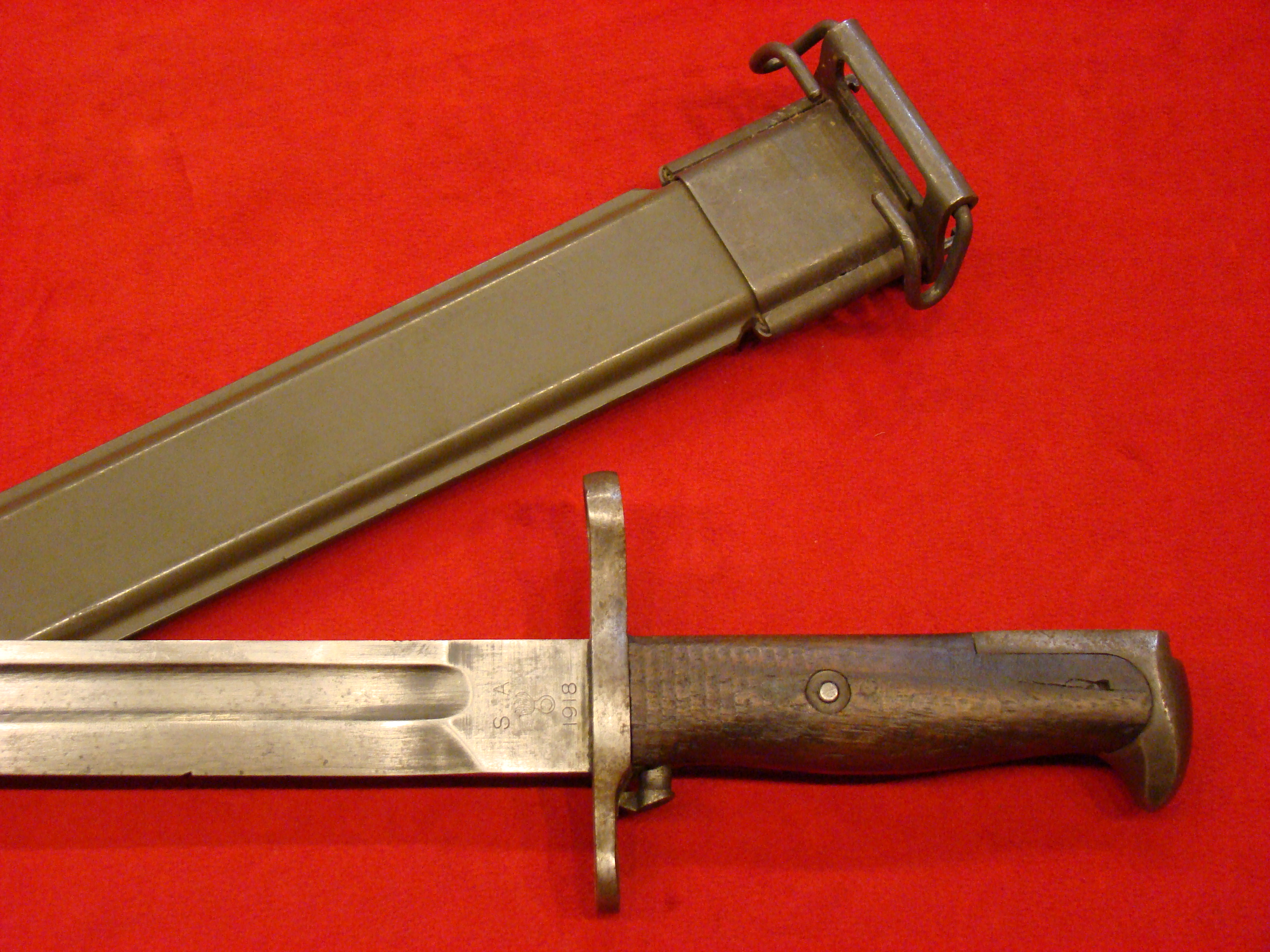
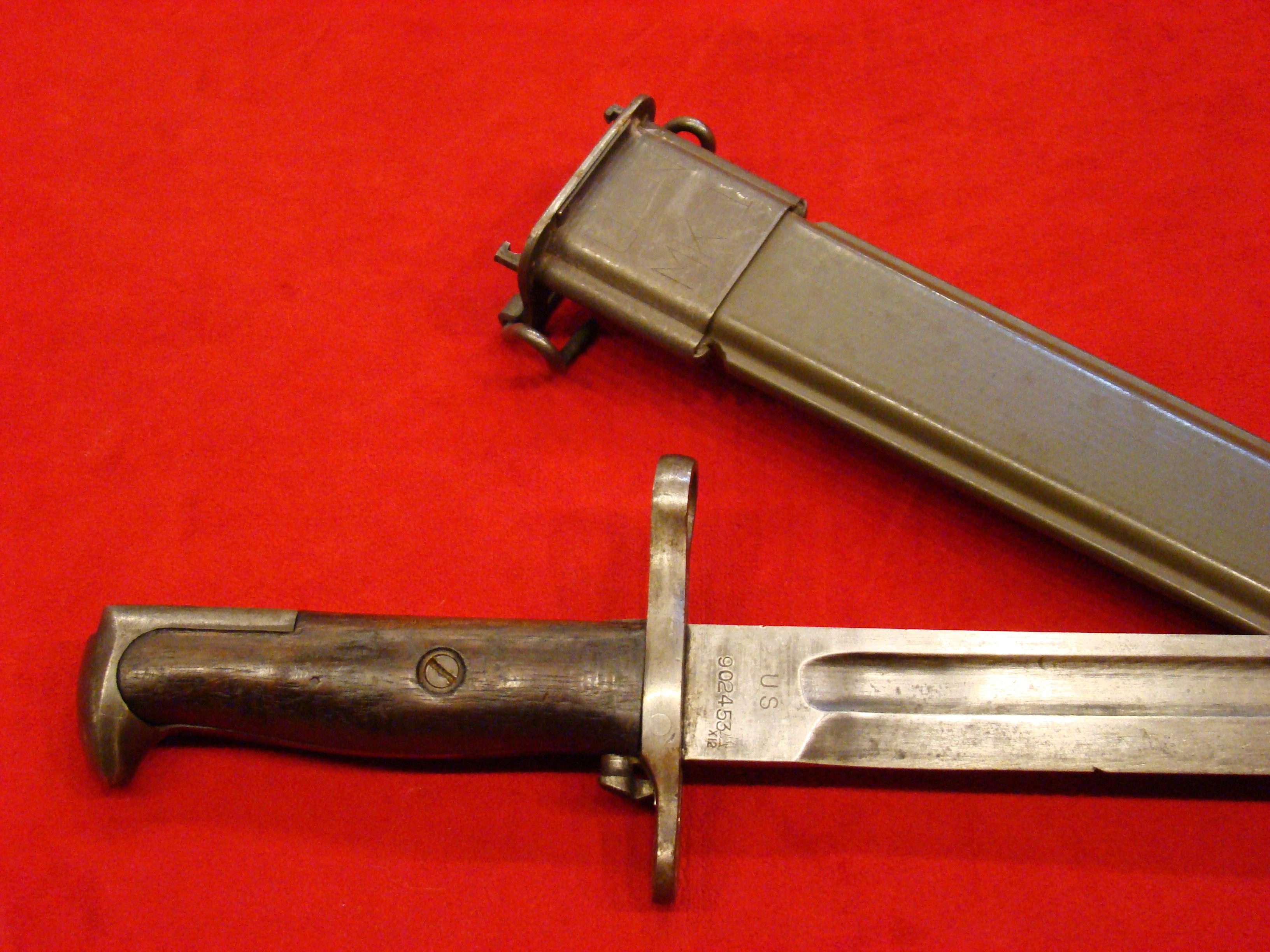
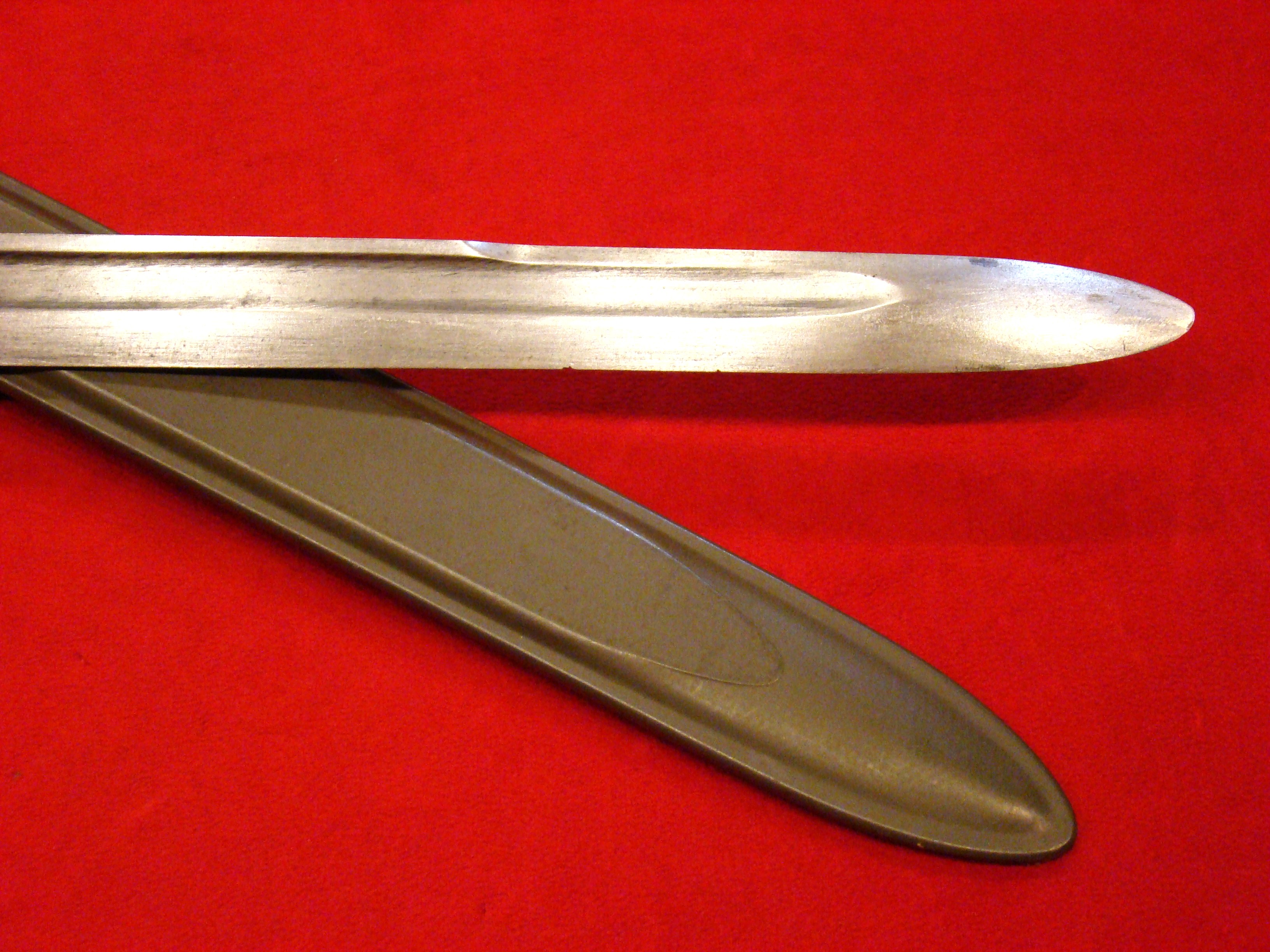
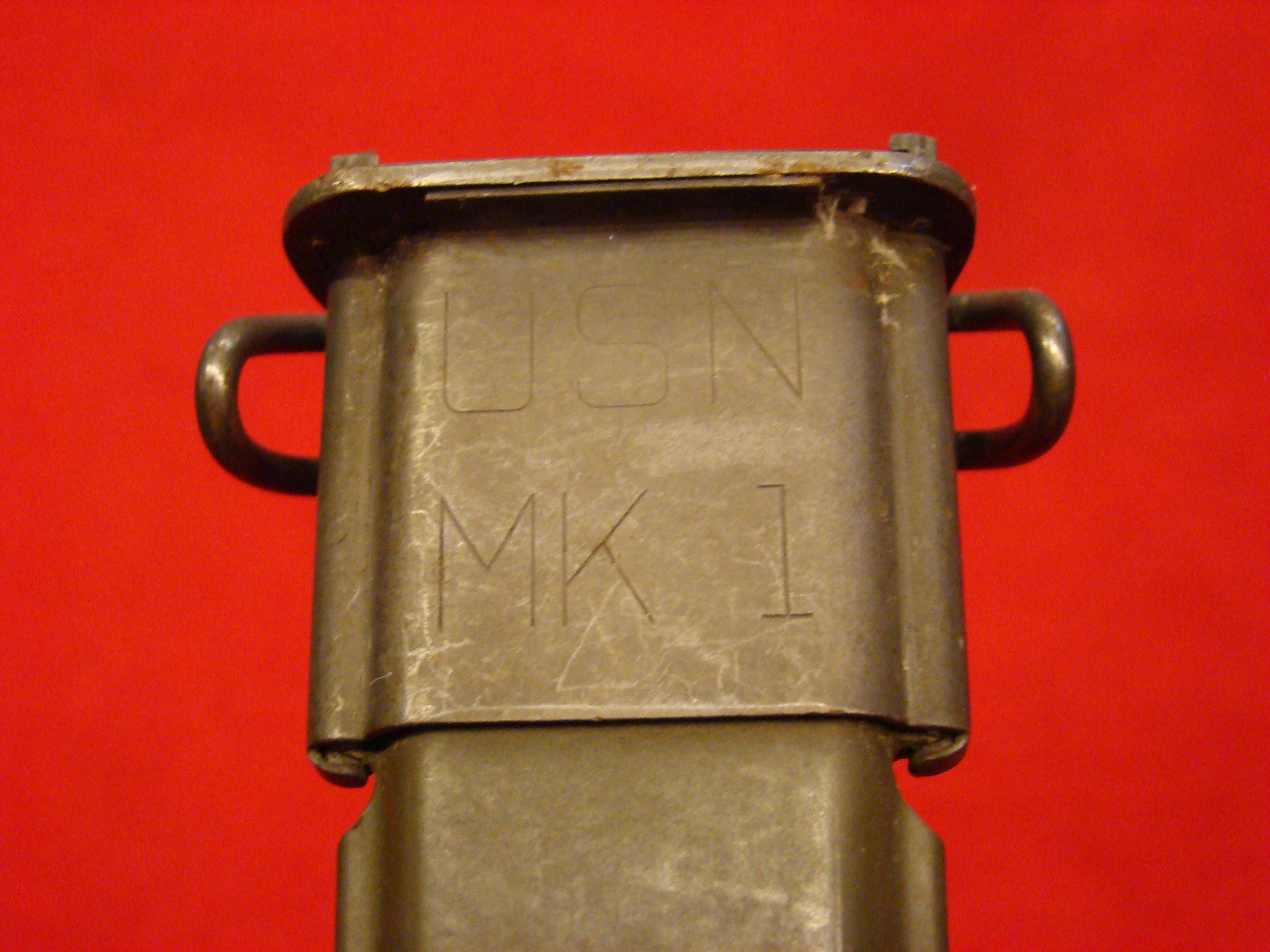
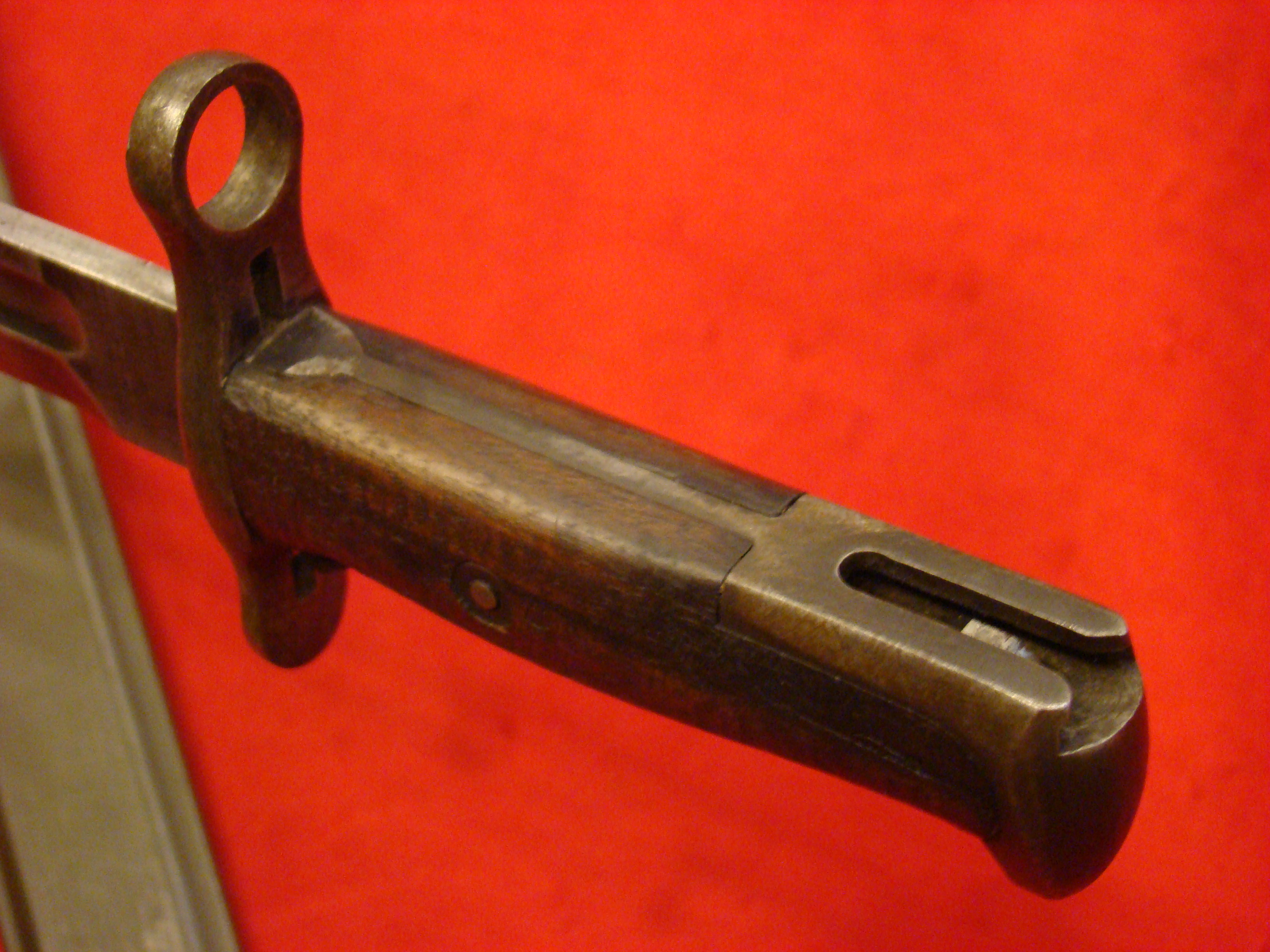
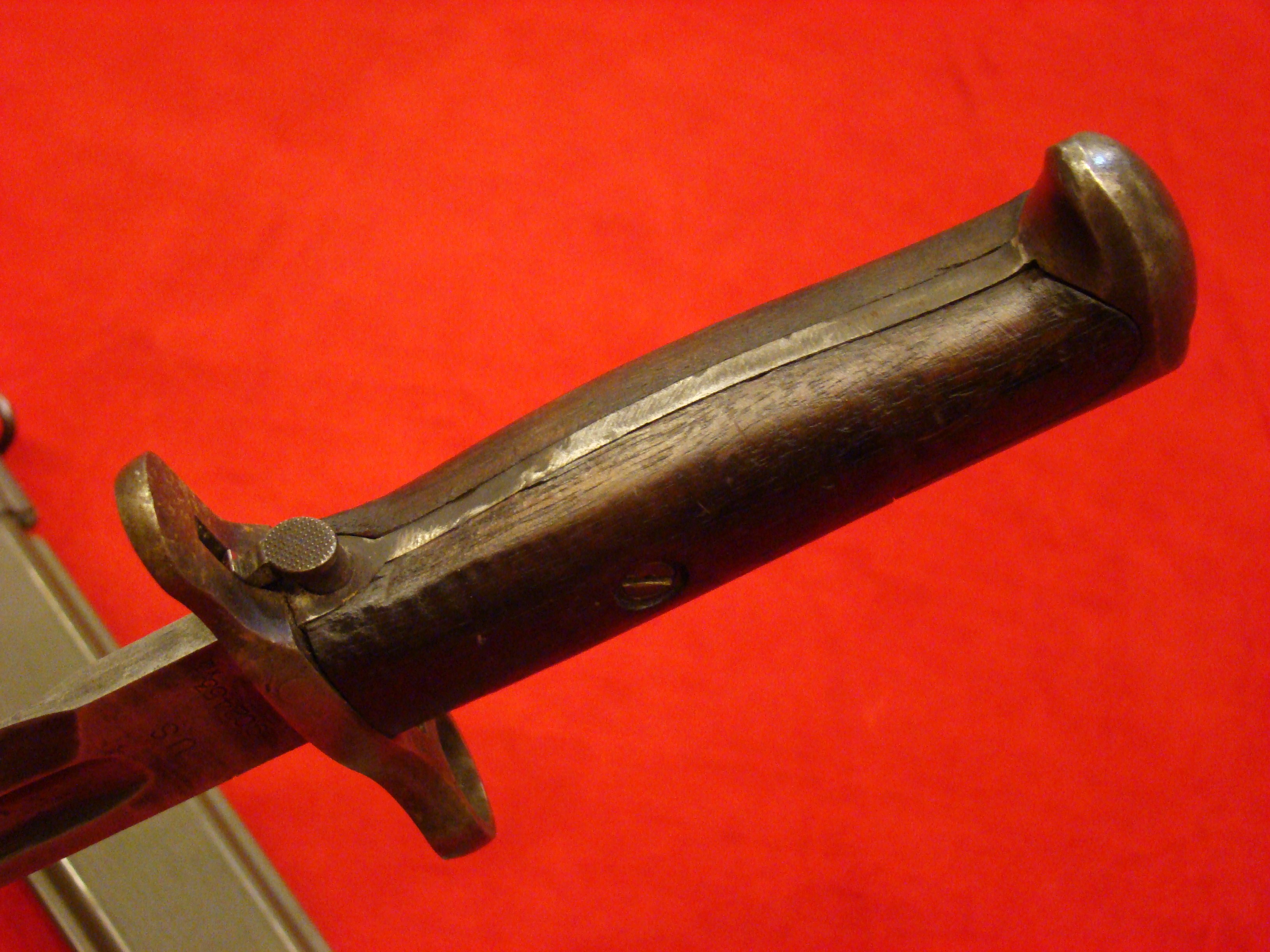
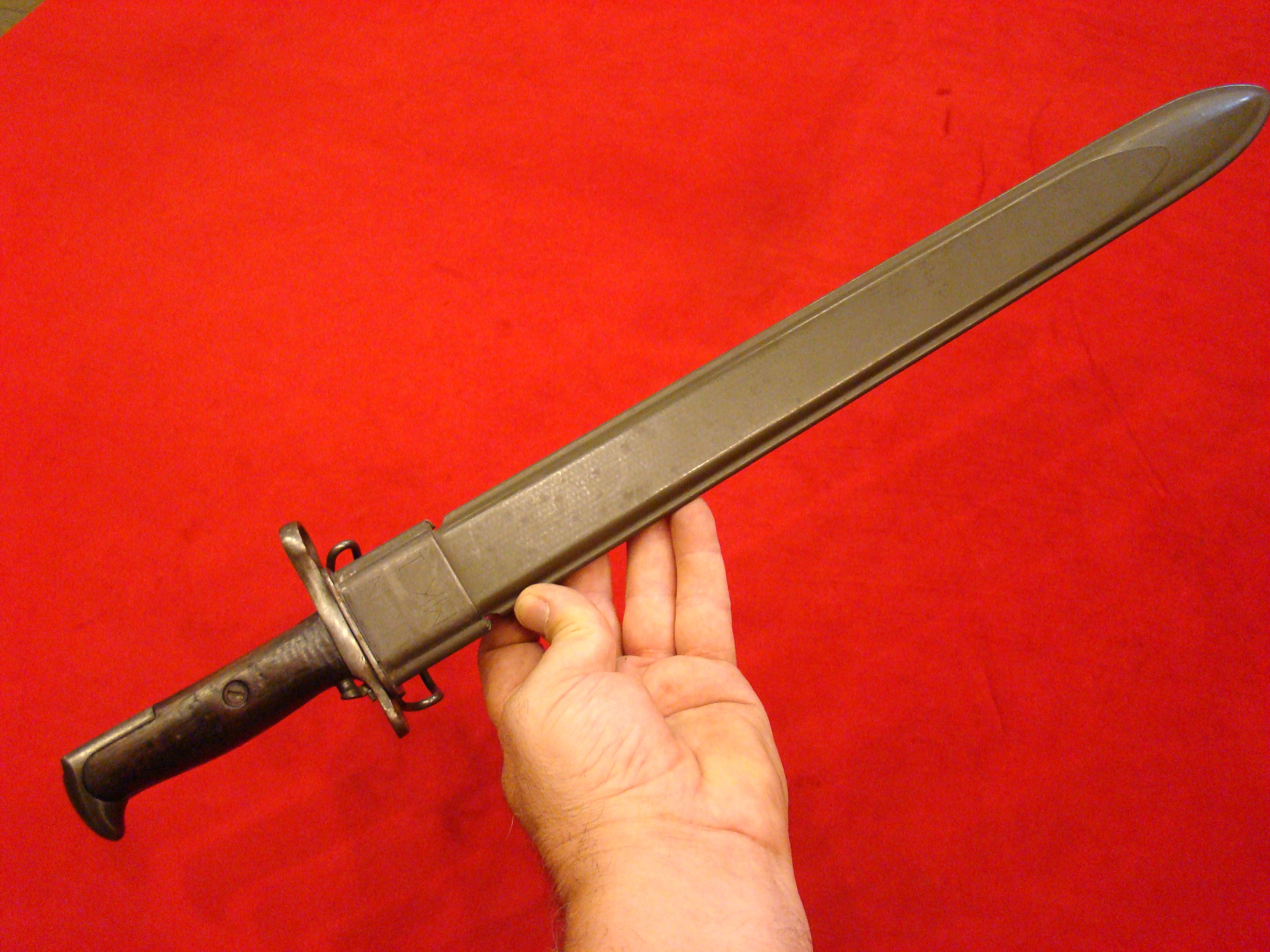
WW 1. US M-1905 Springfield Armory Trench Bayonet & Scabbard.
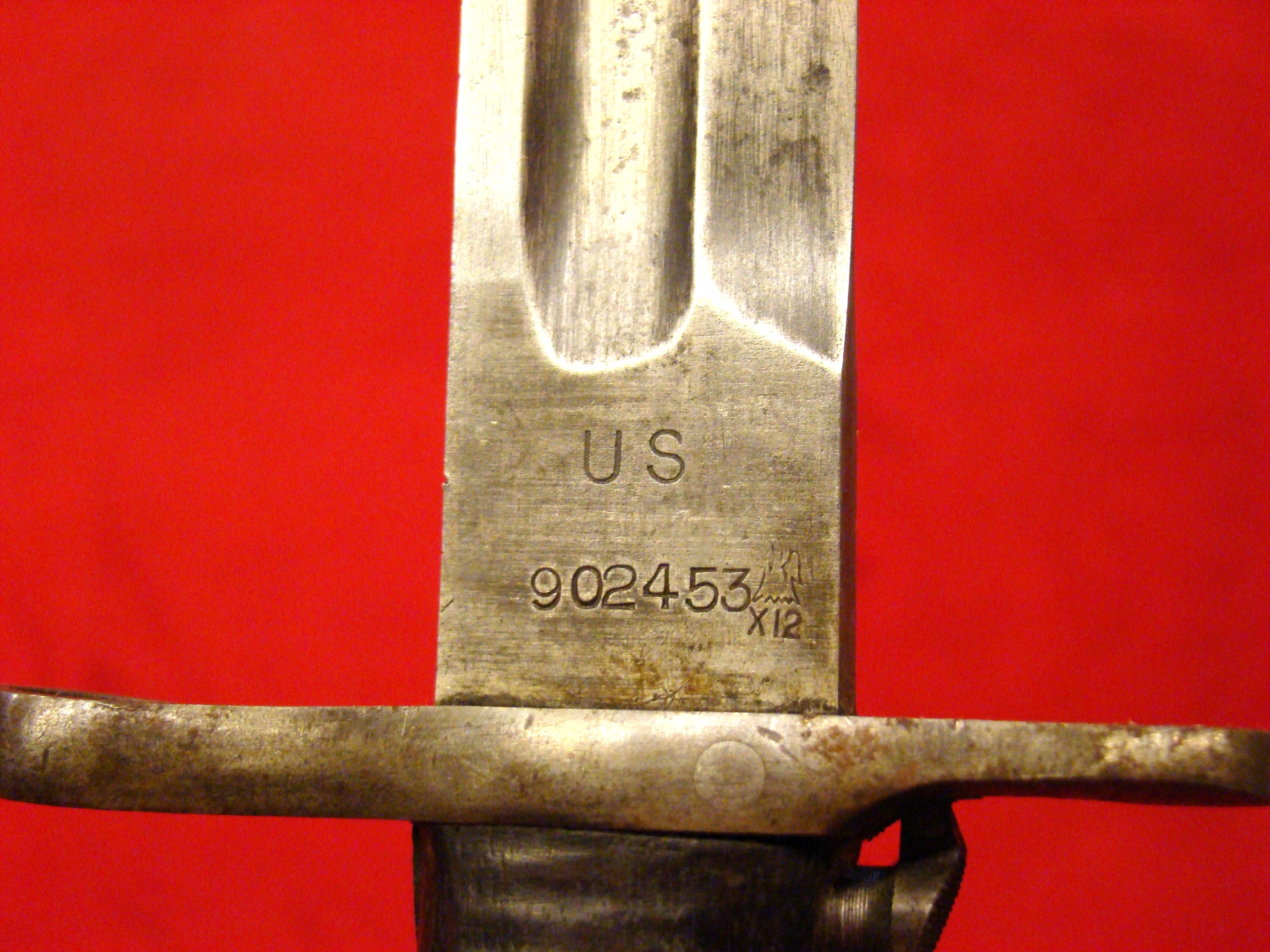
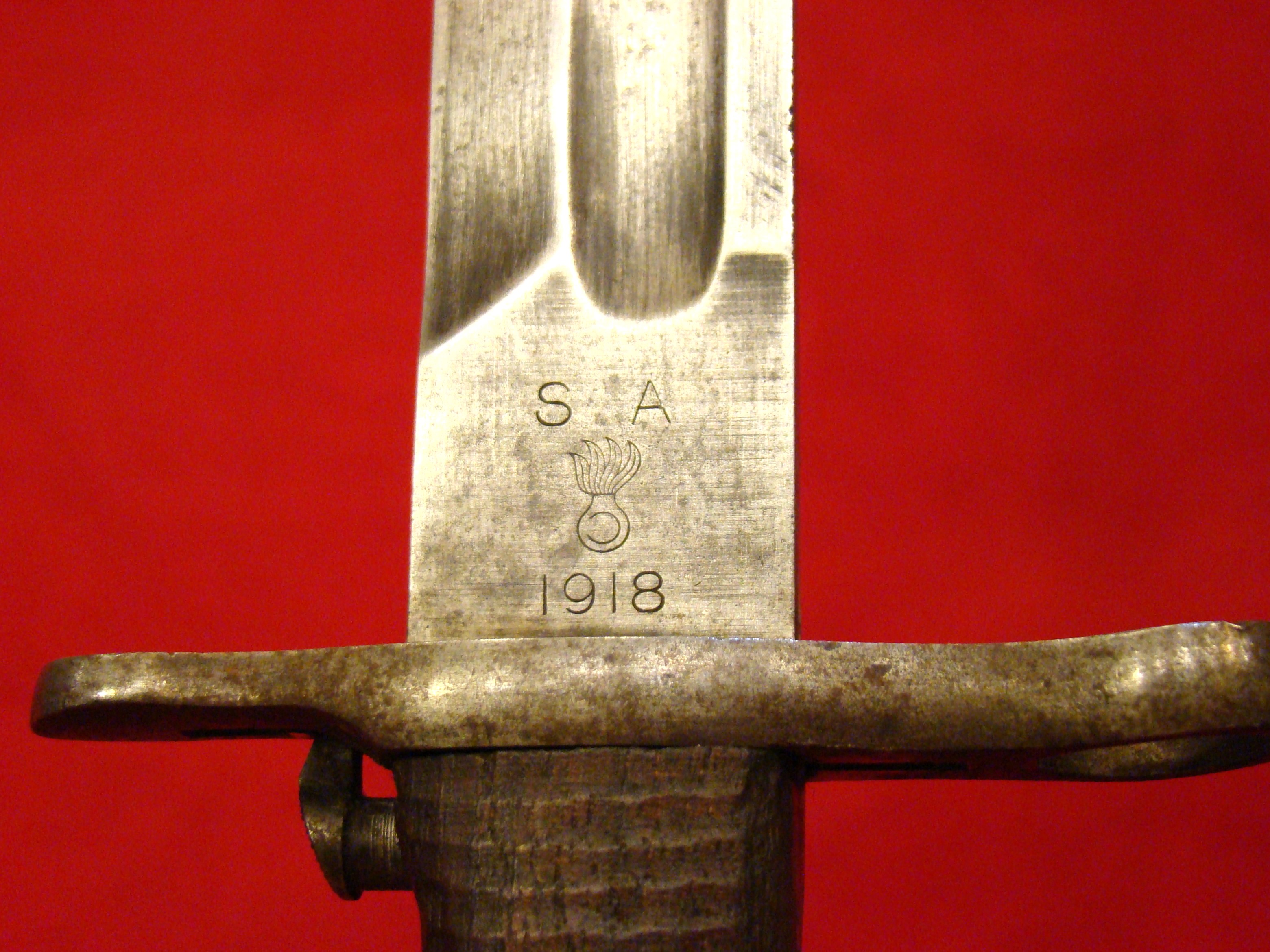
This fine WW I bayonet is in excellent condition with its original scabbard. Wooden handle and lock spring in great shape. No cracks, missing wood, or gouges. Blade is marked on one side with “SA” (Springfield Armory) over a flaming bomb and the date “1918”. Other side marked “US” over serial # 902453. Blade is smooth with no pitting whatsoever. Scabbard condition matches the blade. Steel throat marked “USN MK I”. The perfect accesory for your M-1903 or M-1 Garand Rifle. $350.00 HOLD C.B.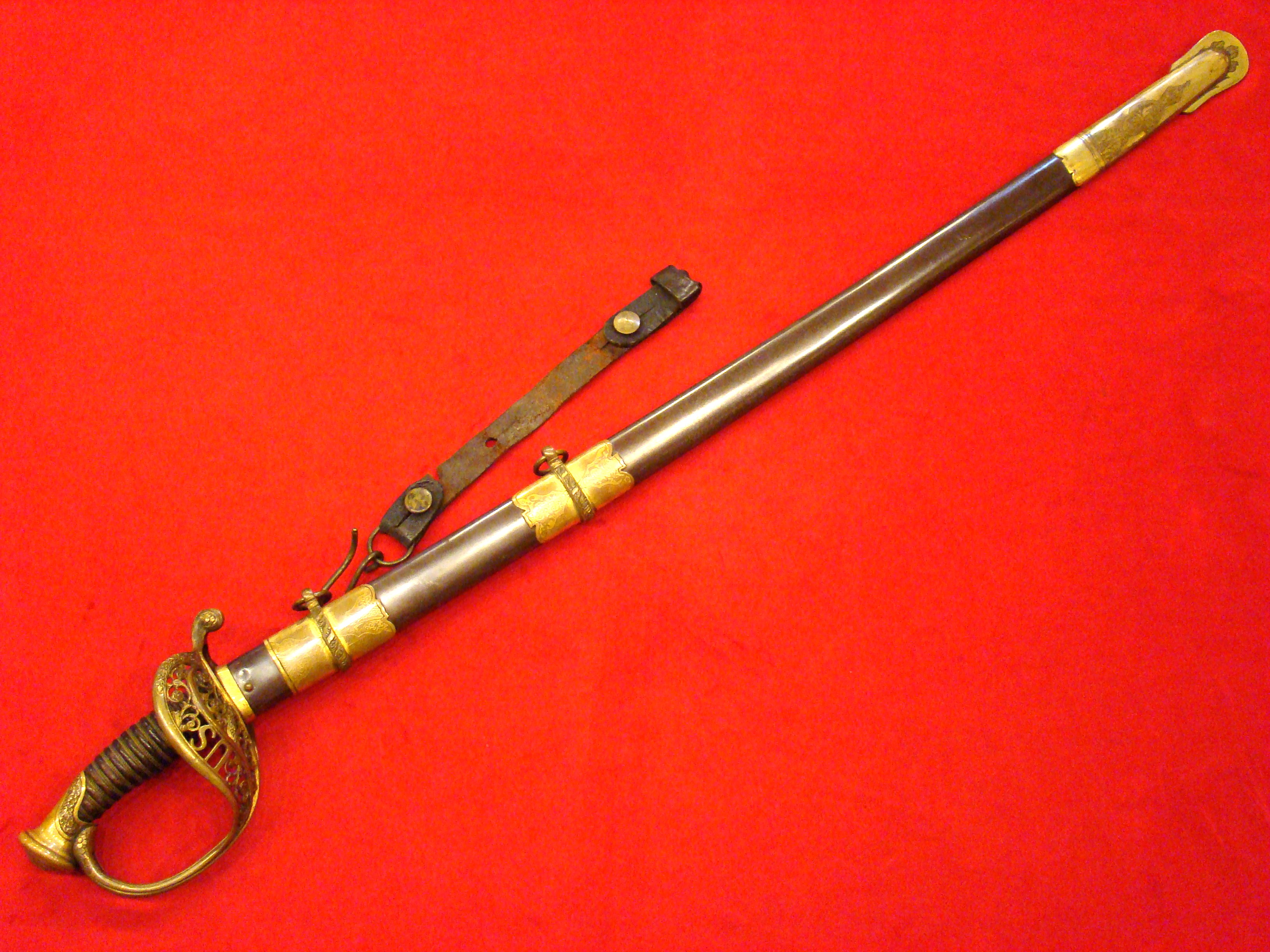
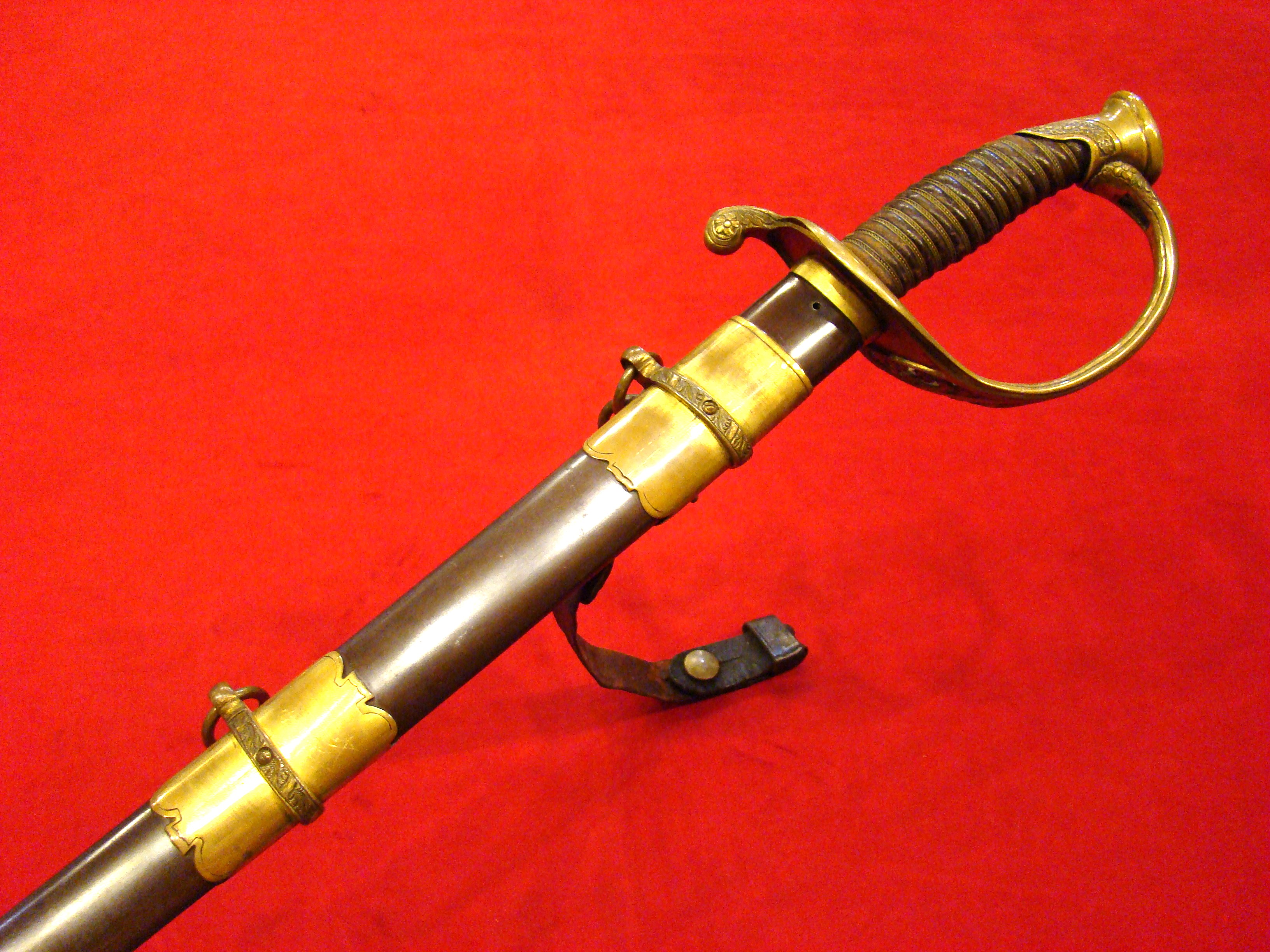
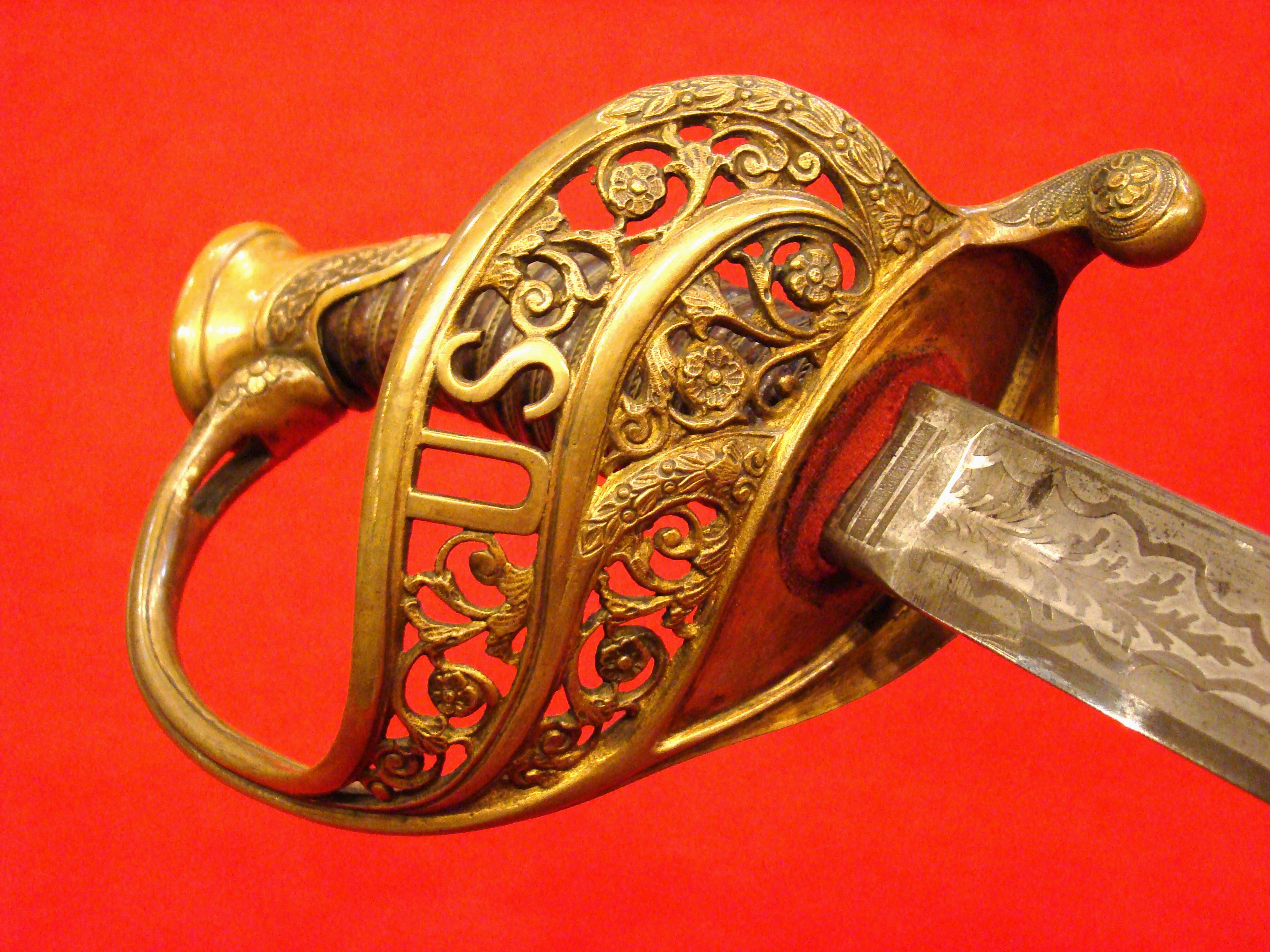
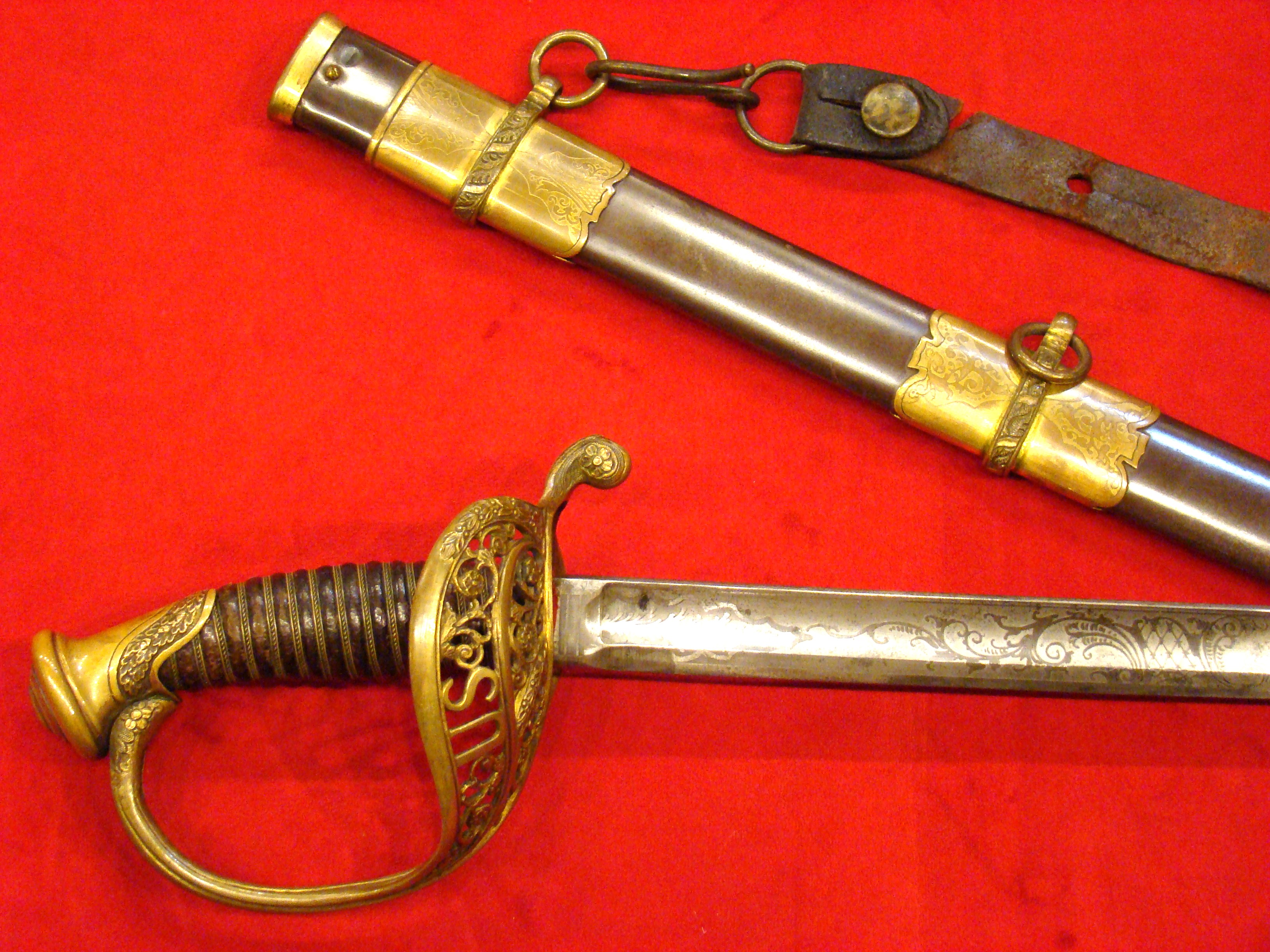
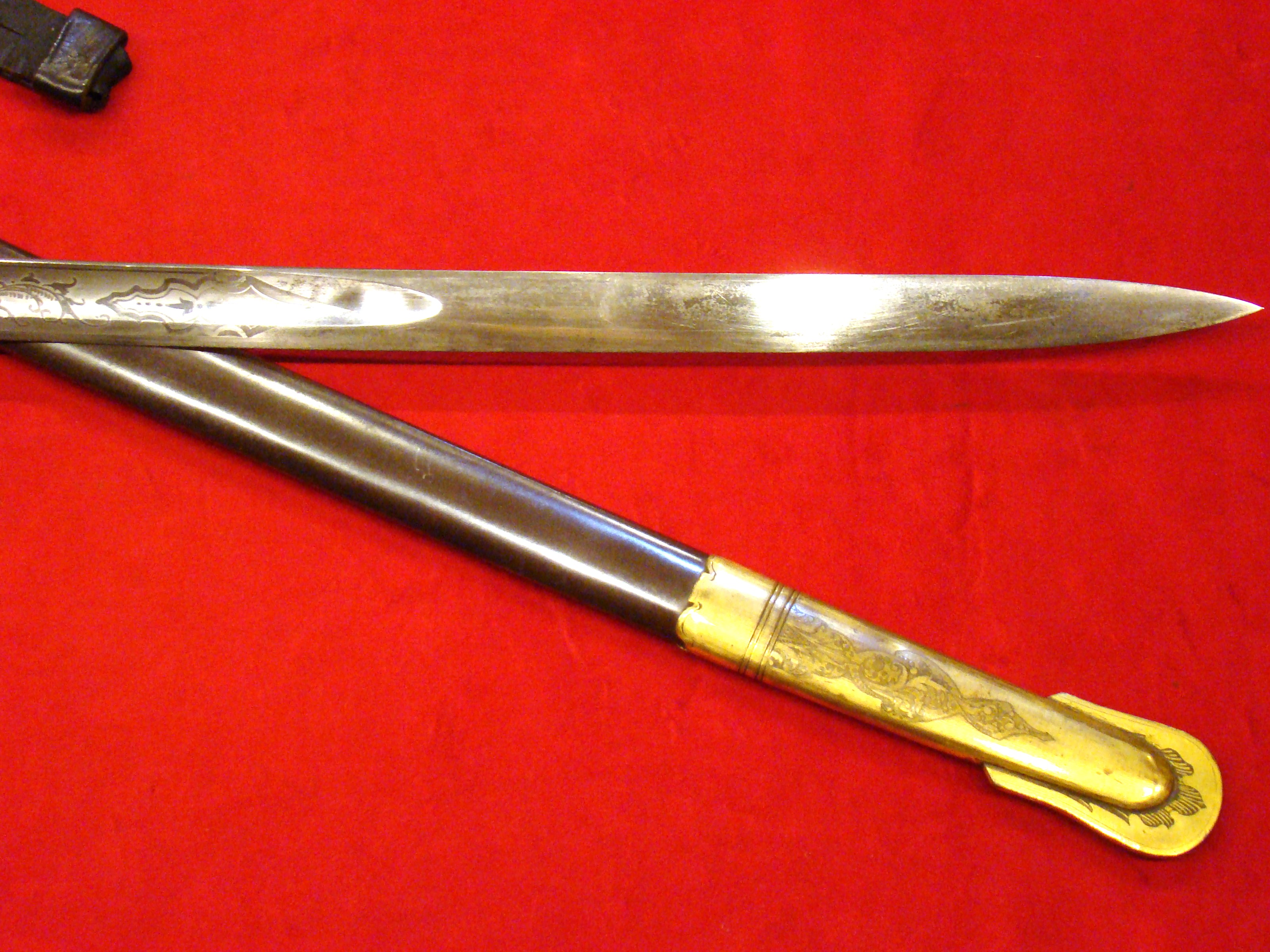
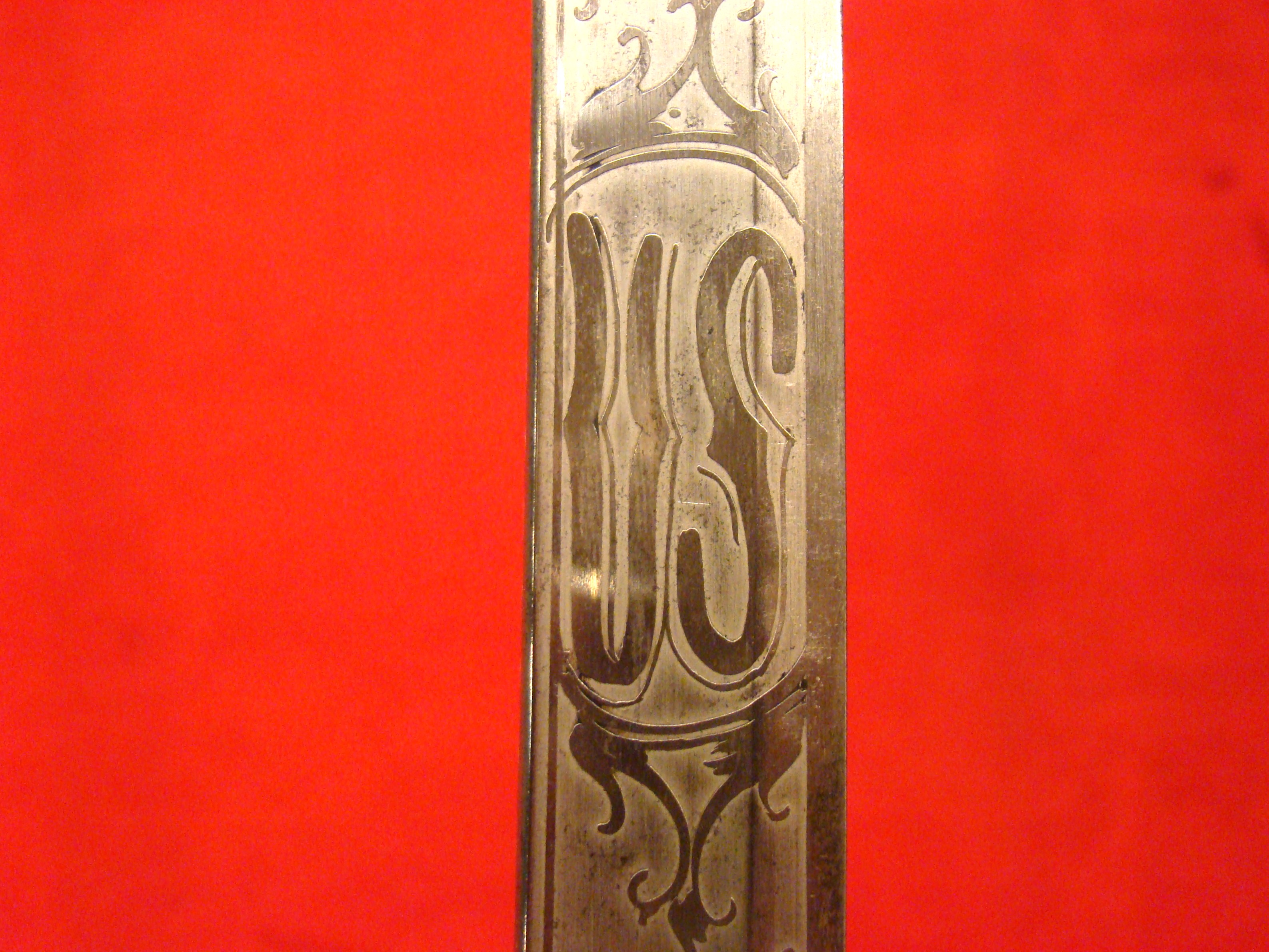
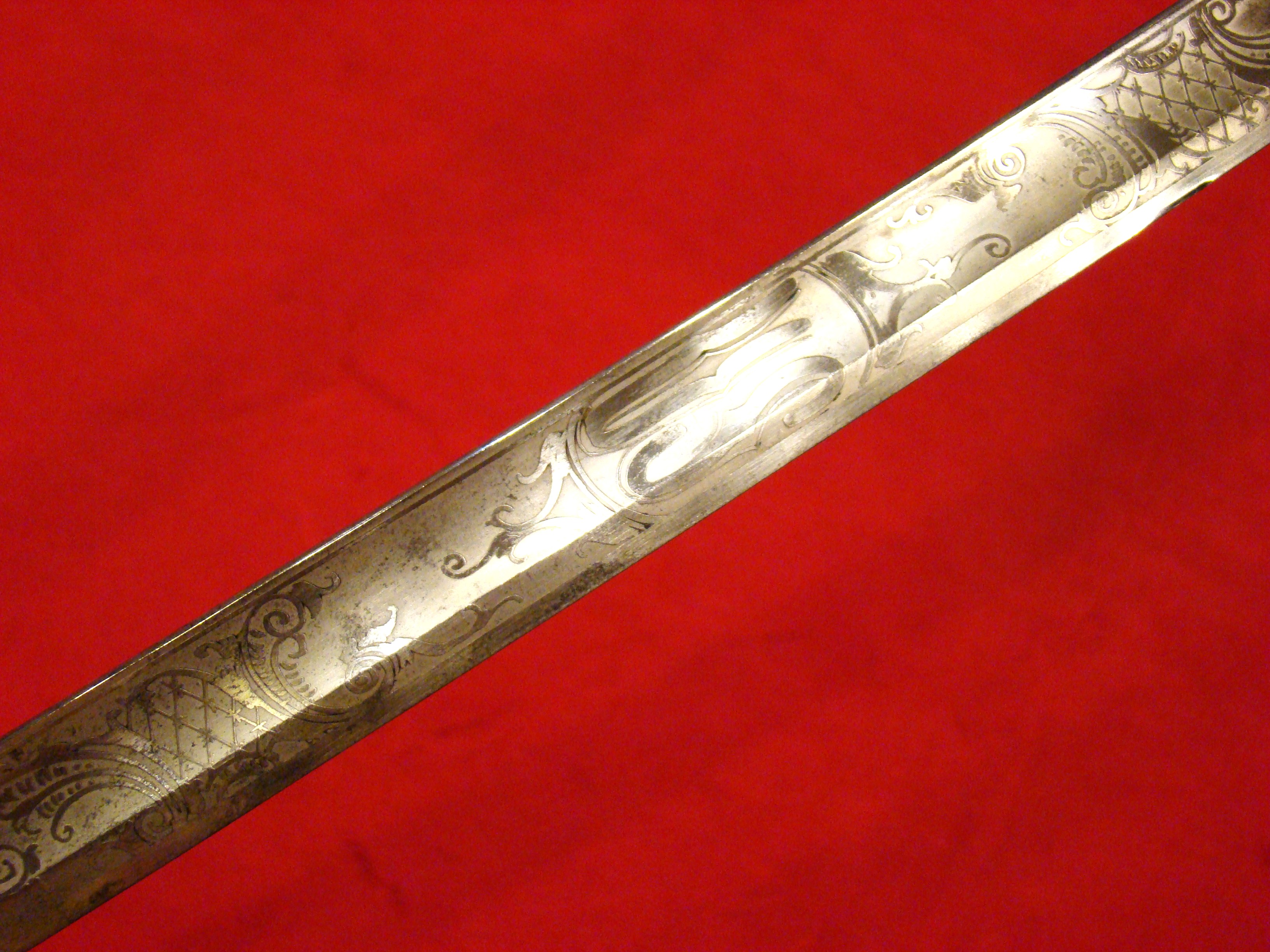
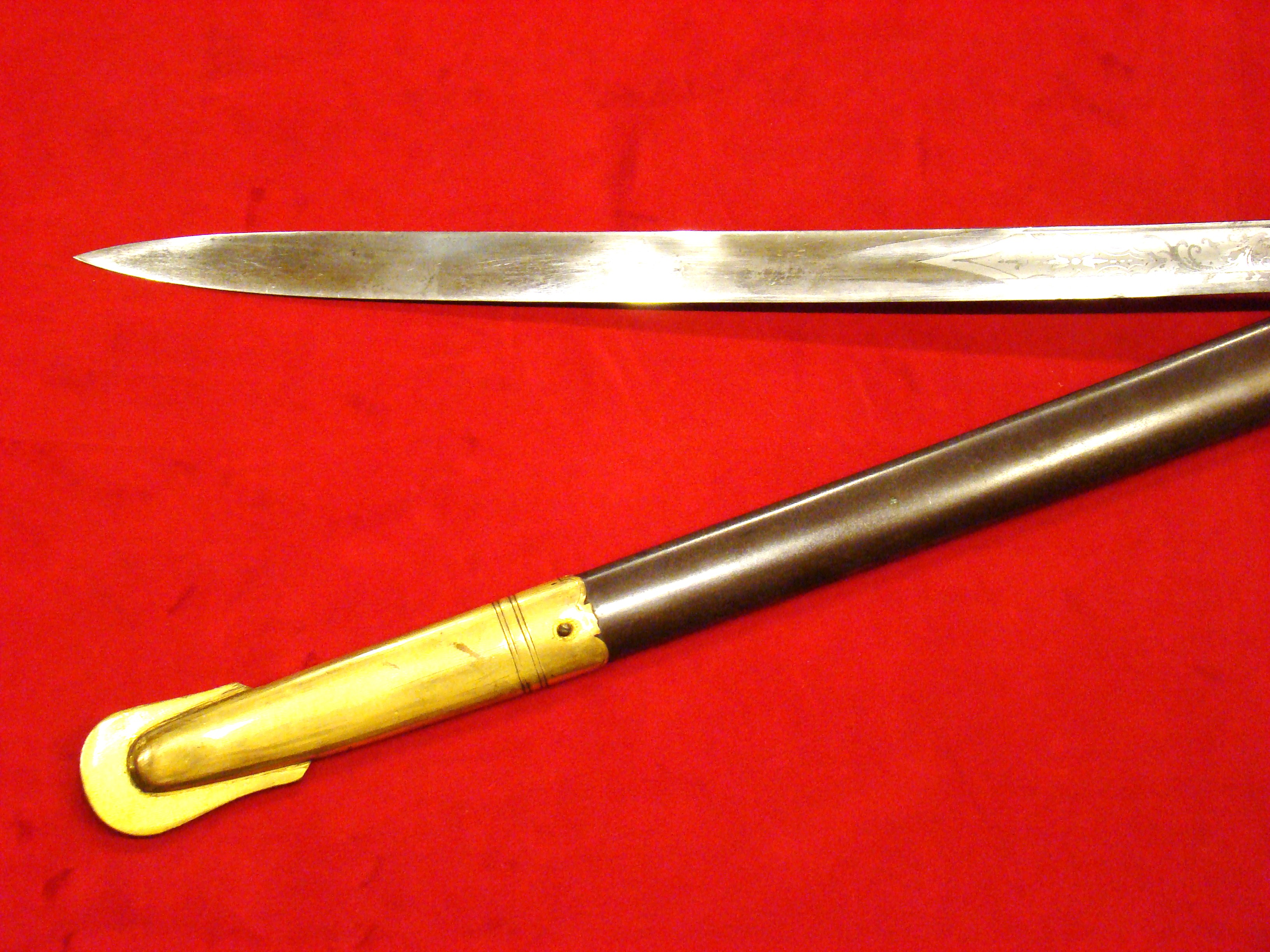
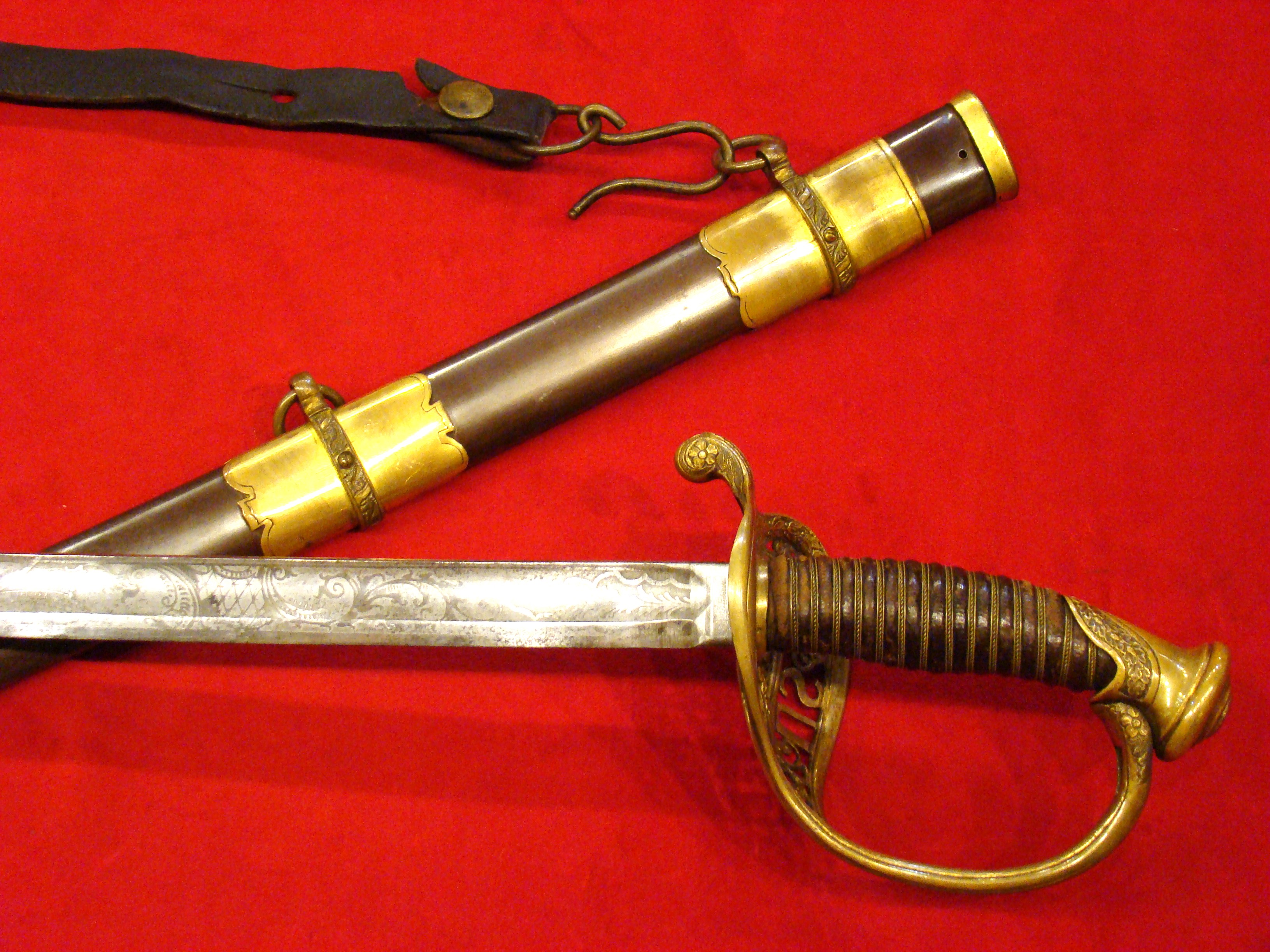
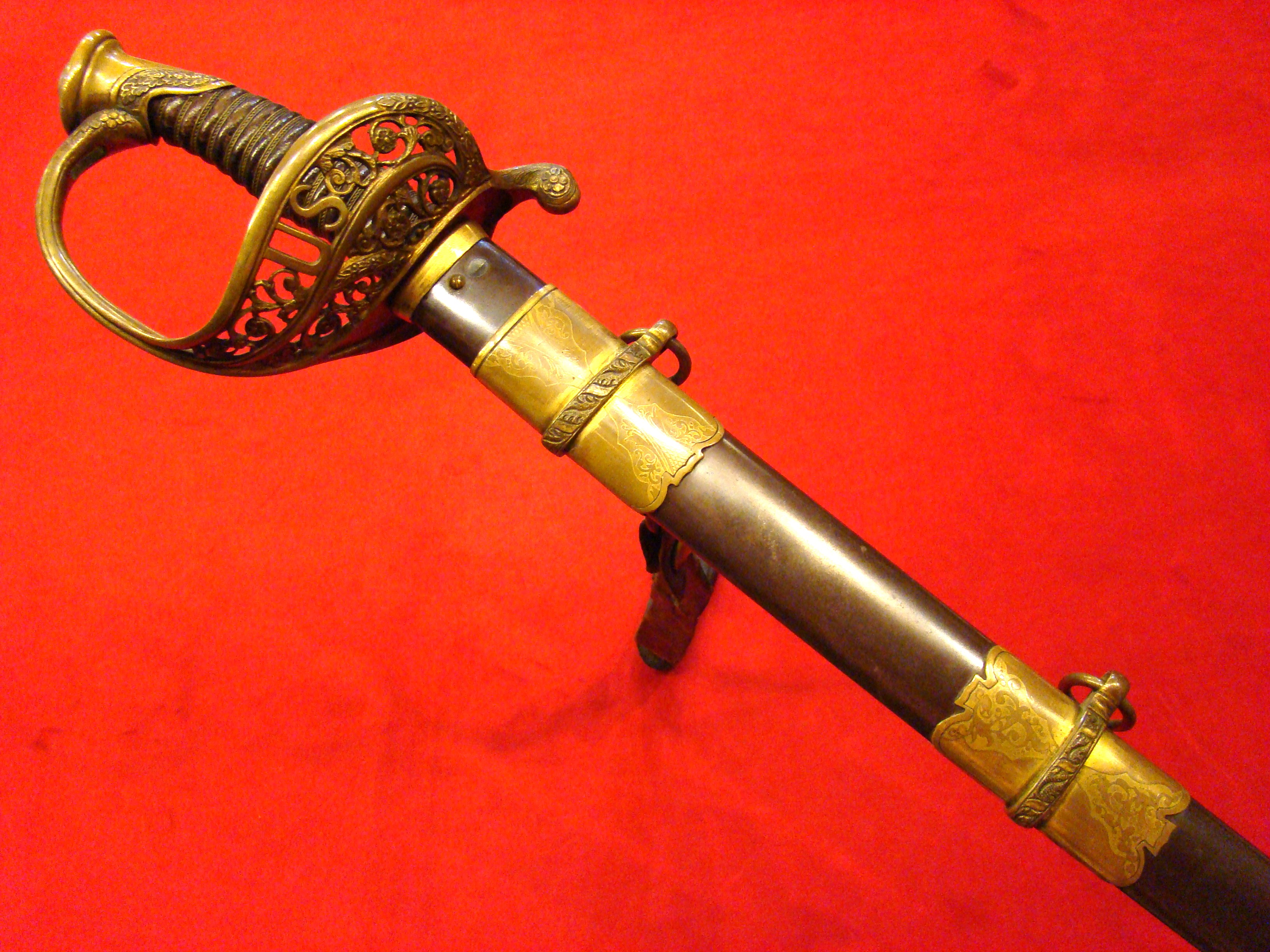
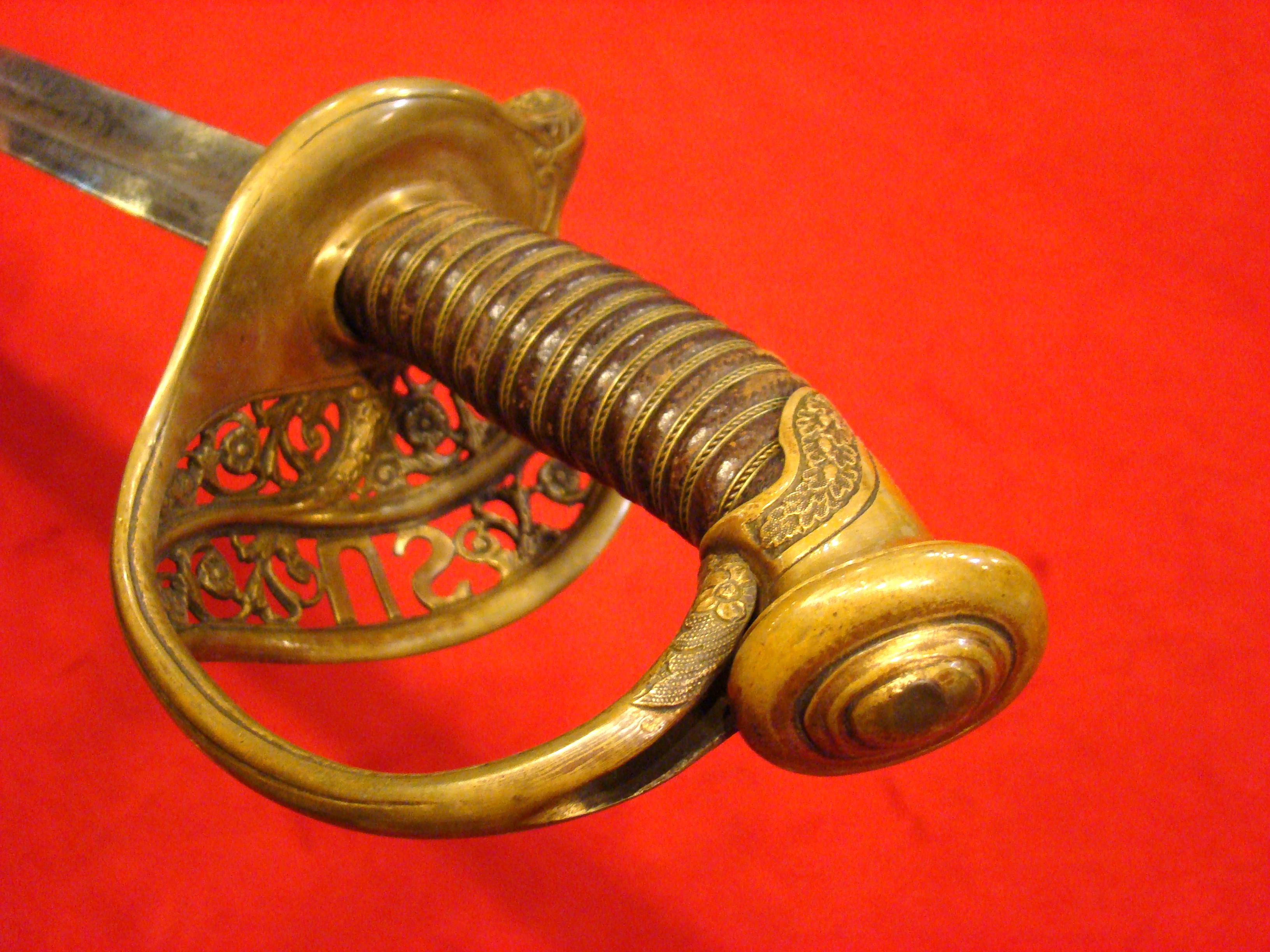
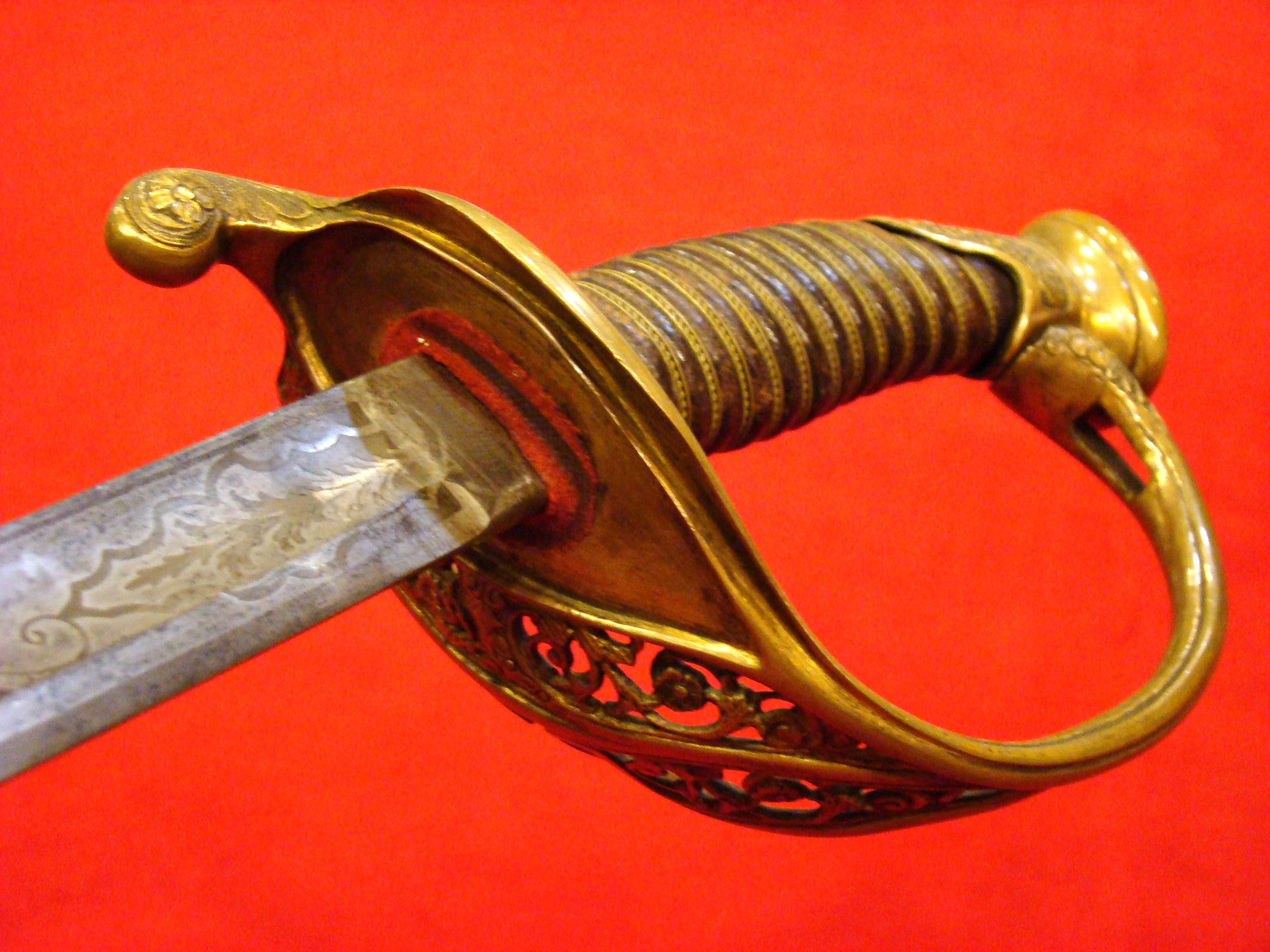
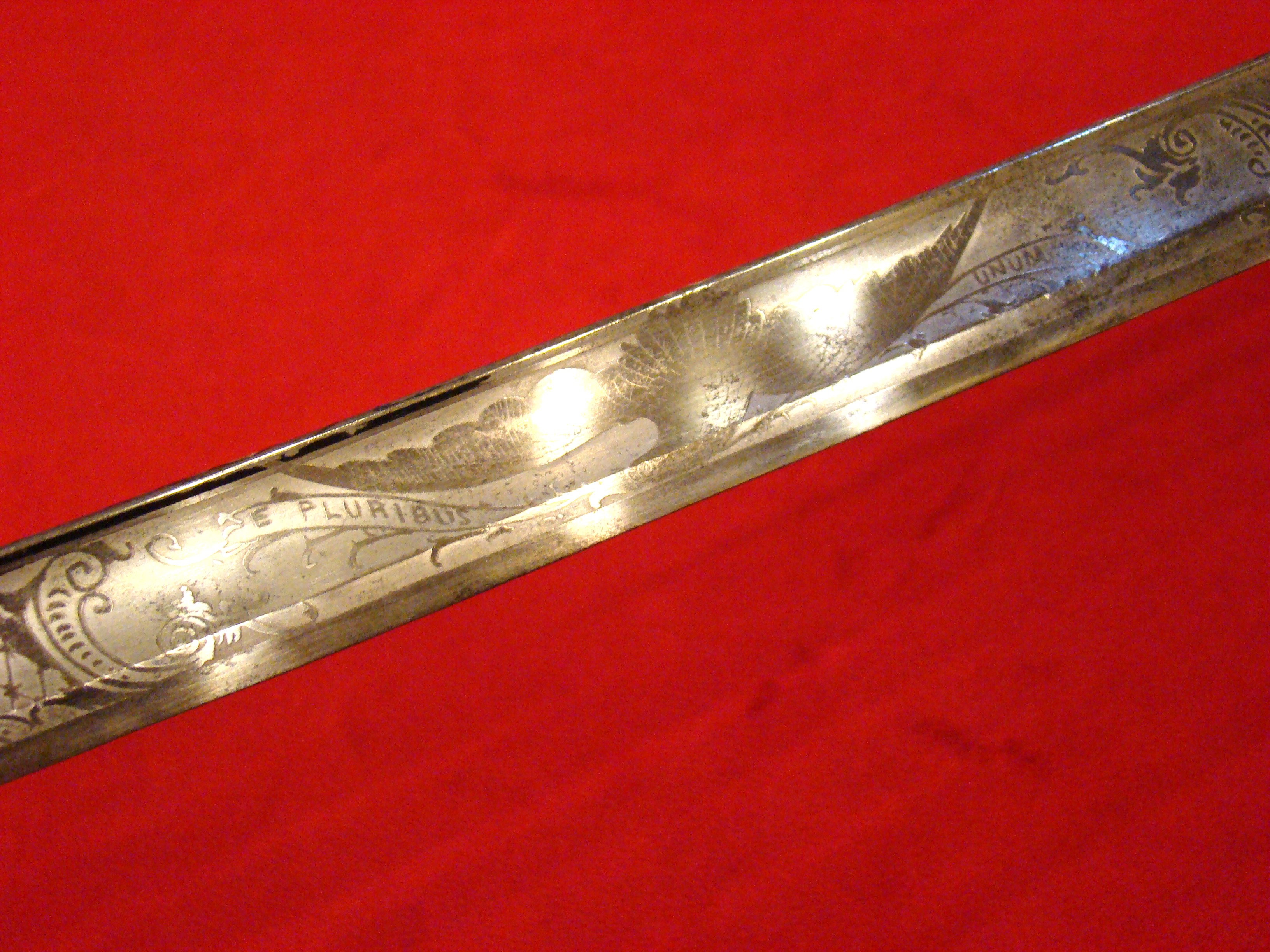
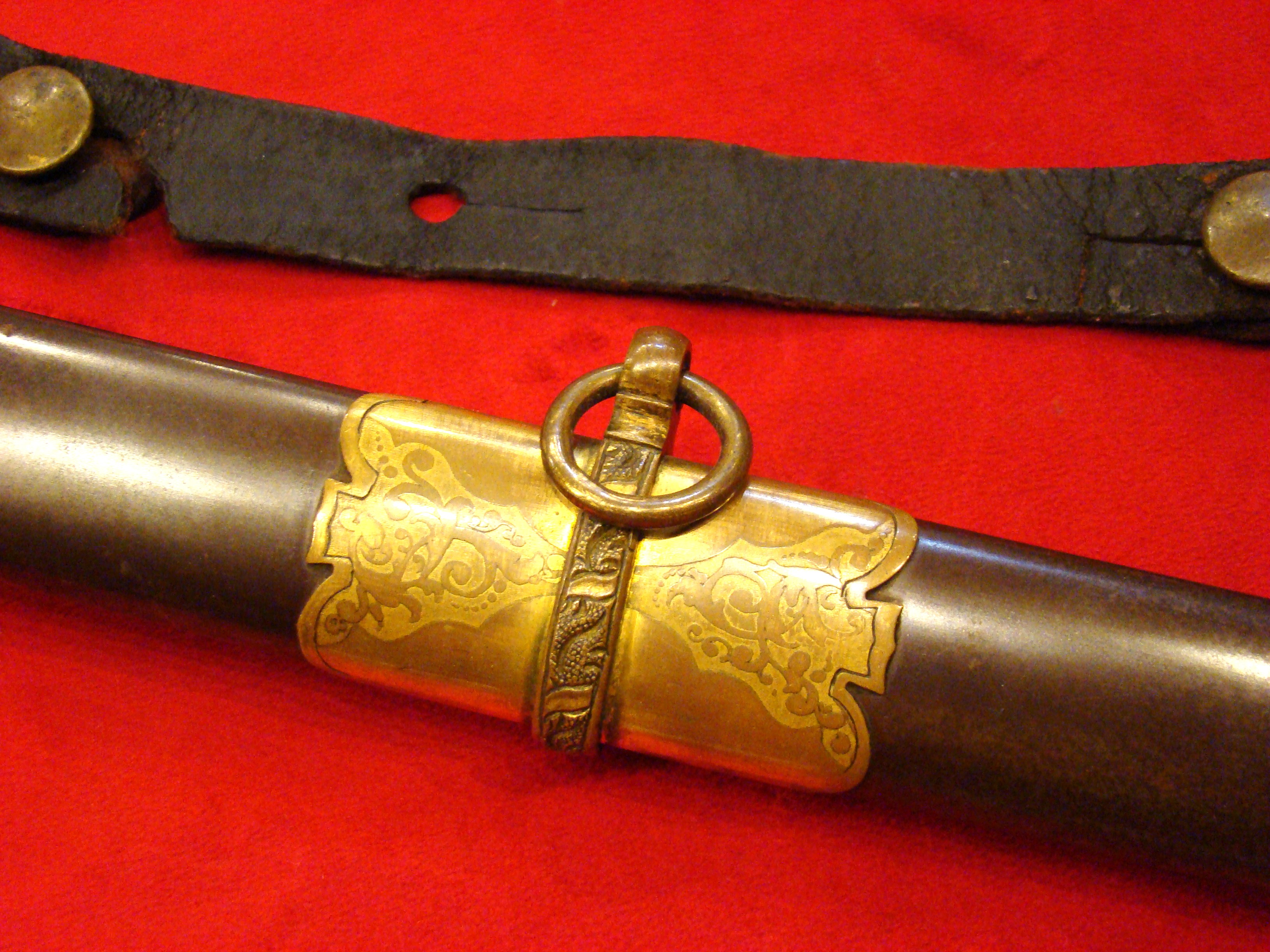
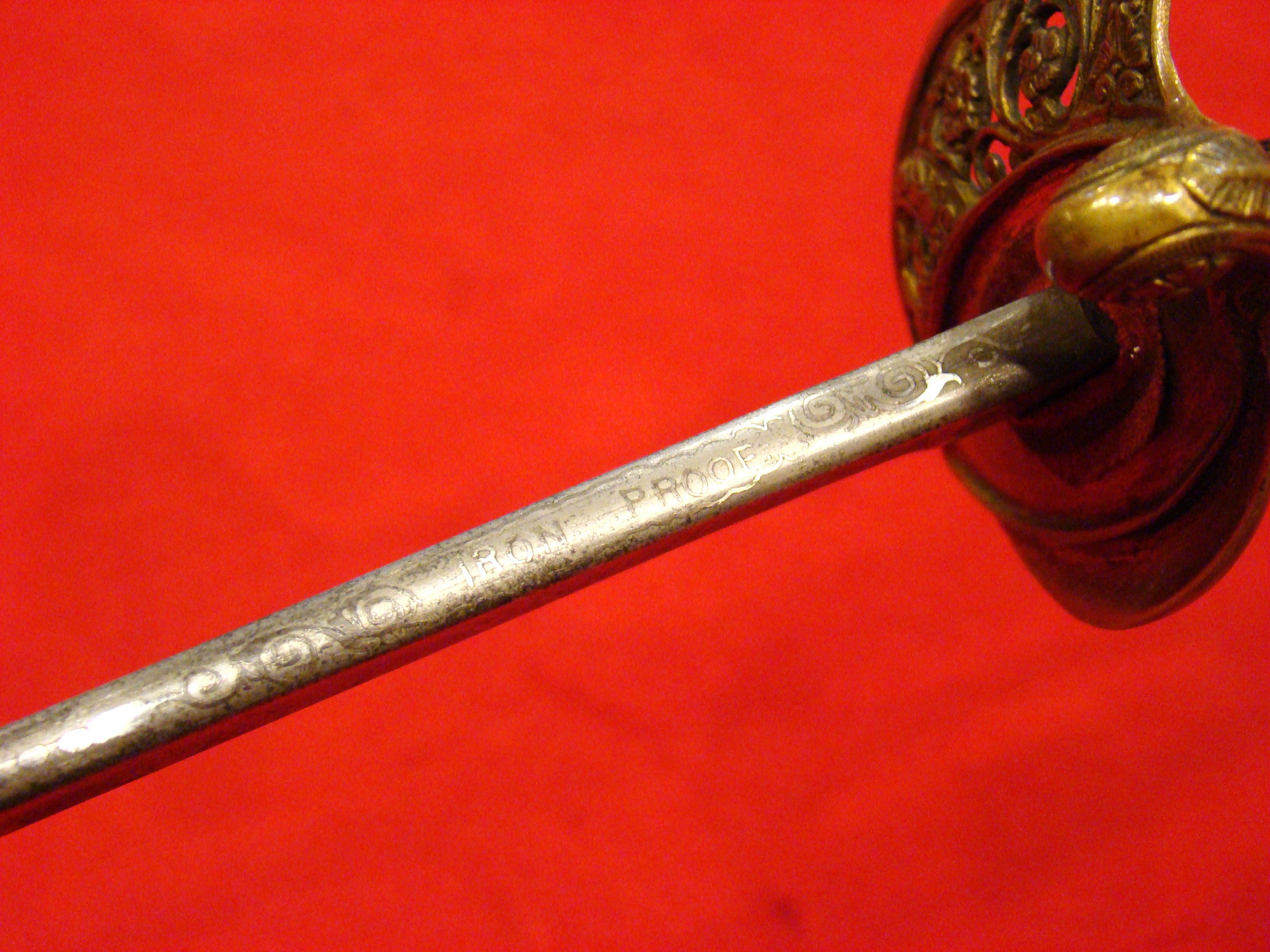
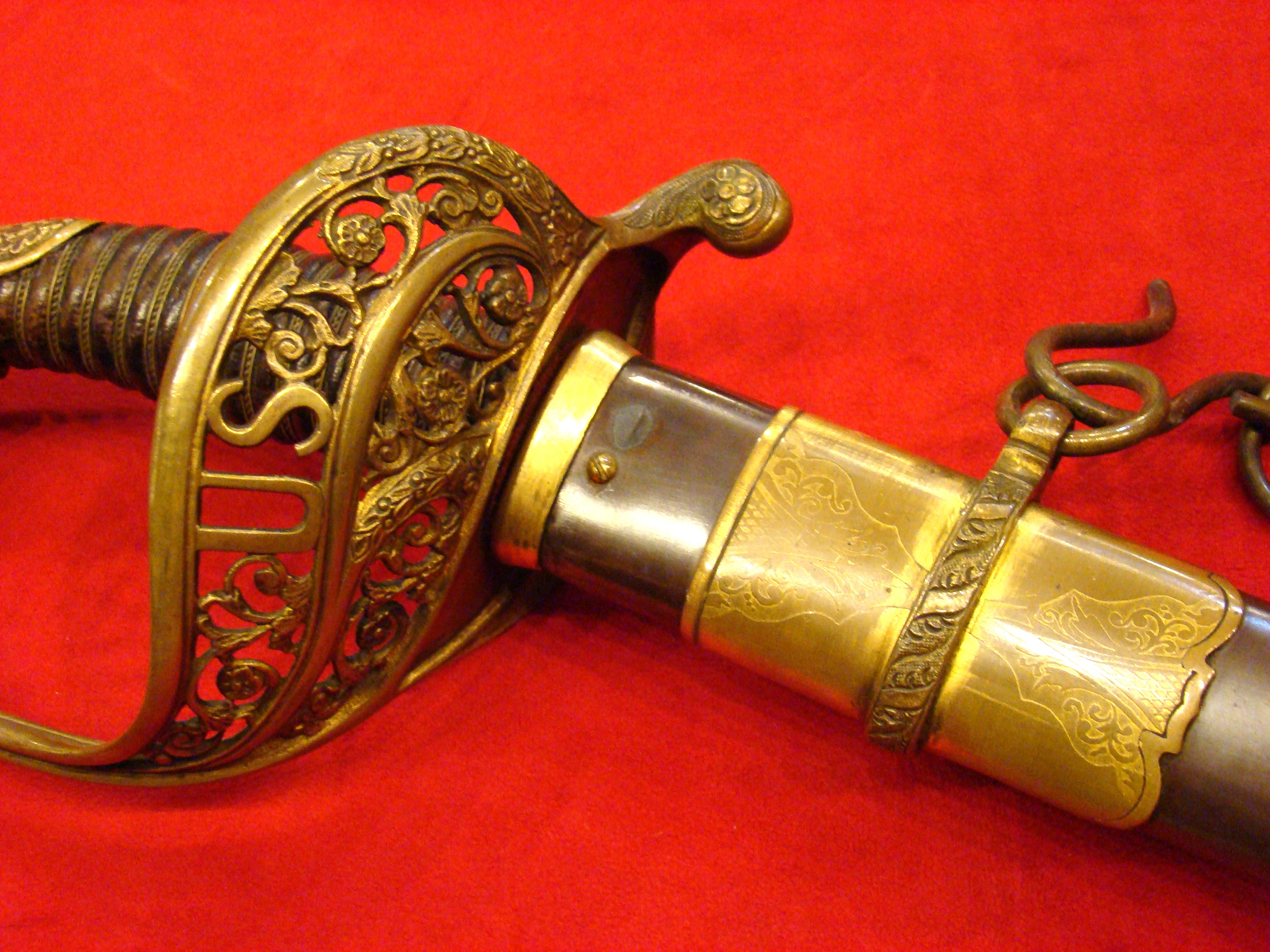
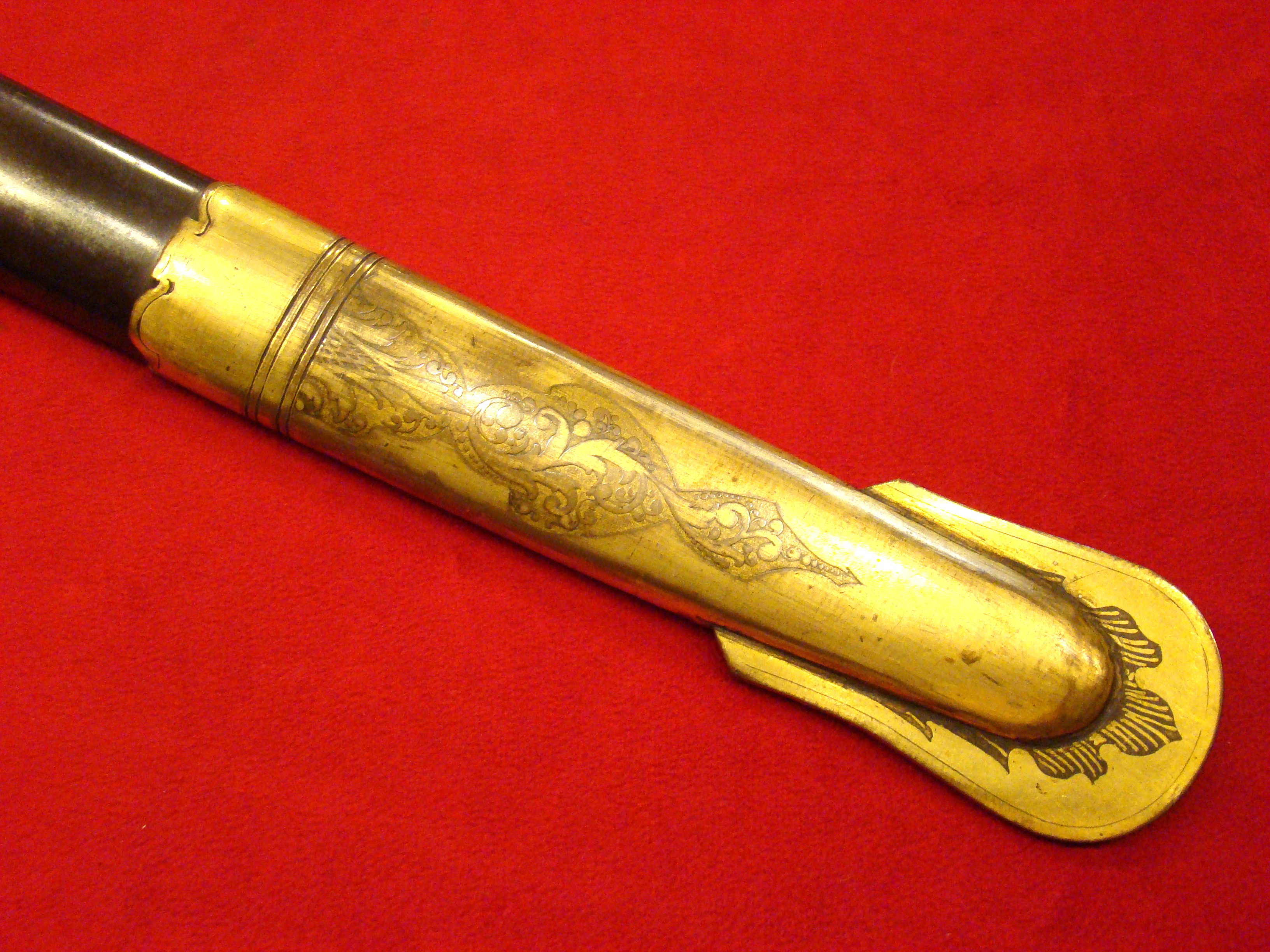
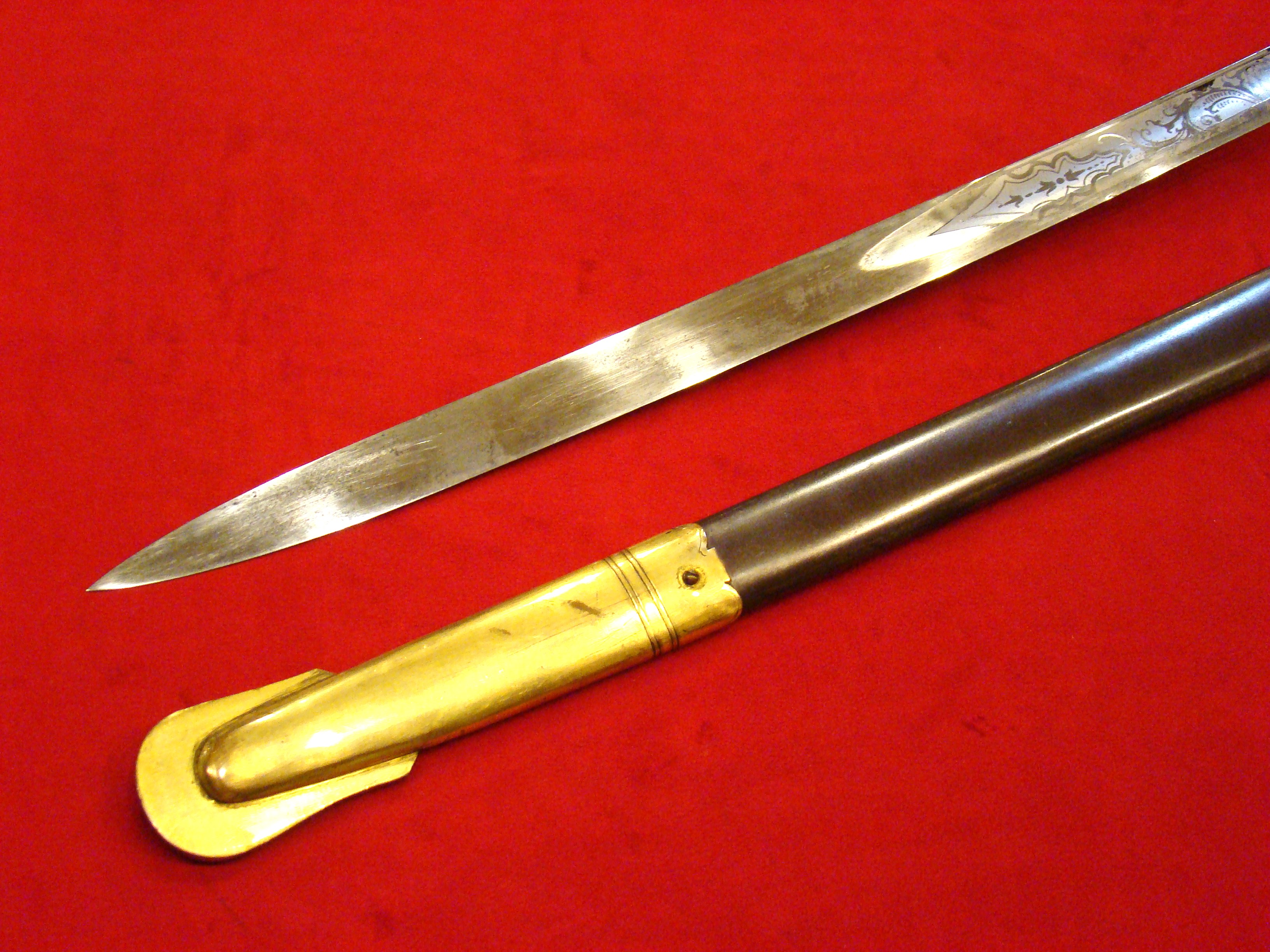
WP 3. US M-1850 Field & Staff Officer’s Sword.
This fantastic sword was in the collection of my friend Charles Darden for many years. The brass guard is richly decorated and covered in fine gilt with prominent “US” on the face. Original leather grip and fancy brass wire braid perfectly intact and in place. The blade retains its mirror-like factory polish and frosting. It was hard to photograph due to the glare, but you can see the sharp “US” on one side, and the Federal Eagle with “E.PLURIBUS UNUM” on the ribbon in its beak. The spine of the blade is marked “IRON PROOF” indicative of blades imported from Solingen. The steel scabbard is very fine and retains a smooth finish with no oxidation or dents. The ring mounts, throat, and drag are decorated and plated with gold consistent with the hilt. One of the original leather hangers is still attached. This sword shows use from the Civil War, but was well taken care of and treasured by the soldier’s family. $2350.00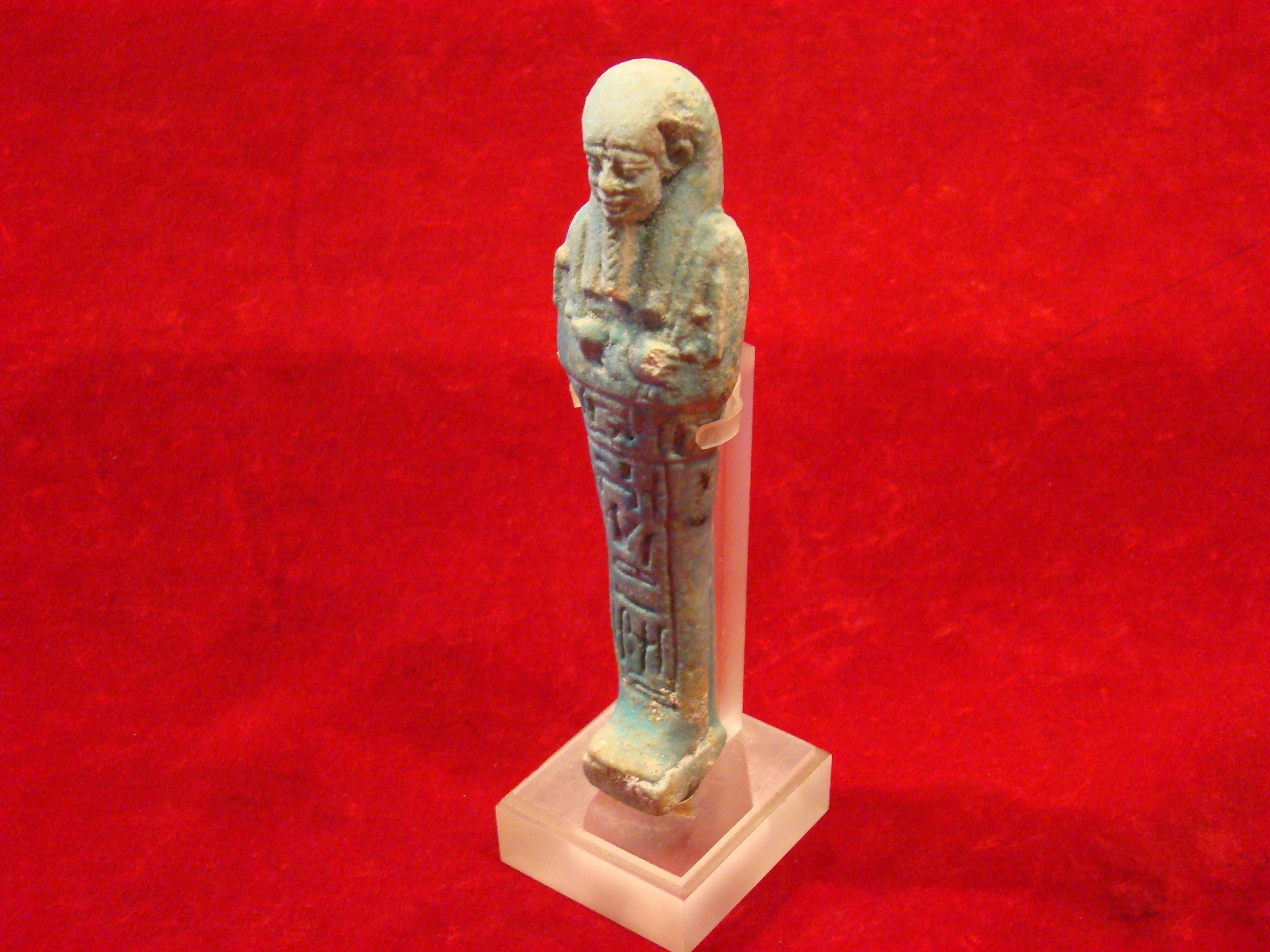
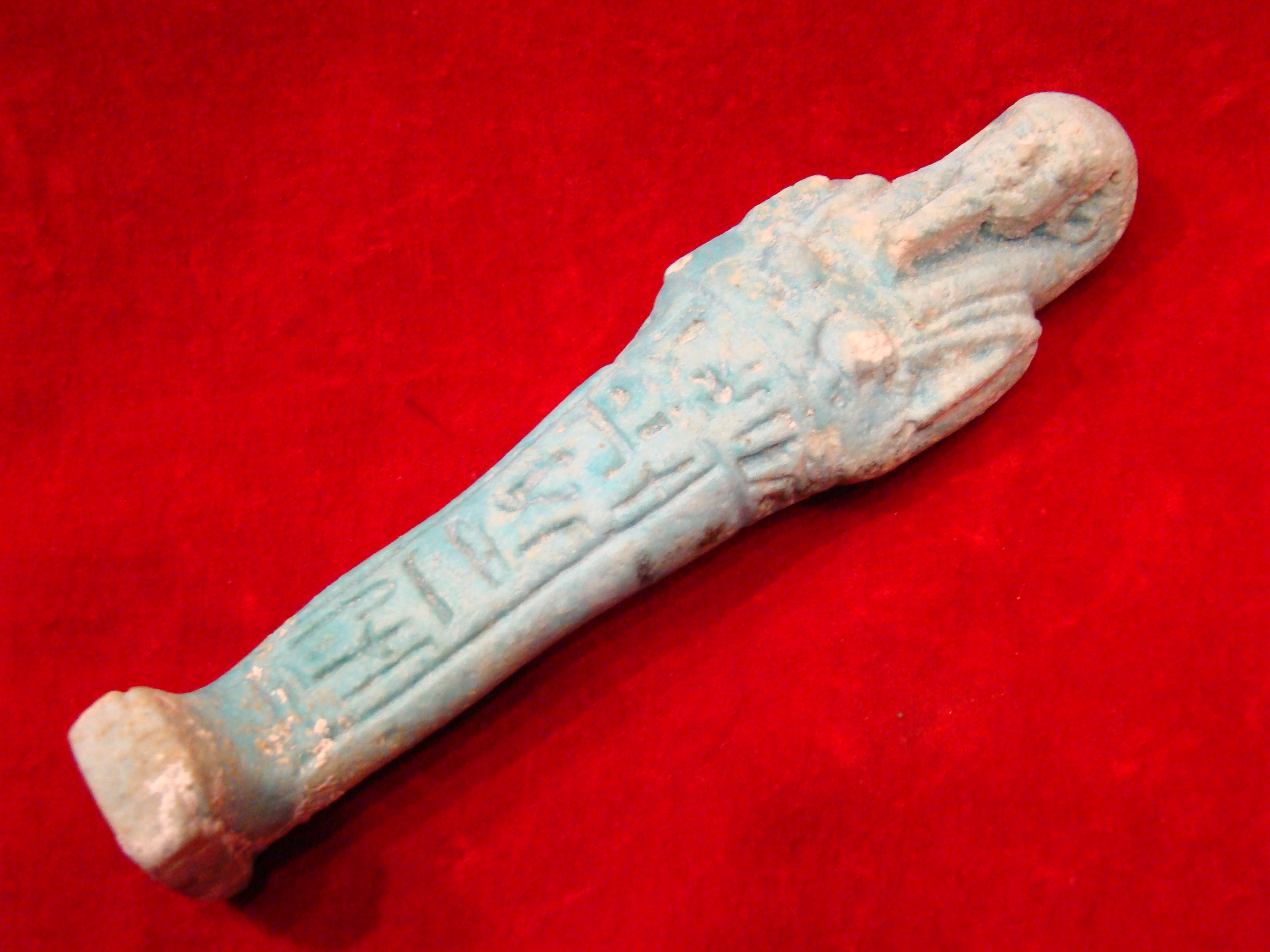
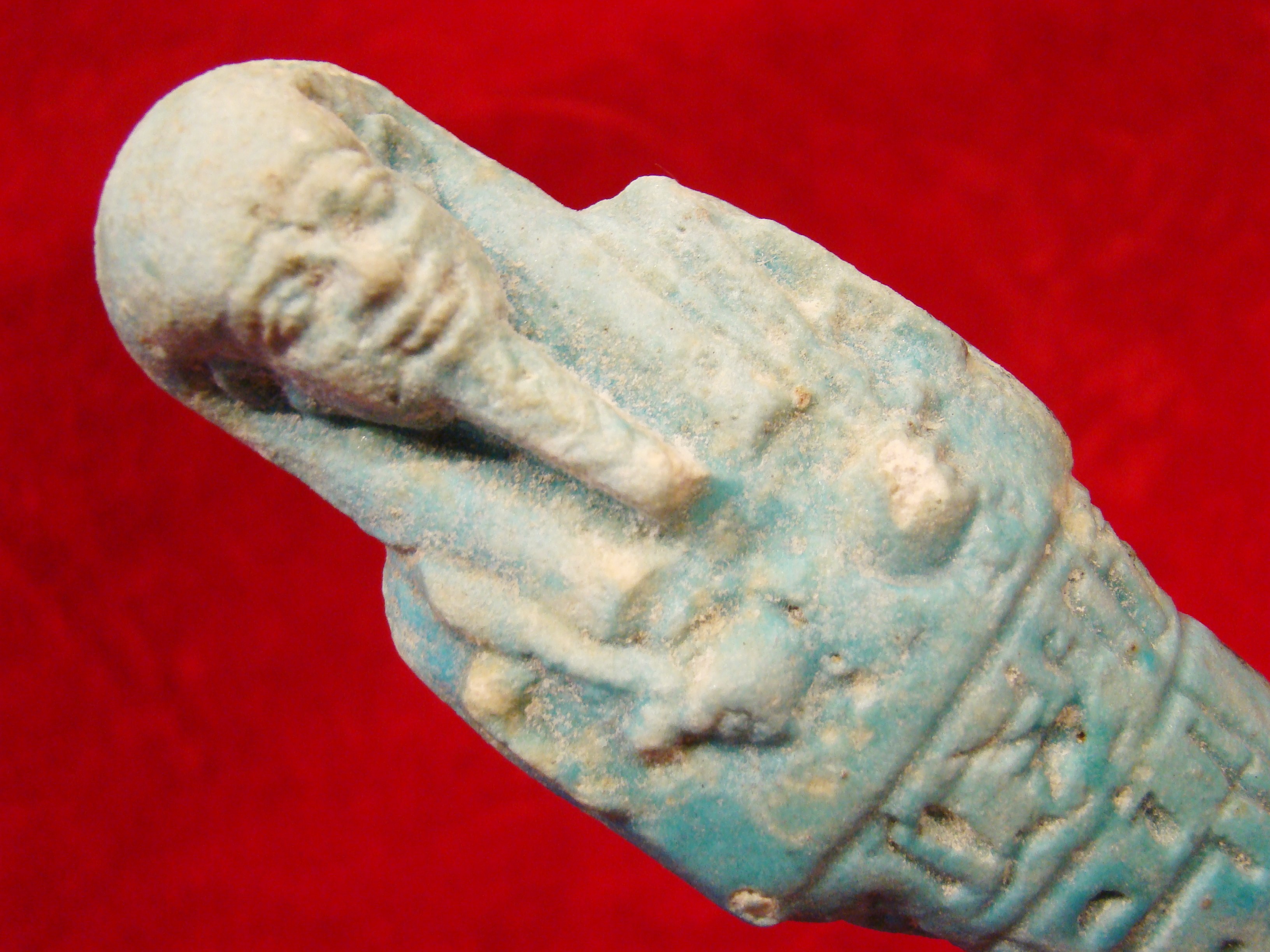
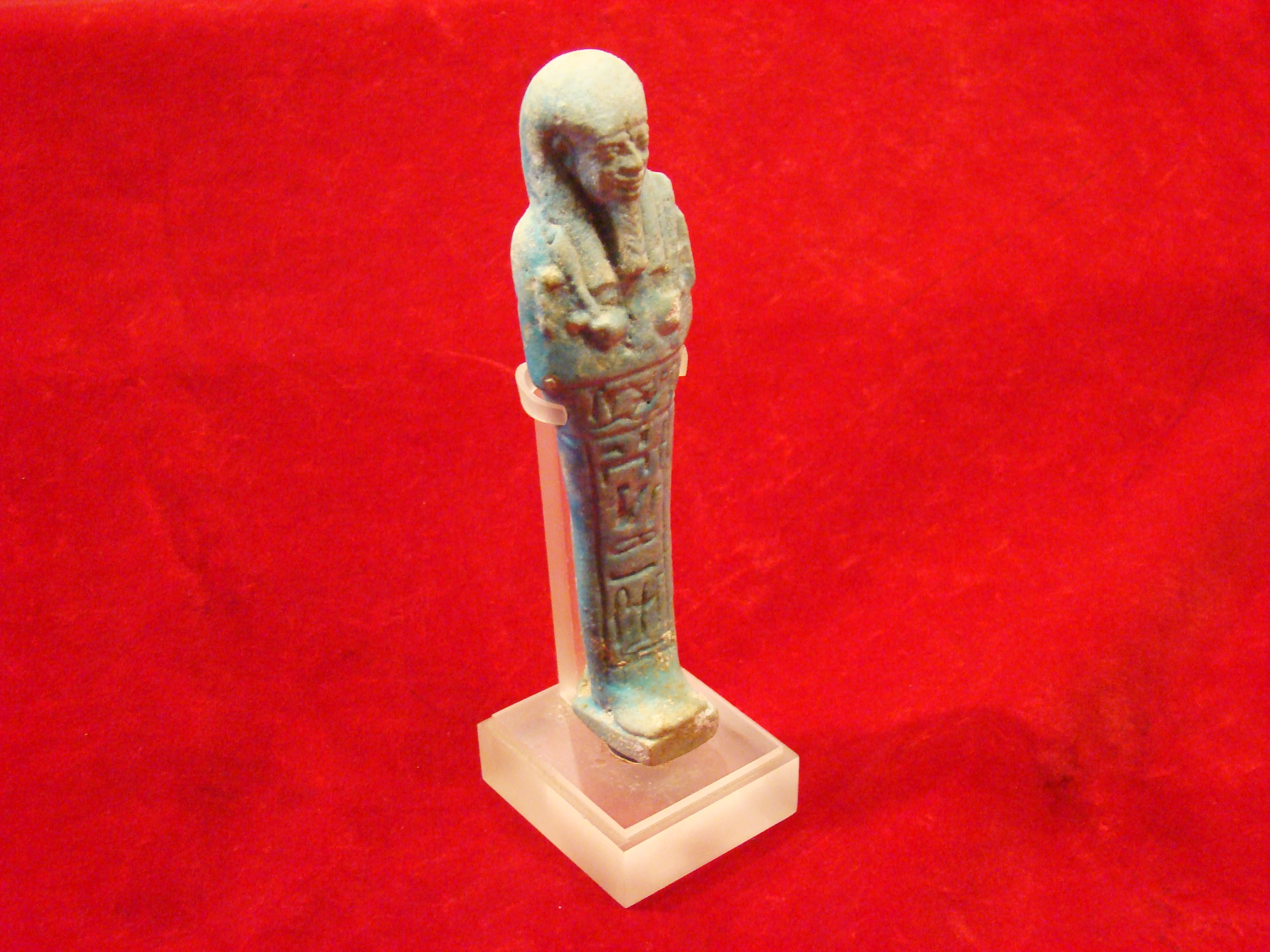
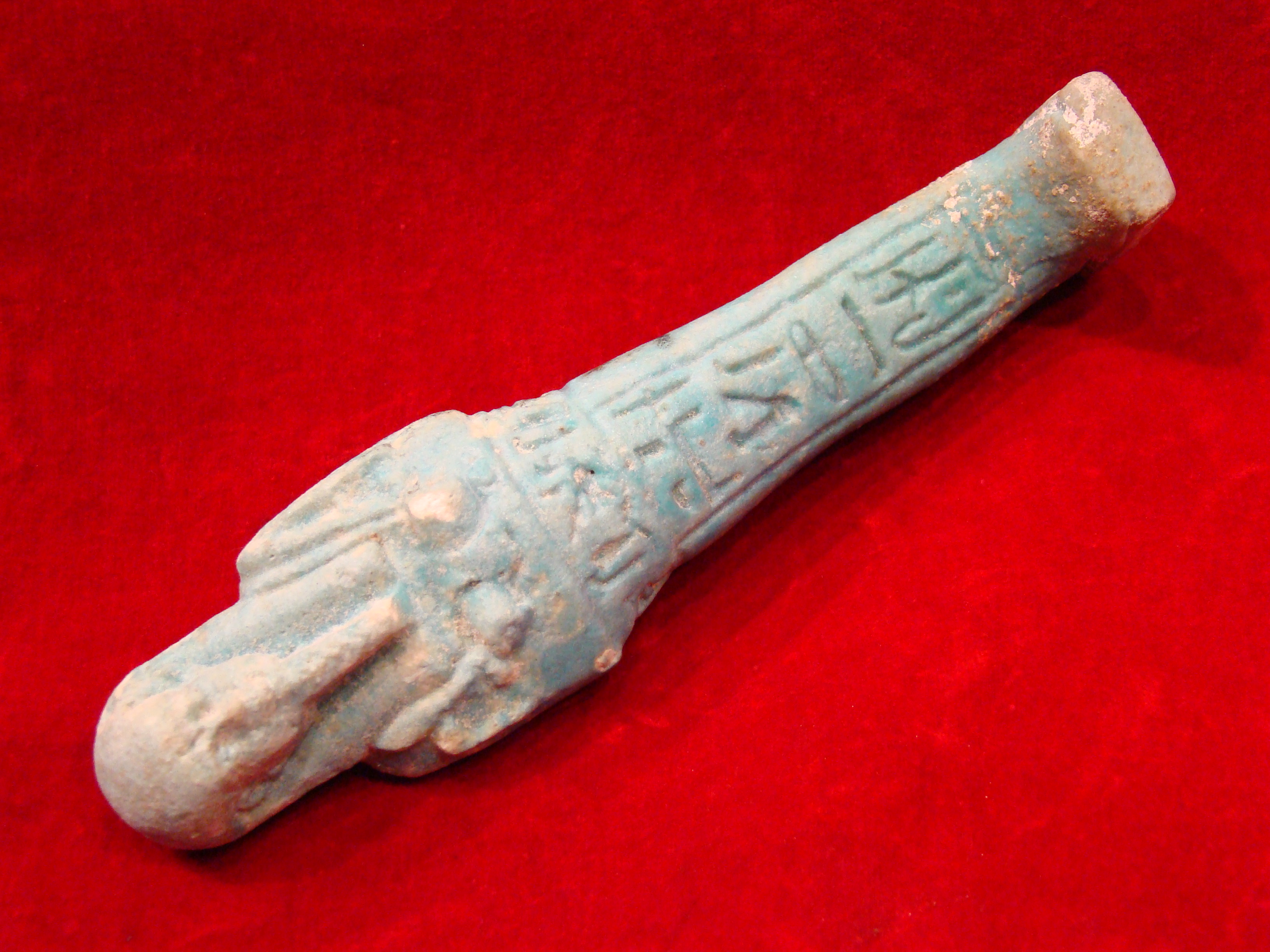
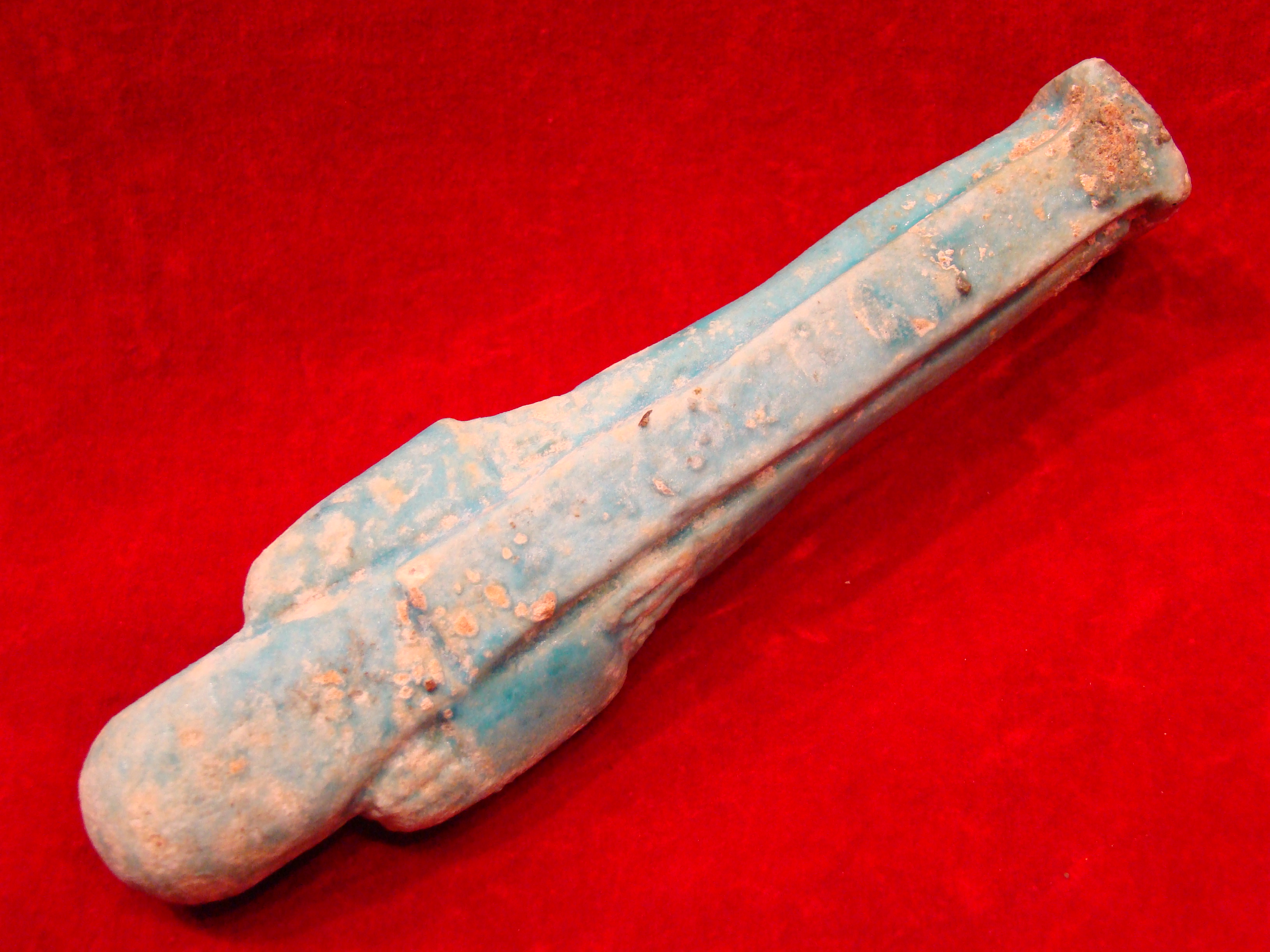
ANT 1. Ancient Egyptian Faience Ushabti. Late Period, 664-332 BC.
Mummiform figurine that was originally found in an Egyptian tomb. According to Egyptian beliefs, when the deceased came alive in the afterlife, the ushabtis would also come to life and would perform any menial tasks that the deceased might be asked to do. Egyptians depended heavily upon agriculture in daily life, and it was assumed that the afterlife would be similar, so most ushabtis are depicted holding agricultural tools like hoes or bags of seeds to continue this farmwork in the afterlife. To make sure the ushabti knew what to do, each figurine was usually inscribed with a short spell from the Book of the Dead. This spell was designed to bring the ushabti to life and gave the ushabti instructions for performing work on behalf of the deceased. The Shabti being offered here is made of Faience, a type of ancient ceramic, usually glazed green, blue, or aqua. It is complete with no breaks, repairs, or restoration. Note hieroglyphic incantations on the front. Measures 5.5″. Acquired directly from a long time antiquities collector in Pennsylvania. Display stand included. $2250.00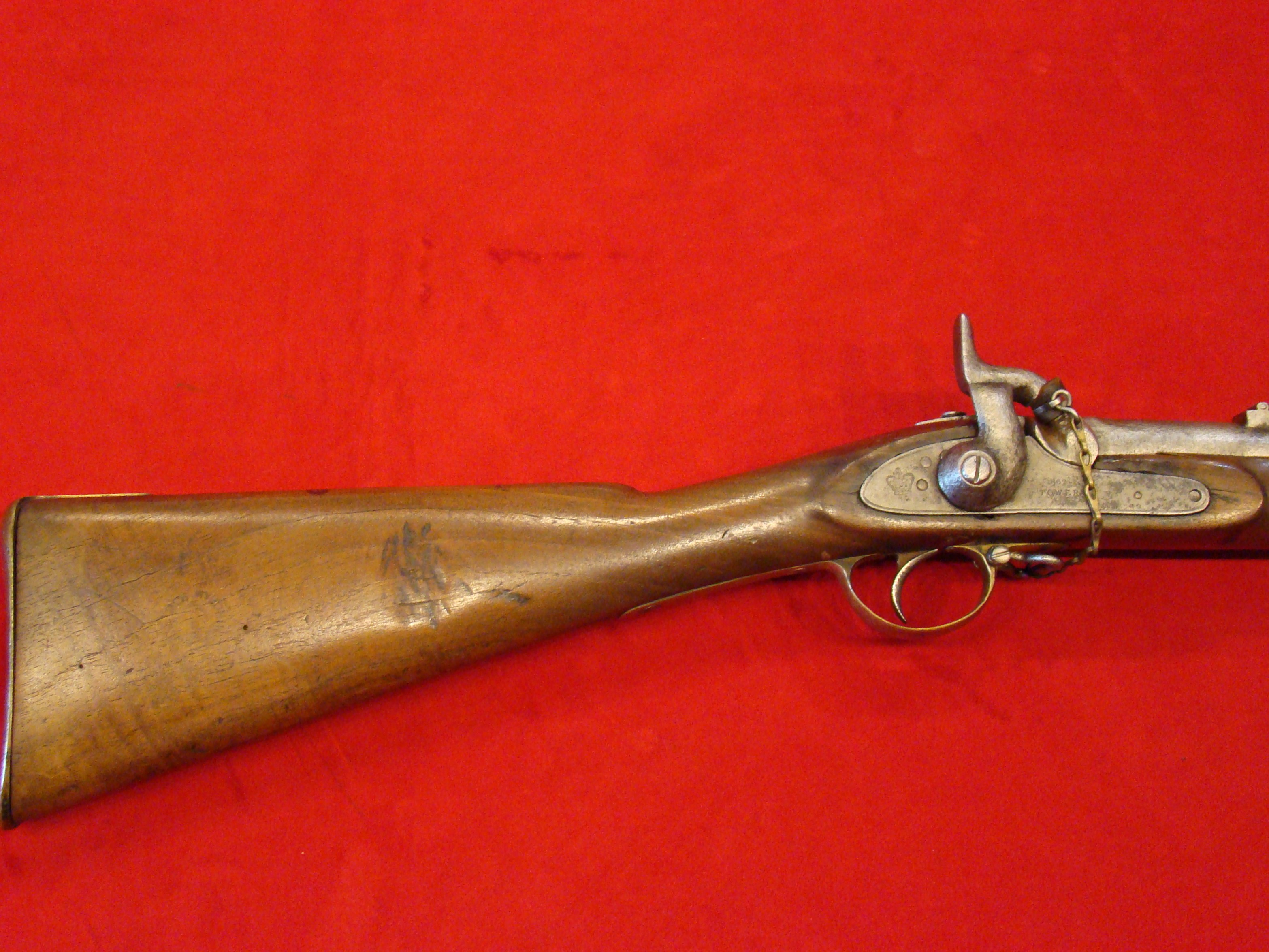
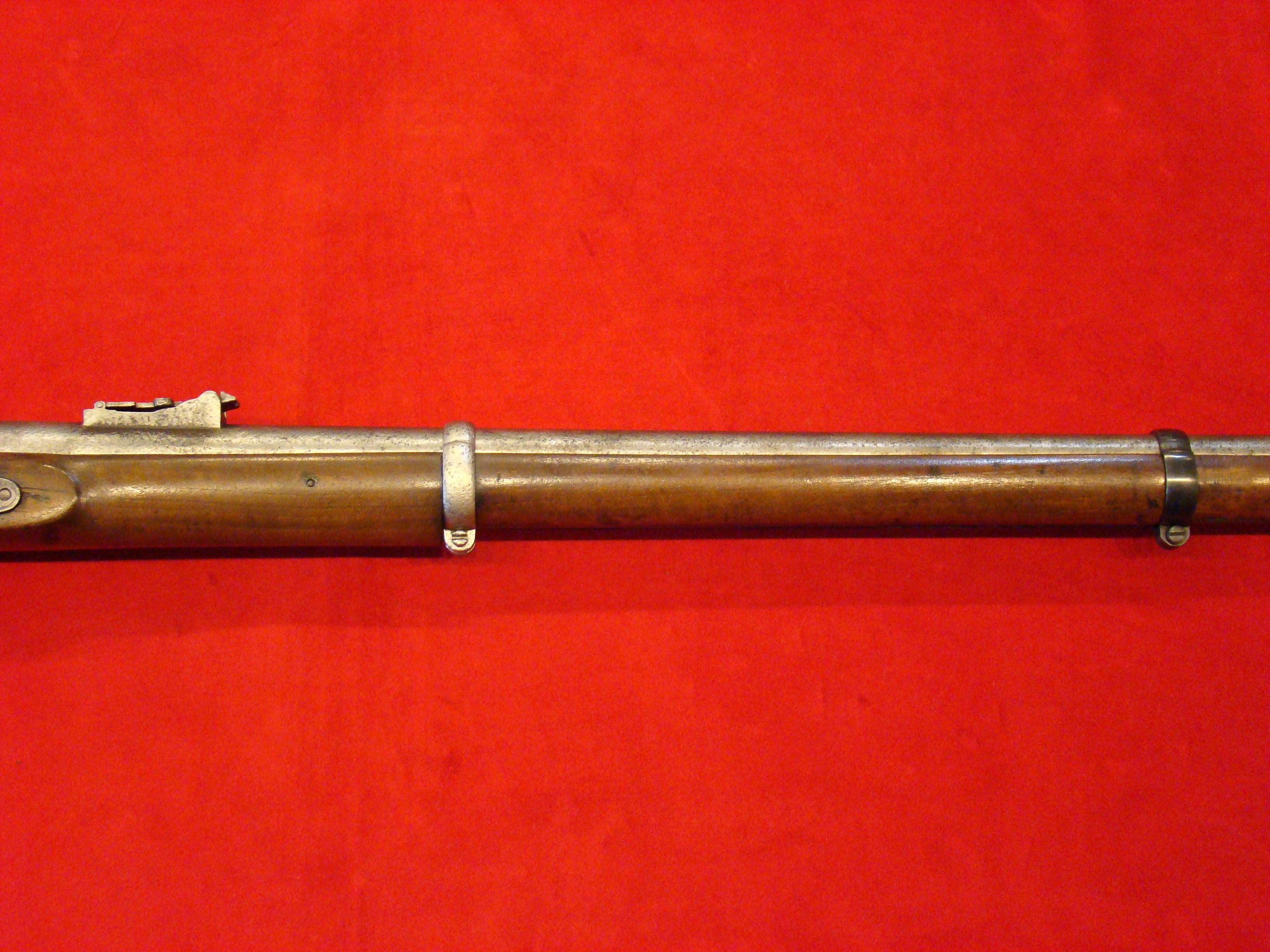
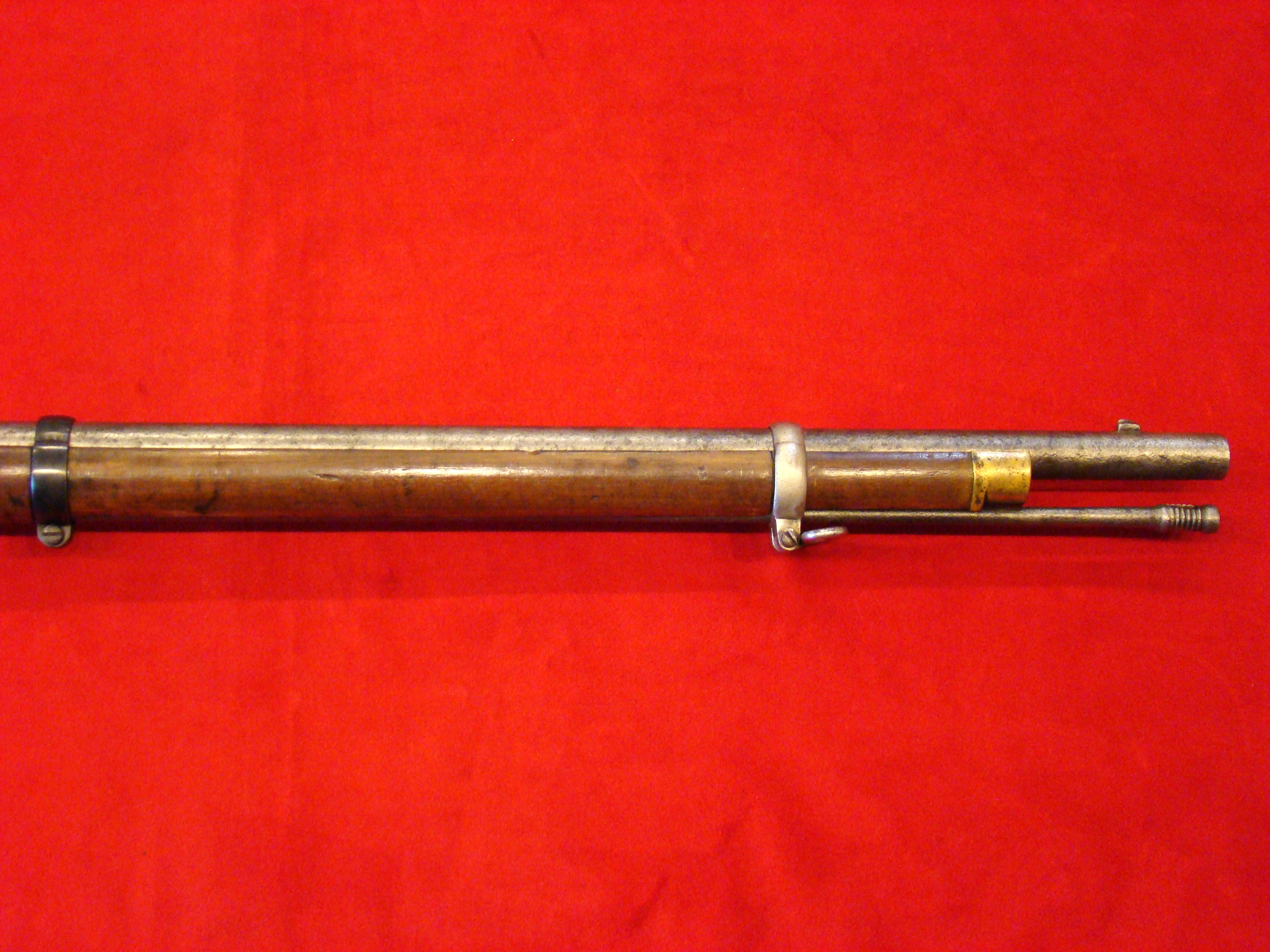
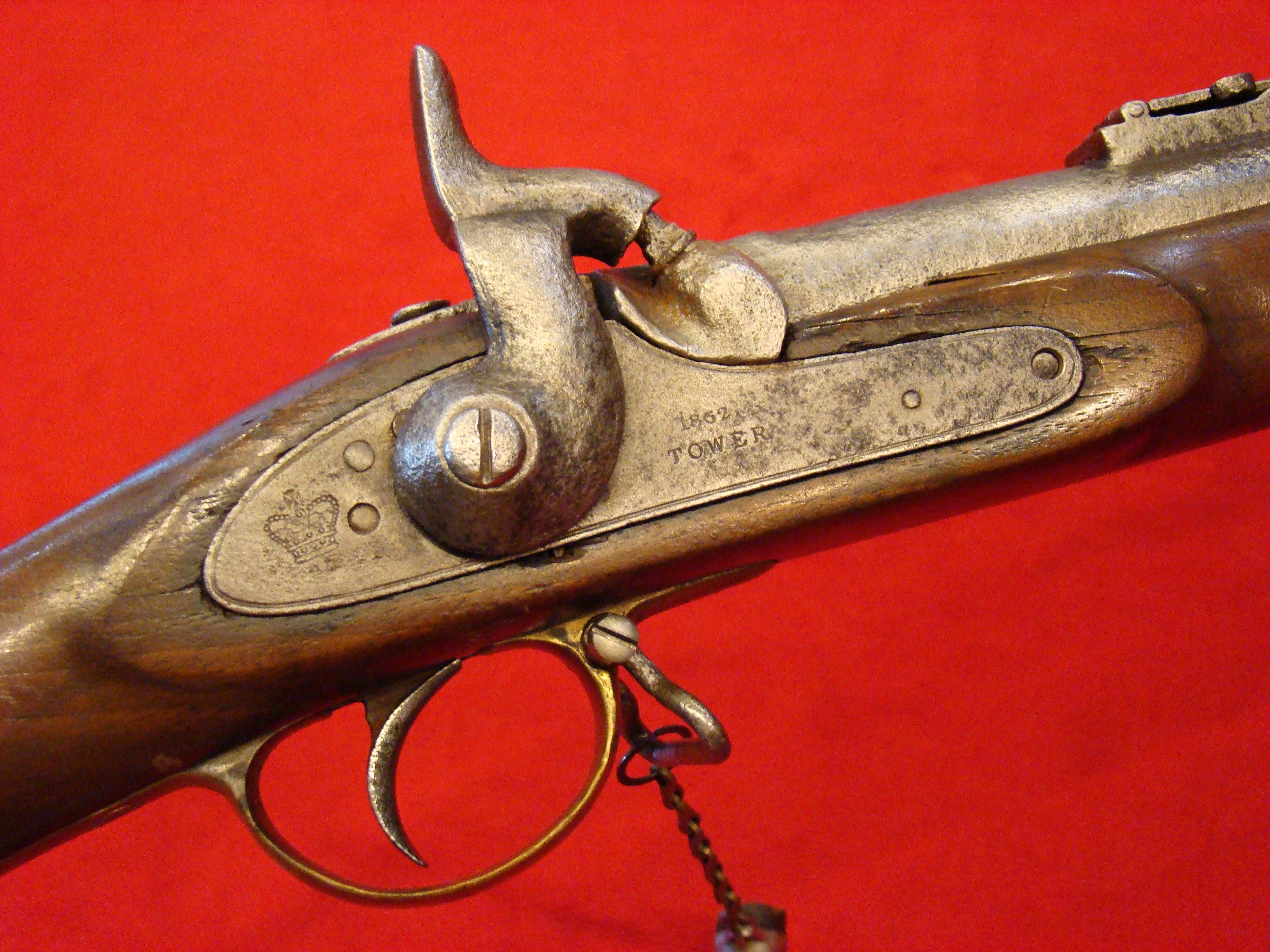
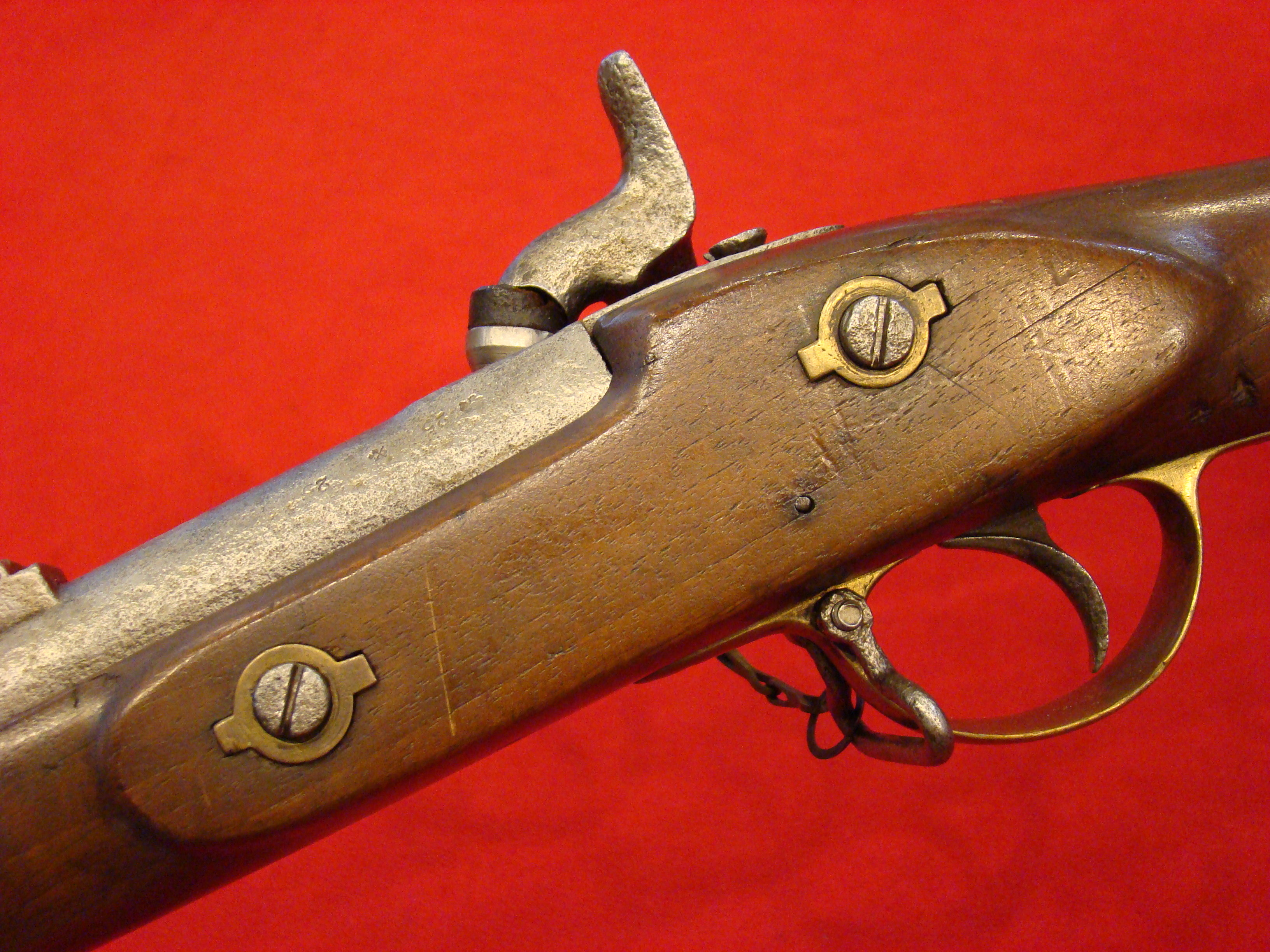
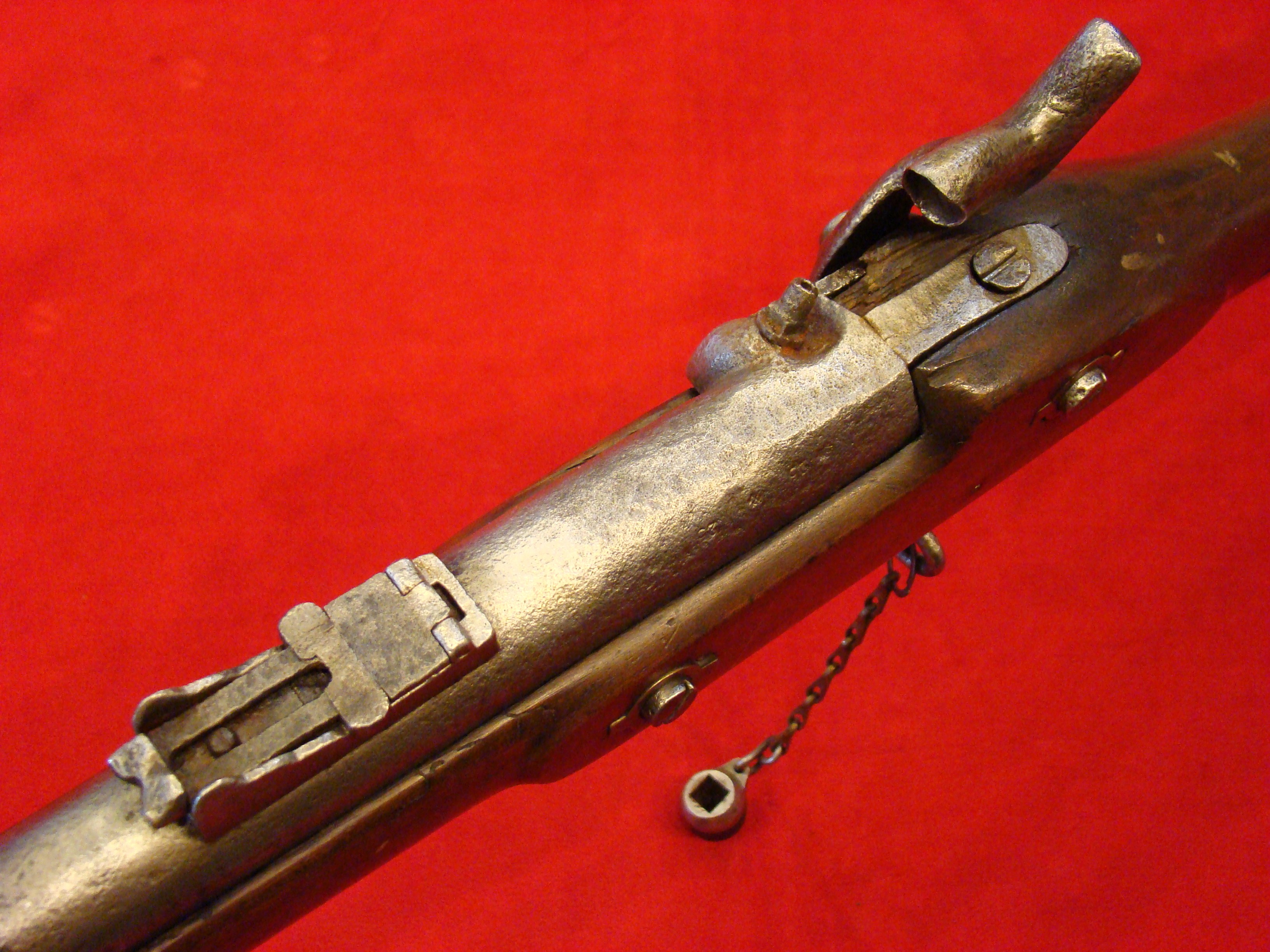
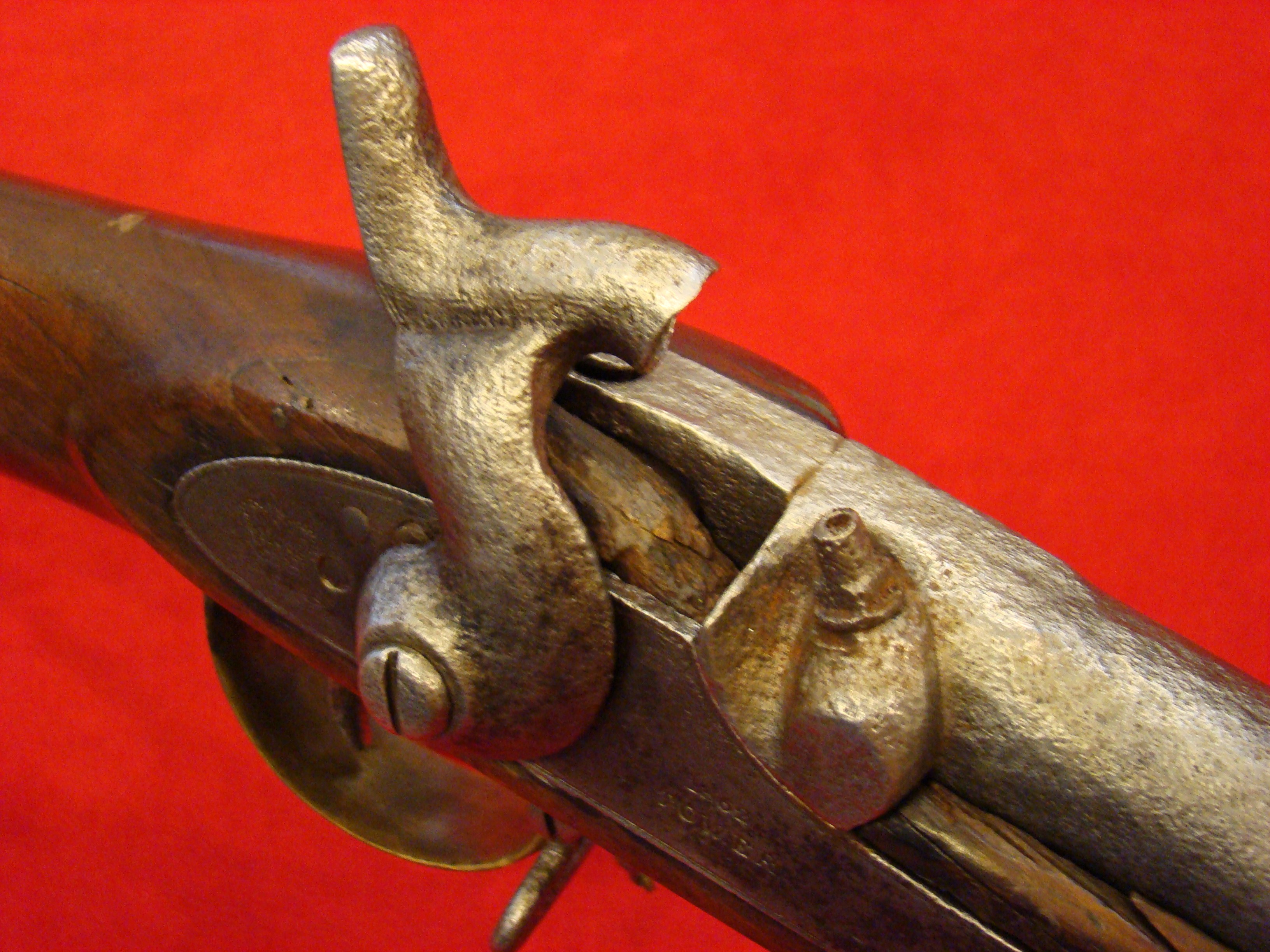
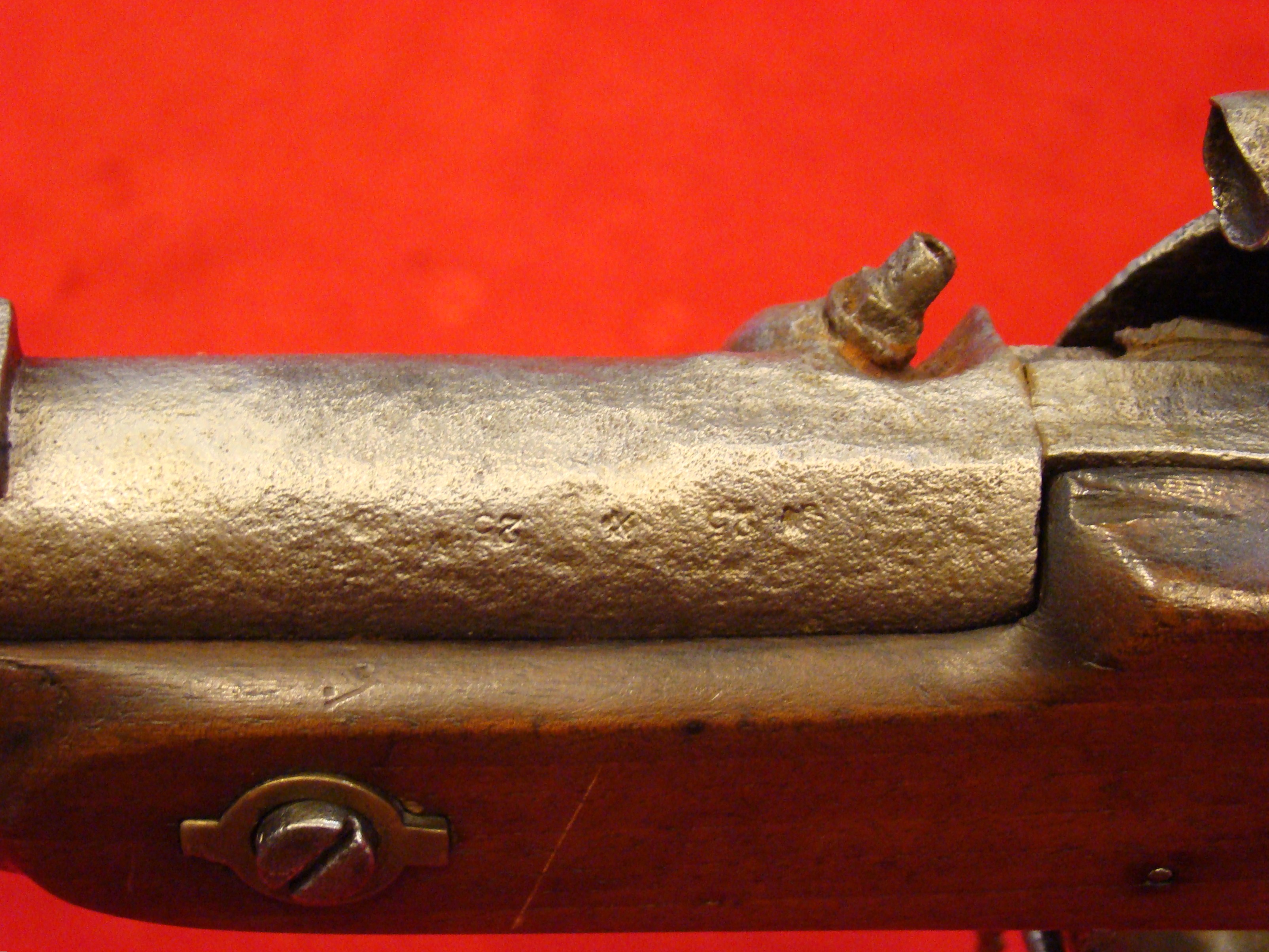
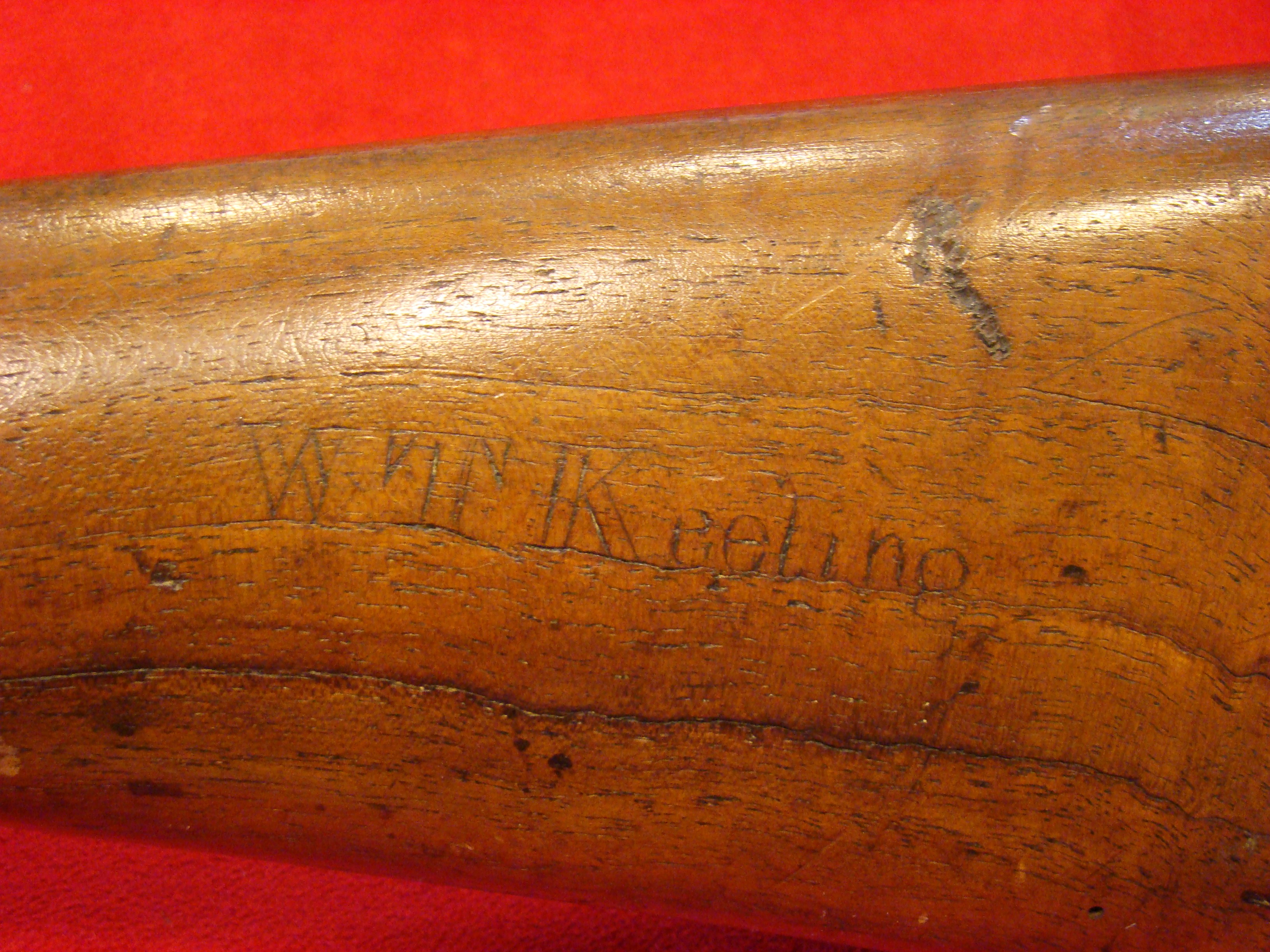
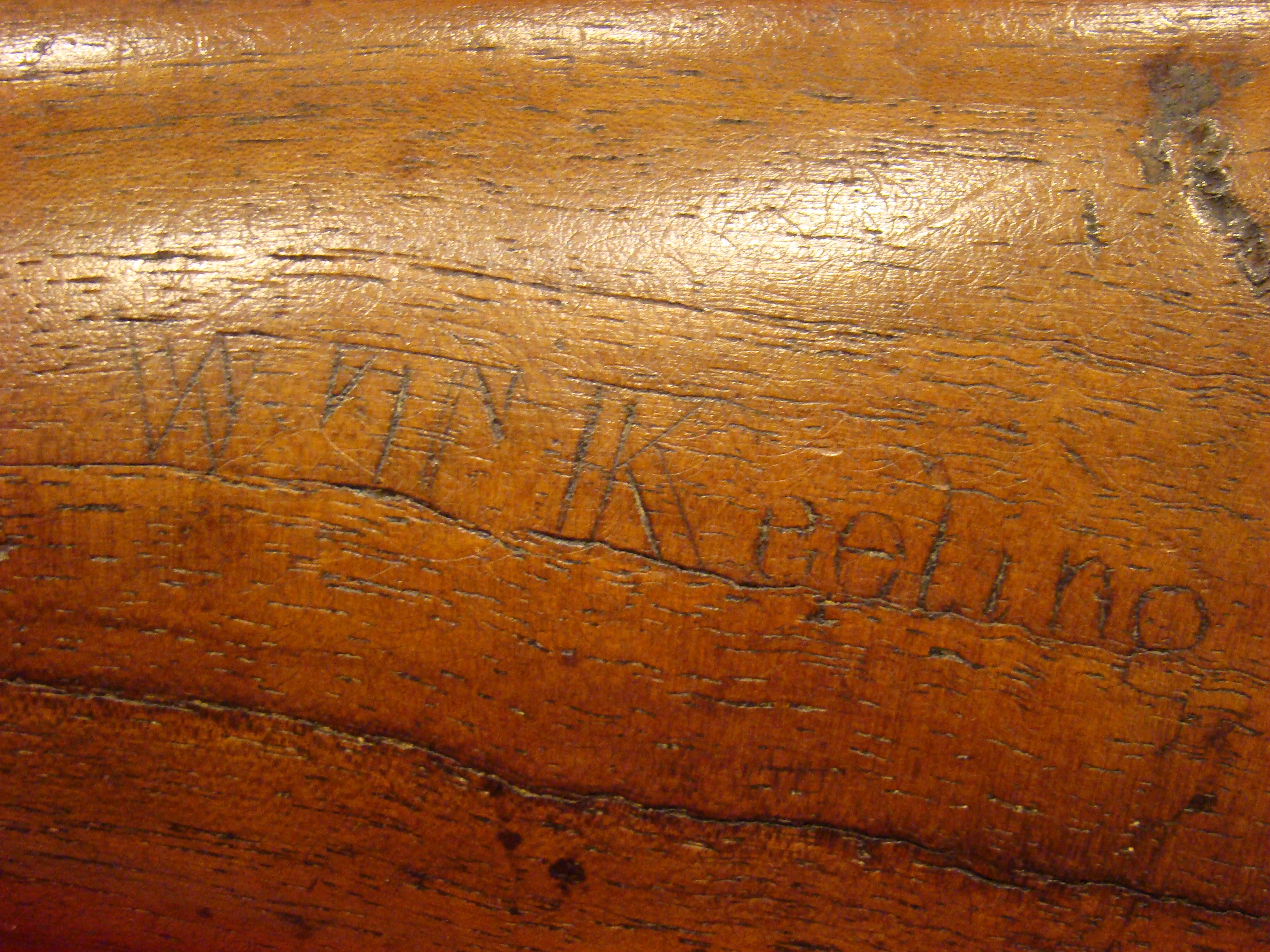
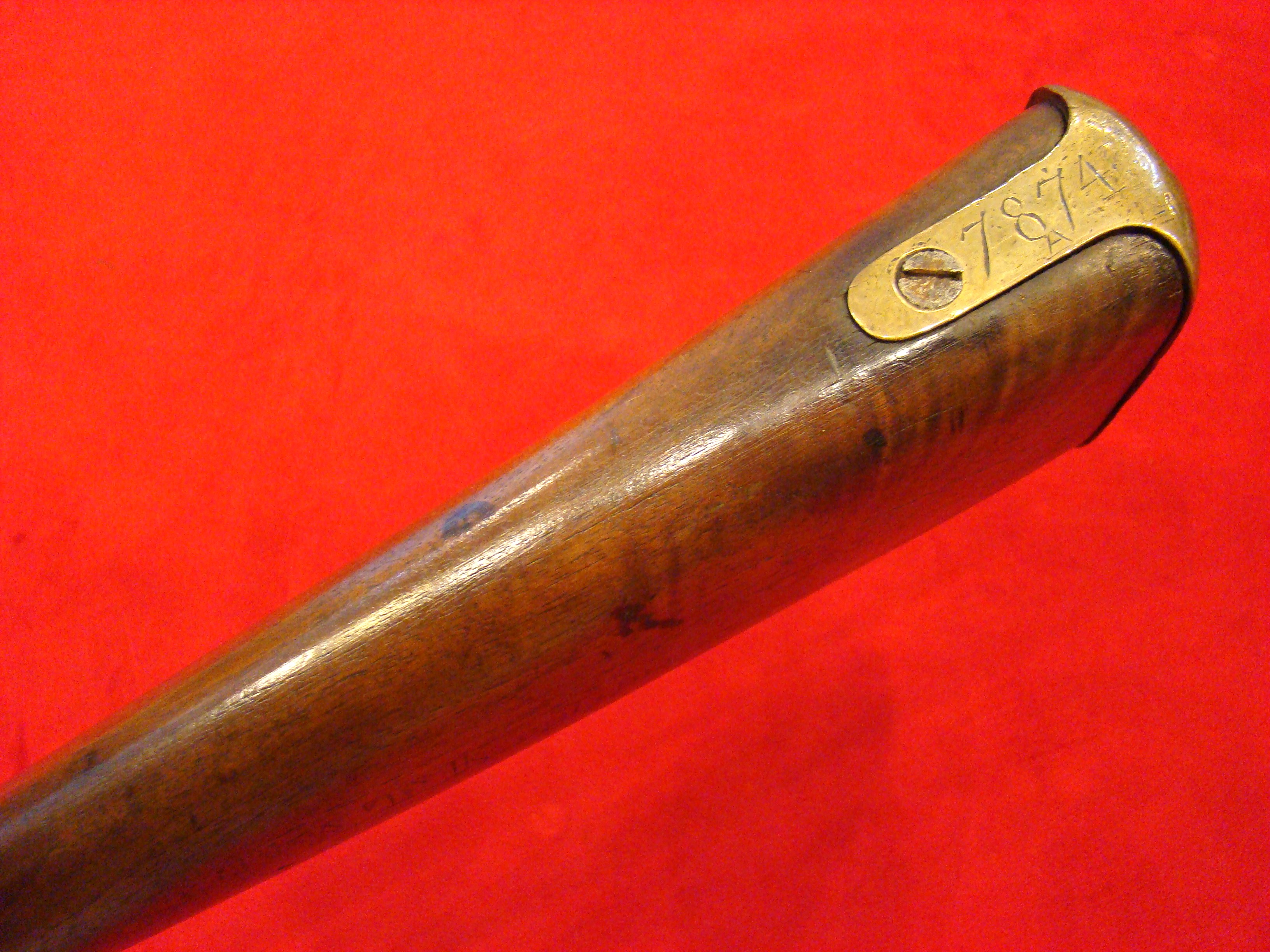
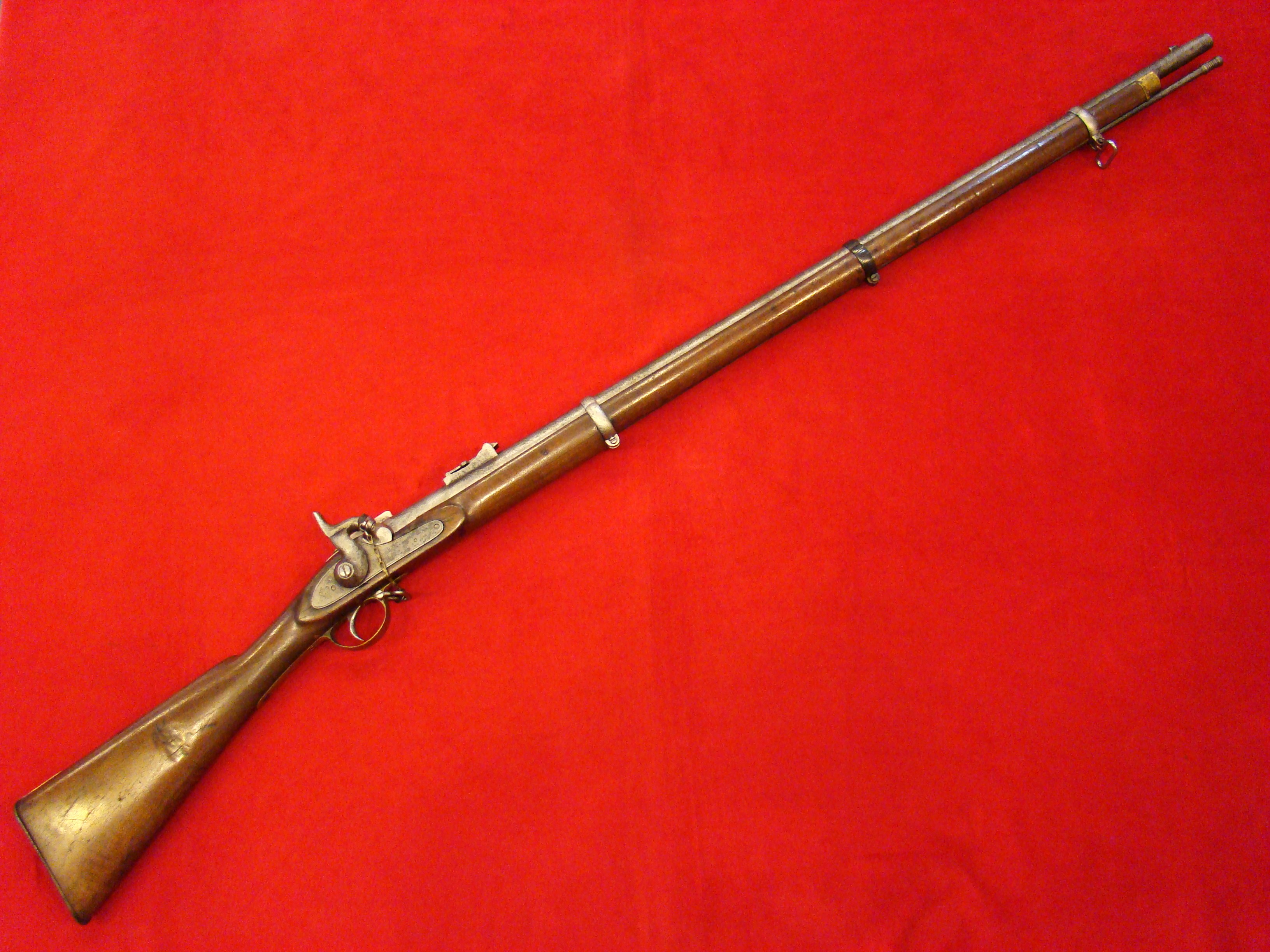
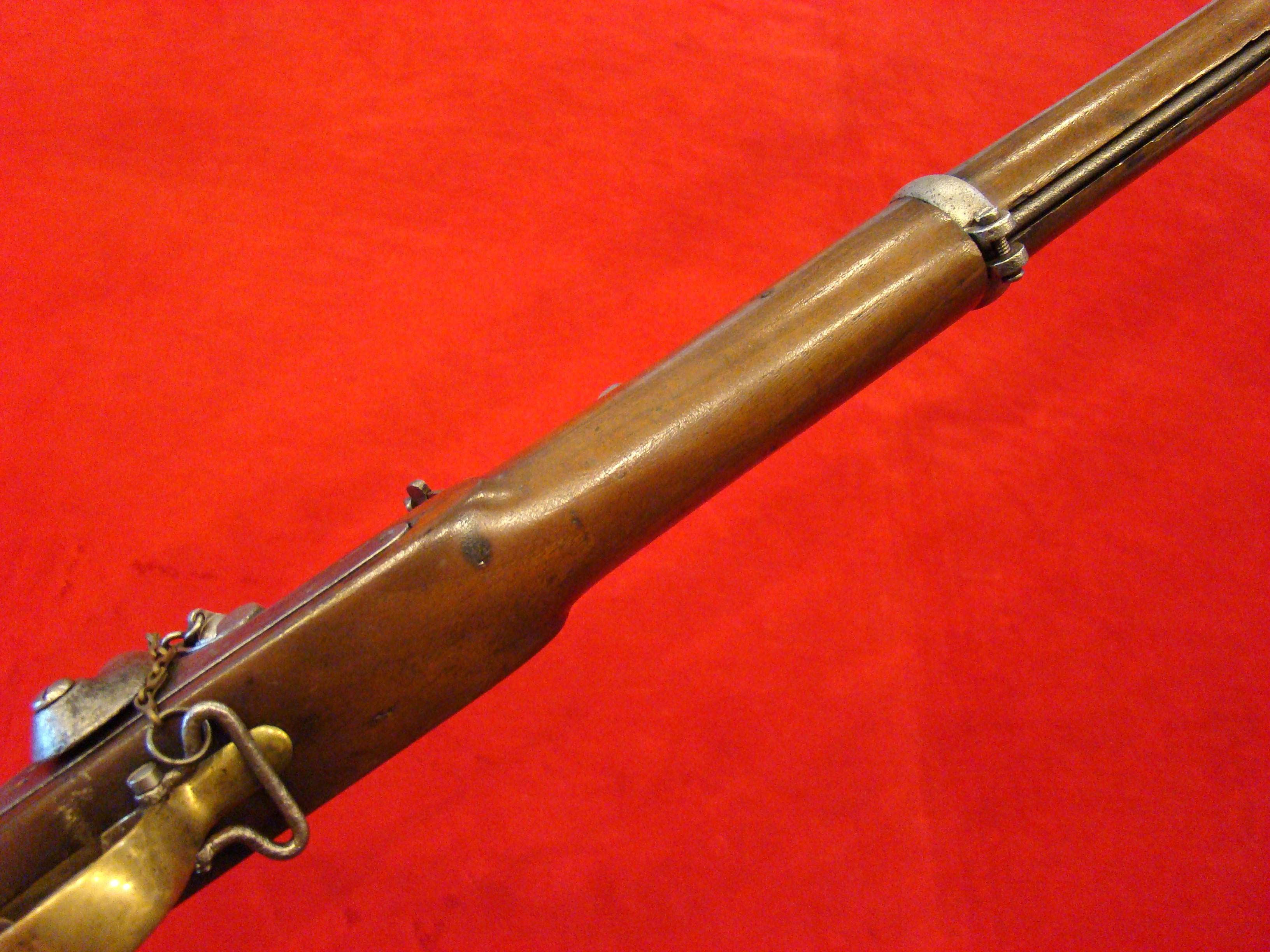
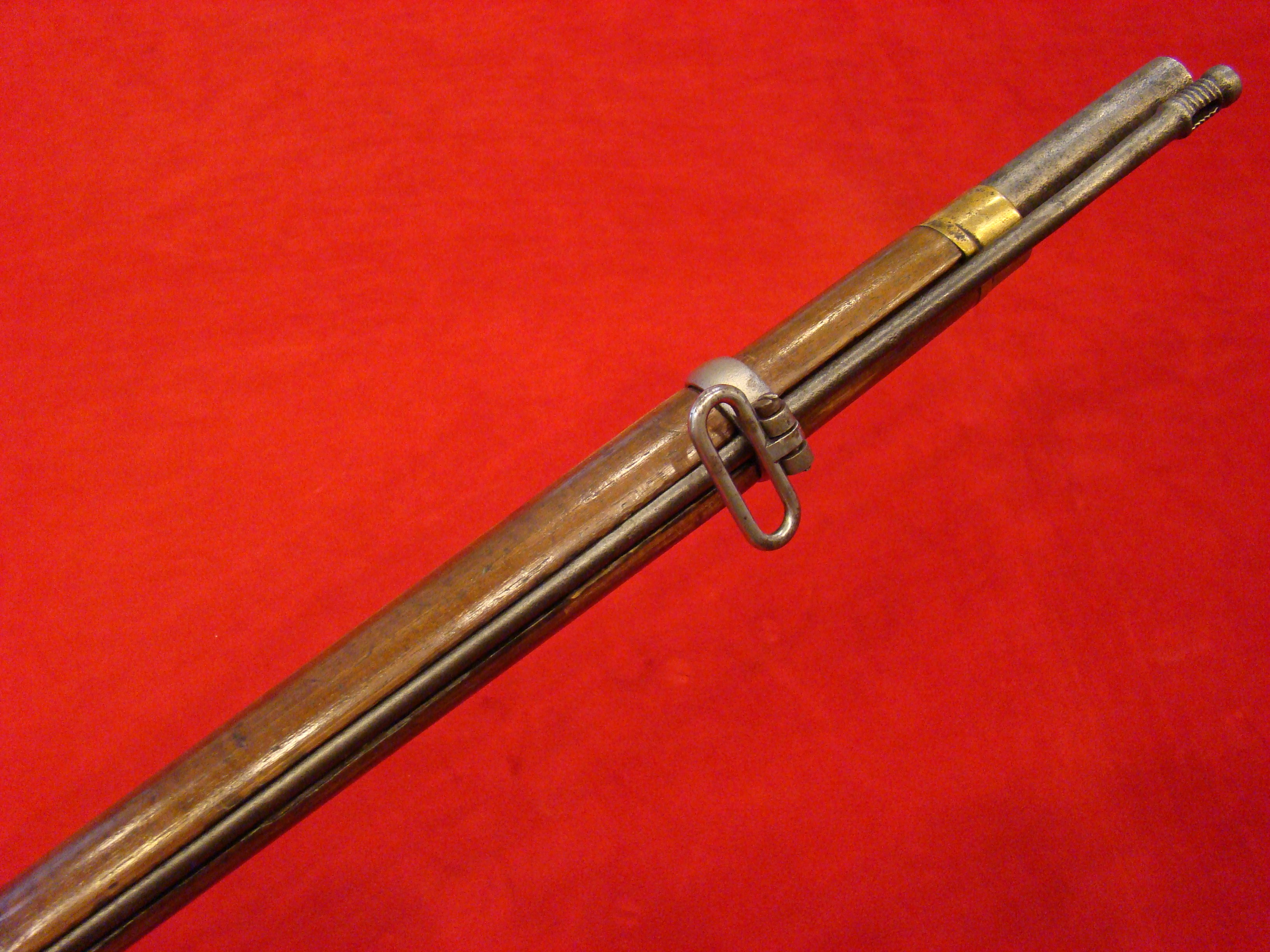
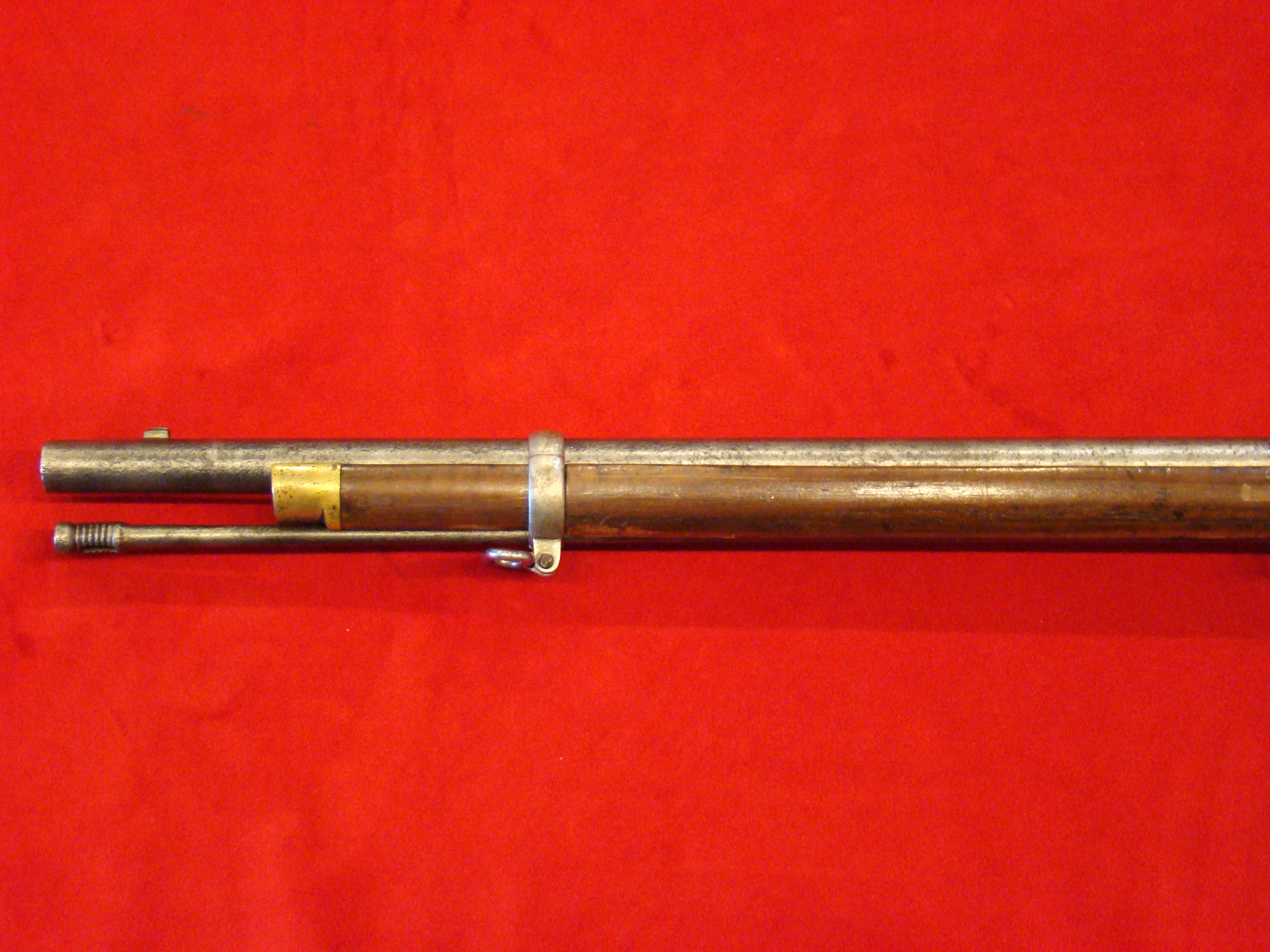
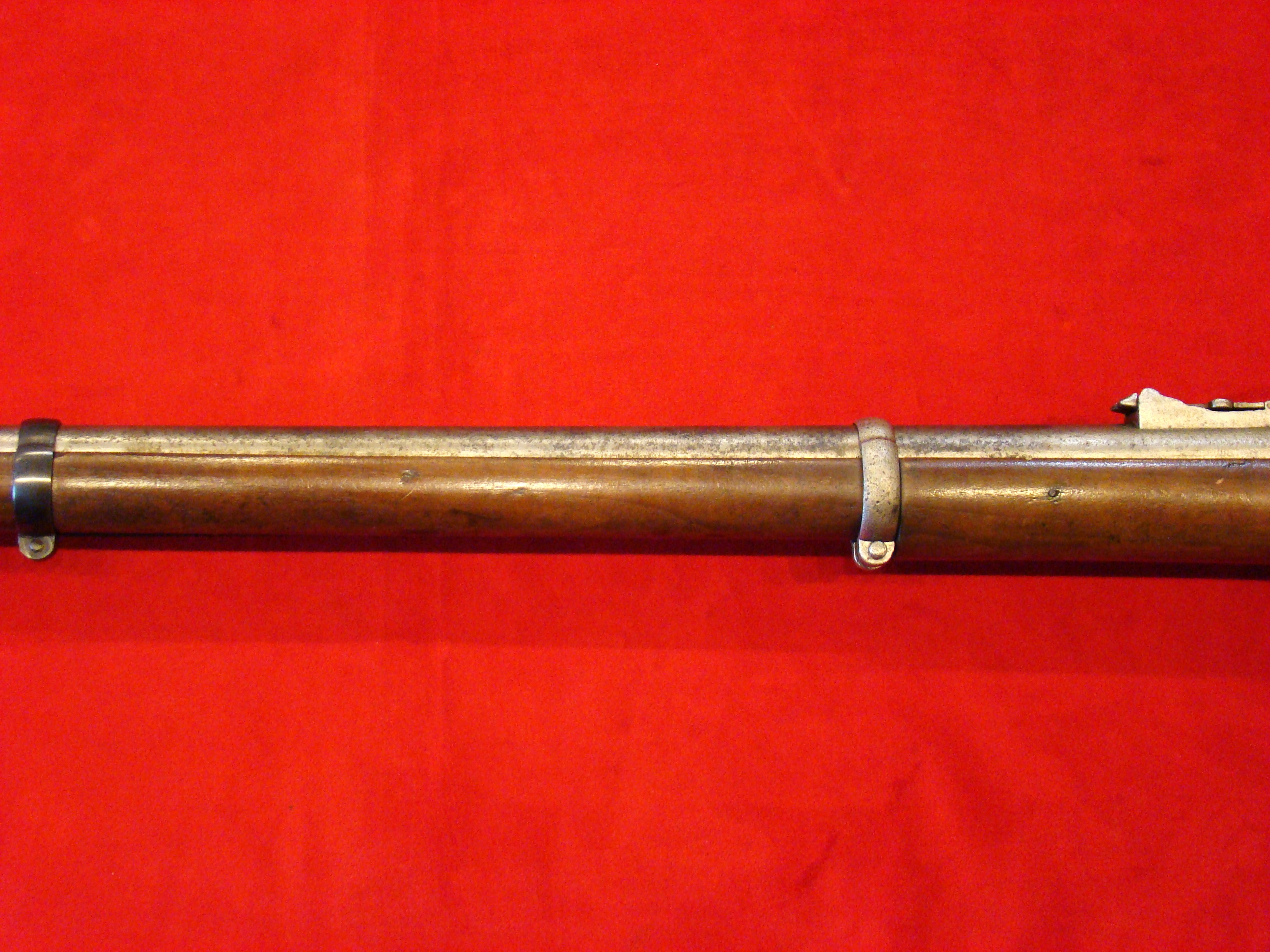
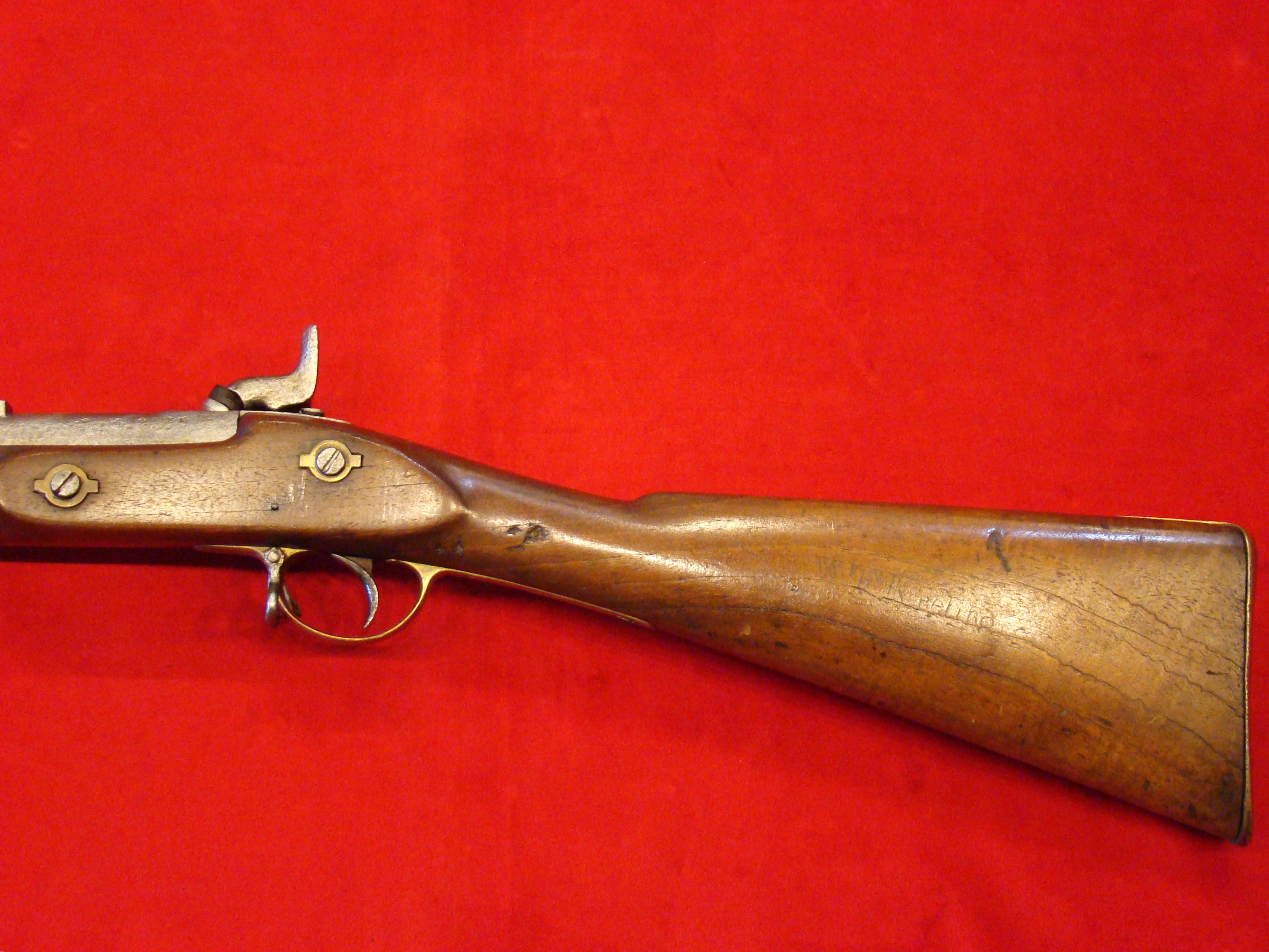
WP 4. Confederate P-53 Enfield Rifle Musket .577 Cal. Identified to Pvt. William T. Keeling, Co. A, 60th Georgia Vol. Infantry Regt. CSA. Twice Captured. Mortally Wounded near Richmond.
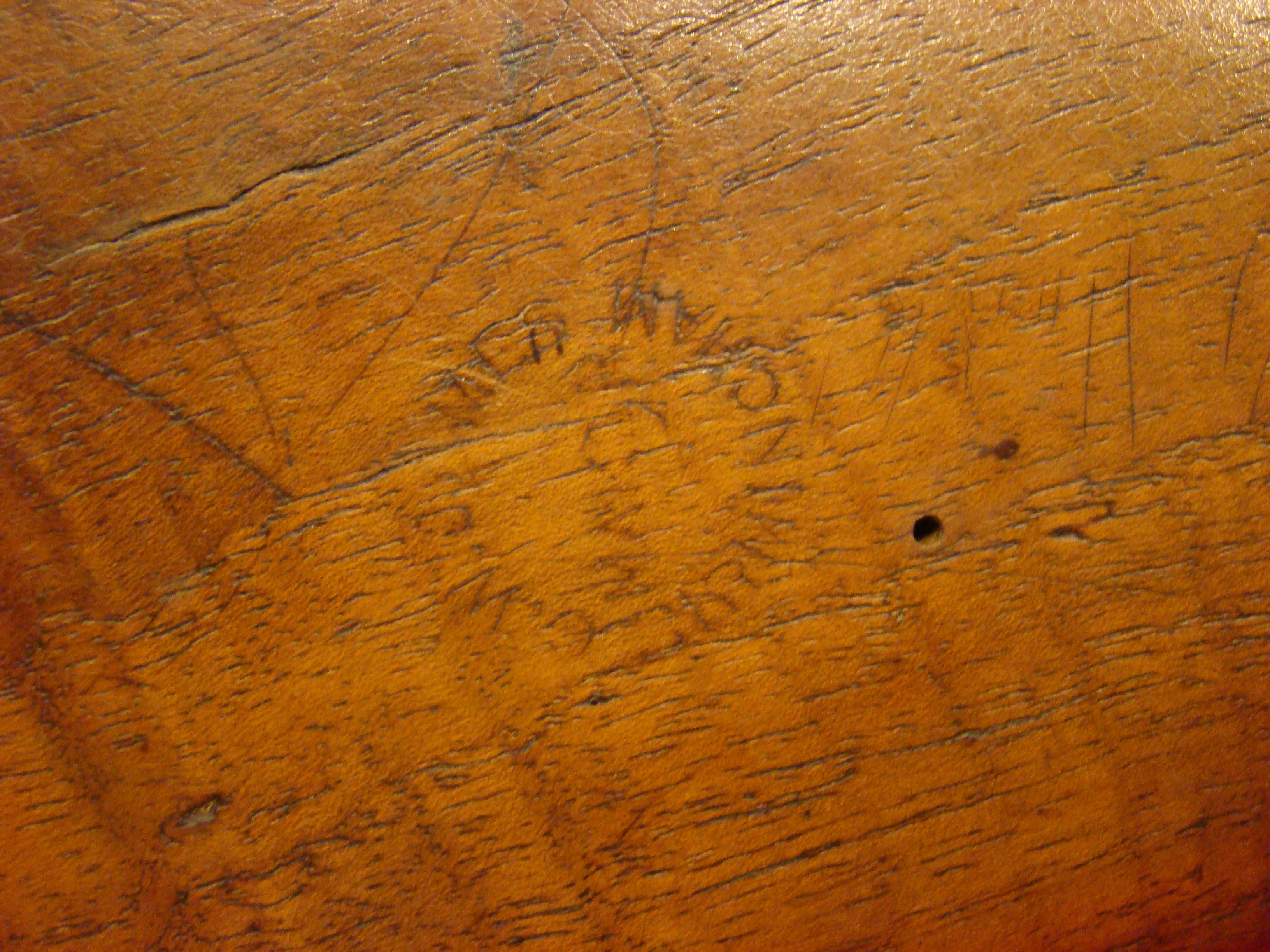
Here we have a classic Confederate Enfield with Blockade Manifest # 7874 A engraved on the butt-plate tang. The lock is dated 1862. Hammer, trigger, and cocking mechanism works properly. Metal surfaces exhibit a consistent moderately pitted texture. Ramrod and long range sight are present and original. The middle barrel band is a modern replacement. Bore is worn and pitted from heavy combat use. Stock is in good shape overall. There is evidence of light sanding and a small section of wood is burned out/missing near the breech. No repairs or major cracks. There is a round “C.W. JONES/MAKER” stamp on the butt-stock. This firm was a known stock supplier for Confederate contract guns. This brings us to the name “W.T. KEELING” clearly and neatly engraved on the butt-stock. Keeling first enlisted on Sept. 16, 1861 into the “DuBose” Company, Independent Light Infantry at Meriwether GA. This service was brief as he was transferred to Co. E of the 2nd North Carolina Vol. Infantry Regt. on Nov. 1, 1861. Evidently, Keeling took part in the Feb. 7-8, 1862 Battle of Roanoke Island NC. as a member of “Wise’s Legion” where he was captured. Keeling was paroled on Feb. 2, 1862 at Elizabeth City NC. and was transferred into Co. A, 60th GA. Vol. Infantry Regt. Pvt. Keeling served with Gen. Robert E. Lee’s Army of Northern VA. through many harrowing battles including 2nd Manassas, Antietam, Fredericksburg, Gettysburg, The Wilderness, Spotsylvania, Cold Harbor, and Monocacy. It was at the 3rd Battle of Winchester where Keeling was again captured on Sept. 19, 1864. He is recorded as escaping two days later and rejoining his regiment. Keeling continued to soldier on through the Petersburg Siege and battles. He was mortally wounded, probably around Petersburg where he died on April 4, 1865 at the Jackson Hospital in Richmond. He is buried at the Hollywood Cemetery (Gravesite #20). A hard binder with Keeling’s service records and regimental histories of the 2nd NC and 60th GA. accompanies the gun. A Letter of Authenticity from Ben Greenbaum of Perry Adams Antiques in Richmond VA. is also included. $6500.00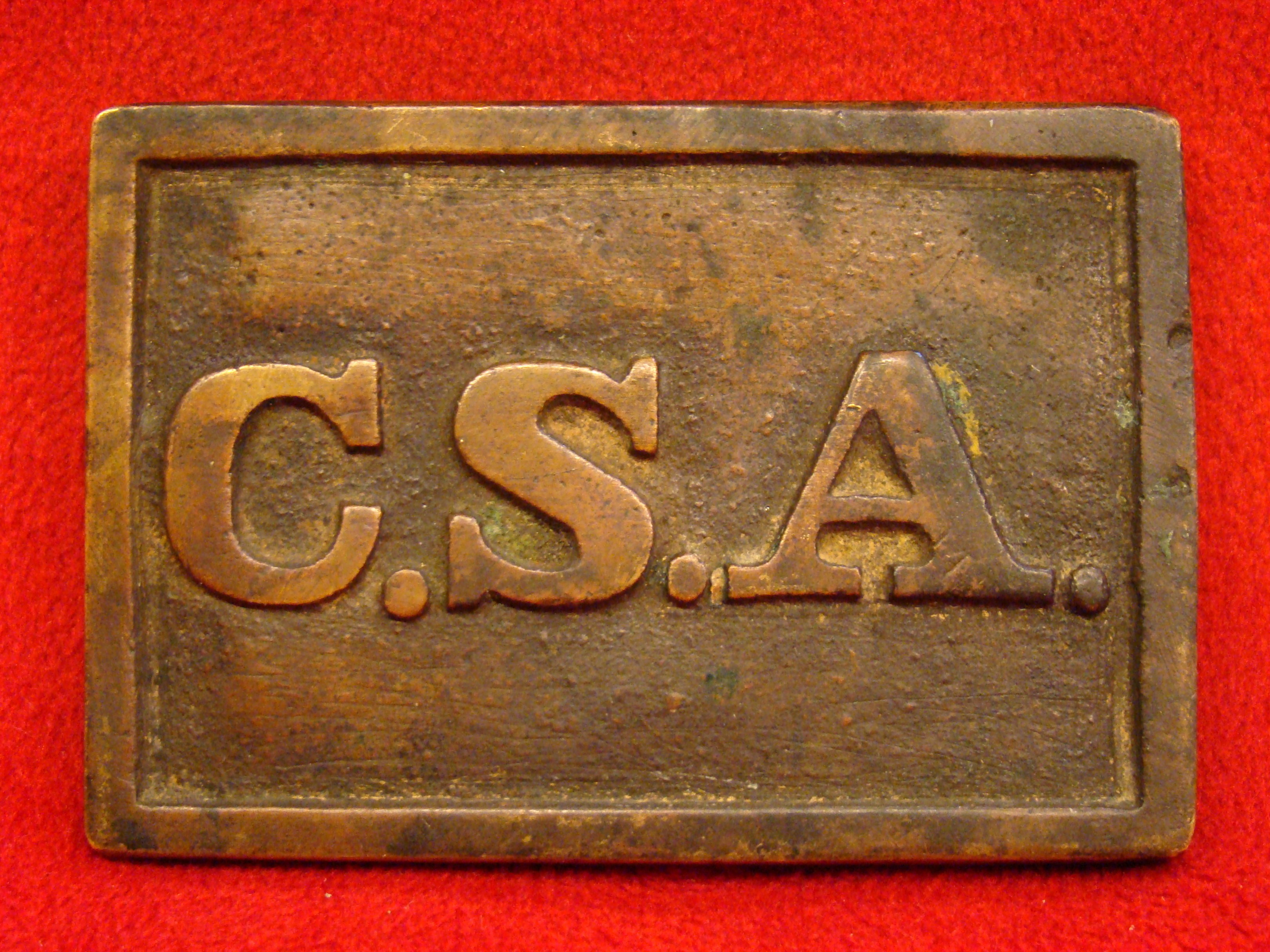
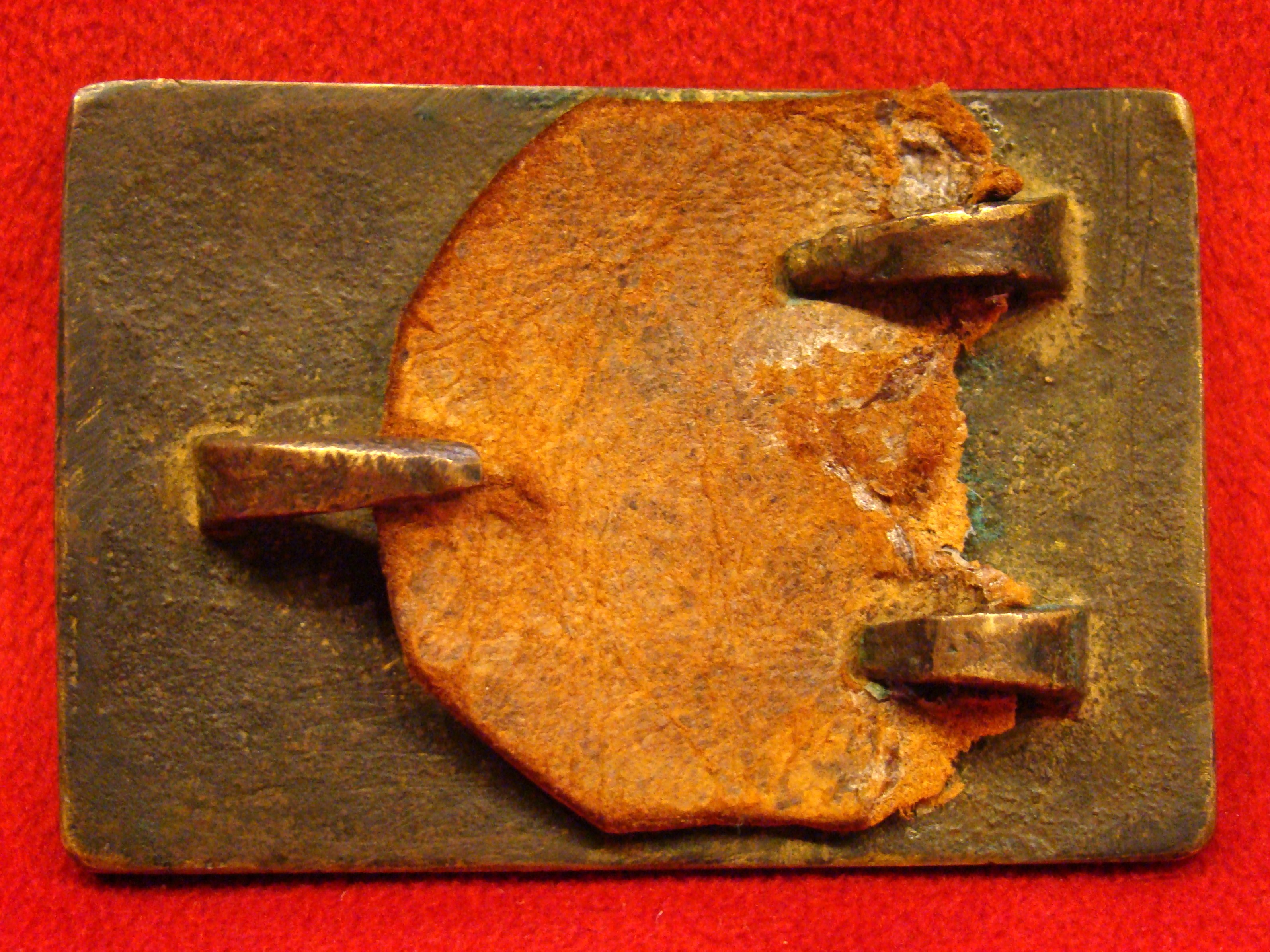
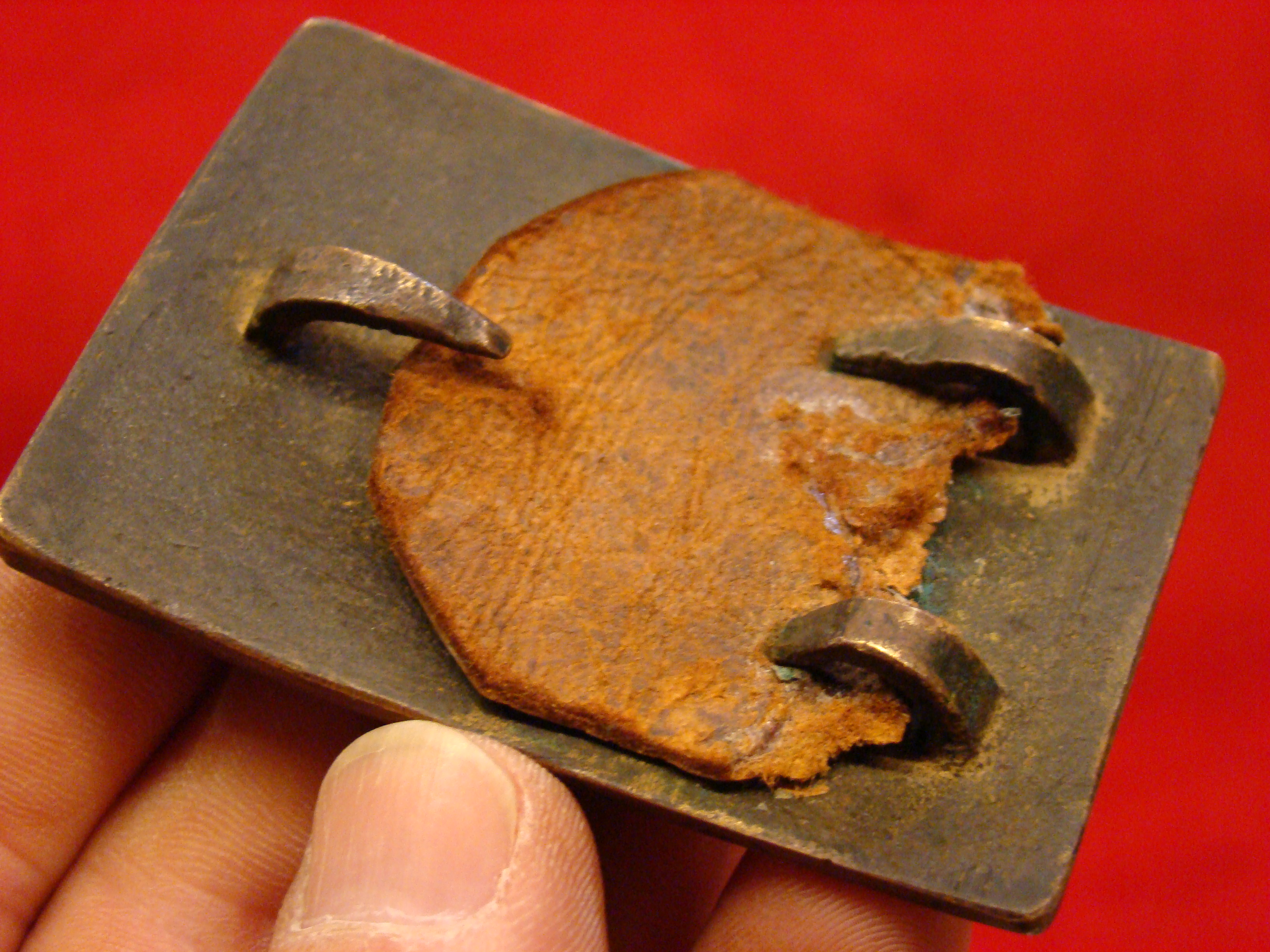
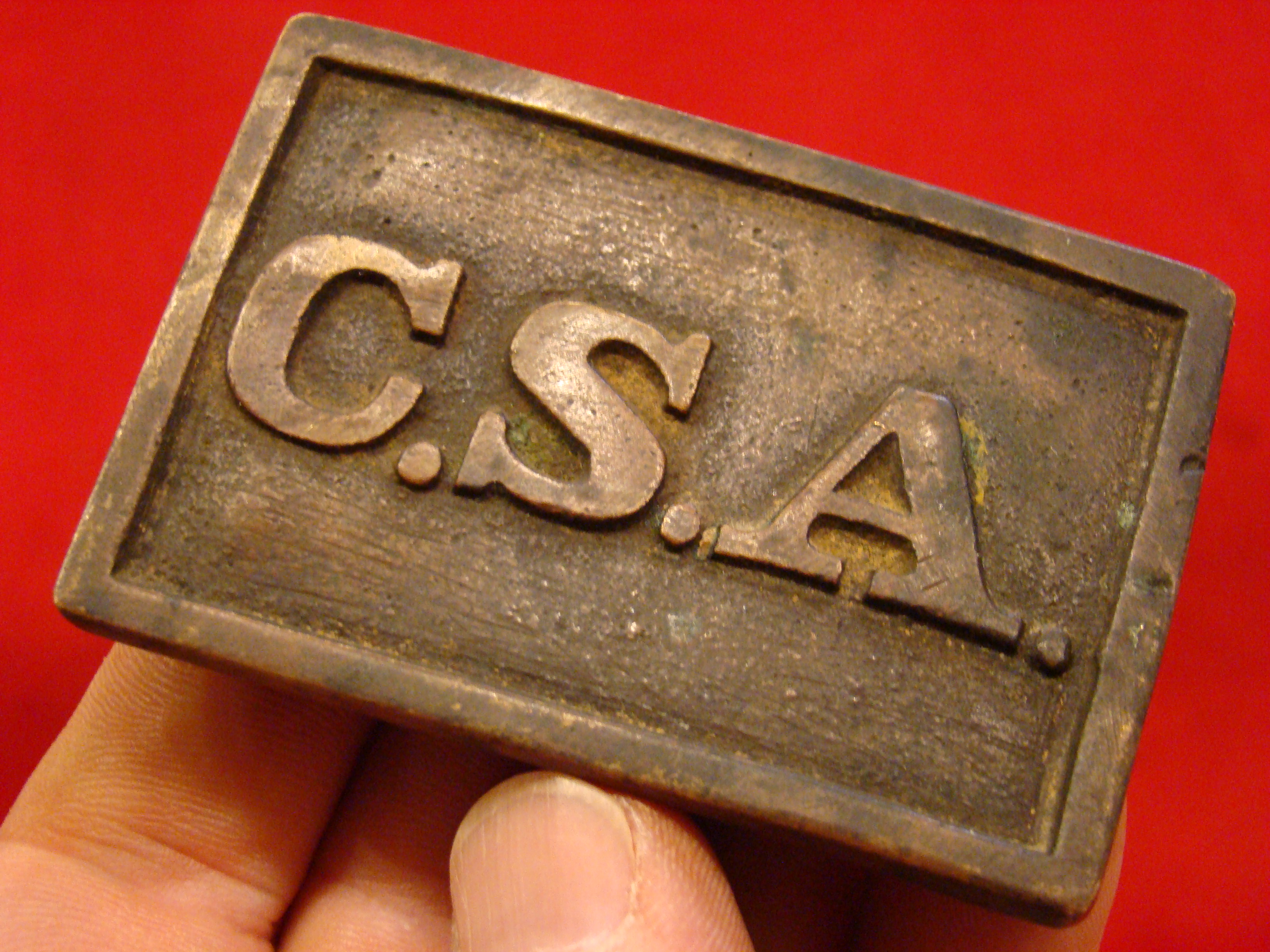
CSBP 1. Confederate Enlisted Man’s Belt Buckle.
Remarkable Atlanta Arsenal “C.S.A.” Belt Buckle with a fragment of the original leather belt. Non-excavated with an absolutely untouched patina and perfect belt hooks on the reverse. See page 56, Plate # 090 in Steve Mullinax’s reference book “Confederate Belt Buckles & Plates for an identical example. Measures 70 x 49 mm. $5250.00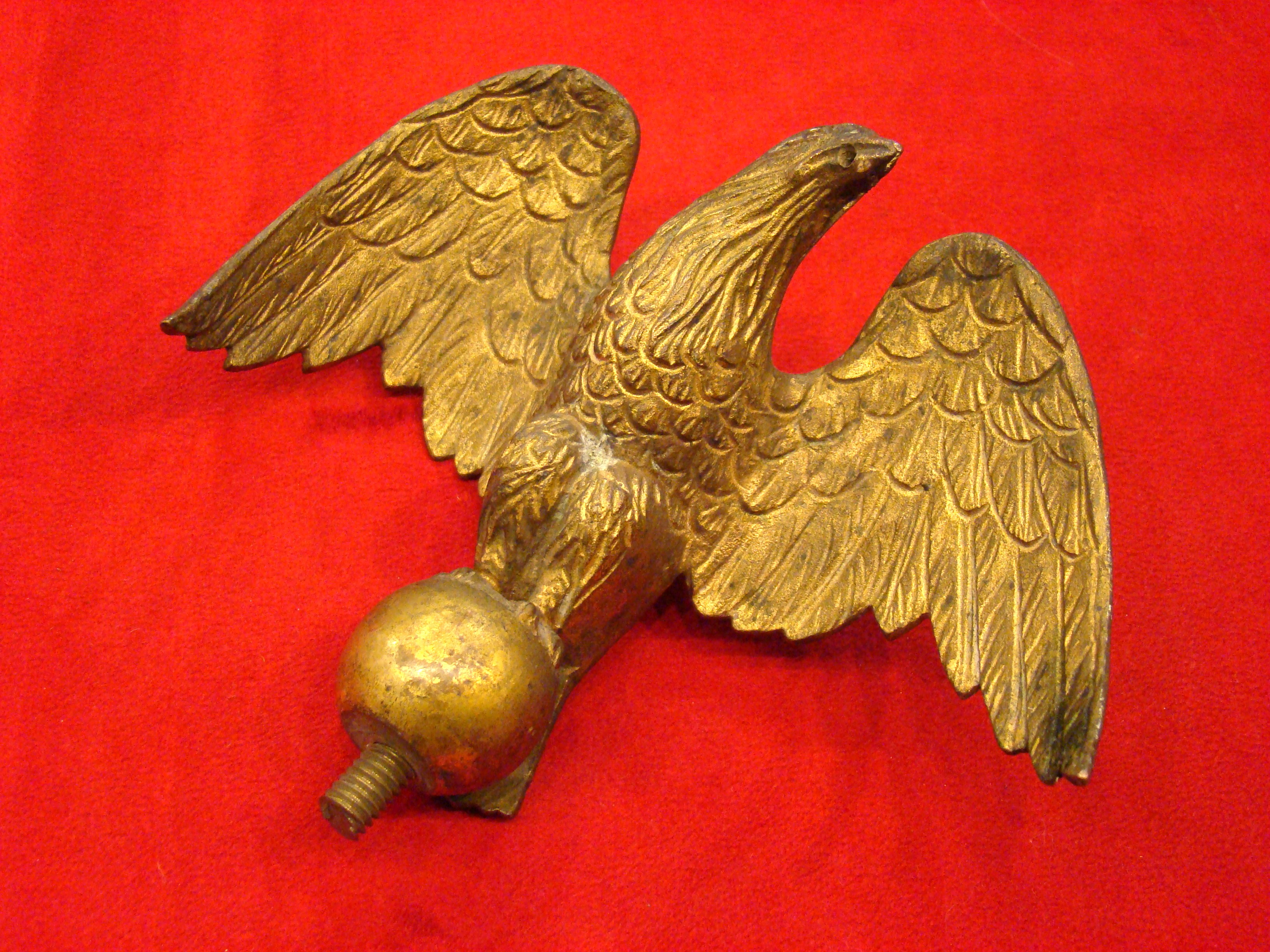
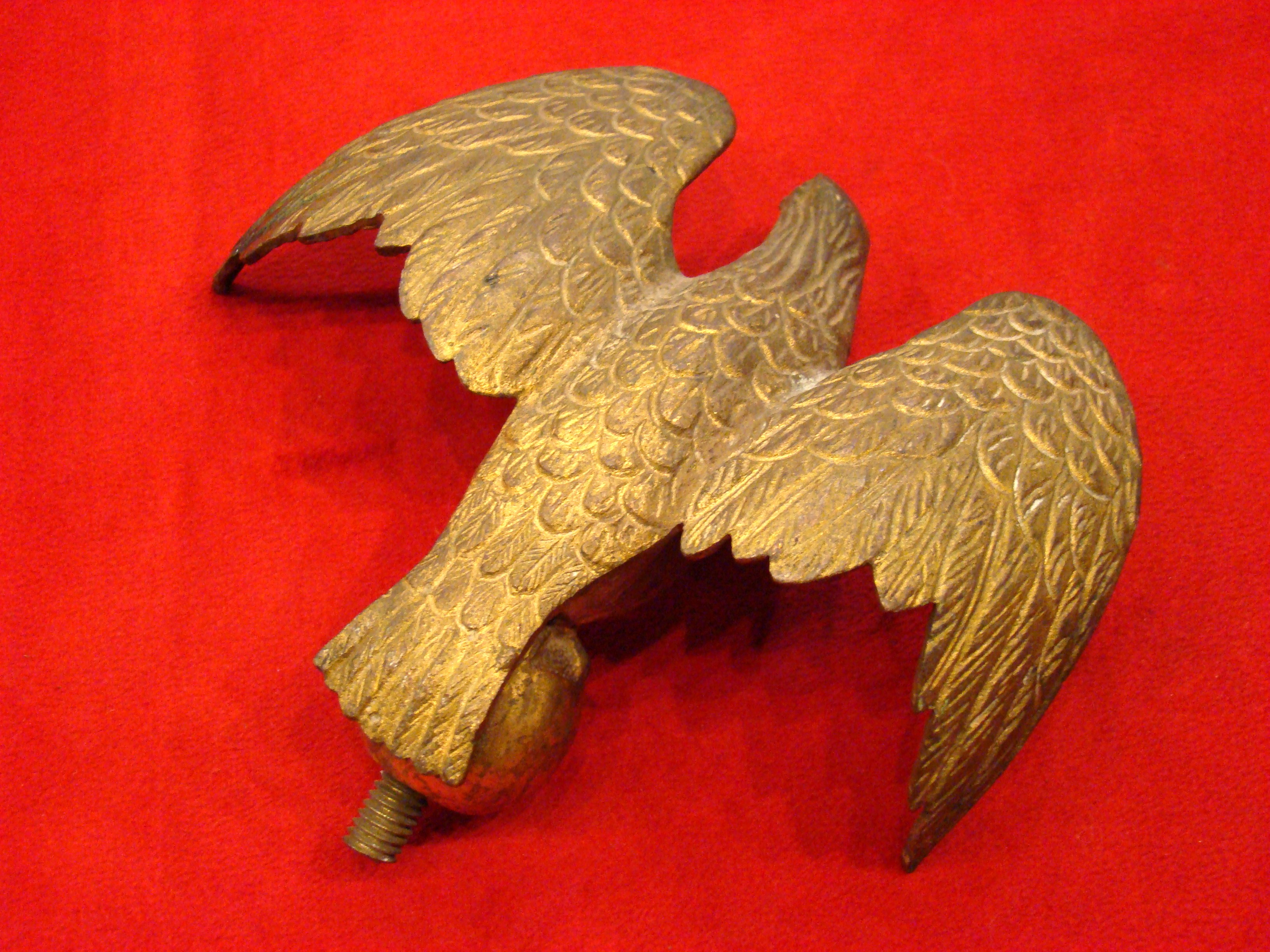
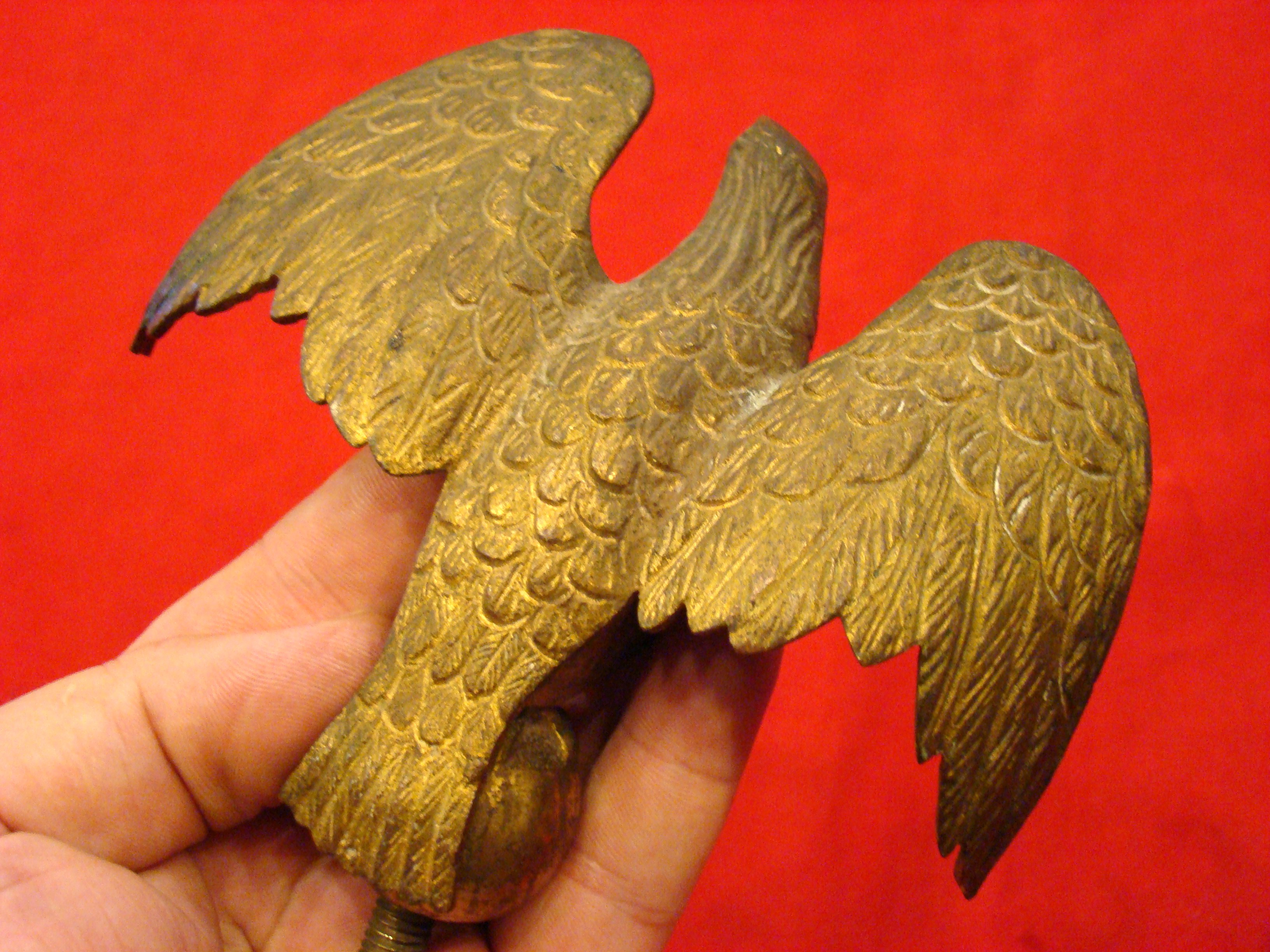
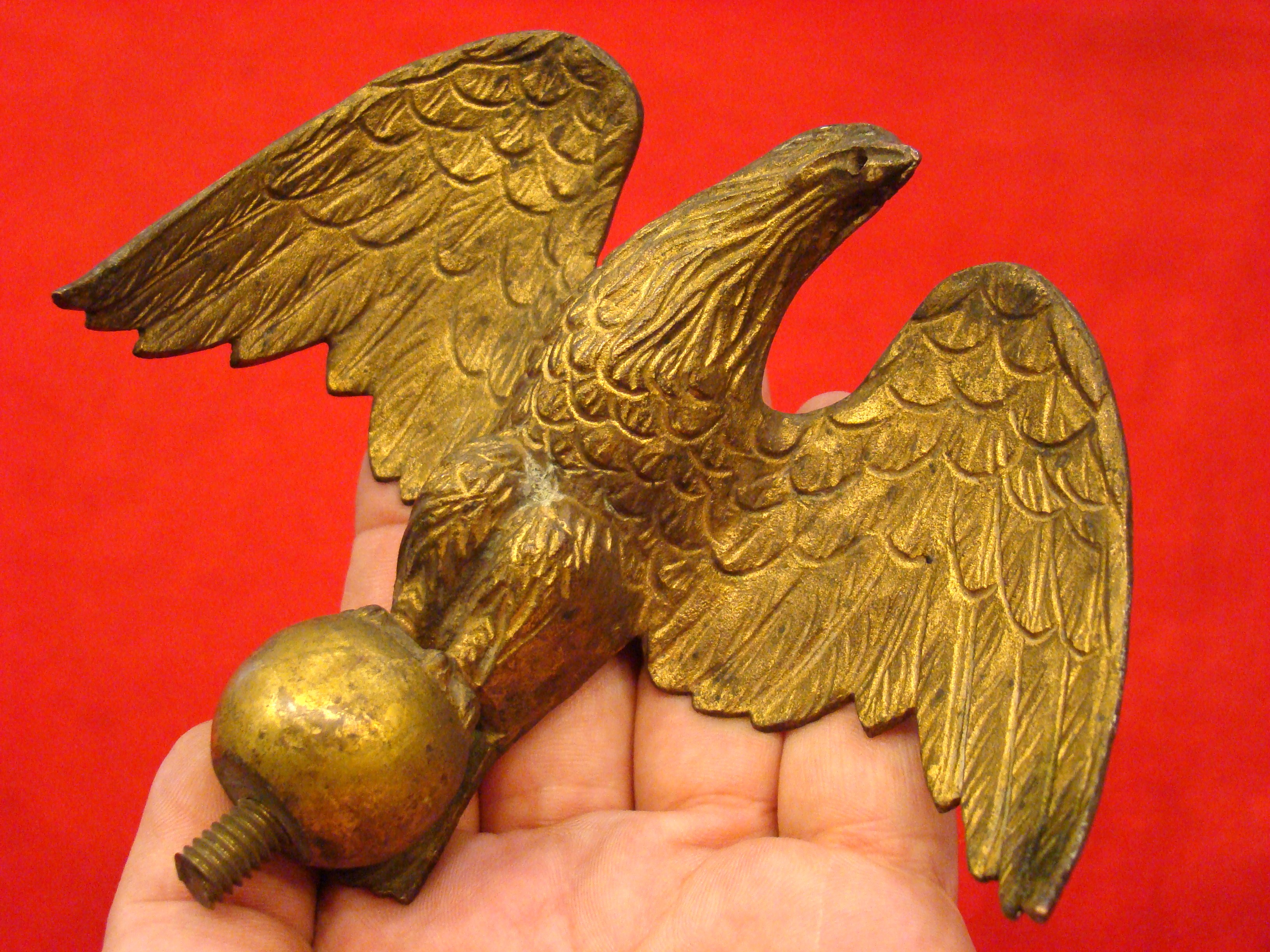
MS 2. US Civil War Flagstaff Eagle.
This fine gilt brass eagle is highly detailed and once sat atop a Regimental or National Flag Staff during The American Civil War. An identical example dug at Fredericksburg VA. by Keith Kenerly is shown on page 62 of Del Thomasson’s reference book “Flagstaff Finials, Toppers, & Ferrules of The American Civil War” reference book. Threaded lug at bottom can easily be fitted into a wooden base for display. SOLD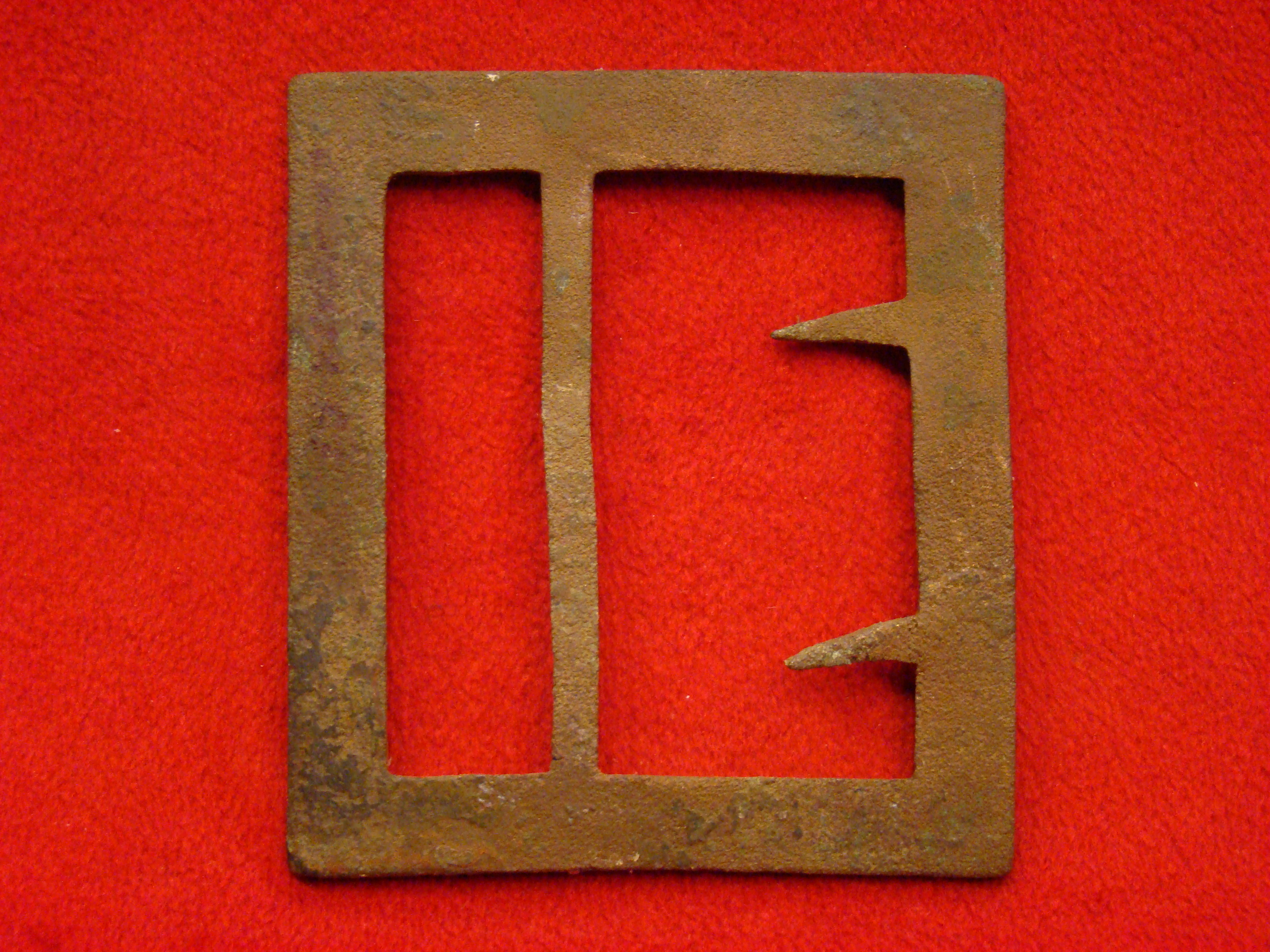
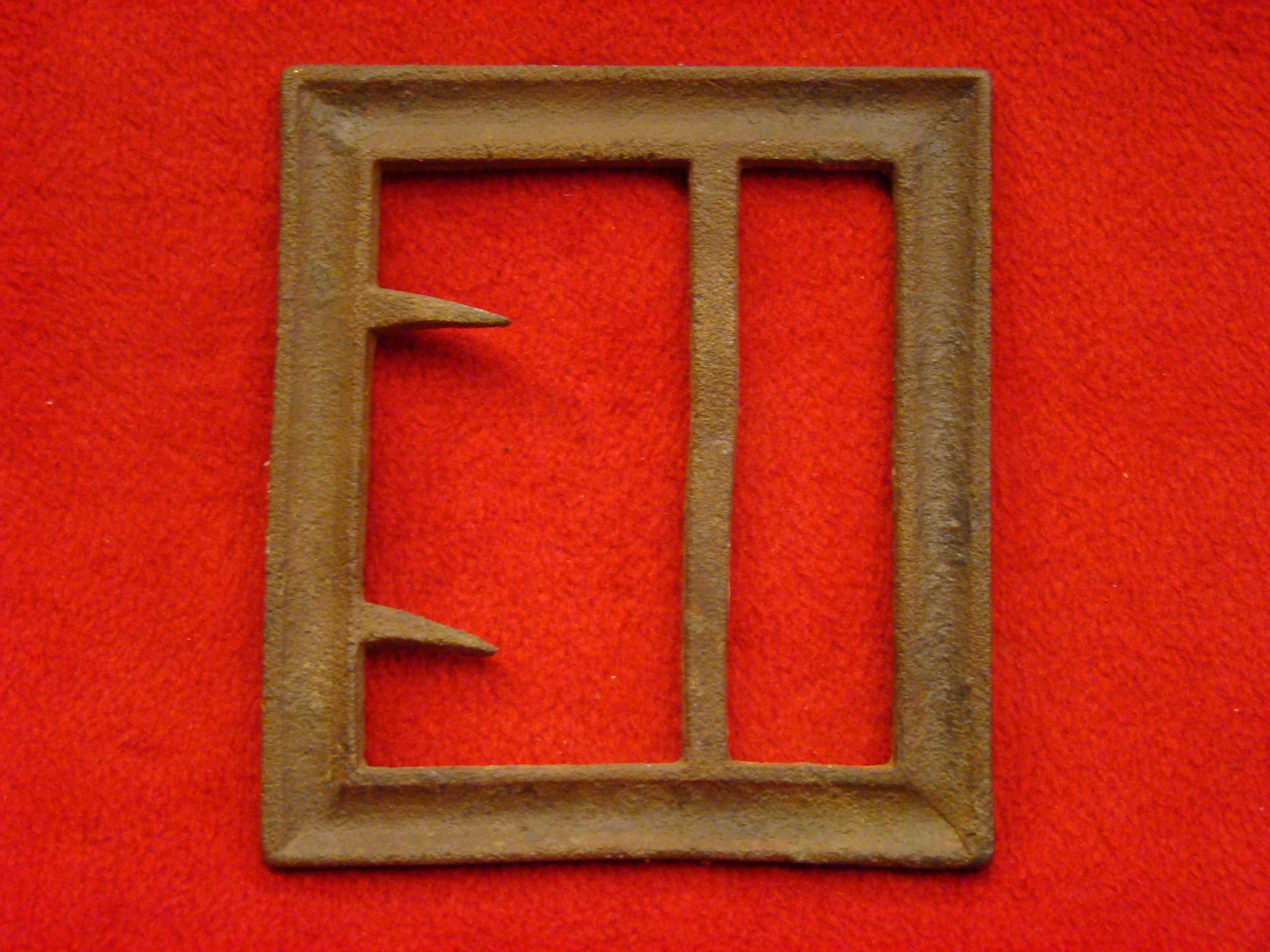
CSBP 2. Dug Confederate Enlisted Man’s Belt Buckle. Kennesaw Mtn. GA. Campaign.
This version of the Georgia Frame is known as the “Gutterback”. Very good condition. Smooth olive-green patina. No repairs. This type is shown on page 98, Plate # 171 in Steve Mullinax’s reference book “Confederate Belt Buckles and Plates”.Measures 71 x 65 mm. $650.00 HOLD S.H.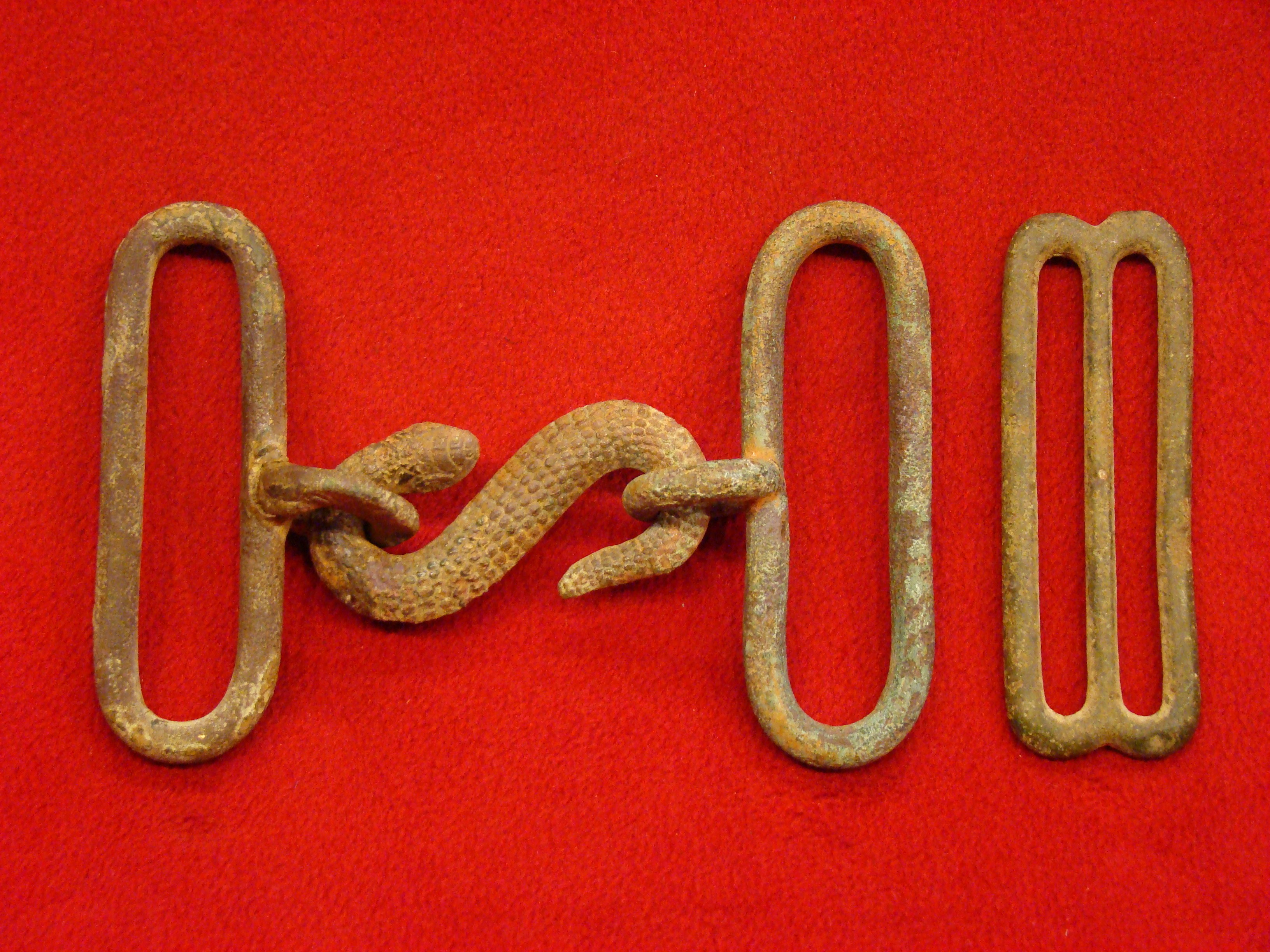
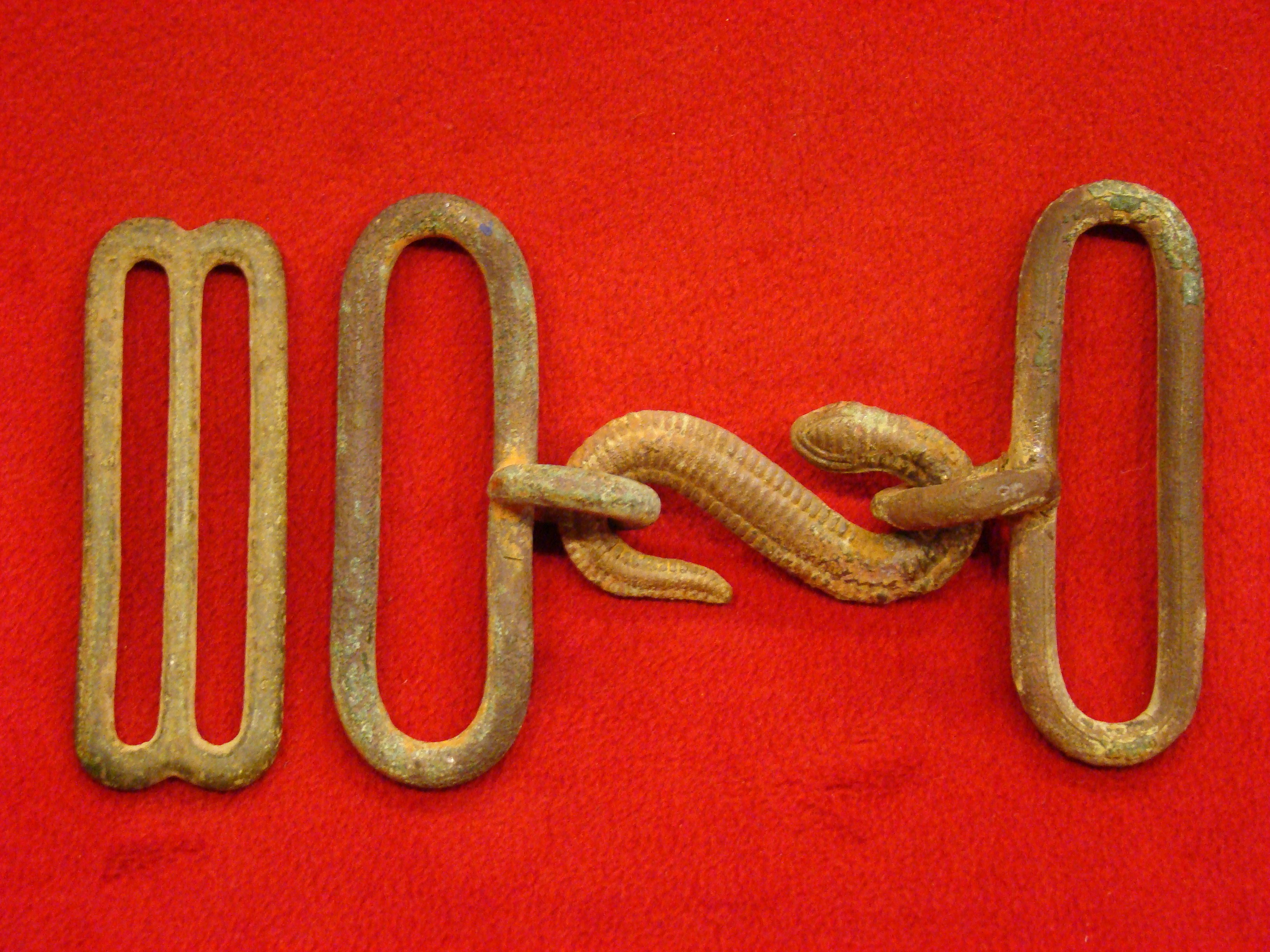
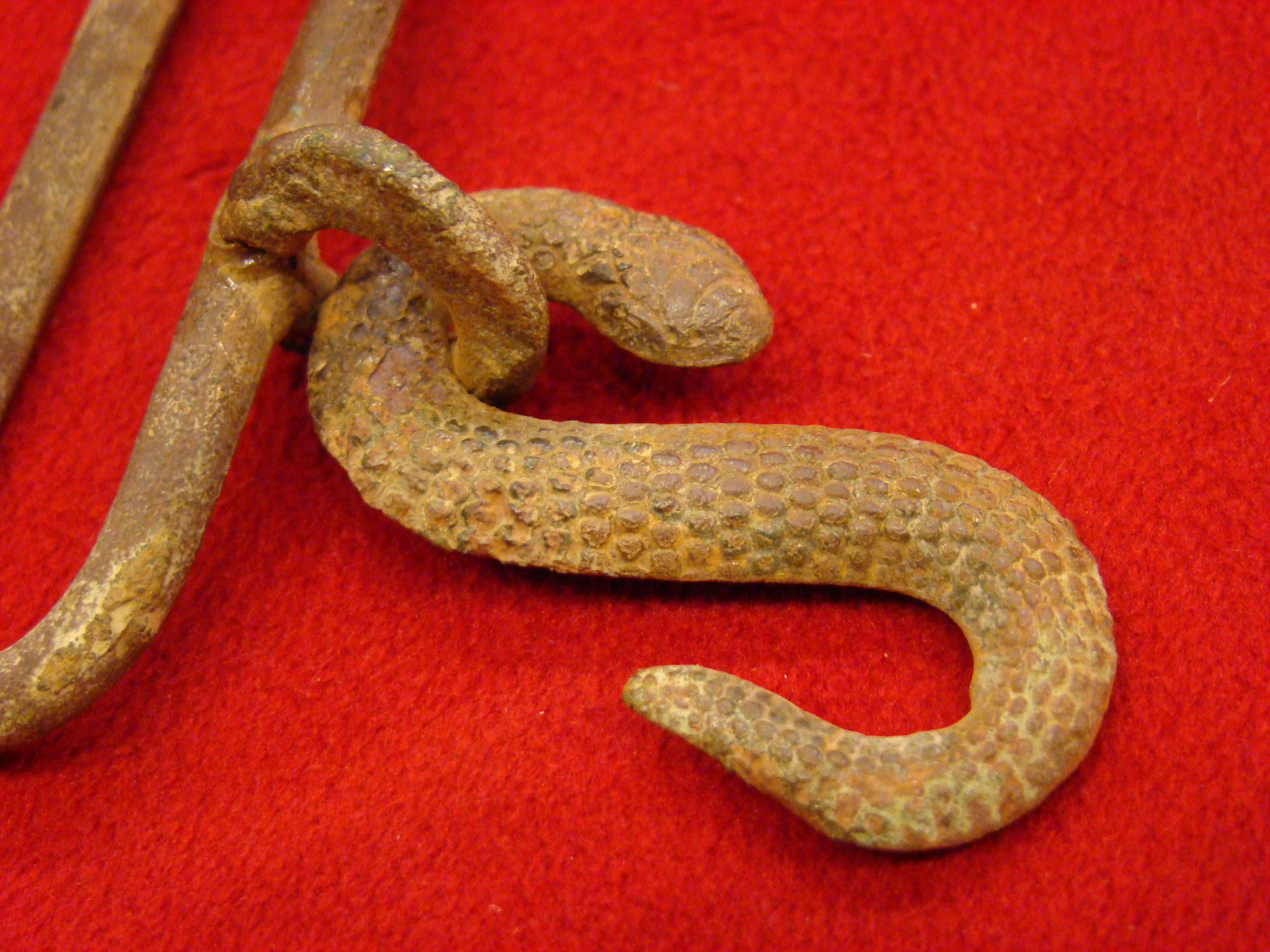
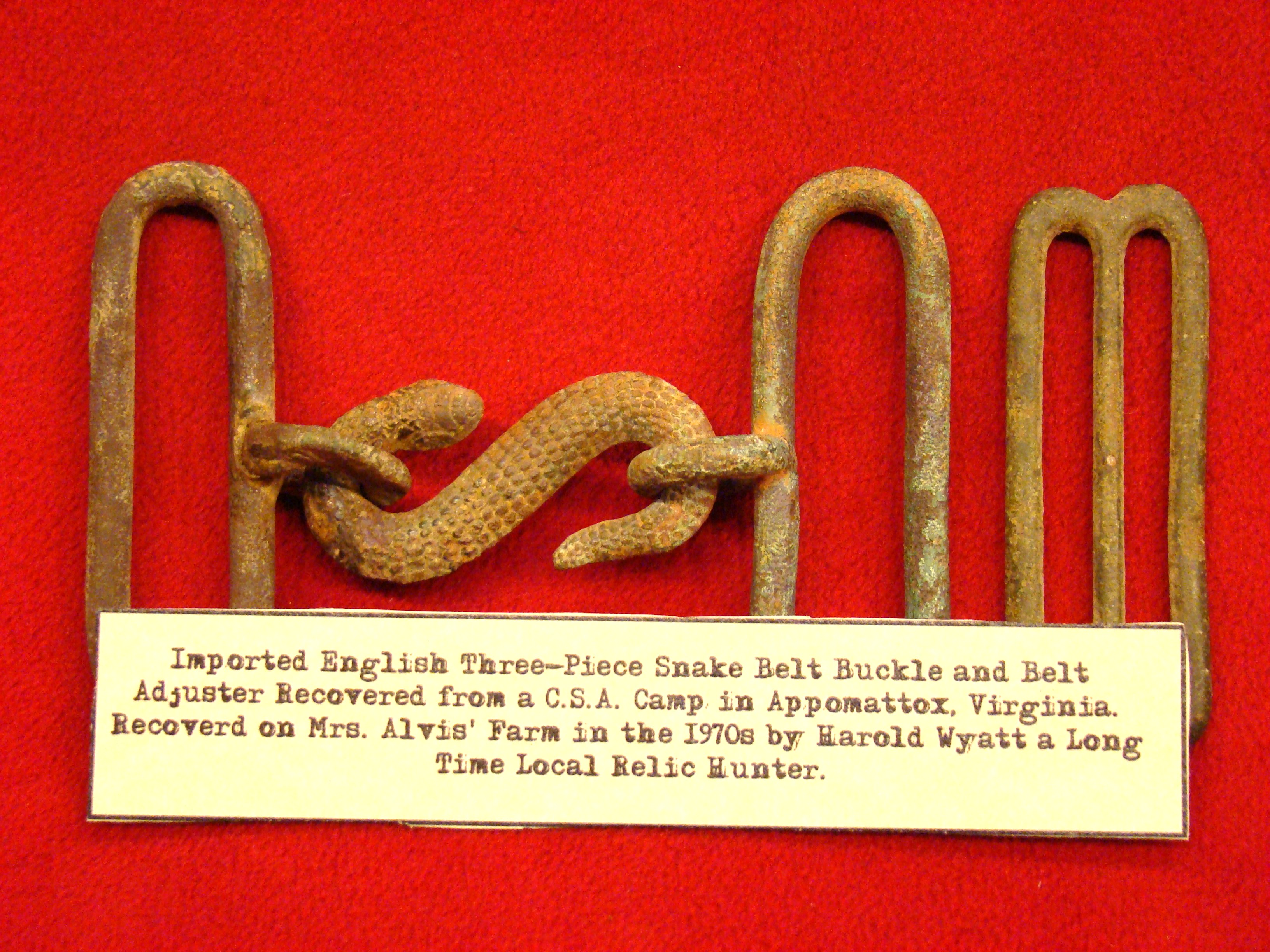
CSBP 3. Dug Confederate Enlisted Man’s “Snake” Belt Buckle. Appomattox VA.
Scarce variation of the S. Isaacs & Campbell type of “Snake” buckle with the anatomically correct snake. When found, one of the round rings that the snake hooks into was partially separated and has been stabilized with glue. The belt adjuster was also found with it. Matching green-brown patina on all parts. Found at Appomattox VA. in the 1970’s by Harold Wyatt. $650.00 HOLD D.C.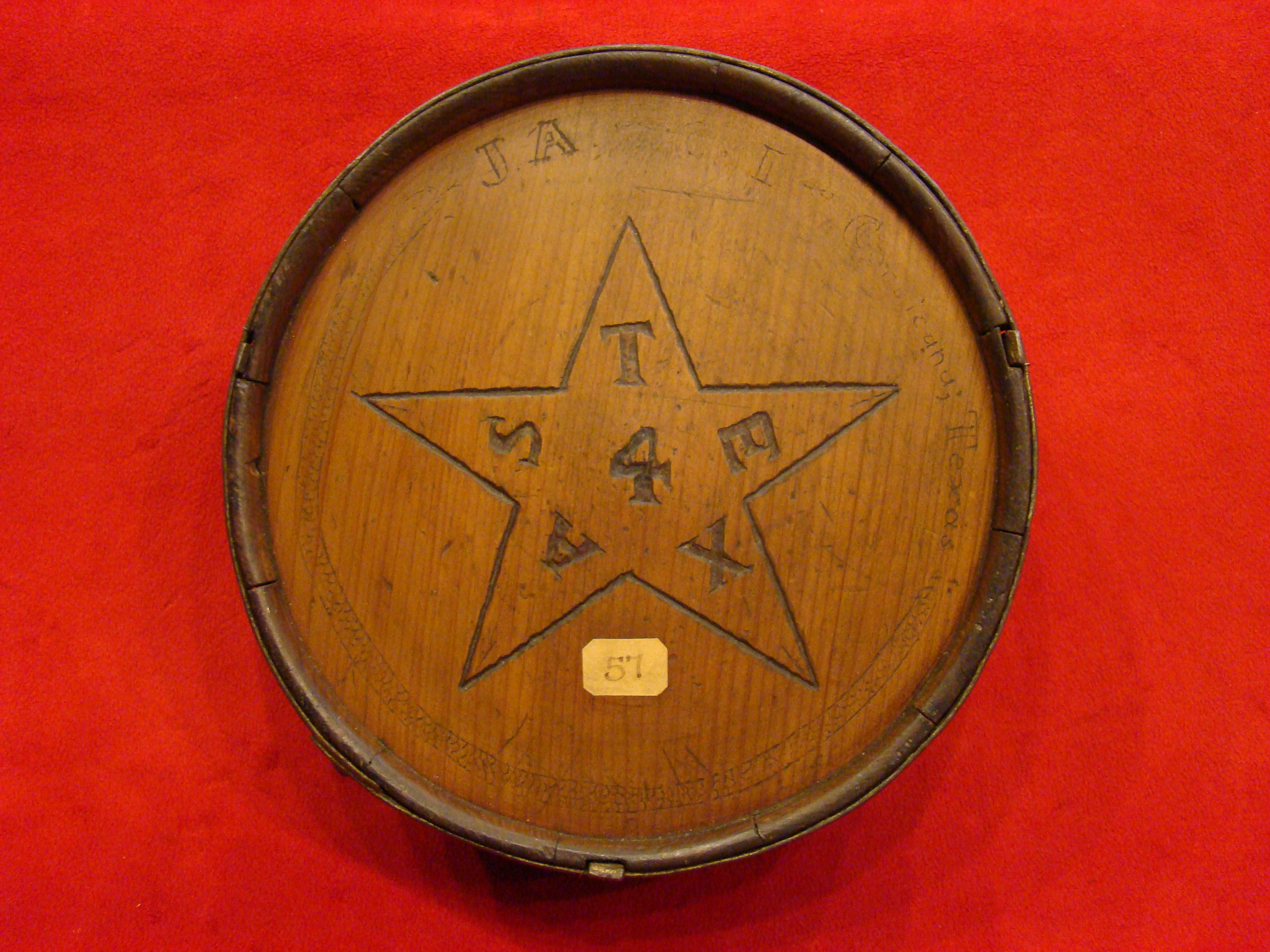
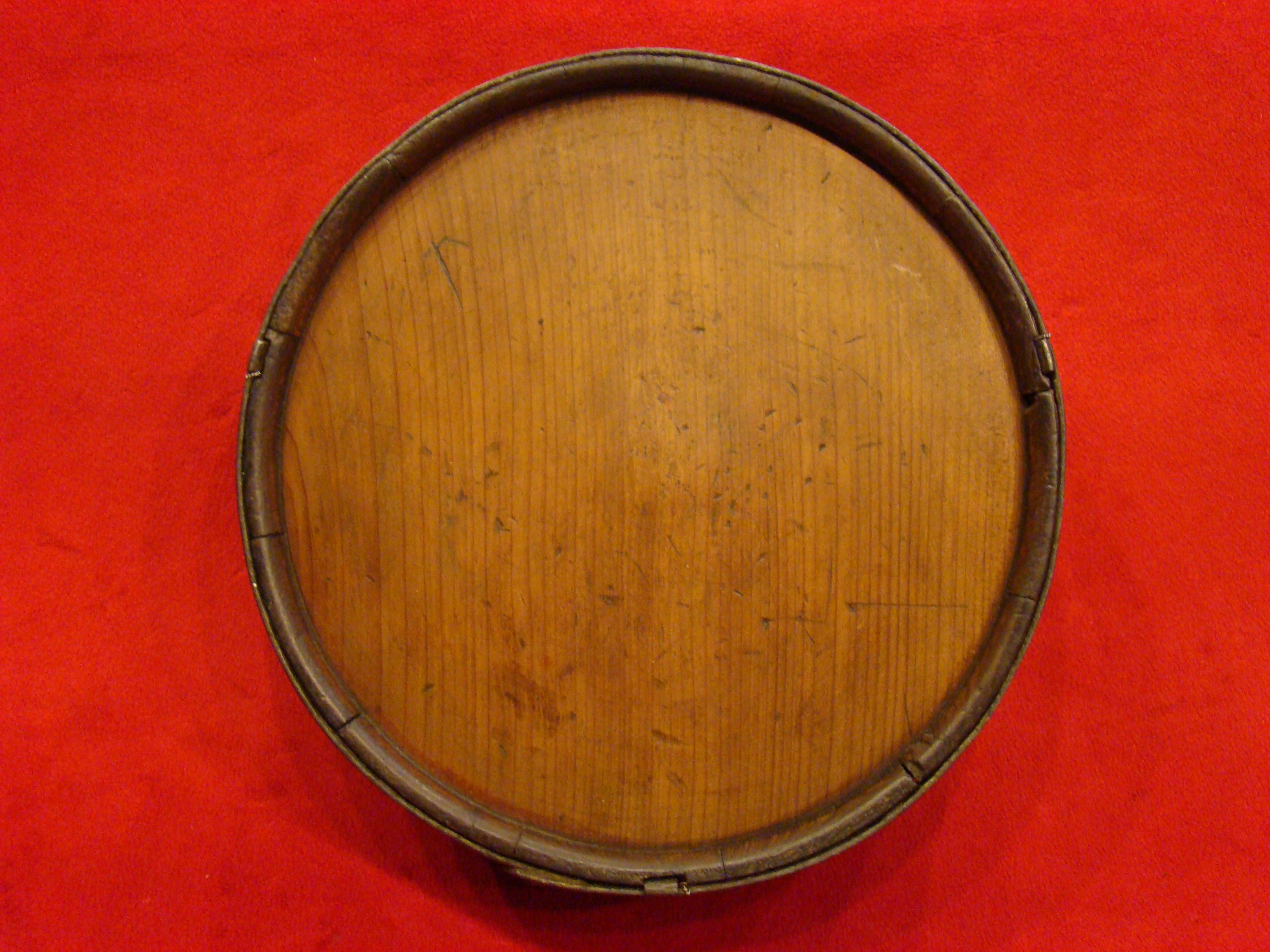
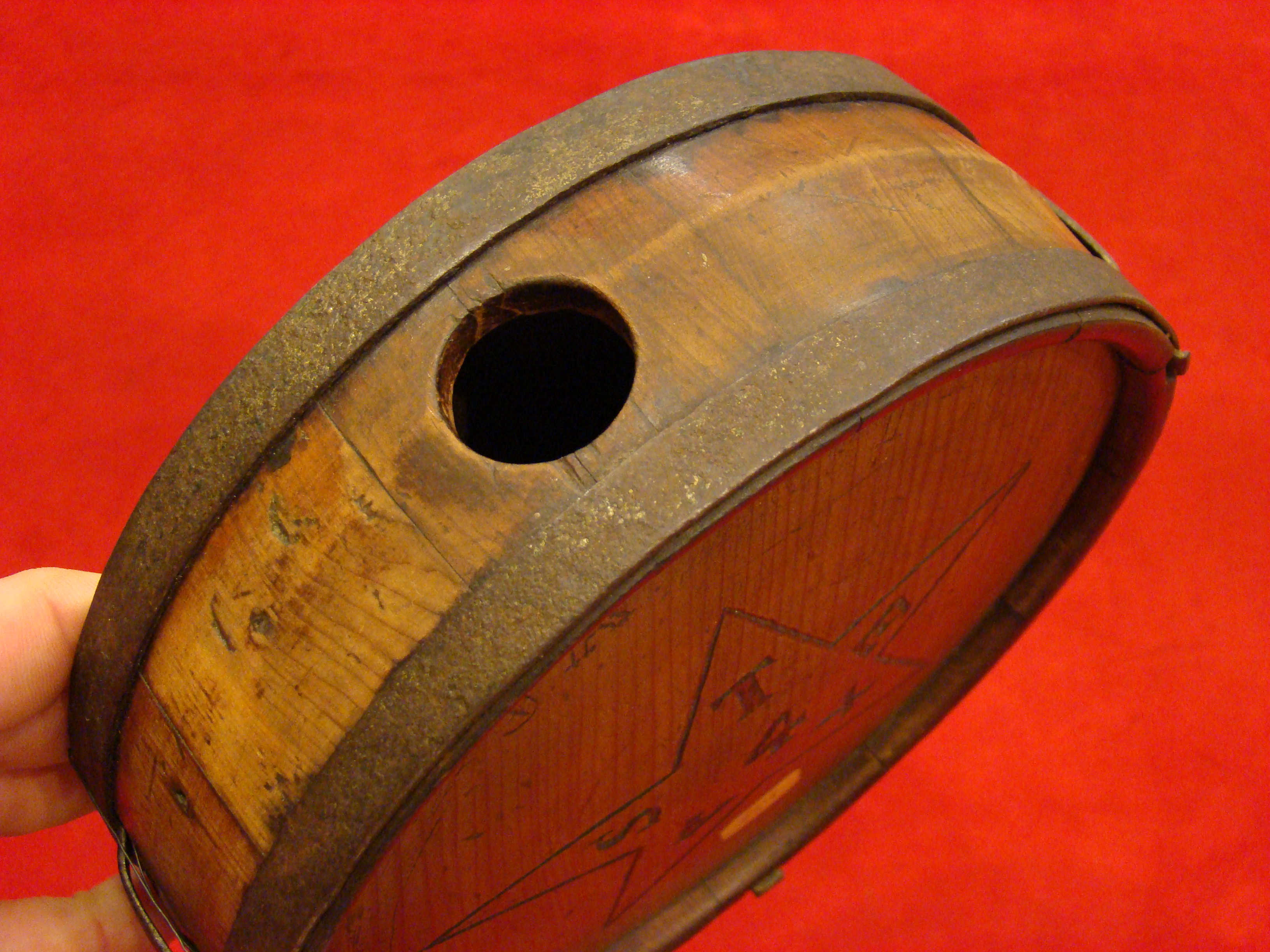
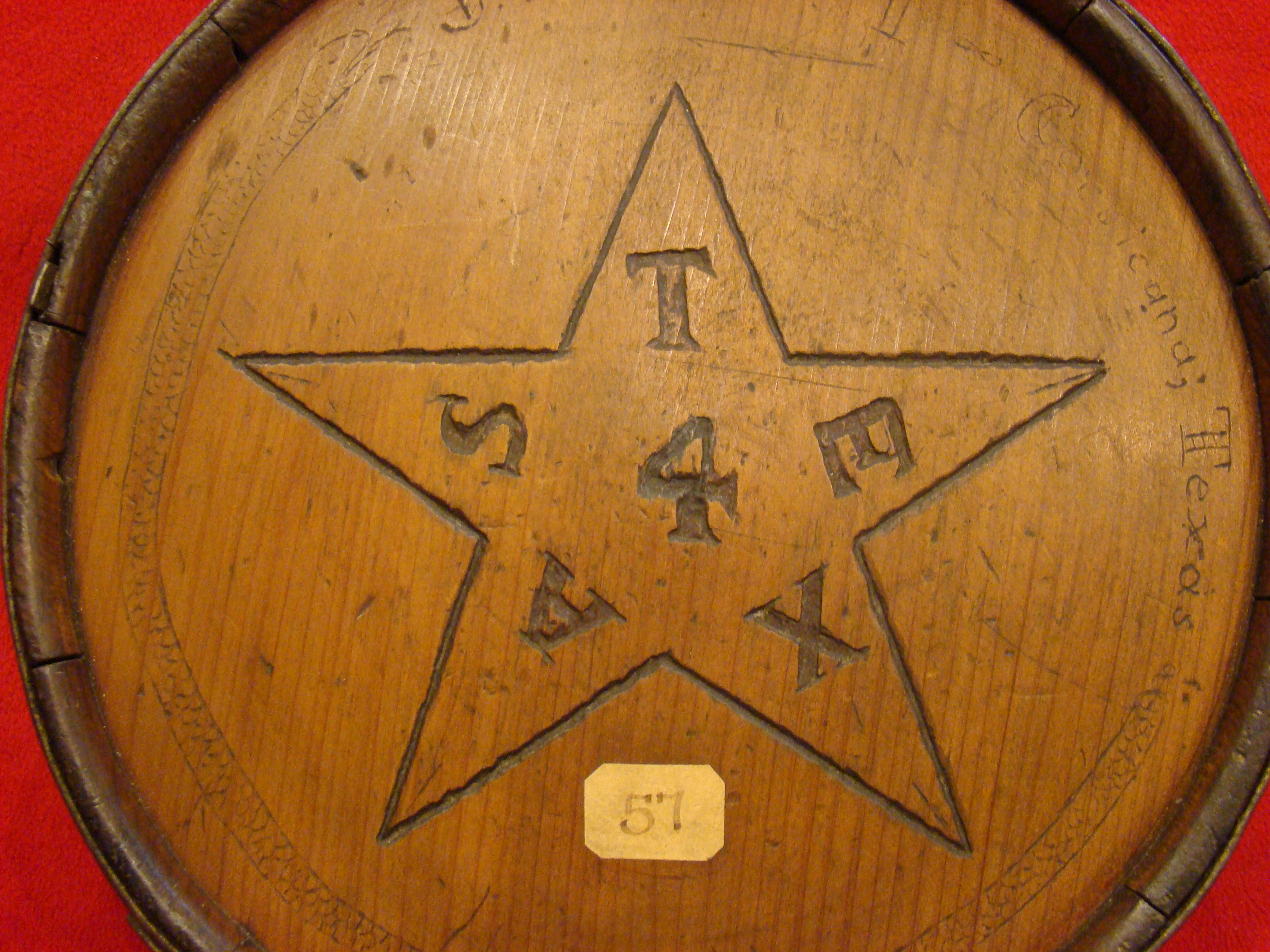
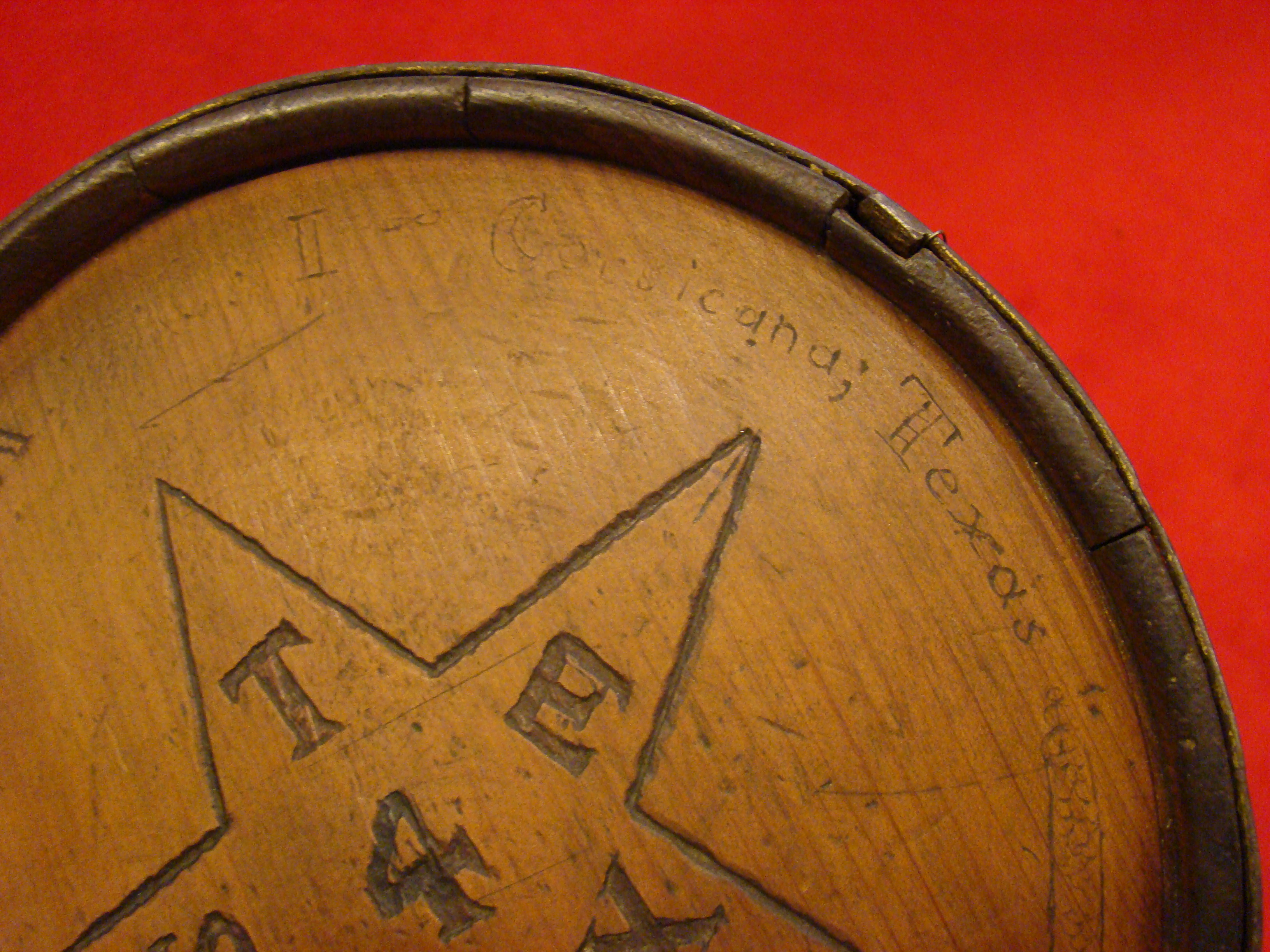
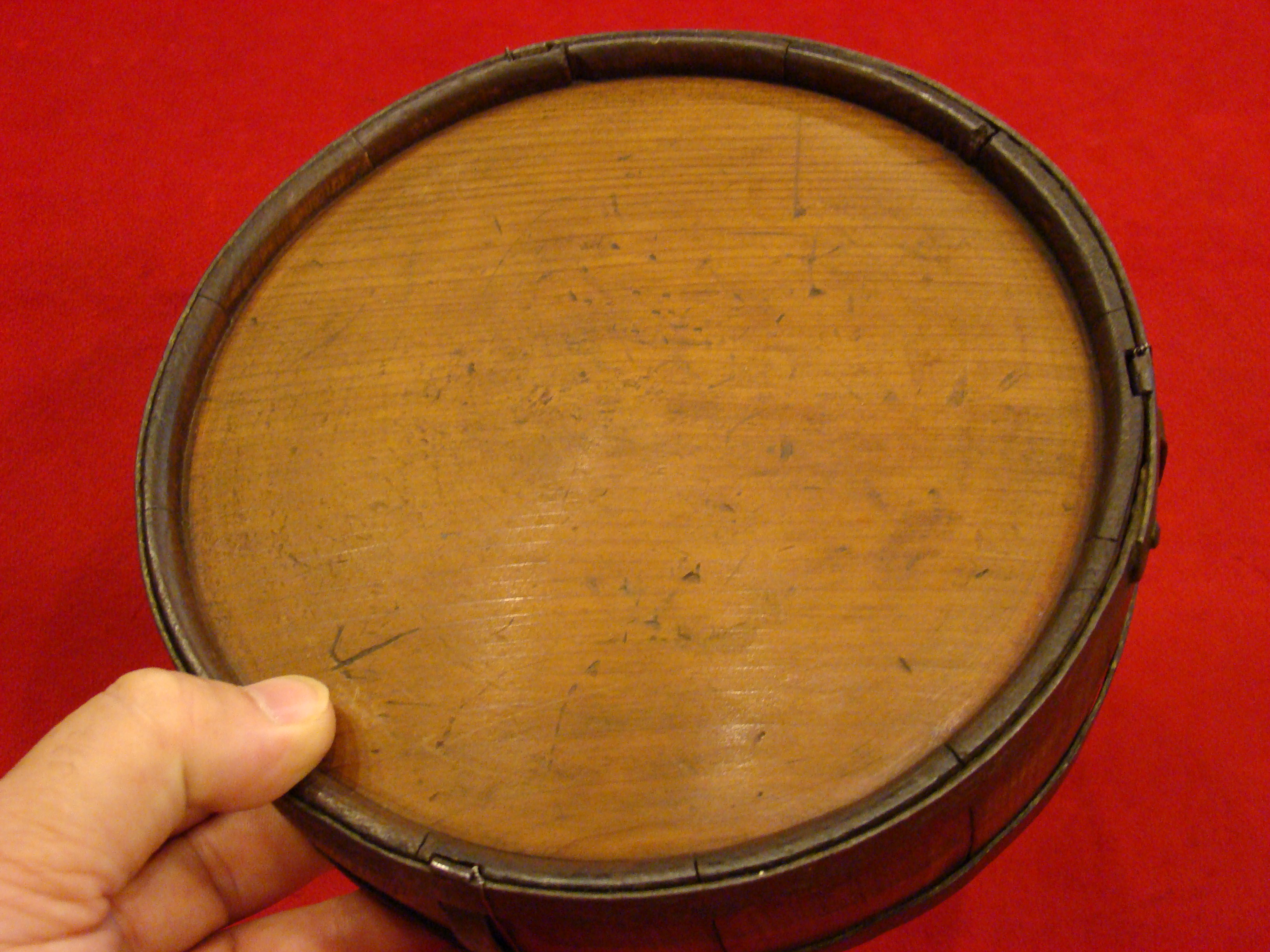
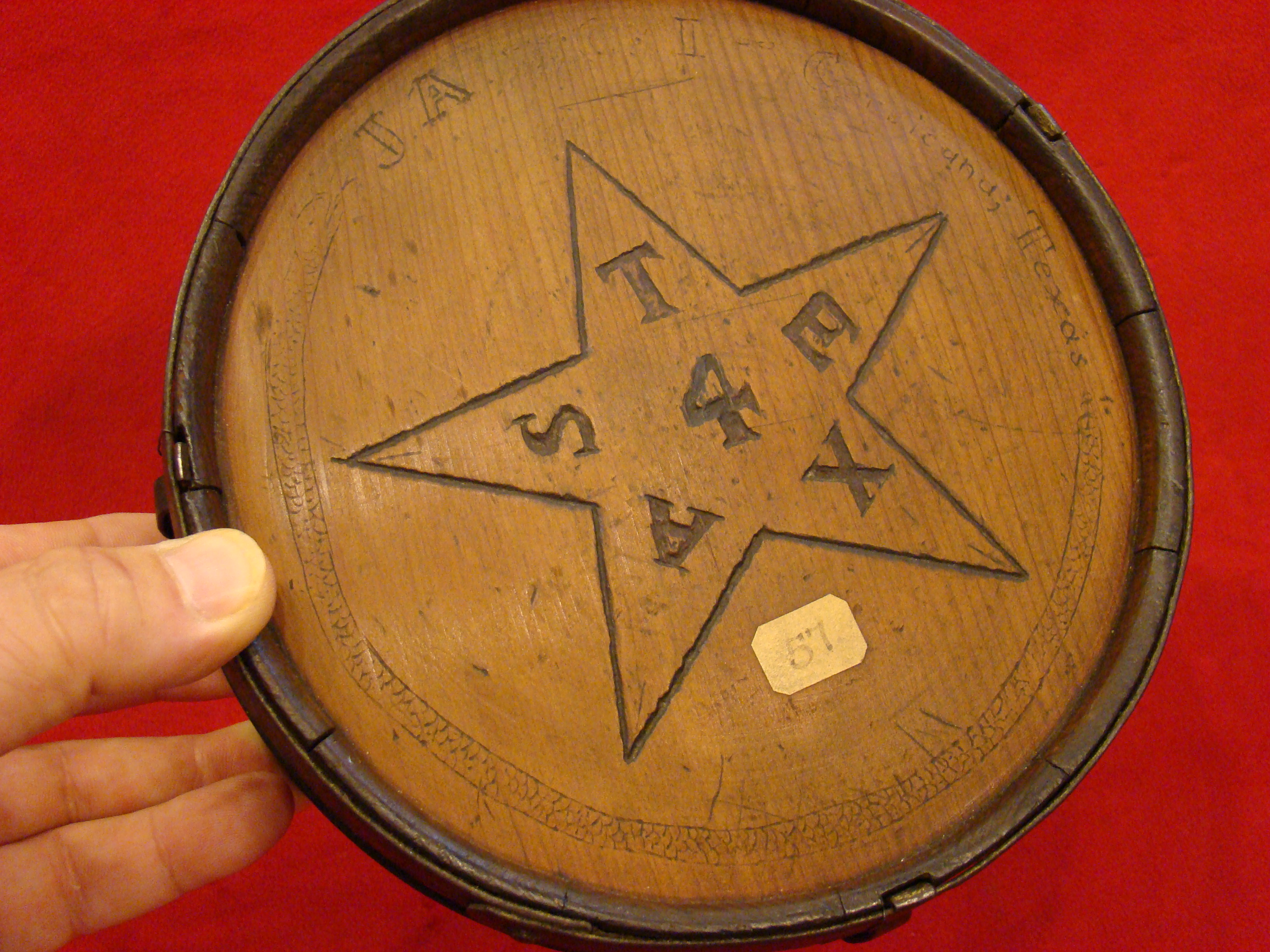
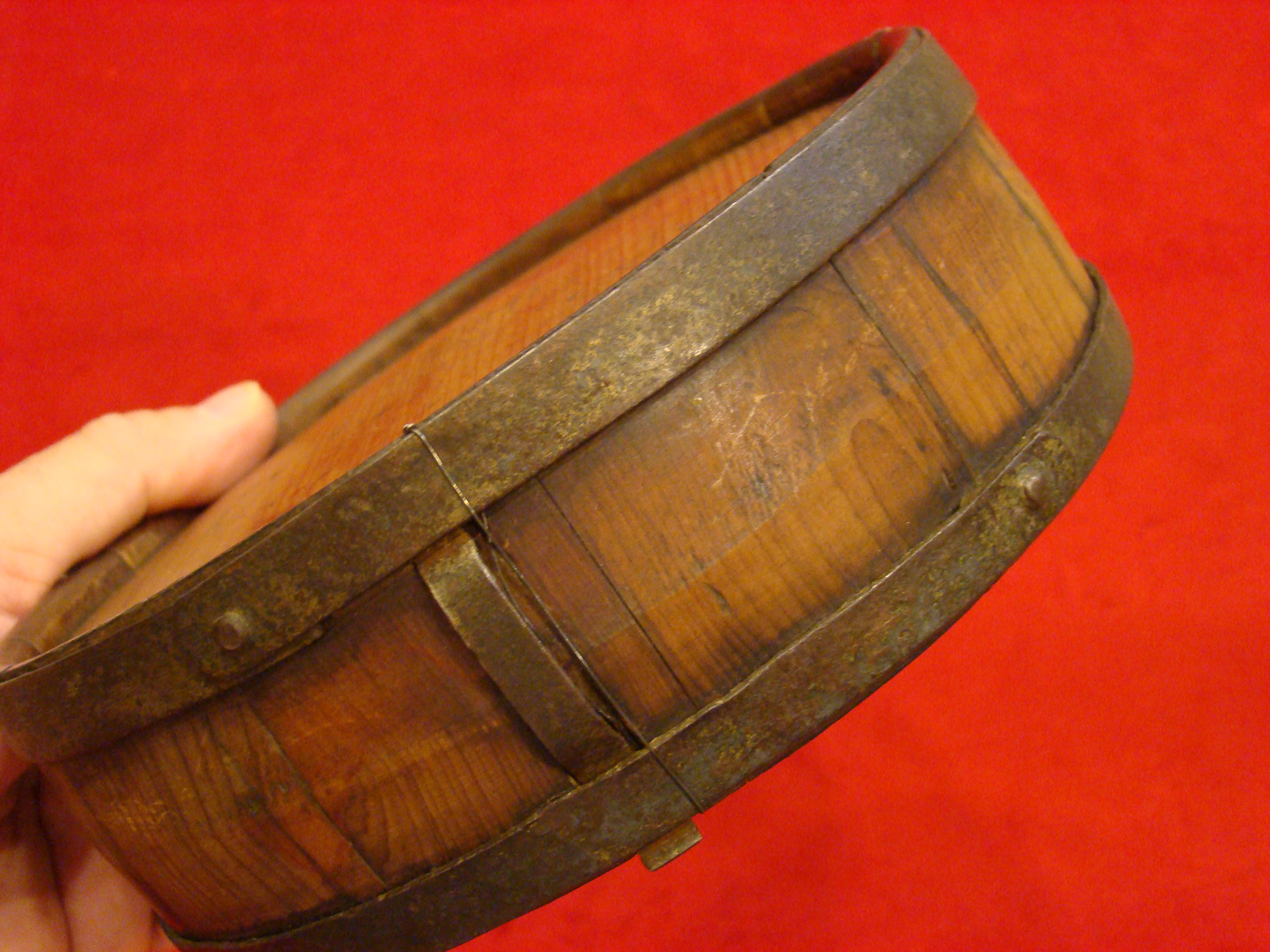
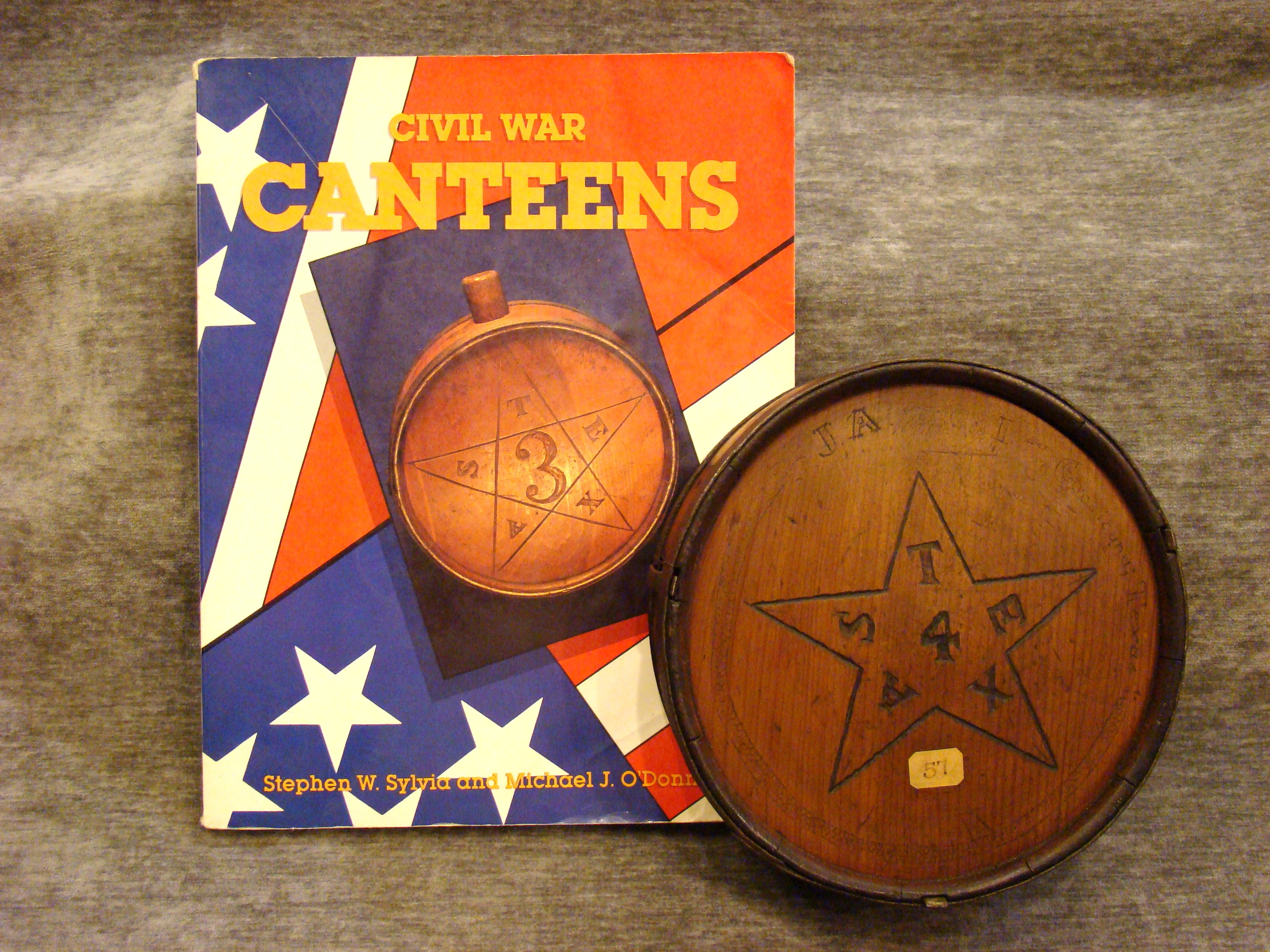
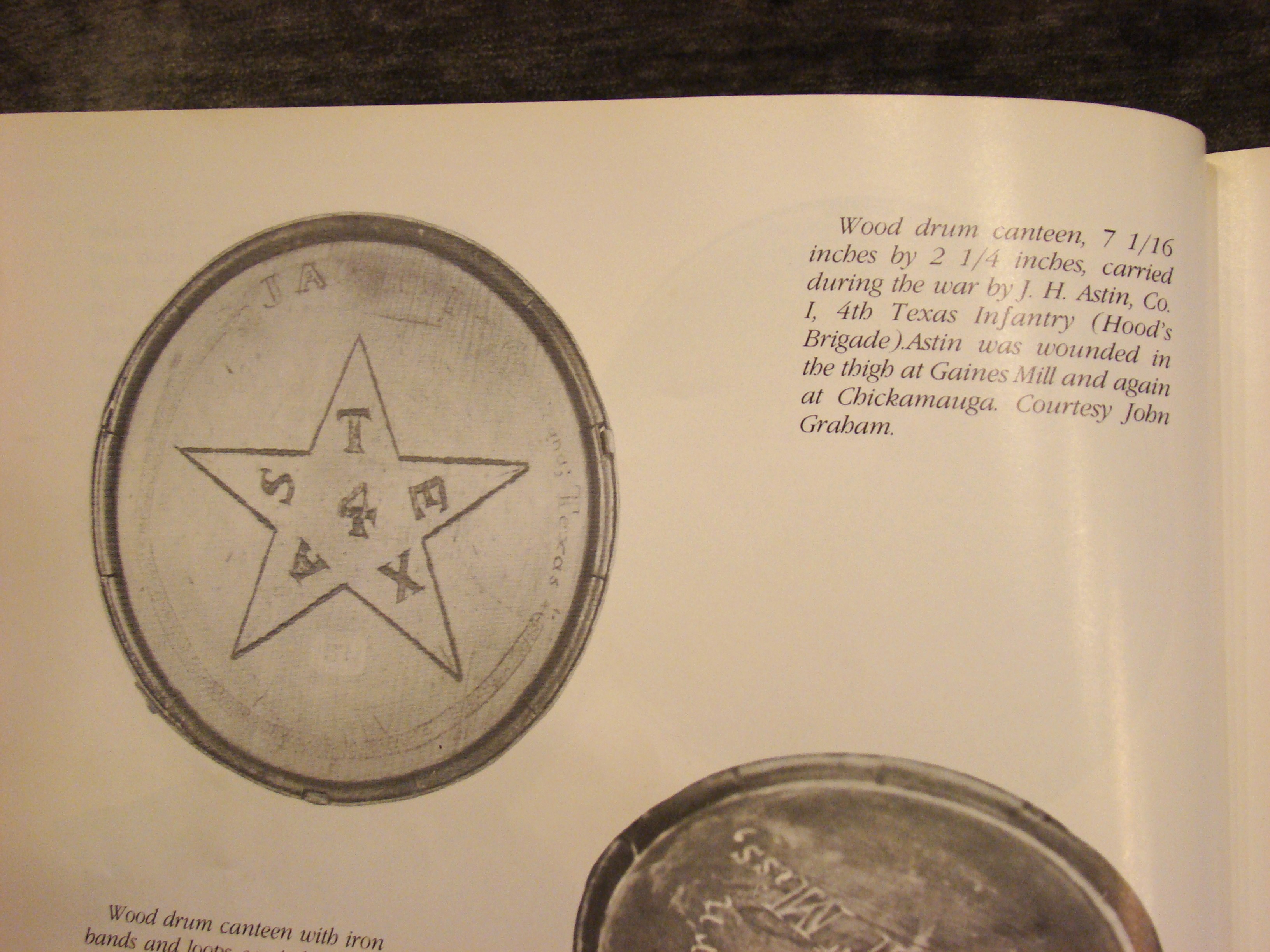
MS 3. Confederate Canteen Identified to Pvt. John H. Astin, Co. I, 4th Texas Vol. Infantry Regt. Wounded at Gaines Mill & Chickamauga. Published in Sylvia & O’Donnell’s “Civil War Canteens” Reference Book, as well as in “Gettysburg Battlefield Relics & Souvenirs” by O’Donnell (Page 121).
One of the most recognizable, documented, and noteworthy of all Confederate Canteens. This classic “Gardiner” Pattern canteen is neatly carved by Astin with a bold and well executed five pointed star featuring “TEXAS” surrounding a “4” in the center, and “J.A. Co. I, Corsicana; Texas“. He also carved a Rattlesnake around the border complete with forked tongue, scales, and shaking rattle. Exceptional condition with no repairs or alterations of any kind. Deep patina to the wood. Don Troiani painted this canteen being carried by a soldier of the 4th Texas in a painting featuring Gen. John Bell Hood’s Texas Brigade. You can see this illustration in Don Troiani’s book “Regiments & Uniforms of The Civil War”. Ex. John Graham, Ex. Terry Heilman, Ex. Mike Ables collection. $26,500.00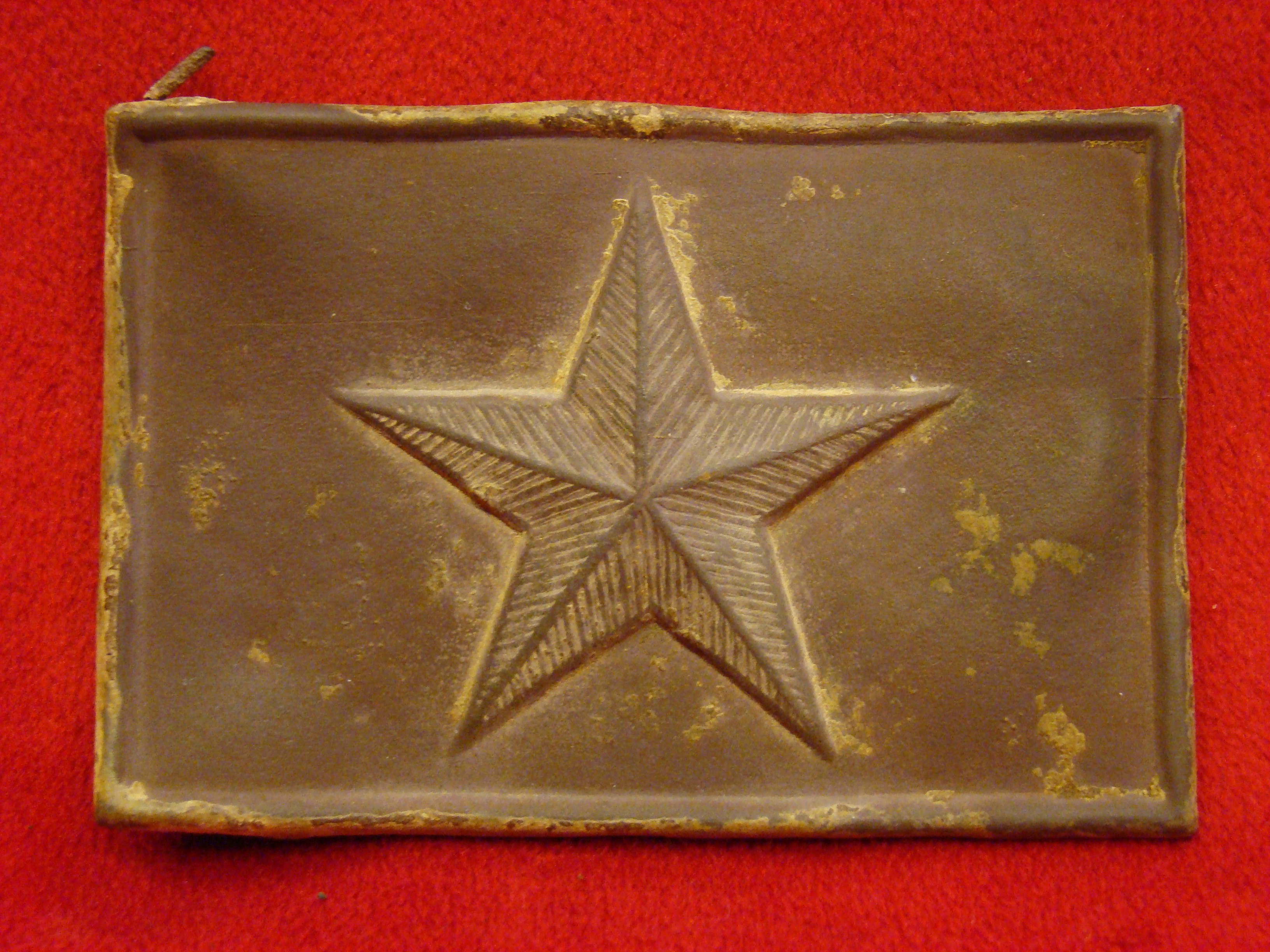
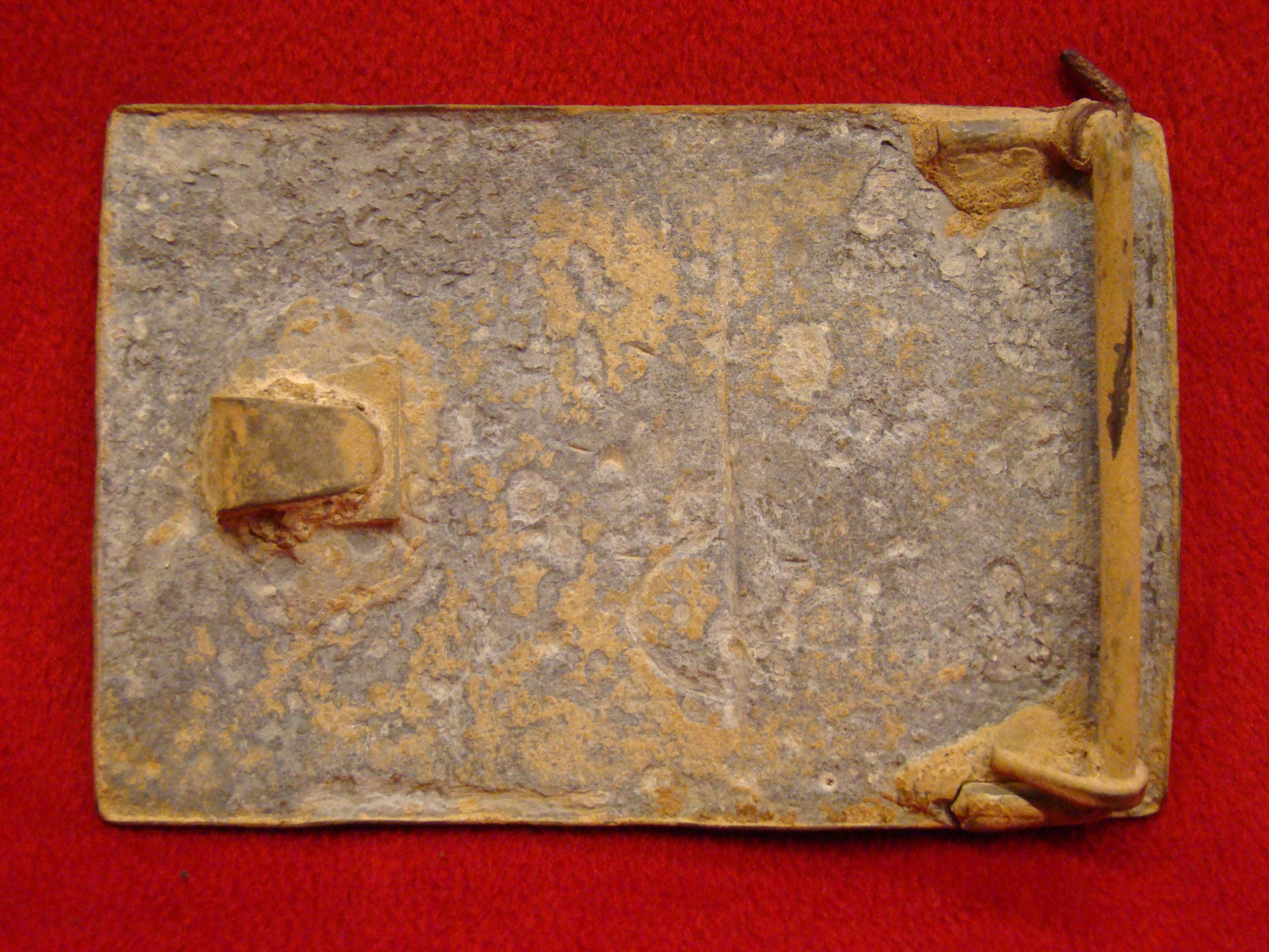
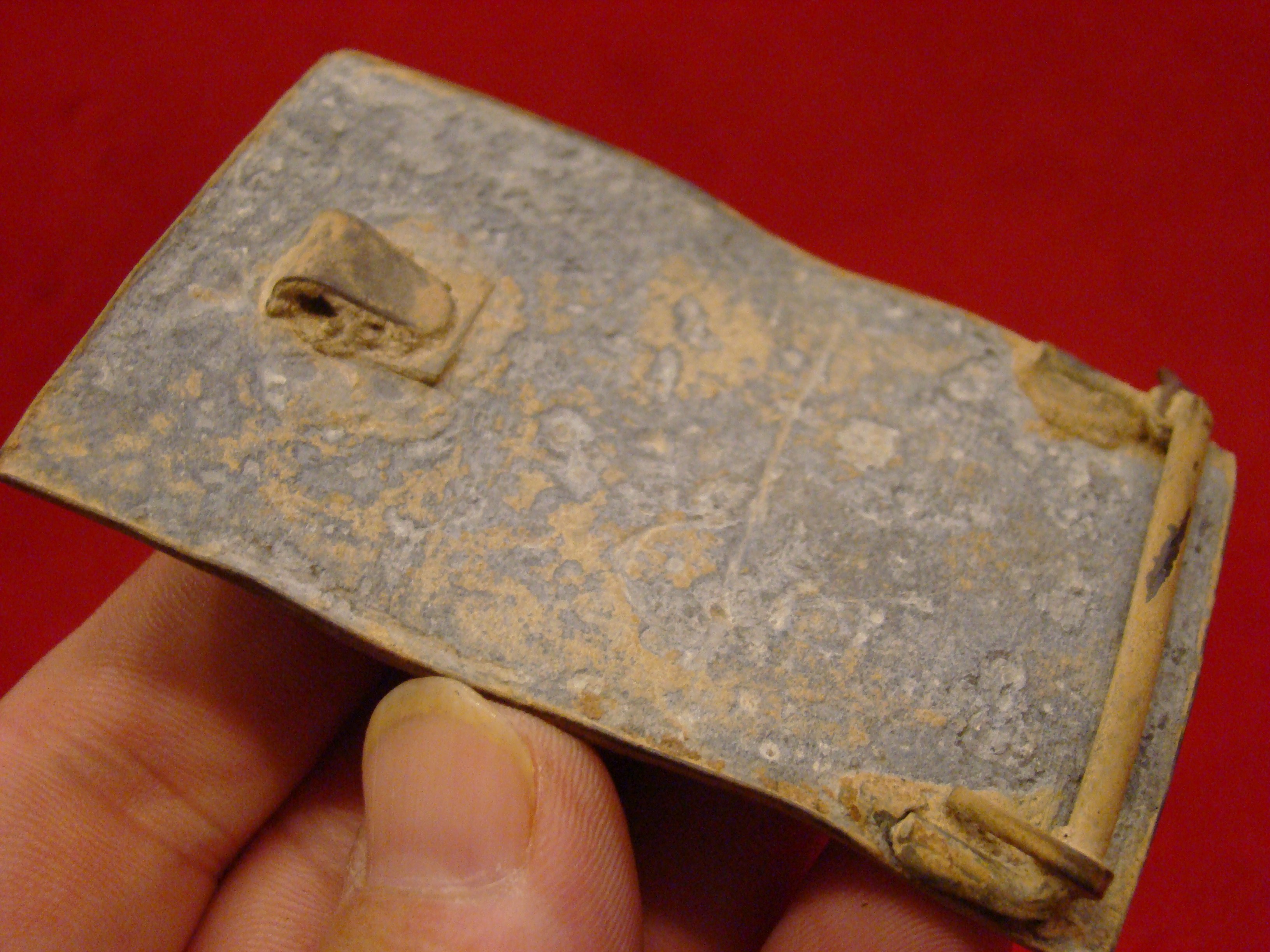
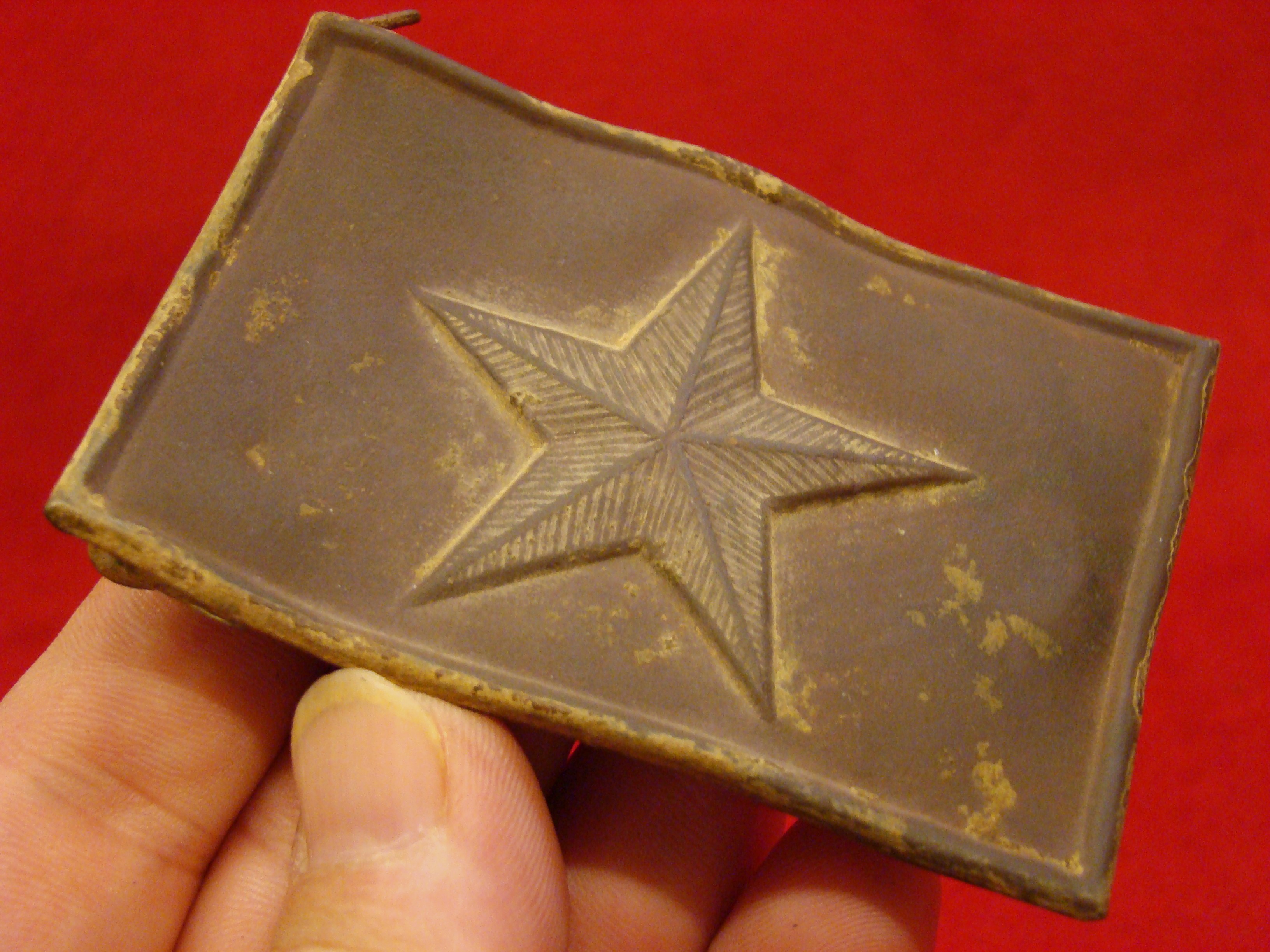
CSBP 4. Dug Texas State Militia Belt Plate. Twice Published. Found at Red Bank (Chattanooga) Tennessee.
Best documented example of this rare Texas belt buckle. Lead filled variant with intact belt bar, teeth, and tongue. Fantastic chocolate brown patina. This buckle is photographed and featured on page 95, Plate # 166 in Steve Mullinax’s reference book “Confederate Belt Buckles and Plates”. It is also featured on page 649 of Scott Riddle’s new reference book “Buckles and Plates Of The Confederacy”. Ex. Steve Mullinax, Ex. Terry Heilman, Ex. Mike Ables collection. $21,500.00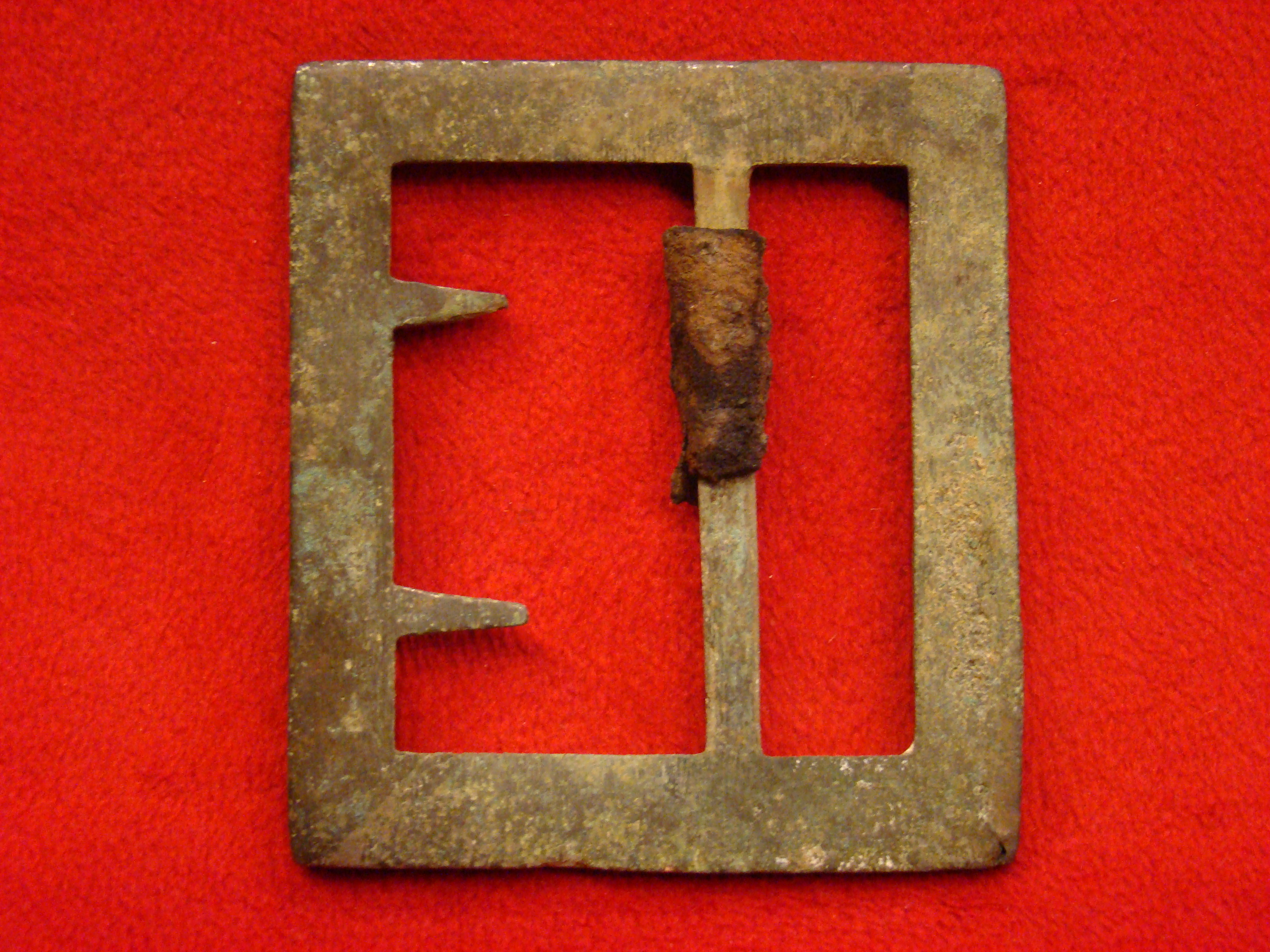
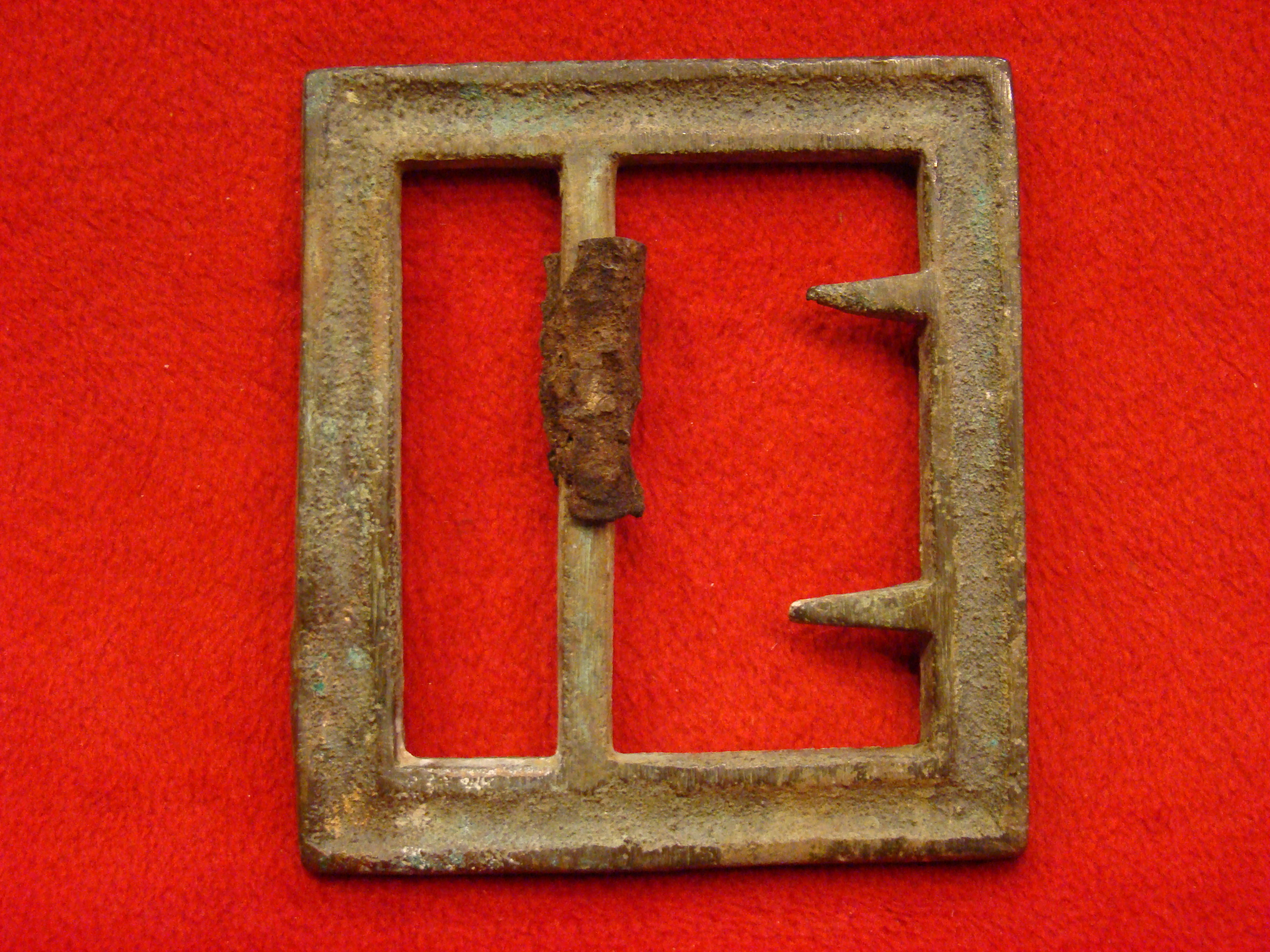
CSBP 5. Dug Confederate Enlisted Man’s Belt Buckle. Kennesaw Mtn. GA. Battlefield.
This version of the Georgia Frame is known as the “Gutterback”. Fantastic condition with sharp edges and casting. Untouched woods-green patina. No bends or issues. Note fragment of leather belt attached to the center bar. This type is shown on page 98, Plate # 171 in Steve Mullinax’s reference book “Confederate Belt Buckles and Plates”.Measures 68 x 62 mm. Ex. Stan Wills collection. $750.00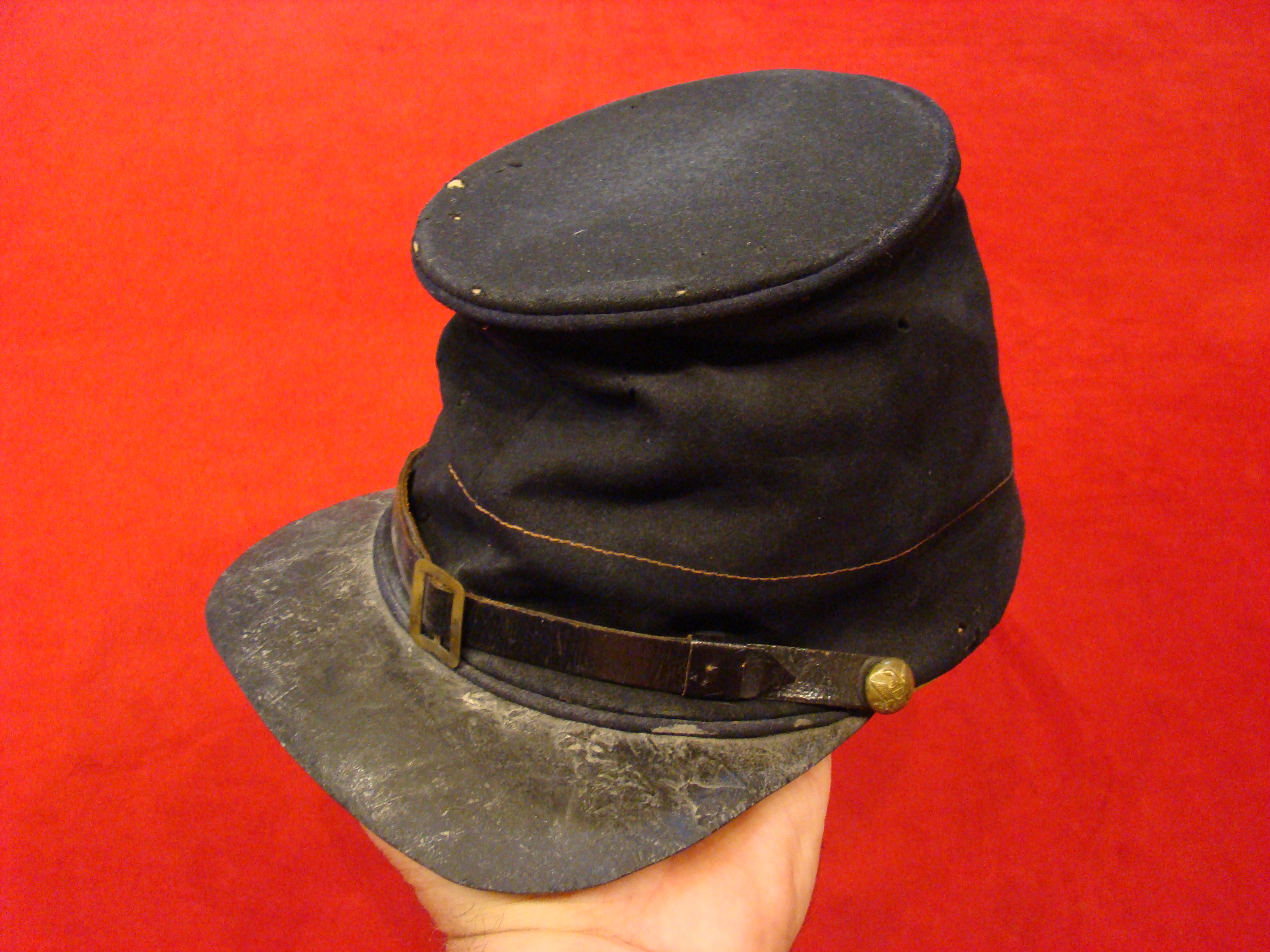
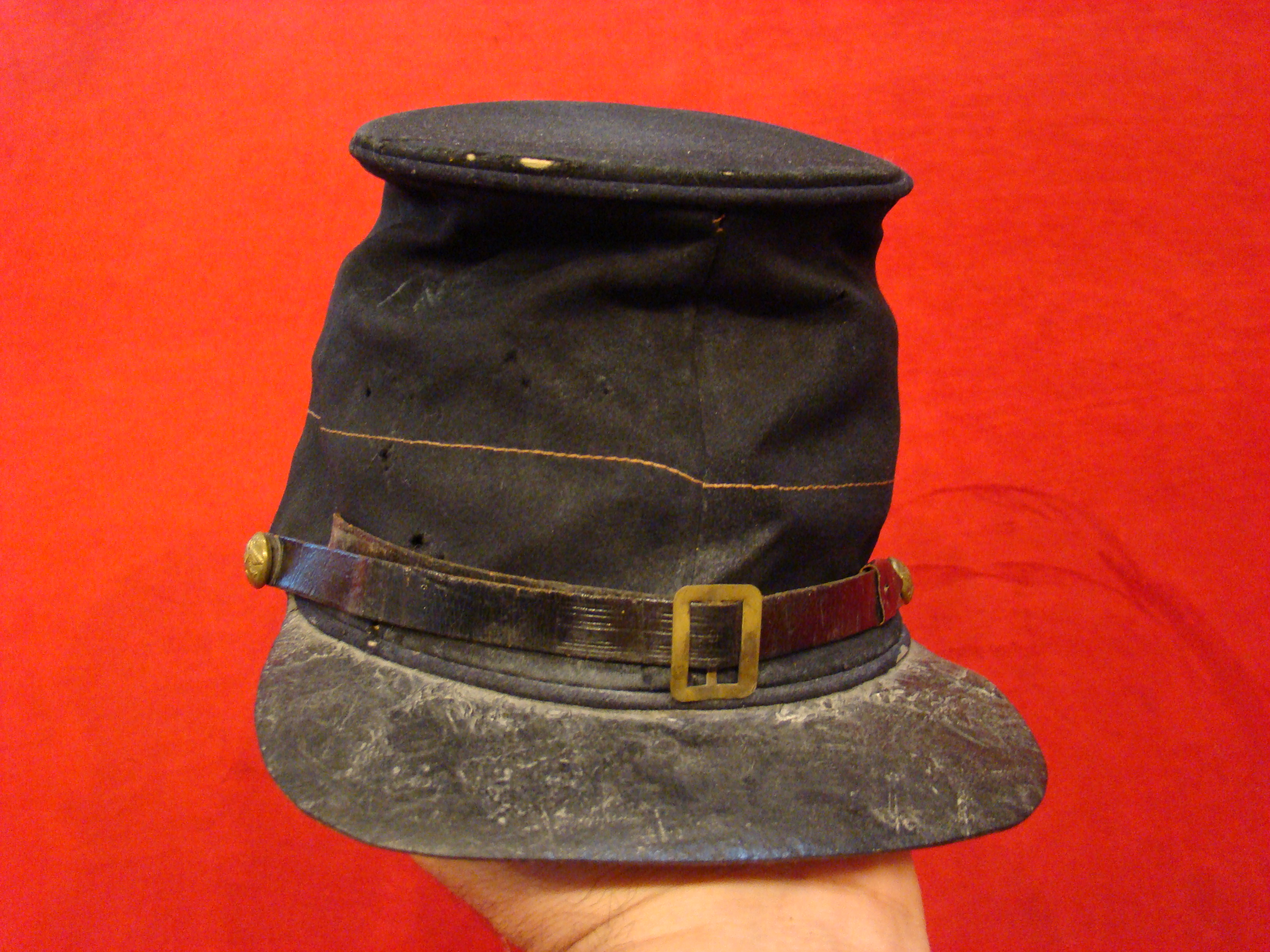
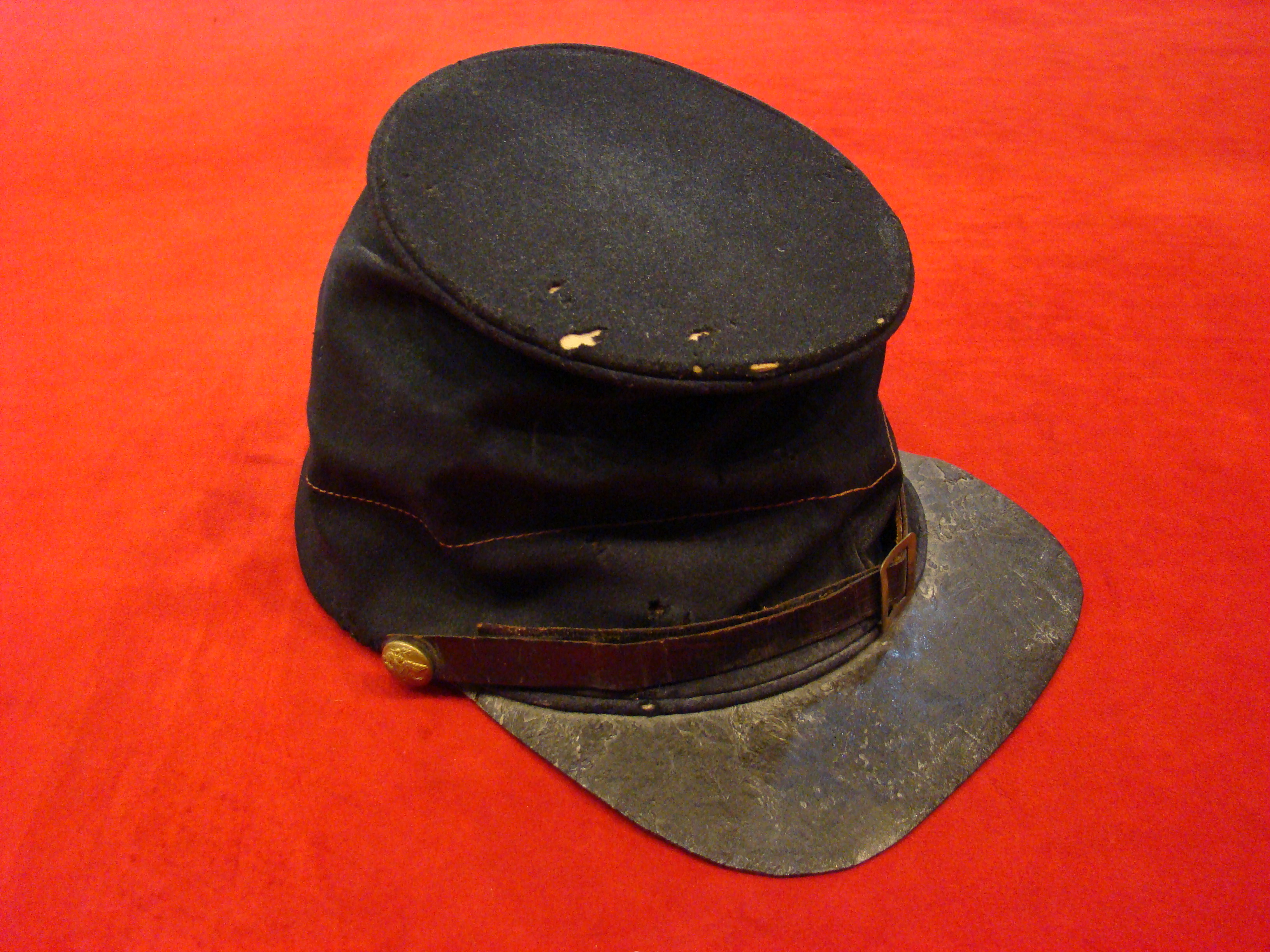
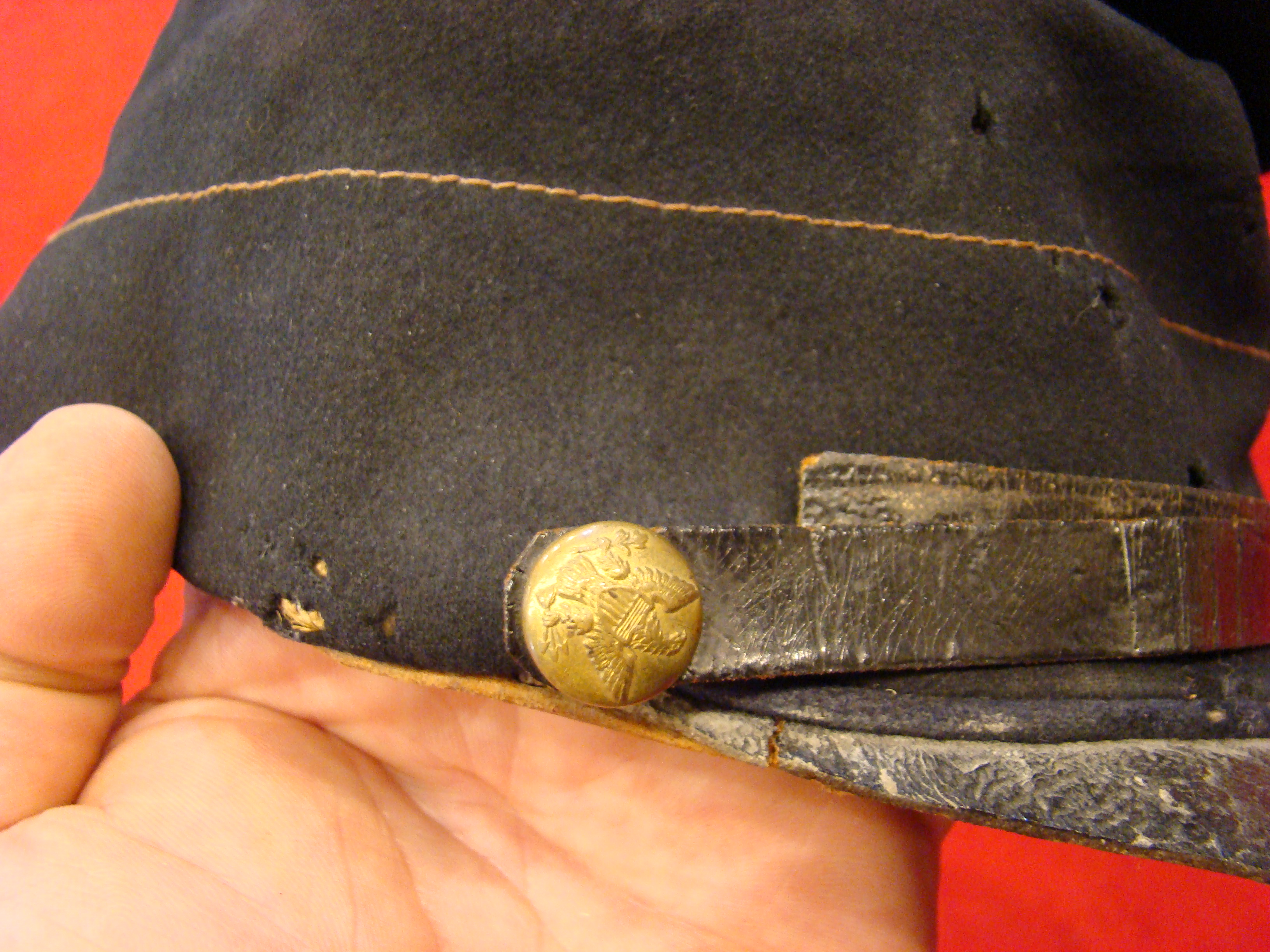
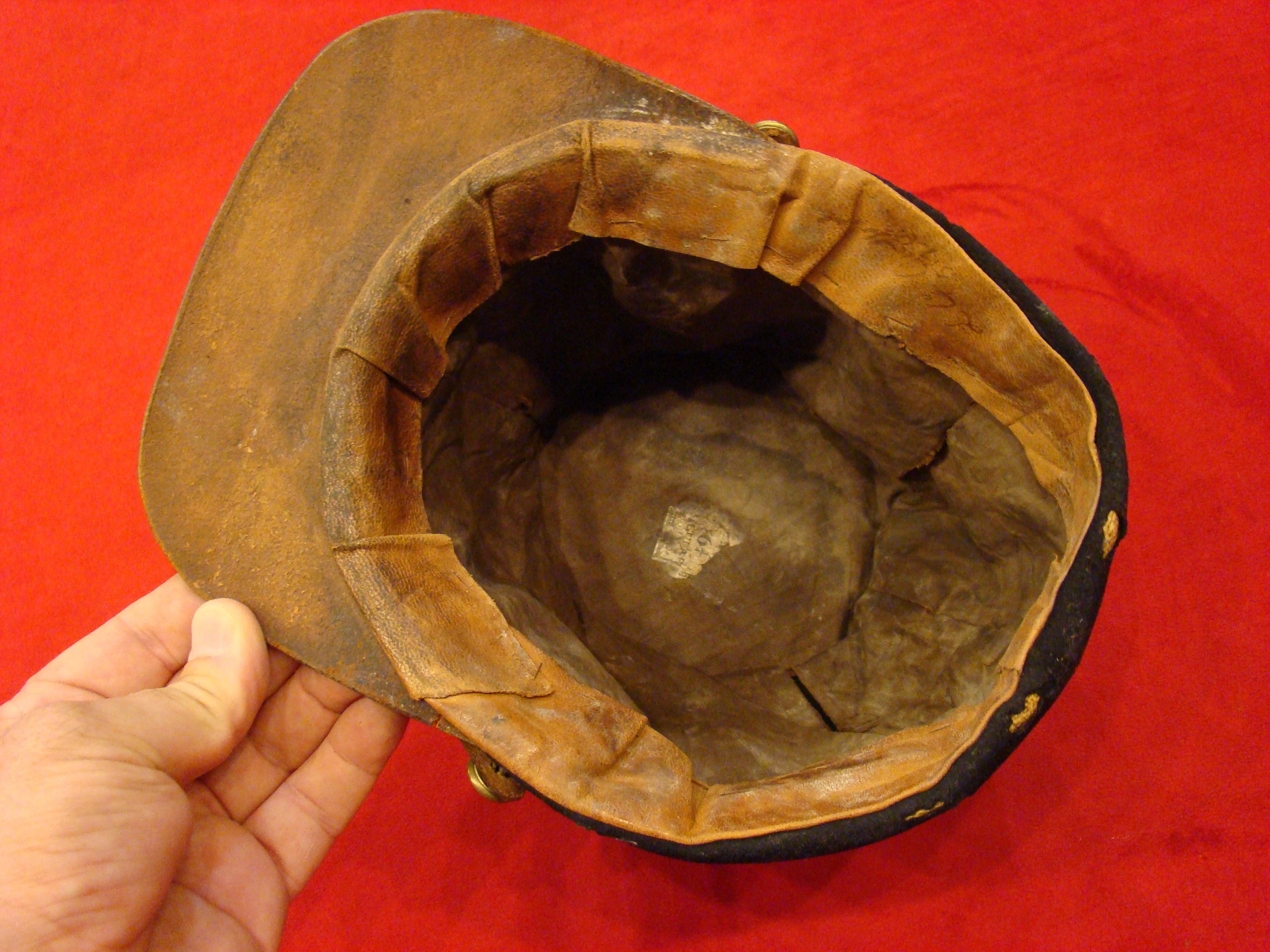
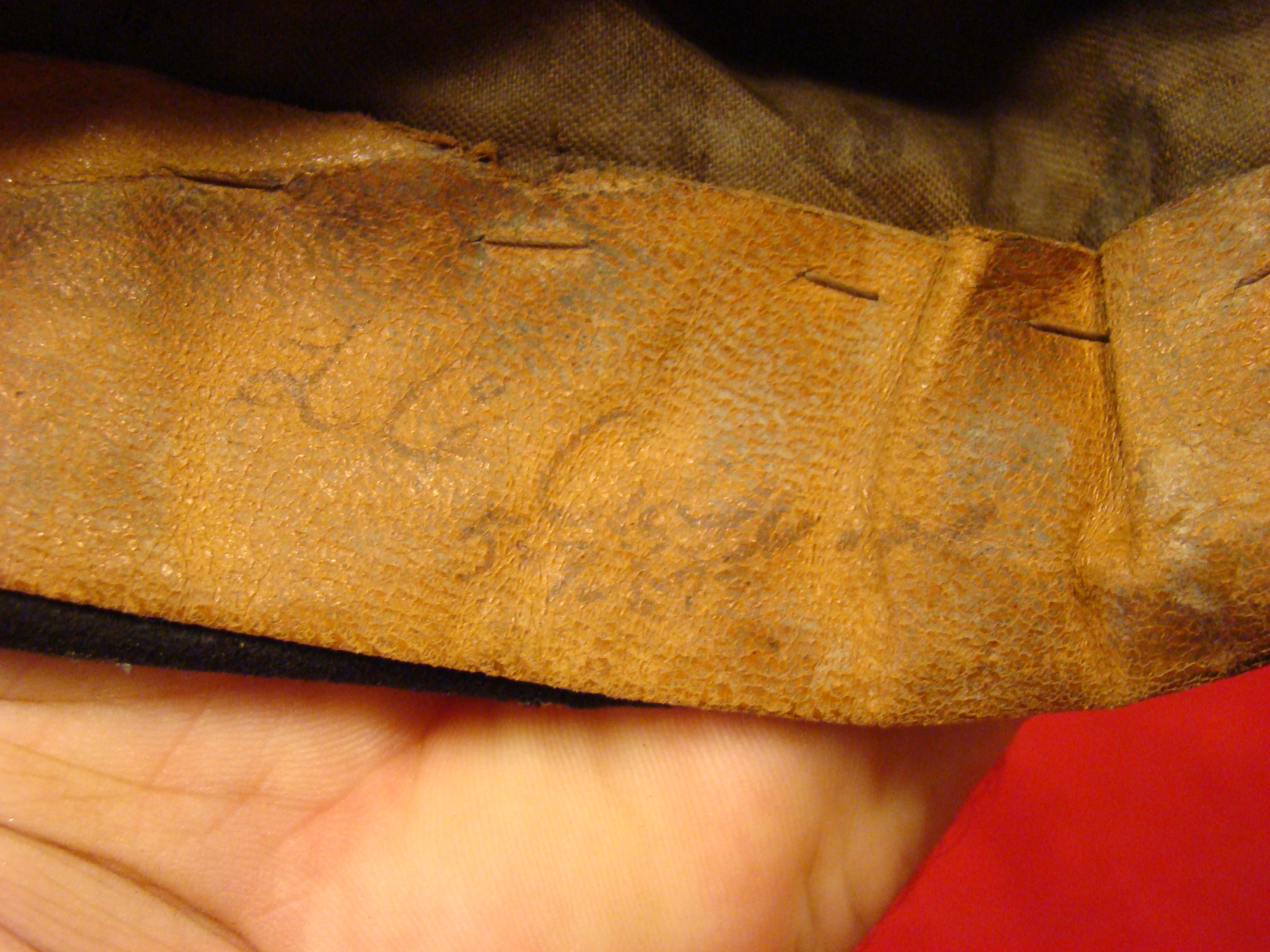
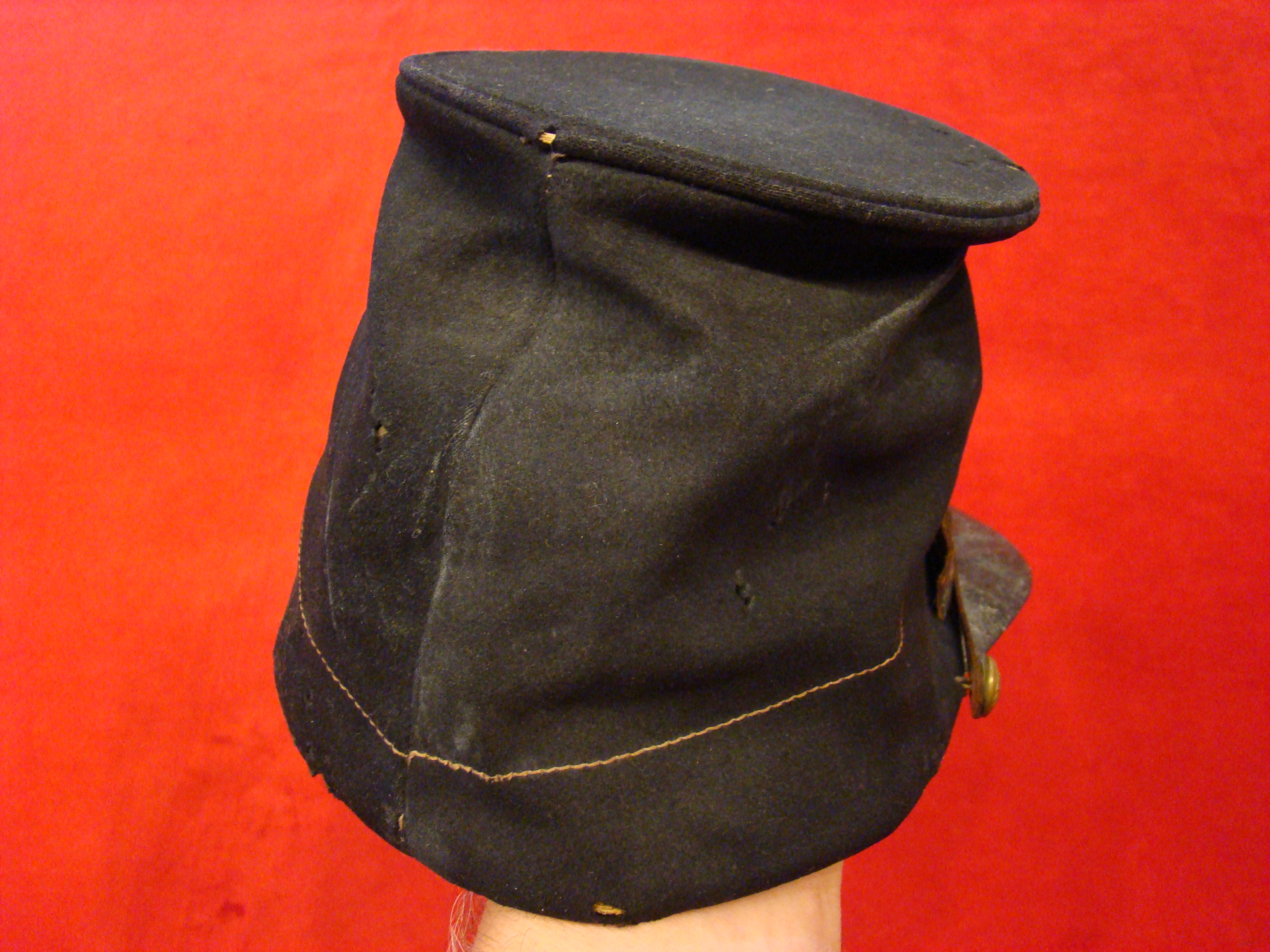
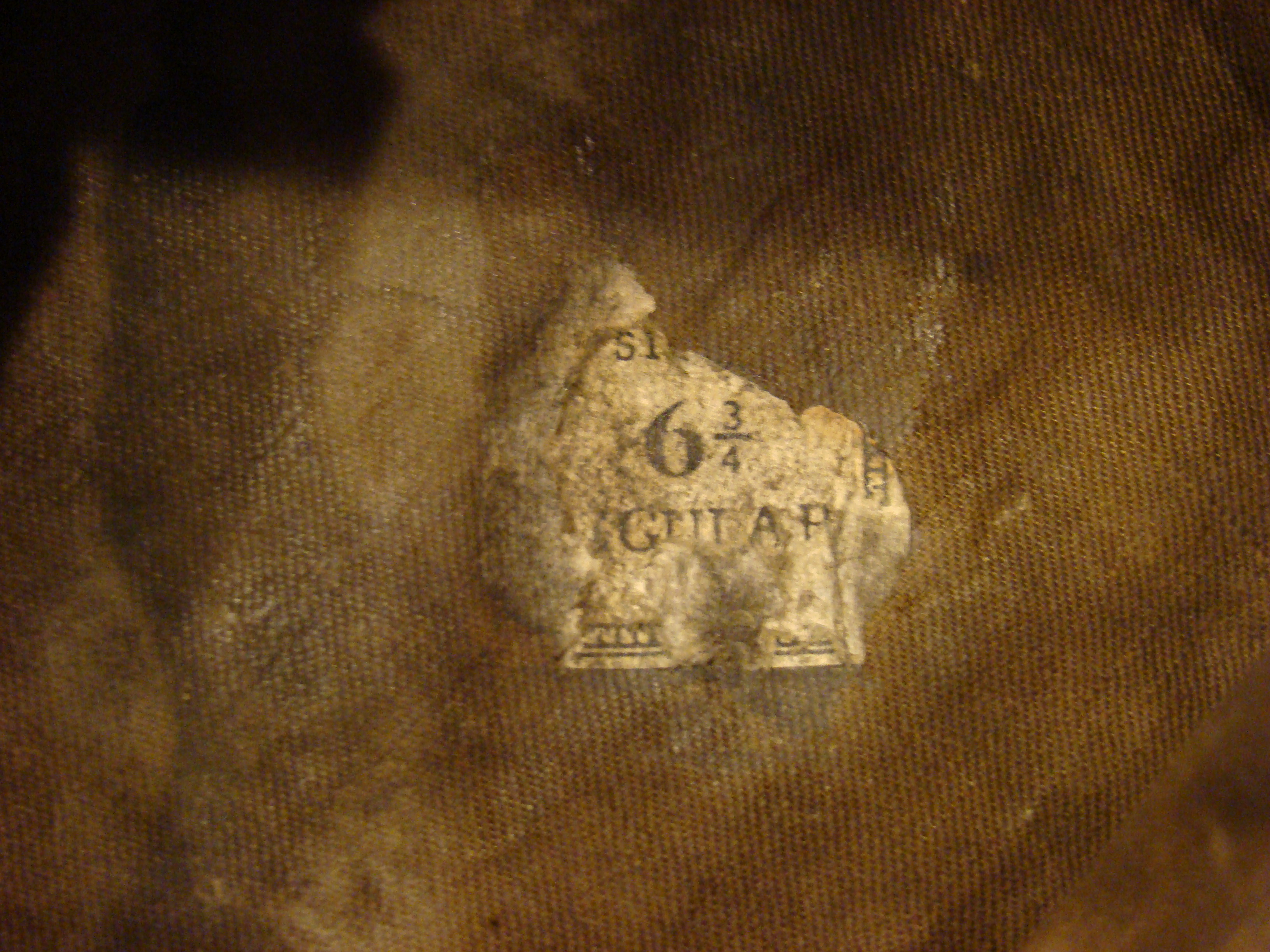
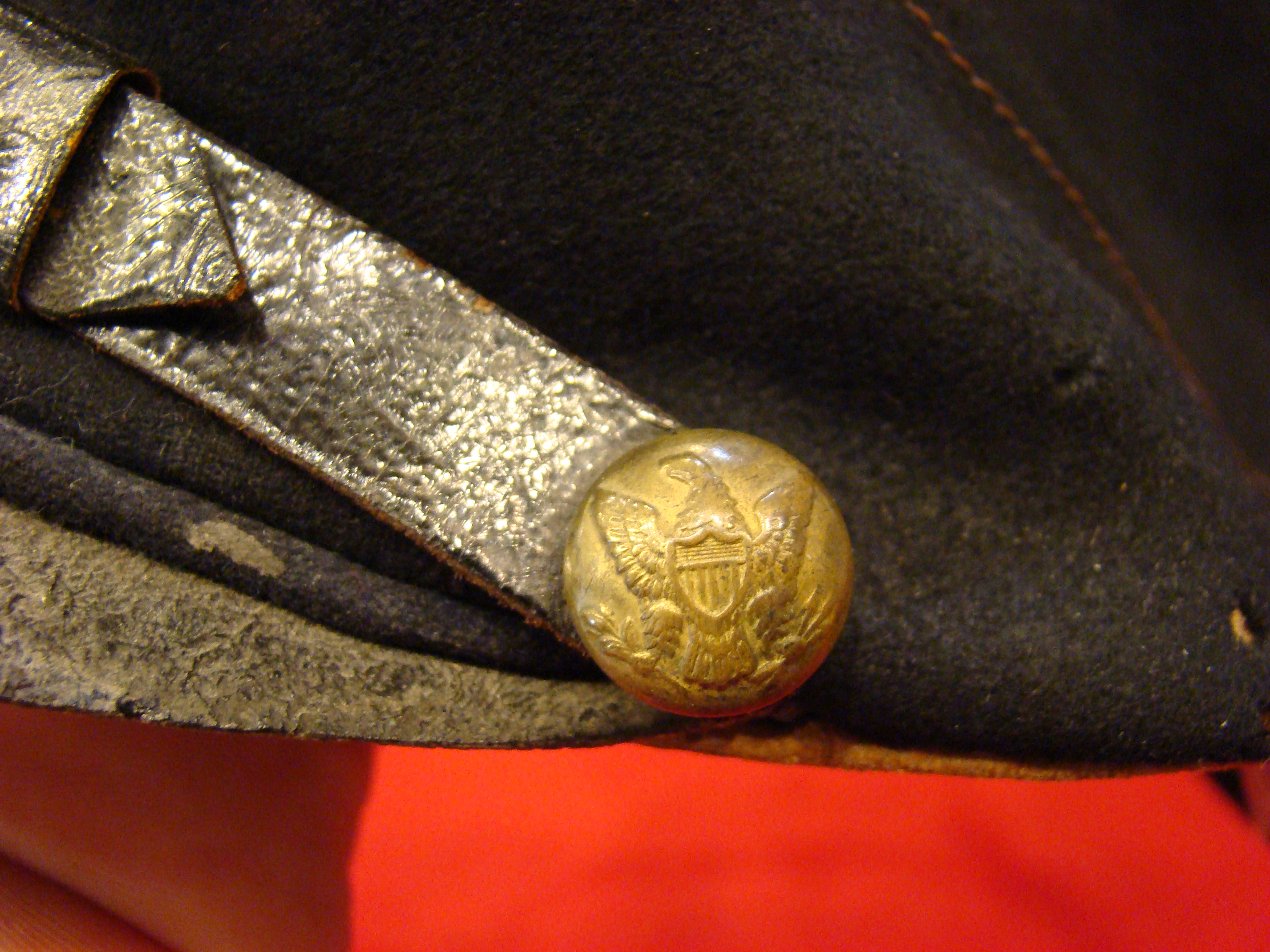
MS 4. US Enlisted Man’s Forage Cap Identified to Pvt. Lewis Cissell, Co. A, 52nd Indiana Vol. Infantry Regt.
High quality cap, totally untouched. Note vivid blue color. Original chinstrap, tarred leather brim, intact sweatband with soldier’s name and regiment written in brown ink. Linen liner completely intact with original “6-3/4″ REGULAR” label inside the crown. All I could find on Cissell is that he was from Loogootree Indiana. He enlisted on Feb. 1st, 1862 as a private in Company A of the 52nd Indiana Vol. Infantry Regt. He evidently re-enlisted on Feb. 27, 1864, and was discharged on August 10th 1865 in Montgomery Alabama. He was transferred to Company I in May of 1865. $3495.00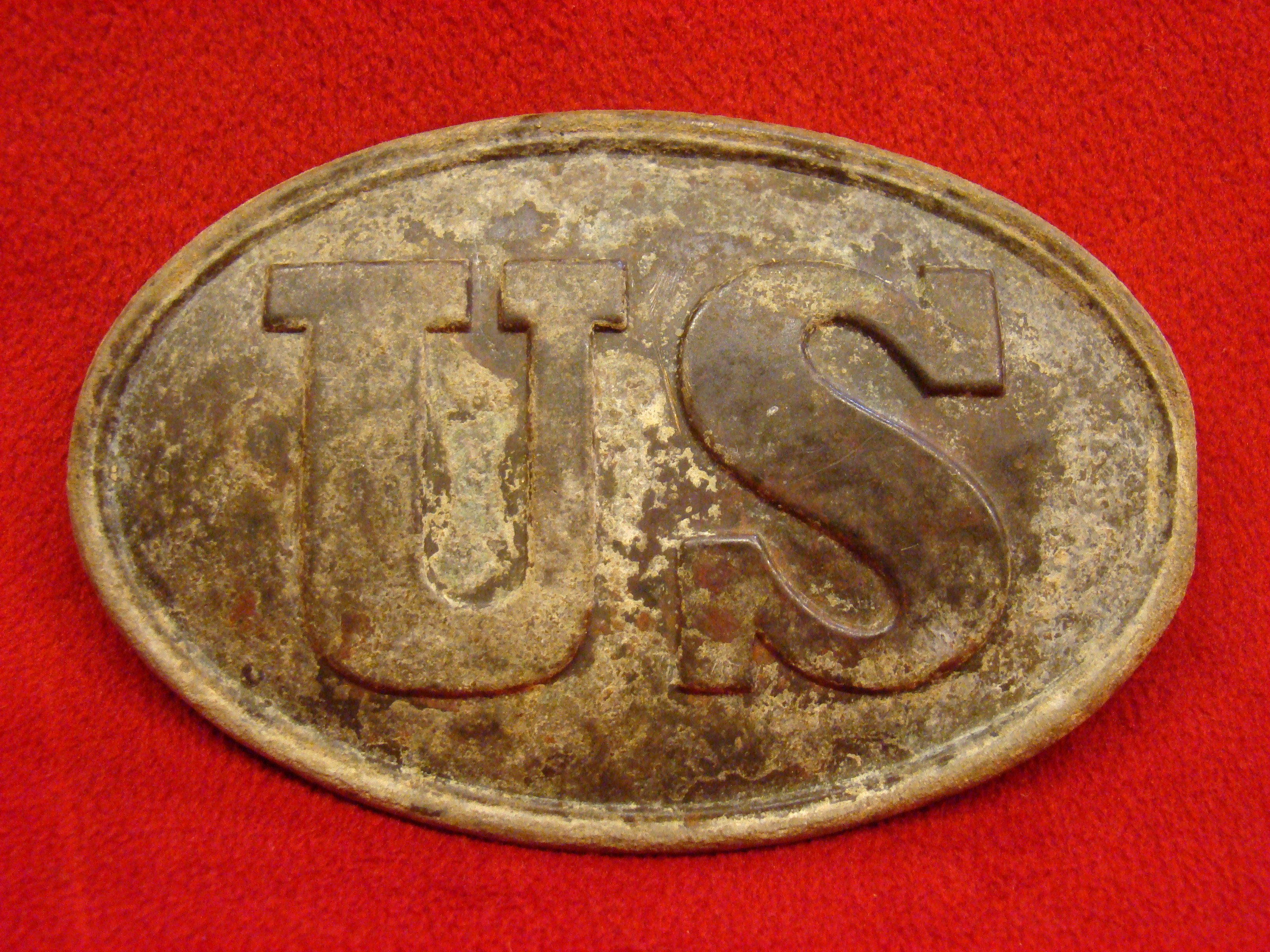
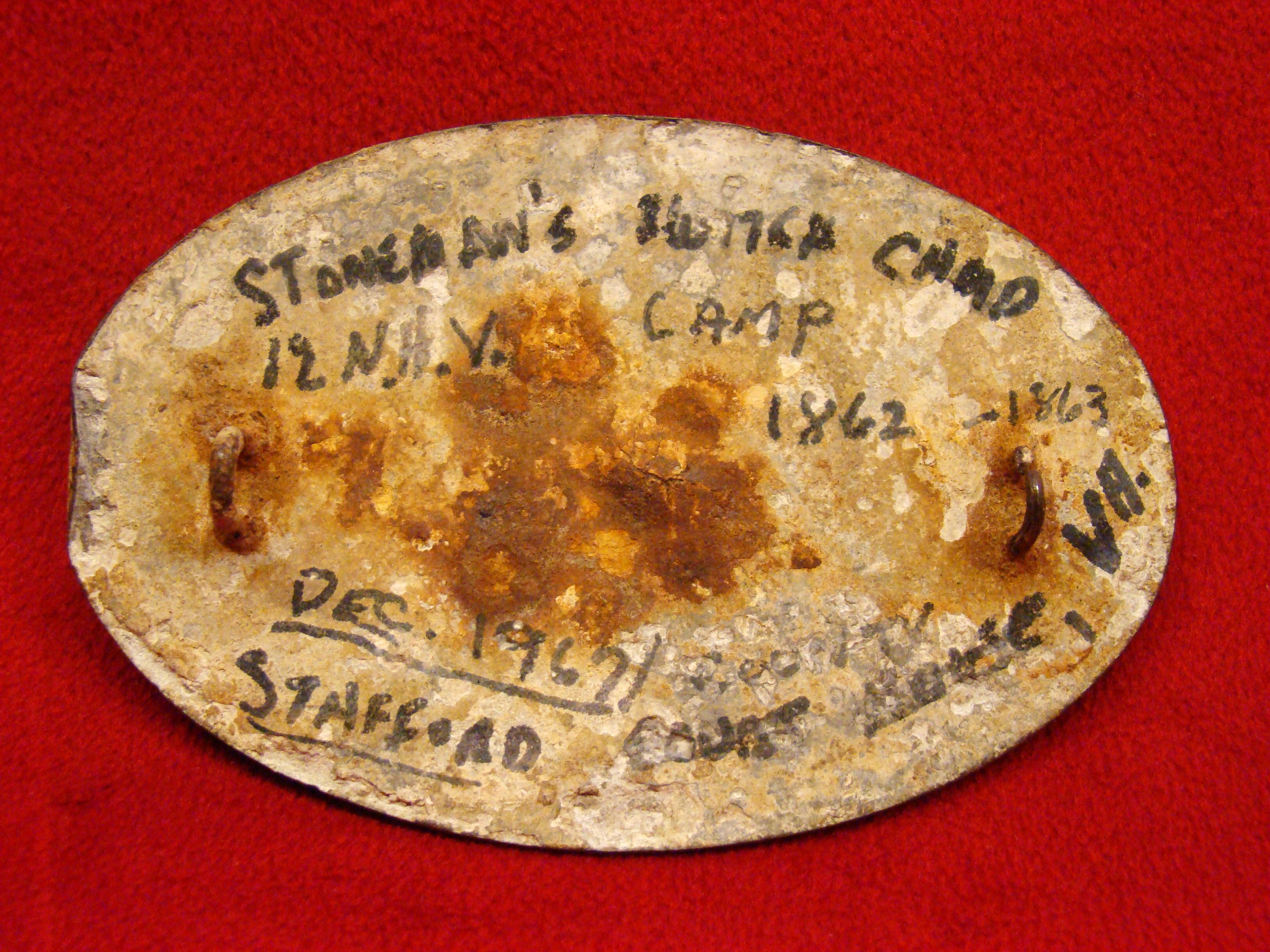
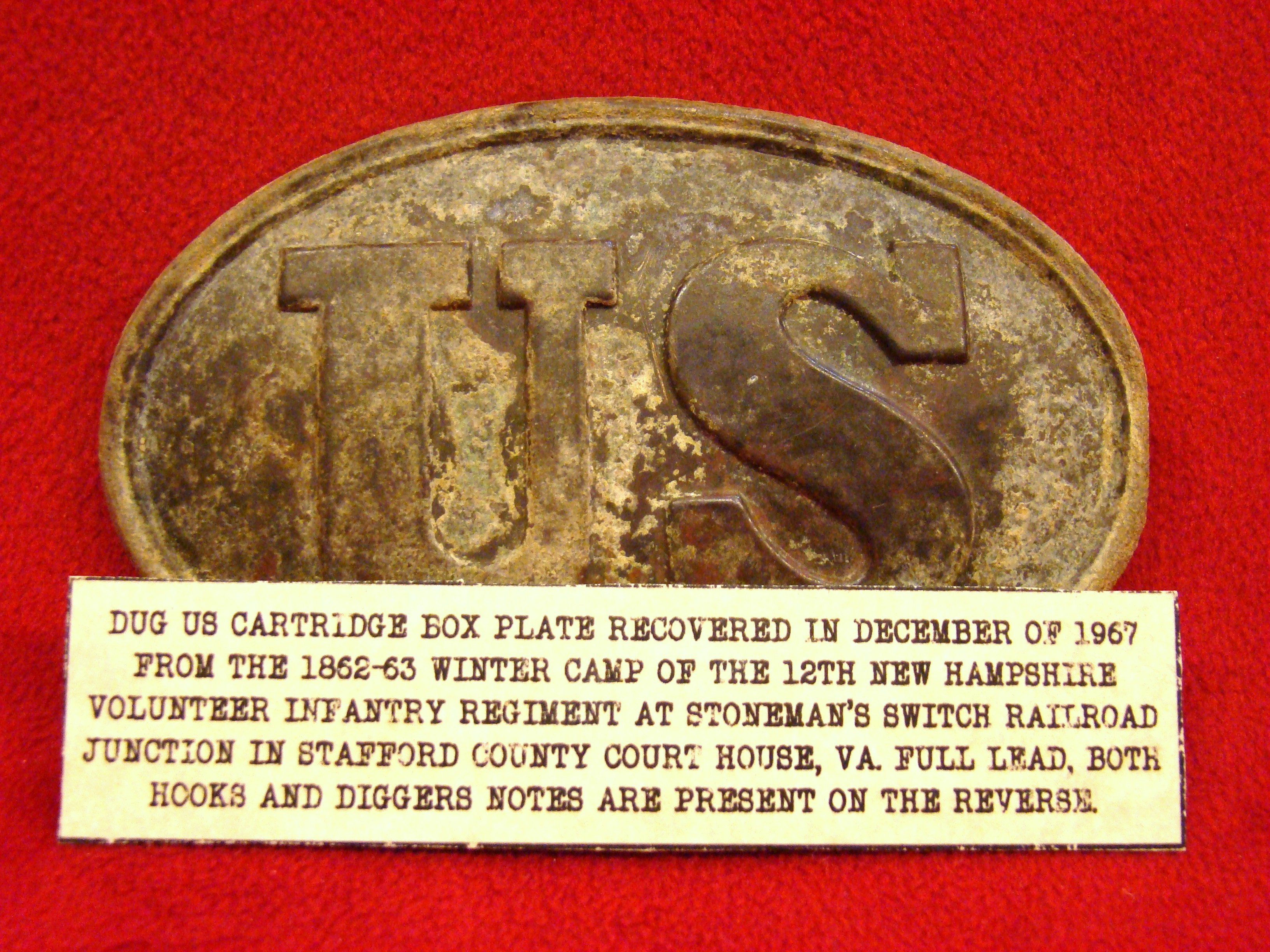
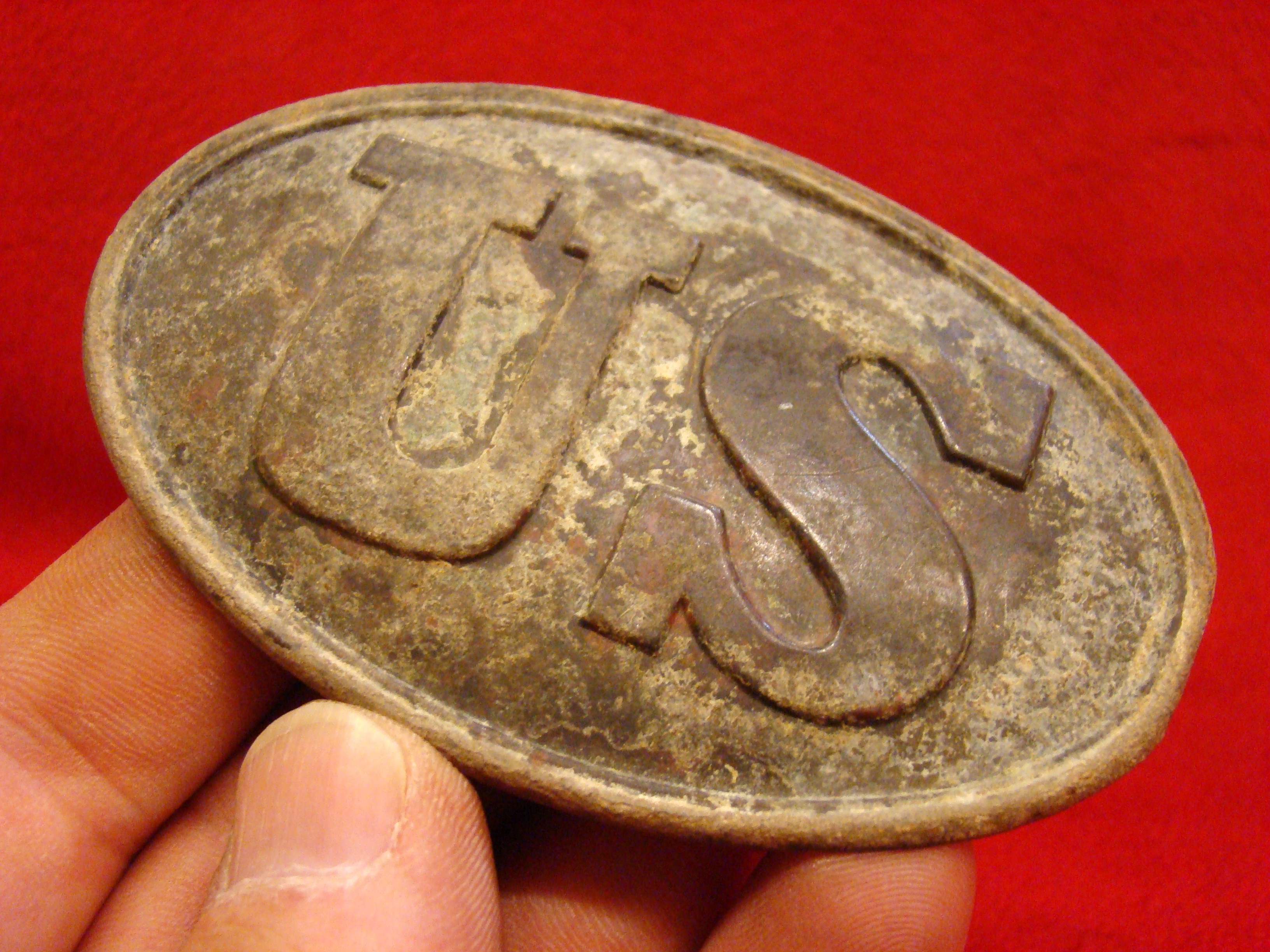
USBP 1. Dug US Enlisted Man’s Cartridge Box Plate. 1862-1863 Winter Camp of The 12th New Hampshire Vol. Infantry Regt. at “Stoneman’s Switch” VA. Stafford County. Found in 1967.
Nice looking plate with solid provenance. Full lead backing and both attachment loops intact. $295.00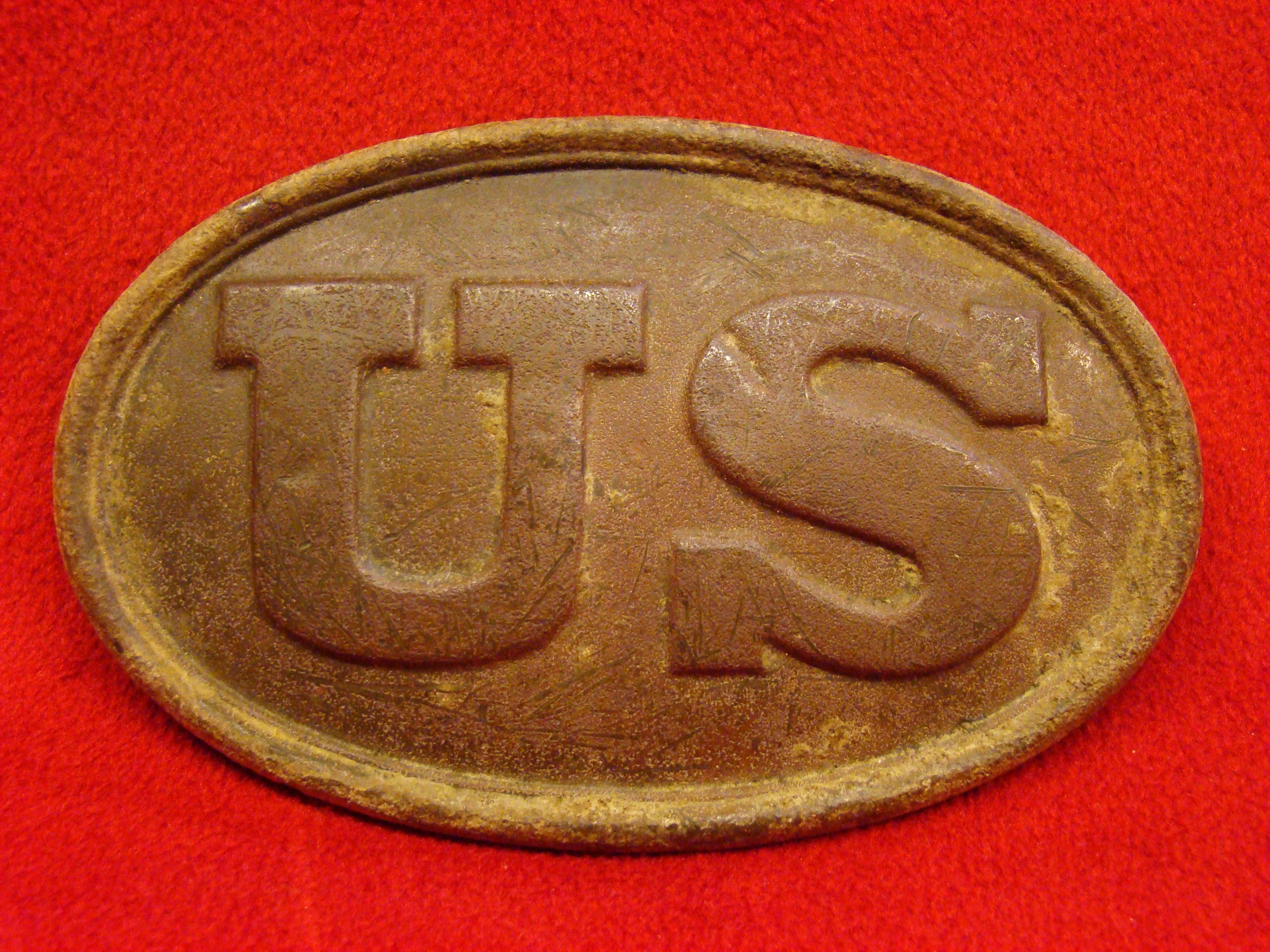
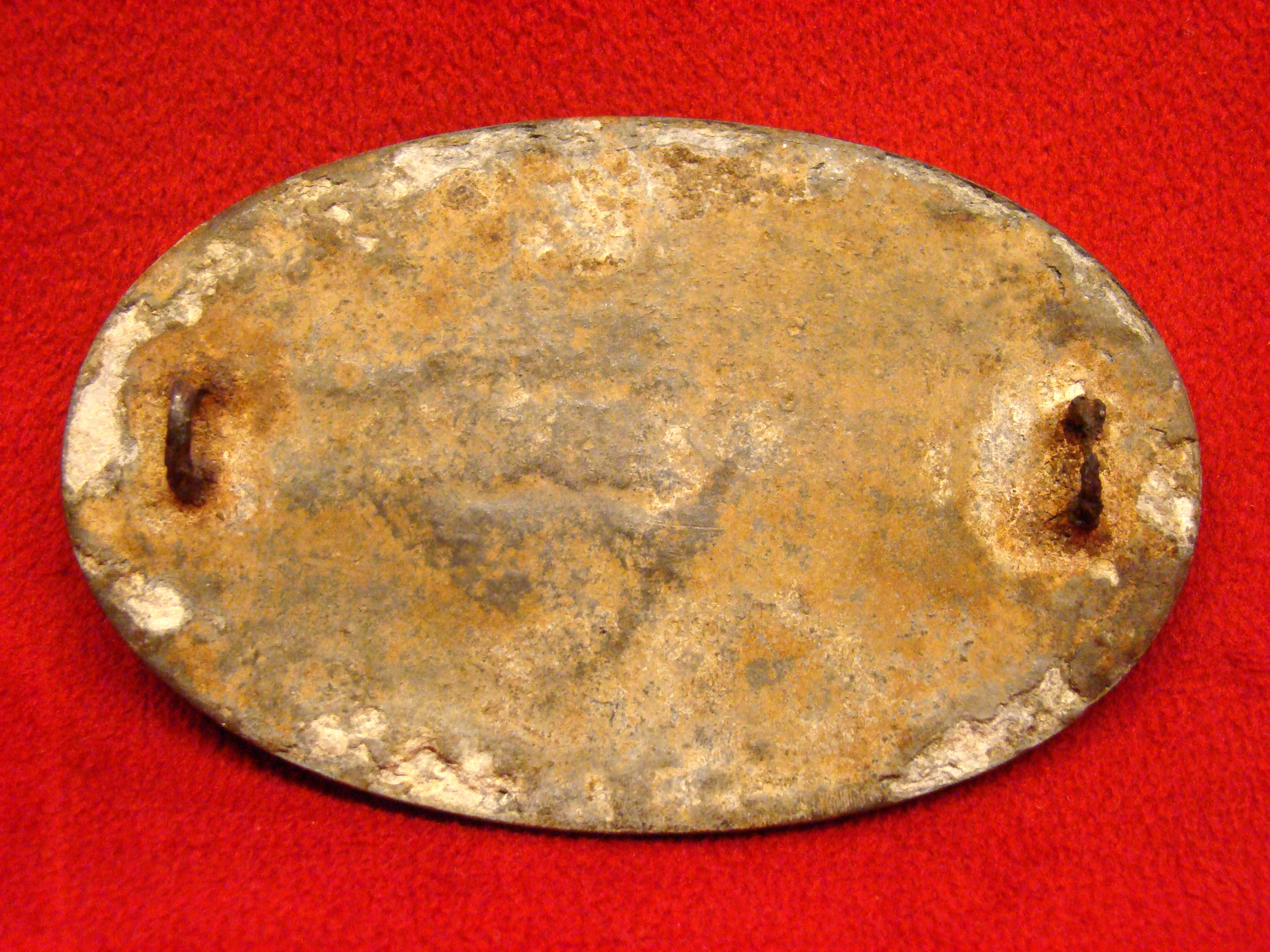
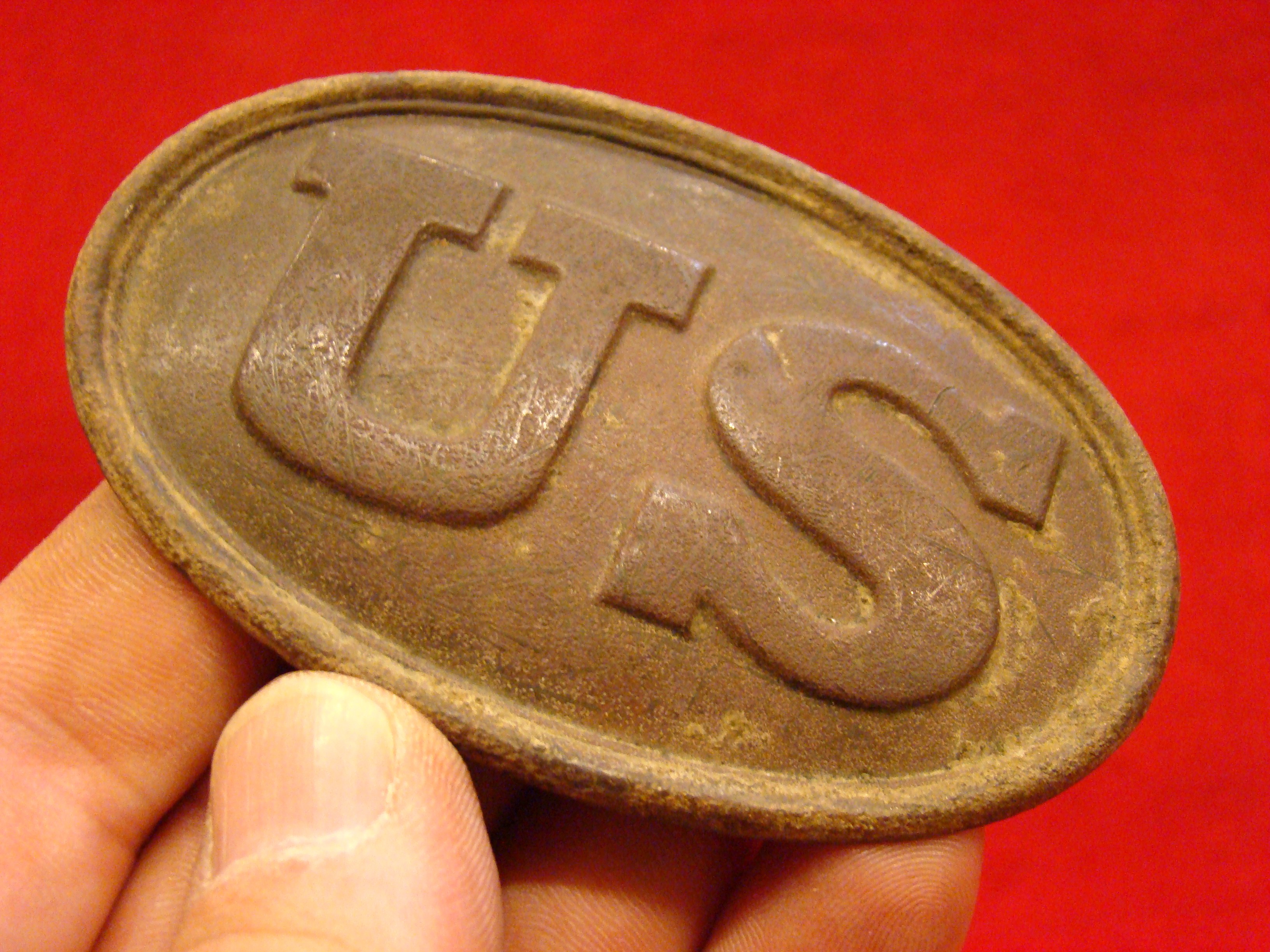
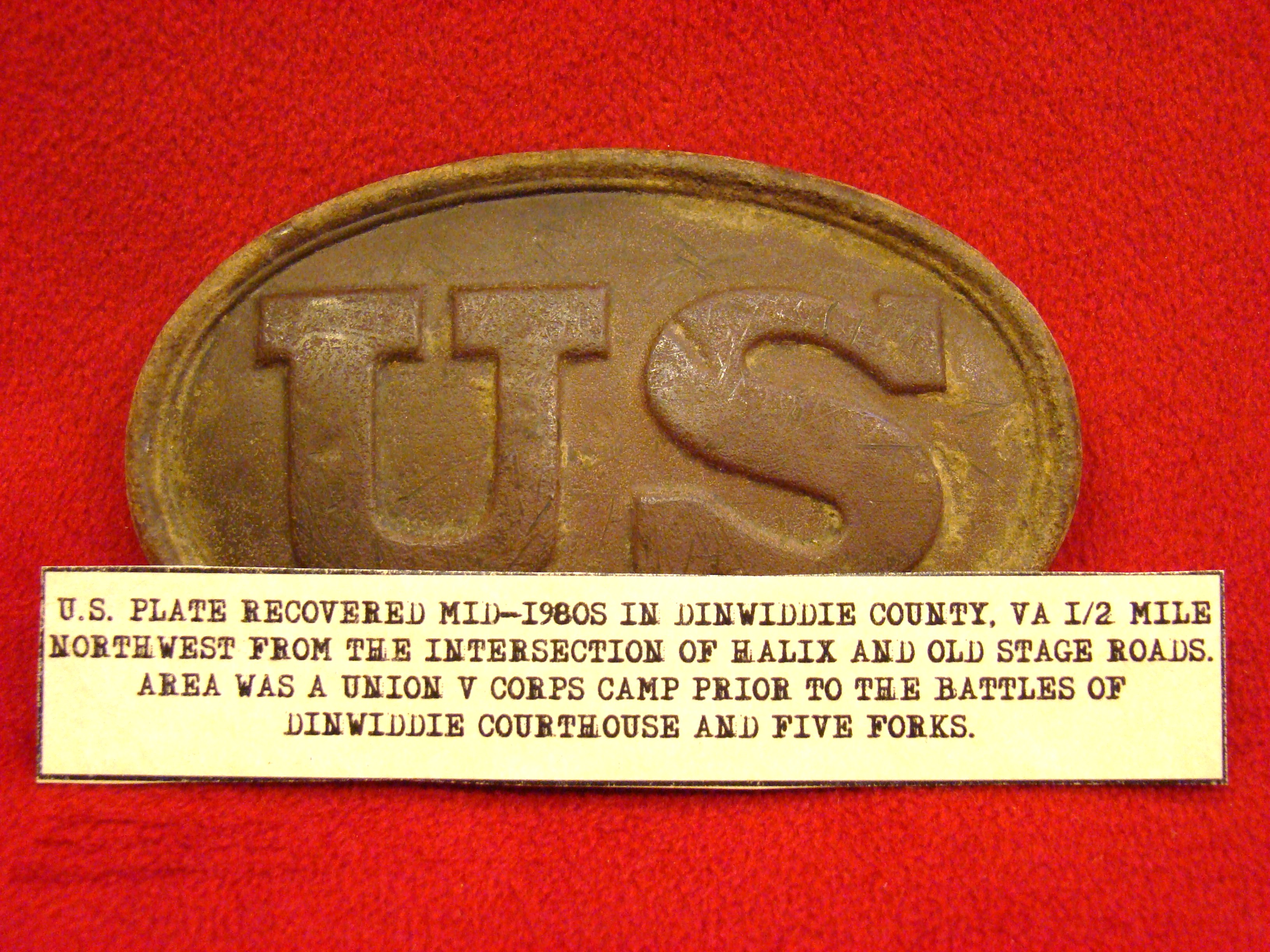
USBP 2. Dug US Enlisted Infantryman’s Cartridge Box Plate. Dinwiddie County VA. US 5th Army Corps Camp.
Another nice looking plate with solid provenance. Full lead backing. Both attachment loops intact but rusted. $250.00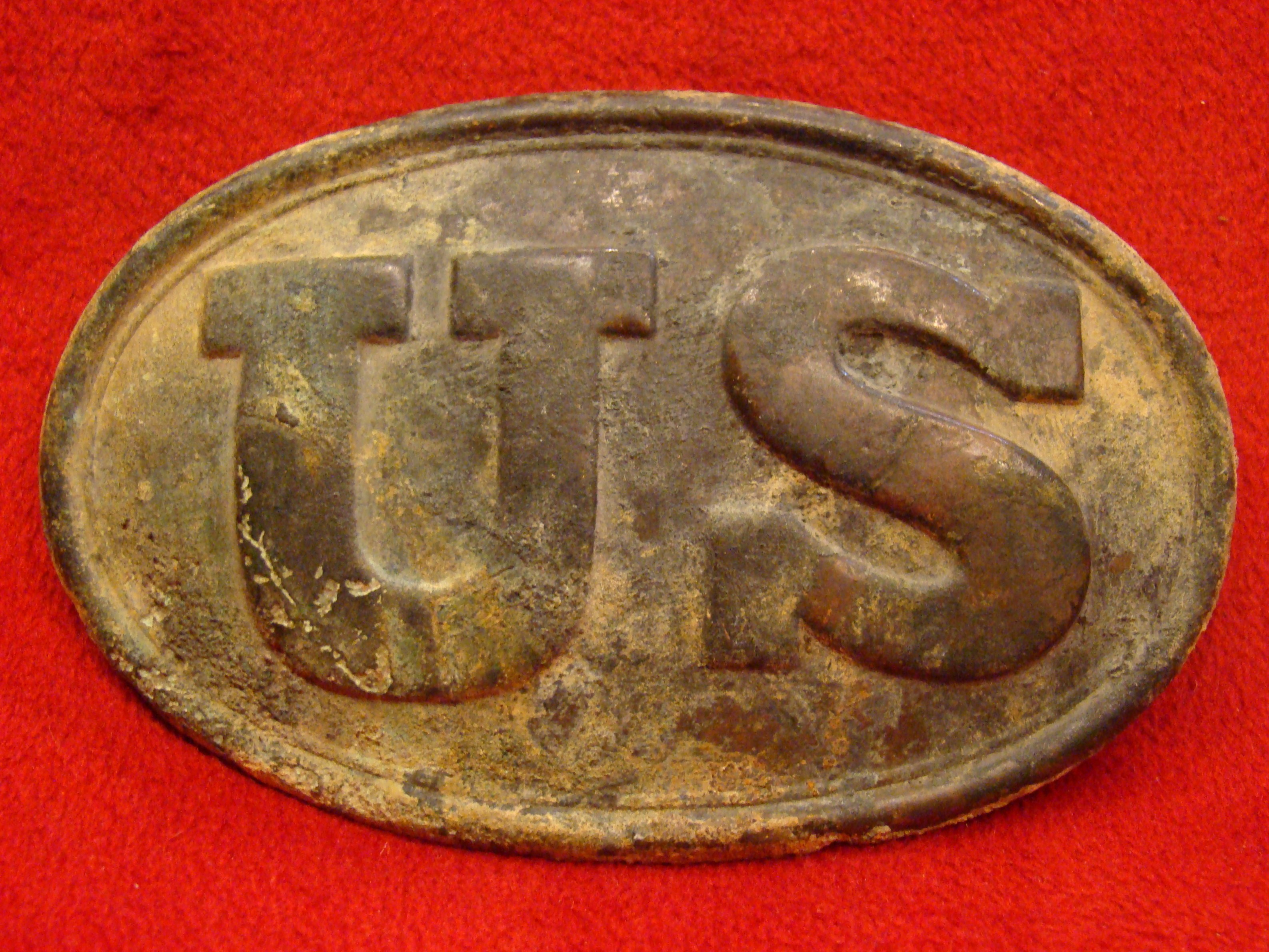
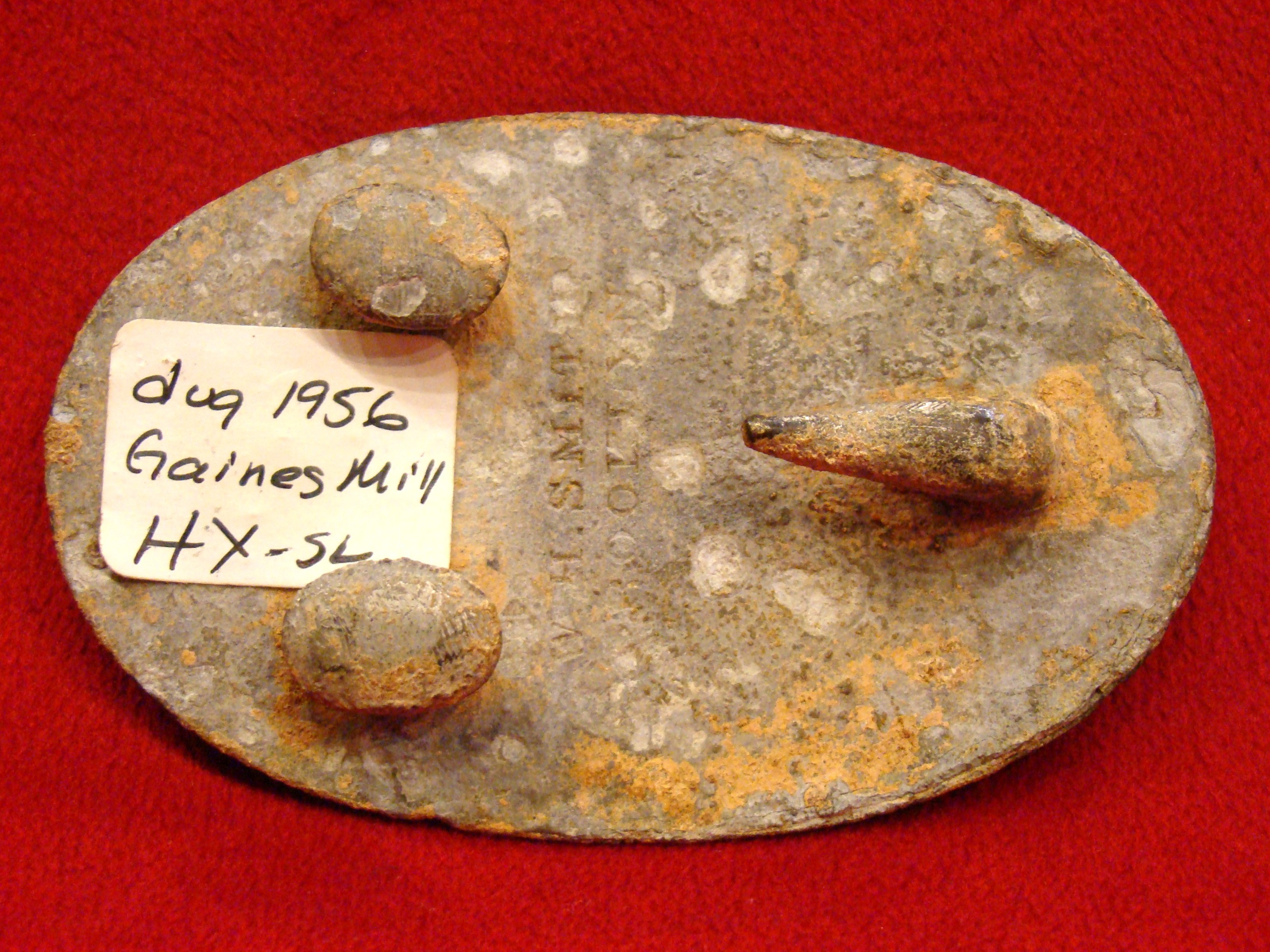
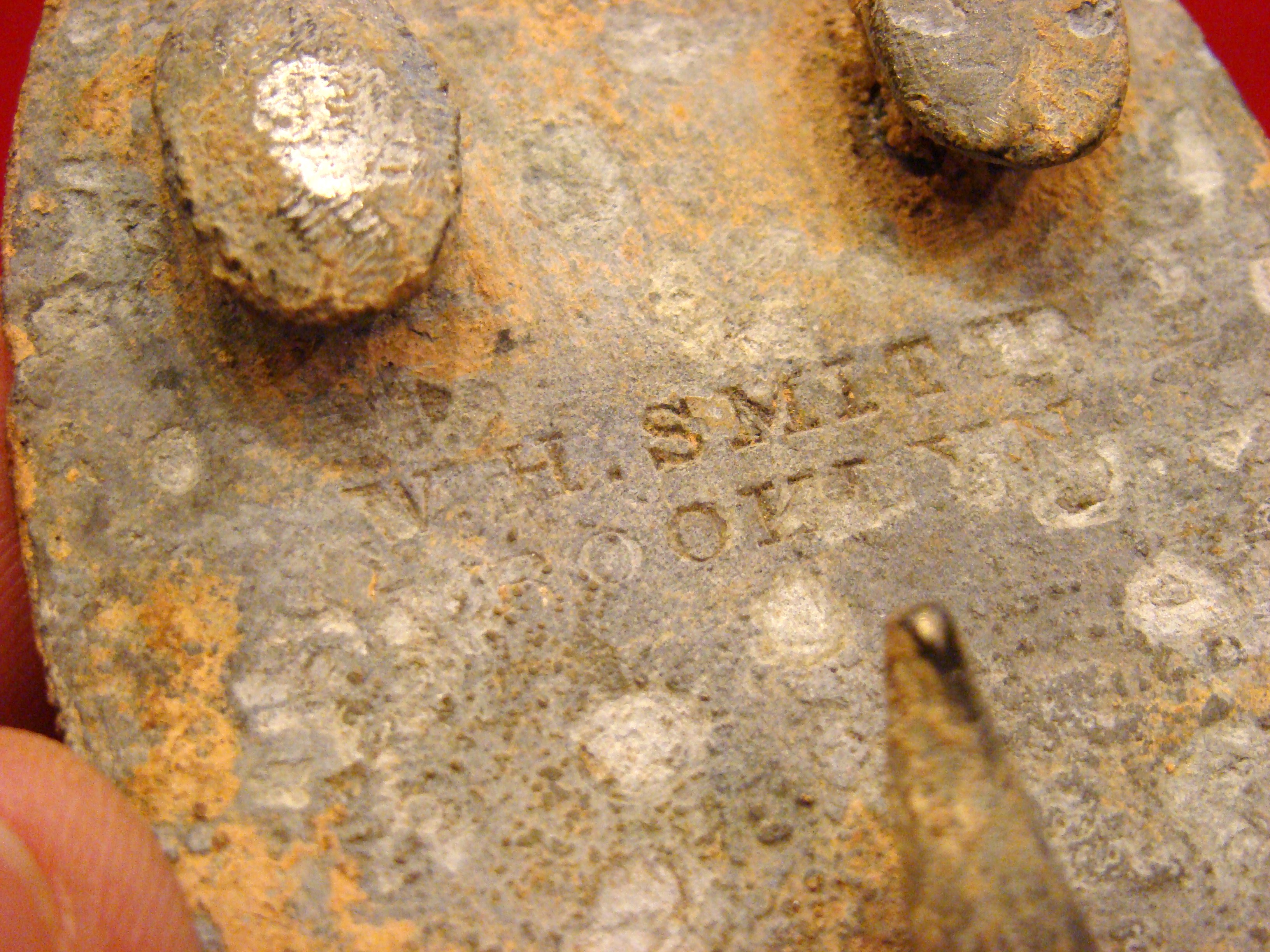
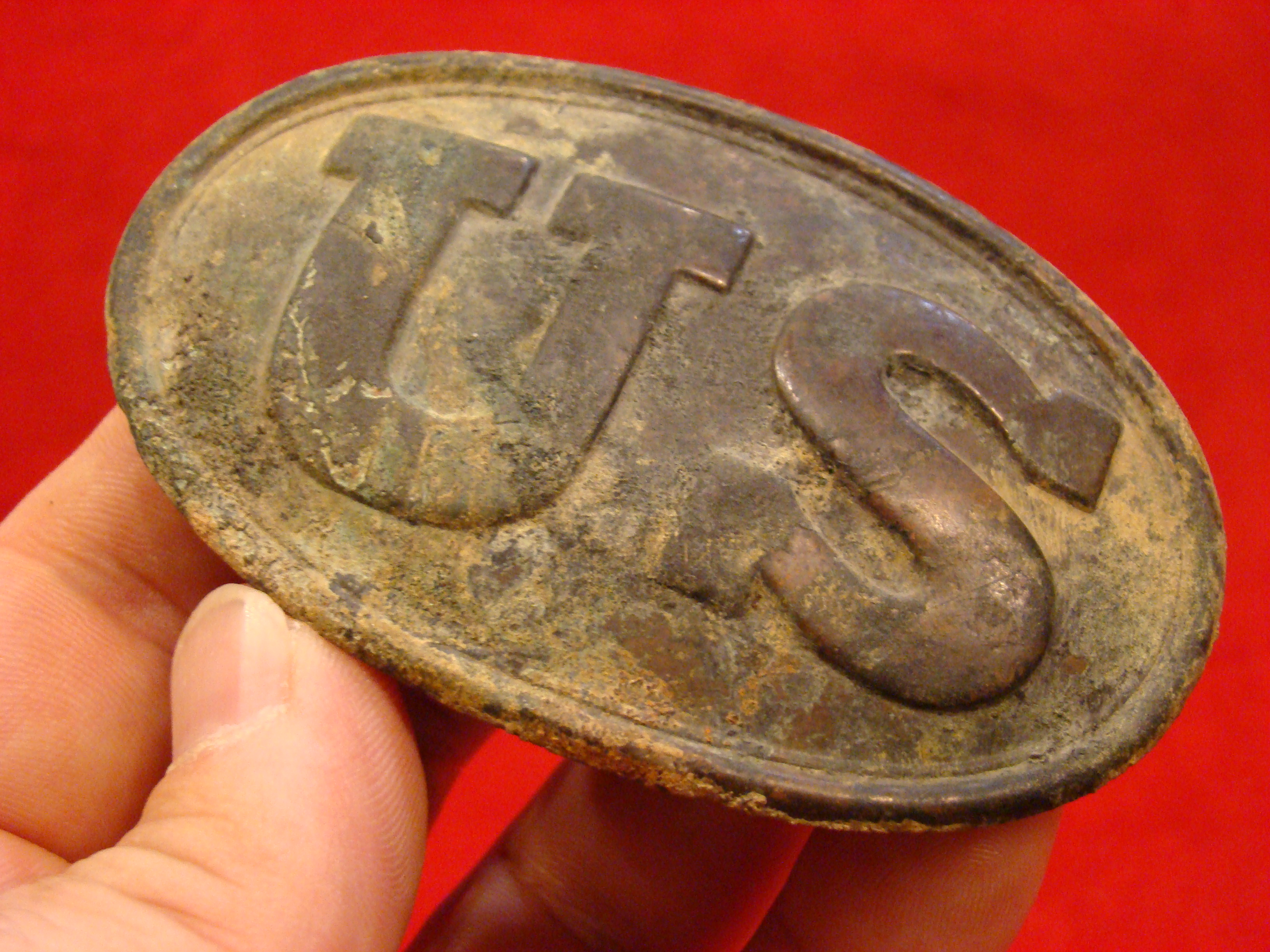
USBP 3. Dug US Enlisted Infantryman’s Belt Buckle (Maker Marked “W.H. SMITH/BROOKLYN”). Found on The June 27, 1862 Gaines Mill VA. Battlefield in 1956.
Classic E. Gaylord contract belt plate with intact belt hooks. Note leather belt remnants. See page 302, Plate # 483 in O’Donnell & Campbell’s reference book “American Military Belt Plates” for an identical example. SOLD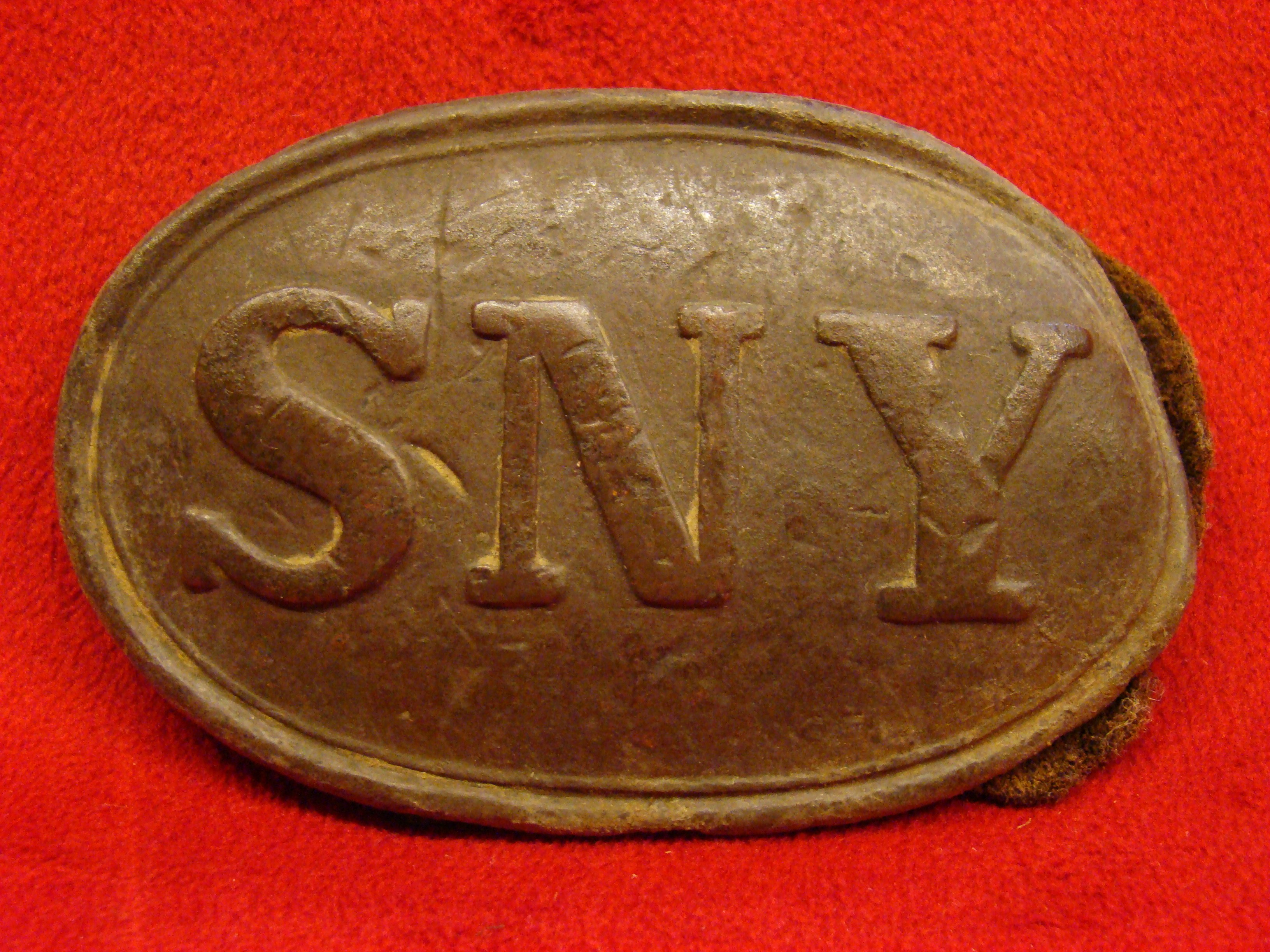
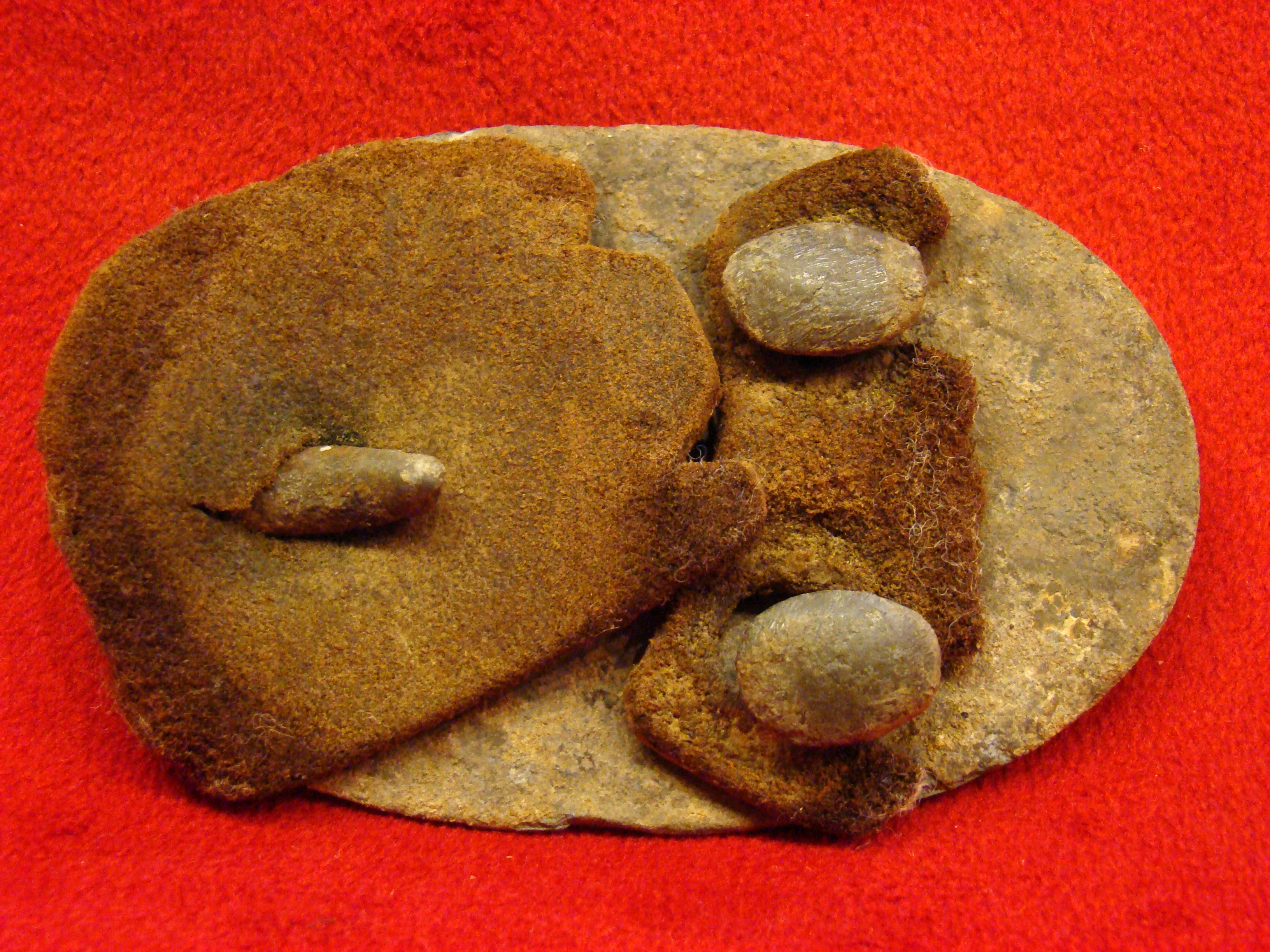
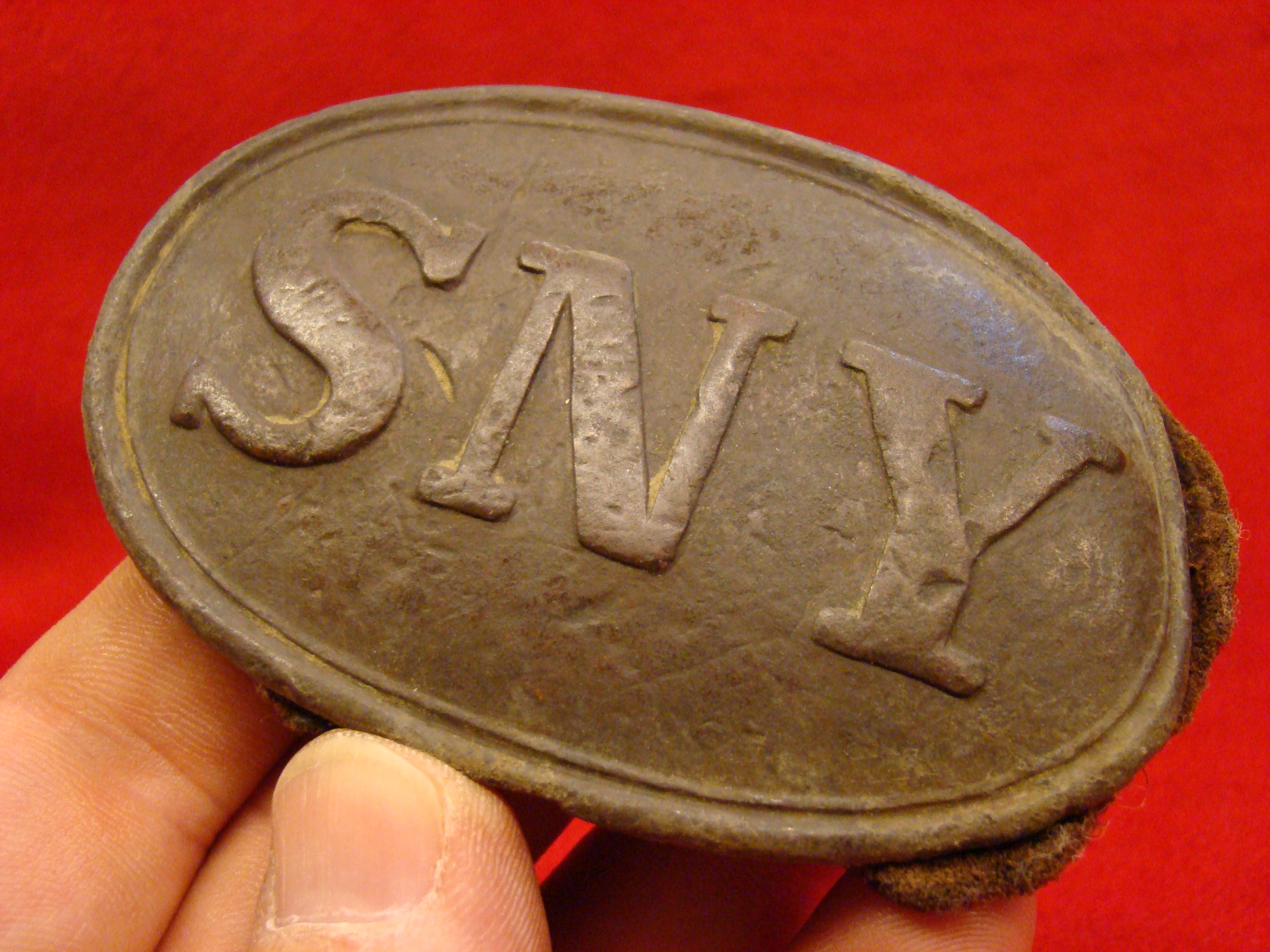
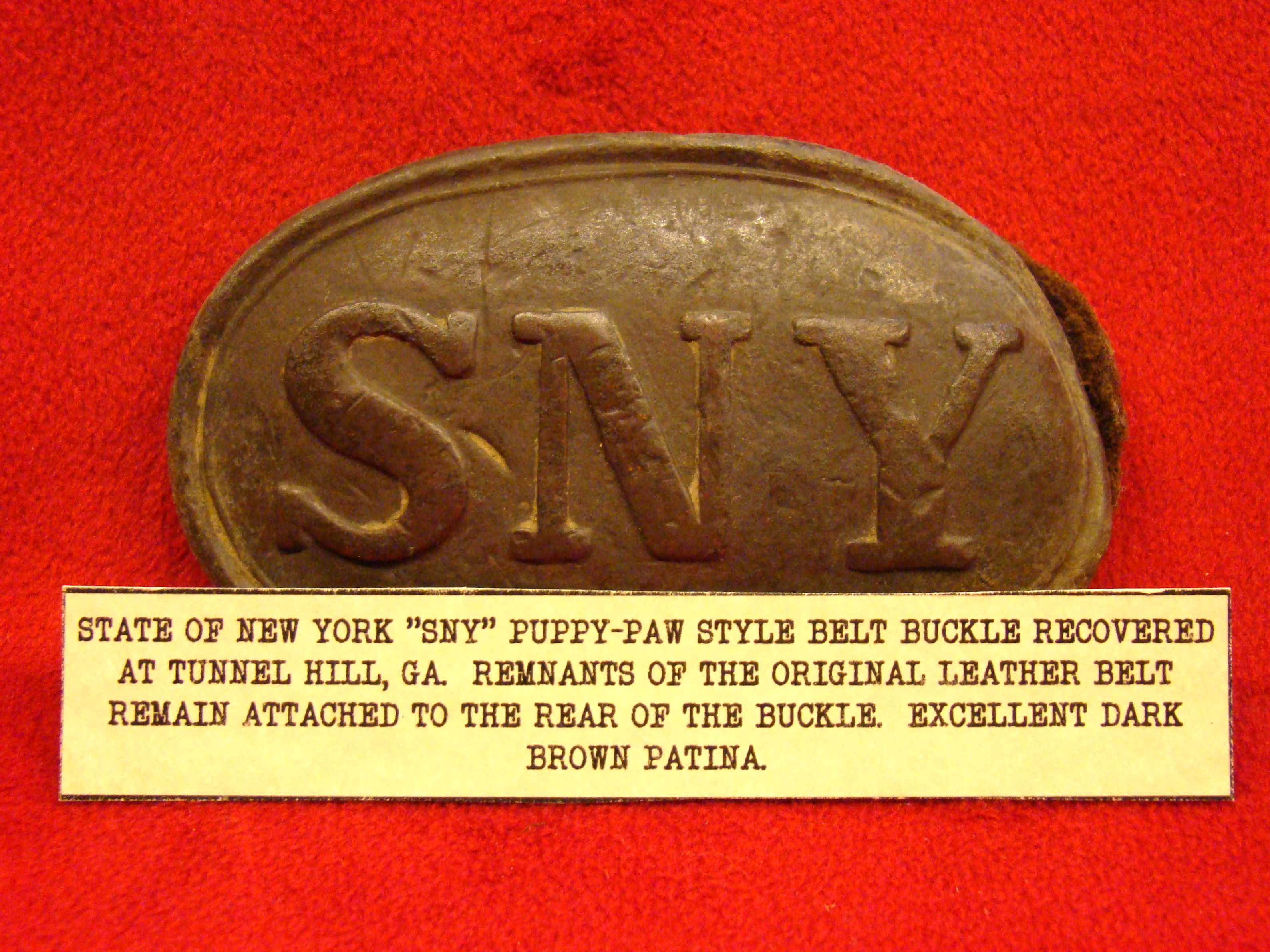
USBP 4. Dug State of New York Enlisted Man’s Belt Buckle. Tunnel Hill GA.
Great looking belt plate with obvious campaign wear and a chocolate brown patina. All attachment hooks intact on reverse with large remnants of the leather belt. Lost by a member of Gen. “Fighting” Joe Hooker’s Division that was sent South to fight at Lookout Mountain and The Atlanta Campaign. See page 335, Plate # 542 in O’Donnell & Campbell’s reference book “American Military Belt Plates” for an identical example. SOLD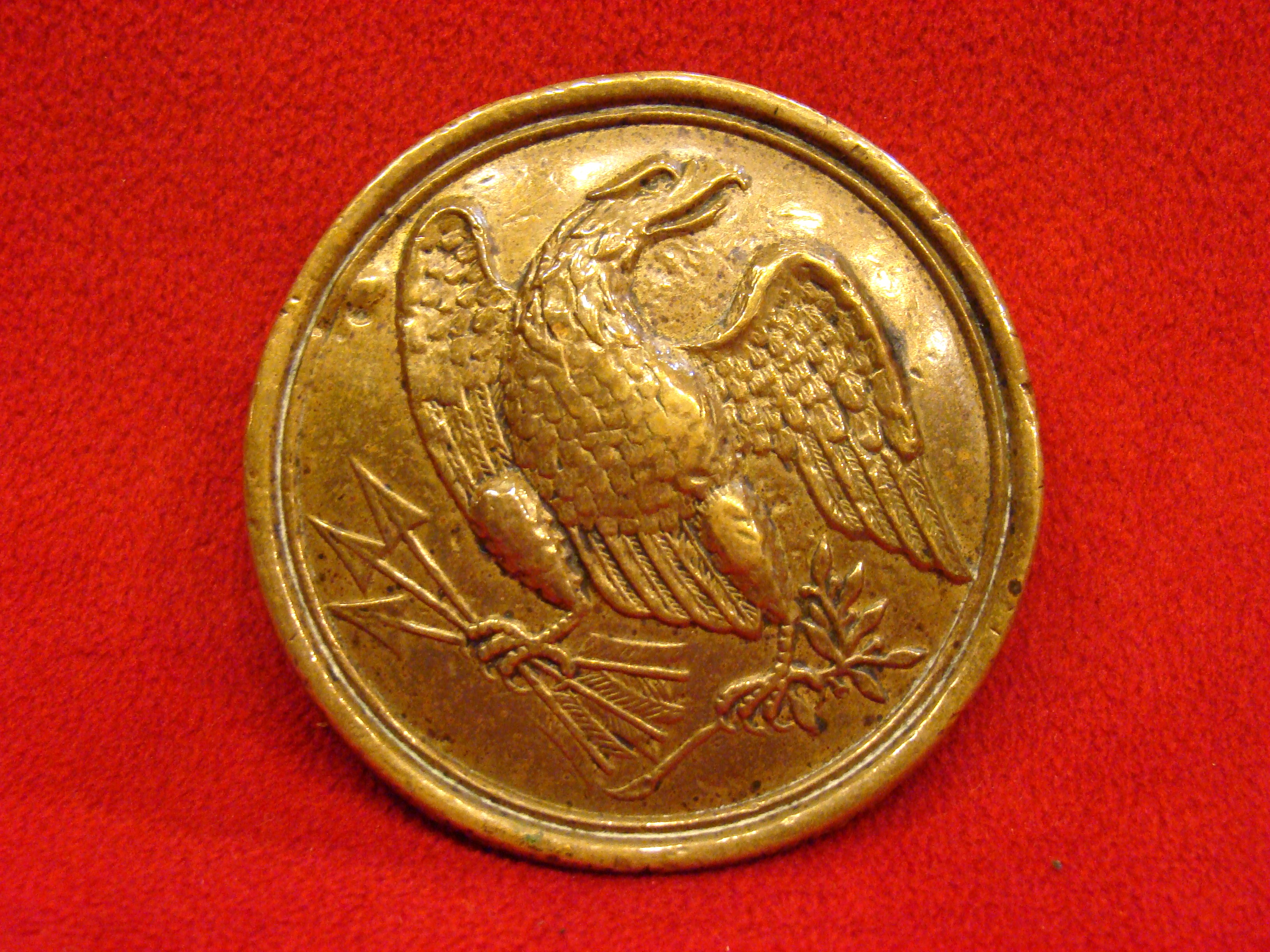
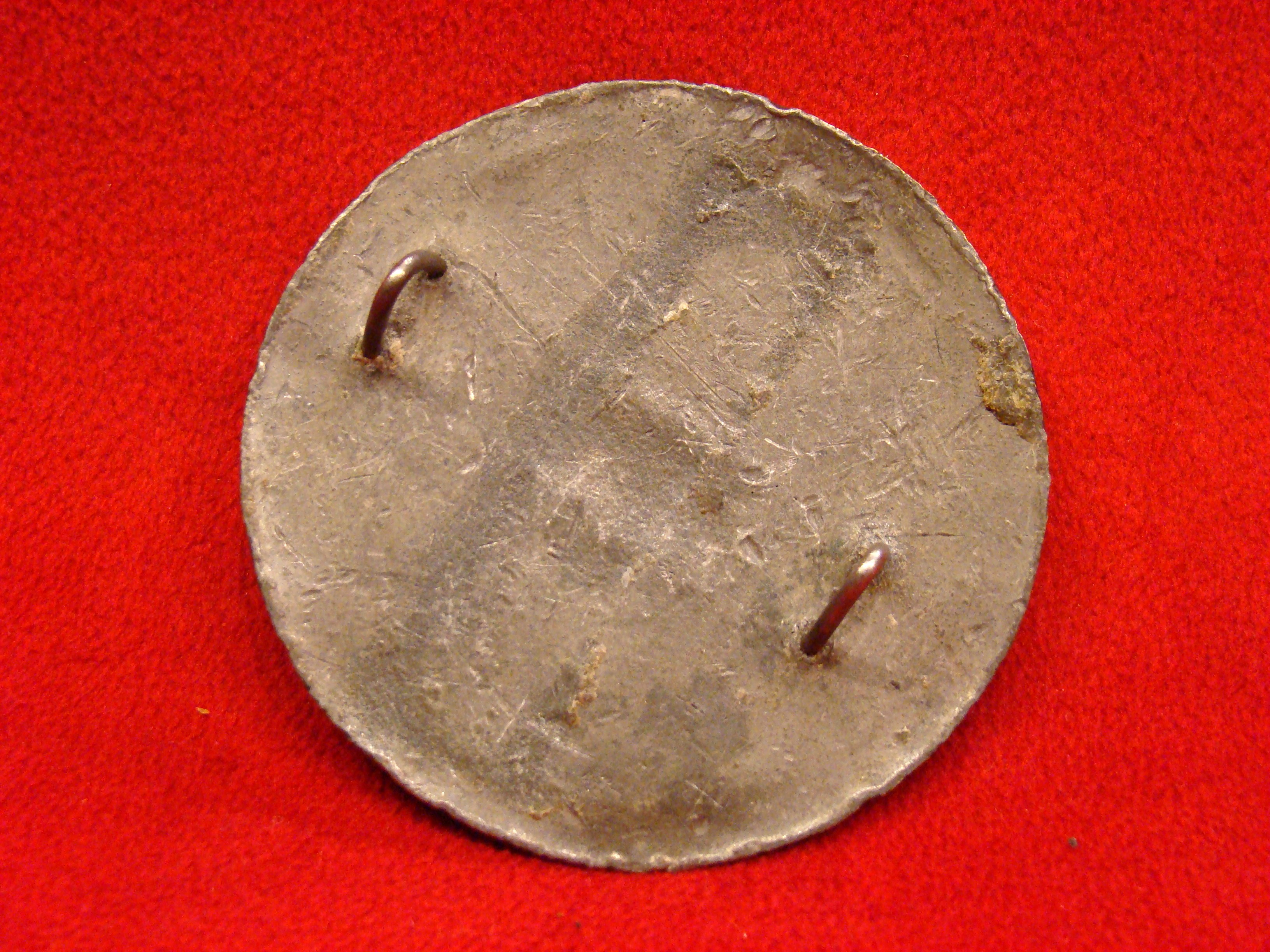
USBP 5. US Enlisted Infantryman’s Breastplate for Cartridge Box Sling.
Fine looking pre-Civil War variant in excellent non-excavated condition. Both attachment loops intact. Full lead. Ex. Michael Bartenfeld collection. See page 285, Plate # 452 in O’Donnell & Campbell’s reference book “American Military Belt Plates” for an identical example. $250.00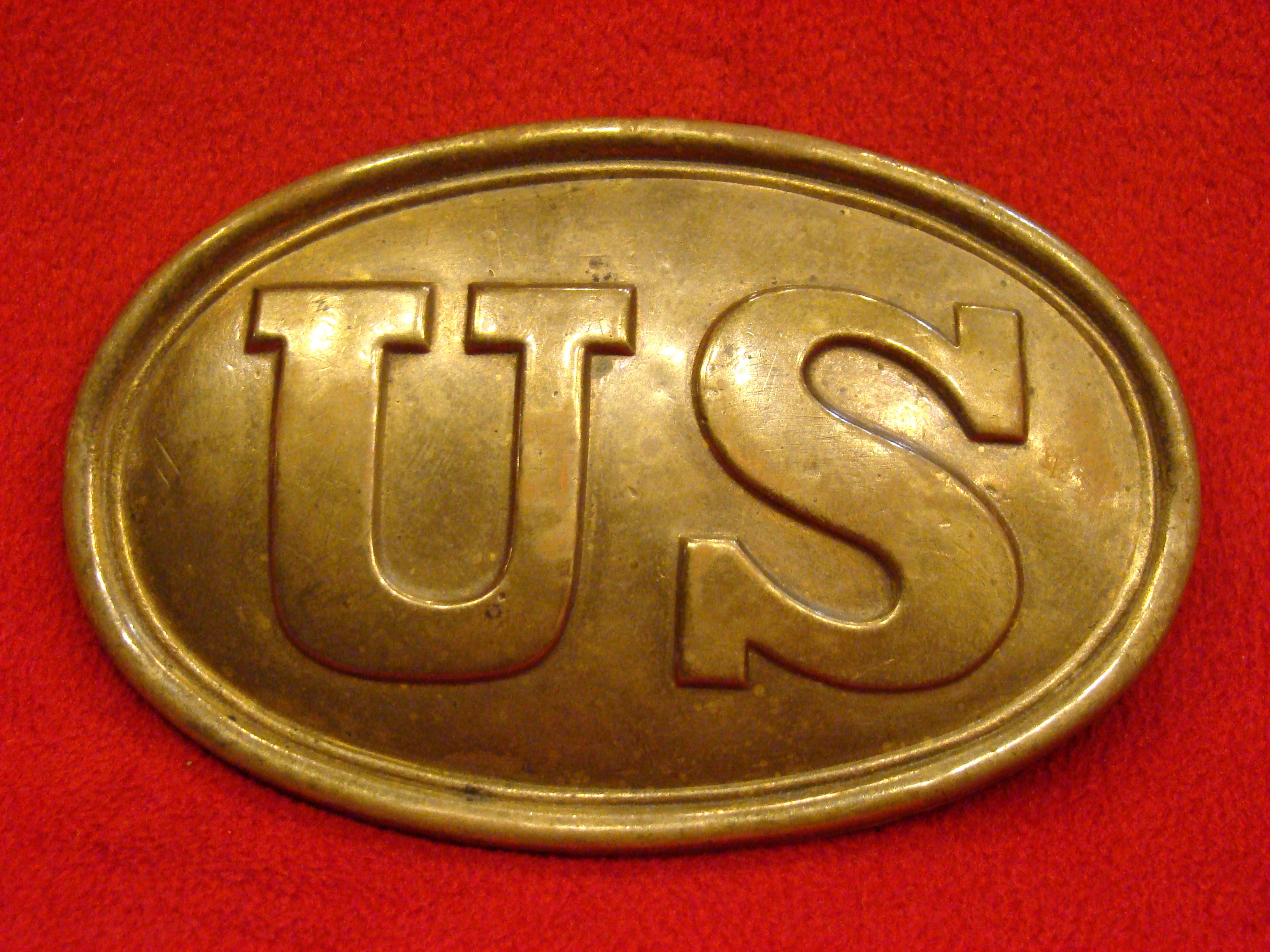
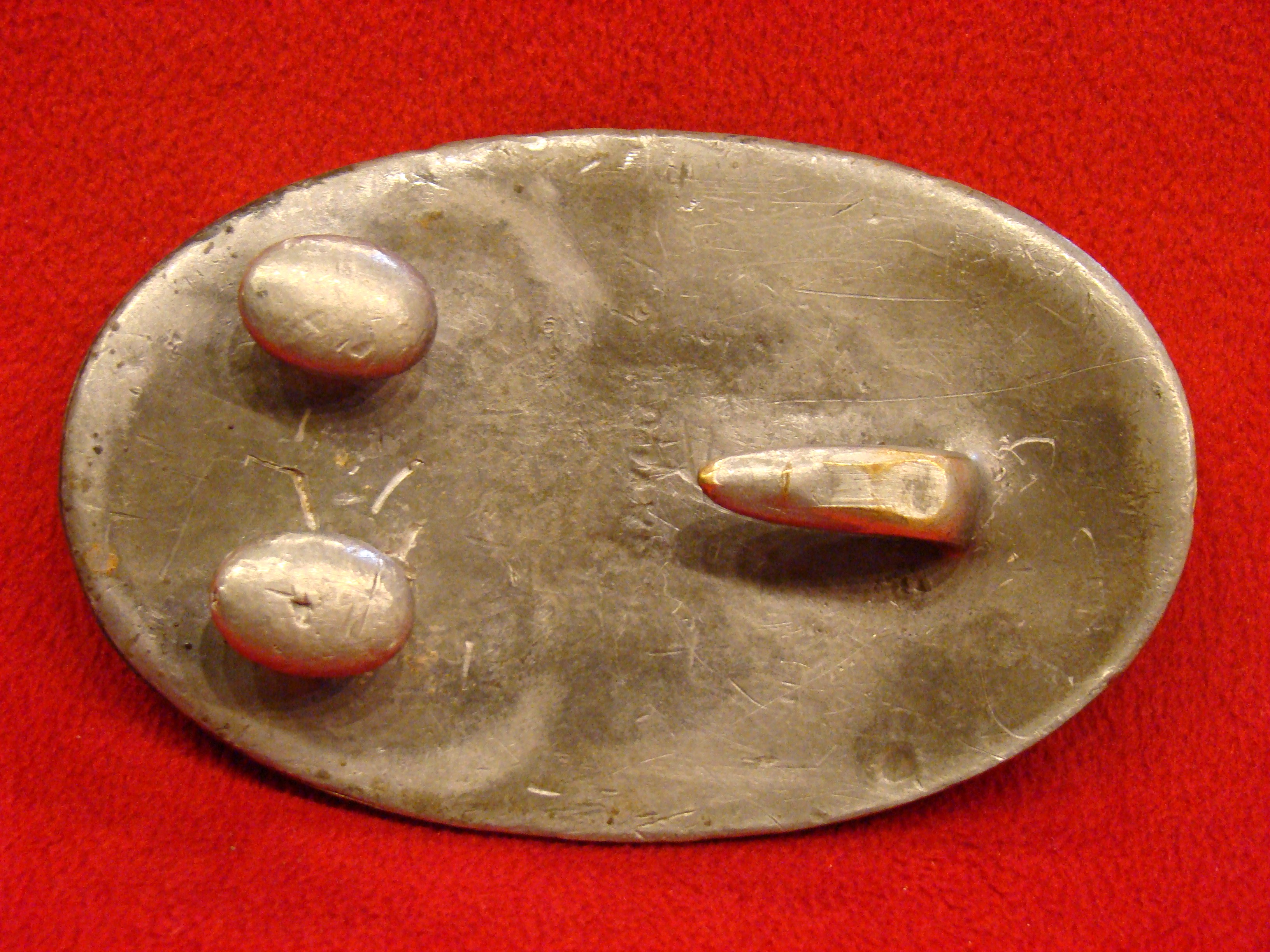
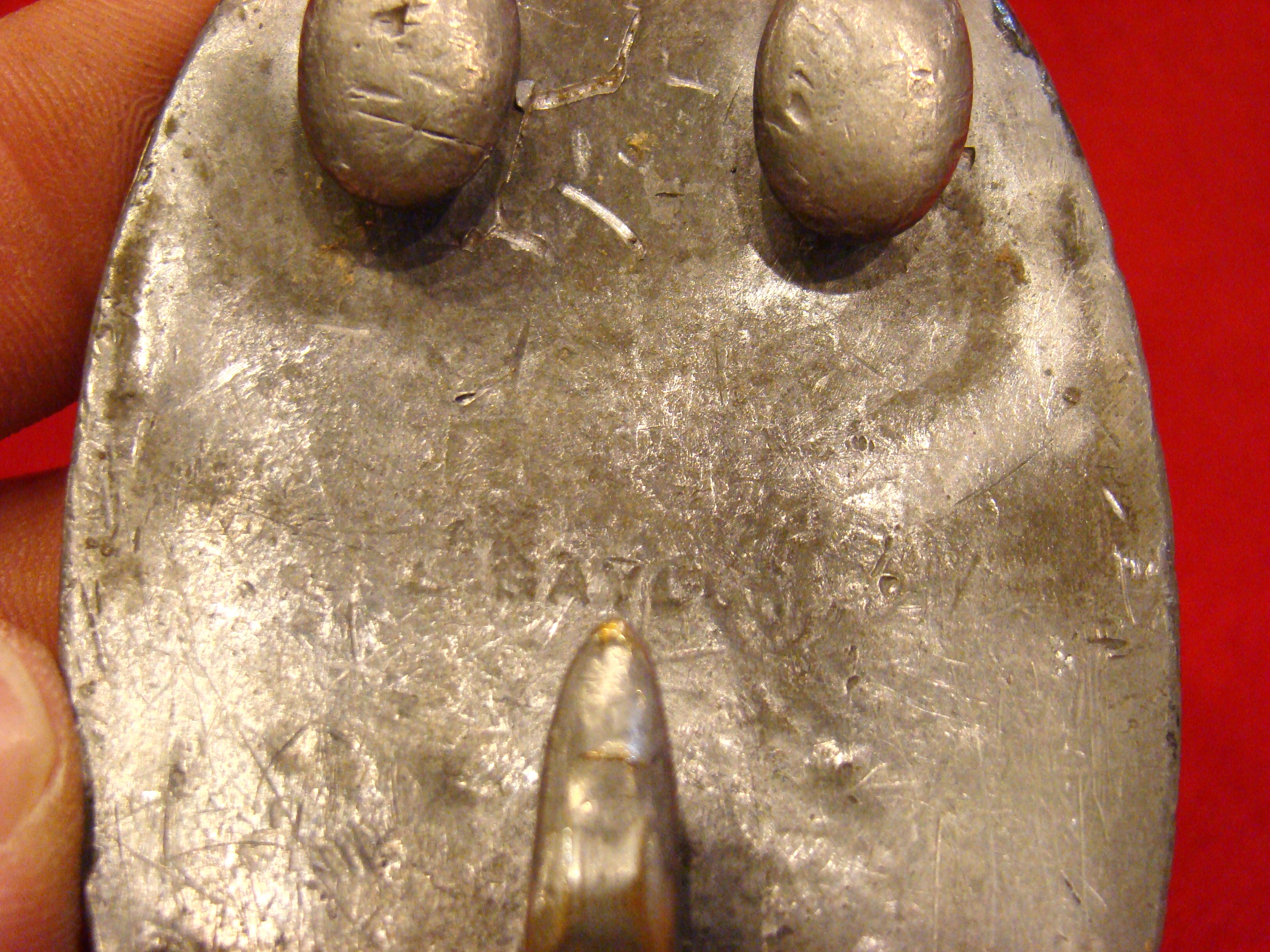
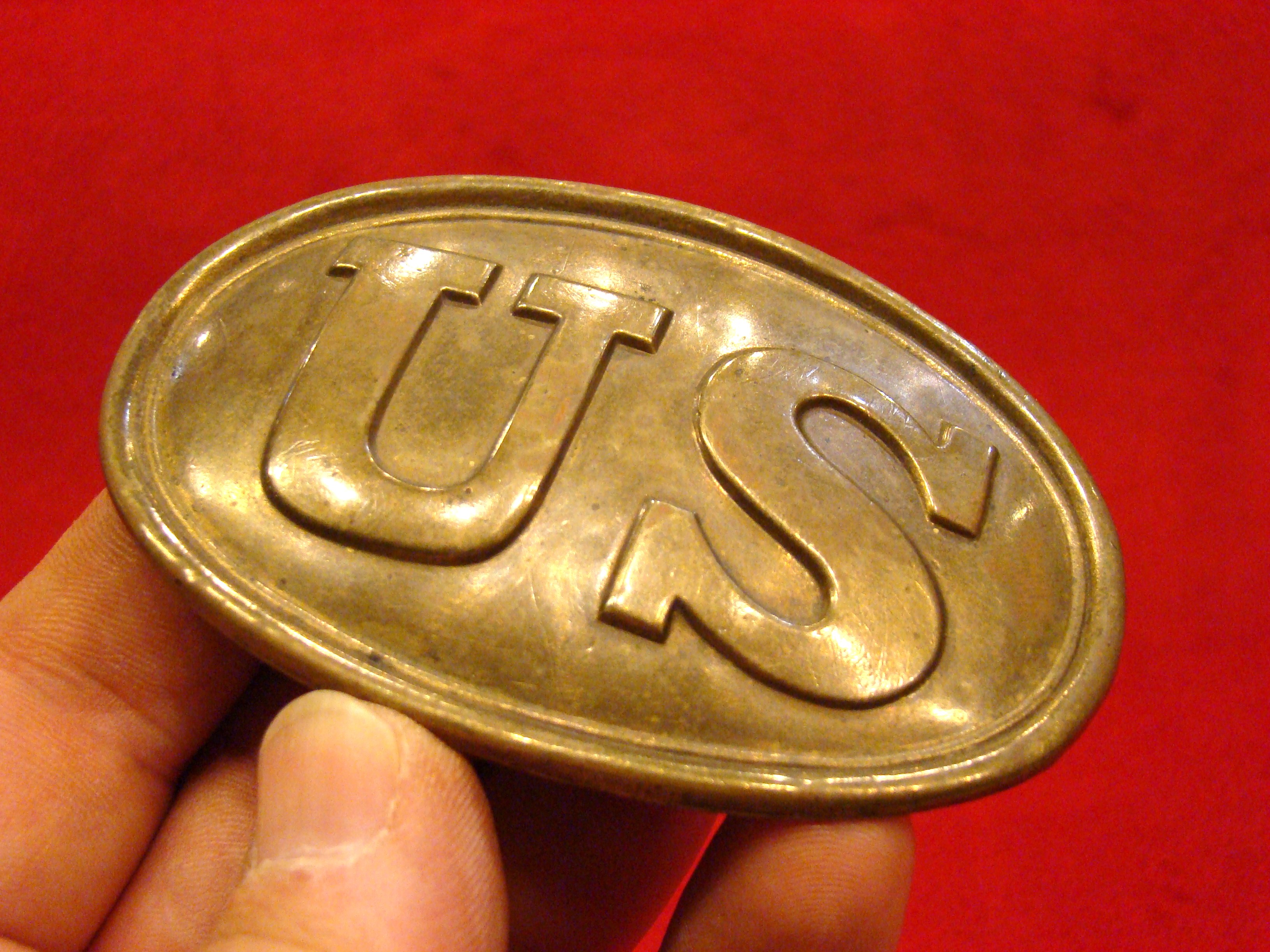
USBP 6. Superb US M-1839 Enlisted Man’s Belt Buckle. Maker Marked “E. GAYLORD”.
Non-excavated E. Gaylord contract belt plate in fantastic condition. See page 313, Plate # 505 in O’Donnell & Campbell’s reference book “American Military Belt Plates” for an identical example. $495.00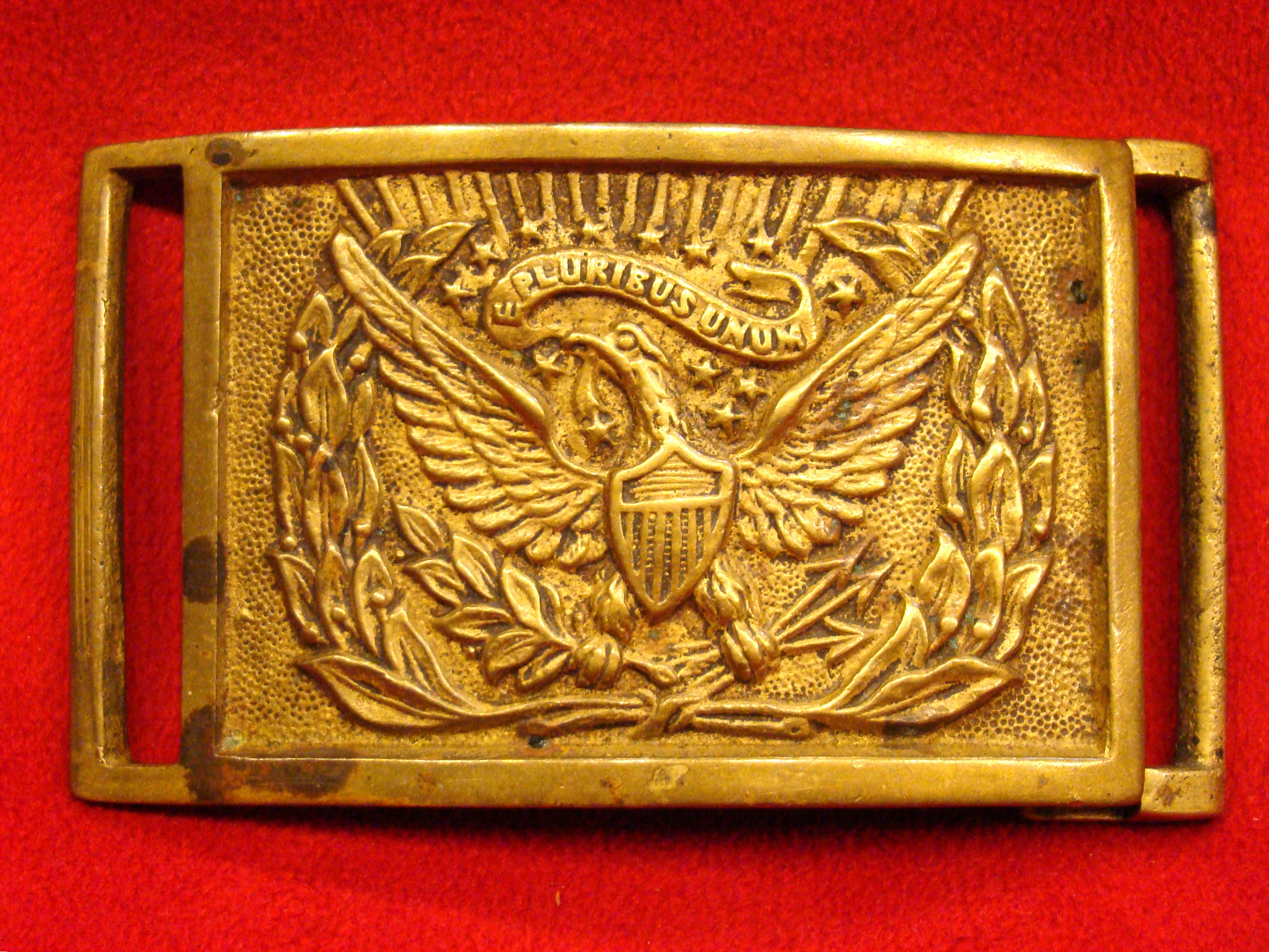
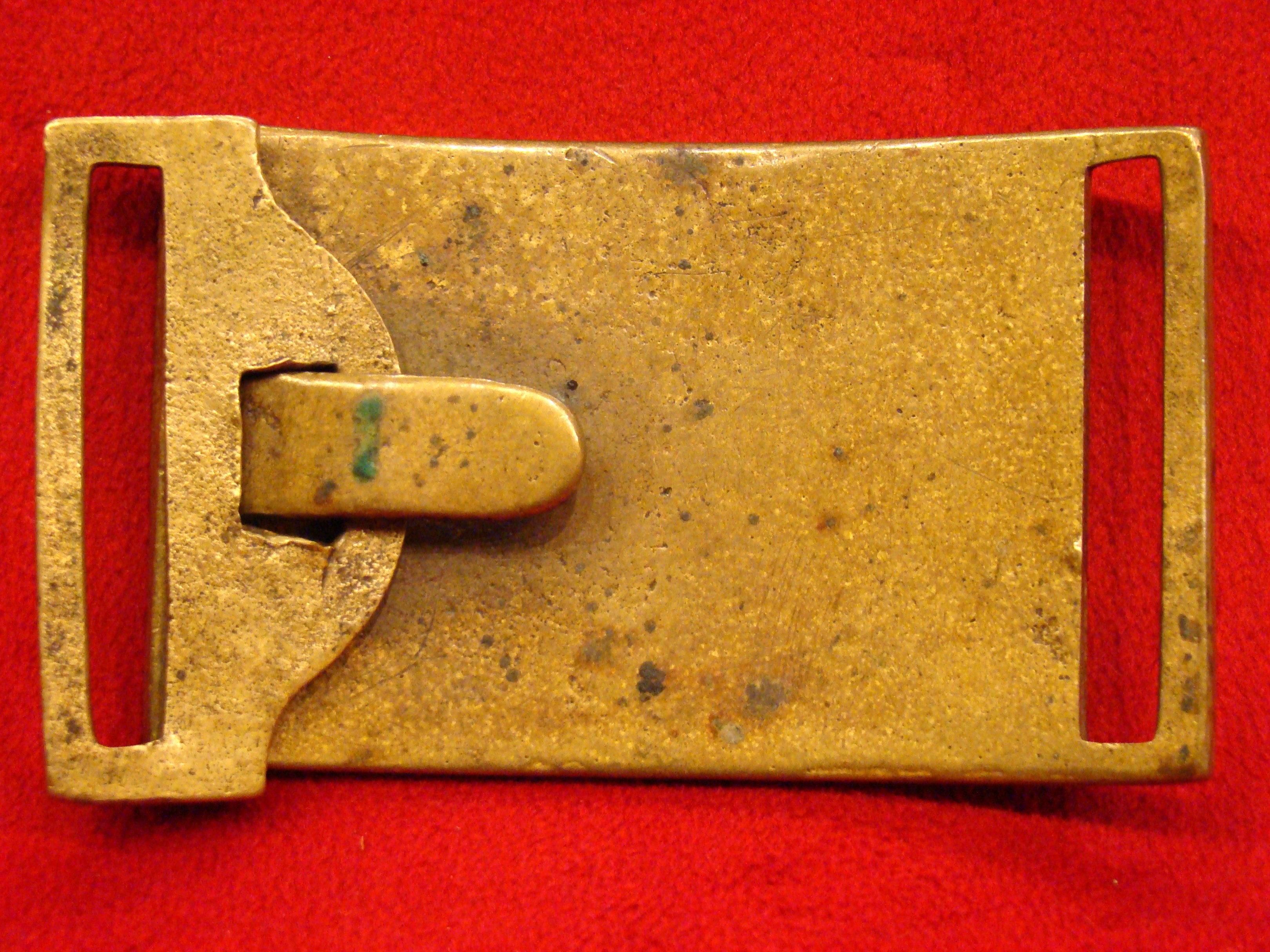
USBP 7. M-1851 US Officer’s Sword Belt Buckle.
Non-excavated US Officer’s belt plate with integral wreath. Sharp details with intact belt hook and keeper. See page 384, Plate # 632 in O’Donnell & Campbell’s reference book “American Military Belt Plates” for an identical example. $395.00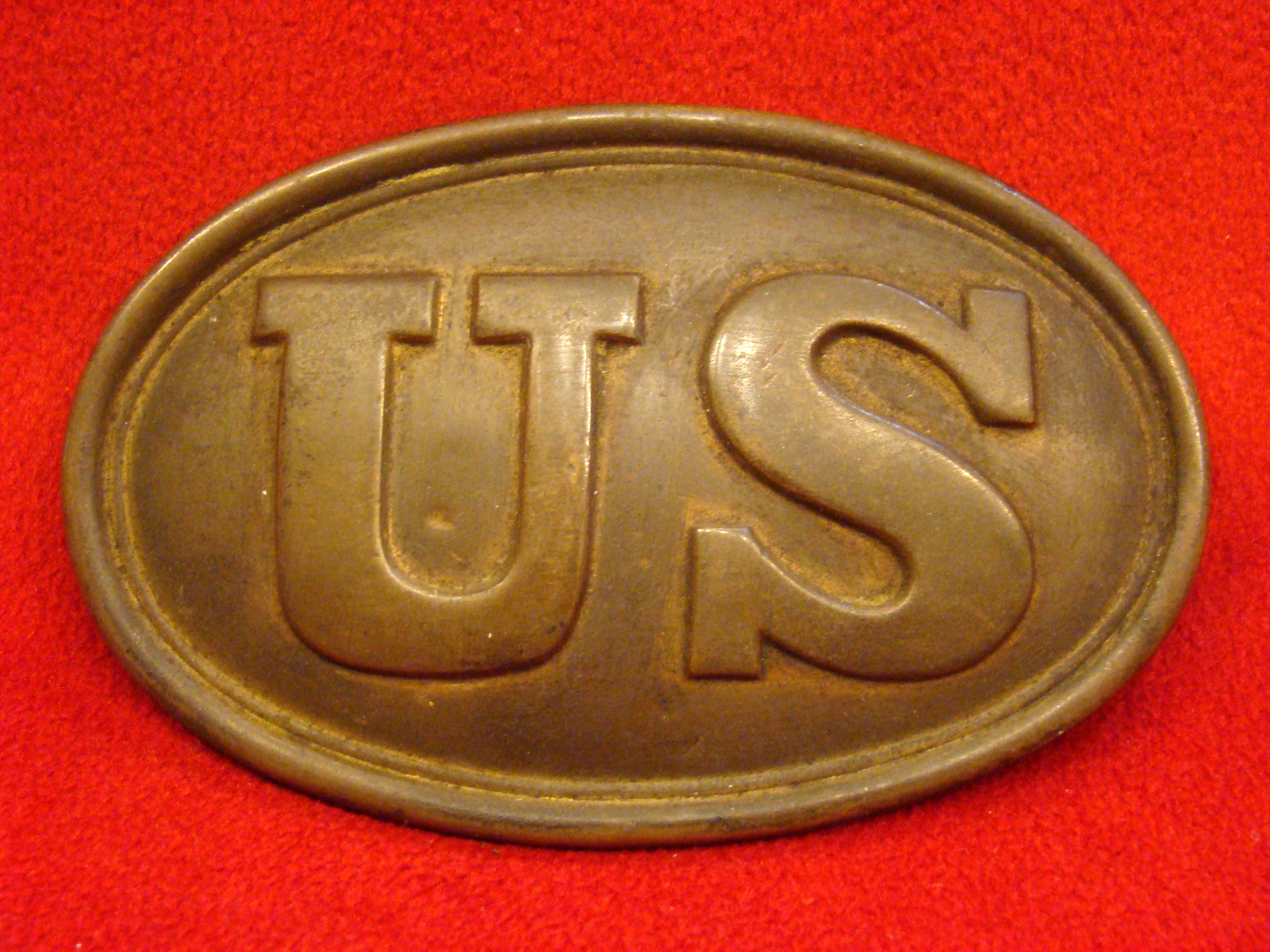
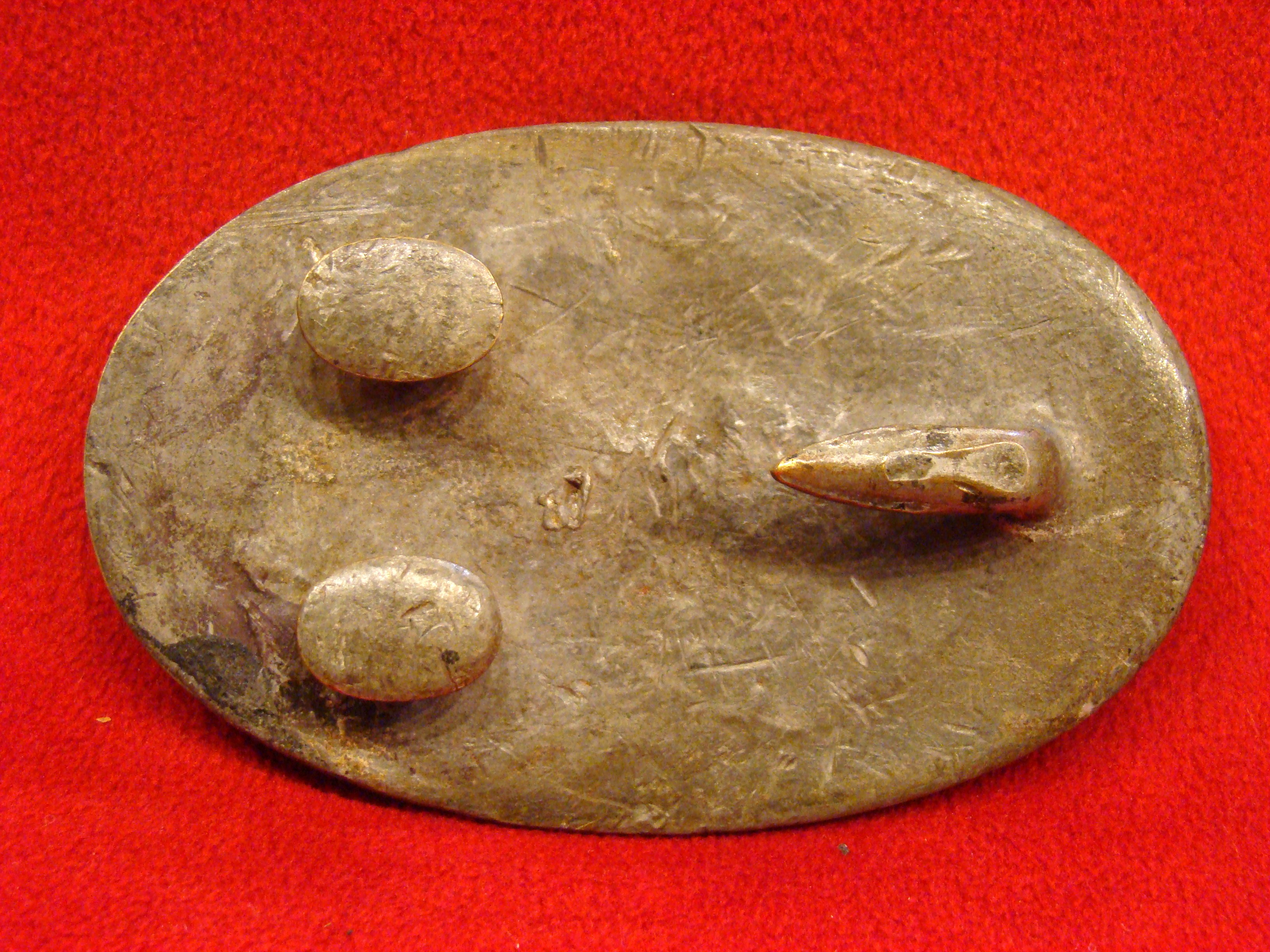
USBP 8. Classic US M-1839 Enlisted Man’s Belt Buckle.
Non-excavated E. Gaylord contract belt plate in flawless condition with a deep bronze patina. See page 313, Plate # 505 in O’Donnell & Campbell’s reference book “American Military Belt Plates” for an identical example. Ex. Michael Bartenfeld collection. $395.00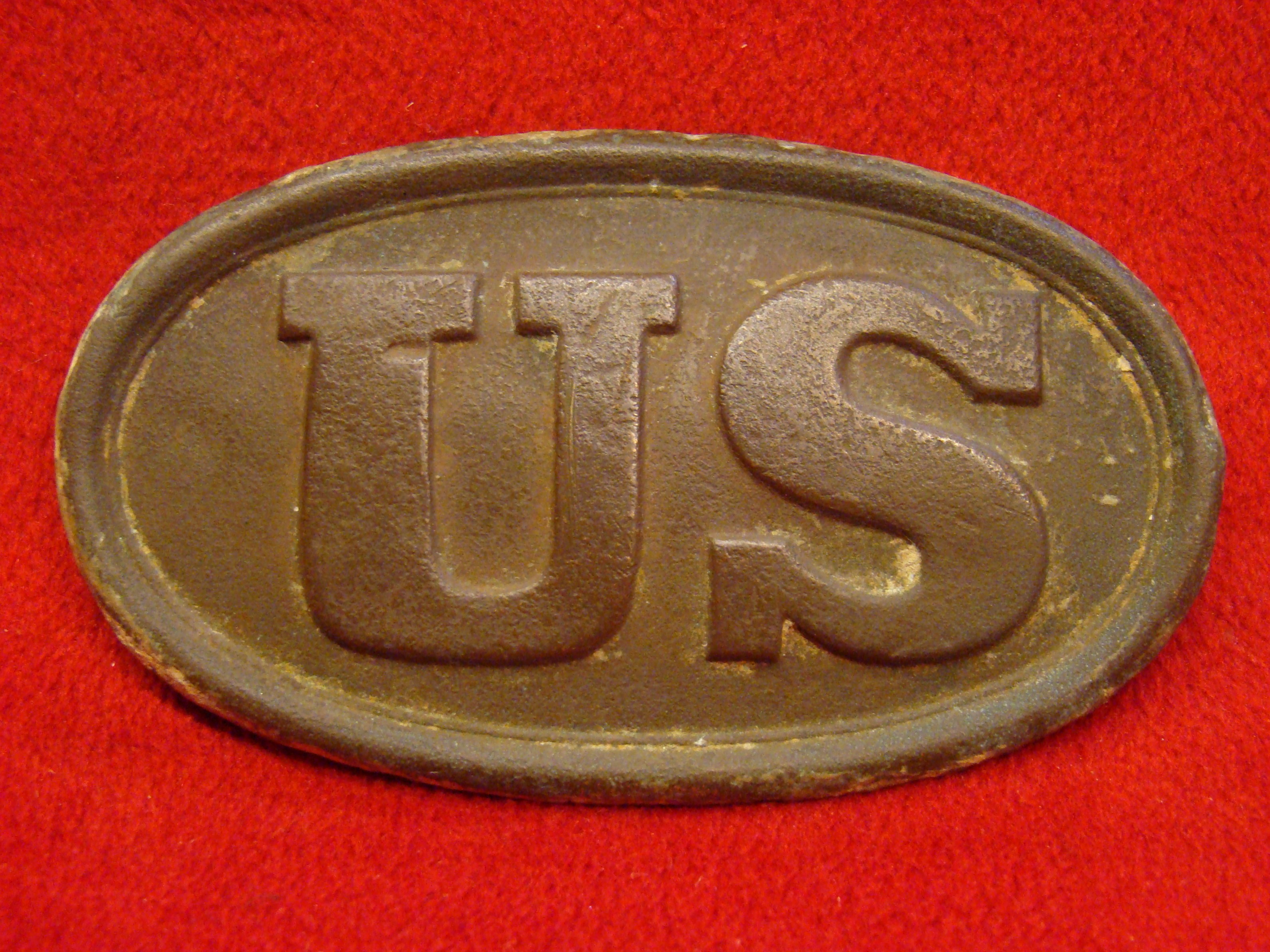
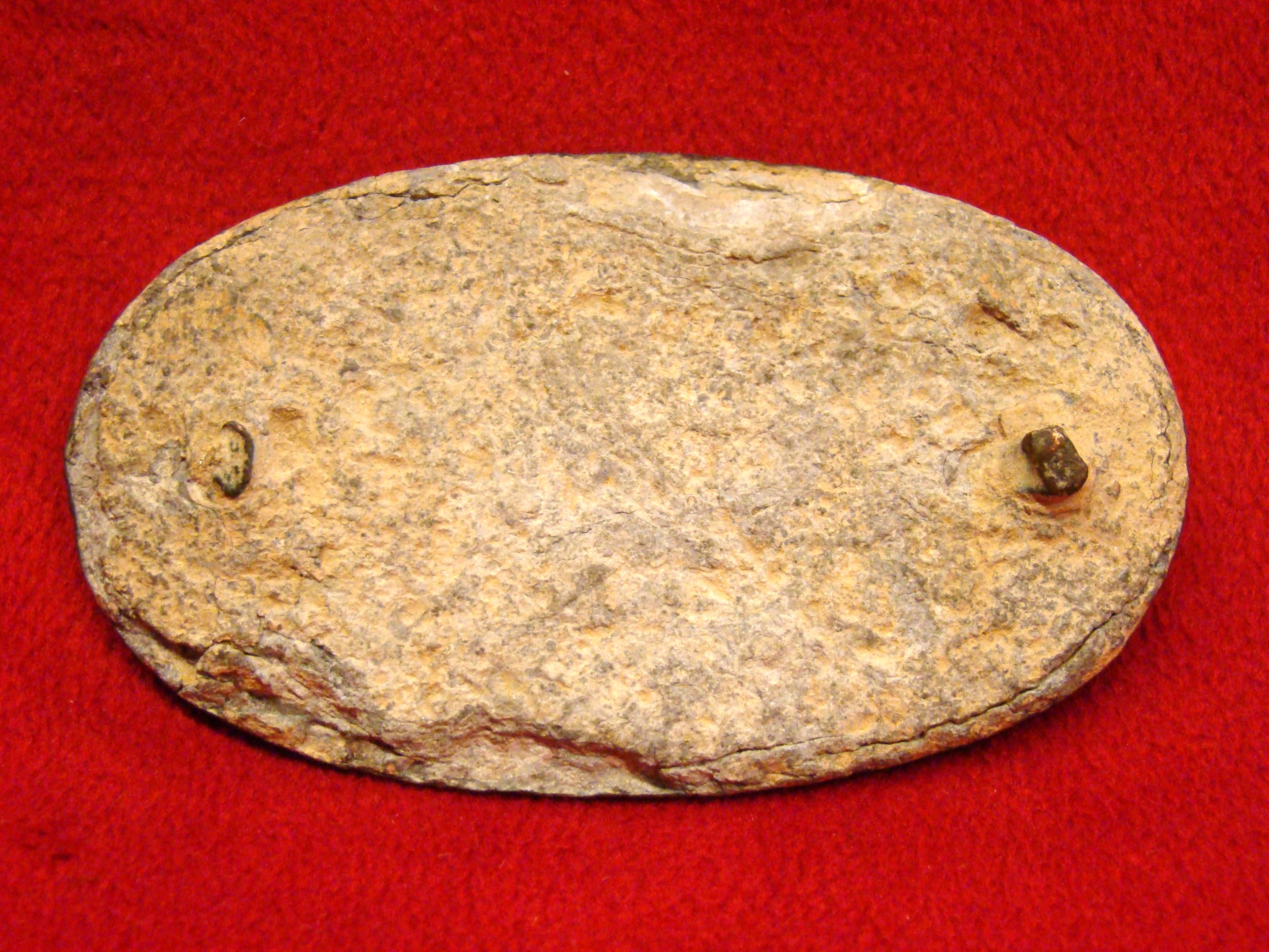
USBP 9. Dug US M-1839 Enlisted Man’s Belt Plate. June 27, 1862 Gaines Mill VA. Battlefield.
Scarce small size US belt buckle in excellent condition. Perfect face with a chocolate brown patina. Belt hooks missing on the reverse. See page 323, Plate # 523 in O’Donnell & Campbell’s reference book “American Military Belt Plates” for an identical example $295.00 HOLD R.H.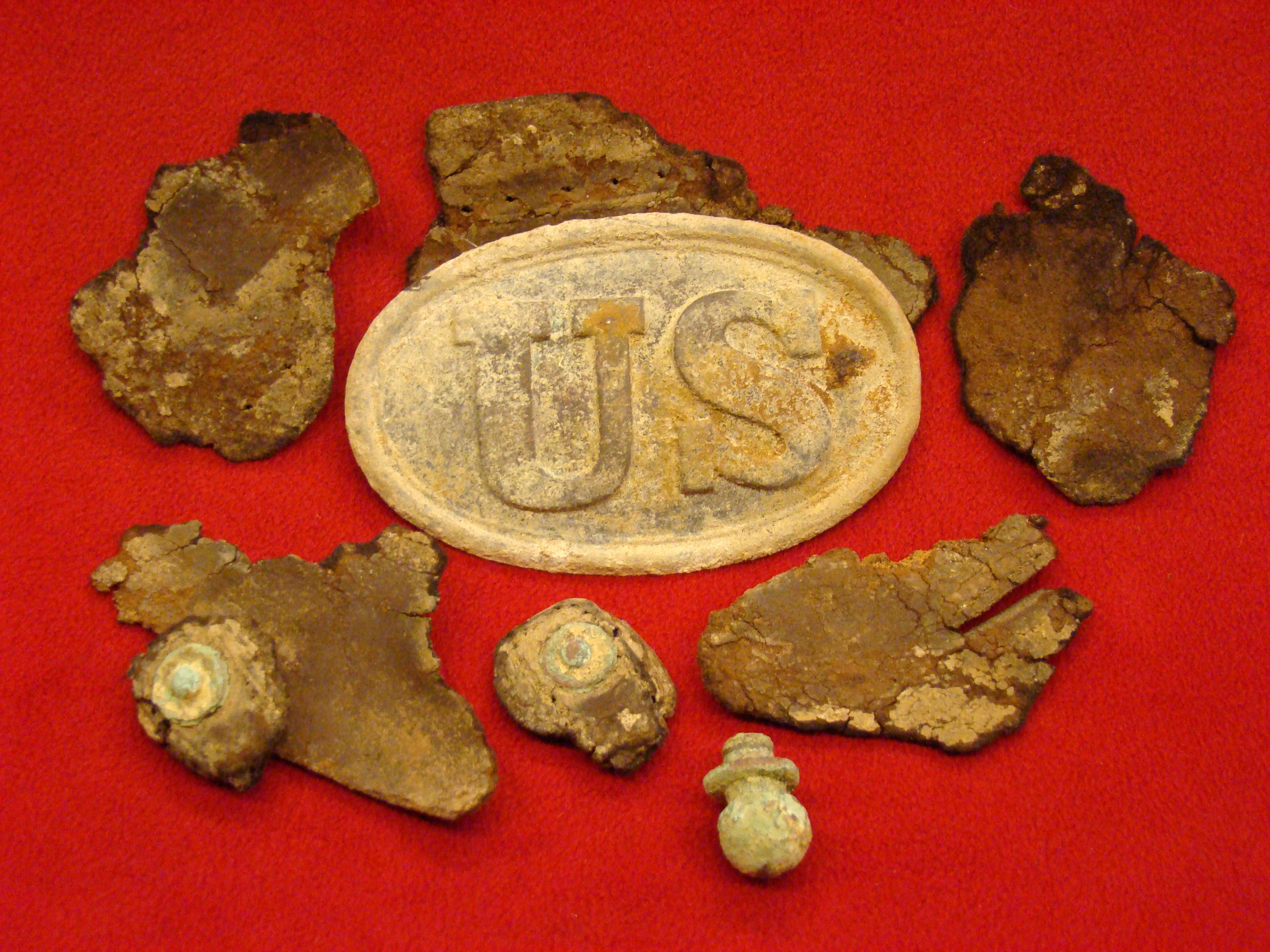
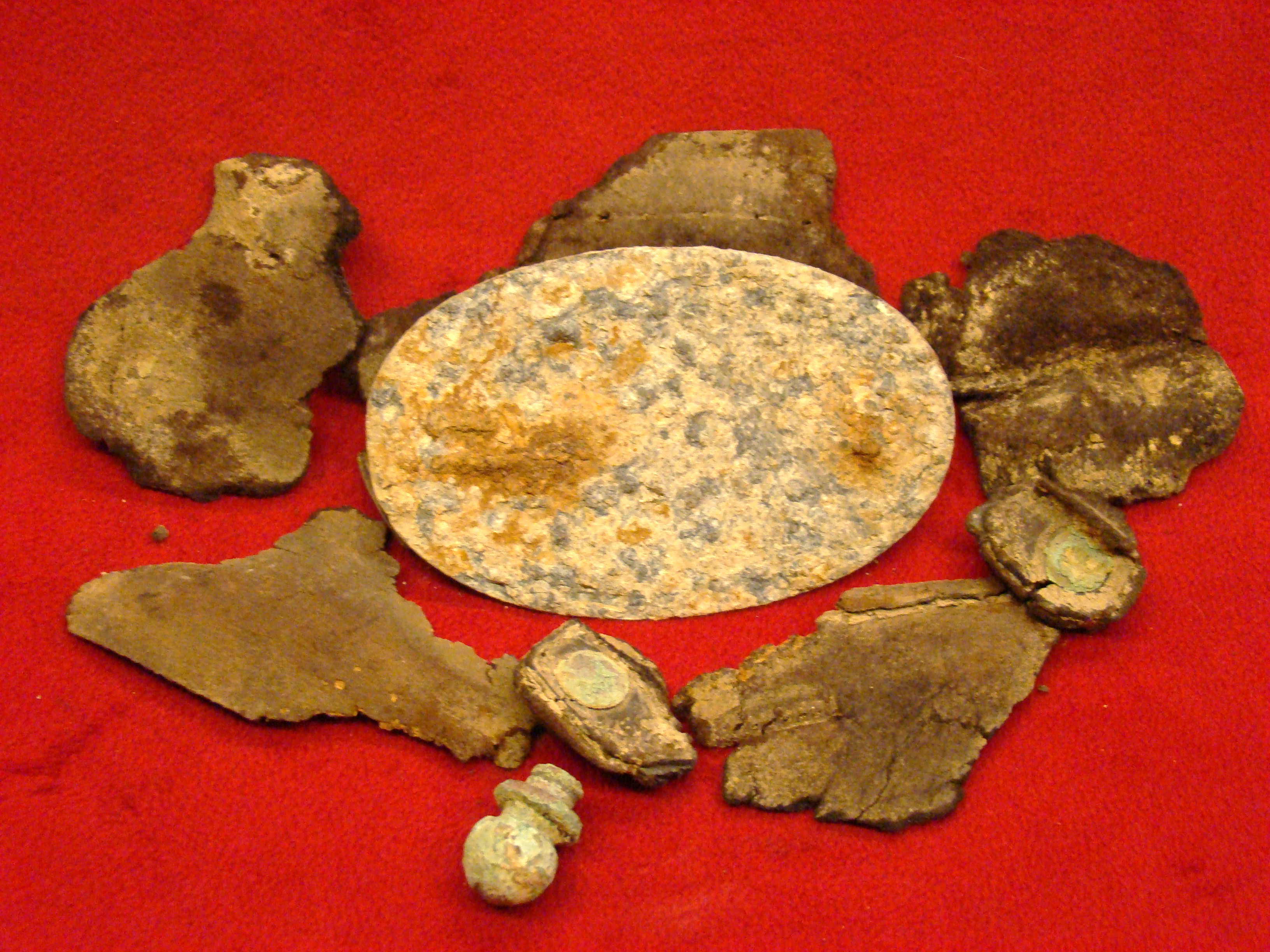
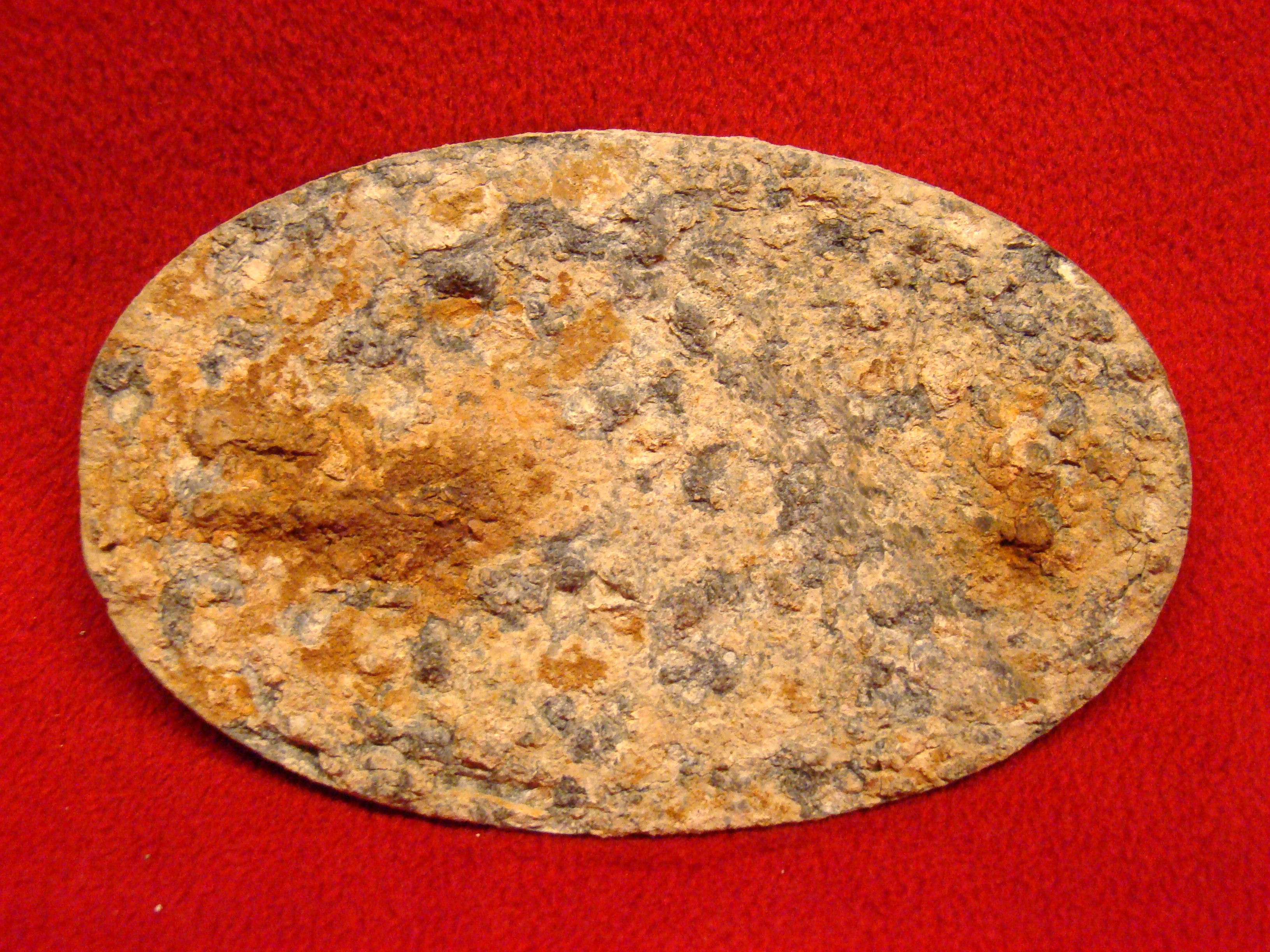
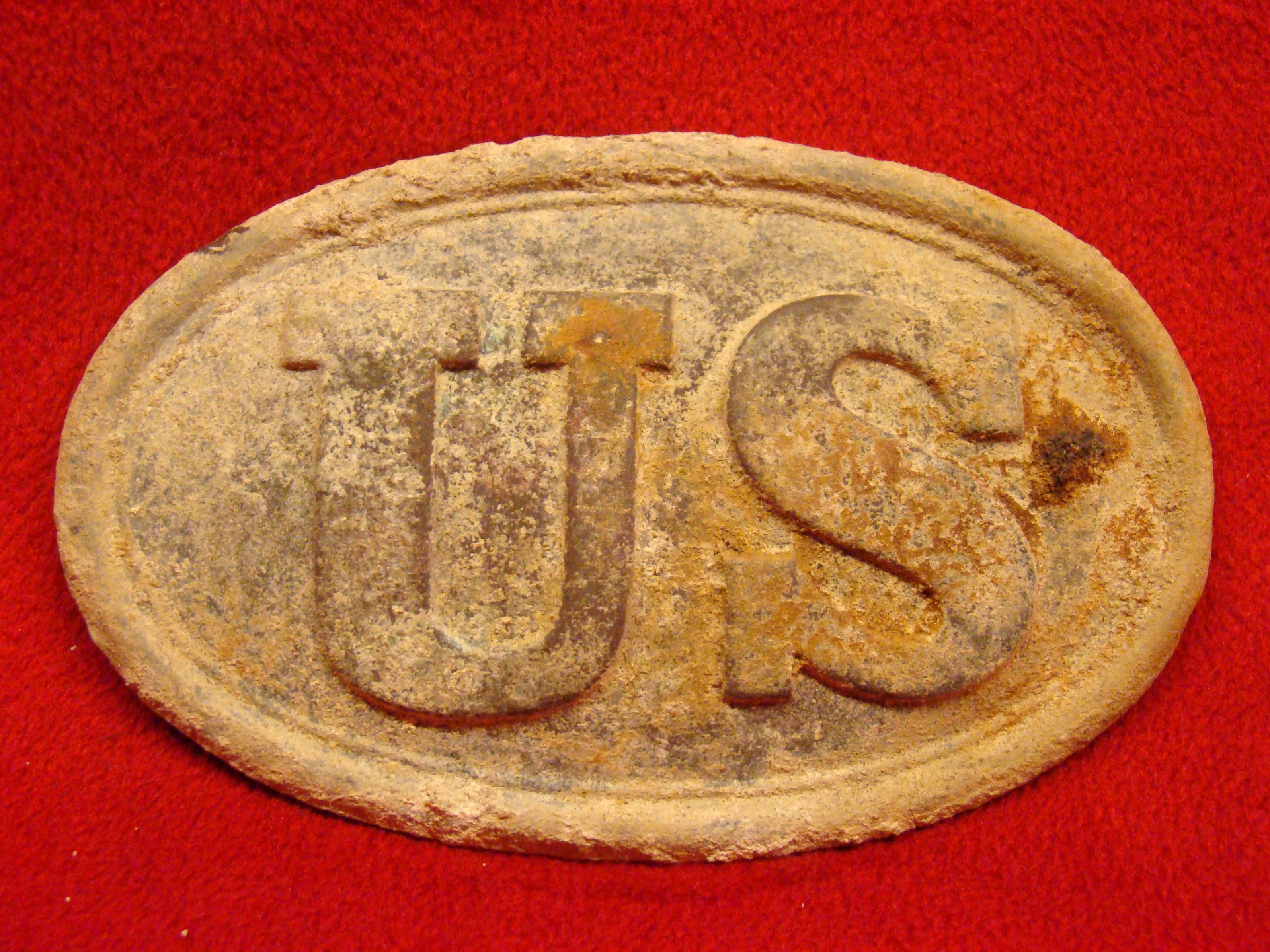
USBP 10. Dug Remnants of a US Enlisted Infantryman’s Cartridge Box. Petersburg VA.
Untouched US Cartridge Box Plate with fragments of the leather cartridge box including brass finial and rivets. Iron attachment loops rusted away. $350.00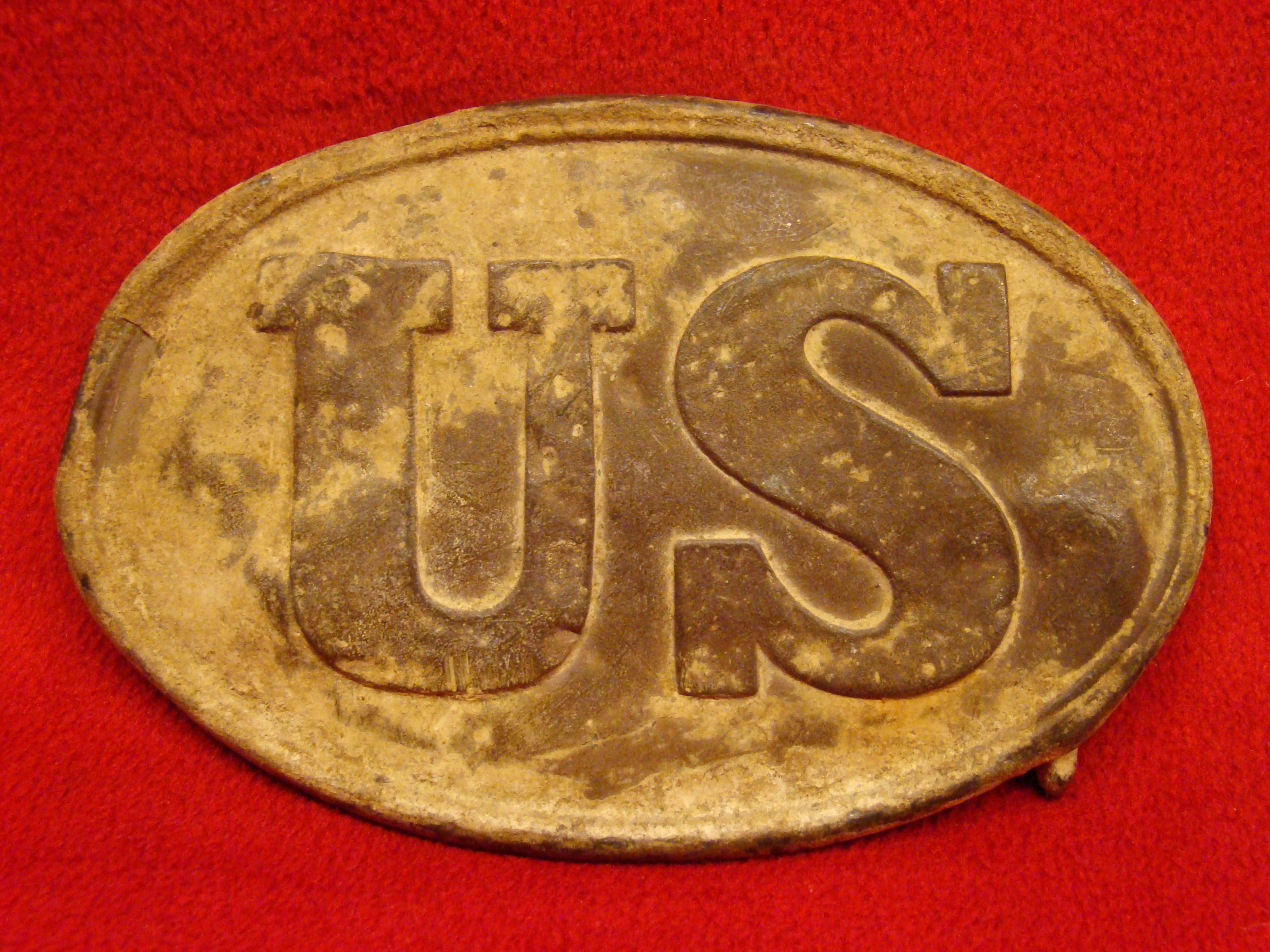
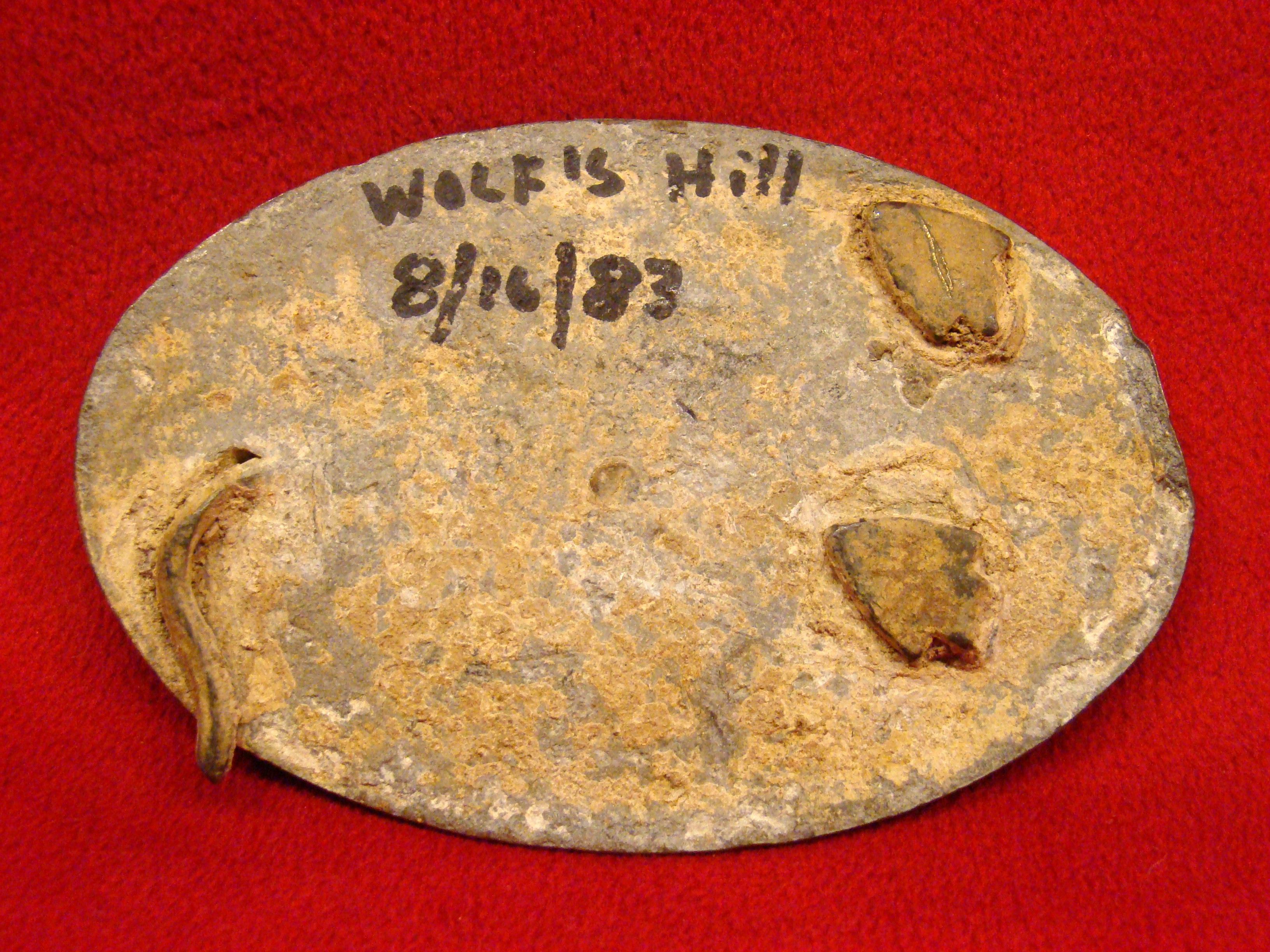
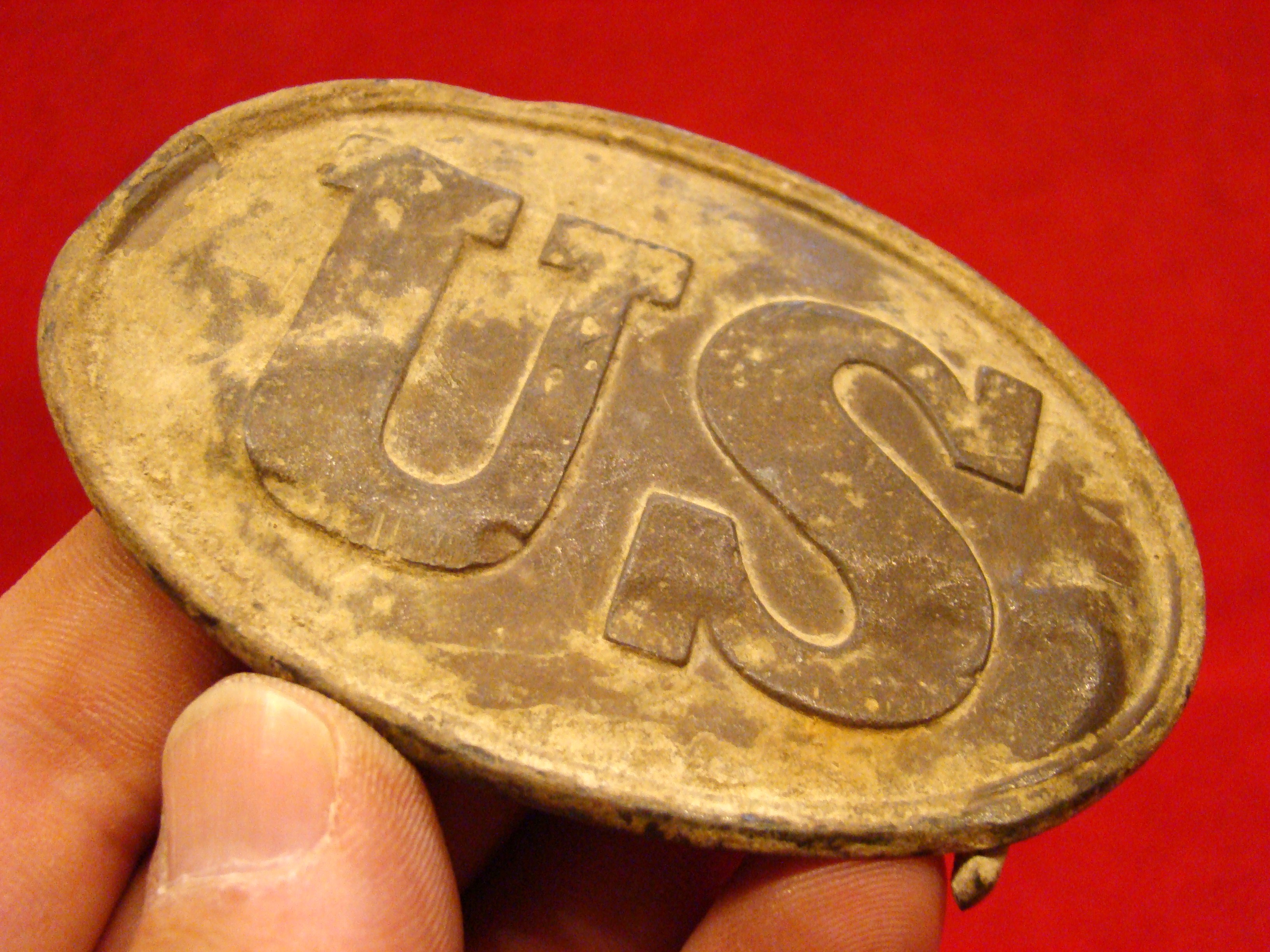
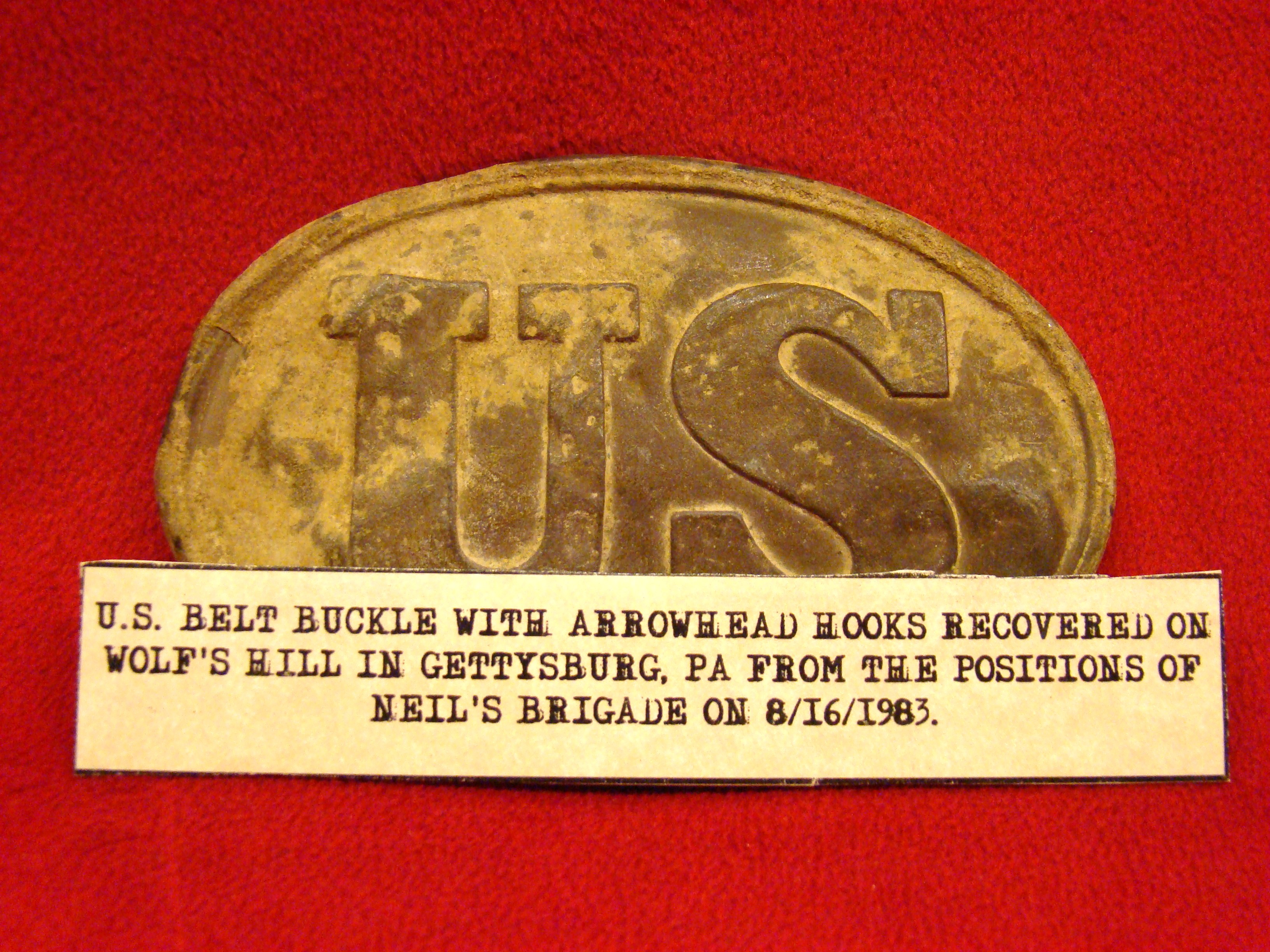
USBP 11. Dug US Enlisted Infantryman’s Belt Buckle. Gettysburg PA. Battlefield.
H.A. Dingee contract belt plate with intact, though bent belt hooks. It appears that the buckle was violently ripped off the belt. Found on Wolf Hill in the position of Neill’s Brigade in 1983. See page 312, Plate # 503 in O’Donnell & Campbell’s reference book “American Military Belt Plates” for an identical example. Very specific provenance. SOLD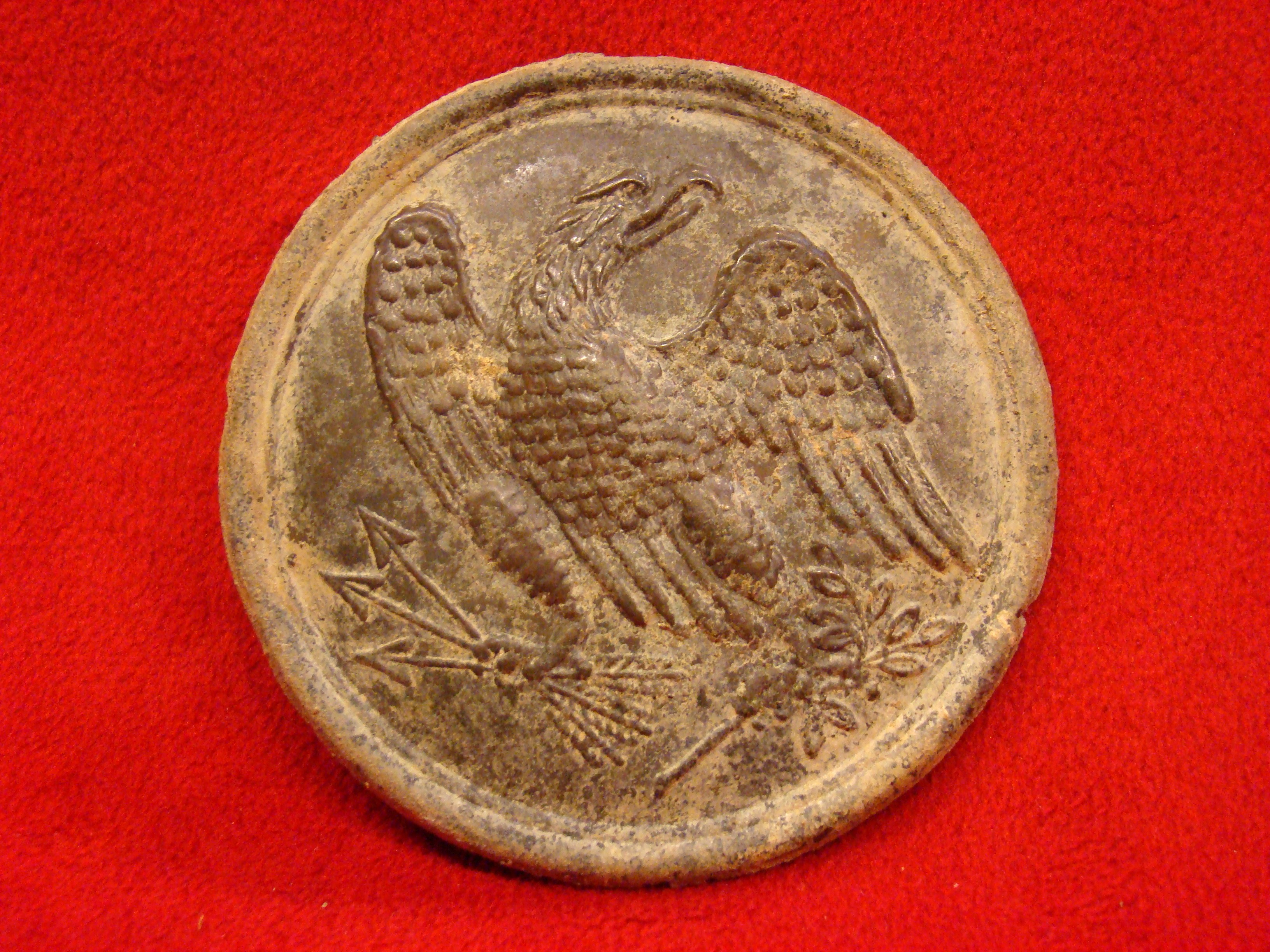
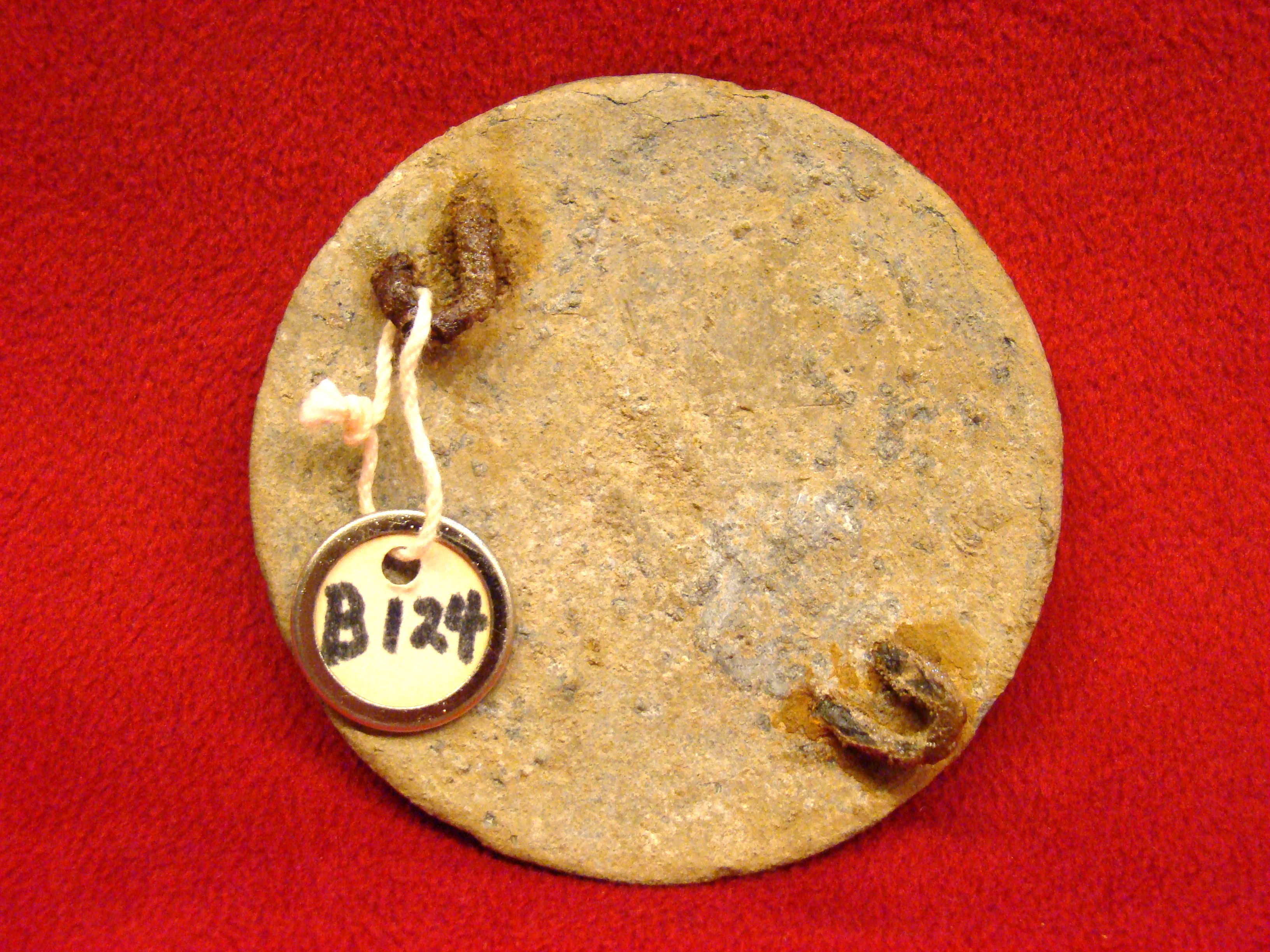
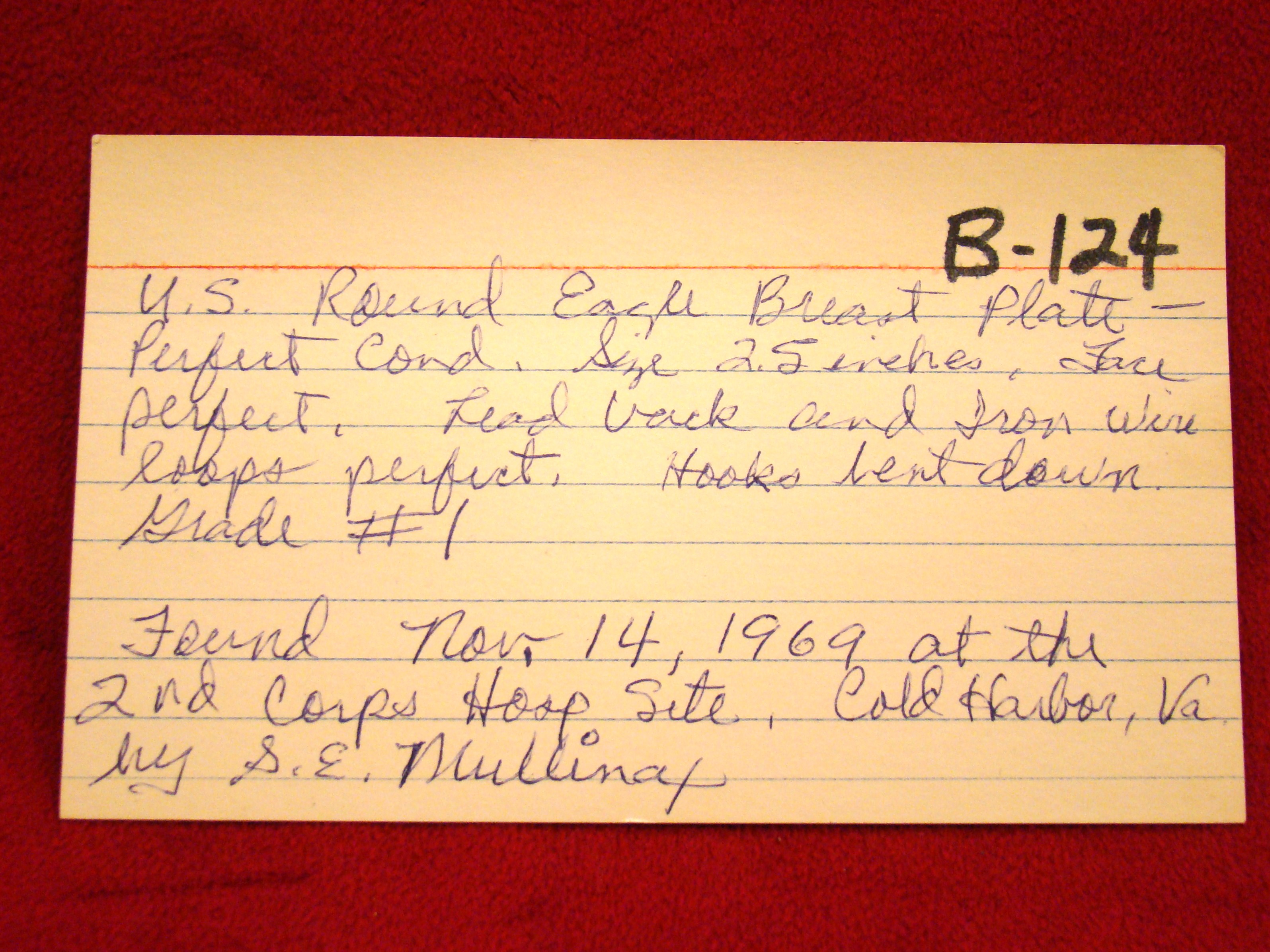
USBP 12. Dug US Enlisted Infantryman’s Breastplate for Cartridge Box Sling. 2nd US Army Corps Hospital, Cold Harbor VA. Battlefield.
Fantastic early dug plate found by Steve Mullinax in 1969, and accompanied by his handwritten provenance card. Thousands of US soldiers were killed at Cold Harbor in suicidal charges upon the Confederate trenches. See page 285, Plate # 453 in O’Donnell & Campbell’s reference book “American Military Belt Plates” for an identical example. $395.00 HOLD D.Z.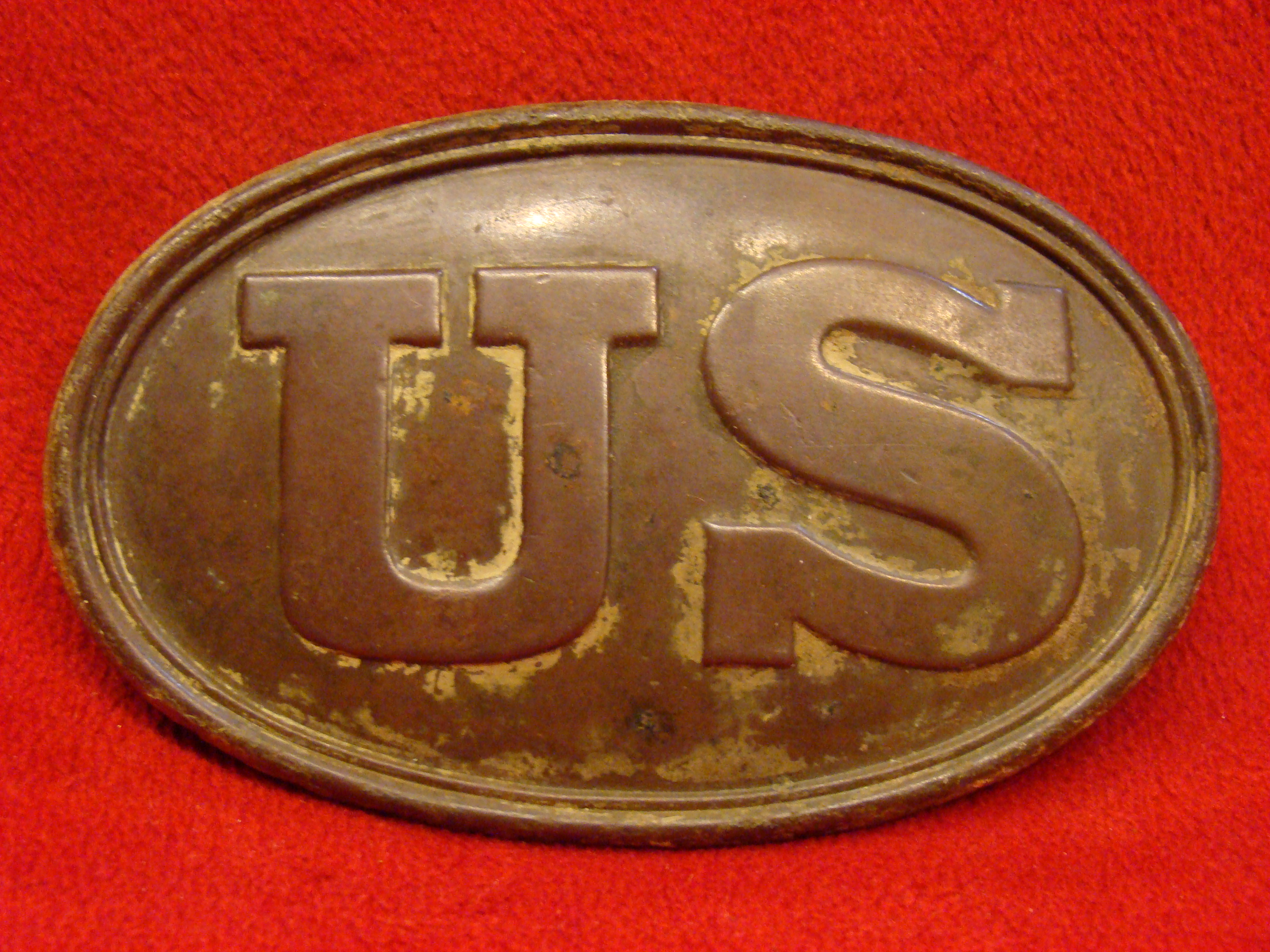
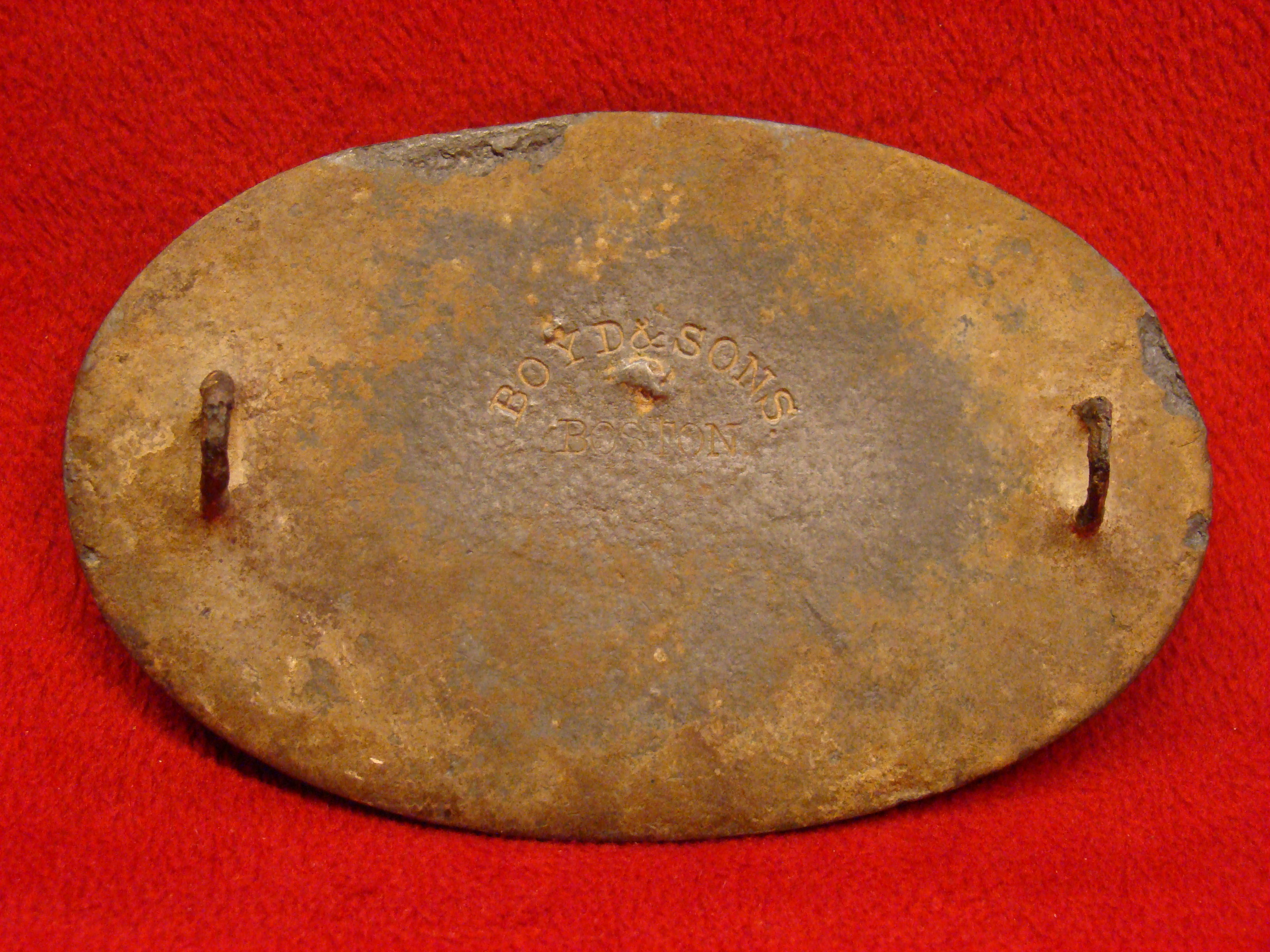
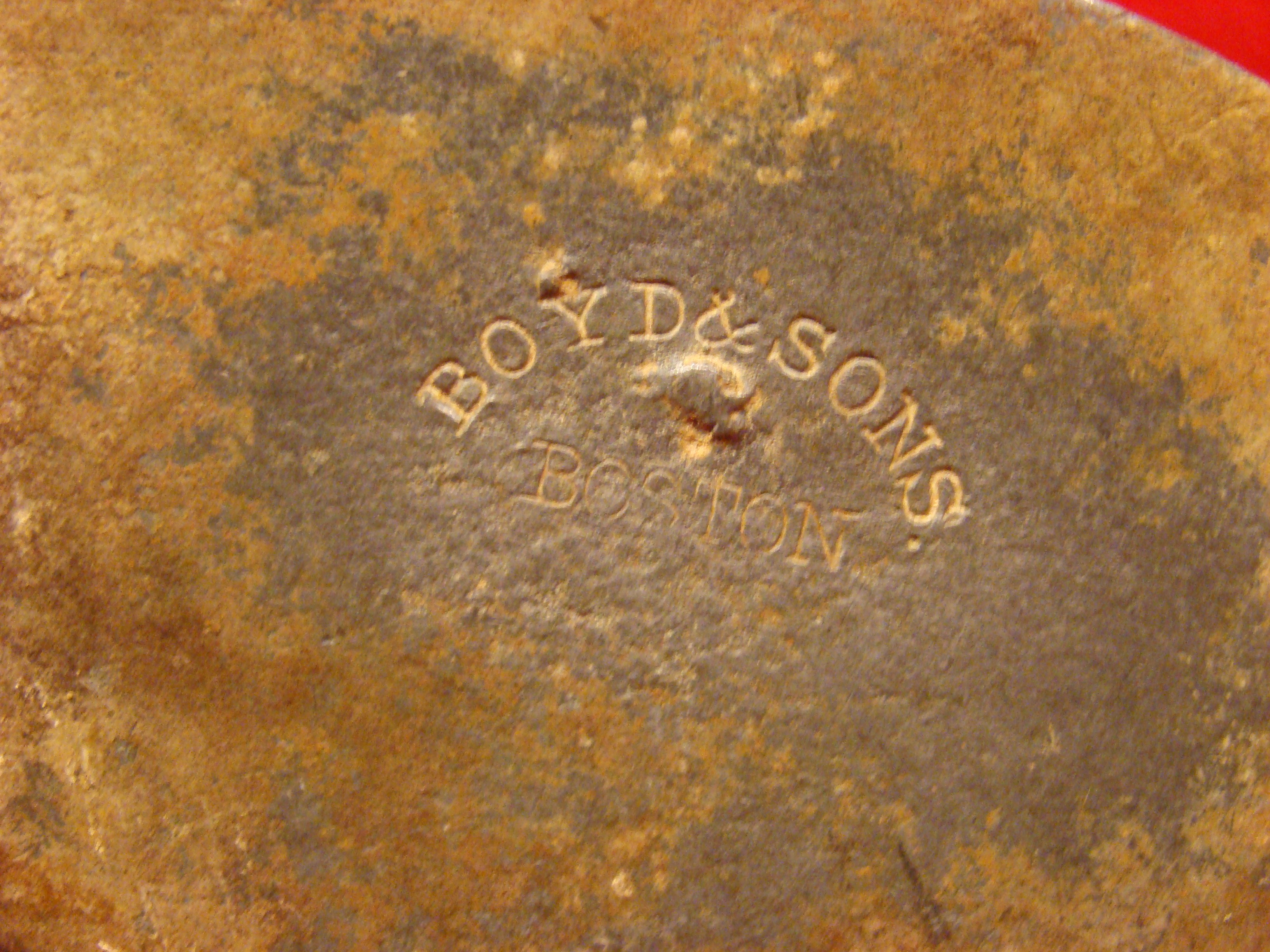
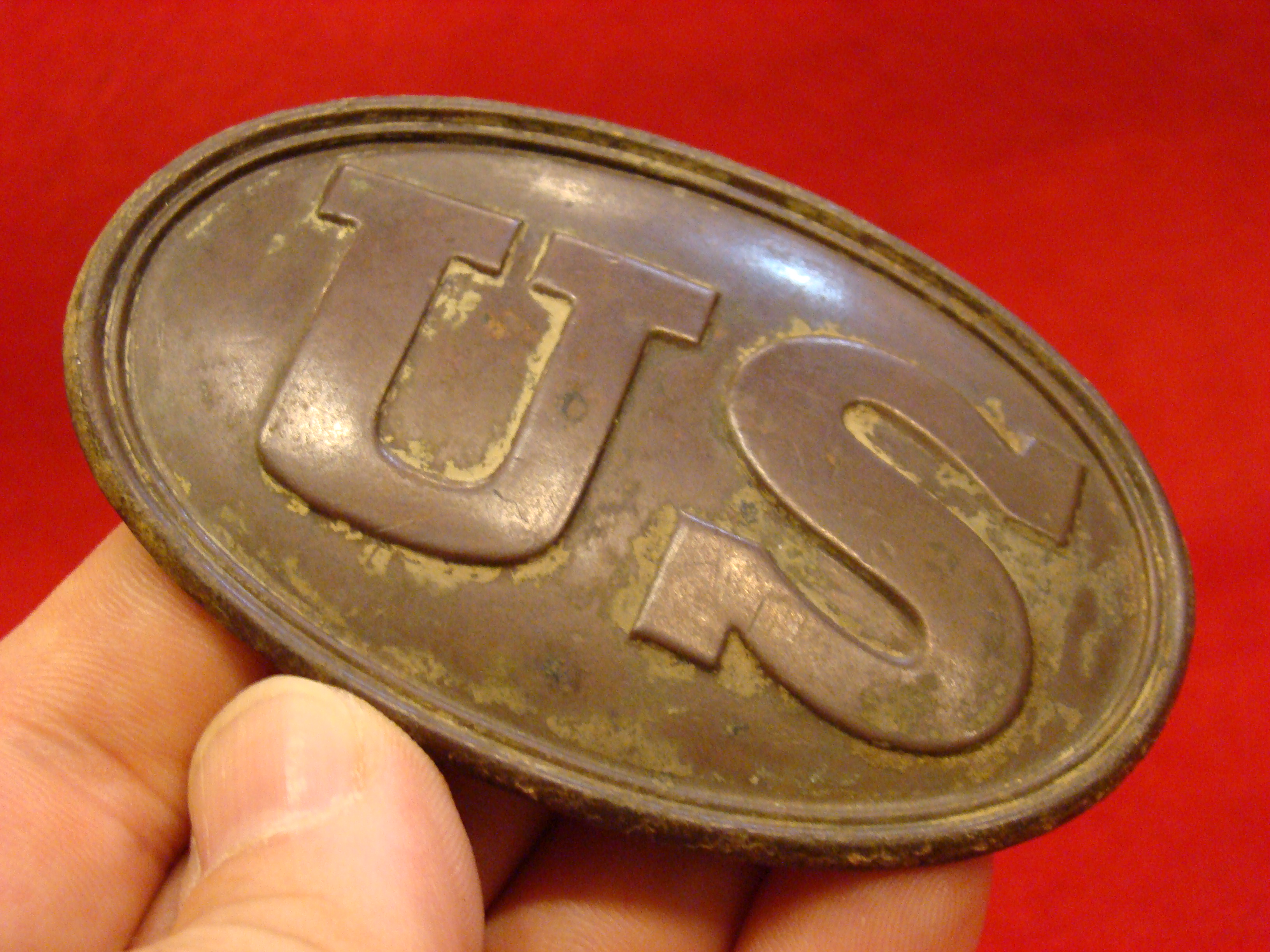
USBP 13. Dug US Enlisted Man’s Cartridge Box Plate. Maker Marked “BOYD & SONS/BOSTON”. Found on the June 27, 1862 Gaines Mill VA. Battlefield.
Flawless Boyd & Sons contract cartridge box plate from the Seven Days Battles. No doubt lost by one Gen. George B. McClellan’s foot soldiers who thought he was “On to Richmond”! Dug in the 1950’s. Beautiful, slick, brown patina. Both iron attachment loops intact and strong. See page 302, Plate # 484 in O’Donnell & Campbell’s reference book “American Military Belt Plates” for an identical example. $395.00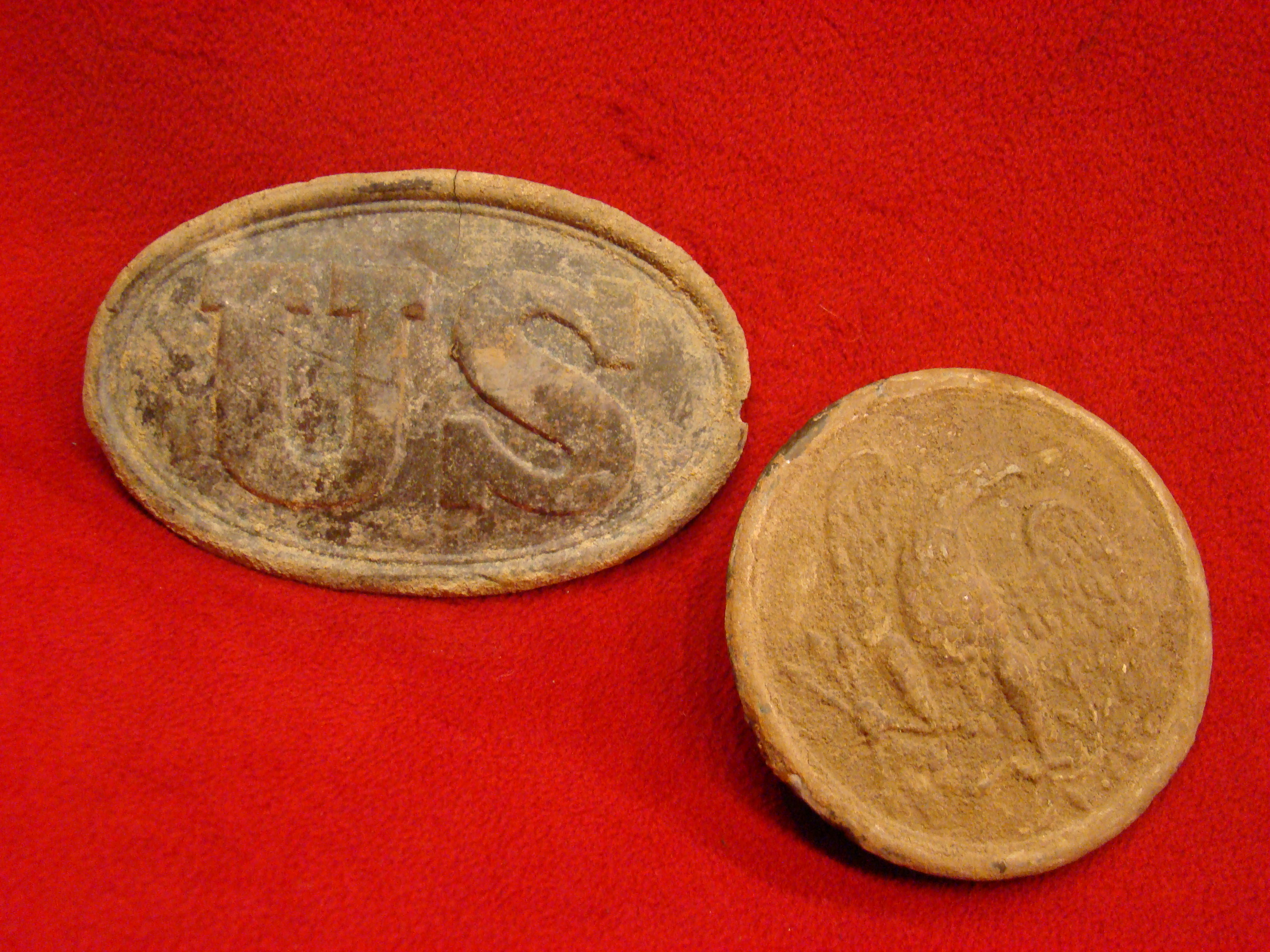
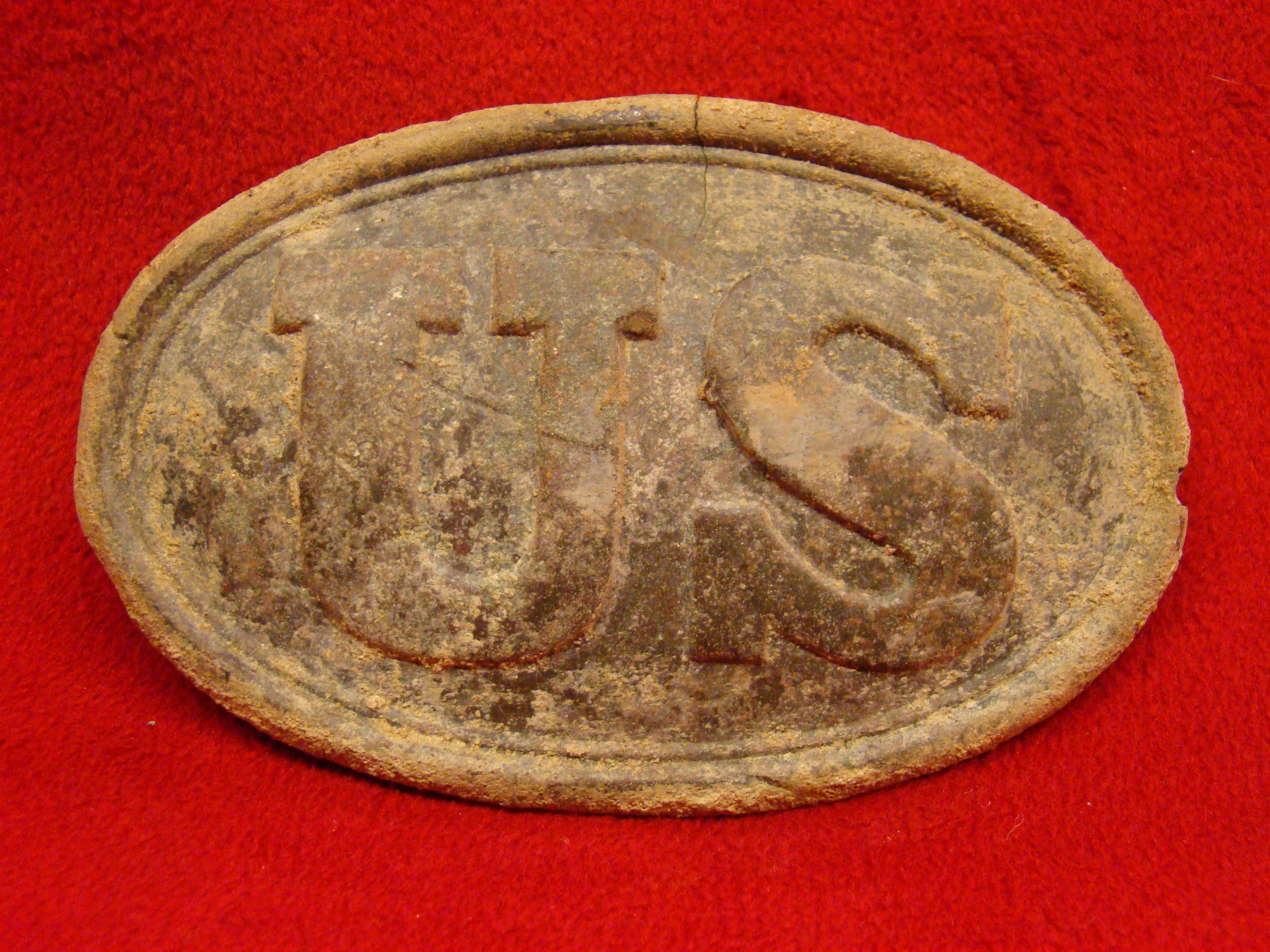
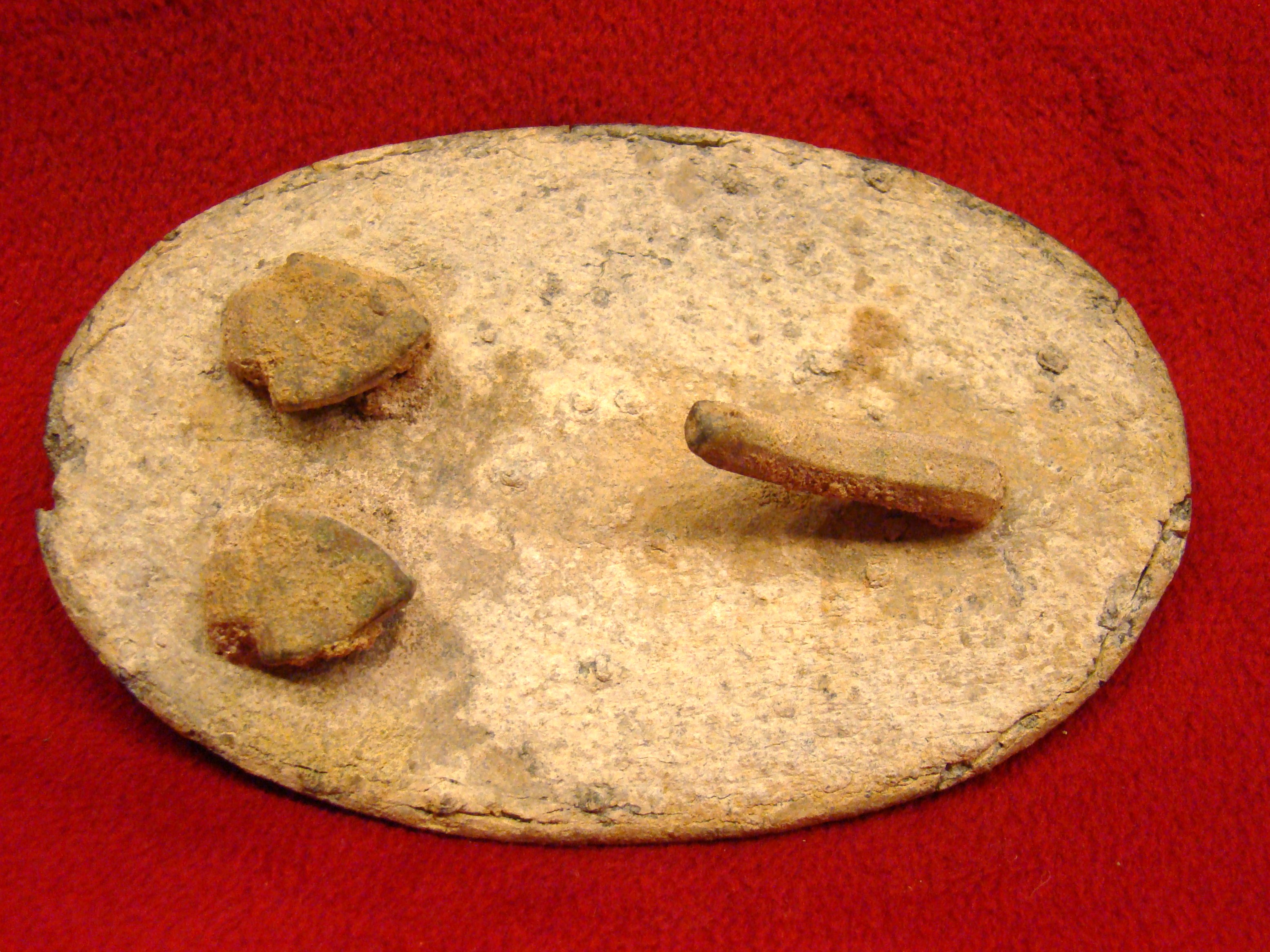
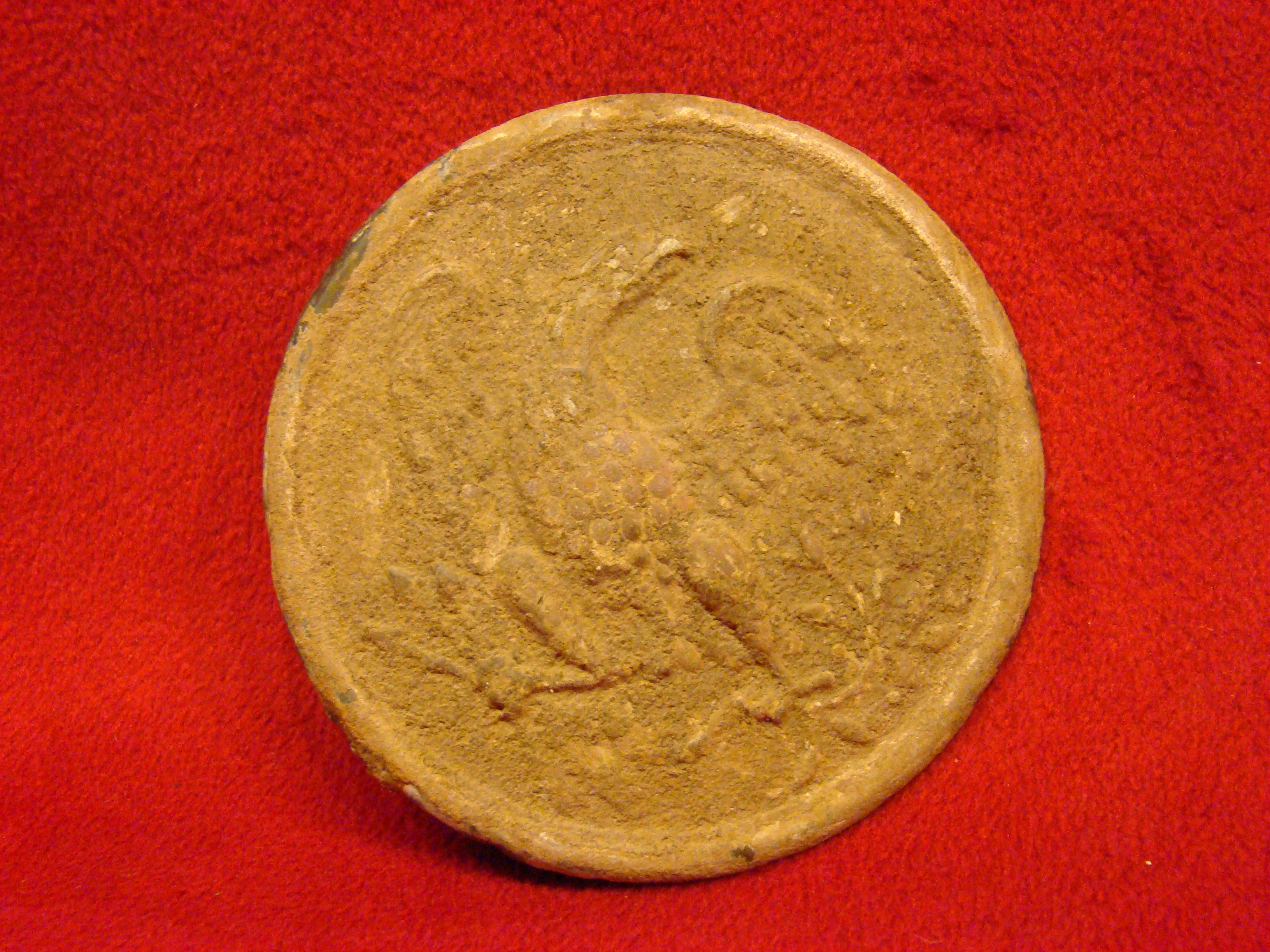
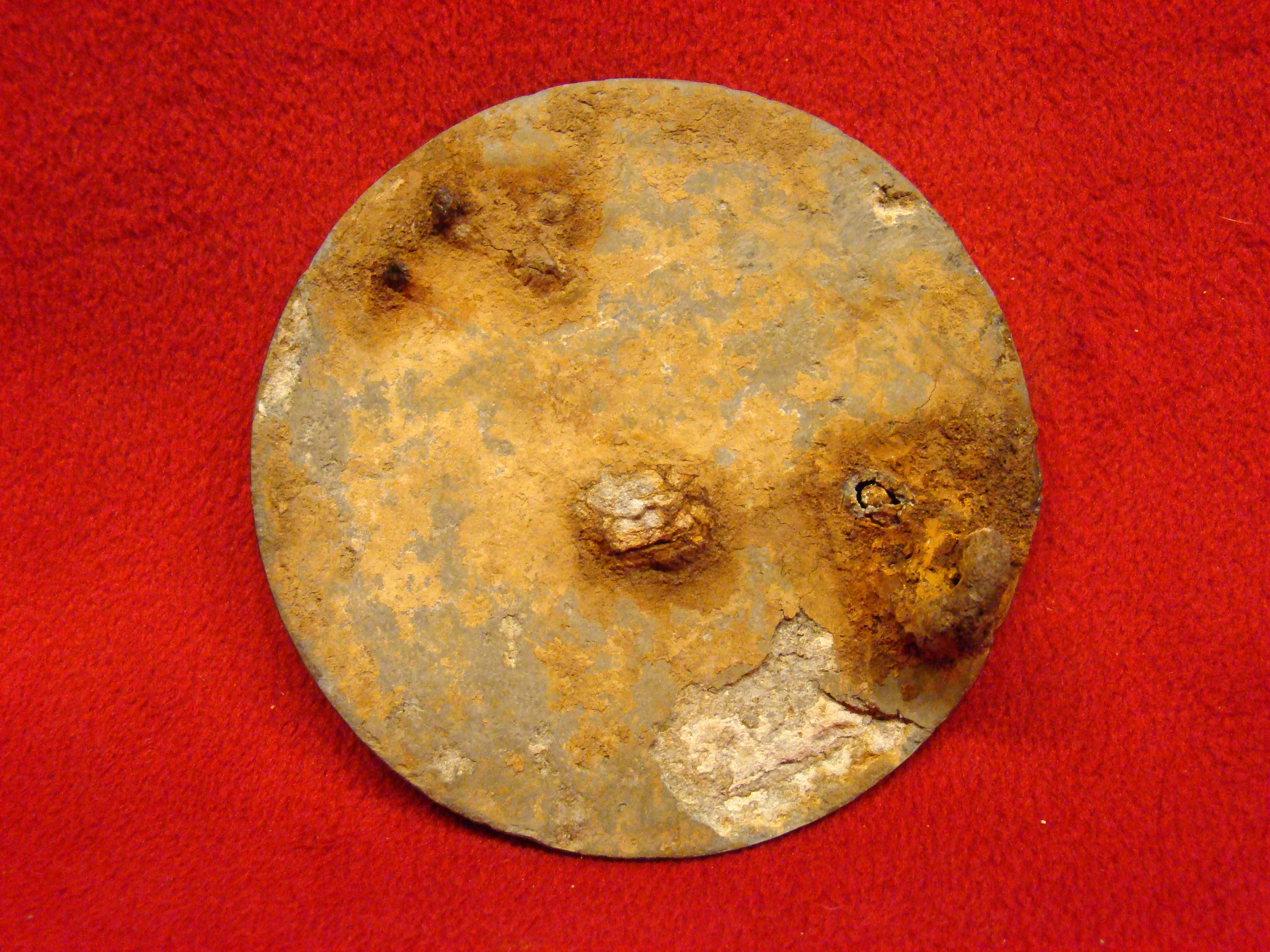
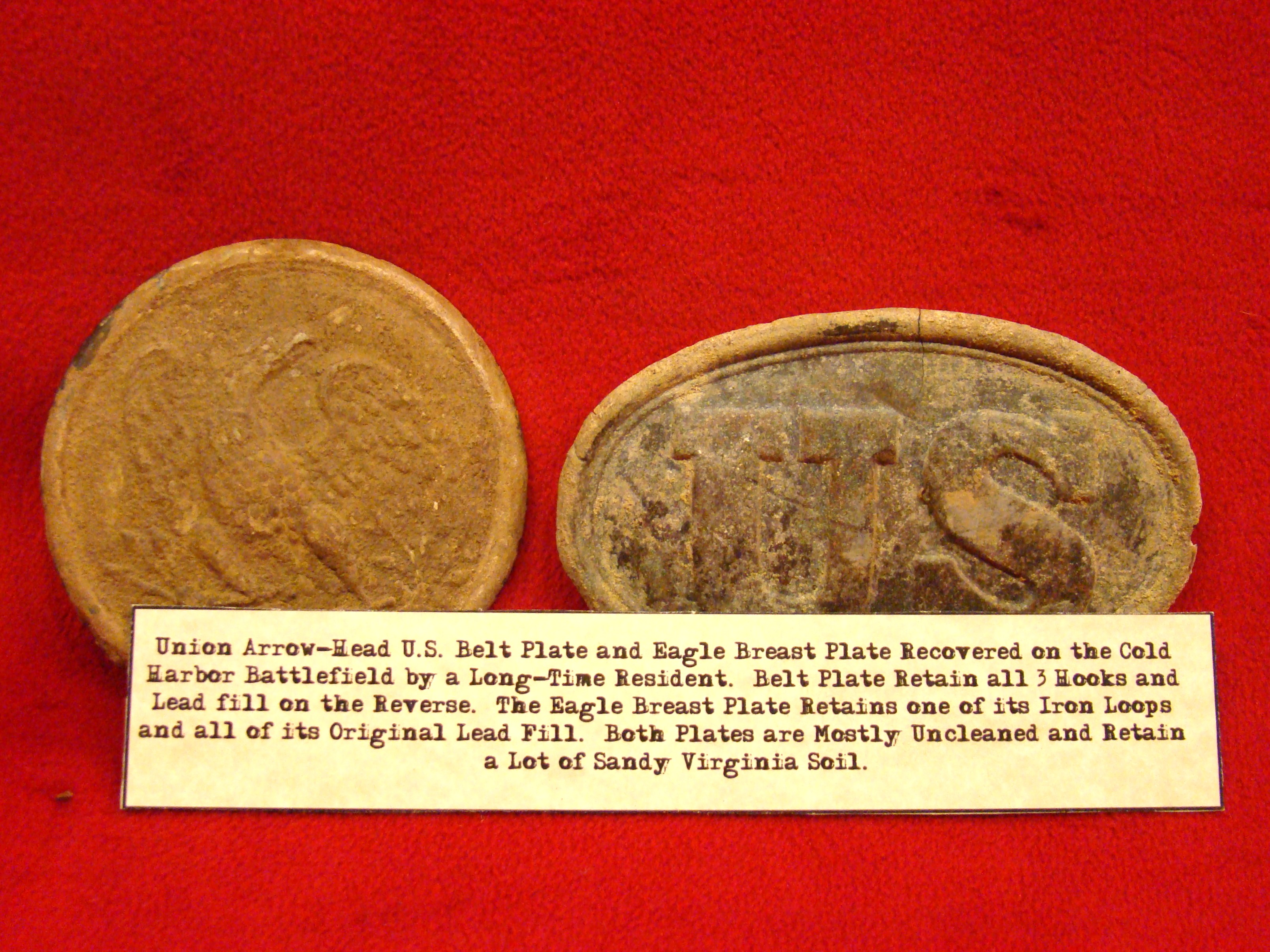
USBP 14. Dug US M-1839 Enlisted Man’s Belt Buckle and Breastplate. Cold Harbor VA. Battlefield.
Thousands of US soldiers were killed at Cold Harbor in suicidal charges against Confederate entrenchments. Here are two of the relics they left on the field. The buckle is a late war Gaylord contract pattern with intact arrowhead hooks and full lead. See page 313, Plate # 506 in O’Donnell & Campbell’s reference book “American Military Belt Plates” for an identical example. The breastplate is also a Gaylord contract pattern. Good condition overall with one of the sling loops rusted away. Both have been left uncleaned, just as they came out of the ground. Buckle $250.00 Breastplate $125.00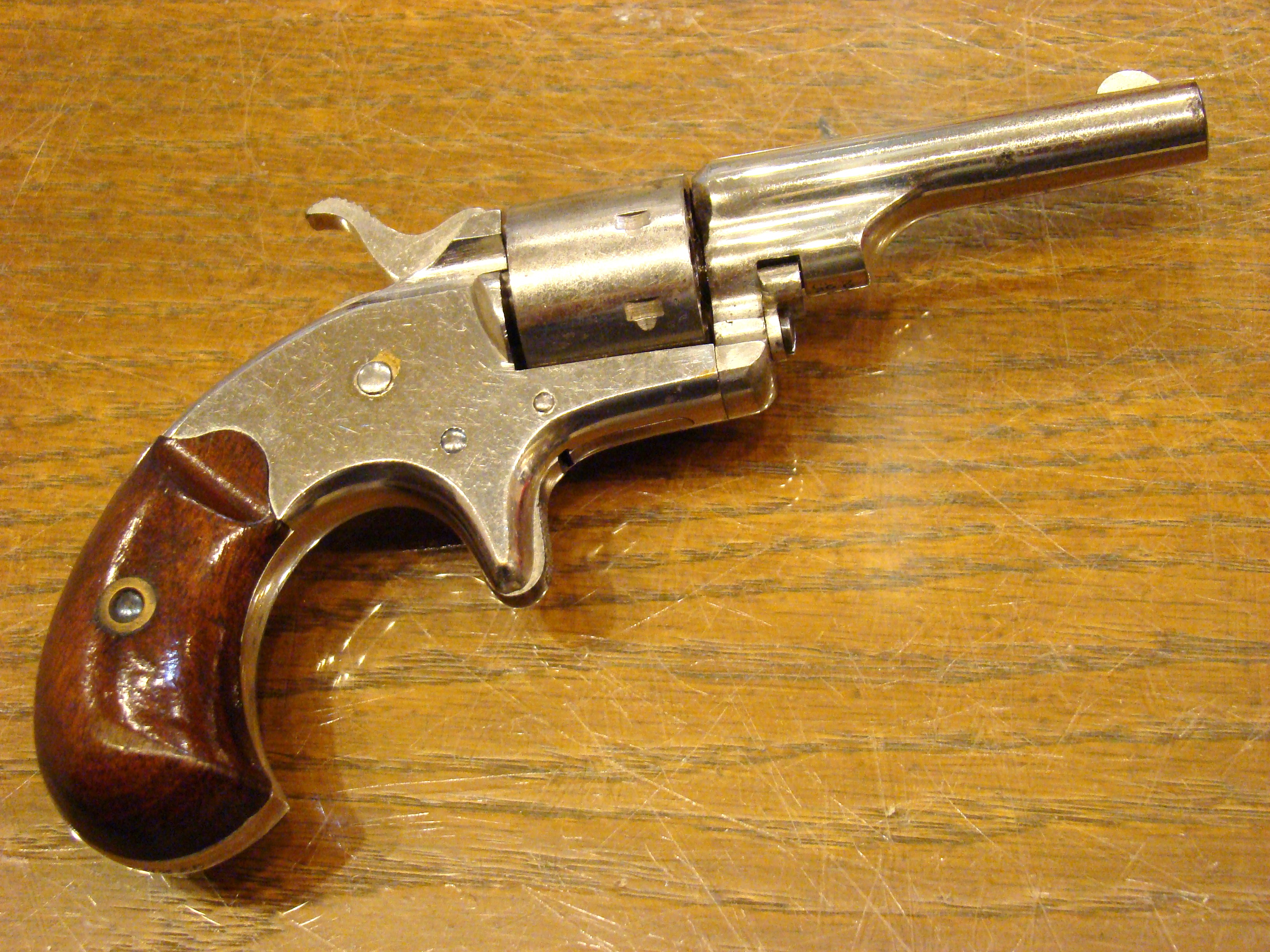
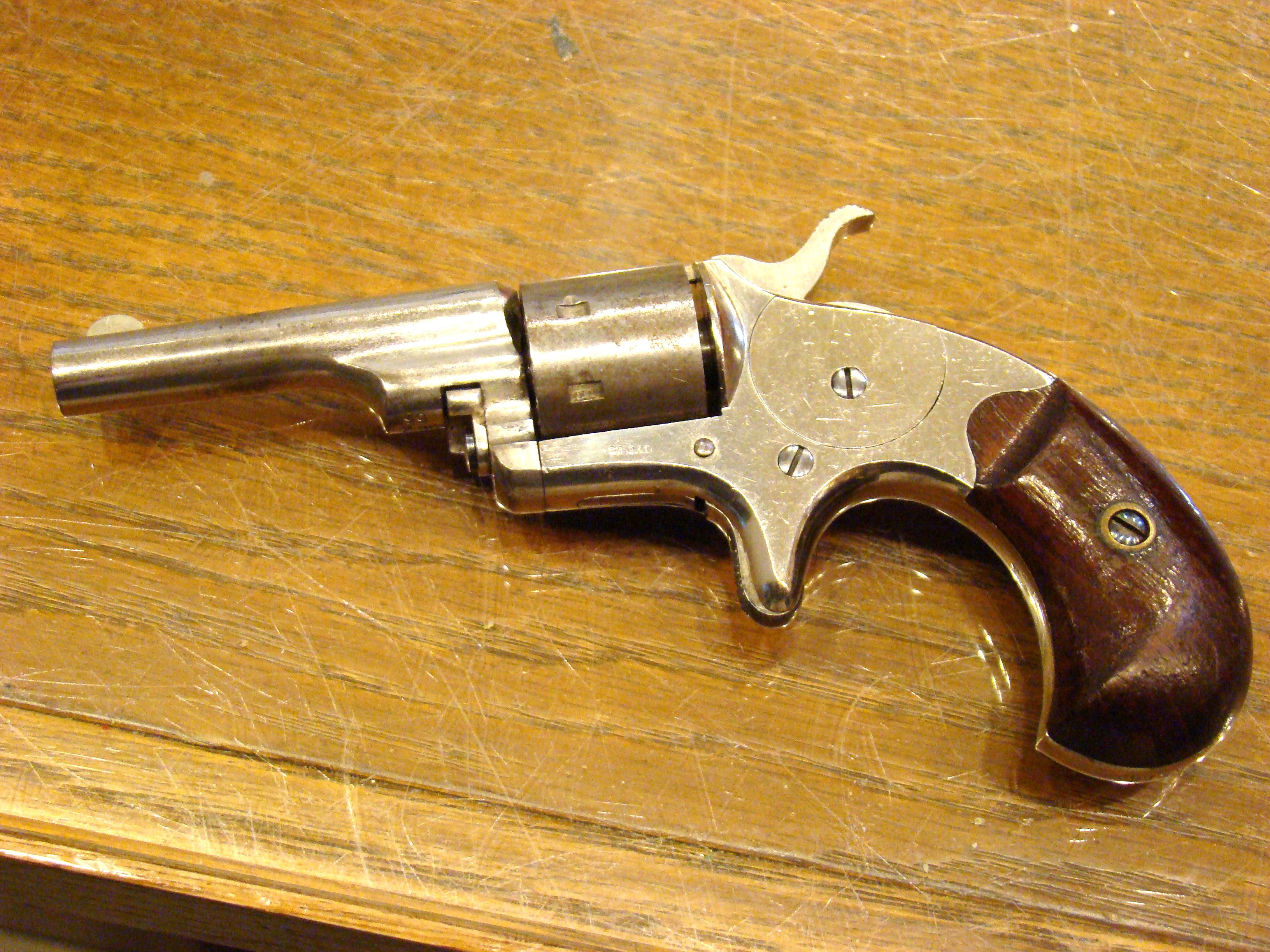
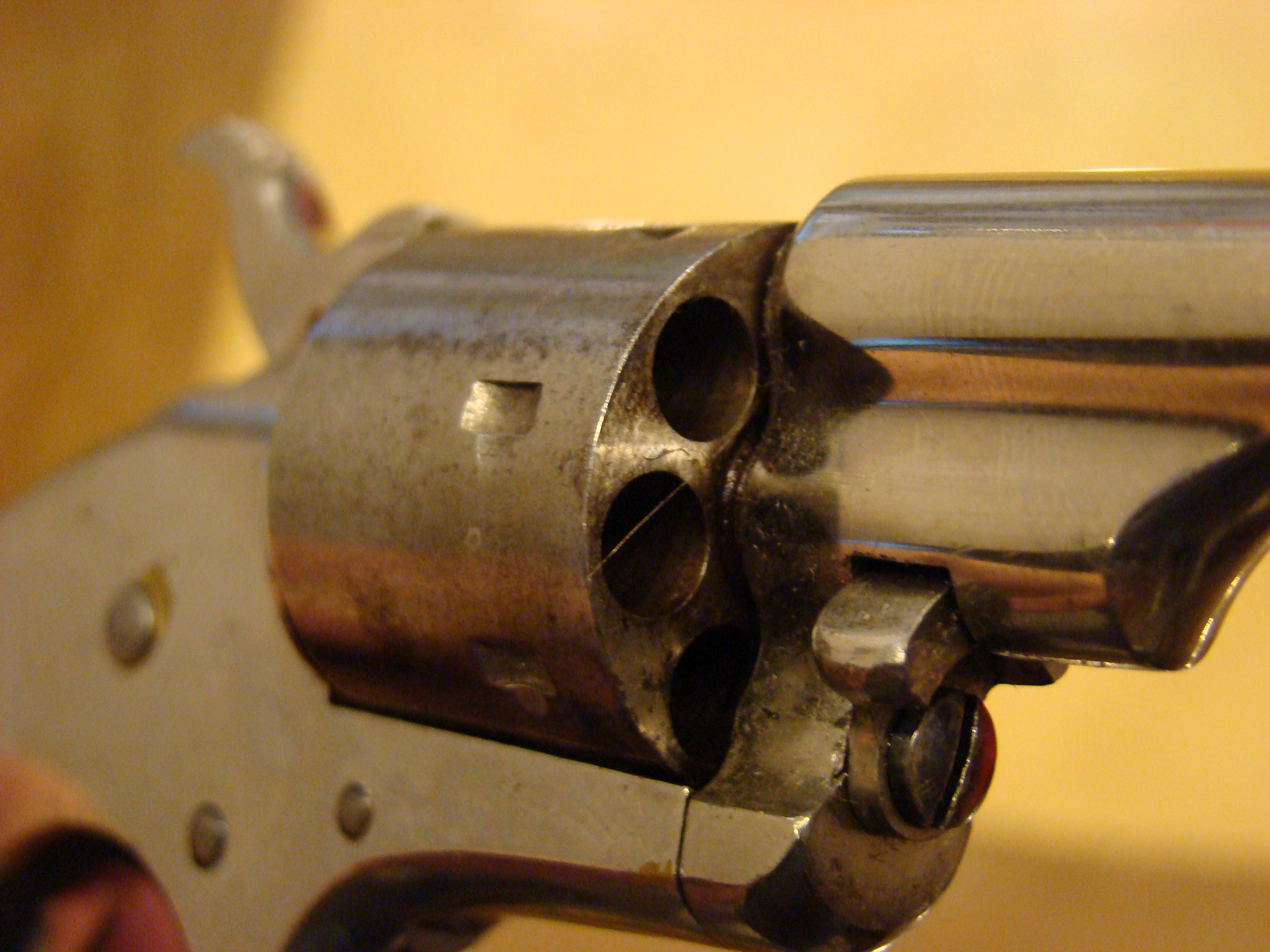
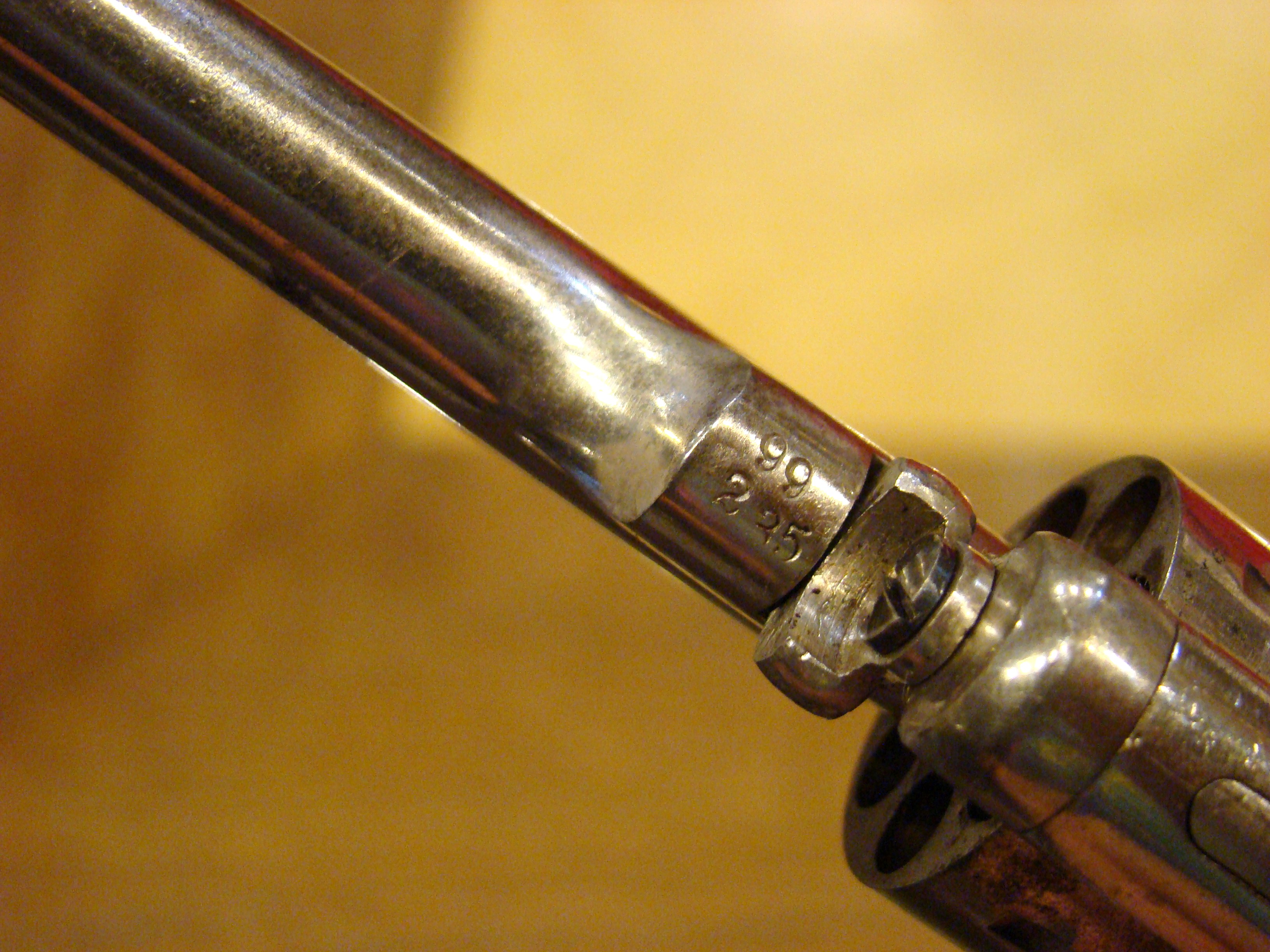
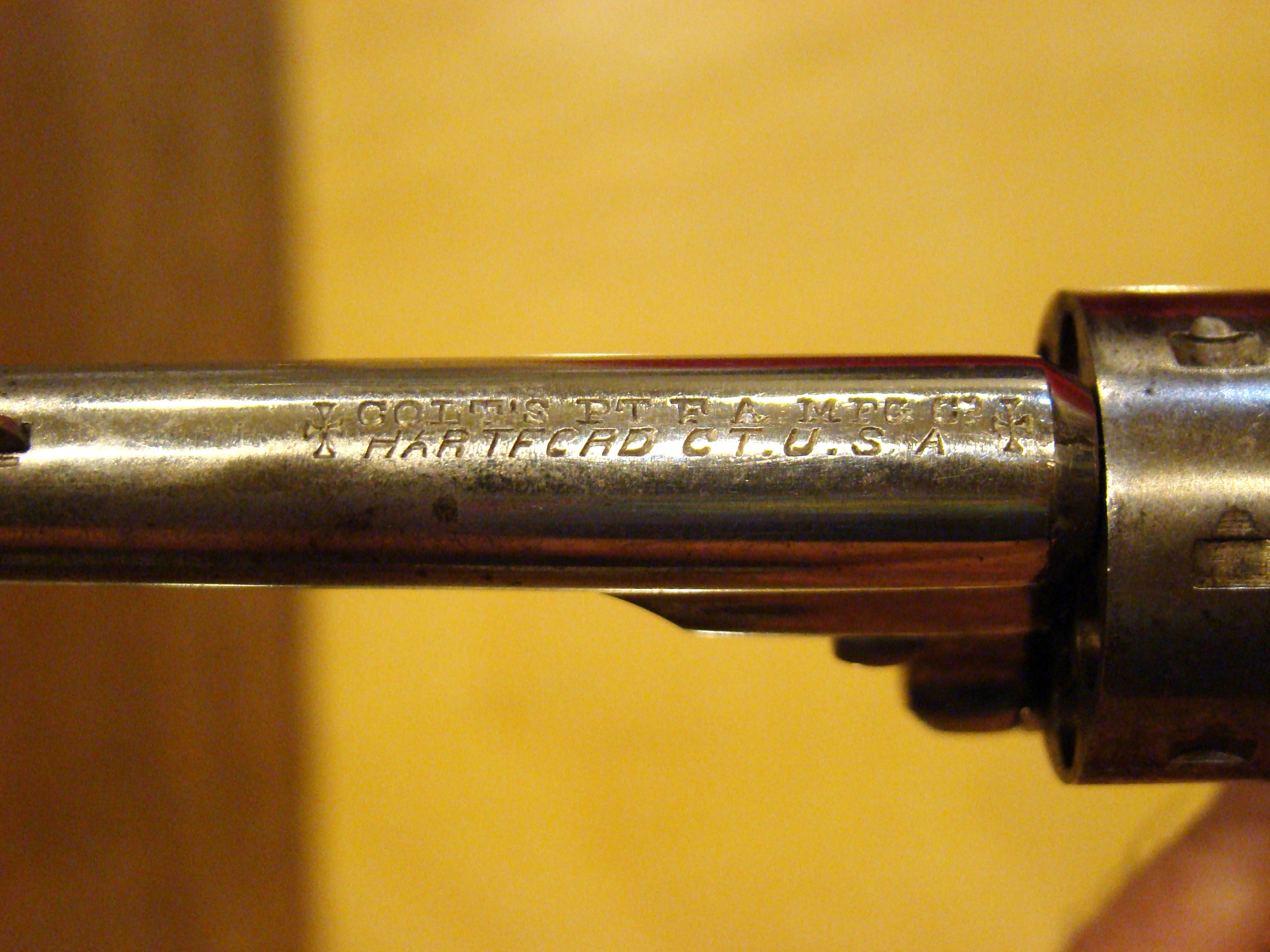
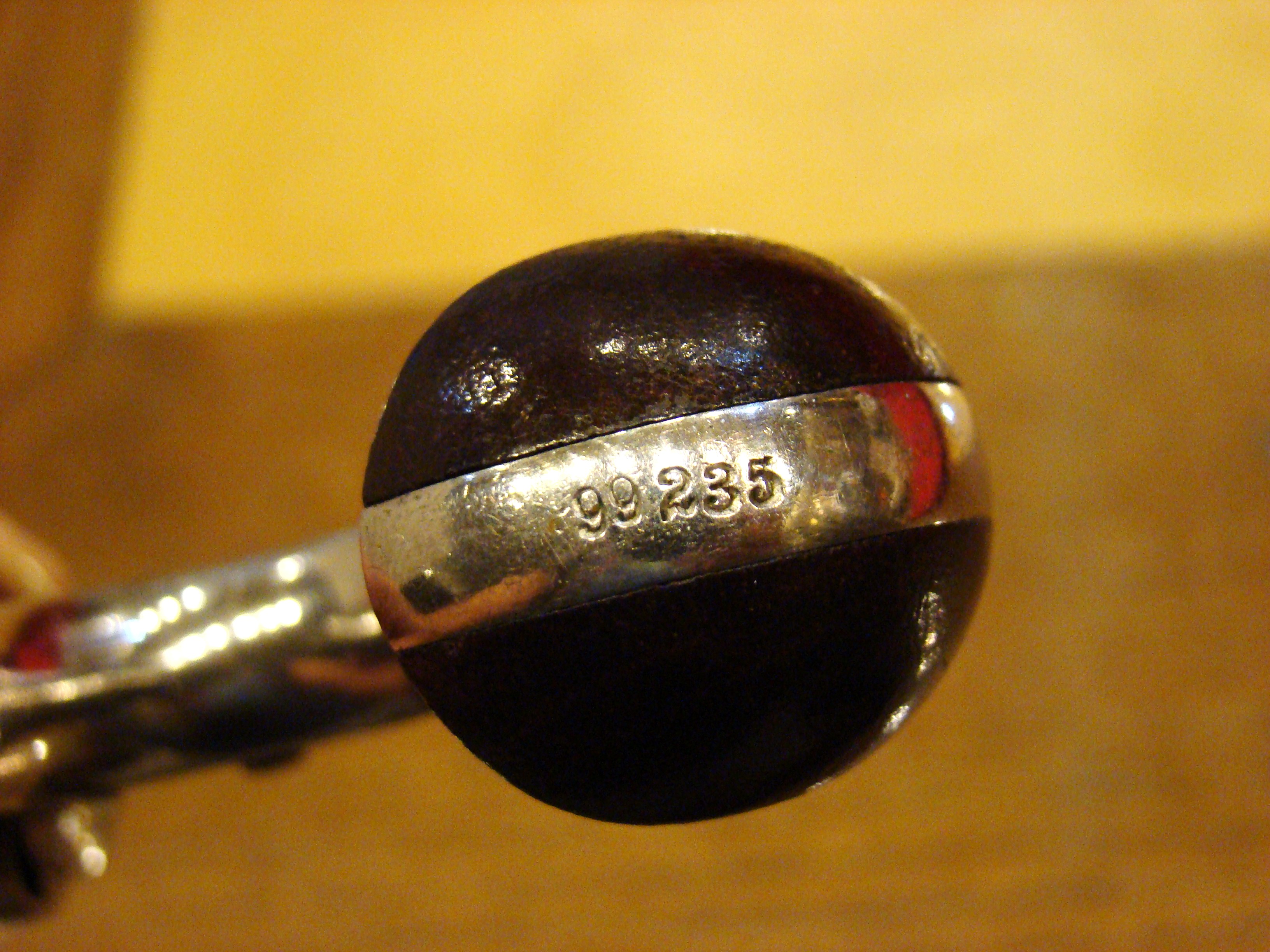
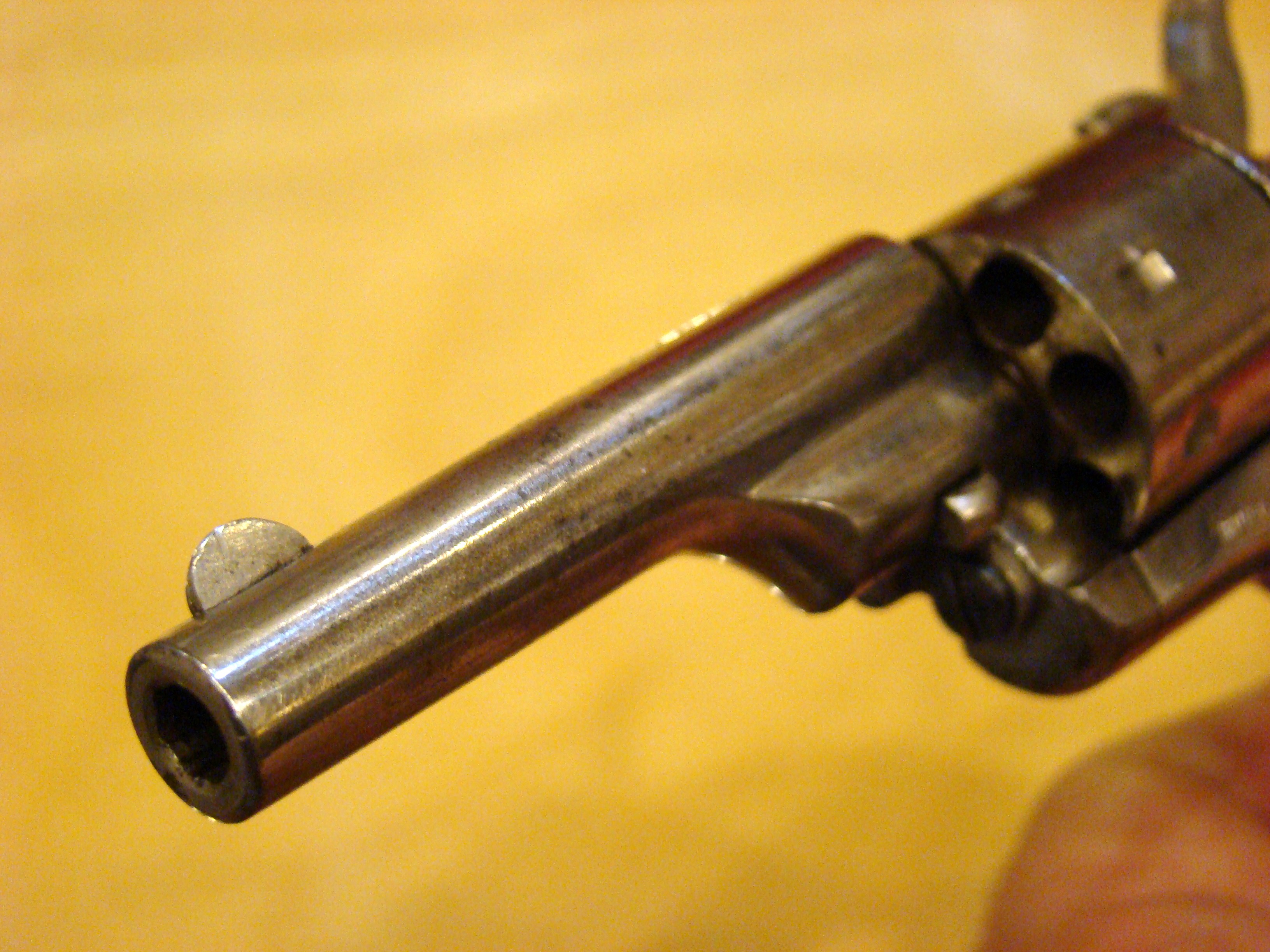
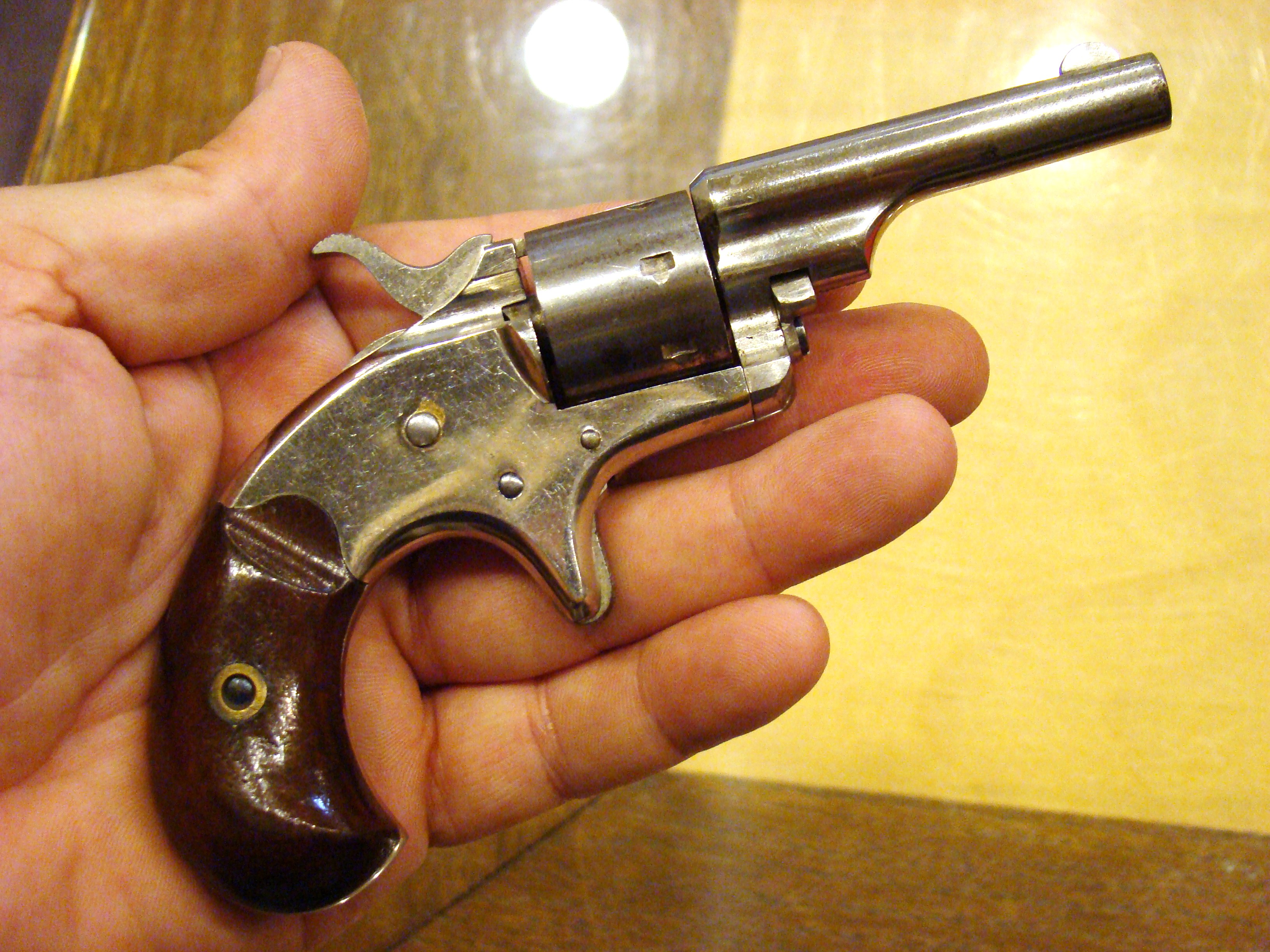
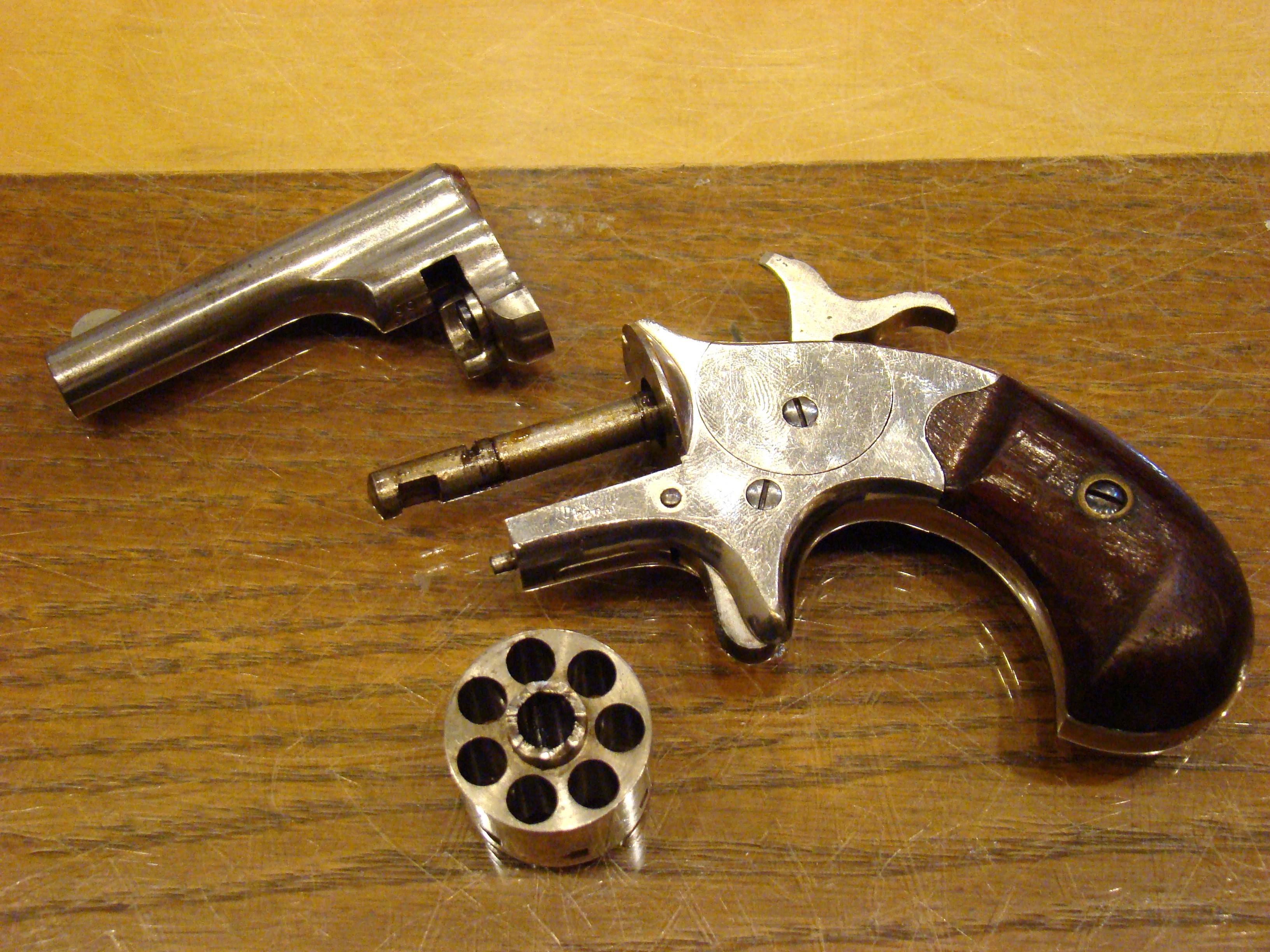
WP 5. Colt “Open Top” Pocket Revolver .22 Cal. 1876 Production.
High quality Colt. Retains almost all of its original bright nickel plating. All matching serial # 99235. Clear “COLT’S PT. FA. MFG. Co./HARTFORD CT. U.S.A.” barrel address. Spur trigger/cylinder rotation mechanics are crisp. Walnut “bird head” grips are excellent. Bore has sharp rifling. These revolvers were Colt’s answer to Smith & Wesson’s #1 Pocket Revolver. Would make a good modern shooter. $395.00 HOLD G.R.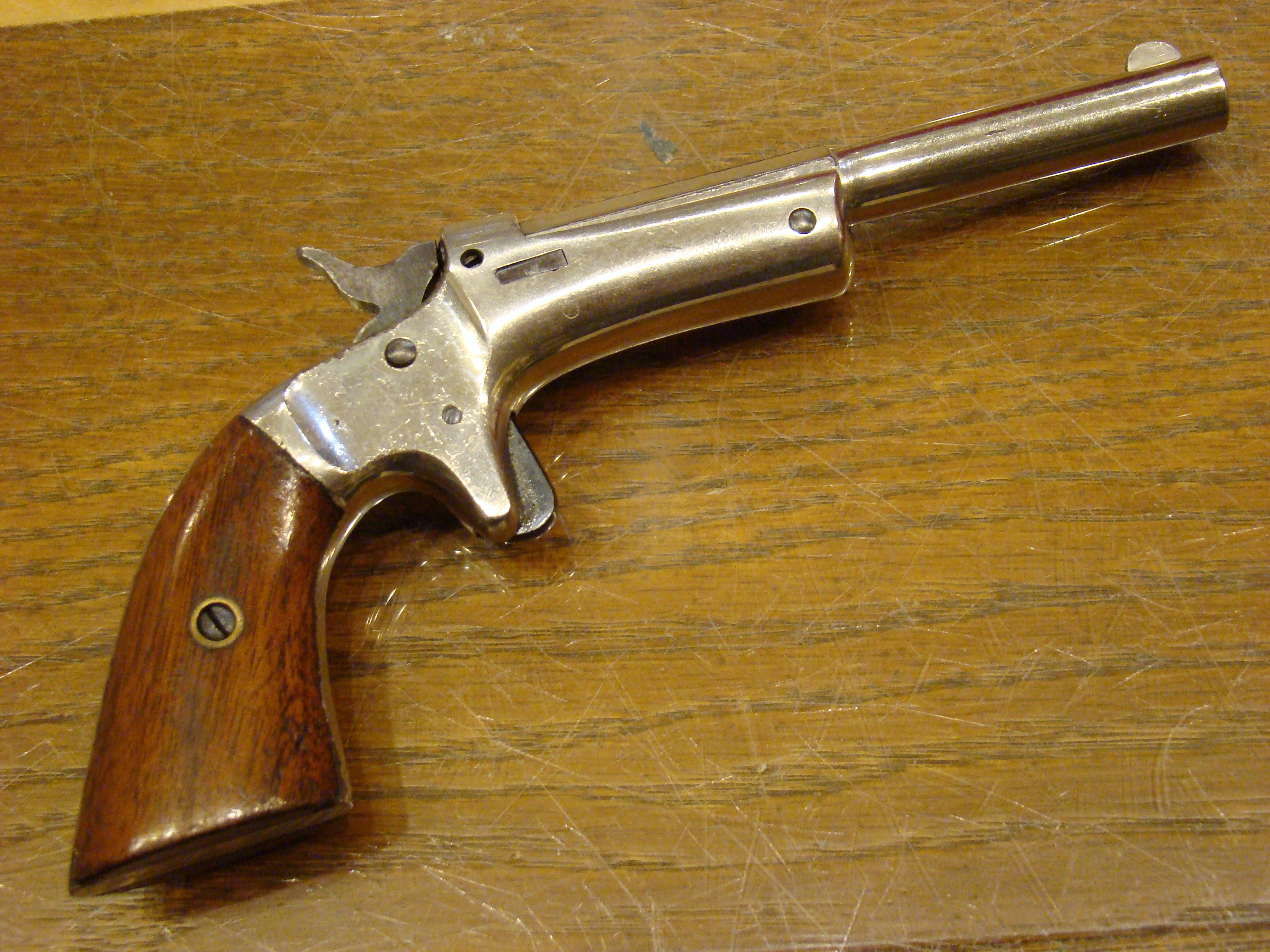
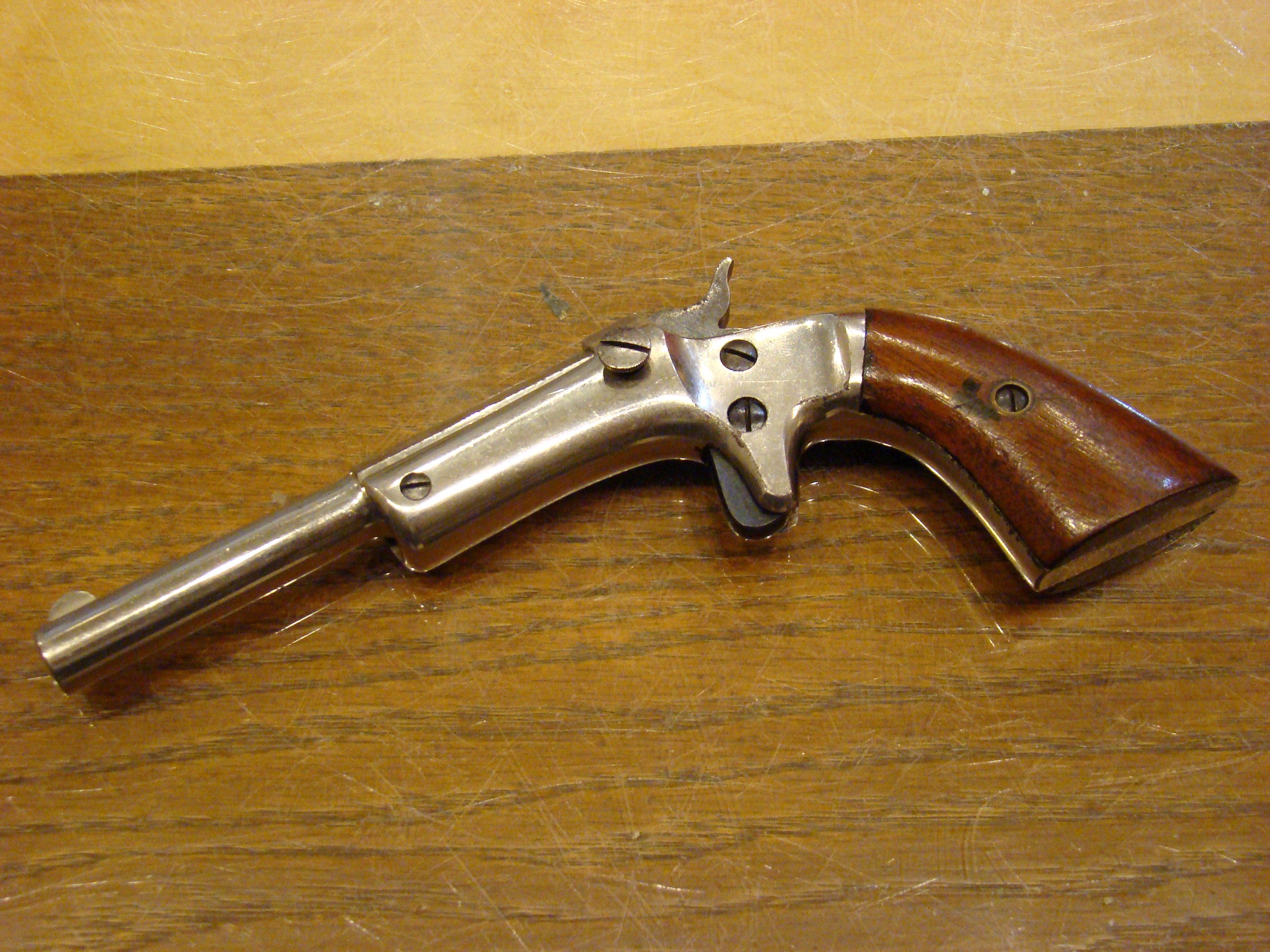
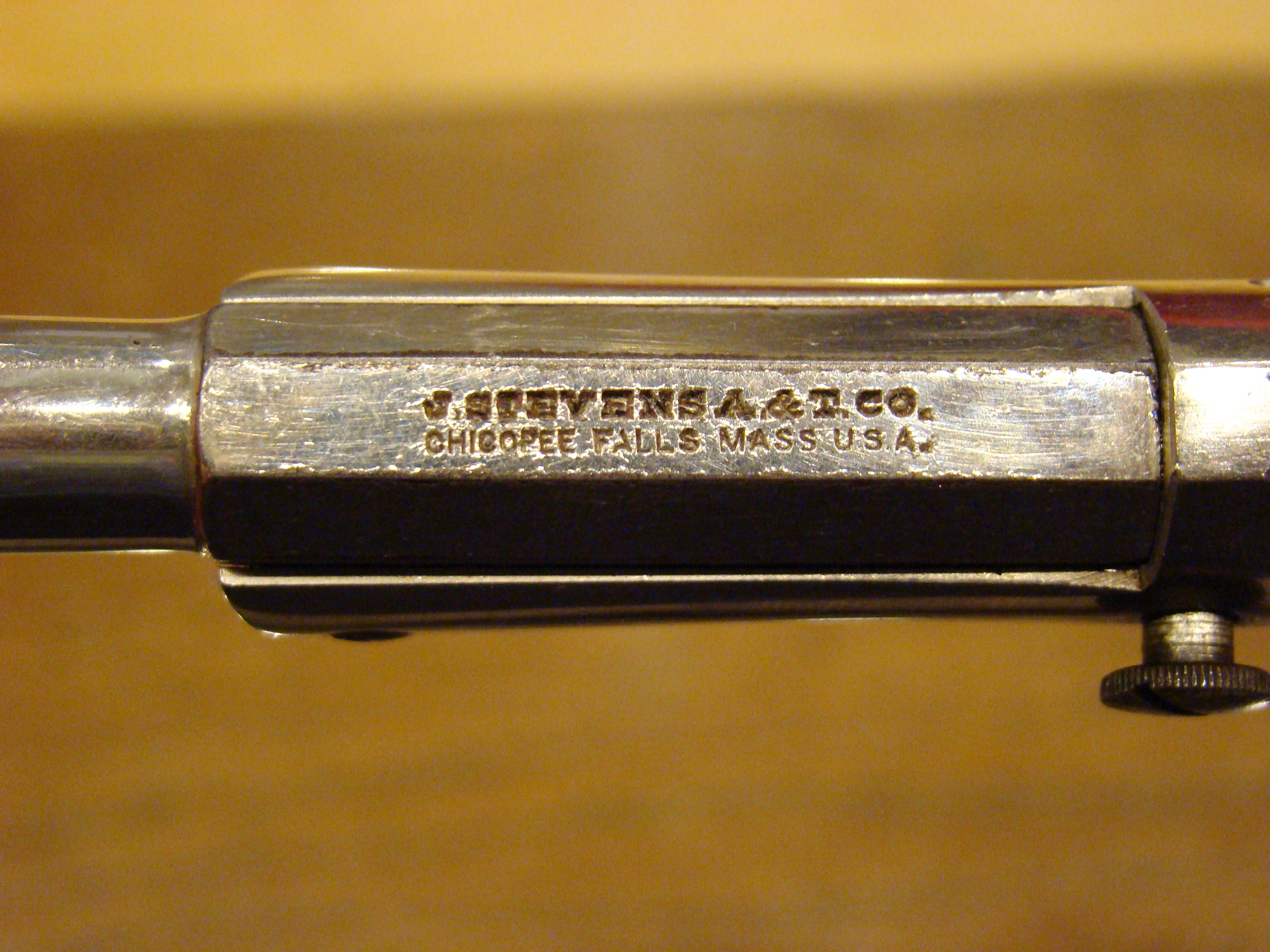
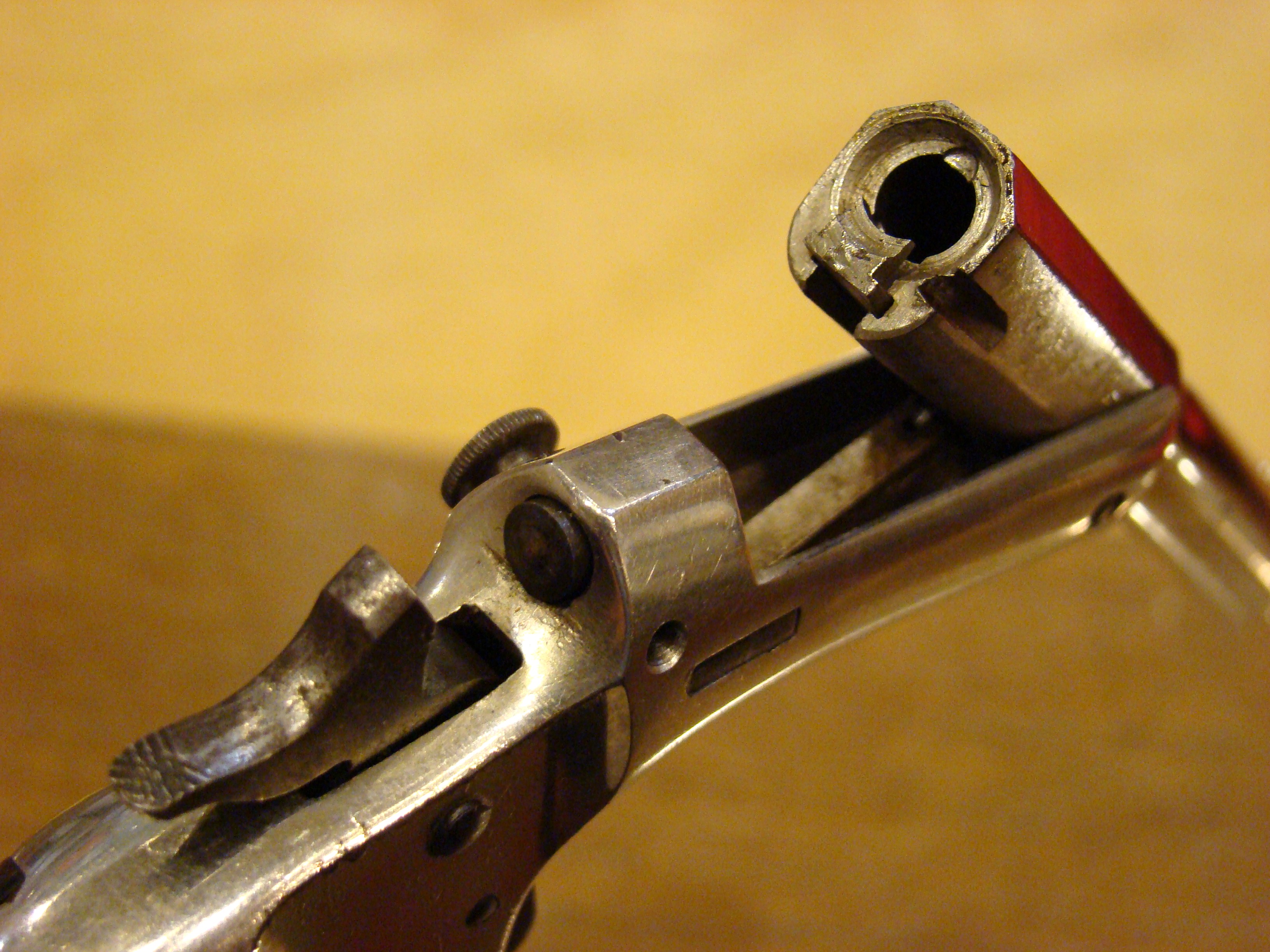
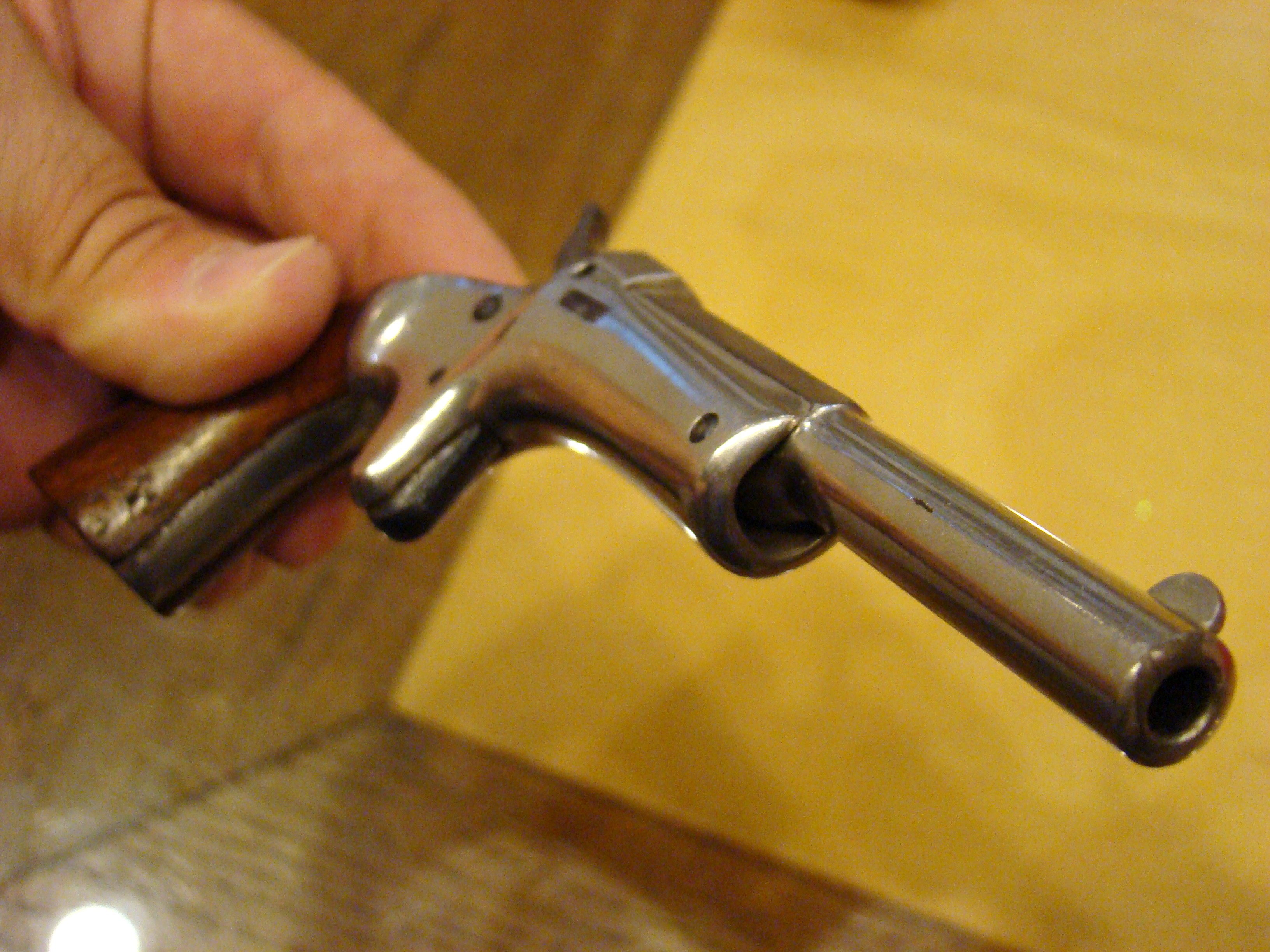
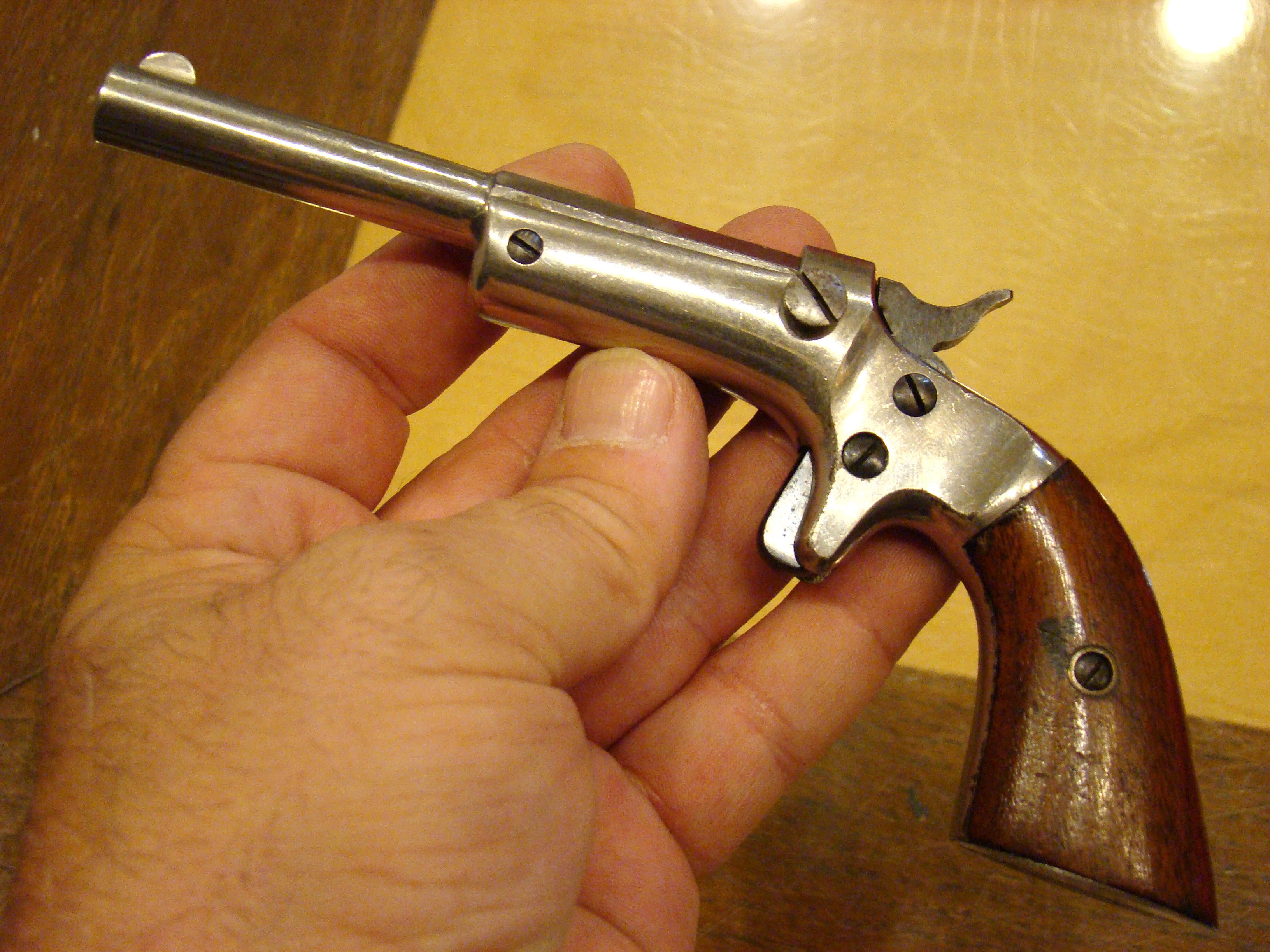
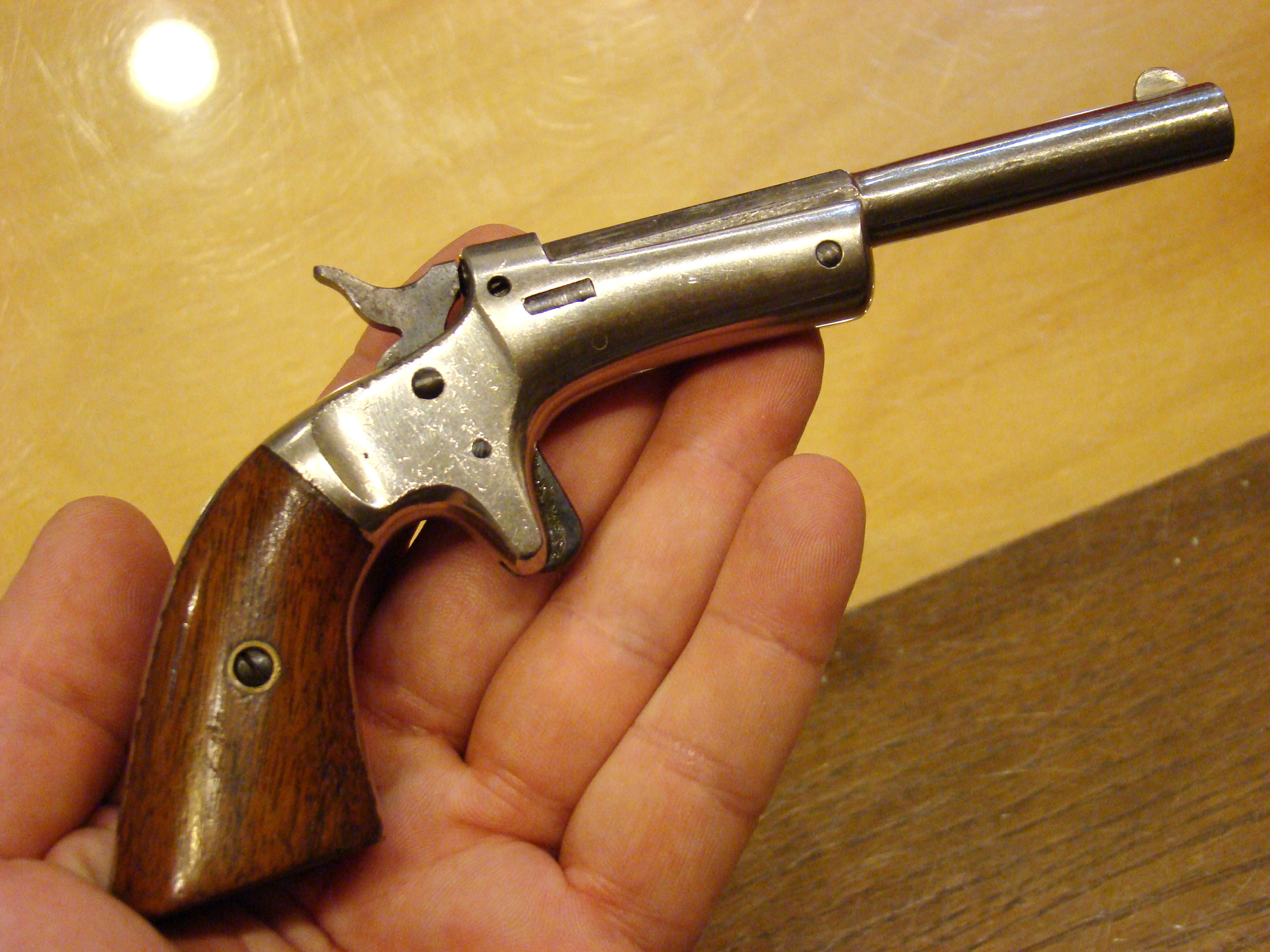
WP 6. J. Stevens & Co. “Old Model” Pocket Pistol .22 Cal.
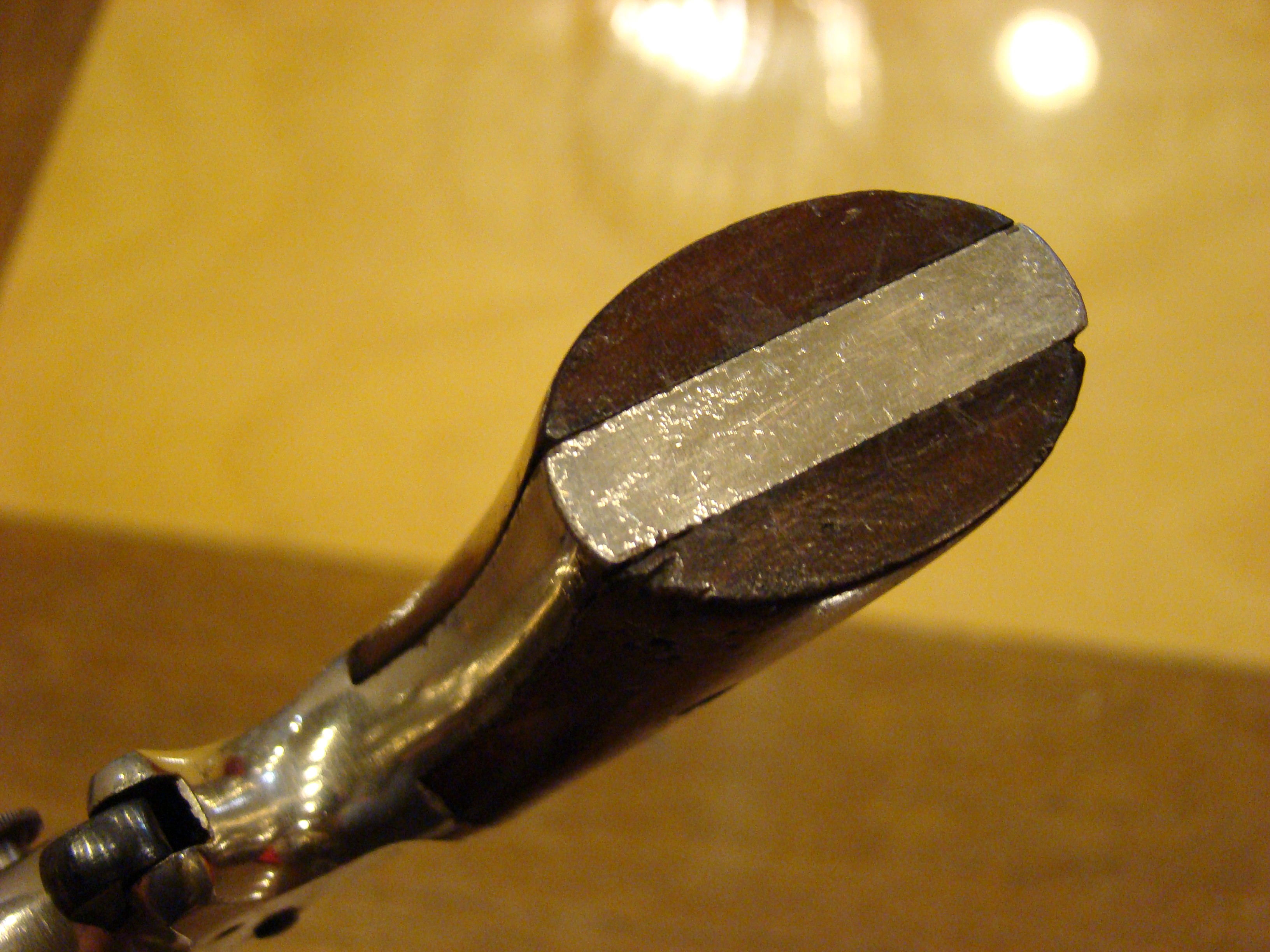
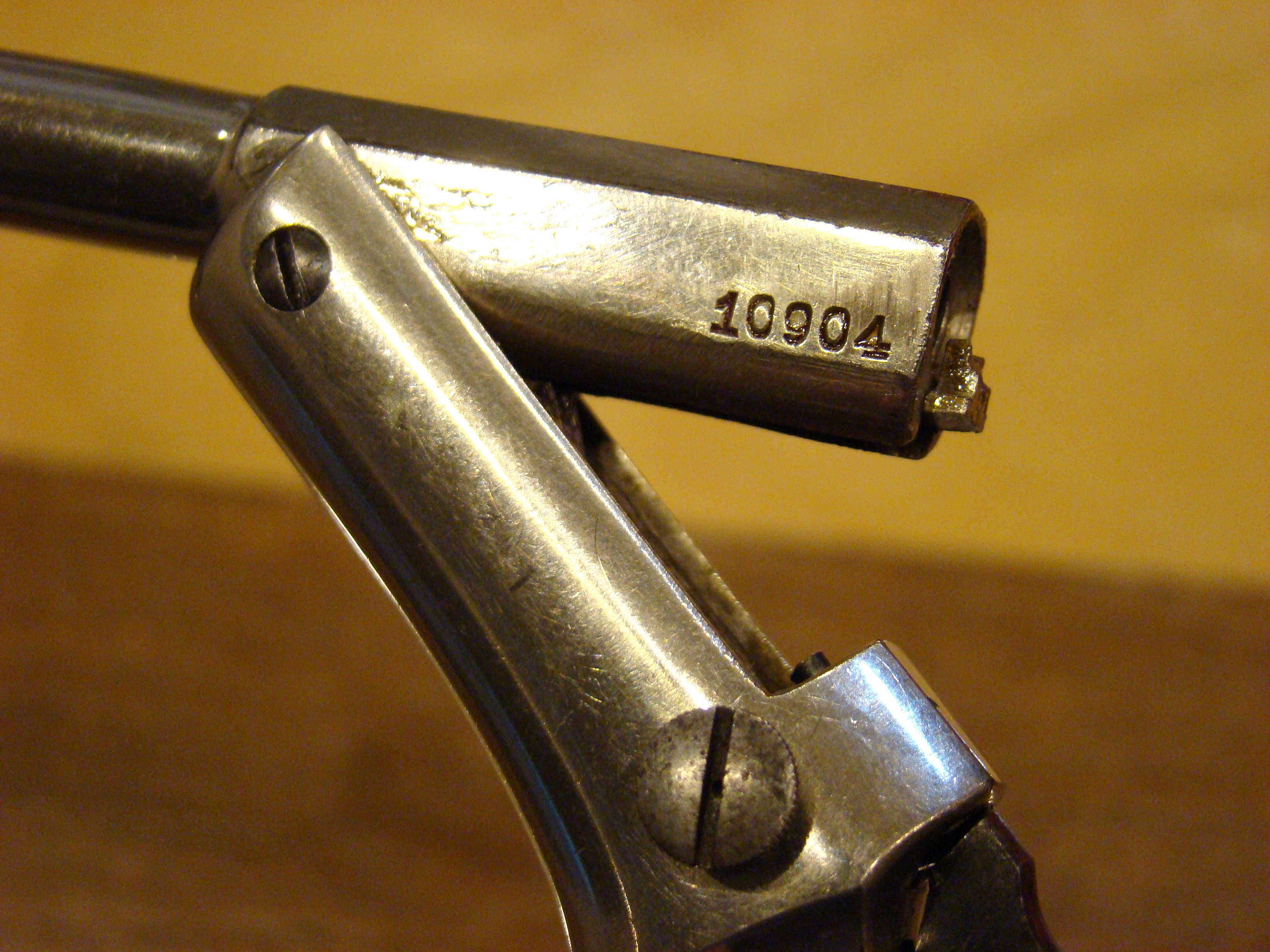
Very nice example that still retains 100% of its original bright nickel plating. All matching serial # 10904. Clear “J. STEVENS A&T Co./CHICOPEE FALLS MASS USA.” barrel address. Spur trigger/push button breech mechanism works flawlessly. Rosewood grips are excellent with 100% original factory varnish. Bore is clean with visible rifling. Would make a good little shooter as it can use modern and cheap .22 rimfire ammo. $395.00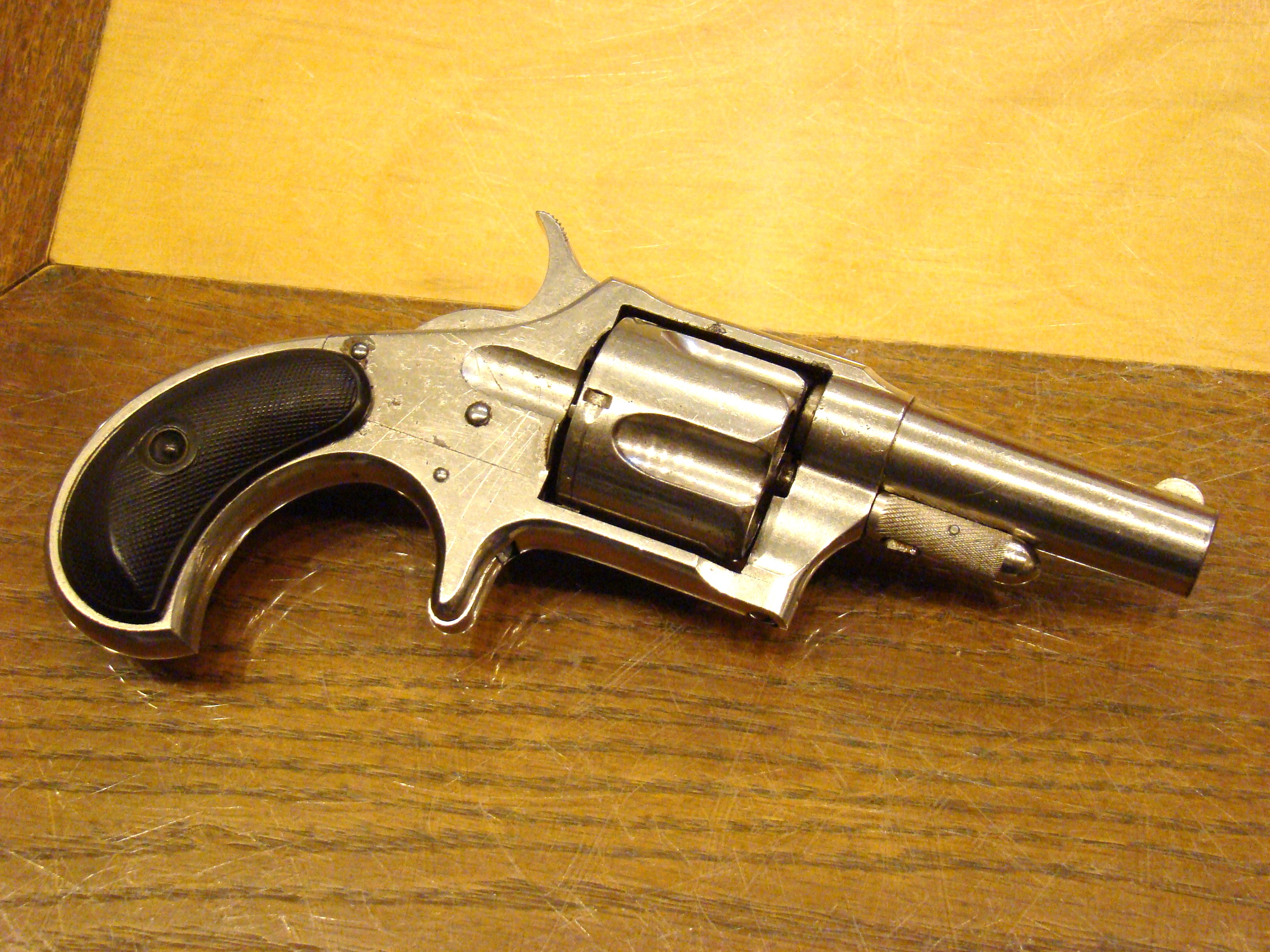
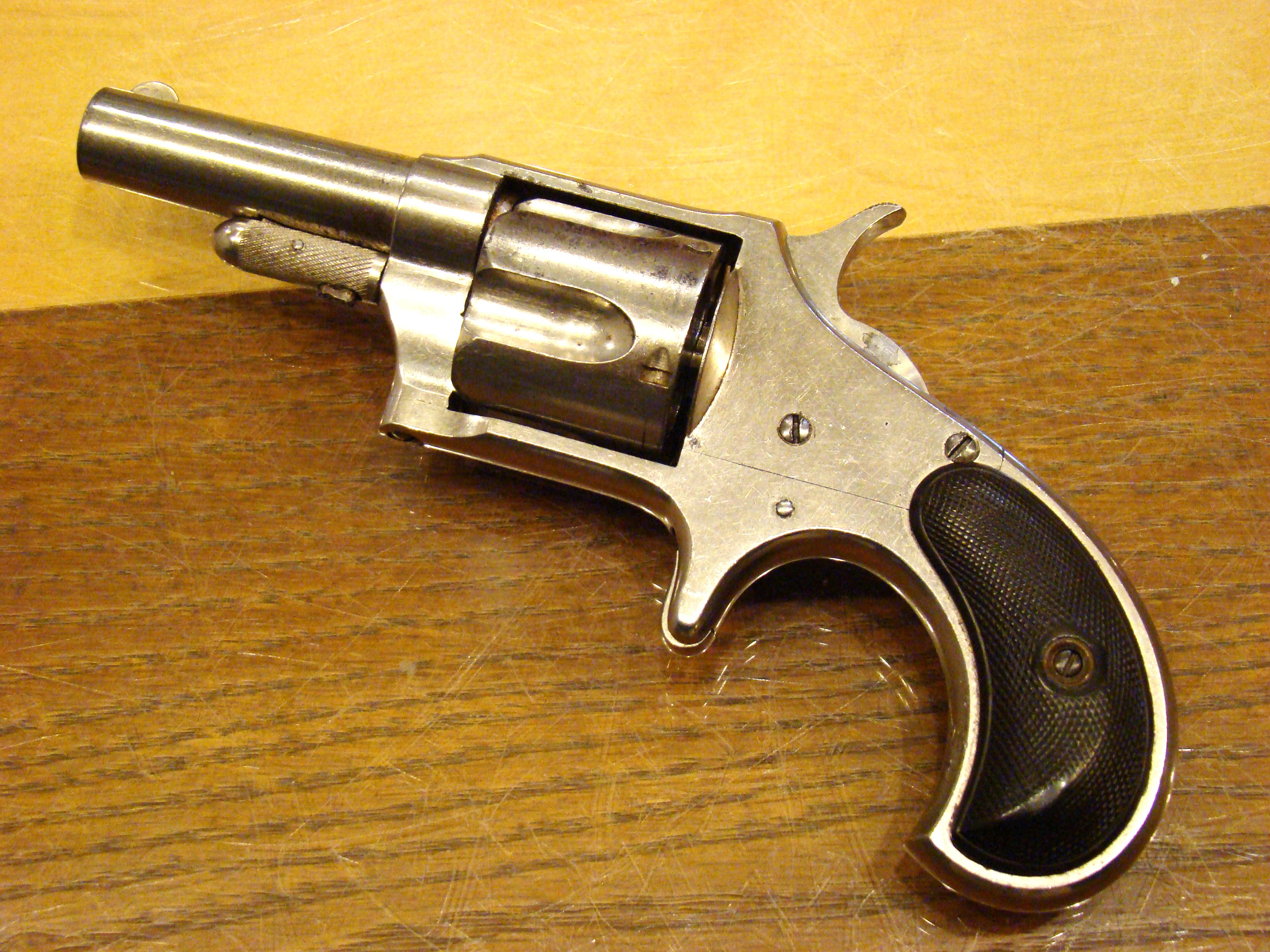
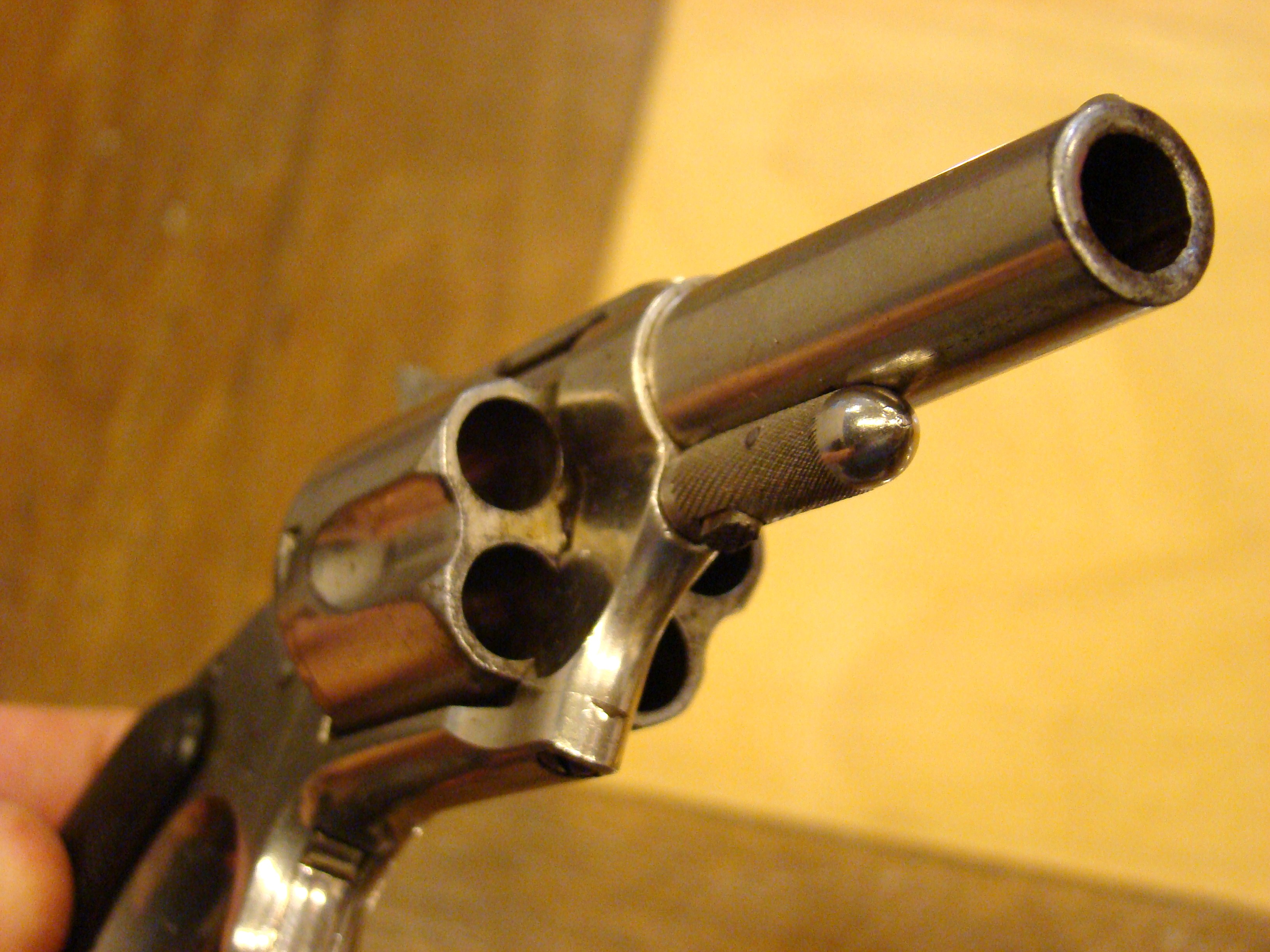
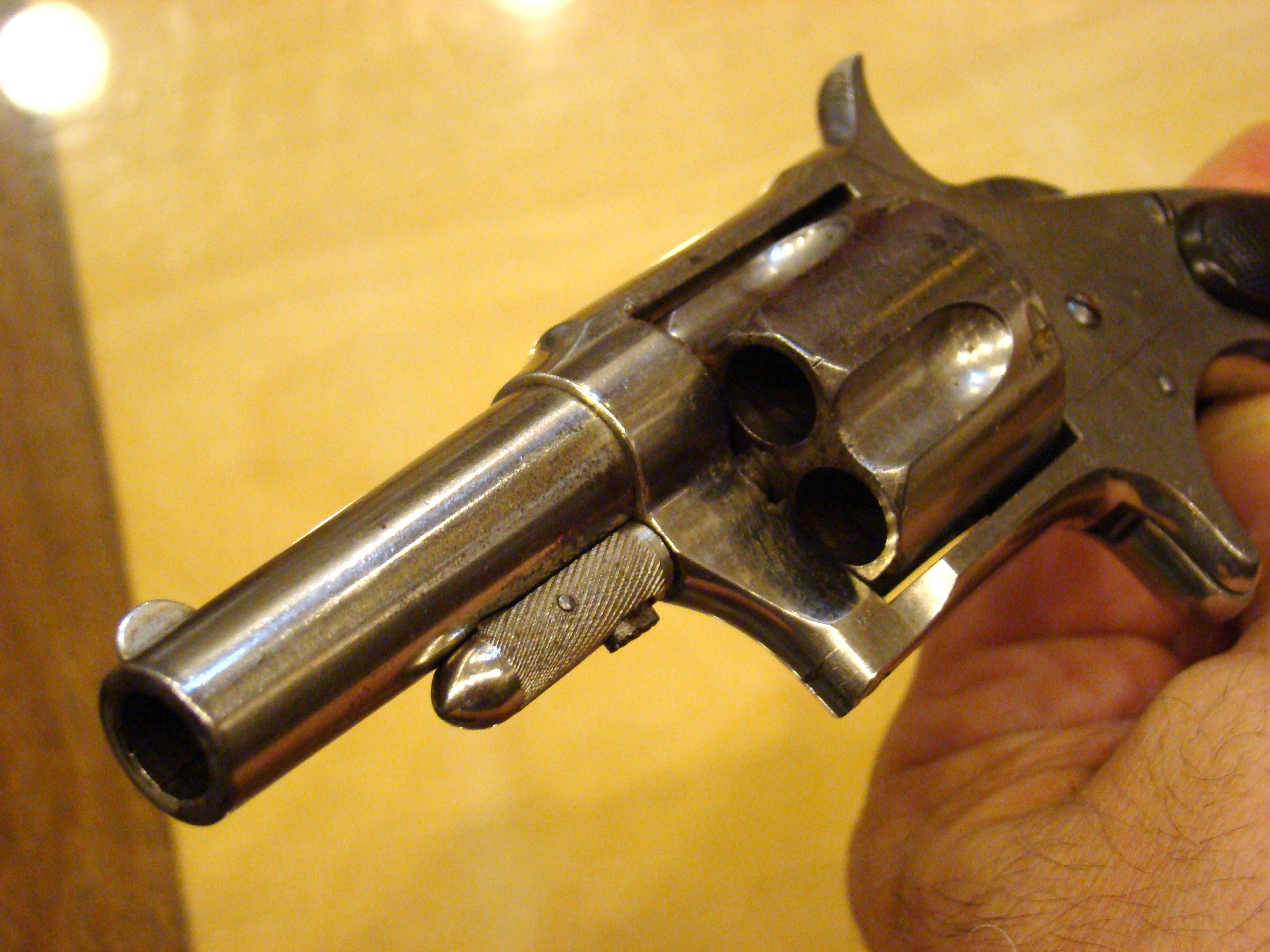
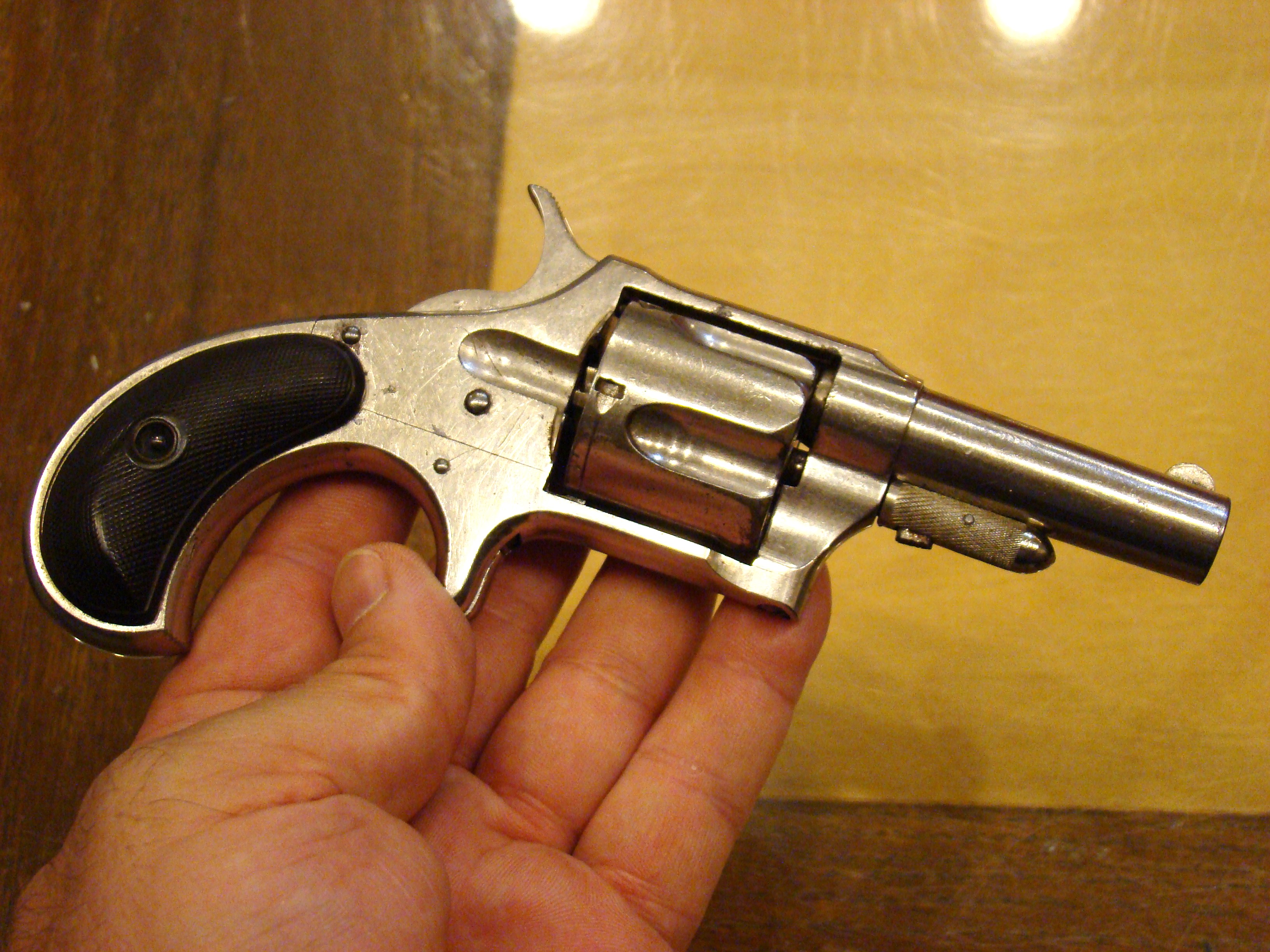
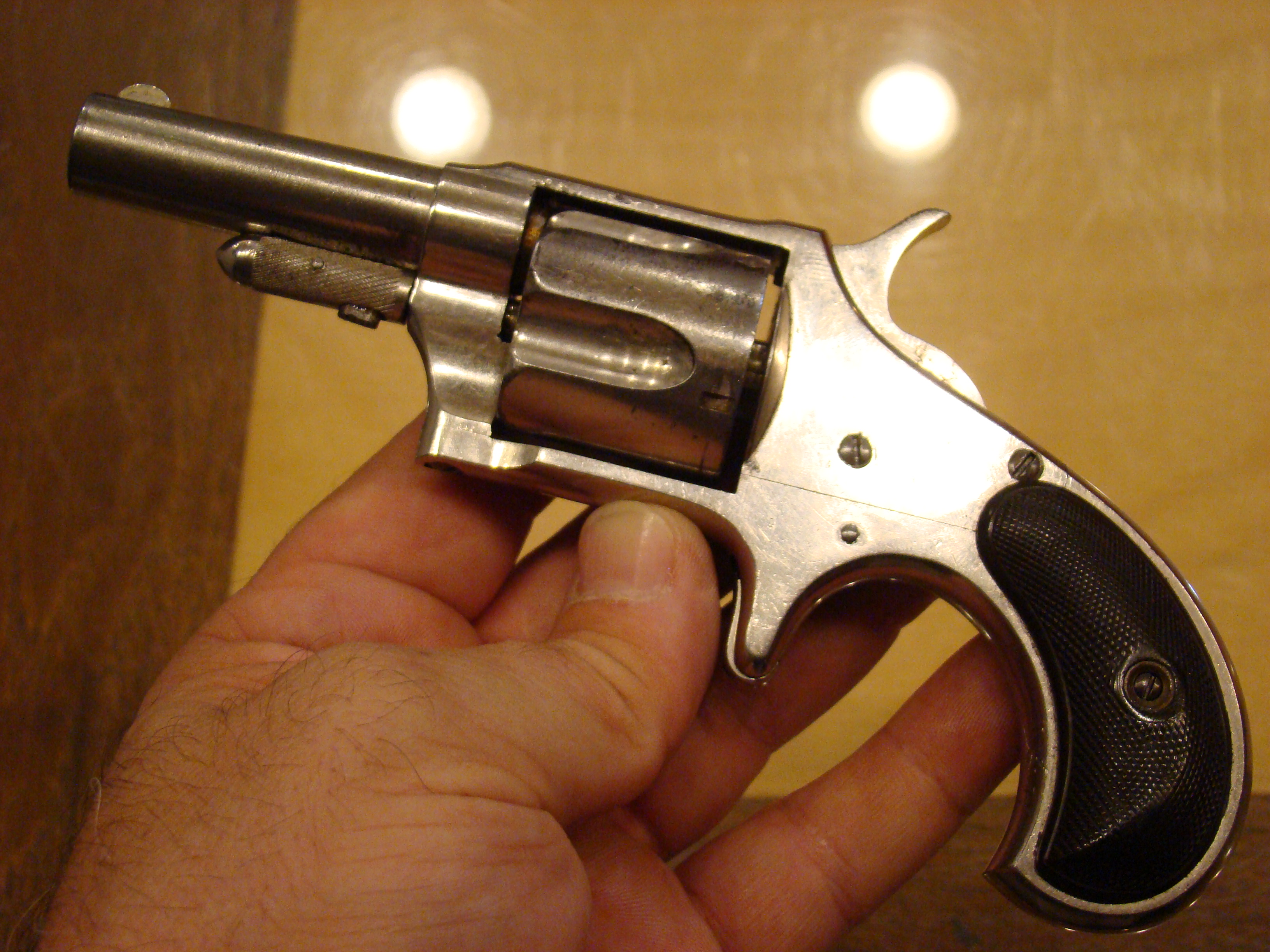
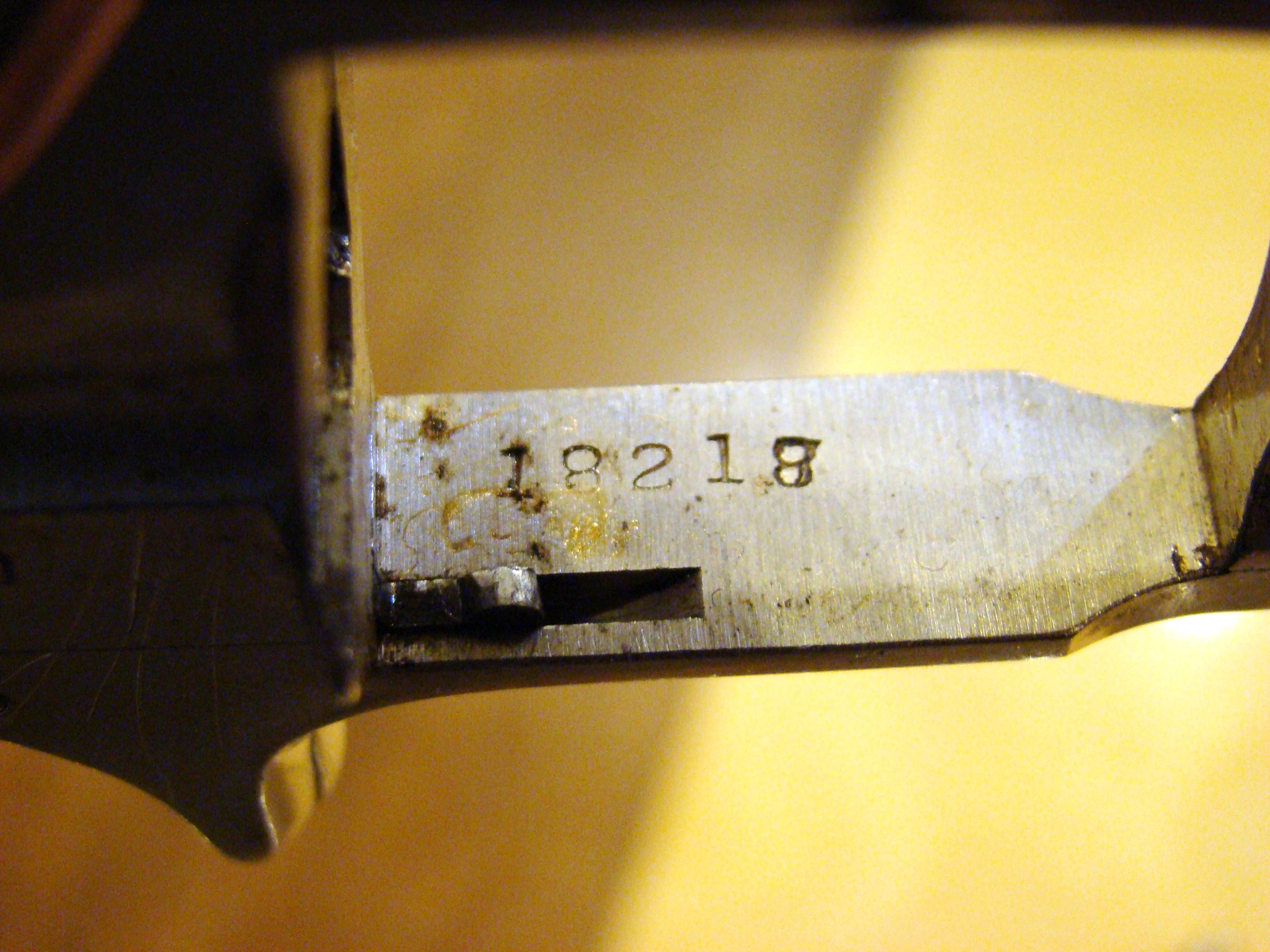
WP 7. Remington Model #4 Spur Trigger Revolver .38 Cal. Rimfire.
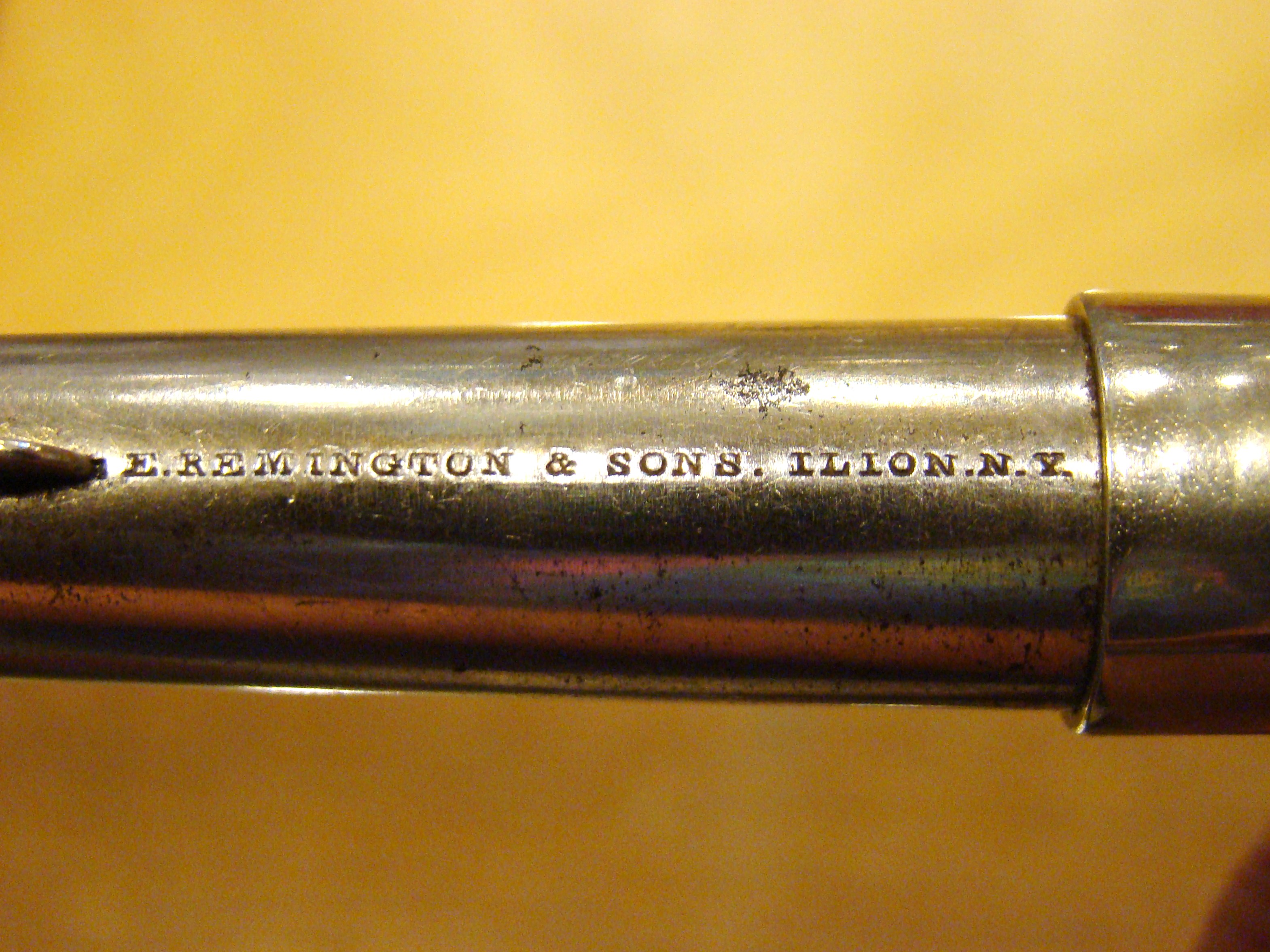
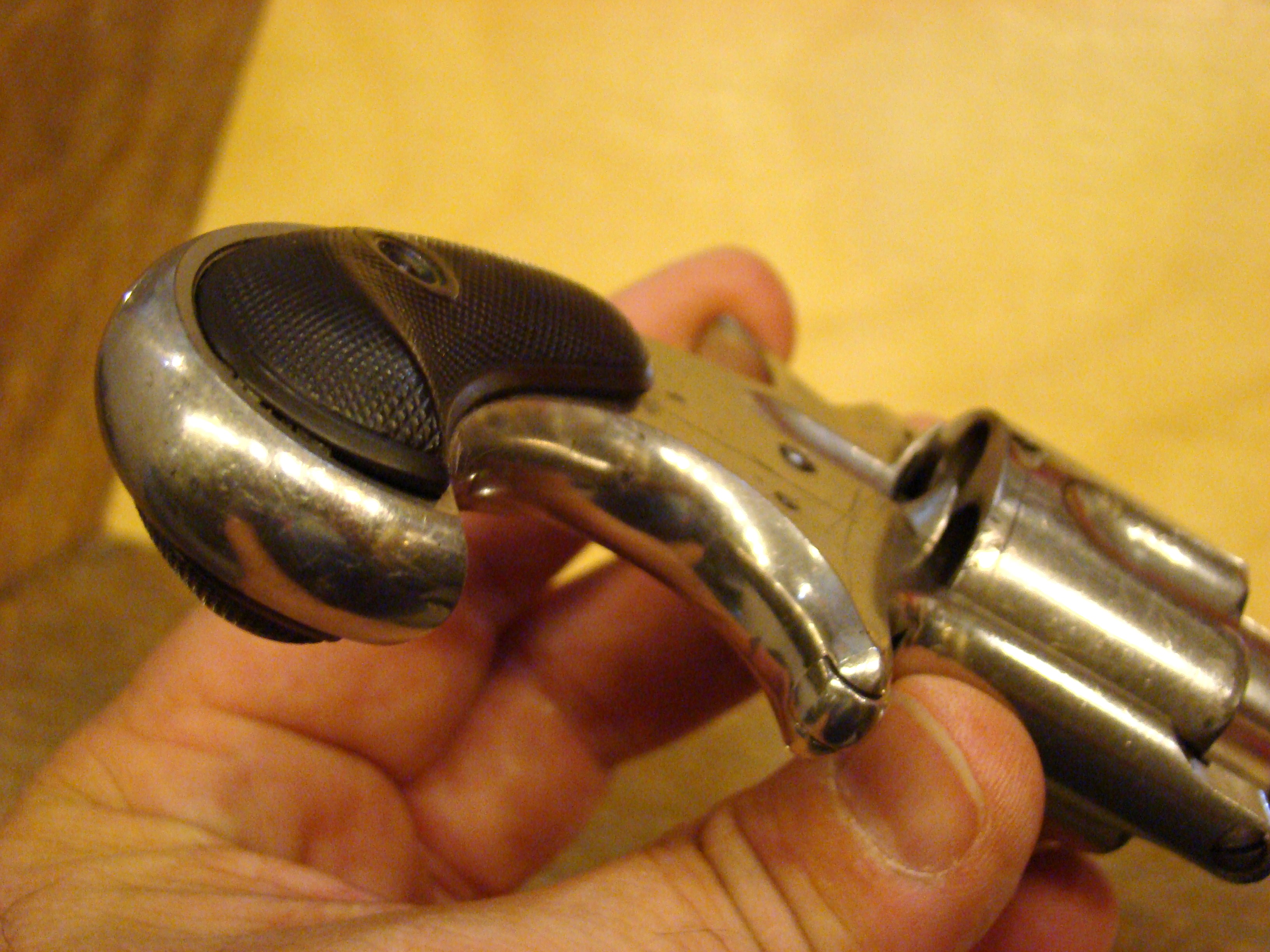
These revolvers were produced between 1877 and 1888 and were popular on the Western Frontier. Serial # 18218. Clearly marked on the barrel “E. REMINGTON & SONS. ILION N.Y.“. Metal surfaces are slick with 99% of the original nickel plating. Cylinder rotation and trigger mechanism is tight, and clicks with precision. Gutta-percha “bird’s head” grips are perfect. Bore is clean with sharp rifling. High condition handgun. $795.00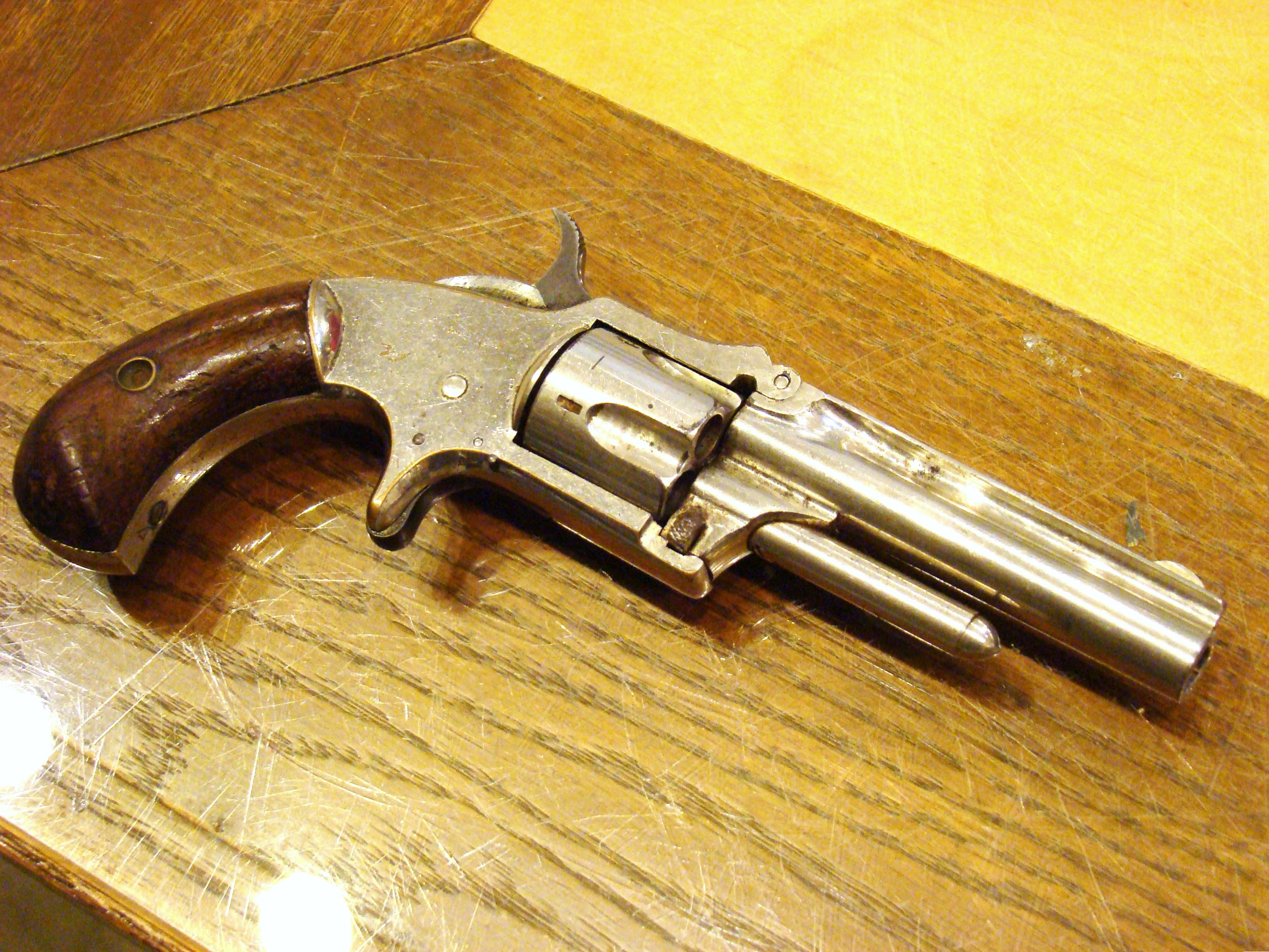
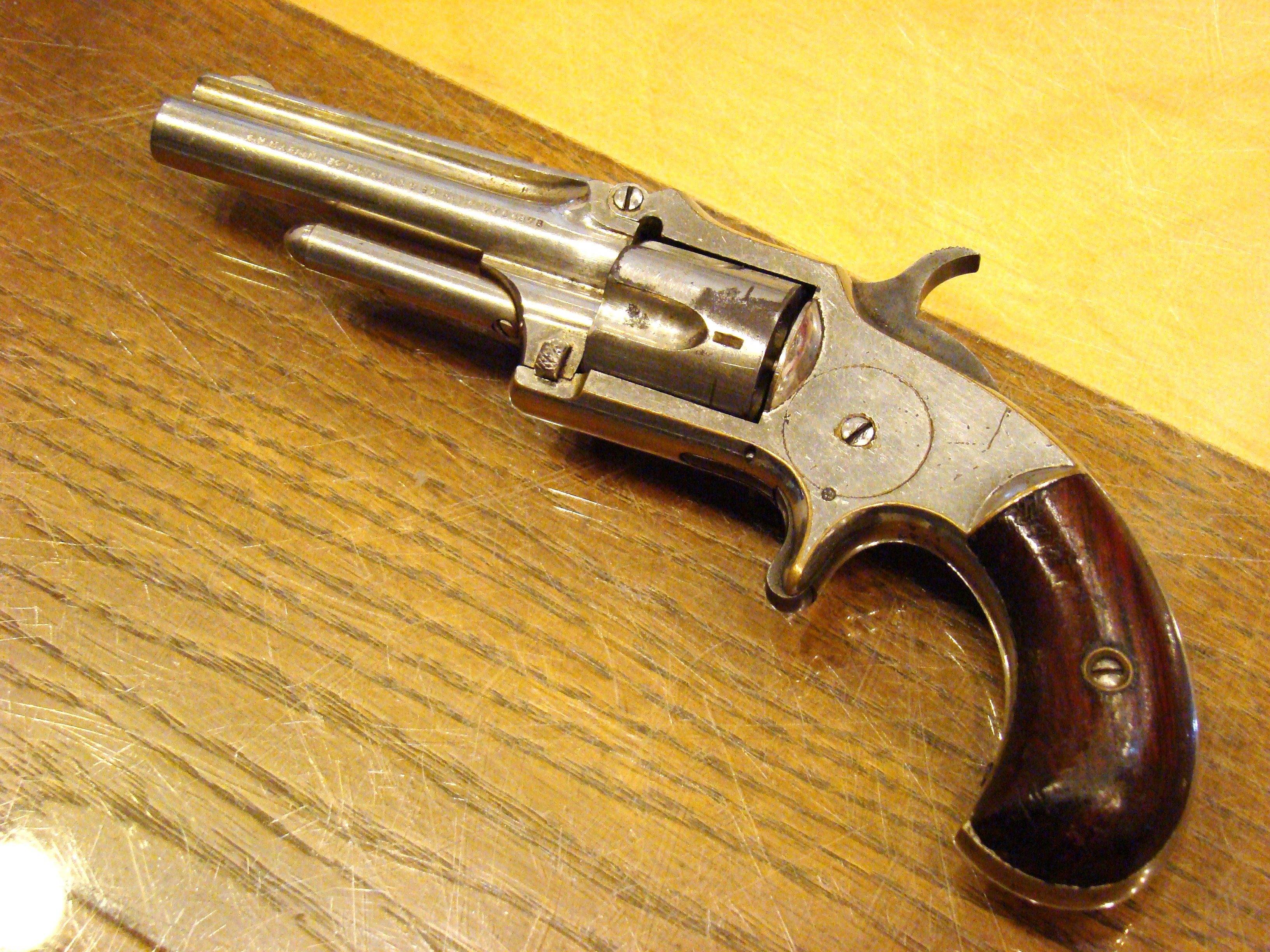
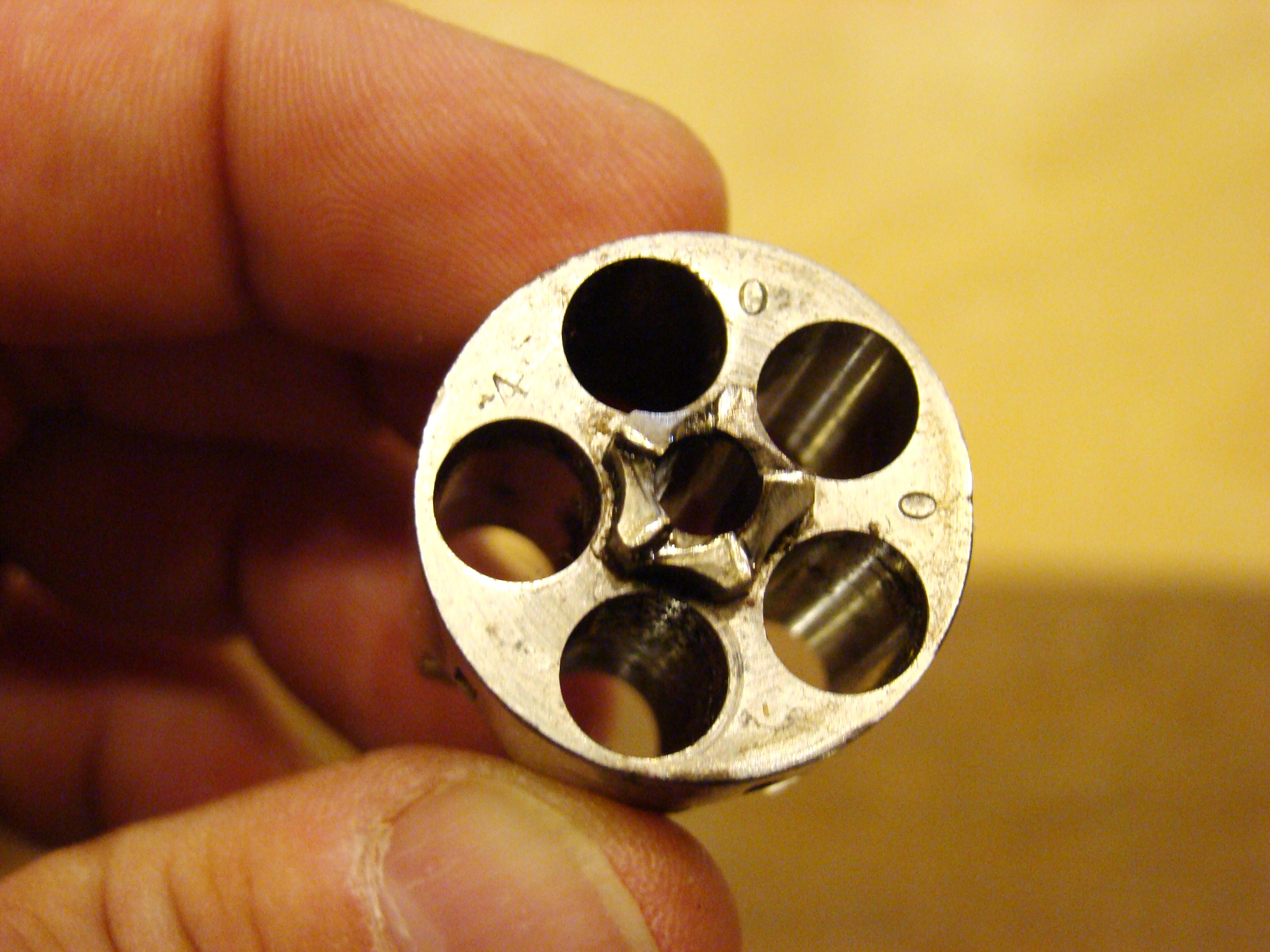
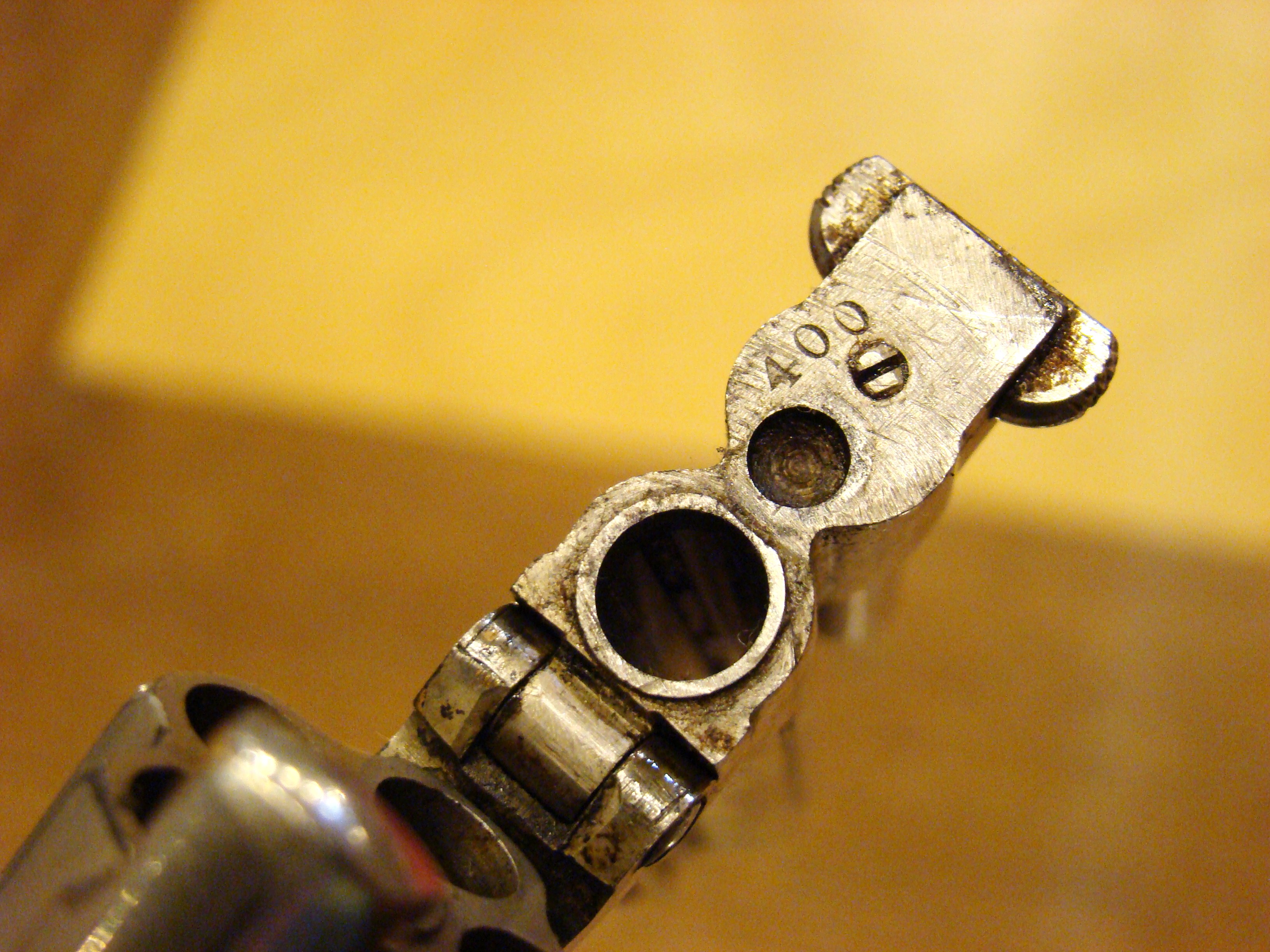
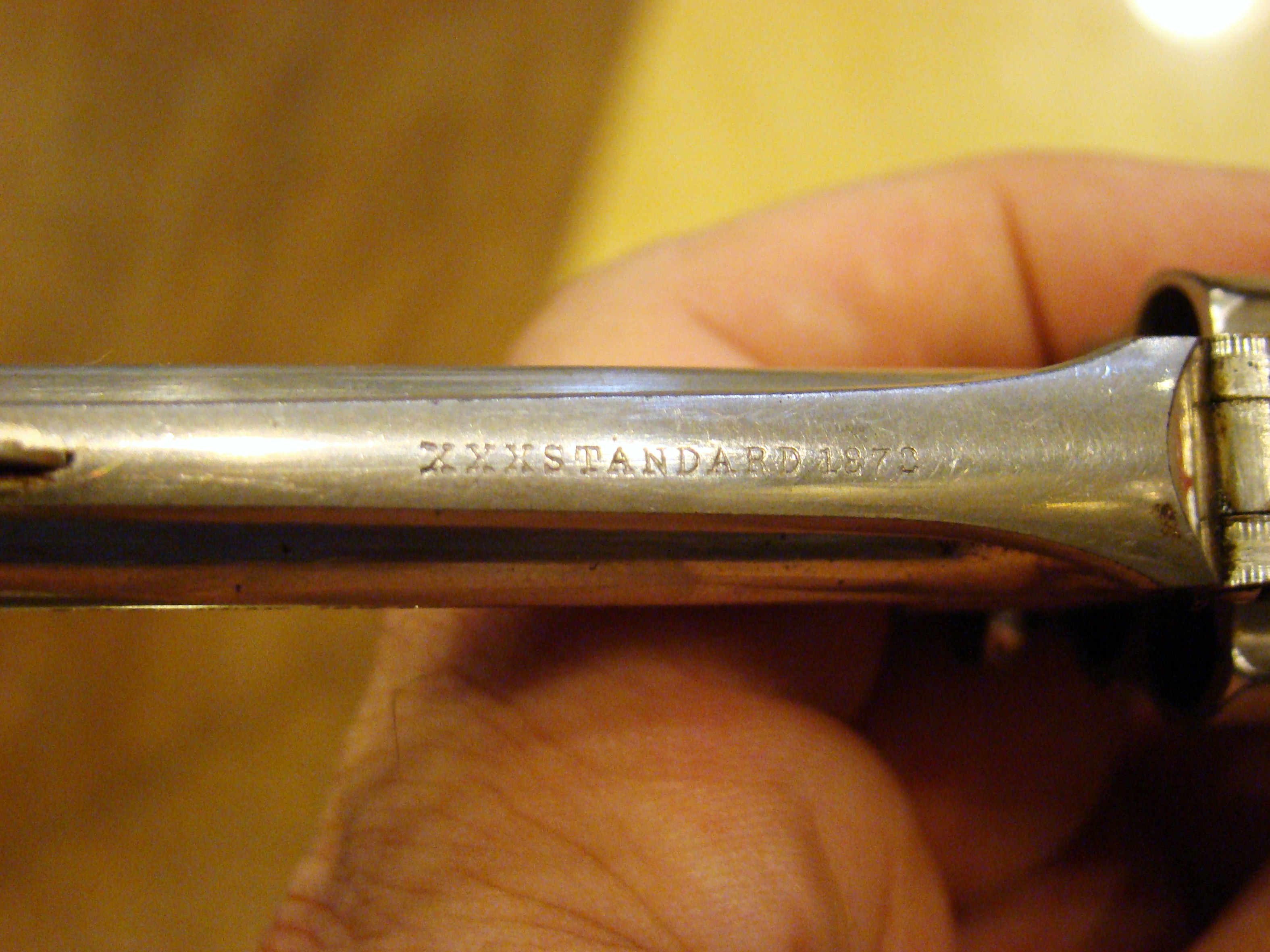
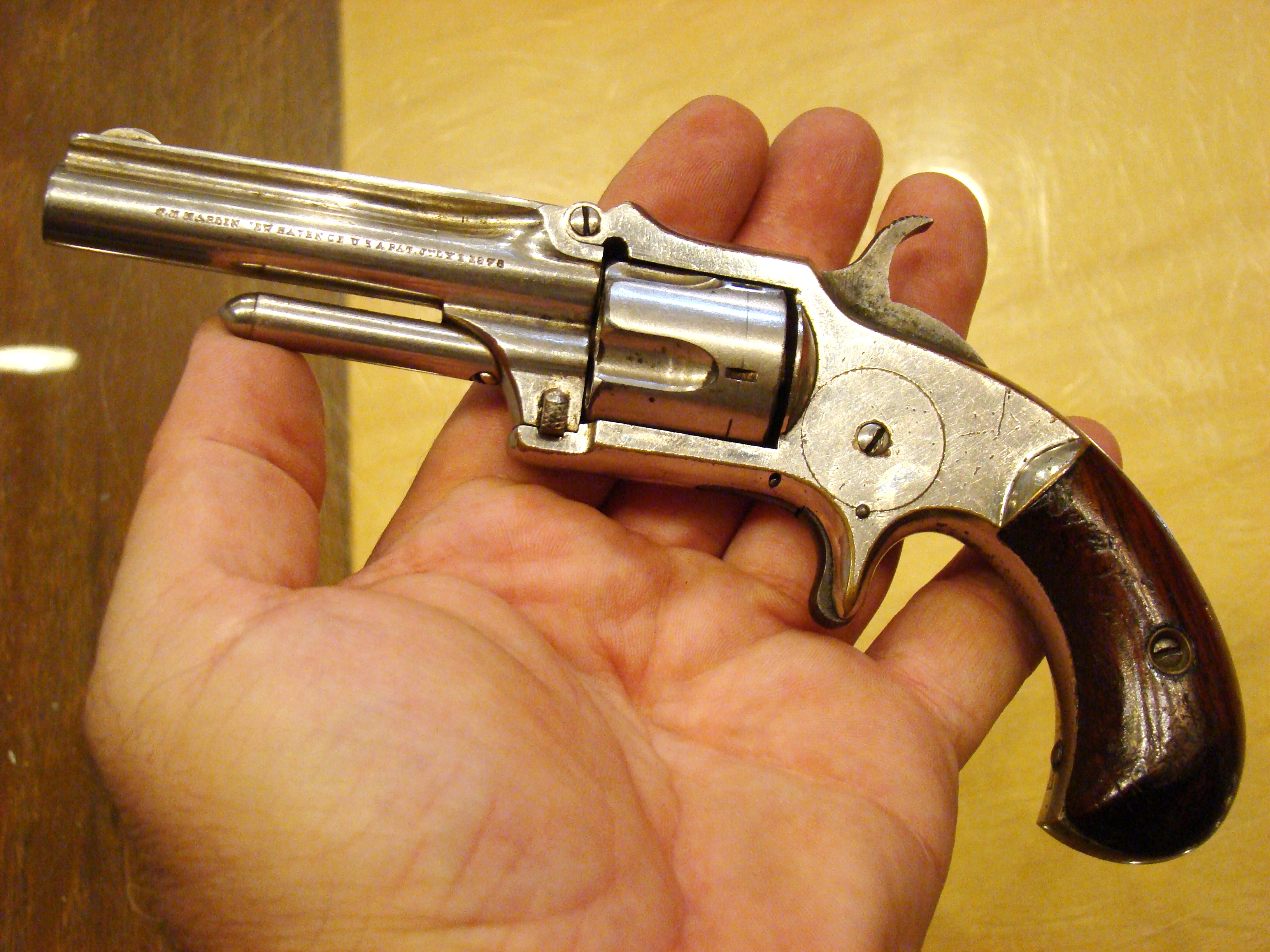
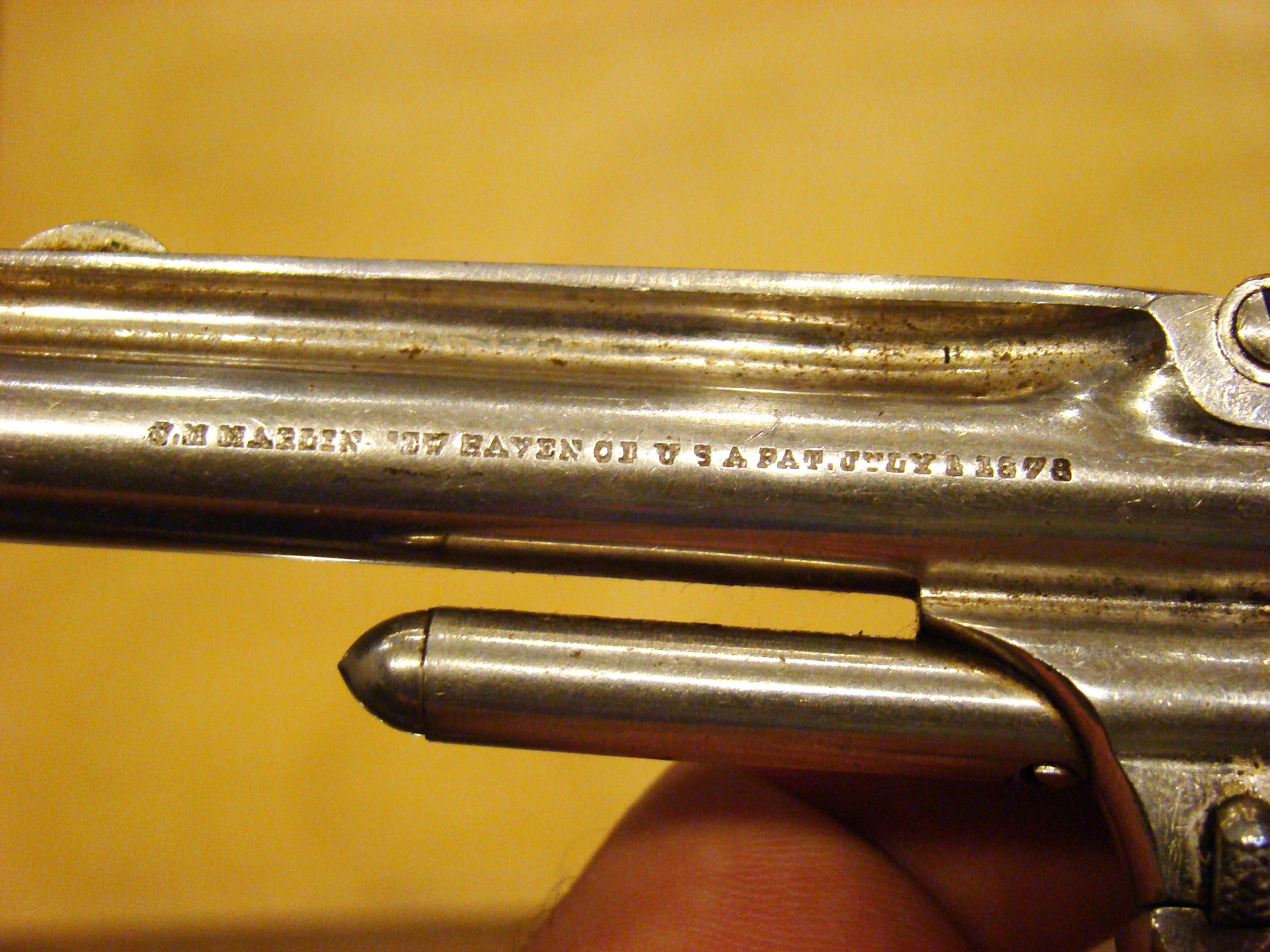
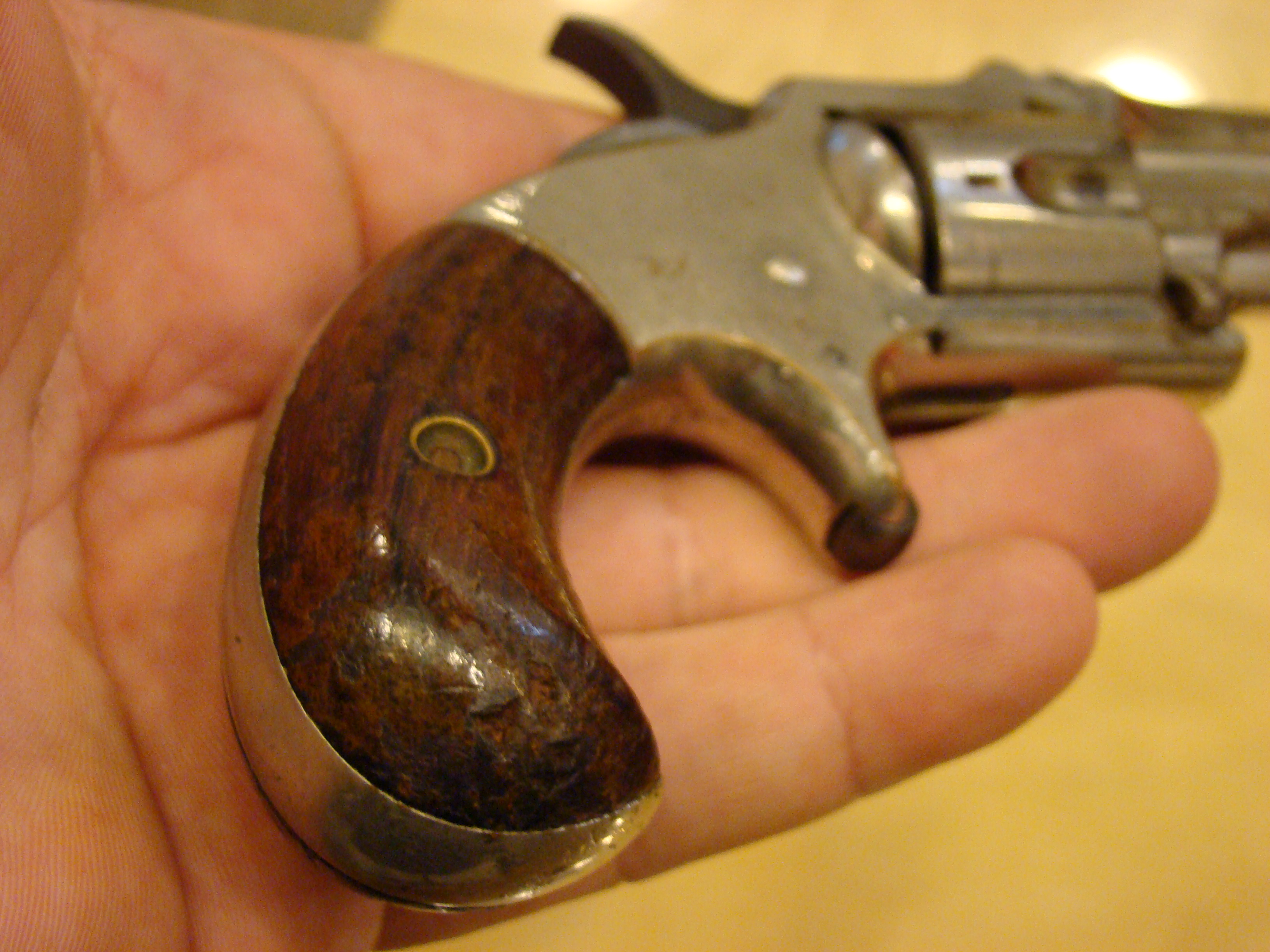
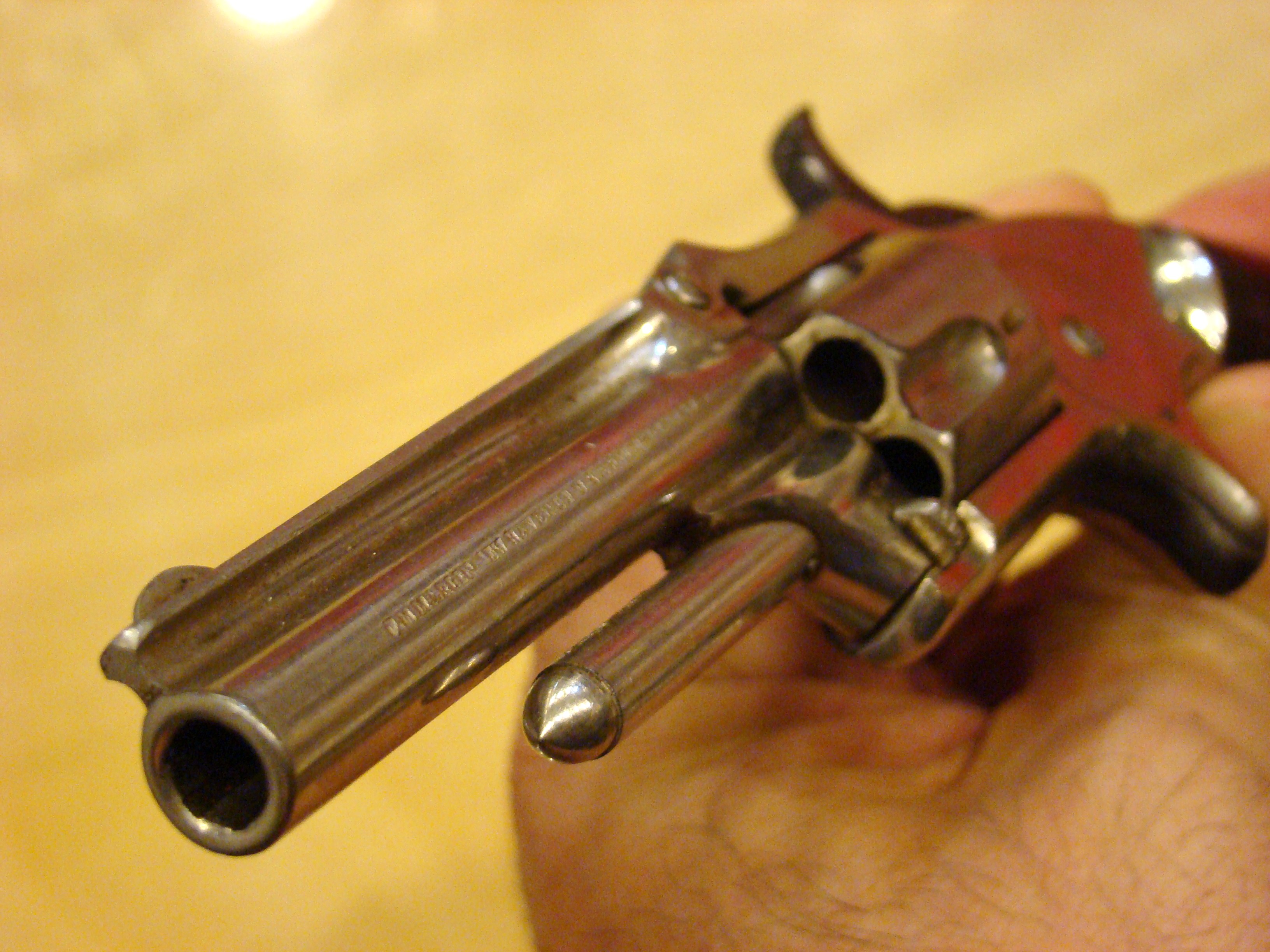
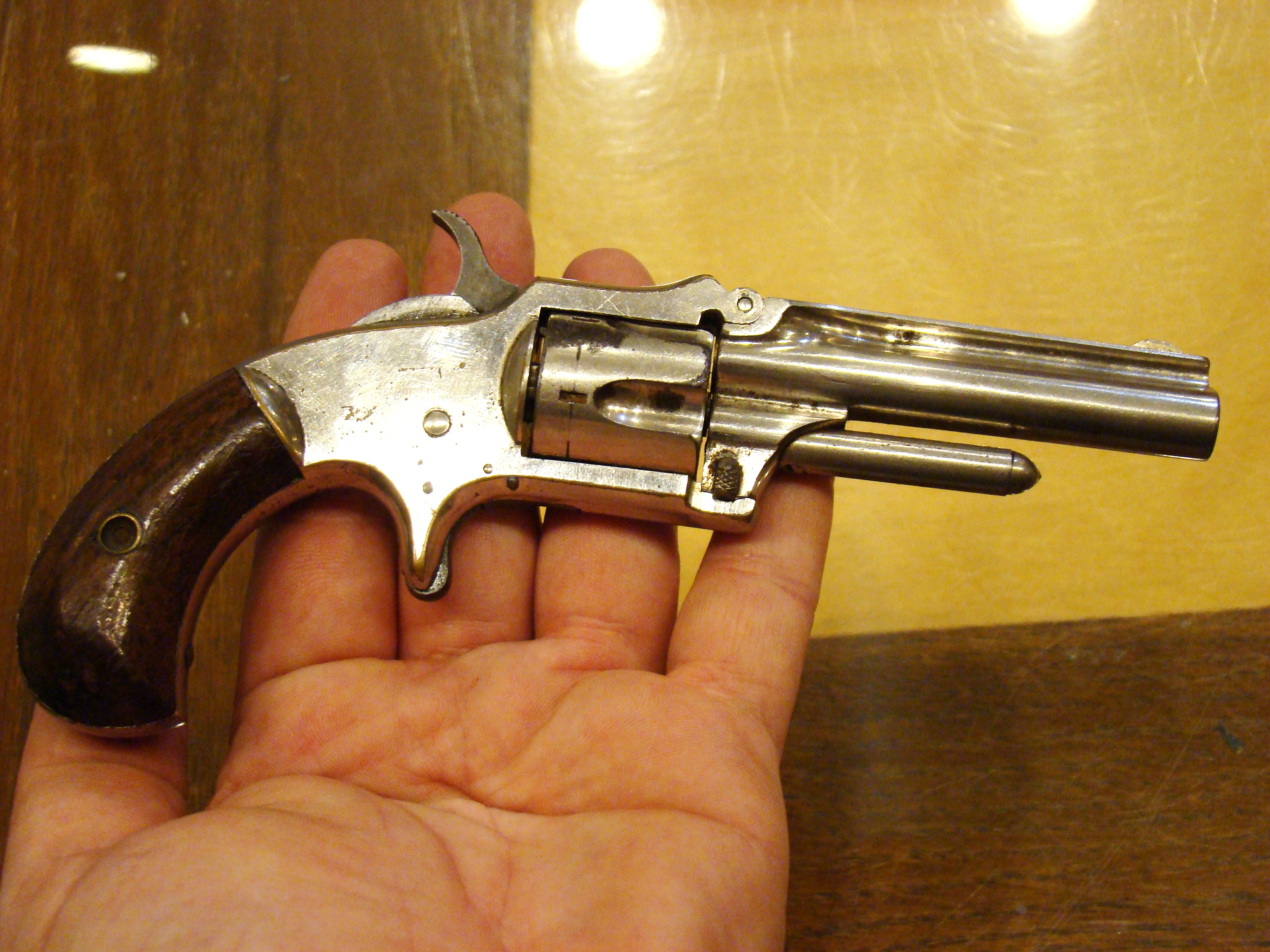
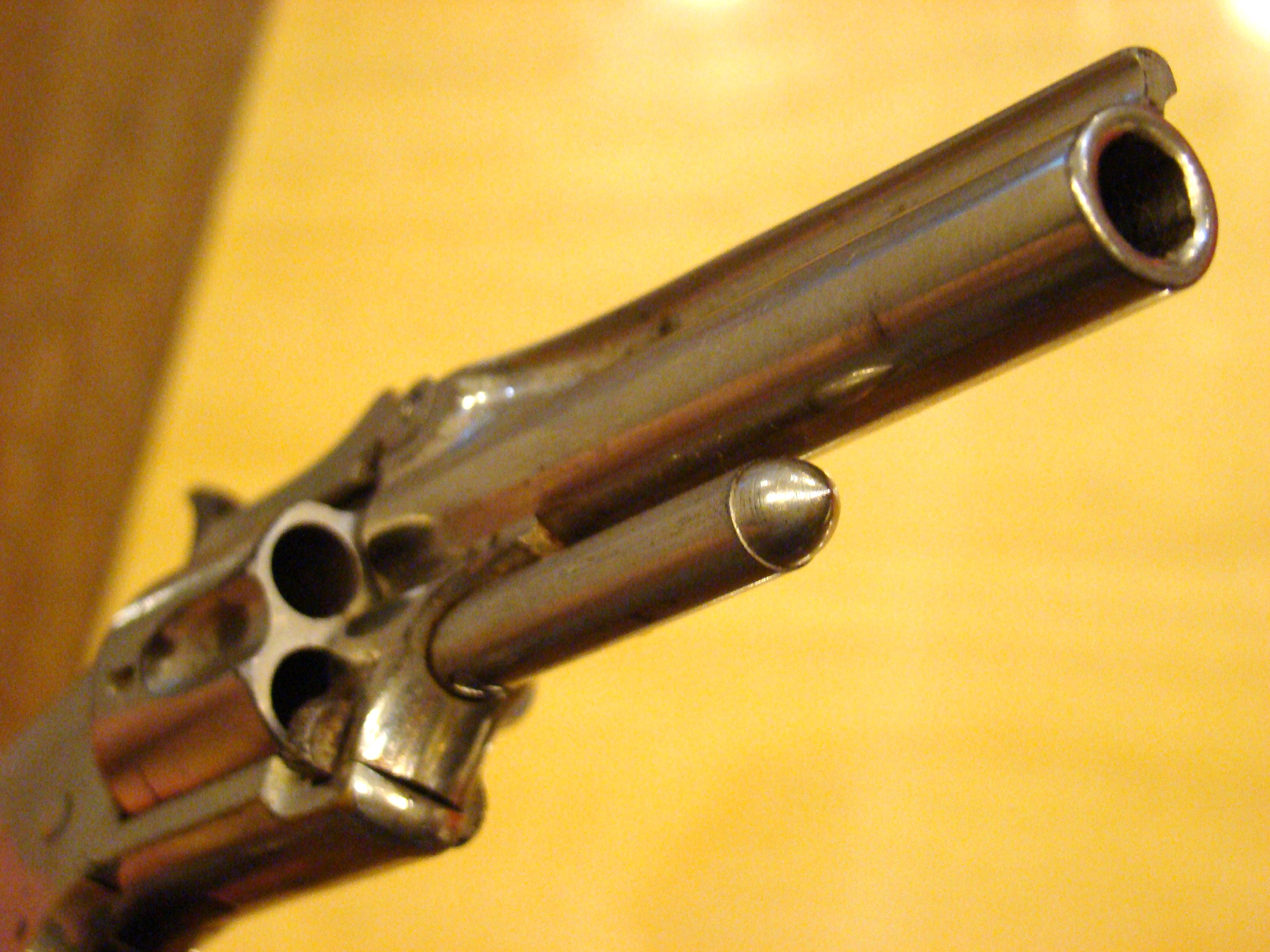
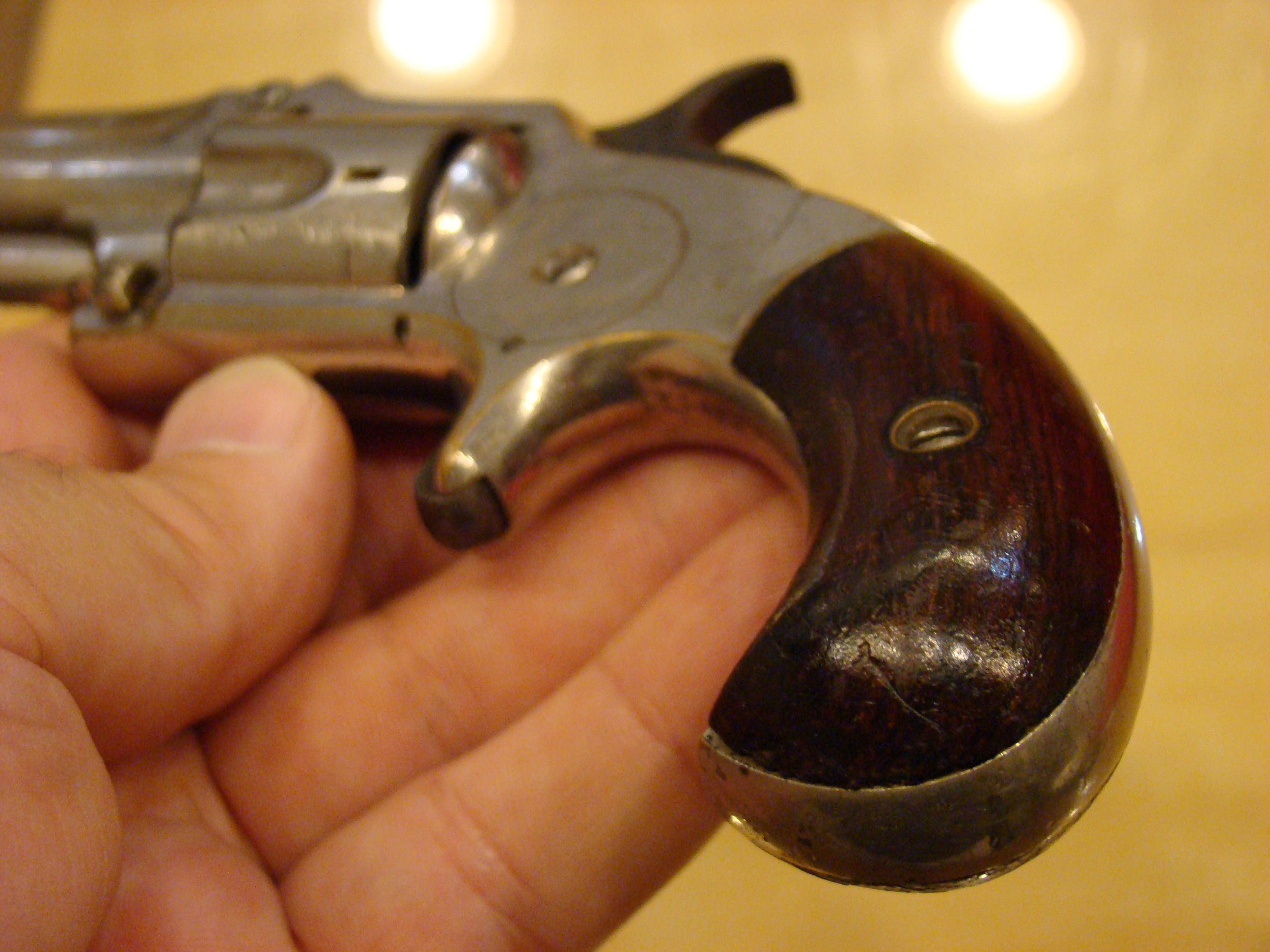
WP 8. Marlin XXX Standard 1872 “Suicide Special” Pocket Revolver .30 Cal. Rimfire.
Only 5000 of these revolvers were produced between 1872 and 1887. Clearly marked on the side of the barrel “J.M. MARLIN NEW HAVEN CT USA PAT . JULY 1, 1873“. Metal surfaces are slick with 98% of the original nickel plating. Early production serial # 400 on cylinder and barrel. Cylinder rotation and spur trigger mechanism is tight. Top of barrel is marked “XXX STANDARD 1872“. Rosewood grips are in very good condition with about 85% of the original factory varnish. Bore is clean with sharp rifling. A beauty! $795.00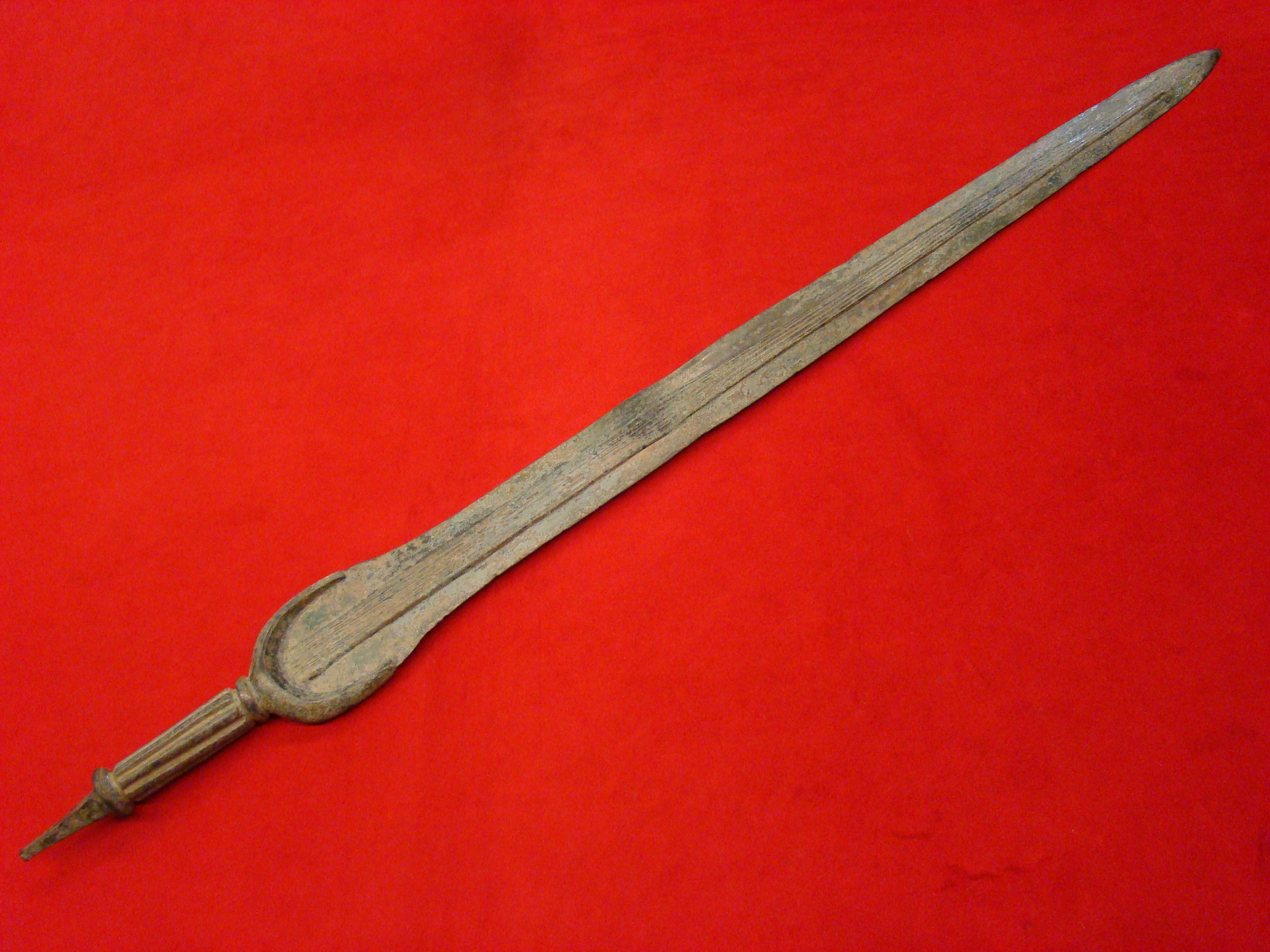
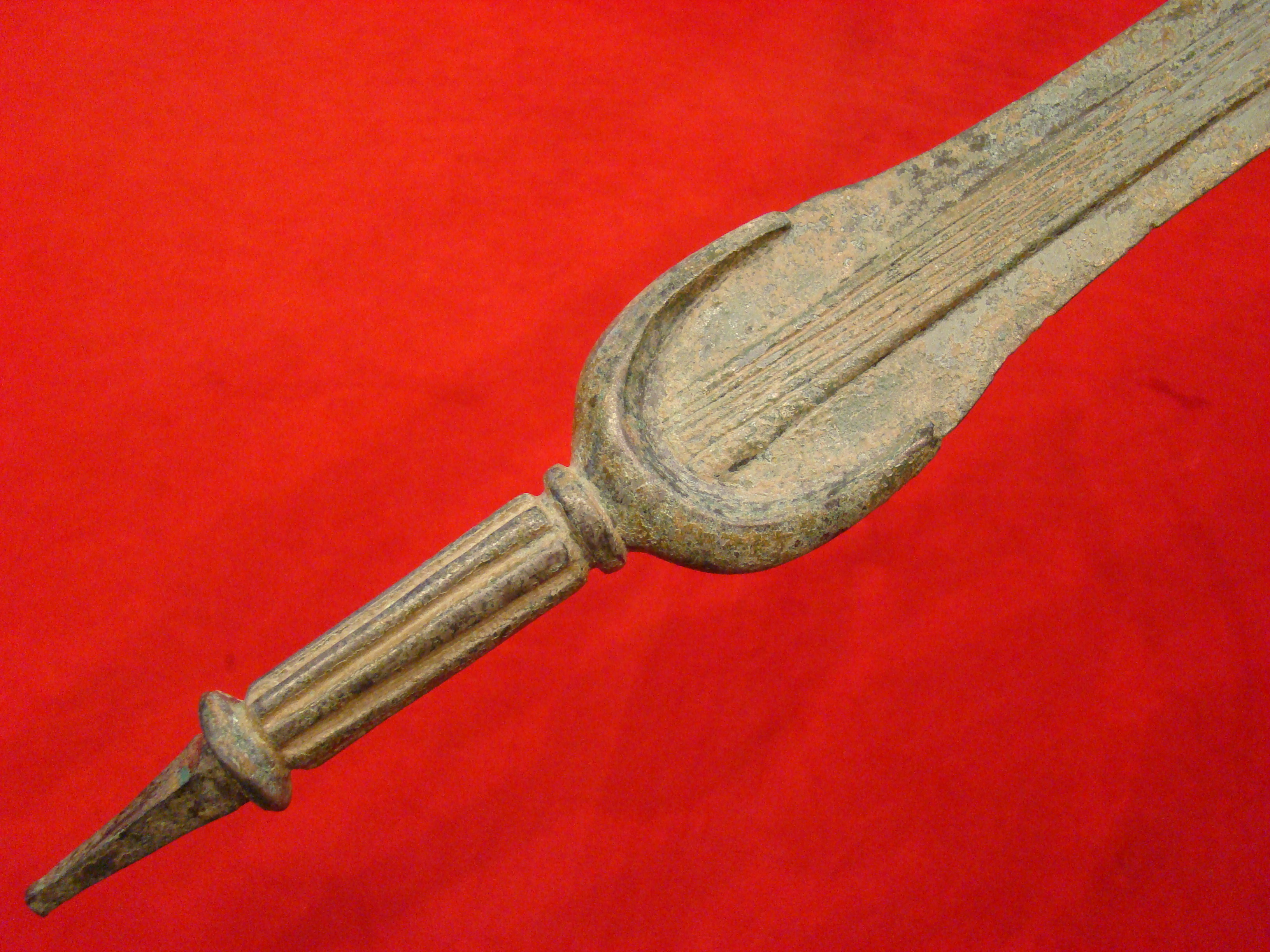
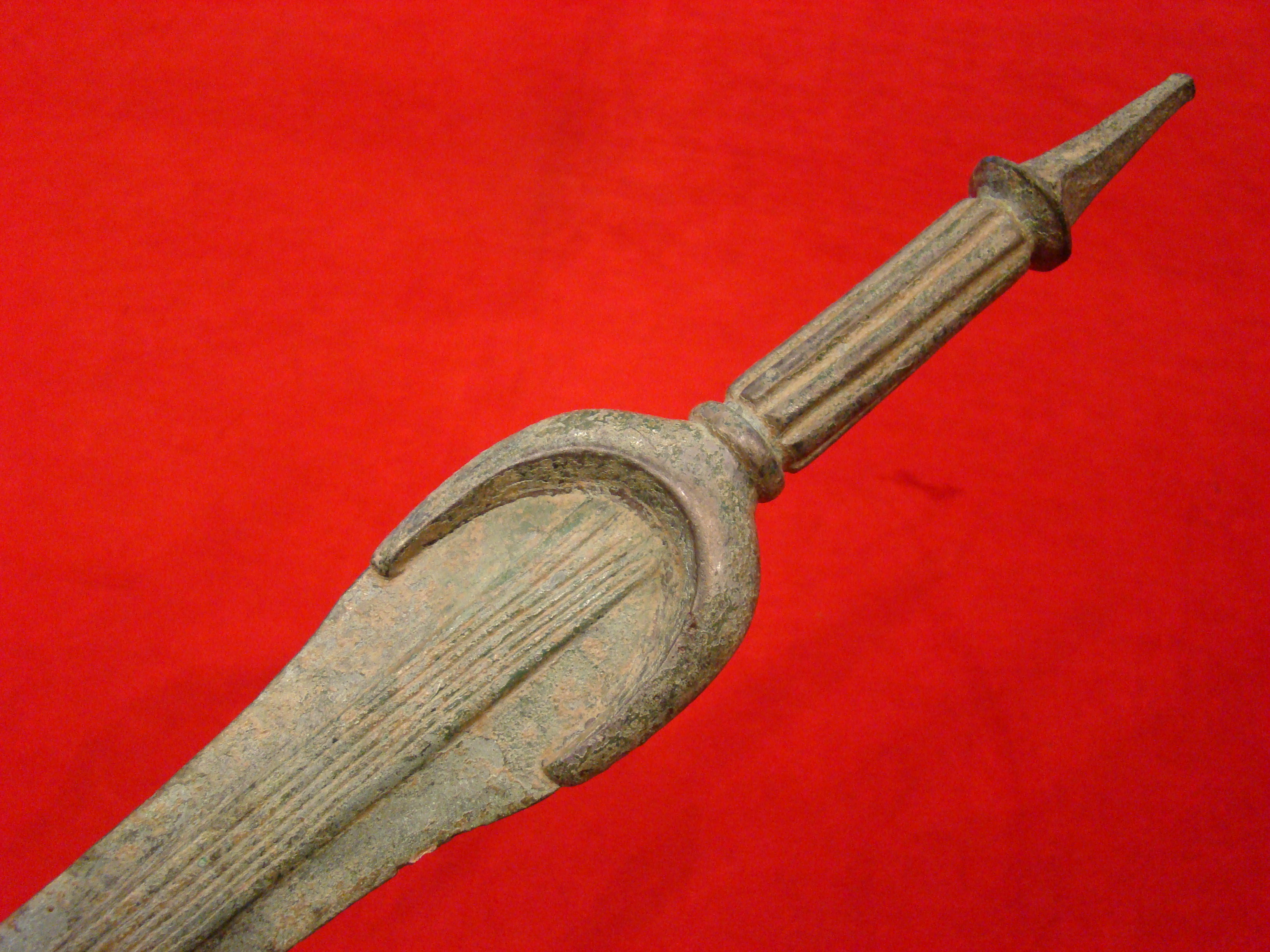
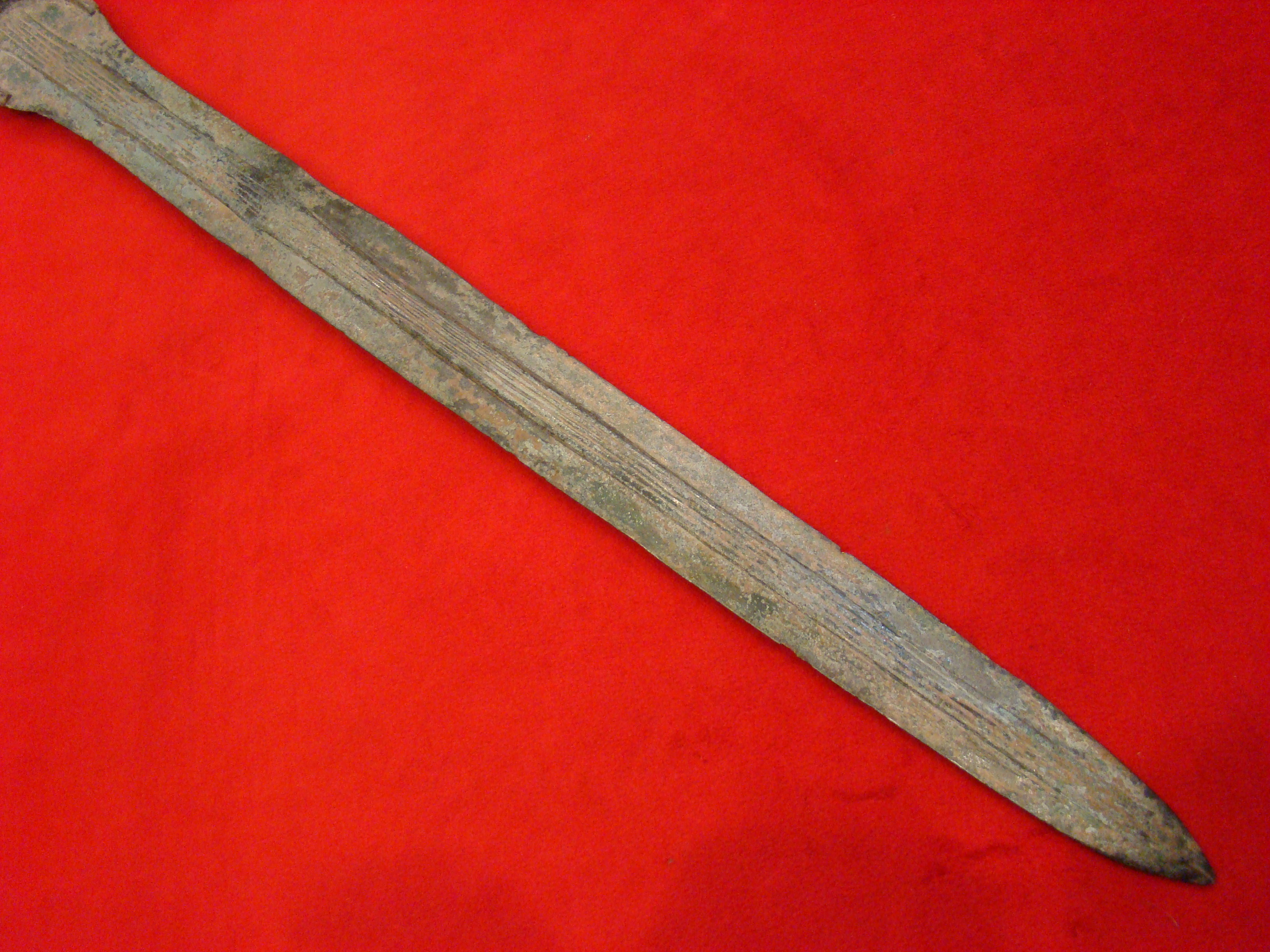
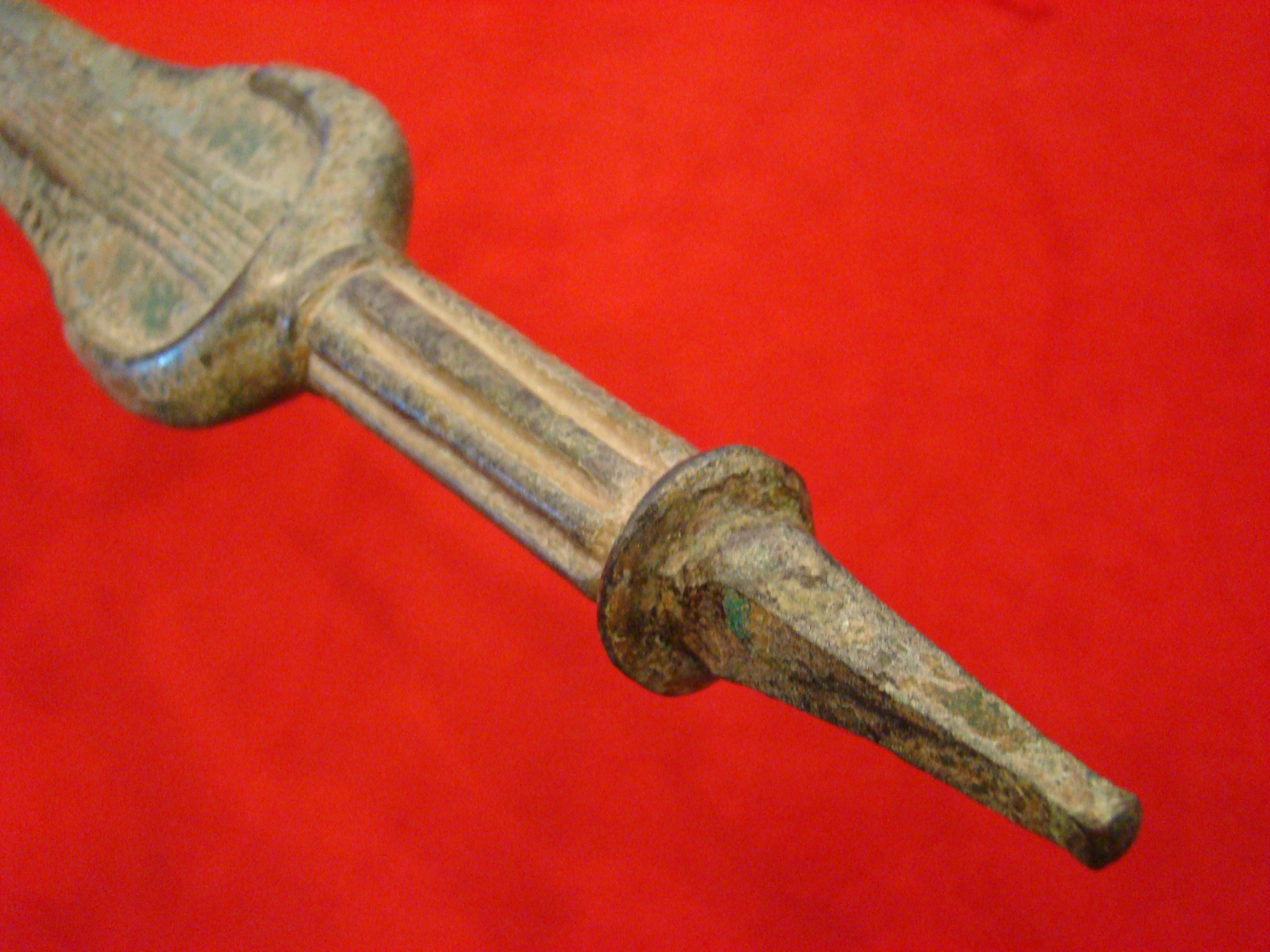
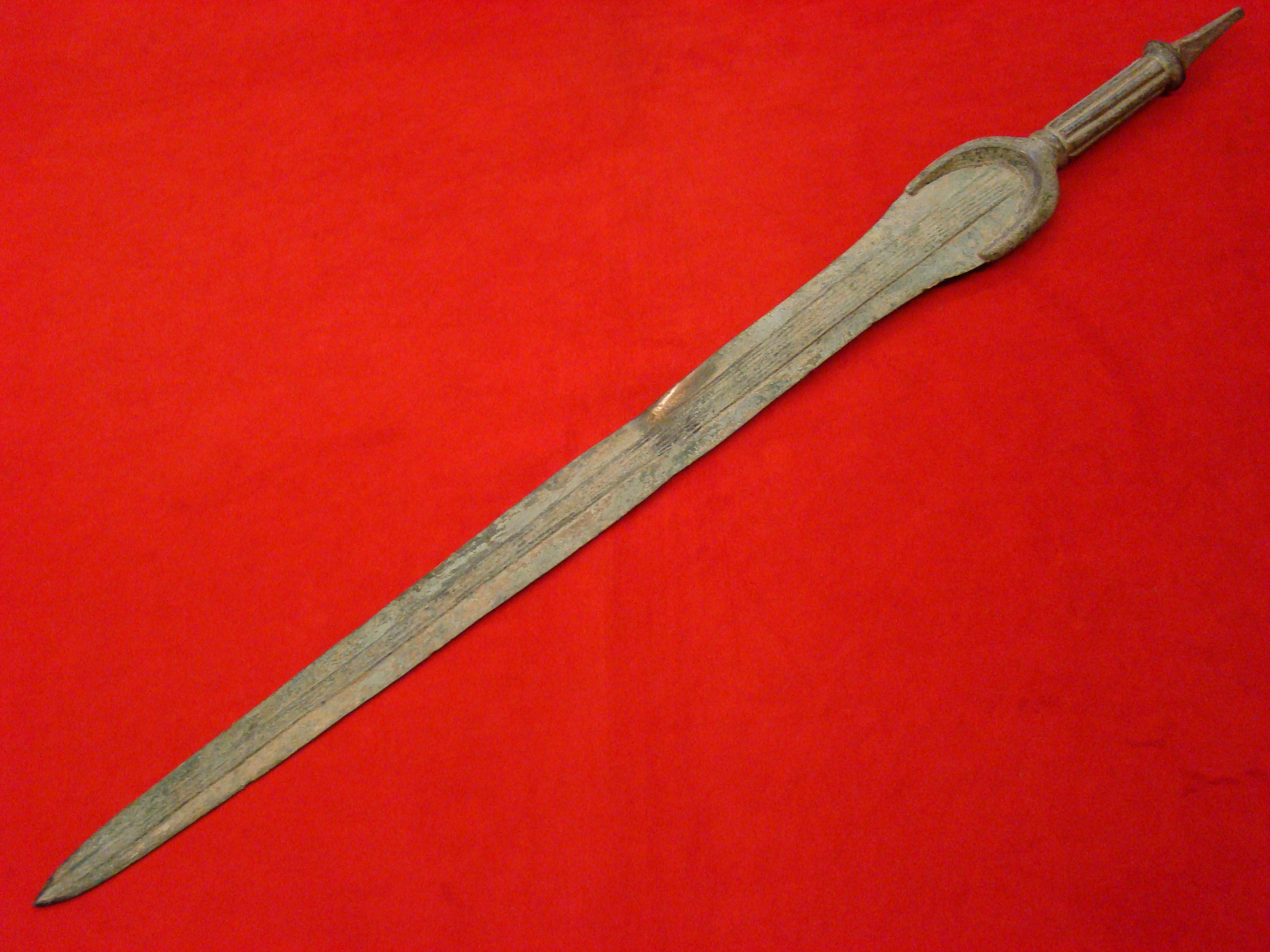
ANT 2. Biblical Elamite Bronze Sword Ca. 1200-900 BC.
The Elamites according to The Book of Genesis, were descended from Shem, the son of Noah. They settled in southwestern Iran and formed an advanced and influential civilization there. The capital of the Elamite Empire was Susa. They were evidently well known by the Israelites and often interacted with them. The Elamites suffered devastation from the Assyrian invasions and sack of Susa in 647 BC. They suffered the same fate as the Israelites under the Medes and Persians. The sword featured here is in excellent condition with a deep green patina. It is typical of weapons used in the Near East in the time of Moses and King David. The blade has a medial ridge with multiple grooves. Integral hand guard similates a bull’s horns. The edges have some minor bends and a few small nicks. The integral grip is fluted and was most likely covered in leather. The pommel terminates into a spike. Total length of 27″. Provenance: Mid 20th Century English private collection and thence, a London UK antiquities auction. $2950.00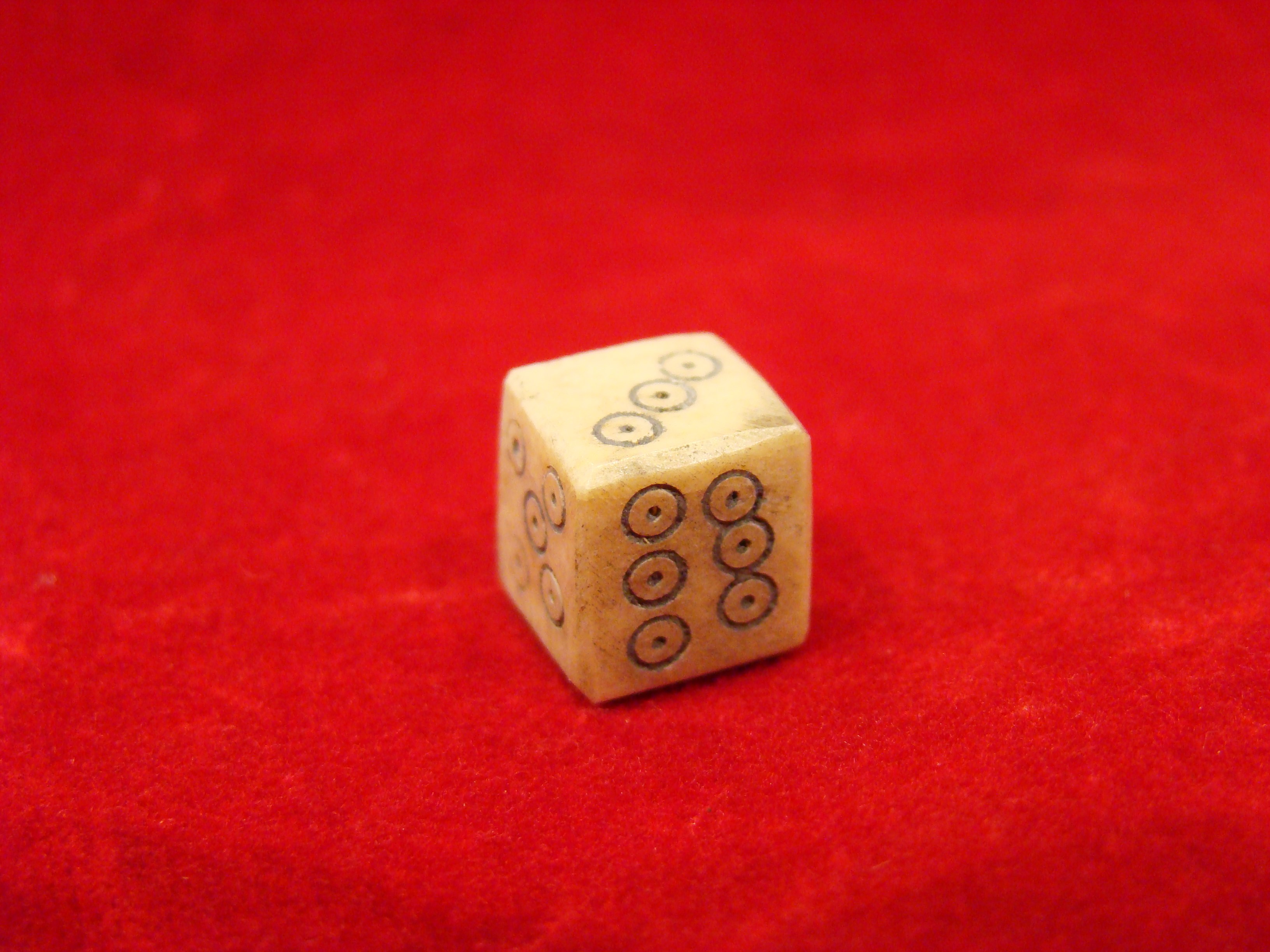
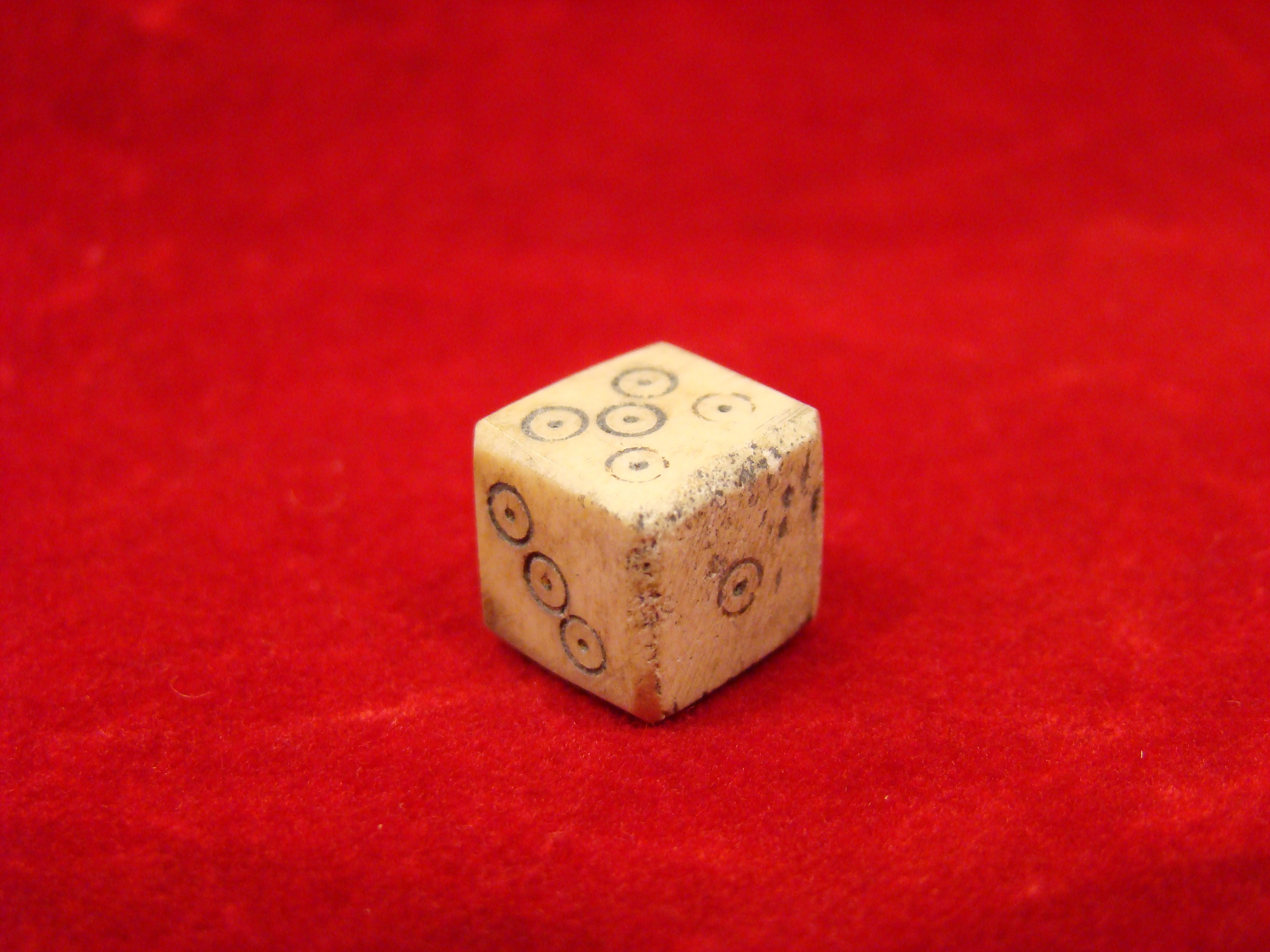
ANT 3. Ancient Roman Bone Gaming Die. CA. 1st-2nd Cent. AD.
Fantastic condition. Well crafted with sharply incised details. Does show actual wear from use. Games of chance were very popular in Roman times and I would venture that the many of their gambling schemes were similar to what we have today. Measures approx. 1/2″. Found in England. $195.00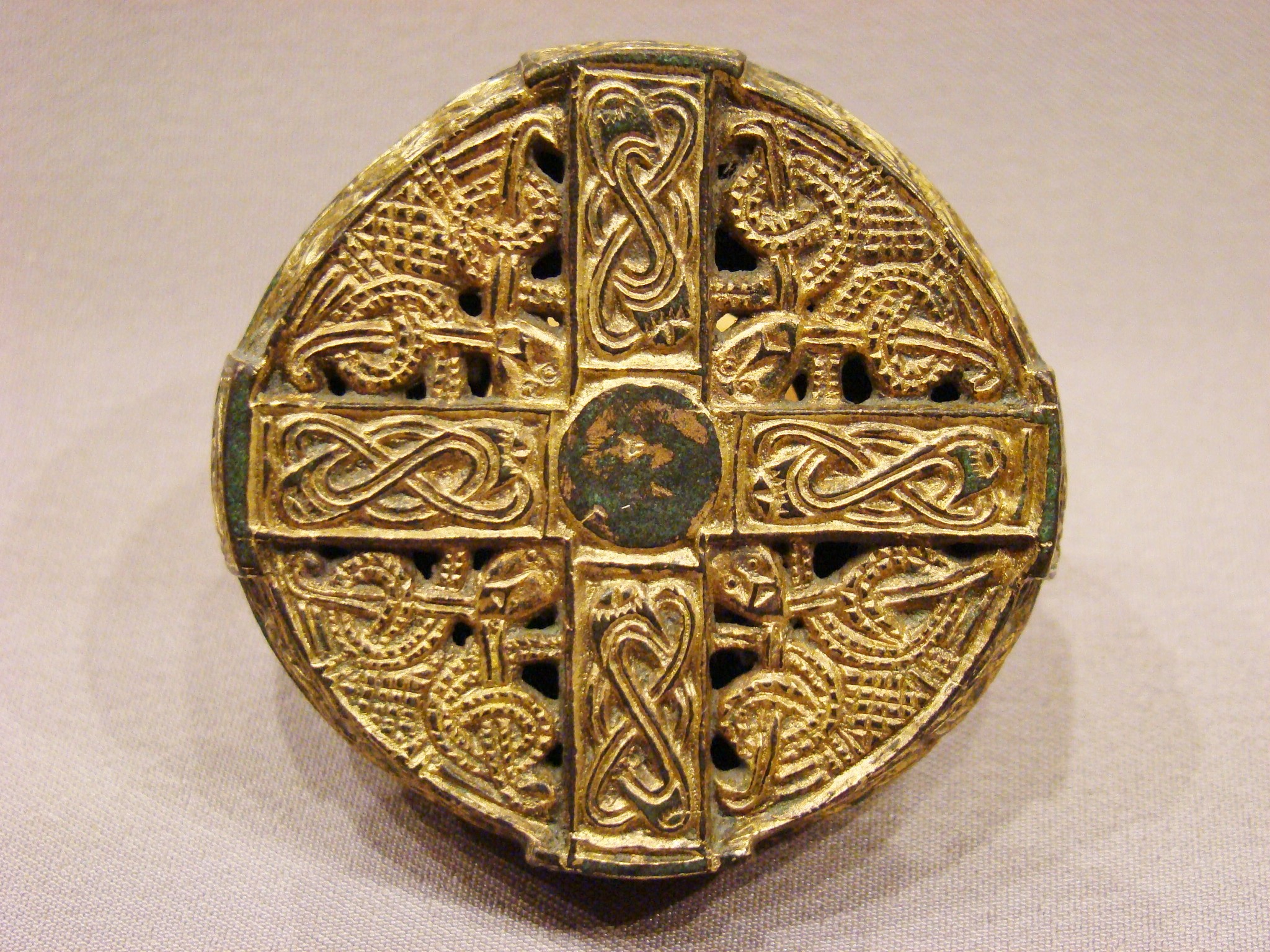
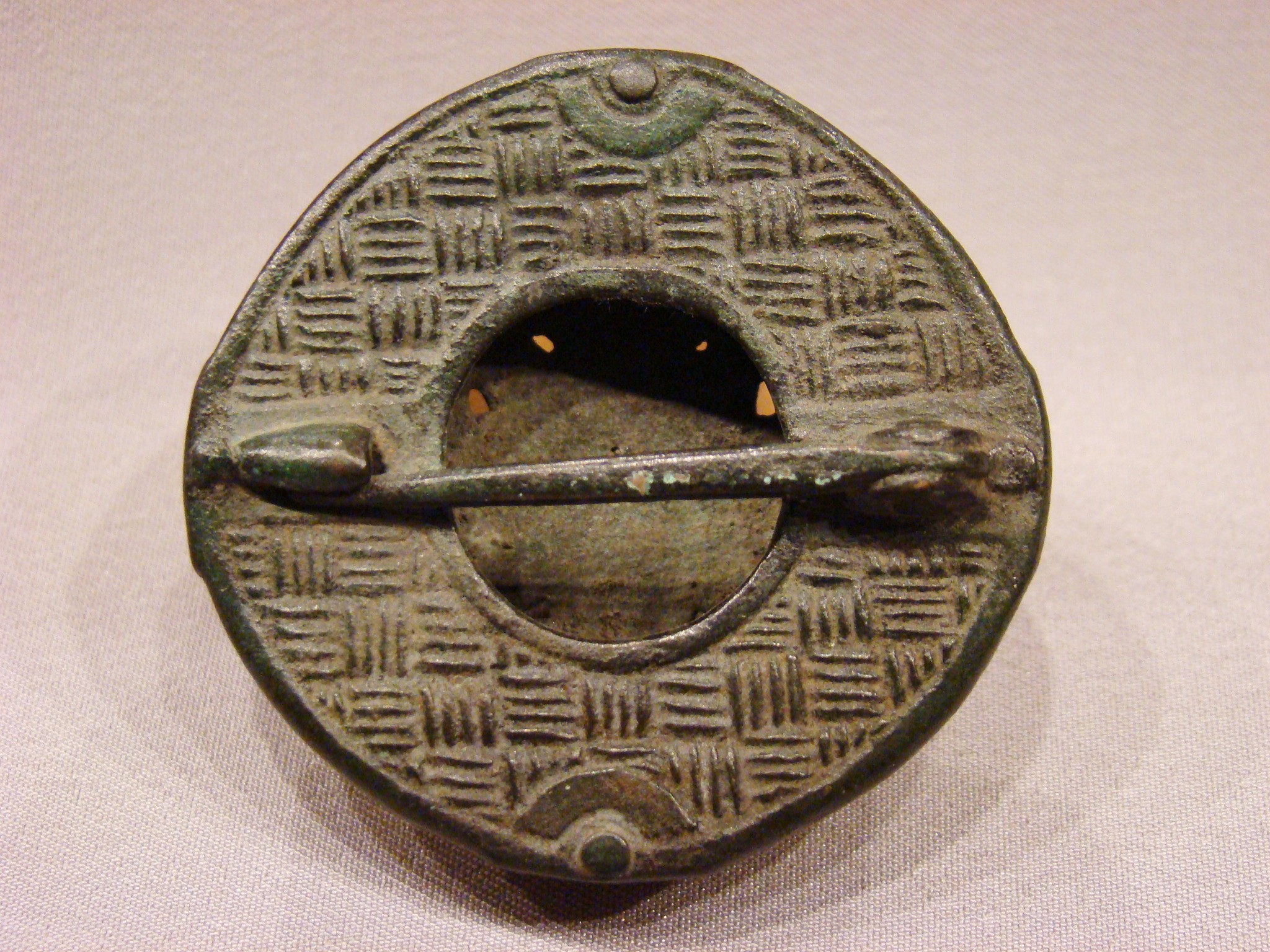
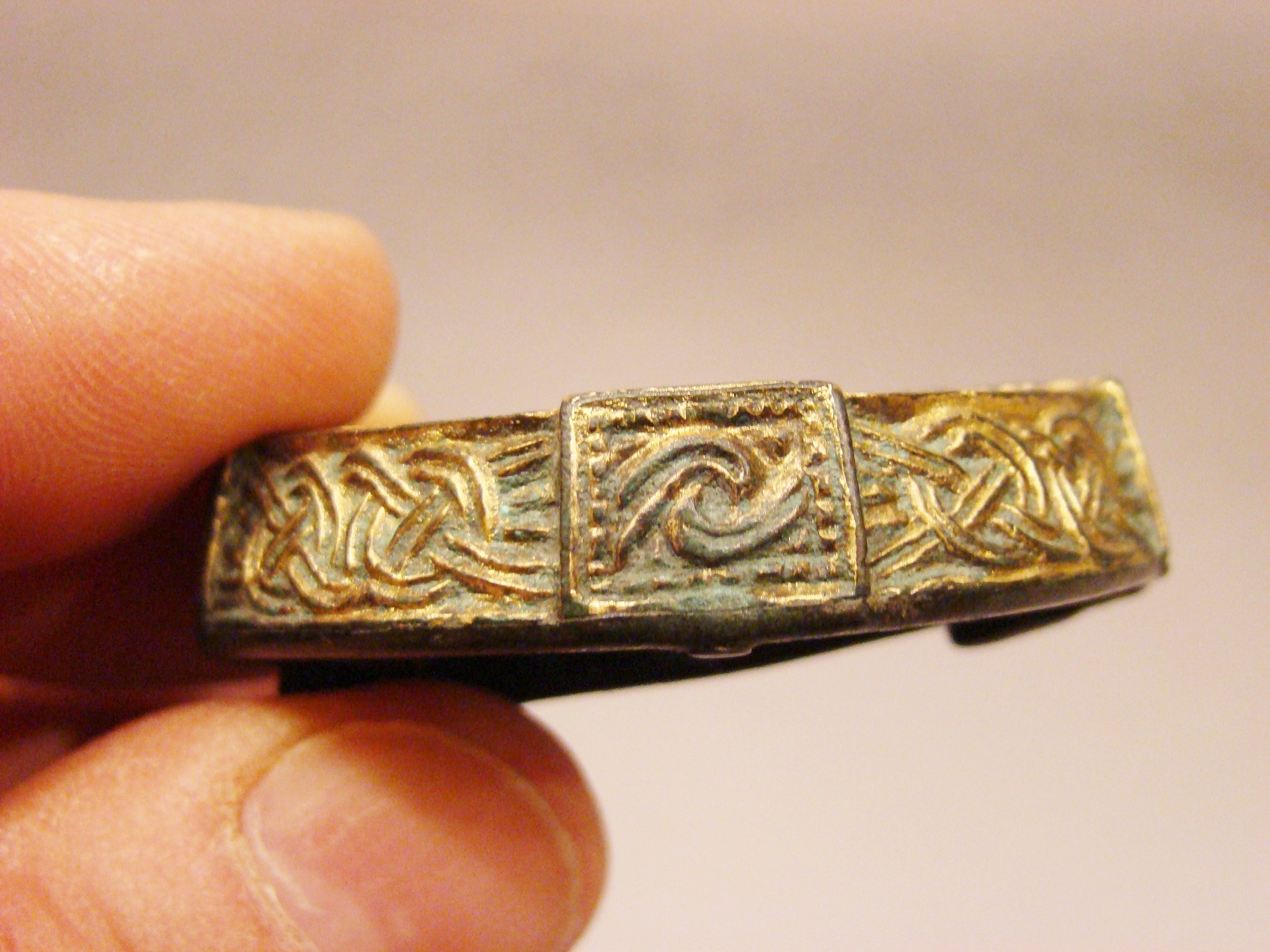
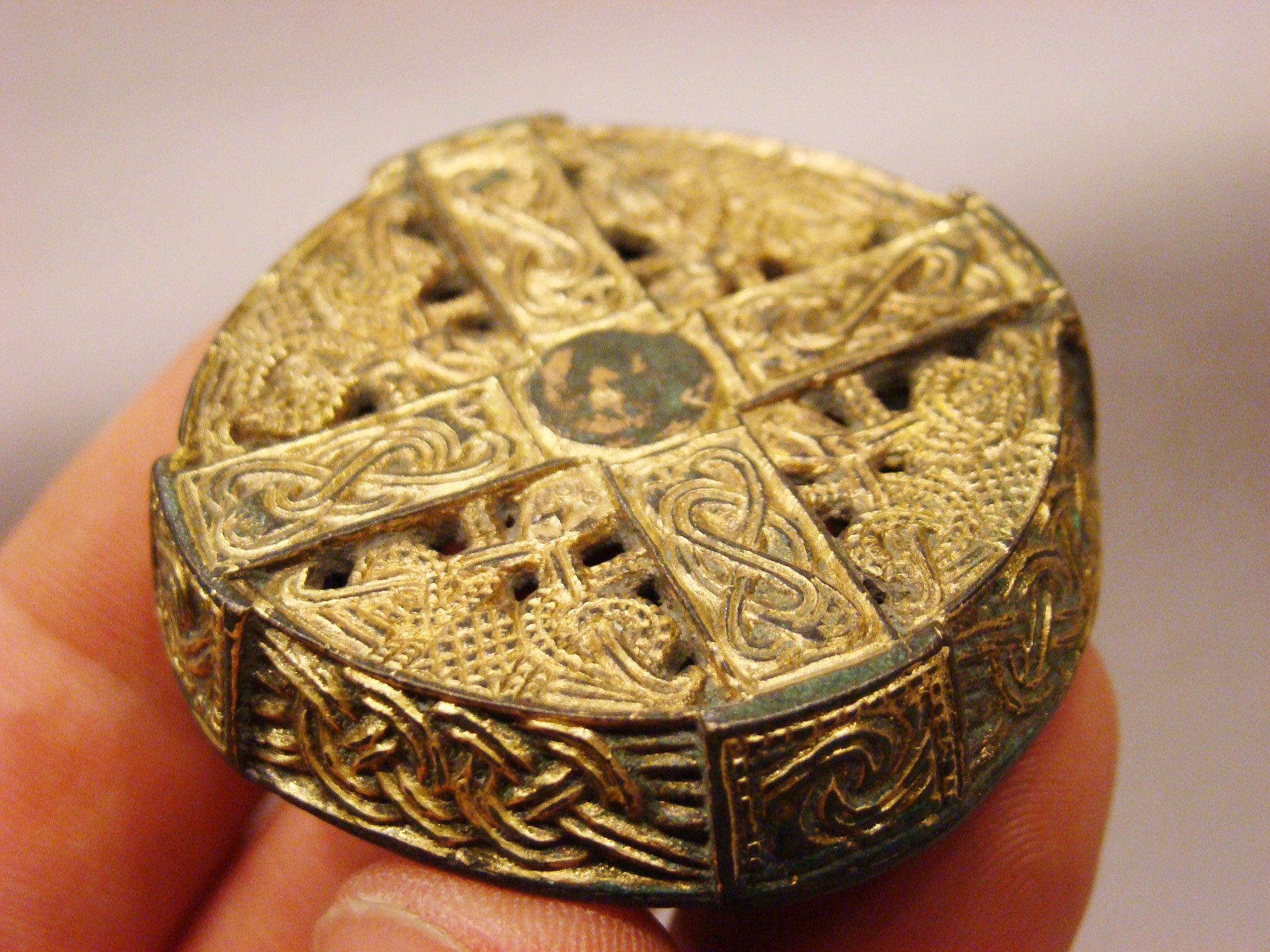
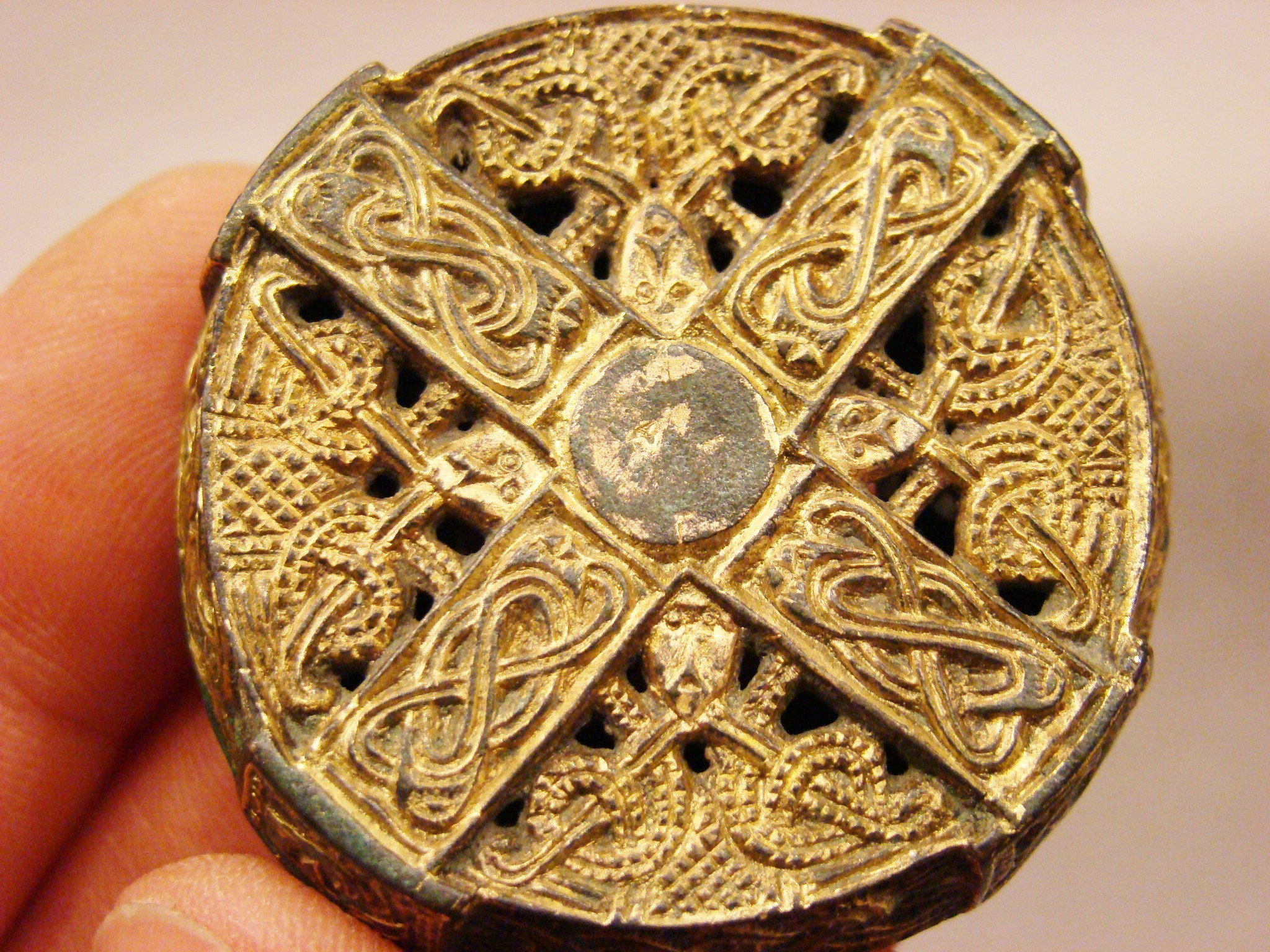
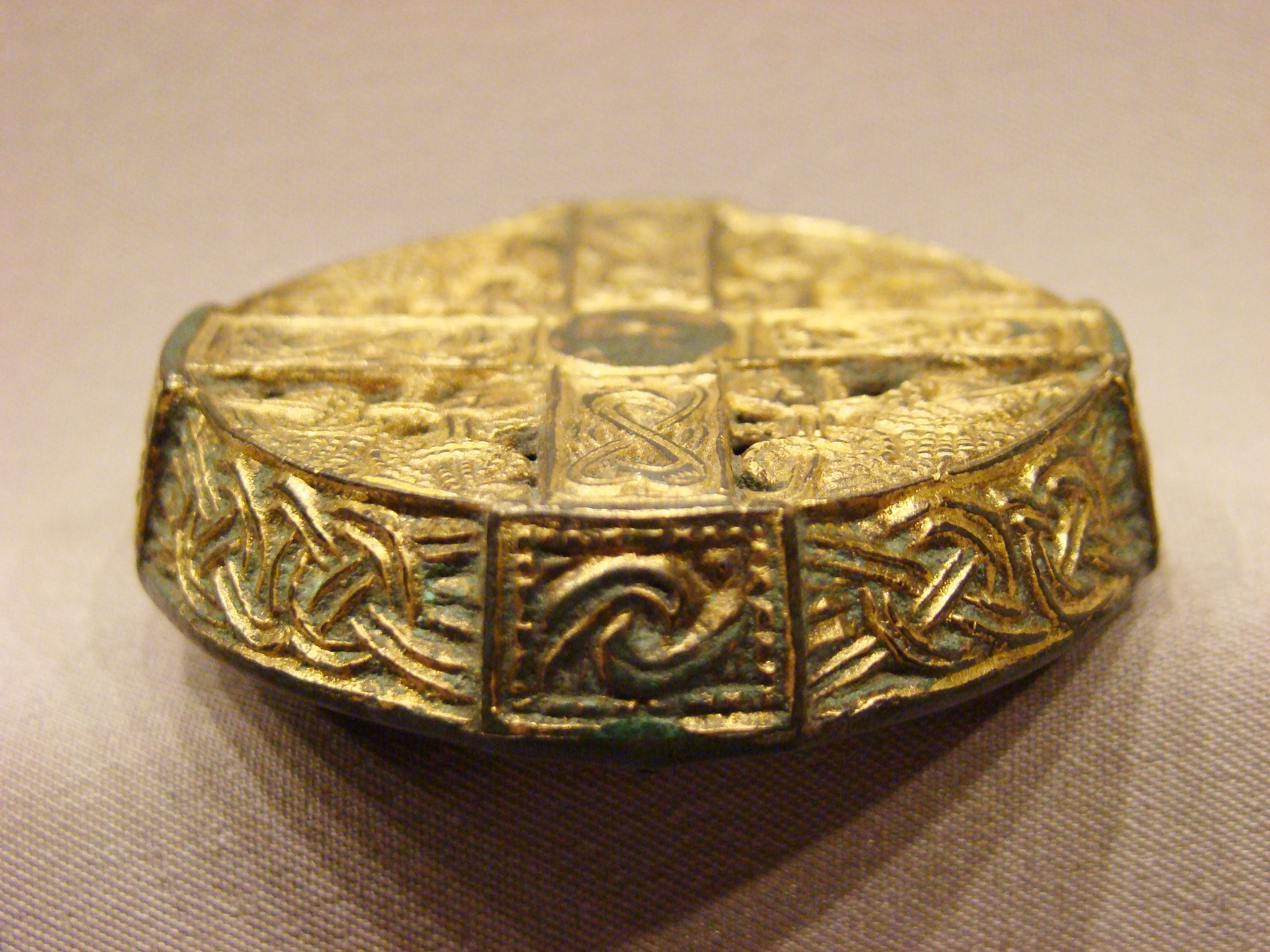
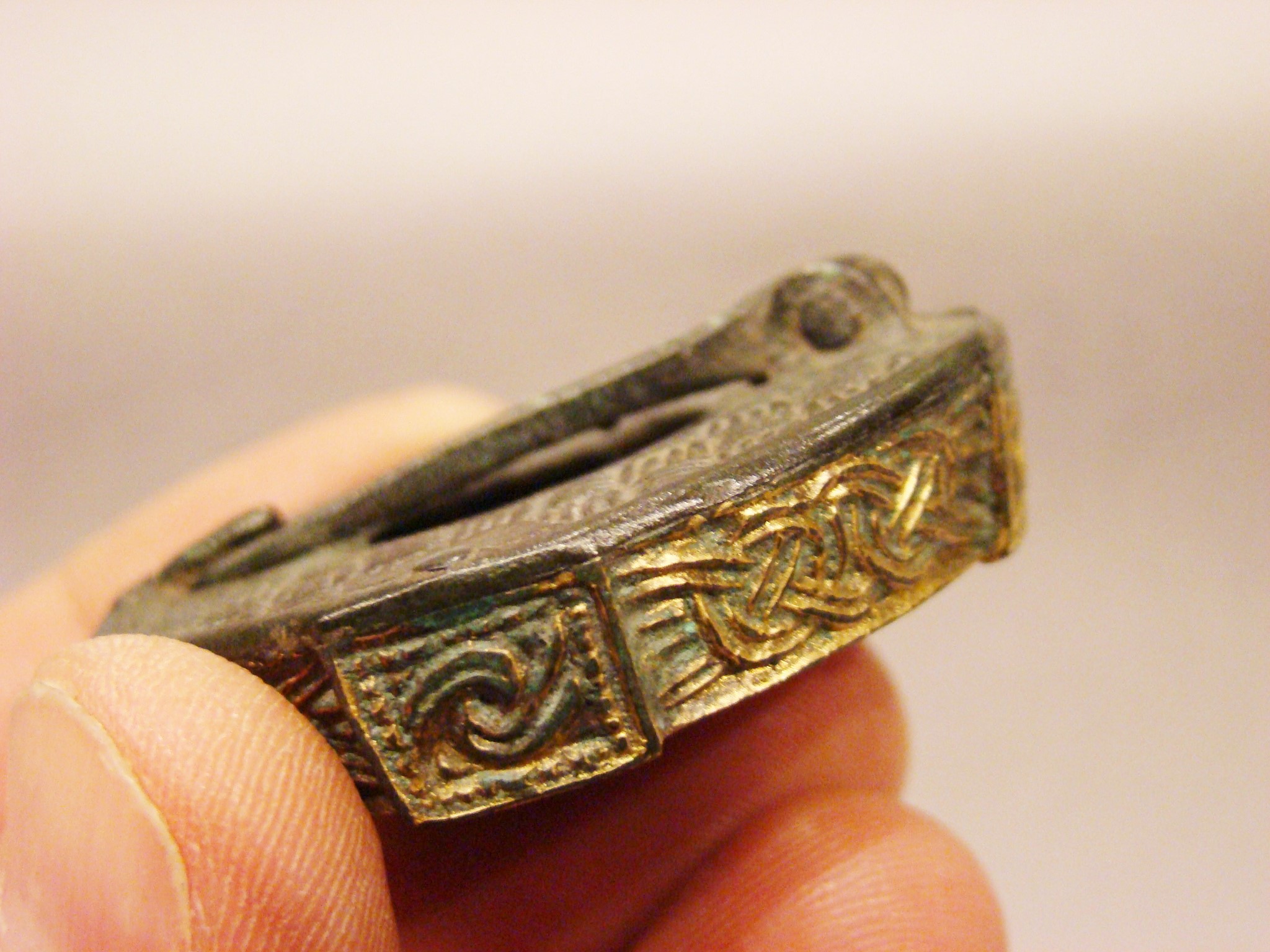
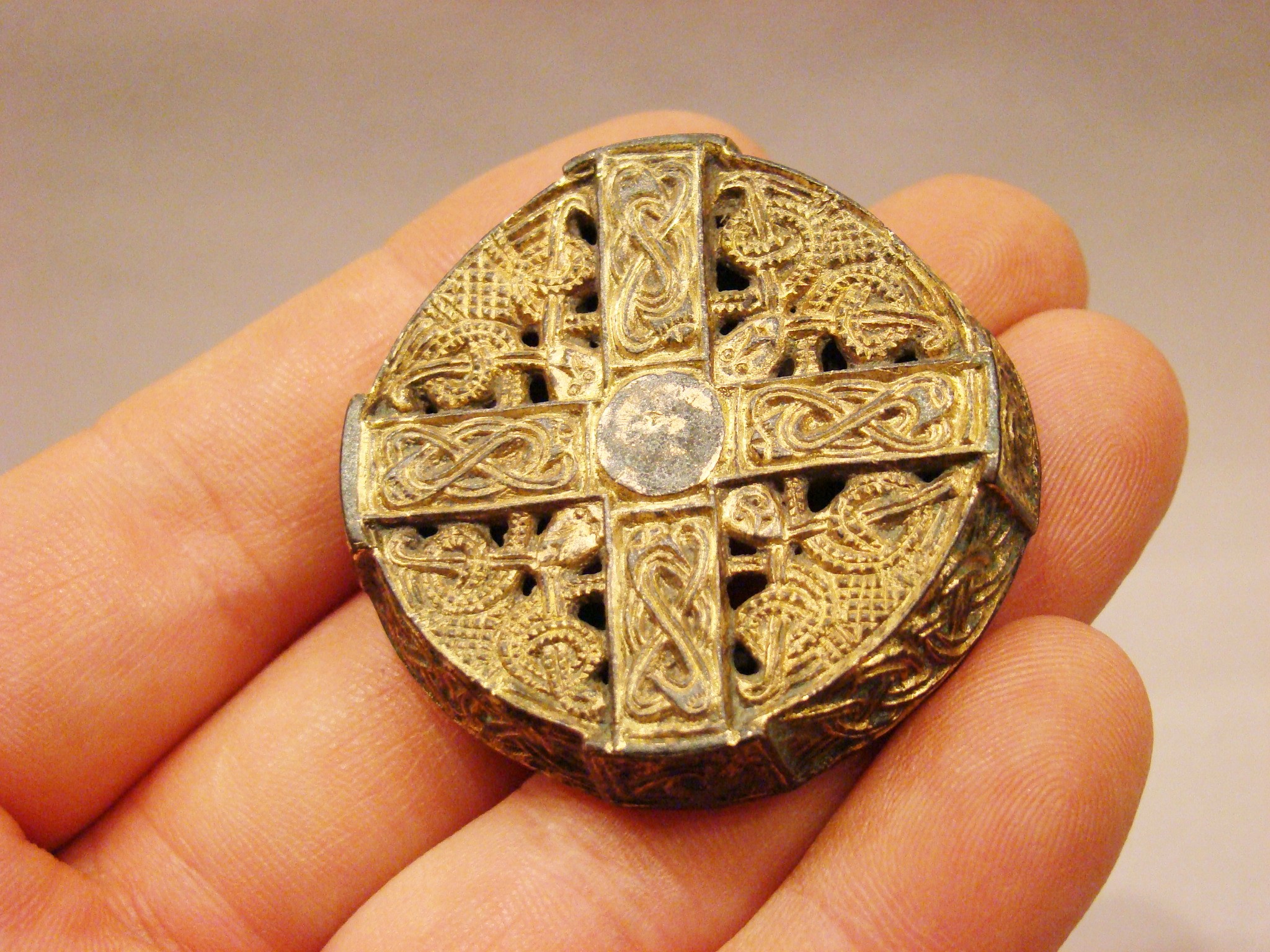
ANT 4. Extremely Rare Viking Gilt Bronze Box Brooch. 9th-10th Cent. AD.
Hollow cast drum shaped brooch done in the Scandinavian Borre’ style. Intensive designs with bright gold plating on a deep green patina. Front features a cross with a knotted serpent motif on the arms, terminating into raised square studs on the sides. Note human heads in the corners. Central boss may have once had an applied decorative element. Reverse has a basket weave pattern with intact bronze pin and catch plate. Measures 45 mm. in diameter. These brooches were used to pin a Viking warrior’s cloak and are documented in high status burials. Formerly part of a London UK antiquities collection and originally acquired on the German art market prior to 2000. $12,500.00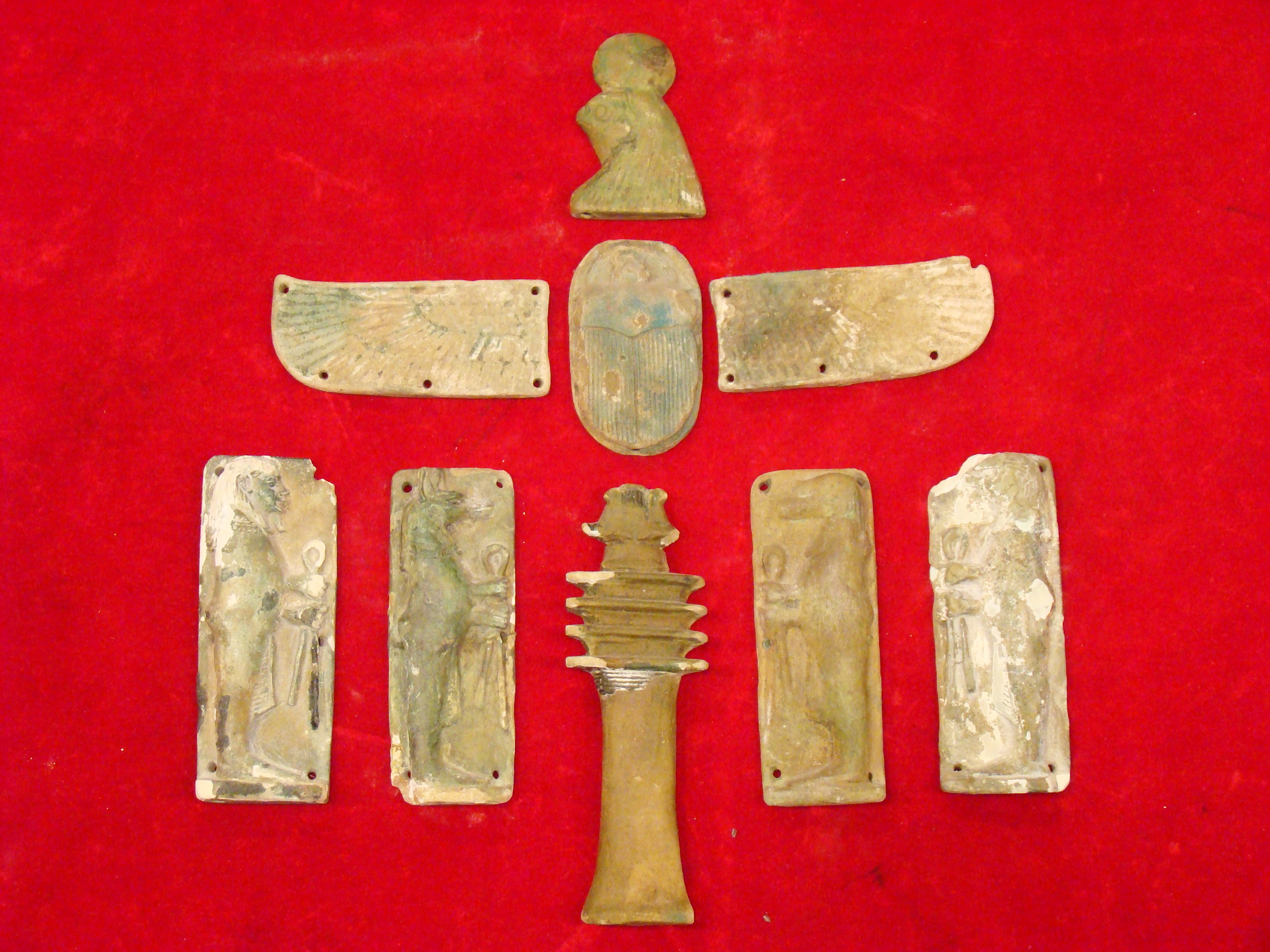
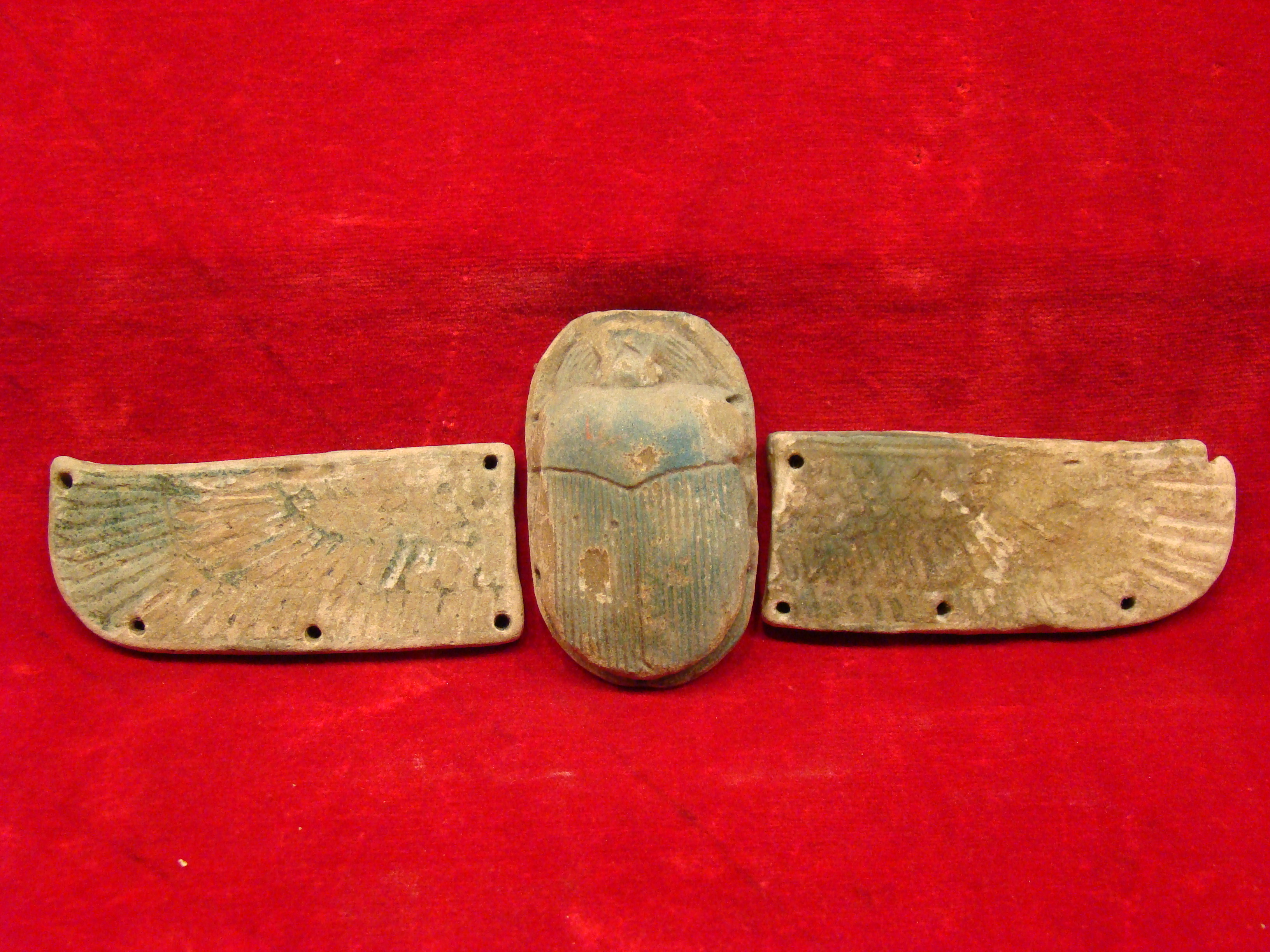
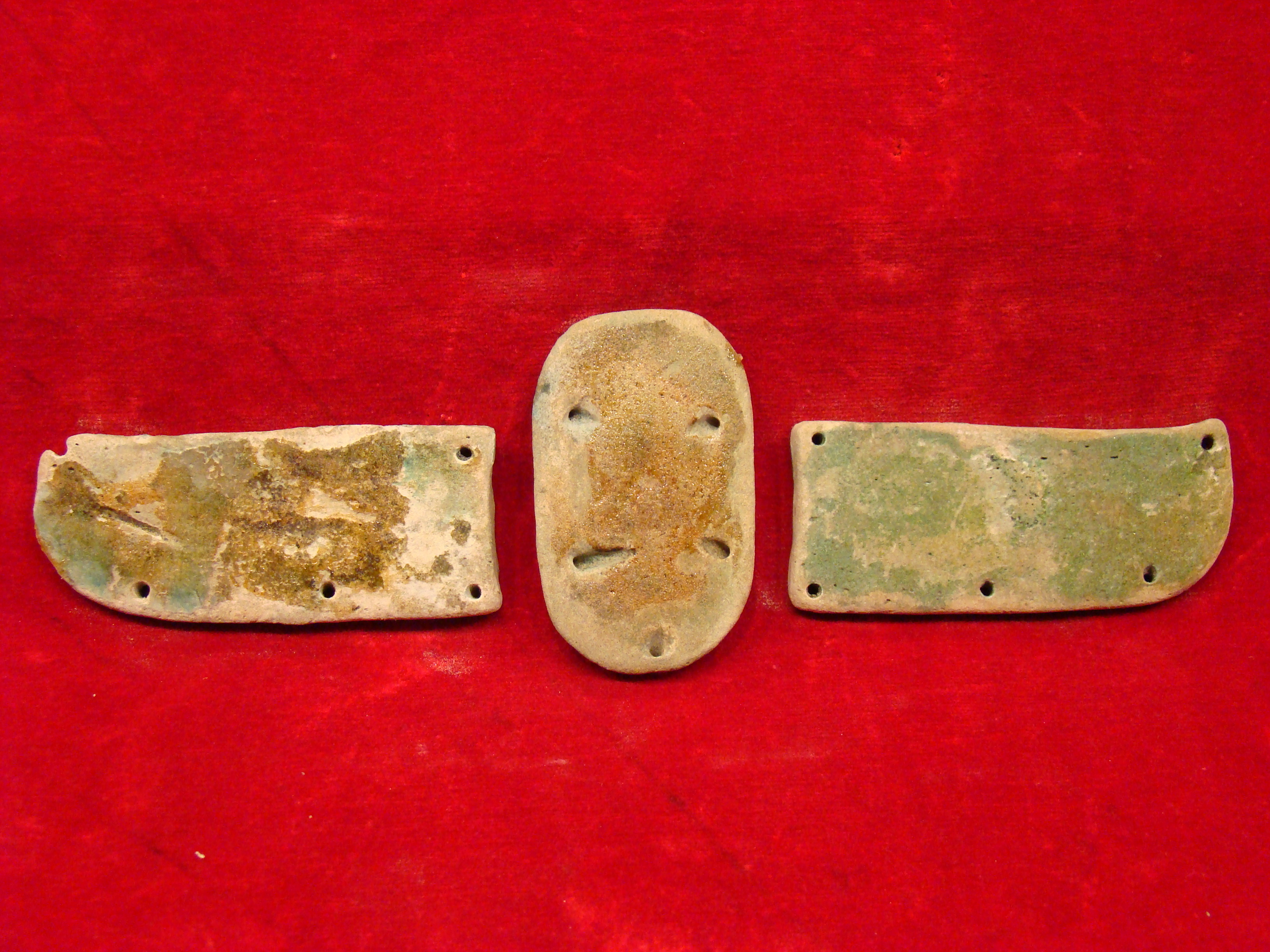
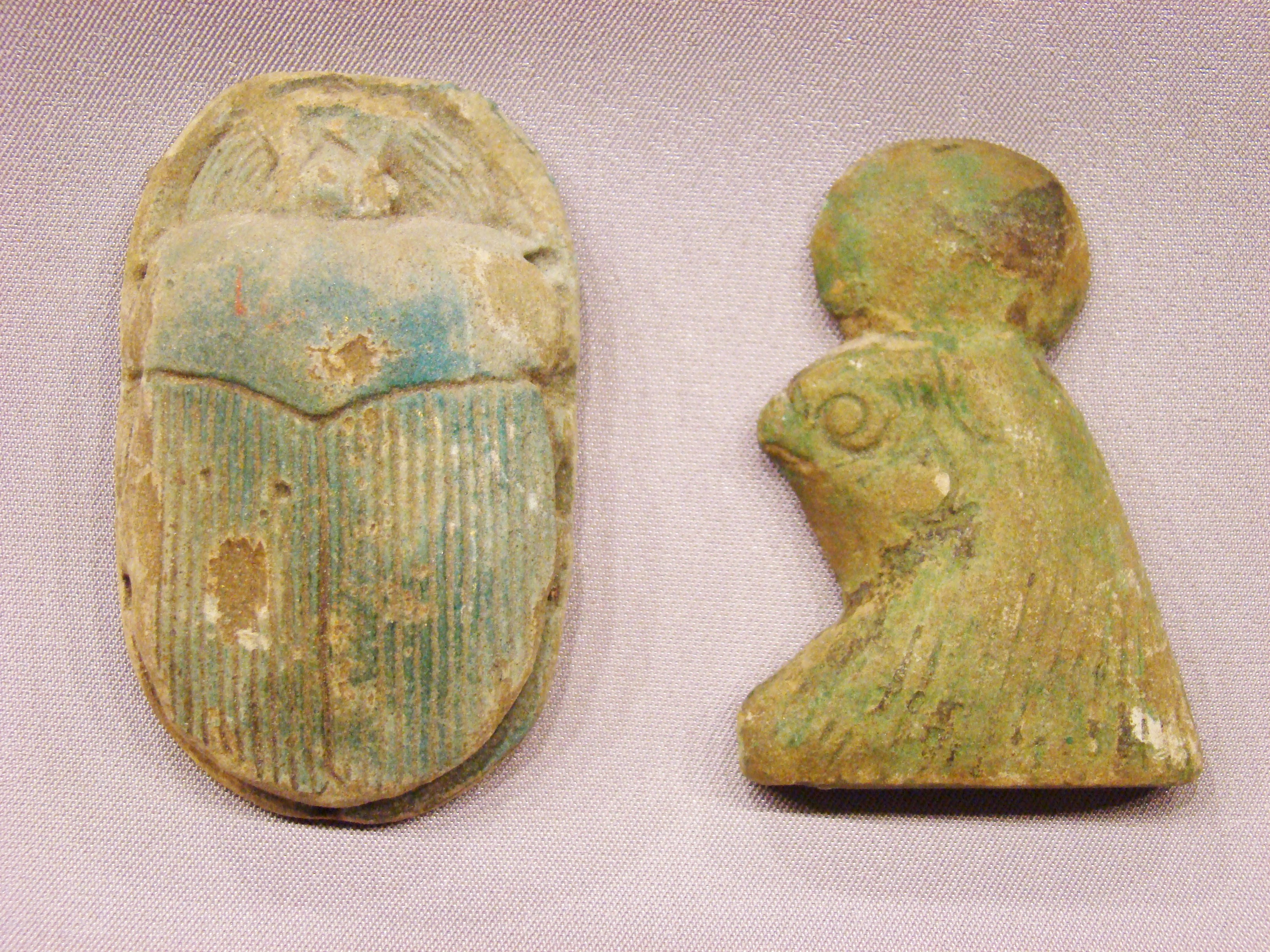
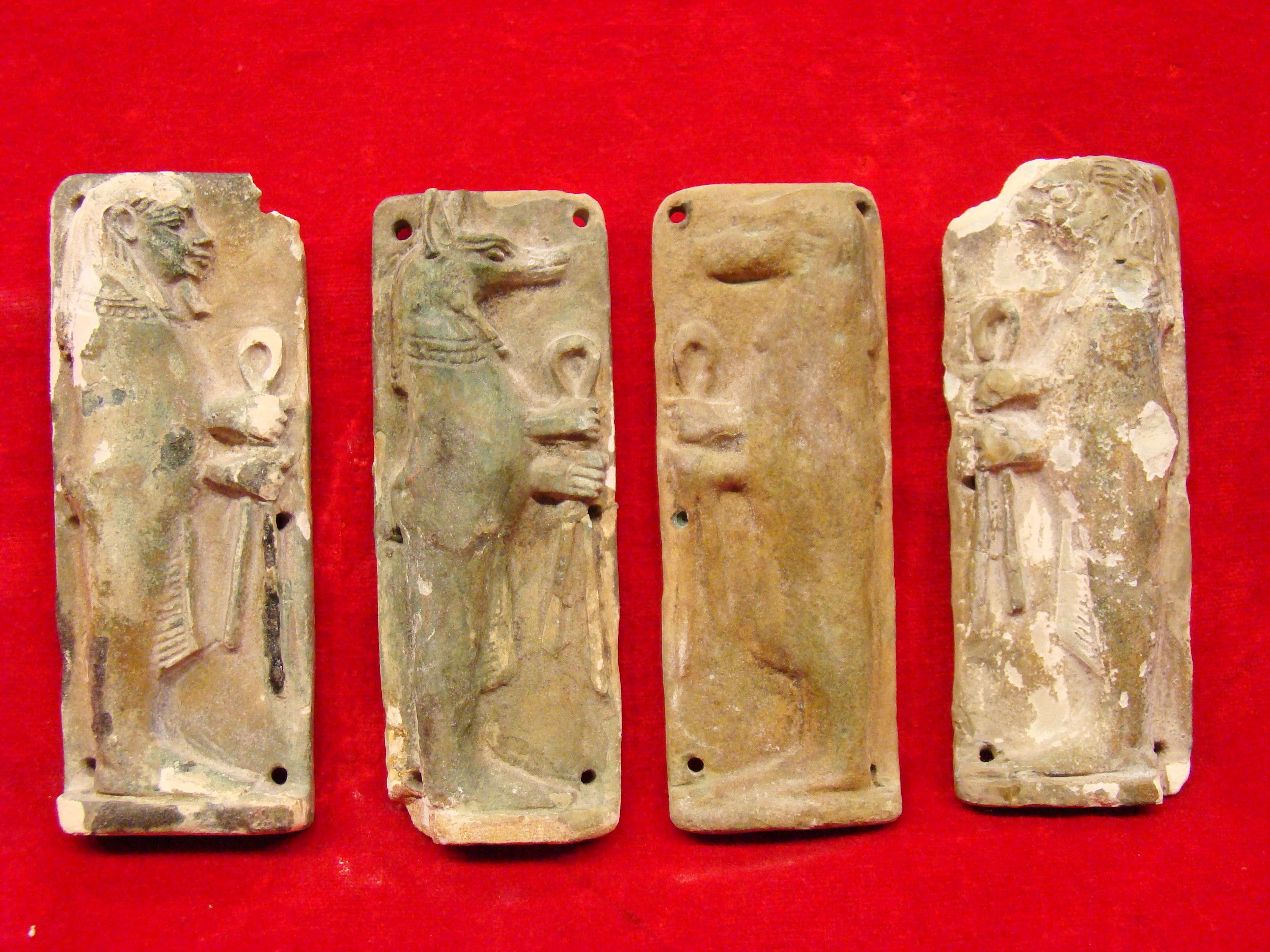
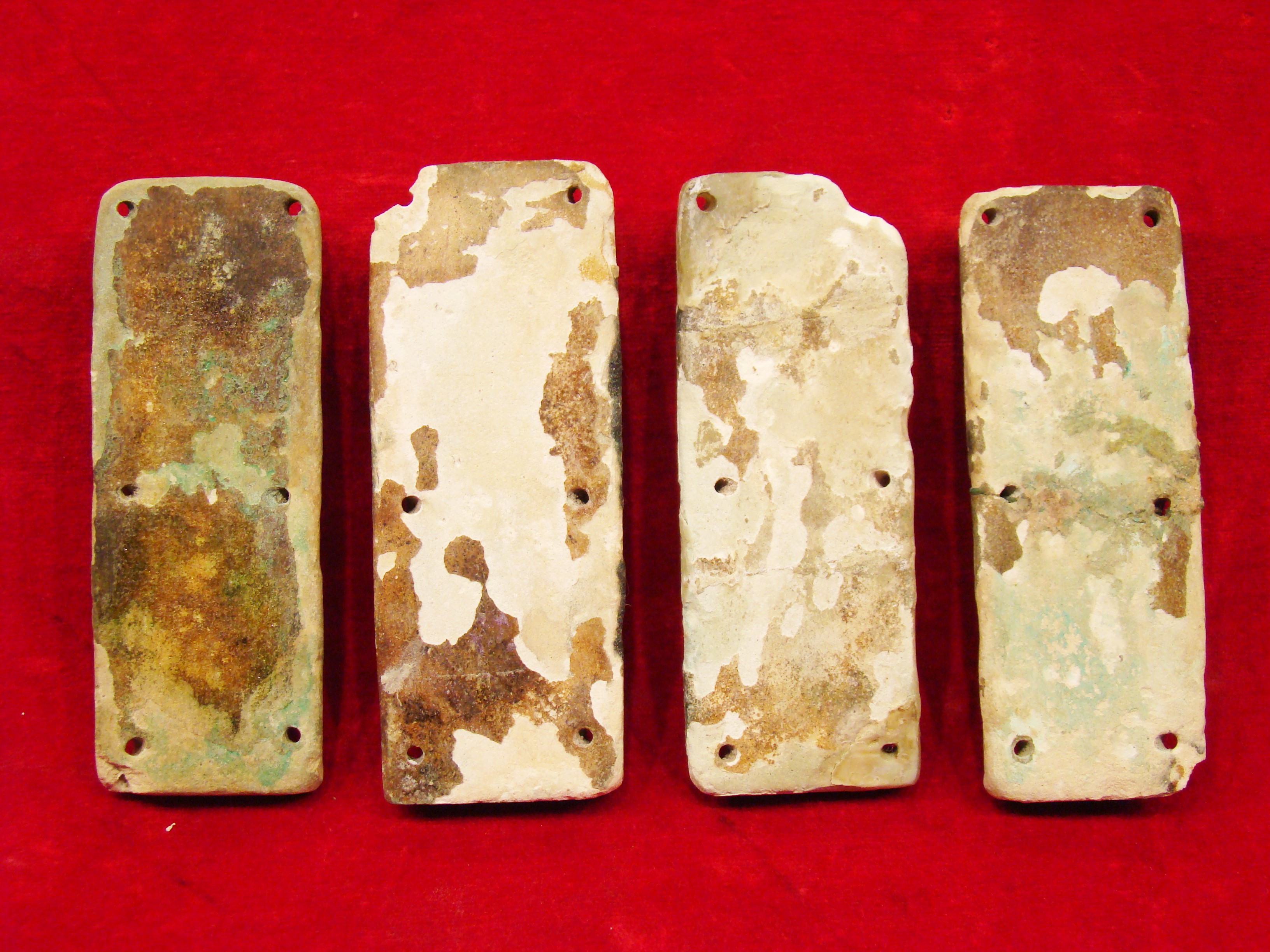
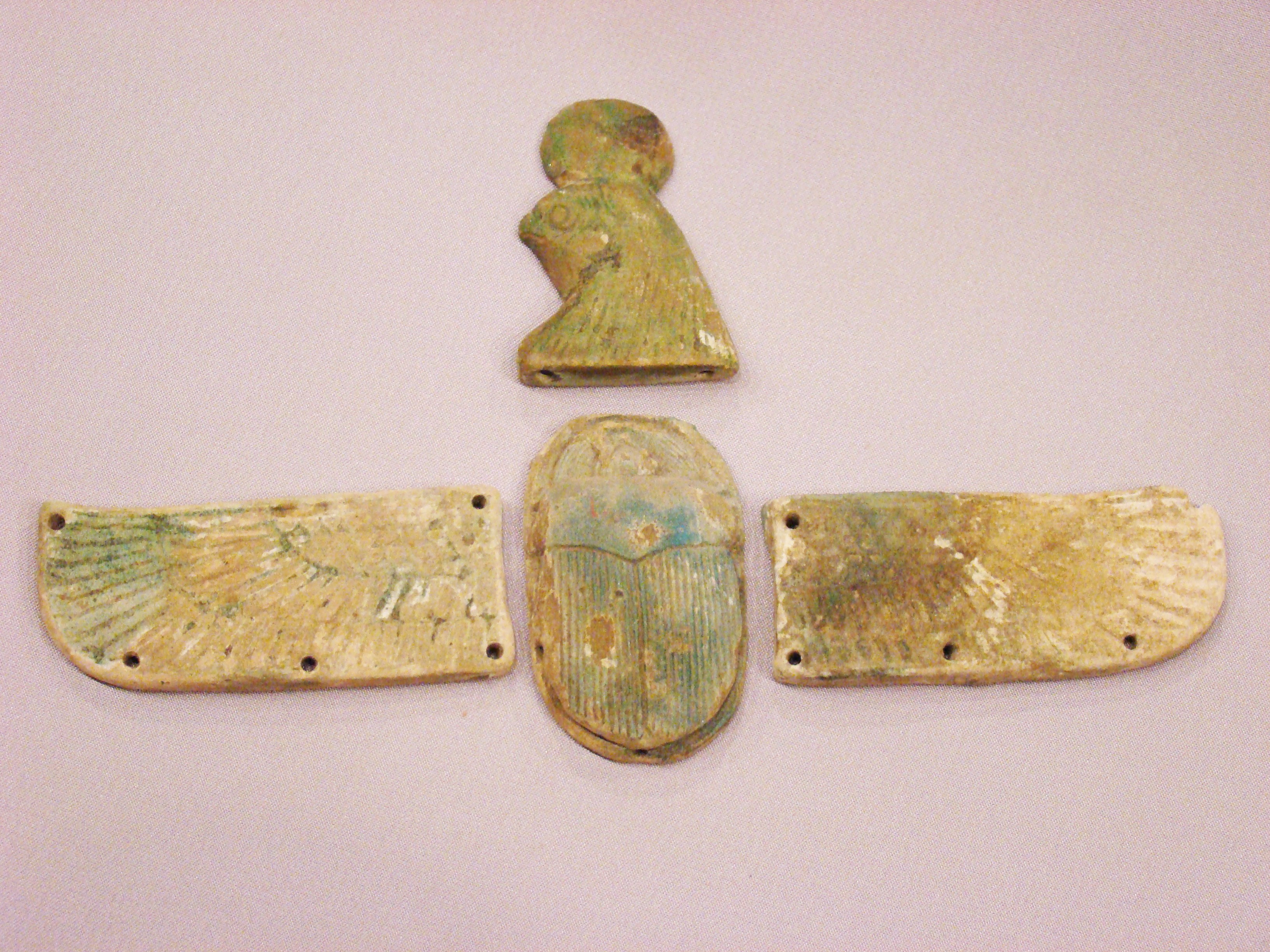
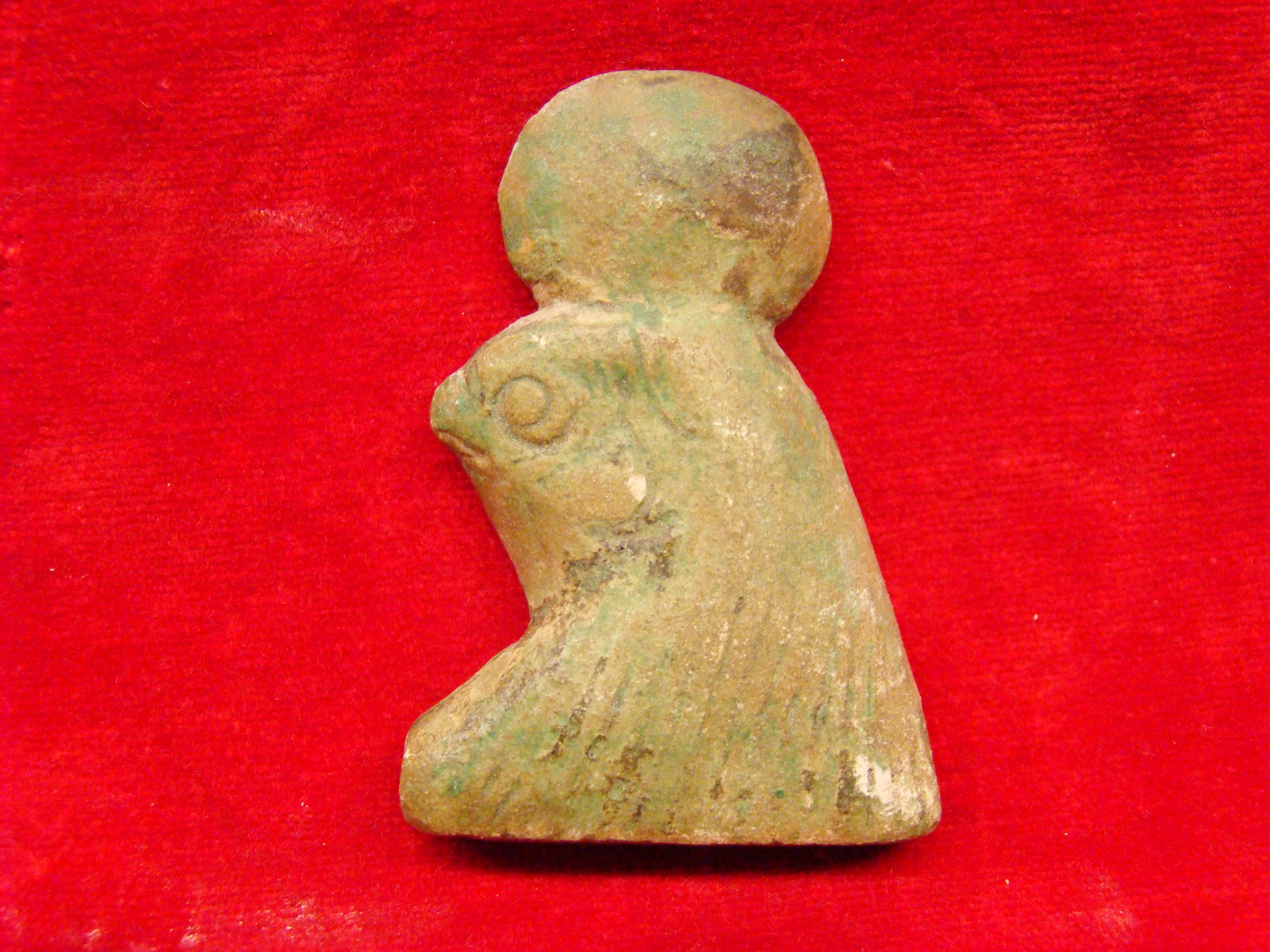
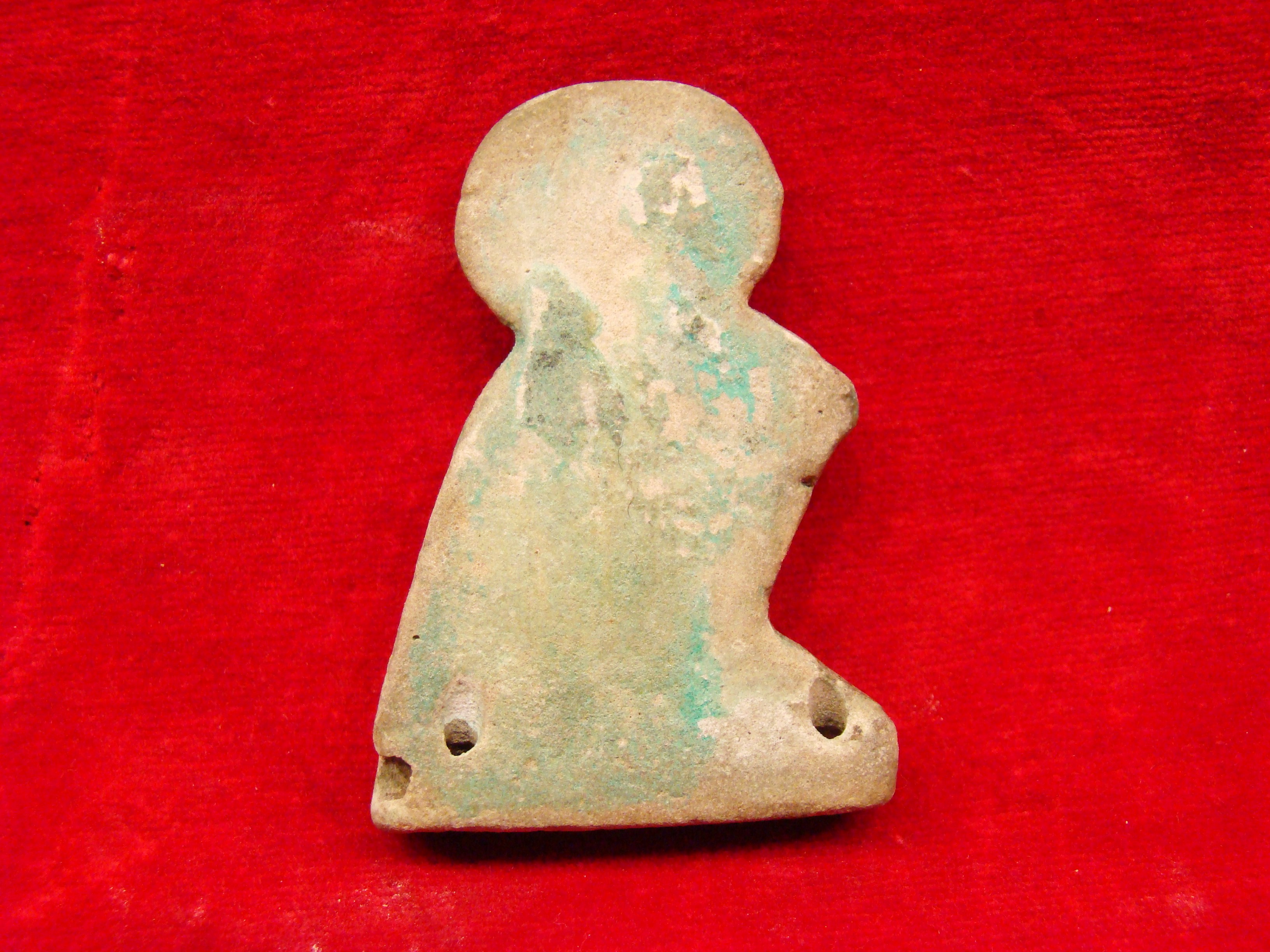
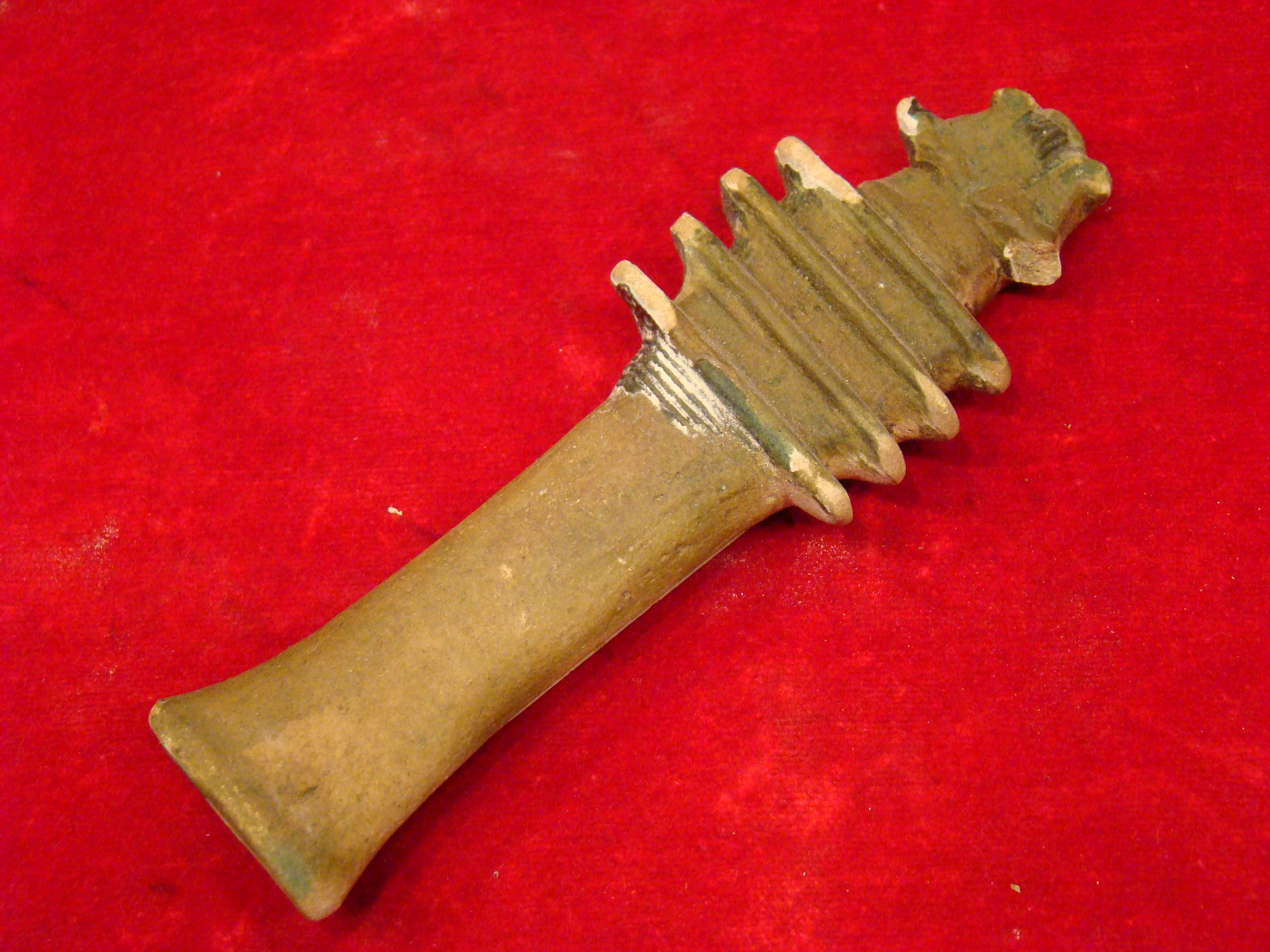
ANT 5. Ancient Egyptian Faience Amulets from the Linen Wrappings of a Mummy. Late Period, 664-332 BC.
This group of Faience (blue-green glazed ceramic) Amulets were collected from the wrappings of an individual mummy. They include a Djed Pillar which symbolizes the backbone of Osiris and stability. The large Scarab with wings and head of Horus was placed over the heart of the deceased and was the most important of the mummification amulets. The heart was seen as the home of the spirit, and the bodily element of the ancient Egyptian soul. In the Hall of Judgement, it was the heart which was weighed against the feather of Ma’at. If a person failed this test they would be devoured by Ammit, if they passed they would go on to enjoy a blissful afterlife. Unsurprisingly, the Egyptians were keen to protect their heart with this amulet. The four rectangular plaques represent The Four Sons of Horus, Duamutef, with the head of a Jackal protected the stomach. Imsety, with the human head, protected the liver. Hapy, with the head of a baboon, was the protector of the lungs, and Qebehsenuef, with the head of a falcon, protected the intestines. These are the same heads that are found on the lids of the canopic jars found in the tomb which held each respective internal organ of the mummy. Condition of all the amulets is excellent. Note the holes where they were sewn into the linen wrappings. The plaques measure 3.75″ x 1.25″ and the Djed Pillar is over 4″. Scarab is 2″. It is very rare to acquire a matching set of amulets like this as they were usually separated long ago and sold separately. Provenance: Old British collection. Probably acquired in the 19th Century when these artifacts were widely sold to British colonists and travelers in Egypt. There was a widespread antiquities trade supplied by the Fellahin tomb robbers well into the early 1900’s. Wood/glass display case included. $7995.00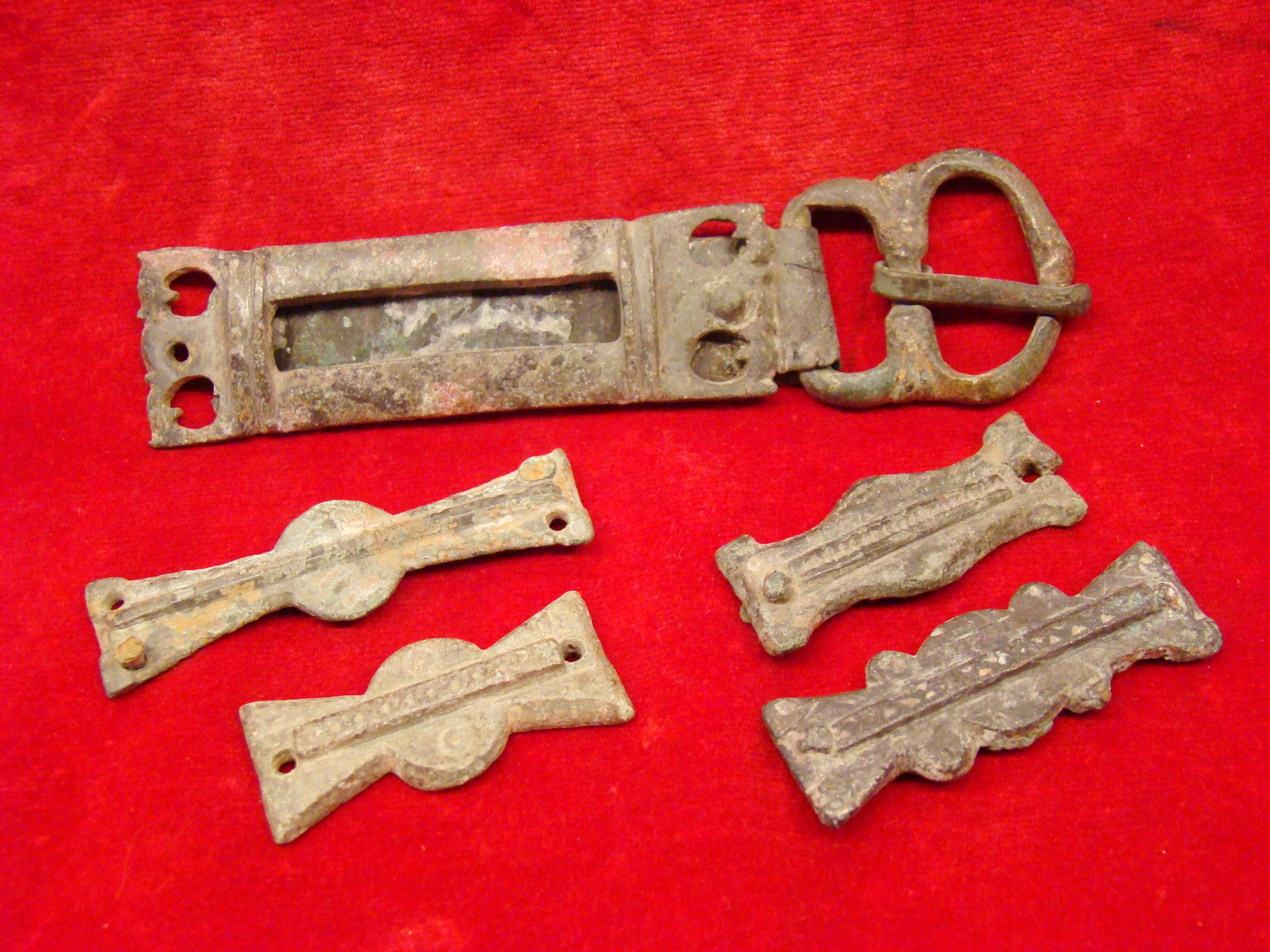
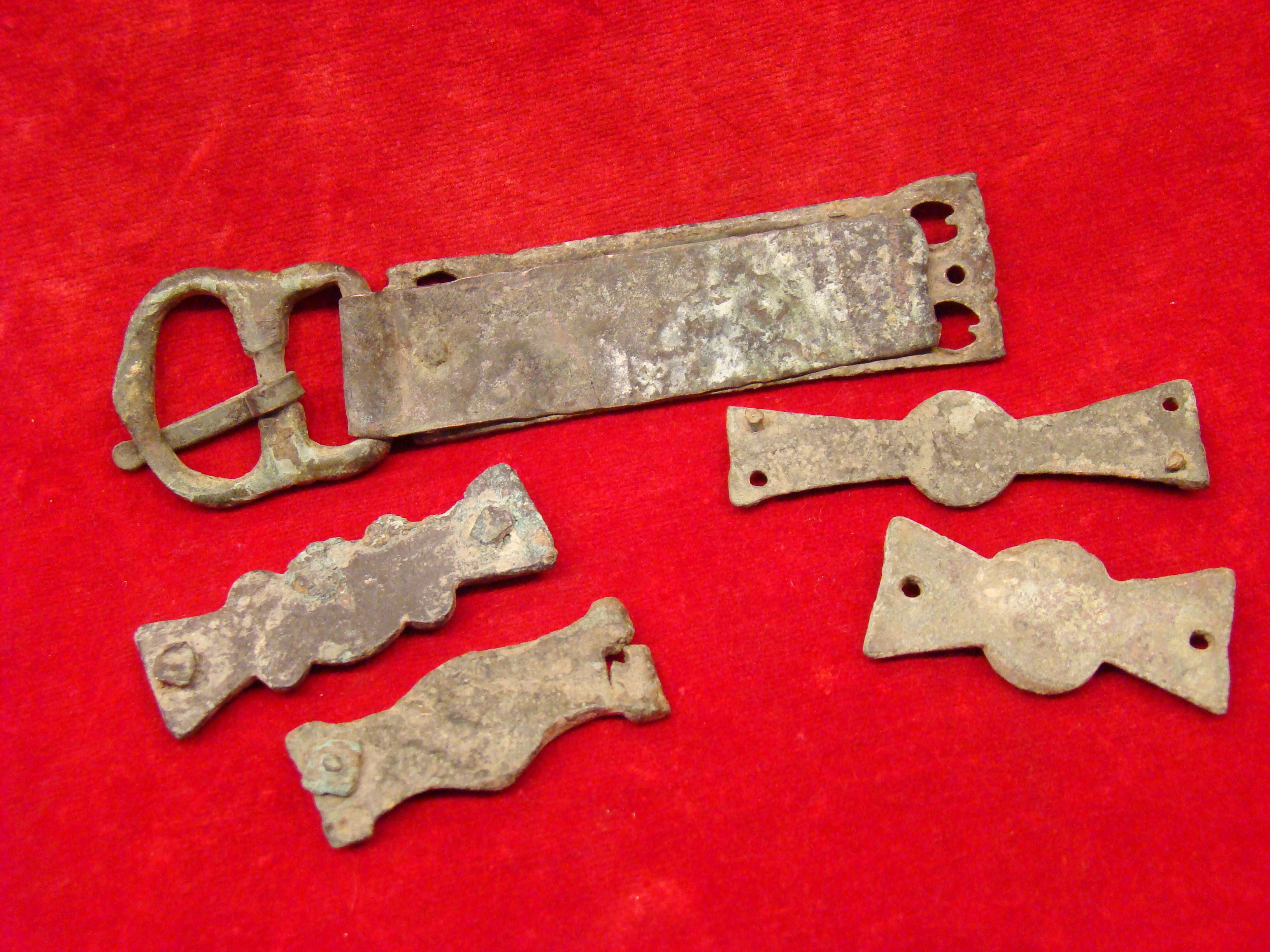
ANT 6. Roman Legionary Soldier’s Belt Buckle and Decorative Fittings. 1st-3rd Cent. AD.
This type of military belt was called a “Cingulum”. The bronze buckle is in great excavated condition. The fittings are from different belts but are representative of the whole. Provenance uncertain. $195.00 HOLD J.B.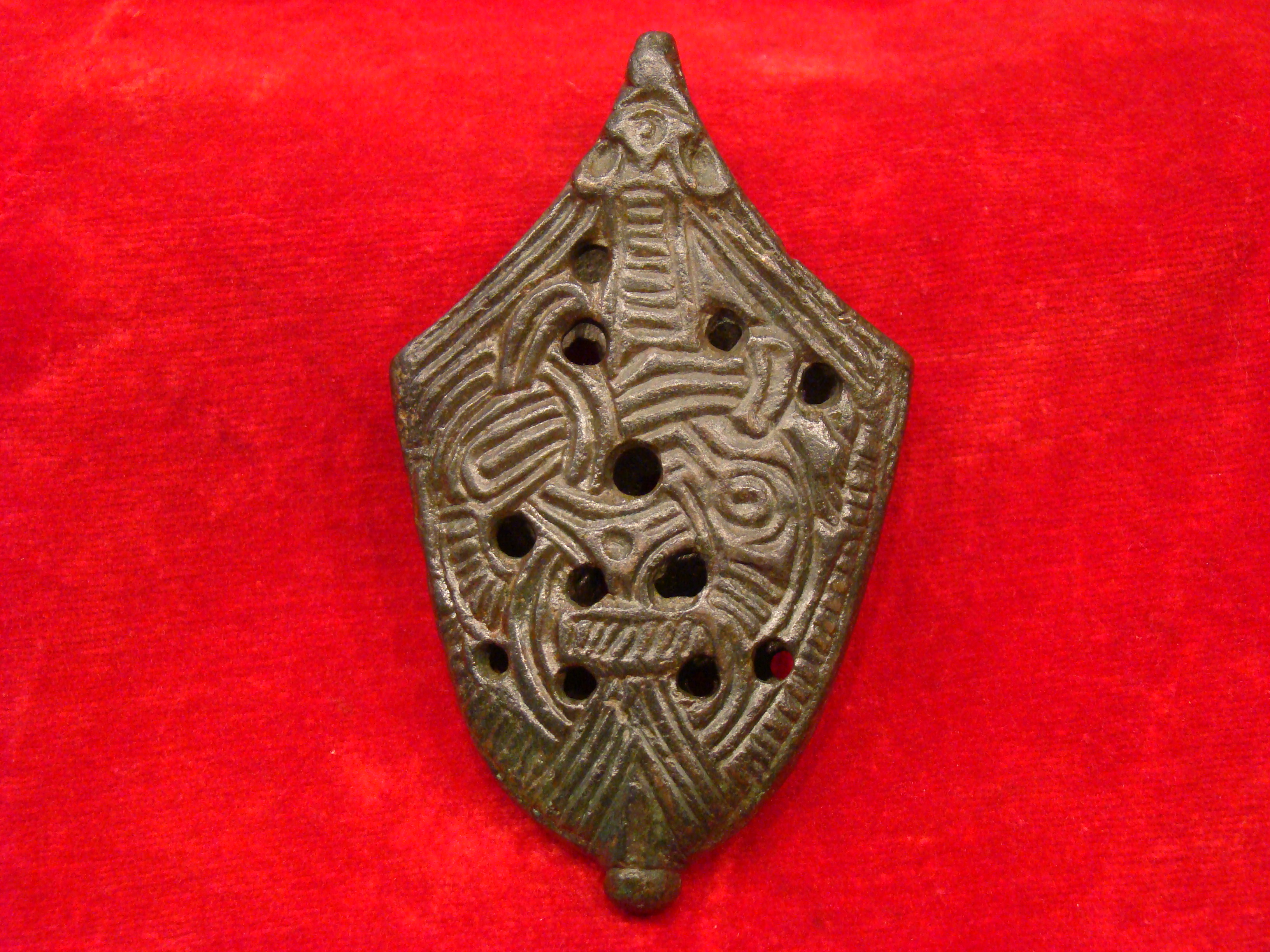
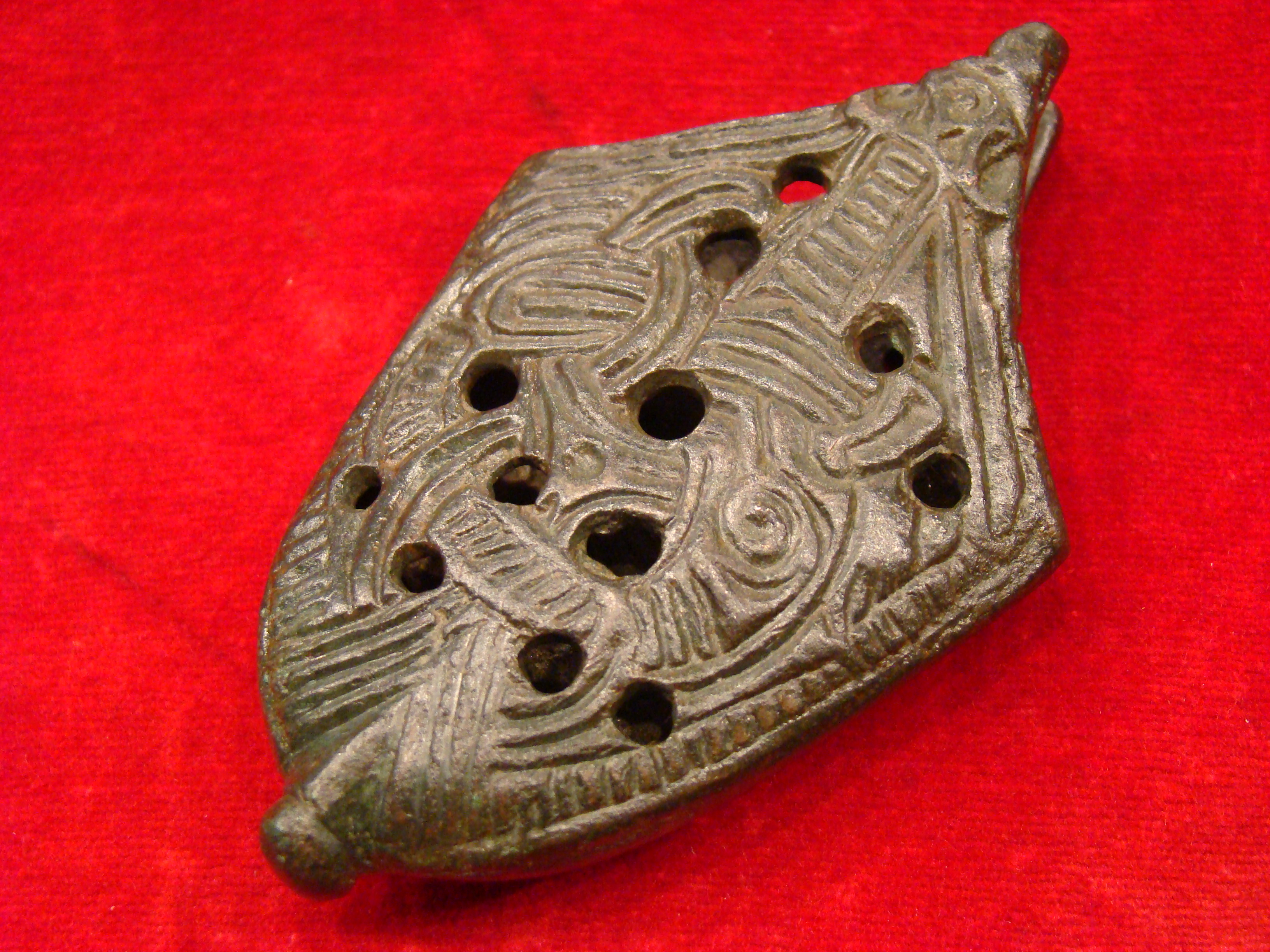
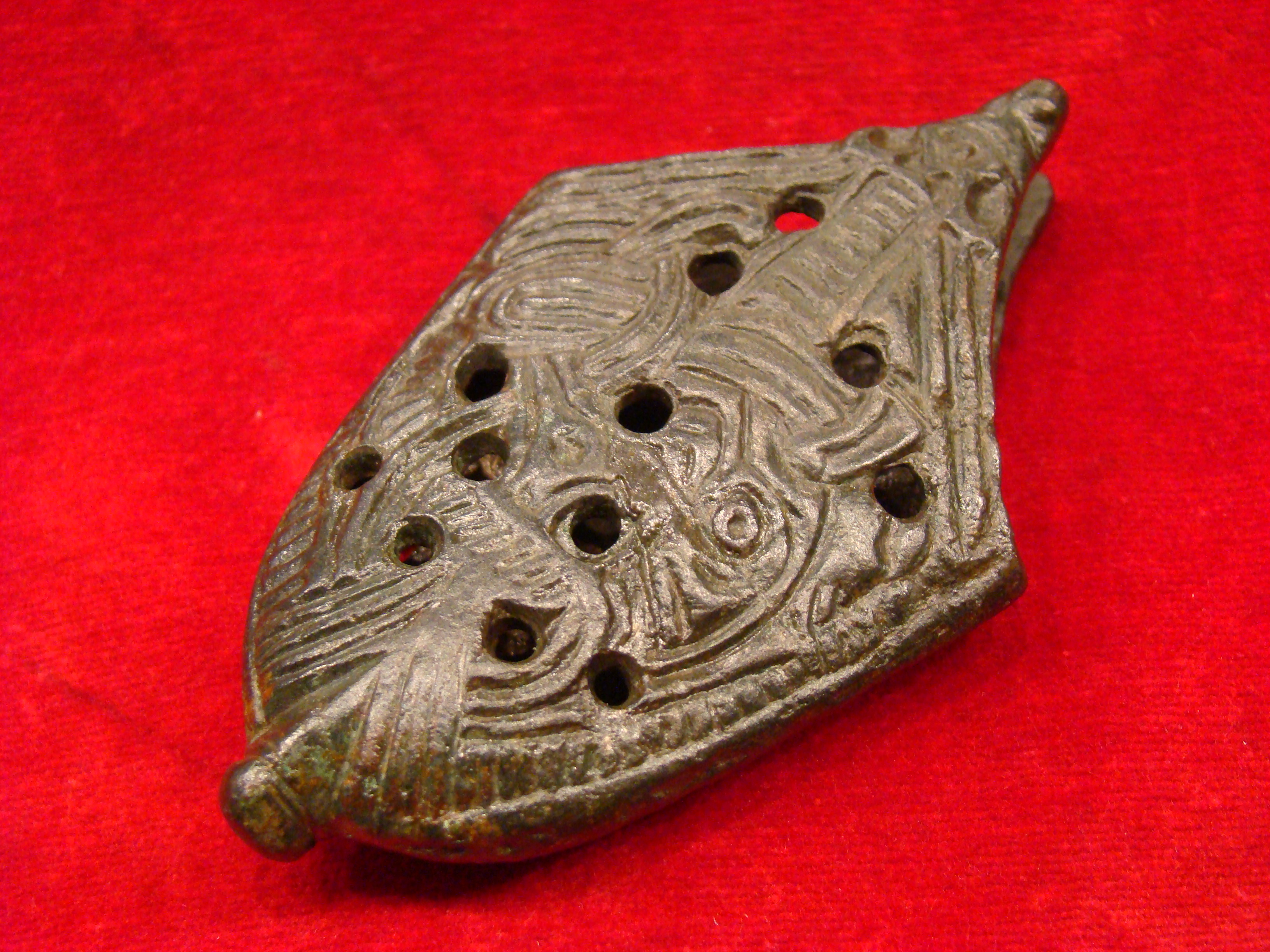
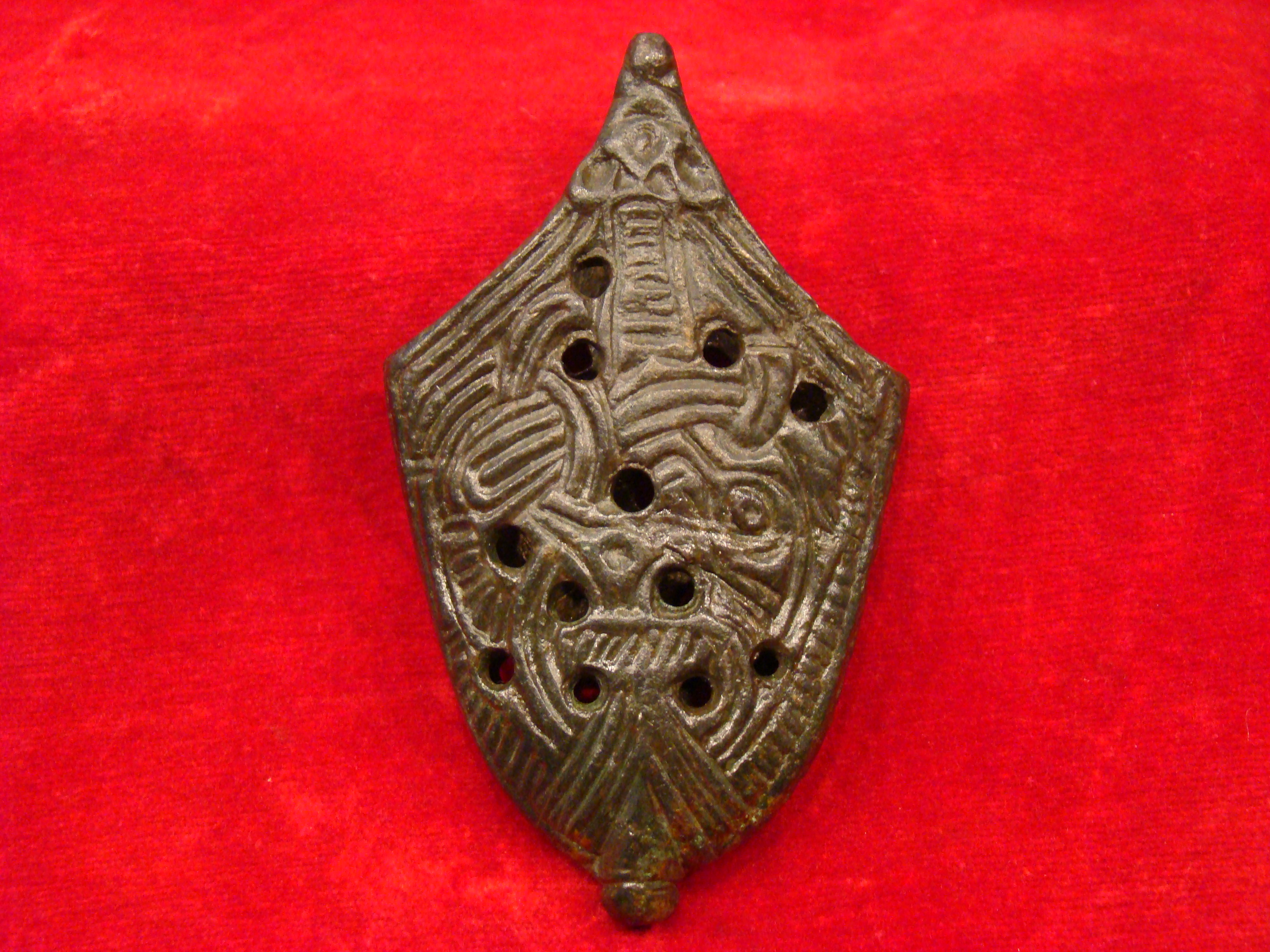
ANT 7. Excavated Viking Sword Scabbard Tip with Jormungandr (The World Serpent) 10th Cent. AD.
Very rare type crafted in the Scandinavian Borre Type 3 art style. It also has similarities to the Jellinge style. Neatly cast in bronze and features an interlaced serpent or dragon devouring itself. Note slick green patina. Perfect condition with no breaks, cracks or repairs. A fantastic example of Viking art and craftsmanship. The serpent likely represents Jormungandr, one of the three monstrous children of Loki who ultimately battles Thor resulting in mutual destruction at Ragnarok. Jormungandr is synonomous with chaos and destruction, and would be a proper decoration for a sword scabbard. The Vikings were very skilled metalworkers and are known for their pendants, sword hilts, jewelry, and brooches, intensely decorated with interwoven patterns and beasts. Their art was influenced by earlier Celtic and Anglo-Saxon styles. This particular sword scabbard tip (or chape) has an identical pattern seen on a round warrior’s brooch found in a grave at Birka (Sweden). See Page 70, Fig. 16 from grave 1090 in Holger Arbman’s catalog of excavated artifacts from the Viking cemetery at Birka, “Die Graber, Birka 1”. This resource is available online and can be downloaded. Provenance: Metal detector find purchased from a London antiquities auction. Exact find site uncertain but probably mainland Europe as it is a Swedish type. $3250.00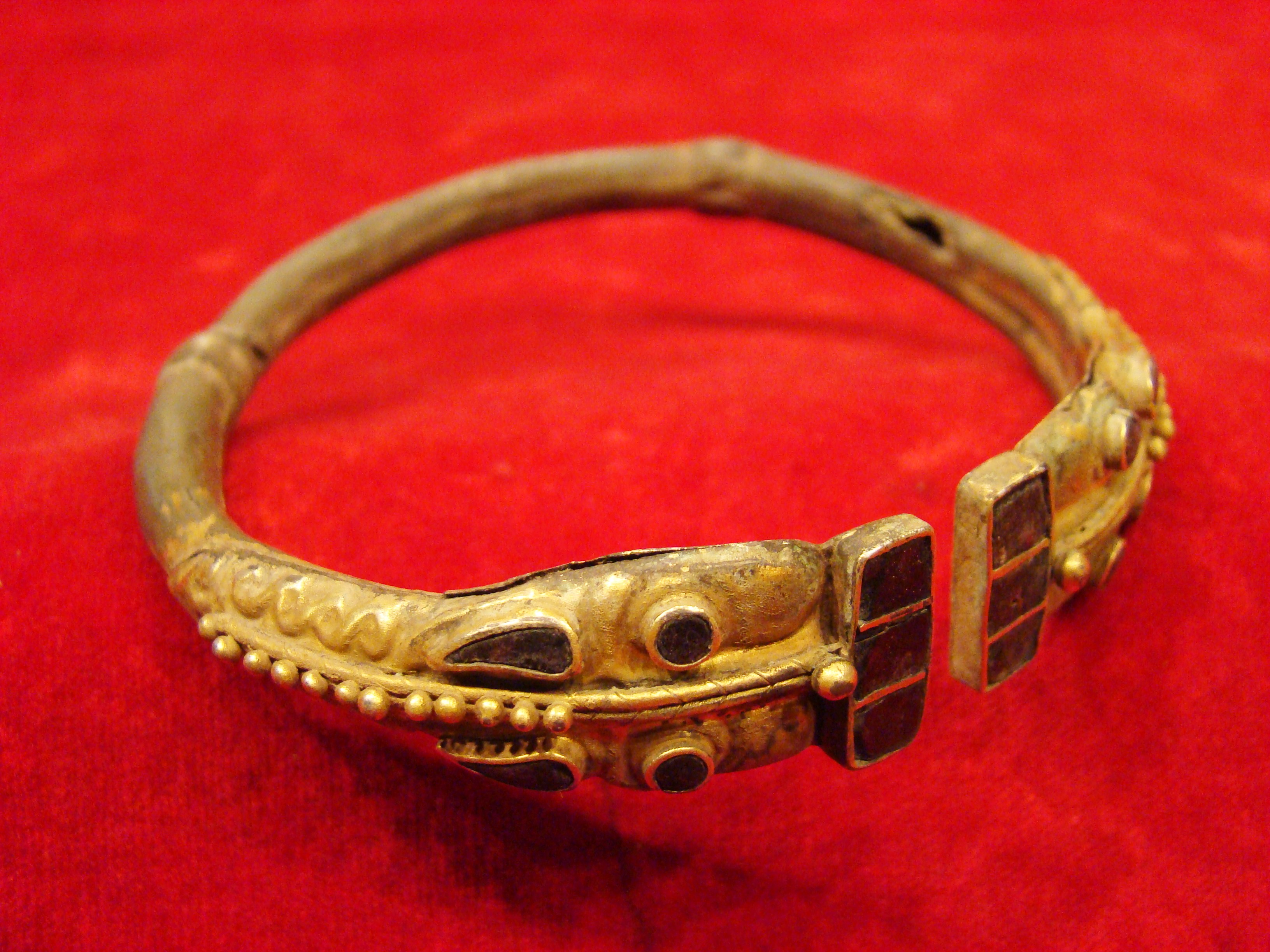
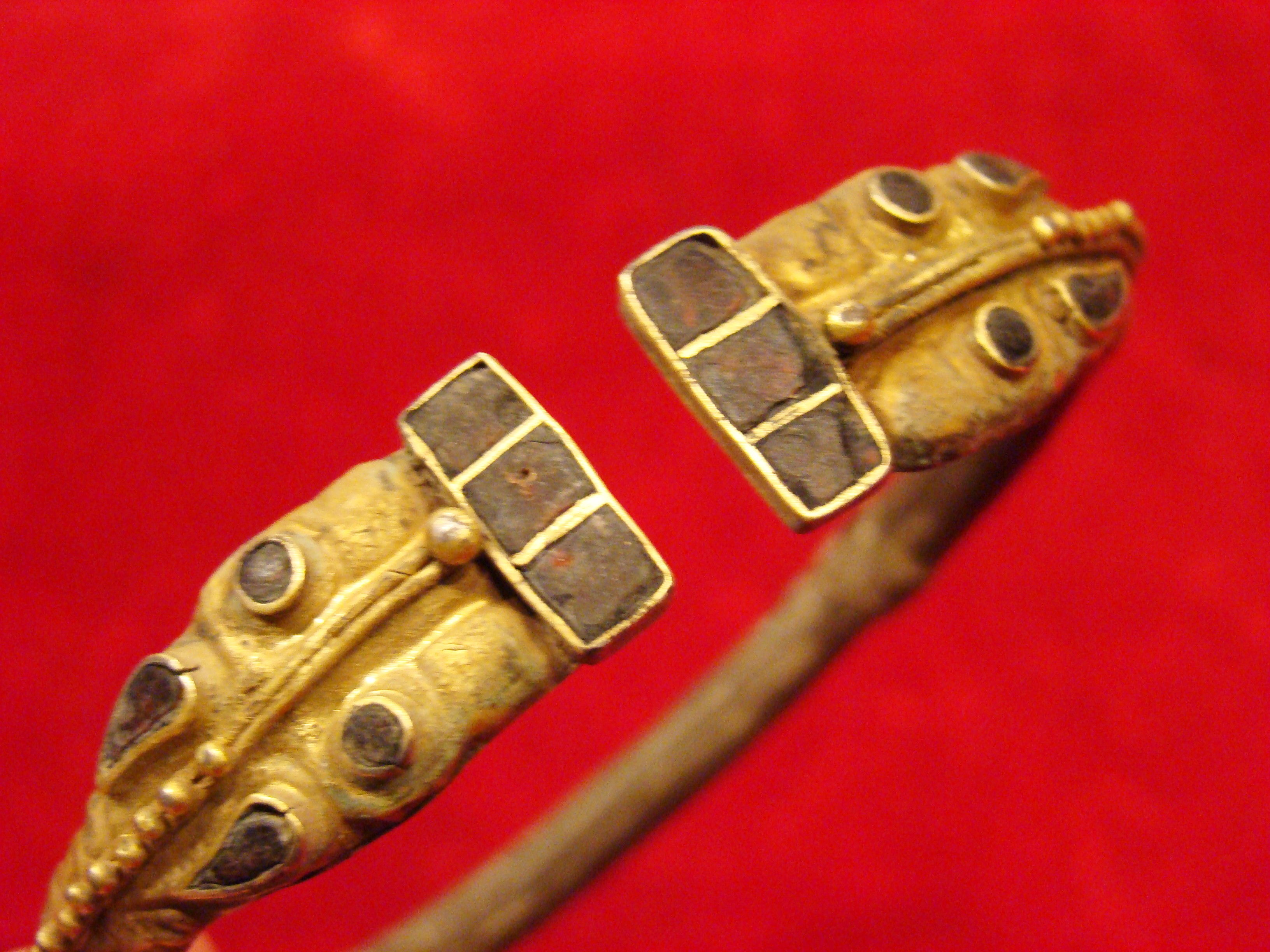
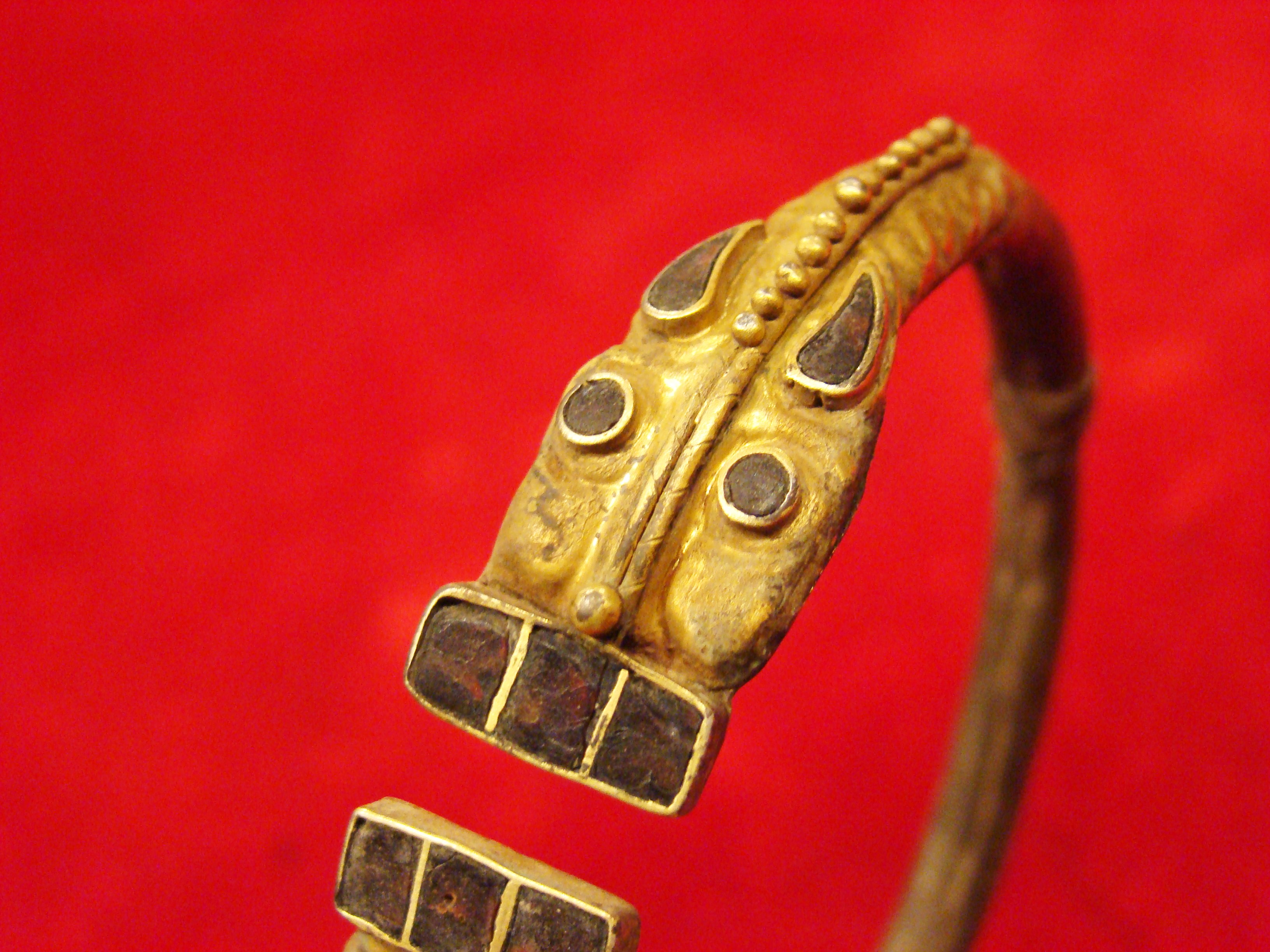
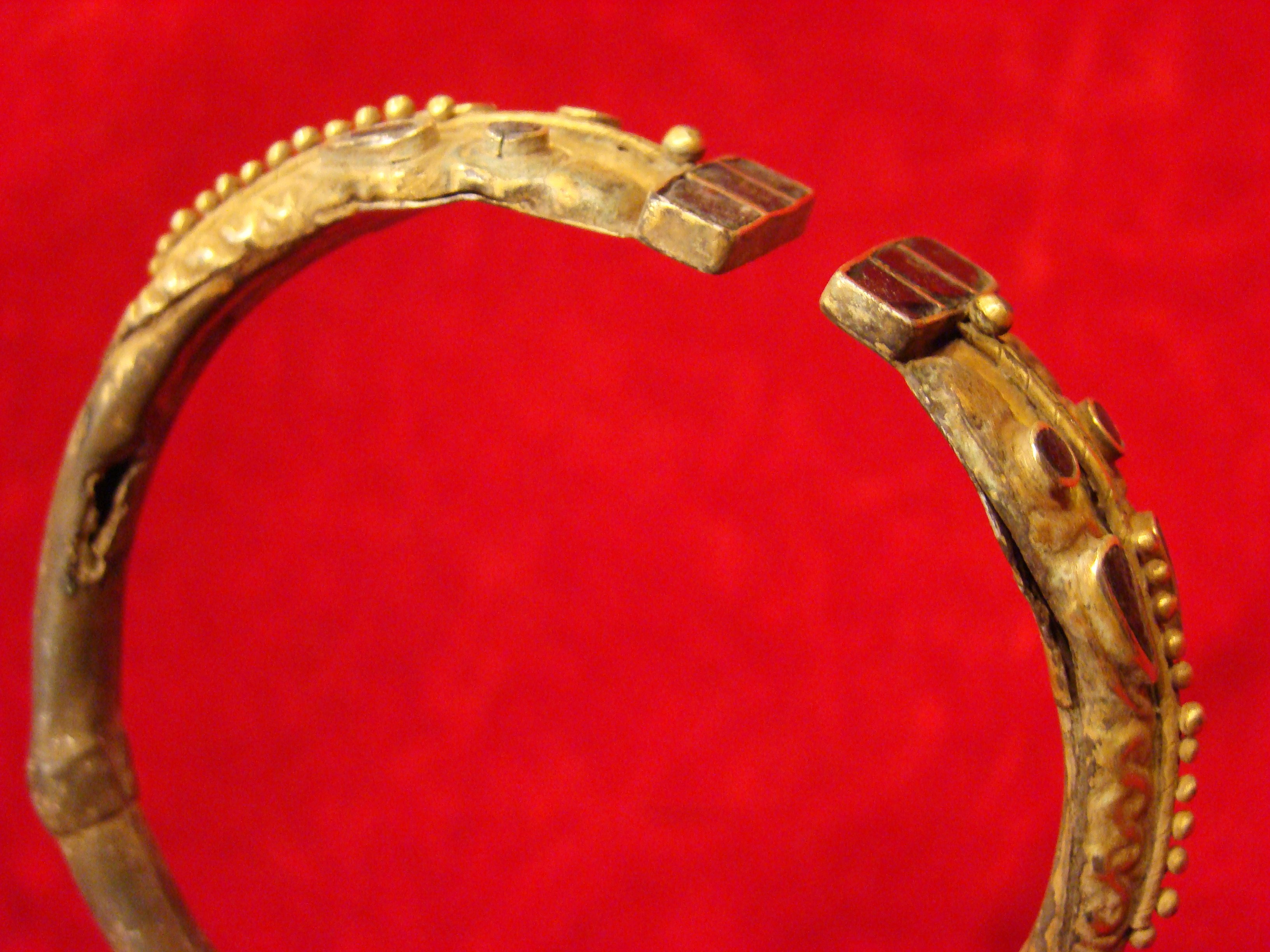
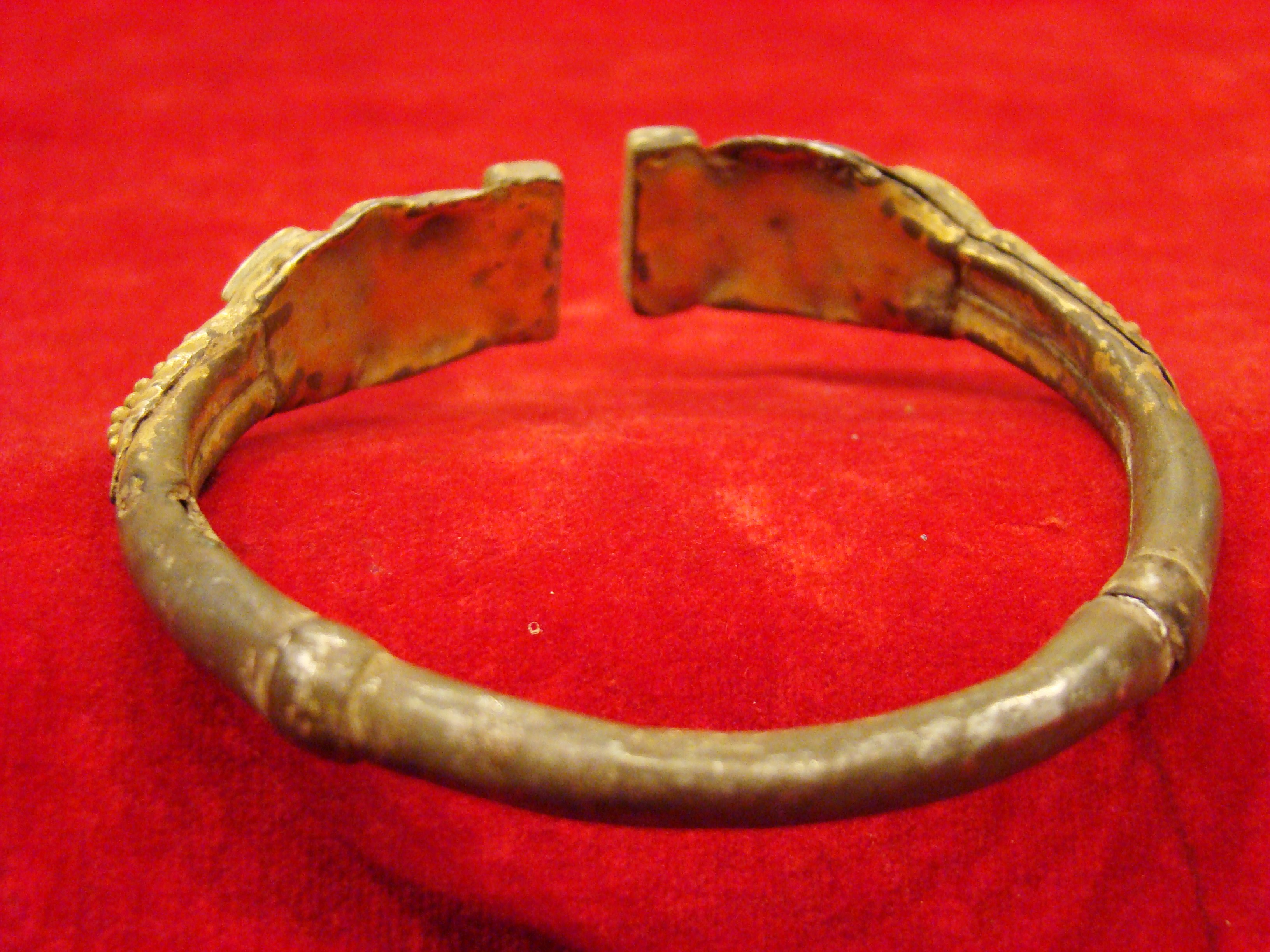
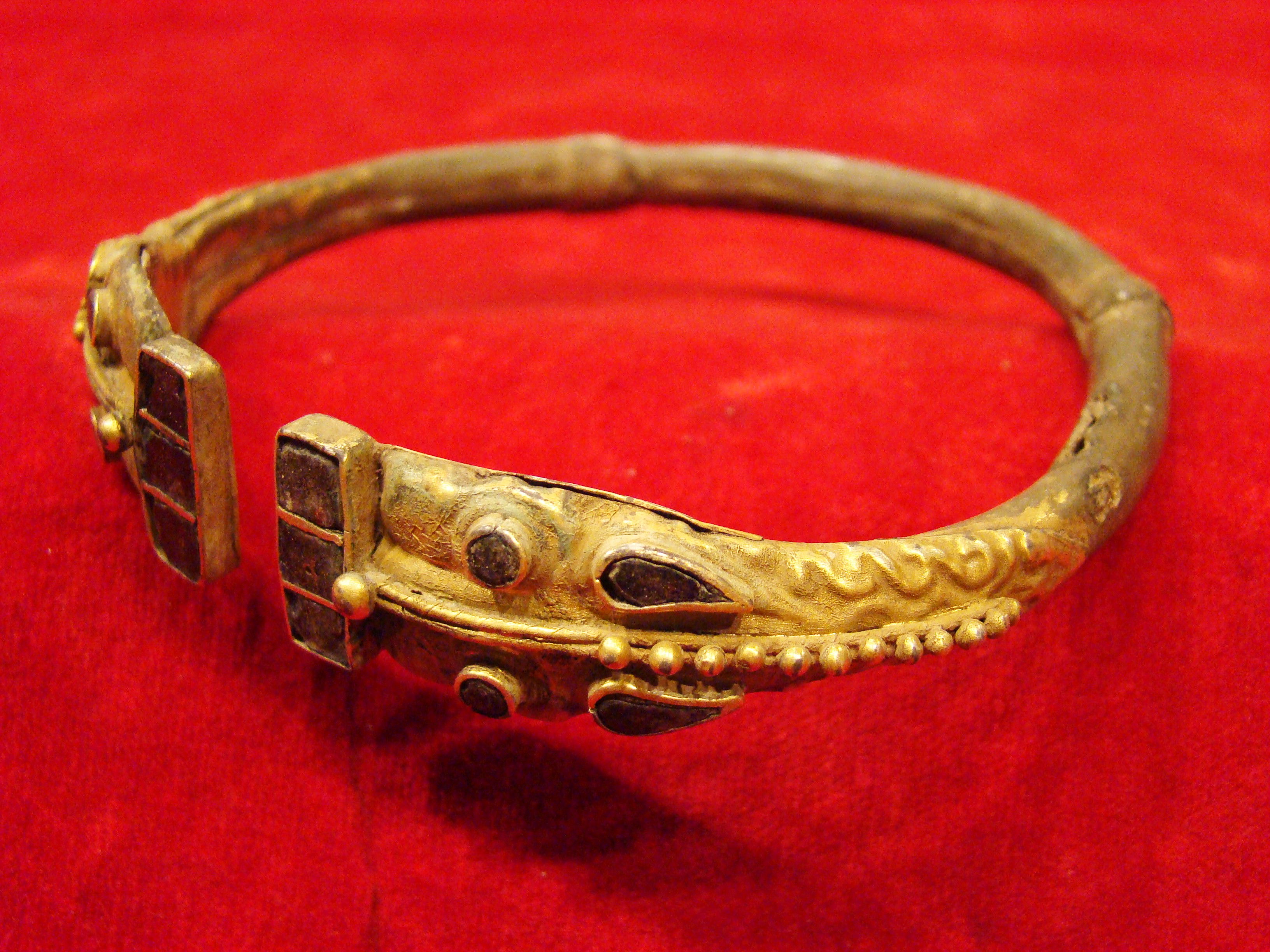
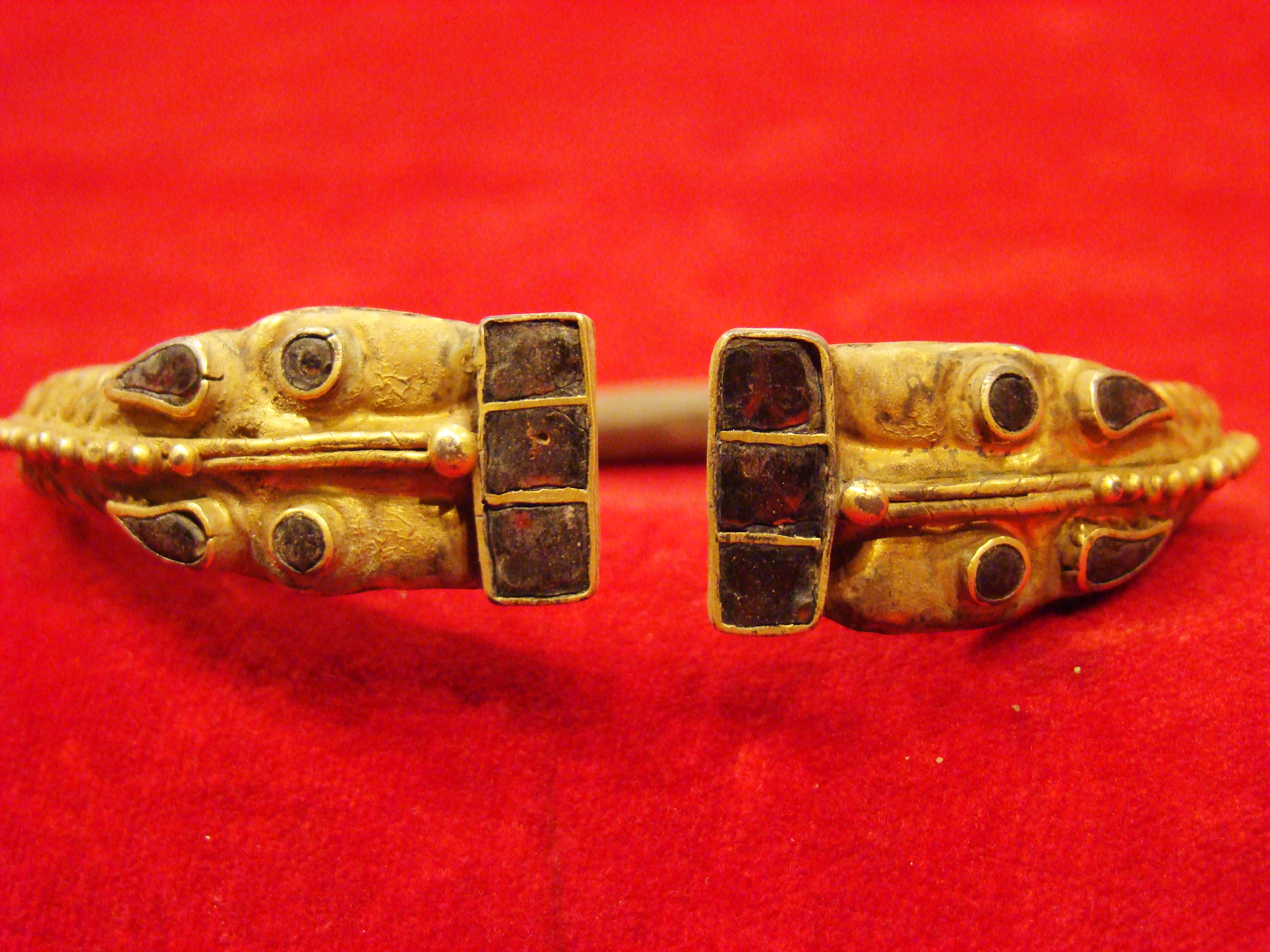
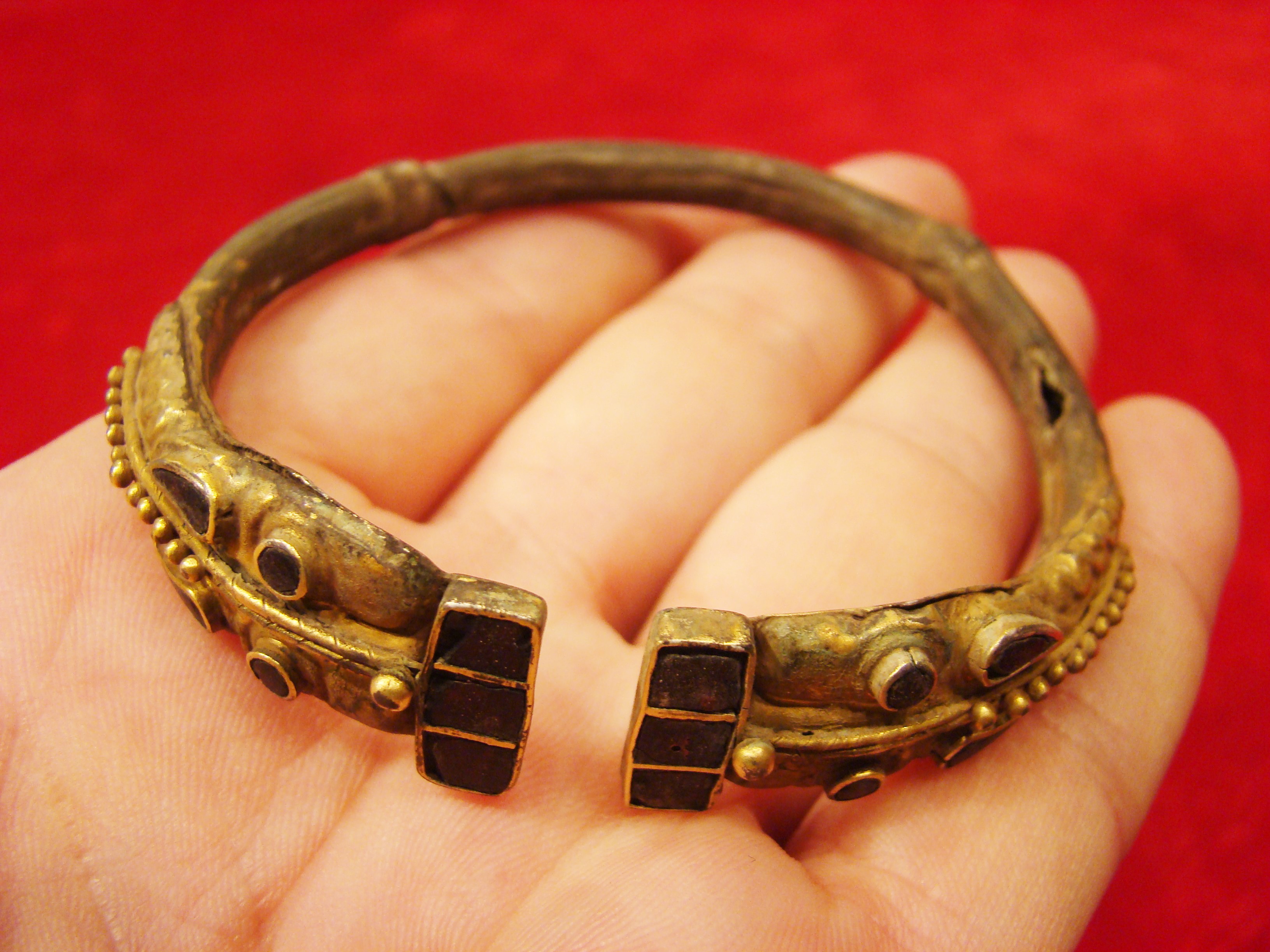
ANT 8. Ancient Sarmatian Horse Heads Bracelet, ca. 300 BC to 1st Century AD.
A fantastic ancient treasure. Hollow silver construction with gold plating and seven garnet inlays on each horse’s head. Unique high-status bracelet, most likely belonging to a Sarmatian warlord or chieftain. 70.28mm OD, 14.41mm height, 23.8g. An impressive and unique example of Nomadic Steppes metalworking. Provenance: Old Eastern European collection (before 1980). The Sarmatians replaced the Scythians as the dominant nomadic peoples of the Eurasian Steppes by the 3rd Century BC. They came into bloody conflict with the Roman Empire, particularly during the reign of Emperor Marcus Aurelius. They were also welcomed into the Roman Empire as Foederati and Cataphracti (heavy cavalry). The Sarmation cavalry featured the horse and rider very heavily clad in scale armor. Their charge was difficult to withstand and the Romans employed Sarmatian Cavalry in their Legions and borrowed their tactics on the battlefield. This evolution of armored cavalry continued into Medieval times. The Sarmatians were eventually destroyed and absorbed by the Hunnic horde under Attila in the 4th Century.
$6500.00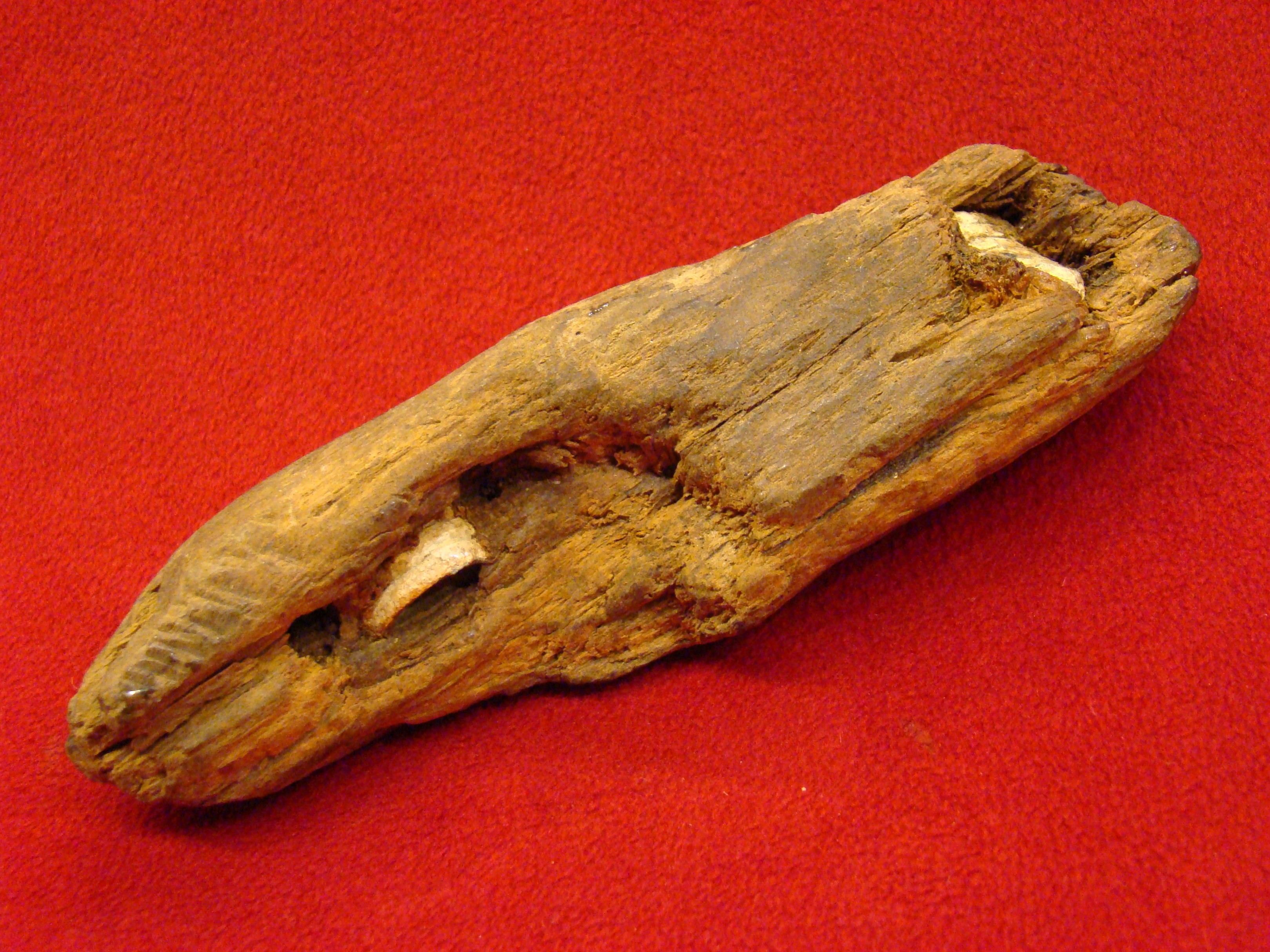
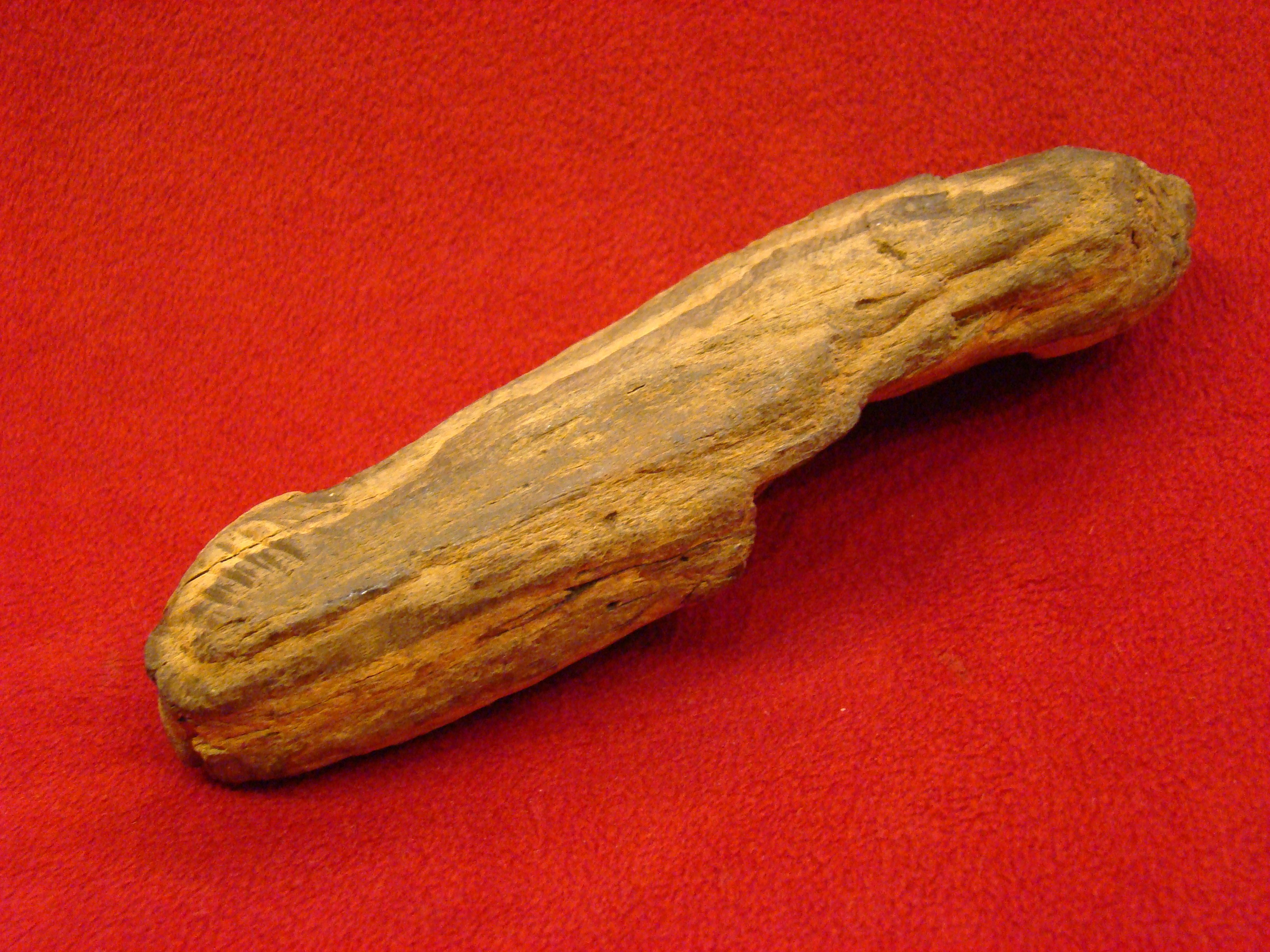
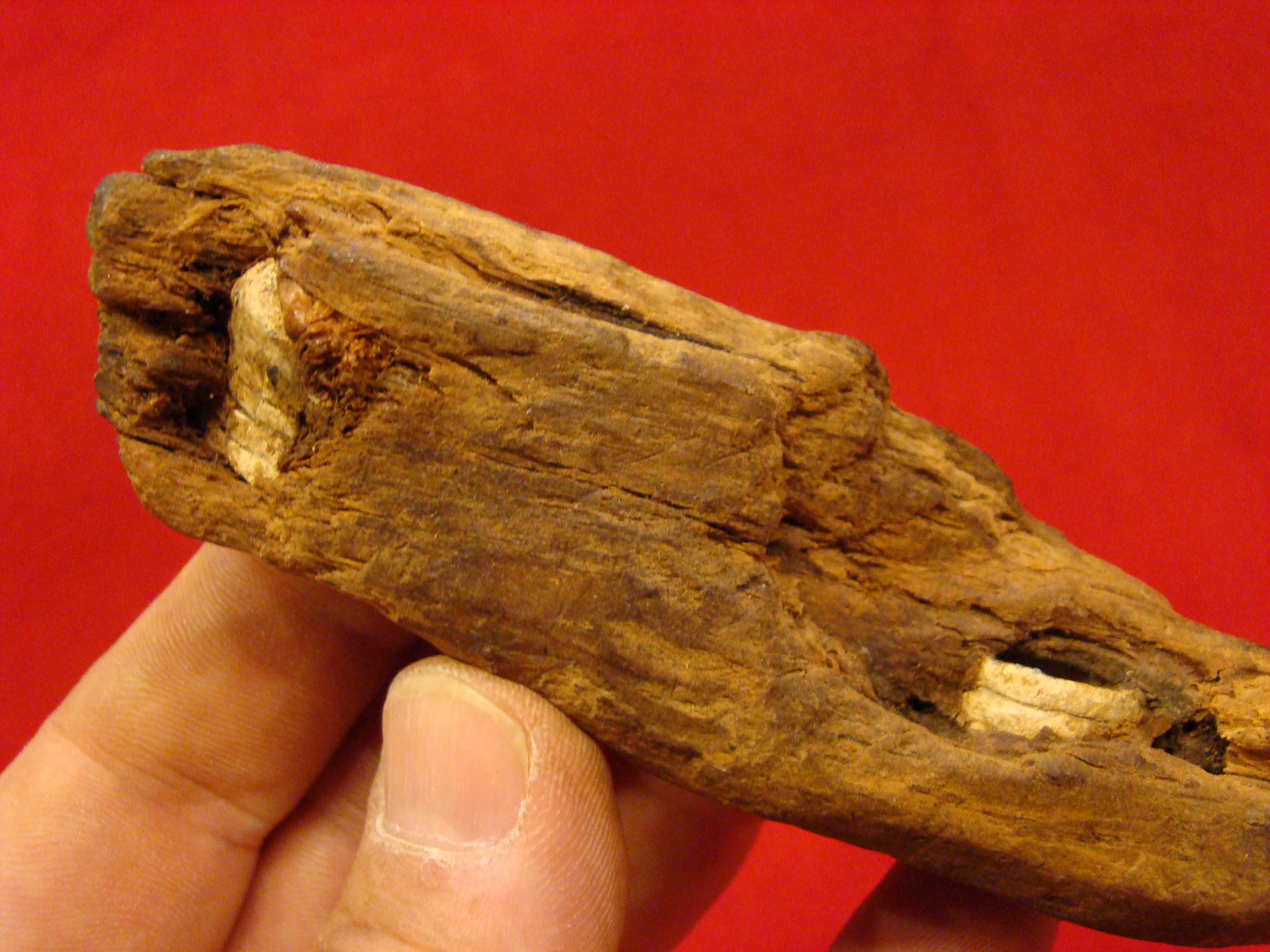
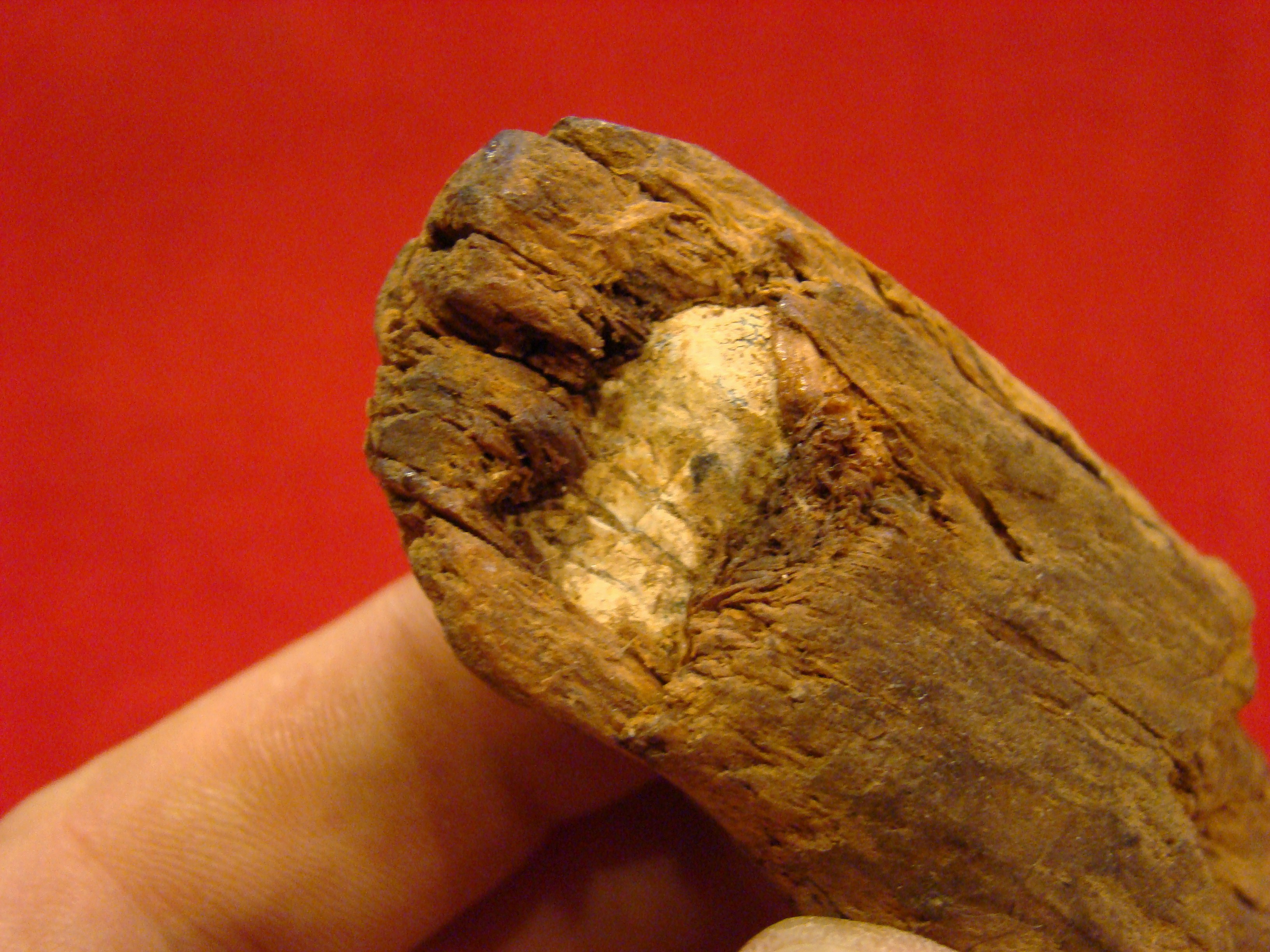
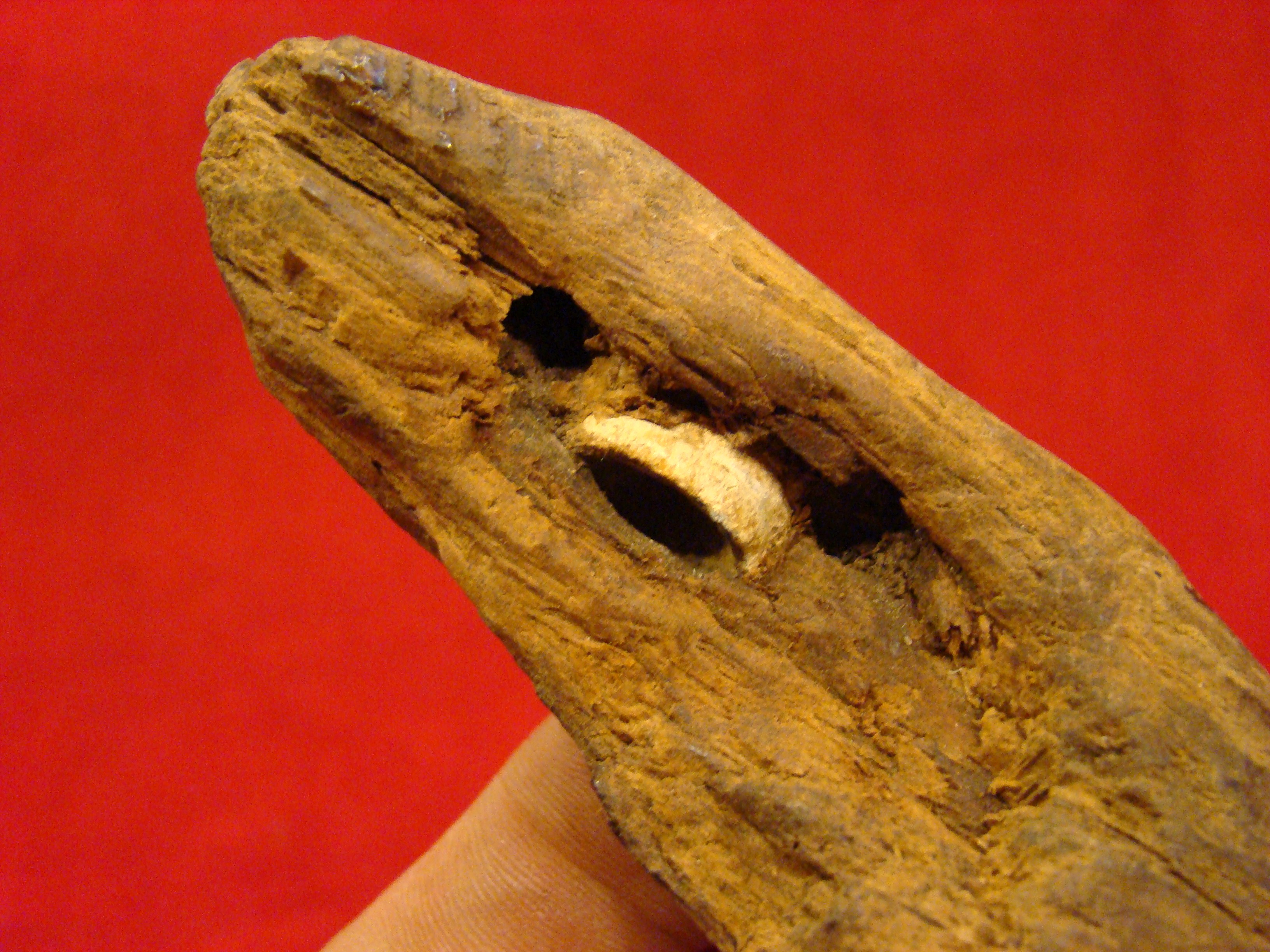
MS 5. Dug Wood Fragment with Two Bullets Embedded. Fredericksburg VA. Battlefield.
This remarkable remnant of a tree witnessed the December 11-15, 1862 Battle of Fredericksburg VA. There are two .58 Cal. three-ring bullets embedded from opposite directions which tells us that one was fired by the Union forces, and the other one was fired by the Confederates into the same tree. SOLD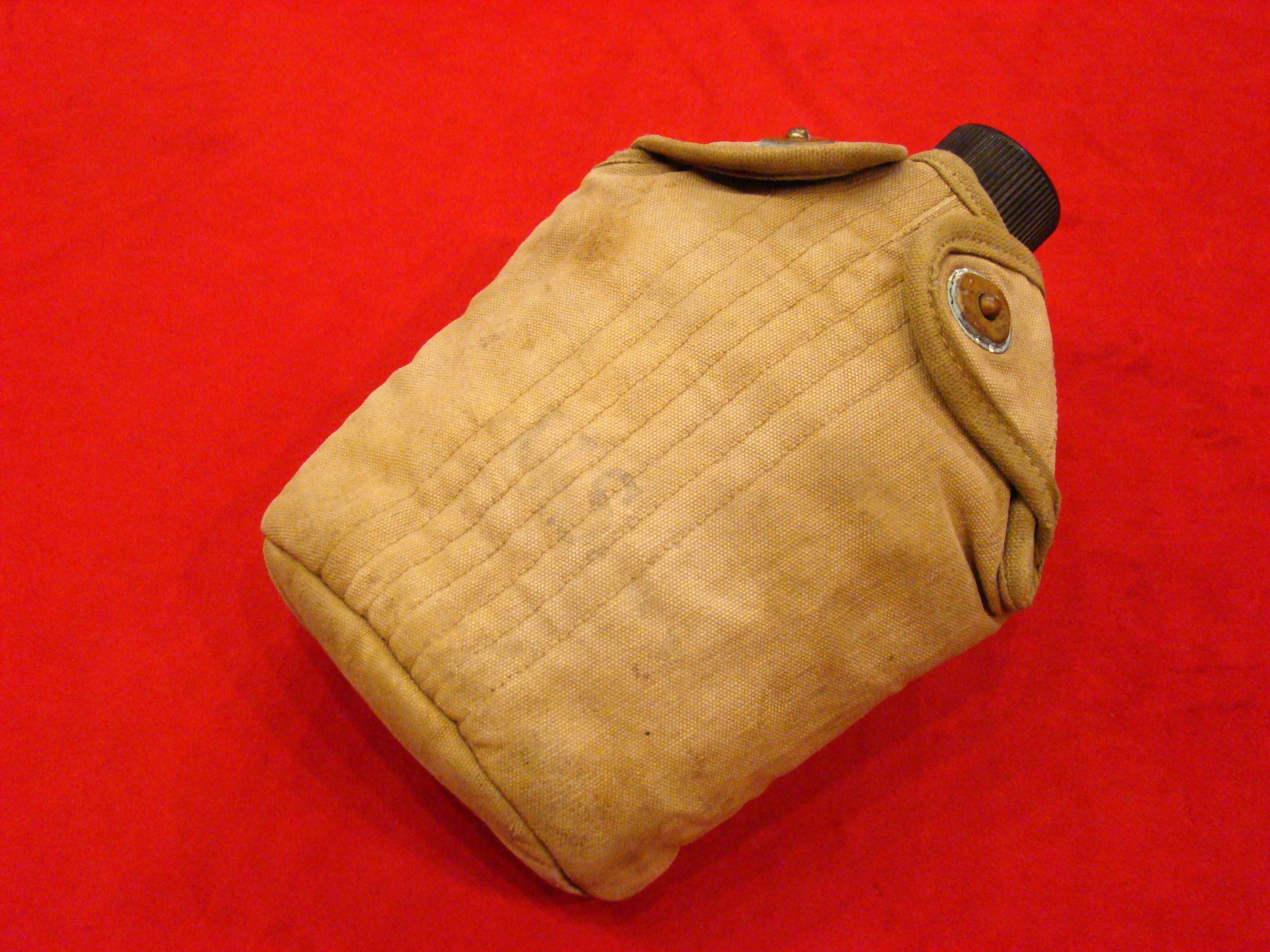
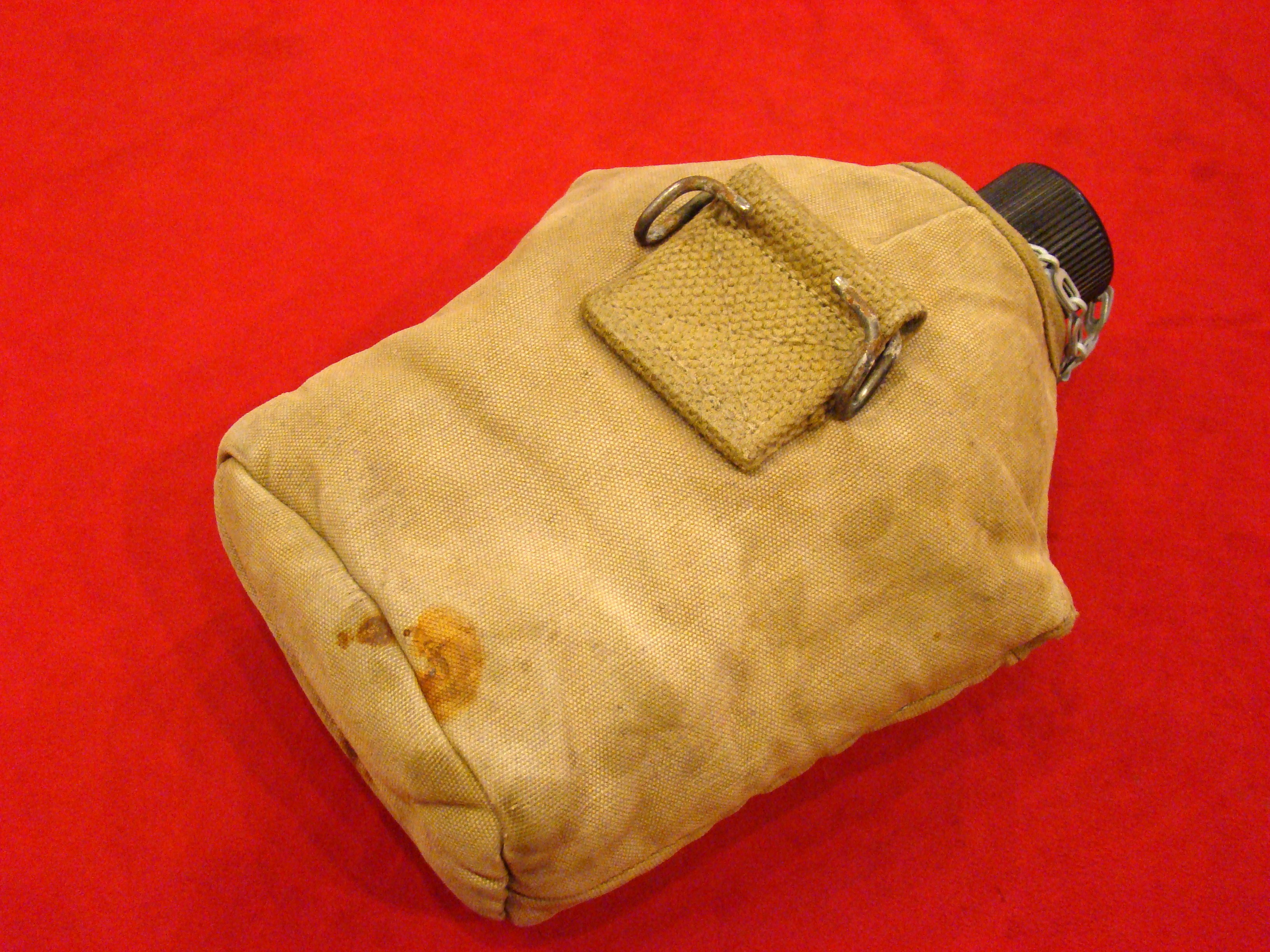
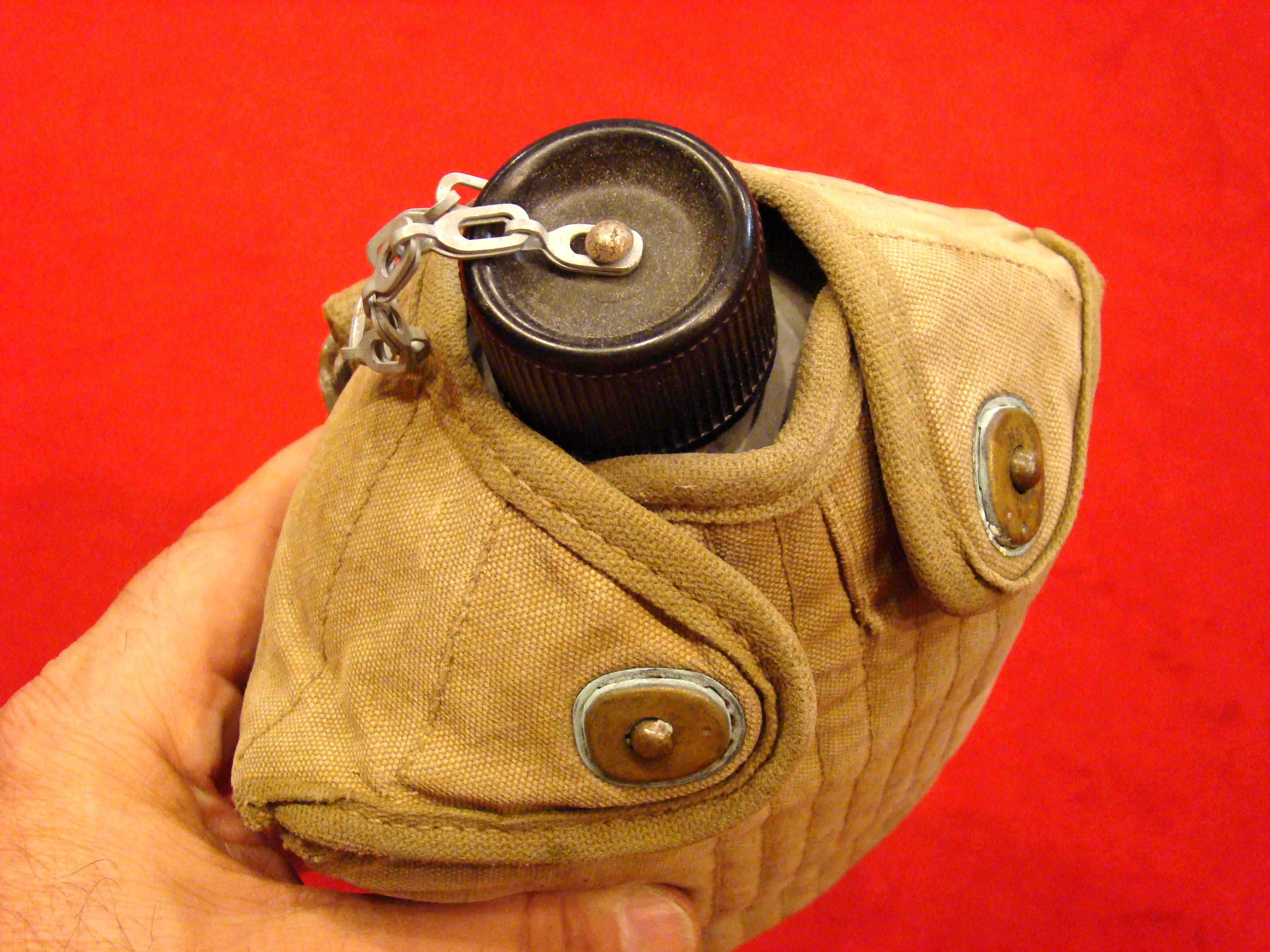
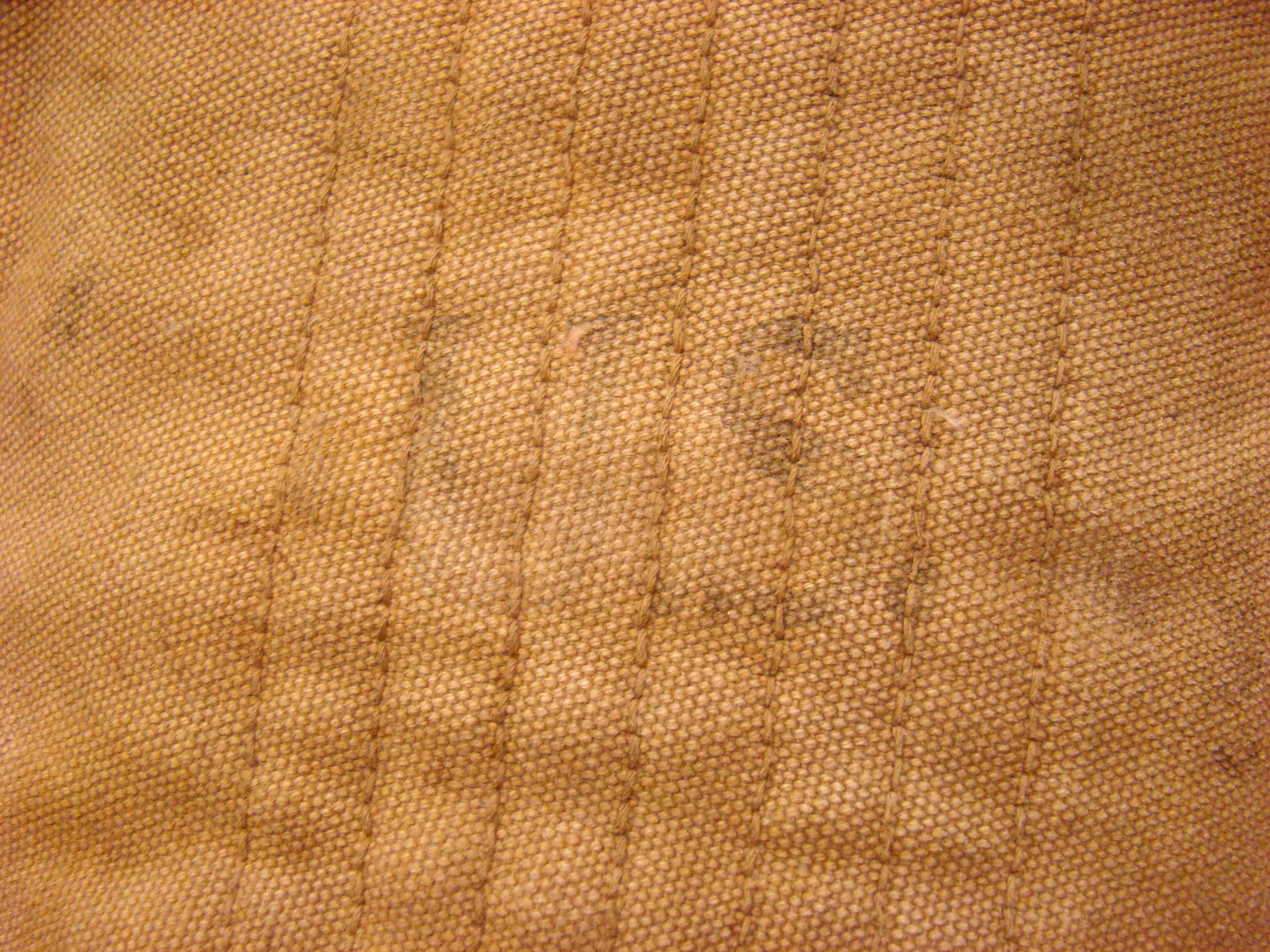
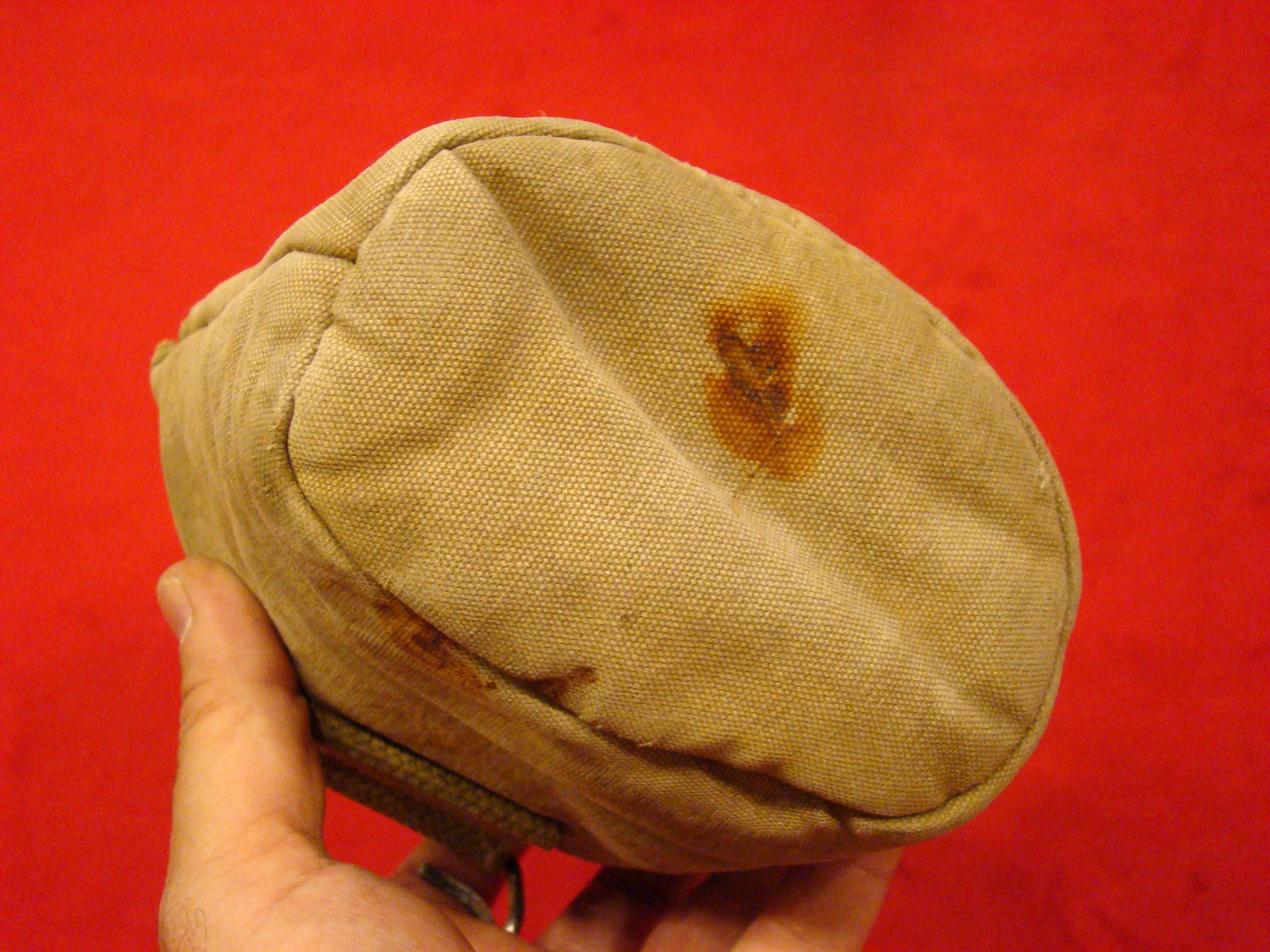
WW 2. Classic US WW II Canteen and Canvas Cover.
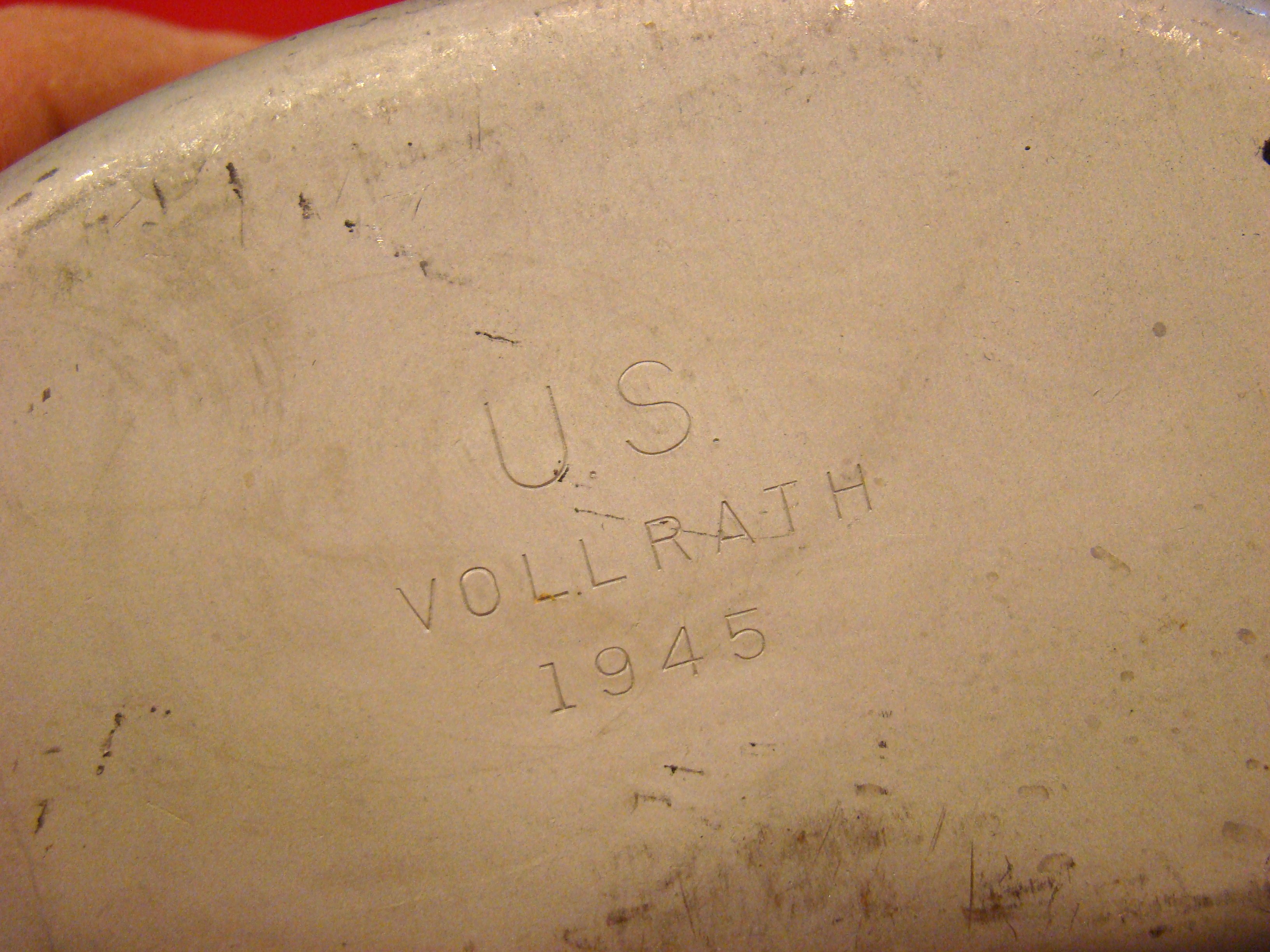
Good untouched condition. Bottom of canteen is marked “US“over “VOLRATH/1945“. $55.00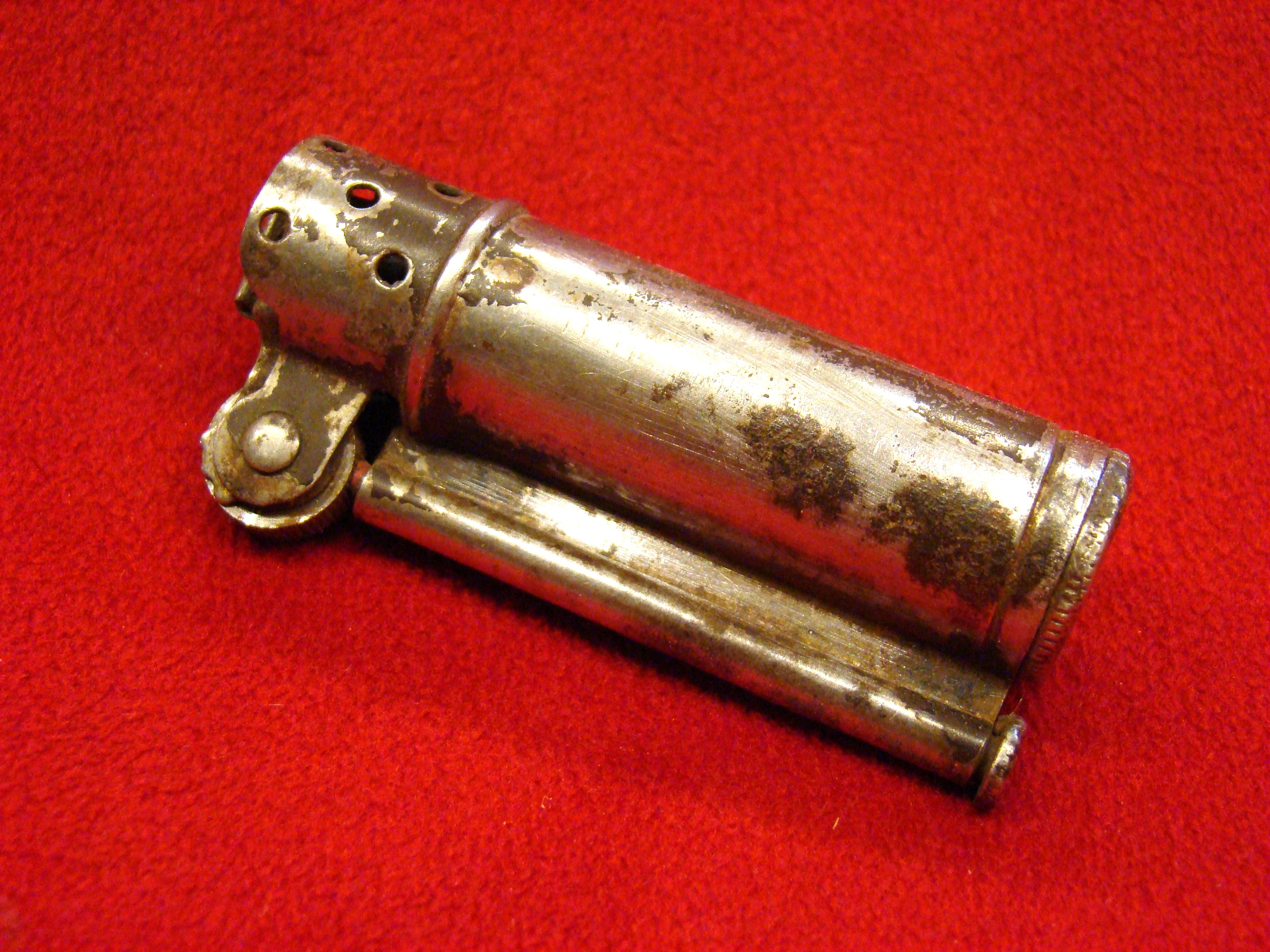
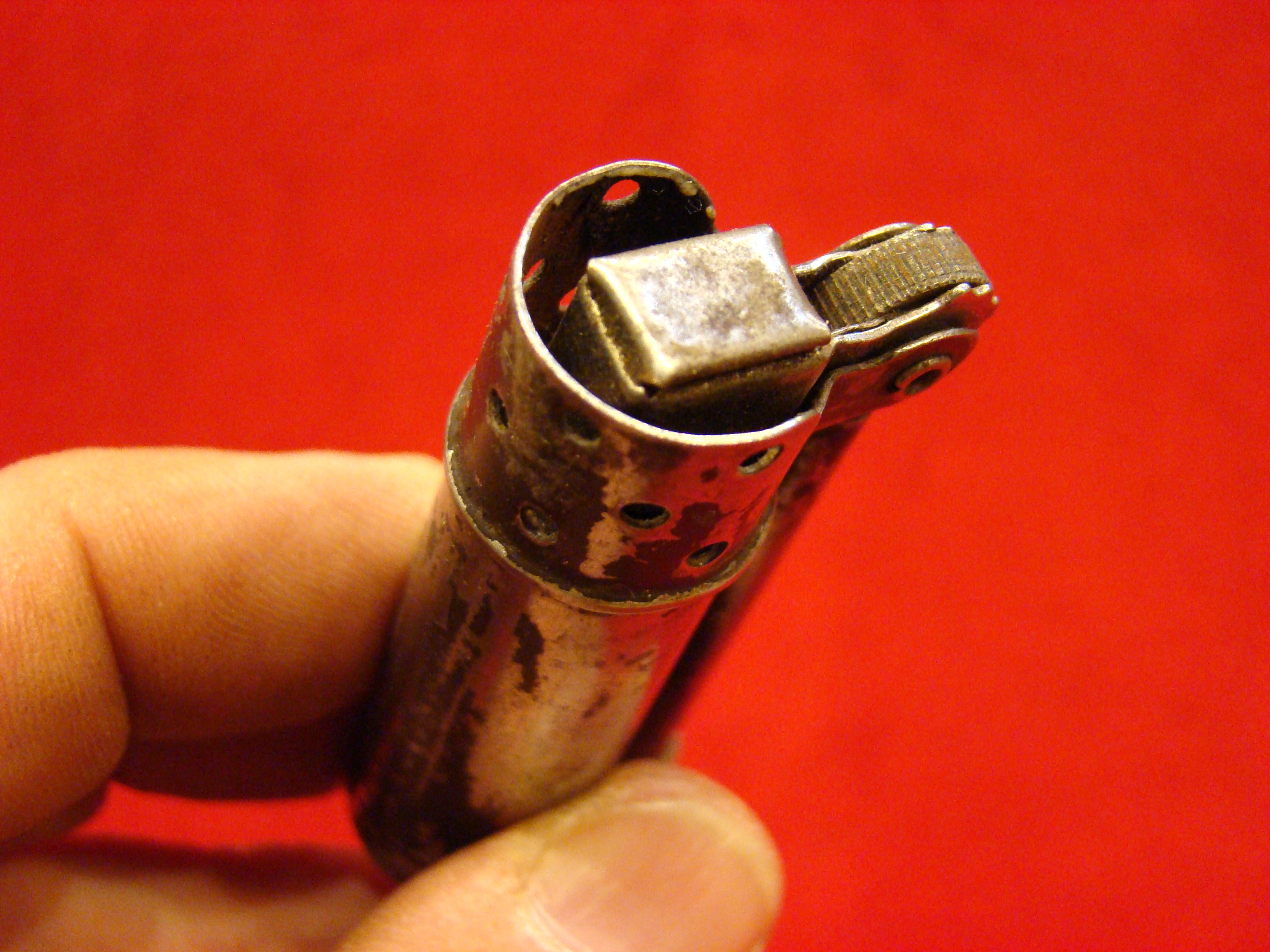
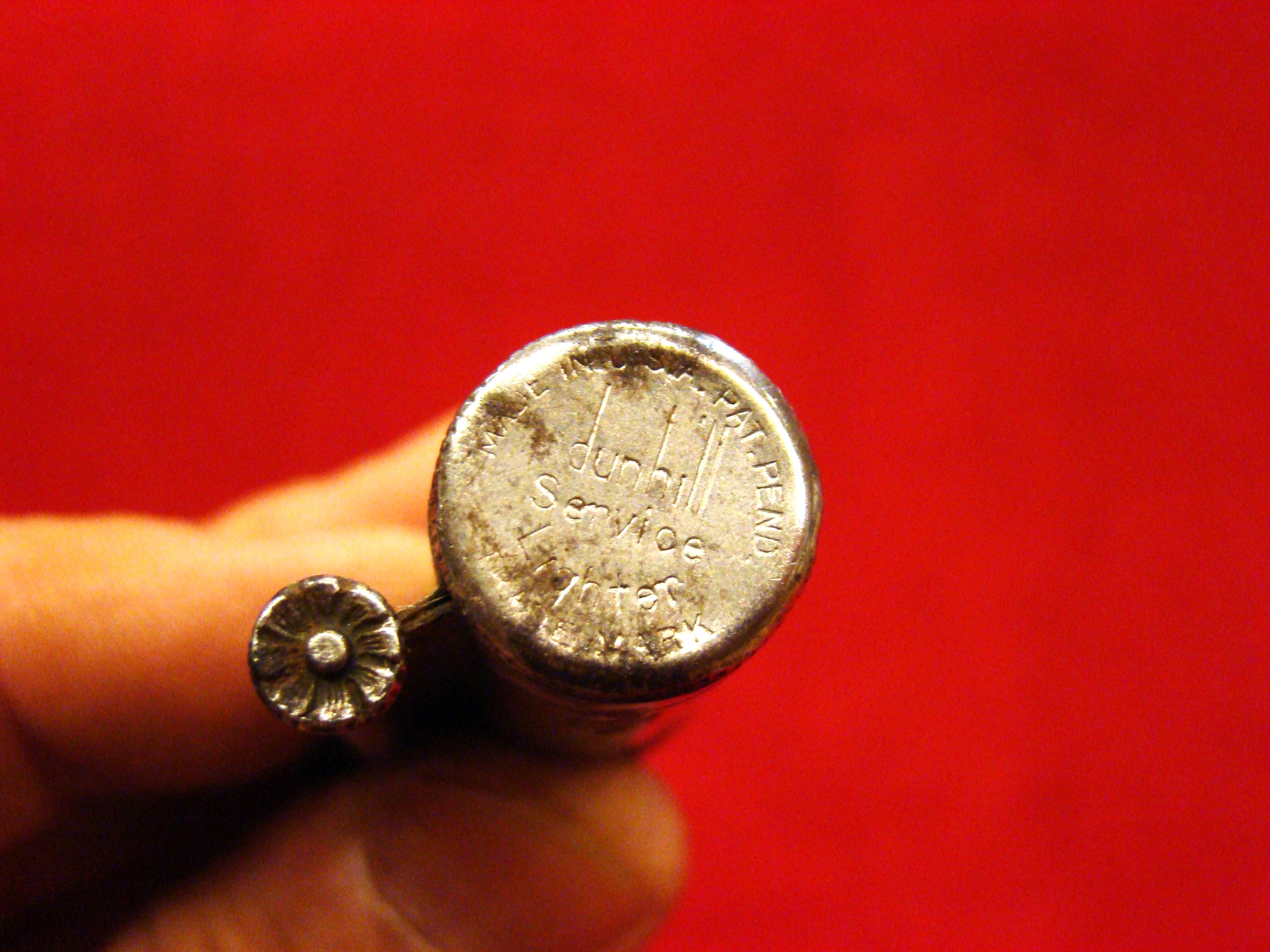
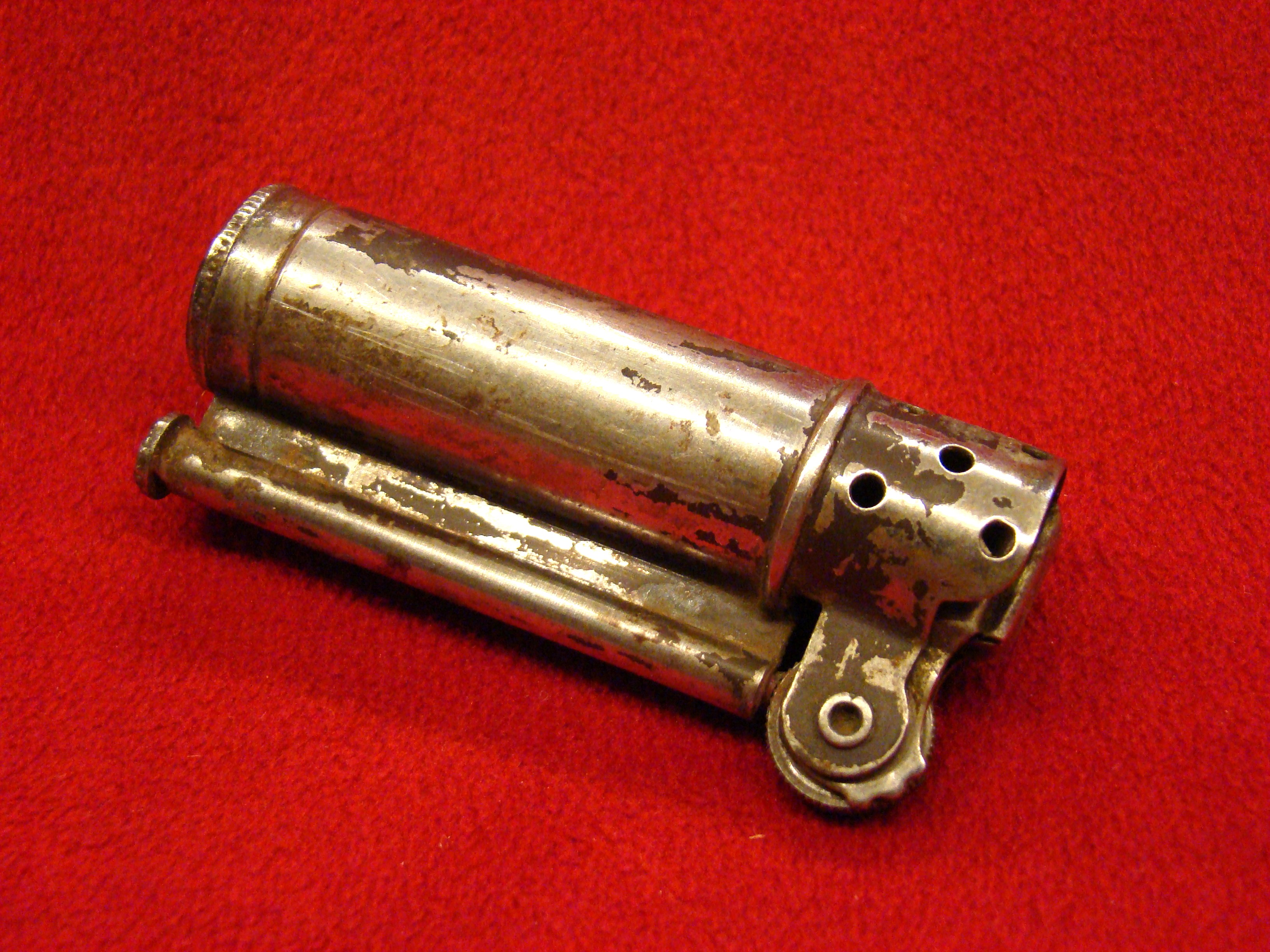
WW 3. WW II Windproof Trench Lighter.
Marked on the bottom “DUNHILL SERVICE LIGHTER”. Good condition. Dunhill was a popular cigarette brand during WW II. $45.00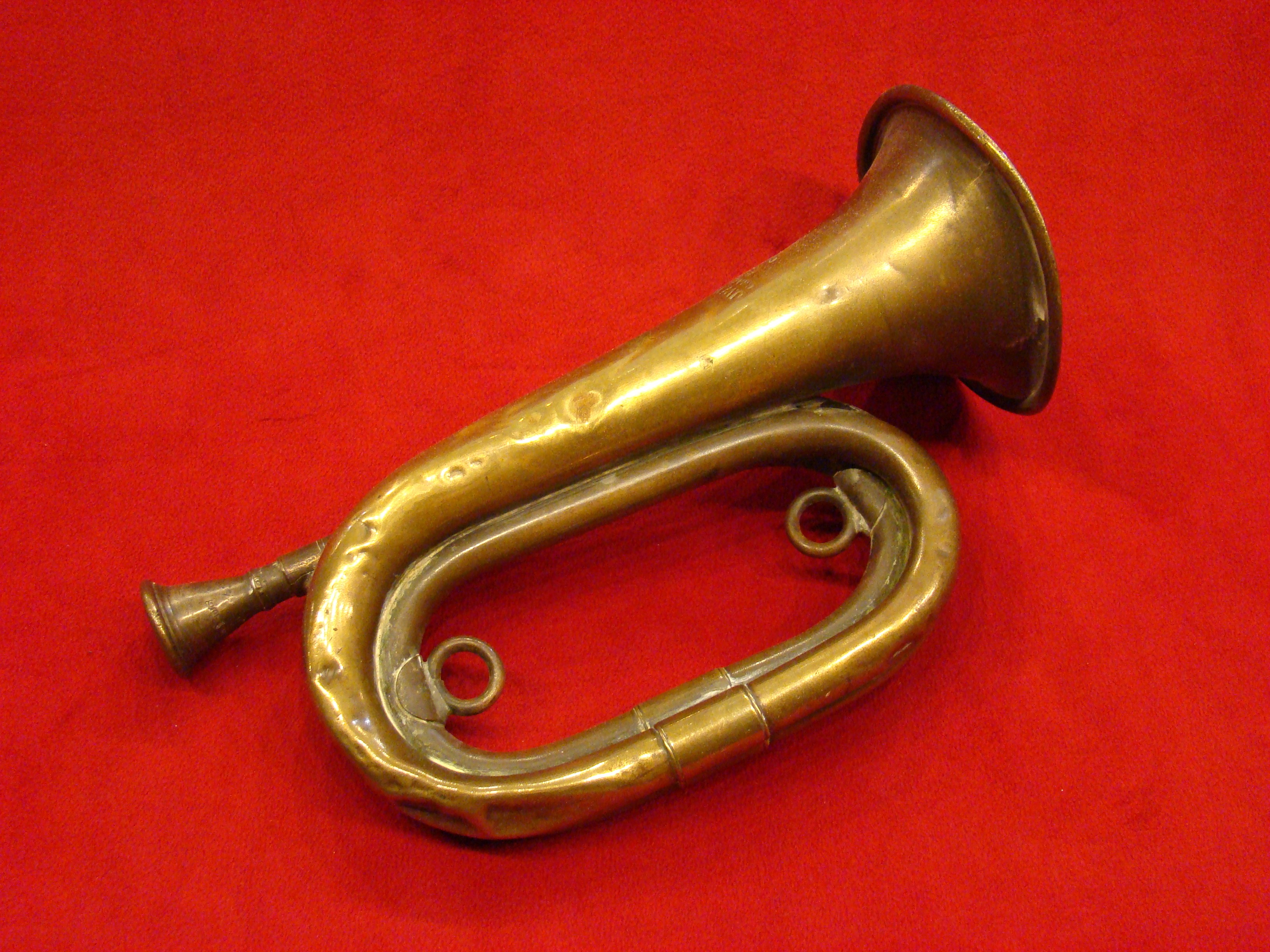
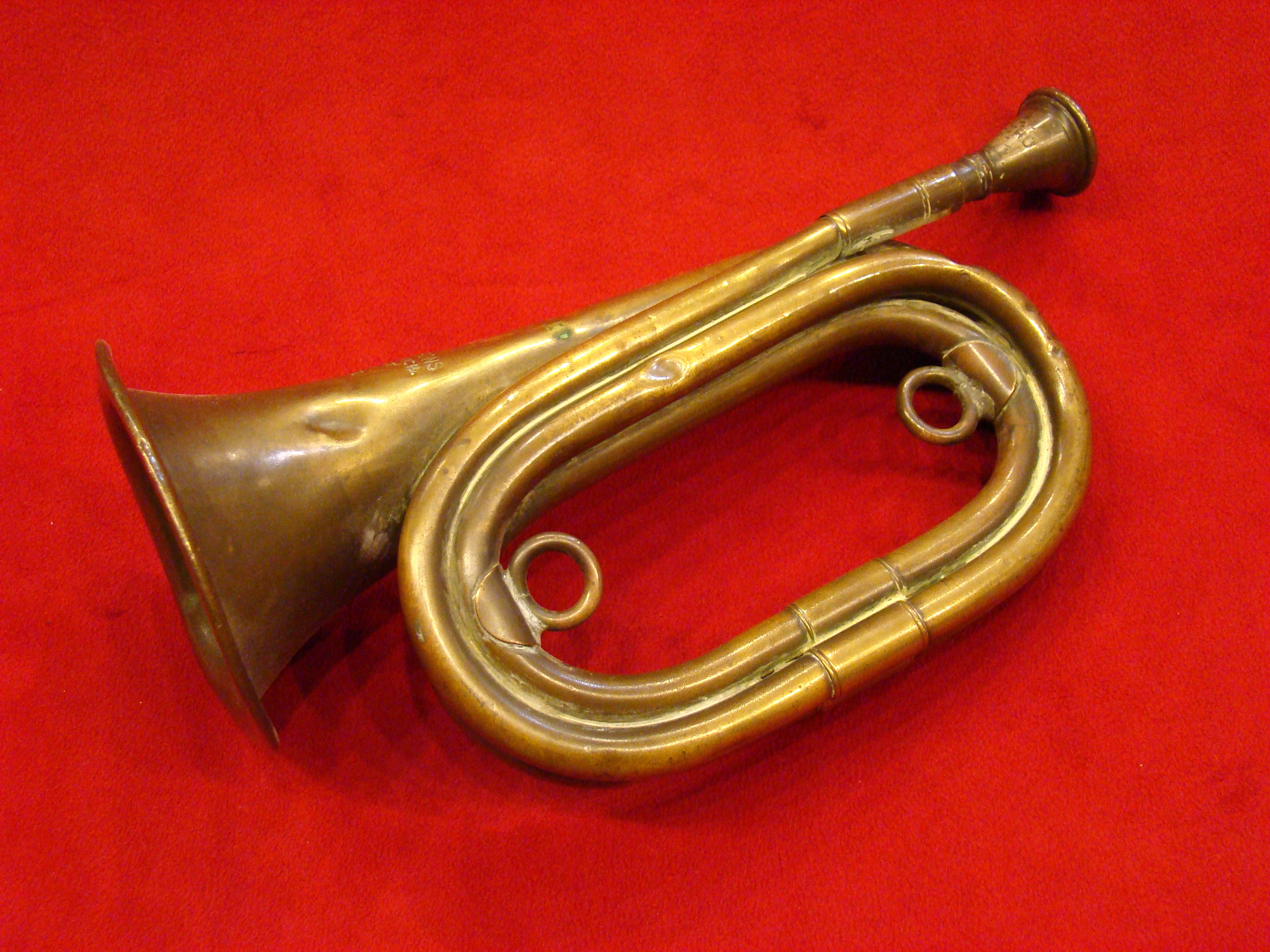
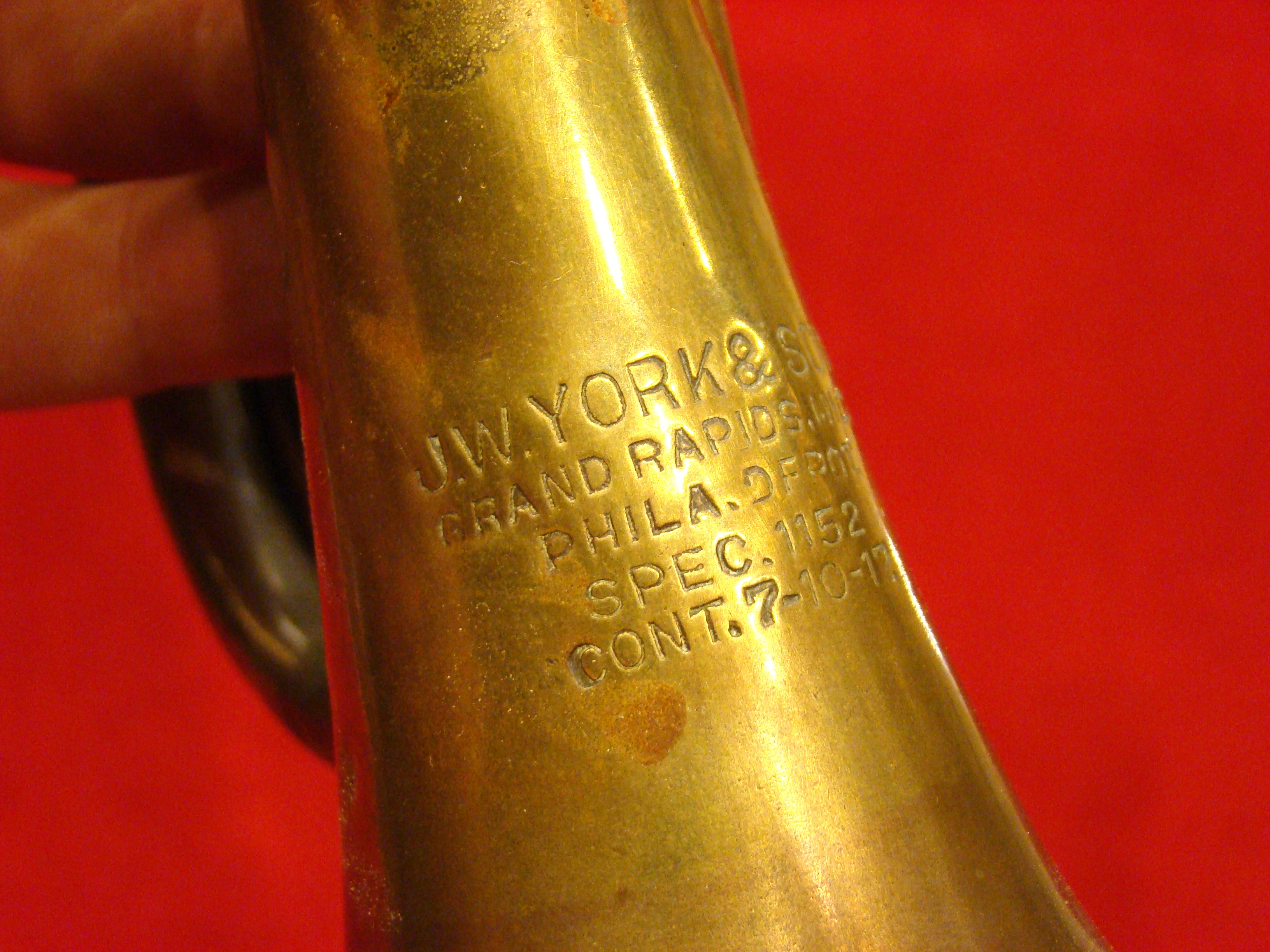
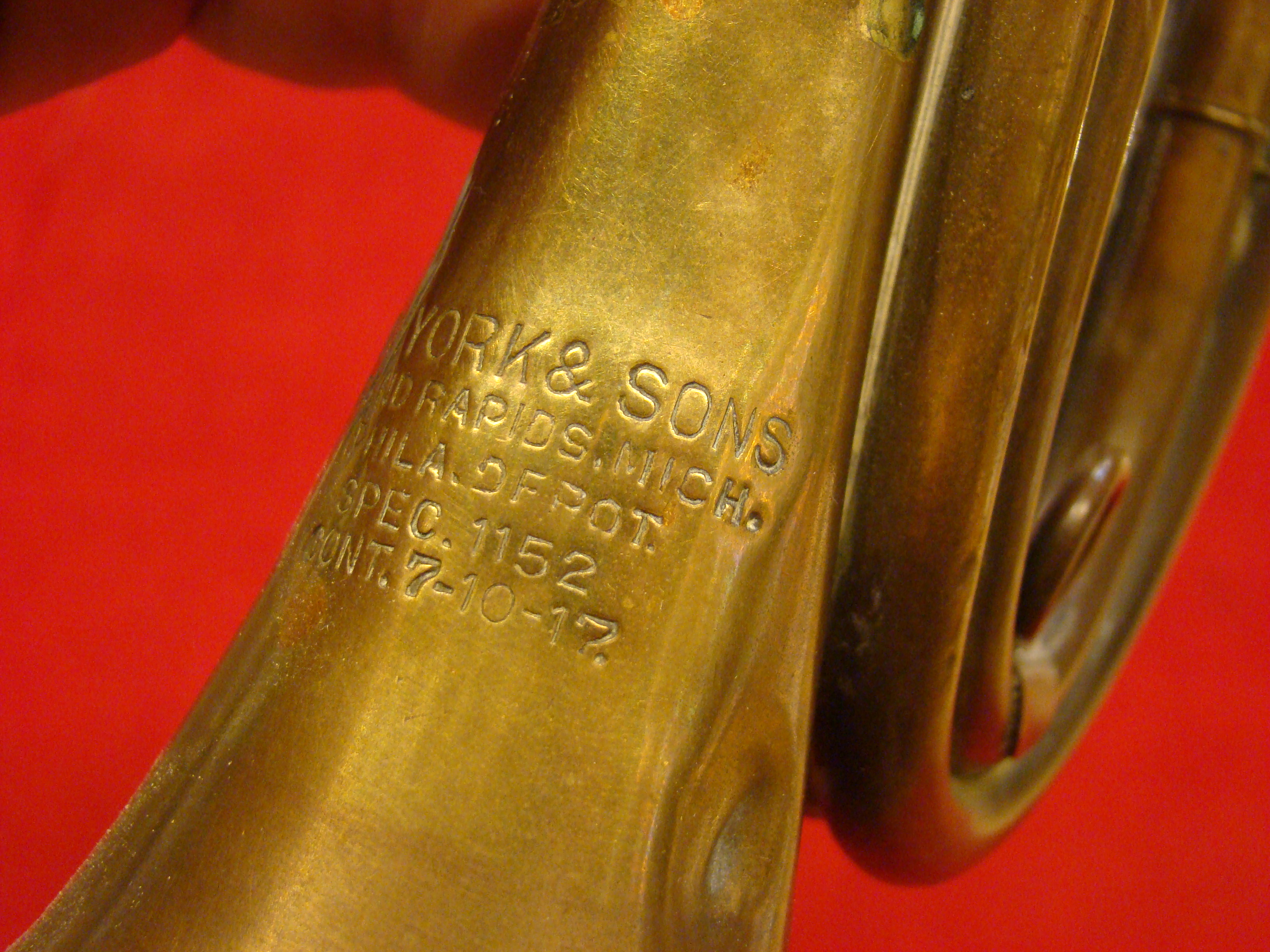
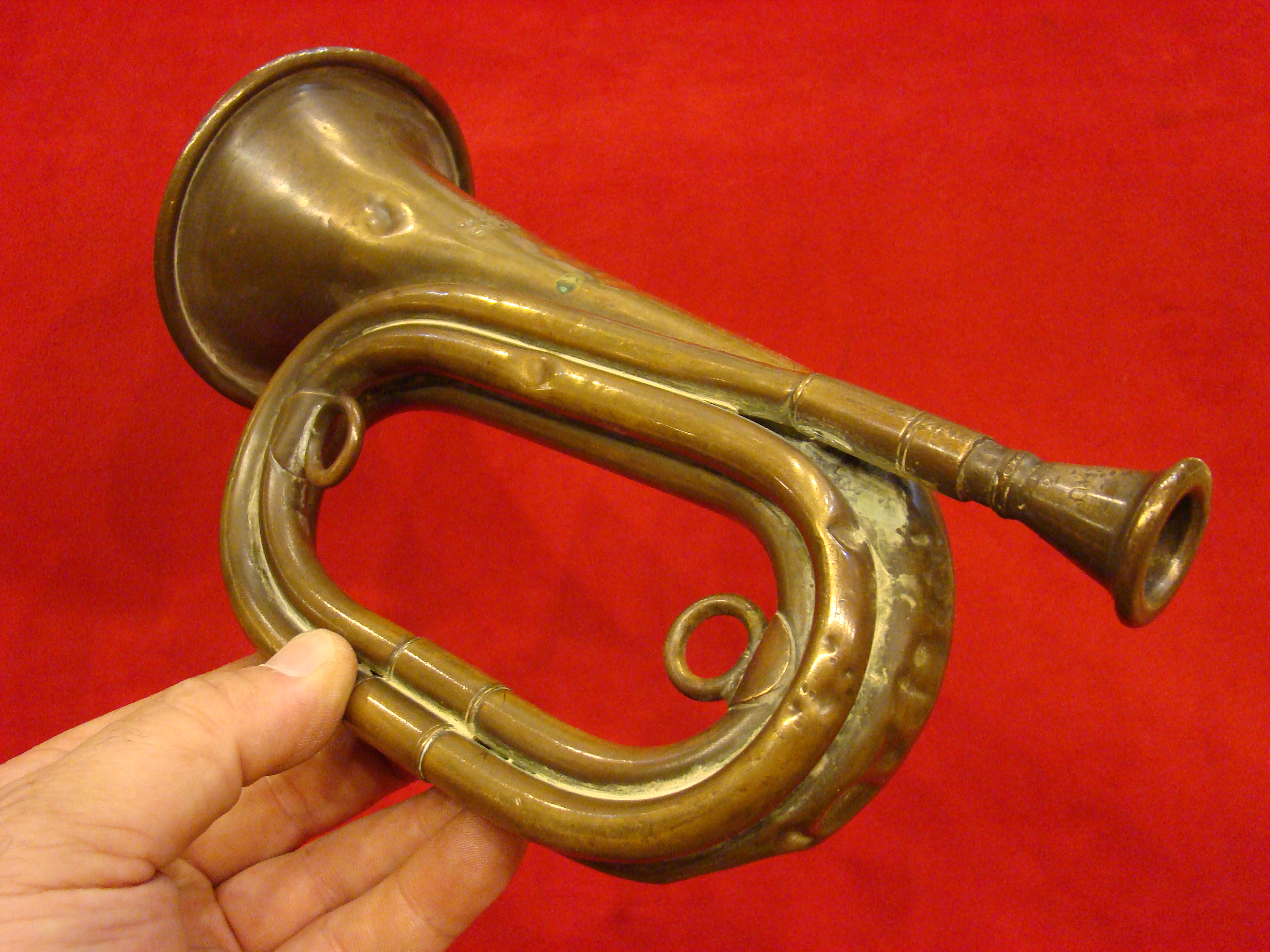
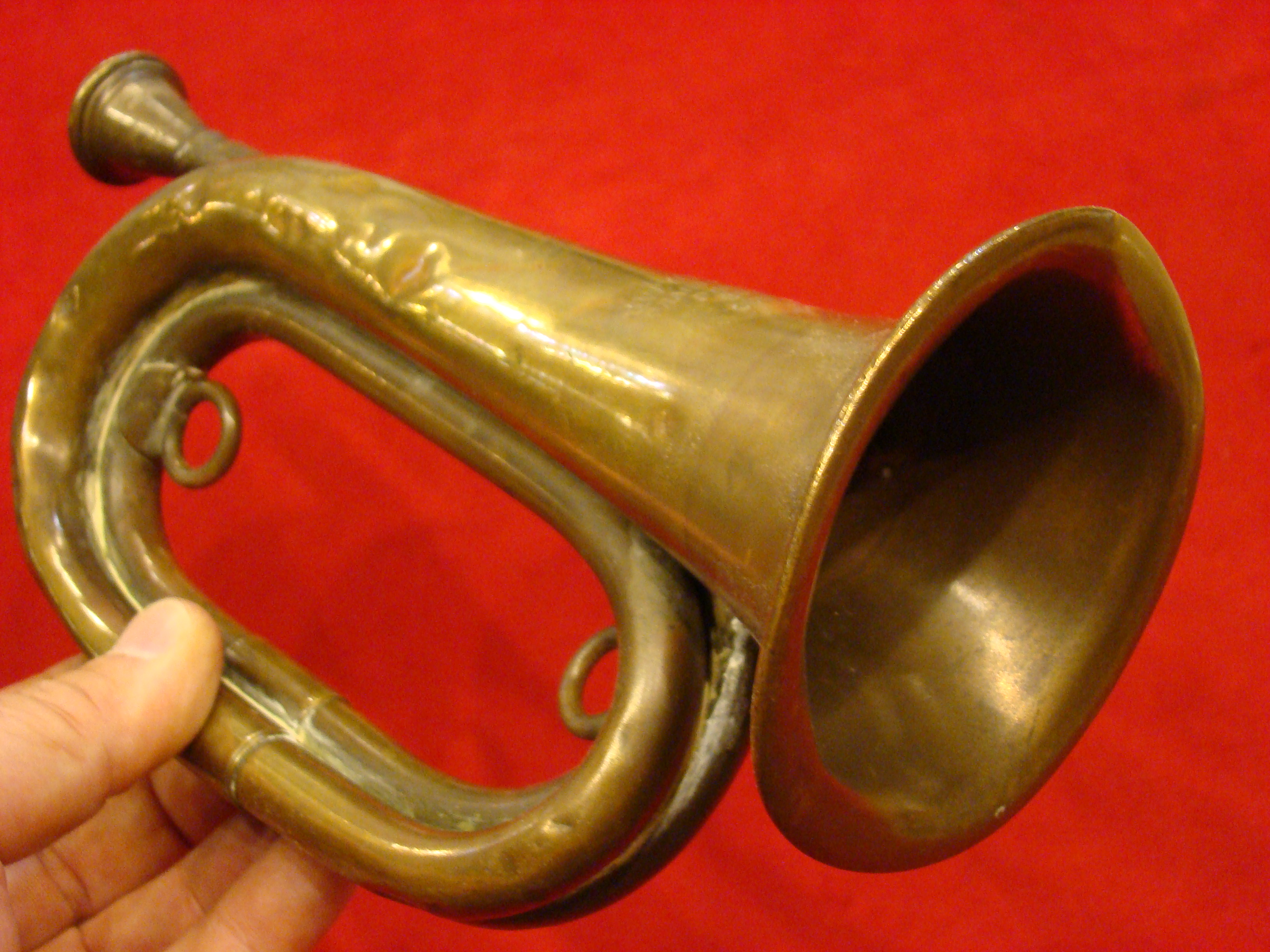
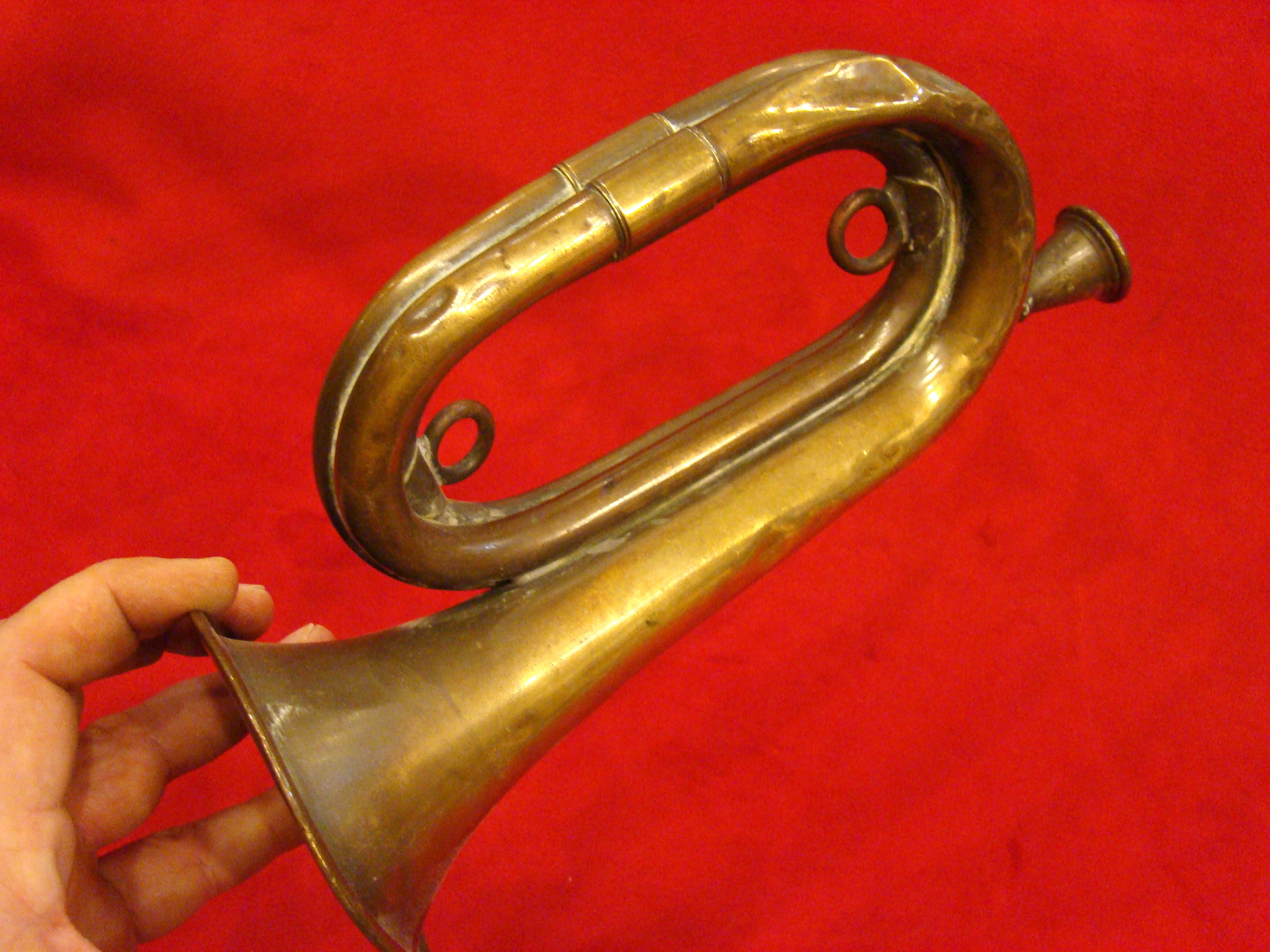
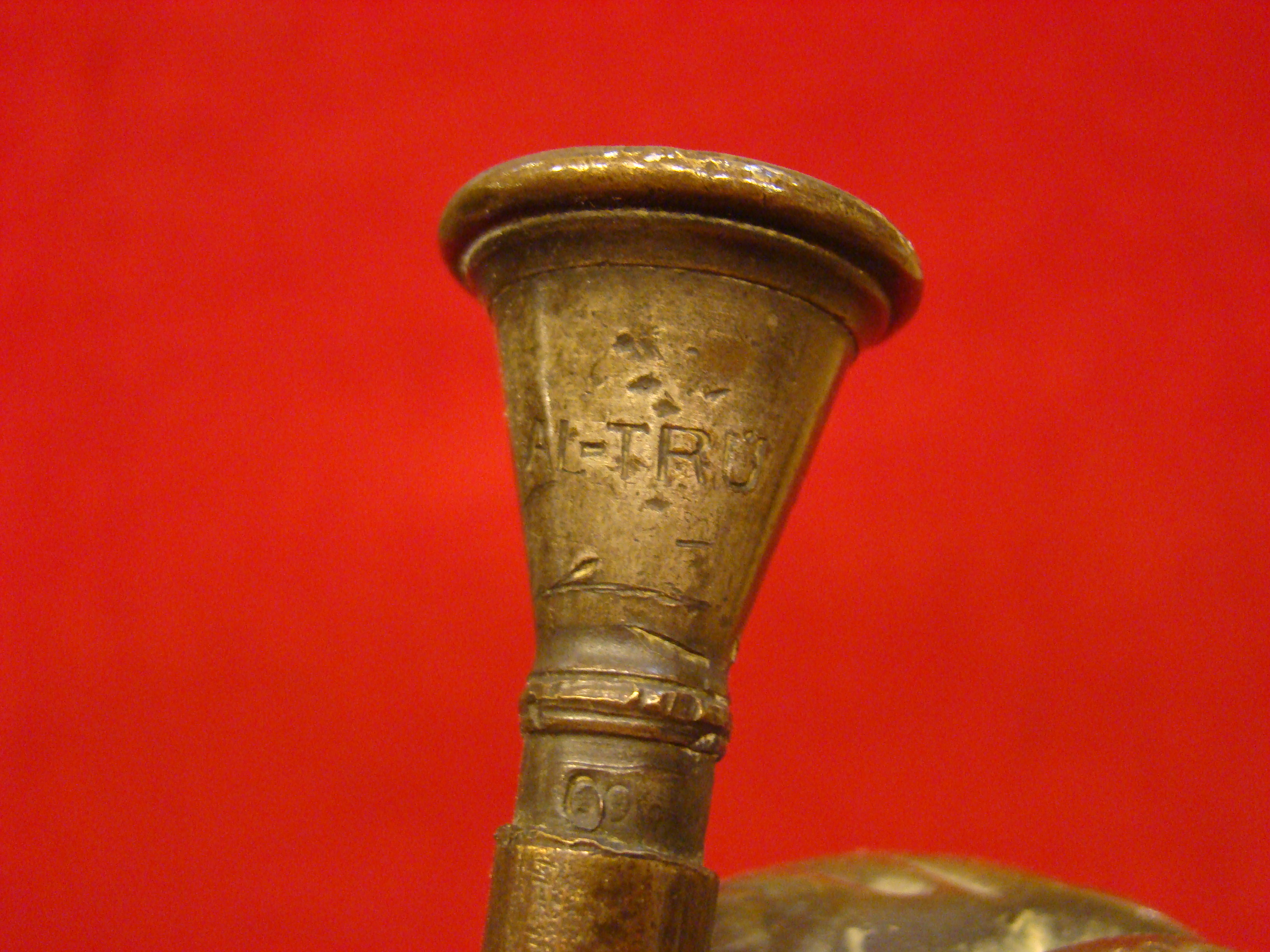
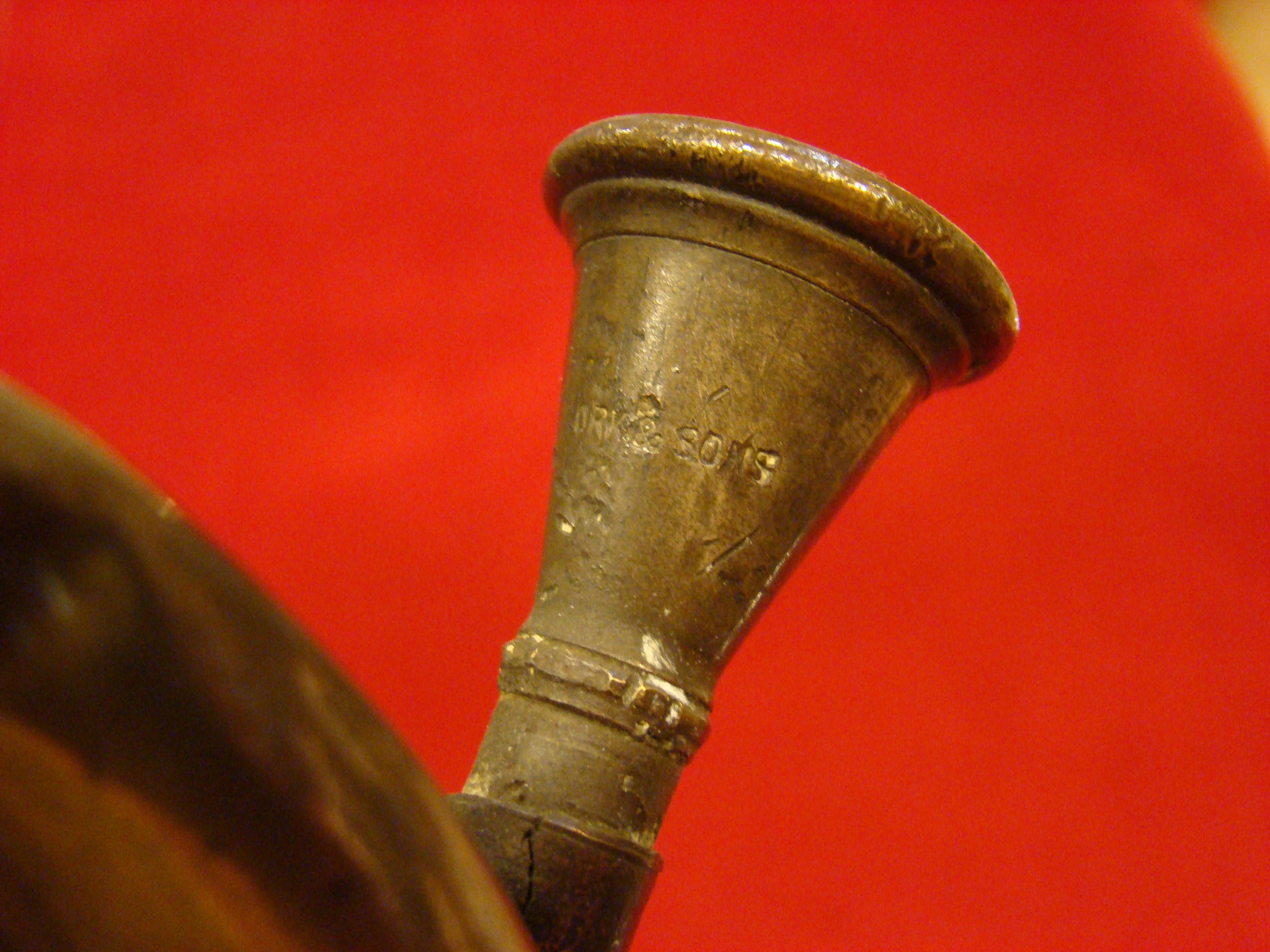
WW 4. WW I US Cavalry Bugle Maker Marked & Dated 1917.
U.S. Cavalry Brass Bugle in very good condition. Totally functional. Marked “J. W. York & Sons GRAND RAPIDS, MICHIGAN U.S.A., PHILA. DEPOT, SPEC. 1152, CONTRACT 6-18-17” $250.00 HOLD D.W.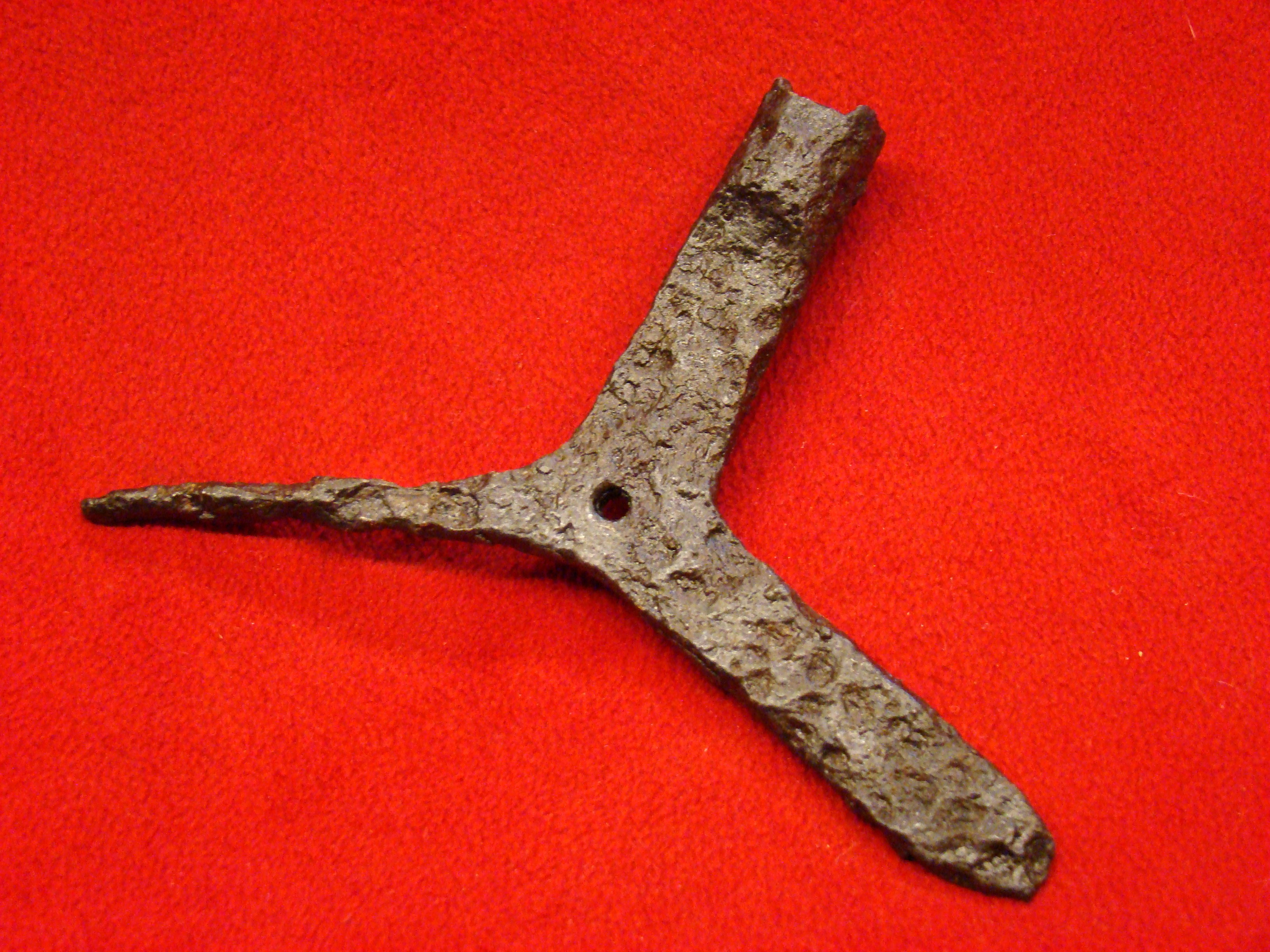
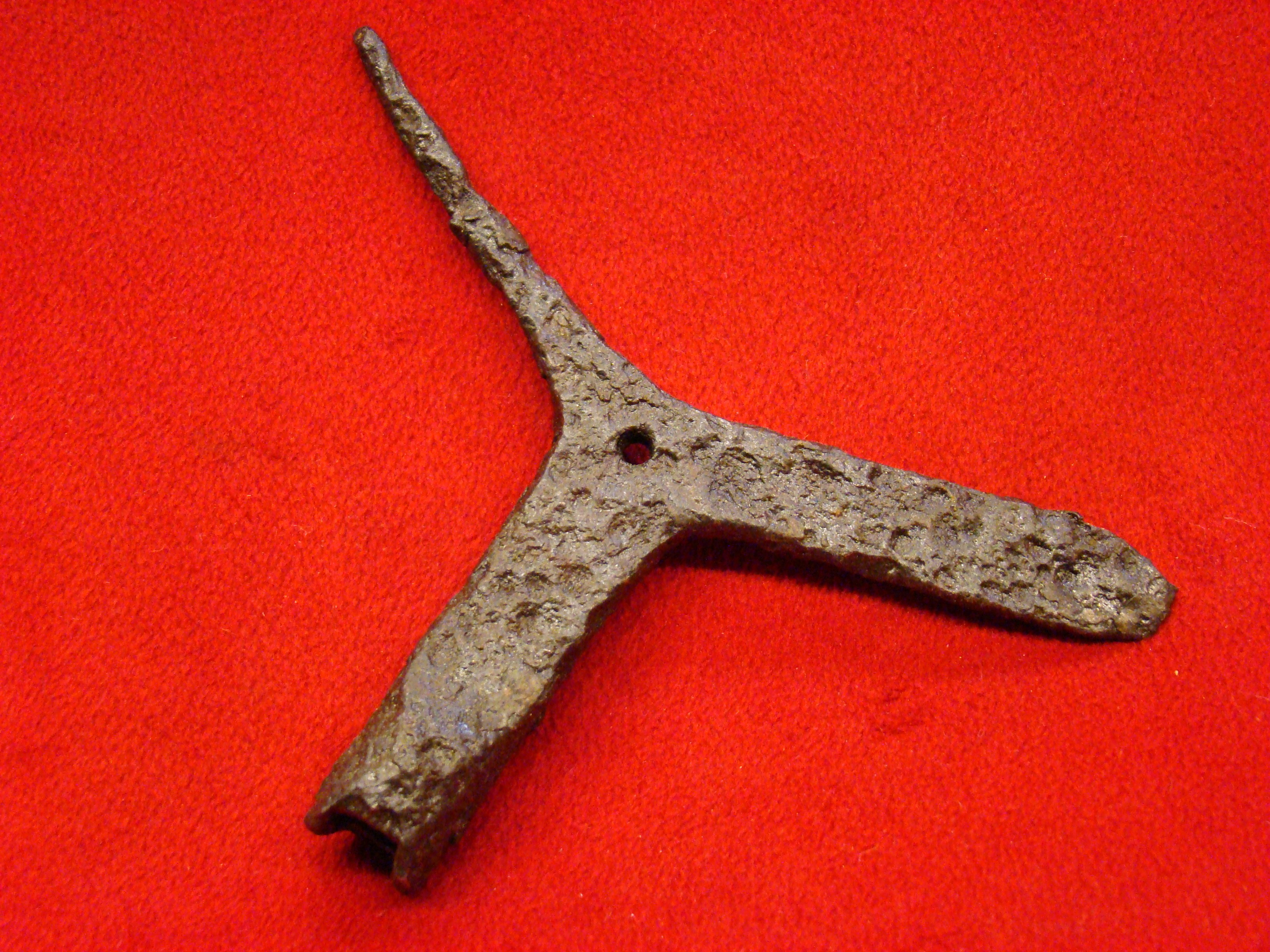
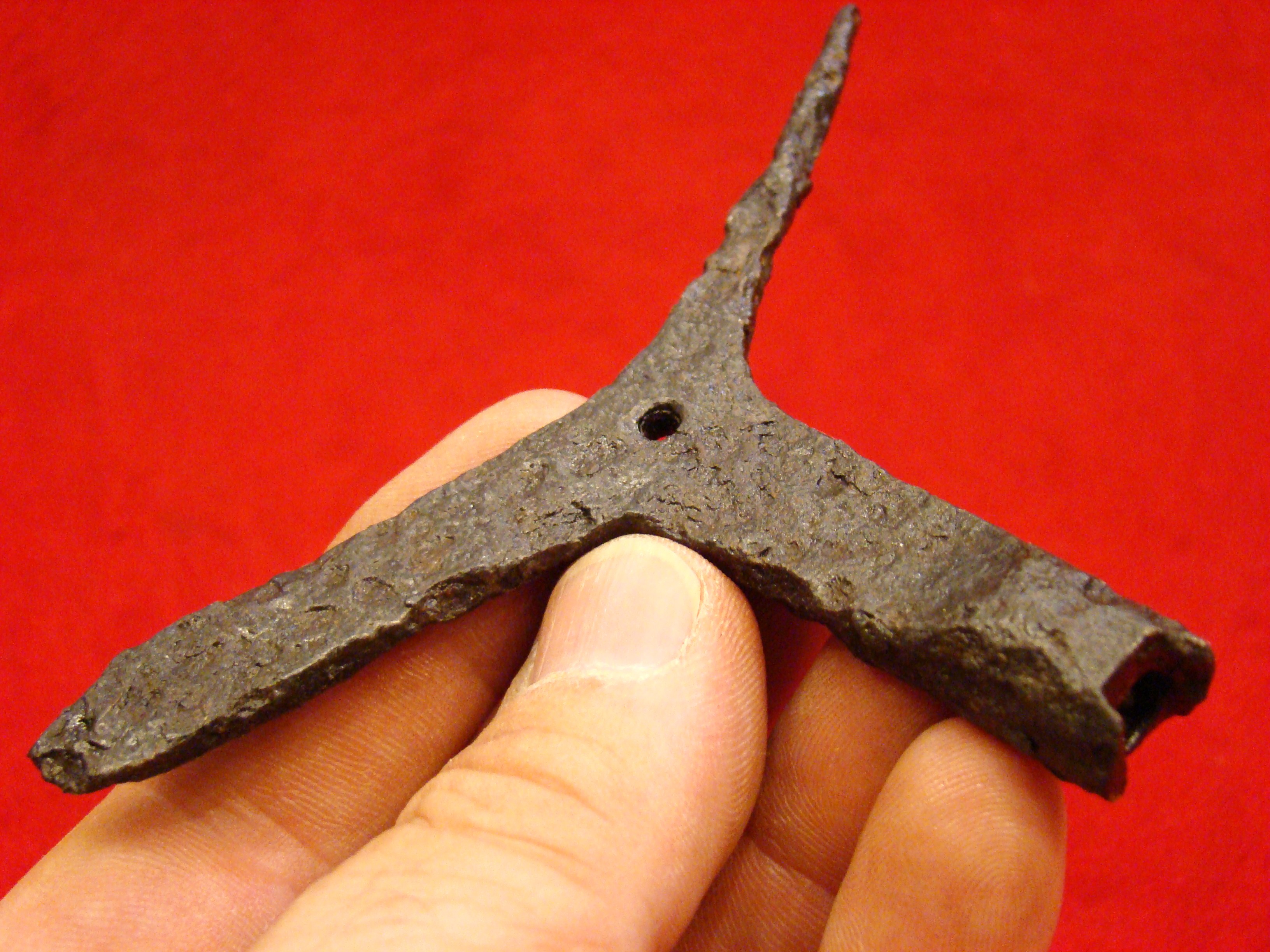
MS 6. Dug Austrian Lorenz Rifle Combination Tool.
The Austrian Lorenz Rifle was supplied to Union forces and the Confederacy early in the war. They were more prevalent in the Confederate armies, paricularly in the Western Theater. This combination tool was found near Orange VA. $35.00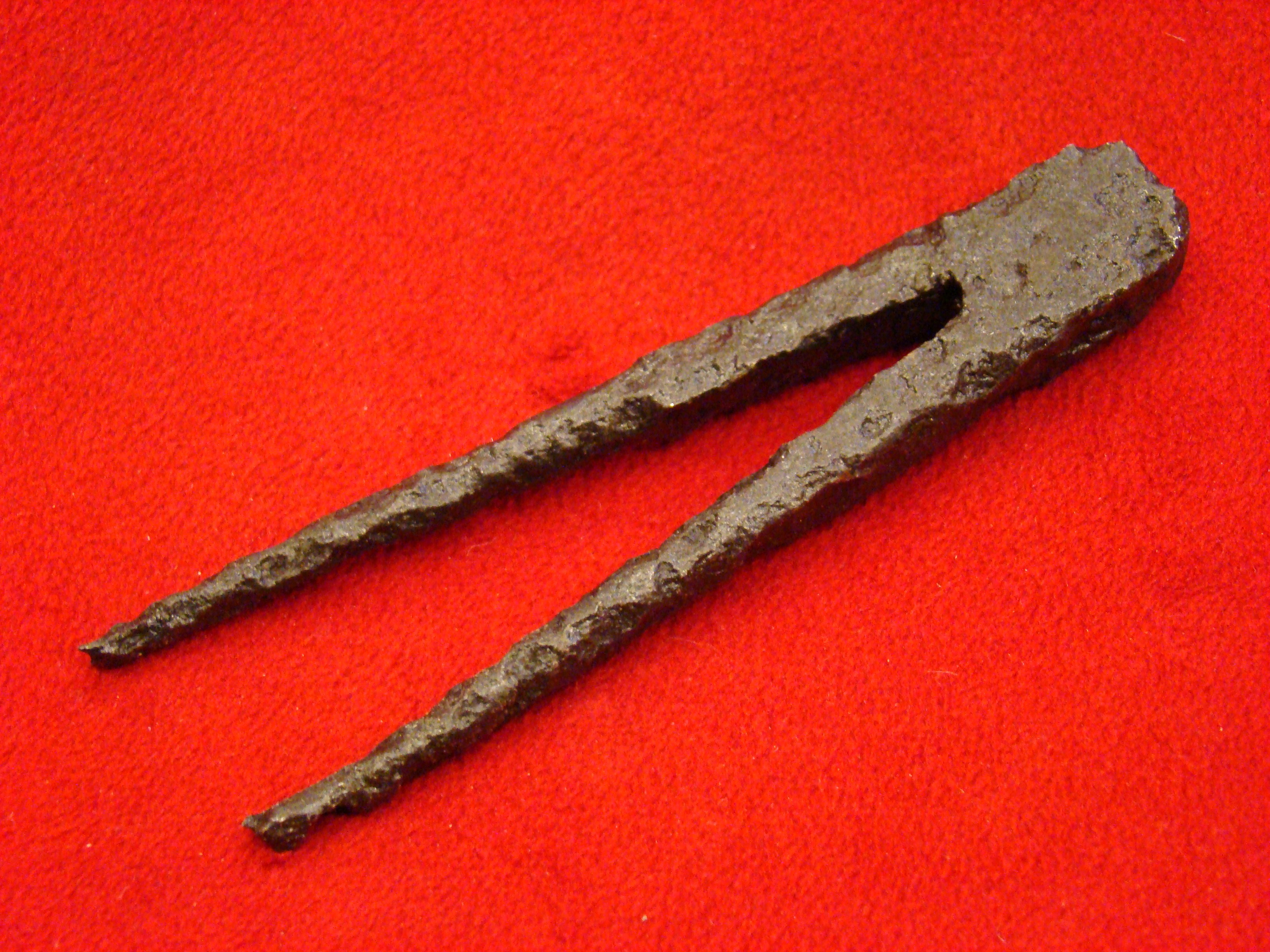
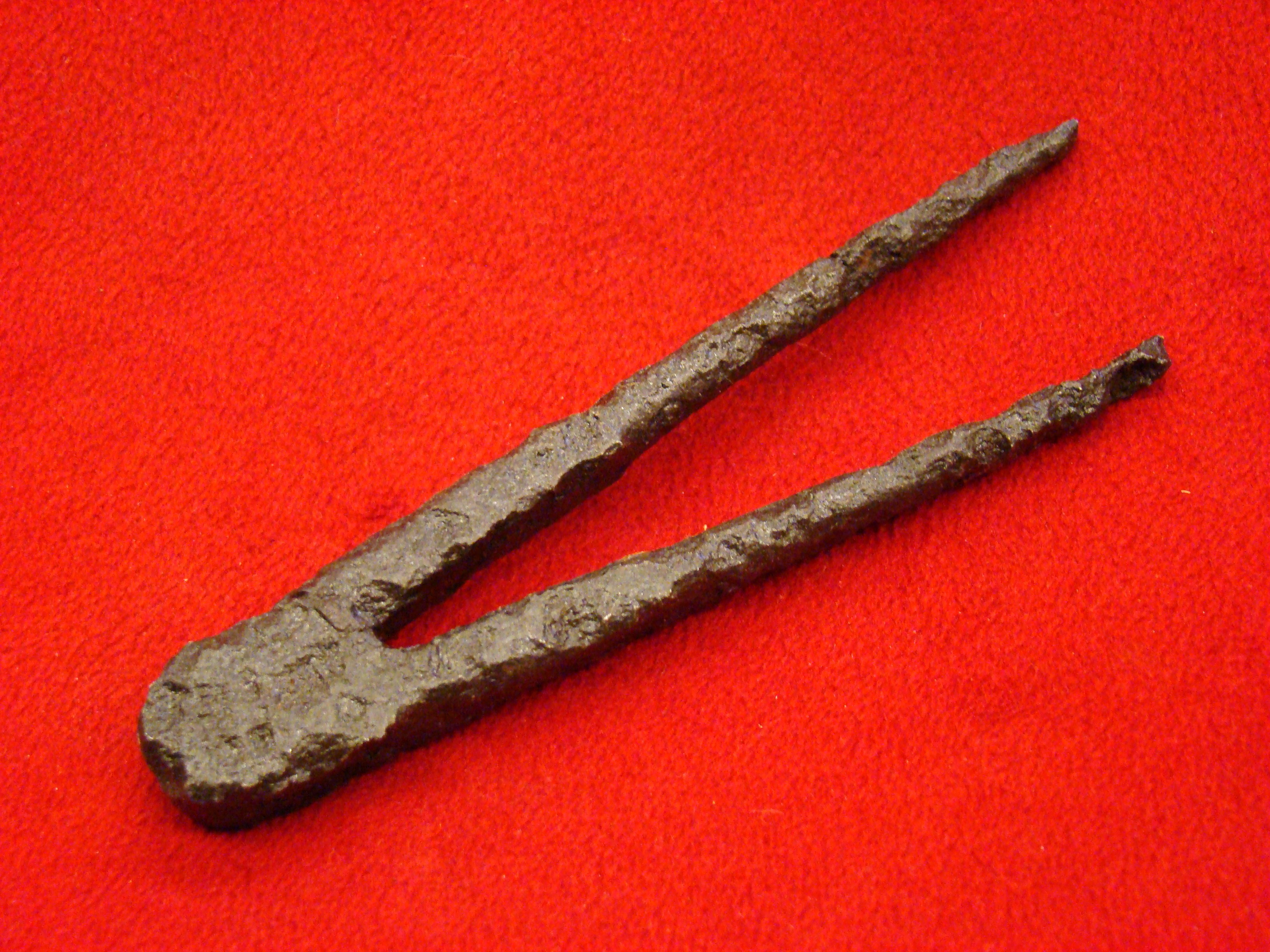
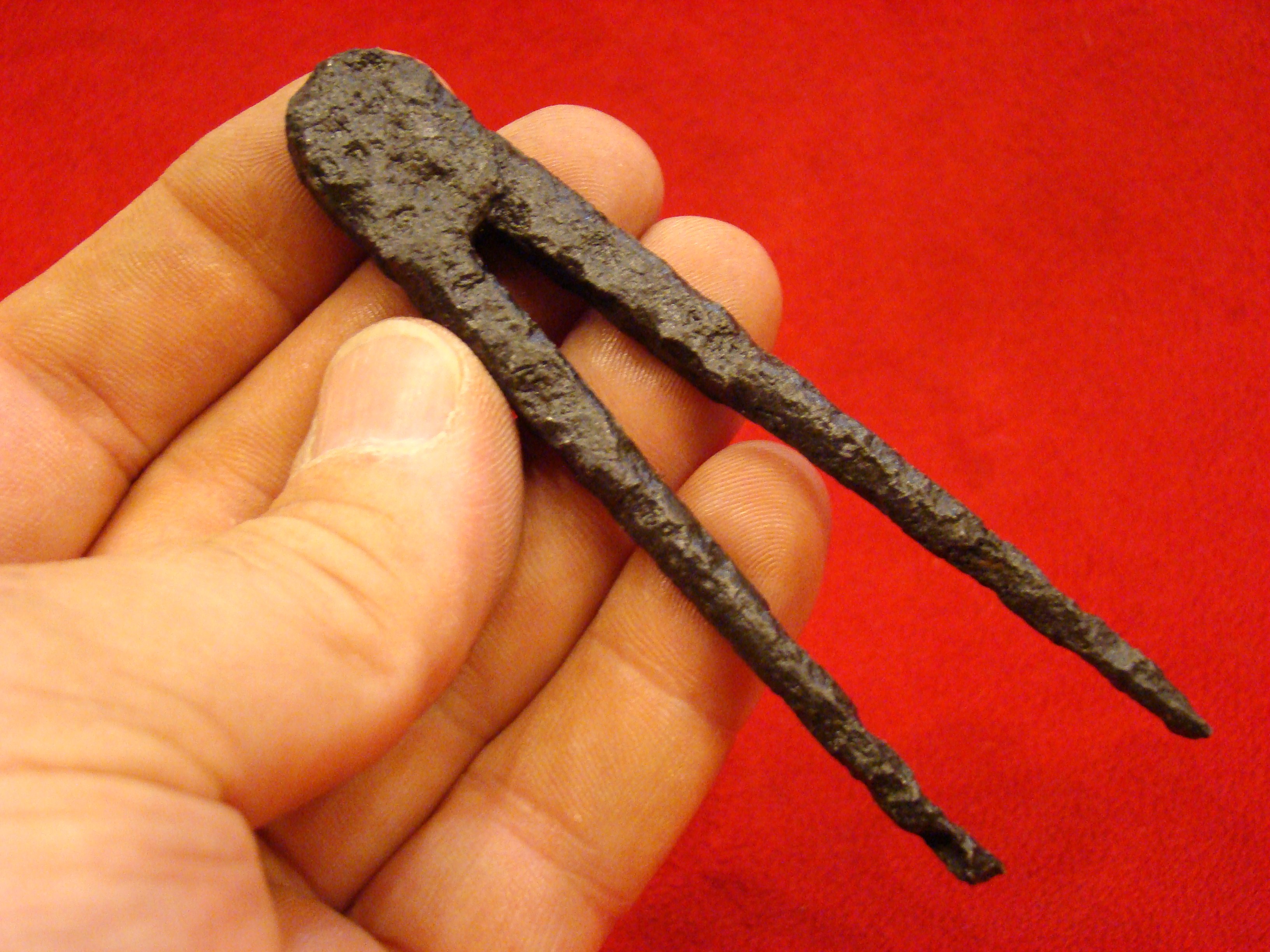
MS 7. Dug Civil War Topographical Engineer’s Map Dividers.
Good condition. Rare find. Dug near Warrenton VA. SOLD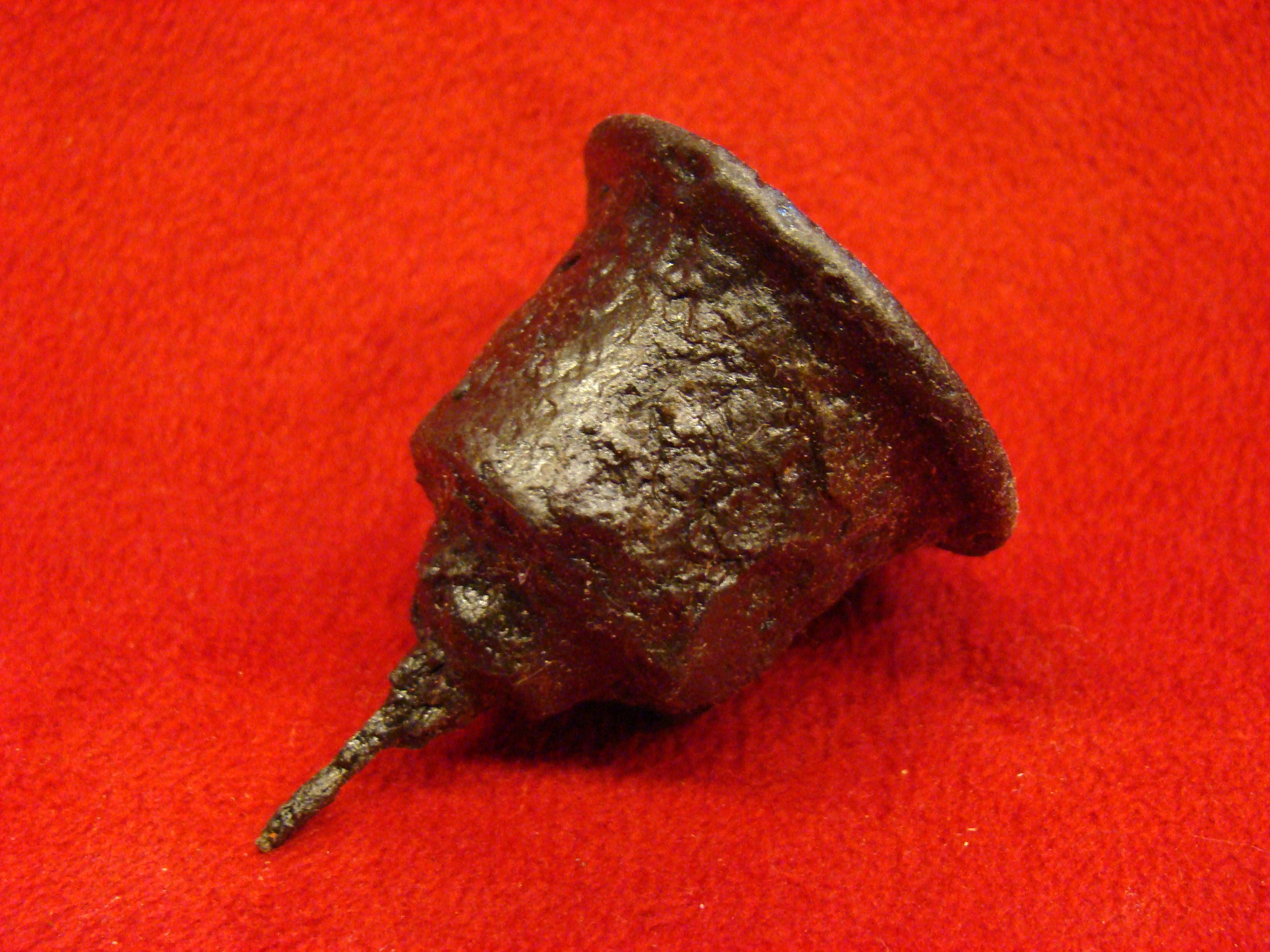
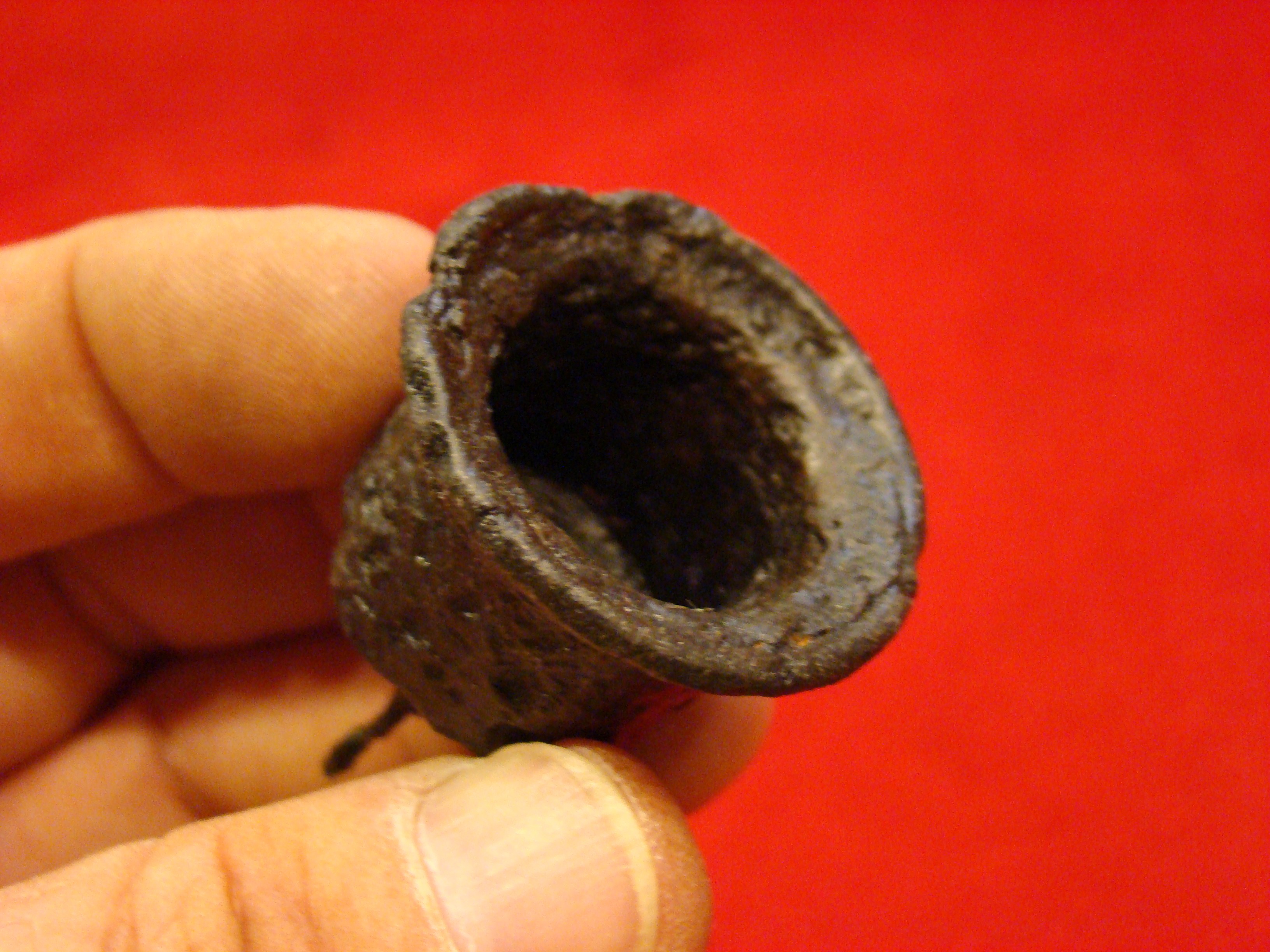
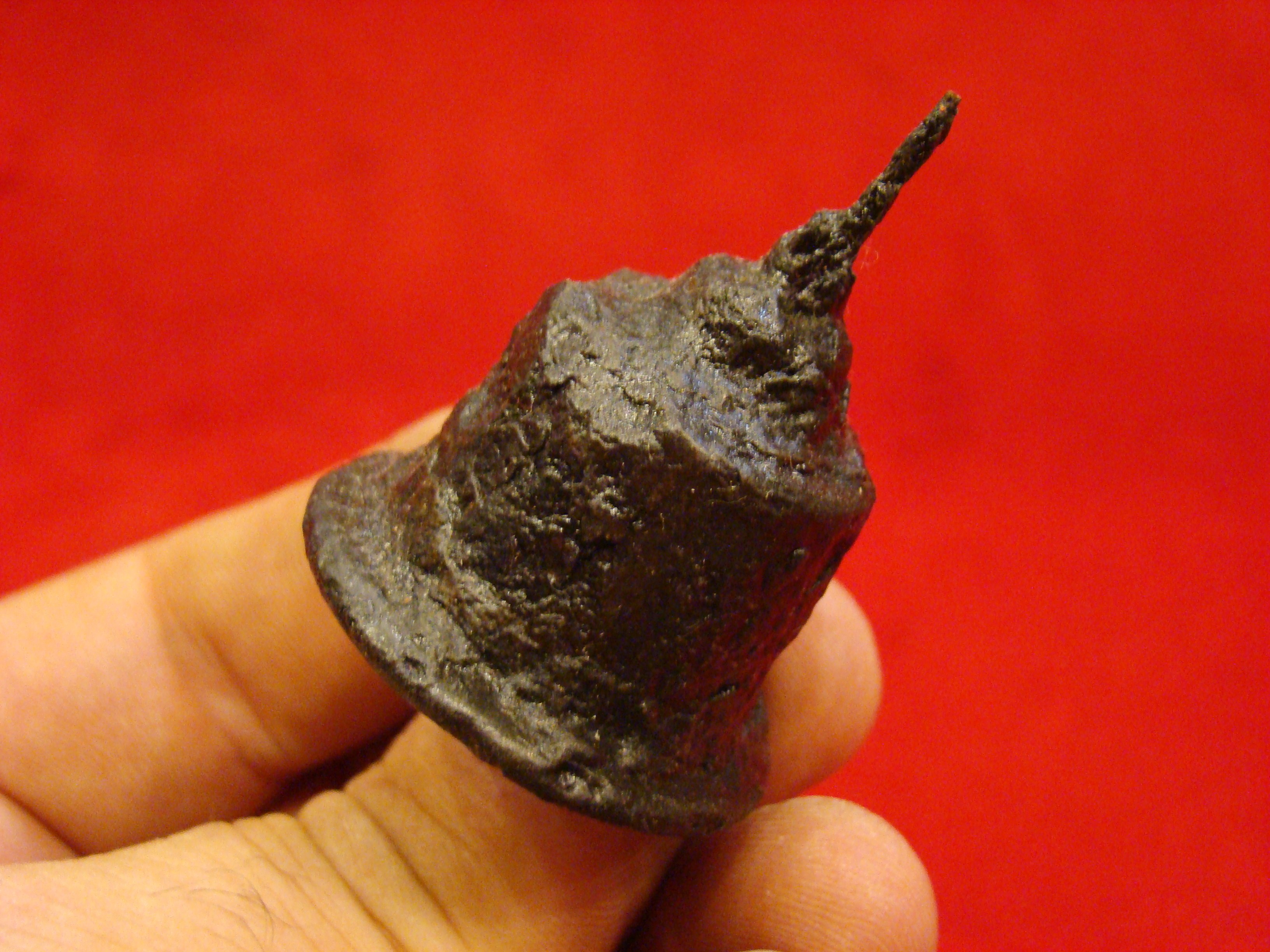
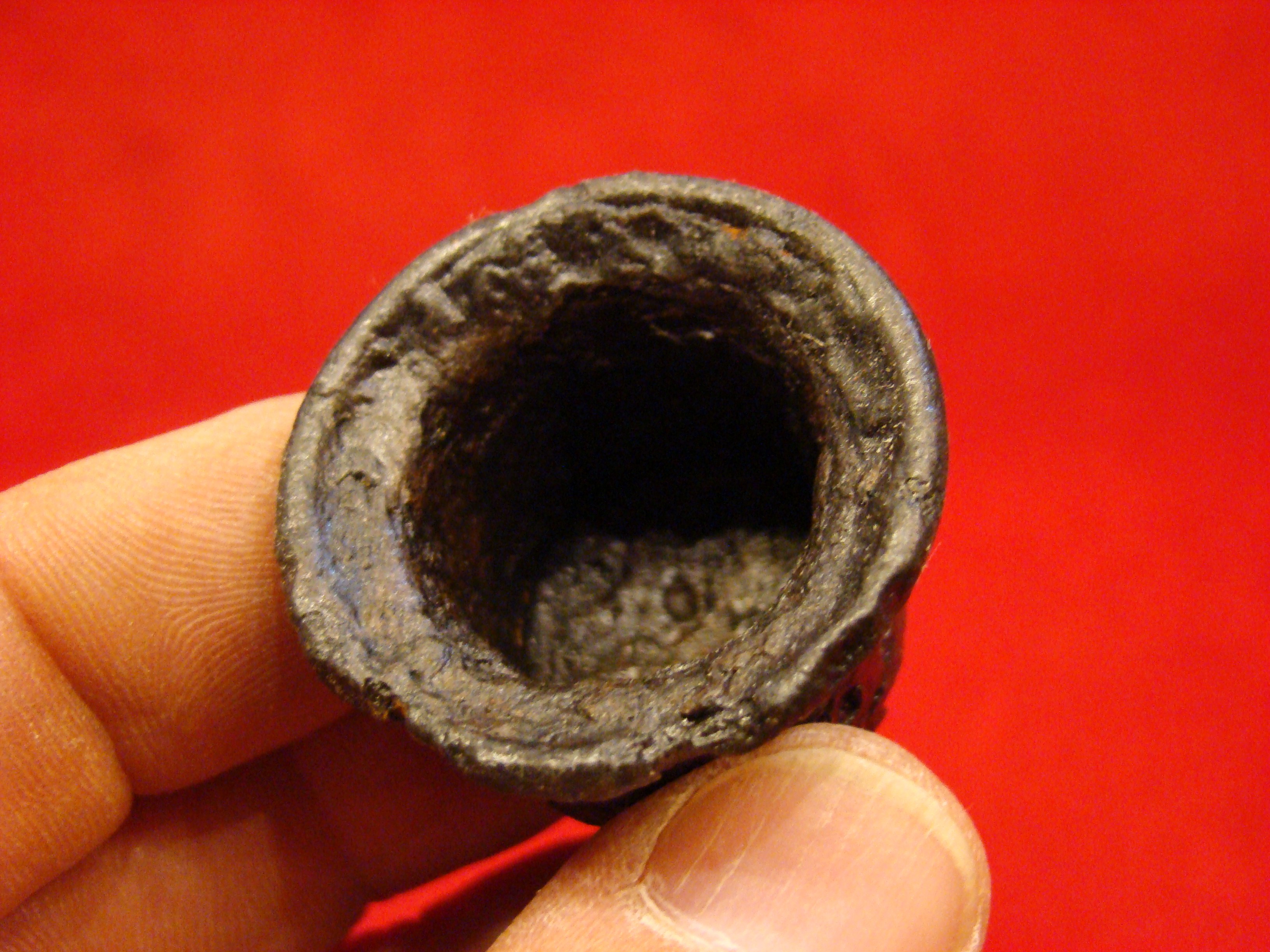
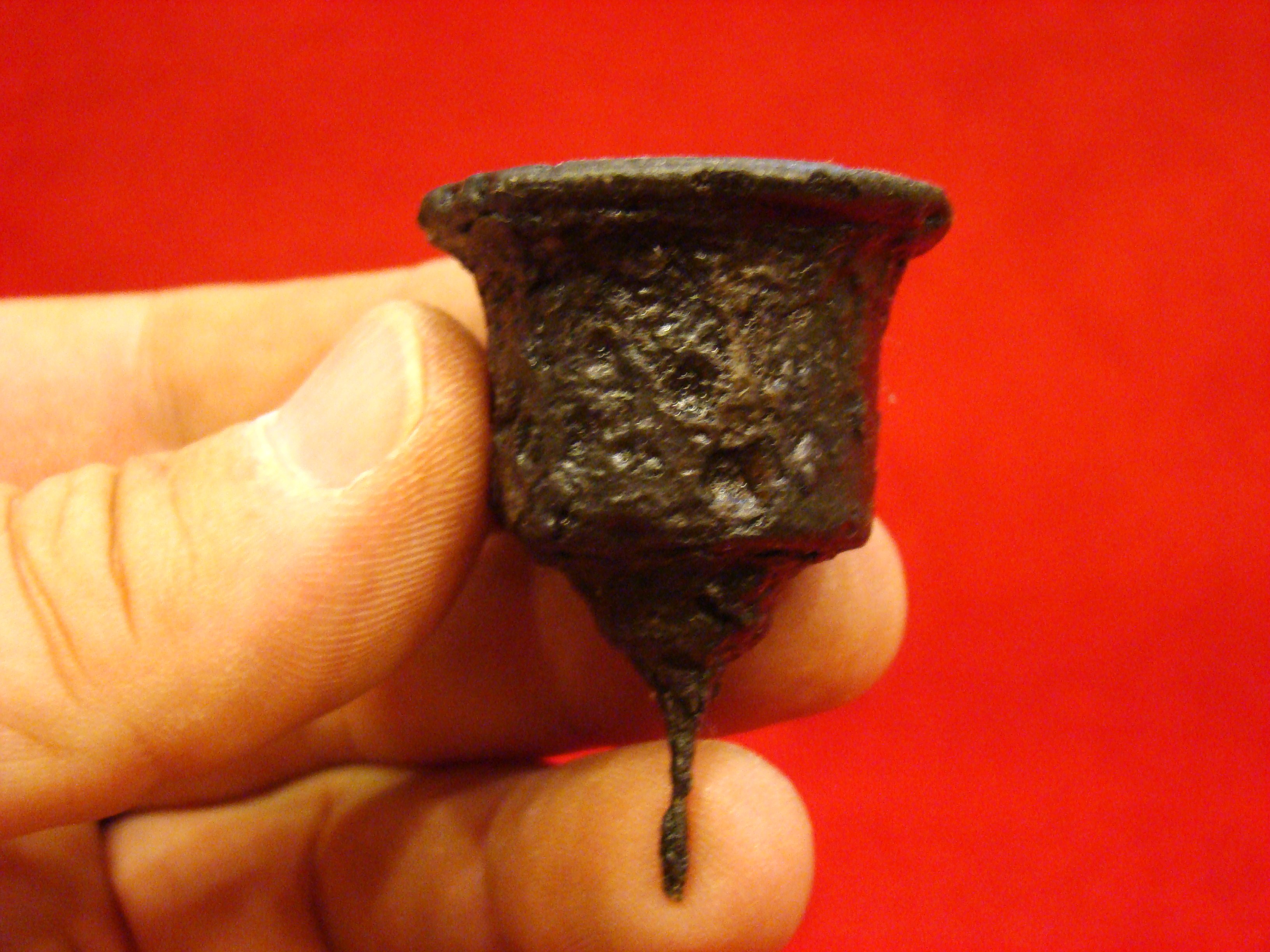
MS 8. Dug Civil War Soldier’s Candle Holder.
Good condition with intact spike. Dug near Warrenton VA. $35.00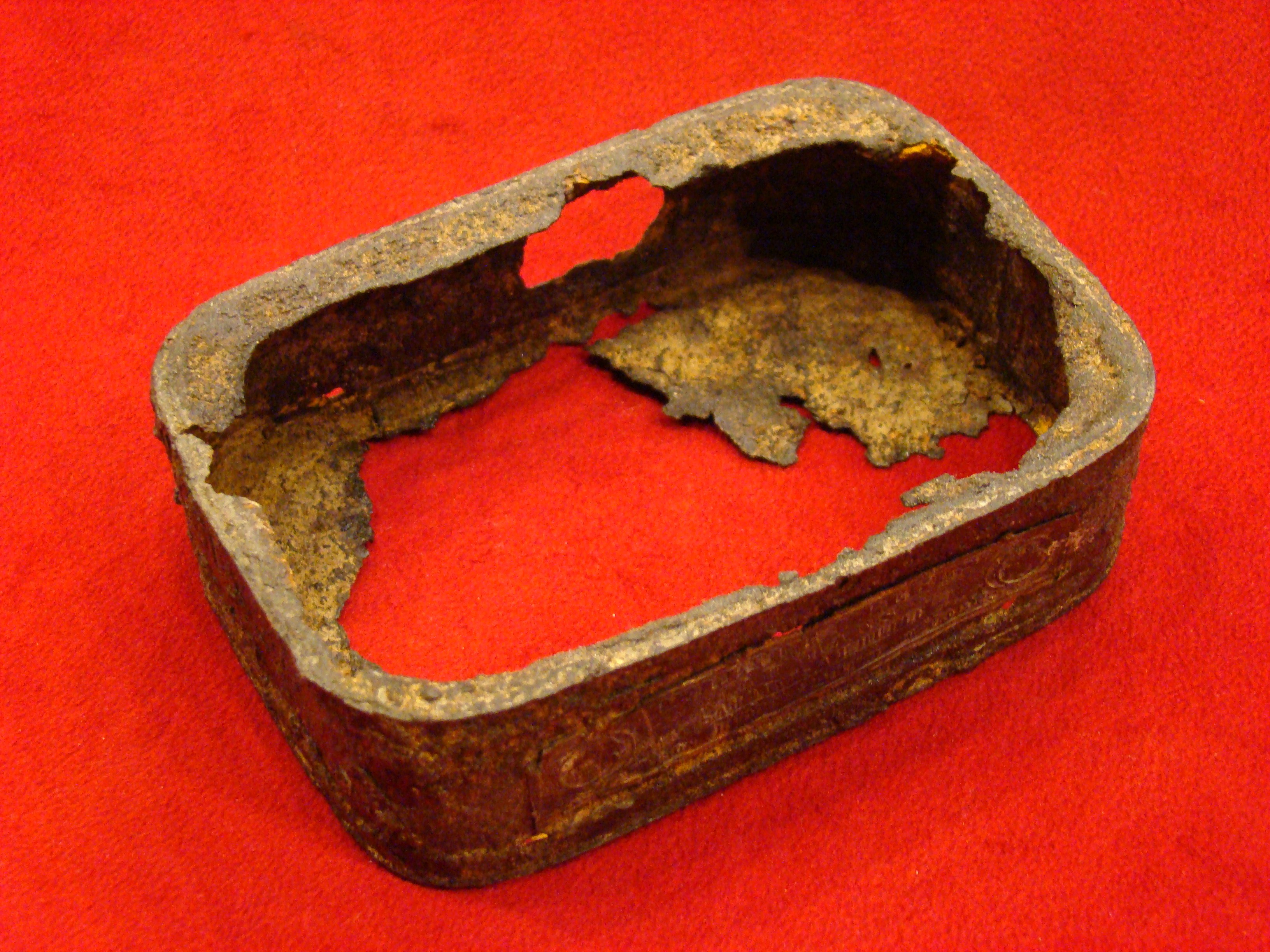
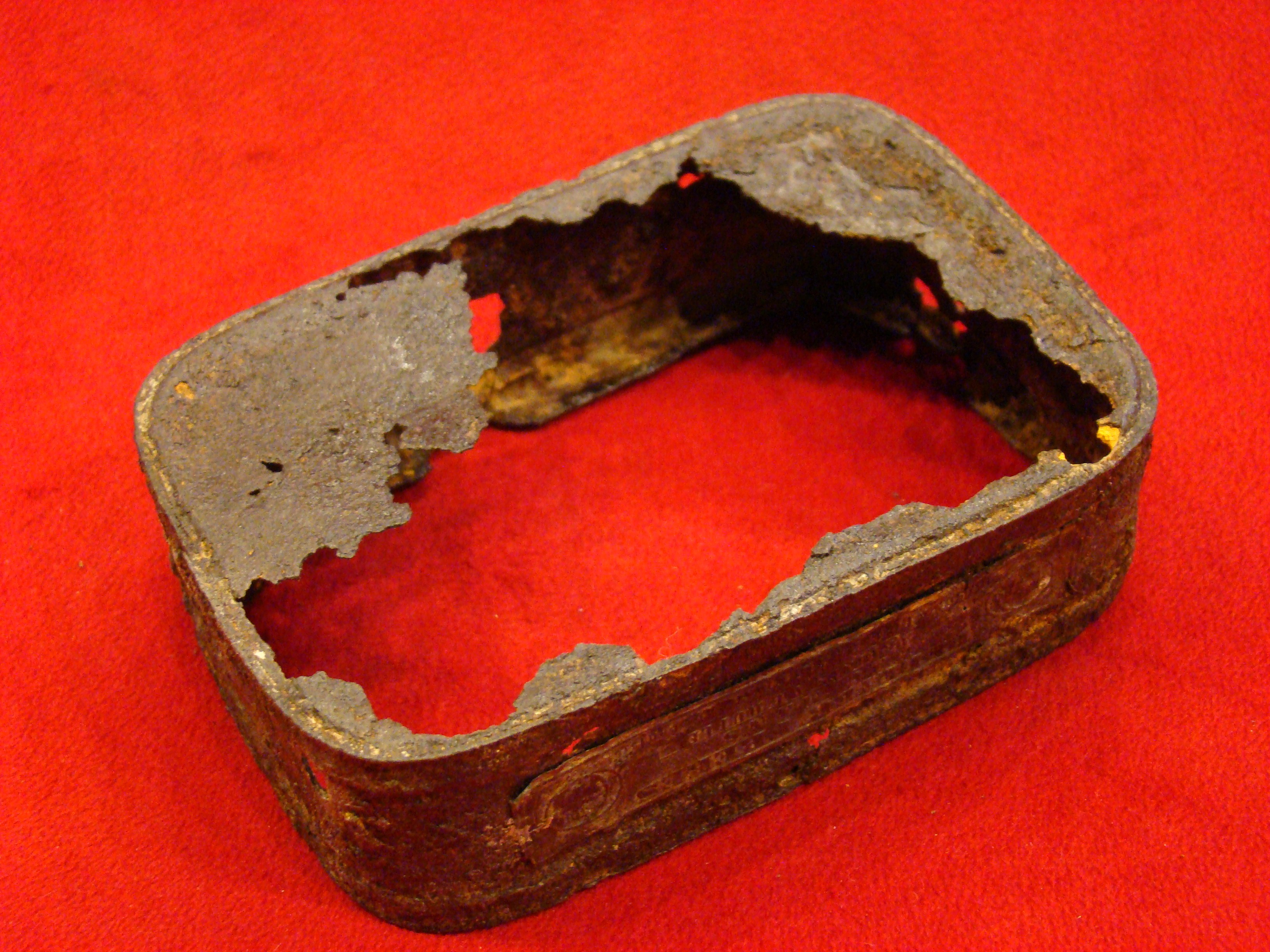
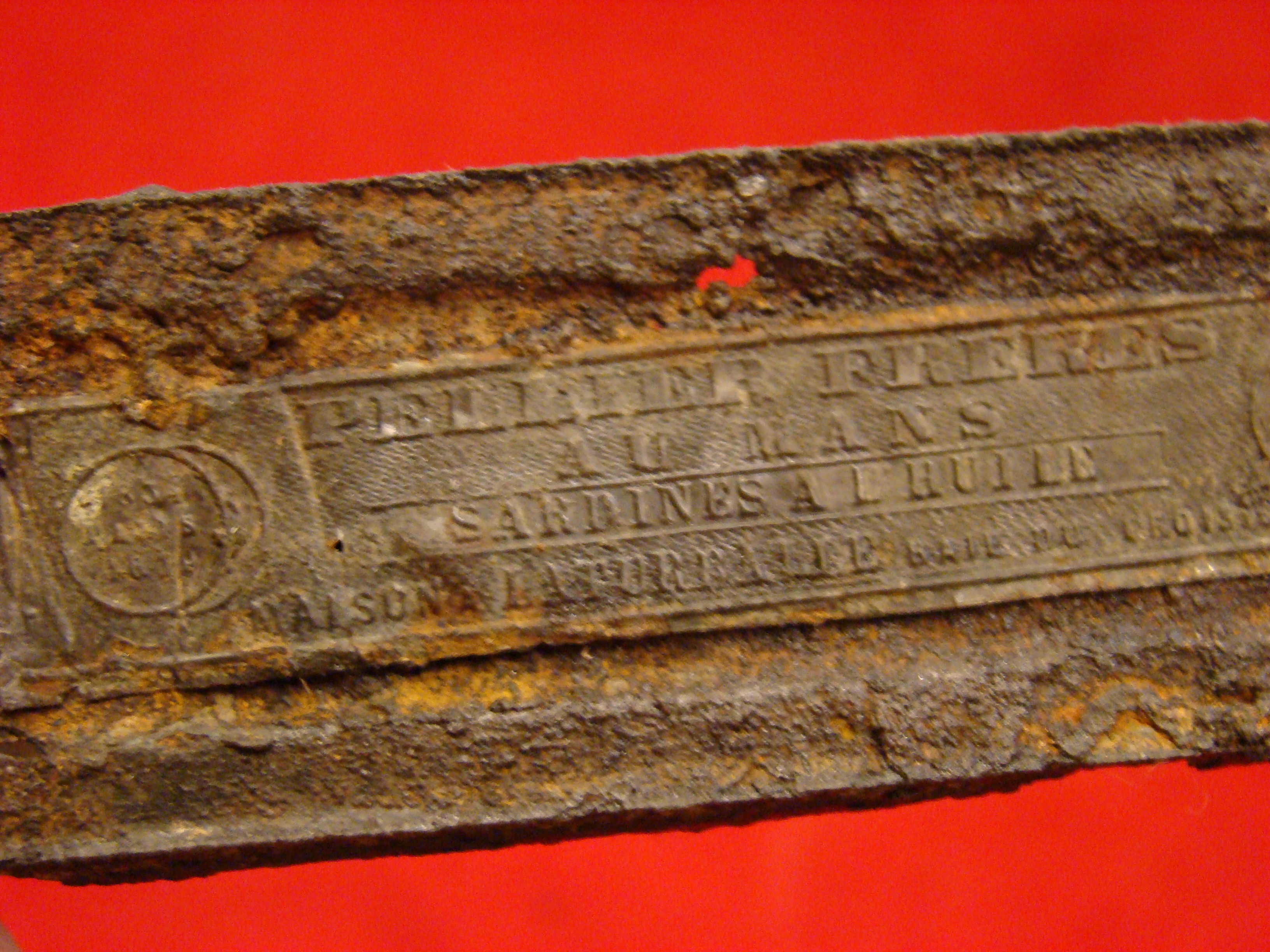
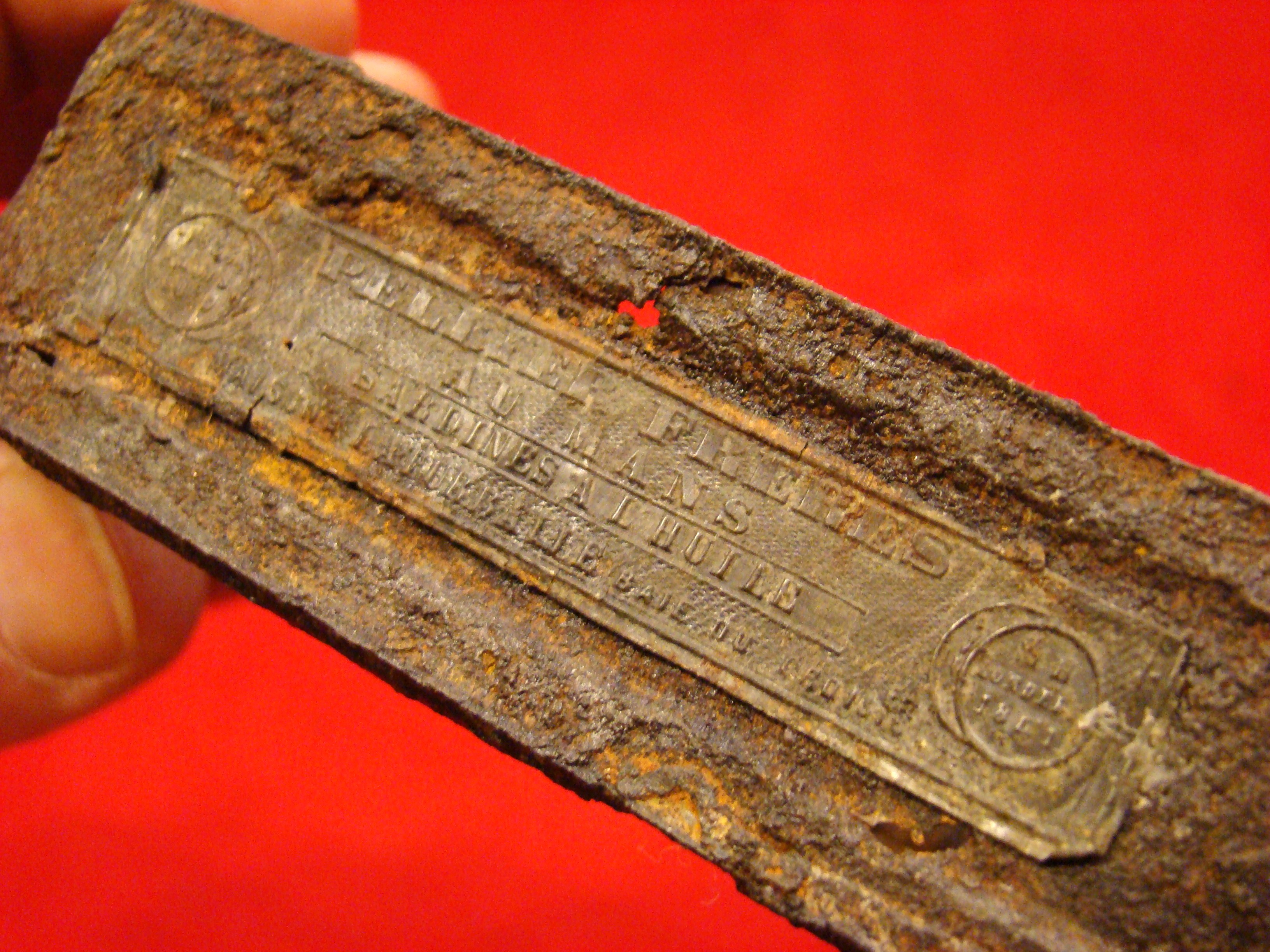
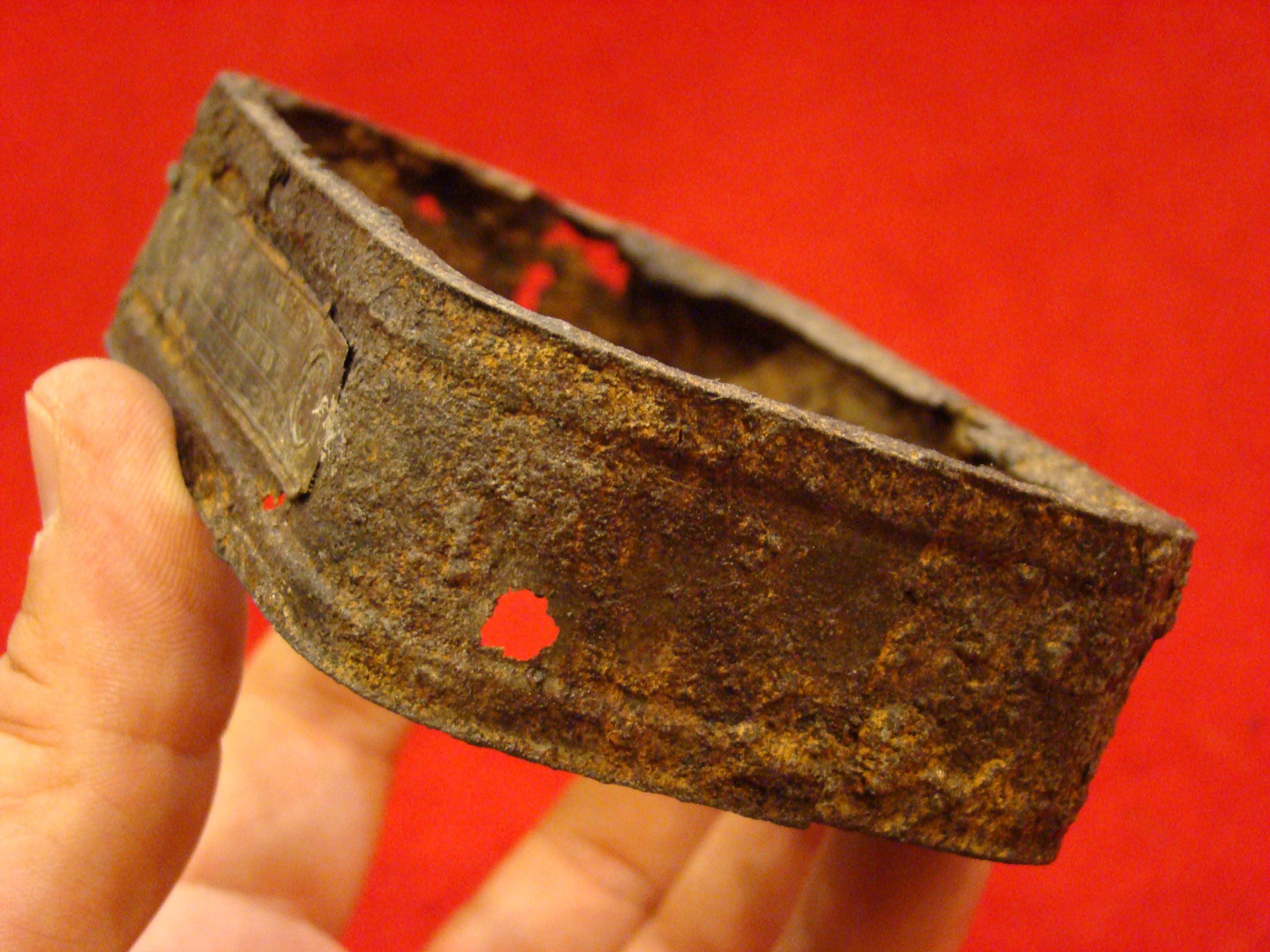
MS 9. Dug Sardine Can. Brandy Station VA.
Found in a Federal camp near Brandy Station VA. Note intact French label. $55.00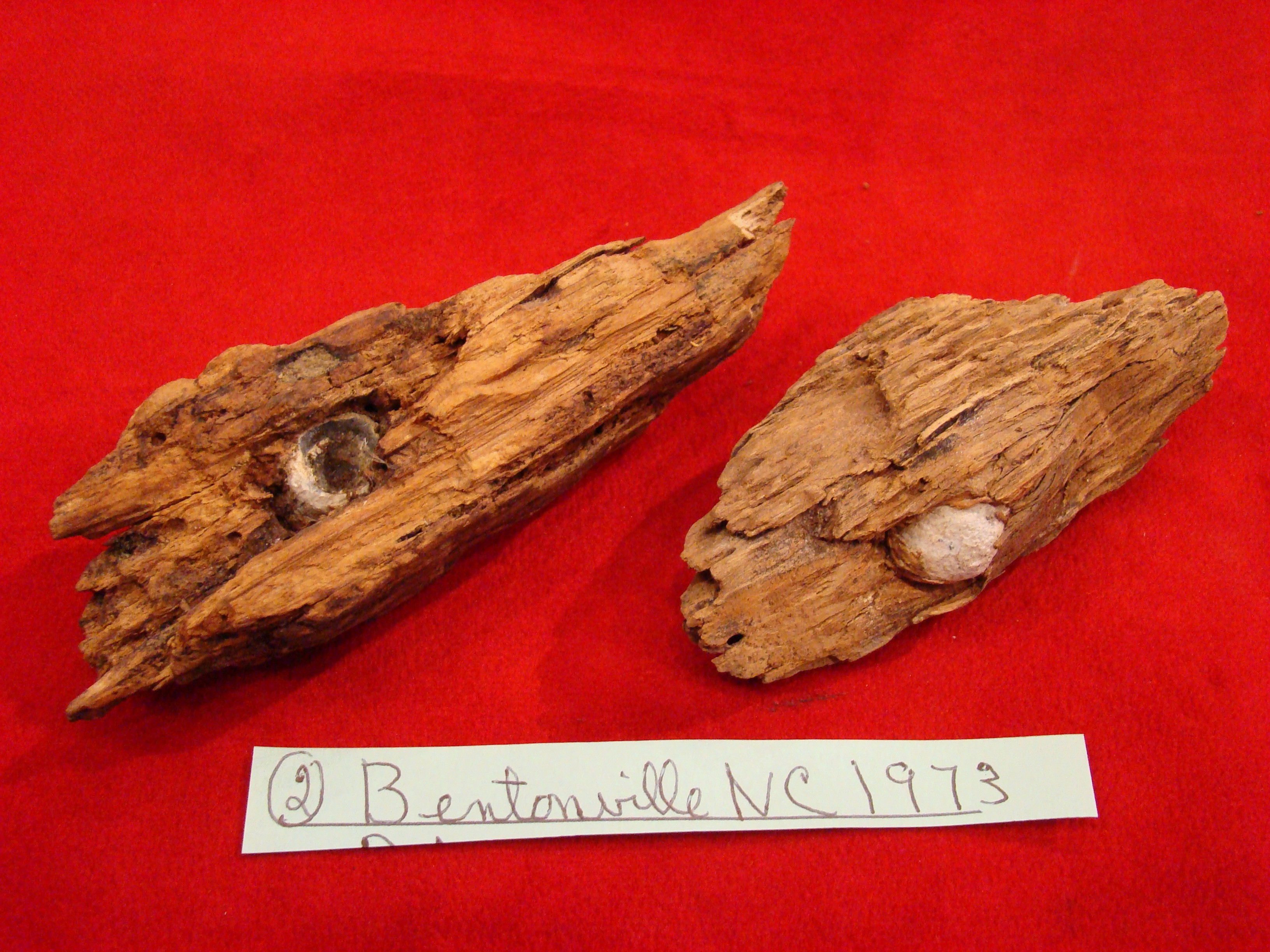
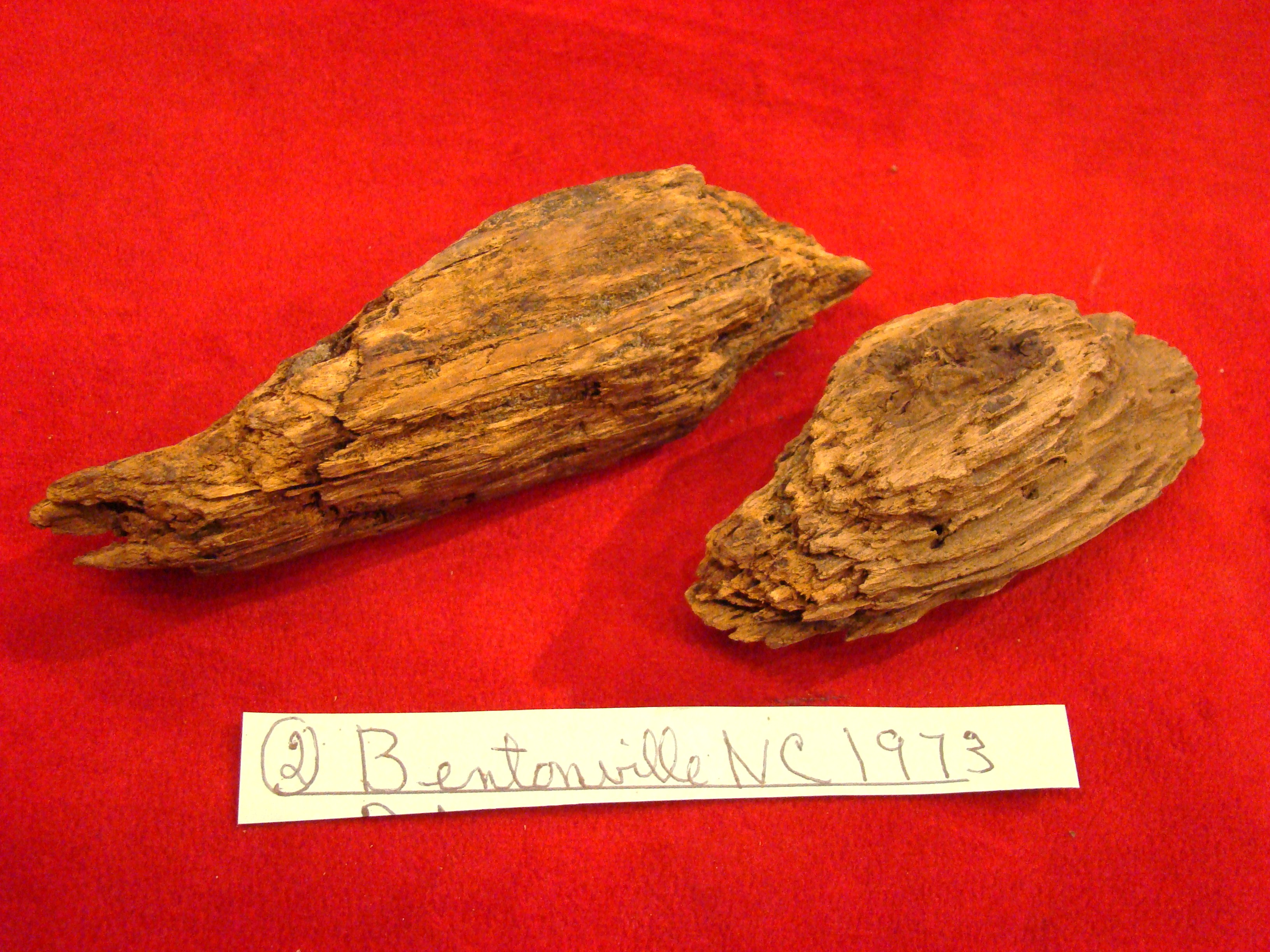
MS 10. Pair of Dug Bullets in Wood. Bentonville NC. Battlefield.
Found by Charles Darden in 1973. SOLD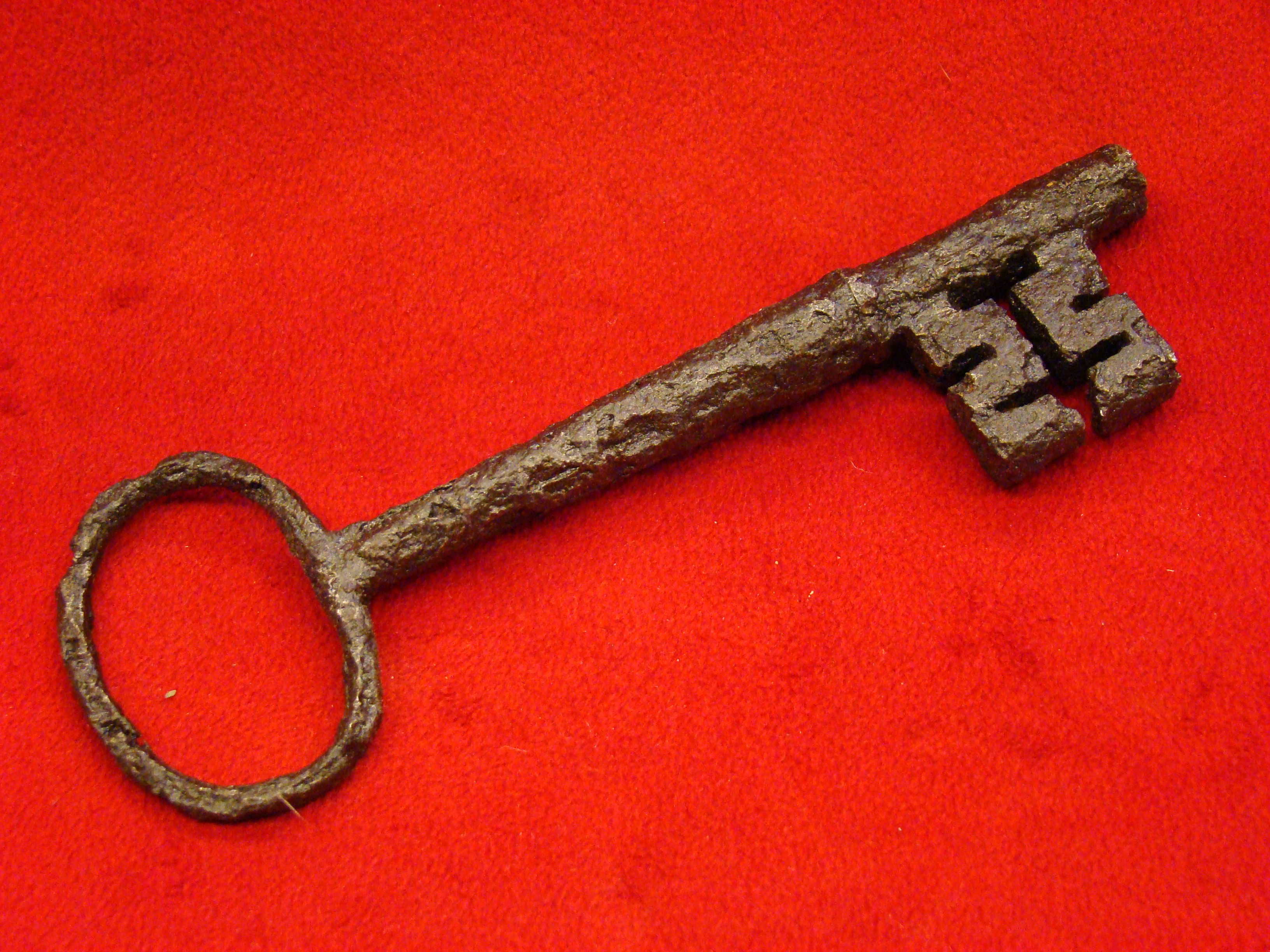
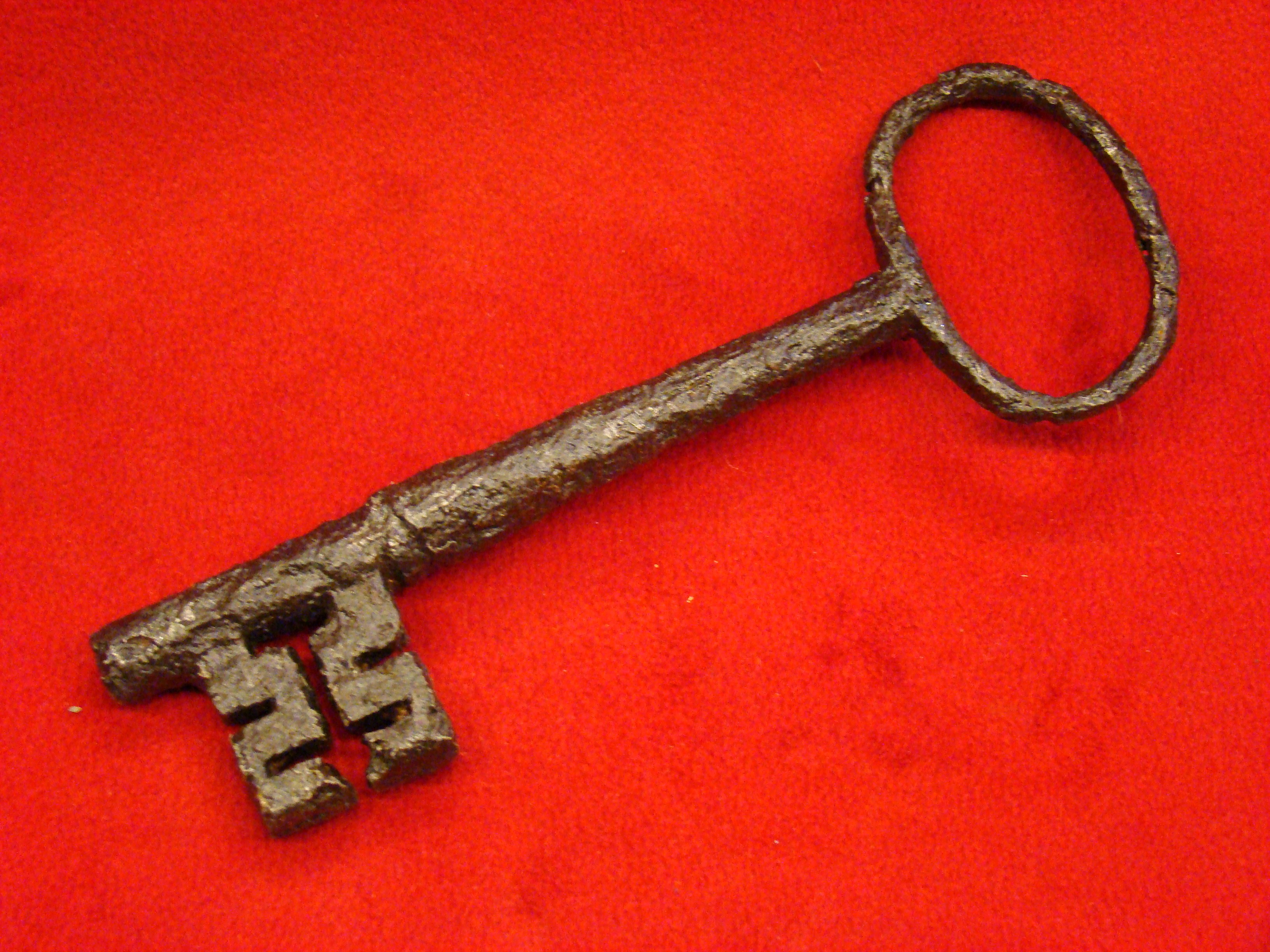
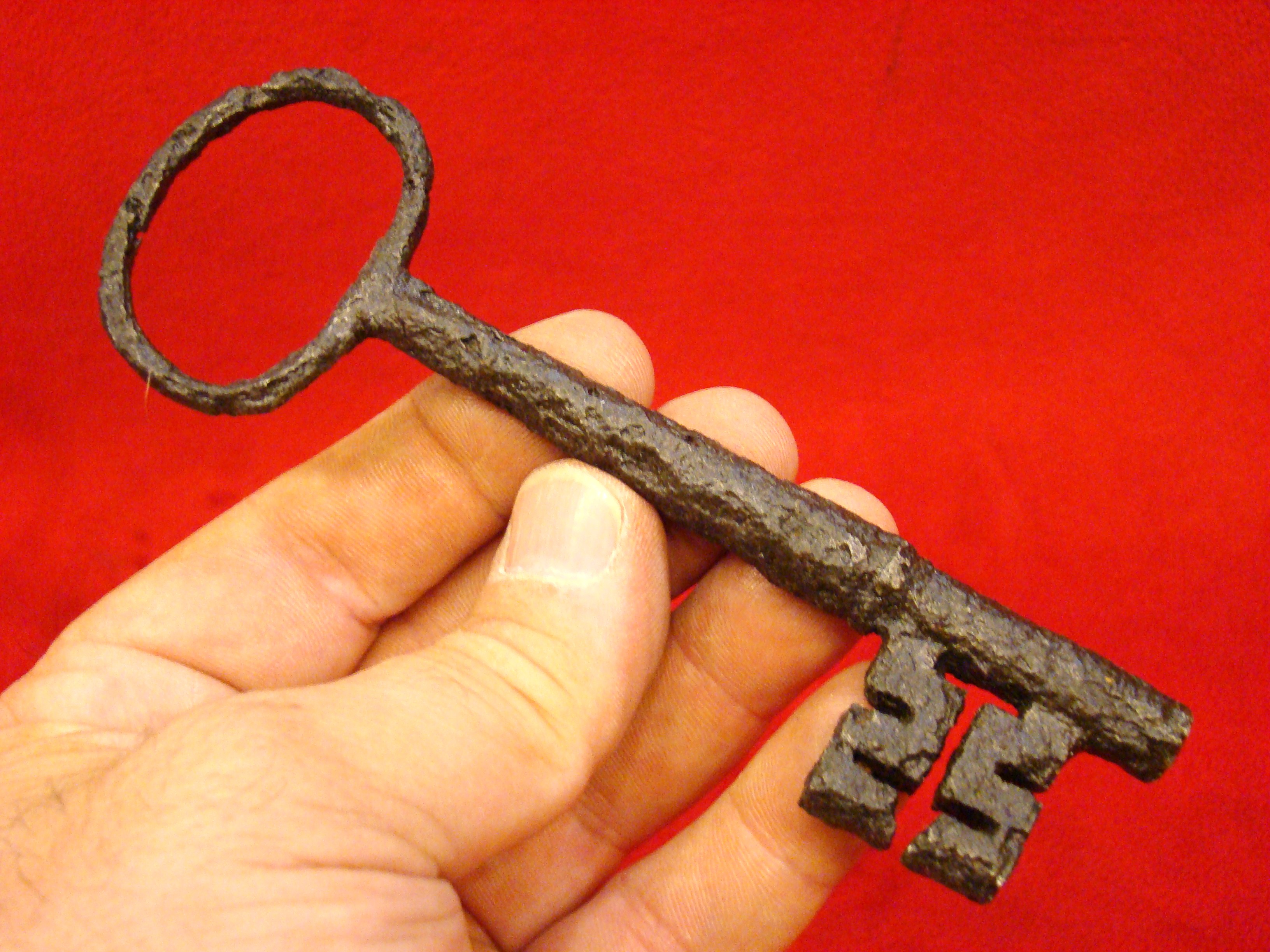
MS 11. Dug Iron Skeleton Key. Brandy Station VA.
Large key in very good condition. Found in a Federal troops camp. SOLD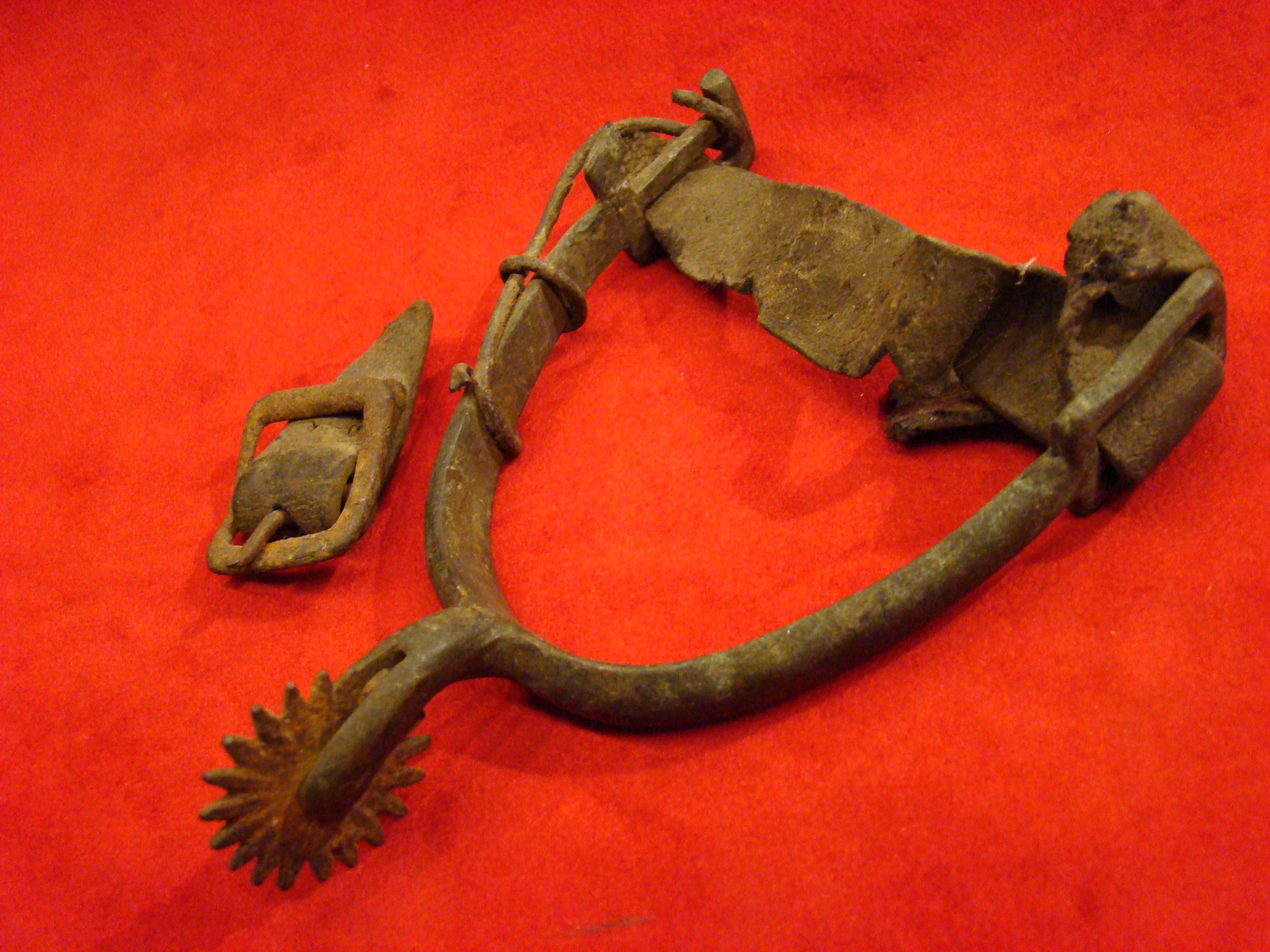
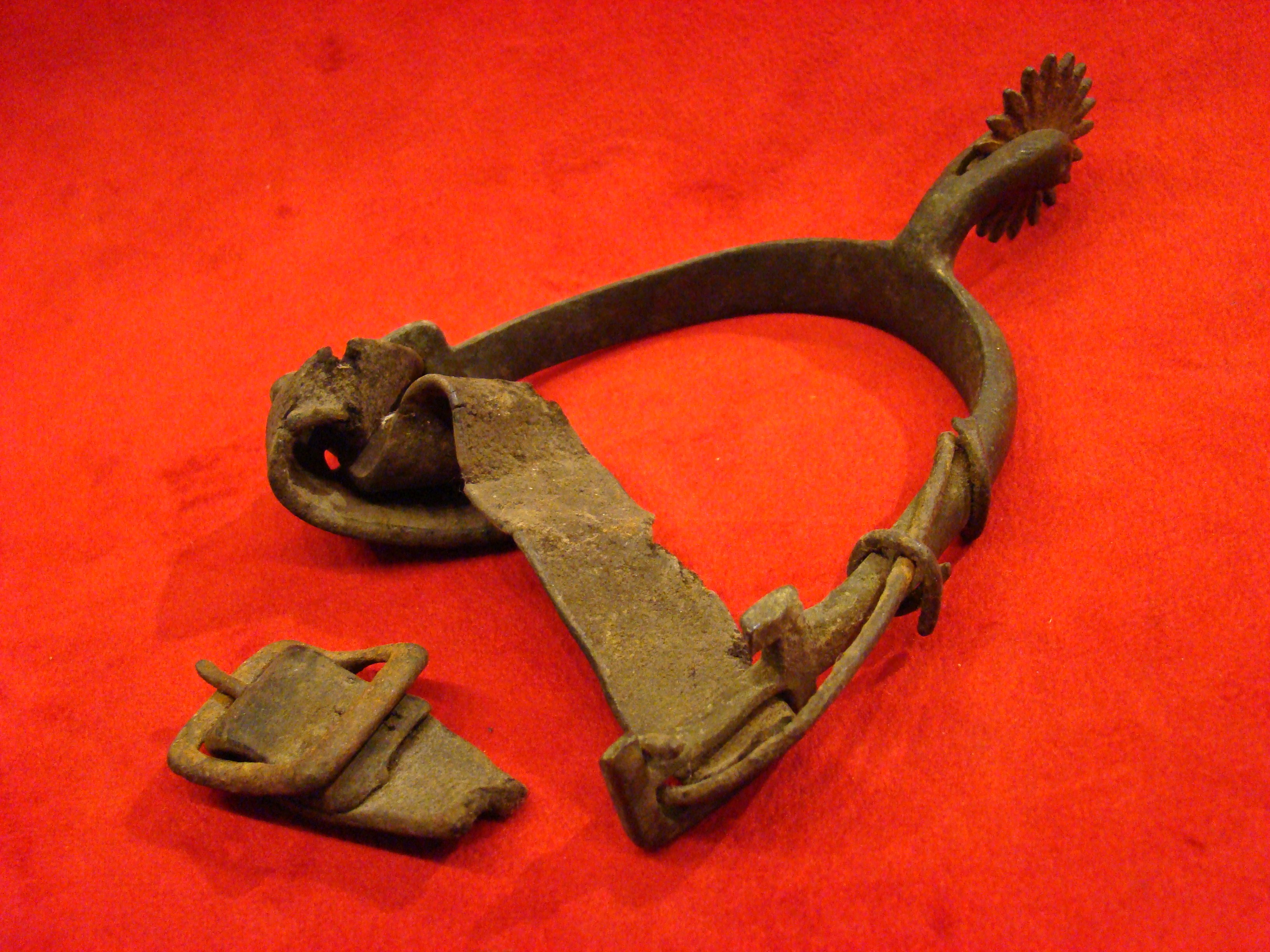
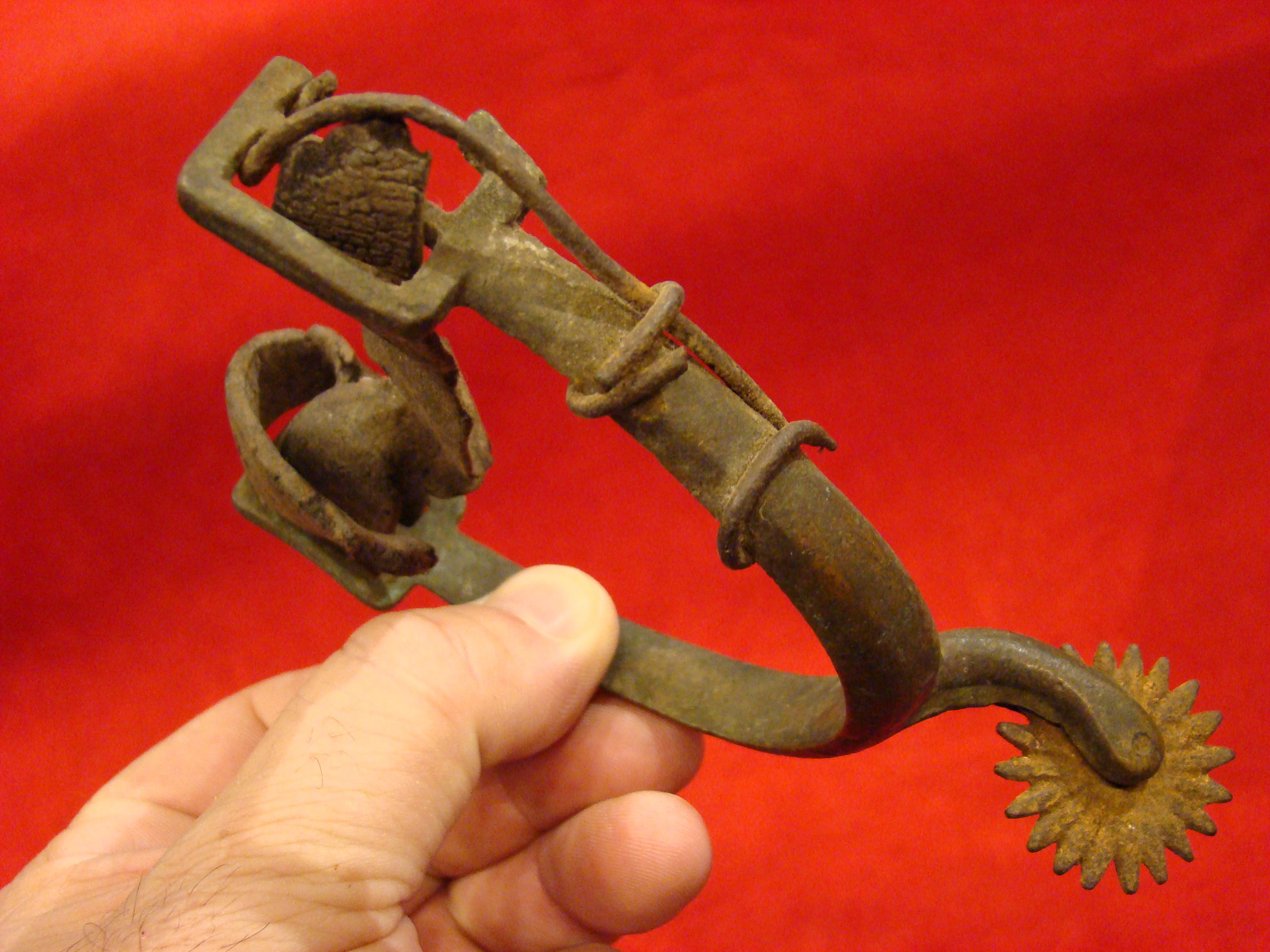
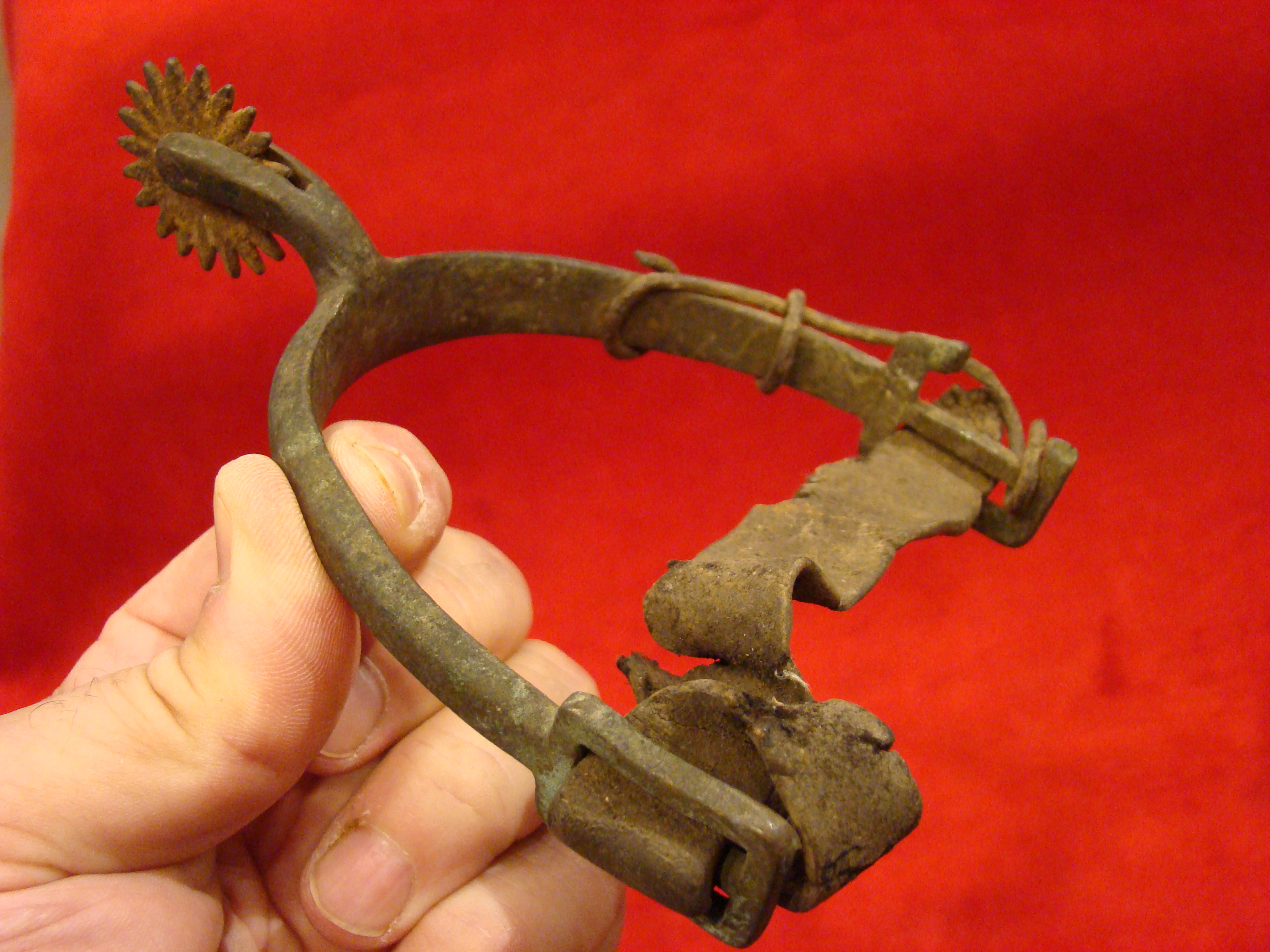
MS 12. Civil War Cavalryman’s Spur with Field Repair. Found in a Barn. Corinth MS.
Really neat repair on this spur. Almost surely done by a needful Confederate Trooper. Note remnants of boot strap with buckle. Ex. Stan Hughes collection. $250.00 HOLD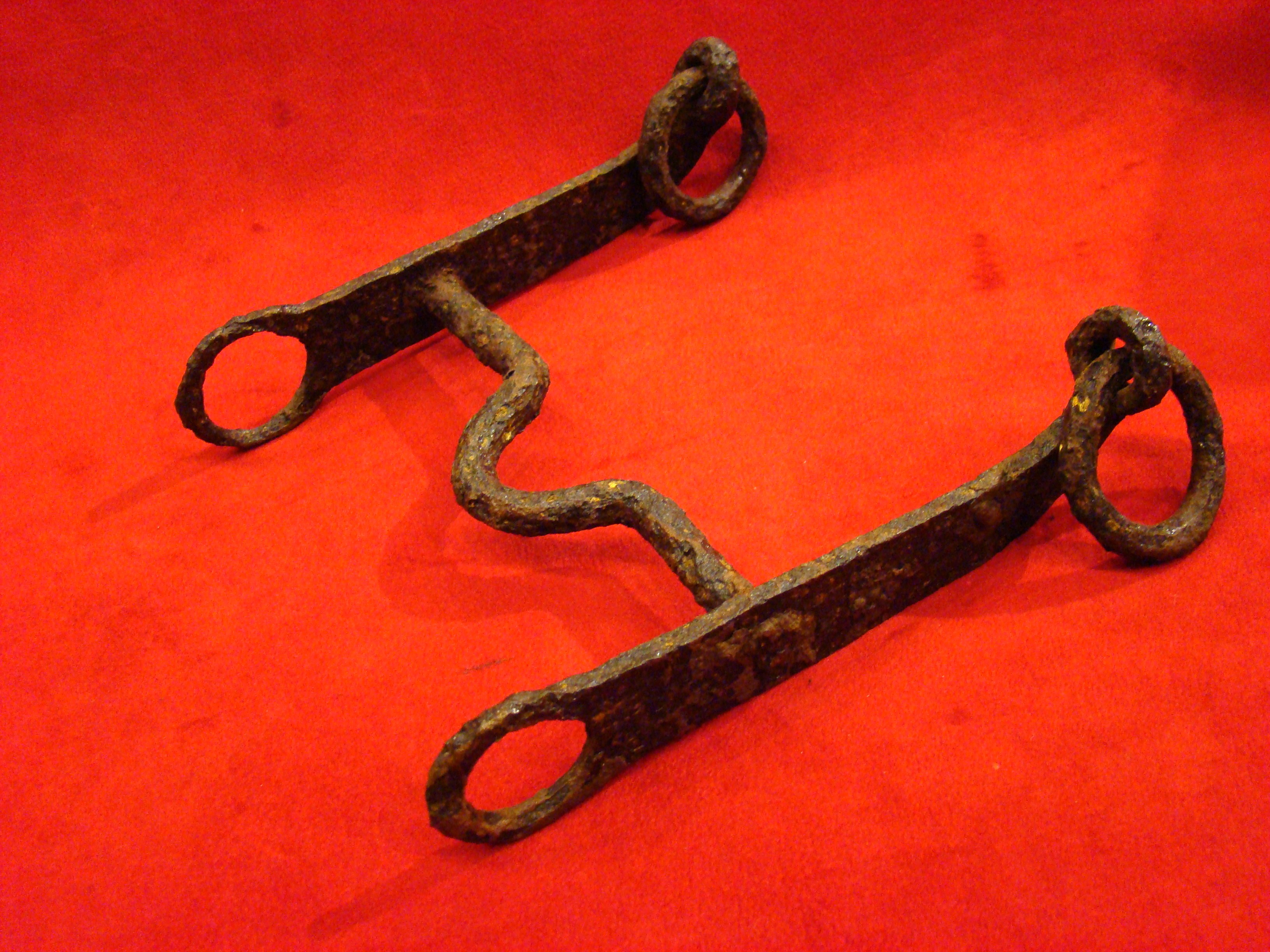
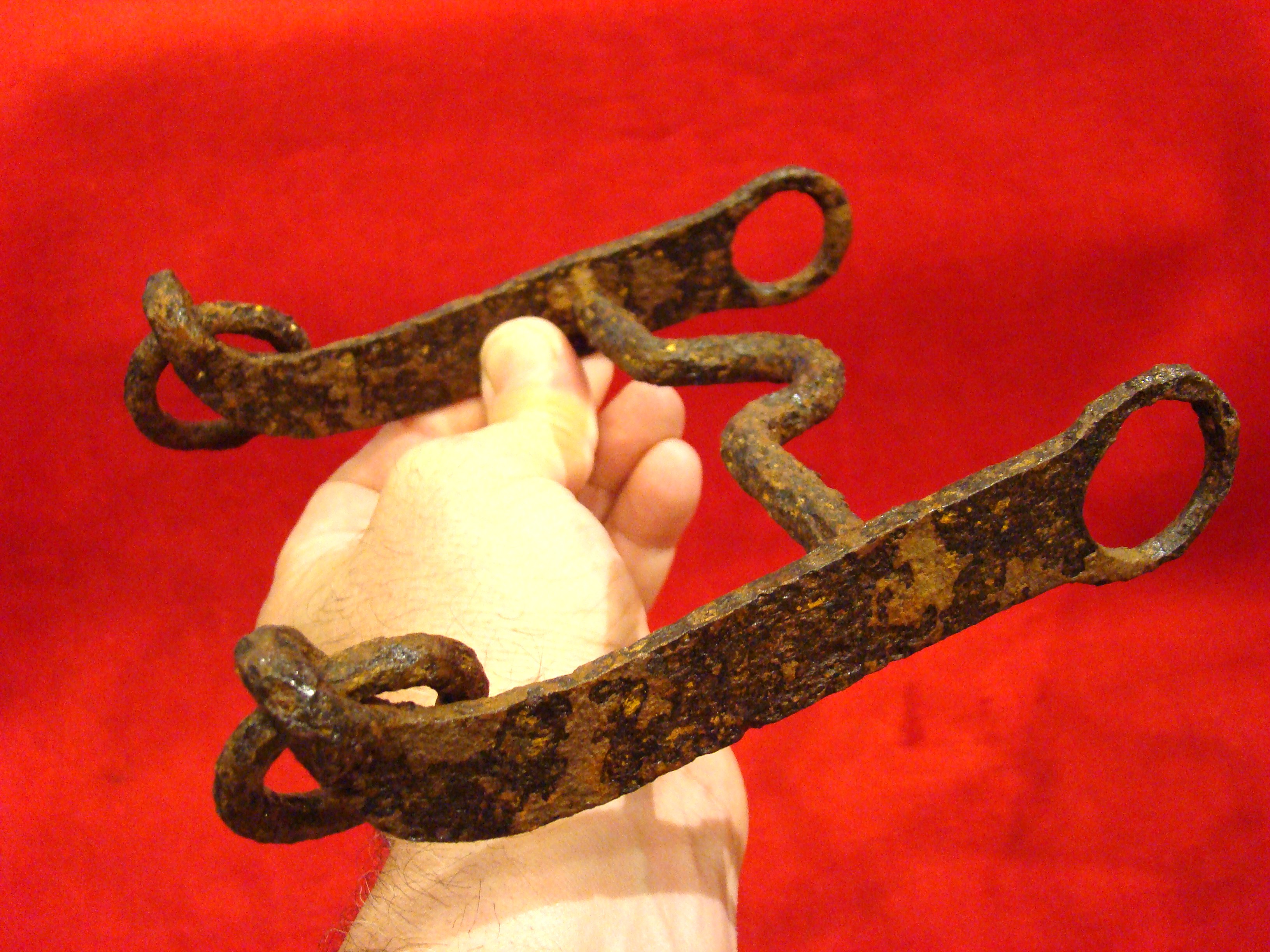
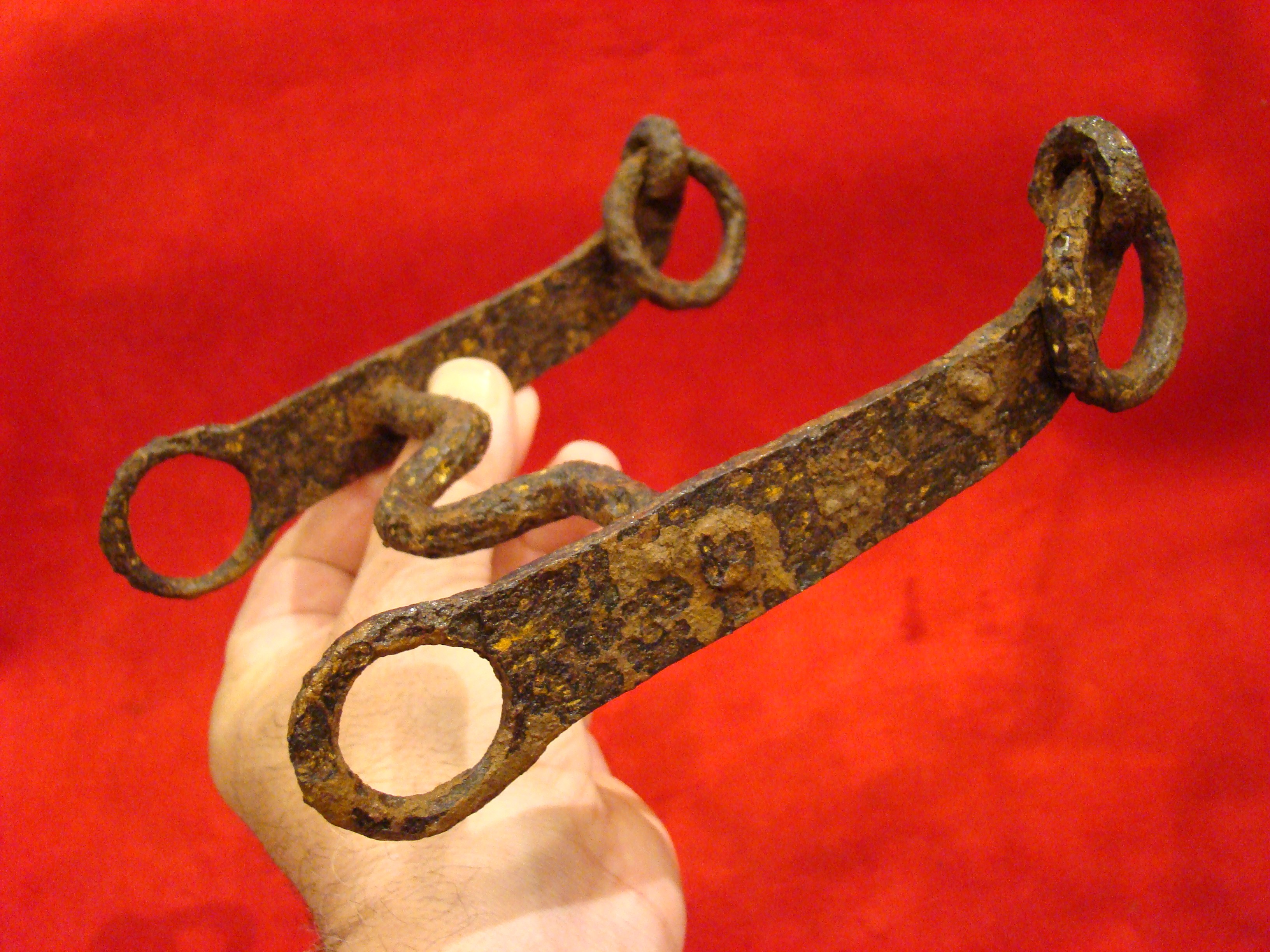
MS 13. Dug Confederate Trooper’s Sled Bit.
Perfect condition with only light rust. Found in 1962 at Warrenton Junction by Charles Darden. SOLD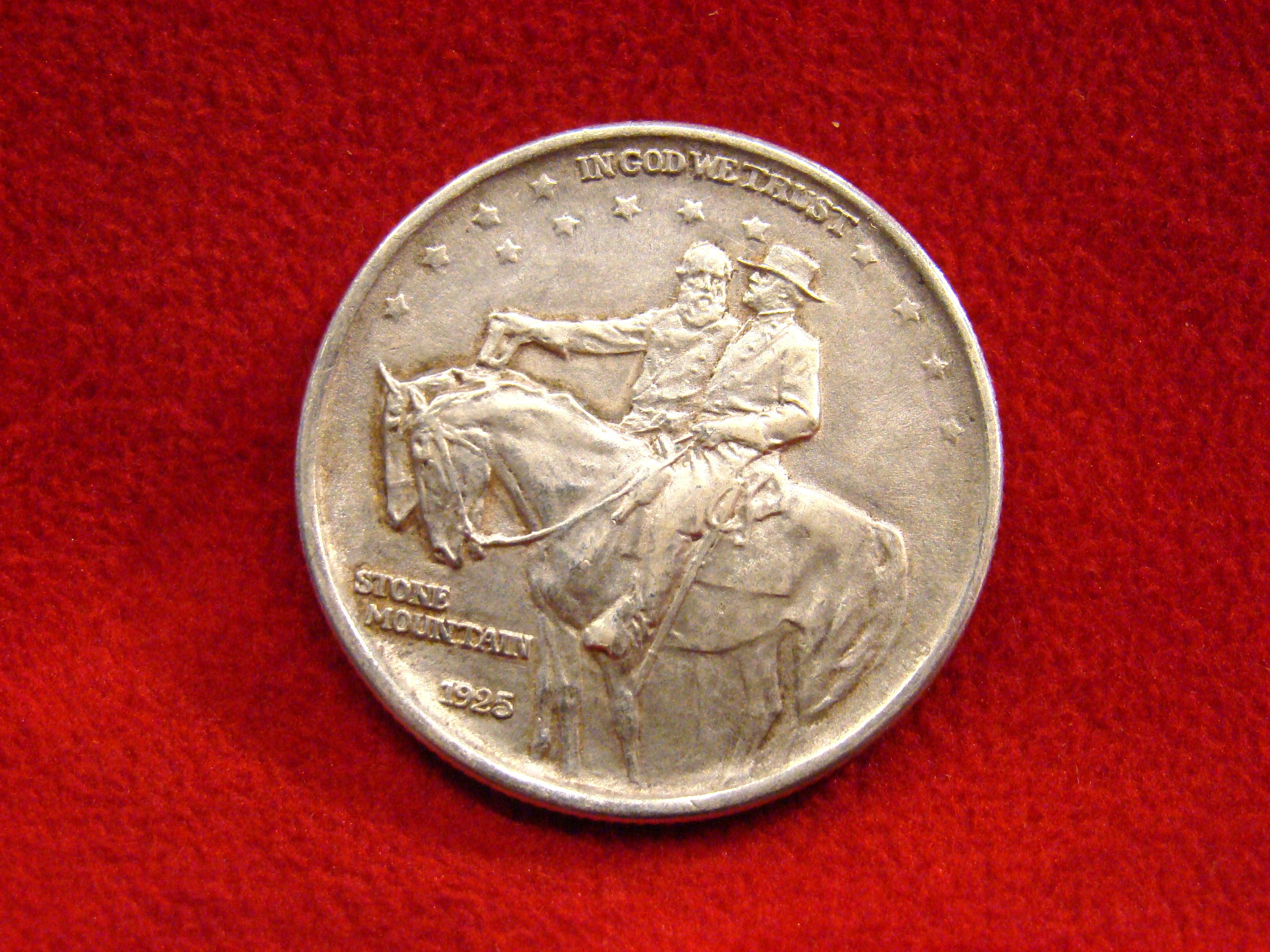
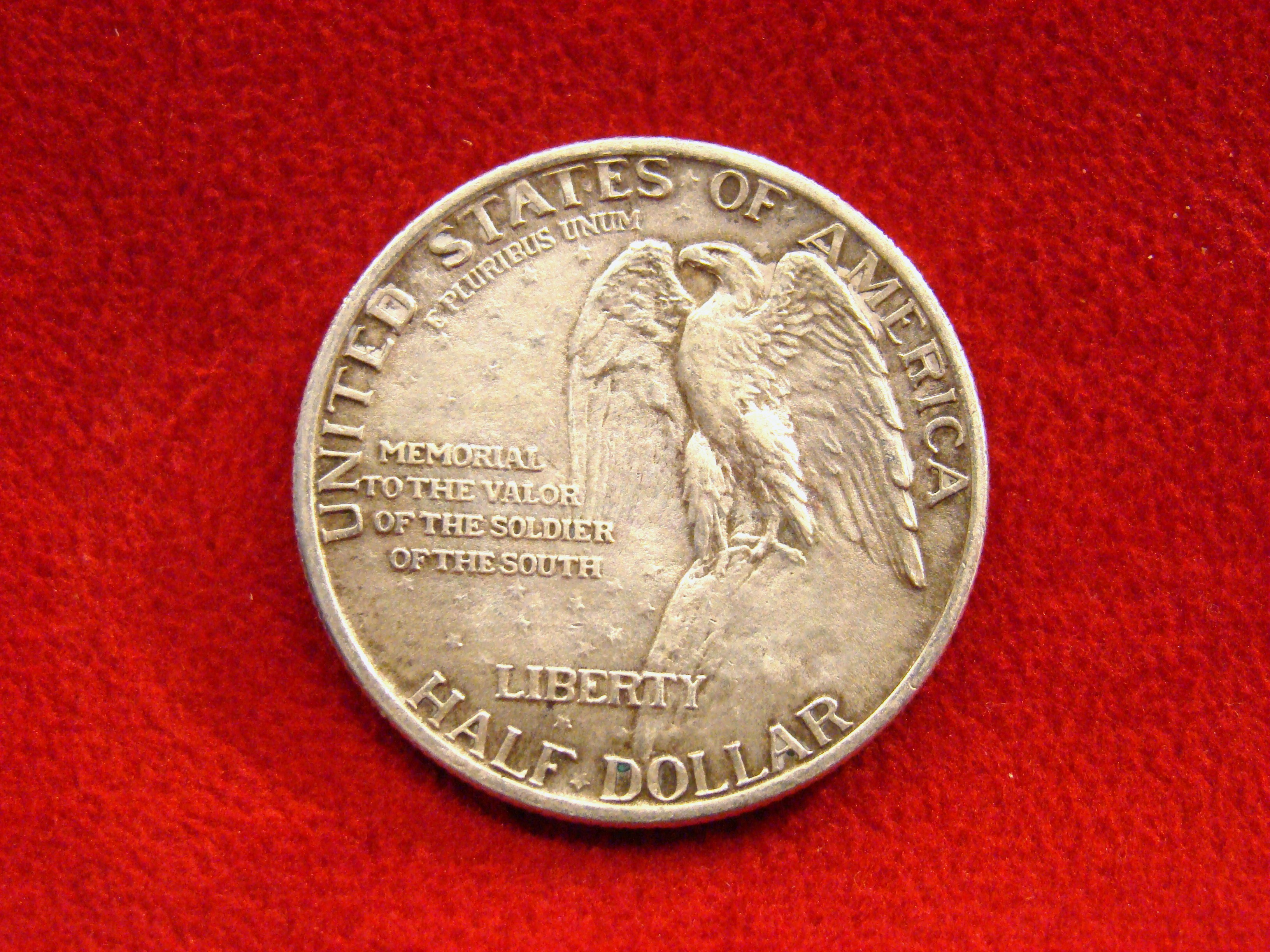
MS 14. US Stone Mountain GA. Memorial Half Dollar.
This silver coin was minted to celebrate the Stone Mountain Memorial in 1925. $75.00 HOLD L.P.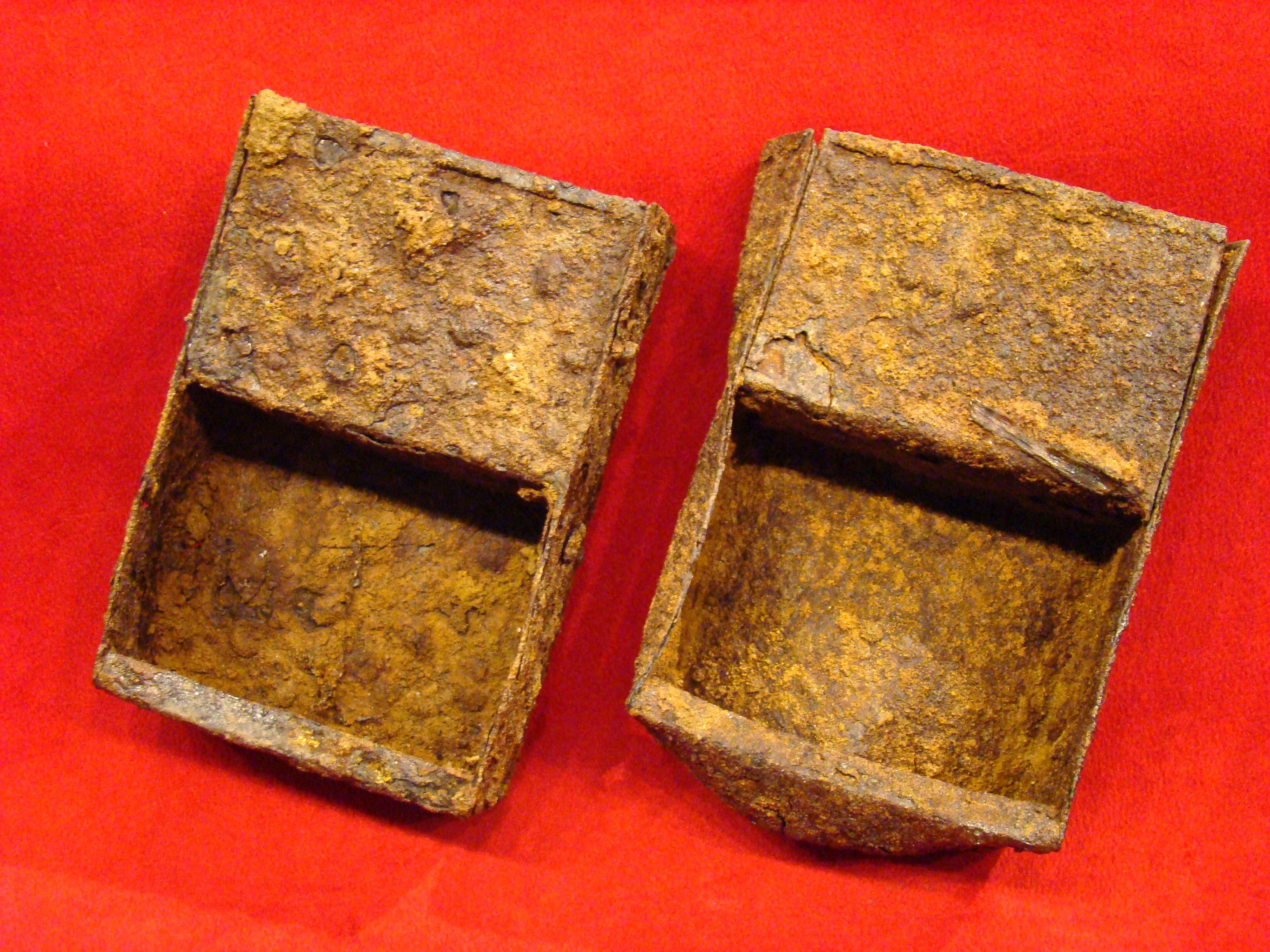
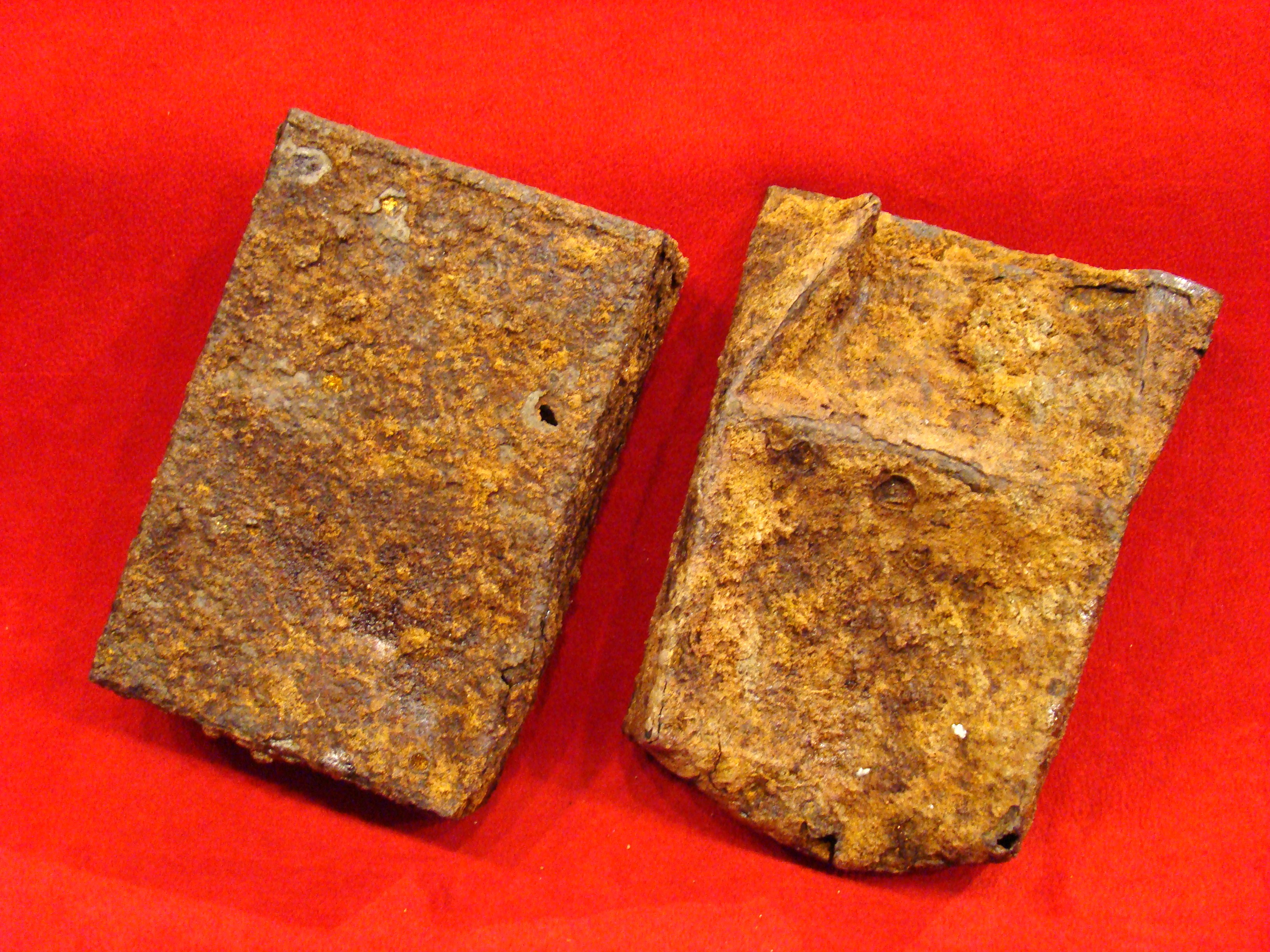
MS 15. Dug Pair of Cartridge Box Tins.
Excellent condition. Found together in Suffolk VA. by Charles Darden in January of 1978. Would make a great display with some dug bullets. SOLD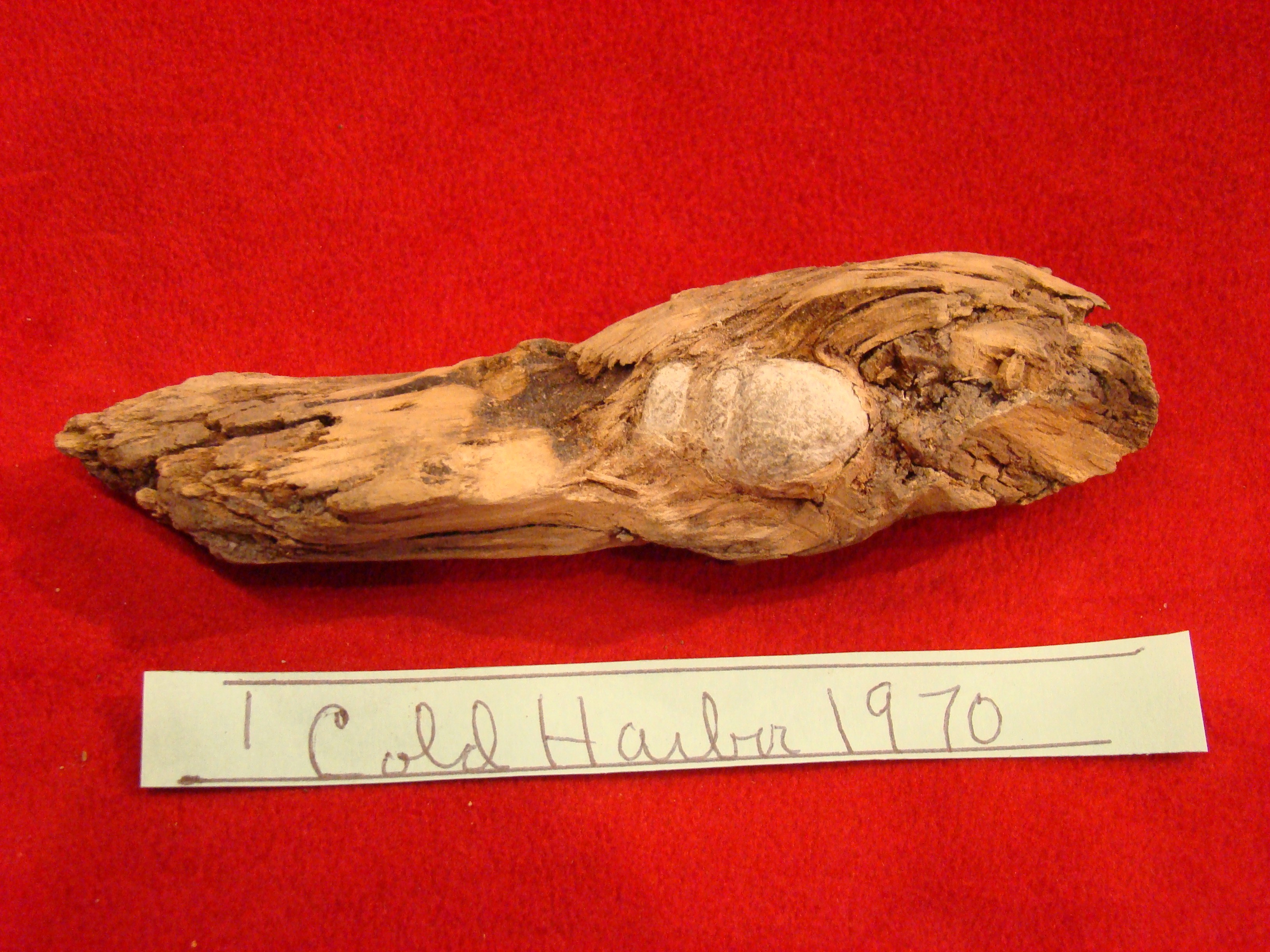
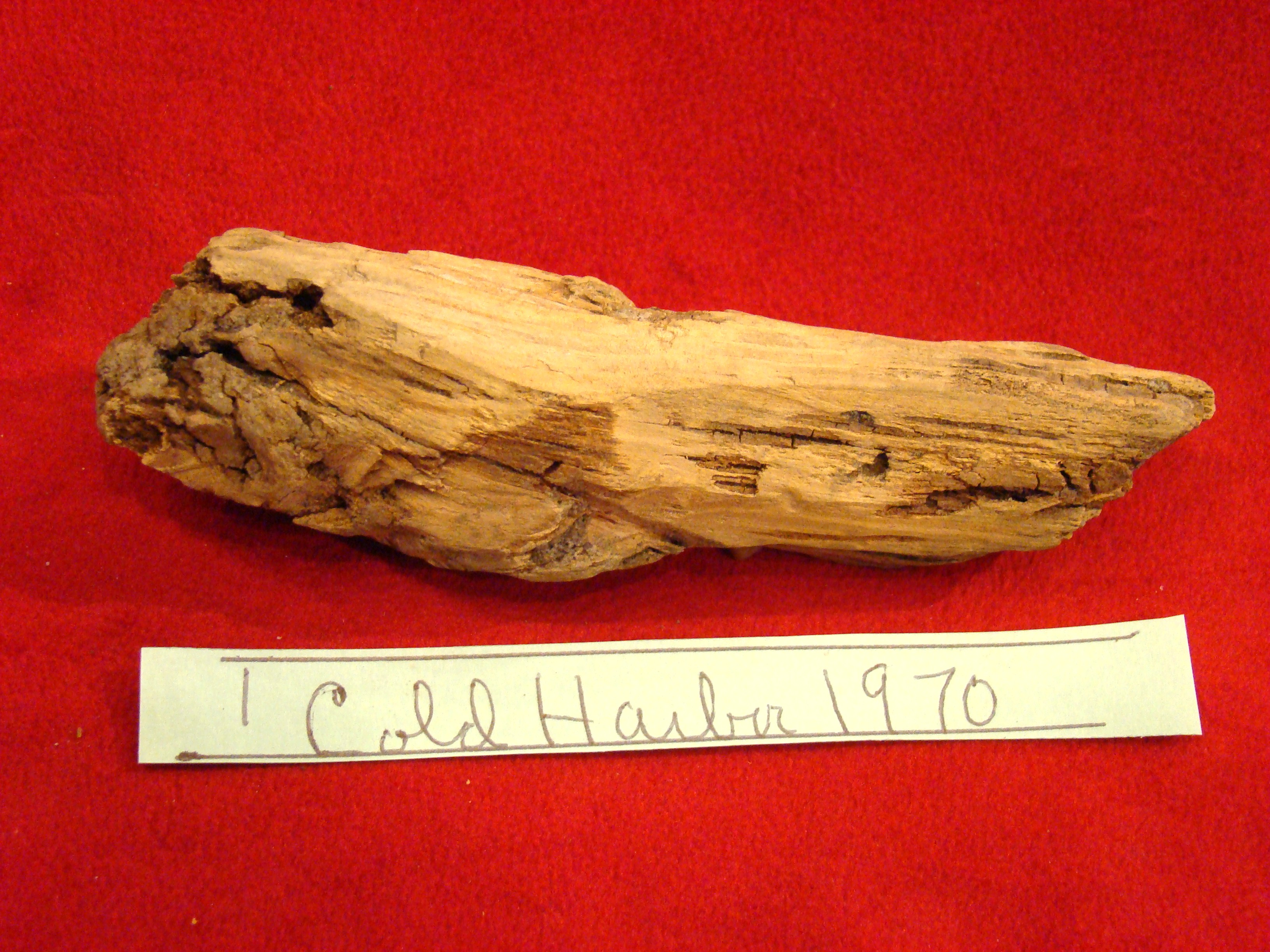
MS 16. Dug Fragment of Wood with a Confederate Gardner Bullet embedded. Cold Harbor VA.
Found back in 1970 by Charles Darden on the Cold Harbor VA. Battlefield. SOLD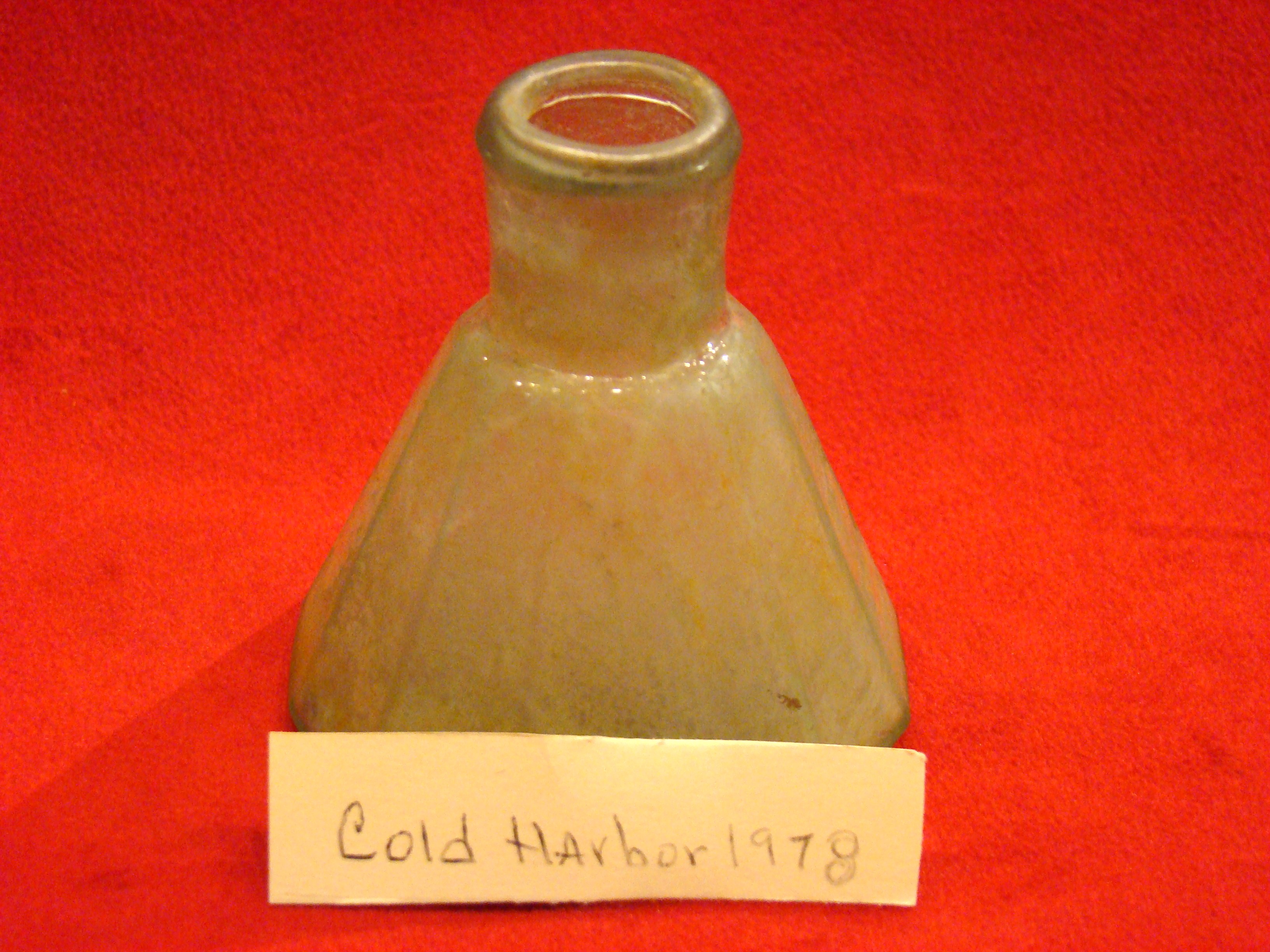
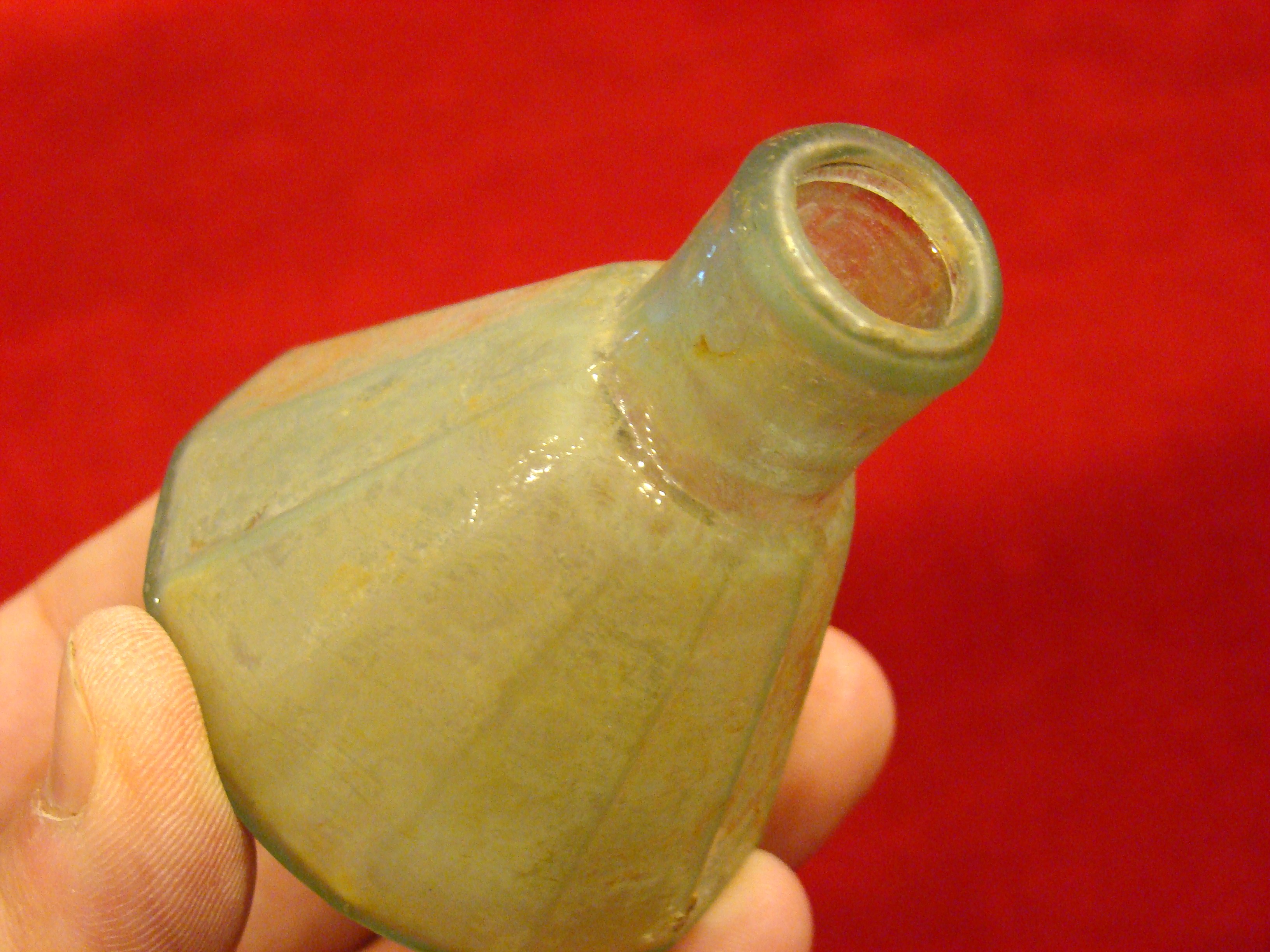
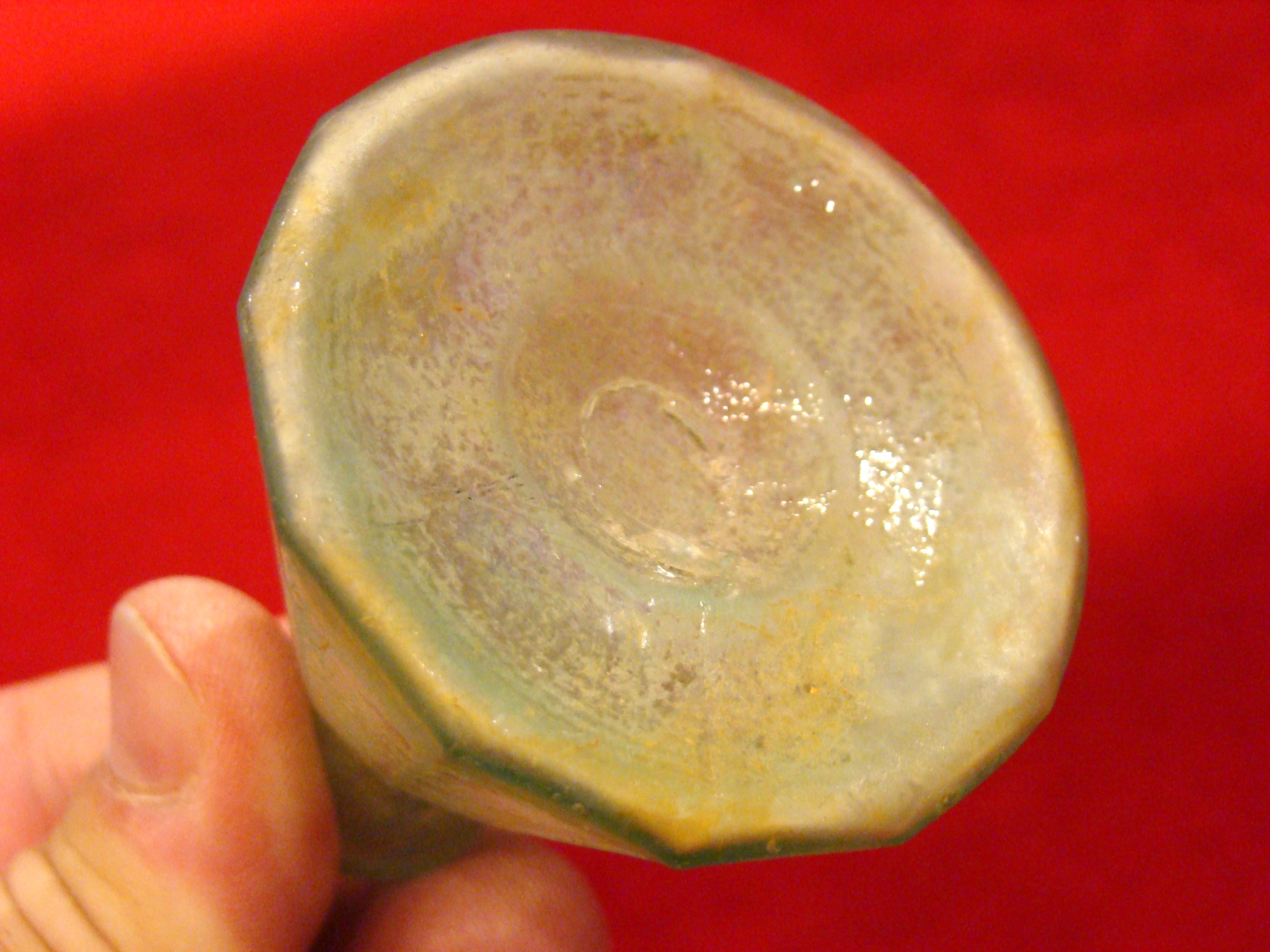
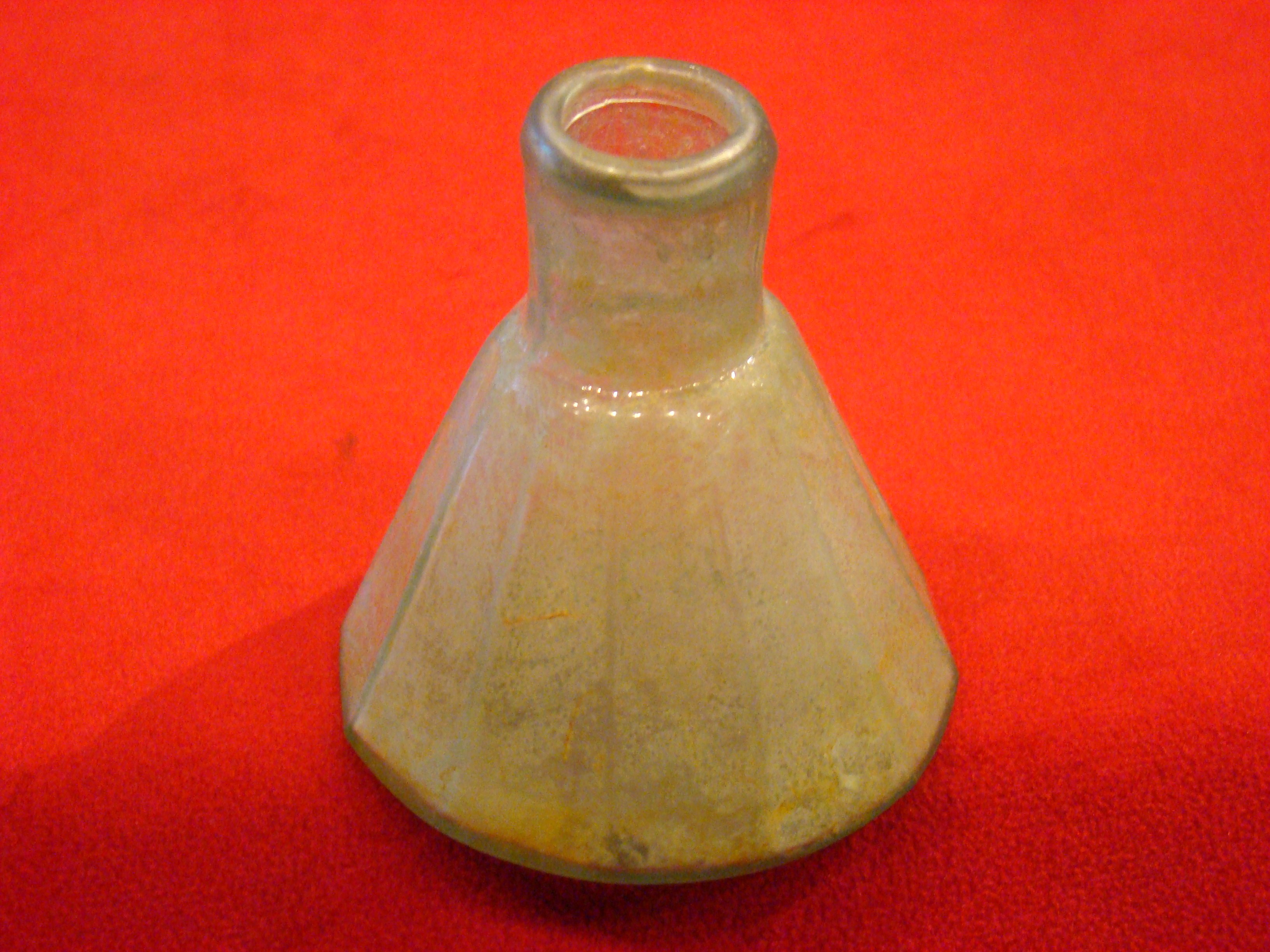
MS 17. Dug Civil War Inkwell Bottle. Cold Harbor VA.
Found on The Cold Harbor VA. Battlefield by Charles Darden in 1978. $95.00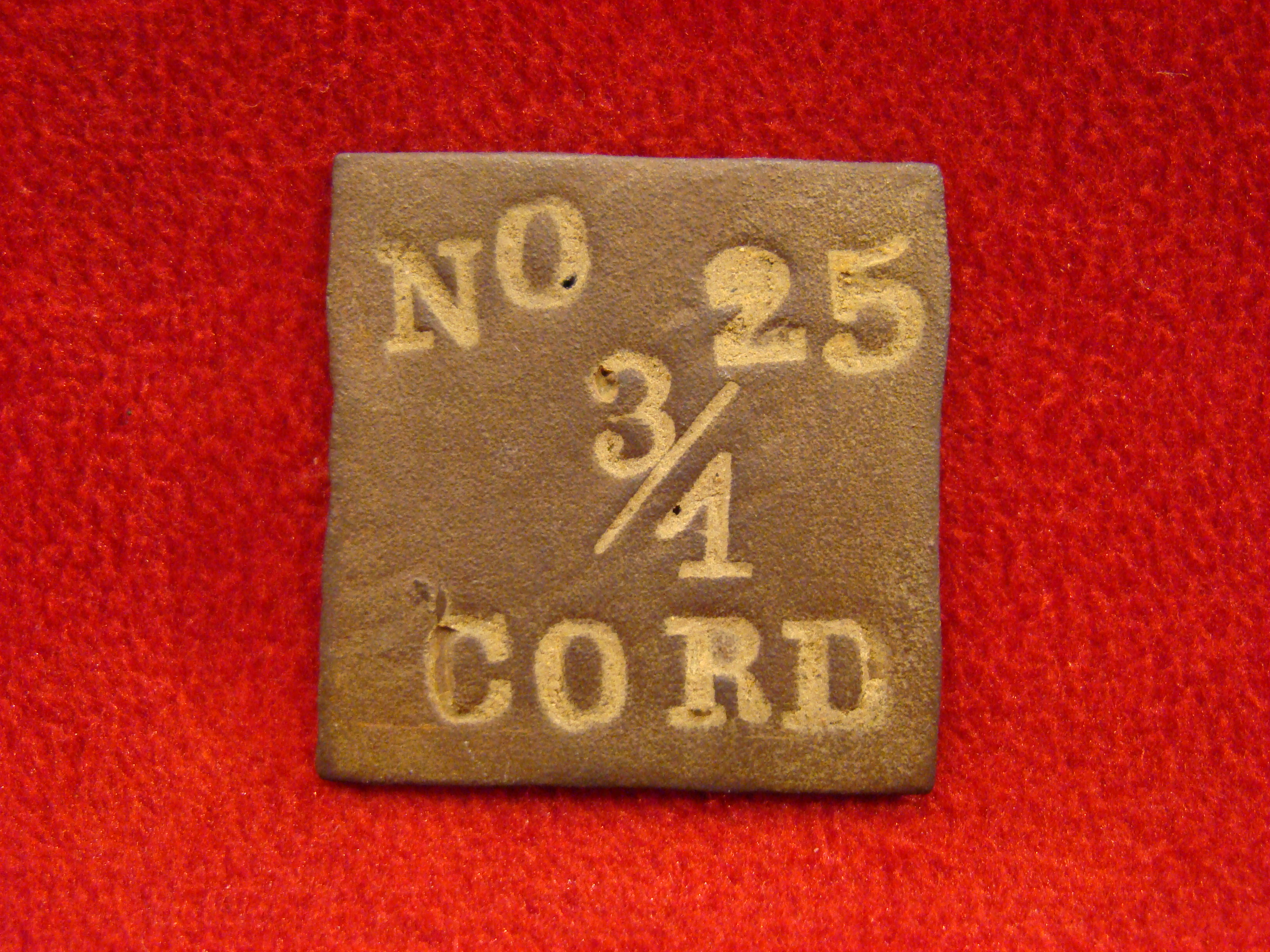
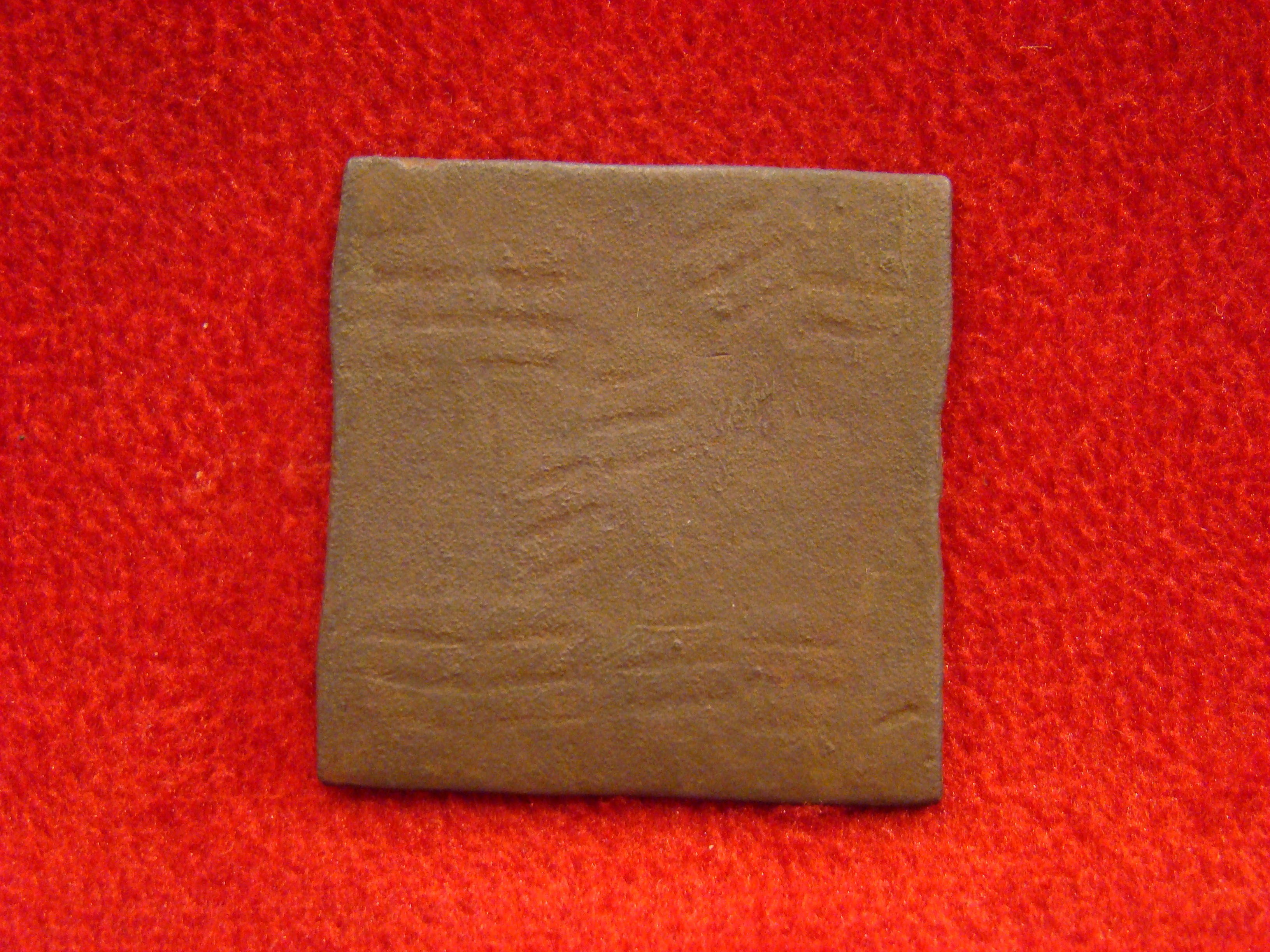
MS 18. Dug Brass Token For Railroad Locomotive Cord Wood.
Found in a Civil War troops camp guarding the East Tennessee & Virginia Railroad near Cleveland TN. SOLD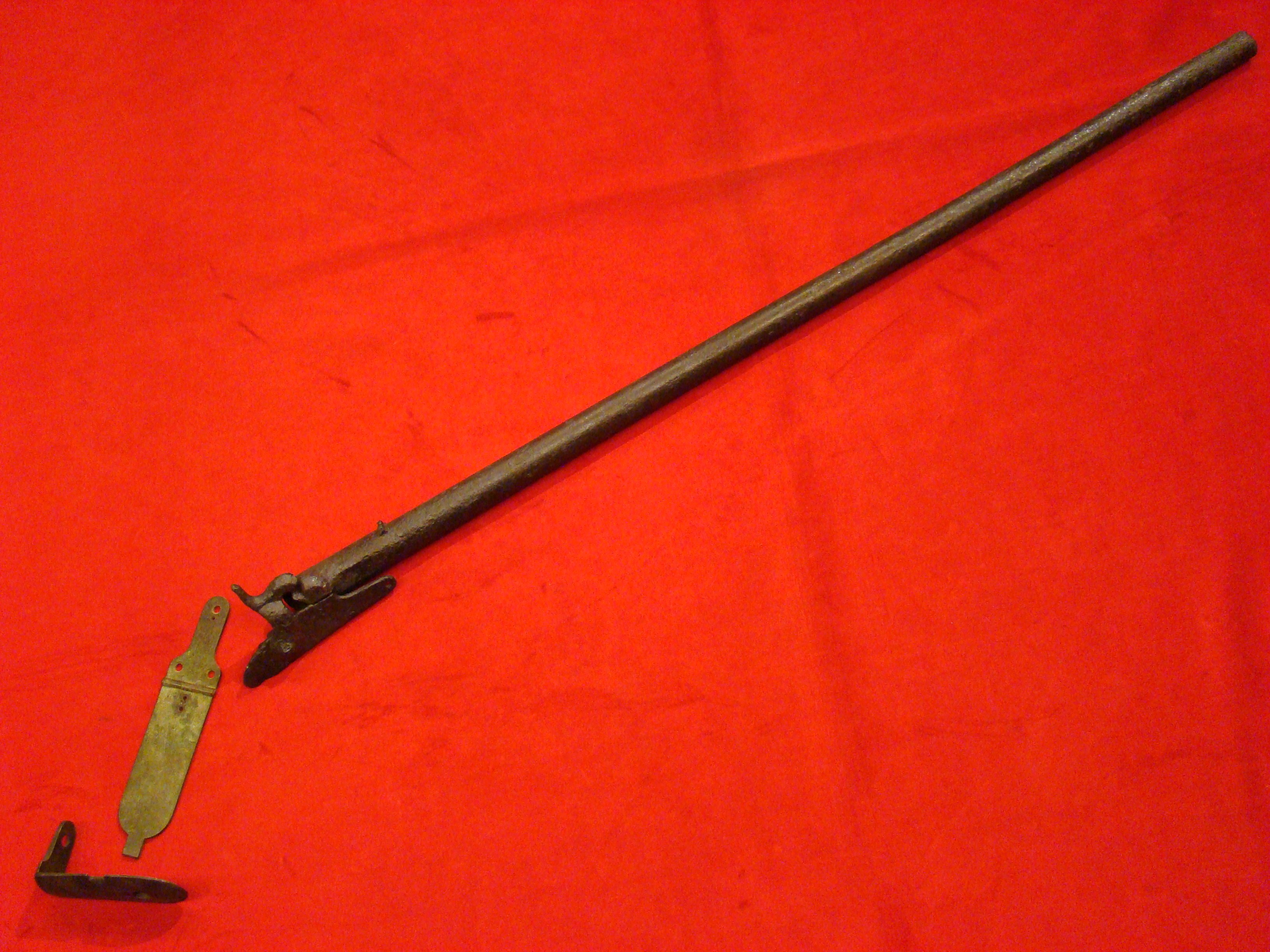
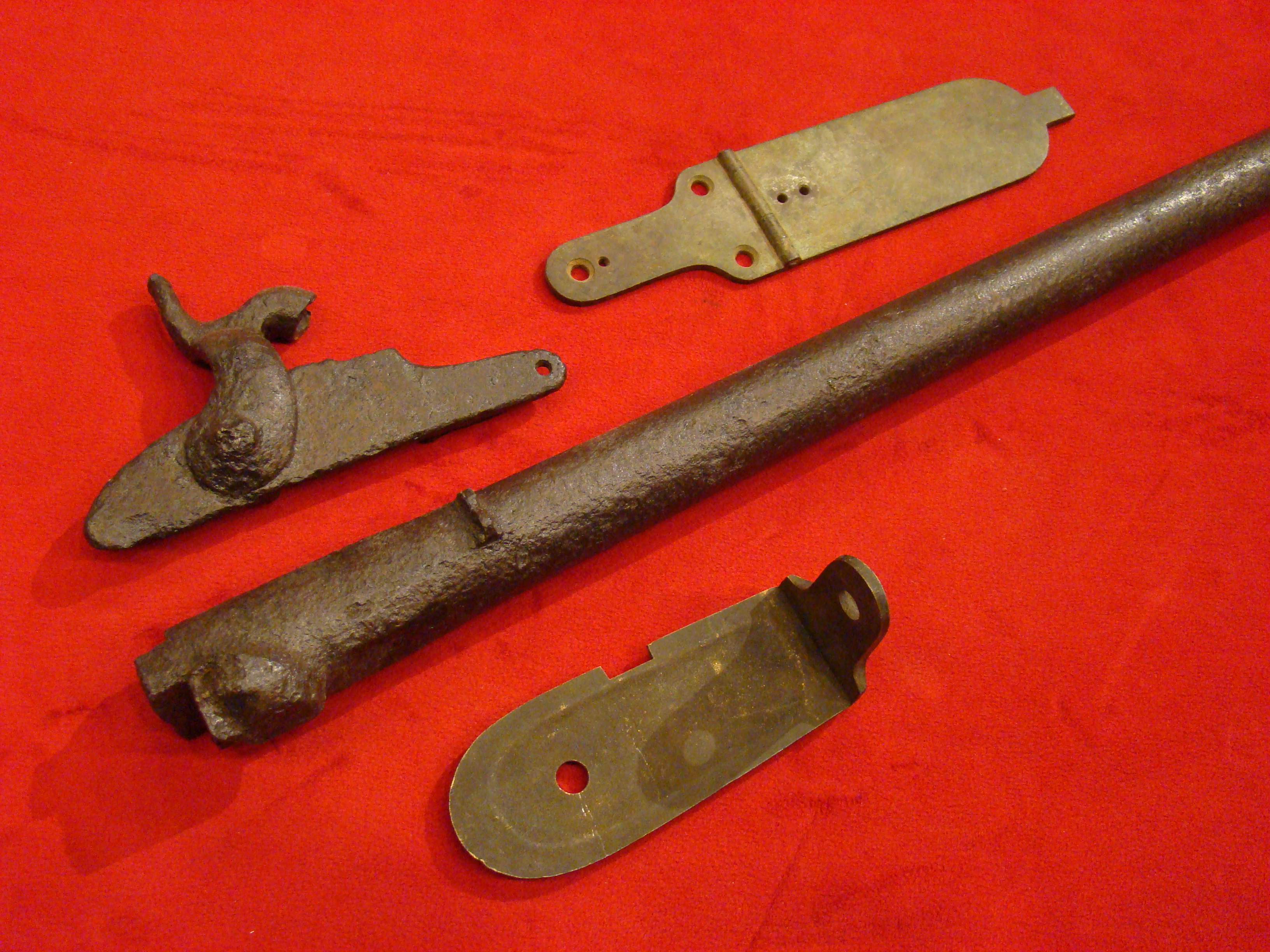
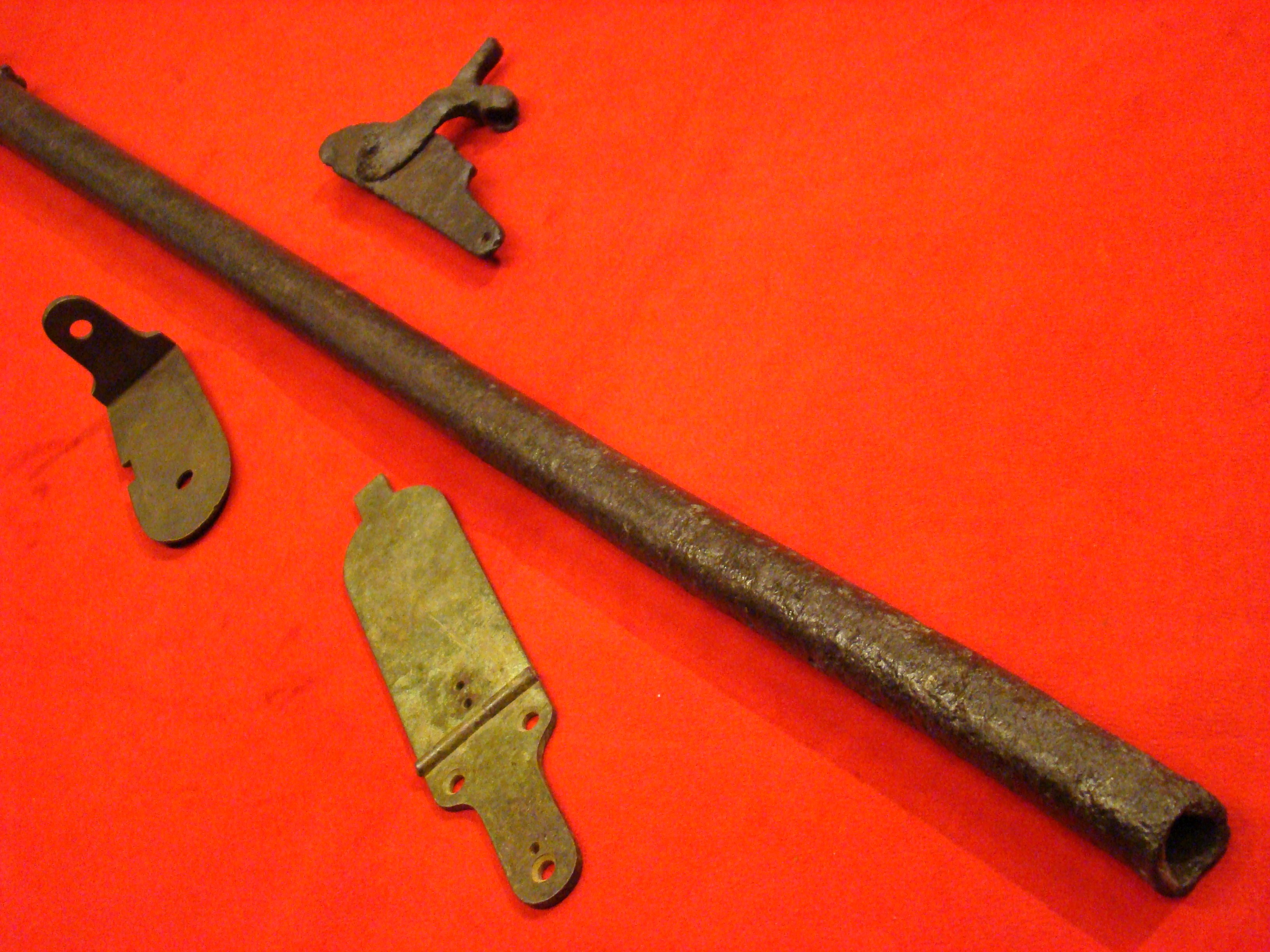
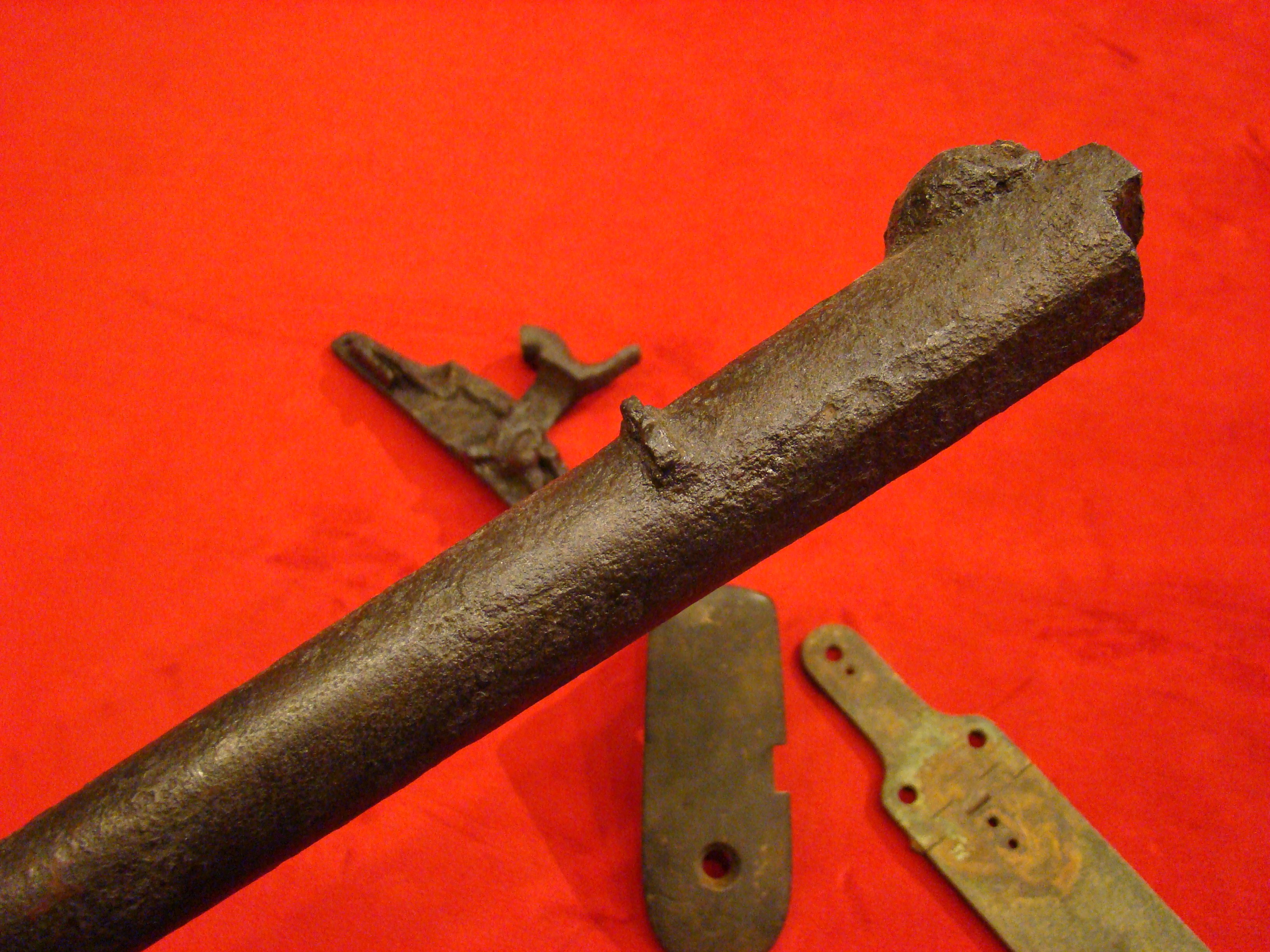
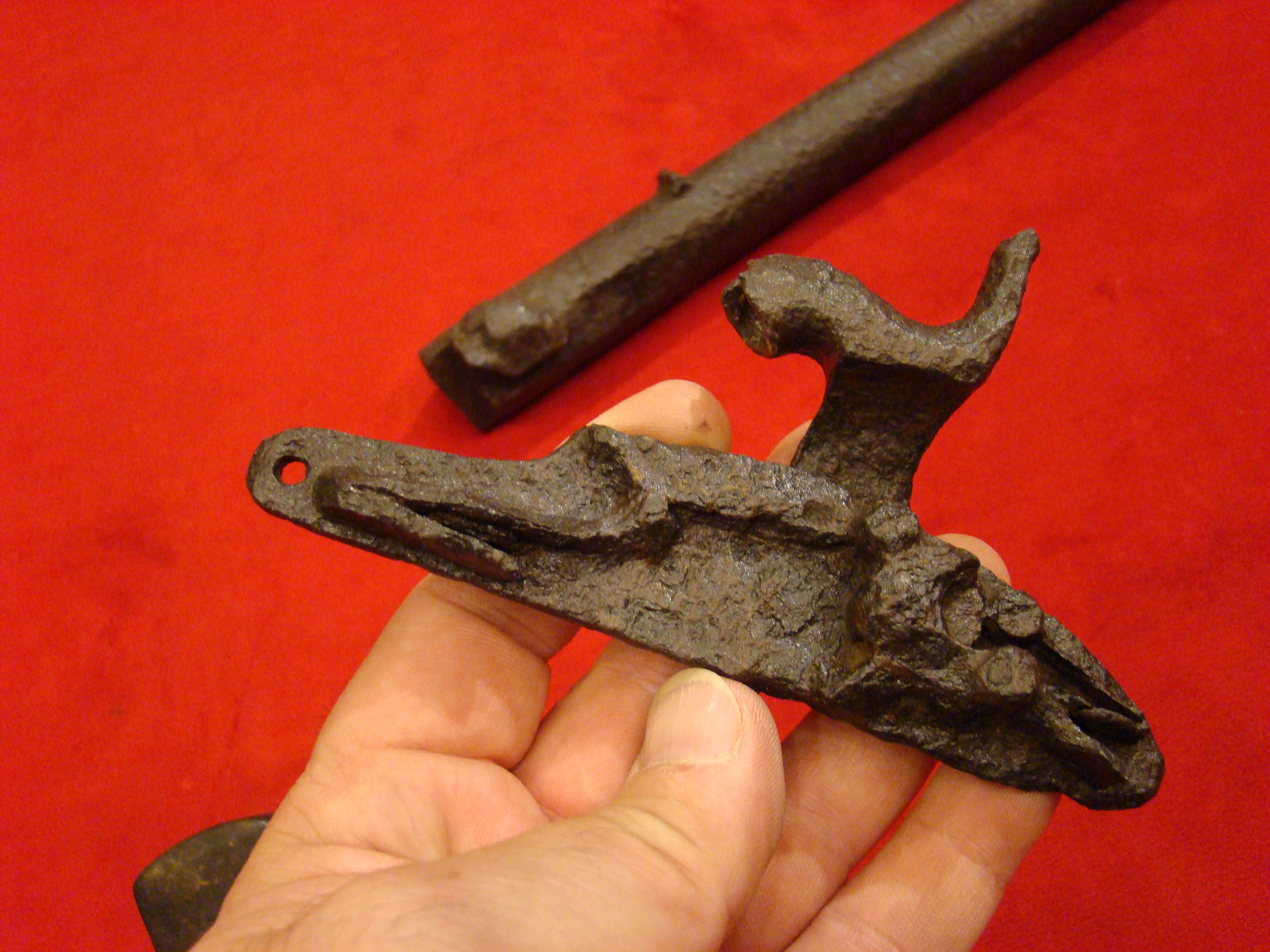
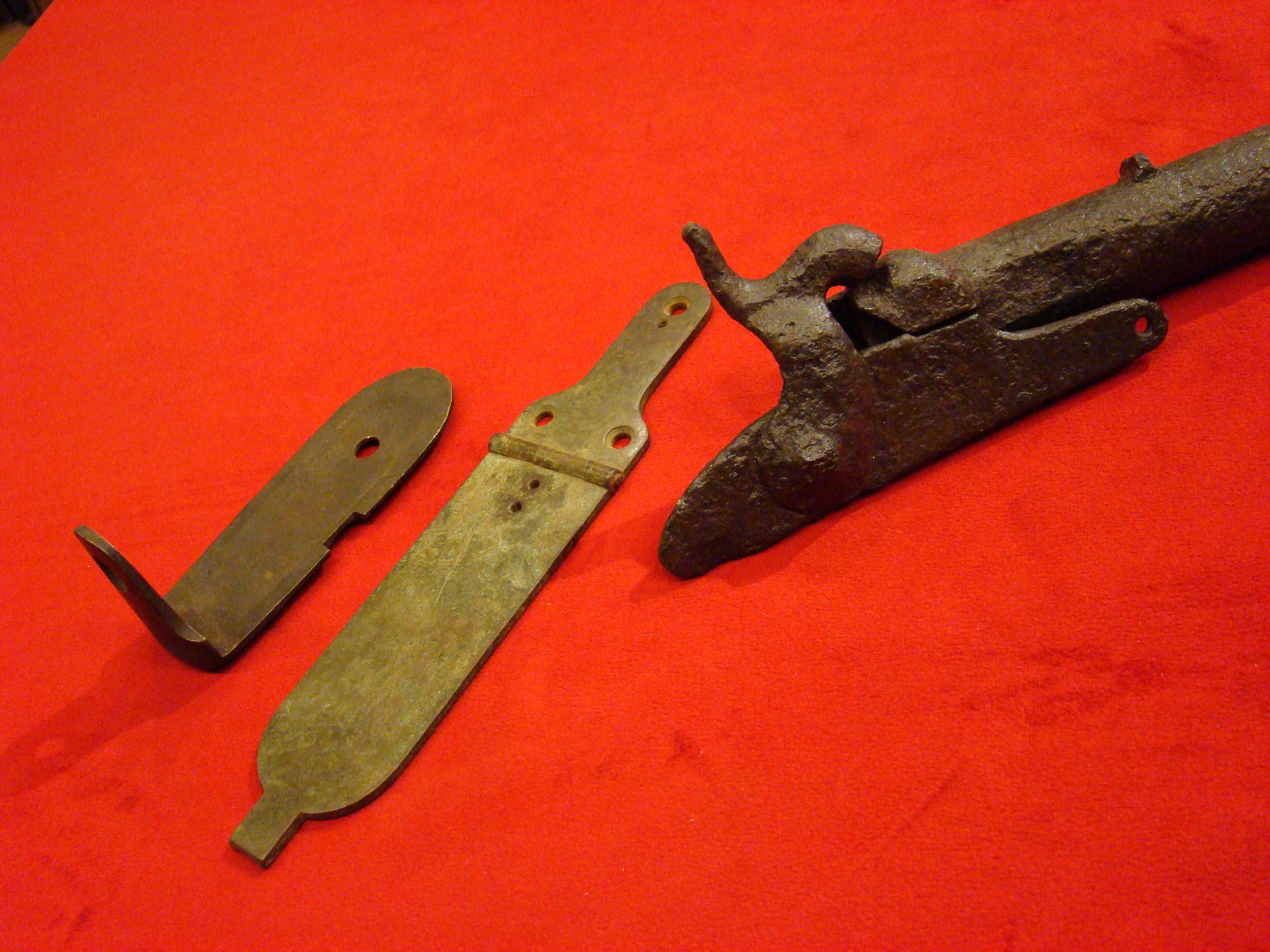
MS 19. Dug US M-1841 “Mississippi” Rifle Barrel, Butt Plate, Patch Box, and Lock.
If you can round up a nose cap, ramrod and barrel bands, you will have a complete M-1841 rifle. Verbal provenance of Shiloh TN. SOLD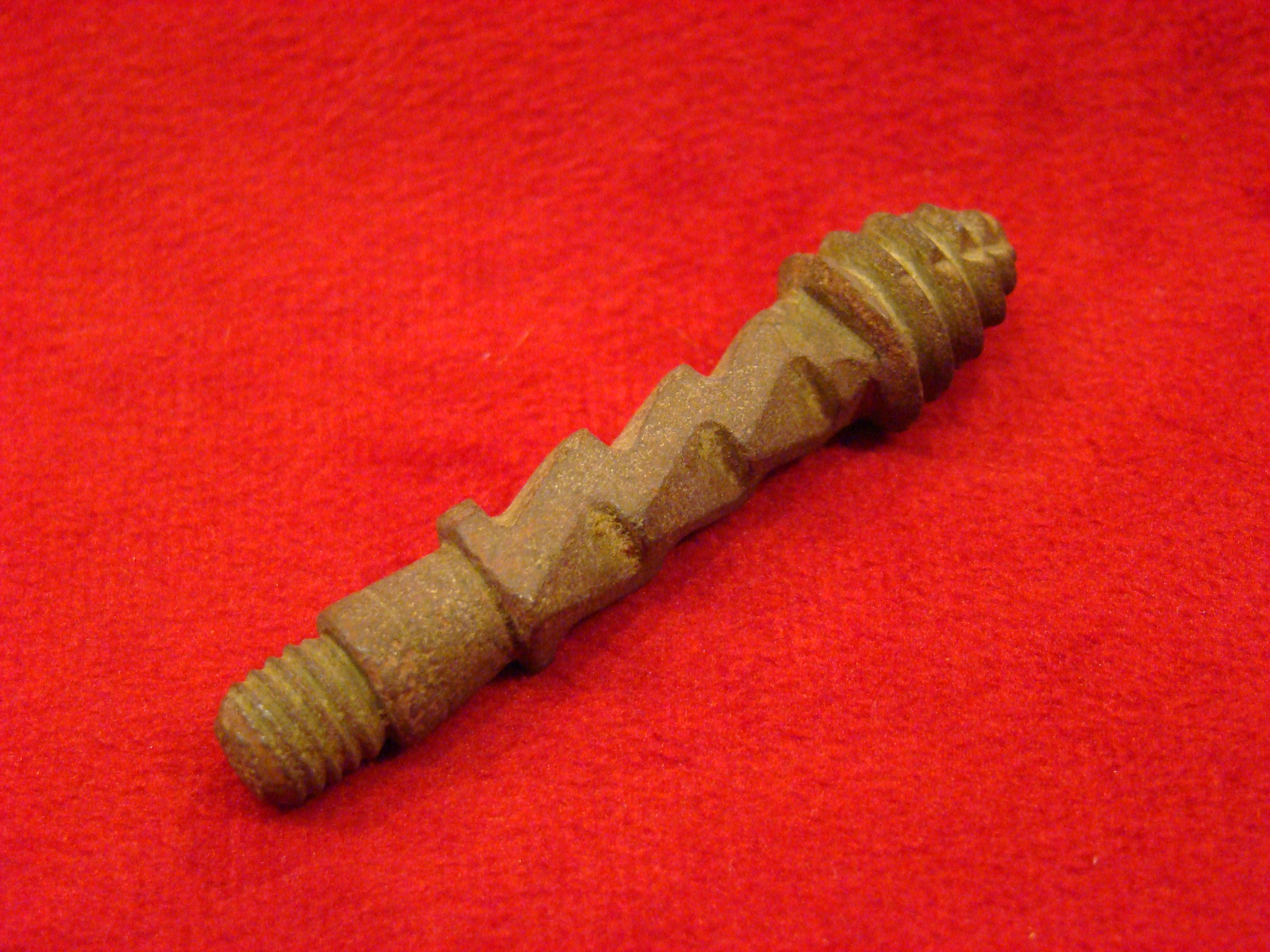
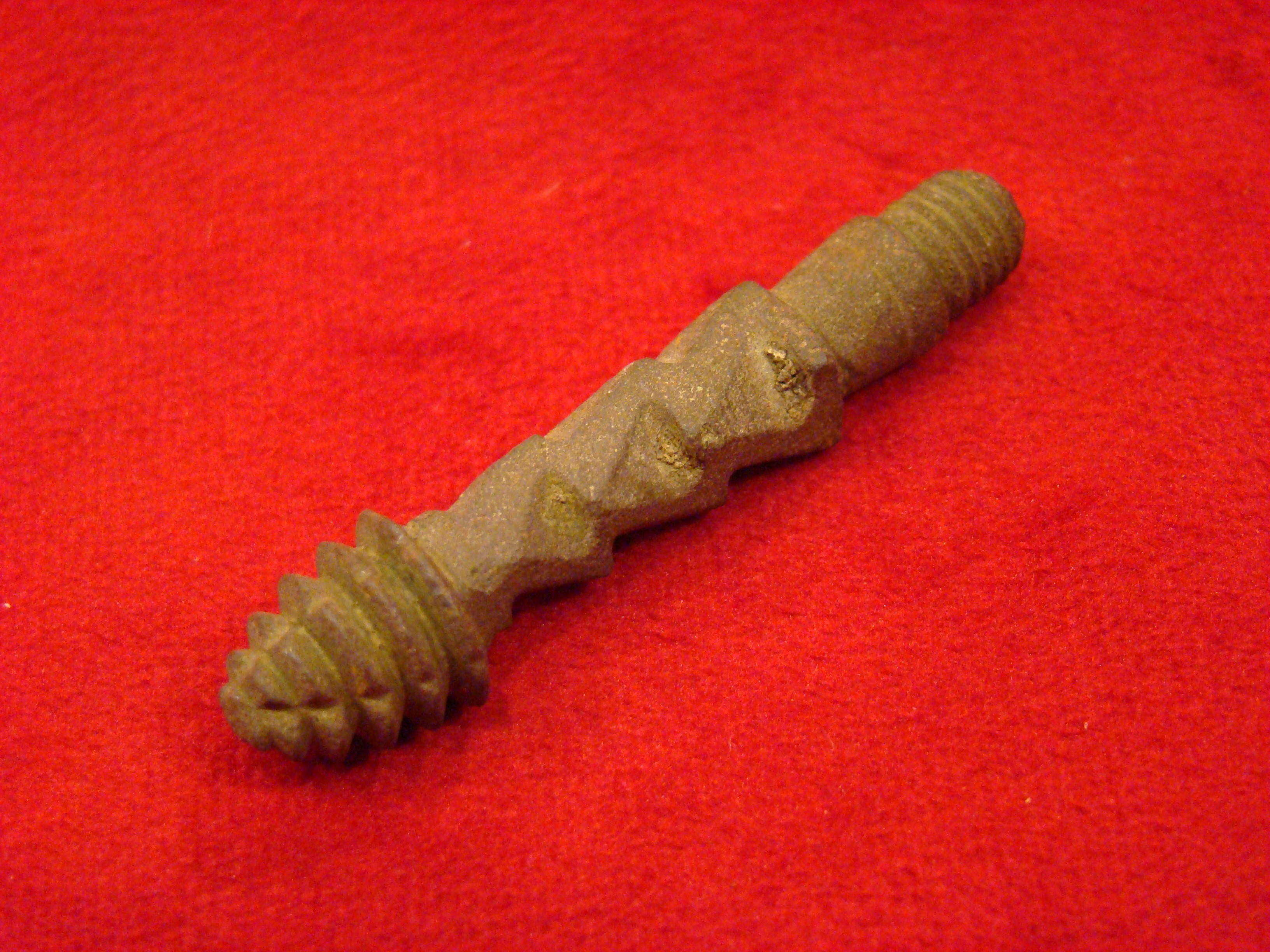
MS 20. Dug 54 Bore Confederate Tranter/Adams Revolver Cleaning Jag.
Large brass jag found in a CS camp near Corinth MS. Excellent condition. SOLD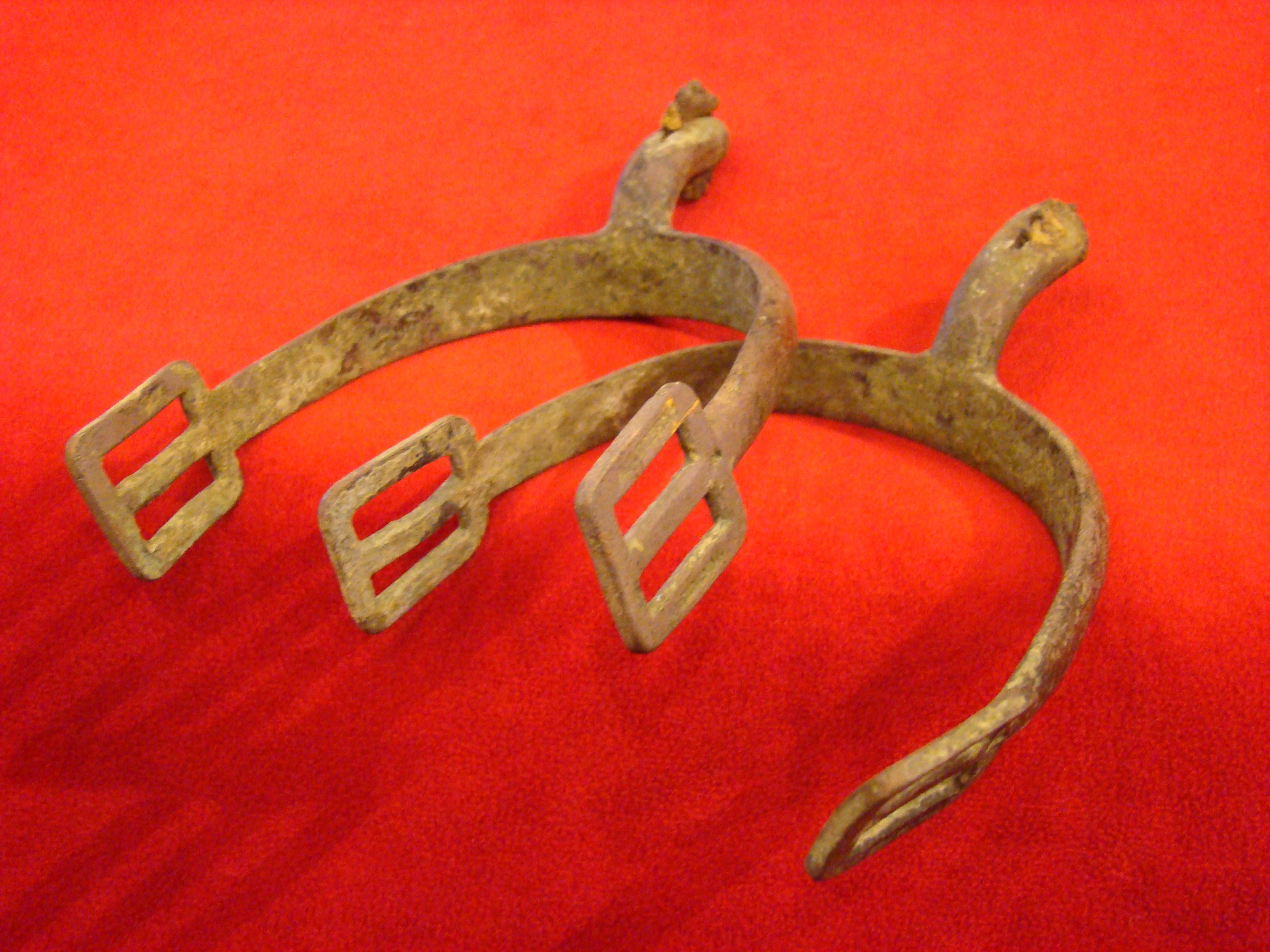
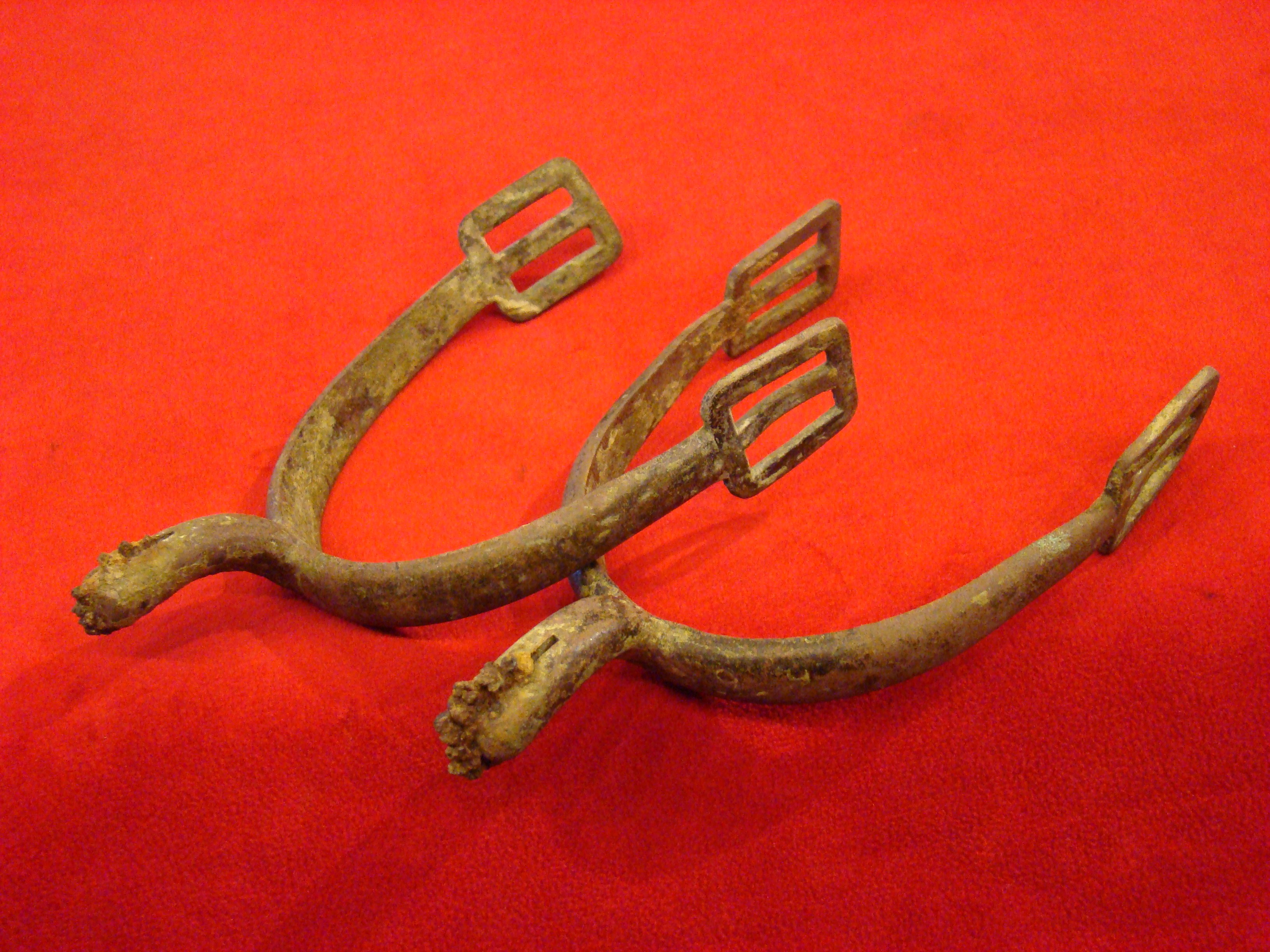
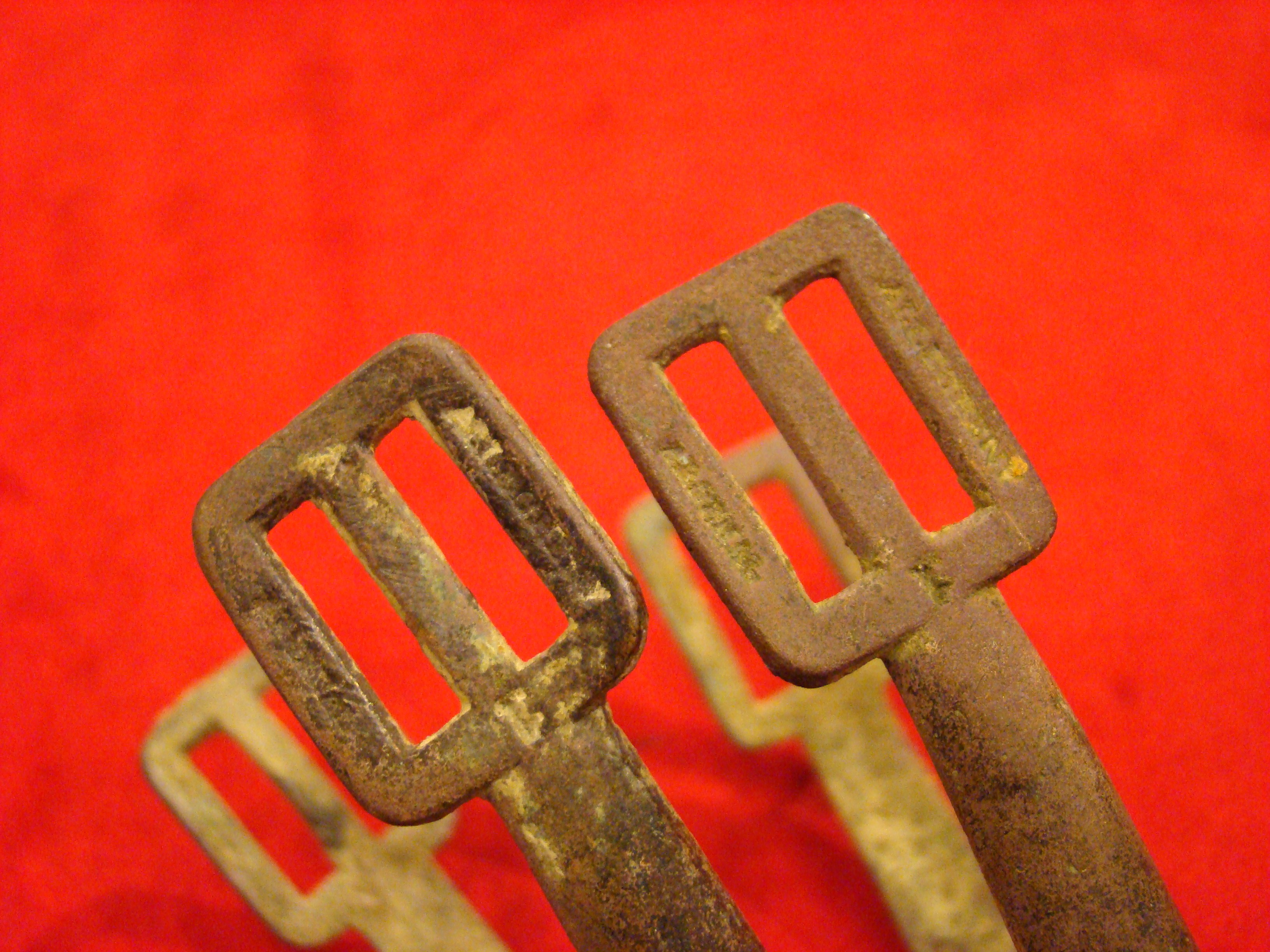
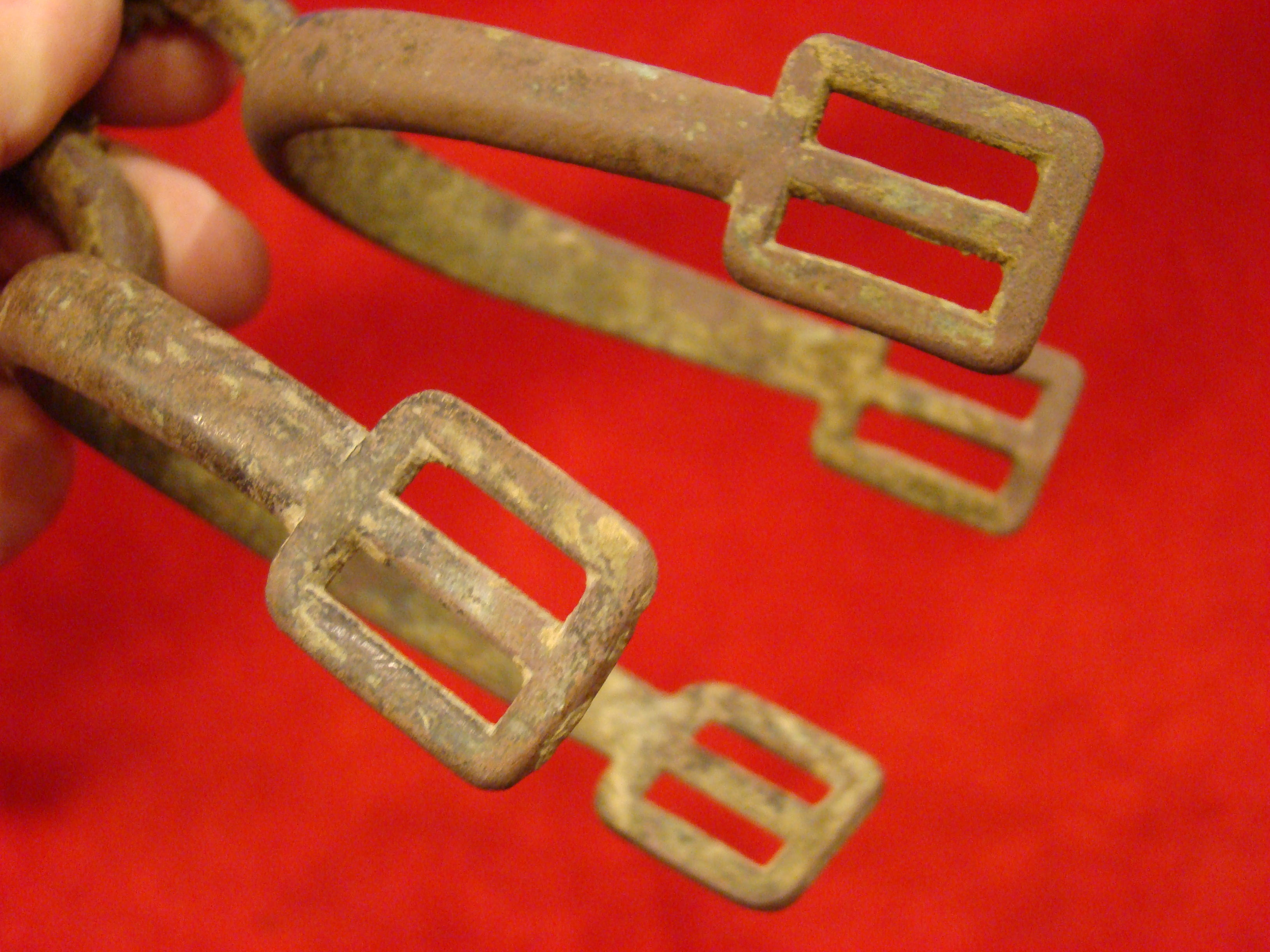
MS 21. Dug Pair of US M-1859 Allegheny Arsenal Cavalry Spurs.
Both spurs found together by Charles Darden in 1973. Both are marked “ALLEGHENY ARSENAL“. $295.00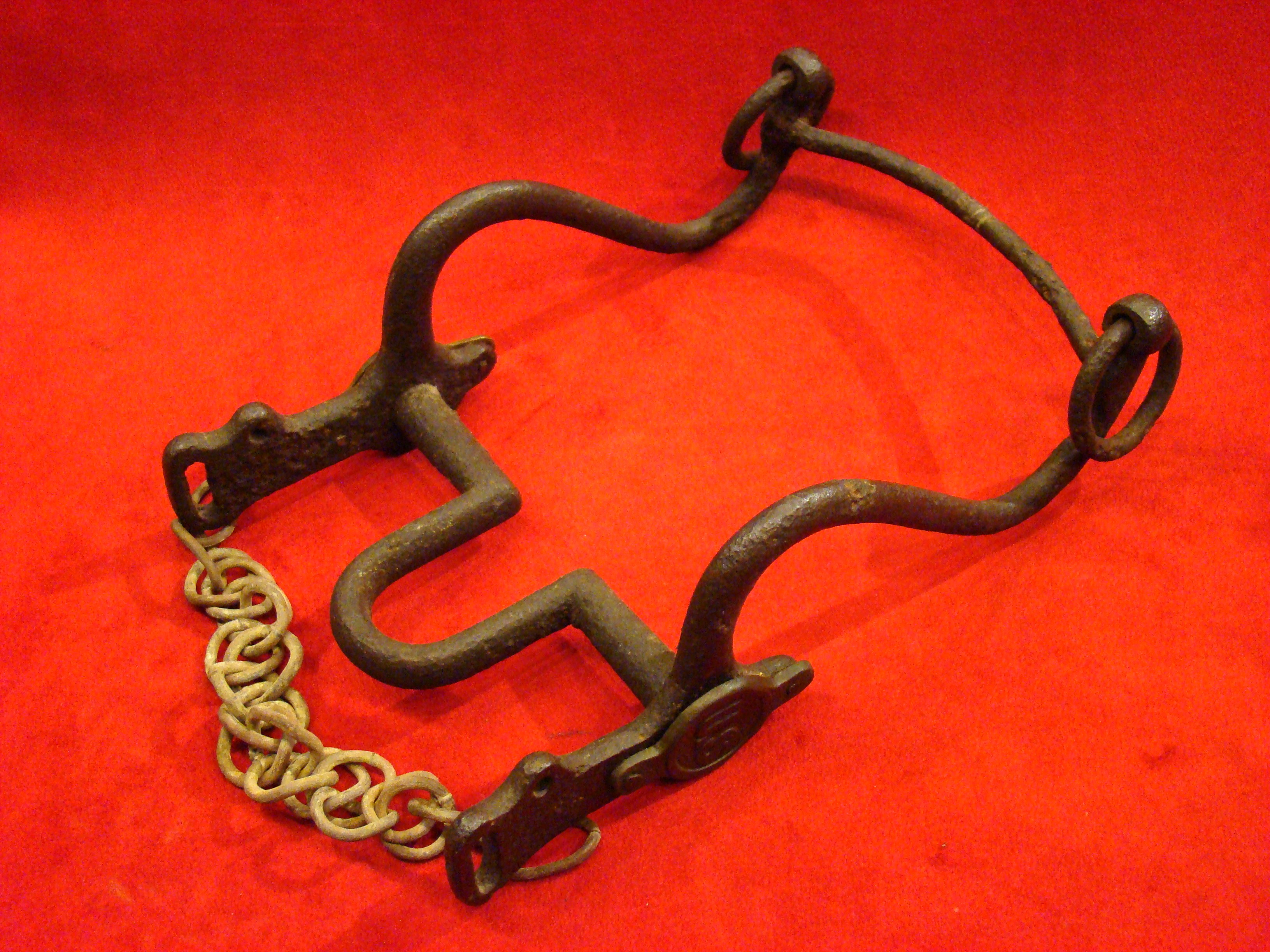
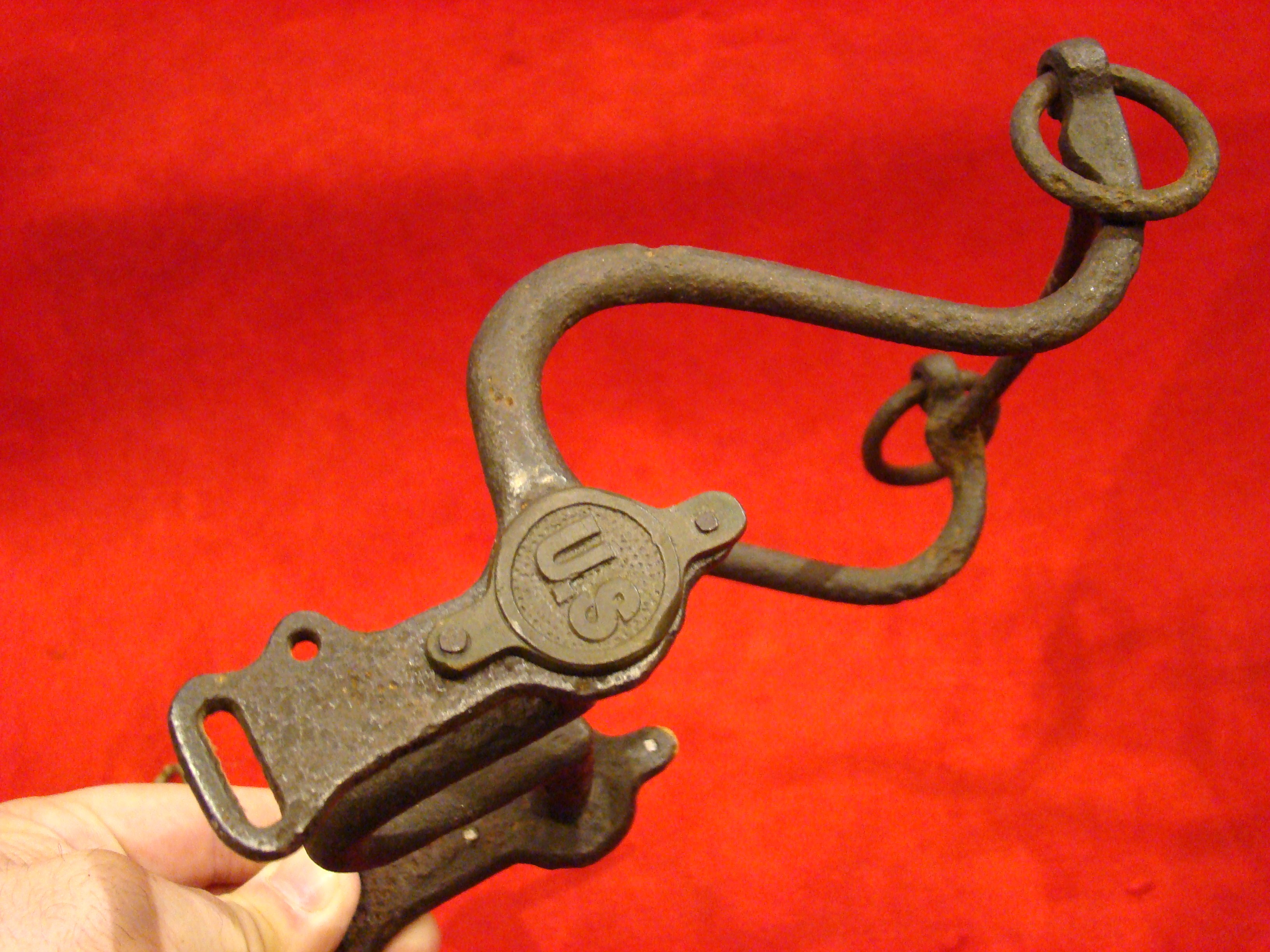
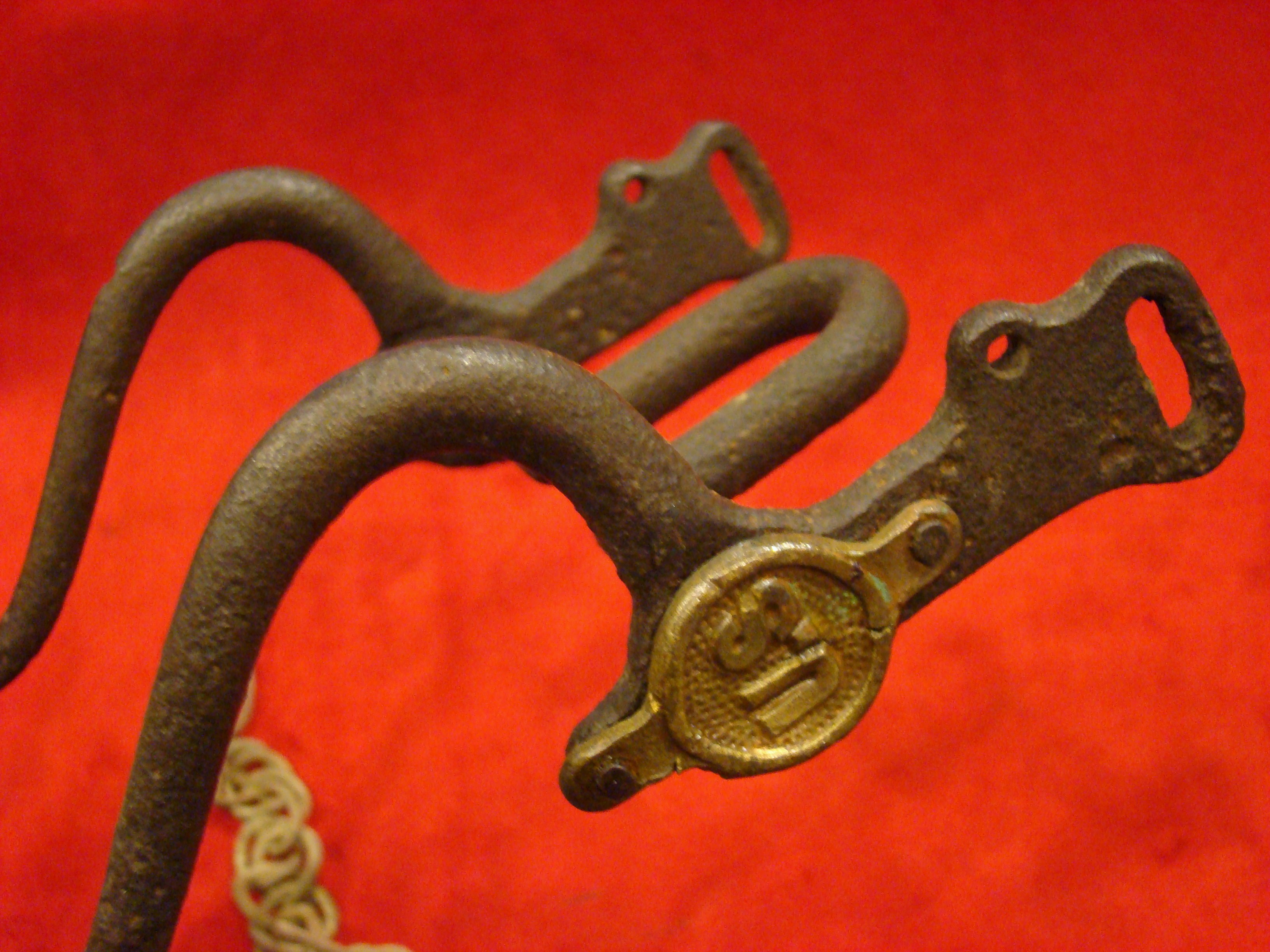
MS 22. Dug US Cavalry Bit & Curb Chain.
Found many years ago by Charles Darden in Central VA. $195.00 HOLD M.R.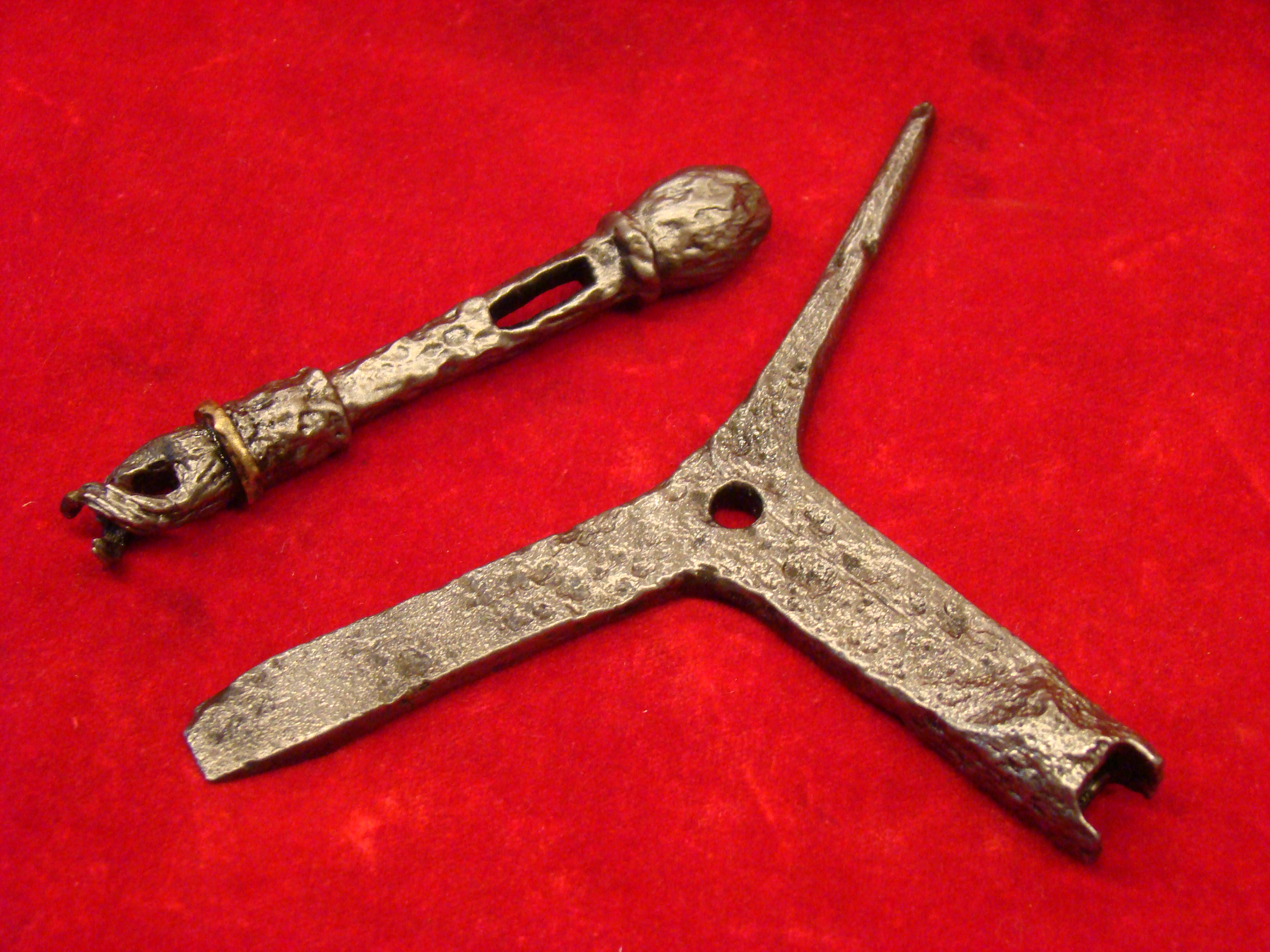
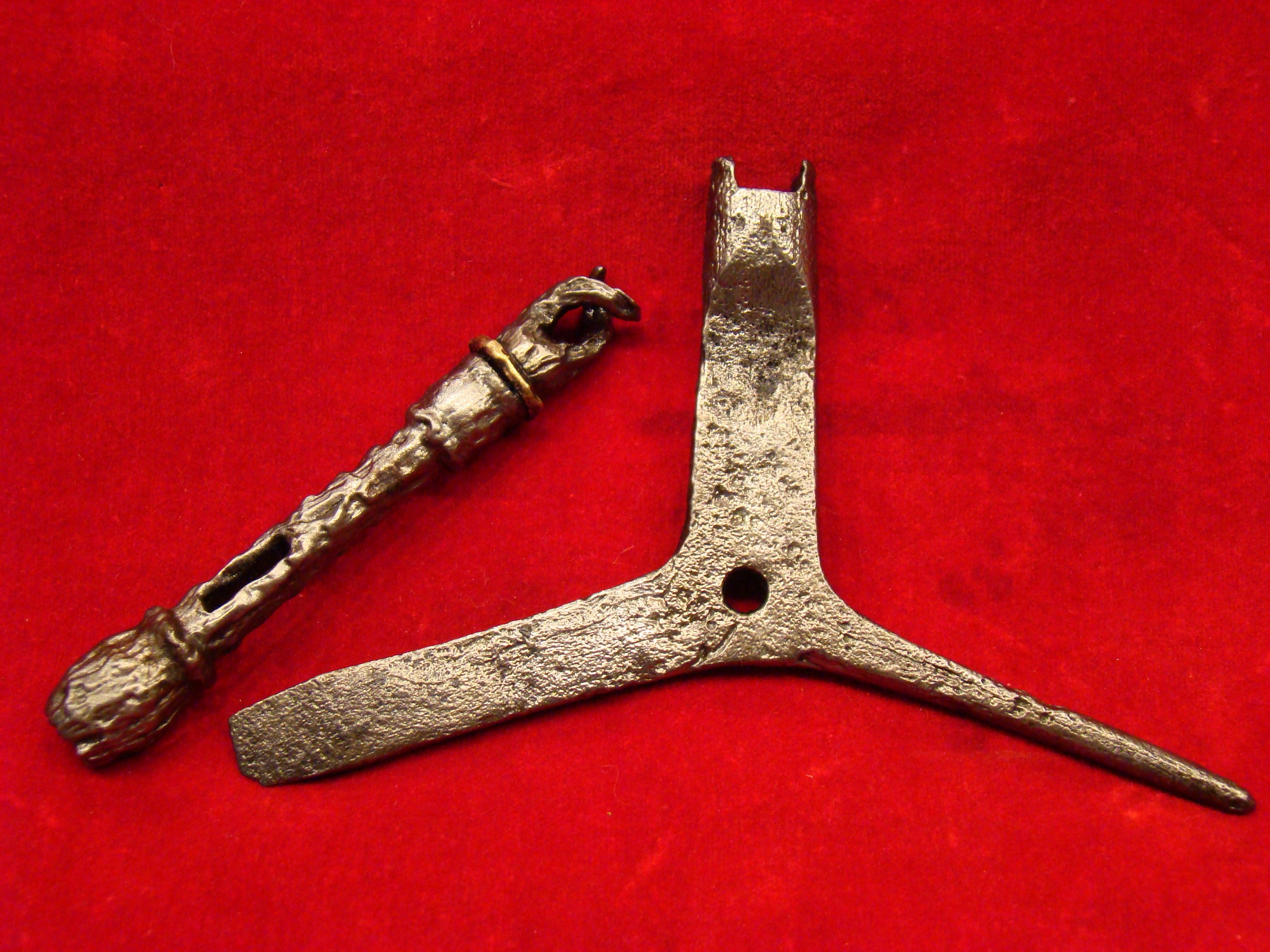
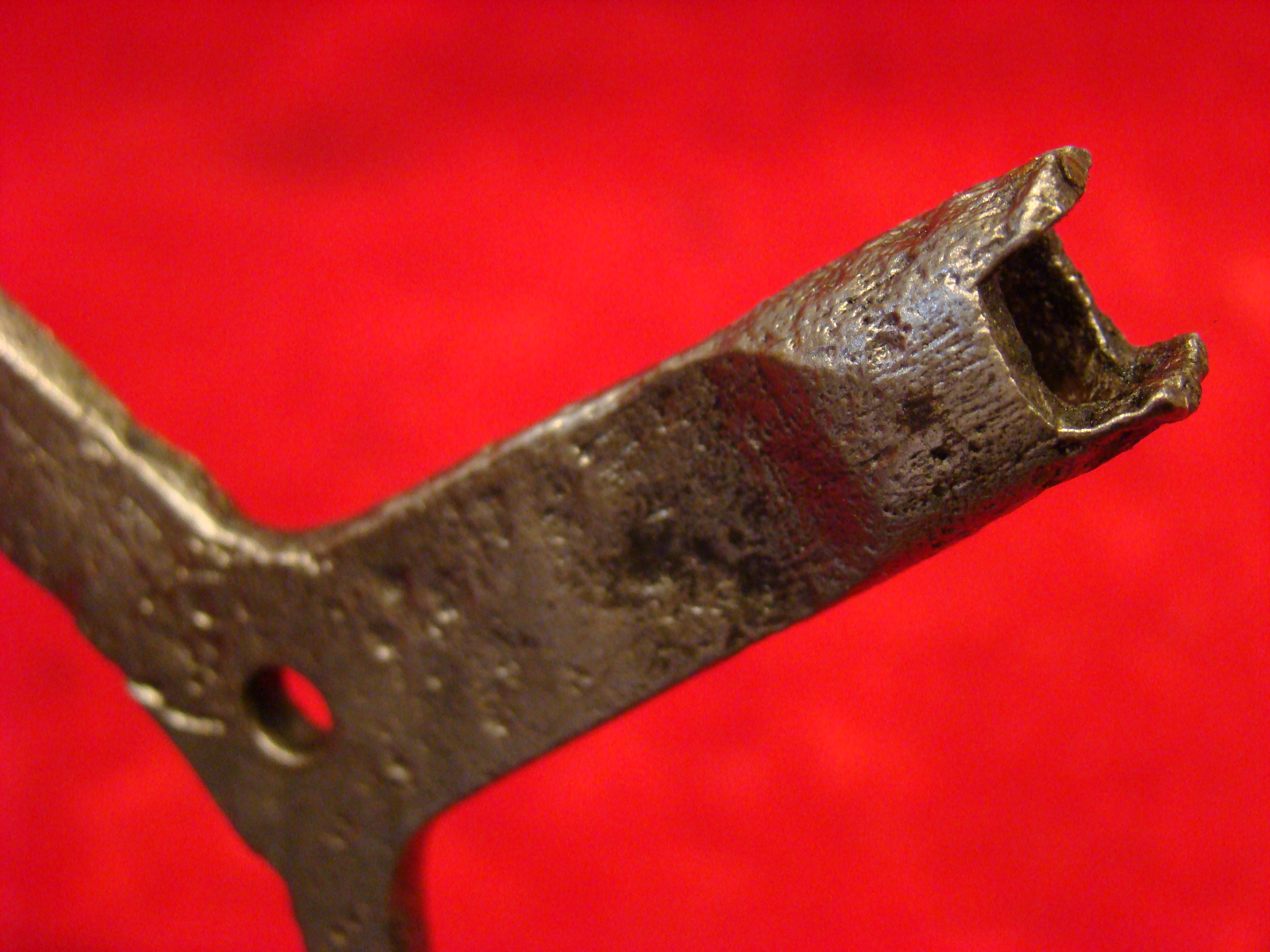
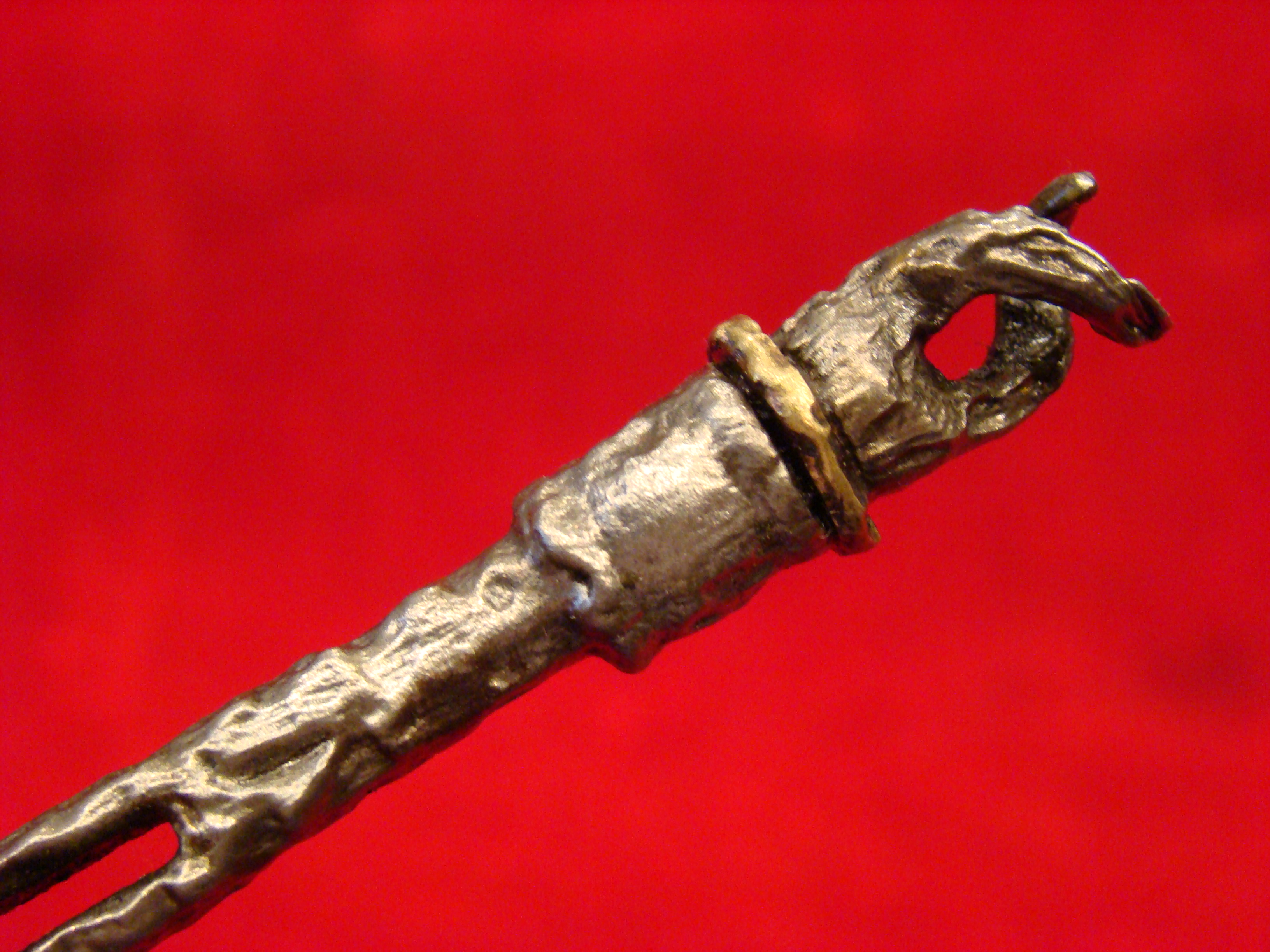
MS 23. Dug Confederate Soldier’s Combination Tool, Cleaning Jag & Worm. CS Camp, Iuka MS.
Austrian Lorenz Rifle tool and cleaning jag with worm inserted. Good condition. $75.00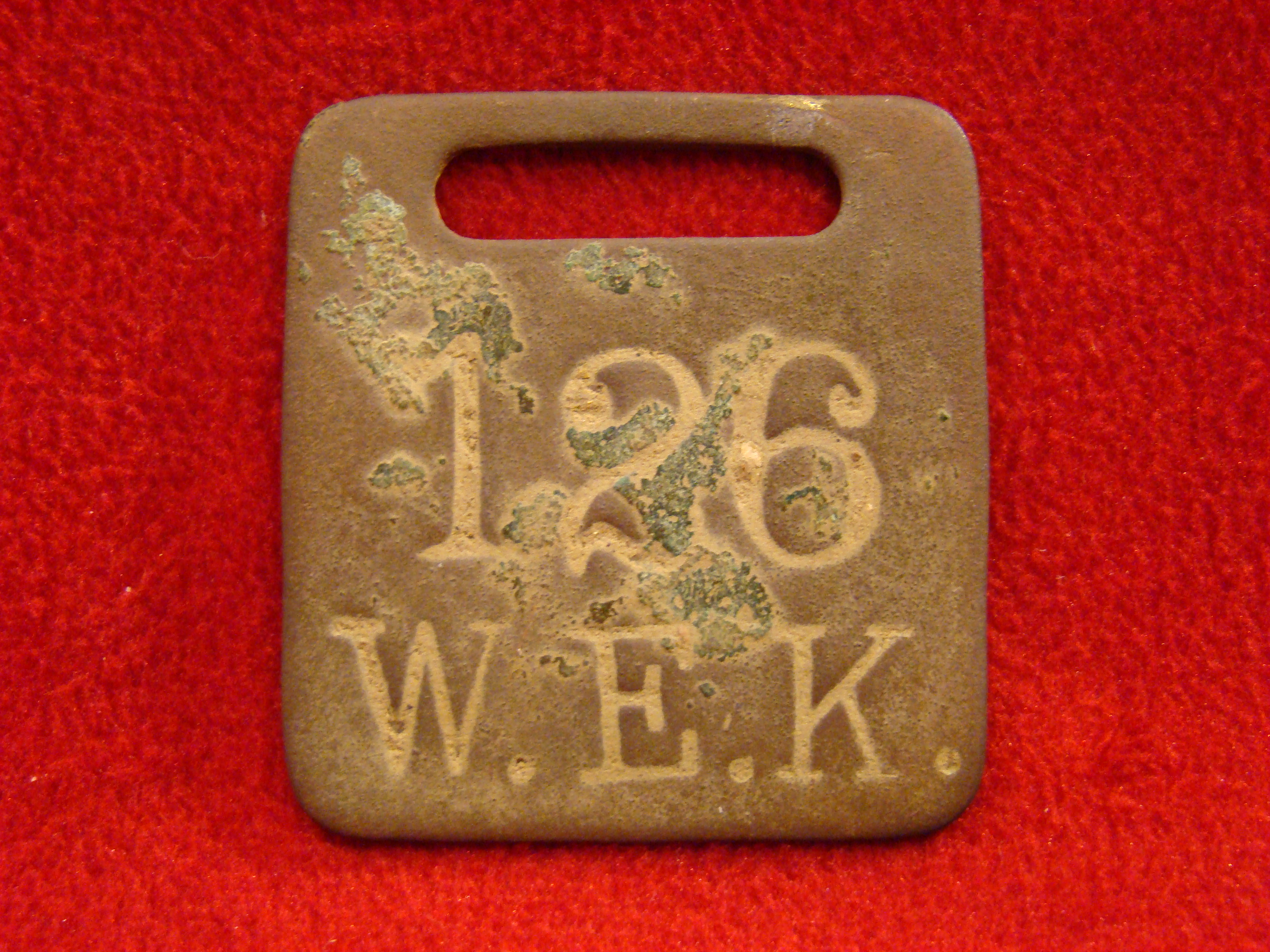
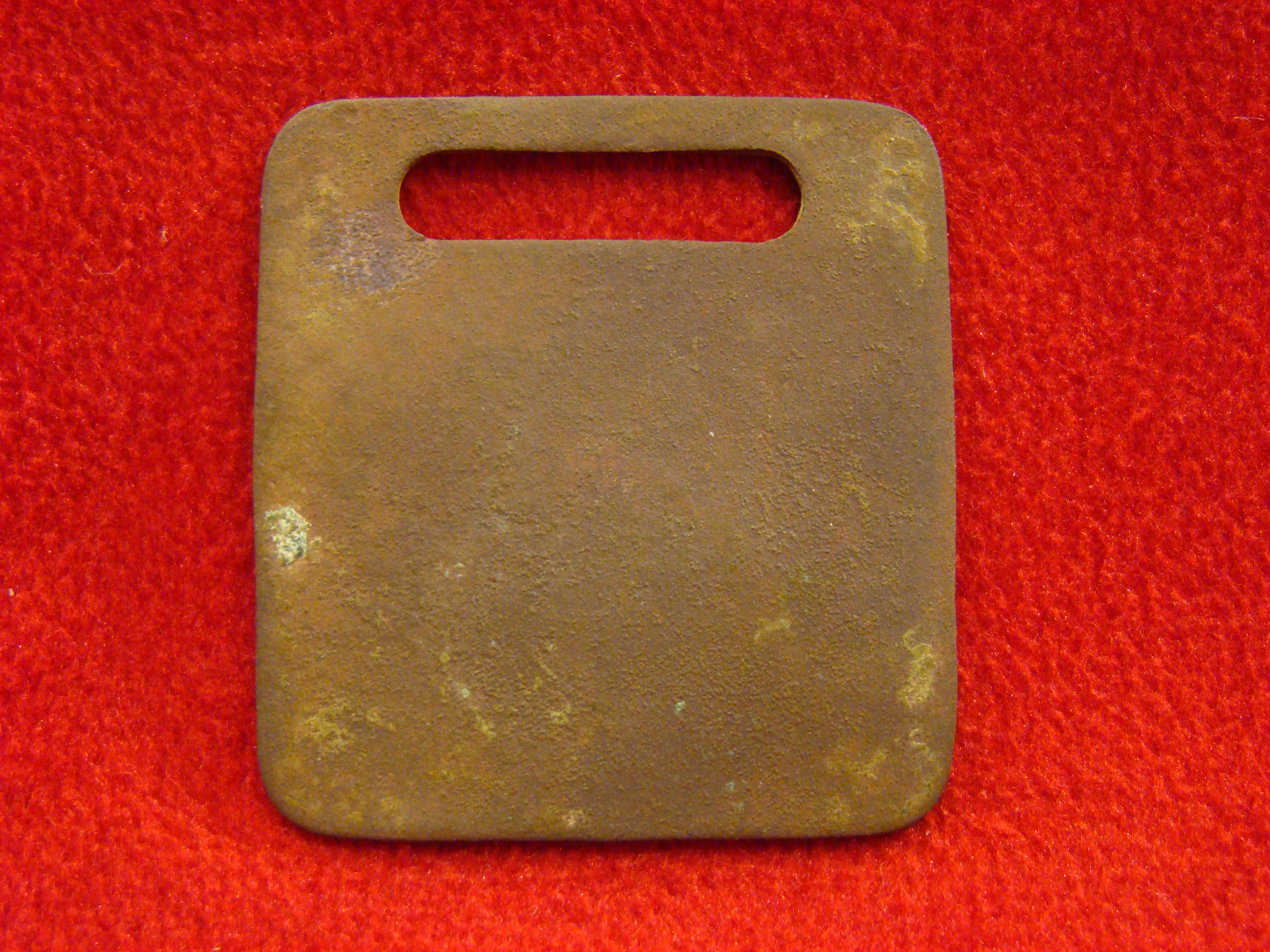
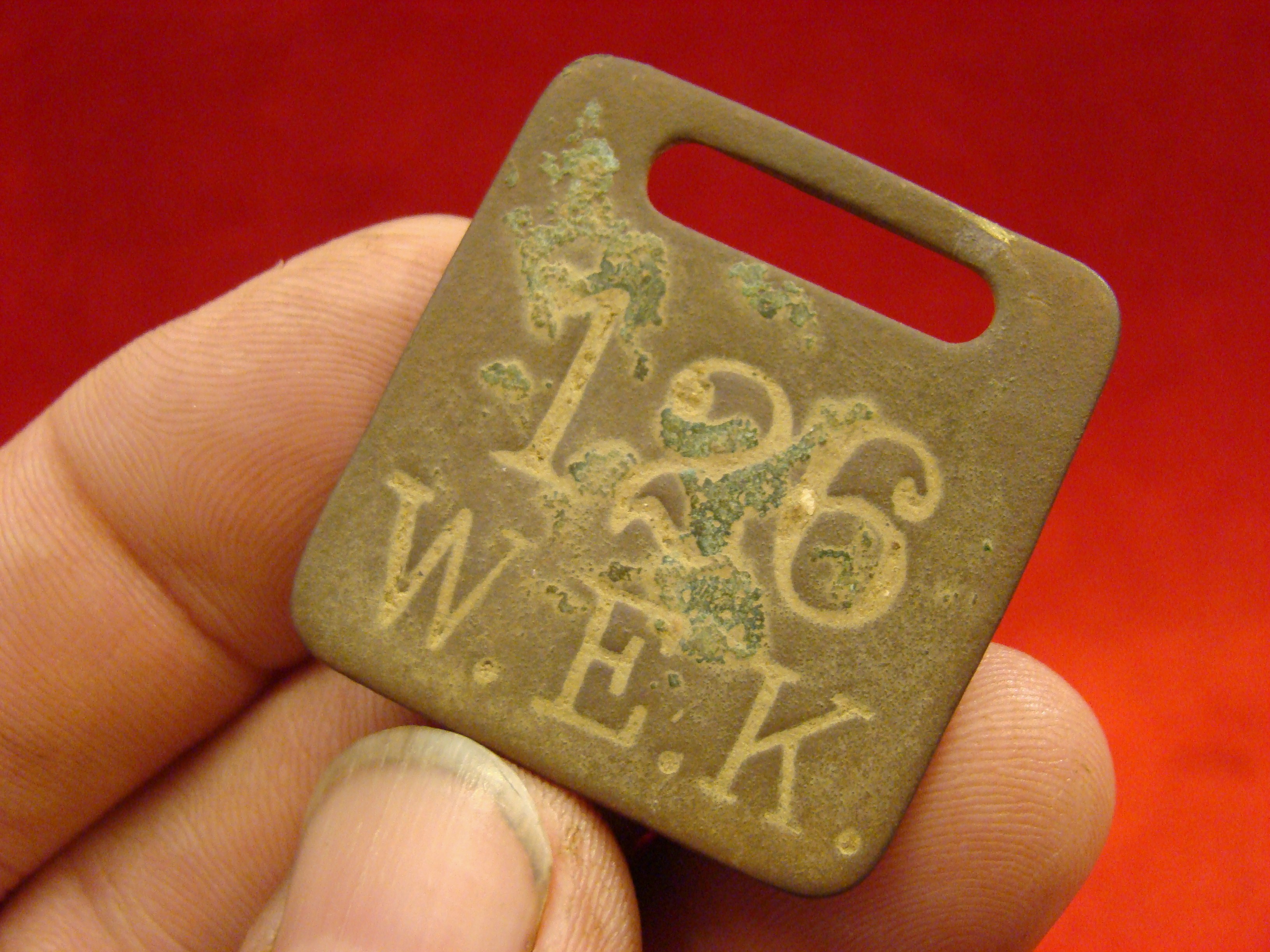
MS 24. Dug Railroad or Stagecoach Baggage Tag.
Sturdy stamped brass tag found in a Civil War troops camp near Chattanooga TN. Marked with #126 and “W.E.K.”. Perhaps someone out there is familiar with this rail line or coach line? SOLD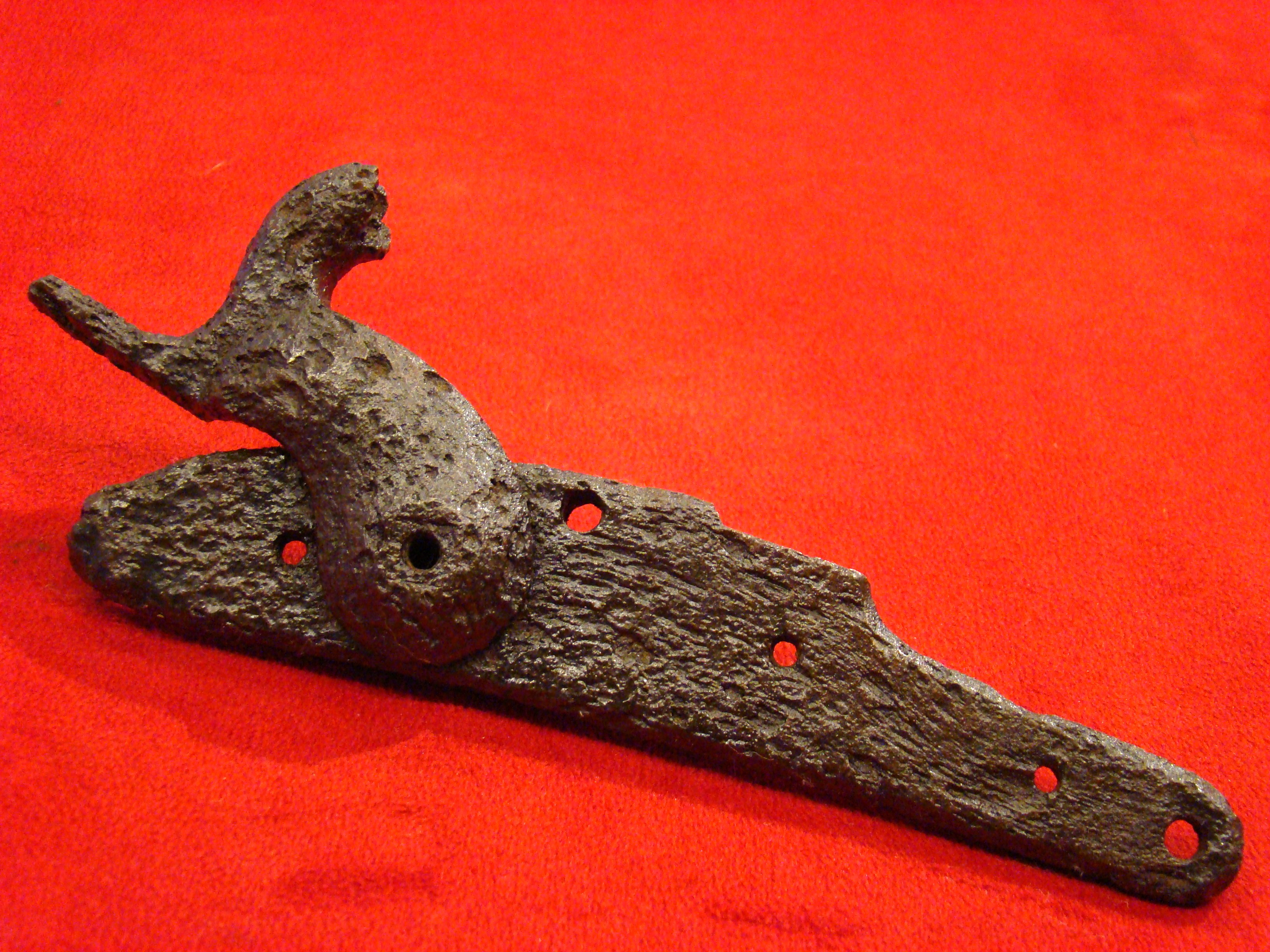
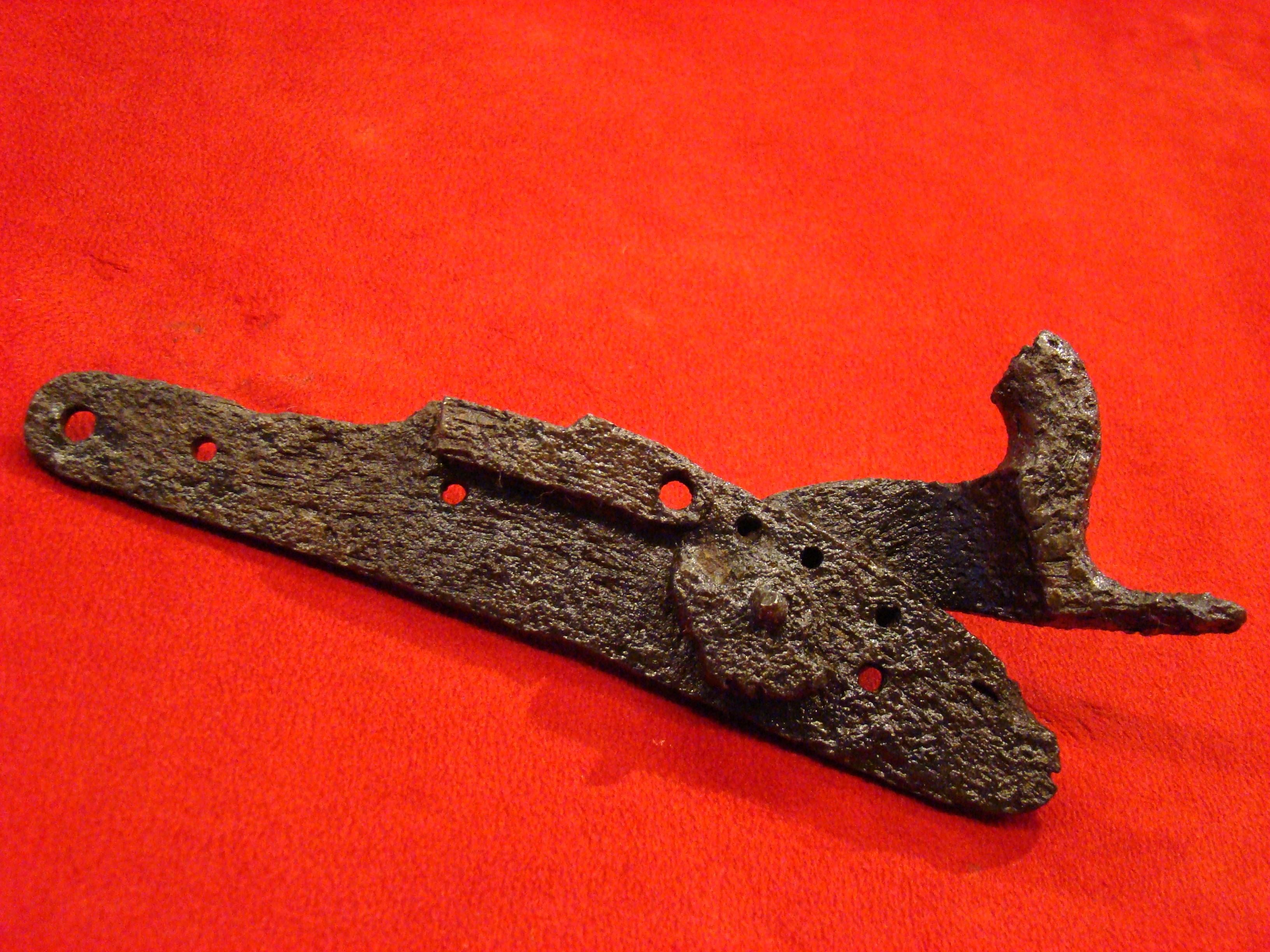
MS 26. Dug M-1842 Military Musket Lock. Franklin TN. Battlefield.
Most likely lost by a hapless Confederate as he charged the Union entrenchments. Ex. Dennis Urban collection. $75.00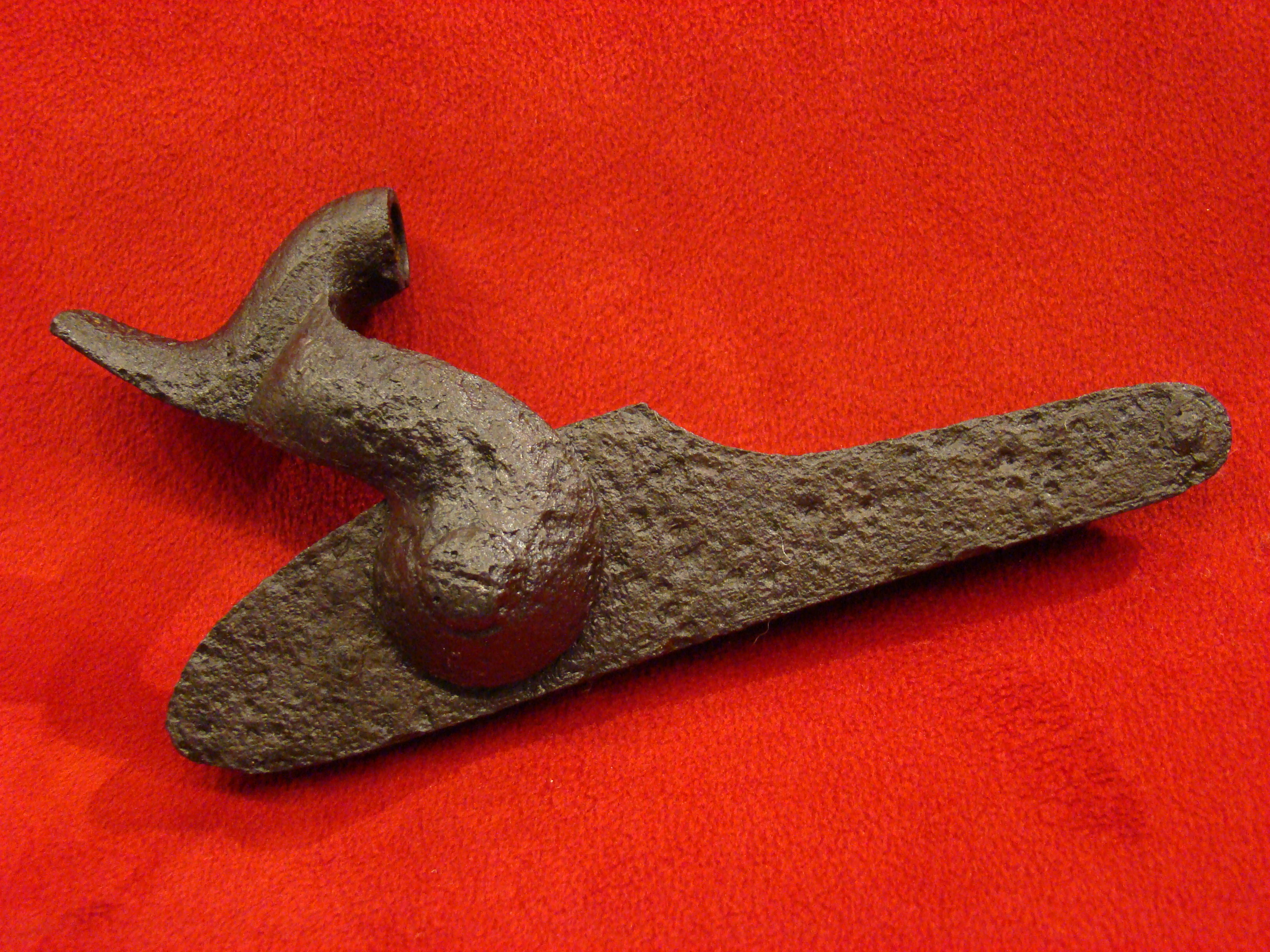
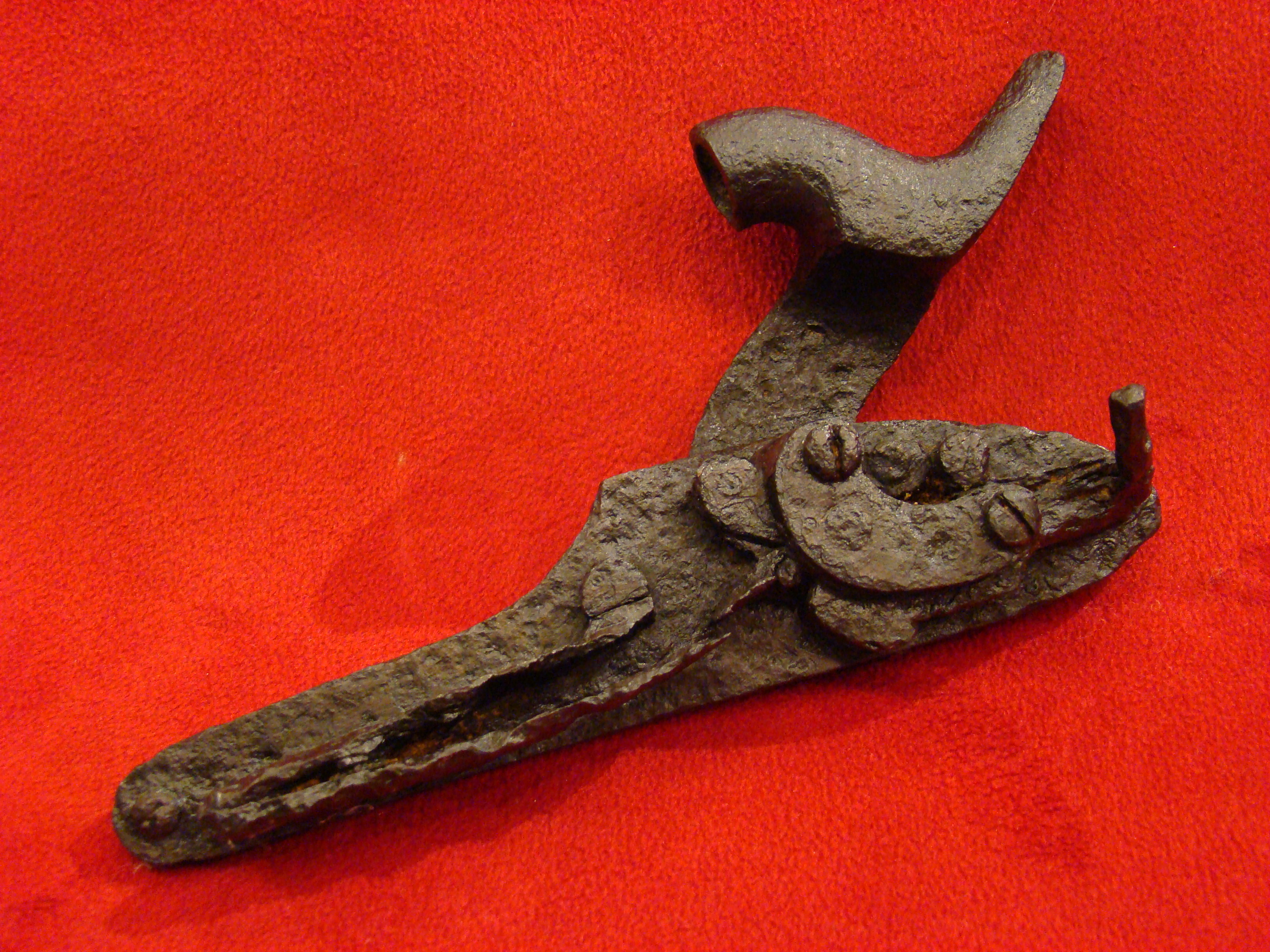
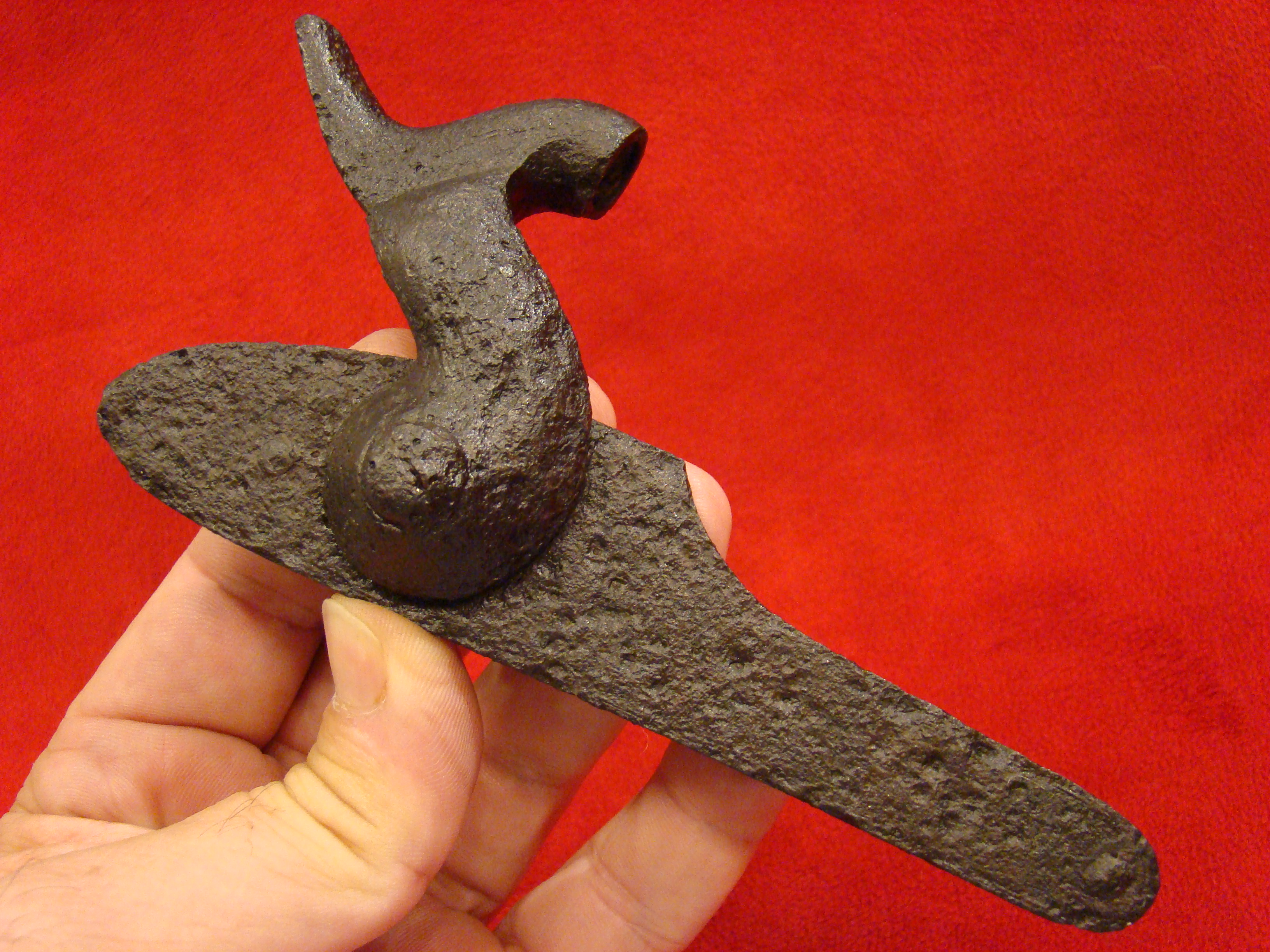
MS 27. Dug P-53 Enfield Rifle Musket Lock. Kernstown VA. Battlefield.
Excellent condition. Found long ago by James Tubbesing. $75.00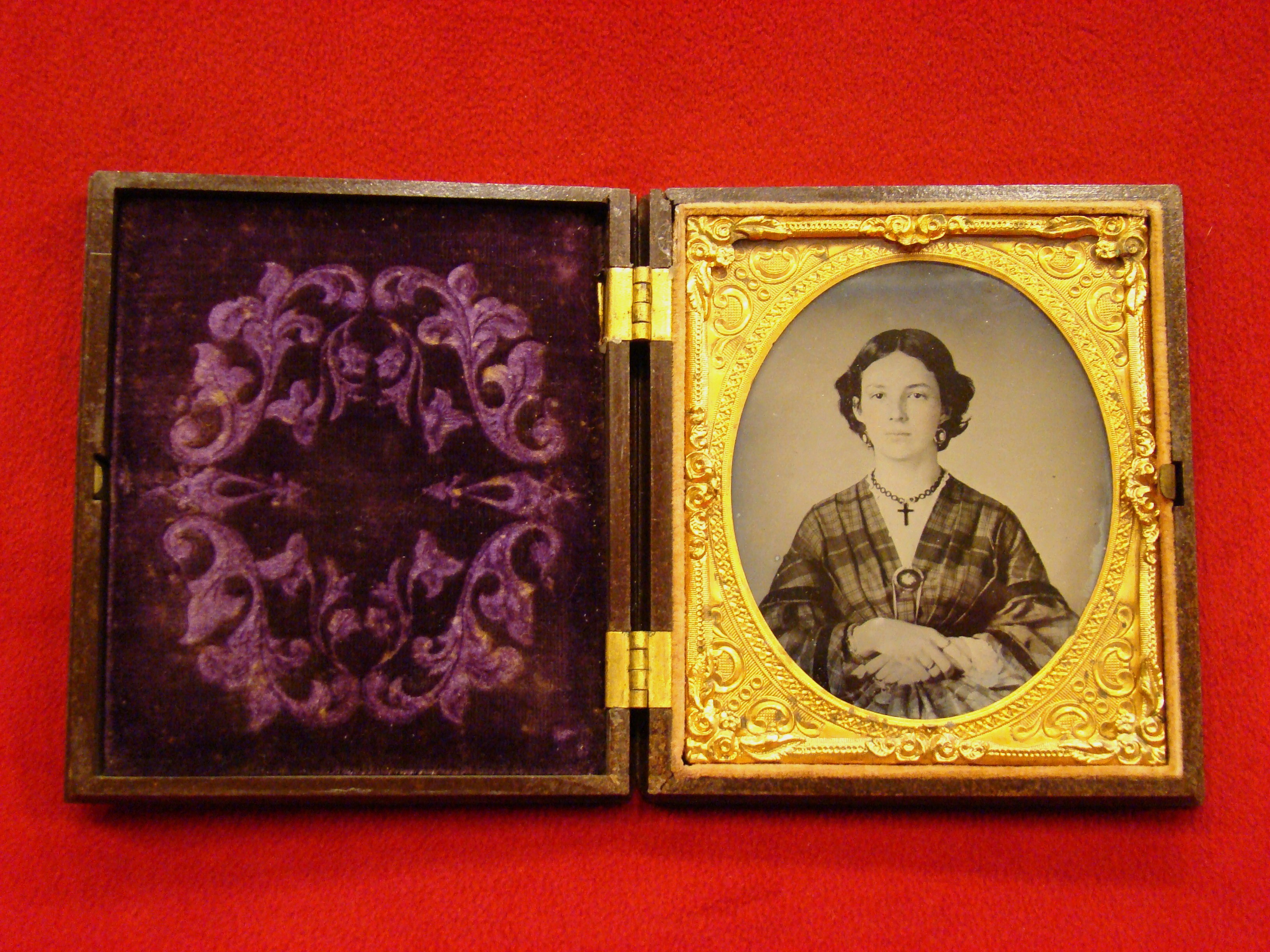
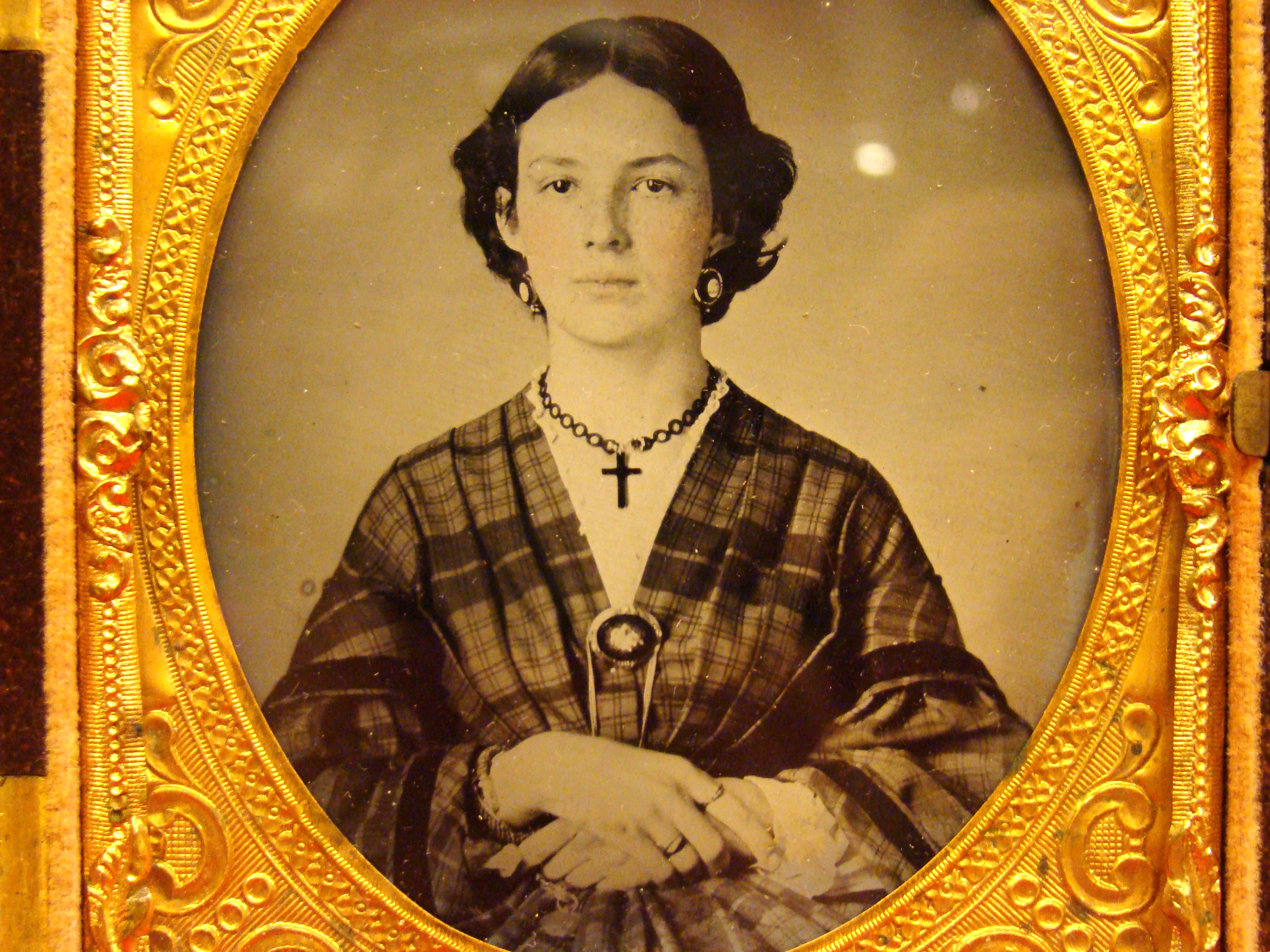
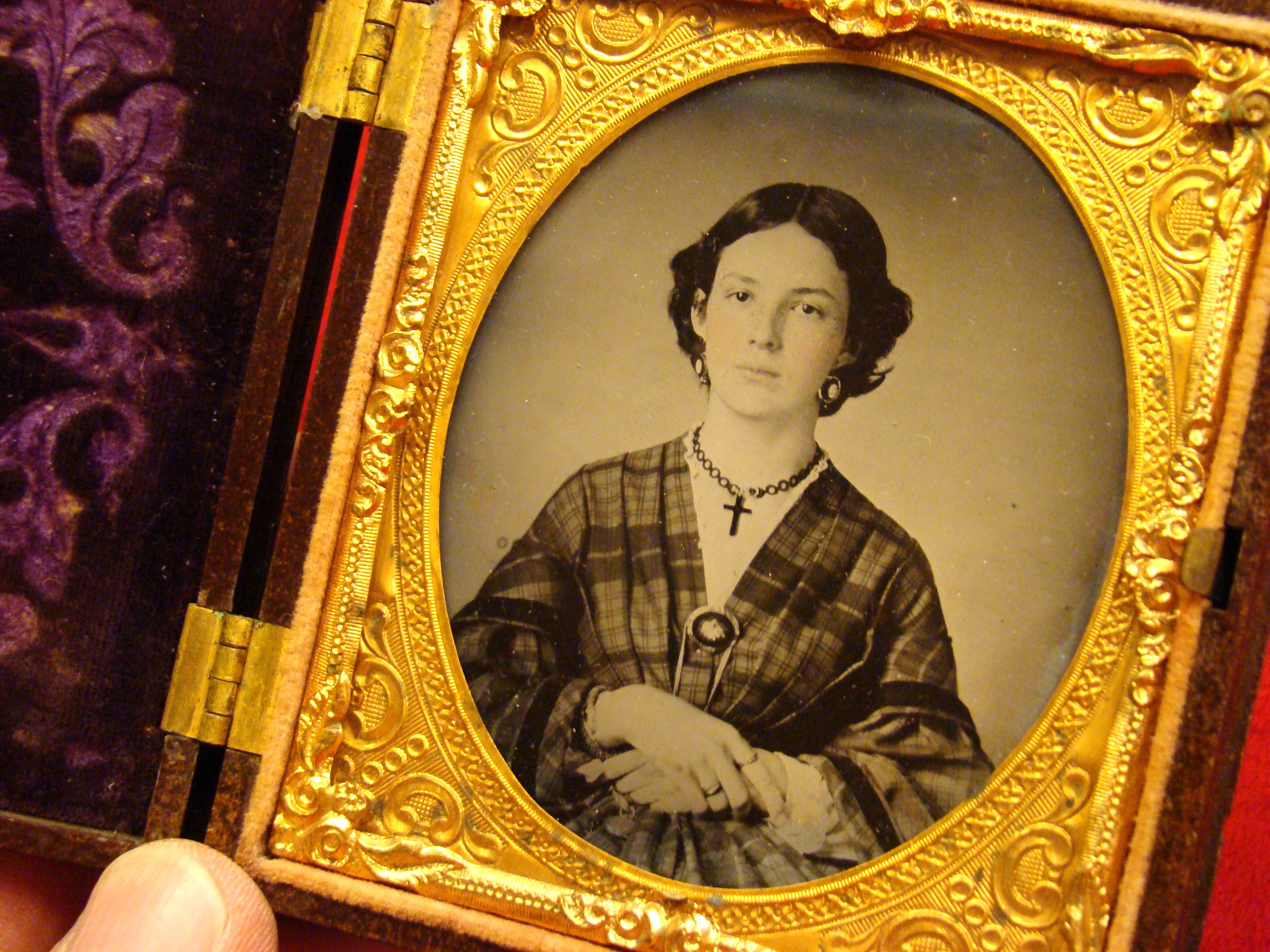
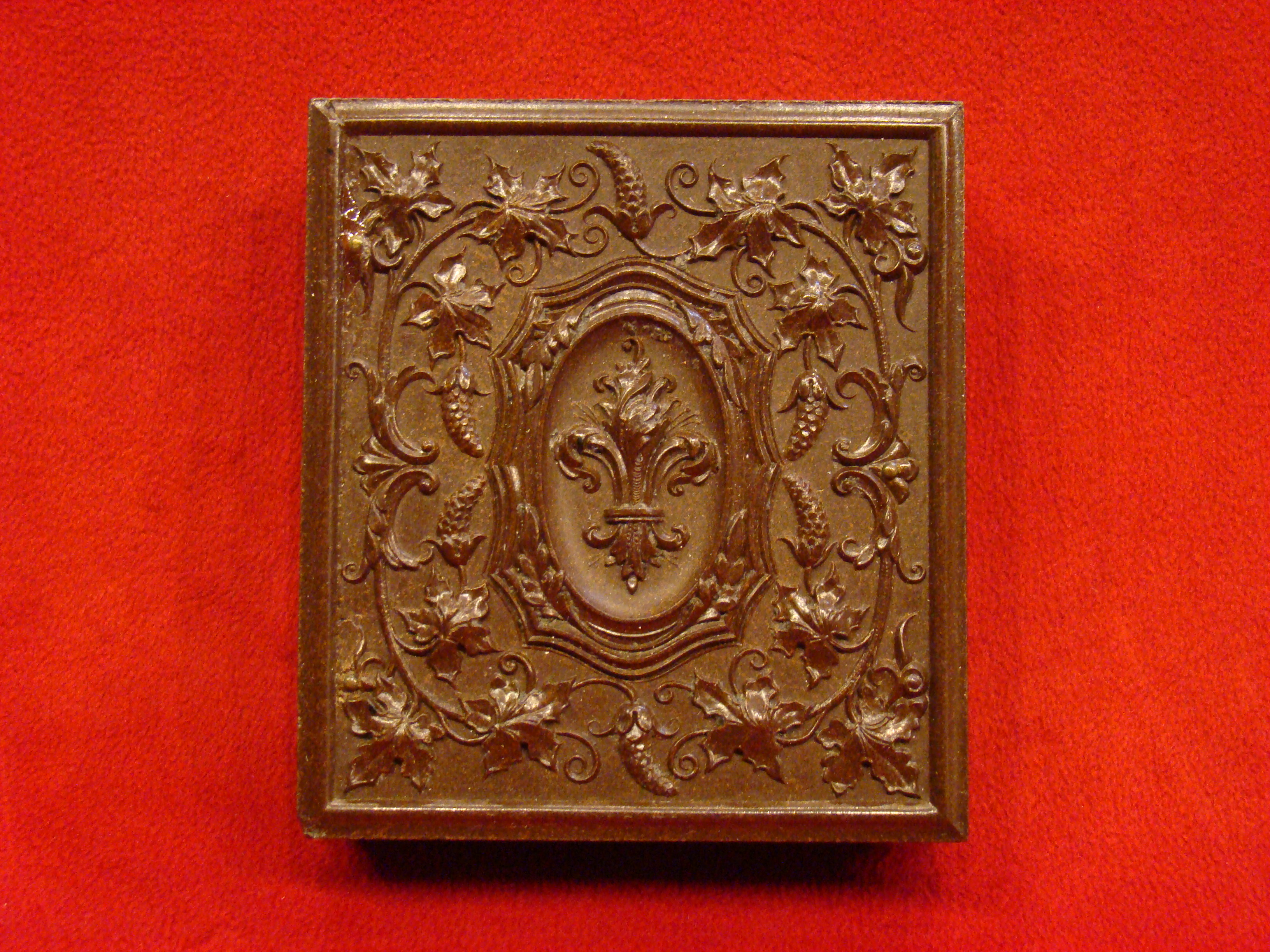
CWI 2. Cased 6th Plate Ruby Ambrotype of a Young Woman.
Exceptional Civil War period portrait. Very high quality, and super clear photo of an attractive woman. You can see the freckles on her face. SOLD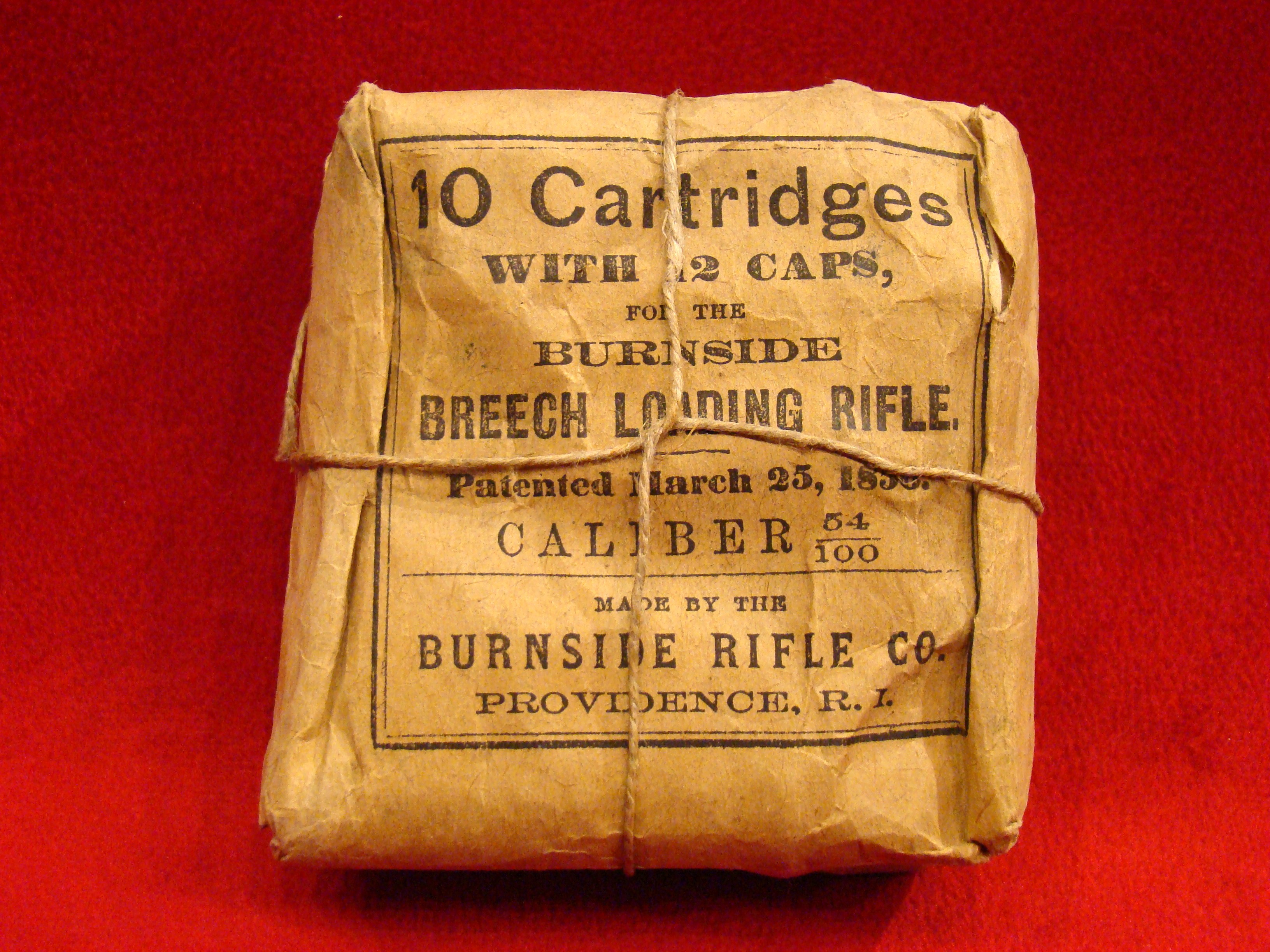
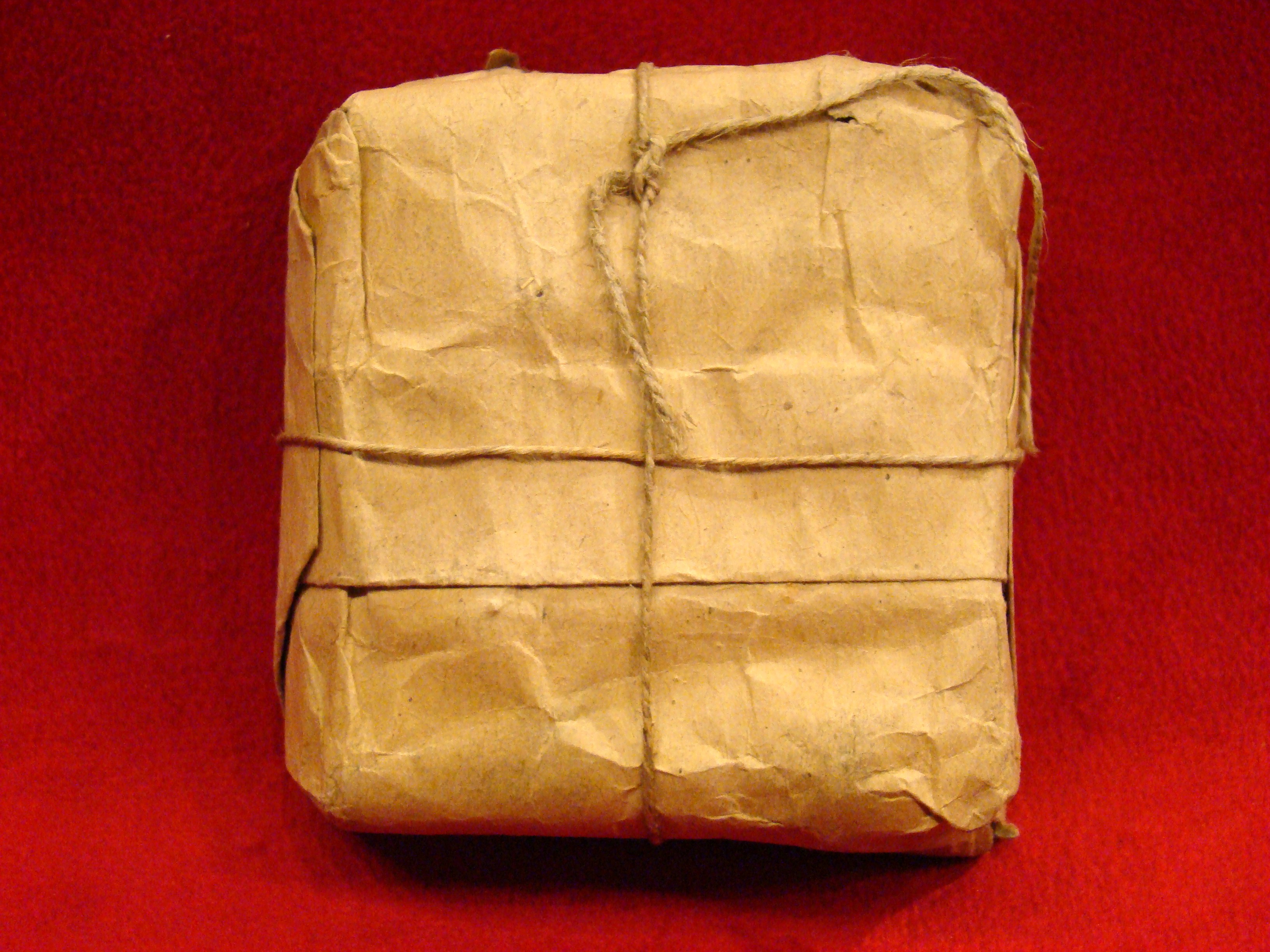
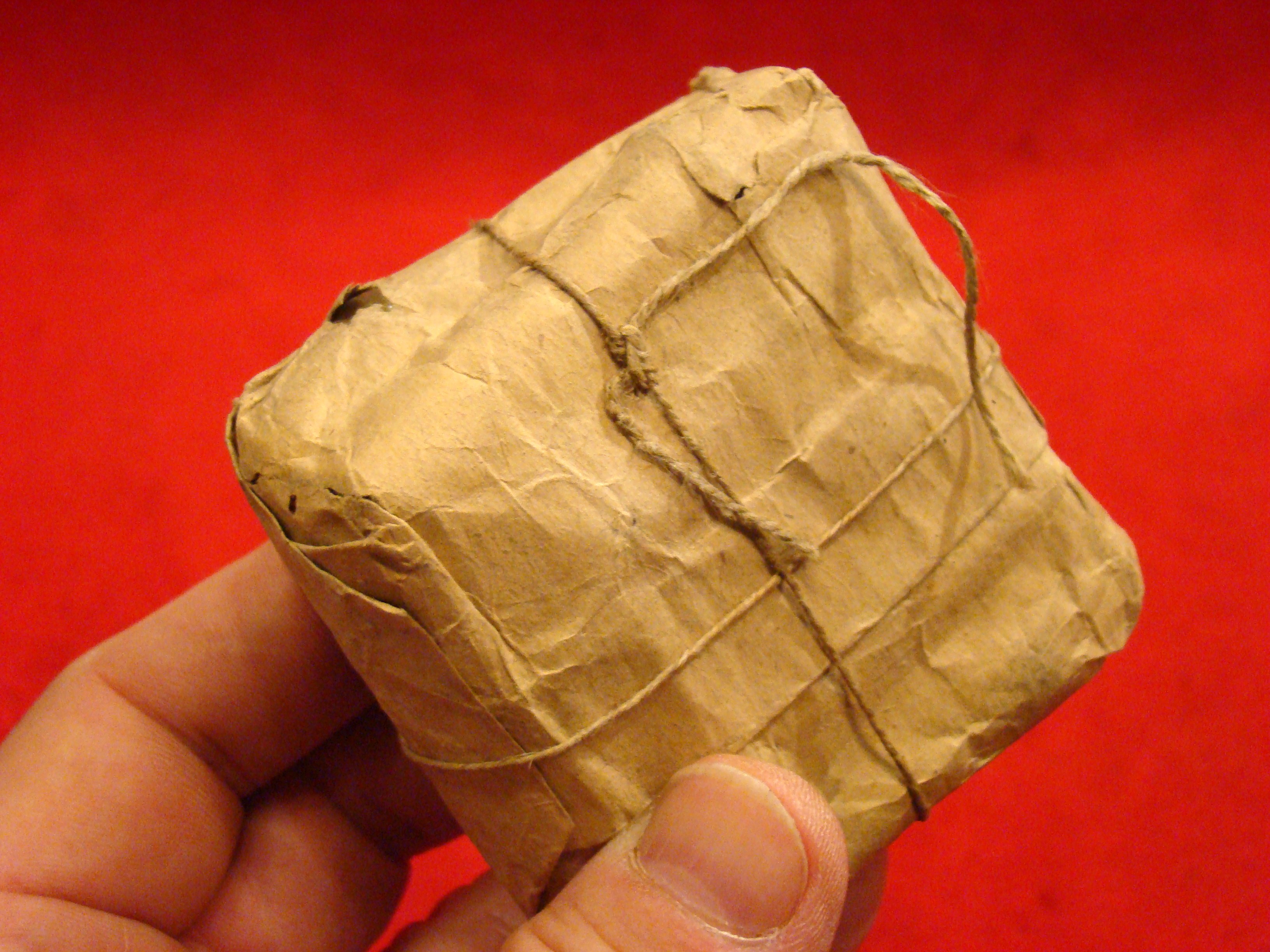
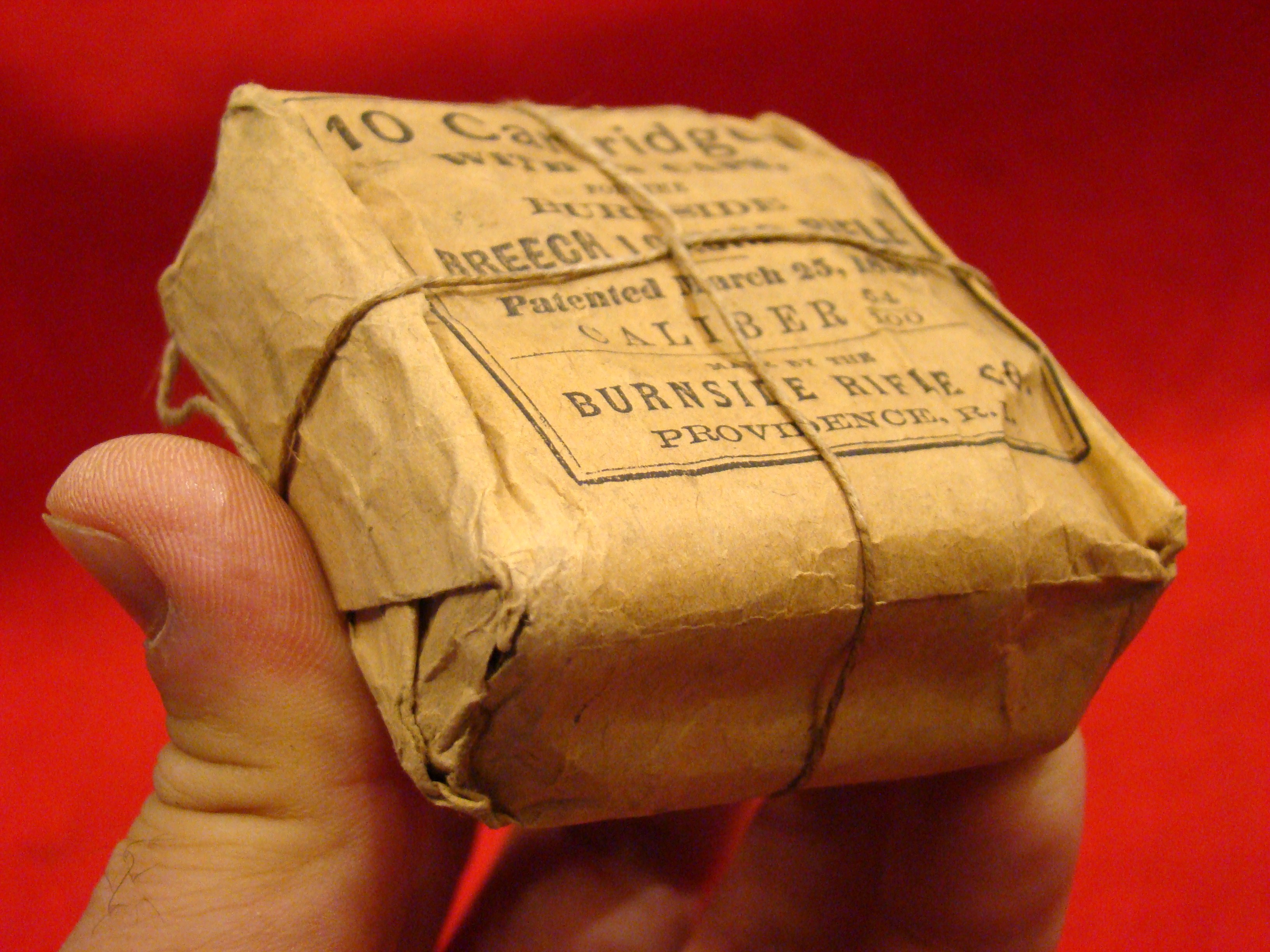
CART 1. Complete Unopened Pack of Burnside Cavalry Carbine Cartridges .54 Cal.
Excellent condition with original string and clearly printed label. Only a couple of minor tears to the paper. Contains ten brass cased cartridges and a roll of 12 caps. A perfect companion to Burnside Carbine. $950.00 HOLD D.W.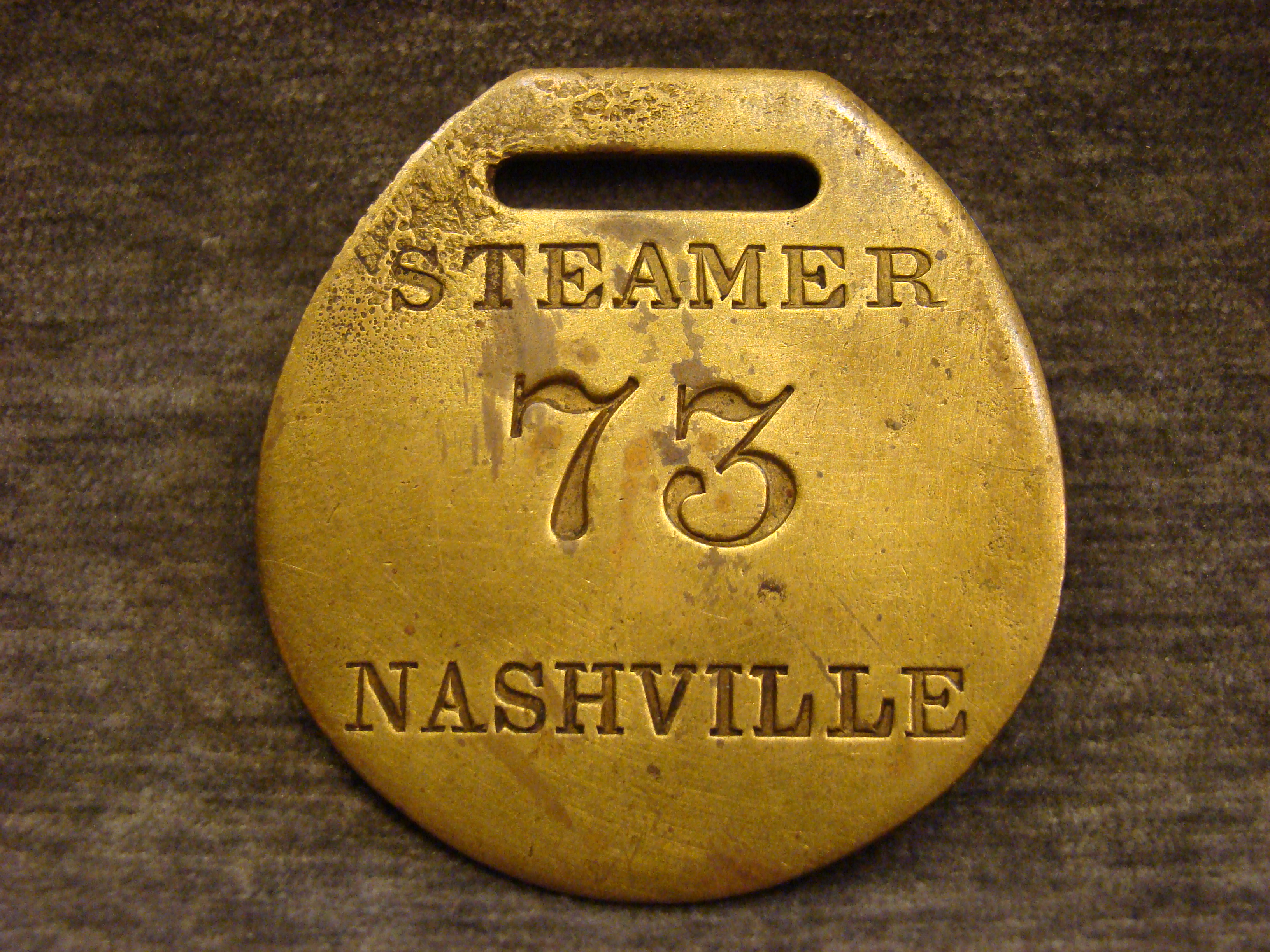
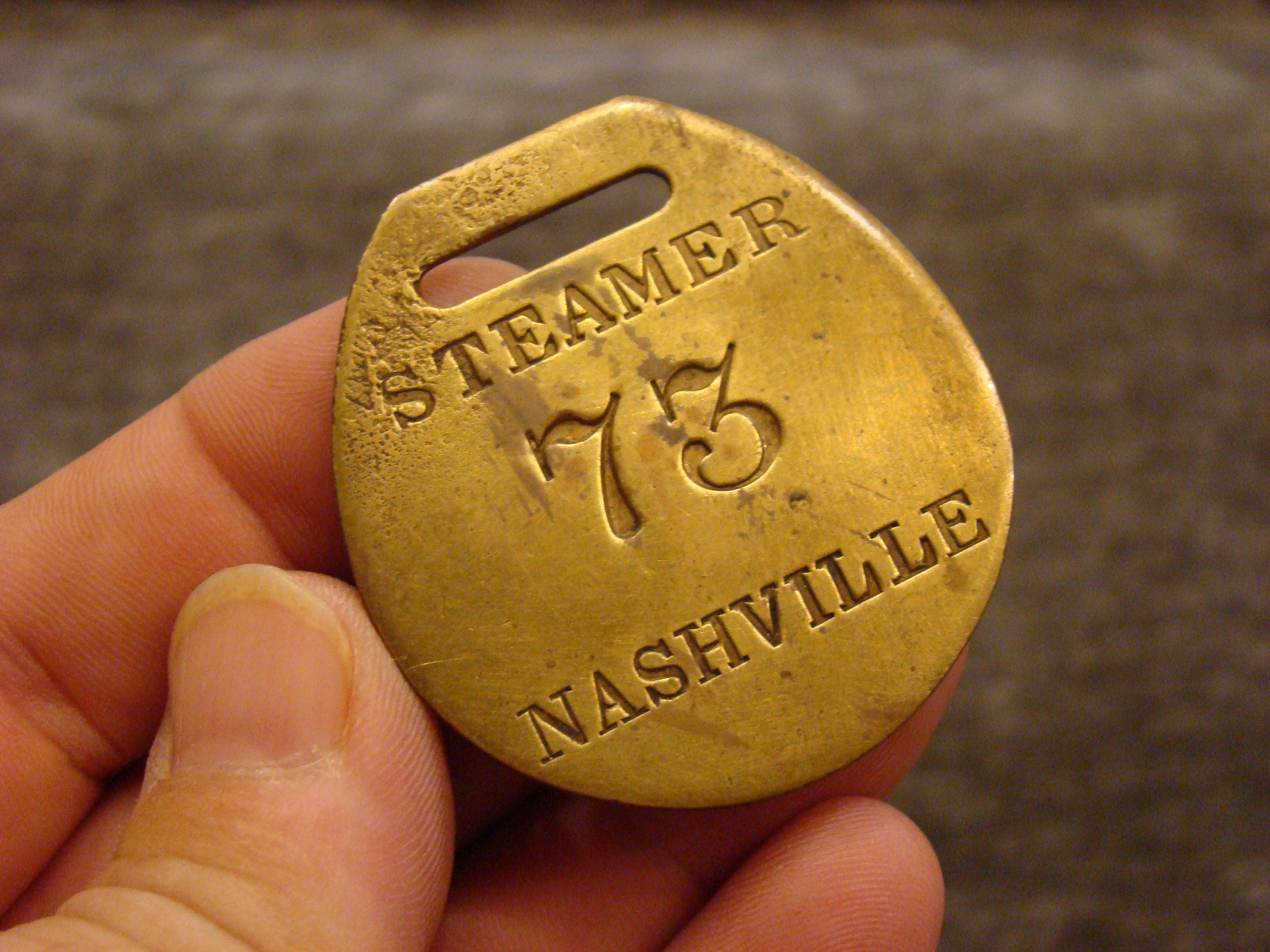
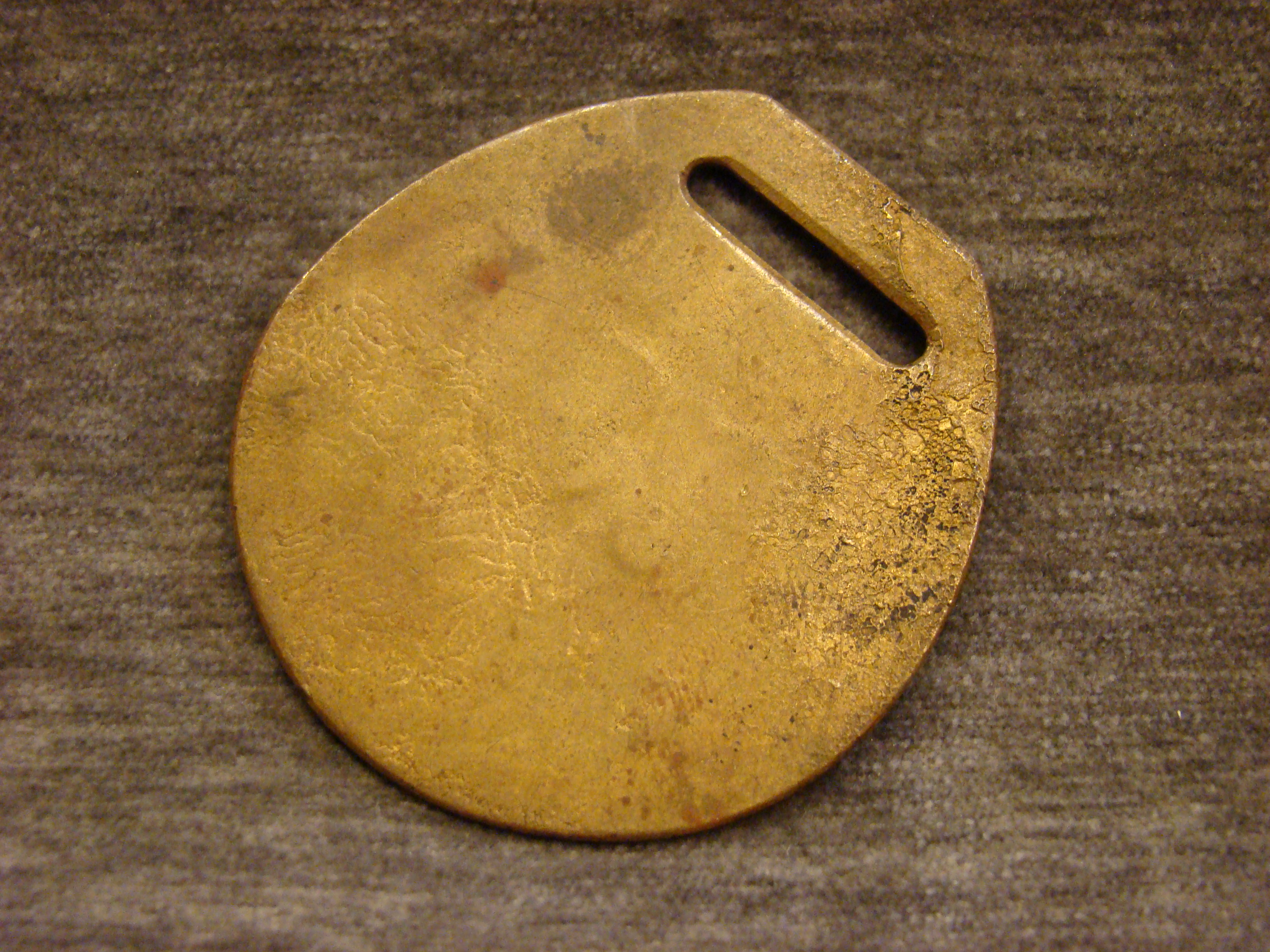
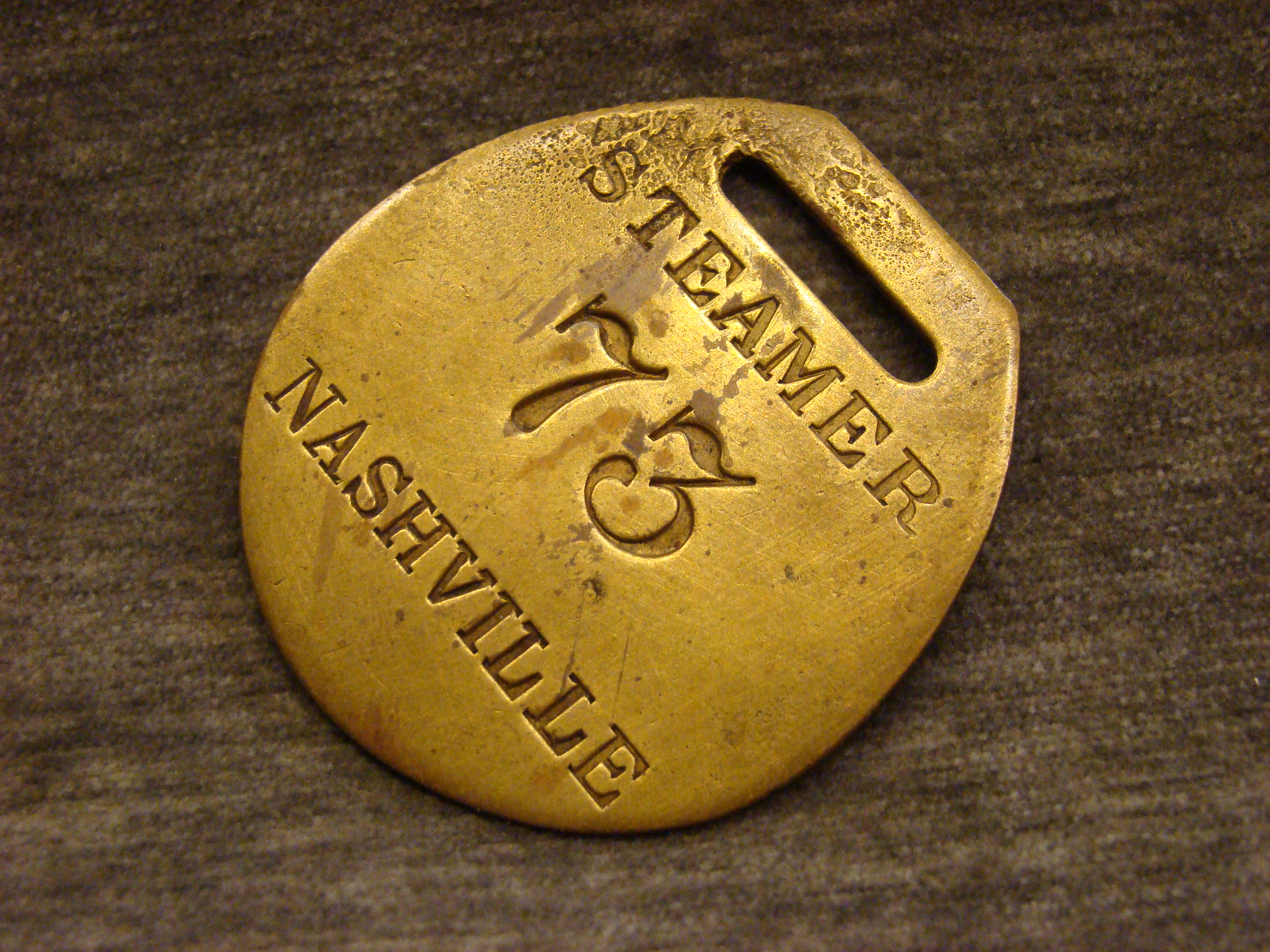
MS 29. Baggage Tag from The Steamer CSS “NASHVILLE”.
This ship was captured by Confederate forces in Charleston Harbor immediately after the fall of Fort Sumter. The ship was outfitted into a cruiser/commerce raider and re-named The Thomas C. Wragg”. Later on in 1862 it was re-named “Rattlesnake”. This historic tag was found on the shore of the Ogeechee River, not far from where the ship ran aground and was destroyed by the Federal Navy. Check out this Wikipedia article for this ships’ remarkable history https://en.wikipedia.org/wiki/CSS_Nashville_(1853) $1495.00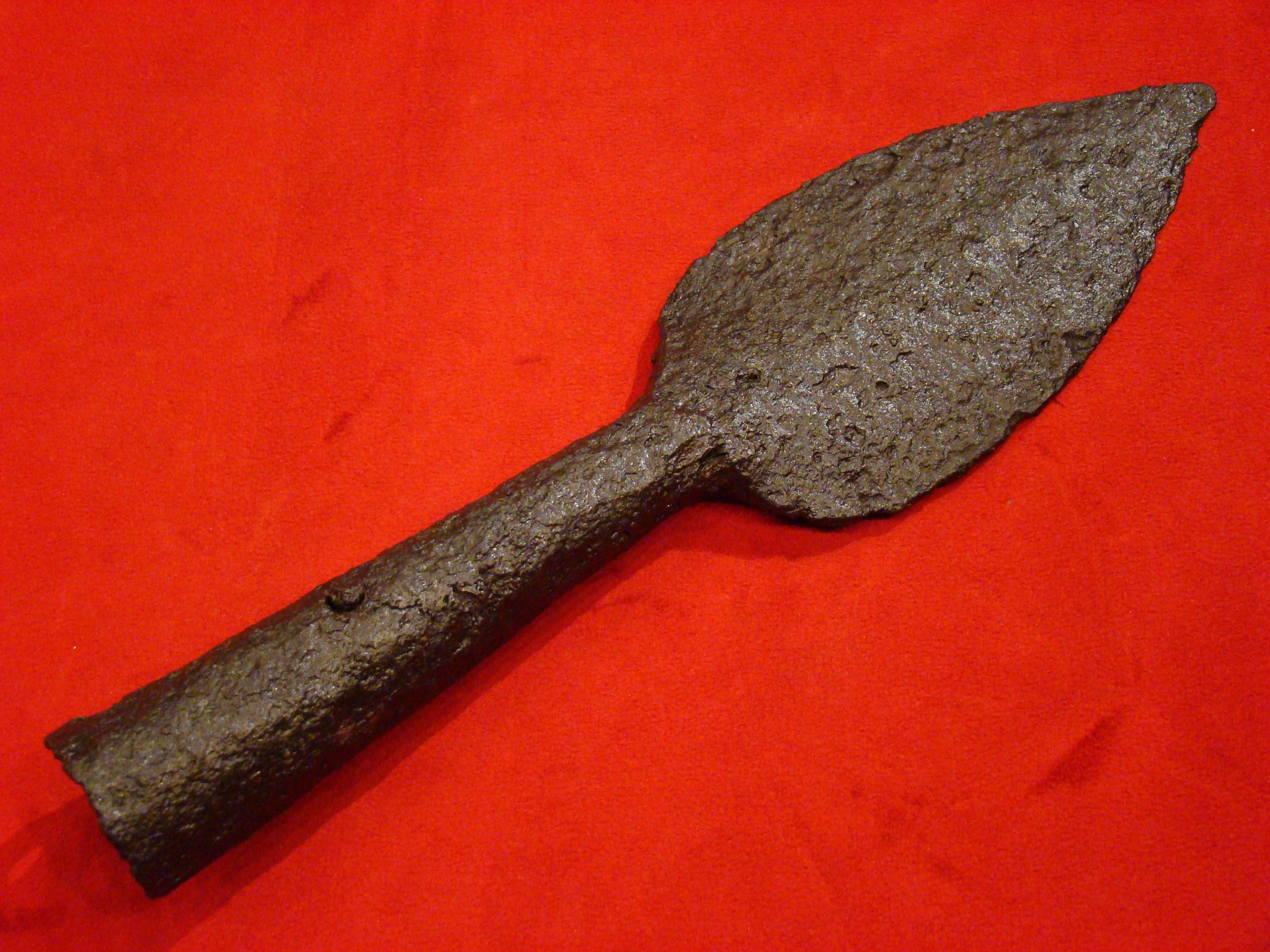
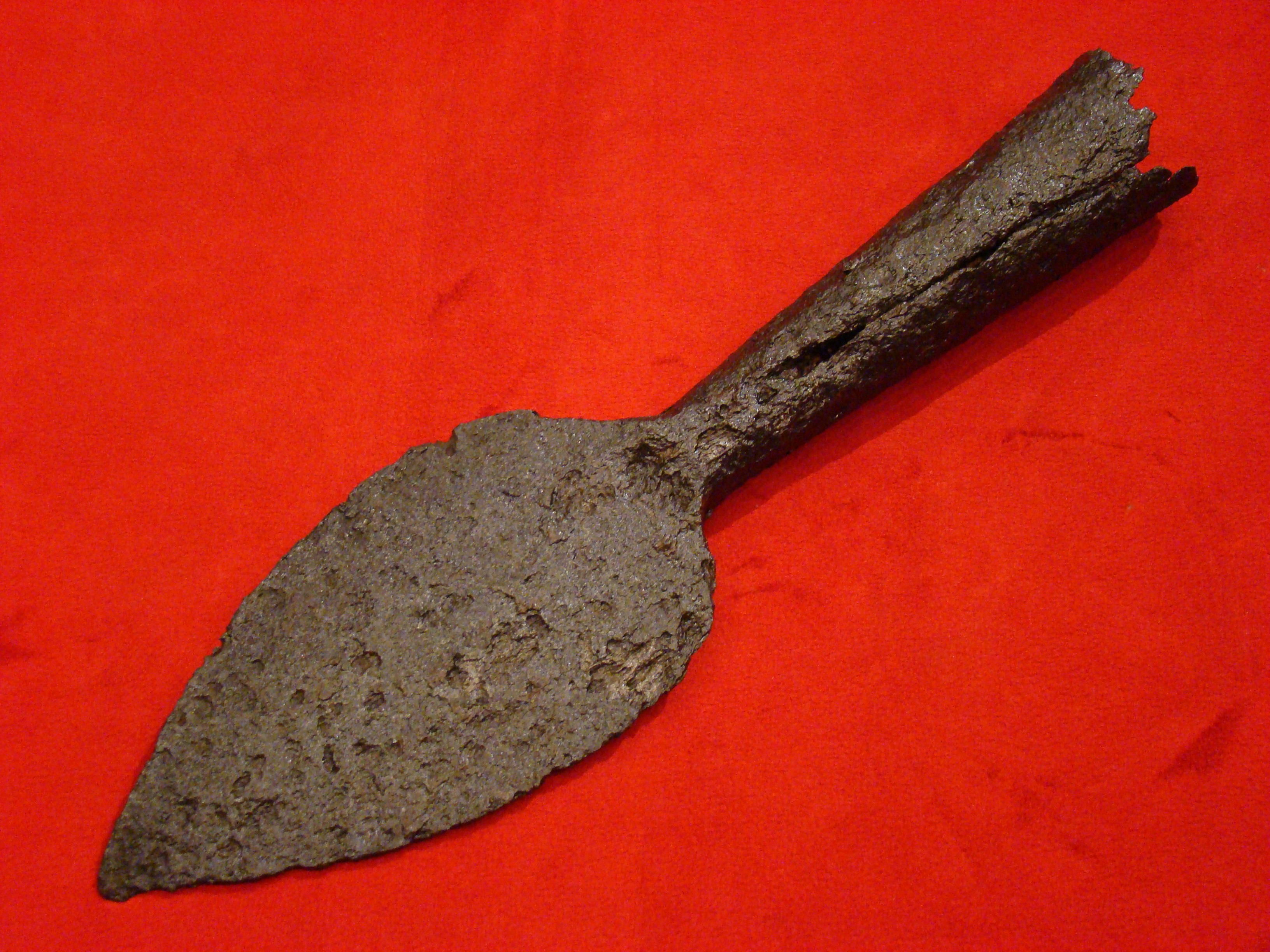
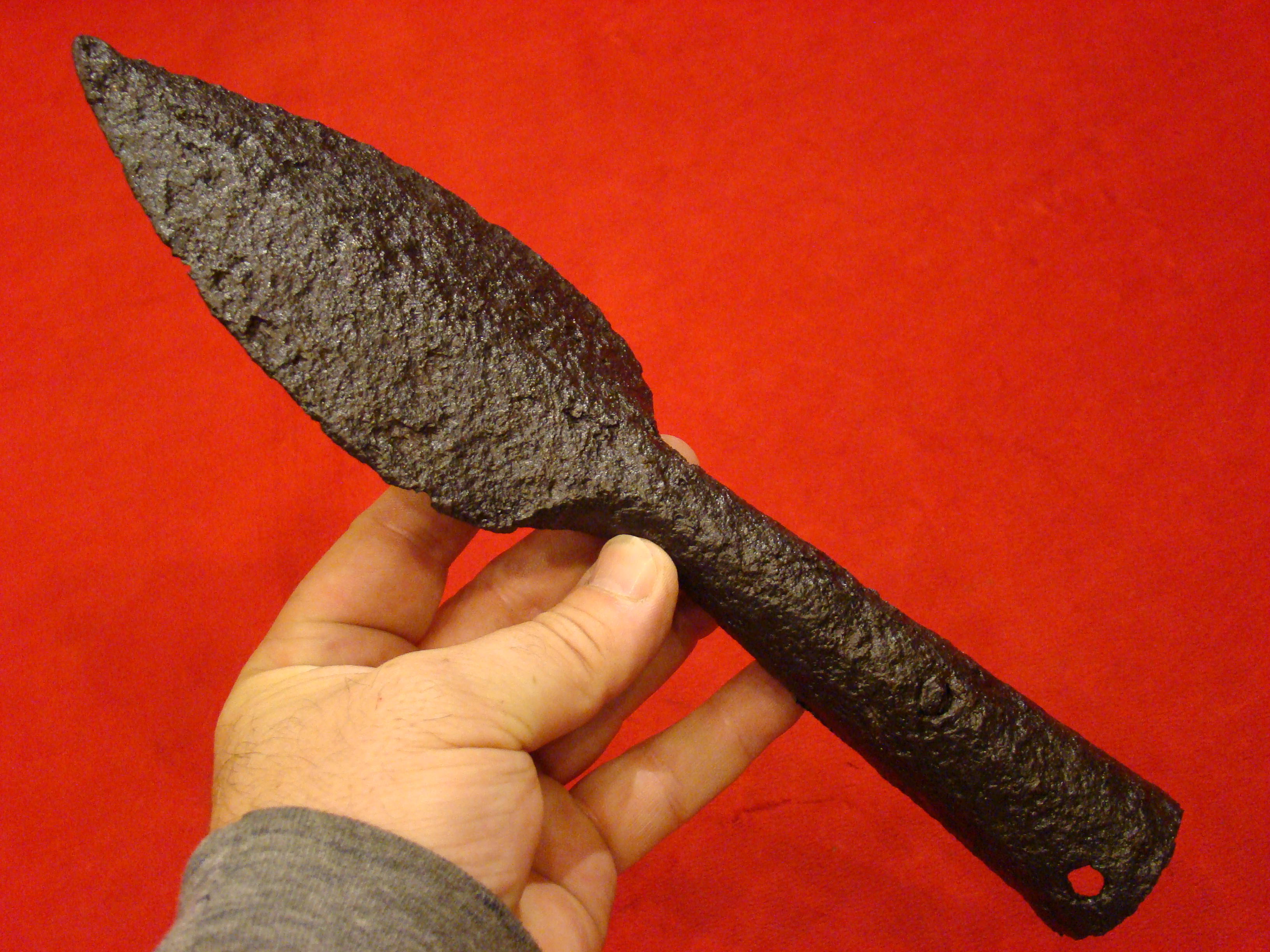
MS 30. Dug Confederate Flagstaff Spear.
Large and crudely forged spear. Found in a Confederate infantry camp. SOLD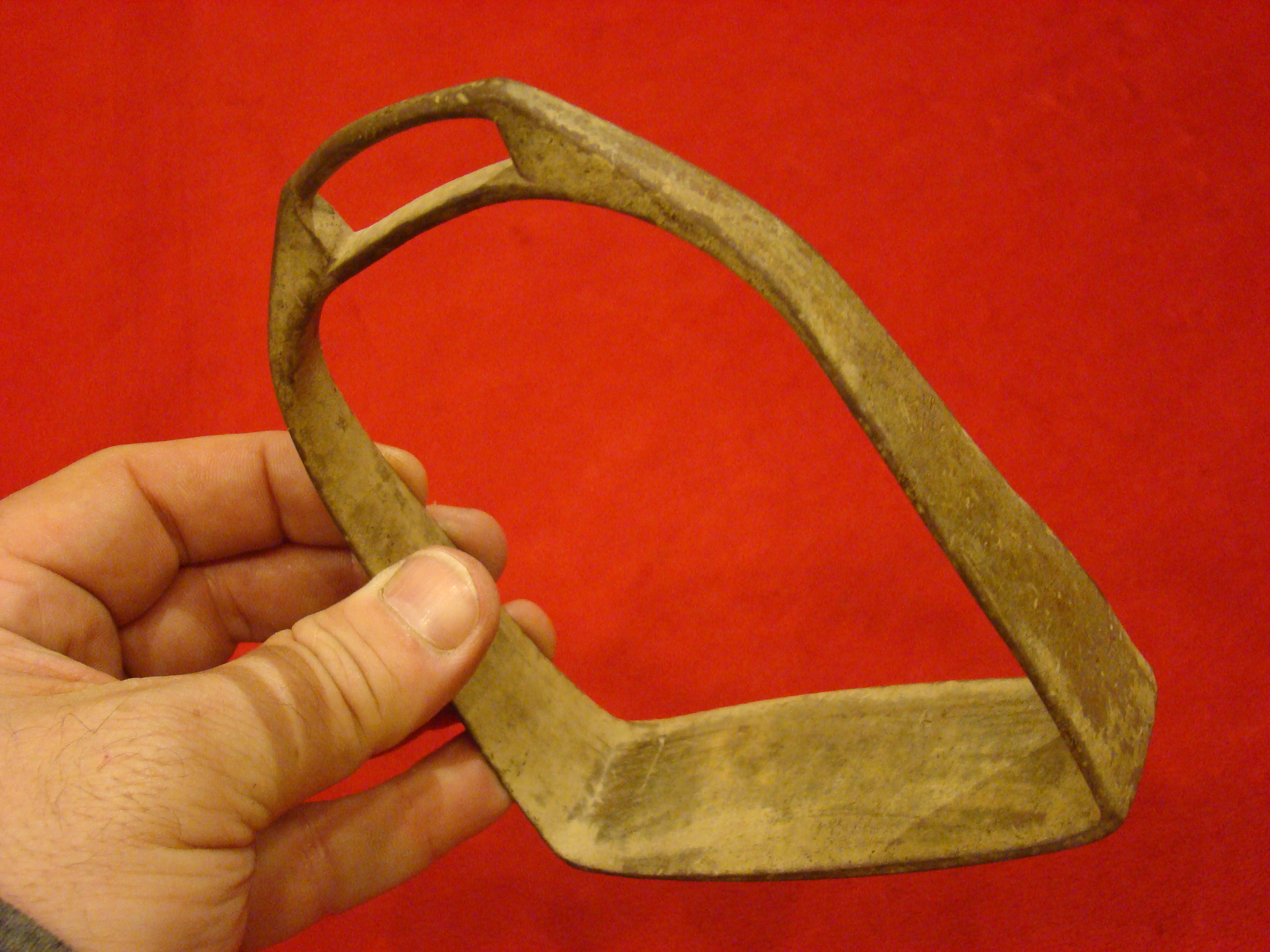
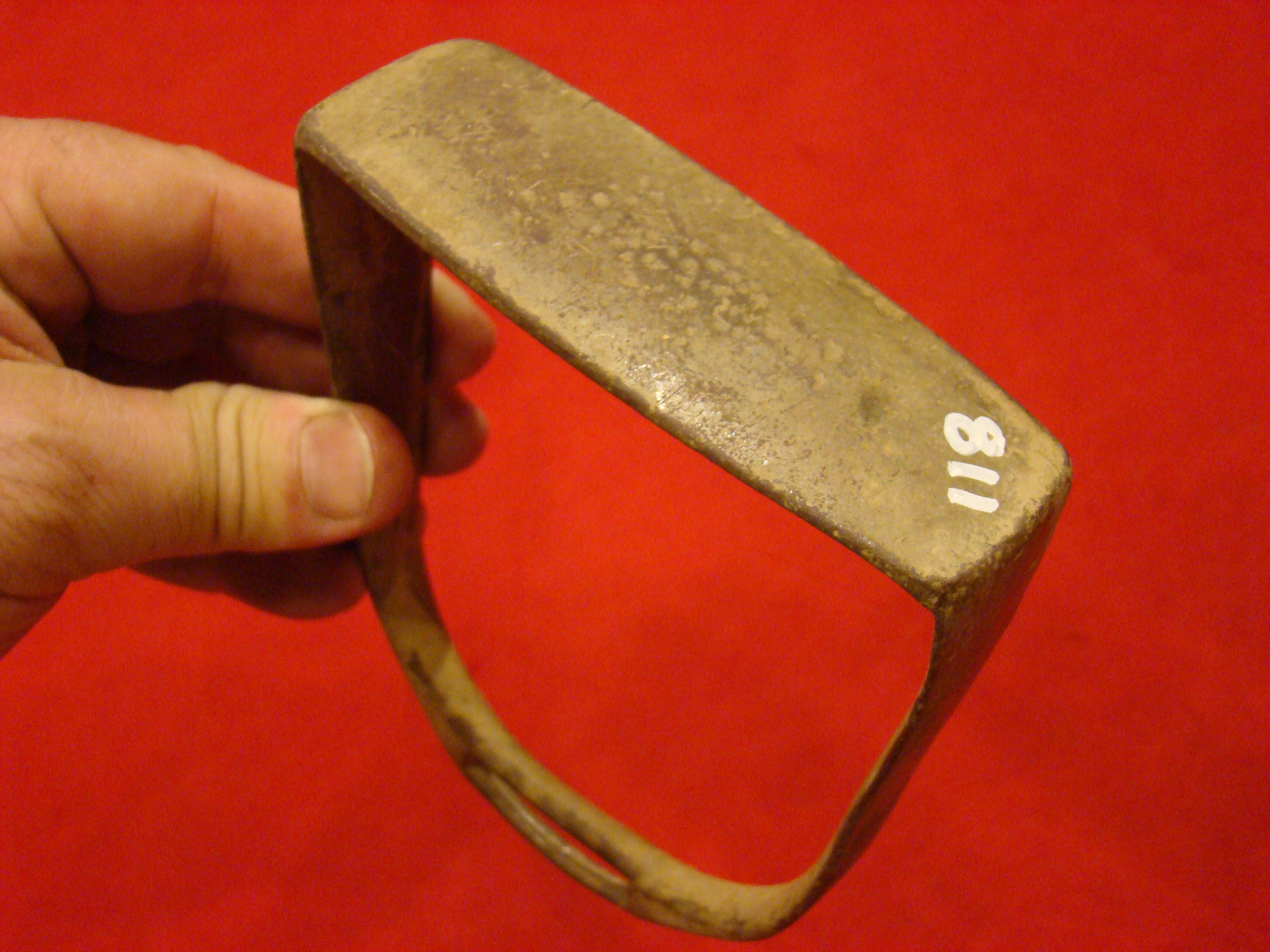
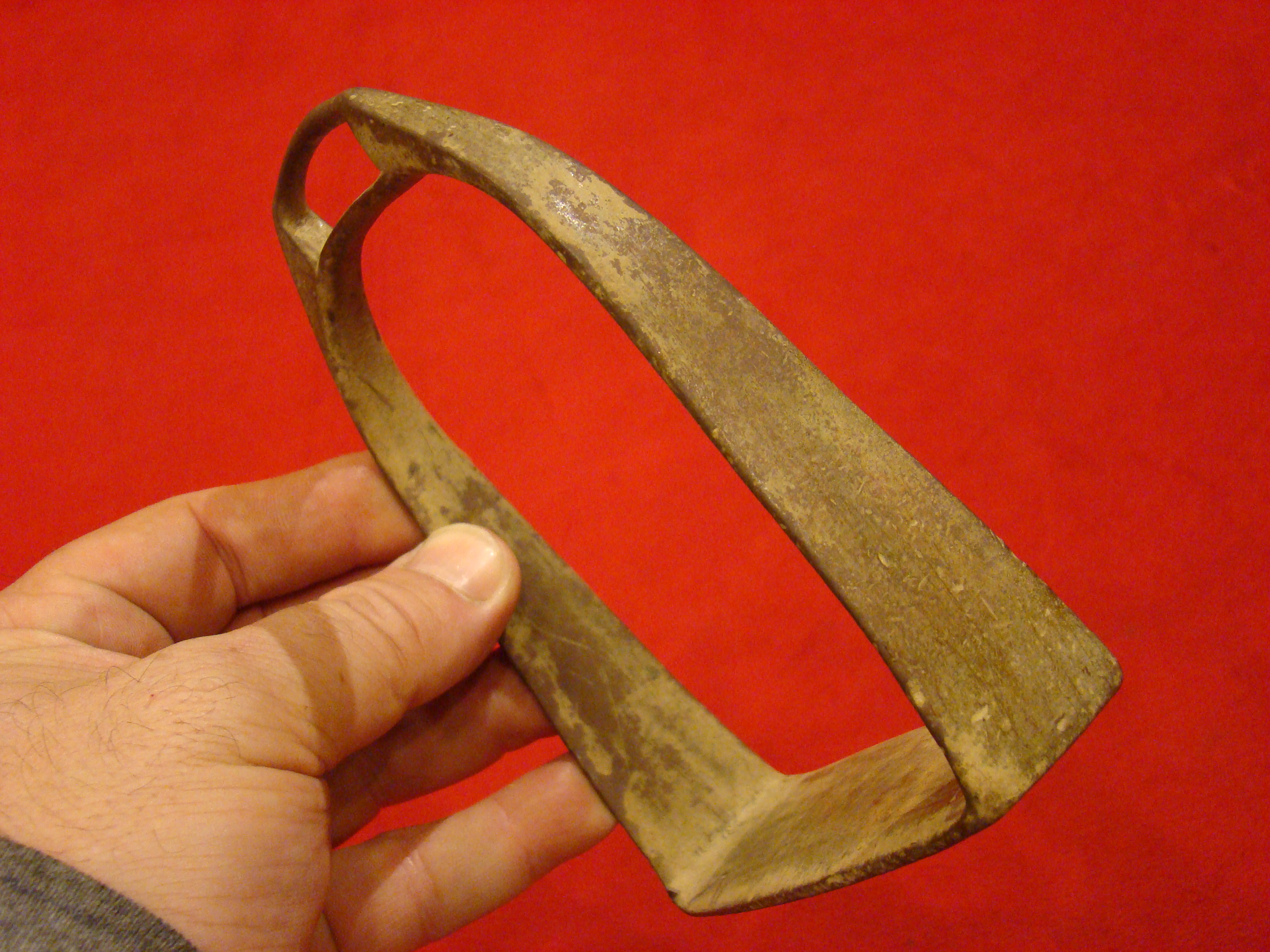
MS 31. Dug Confederate Cavalryman’s Stirrup.
Perfect cast brass stirrup found in a Confederate Cavalry camp near Orange VA. by Sam Higginbotham. SOLD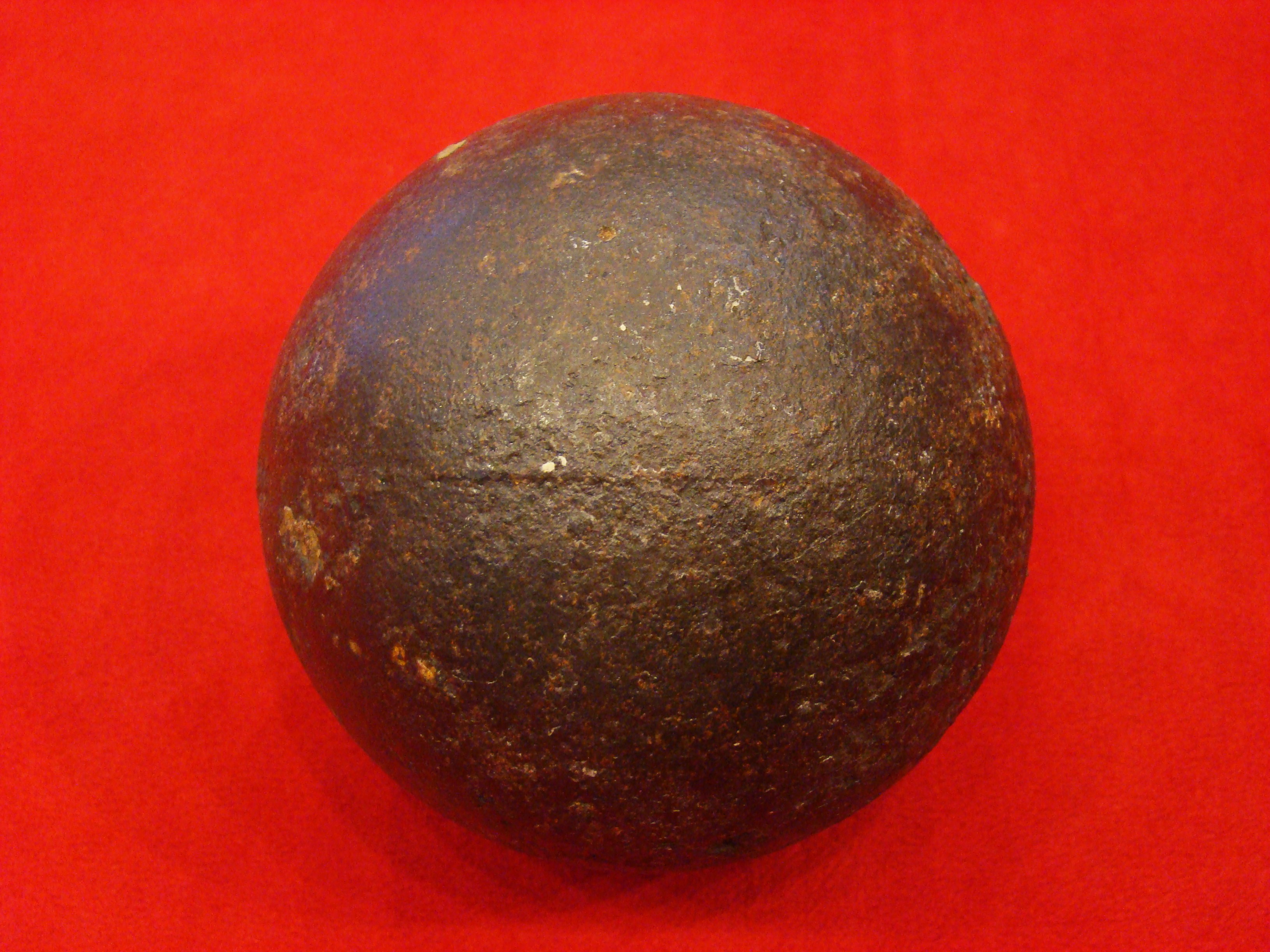
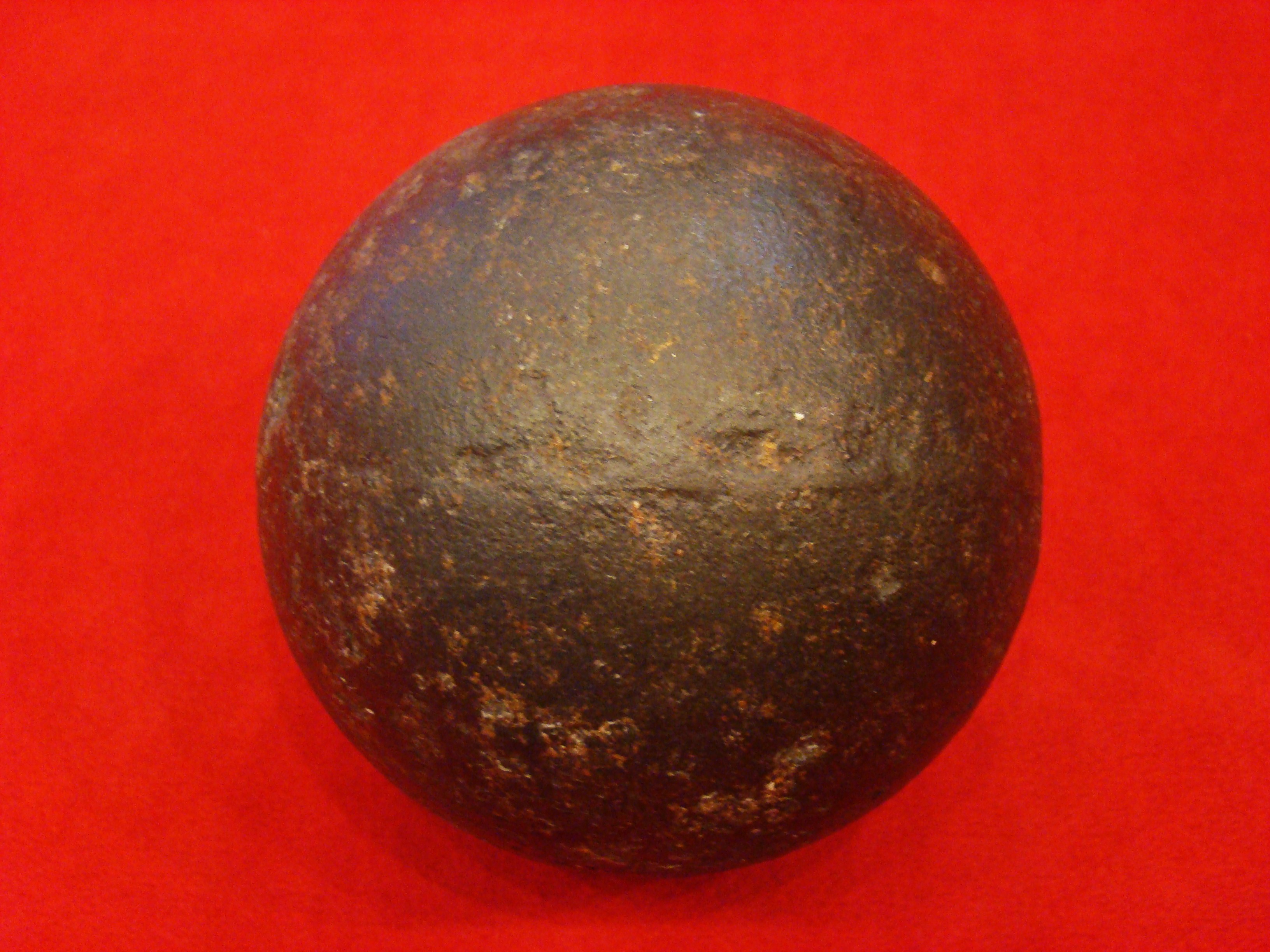
ART 1. Dug Confederate 6 Pounder Shot. June 27, 1862 Gaines Mill VA. Battlefield.
Excellent condition, hardly any pitting. Note crude mold seam. $275.00 HOLD R.D.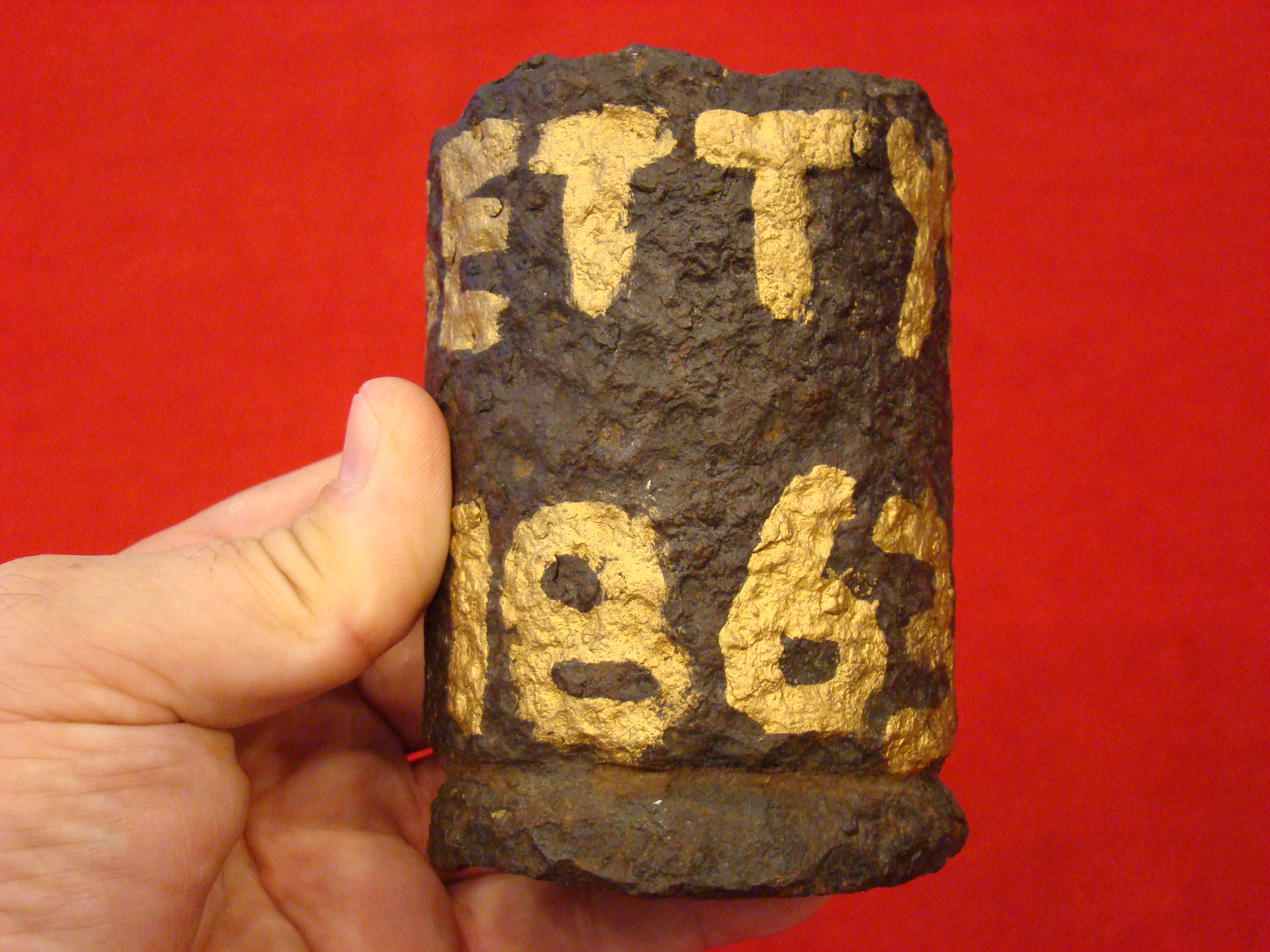
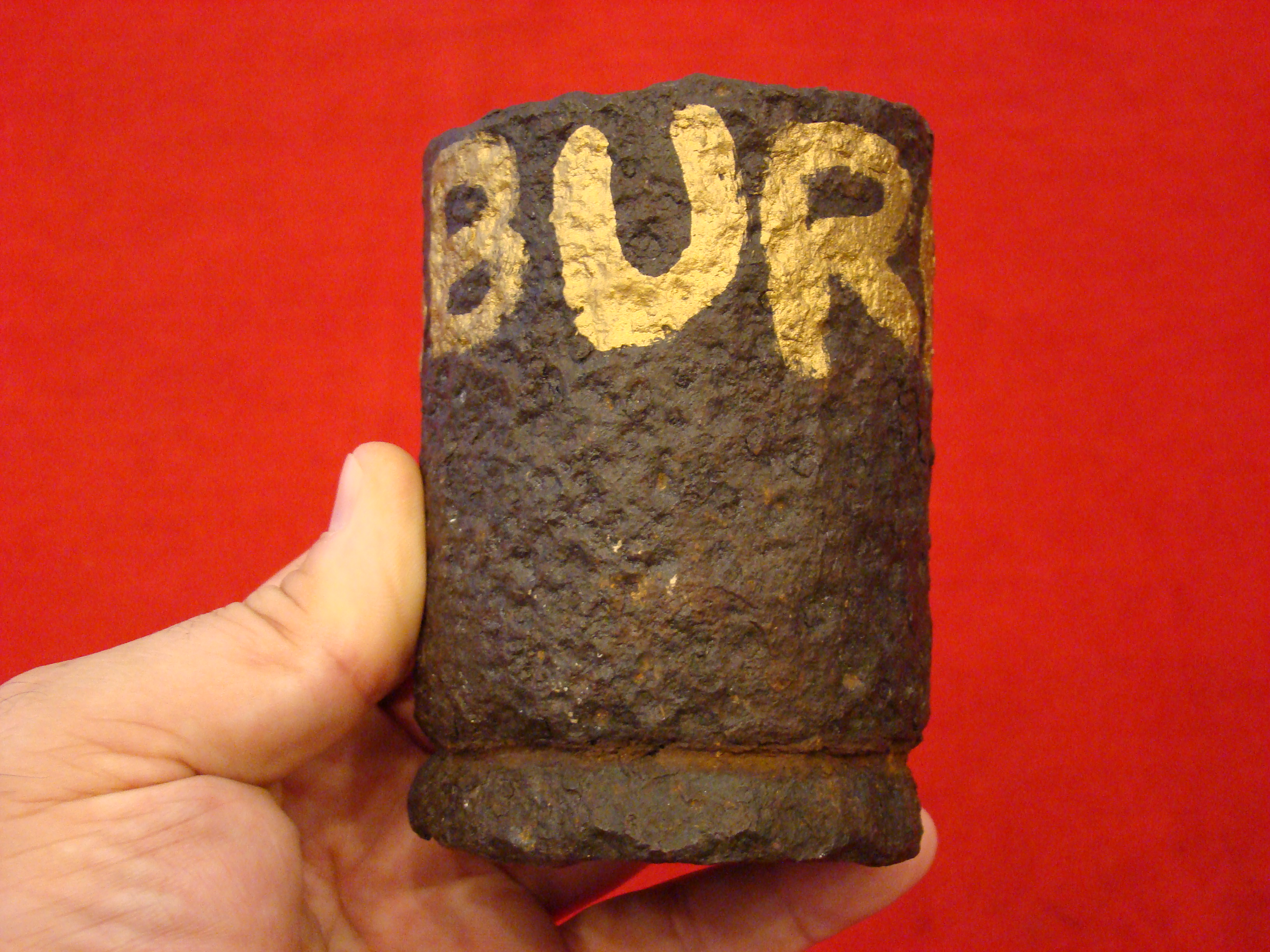
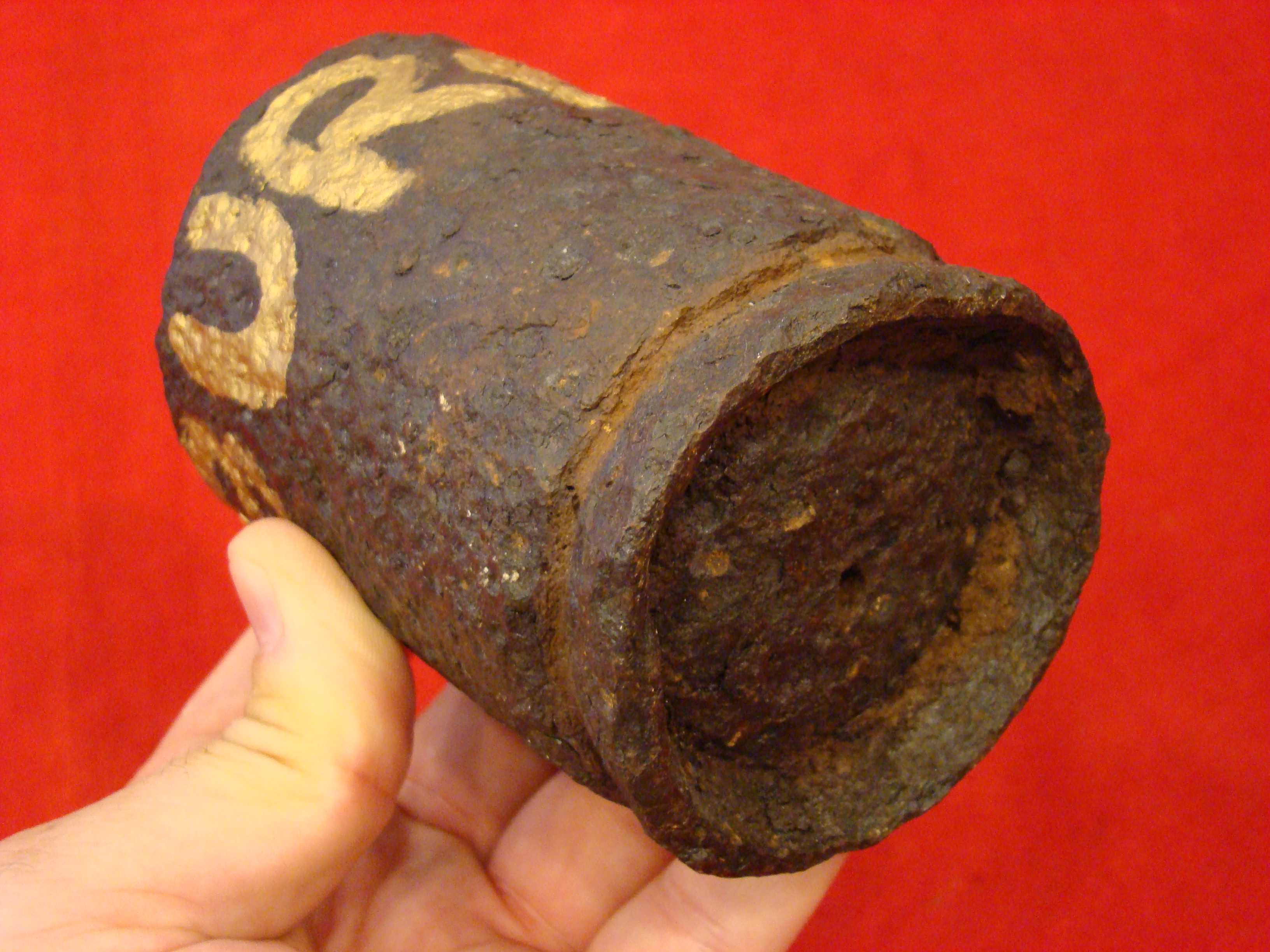
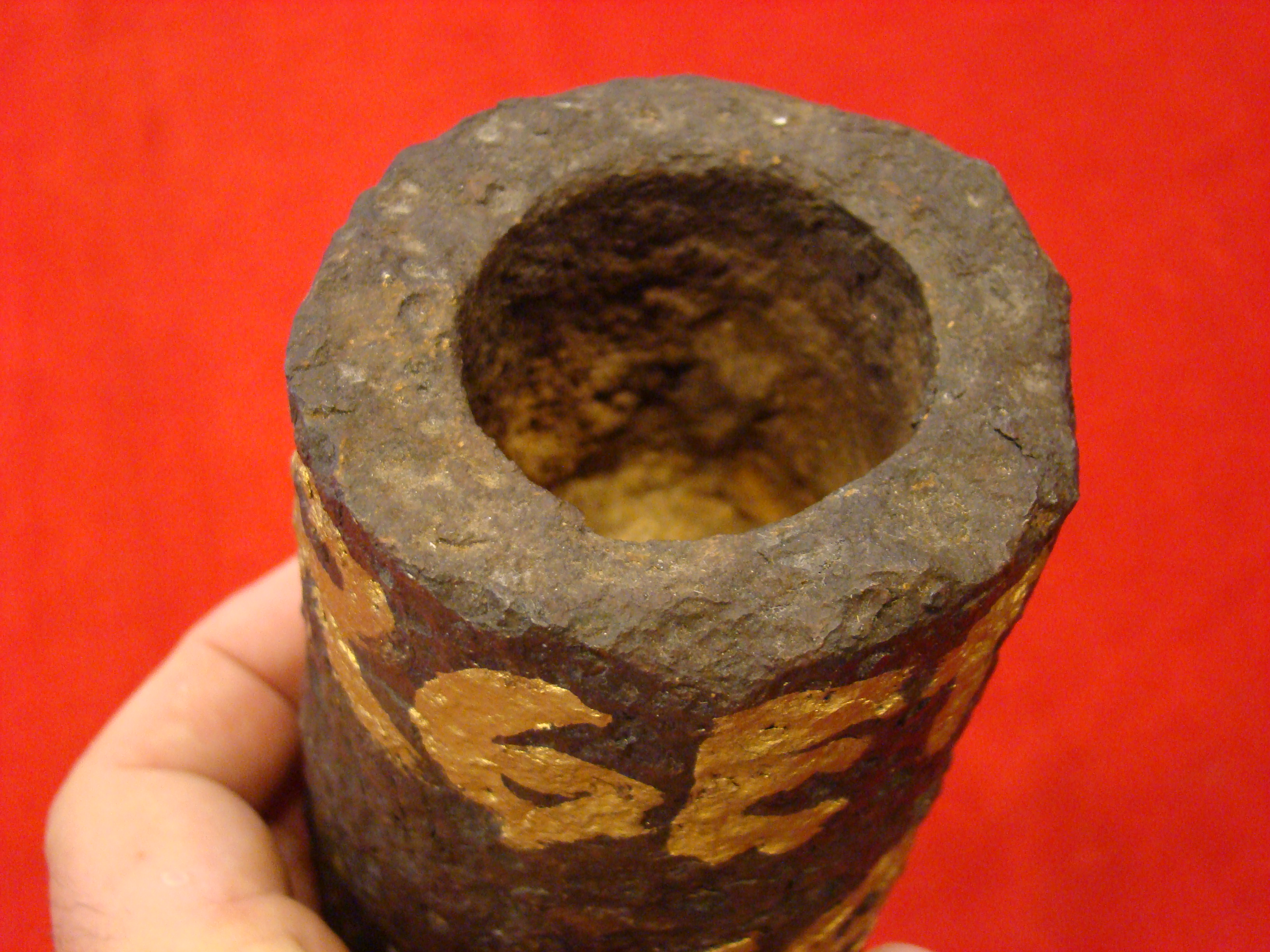
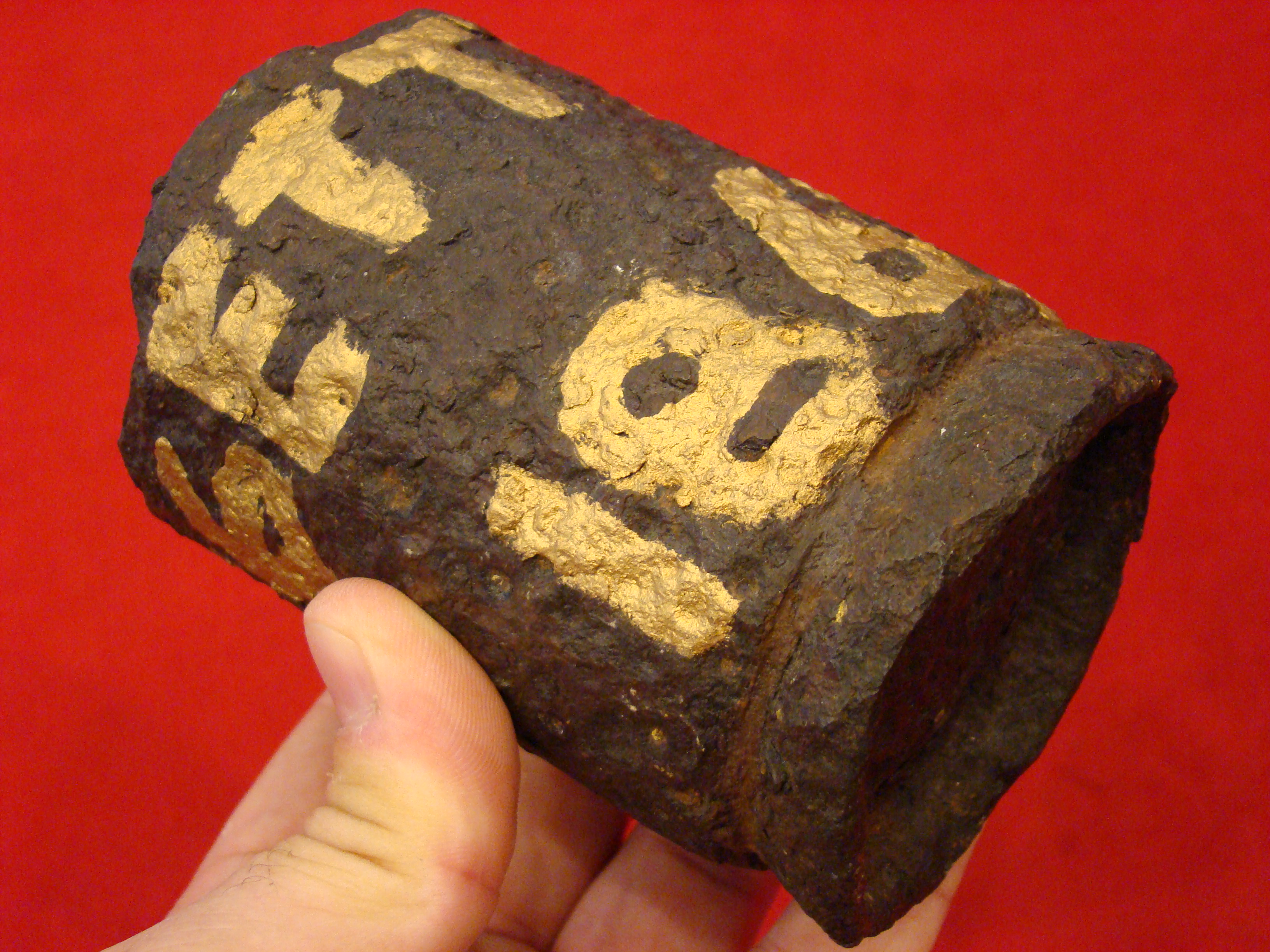
ART 2. Exploded US/CS Read Parrott Shell. 1862 Gettysburg PA. Battlefield.
Excellent condition, complete bottom half with wrought iron sabot. Would make a good pencil holder. $225.00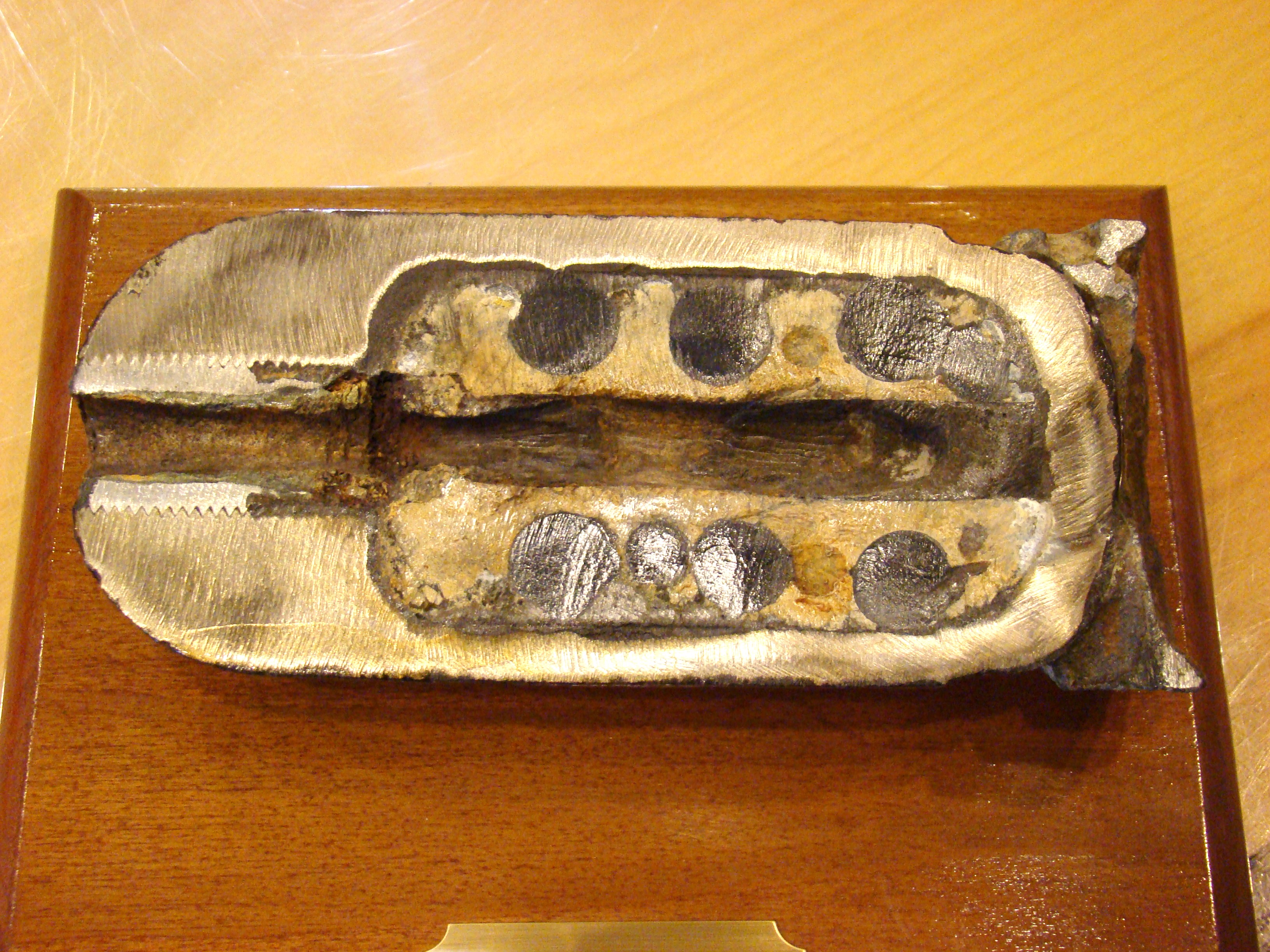
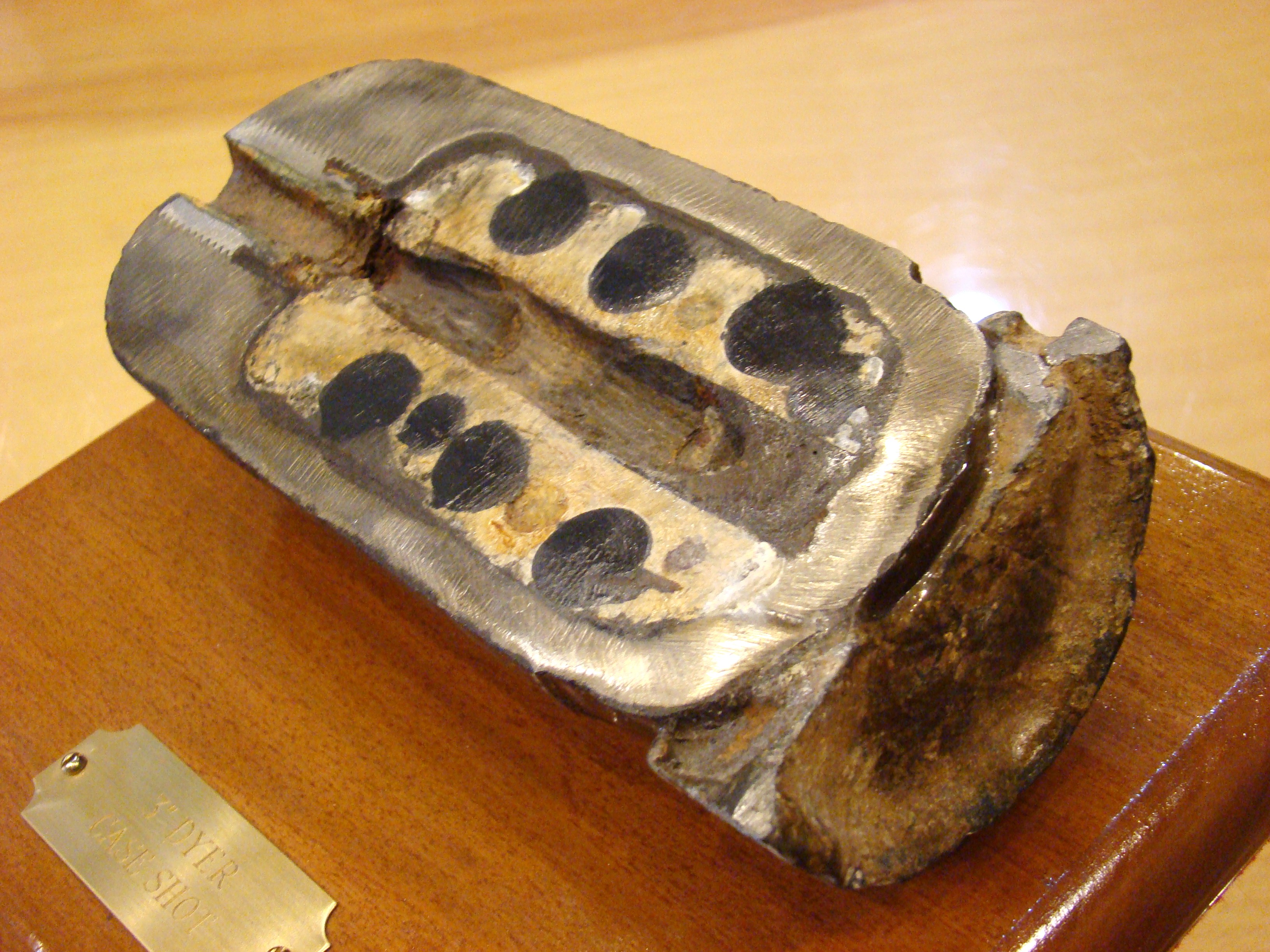
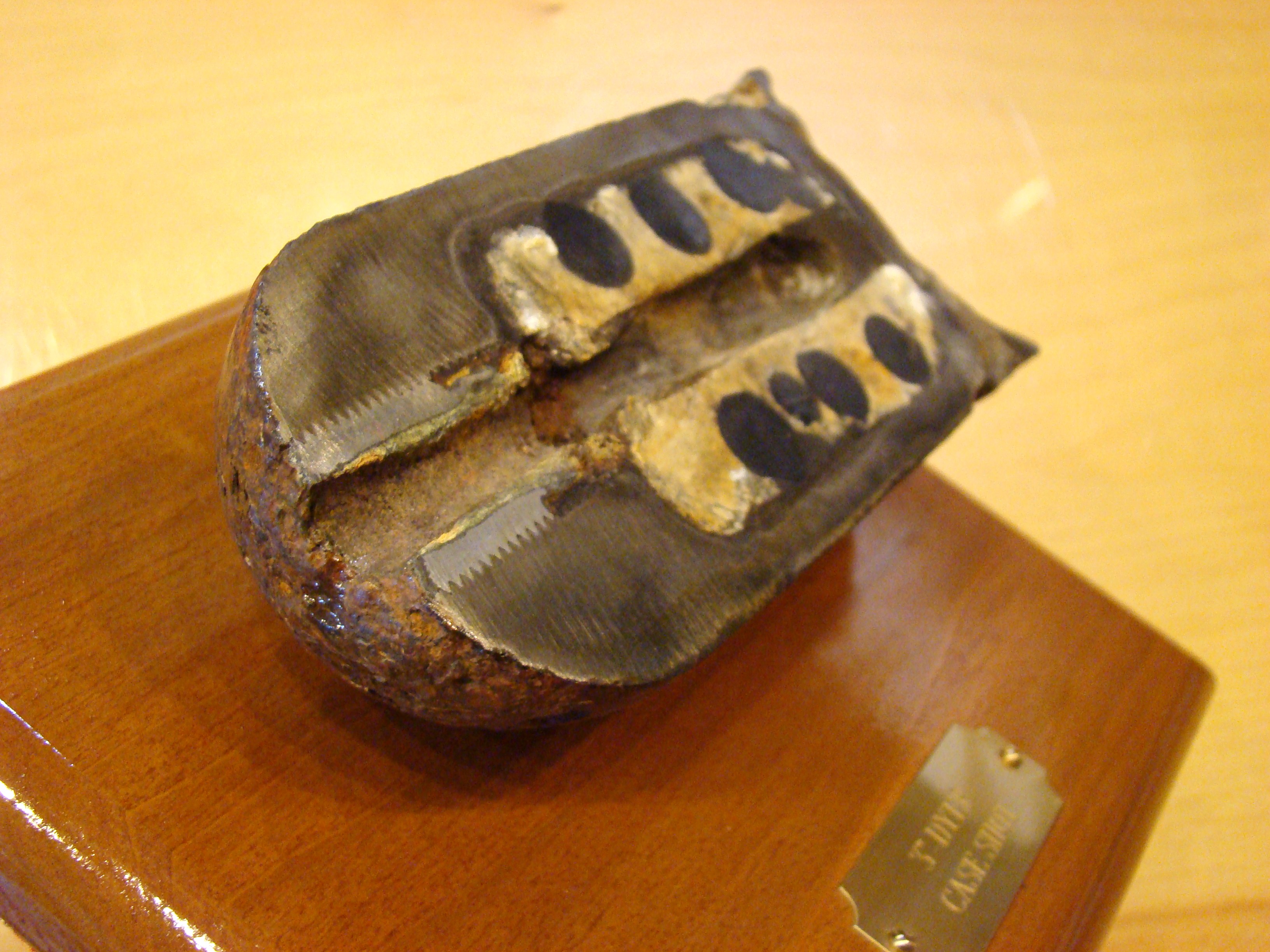
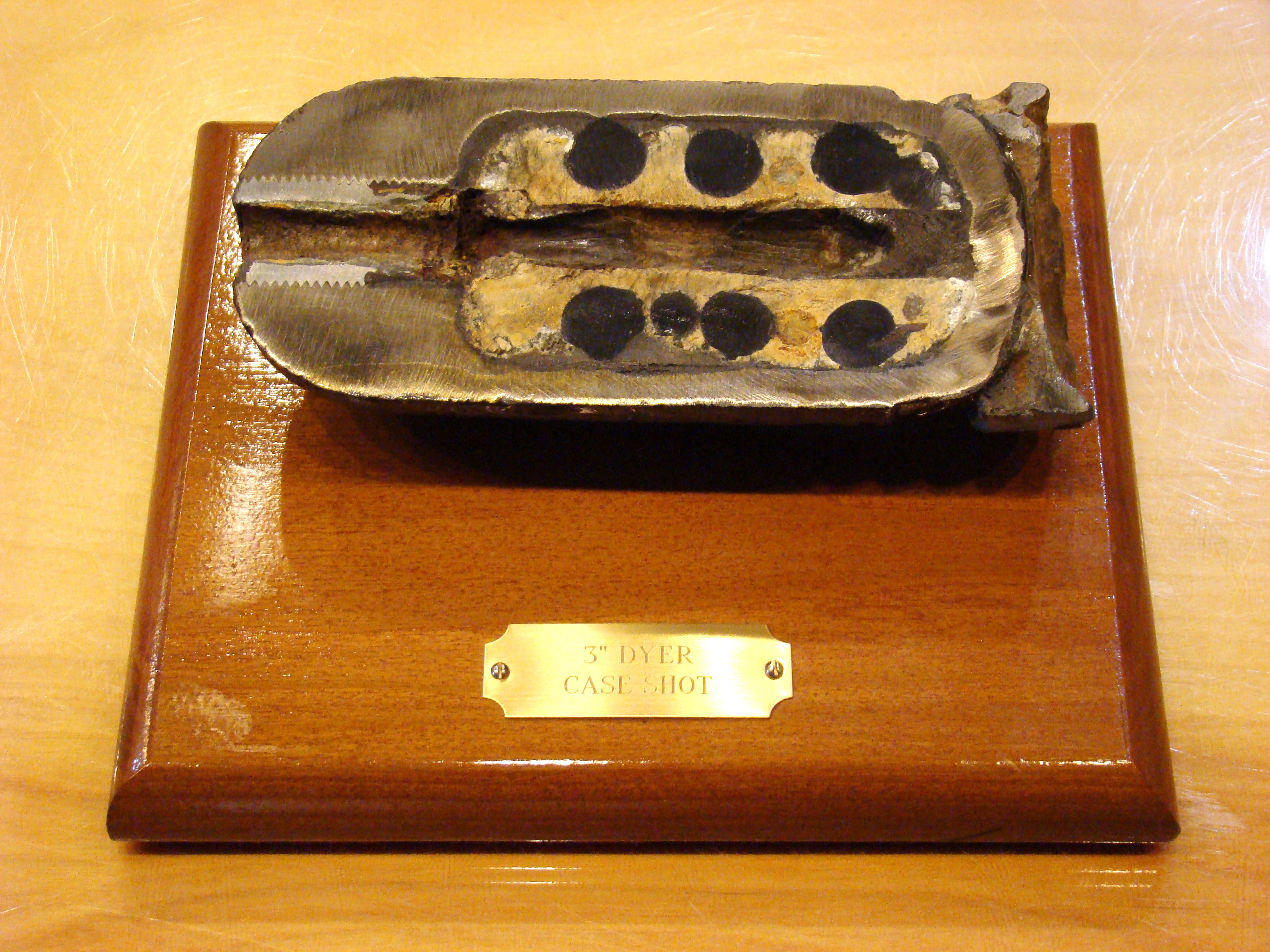
ART 3. Sectioned US 3″ Dyer Case Shot.
Outstanding artillery piece exhibiting the shrapnel in sulpur matrix, zinc fuse adapter, lead cup sabot, and powder chamber. Professionally mounted on a display stand with engraved brass plaque. $395.00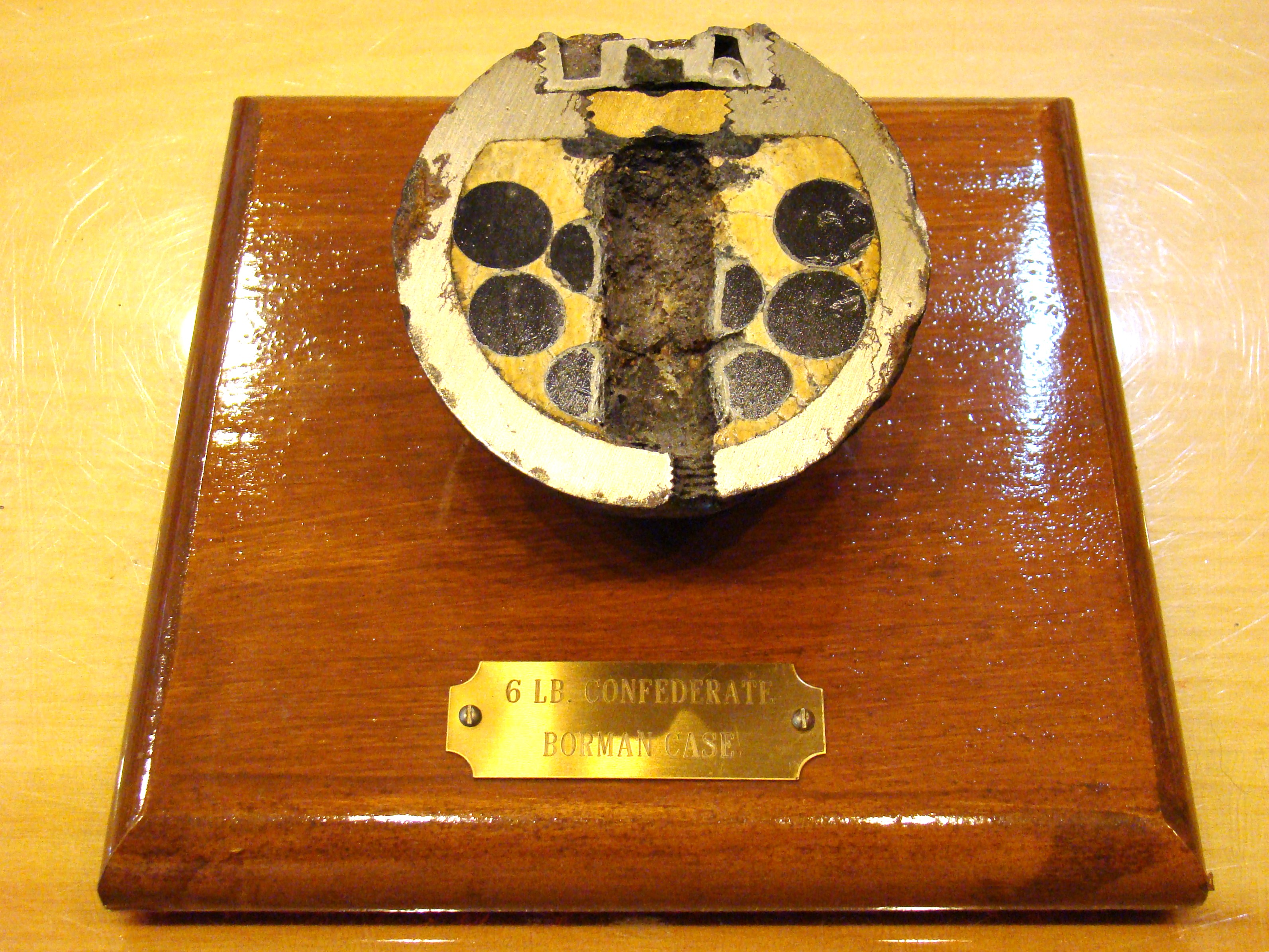
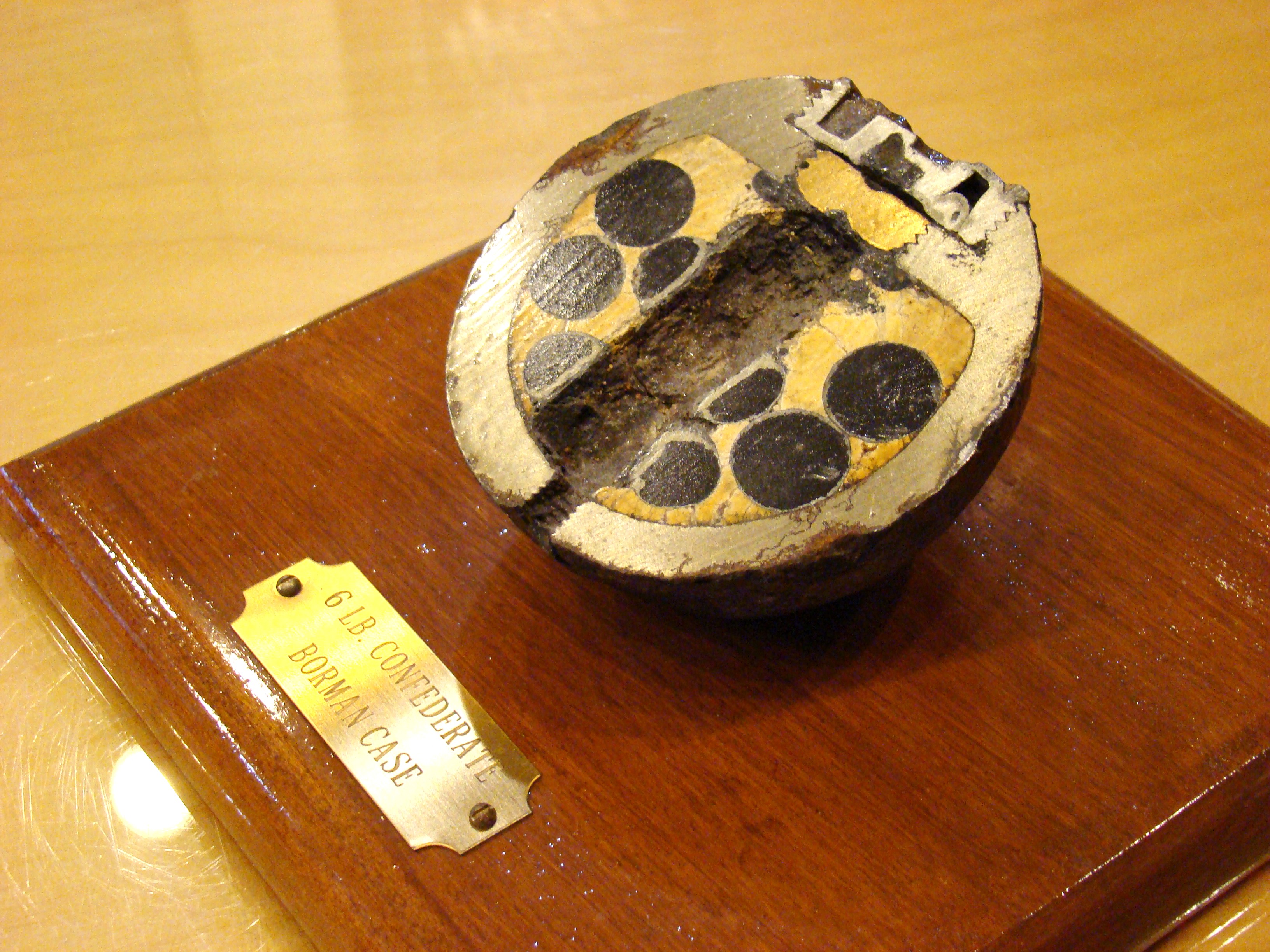
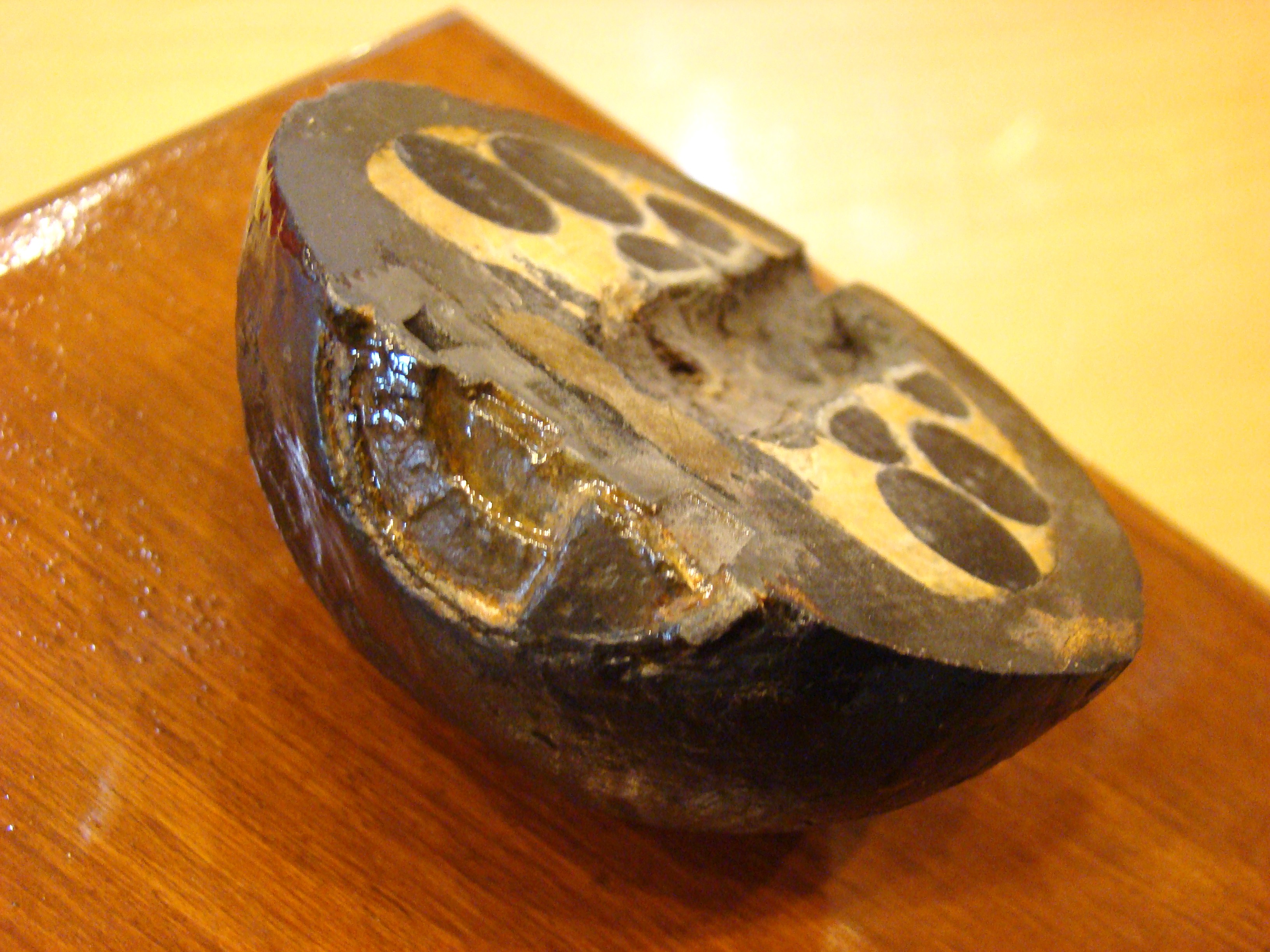
ART 4. Sectioned Confederate 6 Pounder Bormann Fused Case Shot.
Fine looking cross-sectioned projectle revealing the shrapnel in sulpur matrix, Confederate Bormann Time Fuse, brass underplug, and powder chamber. Professionally mounted on a display stand with engraved brass plaque. $395.00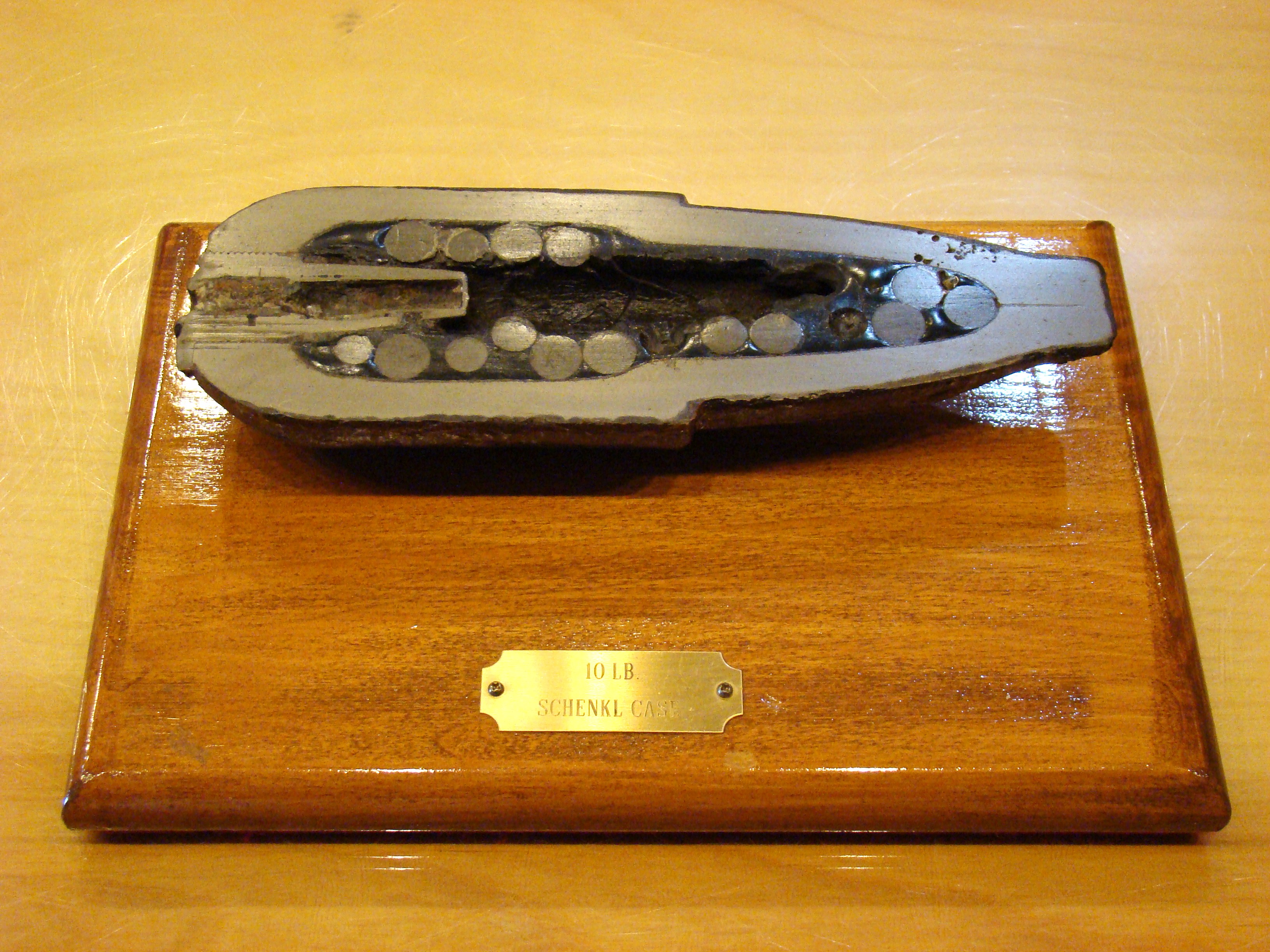
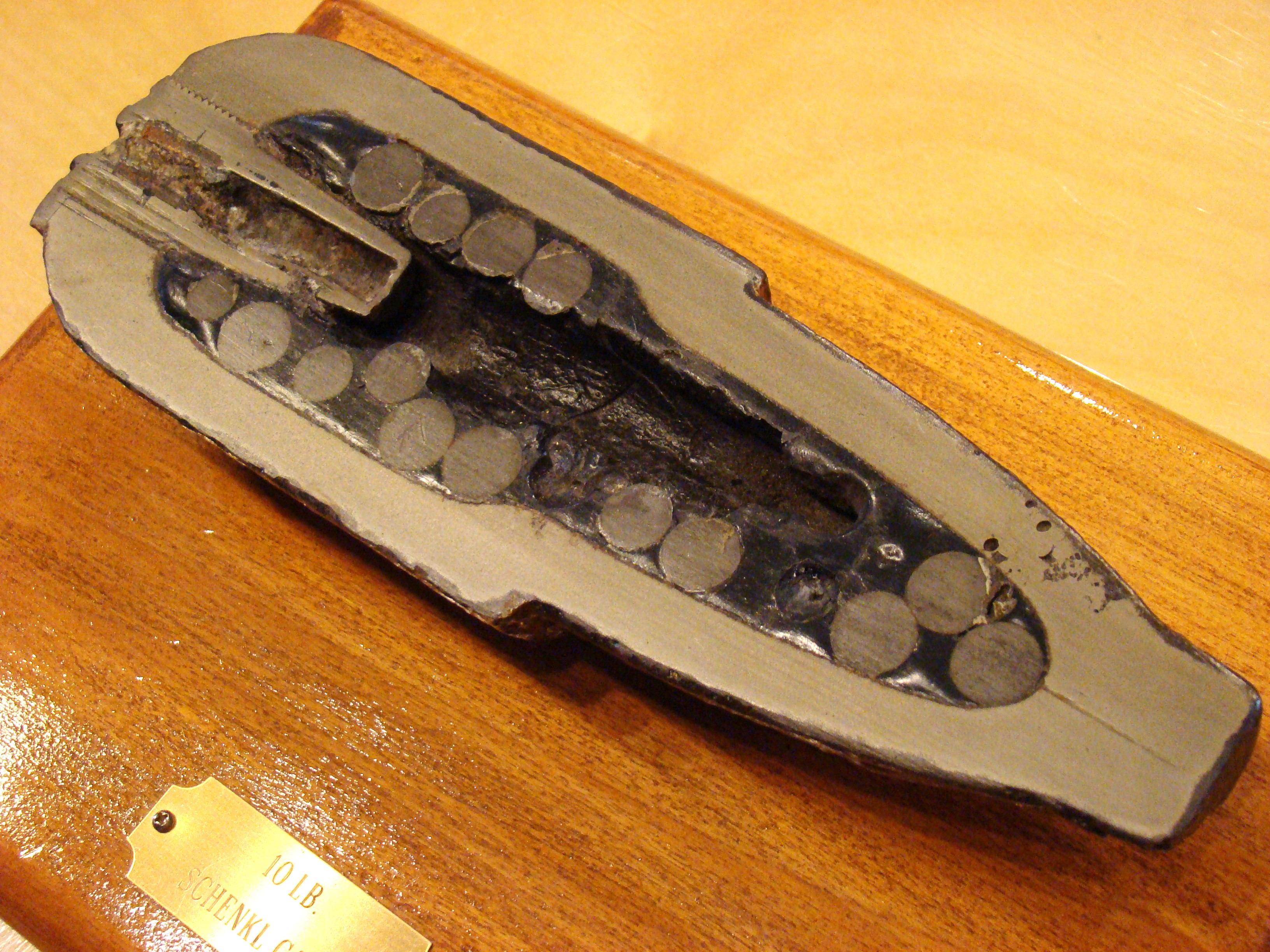
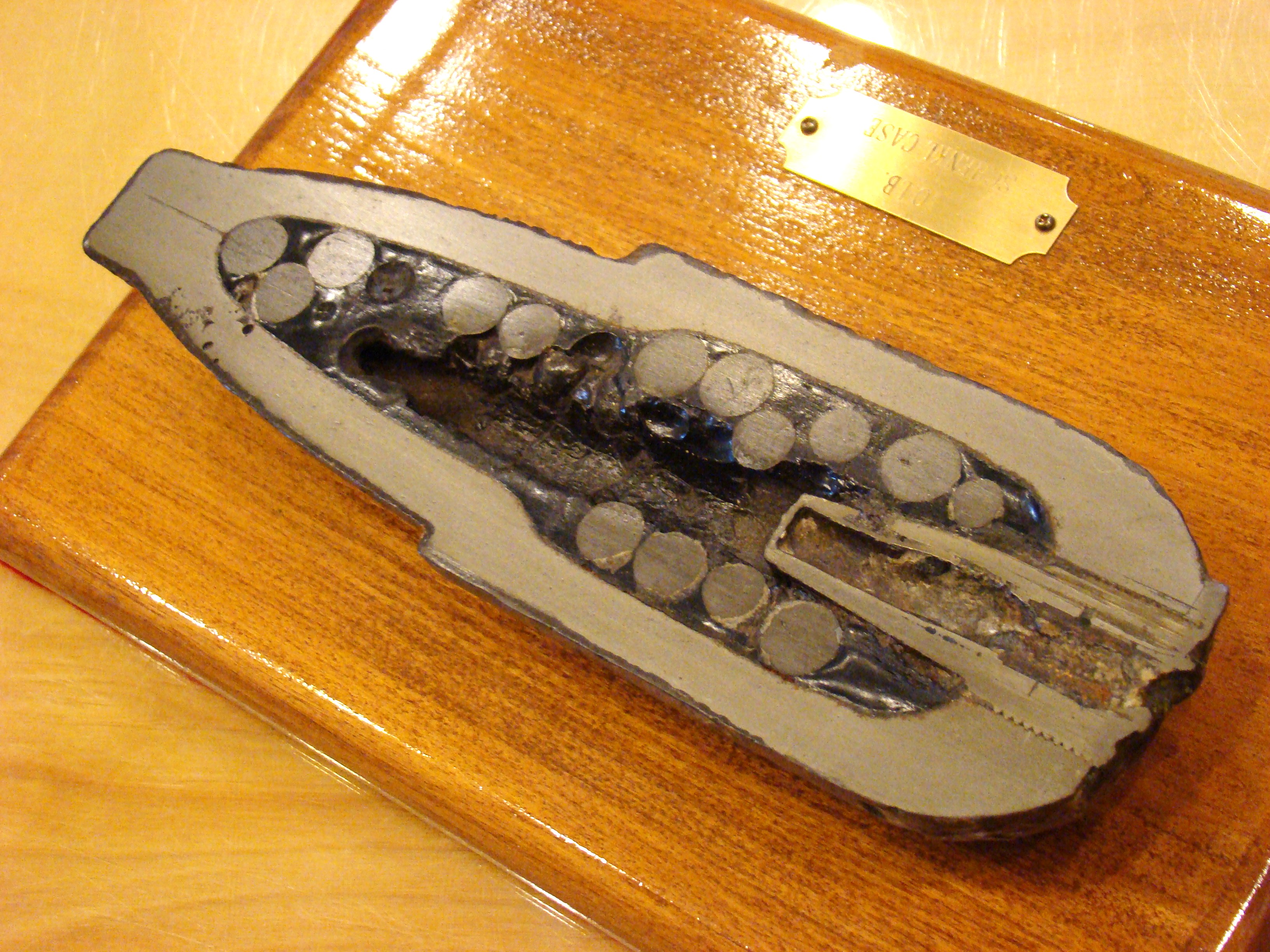
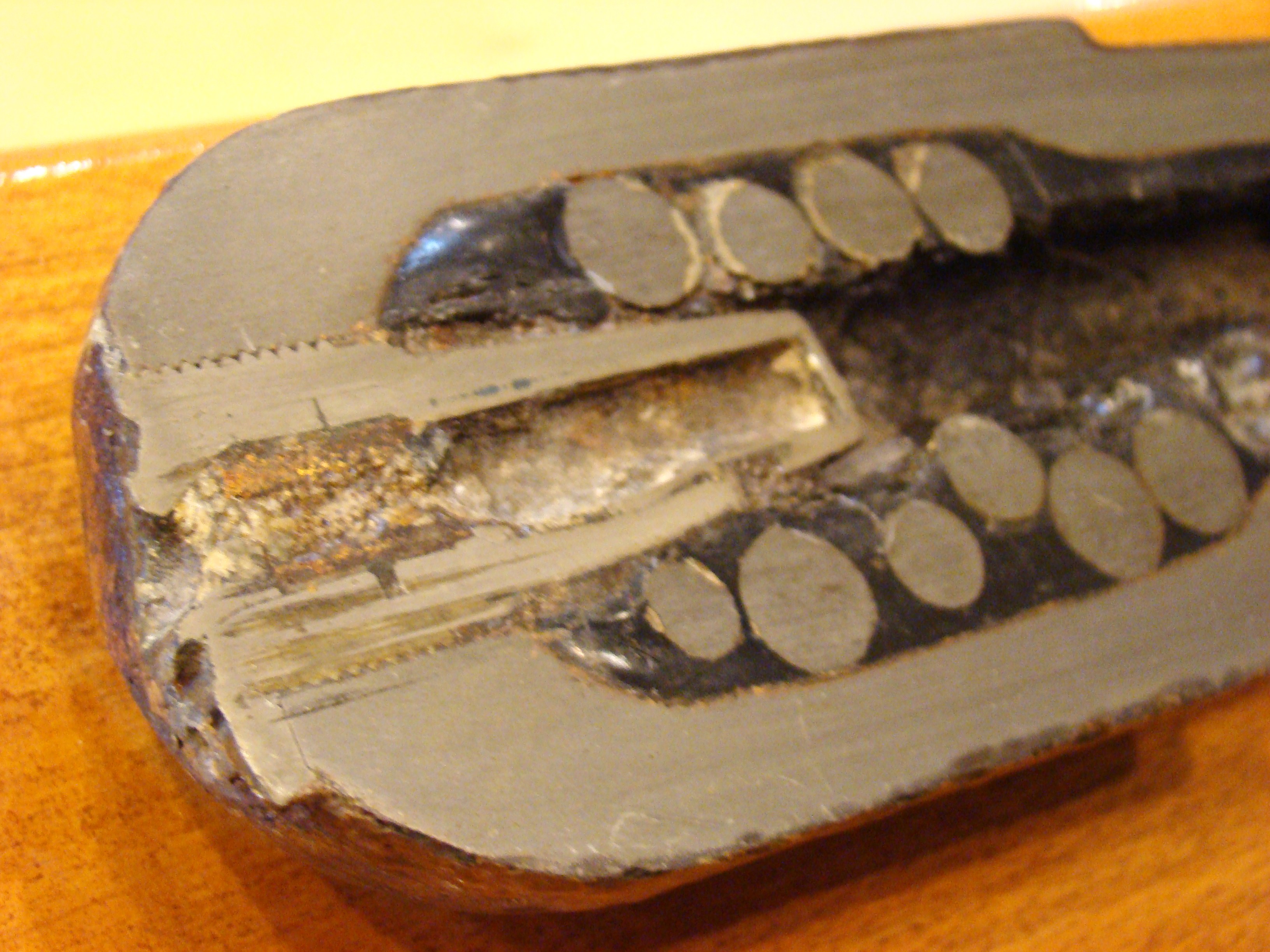
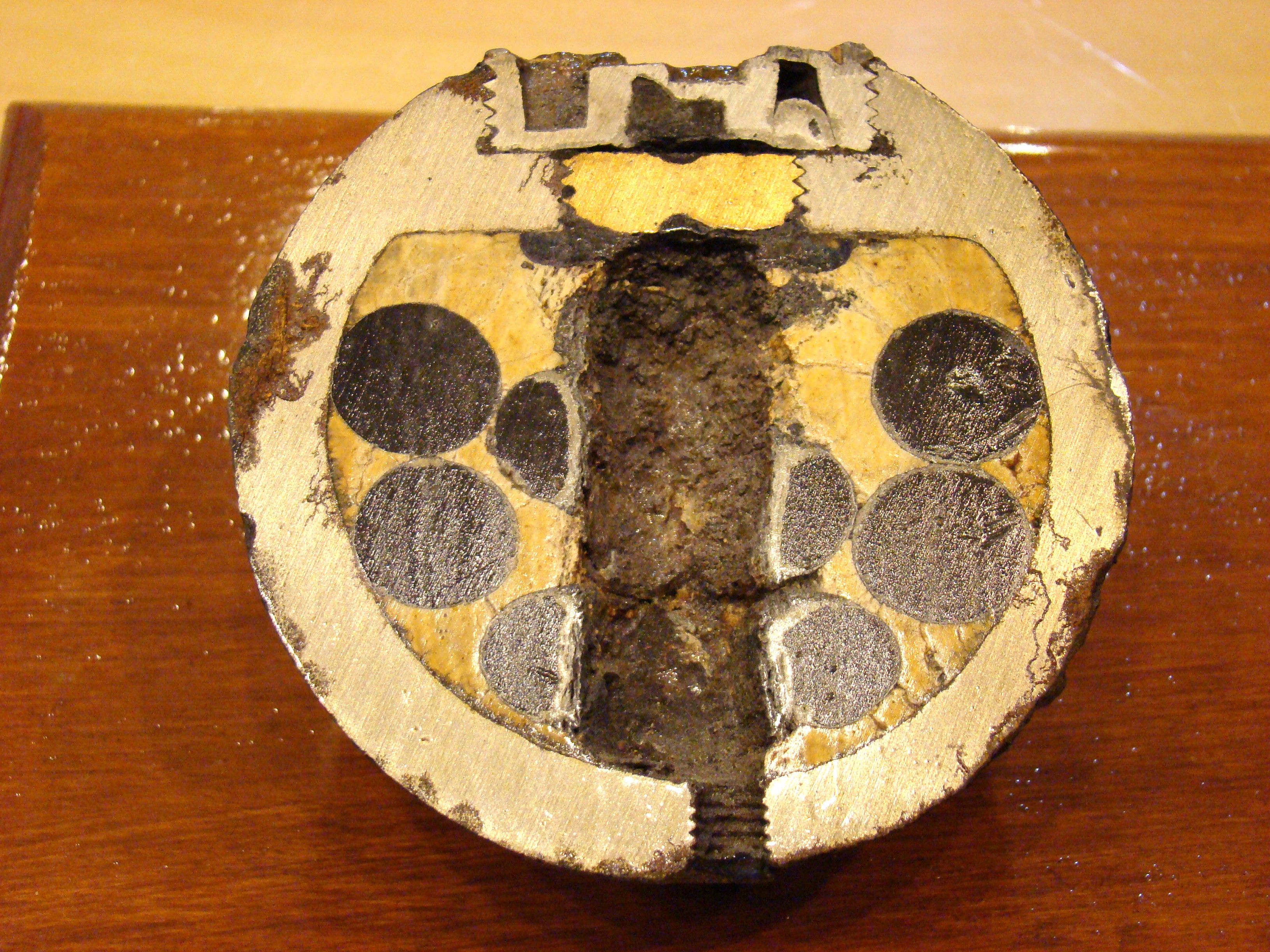
ART 5. Sectioned US 3″ Schenkl Case Shot.
Classic Schenk Case Shot projectle, cross sectioned revealing the shrapnel balls in black pitch matrix, Schenkl Combination Fuse, and powder chamber. Professionally mounted on a display stand with engraved brass plaque. $395.00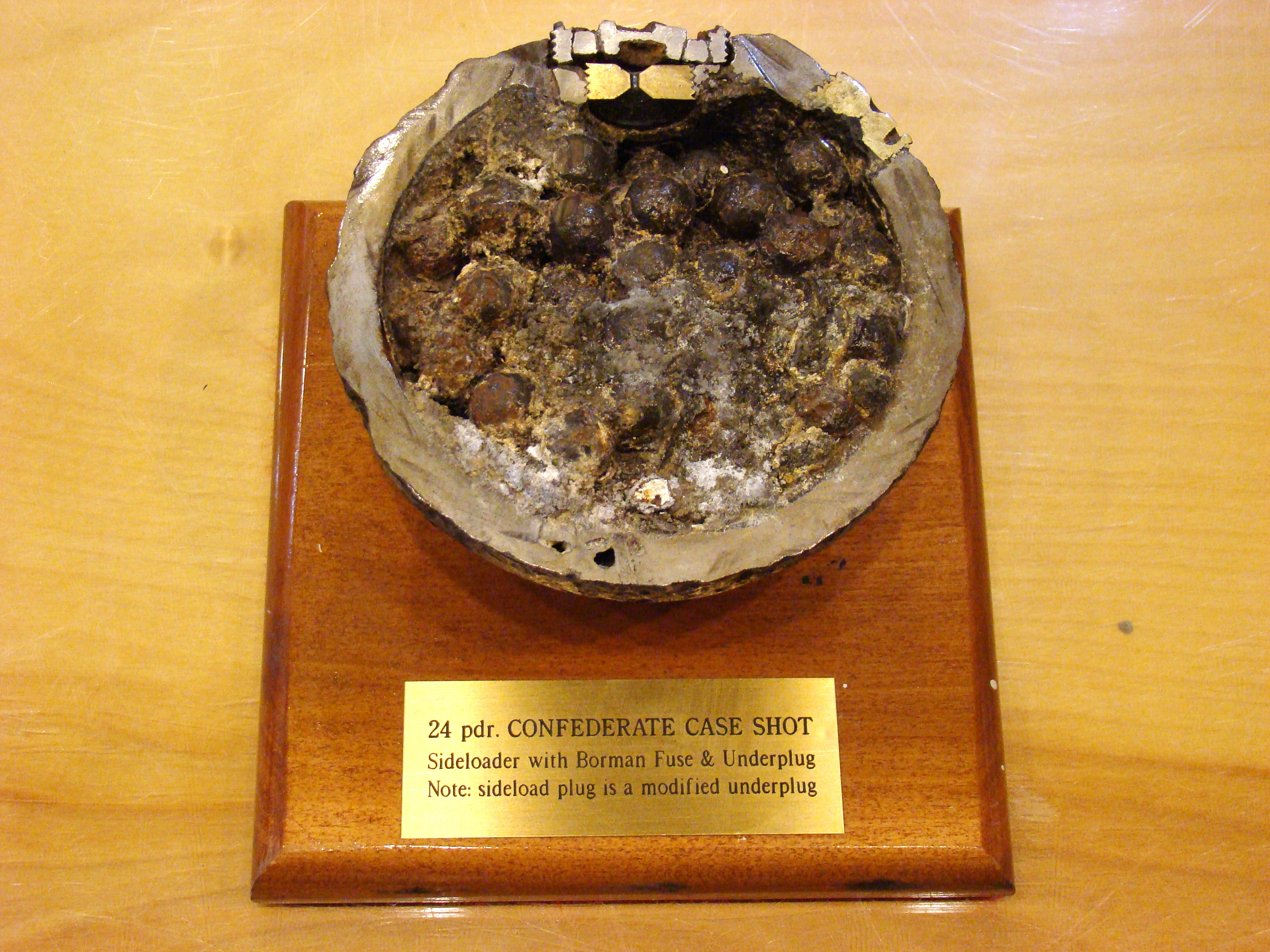
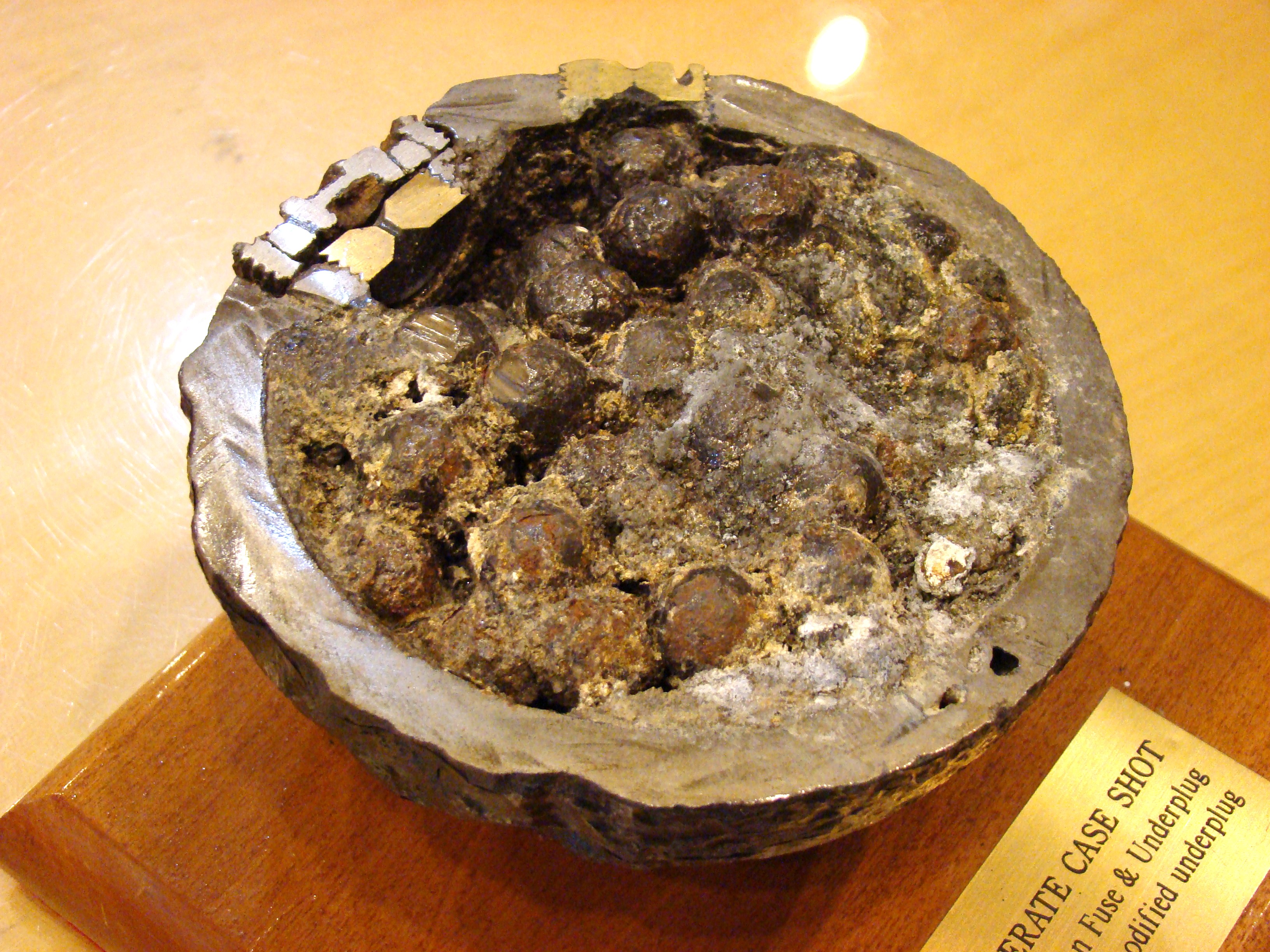
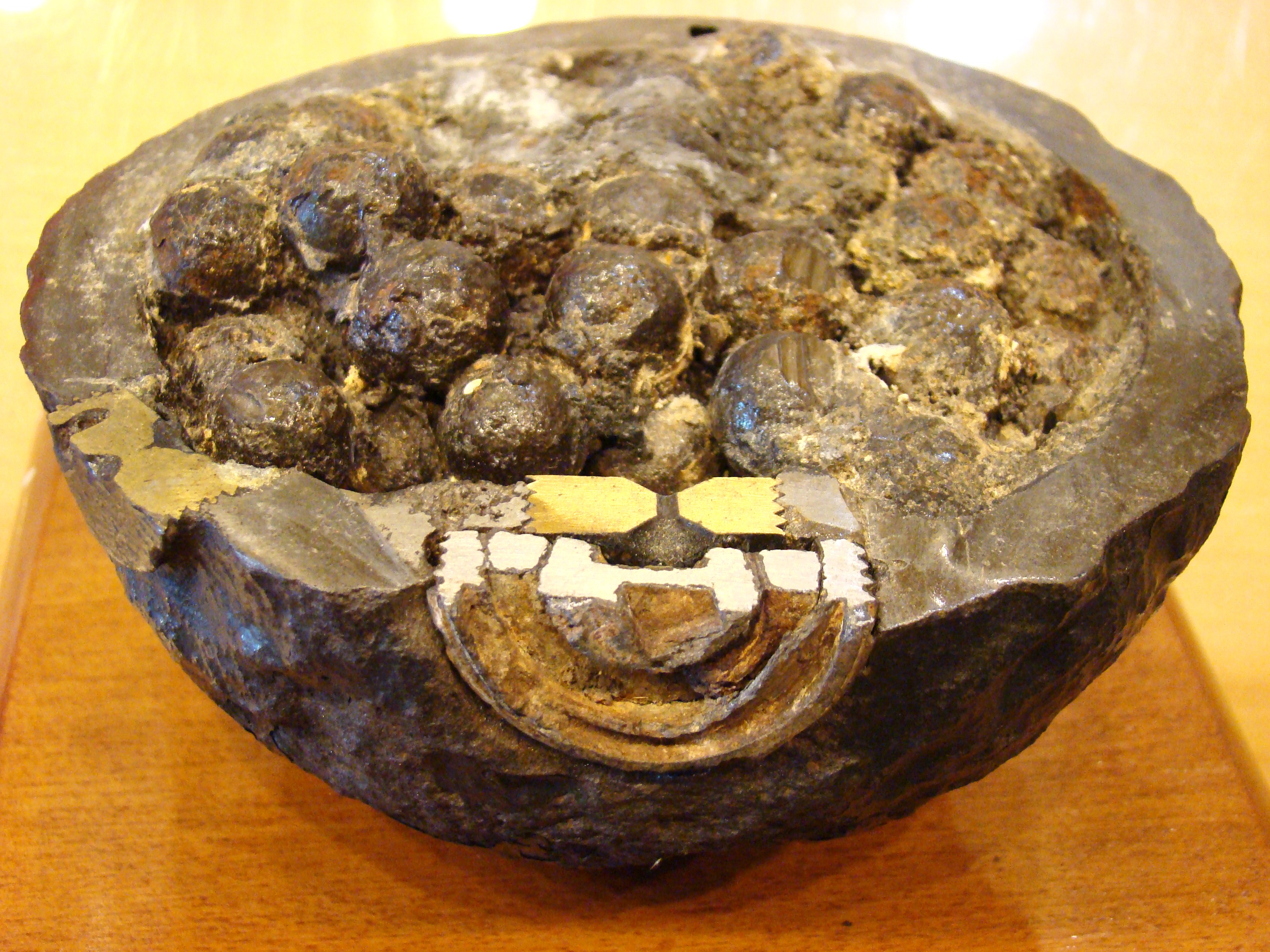
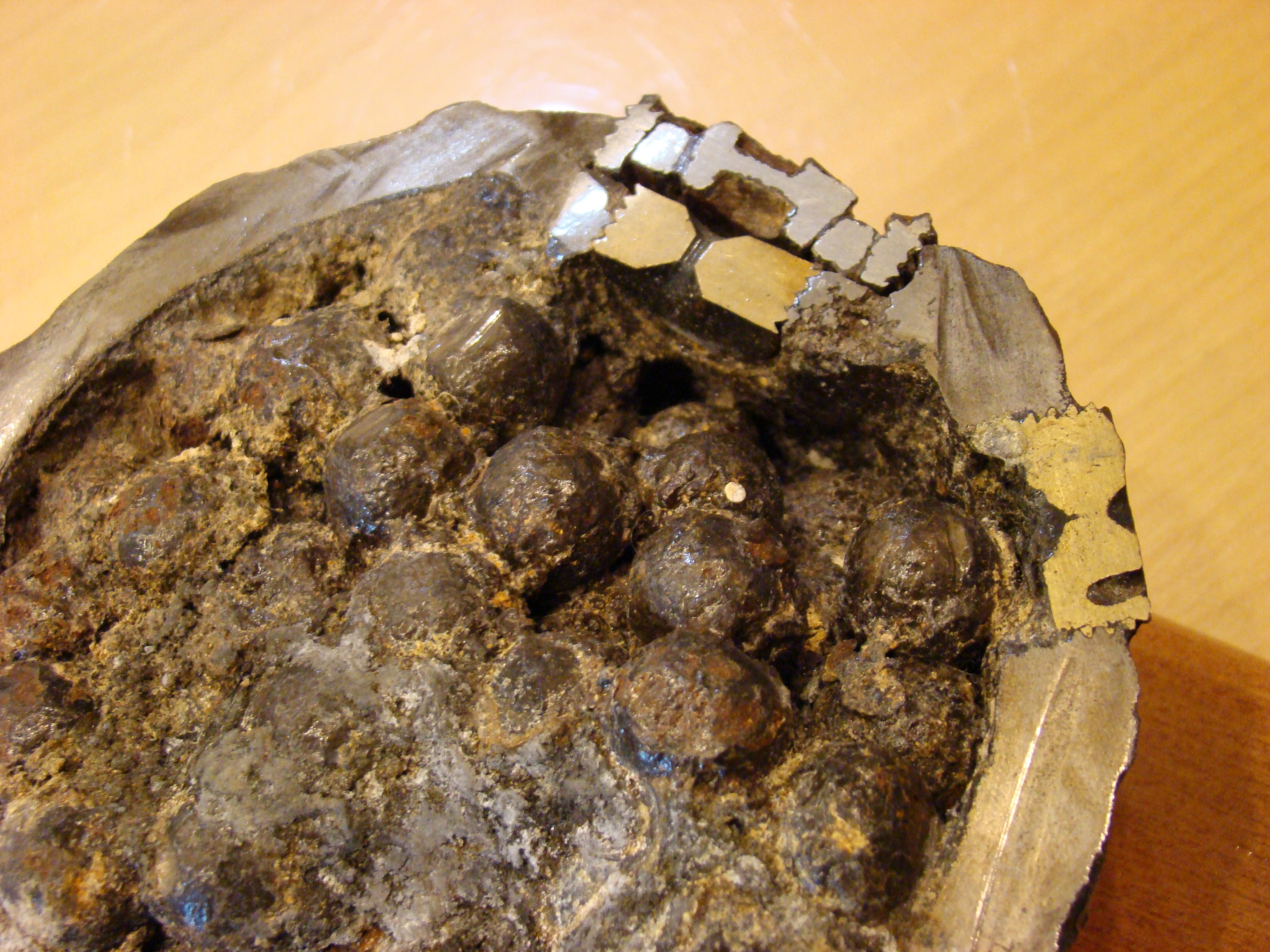
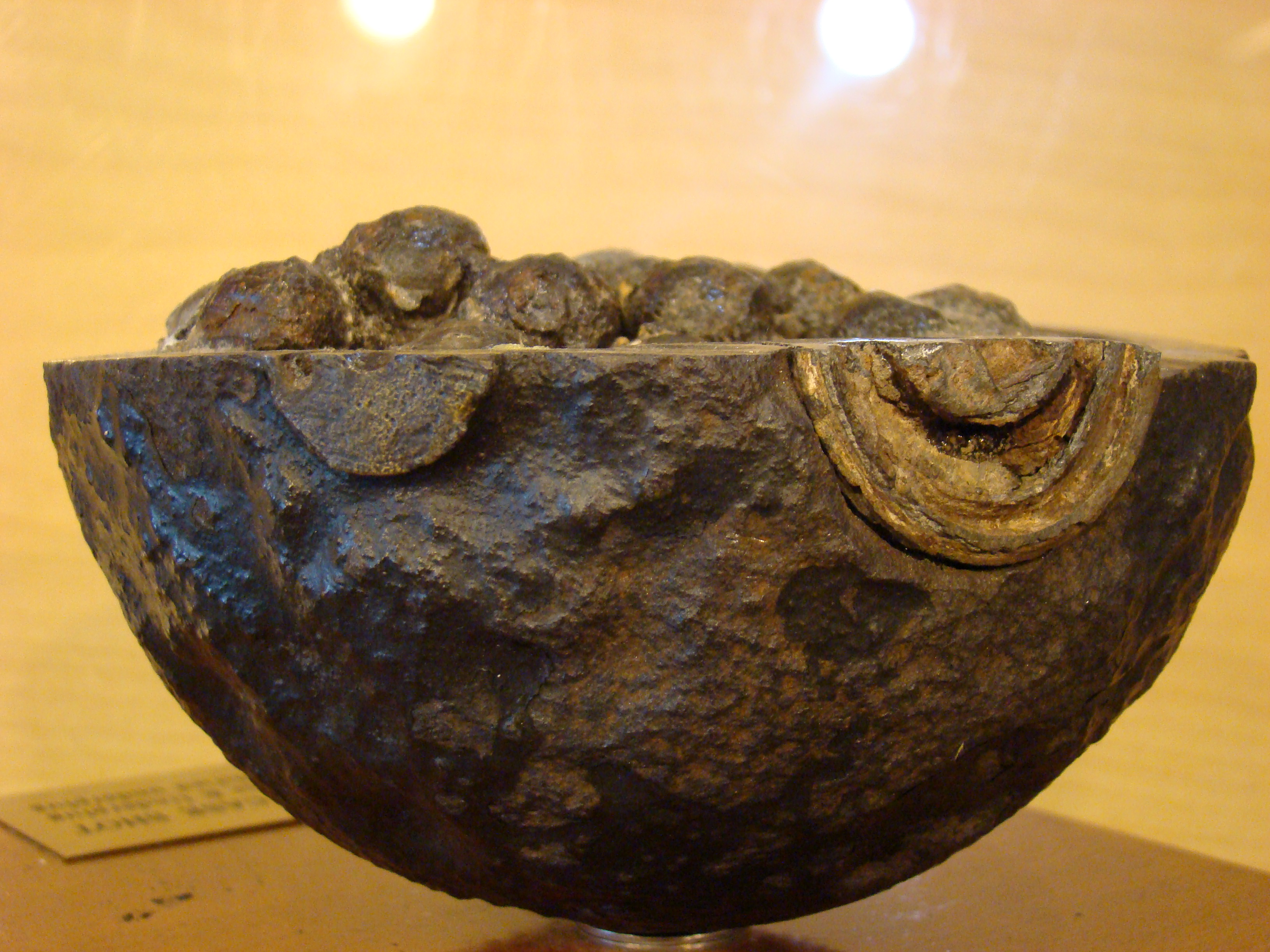
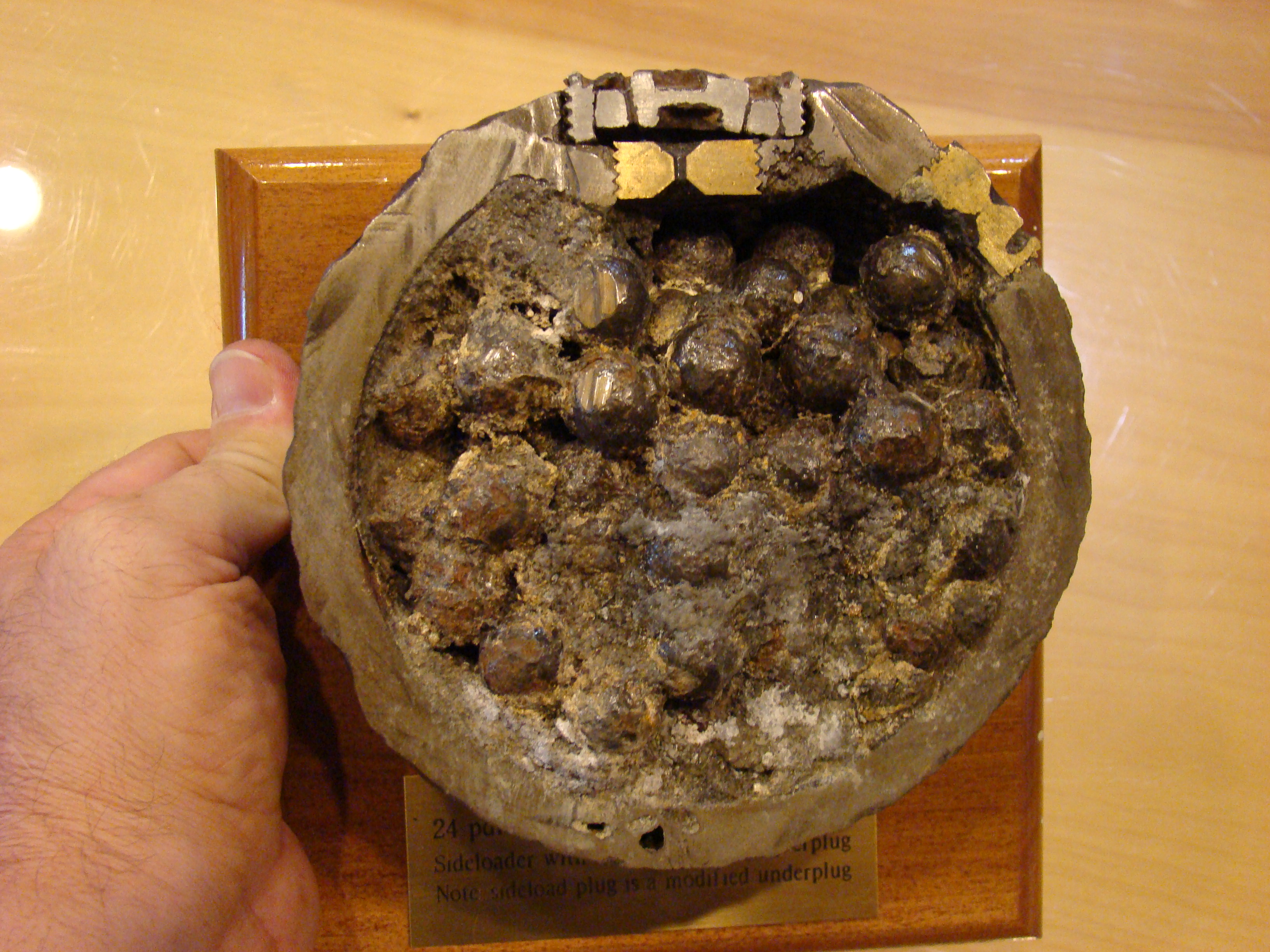
ART 6. Sectioned 24 Pounder Confederate “Sideloader” Spherical Case Shot with Bormann Fuse.
This is such a rare shell. I have never seen one cut in half. Note brass sideload plug and plethora of iron shrapnel balls in pitch matrix. As you can see, the shrapnel filled the powder chamber preventing detonation. Professionally mounted on a display stand with engraved brass plaque. $650.00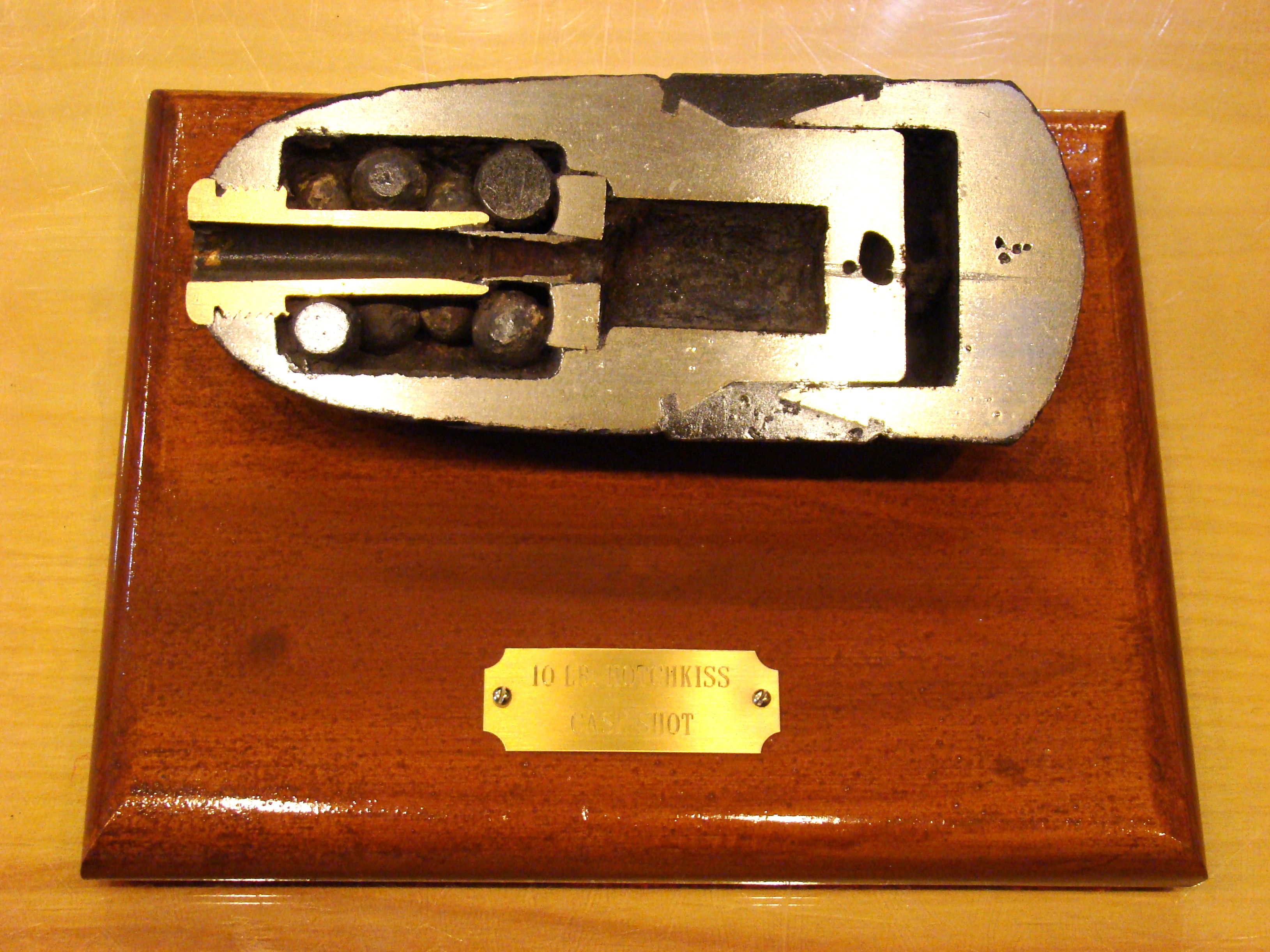
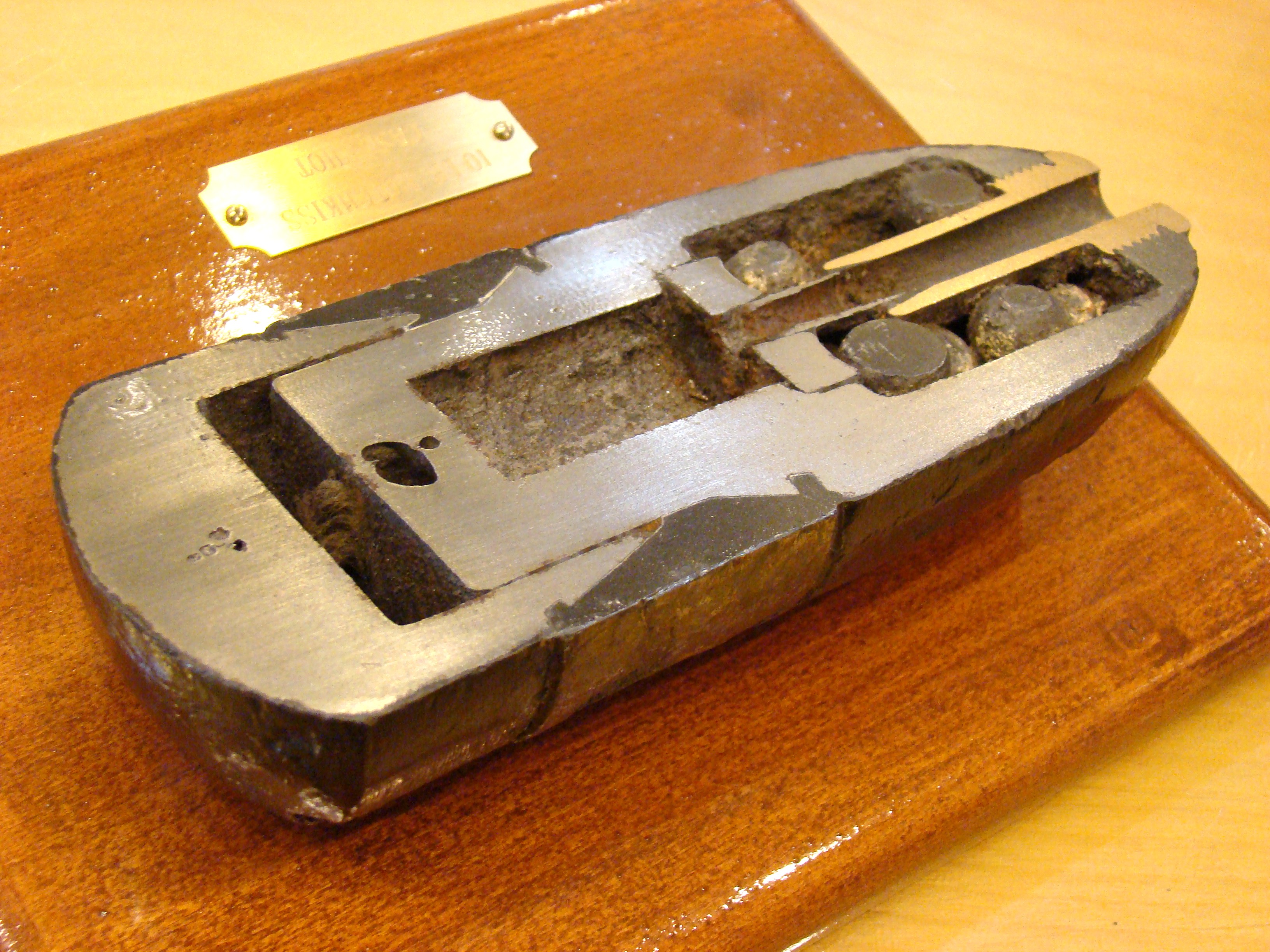
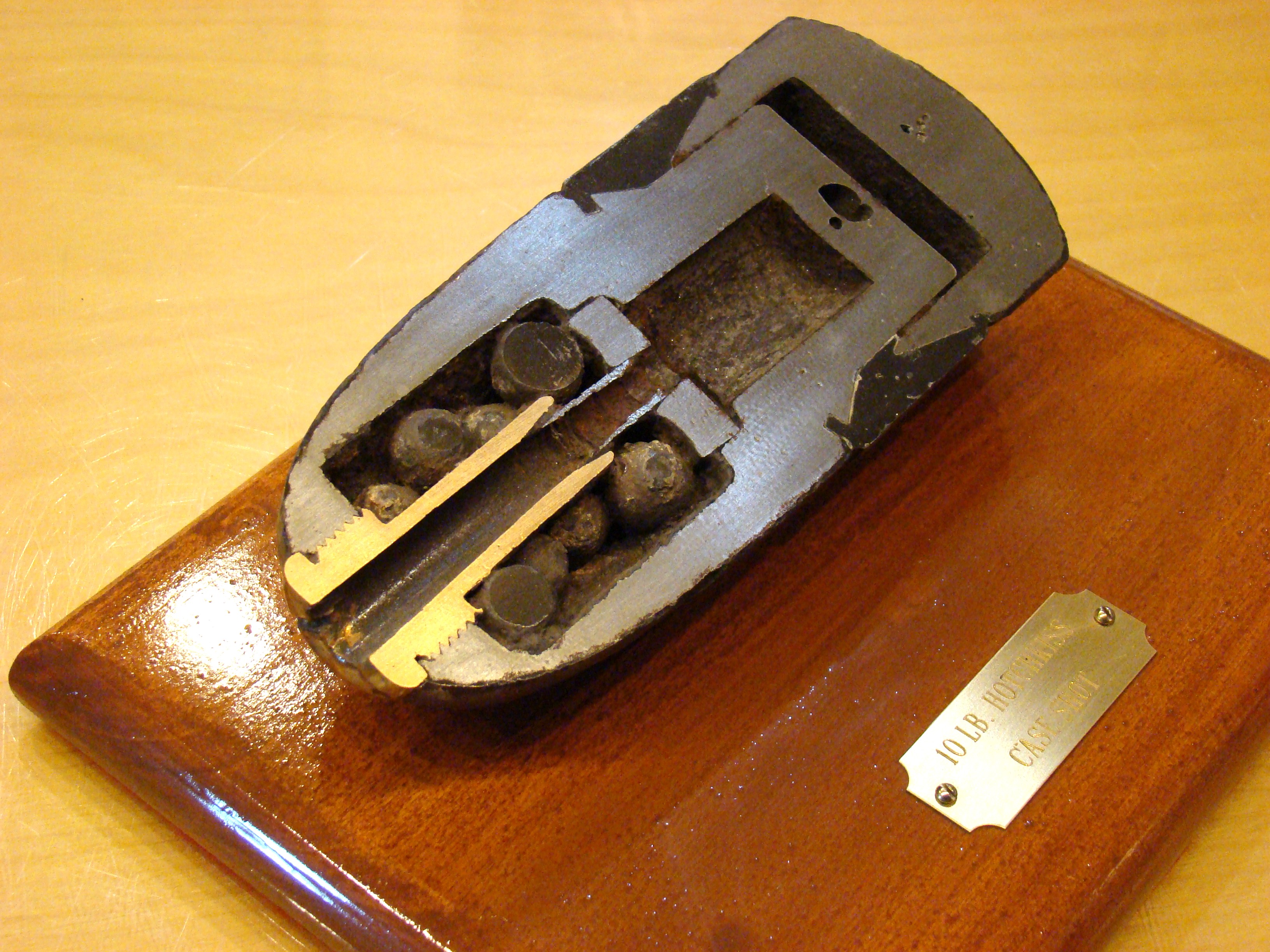
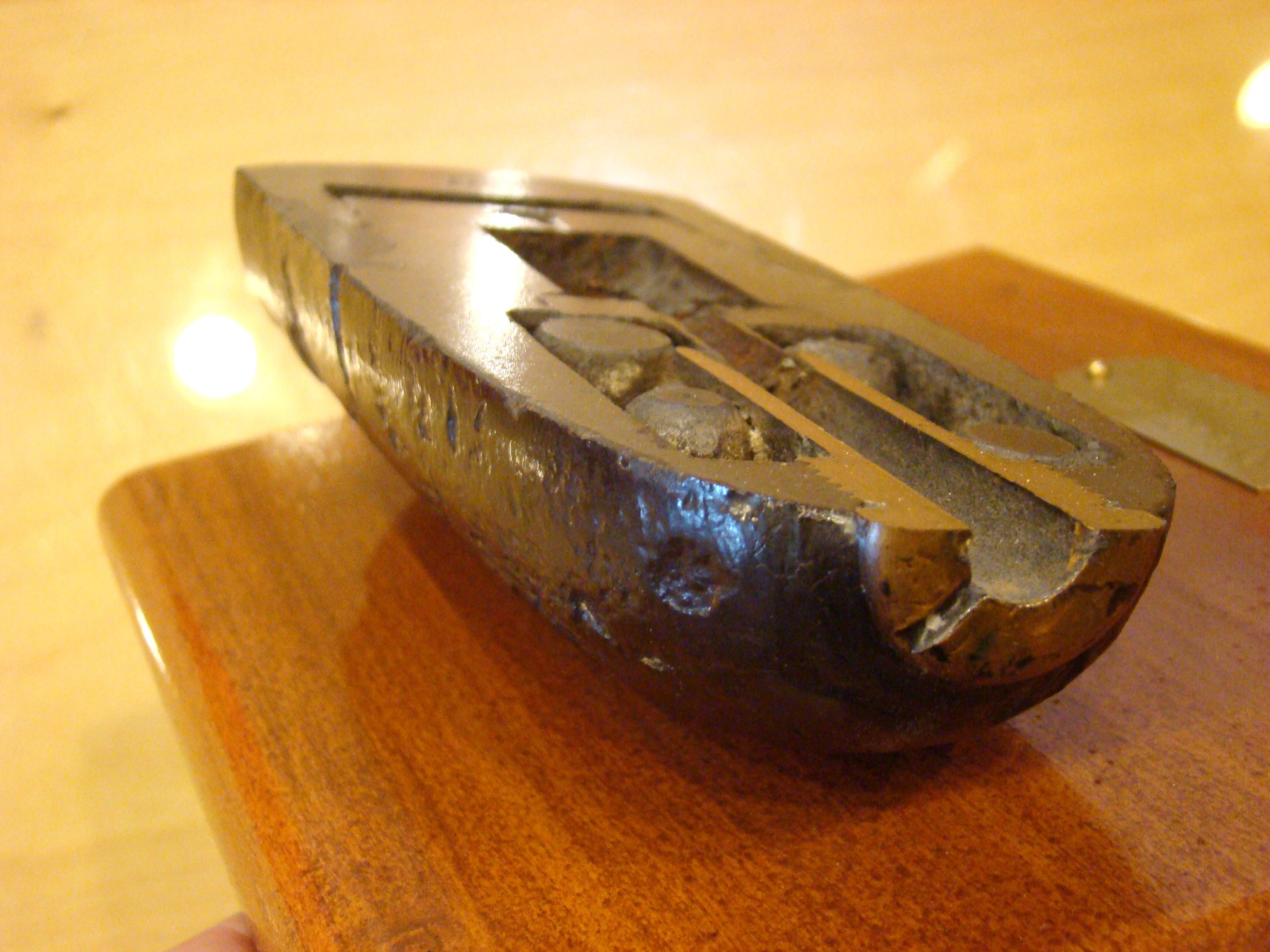
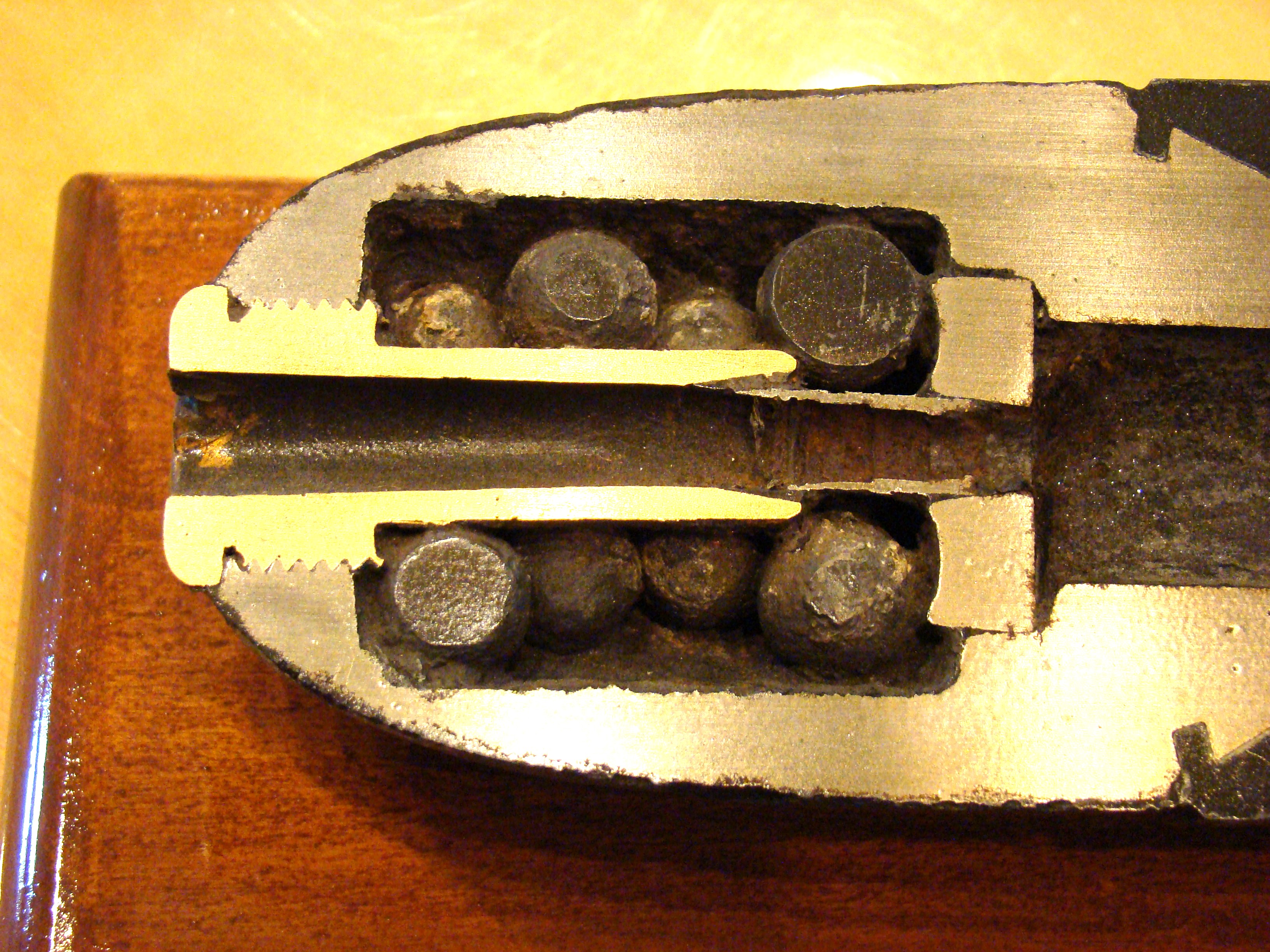
ART 7. Sectioned US 3″ Hotchkiss Case Shot.
Remarkable quality. Perfectly cut revealing shrapnel balls in black pitch matrix. Note brass paper time fuse adapter and well defined powder chamber. Full lead band sabot. Professionally mounted on a display stand with engraved brass plaque. $395.00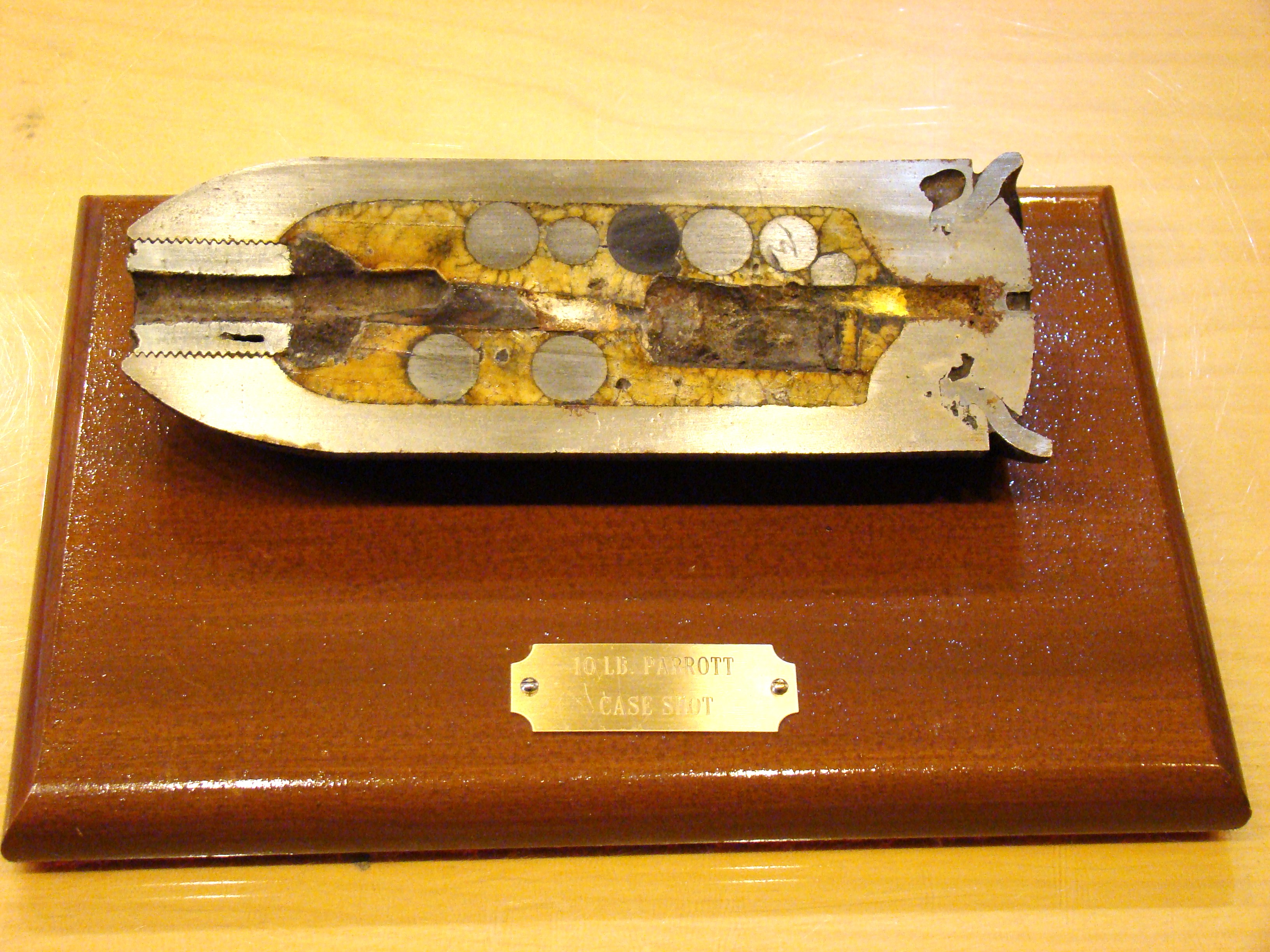
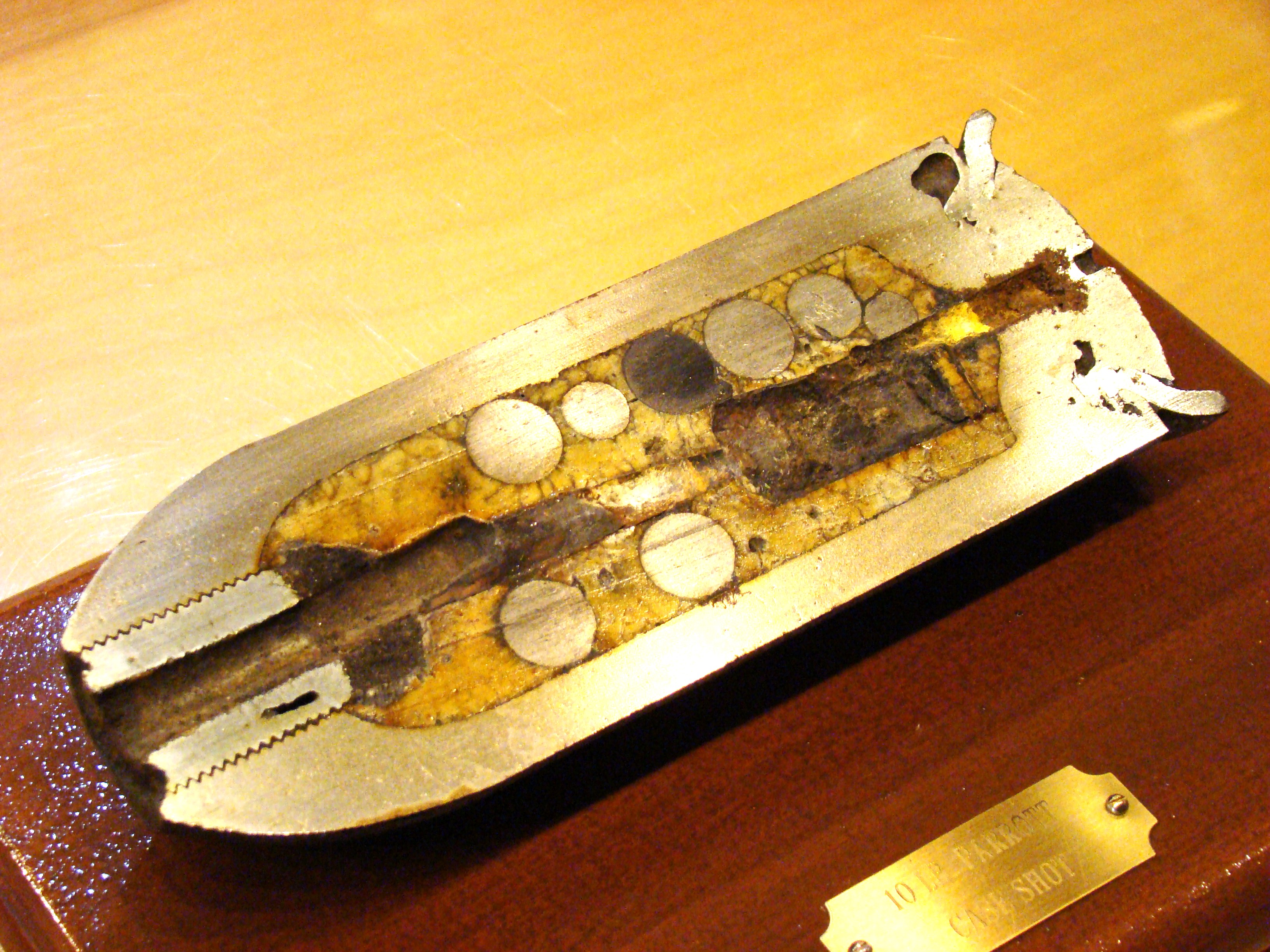
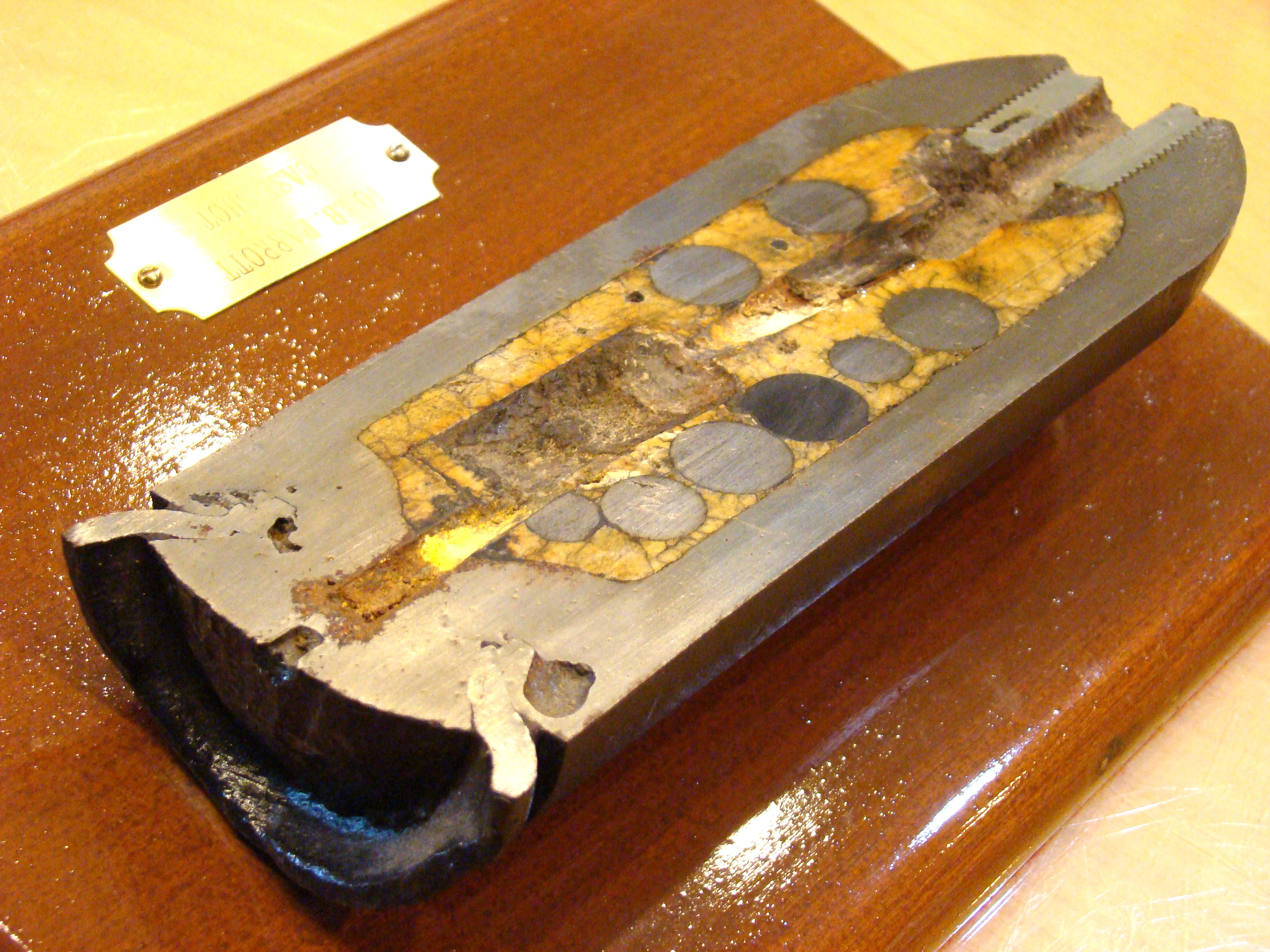
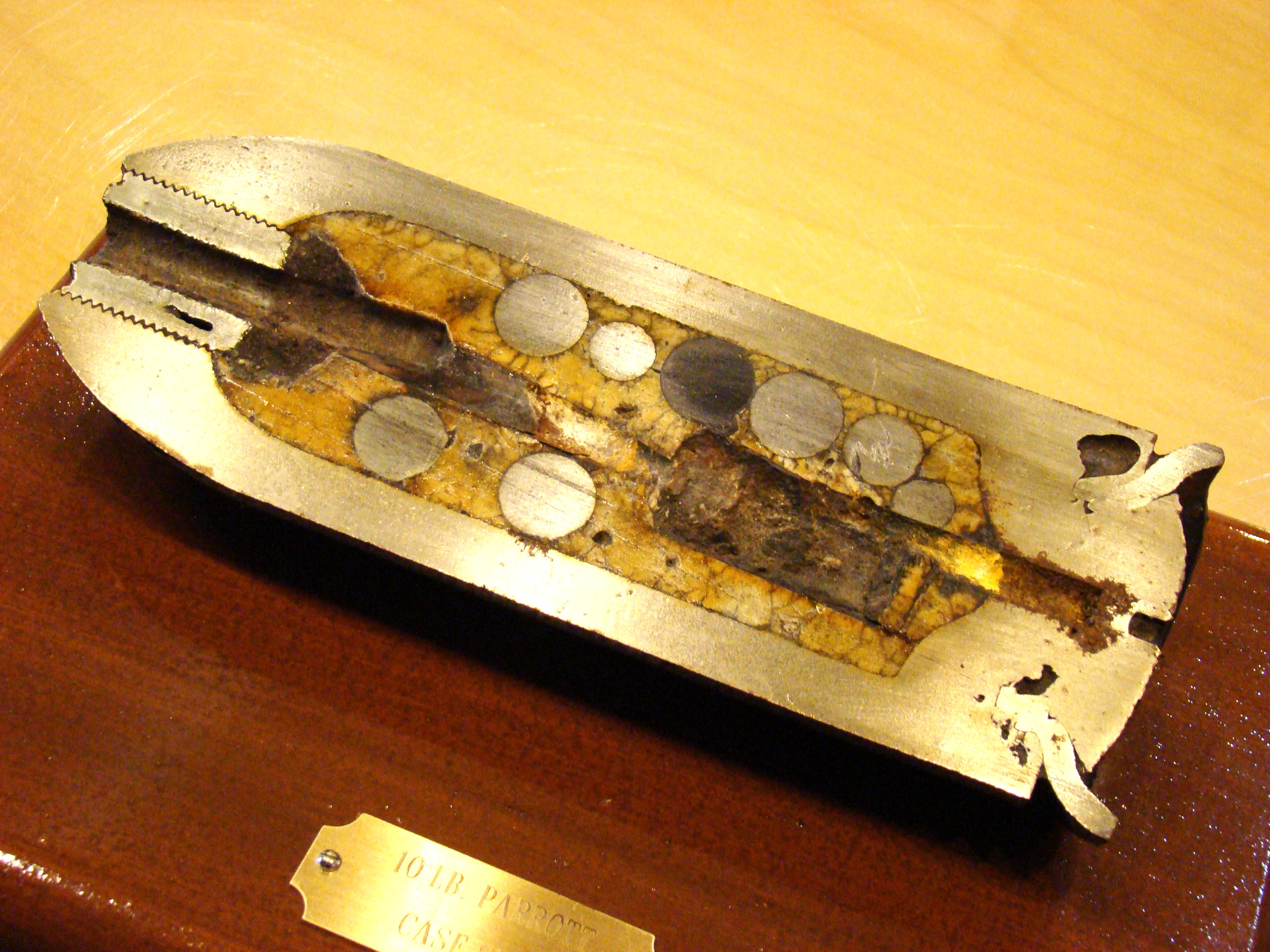
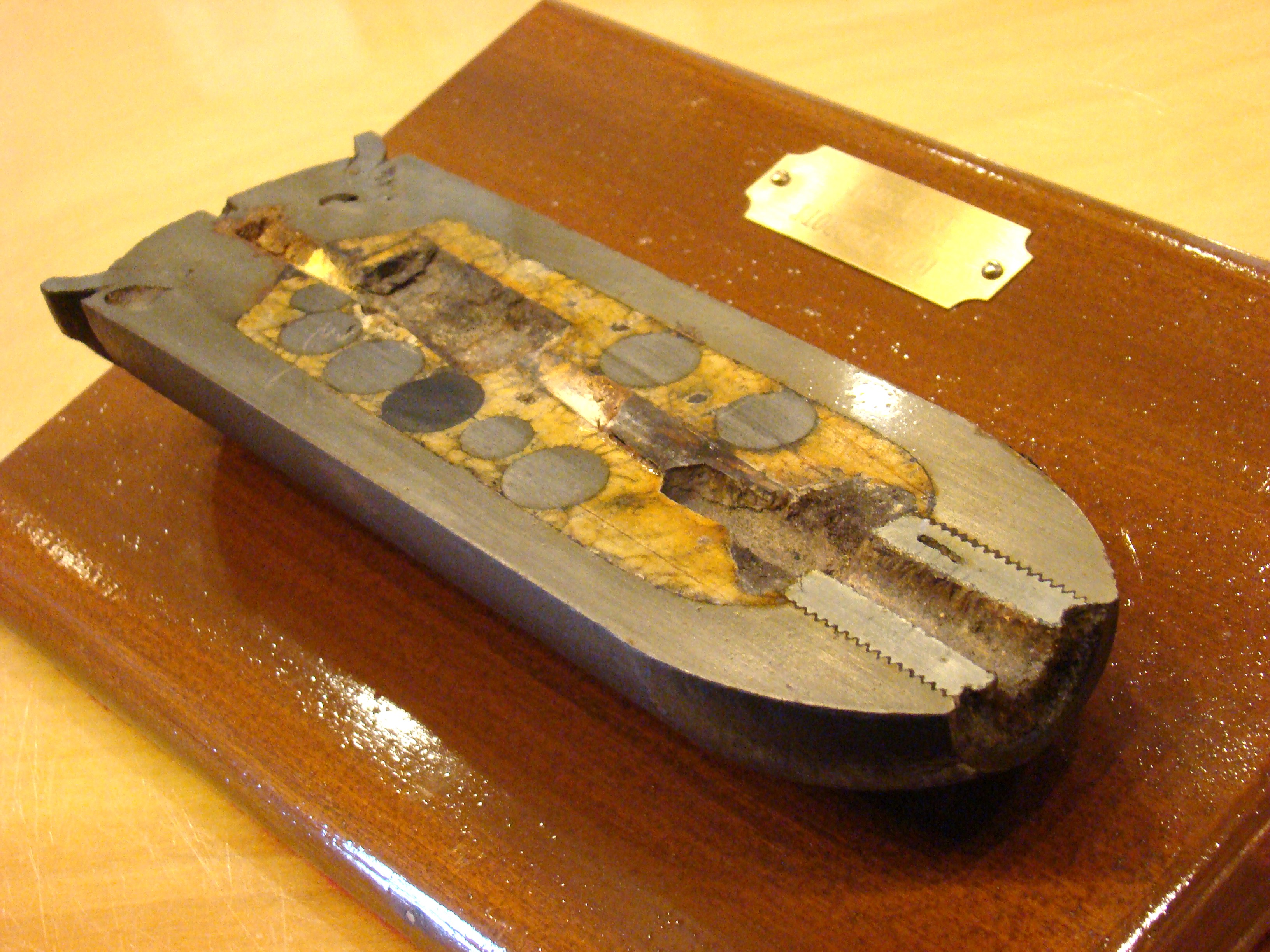
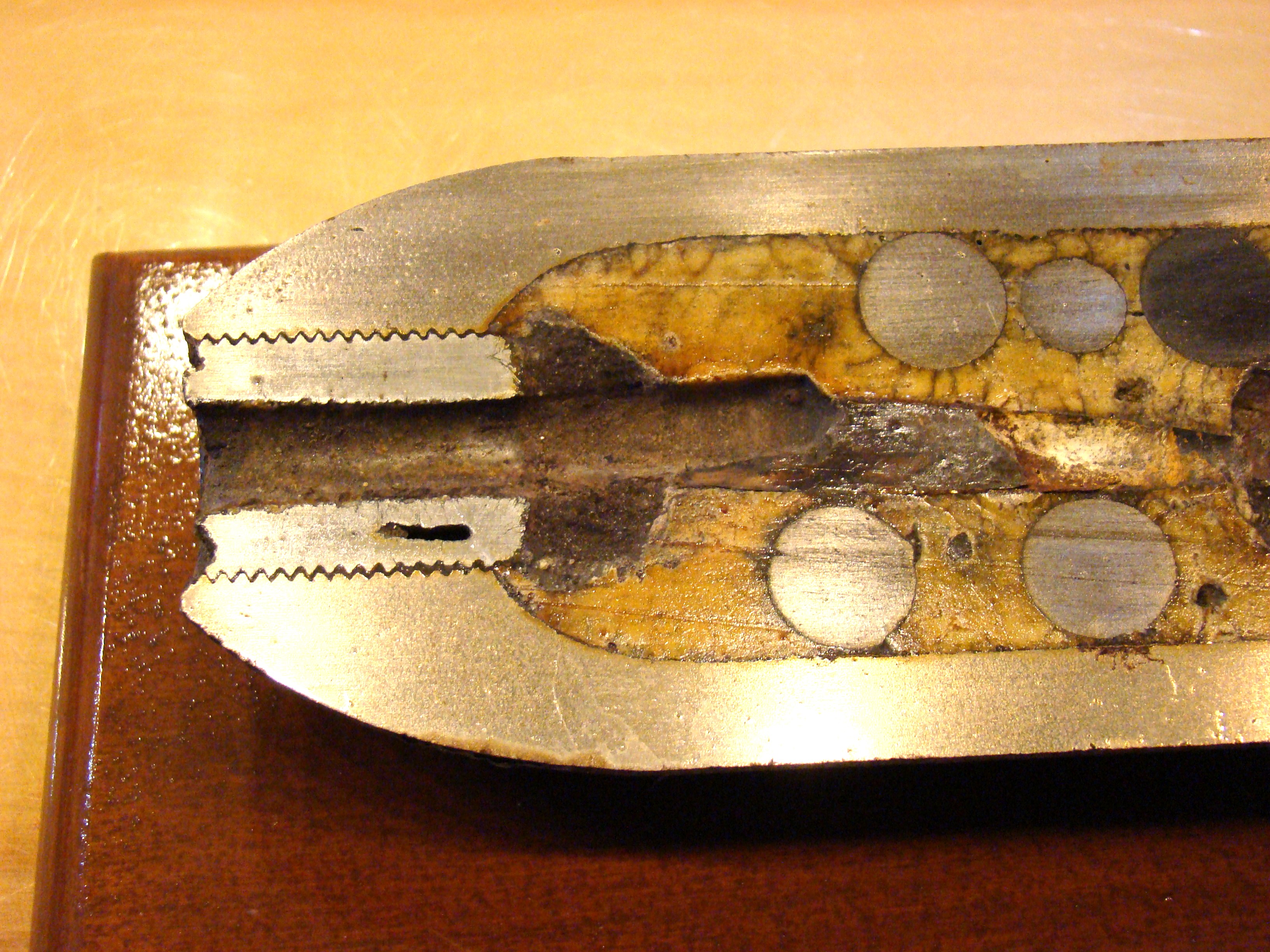
ART 8. Sectioned US 3″ Parrott Case Shot.
Remarkable quality. Perfectly cut revealing shrapnel balls in yellow sulphur matrix. Note white metal paper time fuse adapter with powder can at the bottom. Intact wrought iron sabot. Professionally mounted on a display stand with engraved brass plaque. $395.00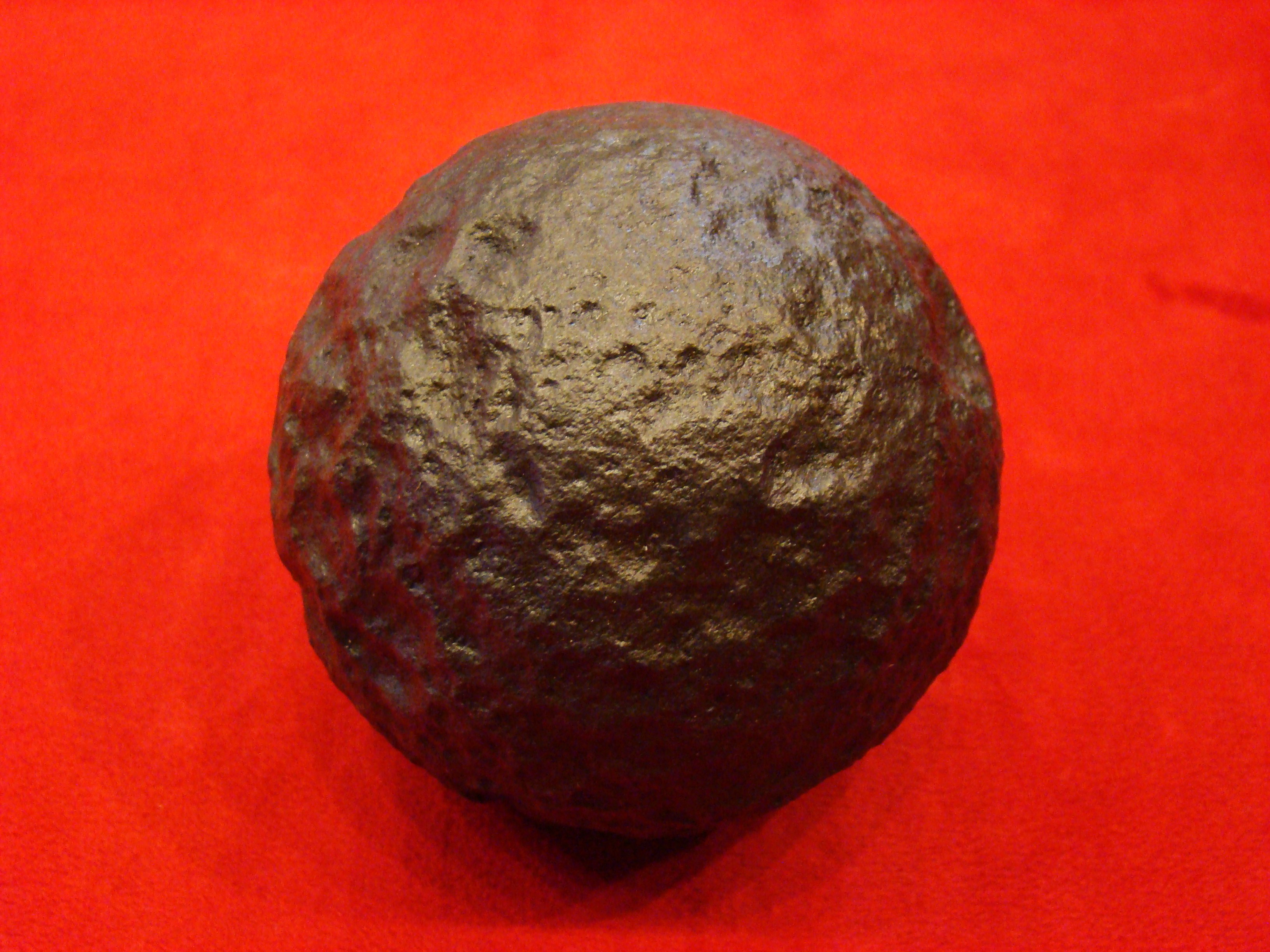
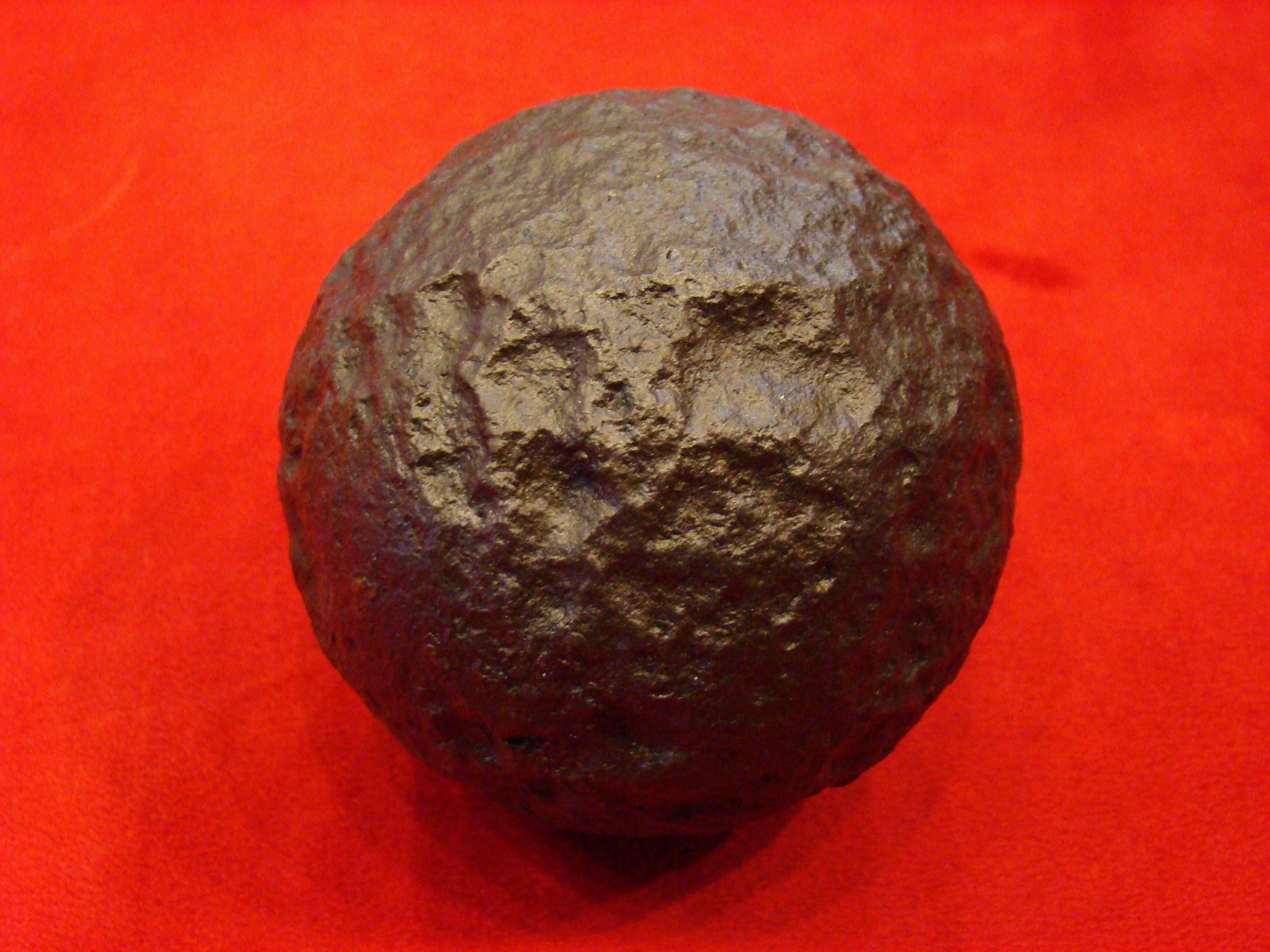
ART 9. Dug Revolutionary War 4 Pounder Shot.
The standard field artillery projectile of the American Revolution. These were used by the American and British armies. Good overall condition with some pitting. Verbal provenance of Pennsylvania. $195.00 HOLD B.J.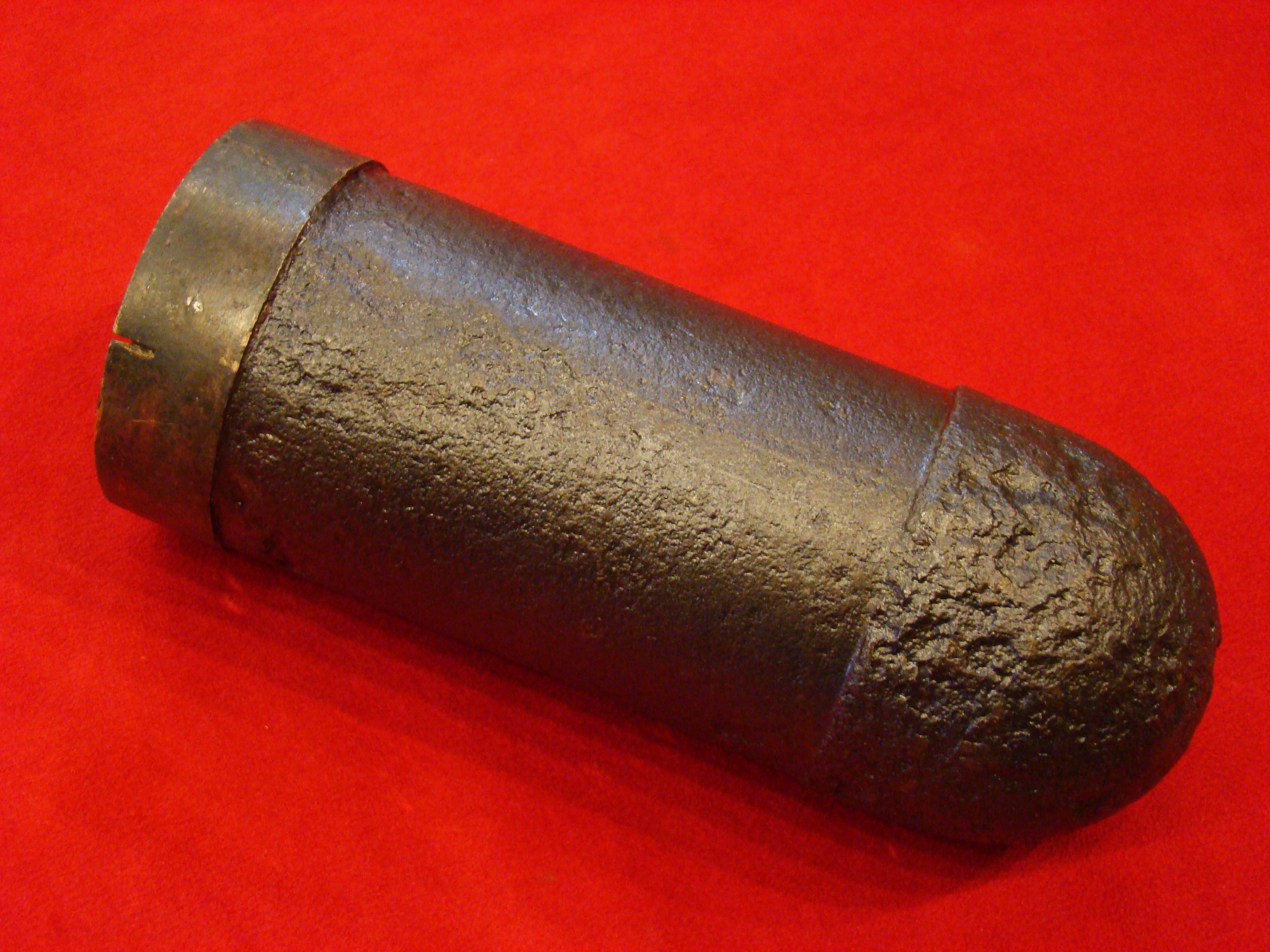
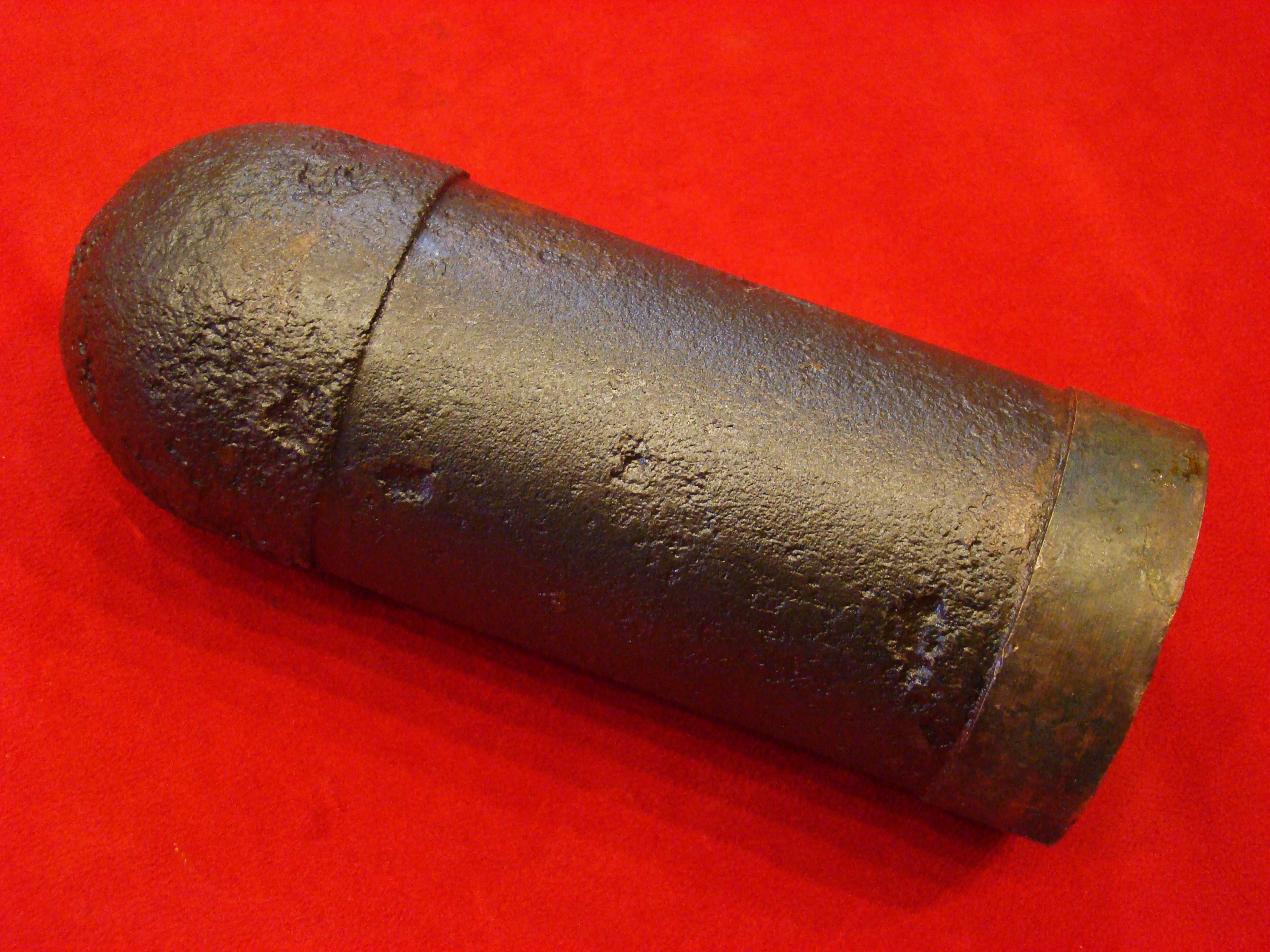
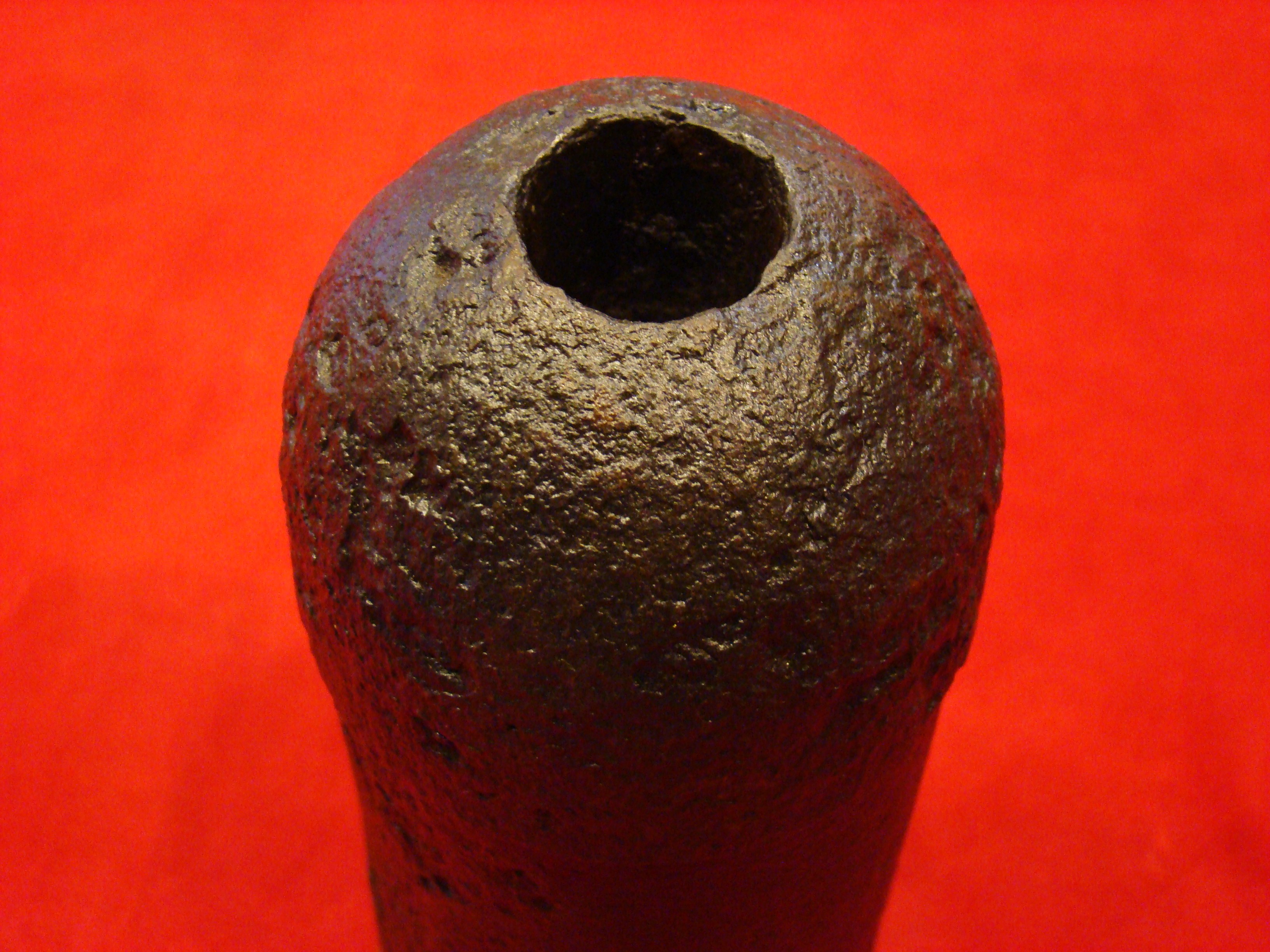
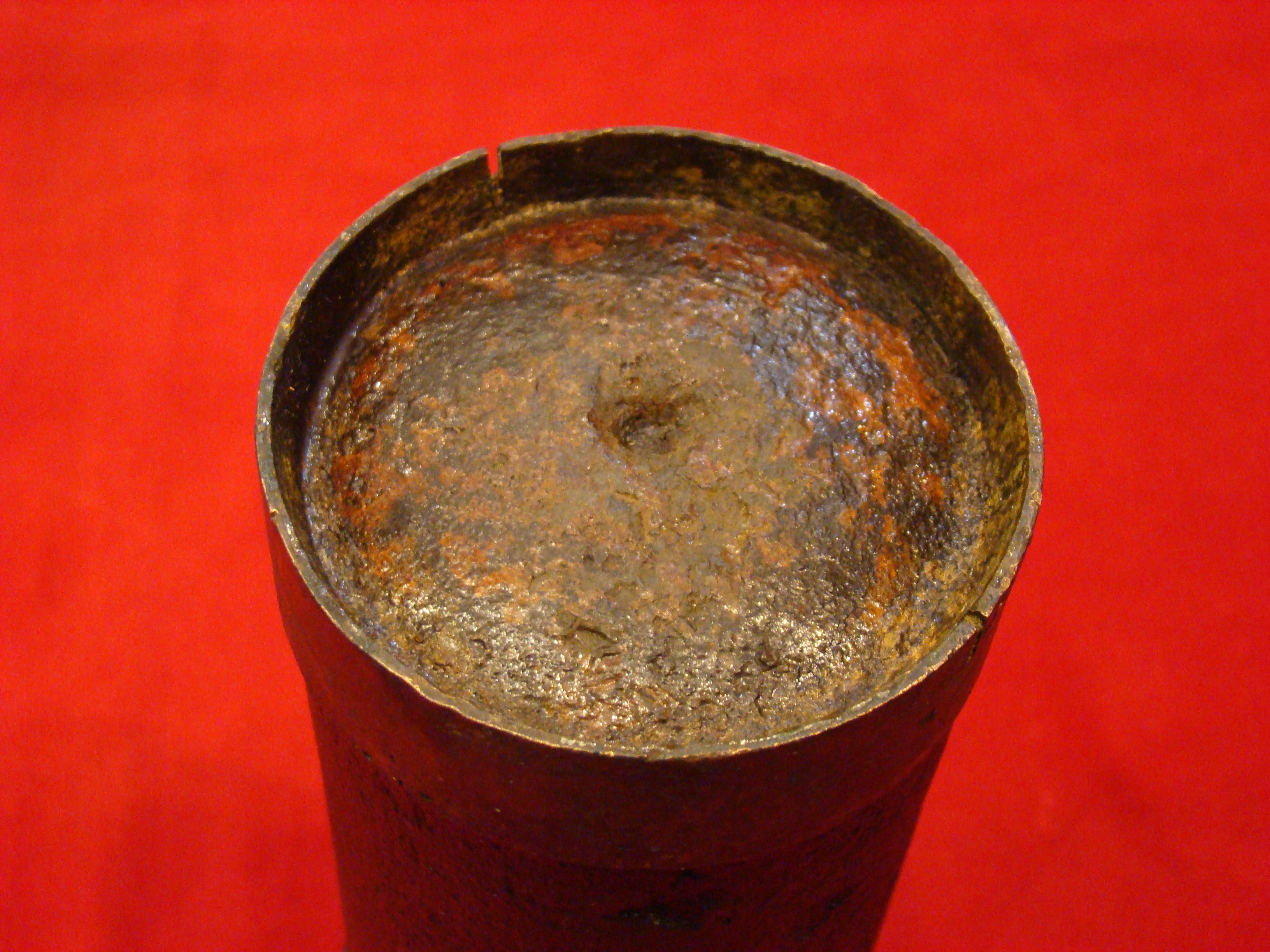
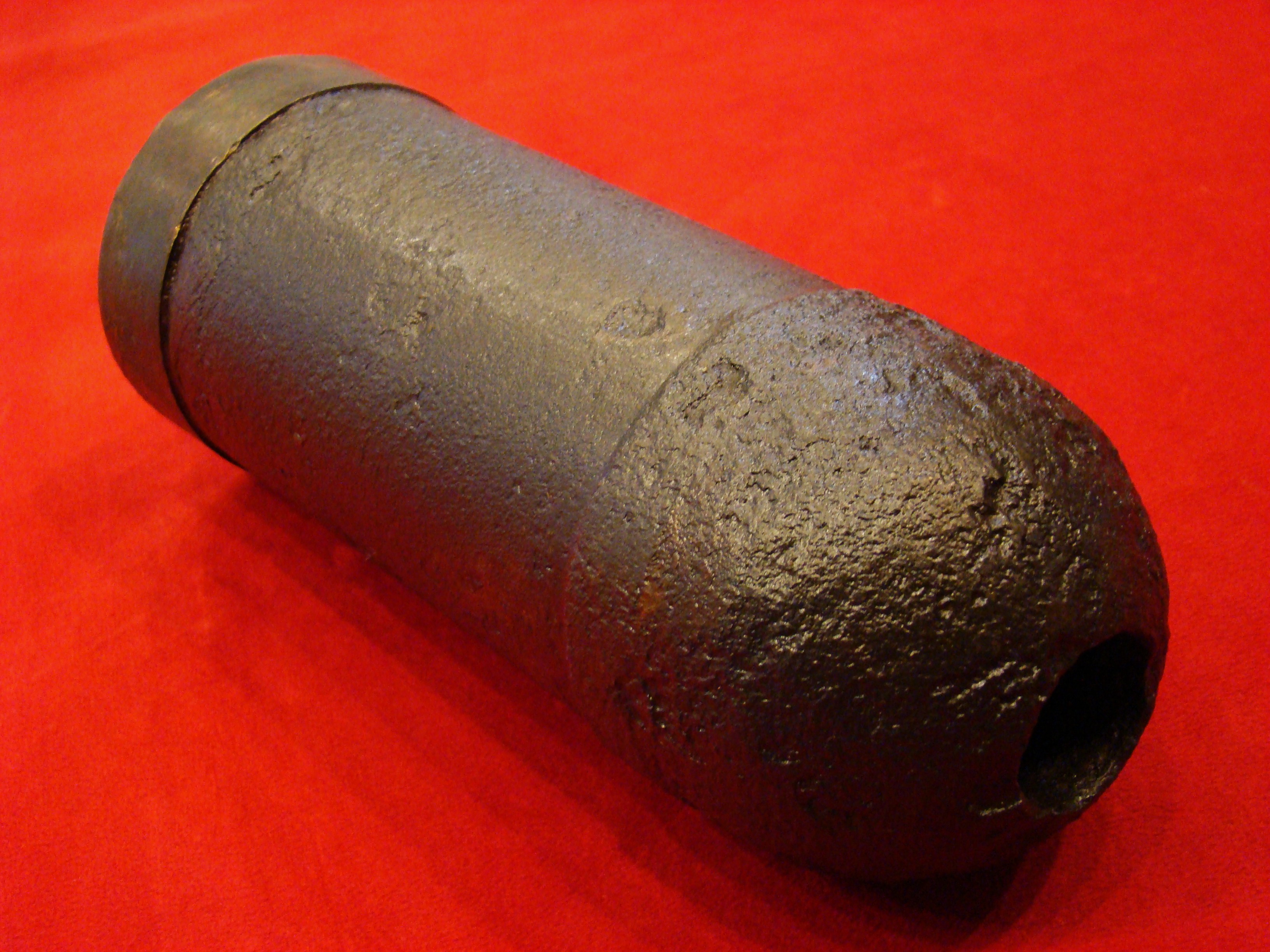
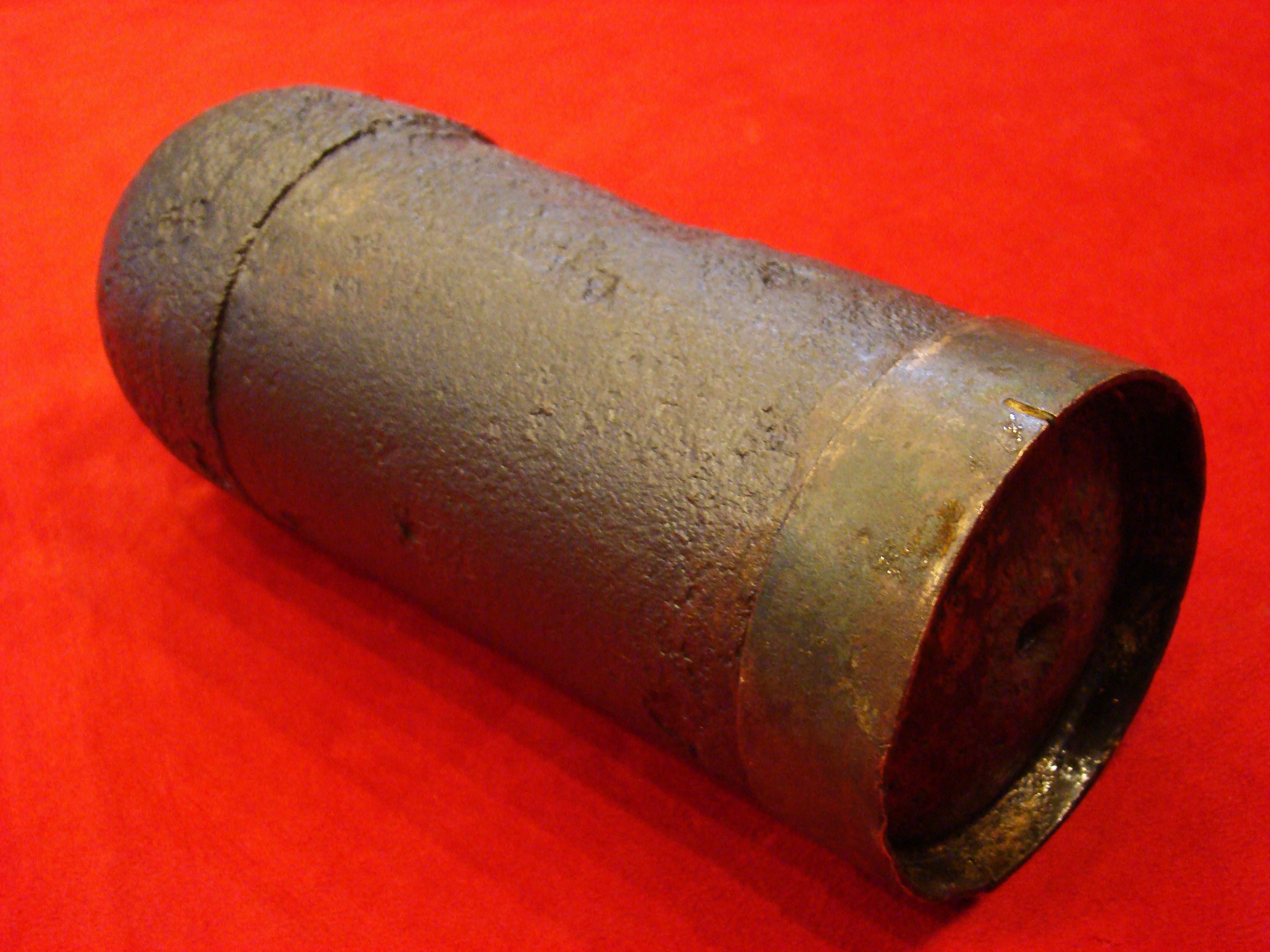
ART 10. Dug Confederate 3″ Broun Shell.
Complete brass sabot. Good overall condition. Found near Richmond VA. $395.00 HOLD C.M.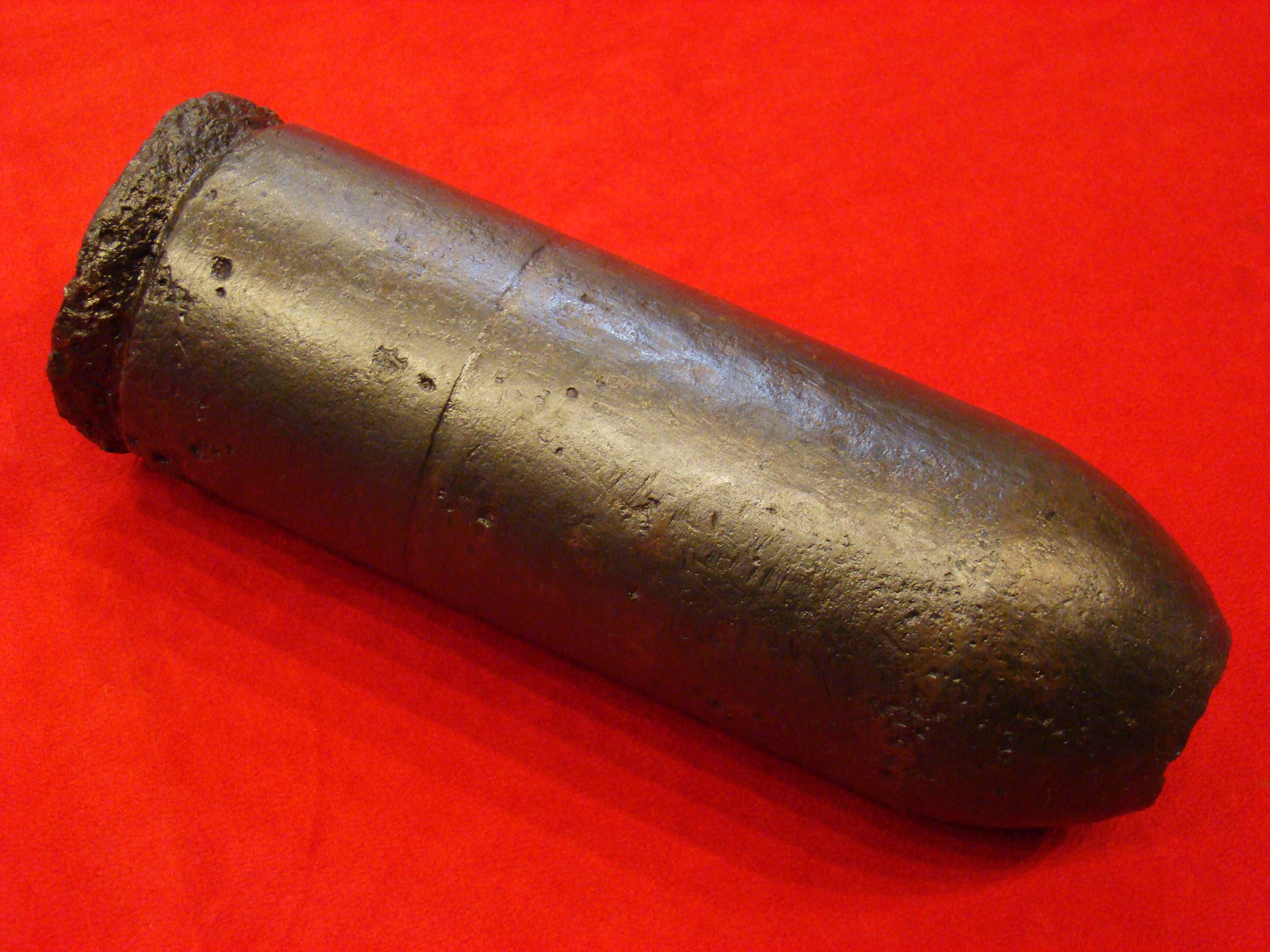
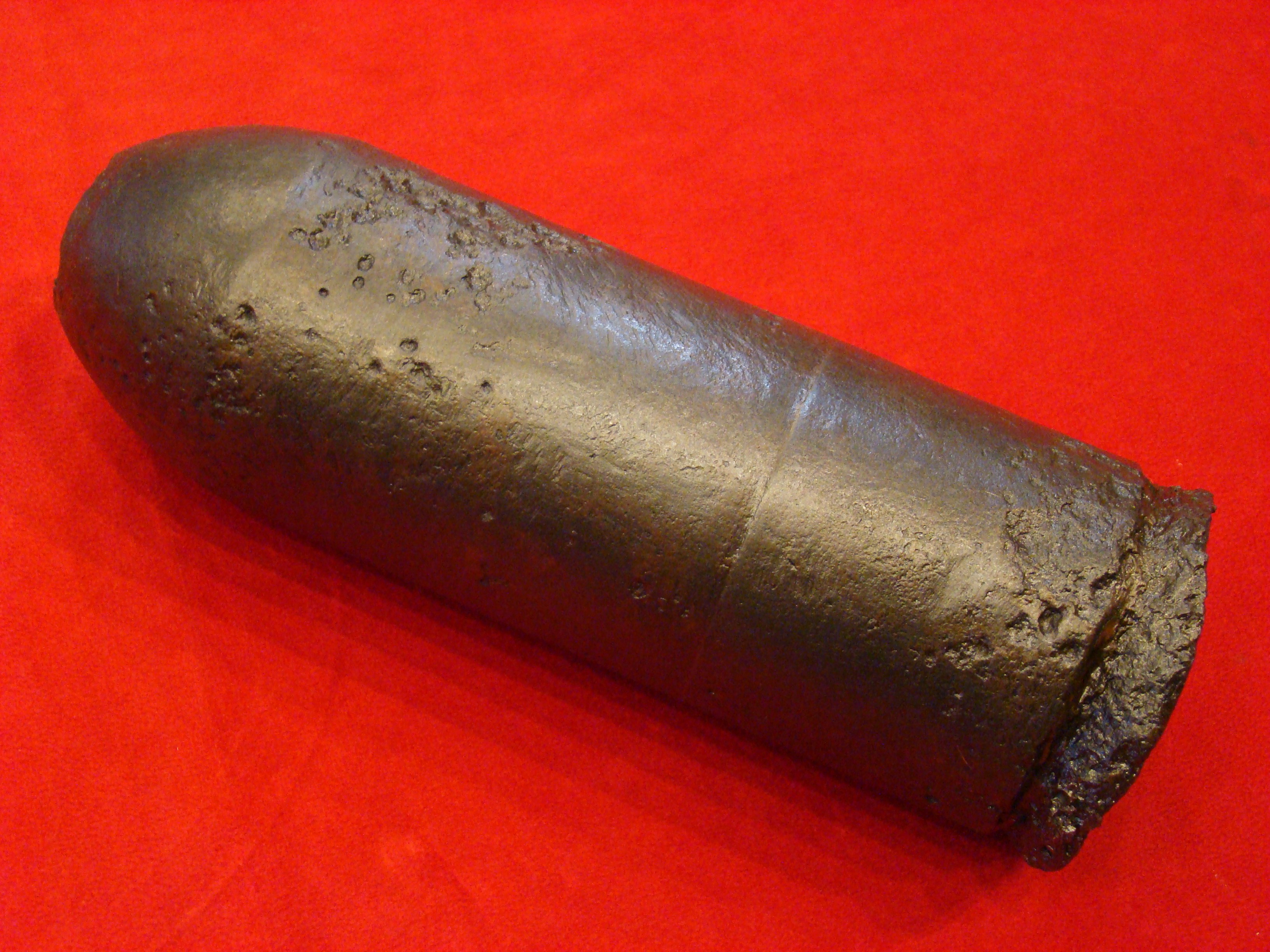
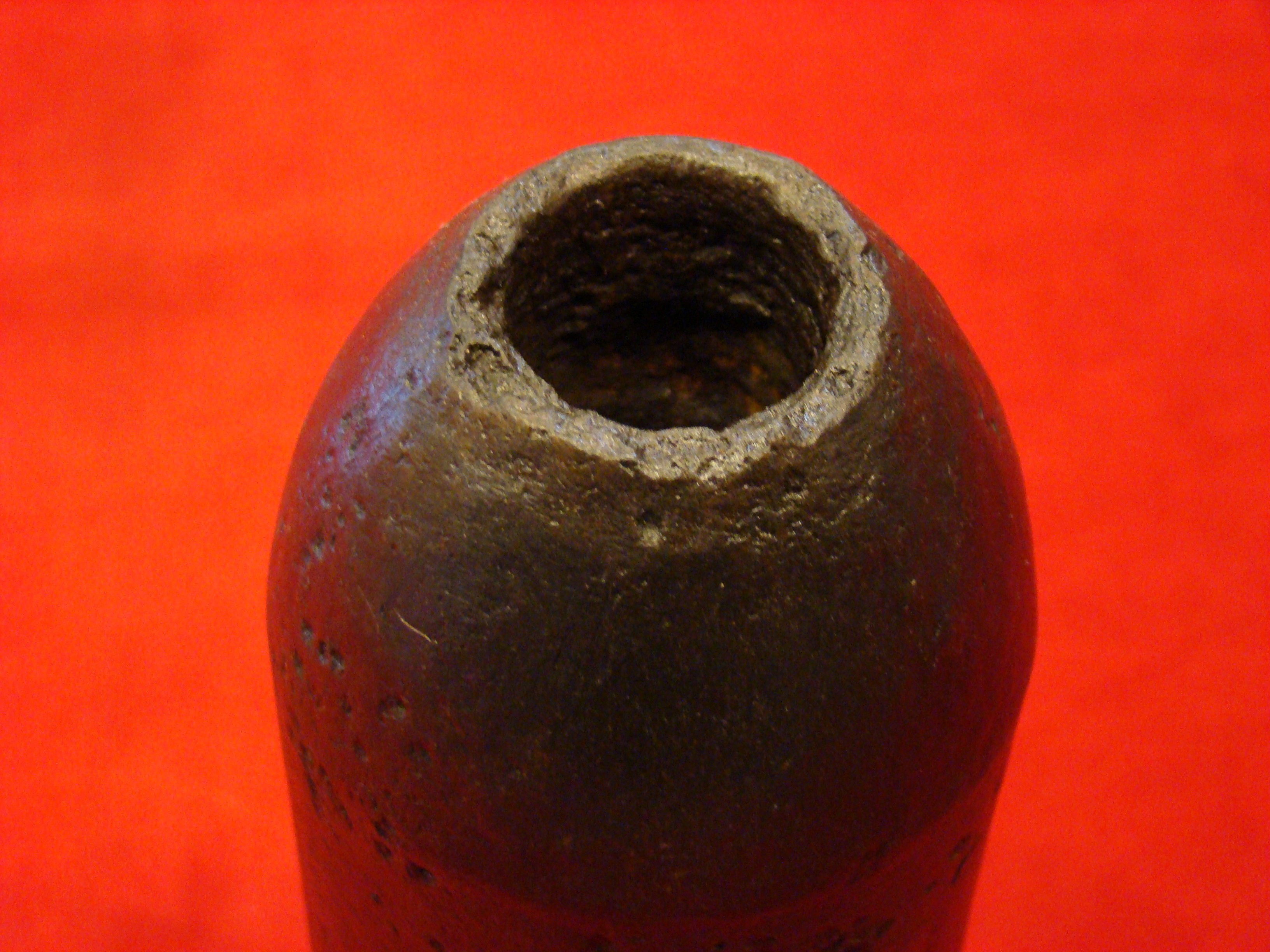
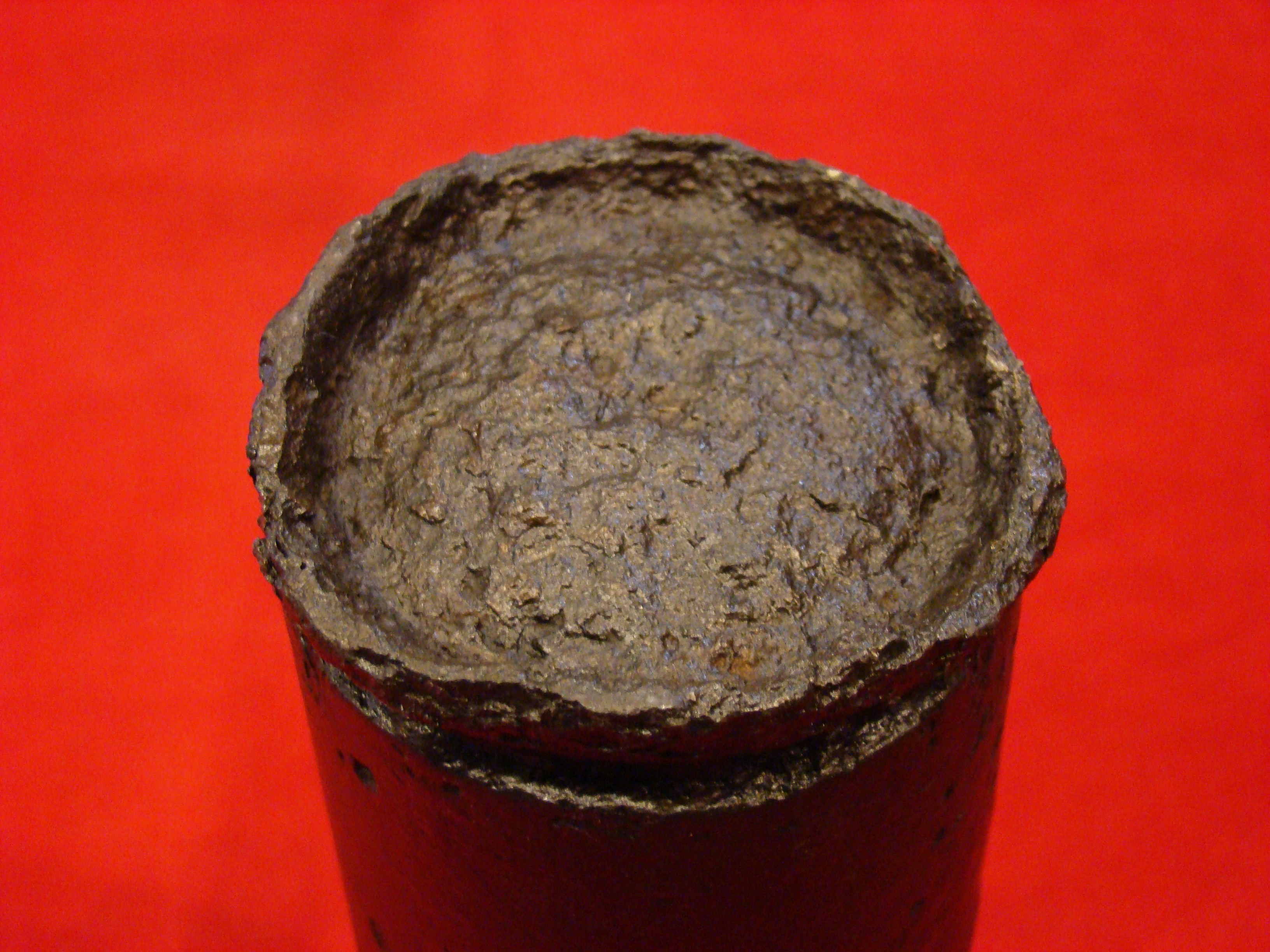
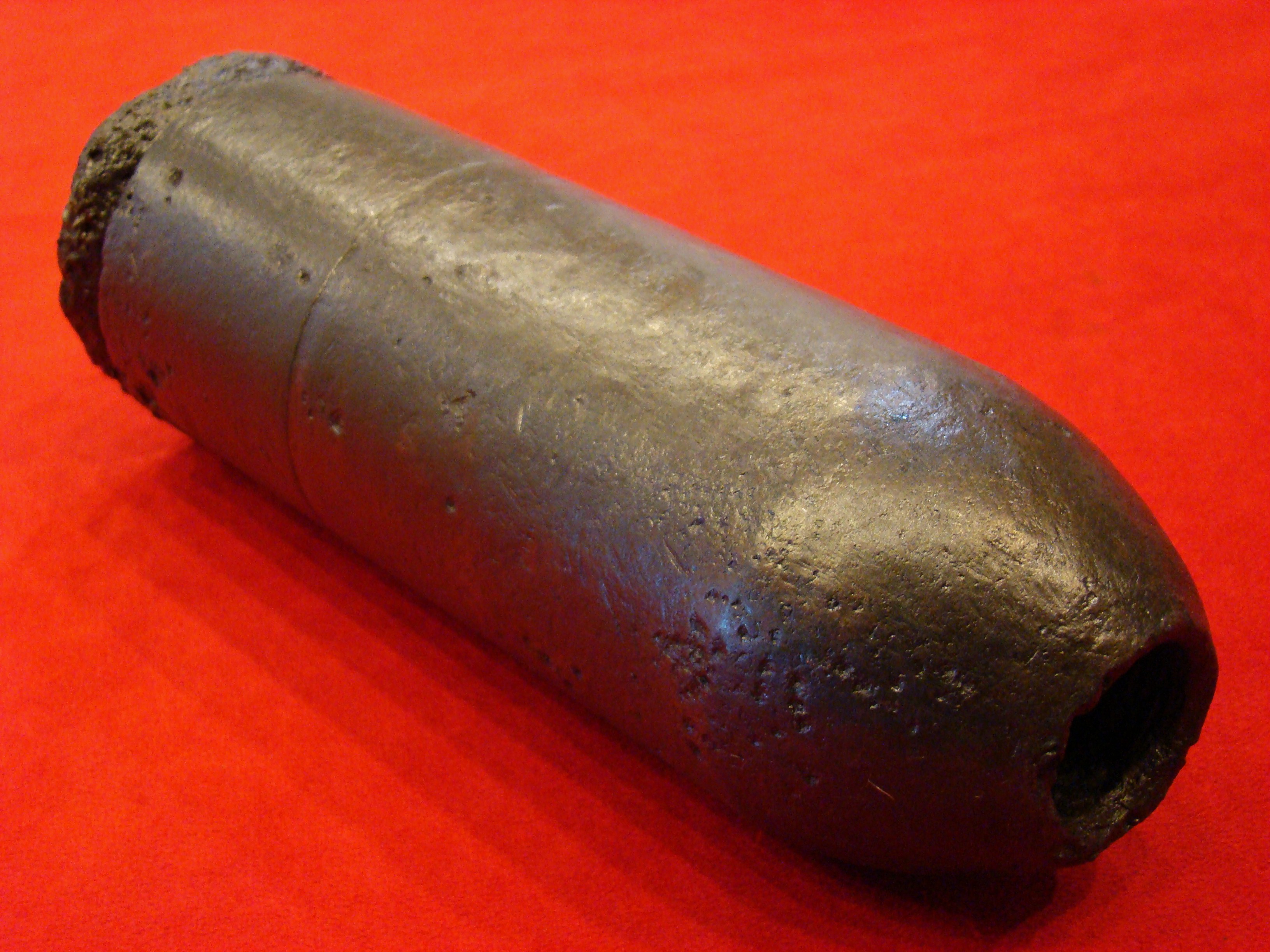
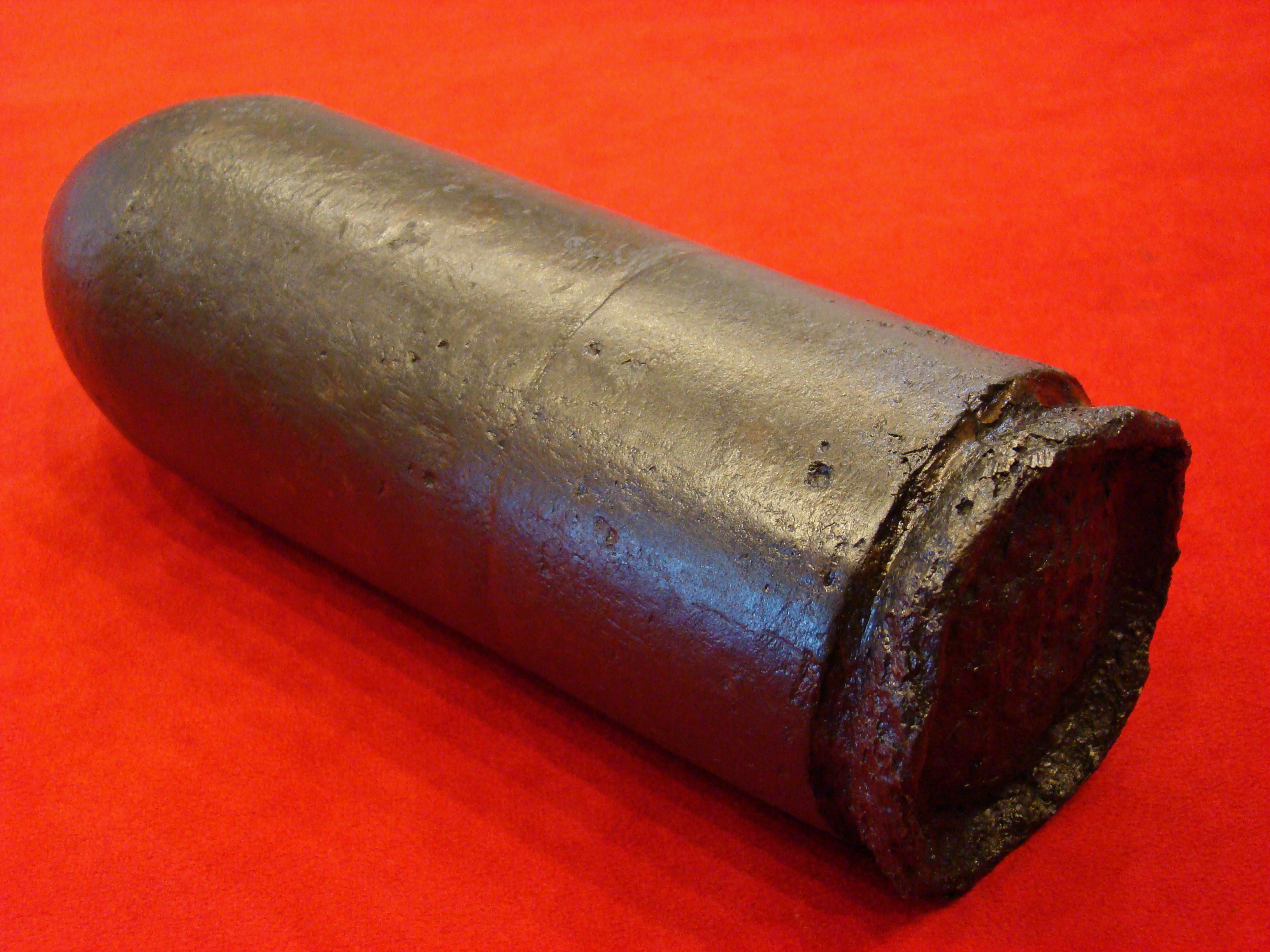
ART 11. Dug US 3″ Parrott Shell Type I. Vicksburg MS.
Iconic American Civil War artillery projectile in very good condition. Missing fuse adapter. Intact wrought Iron Sabot. $250.00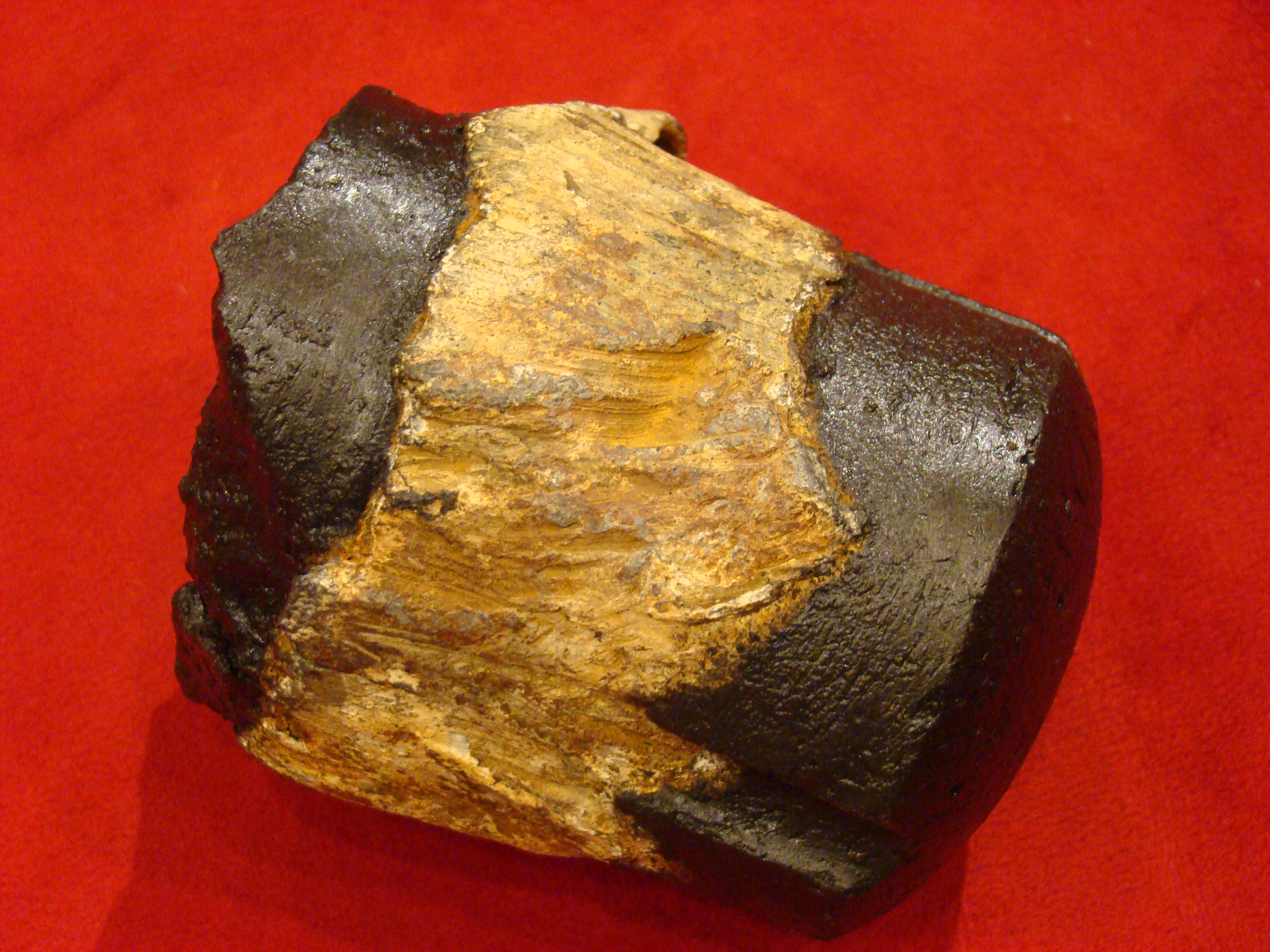
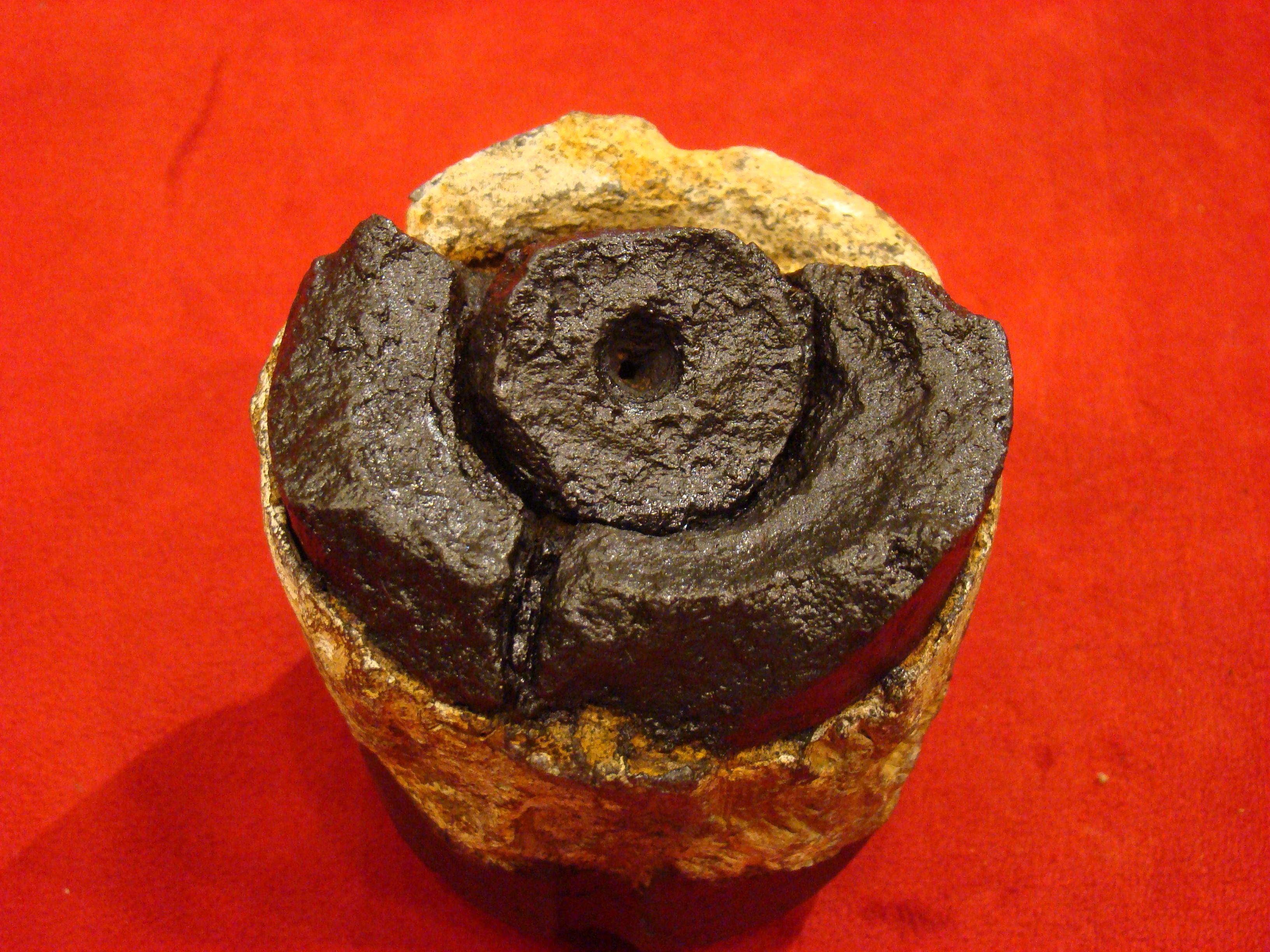
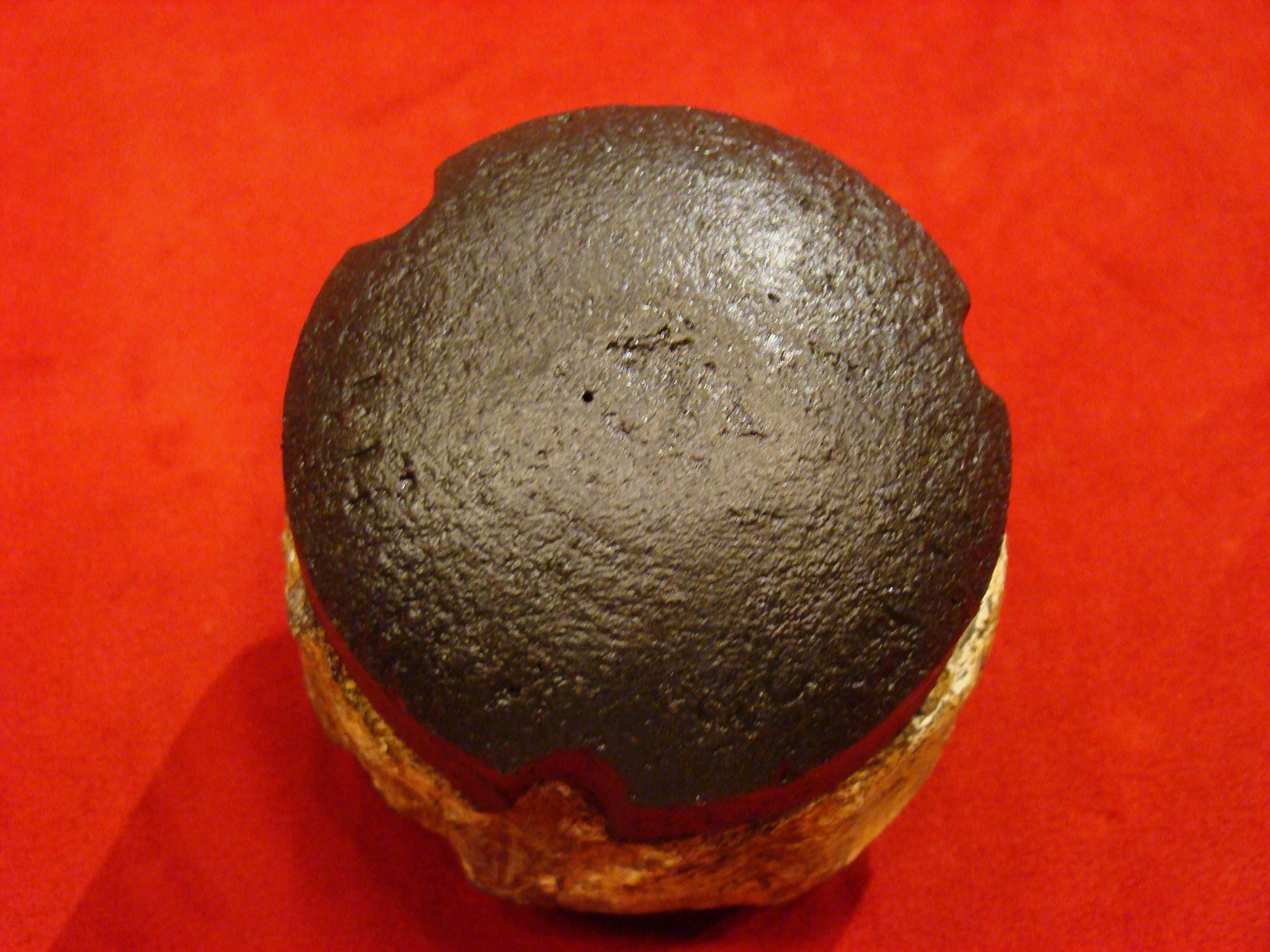
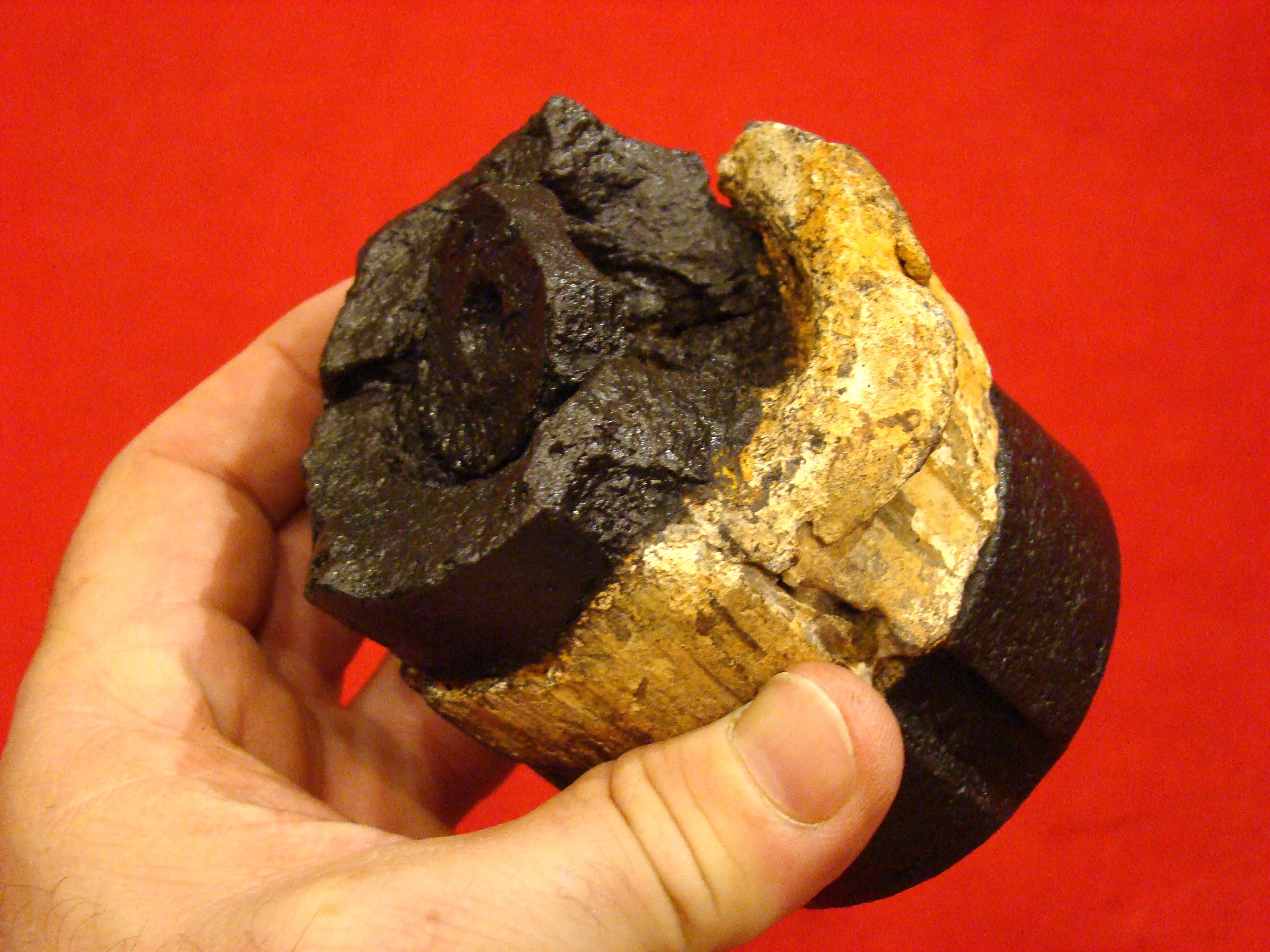
ART 12. Exploded US 3″ Hotchkiss Case Shot Fragment. Kennesaw Mtn. GA. Battlefield.
Impressive artillery relic. The nose exploded leaving the entire base and lead driving band (sabot) intact. $175.00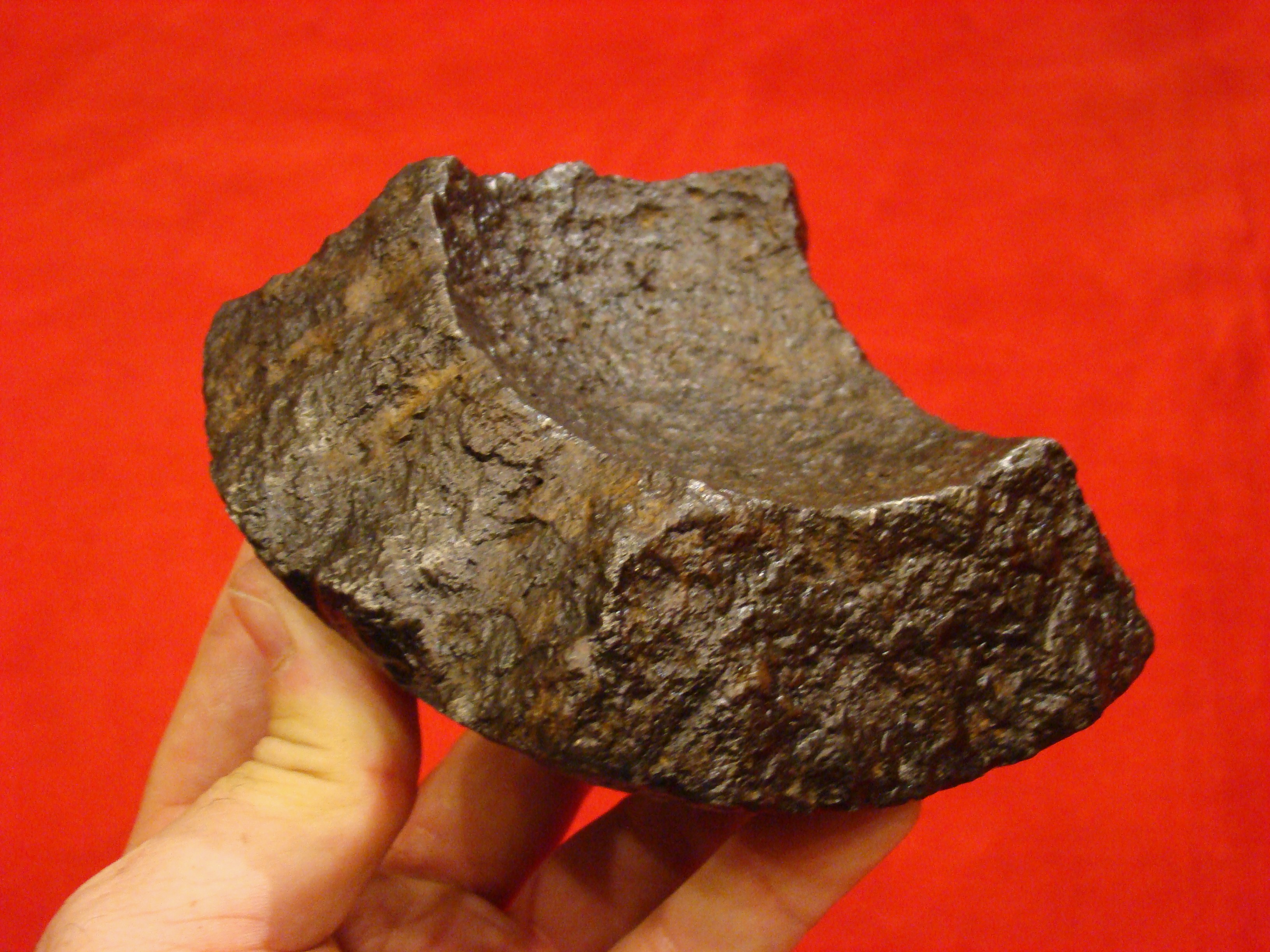
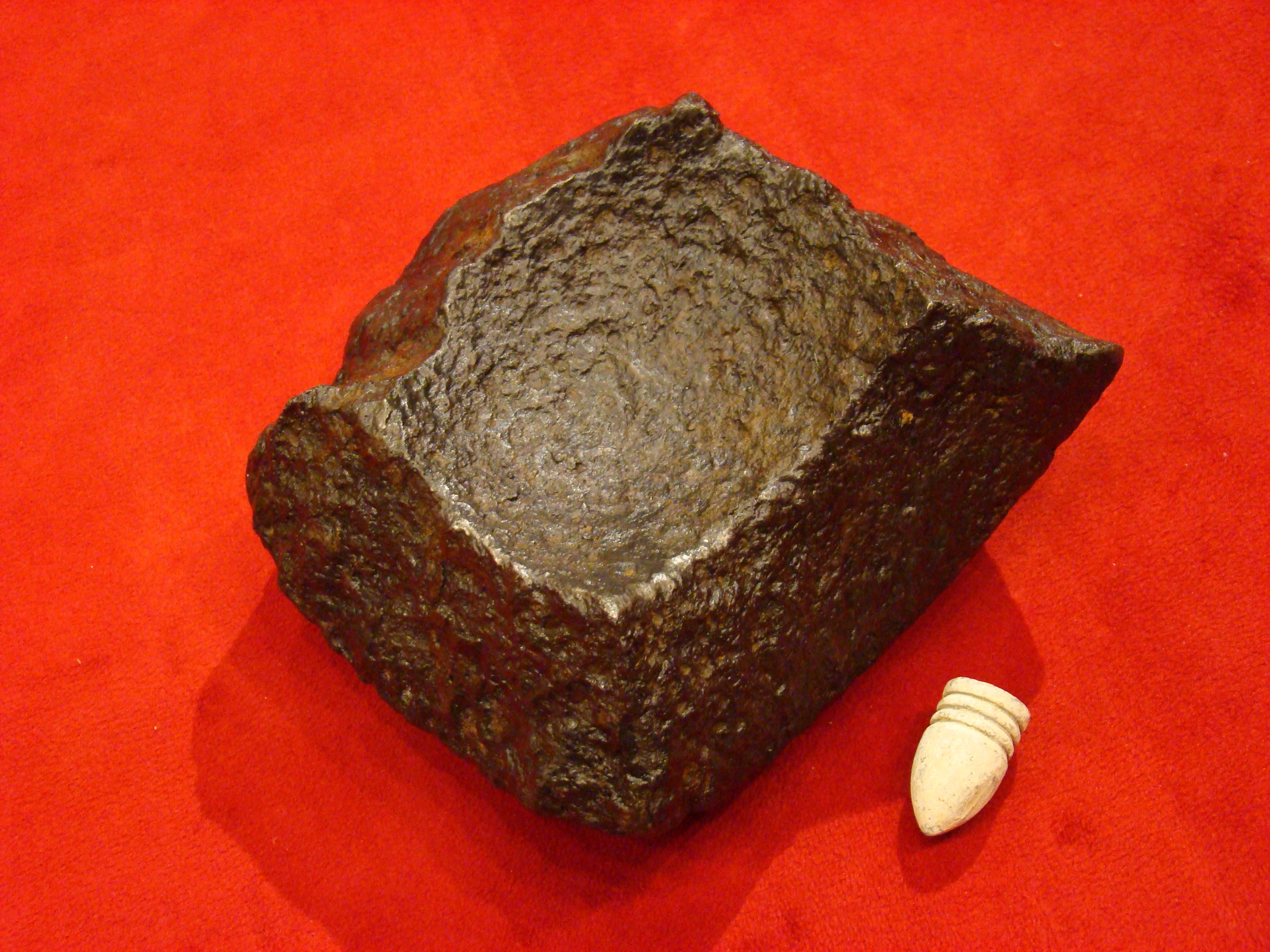
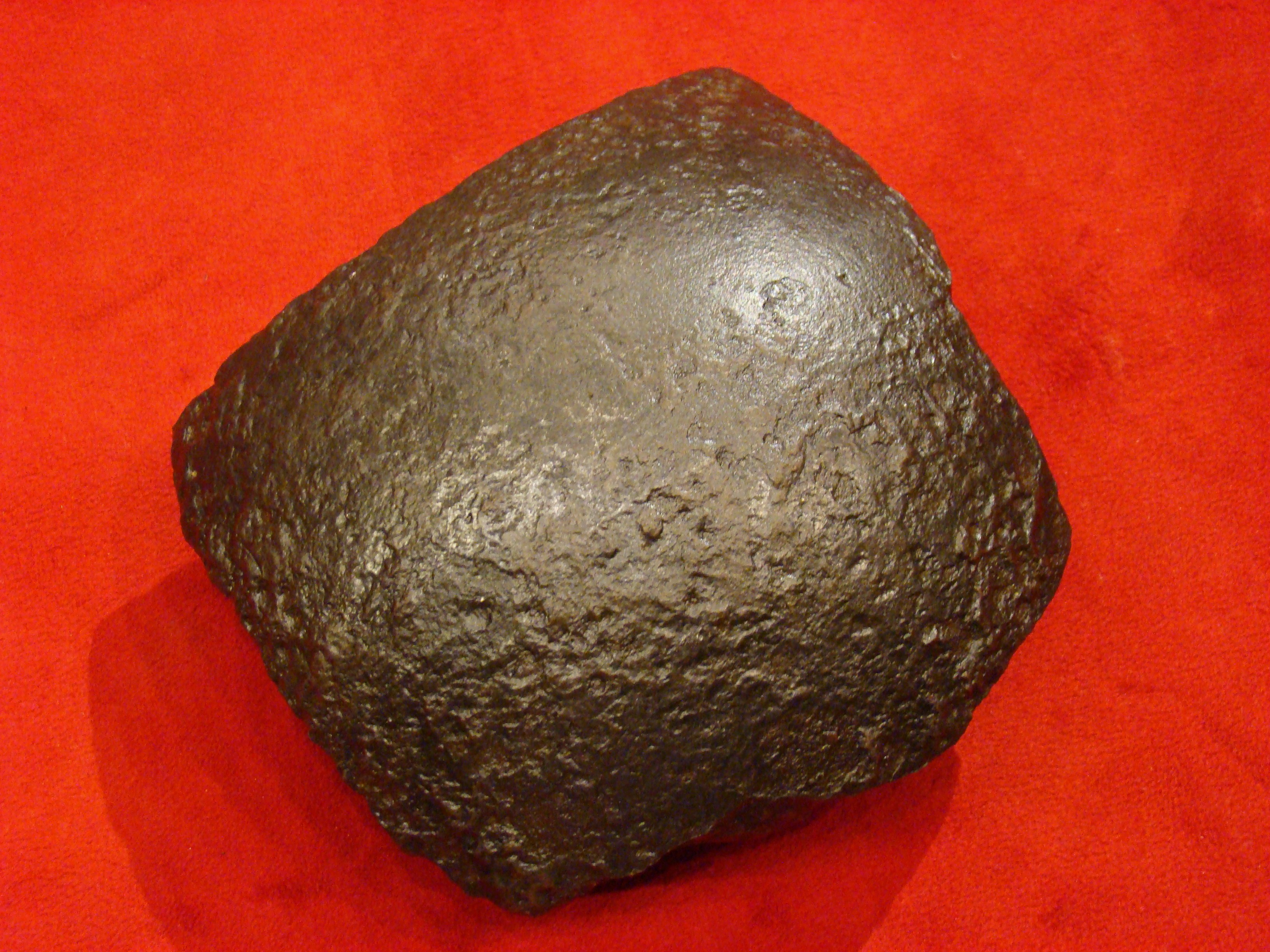
ART 13. Exploded US 8″ Mortar Shell Fragment Fired from The USS Ironclad Tyler or Lexington. Shiloh TN. Battlefield.
The incessant shelling from these two gunboats prevented the Confederates from finishing off the Federals on the first day of the battle. April 6, 1862. SOLD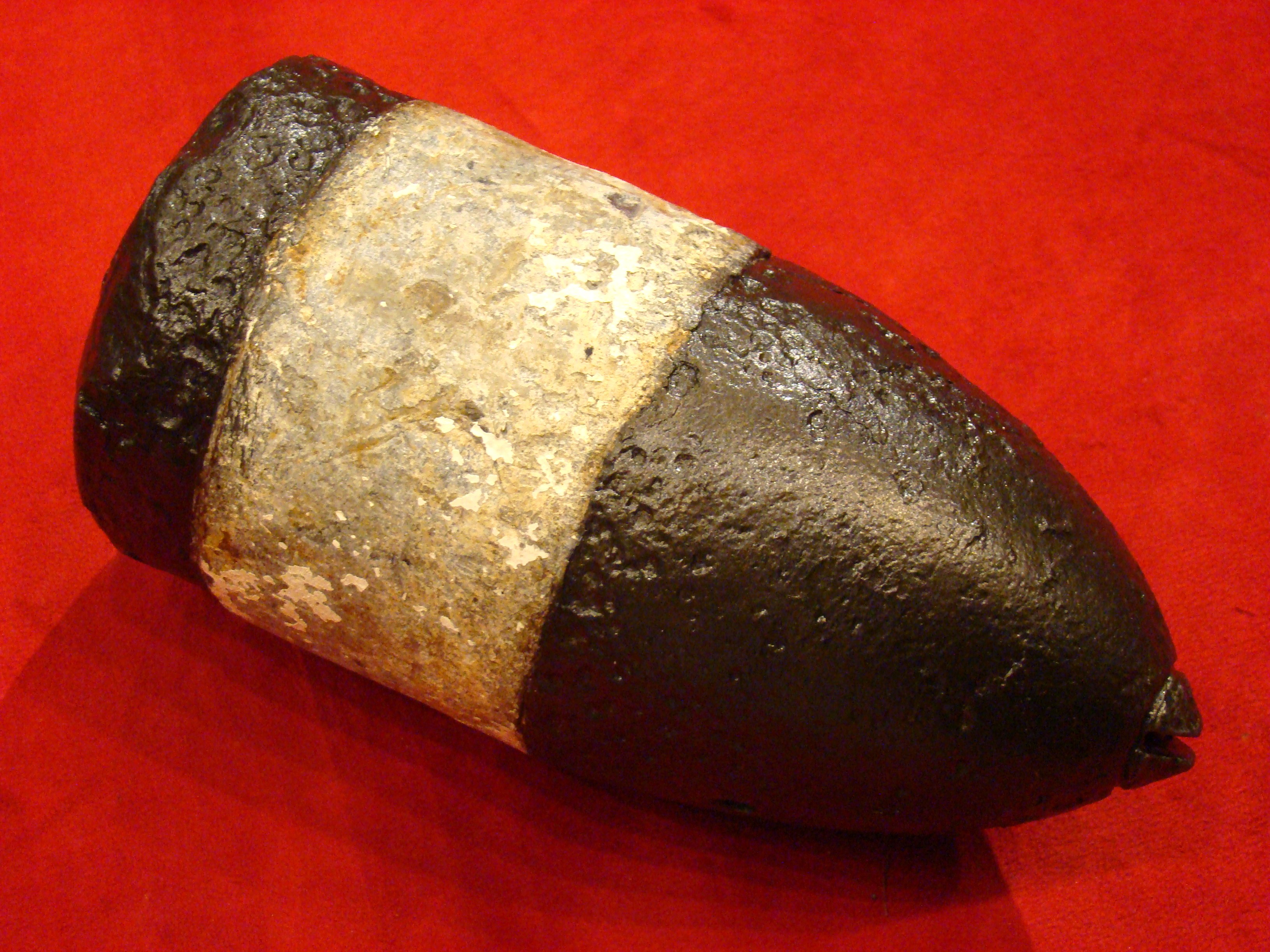
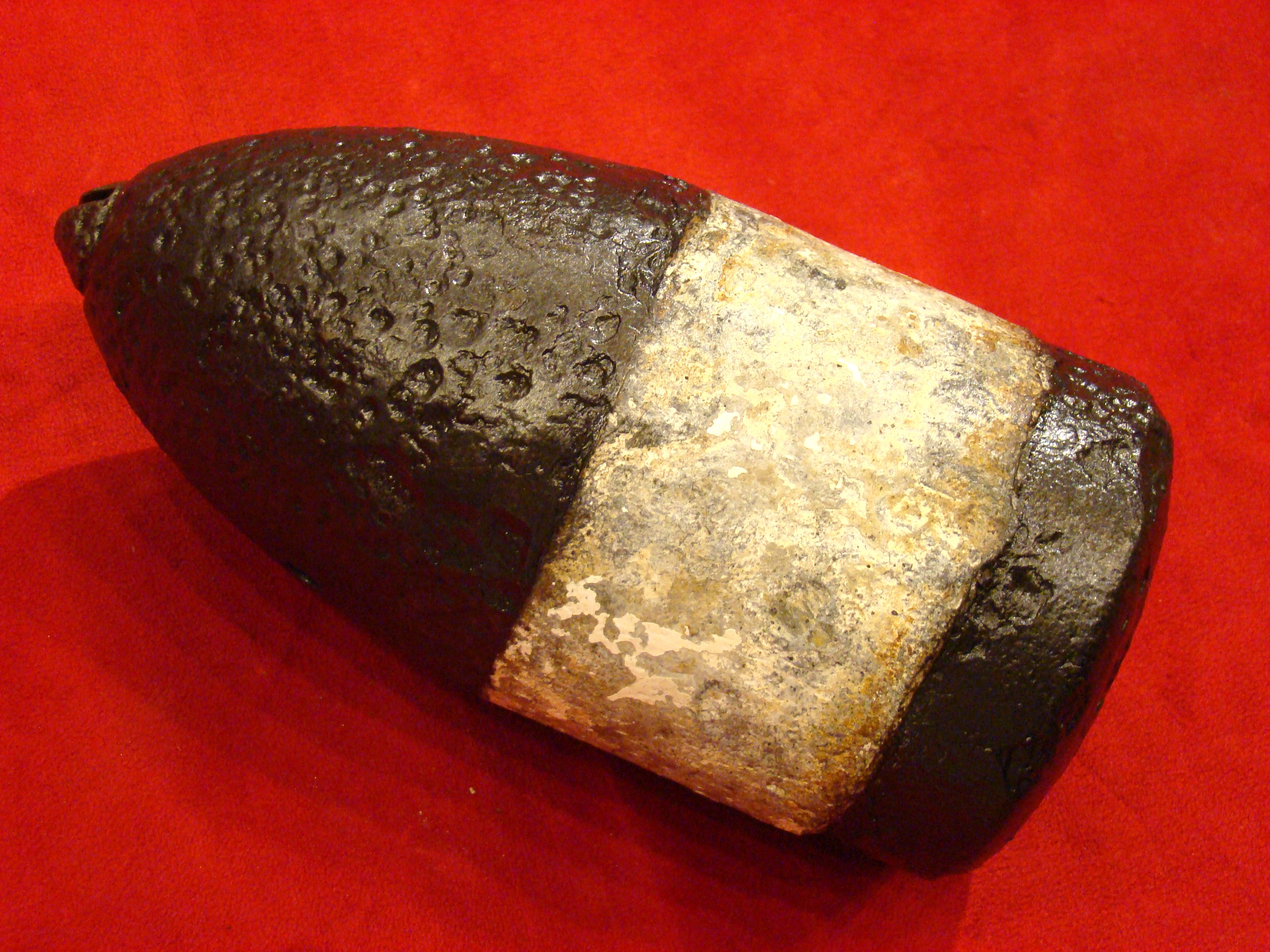
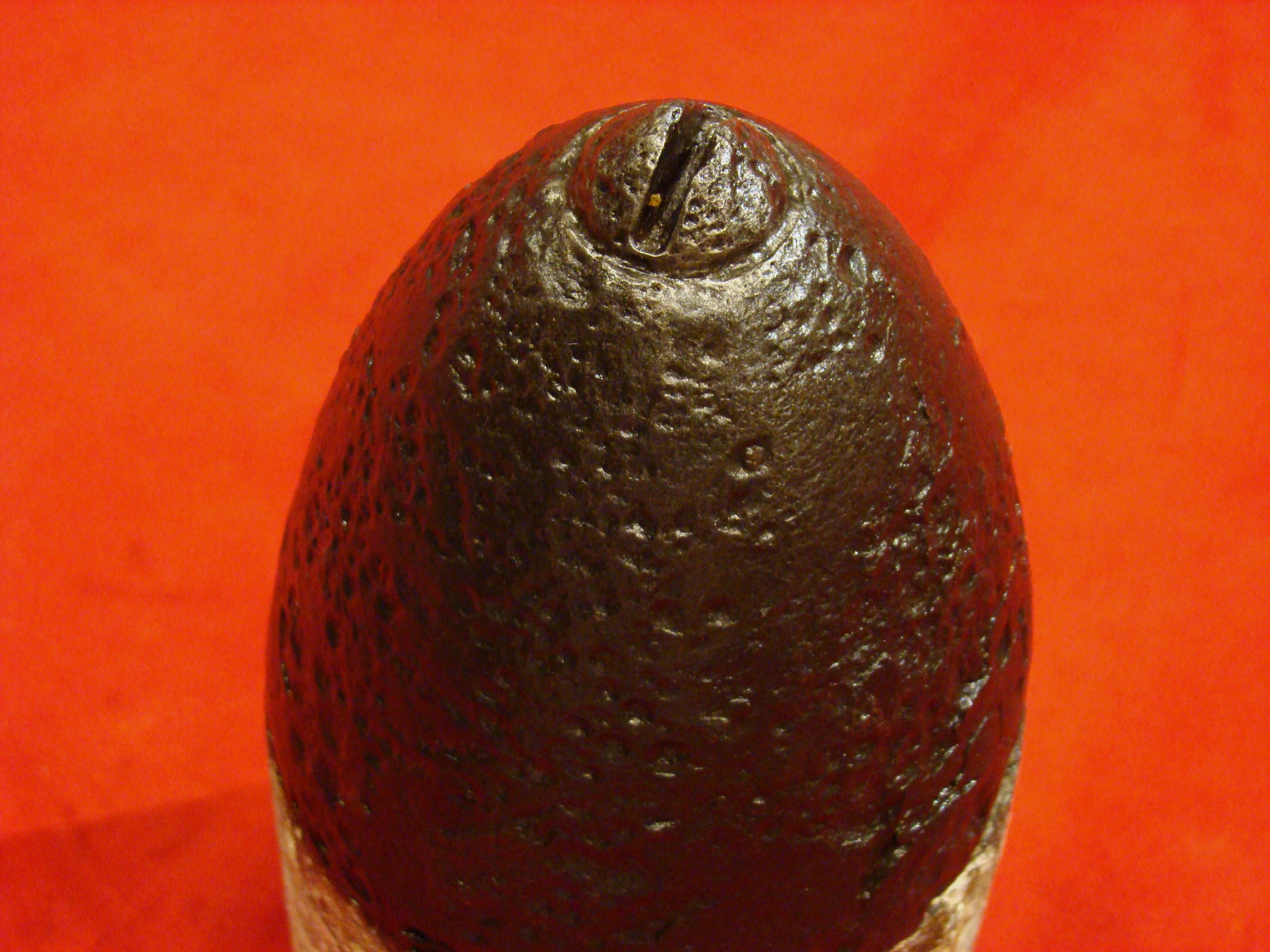
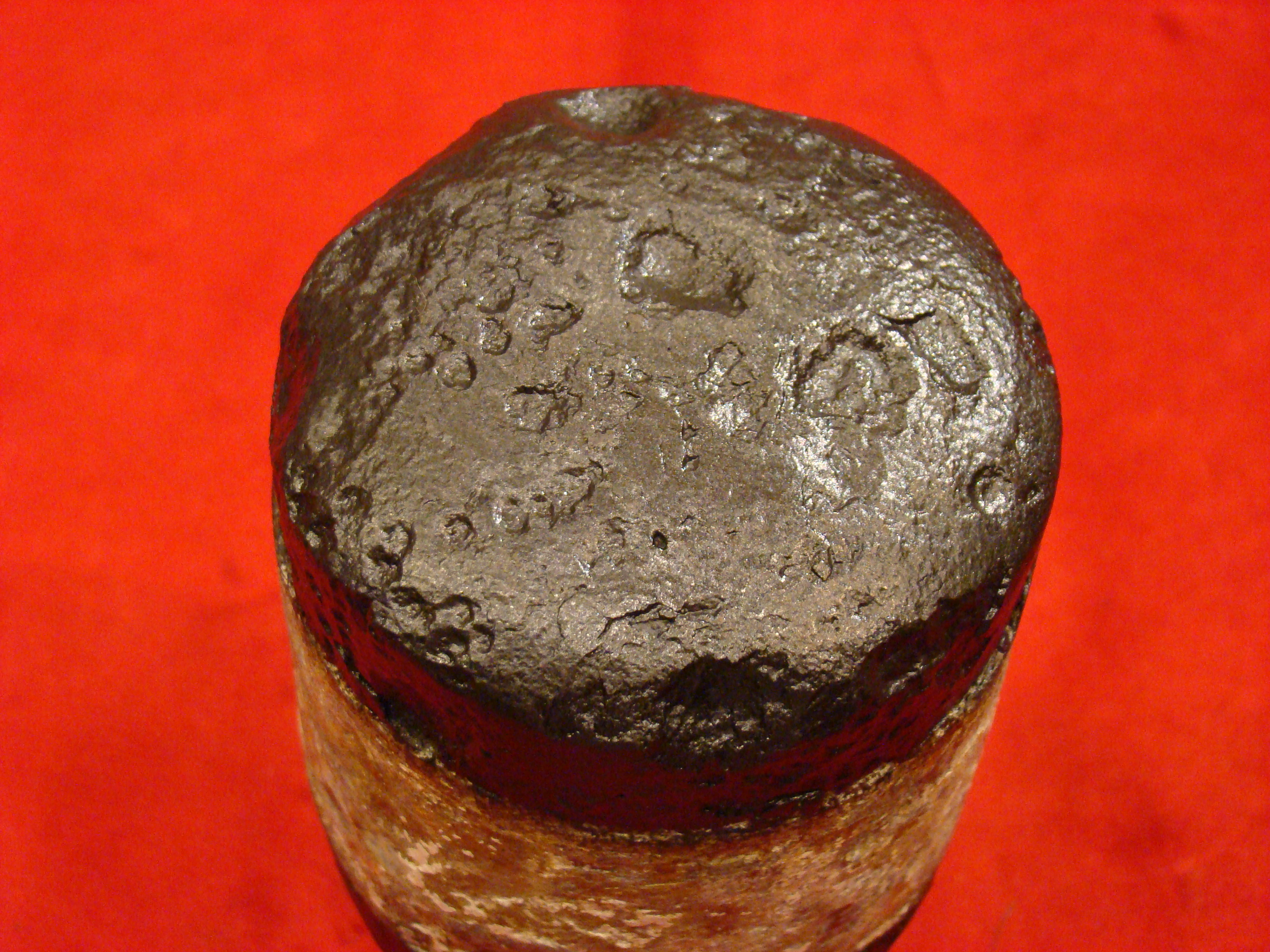
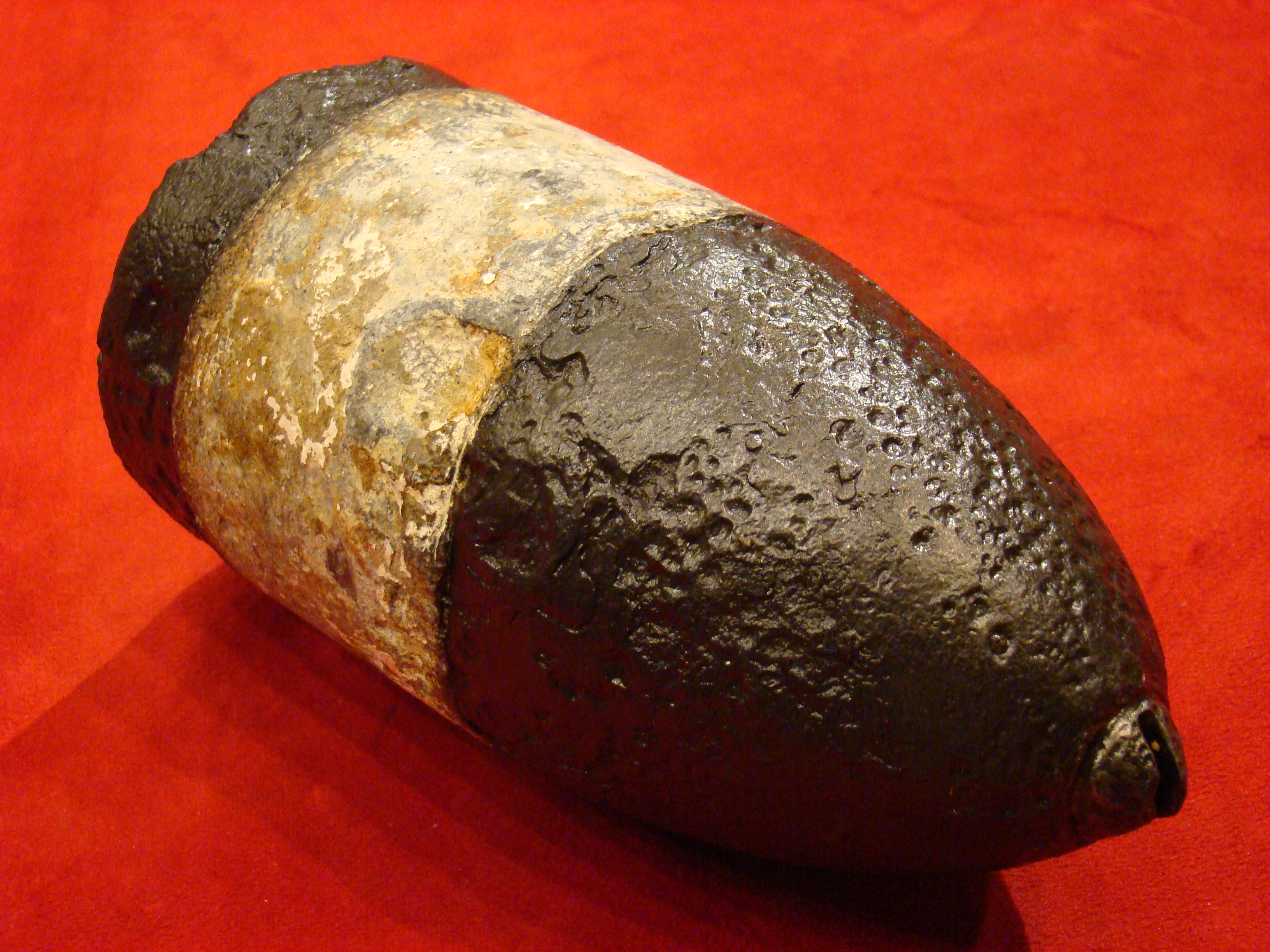
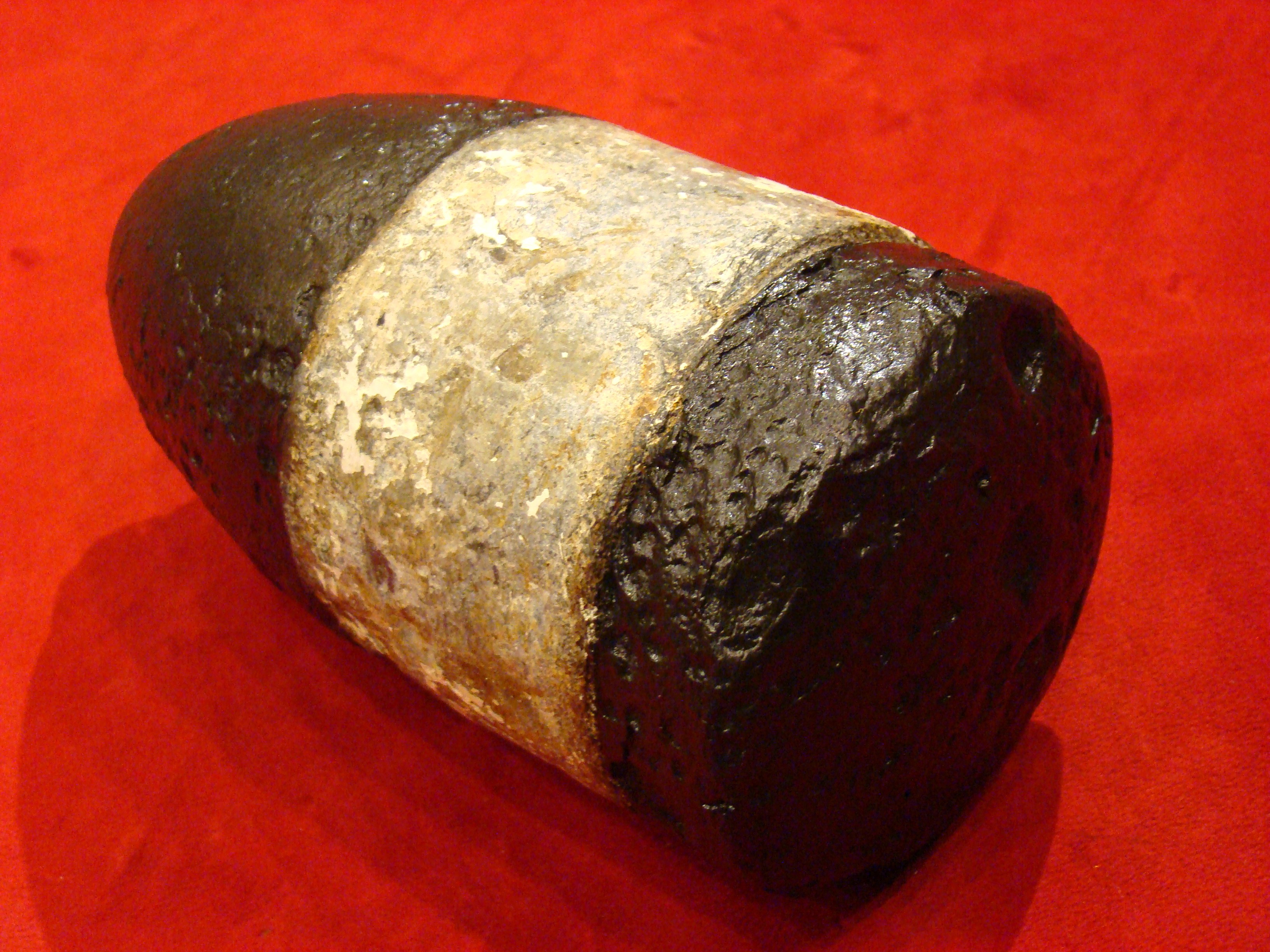
ART 14. Dug US 3.8″ Hotchkiss Percussion Fused Shell for The 14 Pounder James Rifle.
A less common American Civil War artillery projectile in very good dropped condition. Perfect lead band sabot and iron Hotchkiss percussion fuse. Provenance uncertain. $595.00 HOLD J.R.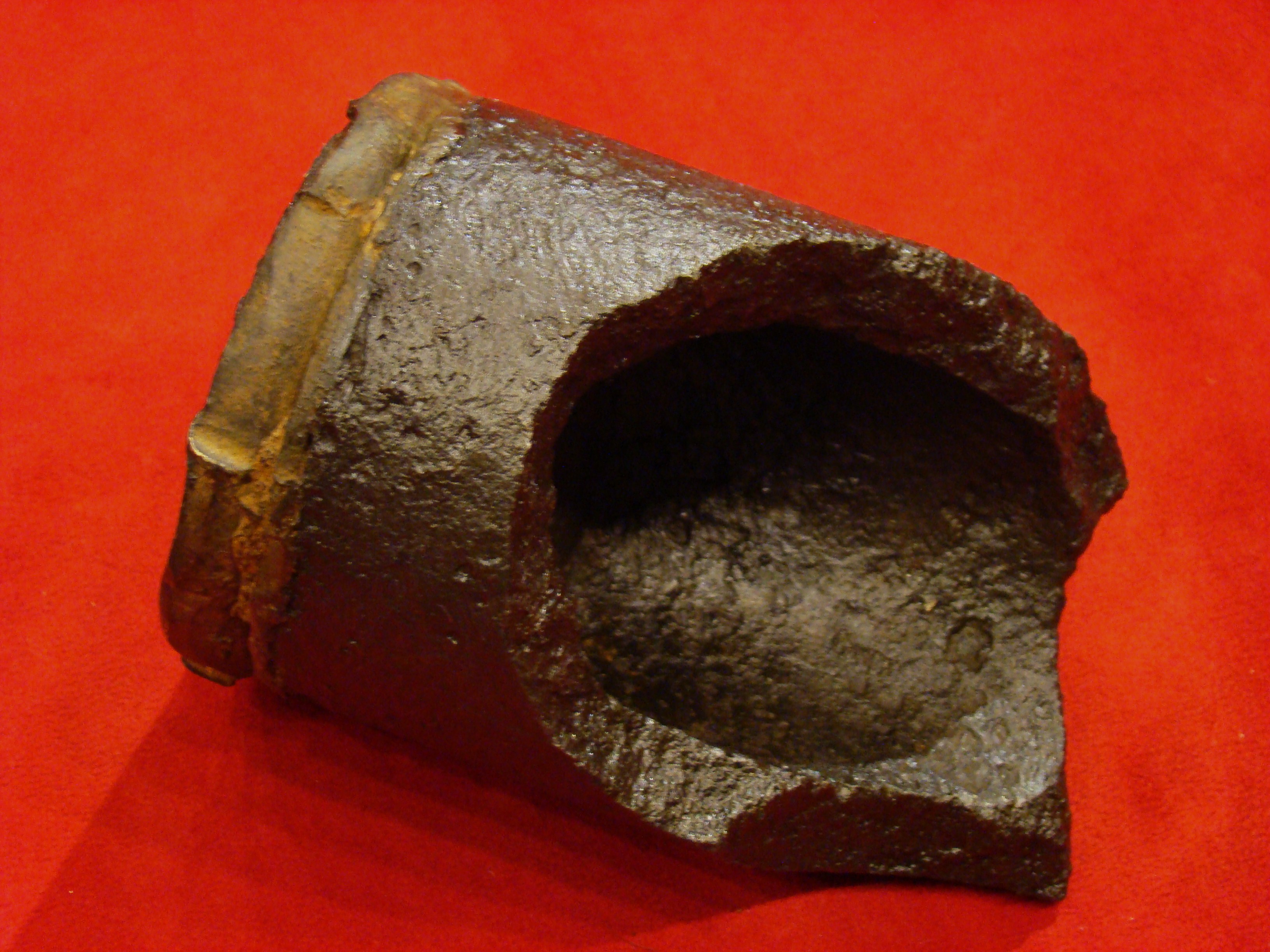
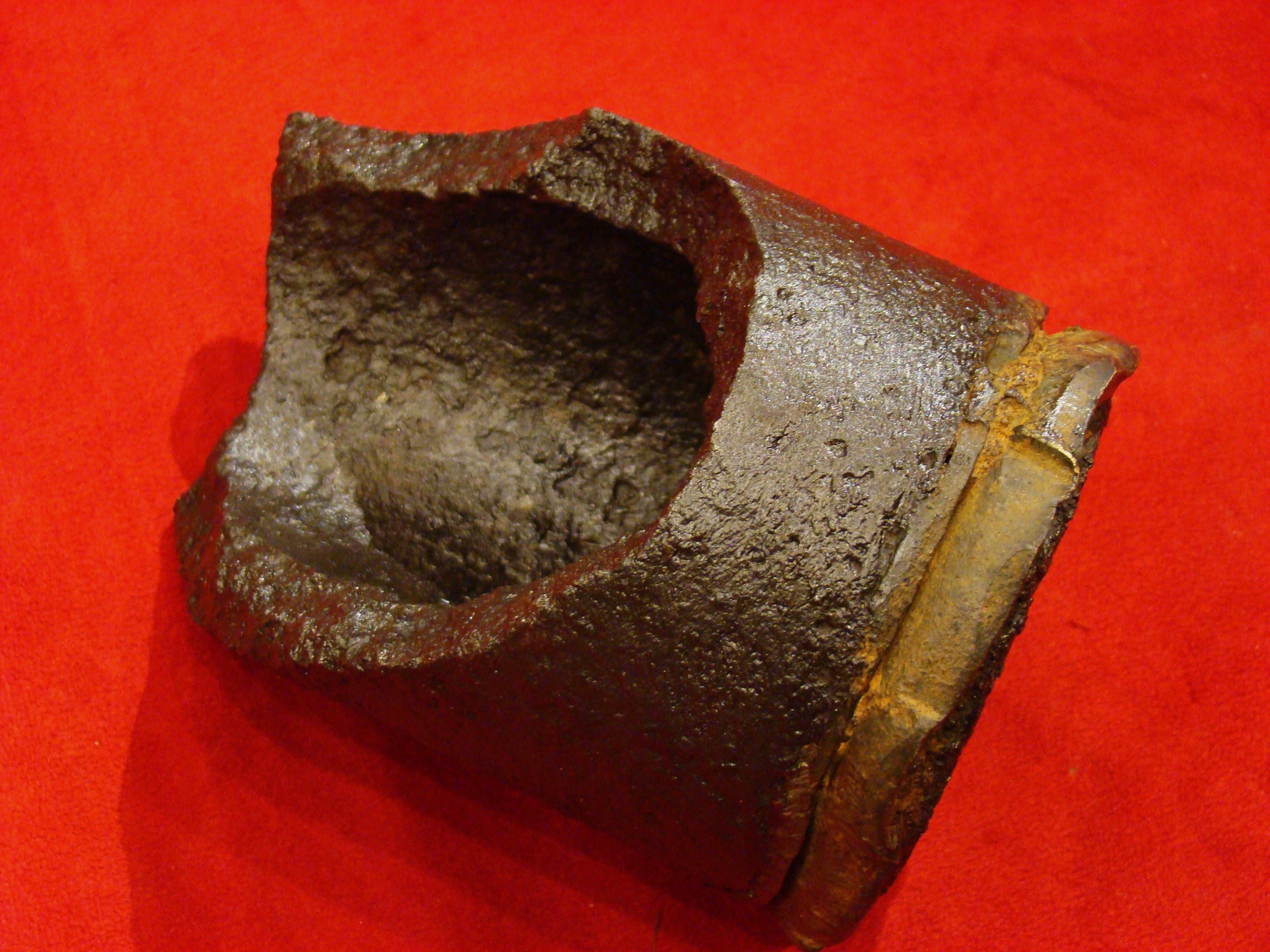
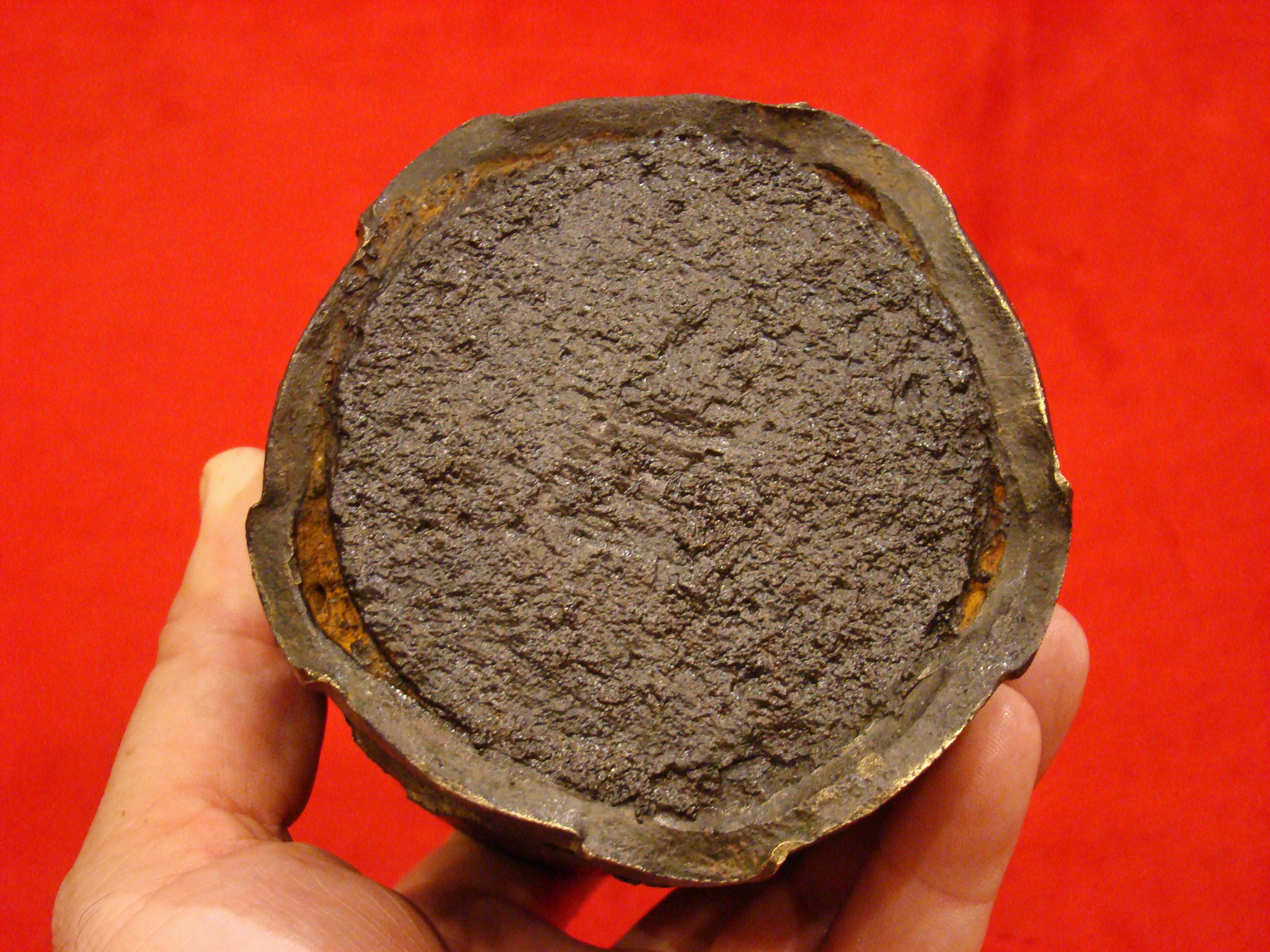
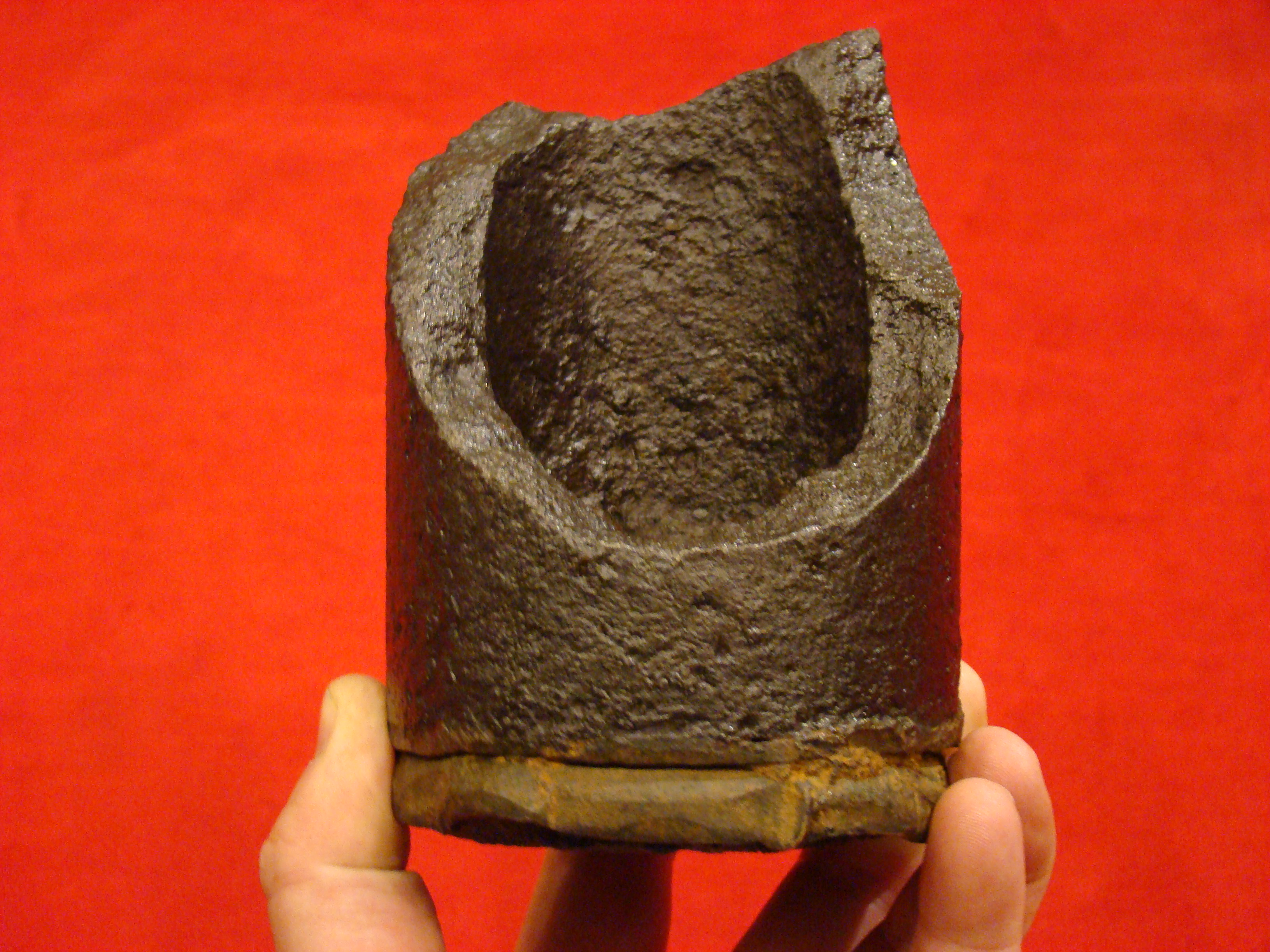
ART 15. Exploded US 3.67″ Type III Parrott Shell Fragment. Kennesaw Mtn. GA. Battlefield.
Impressive artillery relic. Fired from a 20 Pounder Parrott Rifle. Large bottom section retains brass ring sabot showing the lands and grooves of the cannon. Would make a good pen holder or candy dish. $150.00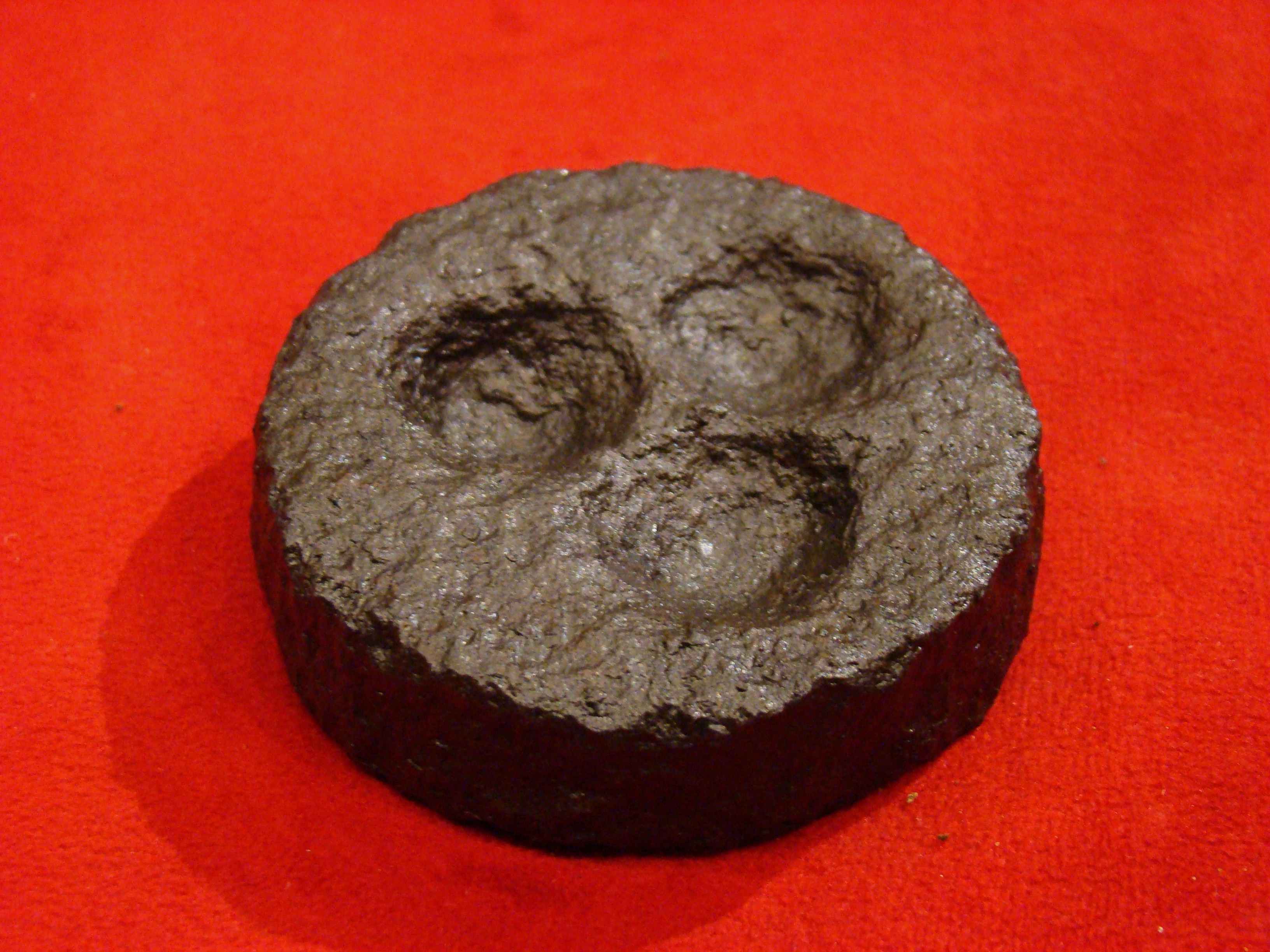
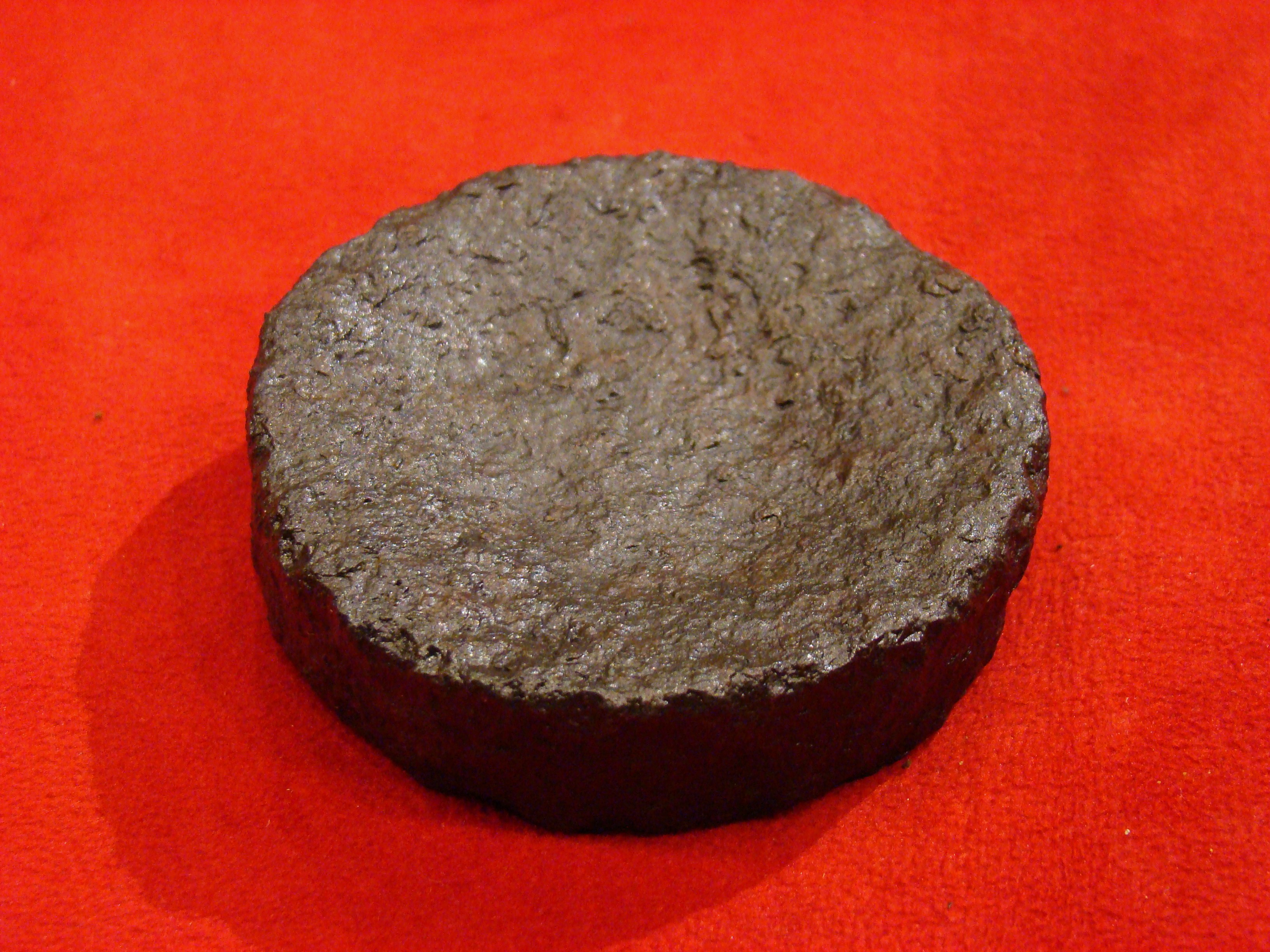
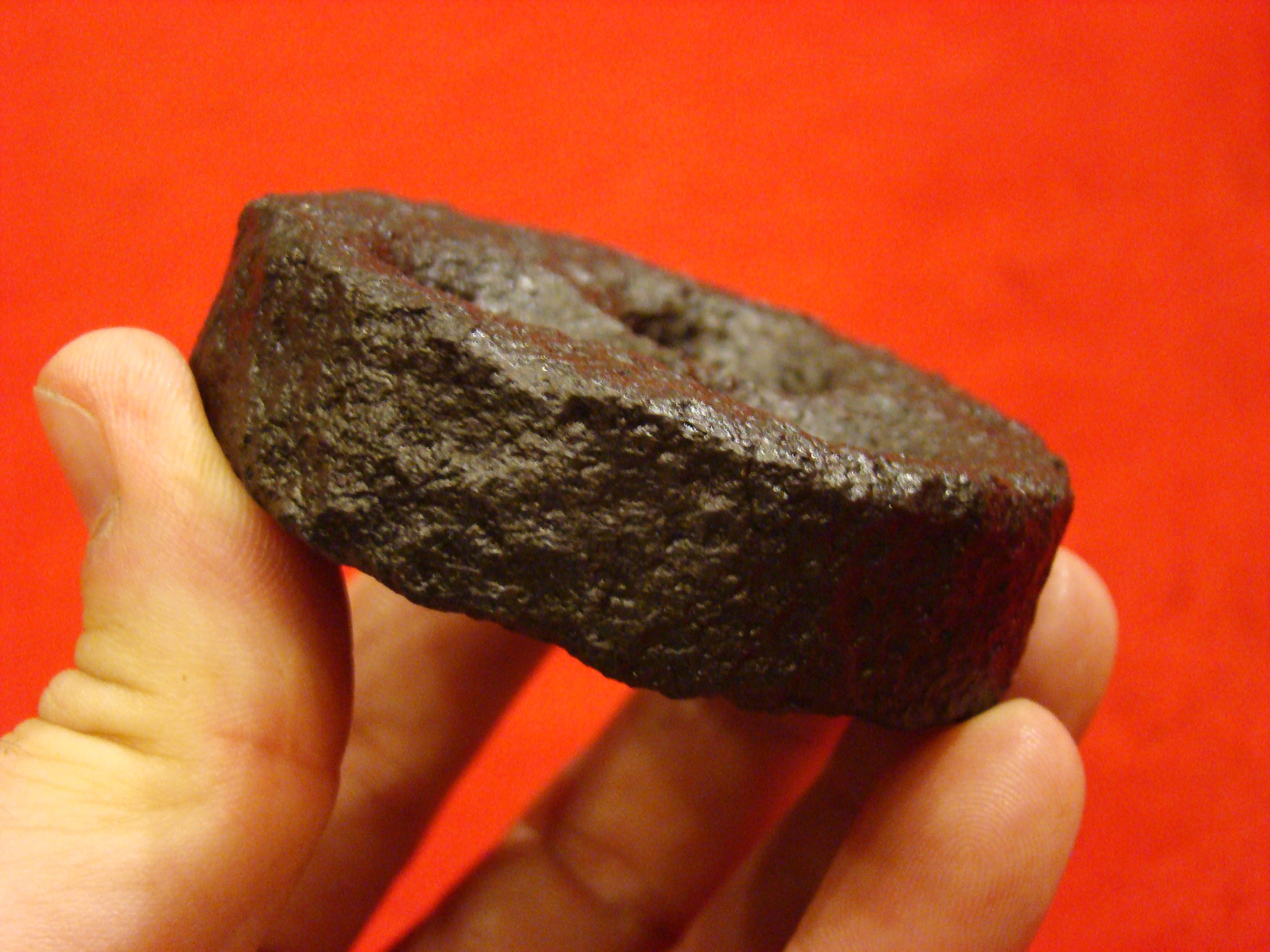
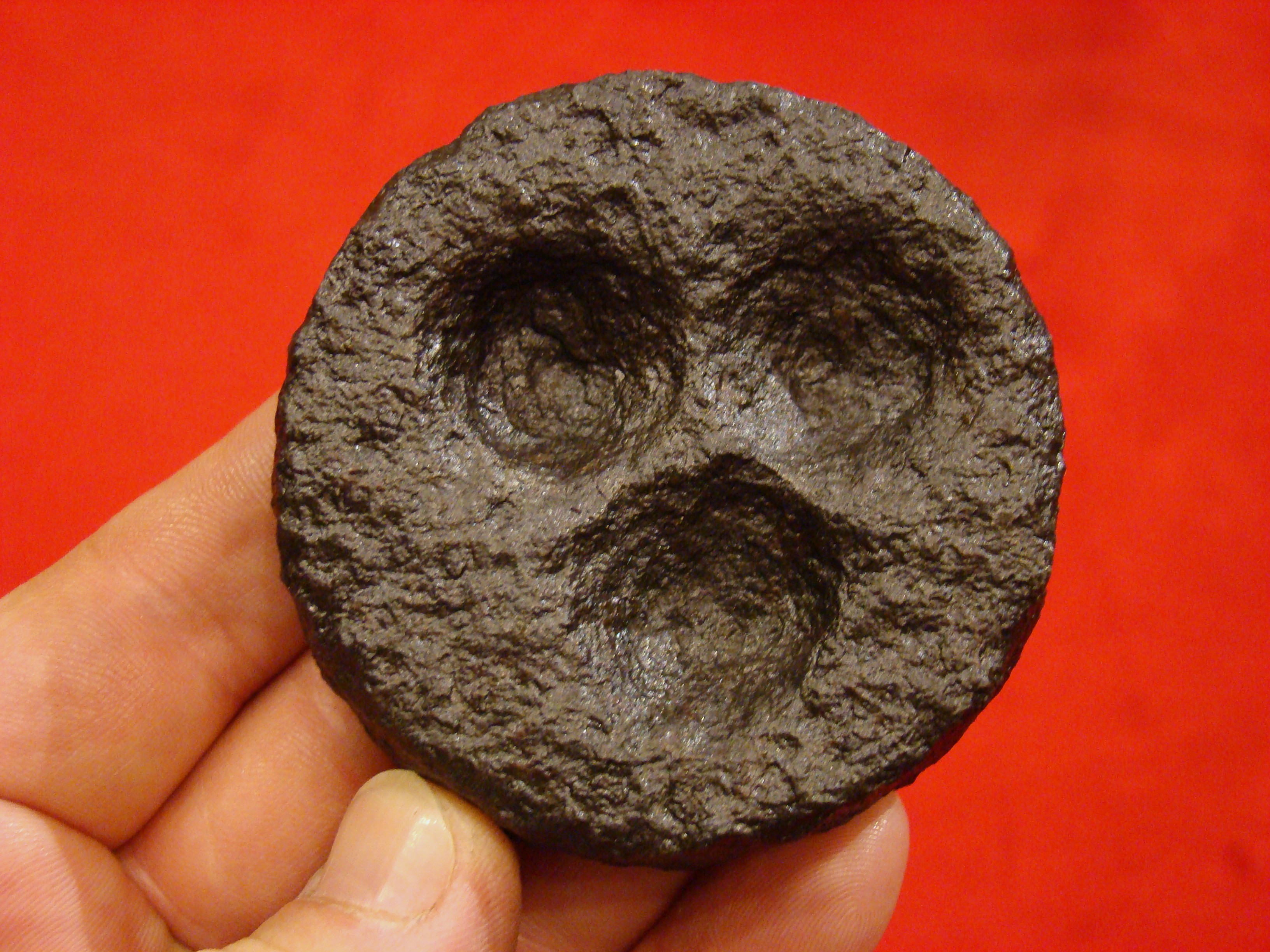
ART 16. Dug 2.6″ Canister Base Plate. Possibly for The Wiard Gun, or a Confederate Mountain Rifle.
Found on The Rocky Face GA. Battlefield by Bill Blackman. Very unusual. $95.00 HOLD S.F.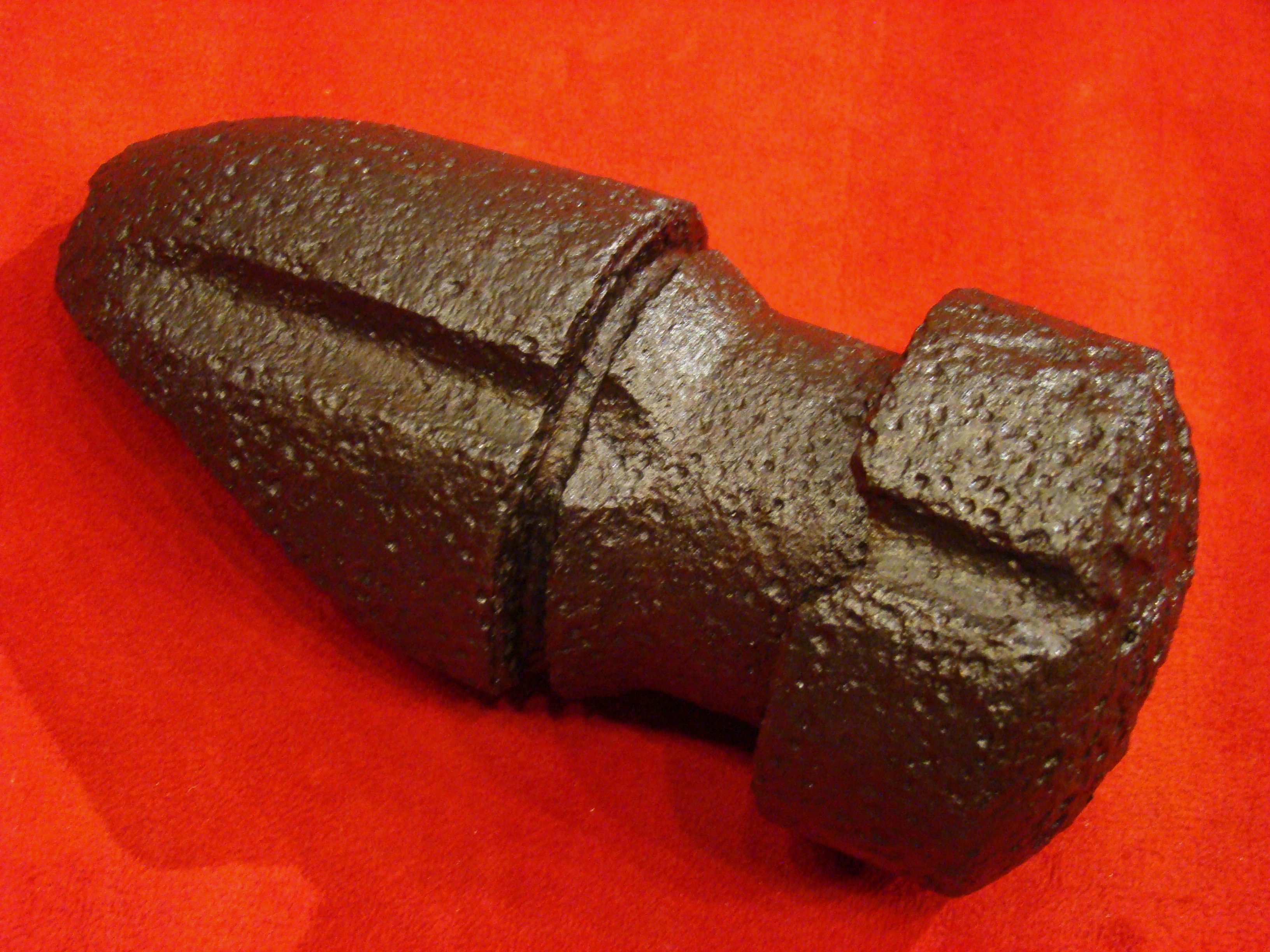
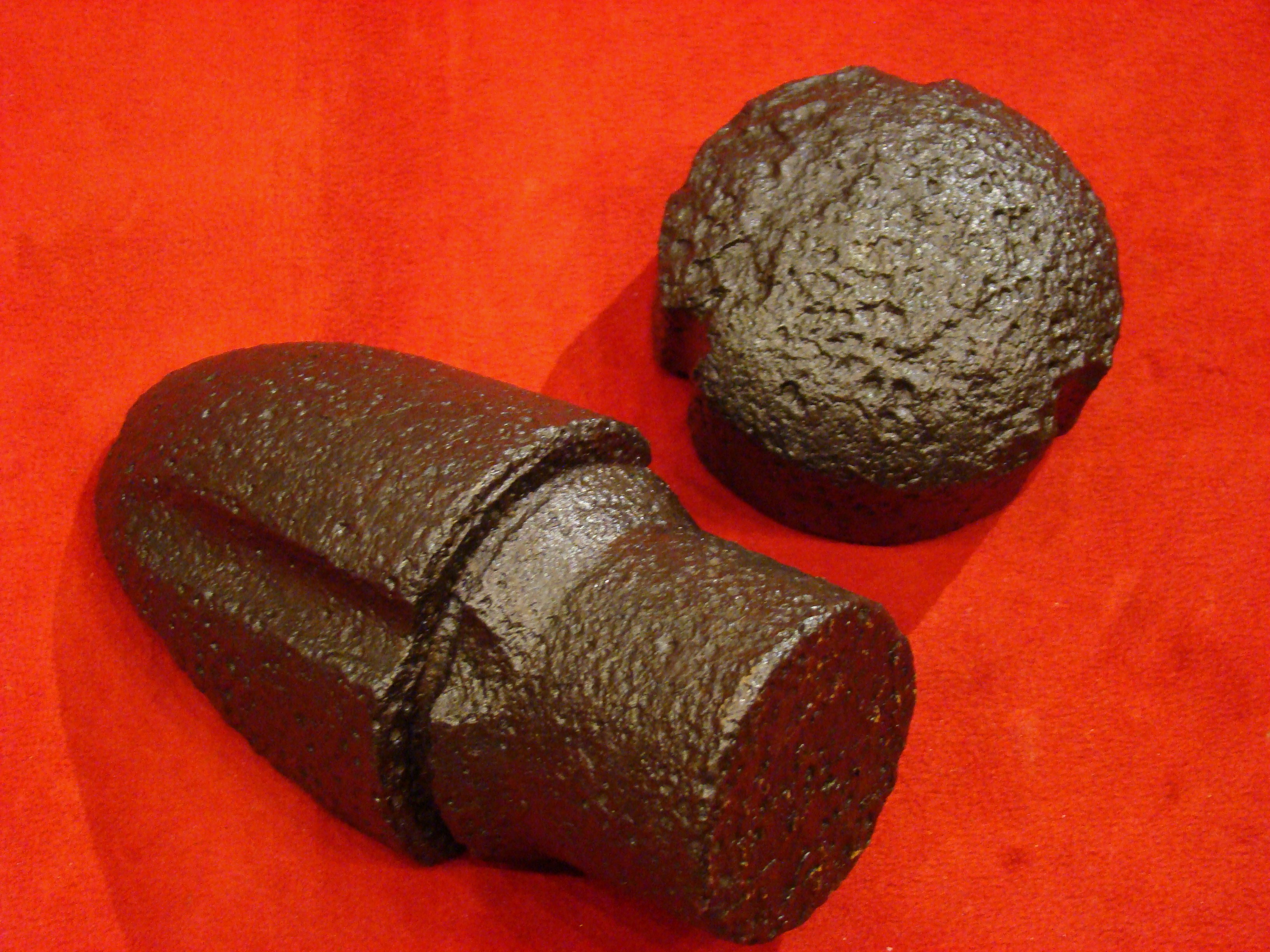
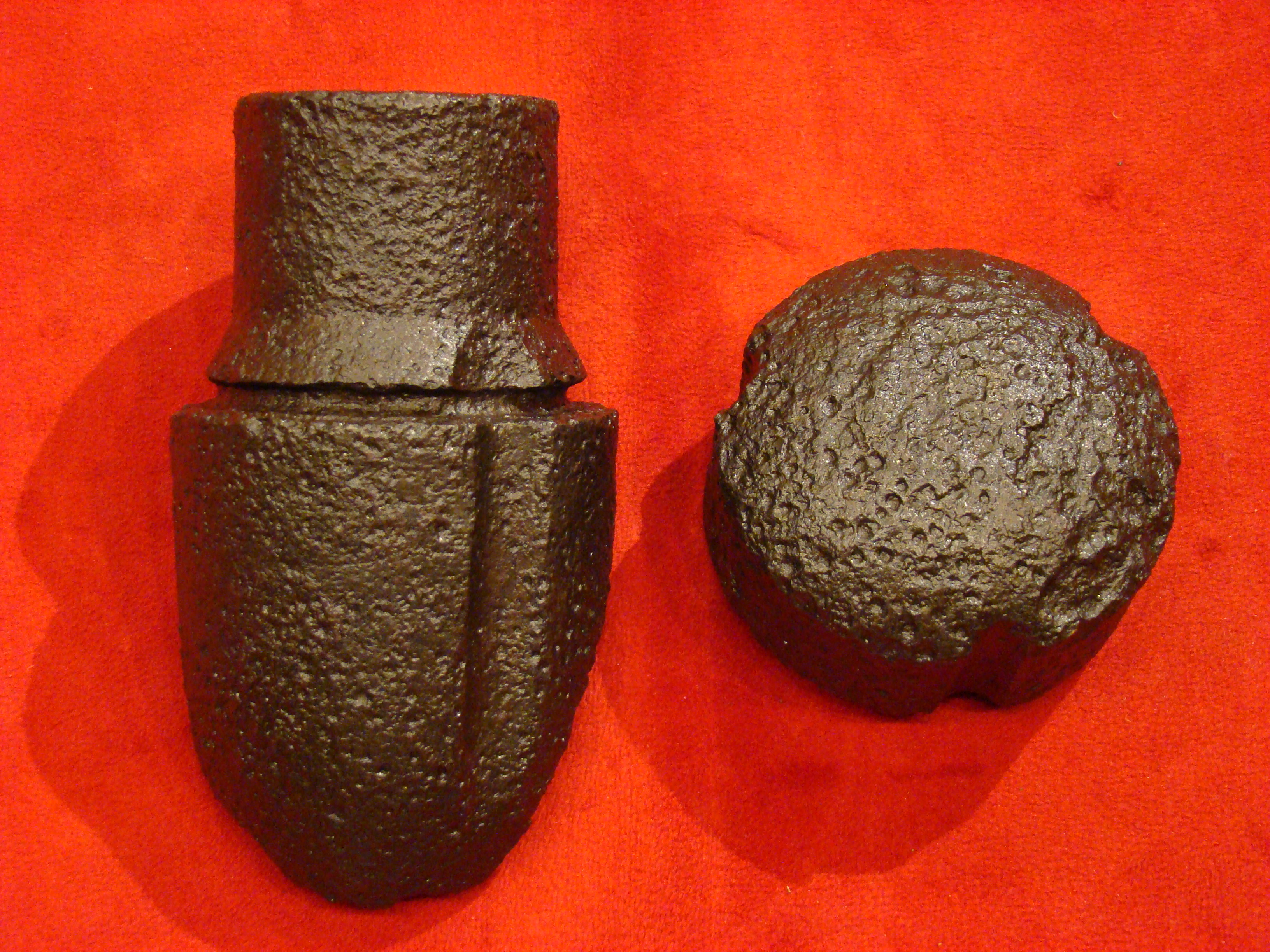
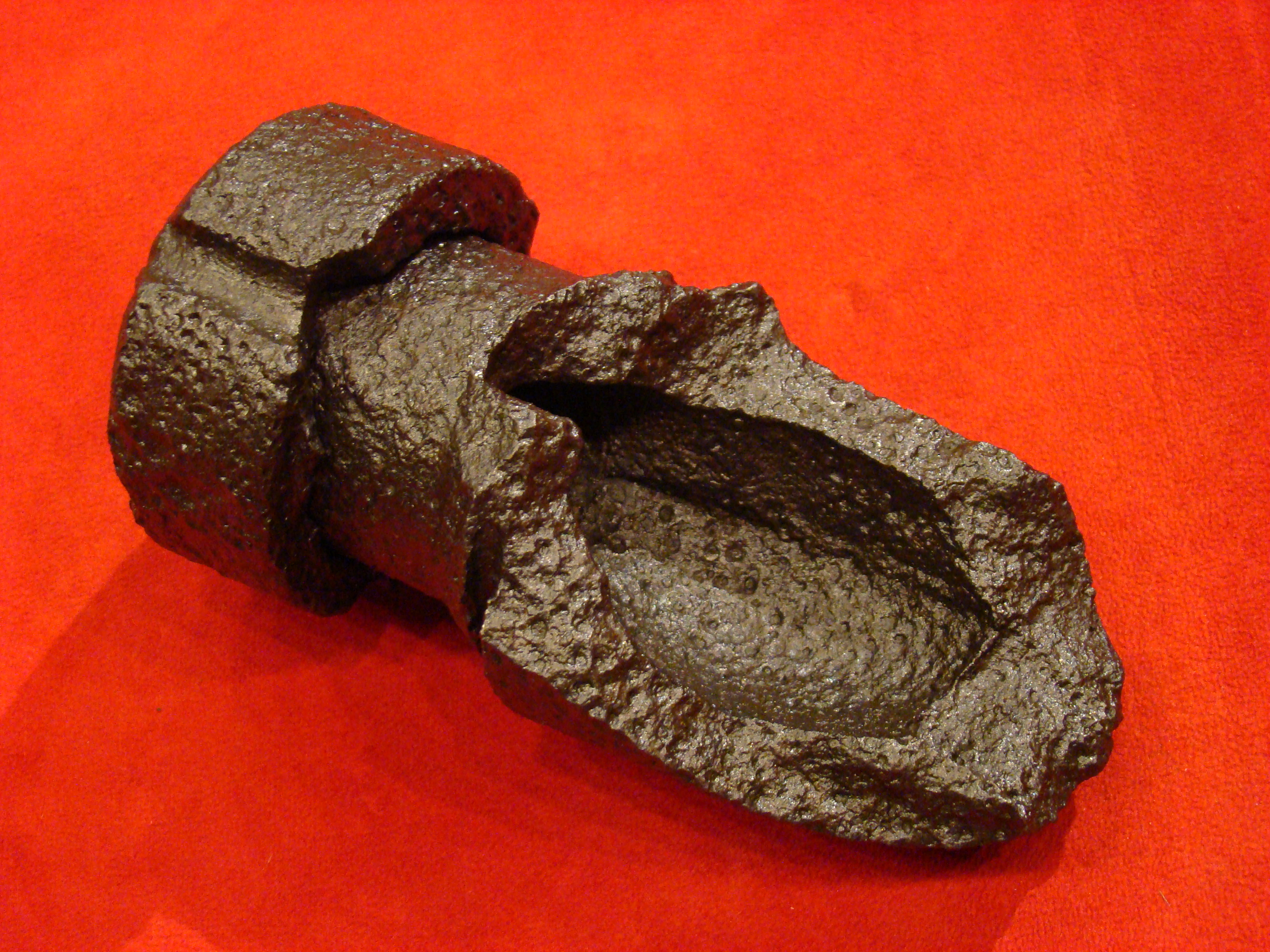
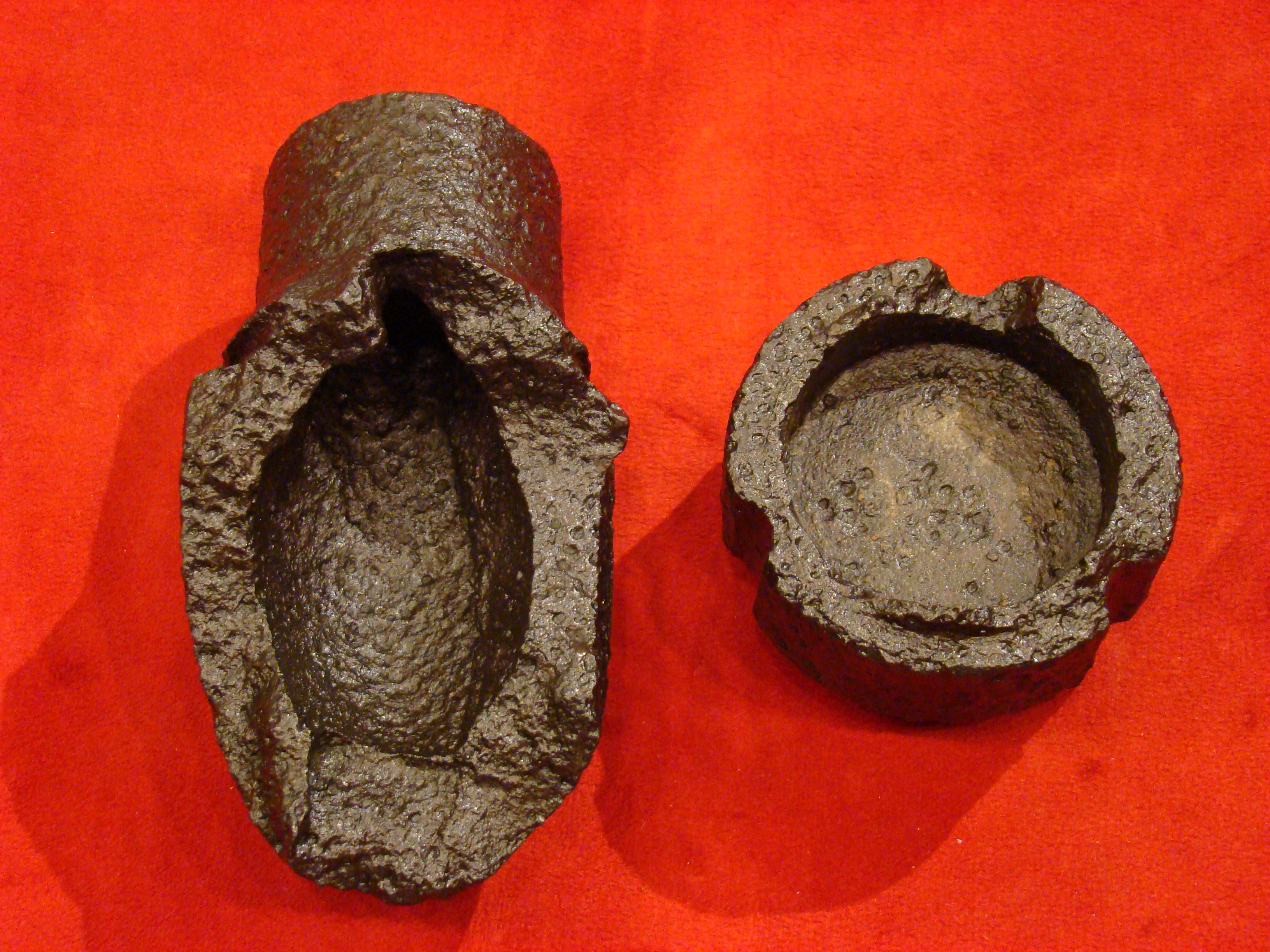
ART 17. Exploded US 3″ Hotchkiss Shell Fragment. Second Manassas VA. Battlefield.
Large part of the nose and base cup. Cleaned and treated for preservation. $75.00 HOLD B.R.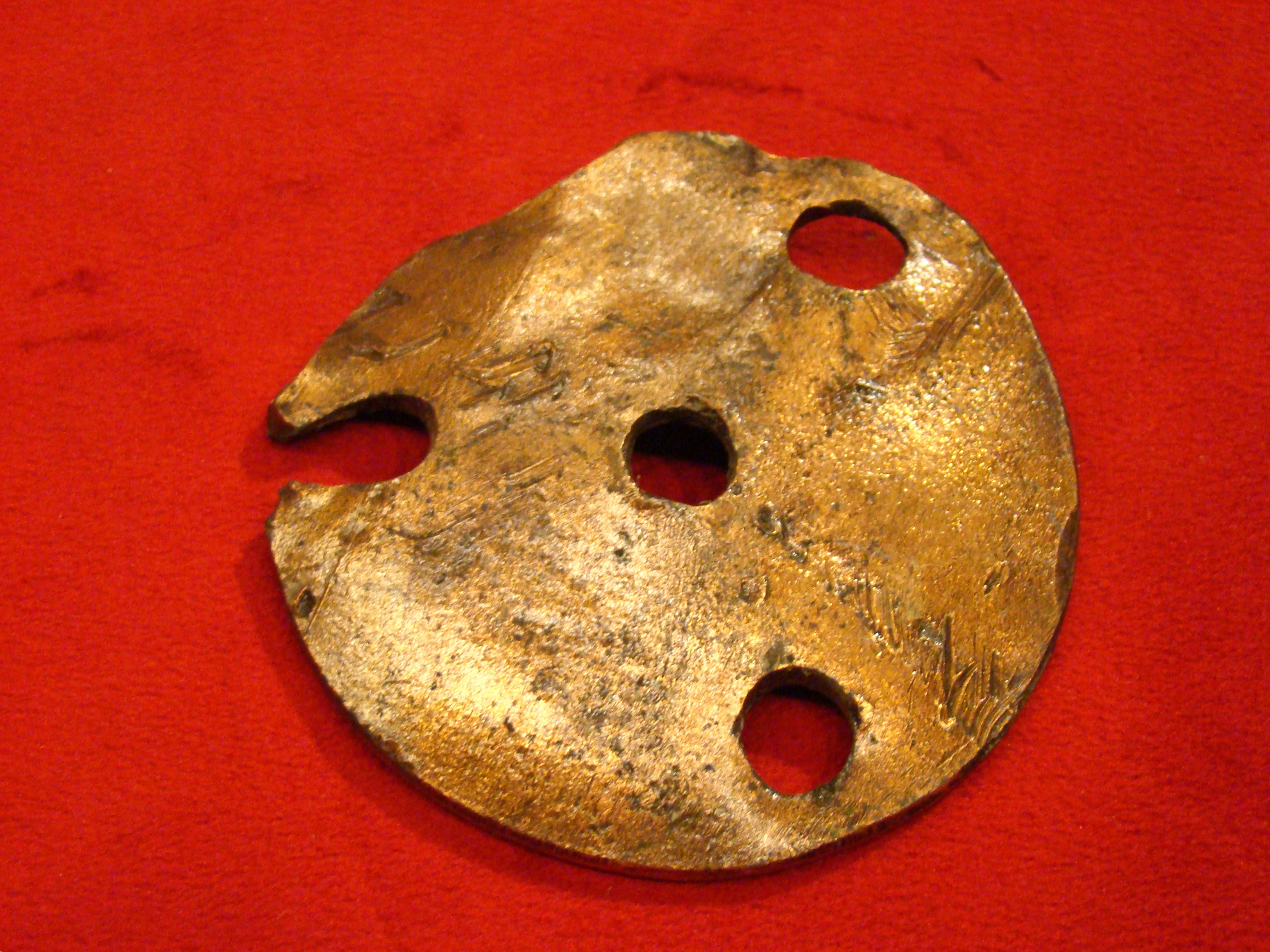
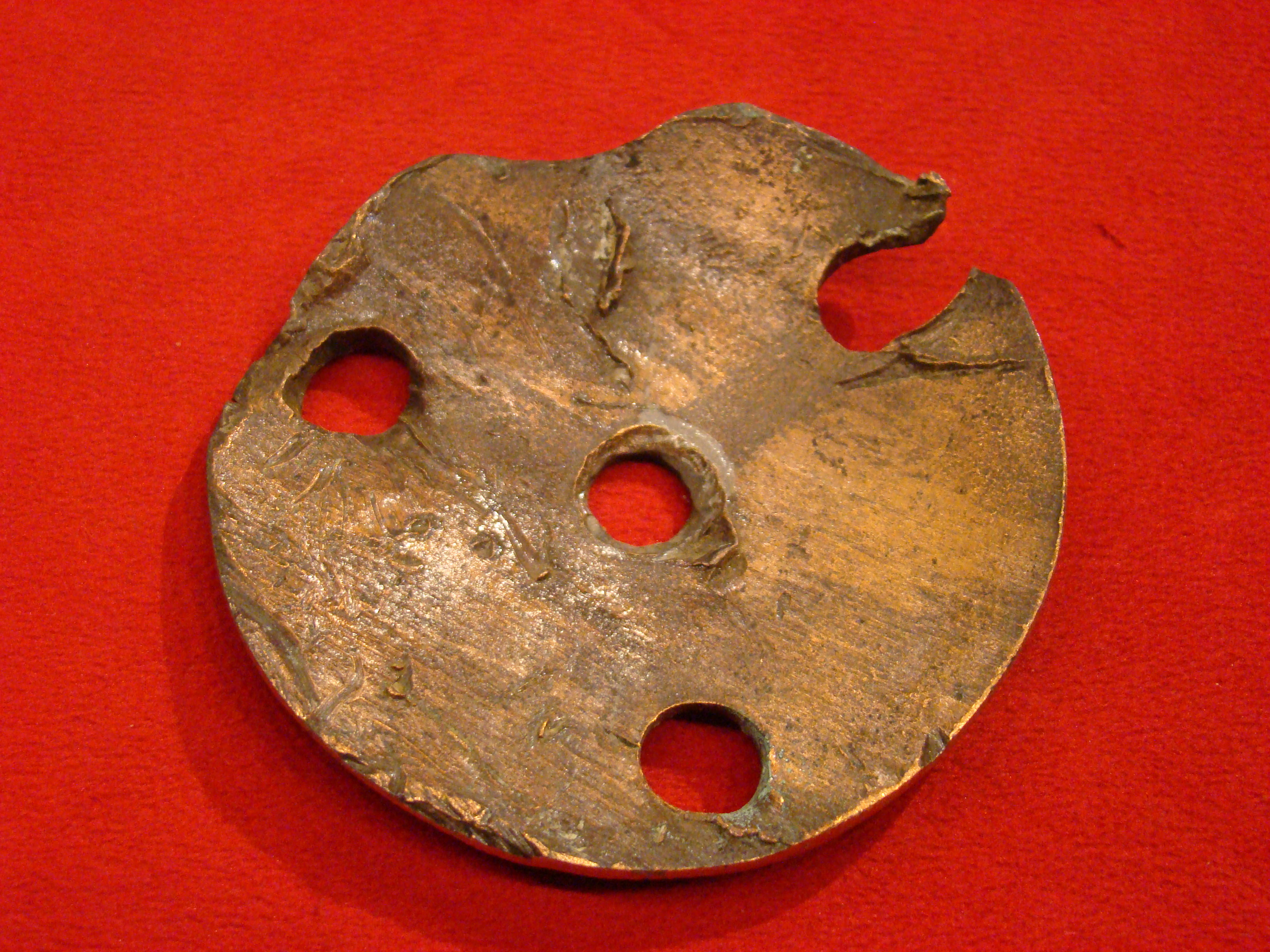
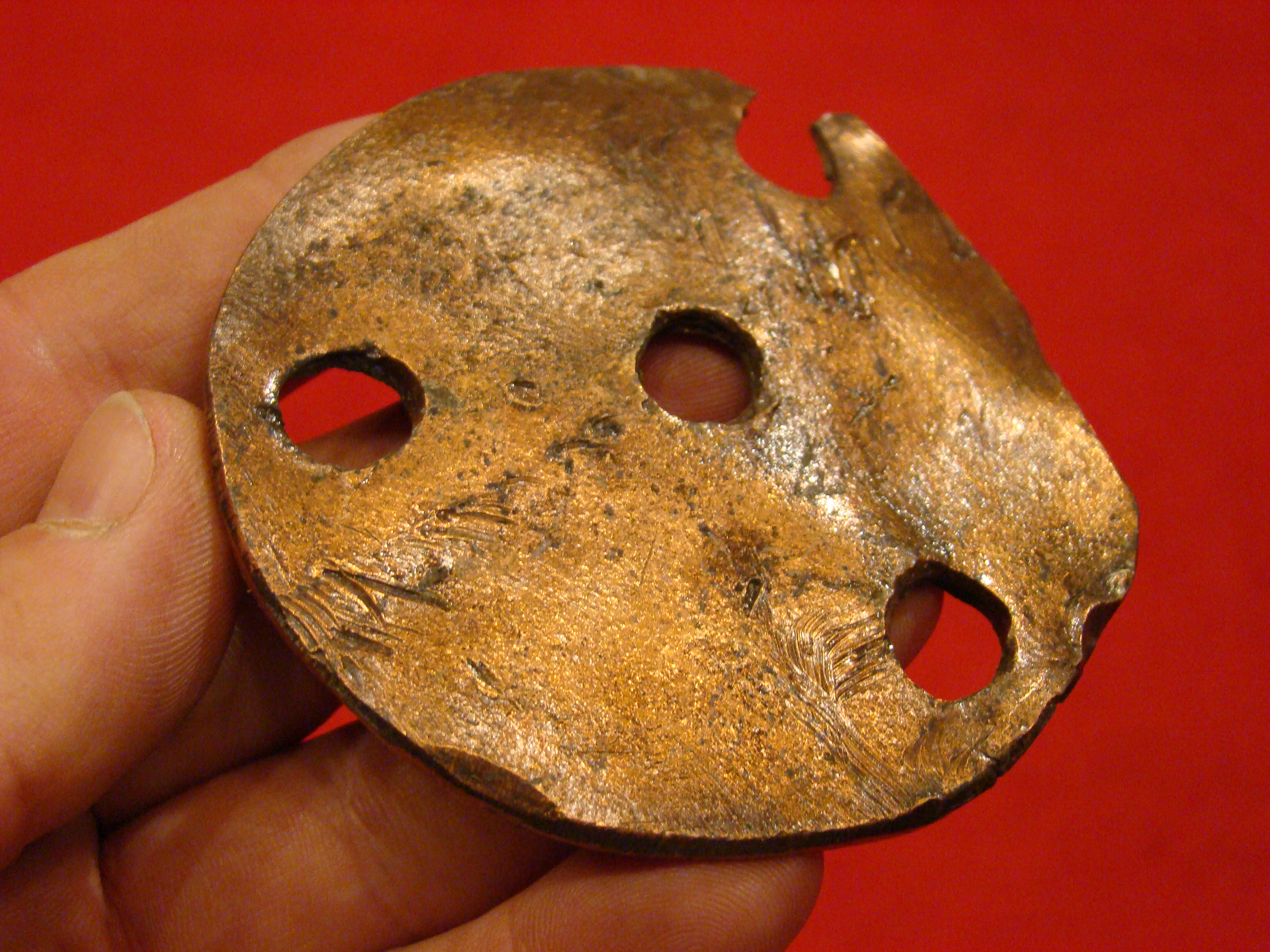
ART 18. Dug Confederate Brass Disc Sabot From an Exploded 3″ Mullane Shell. Second Manassas VA. Battlefield.
Very good condition with a flame groove filed into it. If you have a 3″ Mullane, also known as a “Tennessee Sabot” shell missing the sabot, this relic may be quite useful. $65.00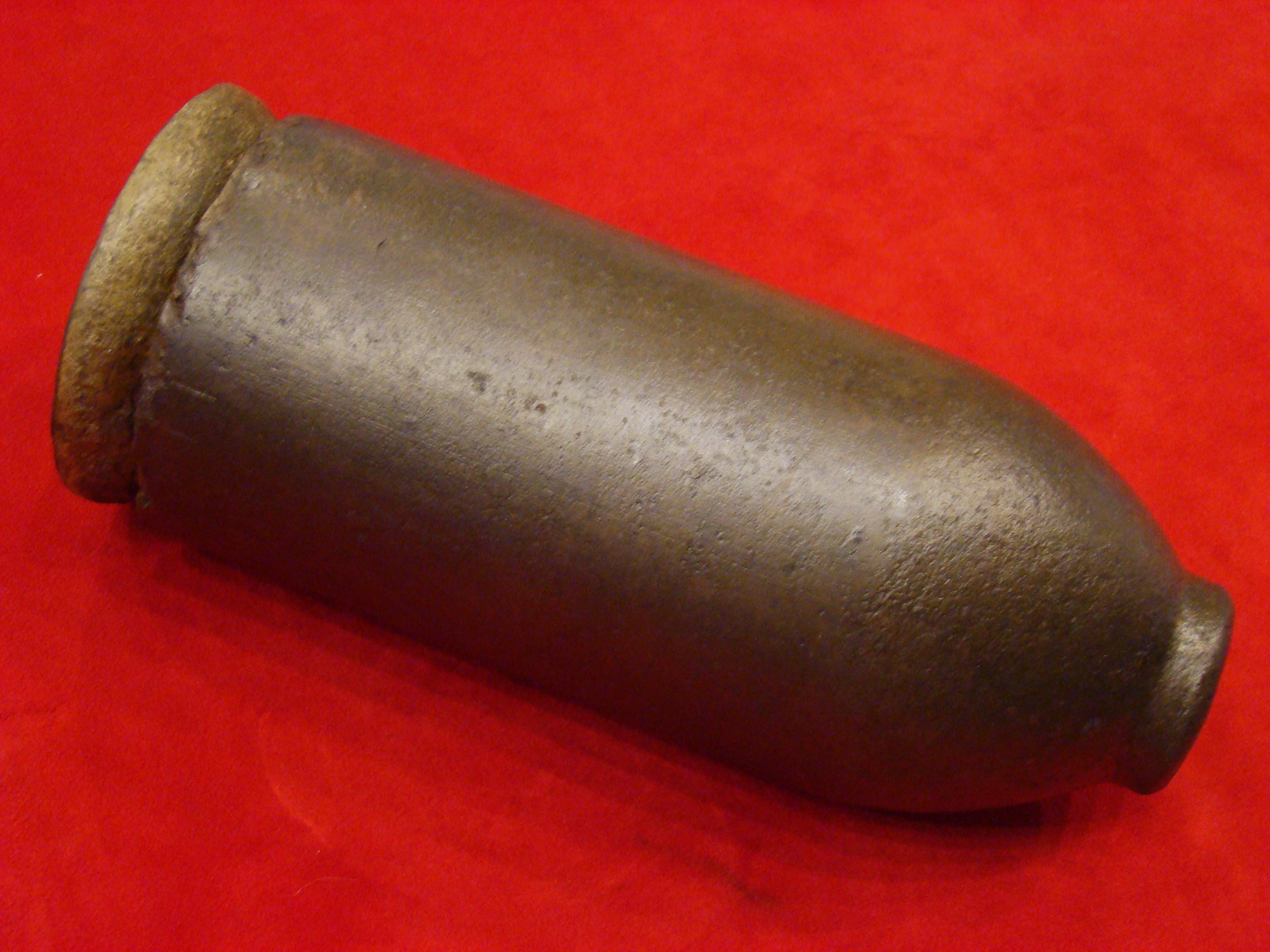
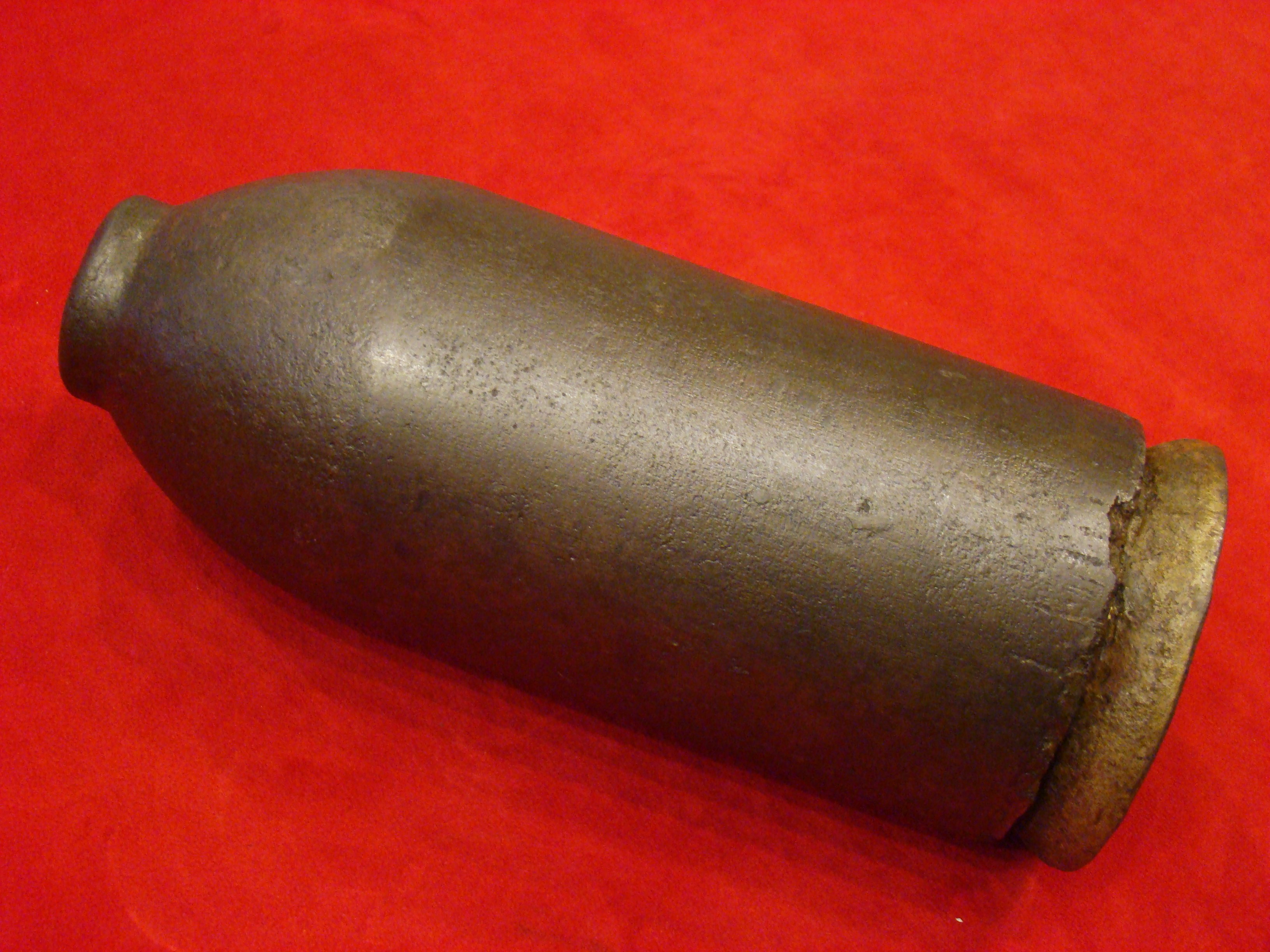
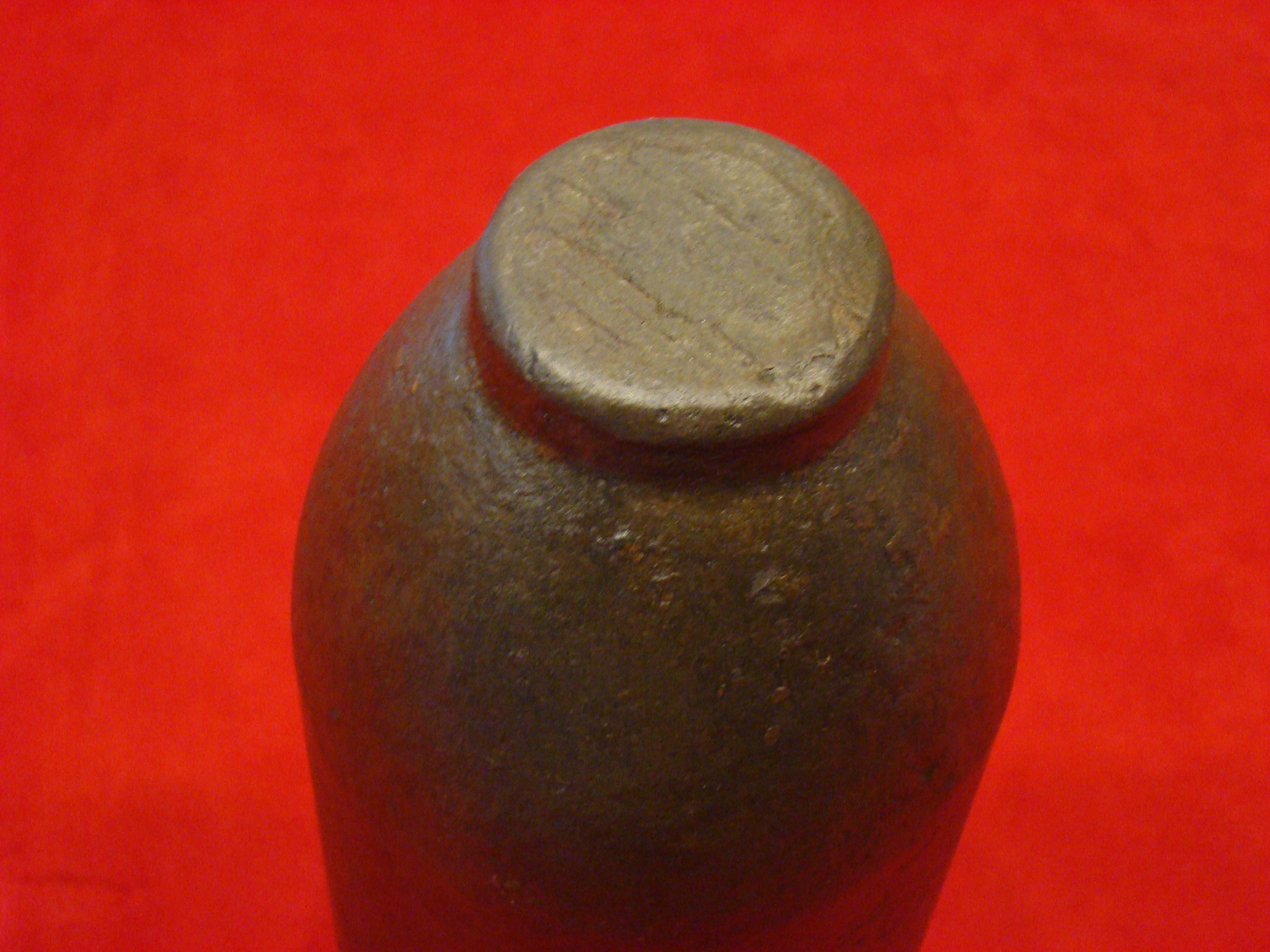
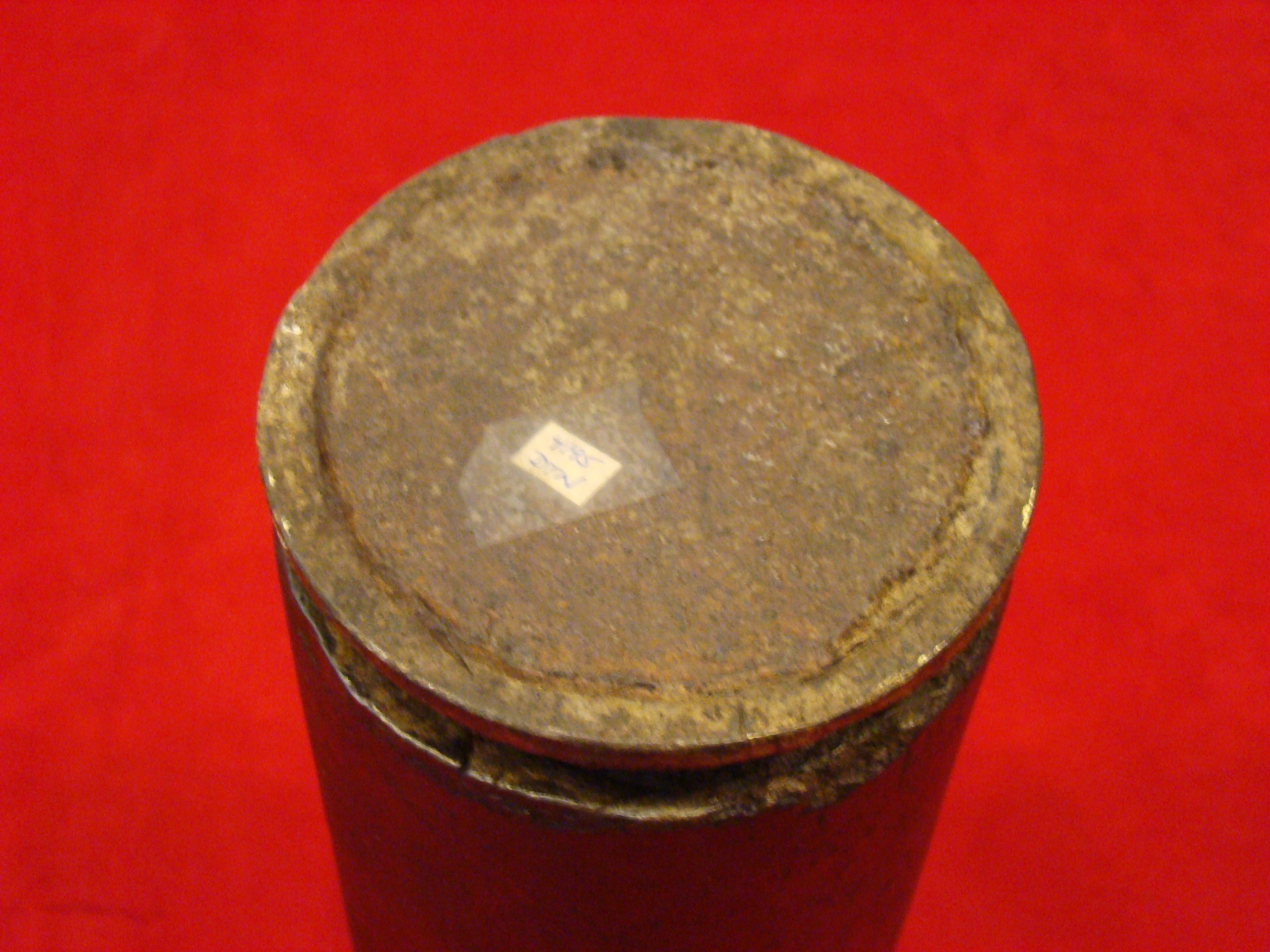
ART 19. Dug US 4.2″ Type III Parrott “Bottlenose” Bolt. Vicksburg MS. Battlefield.
Massive projectile with hardened nose designed to shatter enemy fortifications and batteries. Designed for use in the 30 Pounder Parrott Rifle. Mint dropped condition. Note brass ring sabot. $695.00 HOLD S.F.